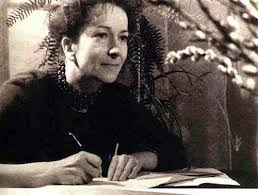
 One book of poems I have always at my bedside, for when I need to shift my thoughts, is Wislawa Szymborka’s New and Collected poems 1957 -1997, translated by Stanislaw Baranczak and Clare Cavenagh, published by Faber and Faber 1999
She lived from July 2, 1923–February 1, 2012
Apologies for not having the photographers’ names for the two images of her that are spanning decades.
I like the humour, the ironic style, the contradictions running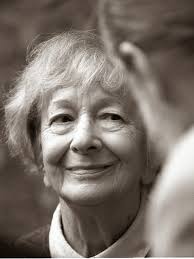 through the poems like a clear spring.
I thought I share a poem in full, since I posted a fragment on Twitter the other day. And also because I remember the protagonist in my novel, Course Mirrors,’ is in search of The Real.
THE REAL WORLD
The real world doesn’t take flight
the way dreams do.
No muffled voice, no doorbell
can dispel it,
no shriek, no crash
can cut it short.
Images in dream
are hazy and ambiguous,
and can generally be explained
in many different ways.
Reality means reality:
that’s tougher nut to crack.
Dreams have keys.
The real world opens on its own
and can’t be shut.
Report cards and stars
pour from it,
butterflies and flatiron warmers
shower down,
headless caps
and shards of clouds.
Together they form a rebus
that can’t be solved.
Without us dreams couldn’t exist.
The one on whom the real world depends
is still unknown,
and the products of his insomnia
are available to anyone
who wakes up.
Dreams aren’t crazy—
it’s the real world that’s insane,
if only in the stubbornness
with which it sticks
to the current of events.
In dreams our recently deceased
are still alive,
in perfect health, no less,
and restored to the full bloom of youth.
The real world lays the corpse
in front of us.
The real world doesn’t blink an eye.
Dreams are featherweights,
and memory can shake them off with ease.
The real world doesn’t have to fear forgetfulness.
It’s a tough customer.
It sits on our shoulders,
weighs on our hearts,
tumbles to our feet.
There’s no escaping it,
it tags along each time we flee.
And there’s no stop
along our escape route
where reality isn’t expecting us.
Wislawa Szymborska
Her Nobel Prize speech inspires … if you are shy to call yourself a poet, follow this link and soak it up.
Poets, not being profitable, get little screen-time. Wislawa Szymborska says … ‘Their work is hopelessly unphotogenic. Someone sits at a table or lies on a sofa while staring motionless at a wall or ceiling. Once in a while this person writes down seven lines only to cross out one of them fifteen minutes later, and then another hour passes, during which nothing happens … Who could stand to watch this kind of thing?’
‘I’ve mentioned inspiration. Contemporary poets answer evasively when asked what it is, and if it actually exists. It’s not that they’ve never known the blessing of this inner impulse. It’s just not easy to explain something to someone else that you don’t understand yourself.’
‘Whatever inspiration is, it’s born from a continuous “I don’t know.’
Her words bring to mind a Rumi quote: ‘Sell your cleverness and buy bewilderment.’
Follow this link to Brainpickings and find a number of write ups about Wislawa Szymborska
Brainpicking’s Bulgarian creator, Maria Popova honours language, and somehow manages to bring context and coherence to the irrational and the imagination. Her curiosity is unlimited. She writes about my favourite people in the world. Among them are poets like Wislawa Szymborska.
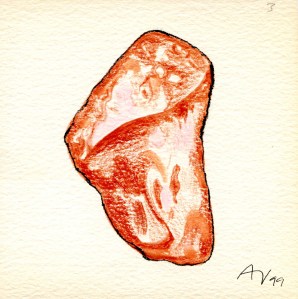
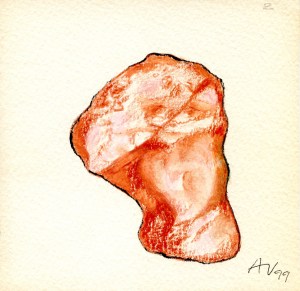
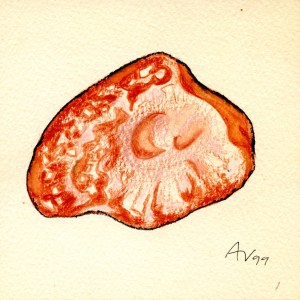
 The year before the millennium, a then dear old friend of mine, Sitara Brutnell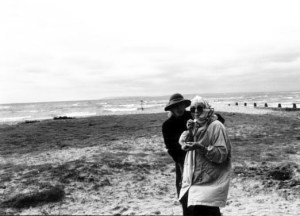

 Democracy starts inside us. One way to explore our inner crowd is through allowing the different aspects of our personality to have a voice, including ones we dislike or suppress, like parts burdened with shame, self-loathing and self-hate. Together with their inner persecutors and defenders, they tend to pop up involuntarily with strong emotional force during stress, or an experience that all too often had its first traumatic installment way back in childhood.
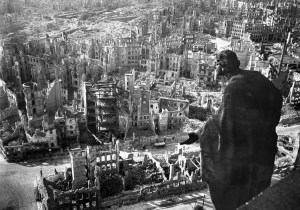 Unable to afford Jungian analysis, my spiritual search became an escape from what I saw as our revengeful, destructive and corrupt world.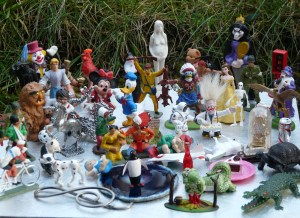
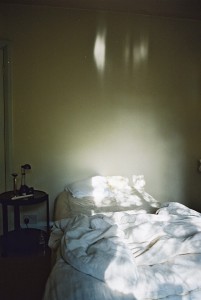 … that’s me, a dreamer. Dreams re-appear, like a déjà vu. A trick of light will superimpose an image on a scene gleaned in passing. Or a sound, a name, a number, a movement, colour or scent may link up to a dream’s mood. Similarly, memories of seemingly unrelated events from years ago can pop up while doing mundane tasks. This reminiscing improves for me as I grow wiser (older,) a subtle re-organising of events.
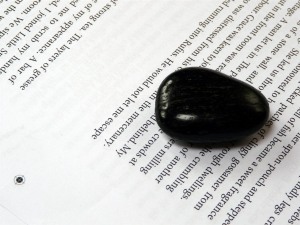 With little chance of publication, giving this sequel once more editing time seems irrational; then again, I’m the weirdest person I know. The irrational has always impelled me forward from deep states of being, in search of wholeness. Like some writers, I juggle for rhythm and balance with a multitude inside, until a character, a theme, or a poem persists and generates engagement.
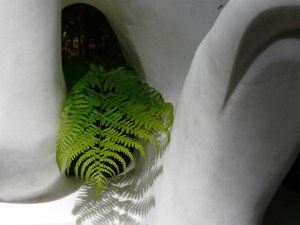 By bending towards light all life unfolds and is shaped by obstructions – and the dark, compressed sphere behind the crack that allows growth to emerge.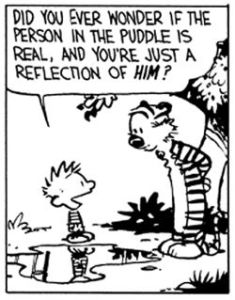
 Here my latest Haiku: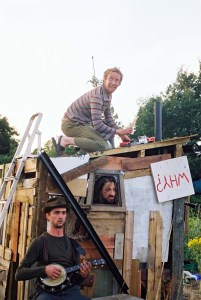
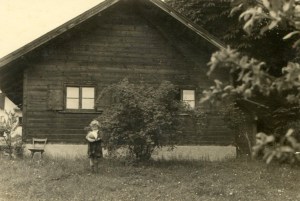
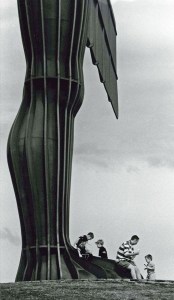
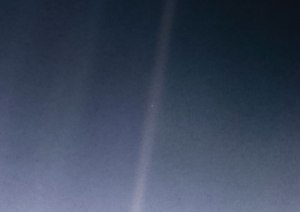 And then consider Carl Sagan’s tender reflections on the pale blue dot, the Mote of Dust, as in a sunbeam, the home we all have in common, a selfie, seen from afar. “Where everyone’s love, everyone you know, everyone you ever heard of, every human being who ever was, lived out their lives.”
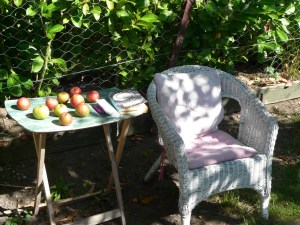 Embodying the perfect autumn warmth, a divine stillness, devoid of mental chatter, other than a faint hum of the river of cars flowing along the town’s bypass, and the gentlest sound of a disintegrating wood chime in my cherry tree, whatever else happens in the world is another dream.
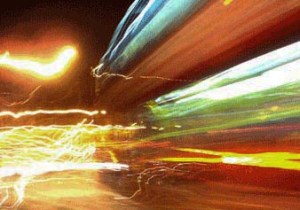 We mostly think through conventional forms and givens, for practical reasons, while another way of thinking embraces invisible and unknown dynamics via intuition – like the seeming particle/wave paradox in quantum mechanics, where a local particle also exists as a non-local wave. The two perceptions can potentially mingle creatively, but, notably in times of social uncertainty, they clash, and fewer people maintain the ability to tolerate
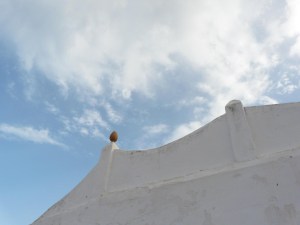 Writers and readers have their unique (often indirect) discernment of text and image; a fluid perception spots moods in the sky, or envisages what’might be happening behind doors.