

I’m reluctant to call myself old. As common perceptions go, I feel at least 20 years younger, being curious and interested in everything. I just got a bit slow with manual tasks, procrastinating in executing them when my superego demands action. I’ve never been at easy terms with my superego; love/hating my hilarious authority complex.
Among parents, siblings, children, writers, artists, philosophers, teachers, the circle of minds that influenced and still influence me and in some cases vice versa seems vast. Despite being a hermit at heart, circumstances led me to engage with a rich variety of people, groups, colleagues, communes, film teams, social projects, journeys, clients. Like in a well-lived-in home with accumulated treasures, our countless interconnections with others settle and live on in us. Some memories are only partly woven into the fabric of our lives, with loose threads keen to be integrated.
A bonus of old age for me, are vivid dreams. The characters playing are usually people, dead or alive, I related to over time. In these dreams I experience undercurrents of feelings, rarely expressed but also informing the relationships. I catch my subtle projections onto people and their projections onto me. Like I tend to be guarded of controlling people, but like to be in charge myself J
These messages are quite confusing to absorb, and I ponder whether the awareness of such subconscious narratives changes the memory in my psyche, and has any subliminal effect on the characters involved, dead or alive – based on my belief that the psyche is a timeless phenomenon. Insights can arrive during daydreams. It could be a slight lift of the spirit or a feeling of unease, like a cloud swirling round the head.
Do we sense when people think of us? My paternal grandmother considered this happens when my nose itches. She also advised me to pull unpleasant thoughts from my nose via a downward stroke with my fingers, and then flick the thoughts away.
Her quirky tips were what a modern day influencer might employ.
I’m sometimes embarrassed about my ignorance – that is – not seeing where people might be coming from, be it the motivation for their interactions, secrets withheld, questions not asked, missed resonances, words meant in kindness, or in sudden spite or error, all the subtle hurts we inflict on each other, all of which just as well applies to me.
There seem to be polarized opinions regarding narratives … if it ends badly so be it. Attempts to make things well are soppy. Resolved and happy endings, though desired by some, can come over as insincere or boring to others. My preferences vary, according to the mood of the day, maybe yours too.
Our media is dominated by bad news, often too weird to be real, feeding a hunger for sensation, an entrenched feature of human nature that may be based on a masochistic and self-destructive mechanism in response to grief, rejection, resentment, disillusionment or lack of gratification.
All is Well … All is Bad, and a labyrinth between them for getting lost.
Clearly, we seek acknowledgement for our existence, be it through love or hate, but at least a nod for having some function in this game of living. Some players cause mayhem and are reviled or heralded; others are envied or applauded for personal or social achievements, sharing a life’s work, or for nourishing friendships.
Attention is never guaranteed, one moment we are valued by some, scorned by others, and next we are forgotten. Some of us get too much attention, some too little, some the wrong kind, some none at all.
It’s the way of life.
I conceive of the concept of soul families, whose members meet again and again, in different times and environments, with different roles … psychological constellations that provide a precious testing ground for becoming human. I don’t think it is farfetched. It chimes with some eastern traditions, like Karma.
What annoys us in others often pinches at a trait we have ourselves, sobering when revealed. C. G. Jung put a bright beam on the unconscious complexes and shadow aspects of personhood. It should make us marvel at the intricate dynamic intelligence by which the psyche adjusts our perspectives in unseen energetic ways, sometimes surfacing during odd moments in relationships, and, quite regularly in dreams – for this I’m grateful.
Nature works in such mysterious ways we can’t possibly out-think it.


 Once upon a time Khidr, the Teacher of Moses, called upon mankind with a warning. At a certain date, he said, all the water in the world which had not been specially hoarded would disappear. It would then be renewed, with different water, which would drive men mad.
 When he saw, from his security, the waterfalls again beginning to flow, this man descended among the other sons of men. He found that they were thinking and talking in an entirely different way from before; yet they had no memory of what had happened, nor of having been warned. When he tried to talk to them, he realized that they thought that he was mad, and they showed hostility or compassion, not understanding.


 In my last post I touched upon the half-imagined essence shining through a work in progress – via incubation, the search for one’s language (in whatever form,) through the heart. This kind of search is bound to involve deep personal experiences, be it related to an outer or inner place, as the myth of one’s existential journey, which, when authentically communicated and shared tends to assume universal significance.
 Talking in the dark, their hands occasionally touching, Louise and Addie come to value their fragile pact. Even Addie’s abandoned visiting grandson is wooed by the loving regard between his grandmother and her new friend, and their tolerance and tender concern for him, which is, the way I read it, the initiation of a small boy into the wisdom of respect. While the petty gossip of townsfolk adds to the fun of their social transgression and strengthen the closeness they’re forging, the jealous objections of Louis’s daughter and Addie’s son are truly hurtful, and in the end decisive.
 Truly witnessing the tragedies on our planet is not the same as passive looking, witnessing expands and transforms consciousness. As an individual I feel helpless, unable to solve the overwhelming problems, but by witnessing and accepting the sad truth of what is happening, and by grieving the losses, I, each of us, in a small way, can contribute towards a necessary and crucial paradigm shift.
 Some scenes near the end of the film bring home powerful metaphors – like what it takes to fly. Fledglings, to lighten their weight, must empty their stomachs of everything fed to them by their parents (in this instant plastic.) Mothers, forgive yourselves. We can hardly avoid dumping stuff on your offspring, be it psychic or material. Many fledglings don’t manage, but if lucky, and if the right wind comes along, their wings will carry them across the sea towards their adult adventure.
 My dream vanished. It’s going to be one of those weird days, I reckon, soon confirmed by a fleeting glance while passing a mirror. My morning ritual includes stretching muscles while coffee filters into the cup. I breakfast before the screen, skim through emails and various online papers, shake head at captions ranging from atrocious, futile to hilarious, the latter due to brexasparation. The scene beyond the window calms – wispy clouds, birds flitting from hedge to tree to hedge, familiar cats slouching across frosted grass, the ginger, the black & white bushy monster, the nimble black tom with white paws and white-tipped tail, much like an exclamation mark.
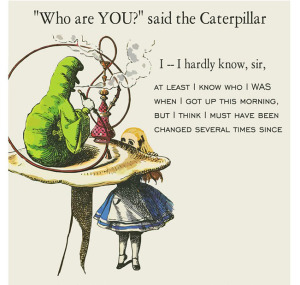 I deeply appreciate the dreams that provide an afterglow to the relationships in my life, be it the ones marked by kindness and love or the ones distorted by projections and a narrow reading of intentions. The insights that dreams bring help me to renew my sense self, no matter how delusional, it’s what I need to function in this world.


 Course of Mirrors