I hugely enjoyed ‘Women talking about Cars,’ Victoria C Mitchell interviewing Dawn French on BBC 4 Hilarious memories unfurled. Pollution problems were not on the agenda when cars begun do offer unprecedented freedom of movement during the last century, especially for women. One book would not hold my stories about cars, but I like to share a few snippets, if only to inspire some of you to travel down their car timeline.
My first car, a small Triumph convertible, was given to me by a friend who returned to his home country  after his medical studies. There it was – a white little sports car in front of my door in Schwabing (Munich’s student patch during the 1970s.) By then I was working as a freelance photographer and paid a fortune for Taxis to get me and my gear to destinations. ‘This will motivate you to get your driving licence,’ my generous friend said.
From day one I took the Triumph round the block in the middle of the night, every night. With a thumping heart I practiced gears, parking and turning. Some weeks on an archaeology student friend visited from Munster. That day I had a photo shoot and was ready to call a Taxi. ‘But you have a car,’ he said. I explained that I didn’t have a driving licence, yet.
‘I’ll drive you,’ he replied. And so he did. At first I felt fairly relaxed when he stalled the engine in the middle of the busy junction on Feilitzsch Platz, now Münchner Freiheit, though drivers all around us were furiously tooting their horns and swearing at us. My friend managed to start the car again and made it to a small side road. He released a massive sigh. ‘Thing is,’ he admitted, ‘I don’t have a driving licence either.’
The incident motivated me to get my license. Only three sessions were needed. Sadly, this first car soon had its demise when, trying to impress a group of peers with the engine’s speed, I misjudged a corner and bumped into a curb. The combined weight of six bodies, some sitting on the folded down roof, damaged the axle.
From there on I fell in love with the sturdy VW Bus, several, over the years. Hitting the road with a self- contained little house, which was, much like Dawn French shared, equipped for blizzards, resulted in countless adventures, some of them precarious: Gears failing on steep mountain slopes, flat tires on lone country lanes, pulling windshield wipers with a string from inside the car during heavy snowfall, border guards wanting to arrest me because I wore an army jacket and a Che Guevara cap. Once, on the island of Elba, a companion suggested a shortcut which got us stuck in a vineyard. The farmer who had to pull us out was not pleased. But heck, life was exciting.
With yet another VW Bus, driving across Europe on way to my parents with my fiancée, the engine seized. My father bailed us out so we could replace the engine. The incident was, to him, a further confirmation of my uselessness, even when it came to choosing a partner.
Having moved to Somerset with my then husband, I endured his learner-driving escapades along the narrow tracks of the Quantocks Hills. With a baby in the back seat, these shopping trips stretched my nerves, acutely so when my ex stalled the engine in a narrow bend, with oncoming drivers shaking their heads and my dear husband reacting with injured pride to my helpful suggestions … but I won’t go there. The engine of the last faithful VW Bus, the one that had transported us, our bedding and our books to England, expired via a sudden and fatal oil loss. Serendipity brought along an old Rover with injection gear. I remember the absolute joy when overtaking snail-snared drivers on the steep stretch from Taunton to our Hamlet.
Having moved to Surrey, this powerful horse developed starting hiccups during a cold spot. Someone I won’t name insisted my Rover was a greedy petrol eater and convinced me to buy his tinny Renault.
Eventually I had a lovely Rover again, for many years, until repairs didn’t make sense anymore. These days I drive a sixteen-year-old Honda, which sails through every MOT without fail. I dread the day when all cars will be fully automated.
 By then I’ll get a good old sturdy Jeep, the kind you can rent on rocky islands.
Many people are anxious about driving, don’t want to drive, maybe never had the chance to acquire a license, or missed the opportunity.
I simply can’t imagine my life without independent transport. It’s a luxury I hardly pause to appreciate, though I should, very much, and be grateful. Only has to consider the surreal anomaly some cultures maintain to this day … women being persecuted for driving a car.
* * *
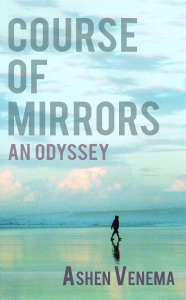
You may be curious about the publishing process for my first novel, ‘Course of Mirrors,’ now that its production is in my control. I don’t know why, but I’m hugging the recently approved beautiful cover and am hesitant to share it online … just yet.
If you’re on my Christmas card list you’ll get the cover image in the post. But quite soon, promise, I’ll reveal the cover here, on my virtual island.

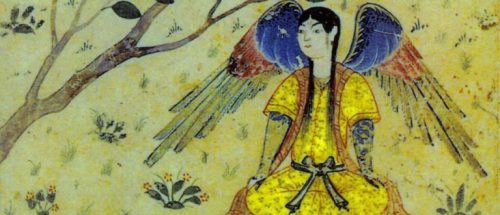 Contemplating buzzwords relating to my soon to be published novel, Course of Mirrors, I thought I make a start with guiding spirits, or angels.
 When I enter the room Dot is absorbed in reading from a folder among stacks of papers stored in drawers under a bed. ‘Hey,’ she looks up, ‘this is fascinating. It’s got your name on it.’
 The same year, not wanting to become a writing recluse, I started this blog. Through a poet I met online, Course of Mirrors found a small publisher who loved the story, which perked my confidence. Three years passed without action – a long time when you are not getting any younger. During the long wait, I did however write a time-travelling sequel and started a third book. Not keen to endure more agonising delays, I decided to self-publish.
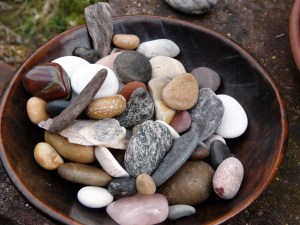 I have a weakness for small stones. Attracted by a singular shape, colour, sparkle, texture, or an aura I can’t define, I pick up stones for keeps, like I did as a child when crossing mountain streams and climbing rocks. A stone may catch my eye when it sits seemingly forlorn on a sidewalk, embedded in pine needles in a forest, or on a pebble beach, by the way it stands out.
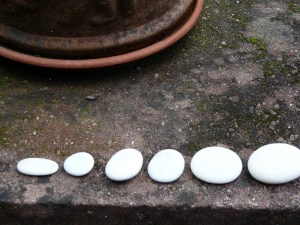 my pocket to later join my collection. I imagine another journey, another story through time.
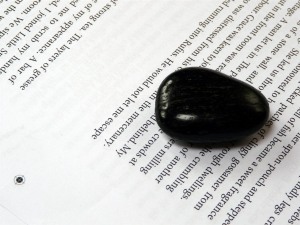 mind slows down, she feels clarity, warmth, and a sense of protection. The stone becomes a medium for scrying and guides my protagonist on her journey. When she remembers her talisman the magic works, which is the point. The remembrance reconnects and recollects her to the encounter with the spirit being, a moment of timelessness – the infinite.
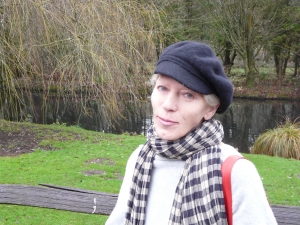 This photo was recently taken by my son on a non-make-up day, after a delicious meal with one two glasses of wine. I softened the stark reality of my age with a slight photo shop treatment. It’s the best smile I can manage in this time of confusing tragic/comic politics, for which there is no solution but to pray that the majority of people, the psyche of the world, will be able to face and endure the shadow revelations of our age, and the usual opportunists of fear – without falling into despair …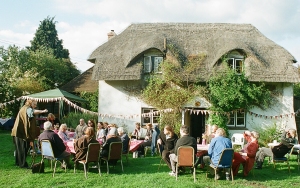
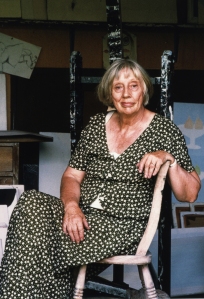 I miss her. She was a deep thinking woman, a painter, psychotherapist and lover of poetry, especially Rumi, whose verses she recited often in her very deep and distinctive voice. She was an inspiration to many. For over ten year, up to 2004, we ran monthly seminars and additional workshops together, on themes like mythology, the power of the imagination, and the significance of dreams. I feel deep gratitude for her supportive friendship and feel strongly that her frequency lives on.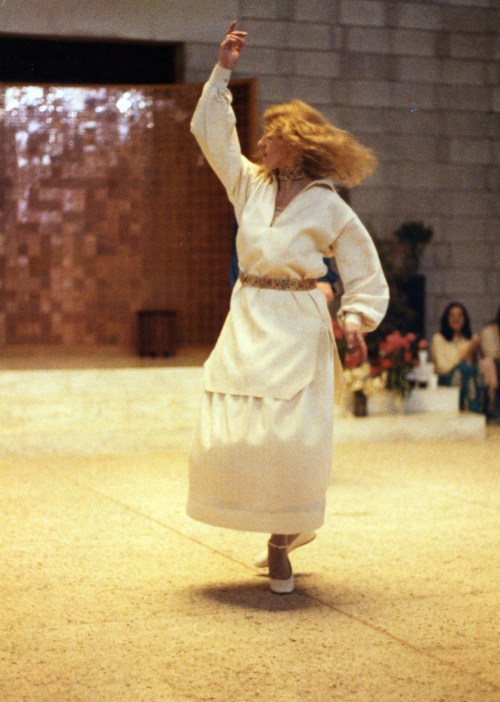
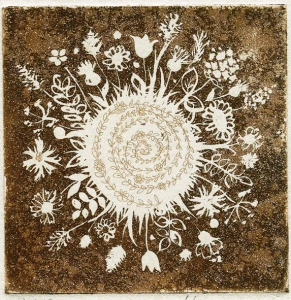


 Course of Mirrors