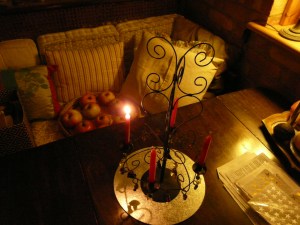
 My home was hexed lately, so it feels peaceful to light a first advent candle. I’m still exhausted after spending weeks without heating, editing while wrapped up in several layers of outlandish costumes and with revolving hot water bottles on my lap. Blissfully warm again, a relentlessly dripping kitchen tap drove me nuts. Unable to focus on editing, I diverted myself with sorting client notes for confidential shredding. Tap fixed, my printer stopped working, just when I intended to make my batch of Christmas cards. It’s become a time-consuming job to get things mended. Chuck it, is the general advice.
I feel a little like Ana in the scene below, who discards stuff in preparation for her amazing quest.
I’ll occasionally share short excerpts from my first novel here.
a short scene from chapter two
Nothing stirred the air, not a single bird sailed along the cliffs, as if nature held its breath. I had emptied the three chests in my tree house, hauled their contents down the ladder, sack by heavy sack. Once my heartbeat calmed, only the distant drone of cascading water broke the quiet, and the lone yelp of a dog from my father’s court further down the mountain. I glanced at the treasures scattered near a designated area of flat rocks and felt my fingers itch to reach out and sift the objects that held so many fond memories.
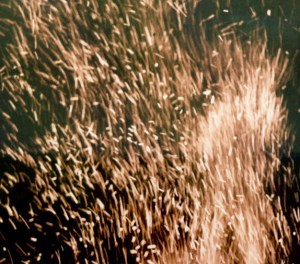 Instead, I laid strips of cord and cloth soaked in hemp oil into a star formation, building a grid of tinder and dry branches on top. On this base I arranged layer upon layer of books and stacked them like bricks to form a conical heap that grew shoulder-high. I had brought a box of candle-ends and a flask of strong spirit in case extra fuel was needed.
Next were my drawings of plants – patterned shades in rock and bark, sketches of fossils, crystals, flowers on frosted glass and cloud-shapes. Captured moments of happy absorption, bound to mould away if left. Whoever thought to search here for secrets of mine would be disappointed. One by one I folded the drawings into flute-like shapes and tucked them between book spines until the formation resembled a giant hedgehog.
Last my arabesques. I longed to unroll each linen sheet, wander barefoot into its maze and merge with the patterns turning under me like fluid gossamer. Contemplating one sheet, my first, I kicked off my sandals and followed the meandering lines of the labyrinth to its centre. I closed my eyes hoping to connect with Cara, seeking her assurance even though I knew she applauded my decision. I drifted into reverie, and shook myself out of it. Not today. The trance would not serve my purpose. Gathering the sheets into ripples like waves, I set them round the cone as if decorating a festive cake then stepped back.
All was ready, poised at the brink of destruction. Unbidden, the image of my father intruded, the familiar frown, questioning my sanity. The moment passed and was countered by a gentle – ‘you are – remember’ – the voice of the luminous being that had risen from waters under the bridge to show me another world. I felt cleansed. My mind was clear.
Resolute, and chuckling to myself, I struck the back of my knife against a sharp edge of flint until the dry lichen and rabbit droppings in my tinderbox began to smoulder. A candle-end set to the trembling flame caught, and with it I ignited the exposed hemp cords around the pyre.
Wisps of smoke curled from the periphery of the mound. Tiny flames leapt from gap to dark gap between books. I expected a sudden flare but was pleased when the flickers settled into a slow burning. Simmering heat encircled the drawings and crinkled their edges. My arabesque sheets trapped the smoke, clinging and undulating, feathering up and down the pyre like wings.
My memory held a different blaze, not of pyres burning waste in the servants’ yards, but of those built by soldiers to dispose of plague-victims outside the walls of Father’s court – fires that hissed and roared skywards, grasping for more. This mound burned idly, radiating gentle heat, consuming itself. Drawings dropped like wilted leaves. The linen sheets dissolved while their ink-patterns endured like floating geometry. From its cradle of heat the tower burned from within while book spines and covers held their shape like ghostly shells. Lettering turned negative with titles visible: Humming Spheres, Lies of Time, Benedictions and Perils of Faith.
As the sun dropped below the western skyline, the chorus from within the pyre became a cabal of whispers. Each book was plump with air in its hollow, each single page defined in silvery grey. What sweet mystery held these forms in place? Was it my hesitation? I gently blew at a single spine. The whole skeletal mound collapsed to dust under my breath. A flurry of embers – and nothing left to gaze at but ash.
Stars emerged. I lay on my back and thought of Baba. The precious books, read over and over, had been her gifts to me. Deep down I knew she would forgive my reckless ritual of separation from a home that suffocated me and was based on a lie I could not fathom. I was hungry for truth and excitement as to what lay ahead. Secretly, before sunrise, I would descend the mountain from my mother’s mansion into Nimrich and follow the river, west. Tonight would be my last visit to Baba. We might never meet again.
Check out the novel here a truly immersive Christmas read.
Course of Mirrors, a multi-faceted, inspiring, magical, gripping, page-turning story with vivid characters. Great fun, with breath-taking scenery …
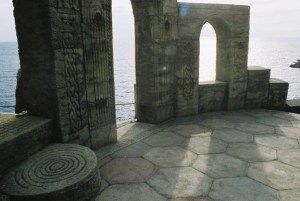 The scene takes place on a sunlit peninsula, set in a glittering sea. I play with white cubes, each feather light. The childlike part of me experiments with the beauty of forms and the building of imaginative structures that mirror colours of the sky and surrounding landscapes. Others join in, and not just friends, strangers too. We have fun, laugh and toss cubes to each other. We are building a temple to celebrate play.
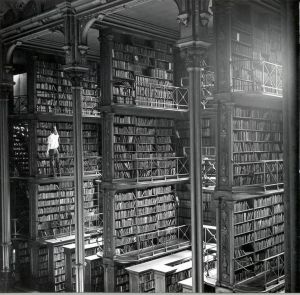 After all, there are walls and walls.
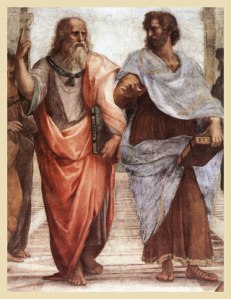 virtues of Plato’s top-down and Aristotle’s bottom-up metaphysical arguments. I explored question such as – do the aggressors in my dream represent the judgmental part of me that inhibits the creative impulse of the child that shrinks when it feel unwelcome? … Yes.
 Equally, the simple words of some prayers and mantras transmit the power of their initially intended blessing. Then again, if a quality is not already dormant in me, I may sense the love tincture, but the symbolic aspect drowns in crackling noises when I can’t fine-tune the relevant radio wave. This is why, when we return at different times during our lives to creative works that intrigued us, we may find the essence of a message and grok how it relates to us with sudden intuitive comprehension.
 In this warm and wet autumn
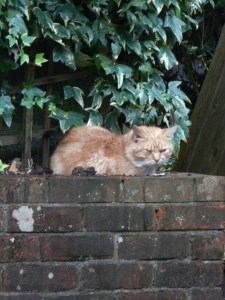 I’m old and grumpy, a familiar sight. Small chance she wonders where I hang out when not visiting. Today she spotted me – a fluffy ginger ball dozing on a brick wall sheltered by ivy – not my regular spot. I prefer having my daily nap on a bench at the top. From that royal view downhill I keep half an eye on creature traffic, neighbour cats that shamelessly kill fledglings or lame birds, the stray dog or sly fox that slips through the hedge, reckless rodents … but it’s been drizzling all night and my favourite bench is soaking wet this morning.
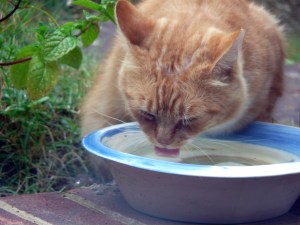 bowl near the house with fresh water, just for me to slurp. In such moments we exchange glances, and she nods. What she doesn’t like is when I get too close to her little stone Buddha. Then she shakes her head or steps from the backdoor to clap her hands. I’ve seen her turn the water hose on cats with bad manners. She should know better, I’m not one of them, I have principles.
 I bet she misses her companion, glossy and black as a moonless sky. She was gentle and tolerant of me, which is why I used to protect her from a nasty tom. Some years ago the woman dug a deep hole for her friend, near the compost heap. Not the most romantic spot to have one’s bones rest, but due ceremony was observed, which must count for love.
 I doubt she cares where I camp at night. Doesn’t know I endure the stoned torpor of Mr X, lost in a dark place. It’s not a home, the vibes upset me. But each morning I vocally rouse X from his hangovers to alert him to my dry meal. This must be my purpose – my insistence on my existence is how he tracks time, like noticing a new day. Alas, the filthy water bowl is only rarely topped, which is why I’m thankful that the woman got the message … I’m always thirsty.
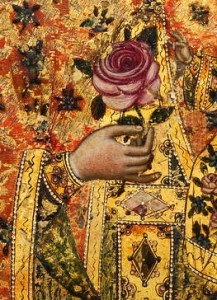 The genus Rosa, according to fossil evidence, is 35 million years old and begun to be cultivated circa 5000 years ago. Due to its tessellated structure, dome-like shape and its delightful perfume, the rose has become a symbol of the heart, of wholeness, love, beauty and perfection the world over, frequently with mystical connotation, and often highly stylised, as in Islamic art.
 While fear of loss and abandonment engenders life, it also draws us towards the mystery of infinite consciousness, the one being with countless names. Various practices, derived from spiritual traditions, can calm a turbulent mind enough for a glimpse of harmony beyond divisions. For a while, at least, we sense the larger presence, the effortless zone, the flow – and given patience, come to realise that consciousness is what we are.
 I can’t afford to buy a lot of new stuff. My Bauknecht washing machine is over 20 years old and works fine. I’m the second owner of a 2000 registered Honda car, which works fine. My friendly resonance with objects may not be accidental, I talk to them. I thank all extensions to my day to day functioning daily, including my laptop, for being loyal. In that sense, I’ve written before about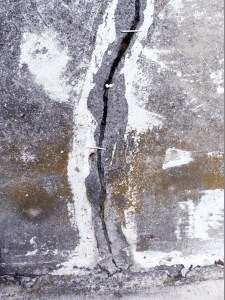
 Winding the clock back to before events were recorded in writing and ordered along linear timelines, folks across the globe unified their beliefs through countless
 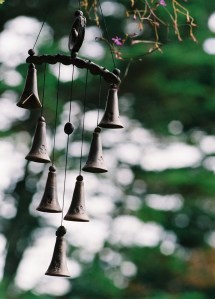 Plenty of subjects nudged me towards a blog post during these last weeks. No gust struck a chime – the sure sign I was avoiding something. I stepped back – into gardening, watching birds, boring paperwork, reading, and posting two reviews of thought-provoking novels on Goodreads:
  Yesterday I met with friends I had not seen for a while. We shared stories upon stories. With each of us being the lonely manifested part of our soul crowd, we fine-tuned into the universal themes of combined interests. It’s tricky to express what happens when we allow our associated crowds to wake and remind us of their presences within us. I tried to enlarge on the theme of soul families in a recent post –
 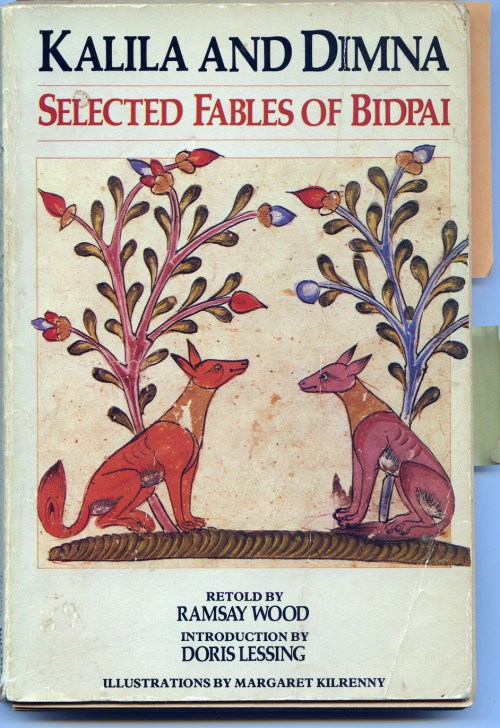 Ramsay Wood’s passion and labours of love has given us the humorous and delightful retellings of Kalila and Dimna – Selected Fables of Bidpai, with vibrant attention to detail. His research includes the famous Panchatantra, and a Persian version of the same, translated into Arabic.


