
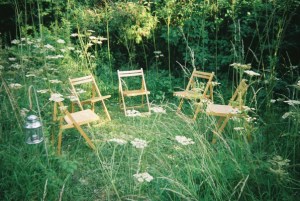
 Democracy starts inside us. One way to explore our inner crowd is through allowing the different aspects of our personality to have a voice, including ones we dislike or suppress, like parts burdened with shame, self-loathing and self-hate. Together with their inner persecutors and defenders, they tend to pop up involuntarily with strong emotional force during stress, or an experience that all too often had its first traumatic installment way back in childhood.
During a 1980s training with the Psychosynthesis Institute in London, we gave names to what we called our sub-personalities. The concept encapsulated what I had sensed for a long while, that I host various distinct entities inside me that can spring to live with their unique voices, interests, sensitivities and defenses in response to circumstances.
Take a dwelling that houses a family of all ages. From day to day there are debates, intimidation, fights, making up, tenderness, fun, humour, but always reoccurring conflicts, like an angered sibling can easily spark a massive row. Then ask who is in charge? A family with conflicting needs lives inside each of us.
As baby, toddler, teen, young adult and so on, we succeed or fail in overcoming obstructions. We learn, or unlearn. Ideally we mature and the understanding of ourselves deepens. Some memories we cherish, others we bury. Yet each time a traumatic condensed experience re-occurs, dormant anxieties may explode and cause us to overreact to situations out of all proportions.
The needy child seeking attention is easily recognised. Where early hope for safety and acknowledgement was frustrated, the inner child in the adult draws on an arsenal of acquired strategies, be it nagging, crying, pleading, pleasing, withdrawal, or, equally, rage. Stonewalling and sarcasm can serve as defense. The little person in us may have been confused by contradictory demands, manipulated by a toxic parent or severely damaged through abuse, yet still struggles for acceptance and love.
Another well-worn sub-personality opts for control, a no nonsense character, who detests, let’s say, hesitation and vulnerability. So when a firm response to a present situation is required, this despot may simply order the child to pipe down and shut up. End of story. You get the drift.
Internal conflicts can be harsh. Without awareness of the warring cast in us, we tend to blame others for our upsets. Alternatively we punish ourselves. Identifying and befriending judgmental players is vital before we can reach the vulnerable and fearful part that has become numb and possibly unconscious, or discover the creative dreamer that was ridiculed. Or, indeed, lift a dis-empowered warrior, who must learn to say ‘No!’
Without a mentor, this awareness journey is a daunting task.
 Unable to afford Jungian analysis, my spiritual search became an escape from what I saw as our revengeful, destructive and corrupt world.
Meeting a remarkable, brilliantly creative Sufi teacher, who embraced psychology as a basis for the spiritual quest, was my turning point in the mid 1970s. Grounding and digging started with a workshop called ‘Earthing.’
I had had a wild life up to then, a path I don’t regret. My empathy and patient listening lacked skill, but attracted interesting and eccentric people into my life. However, I needed to accept my limits, and better understand myself, others, and the absurd world we are born into, with the inherited traumas from our parents’ and generation before them.
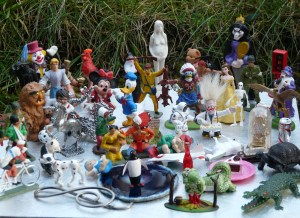
World objects from my sand tray
A welcome to my inner journey was imaginative play, giving voice to the different parts of myself through monologues, imagery, objects, drama, art, sculpting, painting and writing, etc., all effective in daring to acknowledge conflicting needs. Due to choices enforced by my early environment, I host a philosopher and poet at odds with each other, as well as a cynic and a romantic. Their conflicts are as creative as they are intimidating.
In the digital realm people have come to make up aliases based on their ambivalent shadow aspects, like appearing in different disguises on Twitter, sometimes for the sole fun of contradicting each other. As a writer one might contemplate publishing trash genre that sells well, under pseudonyms, though it seems crass, like a soloist hijacking the performance of a symphony.
Stepping aside from internal conflict, invites my unbiased mediator. My quick route to self-remembrance is saying ‘hello’ to my body, whose every cell holds a record of old wounds. The body (the earth by implication) has endured horrendous exploitation, and to call it into awareness, with all its scars, is a huge challenge for some people.
‘You do not have to be good.
You do not have to walk on your knees
For a hundred miles through the desert, repenting.
You only have to let the soft animal of your body
love what it loves … ‘ from Wild Geese by Marie Oliver
In the present global turmoil, my inner child craves empathy and compassion to endure the pain of the world, including pain I feel observing how some public figures ignorantly out-ward their inner stress through creating enemies – divide and conquer – a steely defense, and a betrayal of the heart. Then again, truth to the face rarely convinces, it lacks depth, and blunts out the whispers from the dark.
Many brilliant books facilitate psychological understanding, but when it comes to moving through a dark tunnel (also called the Night Sea Journey) it is best to seek a skilled companion as guide. In my therapy practice I came upon heart-breaking stories of abuse, especially sexual abuse. The last few decades have shown the full horror of such deeply intrusive and traumatising incidents, and how widespread they are, across all social settings.
‘You’re not alone’ … is the message by Tim Ferris, in a recent very moving and powerful podcast he conducted with Debbie Millman.
PRESS HERE for his Healing Journey after Childhood Abuse (including an extensive resource list)
He ends with a beautiful re-framing of suffering … The obstacles are the path.
This attitude brings meaning to our mysterious existence, to our individual and collective journeys. Obstacles force us to question rules, habits and behaviour. Suffering through adversity, hardship, ignorance, injustice and violence teaches us empathy for each other, and expands consciousness towards our interdependence and essential wholeness.
I could add a list of books here, but if the above concepts speak to you, click on the Tim Ferris link, even if you choose not to listen to his podcast, scroll down his page and find a list of books and resources.
To end this post, despite all grounding over the years, I’m still at heart a space cadet, exploring time travelling in ‘Shapers,’ the sequel to my first novel, ‘Course of Mirrors.’
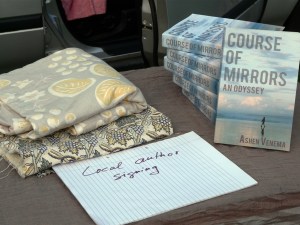 The weather was a little unpredictable, but, just in case, I made small preparation. A night without rain settled it. I got up at 6 am this morning. As a last thought I took a few copies of my novel, ‘Course of Mirrors,’ along. I sold seven copies, at half price. My entry catch phrase was, ‘Do you read?’ The lovely exchanges and the personal signing of copies gave me much pleasure.
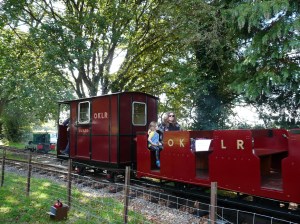 The car boot sale happened on the premises of an agricultural museum, adding charm. A fabulous steam train travelled up and down behind my stall. When there were children on it I waved, and they waved enthusiastically back.
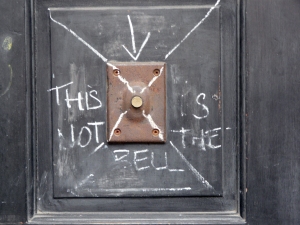 The morose question of whether to be or not to be has moved on to whether to appear or not to appear. Appearances can deceive according to context. Or as my spiritual friend, Fazal Inayat Khan used to say, ‘Form is a relic of eternal potential.’ Things that have lost their former function have joined the archive of icons, metaphors.
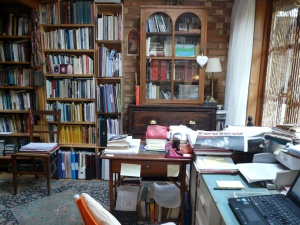 Those involved in research, students, scientist, and writes, know the challenges of filing and stacking information. My own filing mirrors the ad hoc workings of my brain. To find stuff again is a matter of focus, luck and intuition. While occasionally frustrating, I trust my larger self and the collective unconscious. It is my oracular method, circumventing any too strict measurements promoted as our new saviour, algorithms. I value rationality, just not when it discounts spontaneous human creativity, heart felt compassion, and the inspiring moods of nature.
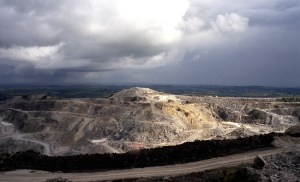 Some call it a lunar landscape. Wrongly. For lack of atmosphere, as mentioned in my recent post, the moon has no blue dome with cloud beings.
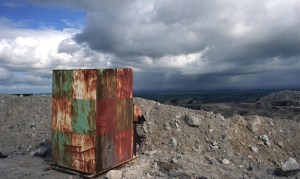 horizon, the then white hills left a deep impression, bringing to her mind a city of temples, namely Ezekiel’s prophetic vision of a New Jerusalem.
 In uniquely attuned spiritual warriors mode we conducted many seminars and workshops together, on dreams and archetypes and the imagination.
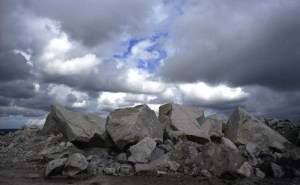 Human industry values the hidden treasures under the earth, black stuff, white stuff and golden stuff … Cornwall supplies white gold, the clay prized for porcelain, paper, paint and rubber.
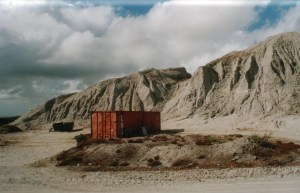 pumped to the surface for processing.
 The museum is planning a celebratory exhibition this summer …
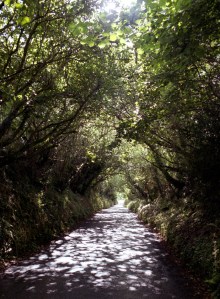 Later that day, Rahima and I travelled along narrow, sun-speckled Cornish lanes towards Lamorna Bay at the coast.
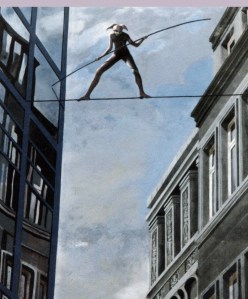 Always keen to bridge and connect seemingly unrelated intellectual territories, I tend to dip into essays of poet-philosophers and cultural theorists stacked near my bed.
 ‘The light is also weird. Since there’s no atmosphere, the phenomenon of refraction disappears, so much so that you go directly from total shadow into sunlight, without any transition. When I hold my hand out to stick it in the light, you’d think I was crossing the barrier to another dimension.’
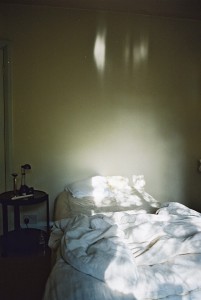 … that’s me, a dreamer. Dreams re-appear, like a déjà vu. A trick of light will superimpose an image on a scene gleaned in passing. Or a sound, a name, a number, a movement, colour or scent may link up to a dream’s mood. Similarly, memories of seemingly unrelated events from years ago can pop up while doing mundane tasks. This reminiscing improves for me as I grow wiser (older,) a subtle re-organising of events.
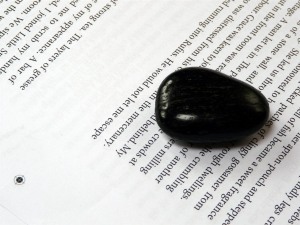 With little chance of publication, giving this sequel once more editing time seems irrational; then again, I’m the weirdest person I know. The irrational has always impelled me forward from deep states of being, in search of wholeness. Like some writers, I juggle for rhythm and balance with a multitude inside, until a character, a theme, or a poem persists and generates engagement.
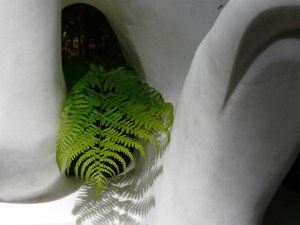 By bending towards light all life unfolds and is shaped by obstructions – and the dark, compressed sphere behind the crack that allows growth to emerge.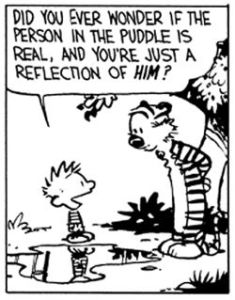
 Here my latest Haiku:
 a tall fox appears
 even hunt their kind
 How to reconcile moments of pure beauty and light our restless world offers, with the heavy darkness of human ignorance? How is it the guiding spirit that is shining through everything so often escapes the unseeing eye? Is it our wounded hearts, or our anxious busy thoughts that prevent spontaneous being? Many of us like twilight, the dawn, the dusk, mist, where darkness and light do not negate but enhance each other. They mingle. As friends do, or lovers. Twilight is poetry in motion.
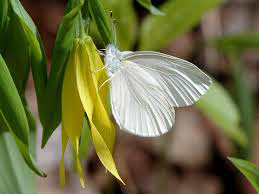 like tiny cherubs
 When there is no other near to share such paradoxical quickening with, I may call on those who enriched my life but are no longer present. I adore the moon, the ancient chunk of earth, reflecting and making tolerable the blinding beams of the sun, granting us poetry and symbolic language.
 We must see things fresh, not through tired ideas our establishments bank on, that destroy nature’s homeostasis and spill imbalances into cultures too poor to afford resistance. I say – let our children and young people decide what’s worth living for?
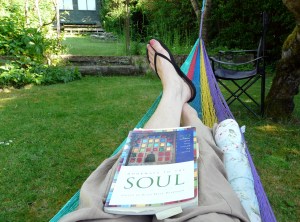
 Sun, finally, bliss. I sit in the garden, reading, among Robin friends flitting through the apple blossoms. After two hours in the heat my body needs shade. I resolve to clear some cobwebbed drawers in the shed.
 some two pfennig coins had acquired high iconic value. Up to 1968 German pennies were of copper, from there on steel was added, which made the coins magnetic.
 With hundreds of pennies, the odds seemed promising, at least compared to the lottery ticket I buy once a week.
 How do I cope? I don’t watch TV, haven’t done so for years. I prefer to read coherent articles and watch movies on BFI. And I’m lucky to have a garden, with nature to touch and absorb. The lilac tree waves, the laurel hedge sparkles; Robins build their nests, tulips nod in the breeze. Oh, and to end my ramblings, I just picked some delicate violets and forget-me-nots from my garden. They both have five leaves.


