Tag Archives: time

… not now – later …

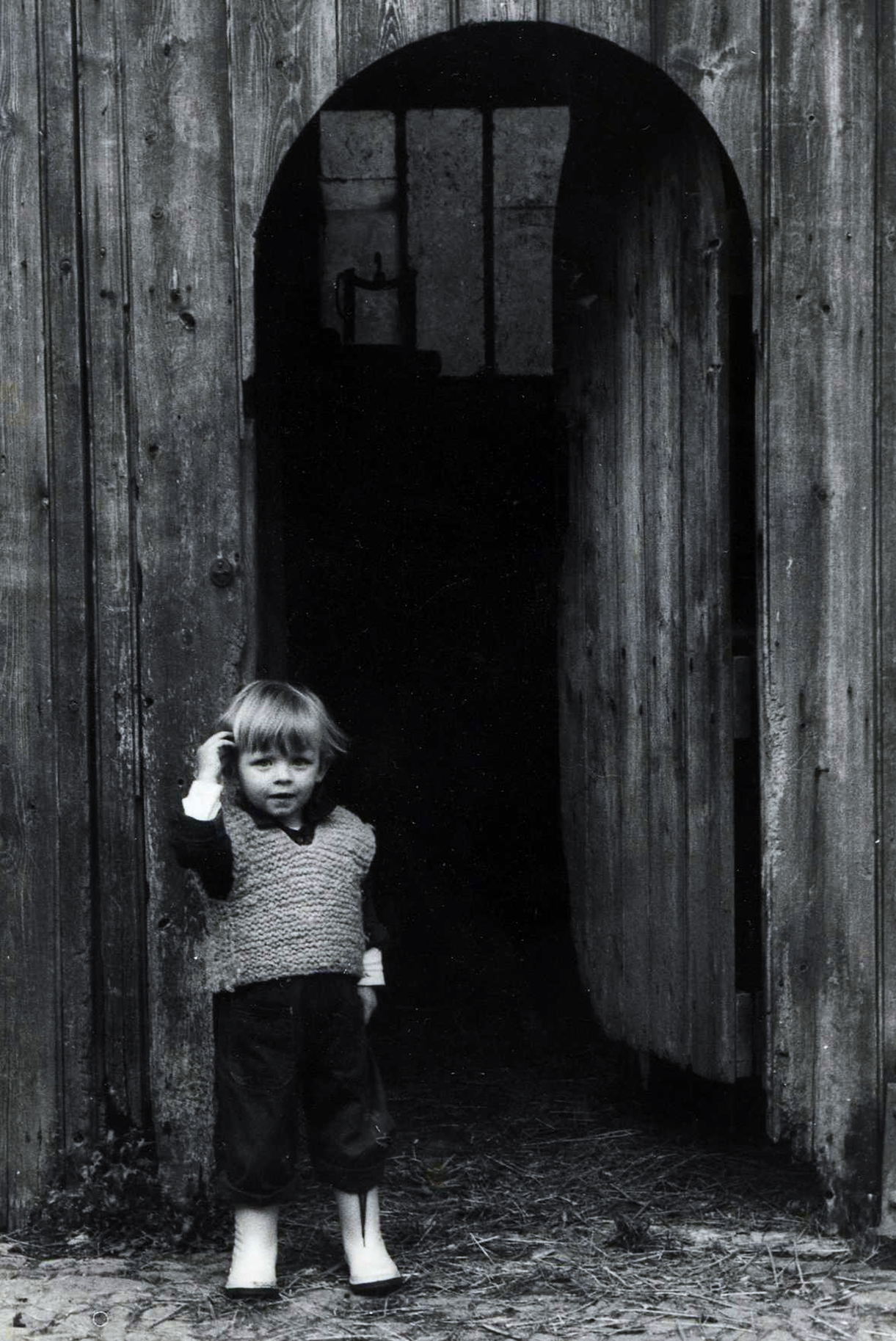
my little hero

my little hero

Each new generation tends to be smarter. While living in rural Somerset, I observed our four-year old son’s play-acting in the garden from the kitchen window while washing pots. He explored his sharp-shooting skills with wooden blocks, building, destroying, building, destroying, building; and so on … it was his new idea of fun. His aiming was good.

Pots done, I attended to the next task, fetching the milk from the street-hatch, left there by Hope, our farming neighbour. She had poured three pints of milk into a bowl and covered it with a cloth. The cream had risen to the top, ready to be skimmed off, which led on to the next task, preparing the dessert for a birthday meal. At this point my son came rushing into the kitchen, wanting me to witness and applause his new sharp-shooting skill. My brain cells were committed to preparing walnut ice-cream.

I said, ‘Not now, later!’

This trick normally worked for a while, but that day he stood his place, watching me with a quizzing look.

‘When does now end?’ he asked.

Casting my eyes to the ceiling for help, I said, ‘Actually, now never ends,’ realising instantly I was in trouble. The child’s superior grasp of logic would demand, at least, a meaningful explanation, and I could loop myself into philosophical twists. My son had no need to query my shrewd answer, he went one better.

‘So when does later start?’

Time to admit defeat. Drying my hands, I said, ‘Now.’

*    *    *

The memory of the incident inspired me to draft a poem … NOW

by Daphne Joe Grant

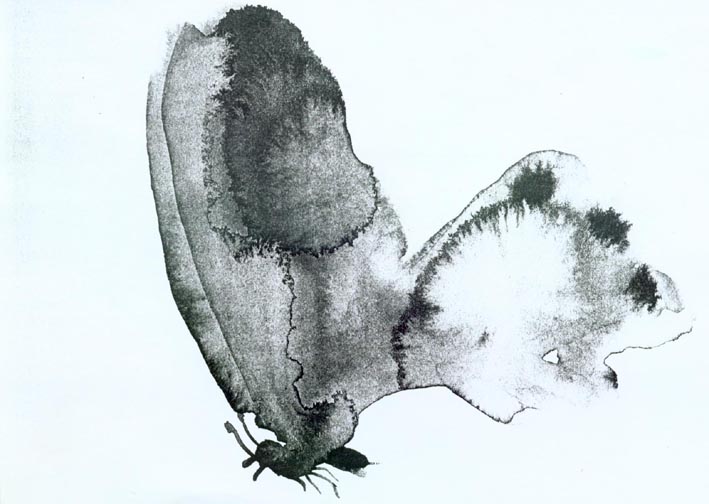
Illustration by Daphne Joe Grant

Now is the in-breath

Now is the elusive arc

Now is the outbreath


Over and over

Out of nowhere pops the now

Or so we presume


When will we find you?

Why not tell us your purpose?

Where are you hiding?


Now is a trickster

Not taken in by mind-games

Now laughs inside us


Our time must be round

Or turn through a dark tunnel

Orbiting the now


Waste now and lose her

Weft now to now and she’ll dance

Wed now and be her


Now has no answer

Now is what is truly known

Now breathe her and bow

https://www.youtube.com/watch?v=xjwBWE64fG0 Interesting talk by Rupert Spira on perception.

A focussed mind helps us to achieve stuff, but is also easily hijacked by the rat-race, the relentless rush towards meeting deadlines in competitive environments, where no children interrupt and make us pause.

Apparently 10.4 million days are lost annually to work-related stress in the UK alone. And it costs businesses in the US $300bn (£187bn; €237bn) a year. No wonder the ‘Here and Now’ theme is in vogue again, even with hi-tech status. Take a biosensor device, called Pip 🙂 … http://www.bbc.co.uk/news/business-29742908

There is another kind of stress, less talked about, affecting those who work hard for a living, as well as those who lost jobs, or get by on little, or anyone reflecting on human qualities, while witnessing a growing social polarity … as poignantly shown in this image …

http://gerryco23.wordpress.com/2014/10/24/the-fence-between-a-world-of-need-and-a-world-of-excess/

16 Comments

Filed under Blog

… gossamer bridges and palaces …

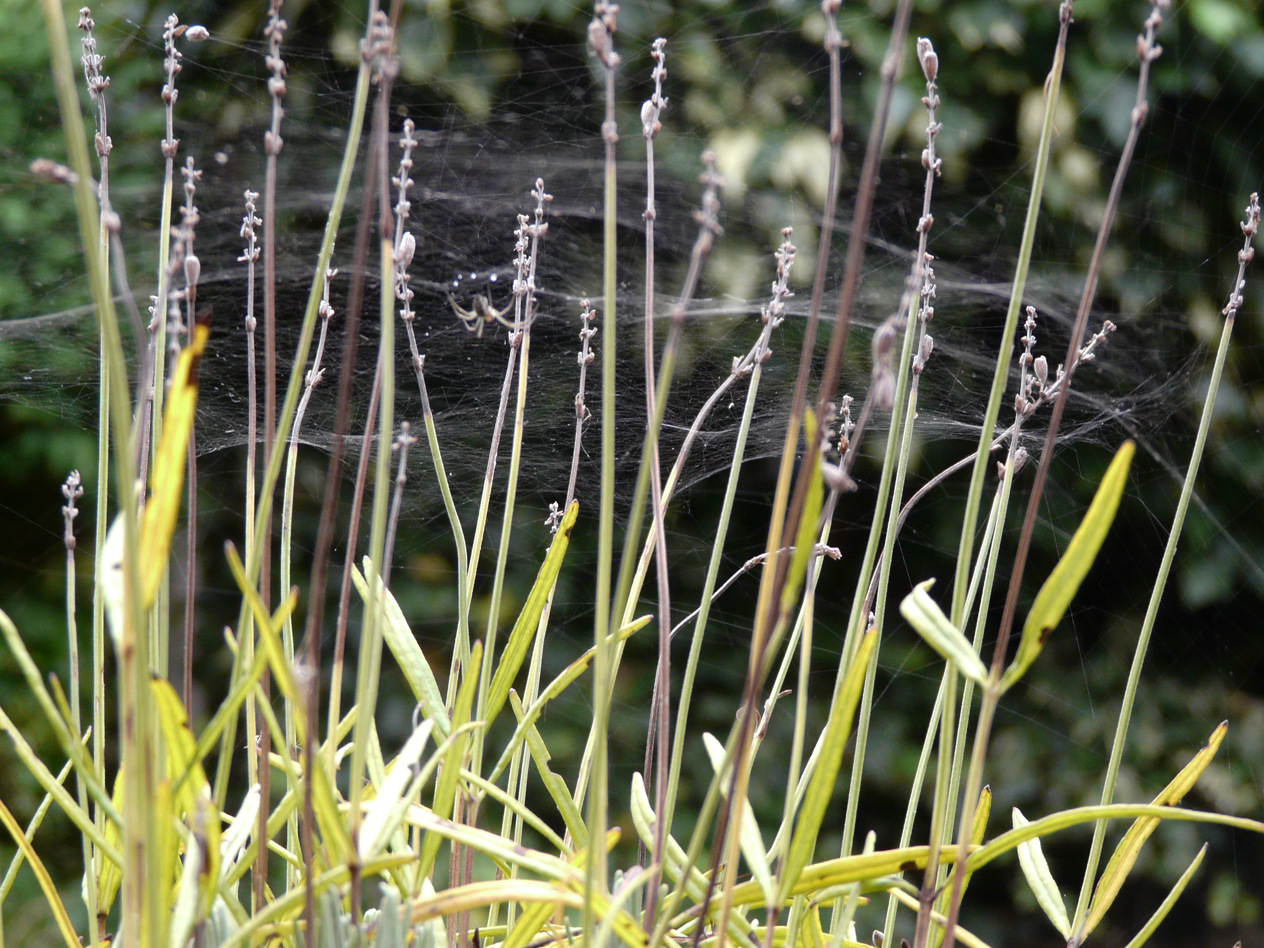
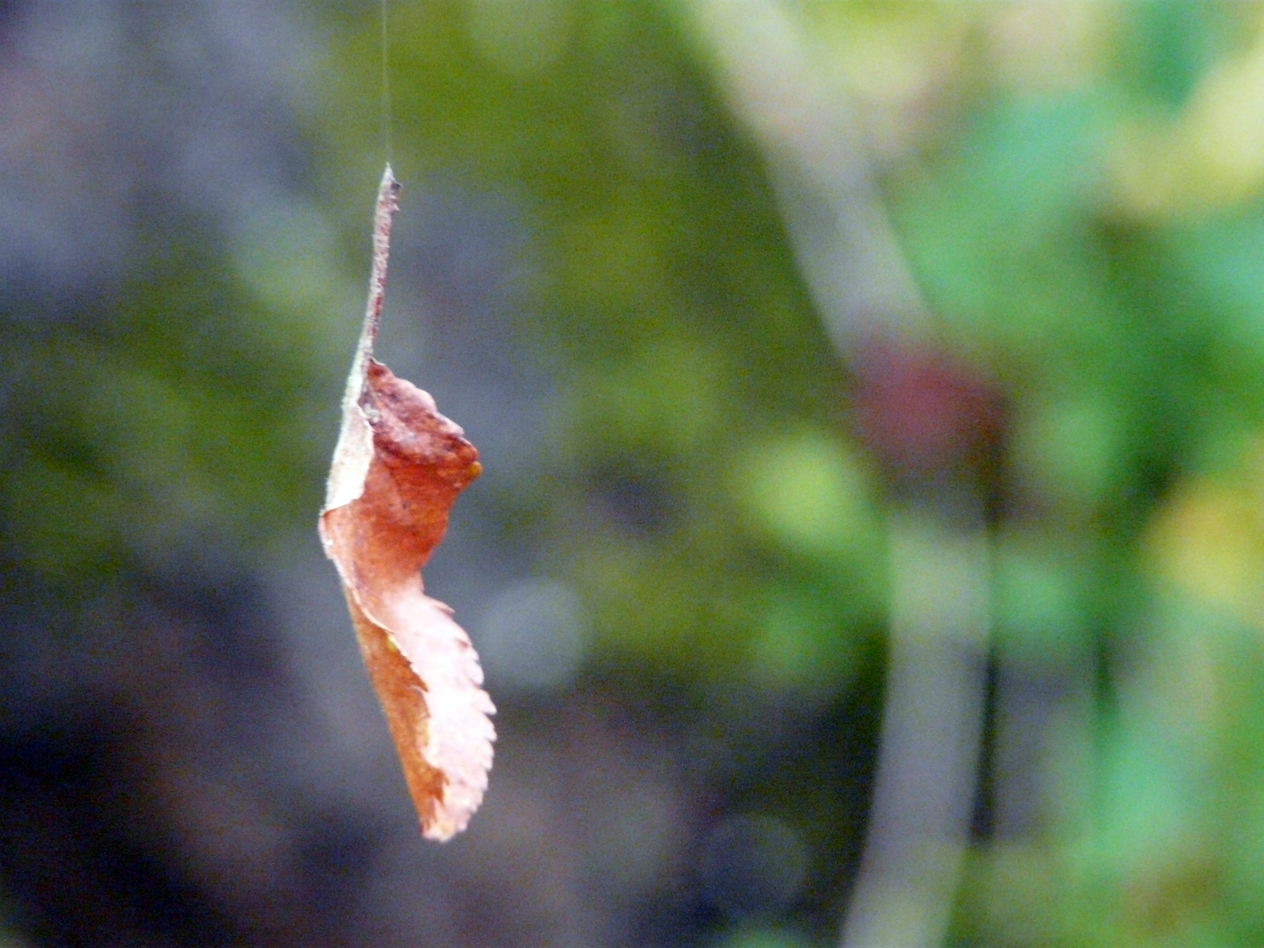
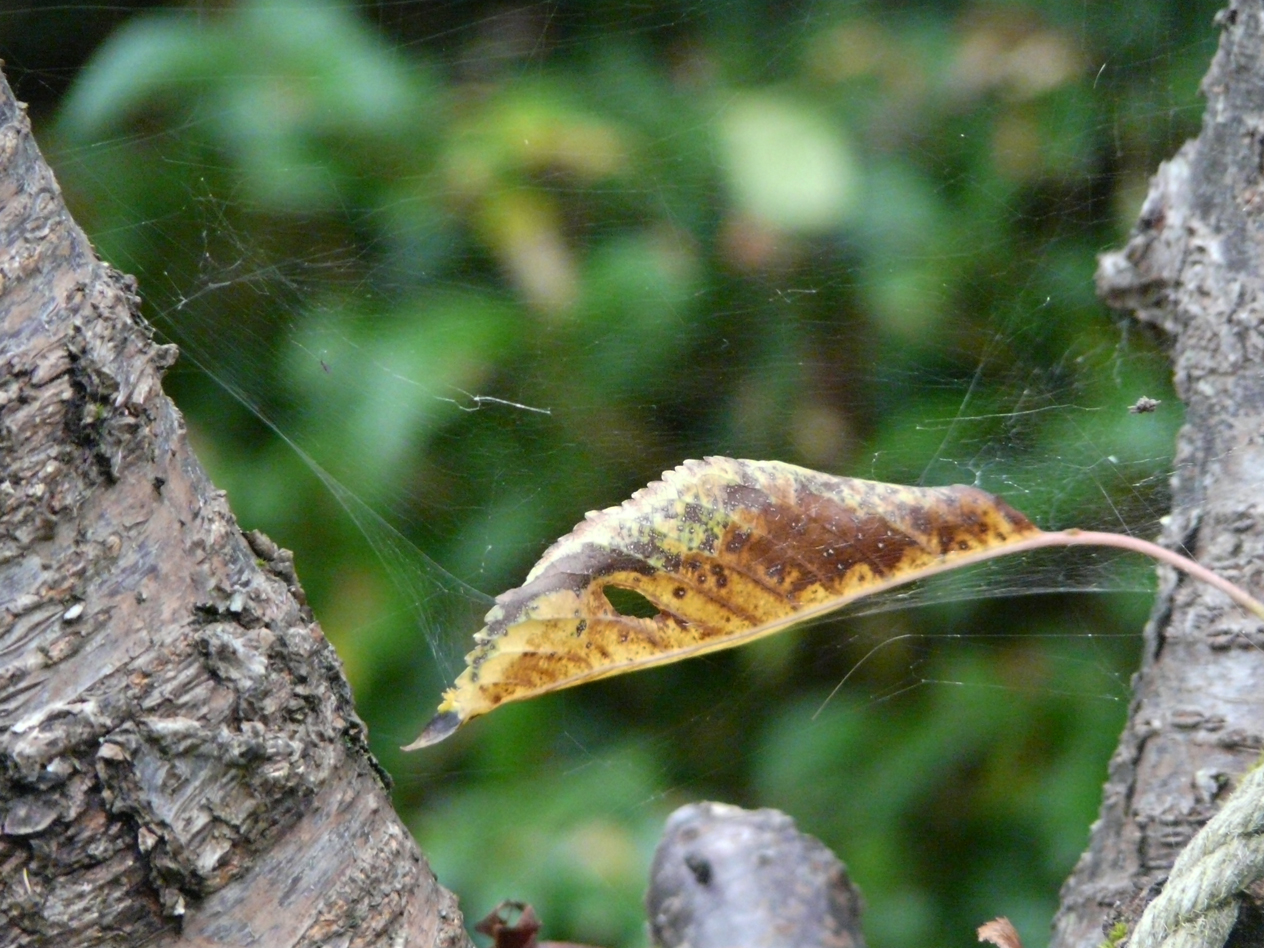
I’m a terrible hypocrite. I can’t stand spiders in the house, but I adore them in my garden, where their bridges and palaces are now quivering everywhere, only visible against the sun or by the rare leaf suspended in mid-air … exquisite.

P1060844 smallerP1060855 smaller

P1060849 smaller

A leaf floating free

From stem and branch – inholding

The ever-tree myth

P1060859 smaller

Once more nature translates its lore to the soil, carrying patterns of relationships to new settings.

We do the same, daily and all year round, translating our experiences to ourselves and others … our cells, bodies and minds continuously changing, never the same, despite appearances.

I wish for grace in waiting, the hibernating towards re-membering afresh the cyclic occurring wholeness in new formations.

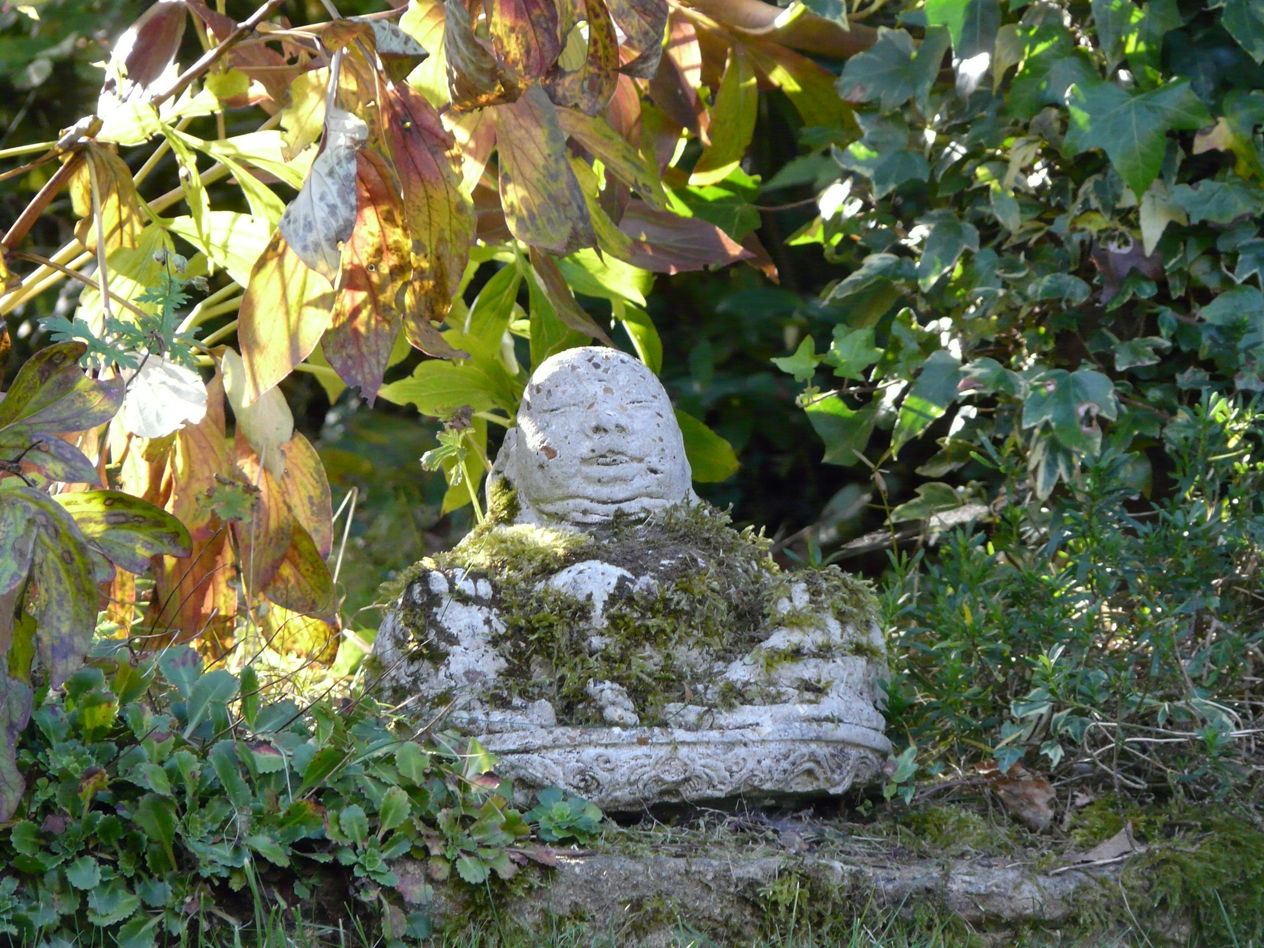
And I wish for the patience and good humour of my tiny Buddha.

14 Comments

Filed under Blog

… a tribute to snags …

I’d make a lousy fundamentalist of any kind, and was probably born with negative capability http://en.wikipedia.org/wiki/Negative_capability and a tendency to daydream and contemplate life, skirting extremes, which makes my voice almost inaudible in a culture where sensation trumps. It also means I procrastinate on tasks that need doing, until a snag propels me to act.

CNV00003 - copy 2

One morning last week, easing myself into the day, the shirt I dusted in the cool morning air was trapped when I shut the back-door; next the sleeve of my pyjamas got caught while I closed the lid of my coffee tin. SNAGS – their repetition blinked a green light for associations and made me think of dreams, how they sneak into the daylight via signals. With only a vague memory of my dream, I followed an impulse to catch up on practical tasks round the house.

A shelf in my shed needed fixing. It had crashed, bringing down an array of cans, sprays and sealants. In the way one thing leads to another, I sorted and dumped stuff, and dumped some more – making space. Seized by the flow of action, I de-frosted the freezer, thinned the ivy round the shed, cleaned windows, filled a sack with confidential papers for shredding, loaded the washing machine and made some overdue phone calls … all amounting to what I call a BLITZ day.

Knocks from the dark, SNAGS, help me overcome procrastinations. BLITZ is how I operate to gain periods of laziness. I’ve learned to humour my inner driver (superego) and made peace with Lazy.

Dark of beginnings

Flees the meddler

The shrill demand

The noisy footfall

The sharp beams of

Imposing eyes

Dark folds its mantel

Round the dreamer

The shy nomad

The vague image

The tendrils of

A budding poem

Approach it softly

Like a lover

It may surprise

Or yield nothing …

———————————-

After my Blitz day, a book came to mind, ‘Worlds in Collision’ (1950) by Immanuel Velikovsky. His research resulted in controversial astronomical theories about catastrophic events planet earth experienced over time, and how the human race was affected. Here a link to a 1972 Horizon documentary:  https://www.youtube.com/watch?v=U18gMJXNyX8

He concluded that as a victim of amnesia, collective humanity is compelled to repeat and re-experiencing traumatic events, to aid, in a psycho dynamic sense, recovery through triggering repressed feelings, wake up, and learn to control the experiences. It’s a wider, thought provoking context for the contemplation of our human lot, which I leave to you, my readers, to explore.

———————————– 

On a smaller scale, we may have memories of being held in the womb and in the arms of our mother – or not. In either case, there are giants to overcome, grown-ups. One of the saddest things grown-ups do is deflating a child’s dreams and desires, talking down: Wait till you grow up. Life is tough etc. etc. It’s like telling a seed, ‘Don’t bother; you’re doomed from the start.’

collage2, familyThe desire to be  held equates home. The longing for a permanent home seems to motivate our actions in relation to food, shelter, competition, acquisition, power, money, knowledge or love, as well as being the impetus underlying the craving for prophets who promise salvation.

Fear of not being held, of having no claim on a place where it’s safe to rest when life gets tough, has made us inventive. We wall our interests, invest in insurances, wage war to protect what we identify with , or claim ownership of ideas, philosophies and creeds. Maintaining behaviours that keep familiar systems in place, we find it difficult to accept with sobriety that we are all in the same boat, that our ideas and identities are fleeting chimeras.

Imagine … wouldn’t it be wonderful to seek nothing and simply enjoy the miracle of living, and be like this child overcome by the mystery of rain?  http://vimeo.com/84802749

There is an experience of home that tends to go unrecognised, hiding, as it does, between each breath, in dimensions beyond time. Such glimpses come and go, leaving a sense of union and connectedness while we’re tossed along the rapids of progress, inevitably bumping into obstacles – the snags of life signalling messages from the unseen.

The psyche is a bridge between inner and outer dimensions (the theme of my novels,) similar to the corpus callosum connecting our two brain halves. On good days I sense that in addition to existing in time, a part of me also resides in another frequency dimension, as a light-body, or soul, resonating in my body while I occupy it.

*    *    *

A day, whether six or seven years ago or whether six thousand years ago, is just as near to the present as yesterday. Why?  Because all time is contained in now. Meister Eckhart

16 Comments

Filed under Blog

… the vagaries of days …

My dream sinks to a timeless world the instant I open my eyes and take in the first impressions of the day – a shimmering spider web clings to the corner of the skylight, defined in the early sunbeam – a mosquito hovers drunkenly above my laptop. I recall a similar tiny vampire savouring the taste of my blood during my last day in Darwin; did it converse with this one across the oceans by morphic resonance? P1060804 - lower

Almost two weeks have passed since my return. I miss the Aussie company, and mornings at the pool under the palm roof.

Time is fitting hesitantly into habitual chunks. My body tweaks itself into smaller spaces, and tasks resume their orderly sequence. Breakfast oats don’t land in the coffee filter, and my head no longer collides with the chiming bells hanging next to the kitchen sink. Still, having inhaled another kind of dust for a while, an aura of mystery pervades my familiar environment, and routines are shifting, like I scoff at lists, allowing unimportant stuff to be just that, unimportant.

As the sun pours into the house through the garden door, I step outside. A bright orange hot air balloon almost shaves the branches of the high beech. Another follows, with noisy lettering, not as cheerful as the Virgin one with its clear brand. There being no boundaries to the sky, I’ve the visceral sensation of wanting to shrink and become invisible, musing how privacy and solitude are becoming an issue – there’s only in-back and no out-back left in England.

P1060820 - lower A poem stirs, wants out, but mail demands attention. I share my disorientation with friends. Ideas chatter and juggle into new frames, a changed perception of ‘home.’ What’s home other than moving with the experiences that carry us onwards?

I glance at the patch of Phlox waving from the lush green beyond the window and then distract myself from the screen by trimming a miniature Japonica tree into shape. My blackbird friend comes close enough for us to have a conversation.

I make time for a two hour stint of editing ‘Shapers,’ the sequel to my first novel. Moments of laughter – relishing my writing is surely a good sign, until the next stab of doubt – will anyone be interested in my scribbles? The solution is to keep writing, and trust readers will be pulled into my opus and enjoy the adventure.

Another shot of coffee before today’s therapy sessions begin – undivided attention to process, listening to stories. When silences linger in the devoted space, spirits assemble – we are a crowd of presences meditating on meaning, or the lack of it.

P1060831 - lower Though it was not exactly my birthday, I hosted a small garden party last Saturday, celebrating togetherness with friend. I managed to outwit Sunday’s Hurricane Bertha, which, in my corner, merely brought blustery wind and rain. Clouds parted in time to reveal the brilliant super moon.

Preparing for reading in bed, I catch a tiny movement – a huge spider. Totally irrational, but there’s a wrong time and place for spiders in my house … at night, next to my bed, and it’s a matter of scale. The scenario of a huge spider crawling over my skin plays havoc with my imagination. No time to get a glass and chuck the creature out. I’ve light in my maisonette, but take a torch for good measure, and wait. In a while the monster comes for me from its hiding place among books – full attack! While it baffles me that the sure crunch of a spider’s demise can in such instant bring me satisfaction, it’s also sobering to realise how discordant timing is neither good nor bad, it just is.

P1060834 - smallerGiven the vagaries of experiences each day brings, the only control given to us seems to be pliancy. As I write this, a rainbow flows across a cloud.

‘The same wind that uproots trees
makes the grass shine.
The lordly wind loves the weakness
and the lowness of grasses.
Never brag of being strong.
The axe doesn’t worry how thick the branches are.
It cuts them to pieces. But not the leaves.
It leaves the leaves alone.’
Rumi, The Essential Rumi

20 Comments

Filed under Blog

… the mystery of thoughts …

Every child is truly switched on to the imagination. But frequently the environment belittles the imagination, and the gift can end up suppressed under the blanket of rationality. People with a strong creative drive may settle down to live in a straitjacket, and then find themselves overwhelmed by images, thoughts and associations, especially around full moon.

As a child I was intensely curious about the spaces between things, and about light. Had I not locked horns with an opinionated physics teacher I might have taken up the challenge to study sciences. Another fascination of mine was pattern repetition – how the veins in a leaf resemble the shape of a tree. And scale – how tiny bodies, big bodies, our planet, galaxies, the universe, are all reflected in each other.
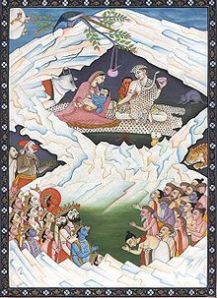
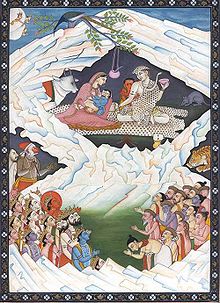
 Hindukailash, image from wikipedia.

Hindukailash, image from wikipedia.

Like Indra’s net of pearls in Vedic mythology, where the surface of each pearl mirrors all other pearls, a metaphor for the interconnected networks of mutual relationships between parts and systems. Mount Kailash is depicted here as the timeless and motionless centre of this net, housing Shiva’s family.

Not only visible structures are held together by interactive nets, our social systems, political systems, spiritual systems and the internet operate within a network. We can observe that the invisible psyche (mind) functions not only through logic, but also through aesthetics, independent of space/time, and is held by another kind of coherence – a net of meaning. And what is generated from this net of meaning is a finer kind of energy, not evidenced by present scientific methods – namely intelligence.

We knew it all along – research established that our emotional experiences leave an imprint in the cells of our body, that the brain is more than the squishy mass under our skull but a medium spread throughout the body via a network of neurotransmitters. There have been hair-splitting arguments for and against the idea that the recipient of an organ can experience personality traits of the donor, based on the speculation that each cell carries a hologram of the whole body and its memory.

Feelings and thoughts arising in my consciousness are filtered through my body’s memory. They also depend on my state of anxiety or calm, my interest, attitude and other variables, such as the weather, my relationship with the elements, with people, the collective mood, solar flares, or the constellation of planets. On some days, maybe after a meaningful dream, or a spell of mantras, thoughts are forming clearly on the breath, like reflections in a still pond, on other days, thoughts rush in on water rapids threatening to drown me, or they plod in like turtles, slow and guarded.

Objective reality is not the only game there is – what in the universe has not interacted at some point in time, irrespective of distance? Everything is linked up. Einstein called it the ‘spooky action.’

The motherboard for this wonderful instrument we call the brain, which comprises our whole body, is formed in the womb. I believe the intelligence involved in creating any specific body must lay in more than known DNA codes, must include the indeterminable non-local DNA of a spirit world. Our body foremost operates like a receiver and transmitter for as many wavelengths our radio station in time attracts or is able to tune into.

From this station, stabilized by repetition, I sort clusters of sensations and feelings, and process thoughts and ideas attracted to me from the collective psyche, a vast sea, which the individual mind must learn to navigate. Images and signifiers are coloured by whatever I consciously or unconsciously mirror and relate to.

No matter how much information we absorb, through our senses, through language and concepts, through comparing patterns, reasoning and calculation, everything, comprehended or not, will be filtered through the body’s motherboard that keeps adjusting to experiences and expanding fields of perception, fields that extend way beyond personal memory. All this information is continuously re-shuffled, as is the meaning we assign to it.

Our body is a motherboard – planet earth is a motherboard – the whole cosmos is a motherboard for a spirit we cannot comprehend, an invisible hand that touches us like a breeze, made visible through what it animates.

All we know is that images, thoughts and ideas are reflected in us. They travel via synapses in the neurons of our body, they travel on the air between minds, they travel among stars, they echo from under the sea, waving to us as plankton, they speak to us from every creature, from every blade of grass, from every stone, and they beep from within our bodies through tweaks of pleasure or pain. All matter, all people and objects we interact with store the memory of that interaction, including interactions with things we hate or nurture, and with places we live in.

We don’t invent anything, we re-discover, re-connect and re-create from the vast storehouse of knowledge and information provided to us by nature, and by the spirit between matter that makes up the cosmos, an embodied being that is becoming conscious of itself.

We are on the air, sent, programmed, radioed and broadcast, identified with all manner of things, ideas and beliefs. Yet if we look deep inside our emptiness, we know, the non-material aspects of us can potentially detach and be free, maybe enjoy tea with Shiva’s family and witness the world turn on its axis – a state some people experience spontaneously or through meditation. A state of pure consciousness not identified with this or that. In the meantime, we could at least be kind to ourselves …

‘Thoughts are beings that generate … One thought of kindness gathers a thousand beings of love and kindness around one.’            Hazrat Inayat Khan

I don’t know if a singular mind/psyche, the incredible art of a lifetime, survives the physical death of the body. Maybe a coherent individuated mind leaves a dent, an influence within the collective psyche. Like the organ of the heart, over time, achieved its definite function. But does it matter? Nothing is lost. All information is continuously re-shuffled into new forms and constellations.

Digital storage provides a metaphor – information exists and roams freely in the wind of the collective psyche (unconscious) until it is embodied and gathered towards a purpose. Every event has a consequence. Nature is exacting, but also generous, what has been repressed in the flow of evolution will always return in one form or another.

Everything alive speaks to us, and all such relationships are processed in the stories we share, stories being containers of the richest kind of information. 

*    *    *

You can source other posts on the theme of reflection in the tag cloud on the right of this page. Like this sequenc of posts: https://courseofmirrors.wordpress.com/tag/hazrat-inayat-khan/

And you might want to check out posts under the tag ‘psychology,’ especially the one on ‘awareness,’ where I share R. Assagioli’s 10 psychological laws – how the body affects the mind and the mind affects the body. https://courseofmirrors.wordpress.com/tag/psychology/

*     *    *

This post also appeared at  Third Sunday Blog Carnival: September 2013 | Third Sunday Blog Carnival

17 Comments

Filed under Blog

… when did you last smile? …

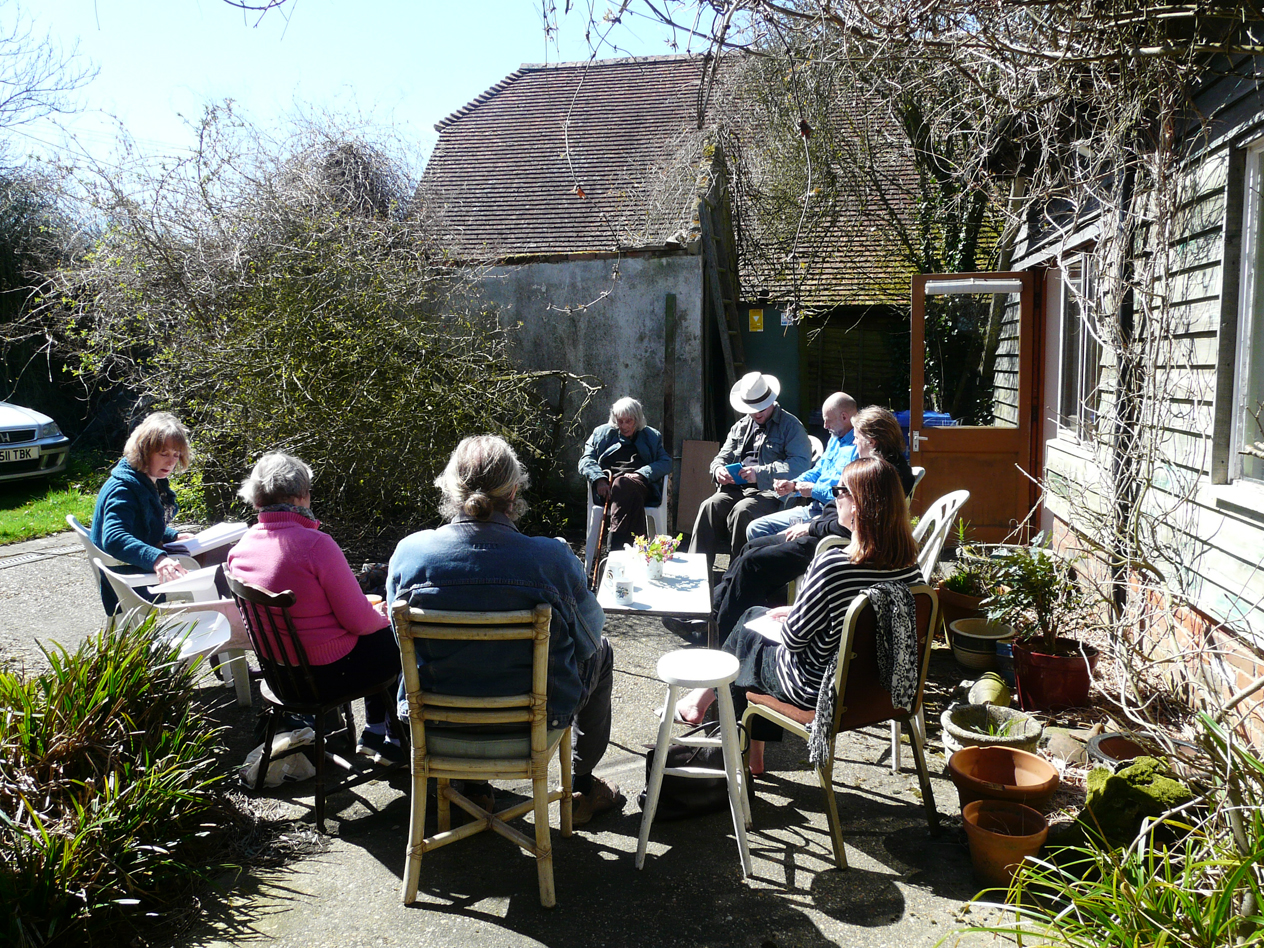
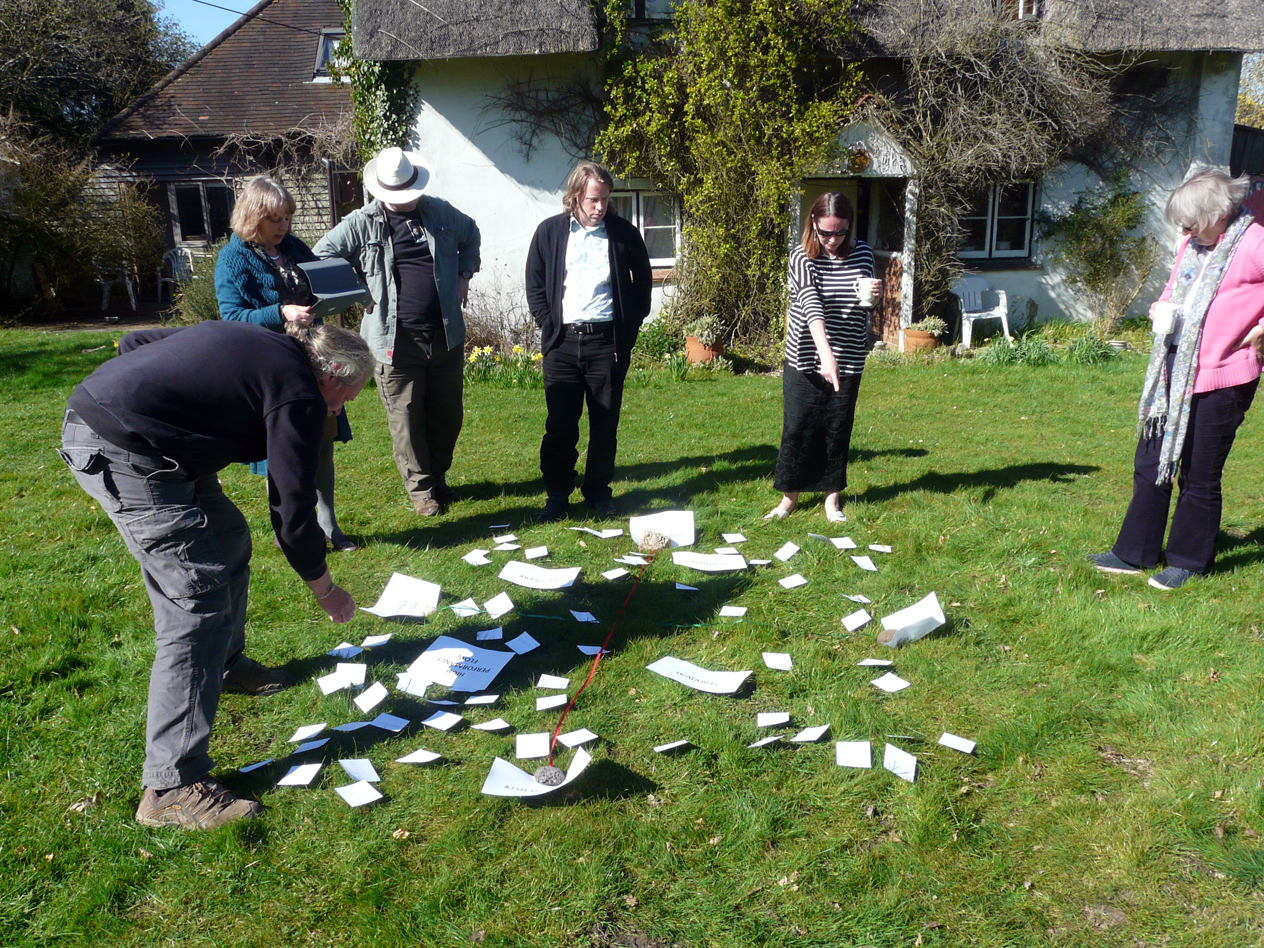
When did you last smile? The question started us going. I belong to a bunch of friends, 10 to 20, who meet monthly. We rotate the facilitation of sessions. People propose themes worthy of engagement. Our April session had the theme of Positive Psychology. The term, coined by Martin Seligman, has been called unoriginal and evokes ongoing controversies, not least because basic theories promoting well-being have been around for a long time, for centuries. Overall, the disputes are creative.

P1110122

P1110124

The off-the-track cottage and studio we hire for our monthly meetings has a delightful atmosphere. We love it, though its structure is gradually falling apart. The custodians of the property have more pressing concerns, and so have we. After a unique international creative centre was lost to us eight years ago, this liminal space offered itself. Here we challenge and cherish each other, explore ideas and welcome guests.

As to the initial question of the day – when did you last smile? – Of late, I frequently smile at my quirky thoughts. That day however, I recalled waking early and passing a vase brimming with pale double daffodils, splayed open to full perfection in the morning sun. No matter how fleeting an instant of wholeness, it tends to ravish me into my veiled wholeness. The exquisite flowers invigorated every cell in my body and set the tone for my day. It was a moment of transcendence, of grace.

We explored scientific findings as to what goes on in different parts of our brain when we experience emotions. There is evidence, for example, that prolonged stress weakens the immune system. Stress may be real or imagined. It can be maintained by resentment, anxiety, learned helplessness and the anticipation of negative outcomes, often based on scary experiences (even in the womb) that informed expectations, like the world is unsafe and we have no control over events. Neurobiology is fascinating, though I wonder if it can ever explain existential questions about phenomenology. Some of us bring along a lucky or unlucky disposition, but a great deal of what we become seems to depend on the interpretation and meaning we give to what is happening to us.

Bang head here

Which begs the question, can optimism be learned through challenging negative self-talk, the kind that rubs it in, like – here we go again, I should’ve know, stupid me, no matter what I do –  and so on. For some people prolonged attention to self-talk works. Many brilliant techniques have been developed to overlay fixed habits. Extensive research has gone into the mastery of happiness, especially in the US. This said – Martin Seligman, the father of Positive Psychology, acknowledges that negativity is part of the human condition. As such, I see negativity having a compelling function in social systems that first make us ill and then sell us pills, a larger story…

I tend to huff when a generic psychological approach is wrapped up as a brand and turned into an industry, and Positive Psychology has become a successful industry during the last decade. Then again, there were a great many innovators since Abraham Maslow, who, inspired by ancient wisdom traditions was the first to challenge Psychology’s focus on pathology at the time, by researching what motivates people up the hierarchy of needs, and by defining the qualities of achievers. The work of Seligman and his colleagues seeks to encourage functionality, resilience and well-being. It provides further valuable applications and insights regarding human potential that are worth studying.

I personally lean towards the subtle wisdom regained during my training with Psychosynthesis in the 1980s. We may reach peak states of awareness as our consciousness expands, bliss even, yet each higher view calls for a journey down, into denser spheres. C G Jung put it well … As far as we can discern, the sole purpose of human existence is to kindle a light of meaning in the darkness of mere being.’

P1110127

Our group is an irreverent lot. We had fun, warm and lively discussions, and we engaged with personal questions. From a set of 24 cards we chose our 5 dominant signature strengths. Humour trumped several times, followed by creativity, perseverance, appreciation, fairness and perspective. Oddly, there was one card I ignored but which jumped to the top when I did a test on-line – Appreciation of Beauty and Excellence. I later figured out why I had held back from picking up the card. This appreciation, which I have to a high degree, is also the source of lingering sadness, because Beauty and Excellence touch me deeply, are glimpsed rarely, and are hard to live up to and shine with. Then again, moments of grace, a sudden seeing that stops time, like the daffodils of that morning, carry me through periods of melancholy and questioning. The theme of the day stayed with me, and after some reflection I came to this conclusion:

I would not be happy being happy all the time. For better or worse I walk the tightrope of contradiction.

*      *      *

The cards we used are available at:  http://mindspring.uk.com/shop/strength-cards/

Here is a site with a questionnaire that measures your character strengths http://www.viacharacter.org/www/ It’s free, unless you want a longer report.

The photo of the Stress Reduction Kit poster is by Programwitch, found on Flickr.

13 Comments

Filed under Blog

… why spin tales? …

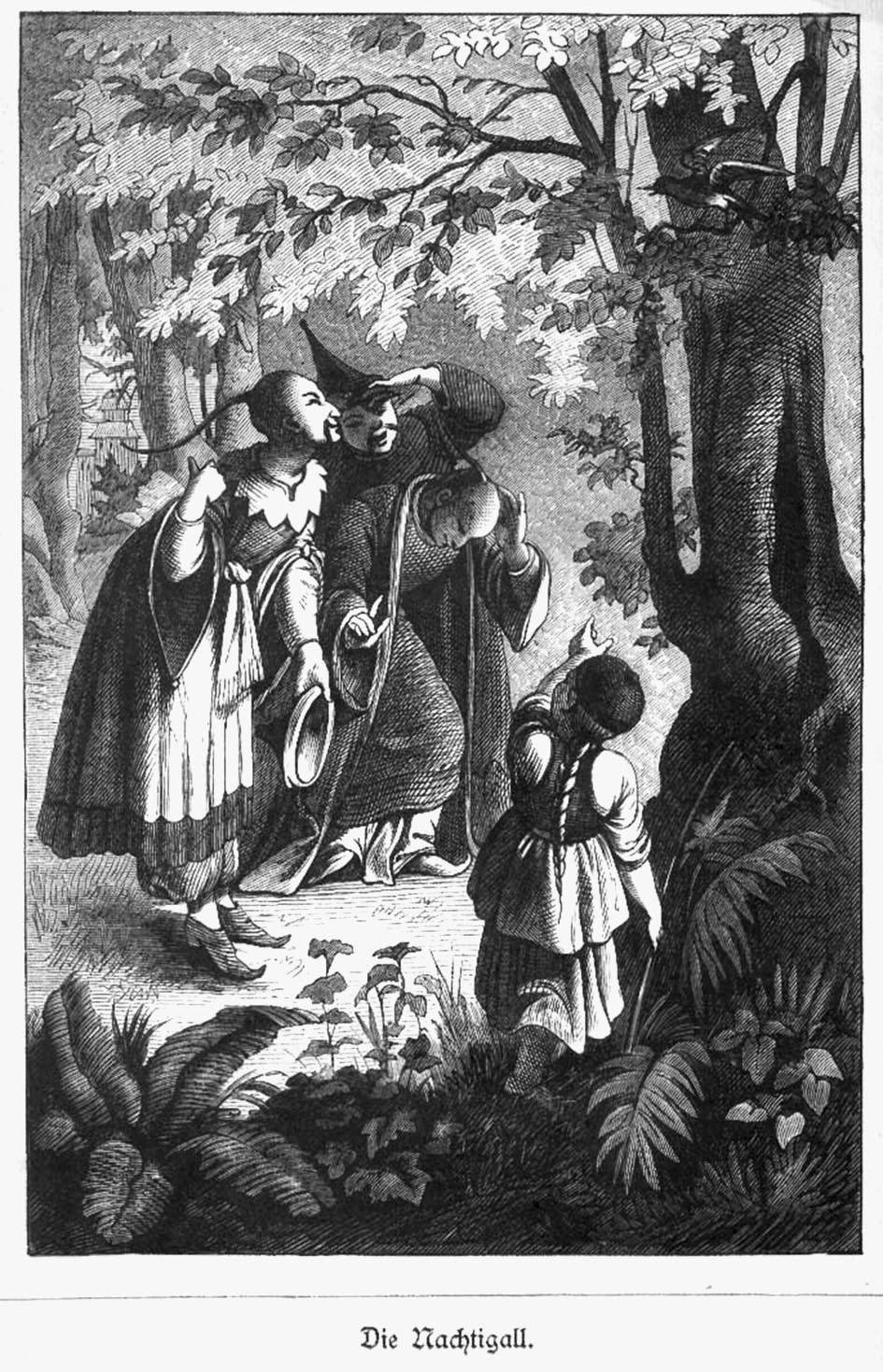
Die Nachtigall-02 Why spin tales, why listen to them, enact them on stage, dance them, ritualise them, read them, write them, re-write them?    We tell stories to ourselves and each other, to entertain, inspire, amplify events, or in search for meaning.

When it comes to stories, fact-finders tend to miss the point. Too many sequential facts can befuddle a truth that lingers in the higher or deeper layers of consciousness, from where vital symbolic insights shine through a narrative.

We owe much to Joseph Campbell, who with life-long passion explored the origins of myths and their functions throughout human history: http://en.wikipedia.org/wiki/Joseph_Campbell

And check out these fantastic documentaries: http://en.wikipedia.org/wiki/The_Power_of_Myth

A myth is a public dream – a dream is a private myth. – Joseph Campbell


In my psychotherapy practice, clients present their story in unique ways that occasionally include lucid dreams of past lives. I deeply respect the power of the imagination. In neutral mode, I listen. So it happens that a trauma set in thirteenth century Languedoc, when Cathars were branded as heretics and massacred by the Catholic Church, can deeply trouble a person’s psyche with visceral images. I travel along, and as the story is released, I may bridge the emotional resonance of a pattern to the present life of a client. In this process profound cognitions can soften a psychological complex.

Lasting examples of deeper truths are mirrored in Fairy-tales and myths, where basic patterns of our collective unconscious psyche are brought into relief. That is, if we can grasp the metaphors under the primary meaning of words. Fictional settings for heroic or anti-heroic characters are particularly suited to convey powerful emotional themes infused with archetypal elements.

… the spirit of an age is more essentially mirrored in its fairy-tales than in the most painstaking chronicle of a contemporary diarist … Raymond Chandler – Realism and Fairy-land

Some religions persist in the literal truths of their sacred texts. Scientists, too, get stuck in dogma, but I emphasize more with the frustration of the latter, since, with the courage of doubt, scientists have pushed the horizon of knowledge outwards by painstakingly reading the book of nature through the language of data, evidencing processes poets and mystics before them intuited, but physical eyes cannot perceive – like radiations other than light. I’m trying to overcome the conflict of the scientist and poet in me. They interpret the world in different but equally significant ways. There is a need to read nature in both languages, so greater understanding and tolerance can develop.

‘With faith one attains and realises peace and harmony. With doubt one destroys and gains freedom to move ontowards.’    – Fazal Inayat-Khan

Memory, objectively true, or false, affects our lives every day. Stories lodged in the heart endure in a timeless dimension of the imagination. We can however alter their interpretation by exploring our perspective, be it from a pit of fatalism, a sense of insecurity, a belief in magic, faith in divine guidance, or the certitude of natural laws. Even the simple acceptance of life’s continuous dynamic change can shift the meaning of our stories, and, of course, it helps to overcome literal mindedness and make an effort to decipher the metaphors.

‘The mystical warrior is trying to reduce the obstruction in the doorway, and the worshipper is attempting to reach the construction behind the doorway, almost out of sight. There is a gap between the two … the vague band between the known and the unknown. In that band rapture is possible.’   – Fazal Inayat-Khan

Stories are the sap of life nourishing the roots and branches of humanity. We spin stories because during the birth of this universe the symmetry between matter and antimatter was broken, kicked out of balance, which resulted in a slight predominance of matter, the stuff we bump into. It’s a poignant thought that this little quirk caused the dynamic asymmetry that evolved into the universe we live in. Without this asymmetry between matter and antimatter our world would be empty, there would be light only – sans elements, sans plants, sans animals, sans night, sans saints, fools, villains – sans consciousness – no story.

*     *     *

For those interested in nuclear physics:

http://www.slac.stanford.edu/pubs/beamline/26/1/26-1-sather.pdf


5 Comments

Filed under Blog

… the inner silence of Henri Cartier-Bresson …

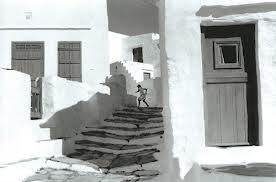
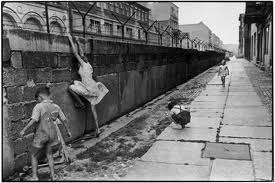
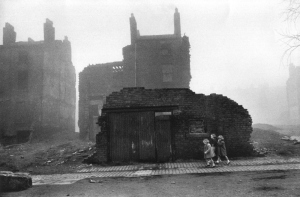
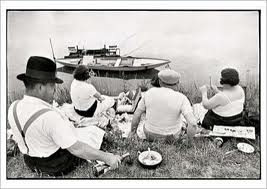
The Mind’s Eye – writings on Photography and Photographers, by Henri Cartier-Bresson, is a lovely book I received for Christmas from a dear friend. I was reminded how H C B inspired my photographic work with its poetry and Golden Mean, and still inspires other creative areas, including my writing.

Henri Cartier-Bresson - 1972 photo of a Georgian familyFor H C B photography led on to include painting & drawing. For me photography led on to include writing, in the way H C B said: ‘The writer has time to reflect. He can accept and reject, accept again; and before committing his thoughts to paper he is able to tie the several relevant elements together. There is also a period when his brain ‘forgets,’ and his subconscious works on classifying his thoughts. But for the photographer, what has gone is gone forever.’

The impact of H C B’s images is hard to define. They exemplify what many photographers aspire to but can’t name. Not only do most of his shots surprise by capturing the essence of a fugitive moment, a magical decisive one, they are framed in a way that touches all the elements of motion in a dynamic balance.

H C B - rest‘My passion has never been for photography ‘in itself,’ but for the possibility – through forgetting yourself – of recording in a fraction of a second the emotion of the subject, and the beauty of the form; that is, a geometry awakened by what’s offered.’

‘I hope I’ll never see the day when photo shops sell little schema grills to clamp onto our viewfinder; the Golden Rule will never be found etched on our ground glass.’

Henri Cartier-Bresson, girl running


I let Henry Cartier-Bresson talk for himself:  http://www.youtube.com/watch?v=MW7I3GBdsBw

Henri Cartier-Bresson, the wallInner Silence

H C B speaks in relation to portrait-photography of looking for the silence in the person. I guess he was looking for the silence behind everything. This silence was most likely what he was attentive to. I conjure that this silence lies between each breath, from which all phenomena emerge from second to second – from that timeless soul-garden within us – which we can tune into.

henri-cartier-bresson-liverpool-1963-c2a9-henri-cartier-bresson-magnum2

What I am saying is – H C B could not have captured these decisive moments without having experienced the silence within him. From this timeless state we glimpse the joie de vivre with its awesome sense of wonder generated and re-generated from eternity that makes life worthwhile and meaningful. It’s probably this glimpse, the ethic of this silent sphere that drives all anarchist artists.

Henri Cartier-Bresson, Sur les bords de la Marne 1938Why Black and White and not Colour?

In 1952 colour film emulsion was not well developed. H C B said then: ‘I am half afraid that this complex new element may tend to prejudice the achievement of the life and movement which is often caught by black and white.’

He was concerned that  composition would suffer and be overpowered by colour. I remember when colour TV was first introduced, I intensely disliked the busy business cramped into a small frame. Colour can however be used as a language, and I am certain H C B would have cottoned on to this had he lived on.

Here a sample of my own to illustrate colour’s use.  http://500px.com/photo/6913693?from=set/266780

In 1974, together with other freelance photographers, Henri Cartier-Bresson founded Magnum Photos. See also: http://www.henricartierbresson.org/pres/home_en.htm

H C B’s second wife, the Belgian-born Martine Franck, was an inspired photographer in her own right: http://www.theworld.org/2012/08/remembering-celebrated-photographer-martine-franck/

I am wishing all my readers and visitors a wonderful creative New Year …. 

12 Comments

Filed under Blog

… village poem …

 My father’s recent move away from the village I grew up in meant another goodbye, though my impressions of the place live on in me, and my writing. I like to share an old, bitter-sweet lyrical poem, which recalls an aspect of my experience growing up in a village. It leaves out the lake,  the mountains, and the church-bells – their marking of time could make an epic- their melodic ring still sounds once every quarter of the hour, and every hour in full from morning to midnight, so that people should not lose themselves in relative time.


The Village Poem

Through the veil of time I drop to the heart of my village,

child again, inhaling dust and summer-heat.

Drawn to the bright blue tiles in the dairy, I suck cool air,

watch the jet of buttermilk spool from pump to cup like silk.


The milkmaid frowns at the antics of our pianist, whose mass

of silver hair trails dangerously close to a display of camembert,

while her left hand swings a crystal pendulum, her daily rite

in search of resonance. I hold an image of her fine hands

striking keys on a white grand, giving air to Bach and Brahms

below the star-lit night, painted on her study’s cupola.


She is my link to otherness, the unseen in me, the odd child,

who rejects the cream for the undercurrent of her dream.


Crisp greens at the grocer, white roots, red fruit and purple aubergines.

The woman flicks brown paper to a cone, scoops pickled kraut:

‘Take it, to nibble on your way.’ Warm wafts of steam rise up

from the cellar of the bakery, a scent of cinnamon lingers in the street.

Taming and bonding takes place; it’s easy to love and be loved

when food is bait and the tongue’s code for paradise is taste.


In shops, daily gossip thrives, turning the fate of familiar faces.

Sweet tongues do sour talk – the time it takes to pay – a hero is made

or falls from grace. Spells are cast: ‘No good will come of it,’

and refrained, ‘Just as I said, I knew it form the start.’

Confused, I veil my face and seek the last shop in the street.

Here my village becomes the village and its many tales can be read.


I inhale the vast promise of virgin books

and a smell of print more exciting than bread.

*     *     *    Ashen

An areal photo of my village, taken by my father.

Then there is me with my mum at the lake …


And a class picture, taken around that time, from primary school. You can click on the images here to enlarge them.


27 Comments

Filed under Blog

… my father …

My father, a painter, photographer, recorder of village life, and dedicated outsider, has finally, at 94, surrendered a big chunk of his independence and moved into a smaller, protected environment, at the foot of his beloved Alps, of which he knows the name of every peak. He now lives in a small apartment, crowded by furniture and his memorabilia.

He never showed much interest in me. I should have been a boy, and I’m still trying to let go of this traditionally embedded rejection.

Due to my dad’s poor communication, the past returned like a big wave that threatened to drown me, because, whether we like it or not, we all emulate qualities of our parents. His image here is interesting as emblematic turning point. Unbeknownst to my dad, his skying skills were exploited. He was groomed by the army for Russia. While on a special training he saved the life of a girl, which is why he did not end up in the nightmarish march to Russia and instead worked as an engineer testing aeroplanes.

Thanks to a remarkable woman in the village (thank you Micha) who supported my dad with the logistics of the move during the last few weeks, all went smoothly.

Together with my son and his partner (without them I would have faltered) we sorted the chaos left behind, enduring a few days in the stirred up dust of my dad’s two relationships, the one with my mother, who died much too early, in 1987, and that with another woman, who my dad also lost to illness.

Thanks to marvellous hot sunshine, which allowed us to swim in the lakes and ponds of Bavaria, and thanks to the help of some wonderful friends in Munich and Aalen, the task was made lighter. A leaf I found (below) sums up my sentiments.


*     *     *

A DREAM

The leaf, like my life

Grows from green-sprung verve

Towards brittle glowing gold

Weathered into definition

By burning days

And moist nights

Worn veins gnarl back

To imagined beginnings

While futures curl forward

To the ever-expanding

Where every ending appears

As a glitch in time …

22 Comments

Filed under Blog