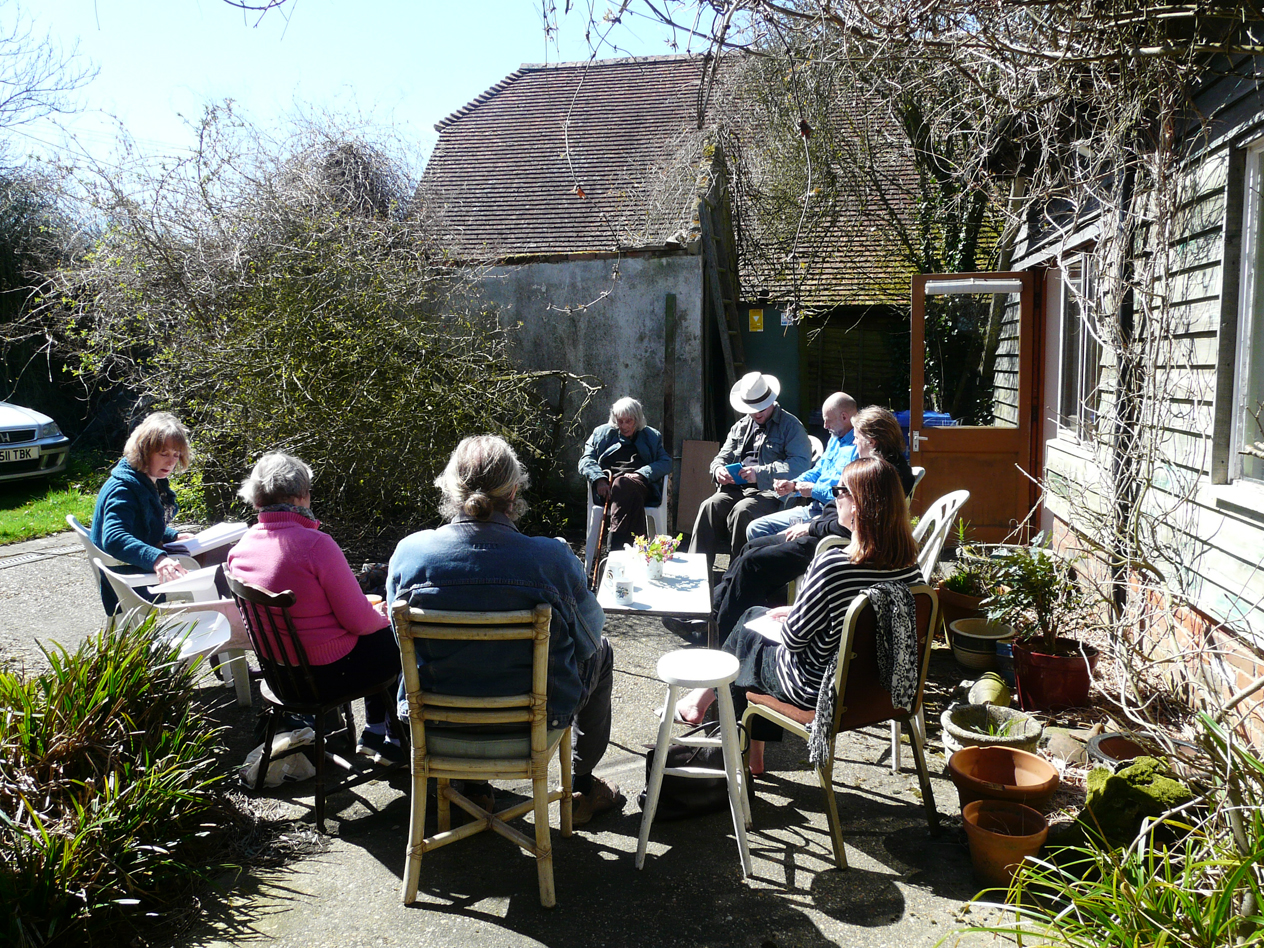
When did you last smile? The question started us going. I belong to a bunch of friends, 10 to 20, who meet monthly. We rotate the facilitation of sessions. People propose themes worthy of engagement. Our April session had the theme of Positive Psychology. The term, coined by Martin Seligman, has been called unoriginal and evokes ongoing controversies, not least because basic theories promoting well-being have been around for a long time, for centuries. Overall, the disputes are creative.
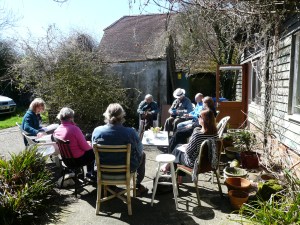

The off-the-track cottage and studio we hire for our monthly meetings has a delightful atmosphere. We love it, though its structure is gradually falling apart. The custodians of the property have more pressing concerns, and so have we. After a unique international creative centre was lost to us eight years ago, this liminal space offered itself. Here we challenge and cherish each other, explore ideas and welcome guests.
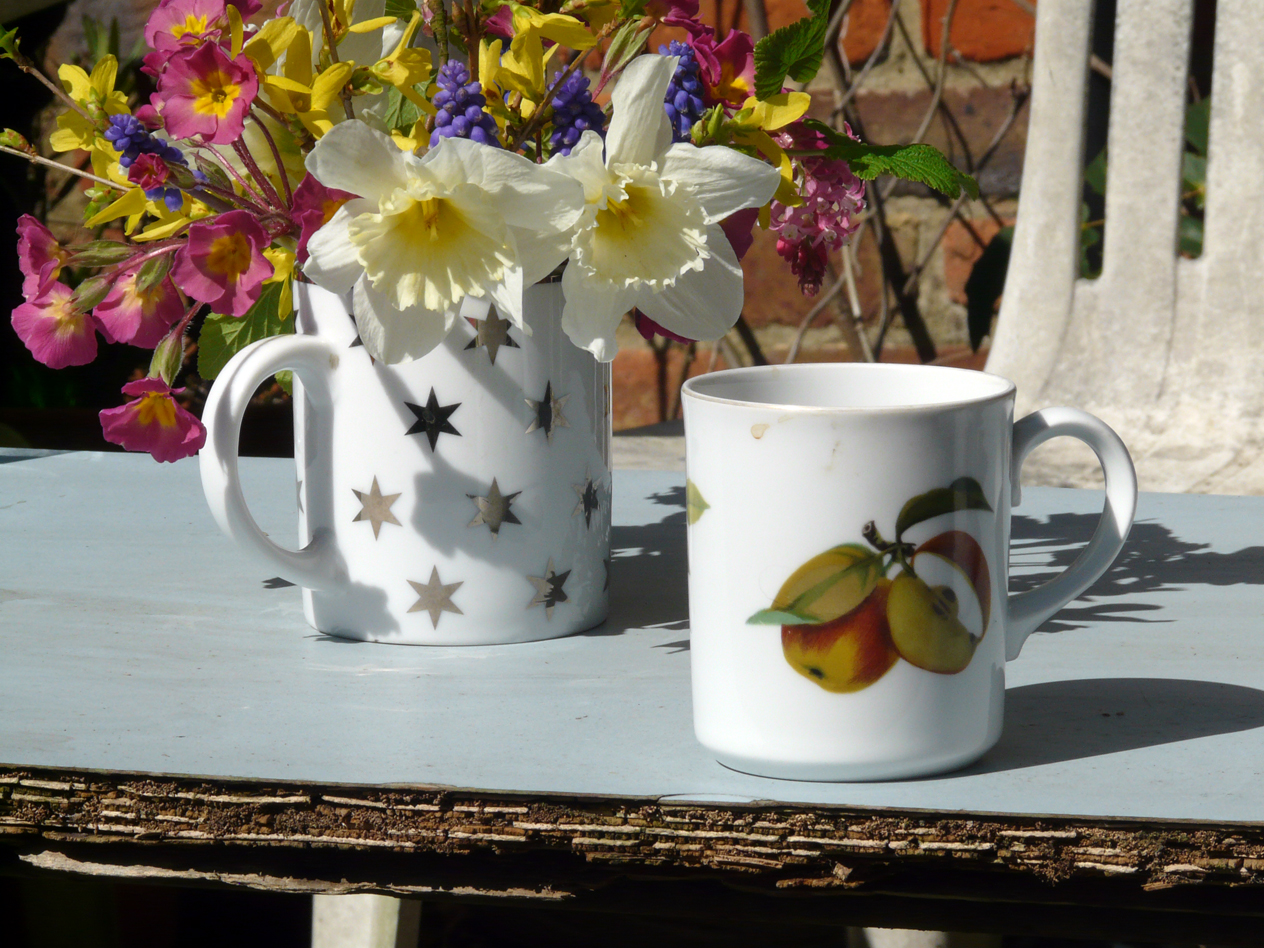
As to the initial question of the day – when did you last smile? – Of late, I frequently smile at my quirky thoughts. That day however, I recalled waking early and passing a vase brimming with pale double daffodils, splayed open to full perfection in the morning sun. No matter how fleeting an instant of wholeness, it tends to ravish me into my veiled wholeness. The exquisite flowers invigorated every cell in my body and set the tone for my day. It was a moment of transcendence, of grace.
We explored scientific findings as to what goes on in different parts of our brain when we experience emotions. There is evidence, for example, that prolonged stress weakens the immune system. Stress may be real or imagined. It can be maintained by resentment, anxiety, learned helplessness and the anticipation of negative outcomes, often based on scary experiences (even in the womb) that informed expectations, like the world is unsafe and we have no control over events. Neurobiology is fascinating, though I wonder if it can ever explain existential questions about phenomenology. Some of us bring along a lucky or unlucky disposition, but a great deal of what we become seems to depend on the interpretation and meaning we give to what is happening to us.

Which begs the question, can optimism be learned through challenging negative self-talk, the kind that rubs it in, like – here we go again, I should’ve know, stupid me, no matter what I do – and so on. For some people prolonged attention to self-talk works. Many brilliant techniques have been developed to overlay fixed habits. Extensive research has gone into the mastery of happiness, especially in the US. This said – Martin Seligman, the father of Positive Psychology, acknowledges that negativity is part of the human condition. As such, I see negativity having a compelling function in social systems that first make us ill and then sell us pills, a larger story…
I tend to huff when a generic psychological approach is wrapped up as a brand and turned into an industry, and Positive Psychology has become a successful industry during the last decade. Then again, there were a great many innovators since Abraham Maslow, who, inspired by ancient wisdom traditions was the first to challenge Psychology’s focus on pathology at the time, by researching what motivates people up the hierarchy of needs, and by defining the qualities of achievers. The work of Seligman and his colleagues seeks to encourage functionality, resilience and well-being. It provides further valuable applications and insights regarding human potential that are worth studying.
I personally lean towards the subtle wisdom regained during my training with Psychosynthesis in the 1980s. We may reach peak states of awareness as our consciousness expands, bliss even, yet each higher view calls for a journey down, into denser spheres. C G Jung put it well … ‘As far as we can discern, the sole purpose of human existence is to kindle a light of meaning in the darkness of mere being.’
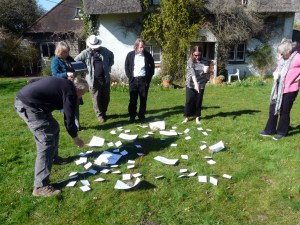
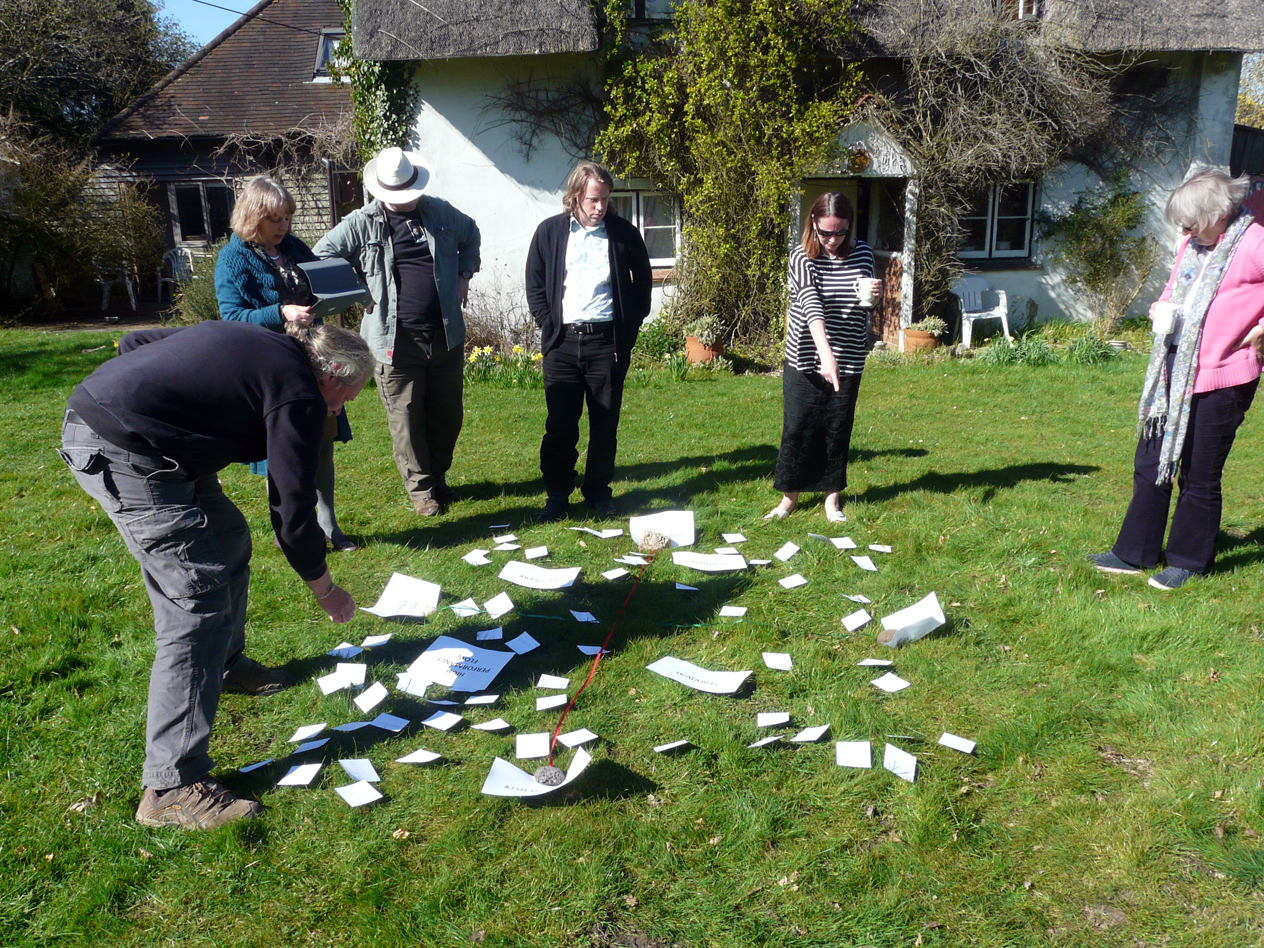
Our group is an irreverent lot. We had fun, warm and lively discussions, and we engaged with personal questions. From a set of 24 cards we chose our 5 dominant signature strengths. Humour trumped several times, followed by creativity, perseverance, appreciation, fairness and perspective. Oddly, there was one card I ignored but which jumped to the top when I did a test on-line – Appreciation of Beauty and Excellence. I later figured out why I had held back from picking up the card. This appreciation, which I have to a high degree, is also the source of lingering sadness, because Beauty and Excellence touch me deeply, are glimpsed rarely, and are hard to live up to and shine with. Then again, moments of grace, a sudden seeing that stops time, like the daffodils of that morning, carry me through periods of melancholy and questioning. The theme of the day stayed with me, and after some reflection I came to this conclusion:
I would not be happy being happy all the time. For better or worse I walk the tightrope of contradiction.
* * *
The cards we used are available at: http://mindspring.uk.com/shop/strength-cards/
Here is a site with a questionnaire that measures your character strengths http://www.viacharacter.org/www/ It’s free, unless you want a longer report.
The photo of the Stress Reduction Kit poster is by Programwitch, found on Flickr.