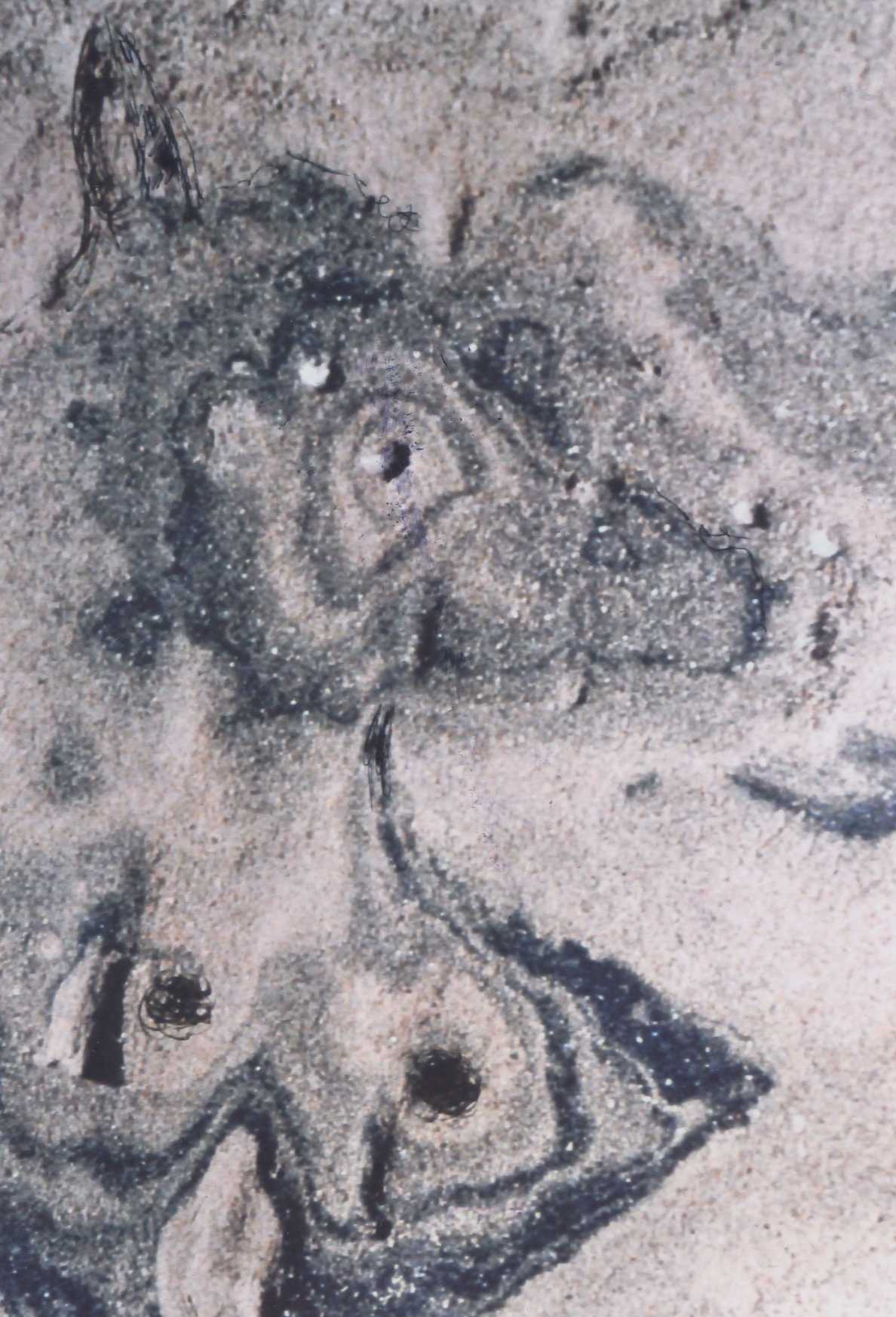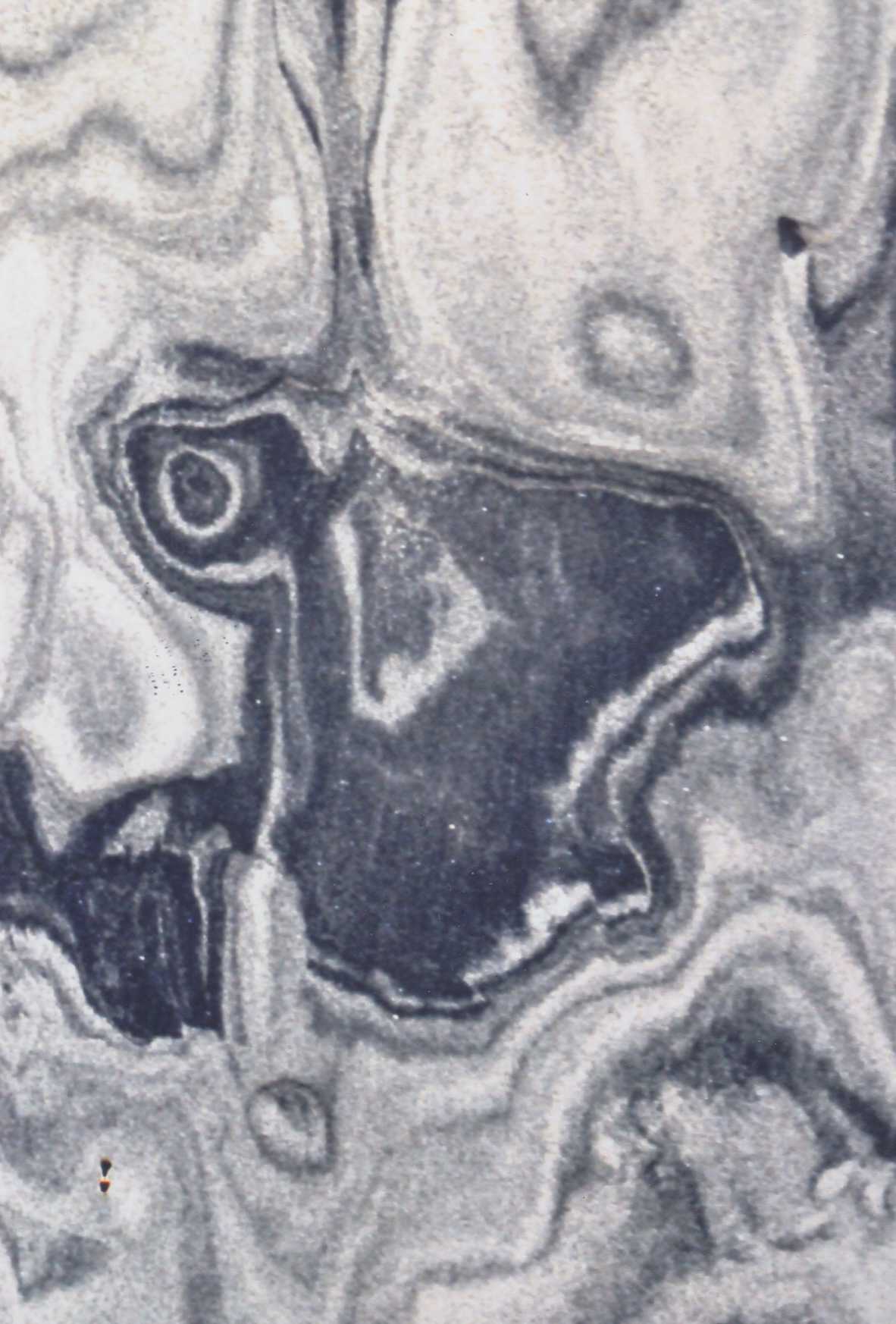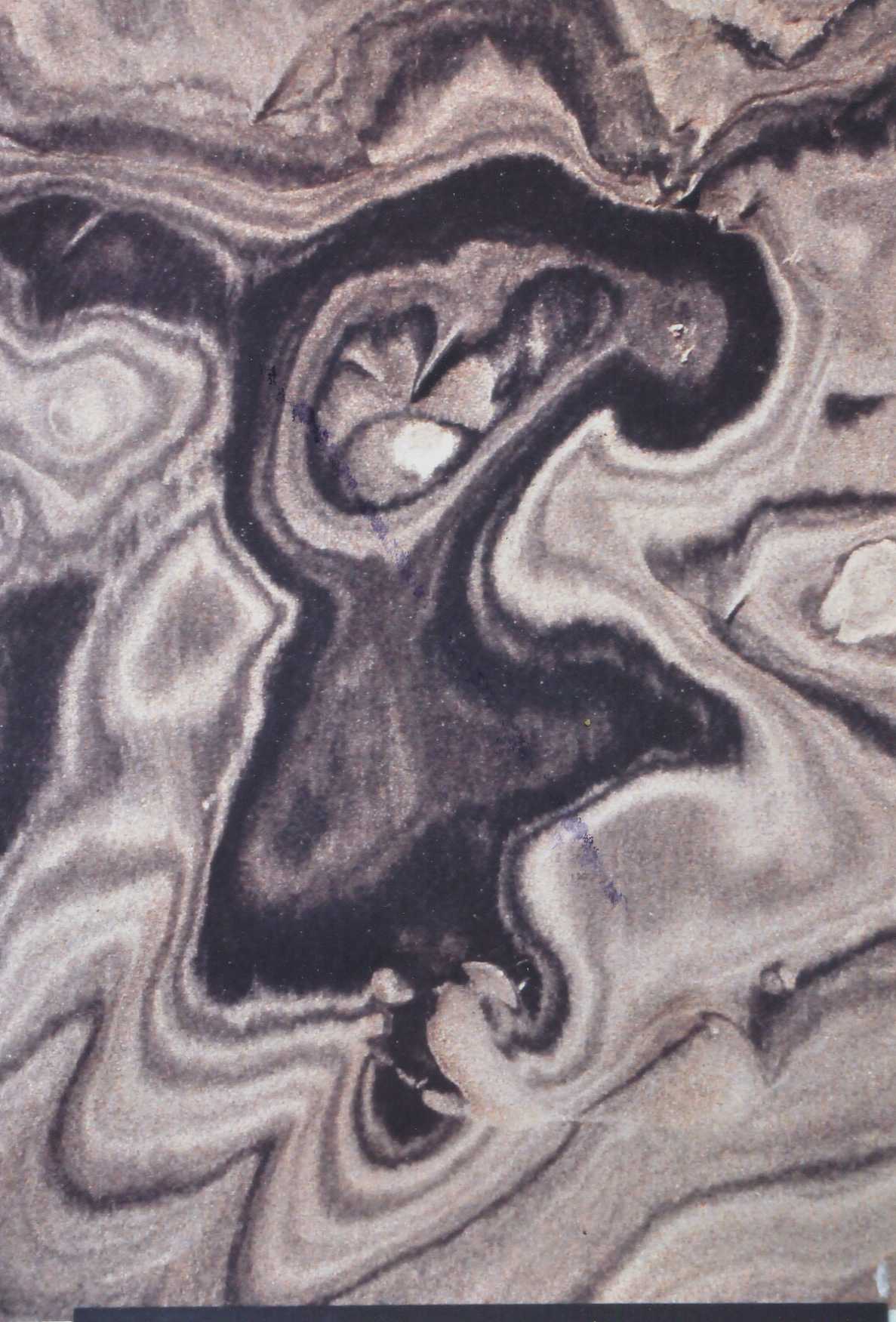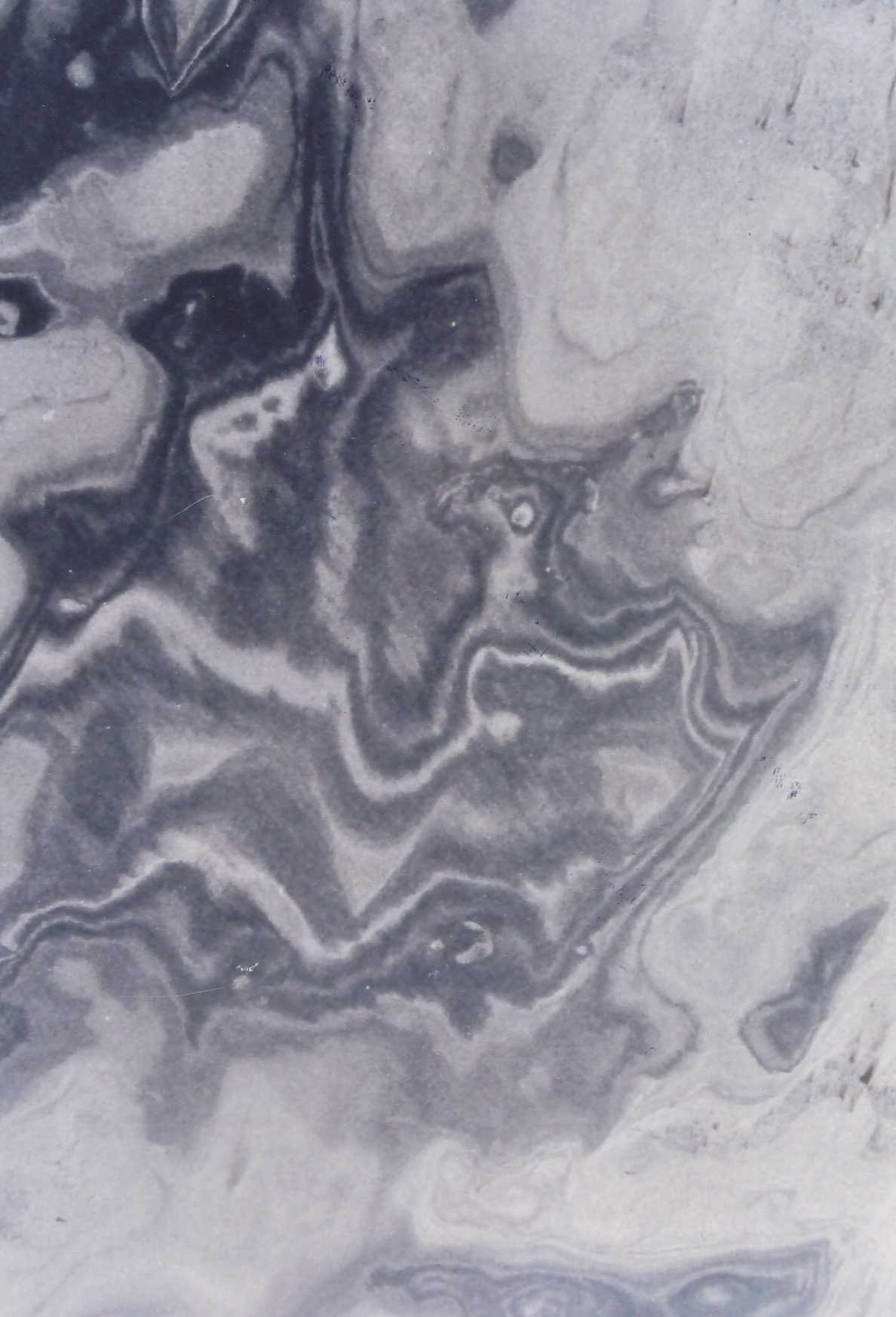
Tag Archives: the unconscious

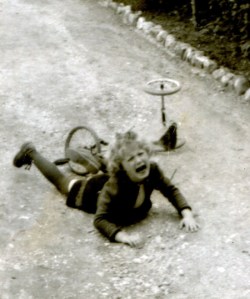
Autsch

Autsch

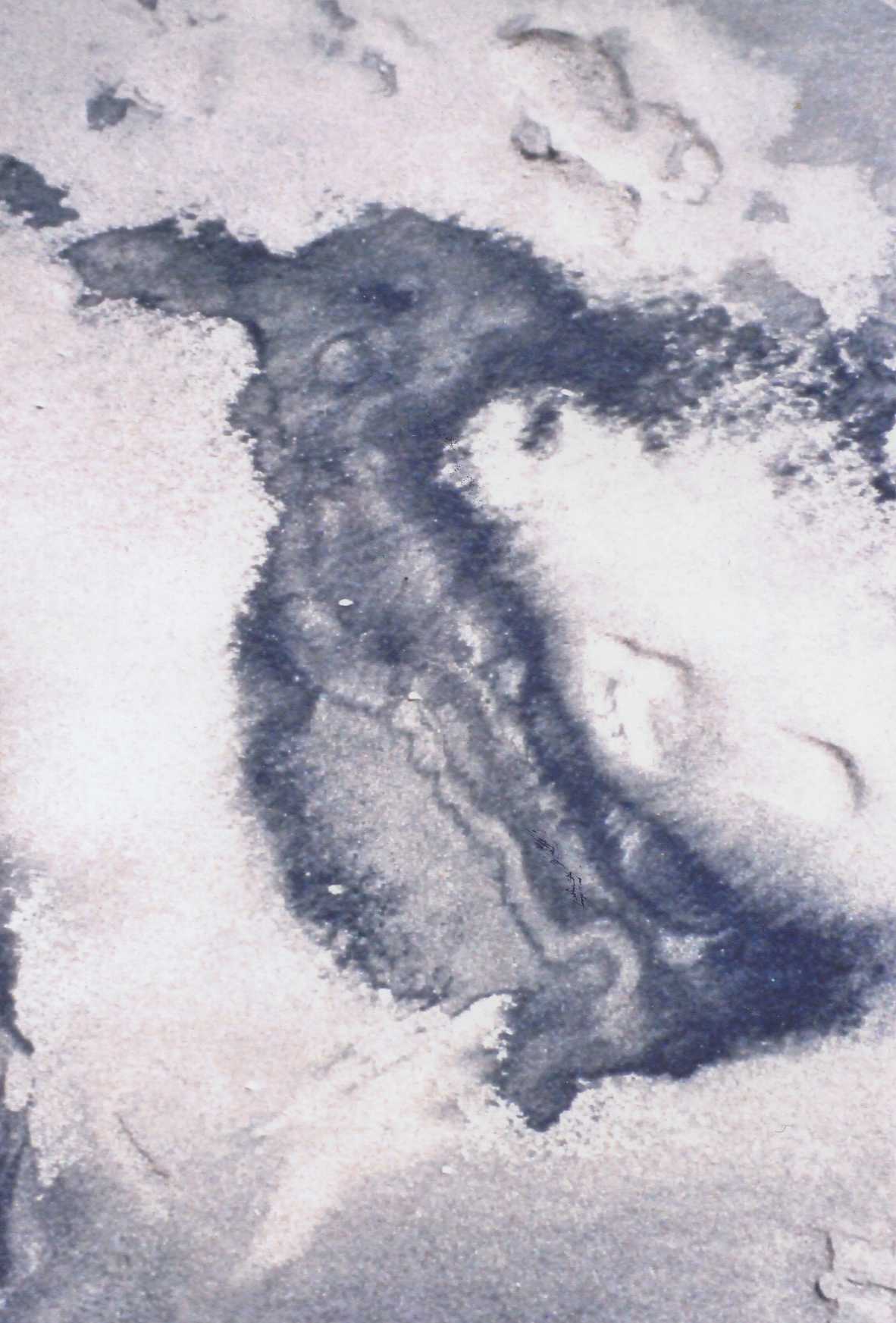
Finding this photo reminded me of how I kept bloodying my knees on the sharp stones of circumstances, and still do. My hope for a warmer communication with my father was dashed. He revived, and with it a fierce need for control. Lines by Dylan Thomas come to mind:

Do not go gentle into that good night,
Old age should burn and rave at close of day;
Rage, rage against the dying of the light …

Humans are mortal, but maybe humanity as a whole is immortal, and particularly its desire to find a meaningful answer to the circus of life.

‘Mein Freund, die Zeiten der Vergangenheit // Sind nur ein Buch mit sieben Siegeln. // Was ihr den Geist der Zeiten heißt, // Das ist im Grund der Herren eigner Geist, // In dem die Zeiten sich bespiegeln.’  –                                                                 Johann Wolfgang von Goethe, Faust (I)

Just like the human brain receives and conducts thoughts and ideas (like a radio,) so genes may receive and conduct what a psychic seedpod brings along at conception, that is – familiar patterns drawn to new constellations as through a mathematical time-grid (astrology may not be far off) – so that our realities are really mirrored from other spheres.

Via this psychic seedpod our story seem to arrive with template personality types, whose potentials and constraints determine our genes, not the other way around, at least not until the body’s biochemical traffic assumes a habitual force. With the psychic seedpod comes a pack of shadows – talents, passions, traumas, hurts or humiliation engendered by generations before us. With this pack also come tasks: to tie up loose ends, and to redeem faults not of our making.

From the start out endowment attracts projections, like a magnet, coercing us to oblige the projectors. Forget about being right, about justice. The secret of transforming energy and doing better than those before us lies in responding to situations, even when our habituated cell-traffic unconsciously demands a knee-jerk reaction. Awareness slips easily. Faith by itself does not help the evolution of human qualities. Insight, humility and patience are also needed, but often lost when buried emotions pop up.

My father’s constitutional short fuse with the world at large had over time found creative outlets, but his recent outburst hooked me into early experiences of feeling manipulated and made small by anger that belonged elsewhere. I became his nearest Blitzableiter (lightning conductor.) A personal scar opened. Autsch.

Recovering in Munich last week, the fragment of a poem prodded to be recalled. Back home, I reached for my Richard Wilhelm edition of the I Ging – Das Buch der Wandlungen. Opening a page at random, the fragment I was trying to recall showed up as a footnote. Romantic poets may have lacked irony, but they often touched on a pulse of wisdom … these lines from the last stanza of ‘Die Ideale’ by Friedrich Schiller:

… Beschäftigung, die nie ermattet,
Die langsam schafft, doch nie zerstört,
Die zu dem Bau der Ewigkeiten
Zwar Sandkorn nur für Sandkorn reicht,
Doch von der großen Schuld der Zeiten
Minuten, Tage, Jahre streicht.

The quirky translation is mine …

… Activity that never tires                                                                                                                                       Slowly creates but never wrecks                                                                                                                                      That to the houses of eternity                                                                                                                                  Only sand grain by sand grain gives                                                                                                                             Yet wipes from the great guilt of times                                                                                                                   Minutes, days, years –

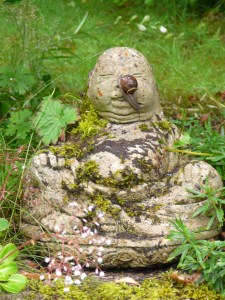
P1080230 - smaller

I wish I had the patience and good humour of my little Garden Buddha …

*    *    *

Even ‘Brexit’ and the realisation that the good old UK is really a Divided Kingdom leaves my Buddha smiling.

The deeper problem – a runaway capitalism all over the world, makes people angry. The solution is pretty clear to me – give every citizen a basic wage, so they won’t have to go begging from the state every time they experience hardship or are out of a job.

14 Comments

Filed under Blog

… verwandlungen – transformations …

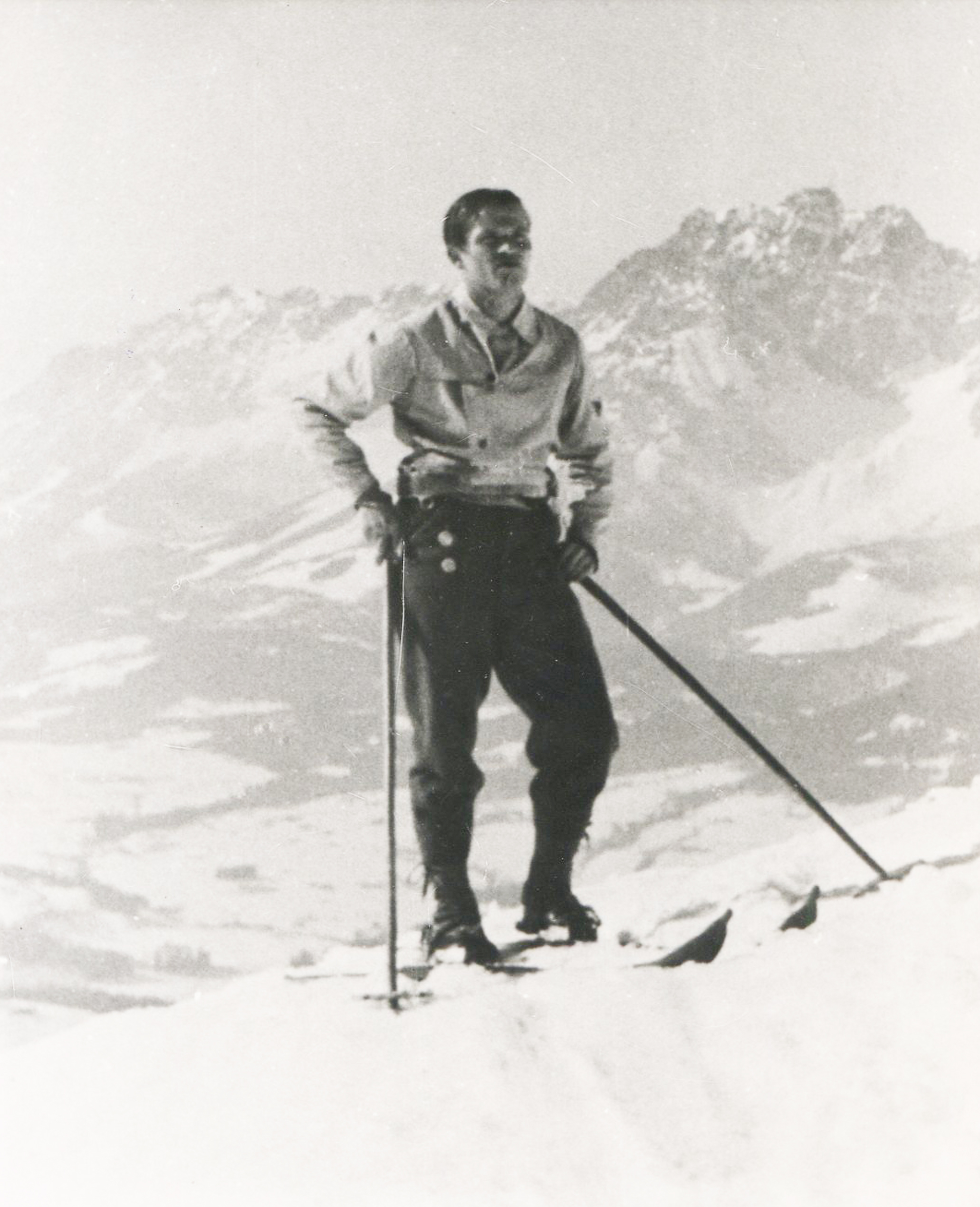
Bilder des Vaters – Wörter der Tochter                                                                                   A Father’s Images – A Daughter’s Words 

Auf dem wilden Kaiser

My father, now in his 90s, recently recovered from the shock of a fall. Brought to the fore, mortality reshuffles experiences – a mysterious process, different for everyone, young or old. Whether relationships are supportive or troubled by frustrated expectations, in the deep cavern of the psyche experiences assume fresh meaning when endings are contemplated, or happen suddenly. The unconscious speaks a surreal language.

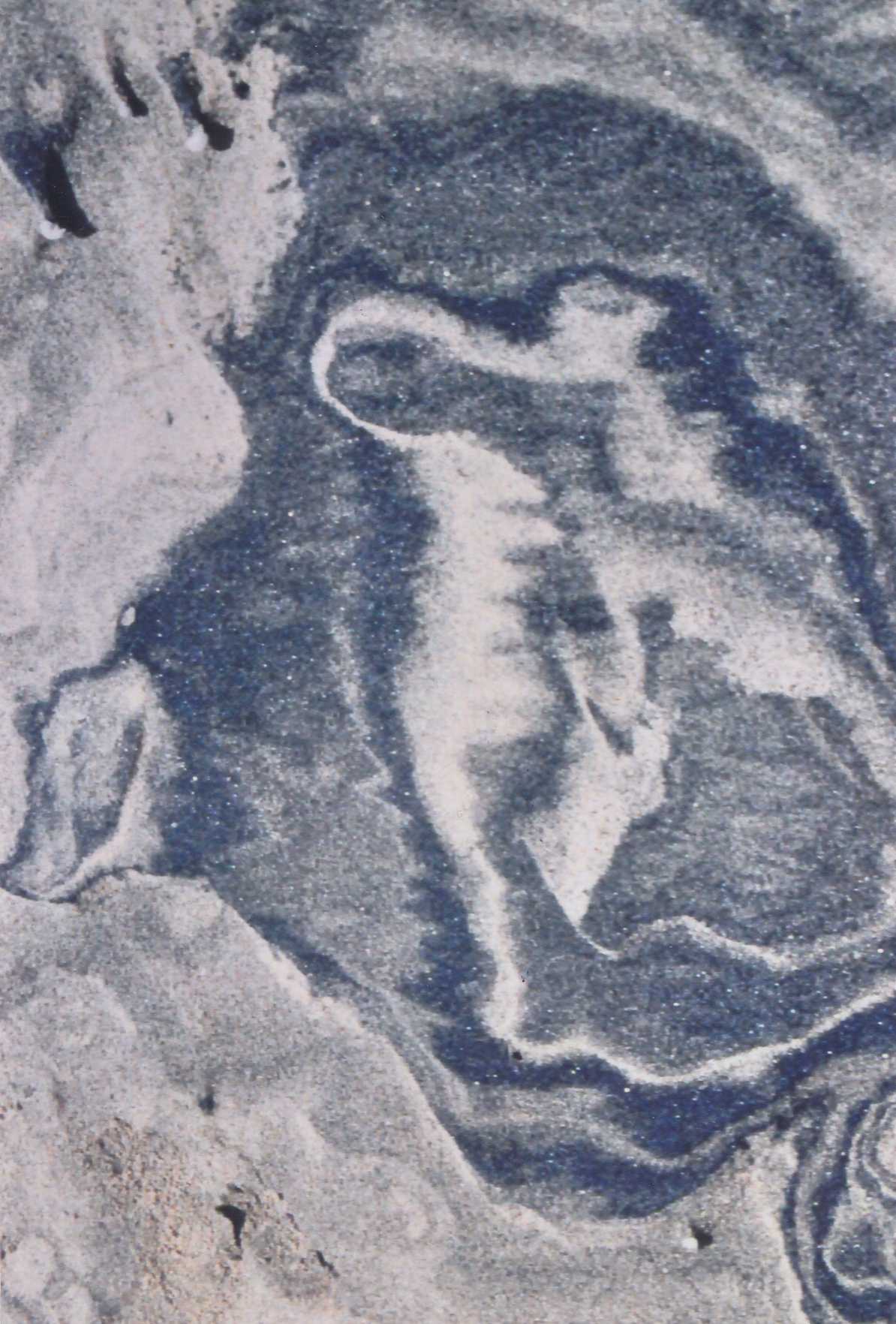
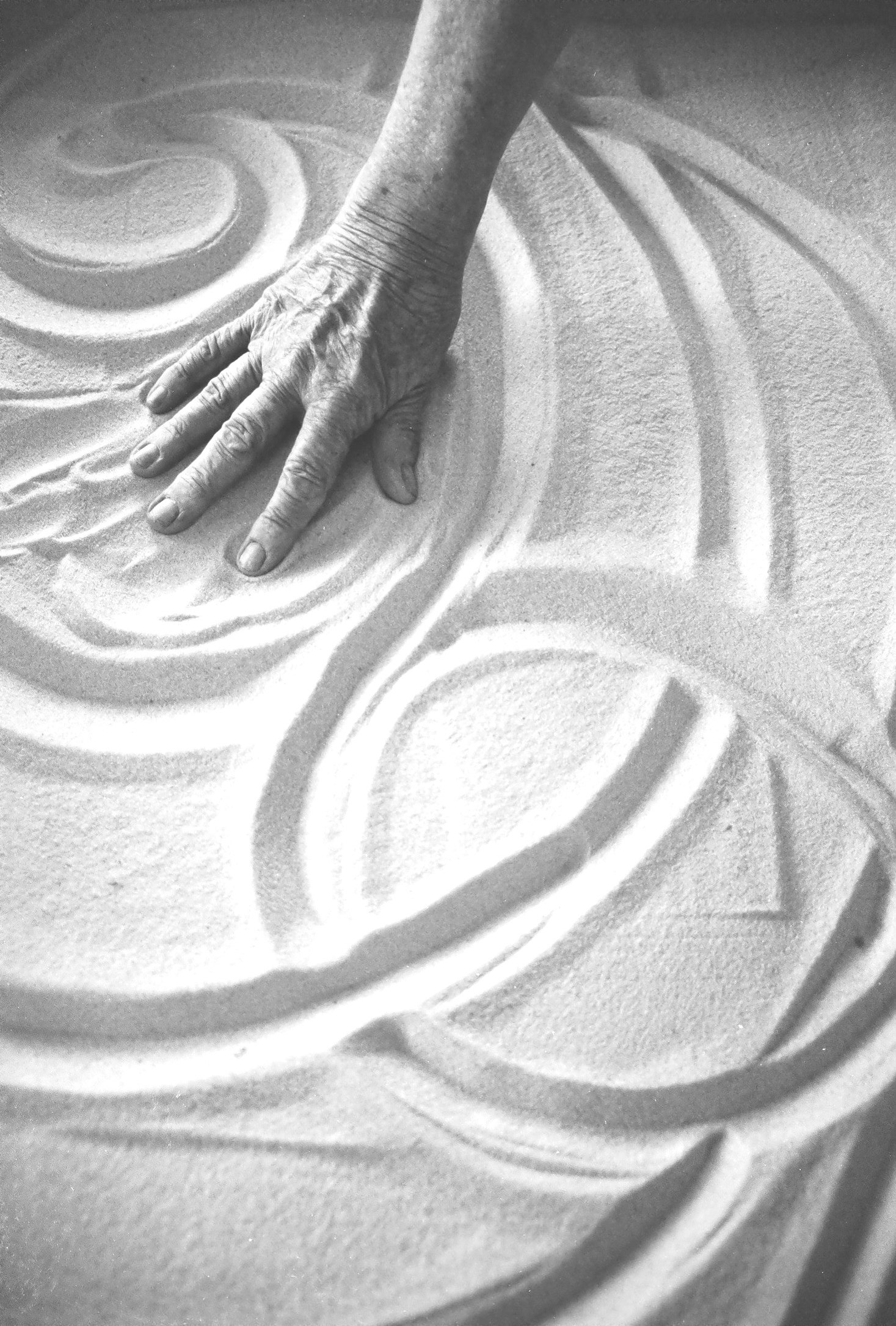
A few years ago, my father took photos of a phenomenon on the island of Fuerteventura, where, in some places, when the tides recede, the white shingle derived from bleached shells and sea creatures mingles with the black sand of volcanic rock. The bizarre sand drawings my father came upon inspired me to write short lines in German, here with English translations. The alliance of images and words surprised us both, hinting at an underlying creative connection between us that could not have been otherwise expressed.

Im Sand träumt das Angesicht der Zeit … The Face of Time Dreams in Sands

Sand - no1

1

Ich seh Dich, du siehst mich noch nicht.

Meine Stimme klingt von der Ferne

In deinem Muschelraum

Geheimnisvoll im Werden.

Manche glauben ich sei nur Sand,

Die irren sich gewaltig.

Ich bin ein Traum wie Du.


I see you – you don’t see me yet

My voice sounds from far away

In your snail chamber, secretly becoming

Some think I’m only sand

They’re mistaken

I am a dream – like you

Sand - no22

Tränen waschen mich rein von der Macht

Das war mir eine Last.

Ich will ich mich nun auflösen

Im Gesang von schönen Symphonien.


Tears cleanse me of power

Which burdened me

Now I will dissolve

In tunes of beautiful symphonies

Sand - no 3


3

Ich bin ein komischer Vogel – mit Hörnern und Brüsten

Wie Du trag ich das schweigende Anglitz der fliessenden Zeit


I am a strange bird – with horns and breasts

Like you I wear the silent face of fluid time


Sand - no 44

Die blassen Gestalten um mich wollen mich beschützen

Als ob ich zu klein bin fur die Welt – vielleicht ahnen Sie

Dass ich ein Drache werden will der die Welt erschüttert


The pale figures surrounding me mean to protect

As if I was too small for the world – maybe they suspect

That I want to become a dragon to shake the world


Sand - no 5


5

Mein kleiner Tanz ist ansteckened – bald wird der ganze Strand

Bevölkert sein mit Kindern die Hände fassen in Ringelreihen


My little dance is catching – soon the whole beach

Will fill with children who hold hands in Ring a Ring o’ Roses


Sand - no6


6

Vom Wind verwischt und verwandelt bin ich

Das restlose Gemüt einer schlafenden Seele


Blurred by the wind and transformed

I’m the restless mind of a sleeping soul


Sand - no 77

Meine Flügel sind mir ans Hirn gewachsen

Wer weiss who ich dahin mit segeln werde

Mein Herz blickt schon längst ins Unbekannte


My wings have grown to my brain

Who knows whereto I shall sail with them

My heart has long been gazing into the unknown


Images: Ludwig Weiss – Words: HMA Venema

And then there is ‘The Story of the Sands,’ one of my favourite Sufi stories. Here told by Terence Stamp: https://www.youtube.com/watch?v=oNasXE5_OTI

15 Comments

Filed under Blog

… imaginary time …

Image by Almos Jaschick

Image by Almos Jaschick

Today is one of those when I can only attend to bits of information, short sequences of writing, a paragraph maybe, while my eyes are drawn to ivy leaves moved by the breeze, a blackbird family feasting on apples left for them, a pair of woodpigeons landing and swaying in the branches of the huge beech at the top of my garden. Again and again I engage in pockets of attention beyond the window and shake off focus, ironically, in order to re-find the focus towards a coherent little blog post. A sudden rainfall is followed by the sun spinning through marbled clouds, while the heavenly voice of Kiri Te Kanawa streams through sound boxes linked to my computer. Eventually, my eyes return to the words I’m assembling here about the mystery of time, also relating to the emerging parallel worlds featuring in my two, coming to three, imaginative novels, where intentions create connections – from invisible realms beyond space and time.

Check out this and similar posts on YouTube, ha, ha, a few speculations. I haven’t been there for a long while. Don’t get lost.

‘The distinction between past, present and future is an illusion, although a convincing one …’ is what Einstein wrote in 2007 in a letter to friends. Time, he showed, has no universal constant and is relative. His famous equation E = mc – energy equals mass times the speed of light squared – had enormous implications, technologically, as well as socially.

This valued theory seems, at present, incompatible with the Quantum Physics that apply to tiny things. The chase for a unifying theory that includes quantum gravity is on. Moreover, physicists puzzle over the unseen pulling and pushing forces in our universe that elude detection.

We perceive time as proceeding steadily forward, although the laws of physics allow for time to equally run backwards. When it comes to our subjective inner experience we easily accept time as non-linear and relative. In therapy work, for example, a shift in attitude towards a person in one’s past can change a generational pattern.

We define time, create time, record it, hoard it, take it apart and re-frame it into fresh representations and stories. Stepping from one reality into another without losing coherence of mind is the province of individual adventurers of consciousness. Some artists like to dwell in liminal spaces where time shrinks and expands, like the twisting passage between one dream and another. Many devote their life to the re-framing of events in time. Imagine for a moment where we would be without people who create novel perspectives on entrenched realities. To call such expressions mere fantasy demeans the symbolic understanding found in the vast dimensions of the psyche.

Try and compare the creation of our cosmos with the conception, cell divisions and the birth of a human infant. The procreations and expanding consciousness of humans make for multitudes, while each of us inhabits our own self-constructed world. A psychic universe held together, it seems, by forces not unlike the unseen tides our visible galaxies swim in, the ocean of dark matter and energy that exists symbiotically within us.

Dark matter is assumed to collide with oxygen and hydrogen nuclei in our body, speculated to happen at the rate of up to 100 000 times a year. There, you may be hit right now. To my knowledge, no idea has been proposed as to what might be sparked or exchanged in these collisions.

In any case, at this, another year’s ending, quite a few of us spark flames and kindle candles in dark nights to celebrate the cosmic dance, the birth of light.


I’m wishing you, my readers, wherever you are, a time of peace and reflection.

*      *     *

From Little Gidding by T. S Elliot …

We shall not cease from exploration

And the end of all our exploring

Will be to arrive where we started

And know the place for the first time.

When the last of earth left to discover

Is that which was the beginning;

At the source of the longest river

The voice of the hidden waterfall

Not known, because not looked for

But heard, half-heard, in the stillness

Between two waves of the sea.

Quick now, here, now, always –

A condition of completed simplicity

(Costing not less than everything)

And all shall be well and

All manner of things shall be well

When the tongues of flame are in-folded

Into the crowned knot of fire

And the fire and the rose are one.


25 Comments

Filed under Blog

… Sun-charging the Scarab …

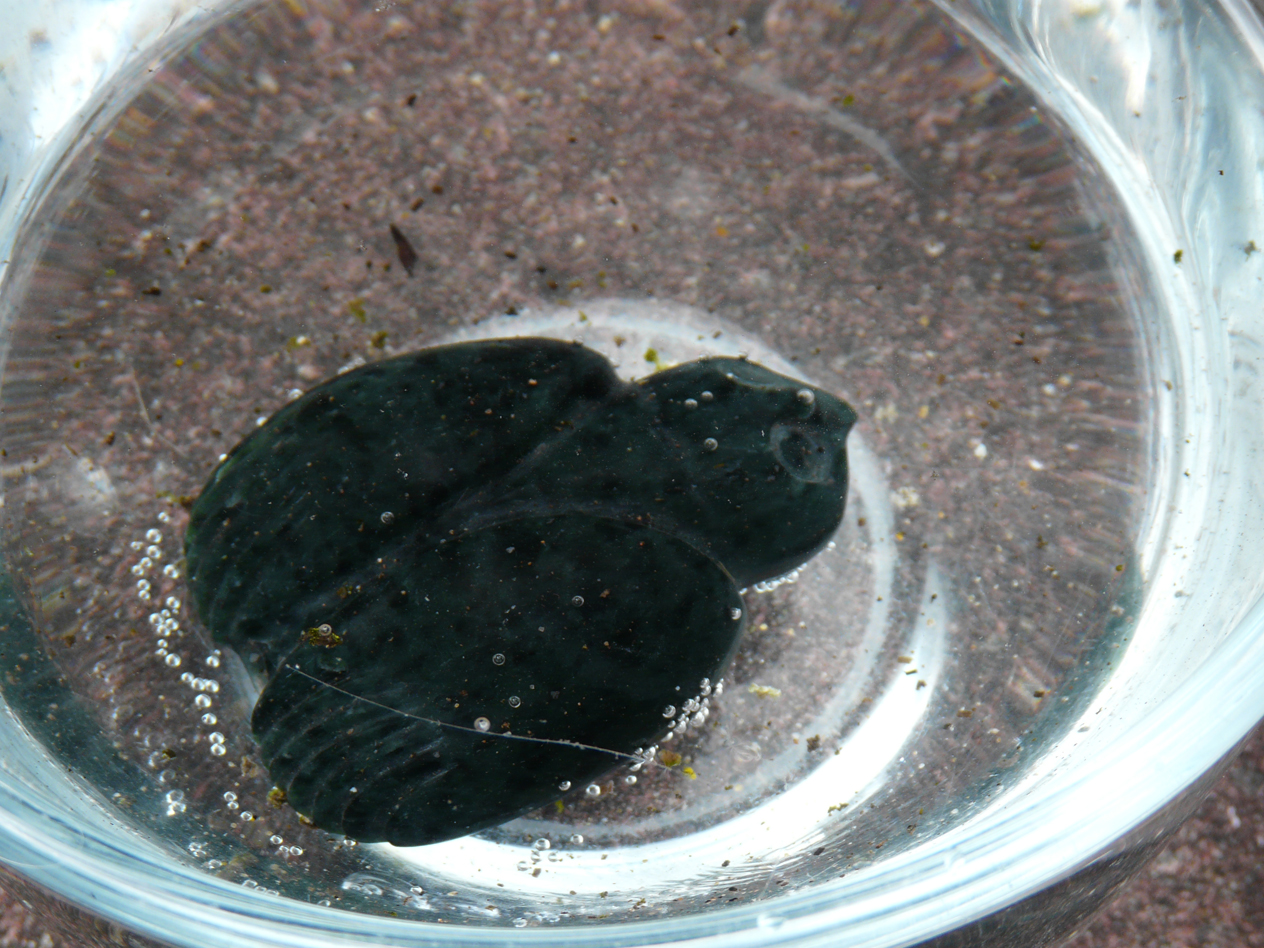
P1070817 smallerYears ago, a friend (thank you Shaz) gifted me a 6 cm long Scarab (Scarabaeus sacer) made of green-speckled black onyx. The object, as it sat on a windowsill among other tokens, curiously nudged my imagination the other day.

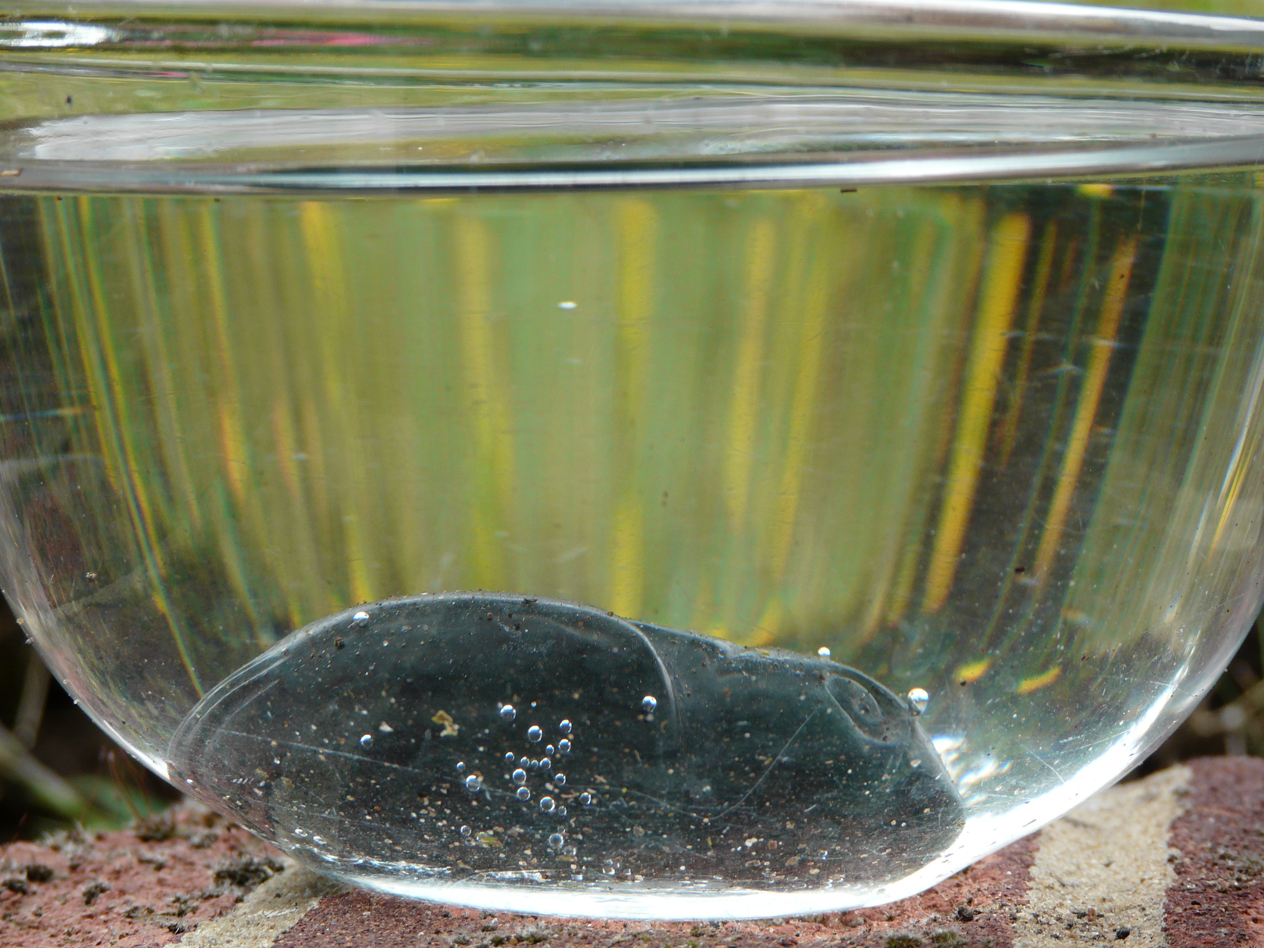
I intuitively put the Scarab in a glass bowl with water and placed it outside under the sun.

from livescience.com

from livescience.com


Dung beetles (Kafka’s Mistkäfer) fascinate me. They gather dung into orbs many times their own weight and drag them to a dug-out hollow as provision, but also as brood chambers into which the female deposits an egg. Once hatched, the larva feeds on the dung surrounding it. Here is a brilliant and cool TED Talk by Marcus Byrne about the amazing dance of the dung beetle: http://www.ted.com/talks/marcus_byrne_the_dance_of_the_dung_beetle

No wonder the ancient Egyptians made Khepri into a solar deity that rolls the sun each evening across the horizon, carries it through the other world, and returns with the star’s glory next day. Ra – the rising sun – was often depicted as a beetle-headed man.

P1070823 smallerThe onyx of my Scarab is Leo’s astrological gem stone, associated with grounding energy and a firm heart, another motive to charge the Scarab’s regenerative meaning for me. As the sun warmed the water in the glass bowl, tiny, oscillating air bubbles formed, which made the scarab seem alive and breathing.

Of course, none of this means anything whatsoever, apart from my wishful investment, a fancyful projection I won’t scrutinize and happily indulge in.

Turns out the environment agrees. In my garden, a highway for cats of all breeds and hues, sleek, bushy, black, white, grey, marmalade and surreally marked, one ginger tom seems in need of healing. On his daily round he has become totally addicted to drinking water from the bowl, greedily, in long slurps.

And today my blackbird friends re-appeared to partake of the holy beatle’s sun charged water. You may allow yourself a humoured smile, though what else is there but to cheer at the powerful symbol invested with the meaning of regeneration in the small universe of my garden?

20 Comments

Filed under Blog

… To Witness Daisies and Earth Rise …  

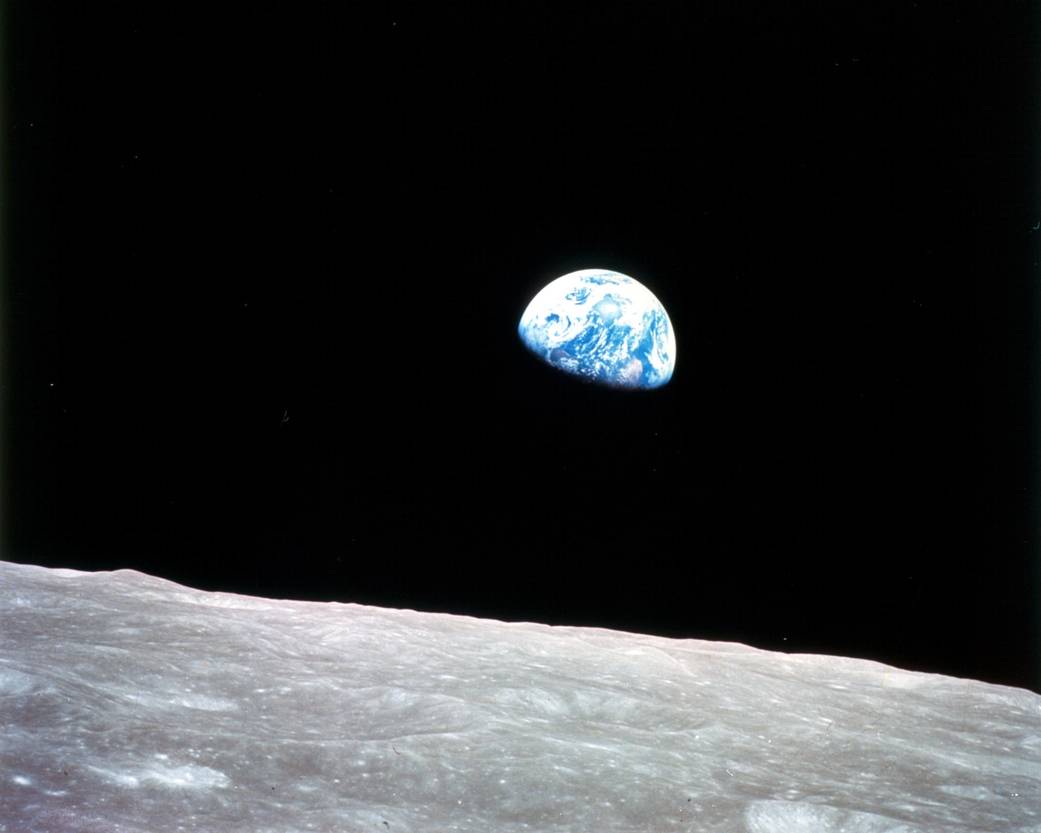
1968 Earth Rise, Apollo Mission 8

1968 Earth Rise, Apollo Mission 8

A change in collective attitudes often takes momentous events. While the moon-landing of 1969  was mildly underwhelming, the image captured in preparation for the American eagle’s landing, a year earlier, was immensely moving – revealing a vastly expanded mirror to our home that spoke then, and speaks now, directly to our physical and spiritual senses. Guiseppi Ungaretti had fitting words …

‘What are you doing earth in heaven? Tell me what are you doing silent earth?’

With hindsight we can see how major historic events are being incubated years in advance to their happenings. Artists have a knack for shocking us before a message becomes endorsed, which is why I connect the film  ‘To Witness Daisies’ (1966)   with the earth-rising image, both testing limited perceptions.  A click on the title should bring up the movie on your tube.

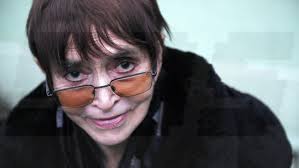
Věra Chytilová

Věra Chytilová

Not unlike the awesome view from outer space,  Věra Chytilová presented an equally powerful pointer to our poor stewardship of earth. Initially forbidden in the former Czechoslovakia, her tragic comedy was released two years before the Prague Spring, and two years before the earth-rise image promised a new respect for nature. I hoped for a greater understanding of cosmic interconnectedness, and an assessment of the fear-based need to subdue and control the wild, the primitive, the imagination, soul … all the ignorant projections on the feminine principle, which, I think, are responsible for spoiling our planet and wounding the psyche of men and women.  Film critics felt uncomfortable with Věra Chytilová’s controversial, iconoclastic statement on the demeaning role assigned to women in our cultures. Niels Bohr expressed, ‘As long as an atom is not seen it does not exist, it is a ghost.’ To me, this implies that seeing, individually and collectively, is an active process, influencing the reality of our existence.

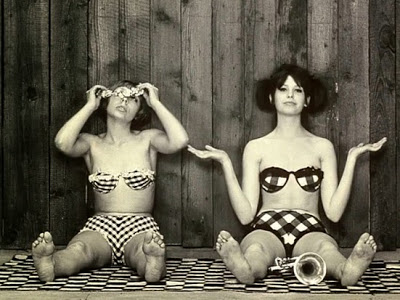
The Daisies

The Daisies

Watching ‘To Witness Daisies’ for the first time in 1994, I was struck by its theme of psychic starvation – sharply relevant today – and the insanity of societies where women are kept in an infantile state so as not to threaten male supremacy. The symbolic power of the film’s images, with their rhythmic and gradually peaking orchestration, creates a timeless sphere of magical reality, where meaning is expanded and revealed. The opening sequence of the film gives the context. A mechanical wheel turns relentlessly to the sound of regular drumming. The scene is interspaced with silent images of war, bombs exploding, mainly into the sea, symbolically representing the mother of all life on earth. Next, the frame shows a sun-deck by a pool. Filmed in black and white, the deck re-appears as a transitional stage. and one could add, a place at the edge of the personal unconscious. Here a question is voiced, ‘What next?’ The two teenage girls wear bikinis and their movements are mechanical, like the wheel. The sound indicates a lack of oil in the system, and the funfair trumpet played by one of the girls suggests a flat and mocking victory.

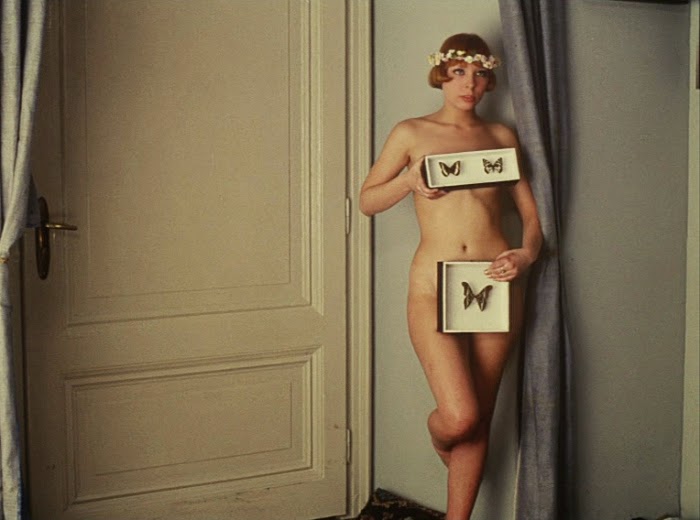
Posing for the Collector

Posing for the Collector

The outlook is set. ‘I’m a doll, everything is been spoiled in this world.’ And, as a way out of boredom, ‘If everything is being spoiled, we will be spoiled too.’ The decision to mirror a spoiled world is made, a death wish gains momentum. Daisy Blond wears a daisy chain and uses it at intervals as divination device. When the chain is thrown out of the frame, it lands on water and signals the next mise-en-scène, like a Garden of Eden where the girls dance, and where Daisy Blond picks the legendary fruit, affirming ‘their kind’ are products of a biblical myth with politically useful interpretation that prevail.

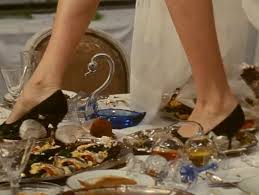
The end-feast

The end-feast

Film critics felt uncomfortable with Věra Chytilová’s controversial, iconoclastic statement about the role assigned to women in our cultures. Acted by Jitka Cerhová and Ivana Karbanová, the Daisies have various names throughout the film. I call them Daisy Black and Daisy Blond, though they are one and the same, since their communication resembles an internal dialogue trying to deal unsuccessfully with a moral conflict that offers no bridge between good and bad. To Daisy Black nothing matters, she has a timeless distance to things, everything is a game. For Daisy Blond, the extrovert, hunger makes food a central theme of the film – hunger in the sense of wanting to fill her sense of emptiness with substance. I won’t venture into psychology, but it’s easy to draw a connections to the Anorexic symptoms many young women suffer from.

During a film degree course in 1994, I wrote a long essay on ‘To Witness Daisies.’ Unable to transfer the old Mac files when switching to a PC with internet connection, many essays need re-typing, which I hope to achieve once other projects are out of the way. For now, I thought I inspire you to watch the film – and maybe share your thoughts about it.

11 Comments

Filed under Blog

… a cartography of the psyche …

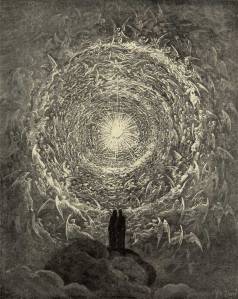
Celestial Rose - Gustave Doré

Celestial Rose – Gustave Doré

My novels (yet to be published) are inspired by transpersonal incidents I experienced, even as a child. Learning that I was not alone with my interpretations of what happened to me during so-called non-ordinary states of consciousness was a great relief, when during the 70s and 80s I explored, in practice and theory, the major maps of psychology. Jung’s ideas especially rhymed. After training with Psychosynthesis, my interest turned sharply to innovative transpersonal approaches, myth, archetypal psychology, and contemporary science.

People who inspired me were Abraham Maslow, Gregory Bateson, David Bohm, Joseph Campbell and others, many who happened to be among the same people Stanislav Grof met and was supported by when he devoted his life to map the experiences of non-ordinary states of consciousness.

For the first ten years Grof did psychedelic research in Czechoslovakia. By the 70s he had found a family of open-minded scientists and enthusiastic supporters at the Californian Esalen Institute. Since the use of psychedelics became illegal, he developed the Holotropic Breathwork, together with his with wife, Christina.

Around this time I found my own, smaller family of mind and heart in England, where Fazal Inayat Khan saw the huge potential of what was to be the transpersonal psychology movement initiated in Esalen. Fazal involved his students in experiential approaches to self-development, an endeavour that brought him into conflict with the traditional Chisti Tariqa his grandfather Hazrat Inayat Khan had established in the west as Sufi Movement, which Fazal represented at this point. I co-edited ‘Heart of a Sufi,’ a prism of reflections on Fazal by his students. Here is a previous post https://courseofmirrors.wordpress.com/2013/03/16/a-rare-book-now-on-line/

Grof sees global consciousness evolving through an increasing number of individuals achieving inner transformation, and considers symptoms of spiritual emergence (often seen as mental illness) as part of a healing process needing to be lived through, not supressed. This totally chimed with me.

Obviously, such a project does not attract investment. Shareholders look to own a brand, a patent, a method, a franchise. Many innovations are lost, since the way ideas and things hang together is not finite, but dance in ever new combinations. Also, in areas of specialised and fast-changing knowledge practitioners can become so absorbed with new discoveries and concept that they tend to forget about lay persons who might not be able to grasp the newly coined language, or won’t take the time to look at other fields of knowledge. A major insight may be broadcasted ahead of its time and spark endless quotes but no understanding. Some messages cry for a new context, where insight, beauty and meaning can be shared through passion, combined with apt metaphors, like a fine tune can travel through the heart and make it shiver with the recognition of new connections. Often it’s a matter of waiting for an idea to fall on fertile ground.

Assuming my readers represent a fertile island in this vast internet ocean, I would be amiss not to share what inspires and influences my writing. Few people are familiar with transpersonal psychology; let alone with the work of Stanislav and Christian Grof, so here a short (promise) introduction.

Born to parents that care for us, or not, into environments that encourage or hinder our development, usually both, we learn (hopefully) to understand that our attitude towards ourselves and the world is coloured by early experiences, and fixed further by our reactions to what happens to us. The psychological maze we lay down is difficult to walk away from, because it pops up from inside wherever we go. An interest in our personal history and the willingness to explore our behaviour certainly help to make life easier.

However, there are memories we can’t access intellectually.

They are perinatal impressions, which don’t necessarily end in a triumph that promise self-confidence and later success in life. Western psychology does not take somatic imprints happening in the womb, during birth, and after birth, serious. The assumption is that the cerebral cortex of an infant lacks the myelin sheaths on neurons, so the brain can’t be sufficiently developed to record experiences, this, irrespective of the fact that memories reside in our cells and muscles.

The powerful non-ordinary states people experience during Grof’s perinatal holotropic sessions often relate to a time before, during and after birth. Participants report strong sensations and images of a mythological and archetypal nature that live in the collective psyche and significantly shape our individual myths.

From the people bringing alive perinatal imprints during Grof’s workshops, he has mapped the Birth Matrixes, which shed a bright light on symptoms medicine tends to label as psychotic and usually supresses with counterproductive drugs, whereas Grof looked at symptoms as a healing attempt of the psyche.

This fear of the imagination questioning accepted realities also explains the ambivalent attitude of our culture towards the arts, though it’s no secret that the archetypal myths populating our psyche inspire our most renowned artists.

Dore - public-domain-image

Dore – public-domain-image

To guide a person through a phase of psychotic or transpersonal emergency without suppressing drugs requires a paradigm shift that has, as yet, not happened, which is why Grof’s considerable data of experiential work has been tucked away in the transpersonal section of psychotherapy, seemingly too esoteric to grapple with. Early imprints, though decidedly physical, create powerful condensed experiences that draw upon themselves alike situations. Much like self-affirming prophecies, they constellate throughout every phase of life, from infancy to adulthood. Such early imprints are the source of the psychology and psychopathology of ecstasy. Please note – the types of ecstasies I show below, are only clipped markers and in no way convey the richness of the material Grof presents, which he divides into Basic Perinatal Matrixes (BTM 1, 2, 3 and 4) that include related psychosomatic problems and periods of depression people struggle with.

  • Oceanic or Appollonian ecstasy, cosmic consciousness, symbiotic union with mother during intrauterine existence, and during nursing. Expressions of this state in the arts radiate purity and serenity.
  • Volcanic or Dionysion ecstasy, orgastic sexual energies, orgies, pain and rapture. Dangerous activities, sensual and instinctual aspects of life. Think o the surrealist freeing their imagination in ways that powefully speak to us all.
  • Illuminative, Promethean ecstasy, proceeded by agonising struggles and intense yearning for answers, followed by divine lightning that brings entirely unexpected solutions, cosmic inspiration and insight.

When feelings emerge during the remembrance of the birth process, be they nightmarish,like EdgarAlanPoe’s A Descent into the Maelstrom: http://en.wikipedia.org/wiki/A_Descent_into_the_Maelstr%C3%B6m  or blissful, like in Gustave Doré’s Celestial Rose, image above, the opportunity such symbolic images provide for deep psychological work is invaluable. 

Given the complexities around birth, why are not all babies delivered by pre-planned C-section?  http://en.wikipedia.org/wiki/Caesarean_section   A fascinating page, if you have the time to read it. Knowing people whose delivery was pre-planned as C-section, I observe a surprising feature. If in trouble, they shout for help, and usually help comes …  expectation does its magic. When being whisked from the womb before the struggle through the birth canal commences, struggle is simply not familiar, nor, of course, the potential sense of liberation. By contrast, many people have difficulties asking for help, fearing the distress of not getting help. I include myself in this category. A recent comment I left on Jane Alexander’s blog touches upon a personal experience, an early imprint that had a decisive impact on my life. As an example, I elaborate …

… I patiently endure scarcity for long stretches, until the energy switches and everything happens at once. Then I tend to surrender to the flow, or I would feel overwhelmed.

When I was pregnant, I discovered a connection to these periods of extreme scarcity and abundance in my life, leading back to an incident after my birth. Knowing I was breastfed for many months, I asked my mother on the phone to tell me about my birth. She related my birth was long and exhausting. The midwife suggested my mother needed a break. She took me to another room where I cried myself to sleep. ‘It’s good for her voice,’ she insisted. But, of course, I must have missed my mother’s heartbeat.

While listening to this story on the phone, I observed the skin around a silver ring I was wearing turning black. Heat flashed through me, of rage, for which I had no words. By way of apology my mother said it hadn’t felt right and she should have resisted the midwife. Then she went on to describe how, next morning, I was taken to her very full breasts, at first acting stupid but eventually drinking until I could drink no more. 

In later studies I learned about Stanislav Grof’s birth matrix maps, how condensed experiences draw onto themselves alike experiences, like self-affirming prophecies. Certain expectations are set up very early indeed. This made sense and helped to soften the pattern of my extreme life phases somehow. 

So there – now you know my autogenic secret. In the end, our vastly different conditioning makes us into interesting people 🙂 not mass produced and pre-packed, as it were

Bringing to awareness the unconscious somatic patterns underlying our existence offers us choices to respond rather than react to situation. As a collective, we swim together in a psychic ocean that is both threatening and benign. We regress and progress together, each of us bringing our little light towards the expansion of consciousness. Let’s not buy into the shallowness of our material age, but keep the conversation going.

Here Stanislav Grof speaks for himself – Psychology of the Future –                                  https://www.youtube.com/watch?v=rI5oG-WNqvM

If you who would like to explore the maps Stan created, and the images that illustrate the in-depth experiences of people who encountered powerful feelings during a typical re-birthing experience – which enlighten the source of our idiosyncrasies and some of the most prevailing human pathologies, I would recommend Grof’s book ‘Beyond the Brain,’ Birth, Death and Transcendence in Psychotherapy, published 1985 by State University of New York. The book does not offer a simplified and popularised version of Grof’s work but significantly challenges our global policies, and the seriously outdated neurophysiological model of the brain, showing the reach of consciousness beyond time and space.

… ultimately we cannot do anything to other people and nature without simultaneously doing it to ourselves …

A post from 2012 that maybe relevant:                               https://courseofmirrors.wordpress.com/2012/05/25/pattern-which-connects/

Incidently, yesterday I attended a talk called ‘the One who cannot die’ given by my dear friend Malcom Stewart, whom I wrote about in 2013 https://courseofmirrors.wordpress.com/2013/10/07/patterns-of-eternity-humbly-opens-your-mind /

 

22 Comments

Filed under Blog

… what’s your age again? …

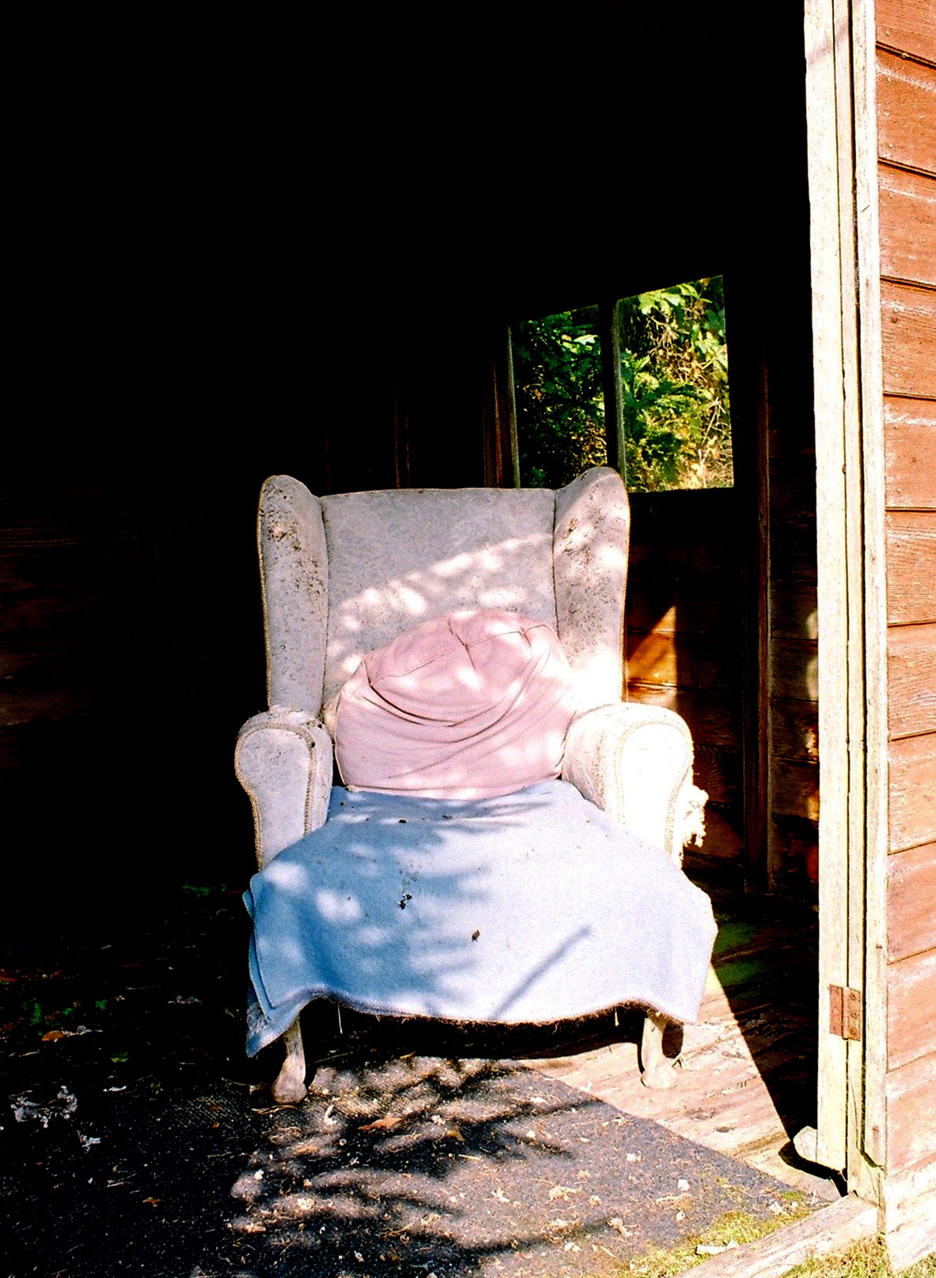
Copy Chair in Spider Hut 2 smallerThe question grates, especially when a round number announces yet another decade looming ahead. While the 40s suggests respectable maturity, the 50s have an aura of old gold best valued by insurance and investment companies. Once you enter the 60s, no matter how rich, poor, active, passive or just blissfully sober, public consensus puts you in line for the moot title ‘retired.’

Once you get over this pesky label, there’s a perk – time slows.

Perceiving life in slow motion has been called wisdom ever since people recognised that slow time reveals hidden dimensions, realities other than those experienced in the speed-lane. Within the present digital pulse of life, days, seasons and years skip ahead at a dizzying velocity. The phenomenon has shortened the shelf life of people, ideas, and objects. A few years ago the motherboard of my laptop crashed. The young man at the IT shop looked amazed. ‘They shouldn’t last that long.’ My laptop was 5 years old. I guess it’s supernatural that my 25 year old Bosch washing machine still works perfectly.

When young, I lifted off, ascended, sped across horizons, acted out and engaged intensely with life. Youth in itself brings of course no guarantee of ascending. Age holds similar uncertainties. Ideally, it allows one to slow down, descent inward, assimilate and integrate experiences, develop patience and insight, re-connect, and grasp the myth of one’s life, and the myth of one’s century.

My point is – descent has a vital function in society. If we can manage to work part-time, or independently during the second half of our lifespan, weRa hand, edit 2 may gain the freedom to reflect, attend to the body’s intelligence, and find our inner rhythm. A thought sculpture may develop, a mood may linger. Communicating may happen along deeper wavelengths. The experience and perception of slow time has a calming influence on the collective psyche, like the prayers and contemplations observed by nuns and monks in monasteries are said to keep the world in balance. I truly believe this.

For those who practice a vocation they love, or develop a passion that keeps them curious and focussed, aging is a side-issue. New technical procedures may not be instantly absorbed, but they provide food for thought. The movie occasionally rolls on silently. Memos reappear, which the younger self, swept along by the speed of progress, may have overlooked, but which in a wider context assume new significance.

The manner that informed wisdom in past cultures and classic times may have remained the same, but elders today have a more complex task in finding apt metaphors for what’s been happening during our single lifetime, poignant lessons that could guide us onwards. When young, our mind feels eternal, we make thing happen, are in sync with the pace of progress and create the future. But what if wisdoms assimilated during inner journeys and the deeper comprehension of present lifetimes are not sufficiently communicated?

The next round of ascent may be hampered by ladders with broken steps, leaving us stuck with unsurmountable problems and senseless social systems. All is not well. The ascending and descending energies working through our present decades are askew. Unless elders have acquired eminence, their voices, their stories, the harvest of their unique experiences, are easily considered useless. Wisdom is not equivalent to the IQ flatland that education systems bank on. Wisdom is more about questions than answers, more like a dance, a tracing of patterns and parallels. Wisdom employs the imagination, re-shuffles knowledge, re-interprets and re-connects ideas to create new meaning.

Image by Yeshen Venema

Image by Yeshen Venema

There’ll always be young ones born old and wise, and old ones who turn young and adventurous. Intangible experiences and the insights of all age groups seek expression and must be circulation, because we are animated by forces not accessible to us. Fate cannot be controlled, but nudges us from the dark. It’s therefor essential to bring our light not only to matter, but to the totality of the psyche, including the unconscious layers of our past and our future, our unknown human potential. We need spaces to make visible what inspires individuals. In this the arts must serve.

The arts need public support in providing free spaces, and funding for everyone, young and old, to engage with and share their imagination in any form that moves their heart. In a culture that prizes speed above all else, the inner journey, the long view, listening, trusting, gratitude, the appreciation of difference, small things, and the cultivation of inner silence from which conflict resolution, intuition and creativity can spring, has never been more important.

*    *    *

Re: Elders … there is a group brought together by Nelson Mandela in 2007 http://www.theelders.org/ Add your support to the eighty thousand follower on twitter –  @TheElders   – This is their mission:

Our vision is of a world where people live in peace, conscious of their common humanity and their shared responsibilities for each other, for the planet and for future generations. We see a world in which there is universal respect for human rights; in which poverty has been eliminated; in which people are free from fear and oppression and are able to fulfil their true potential.

Initially the concept emerged from a conversation between Richard Branson and Peter Gabriel. Together, they took their idea of a group of global elders to Nelson Mandela who agreed to support it.                                                     http://www.virgin.com/unite/leadership-and-advocacy/richard-branson-birth-elders

15 Comments

Filed under Blog

… a tribute to snags …

I’d make a lousy fundamentalist of any kind, and was probably born with negative capability http://en.wikipedia.org/wiki/Negative_capability and a tendency to daydream and contemplate life, skirting extremes, which makes my voice almost inaudible in a culture where sensation trumps. It also means I procrastinate on tasks that need doing, until a snag propels me to act.

CNV00003 - copy 2

One morning last week, easing myself into the day, the shirt I dusted in the cool morning air was trapped when I shut the back-door; next the sleeve of my pyjamas got caught while I closed the lid of my coffee tin. SNAGS – their repetition blinked a green light for associations and made me think of dreams, how they sneak into the daylight via signals. With only a vague memory of my dream, I followed an impulse to catch up on practical tasks round the house.

A shelf in my shed needed fixing. It had crashed, bringing down an array of cans, sprays and sealants. In the way one thing leads to another, I sorted and dumped stuff, and dumped some more – making space. Seized by the flow of action, I de-frosted the freezer, thinned the ivy round the shed, cleaned windows, filled a sack with confidential papers for shredding, loaded the washing machine and made some overdue phone calls … all amounting to what I call a BLITZ day.

Knocks from the dark, SNAGS, help me overcome procrastinations. BLITZ is how I operate to gain periods of laziness. I’ve learned to humour my inner driver (superego) and made peace with Lazy.

Dark of beginnings

Flees the meddler

The shrill demand

The noisy footfall

The sharp beams of

Imposing eyes

Dark folds its mantel

Round the dreamer

The shy nomad

The vague image

The tendrils of

A budding poem

Approach it softly

Like a lover

It may surprise

Or yield nothing …

———————————-

After my Blitz day, a book came to mind, ‘Worlds in Collision’ (1950) by Immanuel Velikovsky. His research resulted in controversial astronomical theories about catastrophic events planet earth experienced over time, and how the human race was affected. Here a link to a 1972 Horizon documentary:  https://www.youtube.com/watch?v=U18gMJXNyX8

He concluded that as a victim of amnesia, collective humanity is compelled to repeat and re-experiencing traumatic events, to aid, in a psycho dynamic sense, recovery through triggering repressed feelings, wake up, and learn to control the experiences. It’s a wider, thought provoking context for the contemplation of our human lot, which I leave to you, my readers, to explore.

———————————– 

On a smaller scale, we may have memories of being held in the womb and in the arms of our mother – or not. In either case, there are giants to overcome, grown-ups. One of the saddest things grown-ups do is deflating a child’s dreams and desires, talking down: Wait till you grow up. Life is tough etc. etc. It’s like telling a seed, ‘Don’t bother; you’re doomed from the start.’

collage2, familyThe desire to be  held equates home. The longing for a permanent home seems to motivate our actions in relation to food, shelter, competition, acquisition, power, money, knowledge or love, as well as being the impetus underlying the craving for prophets who promise salvation.

Fear of not being held, of having no claim on a place where it’s safe to rest when life gets tough, has made us inventive. We wall our interests, invest in insurances, wage war to protect what we identify with , or claim ownership of ideas, philosophies and creeds. Maintaining behaviours that keep familiar systems in place, we find it difficult to accept with sobriety that we are all in the same boat, that our ideas and identities are fleeting chimeras.

Imagine … wouldn’t it be wonderful to seek nothing and simply enjoy the miracle of living, and be like this child overcome by the mystery of rain?  http://vimeo.com/84802749

There is an experience of home that tends to go unrecognised, hiding, as it does, between each breath, in dimensions beyond time. Such glimpses come and go, leaving a sense of union and connectedness while we’re tossed along the rapids of progress, inevitably bumping into obstacles – the snags of life signalling messages from the unseen.

The psyche is a bridge between inner and outer dimensions (the theme of my novels,) similar to the corpus callosum connecting our two brain halves. On good days I sense that in addition to existing in time, a part of me also resides in another frequency dimension, as a light-body, or soul, resonating in my body while I occupy it.

*    *    *

A day, whether six or seven years ago or whether six thousand years ago, is just as near to the present as yesterday. Why?  Because all time is contained in now. Meister Eckhart

16 Comments

Filed under Blog

… meeting the other …

None but nature could have written a better curriculum for becoming human …


Attend for a moment to you breathing. If you’re aware of heaviness in any part of your body, breathe the colour of water under a blue sky into that part and let the tension drift into the earth with the out-breath.

In your mind’s eye, find yourself in a meadow, abundant with scented wild flowers. Nearby is the outcrop of a mountain and a welcoming dry cave stirs your curiosity. Entering the cave, you find a spacious passage from which comes a luminous glow. All of a sudden you’re walking on air, and – like a feather on a breeze – you’re floating, floating gently downward into velvety twilight. In your heart you know you’re guided towards a special encounter.

A waft of fresh air brushes your skin. You find yourself standing in a soft beam of light from high above at the centre of a dome-shaped cavern. The circular wall of the dome has tunnels that lead in all directions. You must choose one. Be patient.

White Window, St Cathrine's Chapel - more lowresWithin your reach sits a small bronze bell. Lift the bell and give it a slight nudge. As the clear sound of the bell reverberates in your heart, you’re drawn to one particular tunnel and you know this is the one to follow.

Warm air greets you with otherworldly scents, the crystal walls of the passage glimmer. Soon brightness appears ahead, momentarily blinding. You step forward and slowly make out a landscape of rolling hills with the sun reflecting in a silver stream that meanders towards a distant sea. 

Close by, you notice a strong presence under a solitary tree and feel your heart chime in perfect harmony with the presence. A near transparent human form steps out and mirrors your innermost being. Eyes, radiating love and acceptance, completely affirm you. For an instant you are – you are natural mind, pure consciousness.

A soft voice says: Where is the other?

Pondering the question, a shrouded figure moves, from hiding behind your back, boldly into view. It is a repulsive creature and you want to shush it away.

Greetings to your other, the soft voice of your essence says. Then you realise what the apparition represents, everything you reject and prefer to keep hidden from your consciousness, all you find objectionable, embarrassing and unacceptable in others, and in yourself.

Understanding happens. By denying your inferior being you are also ruled by its whims. And realisation comes – of your body’s wisdom, and of knowledge gained from human frailty you were too proud to value. You see with fresh eyes  and extend the very love and acceptance you absorbed from your essence. The other straightens, lightens. There’s a new respect, an affirmation, a softening.

Turn and look again into the deep compassionate eyes of your essence, absorb this capacity for tolerance in your heart, allow the healing.

Then bow to your essence and return the way you came. Give a nod of acknowledgement to your other, so the shrouded figure won’t slink behind, become resentful and trip you up. Let it walk in view, accepted, even with gratitude for its imperfections and its treasures.

*    *    *

Continuing from my last two posts, this is further classic theme for an inner journey, usually adjusted to the context in which it is used. I kept the narrative short and succinct. Even if you don’t enter the journey experientially, alone, or read to by friend, and allow your own images to emerge, the scenario might spark reflections, and drawings or writings for your diary or chapbook.

It’s humbling to recognise our flaws and the blame we assign to others, and yet, no matter how many veils are falling from our eyes, there’ll always be more projections to be owned, more grudges to let go of, more misunderstandings to tolerate, more hurts to absolve, and more to be embodied of what feeds us from dark roots. Our struggles with conflict and contradiction polish the heart, feed our imagination and create our realities. None but nature could have written a better curriculum for becoming human.

http://www.youtube.com/watch?v=9NrAGJEMnHE          Marie Louise von Franz – The Way of the Dream 2.1 – Our Shadow Knows

One does not become enlightened by imagining figures of light, but by making the darkness conscious. – C G Jung, CW 13: Alchemical Studies. P.335

Everyone carries a shadow, and the less it is embodied in the individual’s conscious life, the blacker and denser it is. At all counts, it forms an unconscious snag, thwarting our most well-meant intentions. – C G Jung

If we could read the secret history of our enemies, we should find in each man’s life sorrow and suffering enough to disarm all hostility. – H W Longfellow

9 Comments

Filed under Blog

… accessing altered states …

After last week’s dark matter, I welcomed a beam of light, provided by a friend who engaged a small group into exploring how to access altered states, states of consciousness outside the ‘normal’ Beta brainwave frequency (between 13 and 30 Hz cycles per second) defined as awake and alert state.

Falcon -lower res

Imagine everyone was normal, or, by definition, alert, outward orientated and falcon-eyed. Present governments and corporations would be challenged. So it seems a paradox that our culture puts pathological labels on altered states of consciousness, which are as common as day and night, and as changeable as the seasons. Artists, athletes, train spotters, kids on play consoles, football fans, shoppers wandering dazed through supermarkets … are all under the spell of certain wavelengths. Depending as to where our energy is drawn to or focussed at, we may be carried by any collective mood, be it of disenchantment or Joie de Vivre. Whatever wave we surf on or drown in, when we resonate with a like-minded tribe, we feel less alone. There is no such thing as a ‘normal’ state.

The frequency of our brainwaves shifts in two ways: changes in mood alter our physiology – changes in physiology alter our mood.

Re: changing our physiology – our friend brought along a few technical gadgets and apps we played with. Listening to the pulse of higher Beta frequencies, for example, tricks the body into stimulating synapses and can activate higher energy centres (chakras.) See, for example the link to mind-machines at the end of this post. There are apps offering similar devices that can be downloaded from the internet.

 One exercise we did without gadgets lightened my heart, which had been battered last week. We formed groups of three’s and had one person facing two others who stood close together and slowly moved their outer arms, independently. The person observing moved their left and right arms in accord with the arms of the two people they were facing, trying to match the disparate movements. This involved right and left brain attention. After about 10 minutes the rapport achieved was beyond words – peace and spaciousness and a deep appreciation of where the other was innermost, like being taken into a sacred circle. This blissful sense of connectedness works best among people who have trust and sympathy for each other.

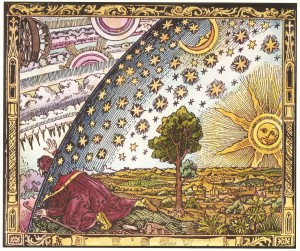
A traveller puts his head under the edge of the firmament - original (1888) printing of the Flammarion engraving.

A traveller puts his head under the edge of the firmament – original (1888) printing of the Flammarion engraving.

I use methods of mirroring, matching and mismatching sparingly in my work with clients. And if appropriate, I offer guided imagery, which induces a light trance state that facilitates fluid awareness, images, and striking insight.

As children we may have been mirrored in ways that affirmed, ignored or rejected our sense of reality. Affirmation happens through rapport, a sense of being accepted and recognised. Lack of rapport and interference can send us on less-walked, though potentially creative journeys. With the advent of virtual global networks the chances of finding rapport have widened. Then again, given the internet is also a mirror to our collective unconscious, we may occasionally drift rudderless in the hive mind, which is also a kind of trance, feeding us stuff.

Trance states draw us into collective wave-signals. We need rapture to remind us of a greater unity, like when millions of us look up to the full moon at the same time, or watch global events on our screens. We need those reminders of belonging like the air we breathe. Innumerable focussed activities produce altered states: art, games, sport, dance, voice, music, spiritual practices, rituals and mind altering drugs, dreaming, writing, reading, guided imagery, meditation, sound frequencies, light pulses … the sun 🙂 and so on.

Altered states of consciousness fluctuate. I’m not alone in having had lucid dreams and out-of-body experiences, sensations of oneness and peace, as well as being subjected to global traumas and the occasional attack of negativity. Means that improve our rapport with ourselves, others, nature, and the cosmos – means that regulate and tune our psychic energy and gain us a wider perspective on our existence, seem more wholesome than antidepressants. Though it’s useful to keep in mind that subliminal sound/light pulses can be applied to manipulate the public.

No doubt biofeedback devices have a future. Hopefully technological advances will lead to the realisationand evidence that humans are part of one intelligent, pulsating organism – the cosmos – expanding and contracting – yet in a continuous process of becoming conscious of itself and connecting to deeper and further dimensions.

Sites that may interest:                                                                                                               http://en.wikipedia.org/wiki/Mind_machine                                                      http://synthesislearning.com/article/brwav.htm                                                              http://www.brainwavecollege.com/what-are-brainwaves.htm    http://www.nlpu.com/NewDesign/NLPU_WhatIsNLP.html

A Ted talk on advanced applications of brainwave readings                     http://www.ted.com/talks/tan_le_a_headset_that_reads_your_brainwaves.html

There are many related blog posts on this sit, here the most relevant:                                                                                               http ://courseofmirrors.wordpress.com/2014/01/11/thoughts-on-dark-matter/                                                                    https://courseofmirrors.wordpress.com/2013/08/28/the-mystery-of-thoughts/                                                                     https://courseofmirrors.wordpress.com/2011/05/14/thoughts-on-awareness/

14 Comments

Filed under Blog