 We mostly think through conventional forms and givens, for practical reasons, while another way of thinking embraces invisible and unknown dynamics via intuition – like the seeming particle/wave paradox in quantum mechanics, where a local particle also exists as a non-local wave. The two perceptions can potentially mingle creatively, but, notably in times of social uncertainty, they clash, and fewer people maintain the ability to tolerate negative capability.
The way autocratic opinions over divisive issues are sensationalised by some tabloids, sends my thoughts flitting through the mutable and nuanced zones of shadow lands. I write the glut of absurdities off my chest, only to delete the drafts, not having the talent or guts for the iconoclastic fun Marina Hyde pours into her articles for the Guardian.
The tit for tat race of opposing interest groups that blame, attack and counter attack each other eludes any balanced comprehension of events. Opportunists, generously funded, like to whip up the chaos for their own benefit. Fertile ground for tyrants. This will go on until the churning oceans calm and offer deeper reflections.
My early education was unremarkable, but I fondly recall a few teachers who made space for ambivalence, encouraging us to question everything and value respectful, if inconclusive, debates. Glib opinions and self-righteousness were mocked and laughed at.
In the early seventies, doing a short apprenticeship with a small Dutch advertising firm in London, we had weekly meetings, where ideas, no matter how crazy, were explored. Every person working in the building was asked to the table, including caterers and cleaners. This inspirational seedbed sparked successful projects and maintained a motivated team.
Decades later, during a part time stretch at Social Services, policy makers introduced a new computer programme for tick-box client assessments, a software developed without involving the people who were meant to use it – us. Sparing you the specifics of this nonsensical scheme, the nightmare in its wake resulted in multiple nervous breakdowns by employees. Since I had a private psychotherapy practice I escaped the hell and resigned.
A relentless trend towards greater efficiency continued despite loud social backlash. Over and over I listened to the stories of my stressed clients suffering from the overbearing changes in public institutions and private companies. The forced procedures insulted the intelligence of workers, who felt the stupidity and pain of it all in their guts, as did I. The harmful effect on mental health, family life, education, small traders and community venues … is ongoing.
Recently I re-read a 1970s lecture by my Sufi teacher, Fazal Inayat Khan – Old Thinking, New Thinking – also used as title of a small collection of his controversial talks, published in 1979 by Harper & Row. Some of Fazal’s students insisted on this publication. He reluctantly agreed. I’ll share here a few notions that struck me form the lecture, Old Thinking, New Thinking:
The end of real is false, while the greatest false is real.
The real is about form, the false (non-evidenced) is about essence. Fazal addressed two qualitative different ways of thinking, both beneficial if used in the right time and context. Those supporting form and tradition set out to protect stability, whereas those who seek essence knock over the stable towards the freedom of the unknown. Imaginative people, including scientists and artists, tend to overshoot crumbling realities.
The sad logic of power driven politicians is to manipulate social anxieties by promising simple fixes to allay feelings of uncertainty. In such times people tends to grope towards old thinking, to what can be predicted and depended upon, thus moving away from the immeasurable independence of anything beyond facts.
Old thinking relies on valid knowledge; however, to apply this knowledge intelligently requires new thinking, so essence can find expression once more.
Old thinking will bring achievement, notwithstanding that without new thinking it will have achieved nothing. Traditions wedded to established forms exemplify old thinking. Yet for a tradition to remain sincere and dynamic new thinking is required.
In other words, only what changes stays functional. Much as we dislike it, life could not continue if it were not for the transient growth and death phases of nature. The same applies to cycles that call for the expansion of consciousness.
How is one to value both form and essence in complex times and stay sane? No way around it, we must suffer the anguish of holding the tension between static knowledge and intuition in our hearts. Not easy. Perhaps because I experienced the 1960s new thinking surge, any leaps of goodwill from young people still brings tears to my eyes. I’m interested in everything. I’m interested in bridging divides. I even occasionally delight being in the spirit zone, with the effortless flow of things. (A Zen concept)
Deep, maybe very deep down, every one of us knows the bliss of being in the zone.
… Old thinking is a sorting process – new thinking is a melting process …
… Old thinking is a claim – new thinking is an aim … Fazal Inayat Khan
 let sleep do its work
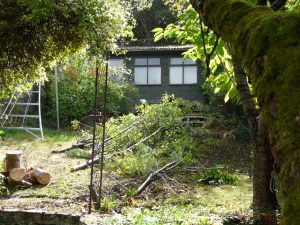 were solved at reasonable costs. In fact, every problem solved … cementing dangerous steps, replacing old iron guttering, massive clearing of garden overgrowth, sorting a blocked man-hole … felt like a heroic victory. You should have seen me stirring the shit in the manhole with a long iron rod. I kept on for hours since it has worked once before, many years ago. I spare you the hilarious details. In the end I called in the experts. Craftspeople who know their job have my admiration. Societies couldn’t function without them.
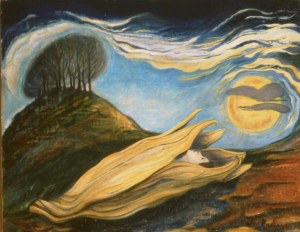

 Truly witnessing the tragedies on our planet is not the same as passive looking, witnessing expands and transforms consciousness. As an individual I feel helpless, unable to solve the overwhelming problems, but by witnessing and accepting the sad truth of what is happening, and by grieving the losses, I, each of us, in a small way, can contribute towards a necessary and crucial paradigm shift.
 Some scenes near the end of the film bring home powerful metaphors – like what it takes to fly. Fledglings, to lighten their weight, must empty their stomachs of everything fed to them by their parents (in this instant plastic.) Mothers, forgive yourselves. We can hardly avoid dumping stuff on your offspring, be it psychic or material. Many fledglings don’t manage, but if lucky, and if the right wind comes along, their wings will carry them across the sea towards their adult adventure.
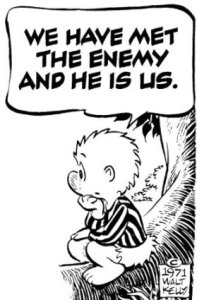
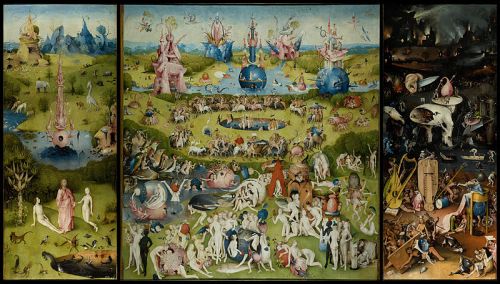 Self-blame makes for turbulent minds. Only scapegoats will ease the burden. Among all regulars a perfect scapegoat served Christianity well – Eve. The collective psyche contains not only unknown riches, but also stuff we disregard (much like the plastic that accumulates in oceans,) thoughts and deeds behind our facades we won’t acknowledge or take responsibility for, and instead conveniently place on the shoulders of suitable others.
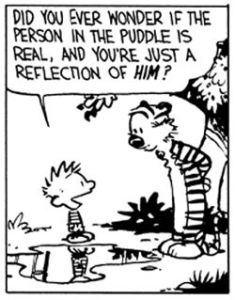
 What if we have satisfied our basic needs? The horizon is never reached. Beyond every horizon is another. This includes the horizons of our mind, beyond which we hope to find purpose. We go on journeys, outer, inner, to find out why we are here. But the search never ends. We take drugs to kill this yearning, this question of ‘why’, because we can’t face that maybe the only purpose is the search.
 The Alps of Bavaria stand in bright glory or shrouded in mist, depending on the mood of the weather. Their snow-covered peaks were the dramatic panorama of my childhood, and called me beyond horizons, first east, then west.


 light and shadow make


 I enjoyed a week-long break, based in Gualchos, uphill from Castell de Ferro, Costa Tropical, visiting a friend I had not seen for some time. My son accompanied me, a rare treat, since his time is generally tightly booked with work.

 We swam & travelled through Alpujarra hills to Lecrin, Lanjeron & Orgiva, and along the way visited a friend, whose life as a horsewoman and a jewelry-maker is an inspiration. I hope she’ll publish her amazing story one day. The place Rachel created is a paradise for all creatures – see the dog’s stylish abode below …


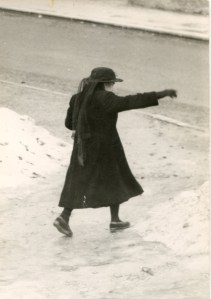 Marie was one-of-a-kind, a unicum, einzigartig. Considered a fool, she was waddling through the streets of my childhood village in search of rejected items.
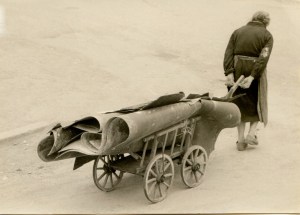 Marie found good – even in the flawed. She says:
 chased by hungry spirits hovering over their houses. They resent and envy my freedom. I scare them, because I remind them of the ravages of time. I’m beholden to no one, which is why they spread lies about me. I’ve sharp ears.
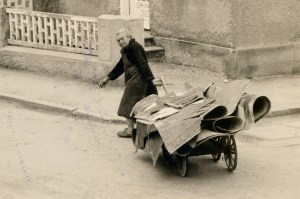 There you have it. Ask me anything and you get truth, since I’ve got nothing to lose. The absurdity of human behaviour makes rejection bearable. I learned to live with it. Consequently, my brain cells can’t help being impressed by discarded objects. It’s compulsive. When you get there one day, remember me, the woman in the street, shouting, ‘We ripe, we rot, it’s all the same. Do as you like.’
 Having succumbed to waves of nostalgia, I’m unsure what will emerge next, which is fine for now. My father’s death at 99, while sad, is also a relief. During the last two years I’ve been on tender hooks, waiting for the telephone call, and the prospect of sorting and processing a left-behind-part of my life. As anticipated, the reality of it was exhausting. There’s no financial reward, since what’s left of my father’s estate will just about cover the bills. His furniture was too damaged to be accepted at auctions, and anything else of value he had given away to people whose support he appreciated. He resented me for not living up to his ideas, and I resented him for his total lack of support. He had fun, spending a fortune on years of luxury cruises around the world with his second partner. While often justified, resentment is entirely useless. I tried my best, so I’ll drop my misgivings and wish my dad’s soul a good journey onwards. It frees up my life.
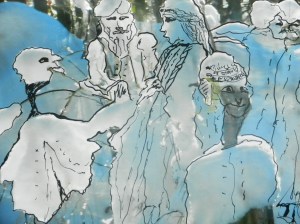 It’s ironic, because my Dad had artistic leanings resembled my own. We only occasionally clicked, for a short while, especially when he needed me, after which he retreated into his controlling paranoid mode. He may have been jealous of the self determining freedom available to my generation. I should add that his psyche was injured by the last horrific war.