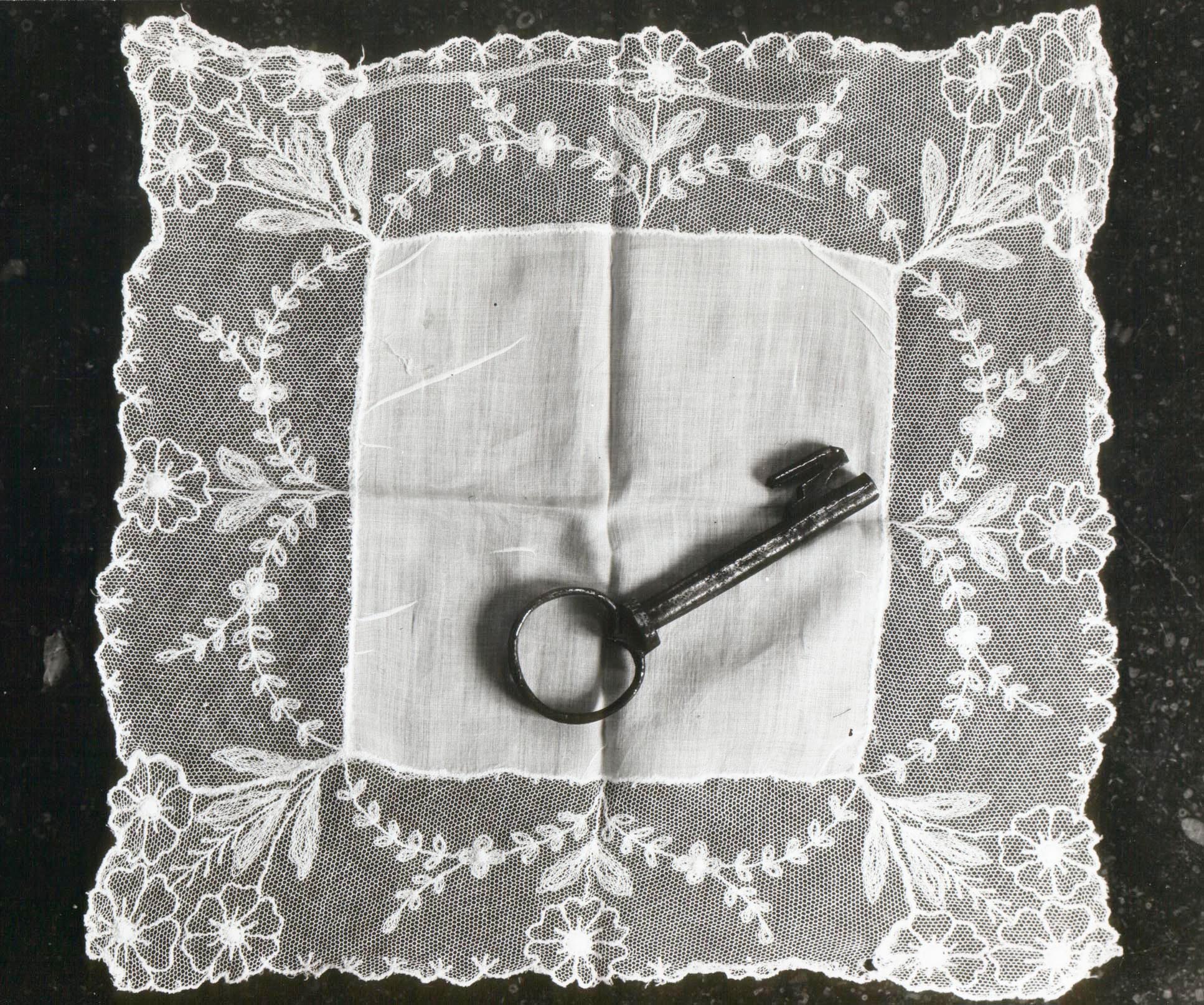
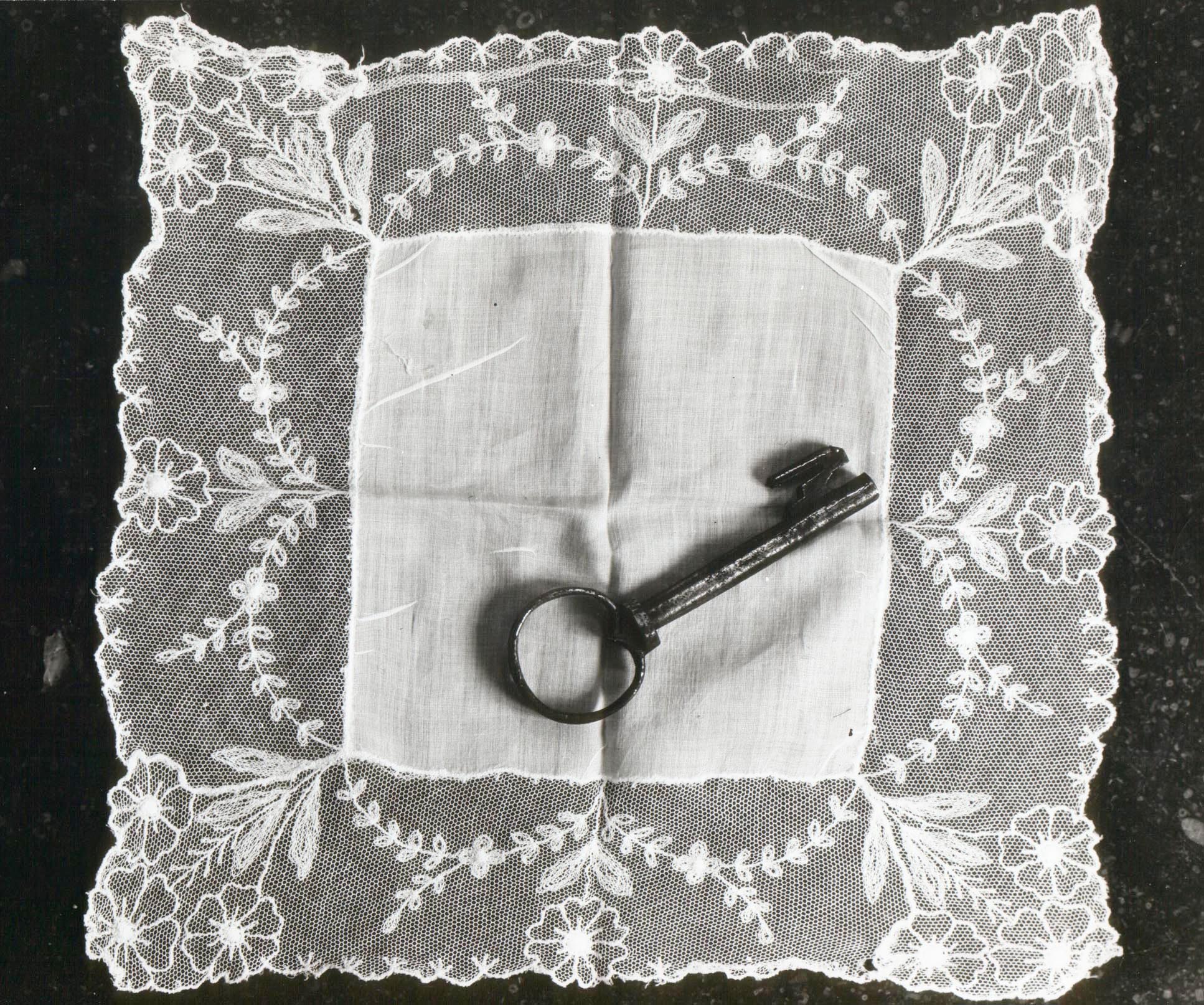
It happens to all keys, eventually, they become redundant. Whatever was safeguarded or secreted behind a lock has lost its significance, or its mystery.
I took the above photo in my early twenties … but my fascination with keys started in childhood, with fairy tales. Recently a friend on FB re-discovered ‘Woman who Run with the Wolves,’ by Clarissa Pinkola Estes.. Like Deborah, and her friends, drawn to the inner journey, I was enchanted by the book when it was first published in 1992.
I took the tattered edition from my shelf and added it to my bedside reads. The first theme I dipped into was the psychology of Bluebeard, a tale which Clarissa uses to explores the archetypal innate predator in women’s psyche, which, while bullying us into silence, also holds the key to a woman’s deep instincts and creativity. Re-reading this chapter, I had a powerful dream that showed me that the forbidding and controlling voice still lurked in me and has presently dampened my spirit, even though I naively and bravely turned many keys in my life, revealing both, threatening spells of my inner predator I managed to transform into vital energy, as well as treasures that inspired many creative adventures.
Yet of late, at this advanced stage in my life, I feel listless and stuck with the MS of the third novel in my Course of Mirrors trilogy, Mesa, which, incidentally, is set in a realm where time has slowed down and the protagonist must re-introduce conflict to empower life. In the face of this challenge, it seems that all my keys are of no use. Mystery does not call. My vital curiosity, even my desire for a meaning, dissipated, with no lock in sight. The wild spirit in me lingers in a safe garden, full of robins and butterflies. How dare I to disturb paradise by instigating conflict? Any thoughts are welcome, well, needed. Thank you ♥
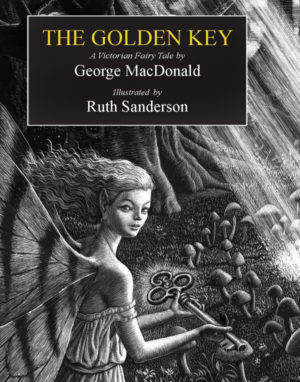
During a short exploration on google I found this lovely post by Ruth Sanderson re: George Mac Donald’s story of The Golden Key.
Inspired and taken from ‘The Mind World’ – Volume Four of Hazrat Inayat Khan’s lectures.
The heart, in Sufi terms, functions as a mirror – and more …
Whatever is reflected in the heart does not only remain a reflection but becomes a creative power productive of the phenomena of a similar nature.
So, for example, a heart that is holding in itself and reflecting the rose will find roses everywhere. Roses will be attracted to the heart and roses will be produced from it and for it.
As this reflection deepens and becomes stronger it becomes creative of the phenomenon of roses and the symbolic qualities we associate with roses.
Equally, the heart that holds and reflects wounds will find wounds everywhere. It will attract wounds and it will create wounds; for that is the phenomenon of reflection.
There are examples to be found in the world of people who by retaining a thought have created on the physical plane its manifestation, its phenomenon.
The reason is – that the phenomenon is not only an image as produced in the mirror – but that reflection in the heart is the most powerful thing.
It is life itself – and it is creative.
If the heart is calm enough to receive reflections fully and clearly, one can choose for oneself which reflection to retain and which to repel.
☼ ☼ ☼
A calm heart is of course a rare event, especially in the turbulent and rushed environment most of us live in, or fight for existence. We may however remember such moments of grace. And to appreciate the process of reflection as a psychic law can explain many mysteries.
My two quest novels, ‘Course of Mirrors,’ and its sequel, ‘Shapers,’ (found on my book page,) are inspired by the phenomenon of reflection.
The image is of an enlarger, used to project, copy, or enlarge negative film images onto chemically sensitive paper, by moving the lens box up or down to achieve a variety of sizes, or to place filmstrips directly on the paper and press them down with a glass plate for contact sheets. The timed, light exposed paper is developed slowly in a chemical bath, and then fixed in another bath to stop the developing process. Next, the print is watered for a while and then dried on a hot press. Depending on the quality of the negative, it’s a delicate art to achieve the optimal gradation of light and shadow in a final print. The process happens in a darkroom with only a red light.
Much was destroyed during the Second World War, and my parents started out with nothing but their skills. My mother had trained as photographer at the Berlin Lette House (Academy,) where women were encouraged to acquire academic and industrial skills. My father, apart from being a talented artist, for whom there was no call, trained and worked as a fine mechanic. Together they moved south and started a photographic business. The enlarger in the image was built by my father during the early 1950 s.
I was not interested in the business (another story,) but eventually studied photography, and this enlarger served me through a decade of self-employment, based in Munich, including still photography for projects by directors of the then German New Wave Cinema. I could have continued working in the film scene, but instead became a hippy, a seeker, a psychotherapist, and a writer, in that order.
Five years ago I donated the enlarger to a local art college. They were very pleased. I’m still mourning.
Having been a big part of my life, I thought of posting something about my experience with analogue photography here, but was fretting because it’s a deeply emotional subject, for another day. So this post did not turn out as intended.
There are glimpses worth sharing. To explore and understand the shift from analogue to digital systems, I wrote an article about Human Identity in the Digital age: ‘Body Electric.’ You can read it as PDF, and find the link on the ‘Other’ page here. It is 20 pages plus notes and bibliography, but after all these years, I still think it is definitely worth reading.
A great book on photography and surrealism, L’Amour Fou, carries a quote by Roger Callois, which shines a light on the fading idea of an original:
‘It is with represented space that the drama becomes clear; for the living being, the organism, is no longer the origin of the coordinates, but is one point among others;; it is dispossessed of its privilege and, in the strongest sense of the term, no longer knows where to put itself.’
The analogue process provided rich metaphors to live by, while the oracular quality of the digital system has fragmented many assumptions and values we hold about human nature and reality. Thing is, I don’t think we have caught up yet. We are all a bit lost in space and time – which has become a theme of my two novels, (see my Books page.)
Yesterday I had a surreal dream, all about us, and others, being developed (in our mind) through our ongoing experience. In the process, it can happen that we, and others, become fixed into static existence through our attitude, and our need for permanence and certainty.
Doubt is generally considered a weakness, but it can also be strength, and a function of renewal.
We seek approval. We like to belong with people/groups that resonate with our ideals. We are trying to order the puzzles of our experiences into some coherence that guides our purpose and actions, and gives our life meaning. And who does not cherish the moments when all feels perfect? Yet only traces of perfection live on in the heart, because life moves on.
An invocation by Hazrat Inayat Khan used to intrigue and troubled me …
‘Towards the One
The perfection of Love, Harmony and Beauty
The Only Being
United with all the illuminated souls
Who form … the Spirit of Guidance …’
Perfection is not of this world, I told myself. And yet, the above invocation gains power in the context of how Hazrat Inayat Khan defines ideals:
‘The ideal is the means – its breaking is the goal.’
His grandson, Fazal Inayat-Khan, put it in another way:
‘With faith one attains and realises peace and harmony.
With doubt one destroys and gains freedom to move ontowards.’
It could be a safe space we aspire to, since once expelled from the warm womb, we struggle to find a similar space in this world. Whatever else we aspire to, it takes discipline, consistency, and perseverance to work towards one’s ideal.
Through discipline we acquire a basic understanding of things. In spiritual terms, this is also the challenge of the Buddhist Hinayana and Mahayana practices.
But what if we have proudly gained a level of certainty, be it about our achievements, identity, position, faith? And what if we cling to that certainty – at all costs – numbing the chattering of our minds? How do we escape a stagnant reality, the prison of certainty?
Chögyam Trungpa, in his lectures on Tantric Wisdom says doubt is ignored on the path of discipline, but during a further stage, Vashrajana (Crazy Wisdom,) confusion, and creepy questions about our truth are legitimised, and offer enormous potential. Allowing doubt – and including that doubt is part of our progress.
In a book of gathered lectures, ‘Journey Without Goal,’ Trungpa points to a fearless attitude.
My former Sufi teacher and friend, Fazal Inayat-Khan, operated in the realm of Crazy Wisdom. Some of his students understood where he was coming from, while others were super annoyed. I’m still inspired by Crazy Wisdom, but having lost my Sufi friend, I lack the courage to travel this goal-less path alone.
Teachers of that kind, who live life with fearless intensity, move on as soon as their purpose is done, they never grow old.
The theme of Crazy Wisdom, in the sense of stepping into the unknown, is challenging my imagination now in the third book, ‘Mesa,’ I’m writing in the Odyssey of Course of Mirrors. It’s about Mesa’s return to her future perfect world, where time has come to a near standstill. Against all logic, but understanding the truth in her heart, she is tasked to bring back history, and friction, as a cure.
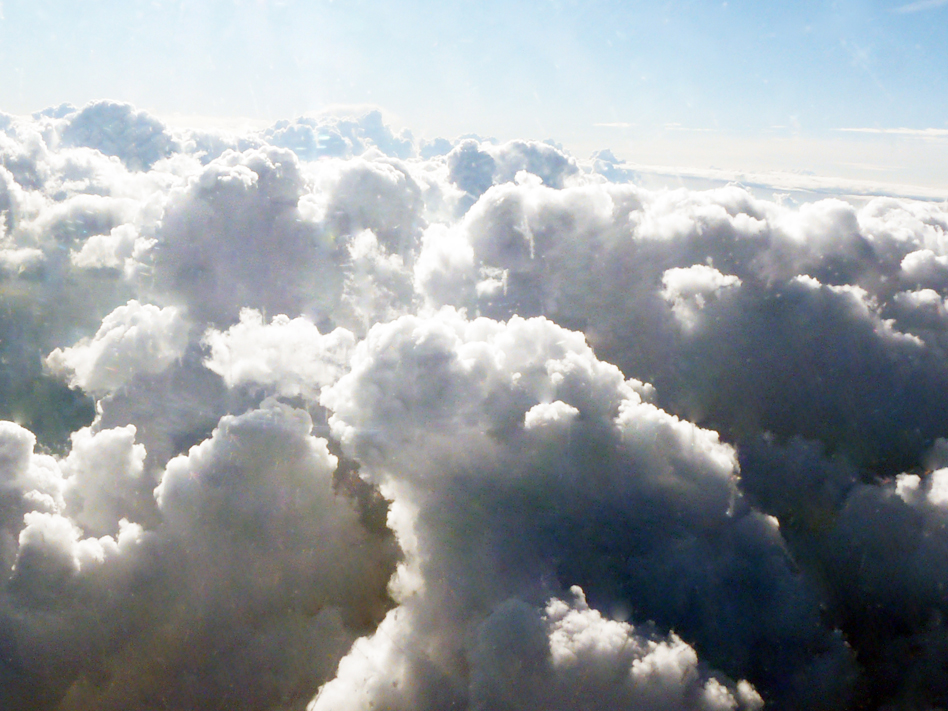
Photo: The image was taken by son, Yeshen Venema, during a visit to Vietnam. I added the clouds 🙂
I was always drawn to subtle light, not the blinding bright one, but the humble light that searches and elevates hidden beauty in the shade … the stray beam on a patch of peeling paint, a spark of sun in a puddle, the amazing transformations of shapes and colours created by a tiny shift of its direction. I love how light sculpts the garden through morning mist, how it paints cloud landscapes, how it slips through the frame of a window, teases the shadowy folds of a gauze curtain, or how it honours leaves by flooding through the gaps to jewel the ground. When I took to squinting through the branches against the sky, I discovered their negative pattern – appearing like a distant universe.
Even as a toddler I’ve been mesmerised by the musical dance of light across the forest floor, any shifting shadows on surfaces, and, occasionally, I imagined strange new forms in a light and shadow show. This was not particularly encouraged by my parents, who thought my weird imagination was a bit over the top, too vivid. So obviously I shut up about these impressions, and any odd thoughts that crossed my mind..
Maybe my angel was annoyed that I wallowed in being lonely, but lacked the grace to acknowledge her being there, all the time. Anyway, she decided to introduce herself. The vision came while I was under deep anesthetic trance for a life-saving operation to remove a dysfunctional appendix.
I was around eight years old.
Waking up in in pristine white room, wrapped up in pristine white bedding, the first thing that flooded into my mind was the crystal clear memory of meeting my angel.
She invited me to follow her along a corridor; she was luminous, with translucent wings. She opened a door. While I was reviewing this instant in the pristine white room, I had a physical sensation or relief. She had opened a door.
The scene repeated itself in that there were many doors dividing the corridor, and one after another was opened with a soft nudge by my angel. She was basically telling me, ‘You don’t need keys; doors will open for you, if and when you want to, be it forward or backwards, future or past.’
The vision relieved the pressure of rejections; foremost felt from my father’s secretive psyche. My grandmother had warned my mother that her son was a closed cupboard. My angel suggested I had a choice as to what door I opened, and when. Opening a door backwards, I eventually I found that my dad’s cupboard protected a deeply sensitive romantic.
My next door is ahead, and it entails fully embracing the process of continuing with the writing of my third novel – ’Mesa’ – the most challenging project yet, especially since I’ve no idea where it will lead.
To come back to my angel … a spirit guide every individual has, though not necessarily perceived … it is a being (no matter what you call it) offering intimate rapport. In various cultures there are different terms for this guardian, be it angel, the Green One, understood as an ancient pagan spirit of the wild woods, or ‘Khidr’ in mystical Islam – appearing from nowhere when help and advice is needed, most often not the rational kind.
G. Jung says Khidr reveals not just the greenness of the chlorophyll within the leaves, not just the sunlight / water responsible for their nourishment and liveliness, and not just the (secondary) green ray of light that is refracted as the “middle-pillar” within the light spectrum, but also the (primary) undifferentiated light of a pure and altered consciousness. For Jung, Khidr resembles the inner self.
In that sense, one could say, Khidr helps us to adjust traditional maps to our present individual territory. When you think a little about it, you’ll probably recall the moments in your life, tiny as they may have been, when an angel being changed your life for the better, even when it required a disruption of your expectations. And think of the angels of dear friends who are on a wavelength with yours and support your best intentions.
Ideally, we find our kin over the years. My use of the imagination, distinct from fantasy, was often affirmed. Particularly the ‘The Creative Imagination’ Ibn ‘Arabi reveals as The Science of the Heart, influenced the writing of my novels (info. on my book page.) Meanwhile, you may like my short essay on the subject.
Exciting … If you type … Ashen Venema, Shapers … into google, you’ll find several platforms that allow you to pre-order #shapers. The e-book link will follow once the paperback is released.
*
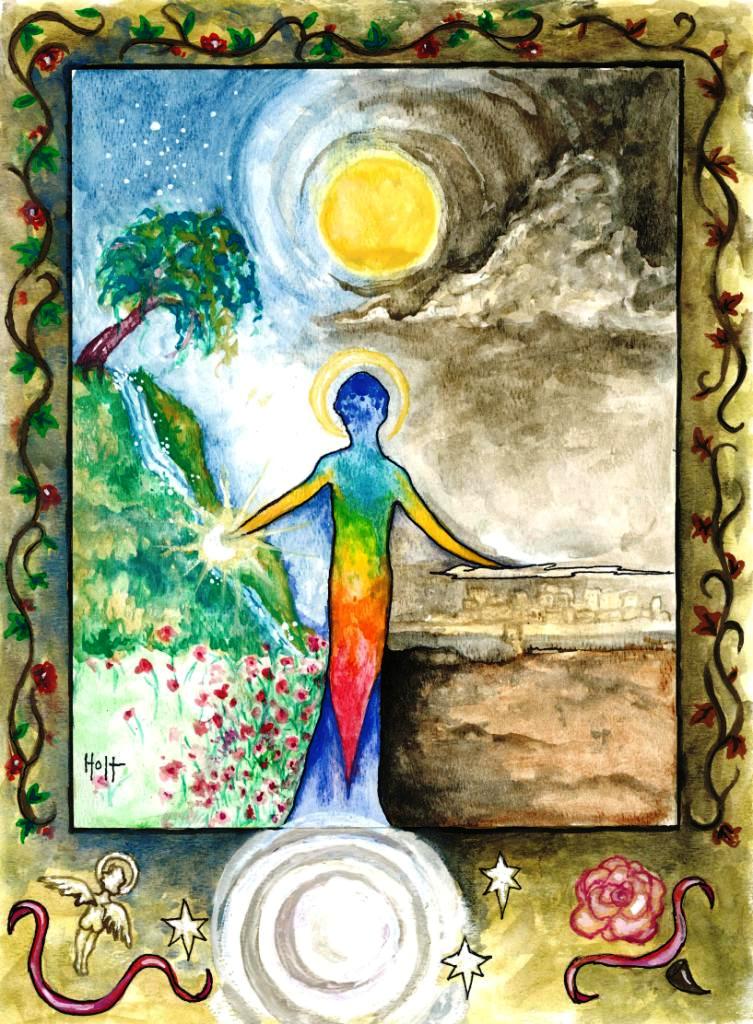
The image above is a painting by Cynthia Holt, inspired by some of my poems. I lost contact. Can’t find her now
You and I have secrets so well hidden in dark corners of our psyche; the only chance of discovery is us bumping into them through some synchronistic event. Angels may be involved. Secrets keep us under a spell, just like we get needy for the absent puzzle pieces that prevent a scene from completion, which nags on our sense of cohesion. Depending on the temperament of any given day this can result in restlessness, procrastination, or apathy. The pieces exist, we know that much. But in our lives the missing pieces represent holes, patches of nothingness that beg to be filled. And some will never be filled, unless imagination enters like a grace, and offers fresh possibilities.
Beneath this yearning for cohesion chimes a faint drone. From that drone a vague theme, image or a melody we can’t place may arrive from nowhere, persisting in teasing us.
I sum this sensation up as ‘waiting.’ Waiting for the fog to clear, waiting for a connection, a response to a question, waiting for a birth, waiting for a death, waiting for the heart’s eye to light up, waiting for inspiration, waiting for a door to open, a hint … like in Samuel Beckett’s absurd play, ‘Waiting for Godot,’ where the passive Estragon and the impatient Vladimir are adrift in their minds, hoping for a meaningful sign. Some early viewers angrily left the theater. Maybe it annoyed them that the play exposes the absurd inner dialogues everyone experiences at times. Critics have voiced fascinating interpretations. For me, the philosophical variance between Aristotle and Plato comes to mind.
Years ago, my dear Sufi friend/teacher, Fazal Inayat-Khan, introduced the term ‘psychogenic secret’ during a workshop he instigated. The term could be understood as the distorted or buried memory of an incident that compels our behaviour in ways we cannot fathom. Consequently, shadowy aspects of our personality may appear in relationships, when others see us in ways we cannot comprehend. Consistency upholds our mental habits until their significance wears down. But once we discover and acknowledge a twist in our interpretation of relational events, a thread will untangle and jingle the famed ‘aha moment.’
It is tricky to share a personal experience, though an example of twisted psychology is in order here. Far back, at primary school, a triangle of girls was jealous of me for having as friend and neighbour the favourite boy in our class. He had train sets and lots of Enid Blyton books. They alleged I had been stealing stuff from their and other pupils’ desks. Their concerted accusation required me to empty my schoolbag in front of the head teacher and the whole class. The crafty girls had planted a fancy pencil, a sharpener, a metal ruler and a pop-star image between my notebooks. The items were quickly claimed by their owners. Disputing the abhorrent deed was hopeless. I felt deeply humiliated. And my parents were unable to refute the evidence. The insult sunk deep and festered.
Much later, during student years, I casually stole a chunk of butter from a shop to round up a meal for friends. Observing my lack of conscience, and the ease, even pleasure, with which I stole the butter mortified and shamed me. It took a while to process my turmoil until I drew the connection which stopped me in my track towards becoming a bank robber with supernatural powers … I realised it was my irrational comeuppance, a kind of revenge for being once wrongly blamed and shamed.
My example might spark your imagination. Intricacies as to how psychogenic secrets can operate, be they based on humiliation, small or big traumas and betrayals, frequently appear in fairy tales, stories, novels, including mine, notably in the forthcoming sequel to Course of Mirrors, ‘Shapers,’ to be released in spring.
I’ve learned to tolerate psychogenic secrets I’m ignorant of, the holes in my life, by allowing my dreamer to use the empty patches as frames for stories that humour the unknown.
We endow obvious practical functions to clothes tools, furniture and any number of items we use daily and which therefore become intimates, like I have a favourite knife, cup, spoon, breakfast bowl and so on. I remember a T-shirt, apricot-coloured, with the iconic Snoopy character on it. Over the years the fabric of the shirt faded and softened beautifully. Finally I was wearing it in bed, for comfort, until, after various fixes, it fell apart. A sad day!
We also endow objects with symbolic, creative, guiding, protective and blessing potencies. Beyond reason – be it by a kind of enchantment – we grant them magical qualities through sustained affection. For me these are stones, shells, driftwood, feathers, or small ornaments given to me by friends.
Starting as children, we’ll adopt what Donald Winnicott called transitional objects, meant to restore the lost closeness to mother. Also early on we may express interests that foreshadow an inborn zeal. So beyond toys, teddy bears, blanket, pets, books, and so on, we bond with anything that fascinates us, initiating a passion that could encapsulate the myth of our lives. In my case this became the bridging of divides. My first novel started with the image of a bridge.
I wrote elsewhere … a constant sense of oneness is not what evolution is about. In a time and space structured cosmos we cannot cage harmony. Reality is the result of contradiction.
Objects and interests we seek or meet, may relate to a particular element, earth, water, fire, air, aether. Quite often our vocational and professional activities relate to an element. Also, one or the other of our senses may take hold of us, the love of light, shapes and colours, a fondness of sound, touch, smell, taste, or a love of metaphysics. Attachments drive our interests throughout life.
Strong affinity with an element may bring the challenge of dealing with another element we feel less in resonance with. The psyche plays at balancing extremes. For example, my astrological birth chart confirms a predominance of fire and air signs, fast energies, fierce, intense; even obsessional. I can still hear my mother saying, with a touch of exhaustion, ‘You’ve got a vivid imagination.’ My authority defying associations caused the odd trouble with teachers. In compensation I had need of grounding, befriending earth, literally digging and planting, which taught me patience. And I’m calmed by the vicinity of water. My childhood was spent around lakes, rivers and ponds.
We hold our loved ones and friends dear. We give significance to certain animals, trees, plants, prominent landmarks. We cherish gadgets, periods of history, art styles, places, habitual rituals and ideas. Each bonding adds to the creation of a strong net. To lose a strand precious to us, requires a child-like faith that our relational energy net can be mended and re-aligned to our guiding light. This net is all about relationships, inner and outer, informing the purpose of our extended self.
Over recent years, efforts to dis-endow some of my attachments, among them endless folders with notes on projects and visions I’ve slim chances to achieve in this round, left me melancholic, but through the more malleable net sneaked fresh insights and mysteries. It also helped me to focus on writing my novels. ‘Course of Mirrors’ will have its sequel, ‘Shapers,’ published next spring.
To lighten up these dark times, a few lines from Beannacht – Blessing – by J. O’Donohue
… May the nourishment of the earth be yours, may the clarity of light be yours, may the fluency of the ocean be yours, may the protection of the ancestors be yours.
And so may a slow wind work these words of love around you, an invisible cloak to mind your life.
Day and night we receive and tie up new thoughts, mostly subliminal. By keeping track of this neuron dance we find fresh associations that expand the architecture of our imagination. Sudden insights lift our spirit. Frequently practical innovations arrive, novel ways of doing things. But with thoughts adrift, we often fail to be present to our bodies, and this neuron dance turns mechanical. We may be hampered by depression, presently a global dis-ease, but life perks up a little when we listen to our body.
‘Remember me,’ it implores. ‘Love me, give me attention.’
Stretching limbs calms the stress in fascia tissues and muscles, stirs the senses, and deepens breathing. Food tastes better, small things delight, movement gives pleasure.
‘We are souls dressed up in sacred biochemical garments and our bodies are the instruments through which our souls play their music.’ … Einstein
The unconscious collective psyche continuously churns up vital signals through the body, but has long been denigrated by wrong-footed ideologies … the greatest crime against humanity, since the neglect of nature’s voice led to the abuse that threatens the balance of life on this planet, and our health.
Nature – the wild, matter, psyche breath, being, anima, the feminine principle – contains all life. The term has acquired many slants of meaning during previous centuries. We have now established frames through which nature is perceived … the scientific, economic, political, apocalyptic, holistic, visionary, philosophical, romantic, and the spiritual frame, for example. Each outlook influences the relationship we have with nature, as a person, group or nation.
Since all human innovations are inspired by nature, every manmade thing is natural, yet by lengthening the duration-span of too many products, nature’s cyclic process of decay is disrupted, often with dire consequences. It’s like stuffing ourselves with food the body can neither absorb nor digest. Controlling nature’s rhythm does not work. The best we can attempt is to seek rapport, fall into step, attune and harmonise with this dance we are part of.
Quite likely all the varied frames which determine our relationship with nature were formed by the wish to make the unconscious force of the wild psyche more bearable.
We demand nature’s protection. This includes humans. Do the ecological villains among us also deserve protection? In a psycho-therapeutic practice this would be considered as the expansion of consciousness through befriending and owning the shadow. I forever wish this map of knowledge was introduced to the educational curriculum.
First call is the body. If the body’s messages are fully received (giving varied frames their due) and understood (in a deep loving sense,) the messages are always essentially true. Only humans manipulate and deceive, by ignoring and belittling nature’s raw truths. The planet suffers the same neglect. Our best efforts at deep listening will always be partial.
I count on the constant minority that grasps a wide spectrum of meaning in relation to every rift that endangers our world. While this minority tries to uphold a wider view, as a small collective it is not geared for action, knowing well that whatever succeeds in being legally determined cannot please all, but usually intensifies disagreements, especially in cultures where emotions and thoughts are censored for political ends.
One could say the will to action is diluted by the wider view. But there exists a subtler use of the will, like rehearsing positive outcomes, which requires imagination. Efforts of this subtle will are hardly visible; but they no less influence and create our reality. This subtle will is based on trusting the intelligence of nature, of soul, the One Being, the Spirit of Guidance.
A prayer/song by Hazrat Inayat Khan:
Let thy wish become my desire
Let thy will become my deed
Let thy word become my speech beloved
Let thy love become my creed
Let my plant bring forth thy flower
Let my fruit produce thy seed
Let my heart become thy lute beloved
And my body thy flute of reed
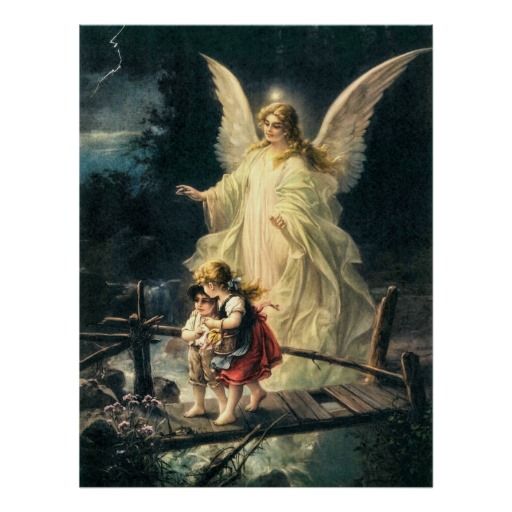
Crossing and bridging divides is the theme of my life. As a child I came to believe in a spirit that guided me, sparked by a print that hung in my paternal grandparent’s bedroom, where a guardian angel leads a girl and a boy along a rickety bridge across a ravine with rapids rushing below. The image left a deep impression, and, over the years, similar images appeared in dreams, revealing the scene’s symbolic power. Training and working as a transpersonal therapist I often helped clients to explore the complex relationship between the masculine and feminine principle (Anima and Animus) active within each individual and across the gender divide. But most useful work on the road to greater wholeness begins with listening to what the body knows, and, by implication, what the self-regulating planet tells us.
The theme of bridges plays in my novel, Course of Mirrors, and continues (in the sense of bridging time) in a sequel, Shapers, which I hope to publish this or next year.





 Course of Mirrors