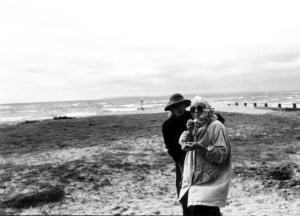
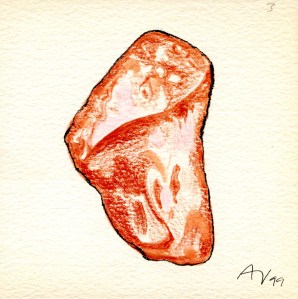
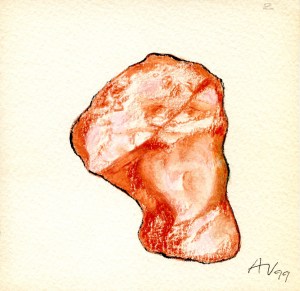
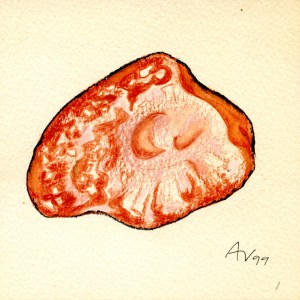
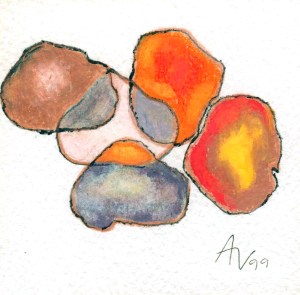
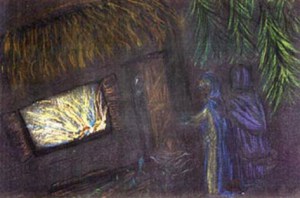
 When life was a little more predictable, I used to host fortnightly small dream-sharing groups on Thursdays. Our regular way to start out was reading ‘The Story of Mushkil Gusha,’ as it appears in ‘Caravan of Dreams’ by Idries Shah. As often happens with traditional Sufi stories, we discovered ever new aspects of personal interpretations. At times we also made sketches of particular images that impressed us, just as we did for the dreams we shared.
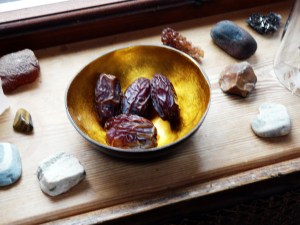 Today, it being Thursday in the UK, I’ll share this story with you, while eating dates. Find out why. If you’re not into reading a few pages, you can listen to The Story of Mushkil Gusha on Your Tube. (15 minutes) The link opens a new tab. You won’t lose this page.
The Story of Mushkil Gusha
ONCE upon a time, not a thousand miles from here, there lived a poor old woodcutter, who was a widower, and his little daughter. He used to go every day into the mountains to cut firewood which he brought home and tied into bundles. Then he used to have breakfast and walk into the nearest town, where he would sell his wood and rest for a time before returning home.
One day, when he got home very late, the girl said to him: ‘Father, I sometimes wish that we would have some nicer food, and more and different kinds of things to eat.’
‘Very well, my child,’ said the old man, ‘tomorrow I shall get up much earlier than I usually do. I shall go further into the mountains where there is more wood, and I shall bring back a much larger quantity than usual. I will get home earlier and I will be able to bundle the wood sooner, and I will go into town and sell it so that we can have more money and I shall bring you back all kinds of nice things to eat.’
The next morning the woodcutter rose before dawn and went into the mountains. He worked very hard cutting wood and trimming it and made it into a huge bundle which he carried on his back to his little house.
When he got home, it was still very early. He put his load of wood down, and knocked on the door, saying, ‘Daughter, Daughter, open the door, for I am hungry and thirsty and I need a meal before I go to market.’
But the door was locked. The woodcutter was so tired that he lay down and was soon fast asleep beside his bundle. The little girl, having forgotten all about their conversation the night before, was fast asleep in bed. When he woke up a few hours later, the sun was high. The woodcutter knocked at the door again and again and said, ‘Daughter, Daughter, come quickly; I must have a little food and go to market to sell the wood; for it is already much later than my usual time of starting.’
But, having forgotten all about the conversation the night before, the little girl had meanwhile got up, tidied the house, and gone out for a walk. She had locked the door assuming in her forgetfulness that her father was still in the town.
So the woodcutter thought to himself, ‘It is now rather late to go into the town. I will therefore return to the mountains and cut another bundle of wood, which I will bring home, and tomorrow I will take a double load to market.’
All that day the old man toiled in the mountains cutting wood and shaping the branches. When he got home with the wood on his shoulders, it was evening.
He put down his burden behind the house, knocked on the door and said, ‘Daughter, Daughter, open the door for I am tired and I have eaten nothing all the day. I have a double bundle of wood, which I hope to take to market tomorrow. Tonight I must sleep well so that I will be strong.’
But there was no answer, for the little girl when she came home had felt very sleepy and had made a meal for herself, and gone to bed. She had been rather worried at first that her father was not at home, but she decided that he must have arranged to stay in the town overnight.
Once again the woodcutter, finding that he could not get into the house, tired, hungry and thirsty, lay down by his bundles of wood and fell fast asleep. He could not keep awake, although he was fearful for what might have happened to the little girl.
Now the woodcutter, because he was so cold and hungry and tired, woke up very, very early the next morning: before it was even light.
He sat up, and looked around, but he could not see anything. And then a strange thing happened. The woodcutter thought he heard a voice saying: ‘Hurry, hurry! Leave your wood and come this way. If you need enough, and you want little enough, you shall have delicious food.’
The woodcutter stood up and walked in the direction of the voice. And he walked and he walked; but he found nothing.
By now he was colder and hungrier and more tired than ever, and he was lost. He had been full of hope, but that did not seem to have helped him. Now he felt sad, and he wanted to cry. But he realized that crying would not help him either, so he lay down and fell asleep.
Quite soon he woke up again. It was too cold, and he was too hungry, to sleep. So he decided to tell himself, as if in a story, everything that had happened to him since his little daughter had first said that she wanted a different kind of food.
As soon as he had finished his story, he thought he heard another voice, saying, somewhere above him, out of the dawn, ‘Old man, what are you doing sitting there?’
‘I am telling myself my own story,’ said the woodcutter.
‘And what is that?’ said the voice.
The old man repeated his tale. ‘Very well,’ said the voice. And then the voice told the old woodcutter to close his eyes and to mount as it were, a step. ‘But I do not see any step,’ said the old man. ‘Never mind, but do as I say,’ said the voice.
The old man did as he was told. As soon as he had closed his eyes he found that he was standing up and as he raised his right foot he felt that there was something like a step under it. He started to ascend what seemed to be a staircase. Suddenly the whole flight of steps started to move, very fast, and the voice said, ‘Do not open your eyes until I tell you to do so.’
In a very short time, the voice told the old man to open his eyes. When he did he found that he was in a place, which looked rather like a desert, with the sun beating down on him. He was surrounded by masses and masses of pebbles; pebbles of all colours: red, green, blue and white. But he seemed to be alone. He looked all around him, and could not see anyone, but the voice started to speak again.
‘Take up as many of these stones as you can,’ said the voice, ‘Then close your eyes, and walk down the steps once more.’
The woodcutter did as he was told, and he found himself, when he opened his eyes again at the voice’s bidding, standing before the door of his own house.
He knocked at the door and his little daughter answered it. She asked him where he had been, and he told her, although she could hardly understand what he was saying, it all sounded so confusing.
They went into the house, and the little girl and her father shared the last food which they had, which was a handful of dried dates. When they had finished, the old man thought that he heard the voice speaking to him again, a voice just like the other one which had told him to climb the stairs.
The voice said, ‘Although you may not know it yet, you have been saved by Mushkil Gusha. Remember that Mushkil Gusha is always here. Make sure that every Thursday night you eat some dates and give some to any needy person, and tell the story of Mushkil Gusha. Or give a gift in the name of Mushkil Gusha to someone who will help the needy. Make sure that the story of Mushkil Gusha is never, never forgotten. If you do this, and if this is done by those to whom you tell the story, the people who are in real need will always find their way.’
The woodcutter put all the stones which he had brought back from the desert in a corner of his little house. They looked very much like ordinary stones, and he did not know what to do with them.
The next day he took his two enormous bundles of wood to the market, and sold them easily for a high price. When he got home he took his daughter all sort of delicious kinds of food, which she had never tasted before. And when they had eaten it, the old woodcutter said, ‘Now I am going to tell you the whole story of Mushkil Gusha. Mushkil Gusha is the remover of all difficulties. Our difficulties have been removed through Mushkil Gusha and we must always remember it.’
For nearly a week after that the old man carried on as usual. He went into the mountains, brought back wood, had a meal, took the wood to market and sold it. He always found a buyer without difficulty.
Now the next Thursday came, and, as it is the way of men, the woodcutter forgot to repeat the tale of Mushkil Gusha.
Late that evening, in the house of the woodcutter’s neighbours, the fire had gone out. The neighbours had nothing with which to re-light the fire, and they went to the house of the woodcutter. They said, ‘Neighbour, neighbour, please give us a light from those wonderful lamps of yours which we see shining through the window.’
‘What lamps?’ said the woodcutter.
‘Come outside,’ said the neighbours, ‘and see what we mean.’
So the woodcutter went outside and then he saw, sure enough, all kinds brilliant lights shining through the window from the inside.
He went back to the house, and saw that the light was streaming from the pile of pebbles which he had put in the corner. But the rays of light were cold, and it was not possible to use them to light a fire. So he went out to the neighbors and said, ‘Neighbors, I am sorry, but I have no fire.’ And he banged the door in their faces. They were annoyed and confused, and went back to their house, muttering. They leave our story here.
The woodcutter and his daughter quickly covered up the brilliant lights with every piece of cloth they could find, for fear that anyone would see what a
treasure they had. The next morning, when they uncovered the stones, they discovered that they were precious, luminous gems.
They took the jewels, one by one, to neighboring towns, where they sold them for a huge price. Now the woodcutter decided to build for himself and for his daughter a wonderful palace. They chose a site just opposite the castle of the king of their country. In a very short time a marvelous building had come into being.
Now that particular king had a beautiful daughter, and one day when she got up in the morning, she saw a sort of fairy-tale castle just opposite her father’s and she was amazed. She asked her servants, ‘Who has built this castle? What right have these people to do such a thing so near to our home?’
The servants went away and made enquiries and they came back and told the story, as far as they could collect it, to the princess.
The princess called for the little daughter of the woodcutter, for she was angry with her, but when the two girls met and talked they soon became fast friends. They started to meet every day and went to swim and play in the stream which had been made for the princess by her father. A few days after they first met, the princess took off a beautiful and valuable necklace and hung it up on a tree just beside the stream. She forgot to take it down when she came out of the water, and when she got home she thought it must have been lost.
The princess thought a little and then decided that the daughter of the woodcutter had stolen her necklace. So she told her father, and he had the
woodcutter arrested; he confiscated the castle and declared forfeit everything that the woodcutter had. The old man was thrown into prison, and the daughter was put into an orphanage.
As it was the custom in that country, after a period of time the woodcutter was taken from the dungeon and put in the public square, chained to a post, with a sign around his neck. On the sign was written ‘This is what happens to those who steal from Kings.’
At first people gathered around him, and jeered and threw things at him. He was most unhappy.
But quite soon, as is the way of men, everyone became used to the sight of the old man sitting there by his post, and took very little notice of him. Sometimes people threw him scraps of food, sometimes they did not.
One day he overheard somebody saying that it was Thursday afternoon. Suddenly, the thought came into his mind that it would soon be the evening of Mushkil Gusha, the remover of all difficulties, and that he had forgotten to commemorate him for so many days. No sooner had this thought come into his head, than a charitable man, passing by, threw him a tiny coin. The woodcutter called out: ‘Generous friend, you have given me money, which is of no use to me. If, however, your kindness could extend to buying one or two dates and coming and sitting and eating them with me, I would be eternally grateful to you.’
The other man went and bought a few dates. And they sat and ate them together. When they had finished, the woodcutter told the other man the story of Mushkil Gusha. ‘I think you must be mad,’ said the generous man. But he was a kindly person who himself had many difficulties. When he arrived home after this incident, he found that all his problems had disappeared. And that made him start to think a great deal about Mushkil Gusha. But he leaves our story here.
The very next morning the princess went back to her bathing-place. As she was about to go into the water, she saw what looked like her necklace down at the bottom of the stream. As she was going to dive in to try to get it back, she happened to sneeze. Her head went up, and she saw that what she had thought was the necklace was only its reflection in the water. It was hanging on the bough of the tree where she had left it such a long time before. Taking the necklace down, the princess ran excitedly to her father and told him what had happened. The King gave orders for the woodcutter to be released and given a public apology. The little girl was brought back from the orphanage, and everyone lived happily ever after.
These are some of the incidents in the story of Mushkil Gusha. It is a very long tale and it is never ended. It has many forms. Some of them are even not called the story of Mushkil Gusha at all, so people do not recognise it. But it is because of Mushkil Gusha that his story, in whatever form, is remembered by somebody, somewhere in the world, day and night, wherever there are people. As his story had always been recited, so it will always continue to be told.
* * *
While searching for the podcast, I spotted this lovely site by Jason Stern … learning to be human. I liked this paragraph he used when introducing The Story of Mushkil Gusha …
… ‘The story conveys a kind of formula by which one can become open to receiving help. The sense of hopelessness or helplessness, in this case, is not a negative or bad thing. It is simply a sign that one has exhausted one’s known resources and has become, in a sense, empty. It is into the vessel of emptiness that something can be received. The source of help is both outside and inside, which is neither here nor there. The help arises from beyond the known and familiar.’ …
Seems appropriate to the present situation around the globe.
If it’s of interest, @mushkilgusha is my twitter handle, in case anyone wants to follow me there.

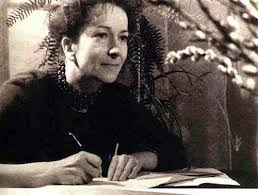 One book of poems I have always at my bedside, for when I need to shift my thoughts, is Wislawa Szymborka’s New and Collected poems 1957 -1997, translated by Stanislaw Baranczak and Clare Cavenagh, published by Faber and Faber 1999
 through the poems like a clear spring.
 The friendly GP at the hospital corona area asked me, ‘Do you like getting the vaccination?’
 decisions is a fascinating experience for me, if slightly unsettling. I reckon Ulla’s moods slow my futile attempt at reducing ruminating thoughts, like I puzzle over how frequently she marks events in a negative frame. ‘I knew it was going to be a bad day,’ that sort. I made the decision (ha ha, I made a decision after all) to trust in her powerful guardian angel. The sharp way she sums up the occasional unpleasant person we meet, I fully admit, creates an instant emotional clearance, which I like, as long as an analysis of my congruence follows. I was
  born that way, and too easily succumbed to my mother tabooing cuss words from my vocabulary. Further, with vital exception in cases of injustice, or when pushed too far by idiots, which sparks pure anger in me, I tend to neutralise my attitude when negative reactions towards people perk up. That is to say I trained myself stepping into other people’s shoes, even when they pinch. I fully own the torture of this tricky ideology. I’d not recommend the style. Phew, that was a droll effort at self-observation.
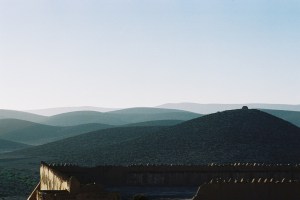 1st January 2008 … Last night was a non-event, though a hilarious late TV show diverted me away from sulking. We wait ages for a camel dish. I’m unsure about eating the mutton of such useful and loyal creatures. The dish tastes fine, but scenes I witnessed of how animals are treated before slaughter always trouble me. Just then Ulla storms off in disgust as a truck with cramped chicken cages arrives at the restaurant. She eventually returns. Our waiter friend packs up the content of her plate for us to take along. On way back to
 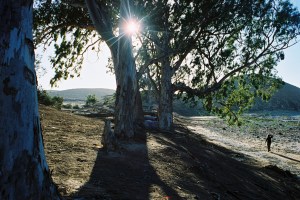 Bou Jerif we almost turn around when another troupe of four-wheel drivers showers us with clouds of dust. Short of time, we call the fort and order a tent for me. All turns out well. I get a tower room for the price of a tent. And the manic French group leaves shortly, for whatever reason.
 Tomorrow we’ll head up the Atlantic coast.
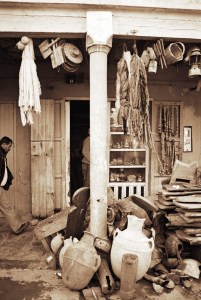 rent a room for the night, we have lunch and go shopping. Ulla strikes a bargain for a beautiful hand-embroidered Kaftan, intended for cushions. She frowns when the trader asks her to smile. A deal that is not sealed with smiles seems to signal disapproval here. The trader relents, is forgiving, ‘Inshallah.’
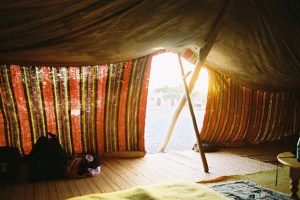
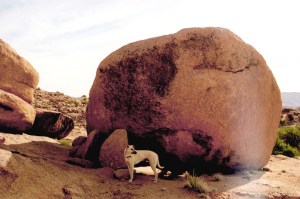
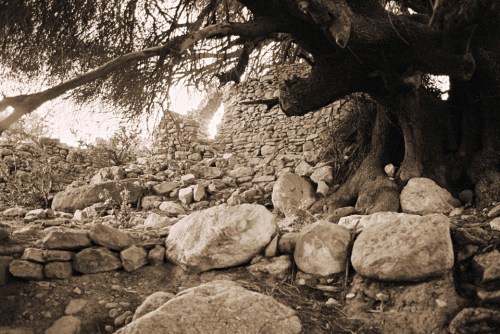 Near Agadir we stop for the night at a place called Paradise de Nomade. I’m impressed by the fresh sheets in my Berber tent. And the massive boulders in the dry riverbed nearby are an epic sight. Unfortunately the night turns noisy from 11:30 pm onwards. Four wheel drivers arrive, dogs bark, music, jolly talking … until 3 am.
 Being a stranger seemed more exciting. There is a kind of accord with other strangers around the world, due to a gap in narratives, demanding keen attention, shaking up perceptions and allowing for the unfamiliar to astonish.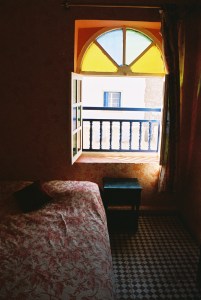
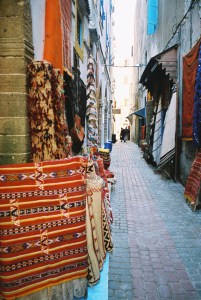
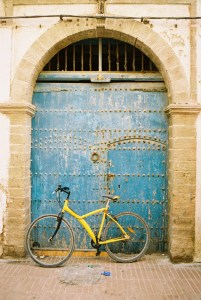
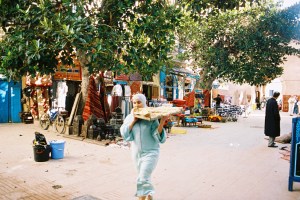
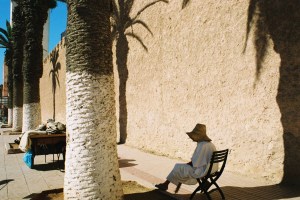
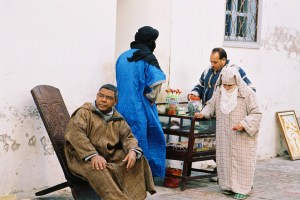
 27th Dec. 2007. Instead of committing to another night at Bou Jarif, we decide on a day trip to Plage Blanche and perhaps return for the night, or the next day, depending on whether I can occupy one of those deserted cottages at Plage Blanche we heard about. Turns out I can. The former manager of the dilapidated Hotel, if it ever was a hotel, sweeps out the layers of sand from one of the cottages.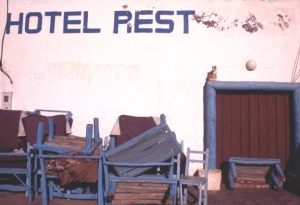
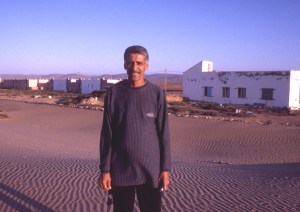
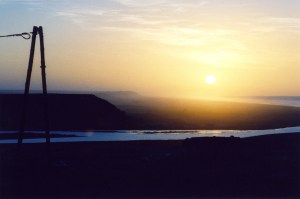
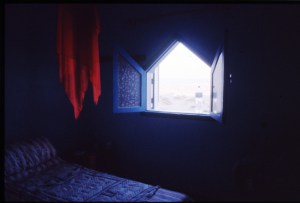
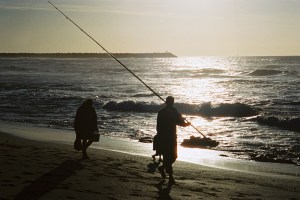
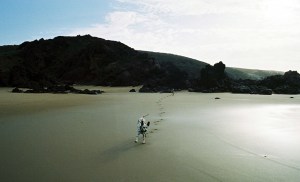
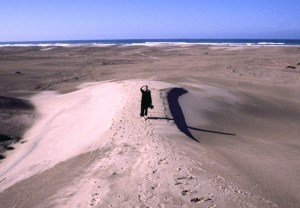 28th Dec. 2007, Ulla has taken the dogs for a run along the beach. I furtively look for a spot to dig a hole for what finally stirs in my intestines, since I never use the chemical toilet in the van. The spot I find looks upon miles of surf before the Atlantic horizon. The occasion allows for a most spectacularly relieving bowel movement, certainly with the best view ever. The argan oil I soaked yesterday’s excellent local bread in must have worked the magic.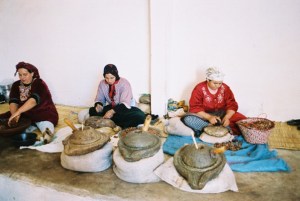
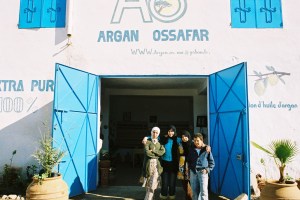
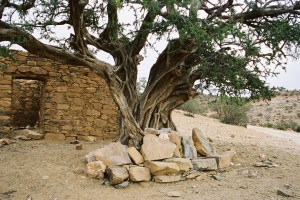
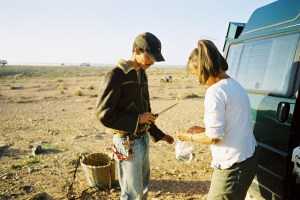 sells fresh fish to Ulla, filleted on sight. I set up a folding chair along the sacred line that marks the boundary between reality and dream, a place of sweet solitude.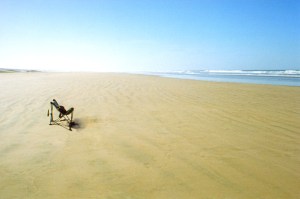
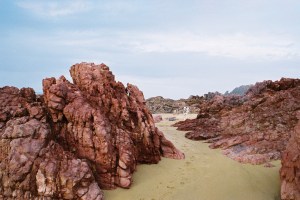
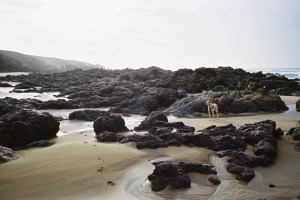 signifying their readiness of trusting in God’s will, ‘Inshallah.’ While I enjoy the sense of being lost between dream and reality, I drive Ulla crazy with the tunes I hum unawares. The melodies arrive from nowhere; old songs from the 70s, or themes from symphonies and operas. Brought to my attention, I try to place the tunes and can’t rest until I do. This peculiar habit of mine taps into an unconscious matrix where emotional memories find fresh connections, a kind of dark and invisible womb in which experiences are recorded. I feel embarrassed when Ulla admits irritation, though I thank her for bringing this habit to my attention. I learned to value this unconscious process as a mnemonic tool in the process of writing.
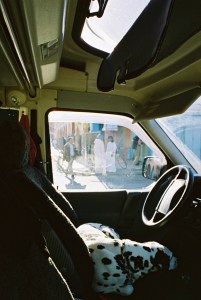 We drive an hour back to Goulimine and enjoy lunch in a restaurant with a familiar friendly waiter. He accepts and arranges for the fish which Ulla bought from a young man in the dunes to be prepared. I later get two bottles of wine for the next four days from the known secret corner in the souk.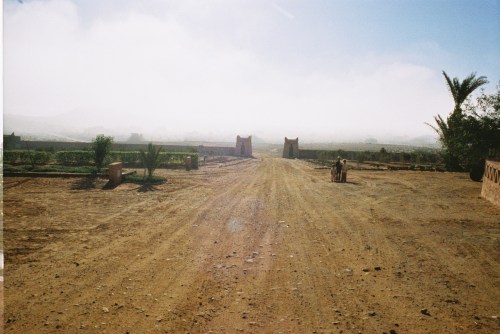
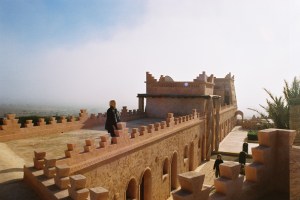 I inspect a lovely tower room at Ksar Tafnidilt, but my budget is dwindling. So after some dreaming of luxury, it’s back to the main road. The four wheel drivers have churned some nasty holes in the sand. At one point we collect rocks to make a passage. Ulla’s bondage to the van conjures up her fears that we’ll get stuck. The scary possibility sparks my usually drowsy determination into action, physically and mentally. All went well in the end. We continue towards Tan Tan Plage.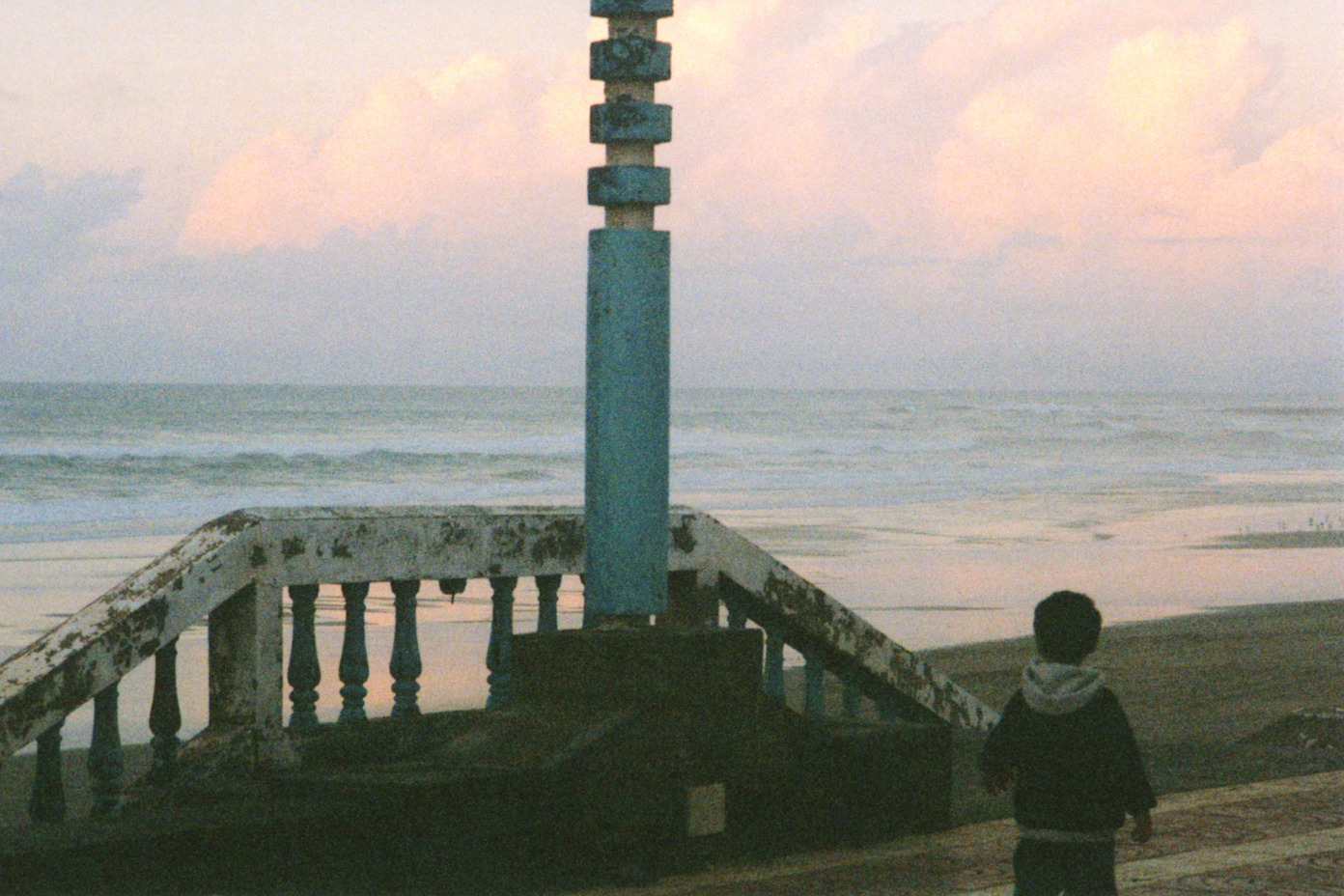

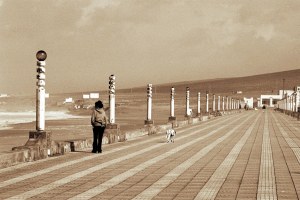 22nd Dec. We go shopping in Tiznit, for candles, water, yogurt and postcards. The souk is empty, maybe because of the holiday. Afternoon we walk along the coast, with two, three, four bands of surf under a misty sunset with pink clouds, and also stroll along Aglou promenade. We contemplate renting a flat for a few days. A Moroccan scout suggests a few, but they’re all in a dire state … half functioning appliances, smelly and dirty, nothing that couldn’t be righted with a little effort, but we are in conflict whether to commit to one place or push on.
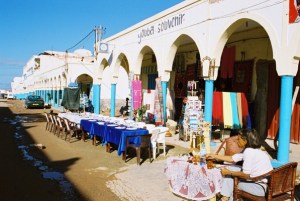 23d Dec. Massive rainfall, through which I run to make it dry to the breakfast terrace. The sky clears quickly. By lunchtime we drive on towards Sidi Ifni, stopping in Mirleft for lunch. As only customers we are served like royalty.
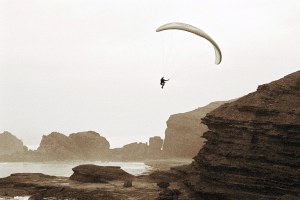 VW bus, and got stuck ascending a vertical narrow road in the mountains of South Tirol. I was younger then, with more guts. I relied on my handbrake to exit the car and put rocks under the back tires, mainly to gain time and catch my breath. In the end you do what needs doing. Once you’re on a sheer slope you keep your nerve. Gliders have most excellent nerves around here and, for us, Legzira’s red rocks were well worth the effort.
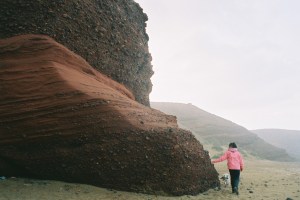
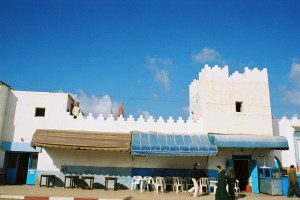
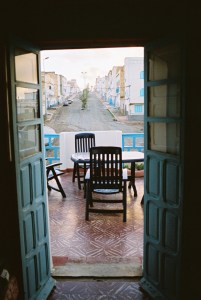
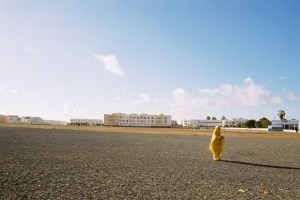 Sidi Ifni was relinquished back to Morocco by Spain in 1969. The beach is massively dirty, yet overall the place has an odd charm, and seems to have escaped mass tourism.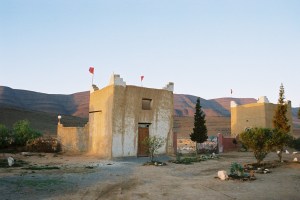
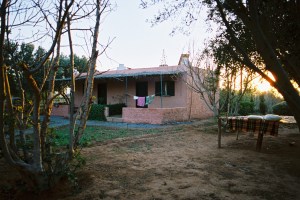
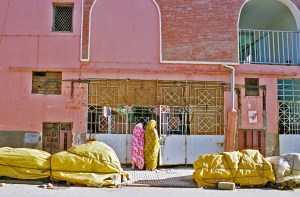
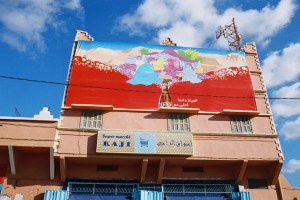
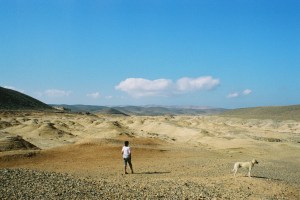
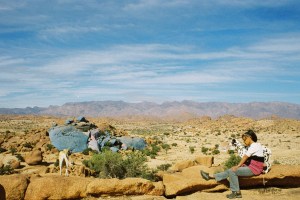
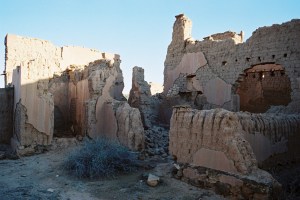 track to Fort Bou Jerif. The stillness among the bare hills is eerie. Not a soul for miles on end. Lost in the desert, the fort attracts visitors because of its stunning ruins. The guest quarter, including a camping area, run by French people, has a Disney feel and lacks authenticity. Only mad tourists like us attempt this arduous journey, which should require a 4×4 vehicle. The room I book is expensive, sigh, but since everything is clean and well cared for, I anticipate the unique pleasure of a hot shower. Close by is a river with a palm grove oasis. We opt for a tagine dinner in front of Ulla’s van, prepared traditionally on a wood fire by a clever trader hiding among the bushes. It tastes delicious, and we enjoy the sunset with a full moon rising. Tomorrow we’ll explore the ruins.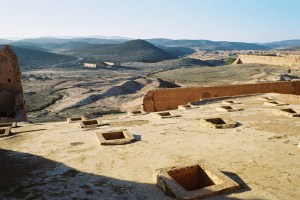
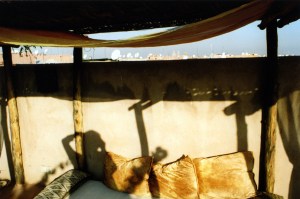 Marrakech airport, 16th Dec 2007 … new arrivals are greeted by hundreds of placards. I scan the display showing names of people, Hotels, and Riads, until I spot Dar Pangal, my Riad. In the rush my top heavy case topples and grazes a man’s toes. He shouts an avalanche of abuse, in French. I say, ‘Sorry,’ which raises his blood pressure even more. My understanding of French being embarrassingly basic, I do grasp the questions he hurls at me like projectiles. ‘Where do you come from? Why do you come here?’ His insolence finally riles me. ‘Why do you want to know?’ I ask. He snaps back in English, ‘Shut up.’ Young Saladin, who will bring me to my Riad in the Medina, casts his eyes to heaven and shrugs his shoulders, so do I.
 Turning into a narrow backstreet, we arrive at Dar Pangal. The inner courtyard is an island of peace. Julio offers a warm welcome. He’s South American, but spent years in Paris, working as a designer. He likes Werner Herzog films, and once met Klaus Kinsky. Eccentric people fascinate him. I reveal how I worked for some of these eccentric people in the past. On that wavelength we share reminiscences over mint tea. Using a mobile and texting is a new experience for me. Somewhat nervous, I practice sending messages to
 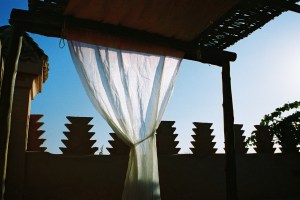 Ulla, Ruth and Zohra. Connections work well. A hot shower also works well, and helps me to sleep after a long day.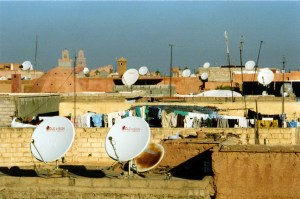
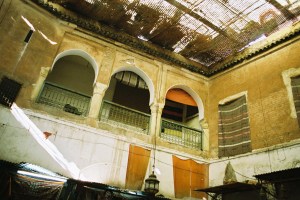 notice that most people don’t like to be photographed without permission, which I respect. The plenty starved cats have no objection.
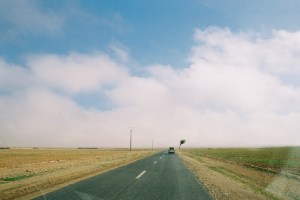
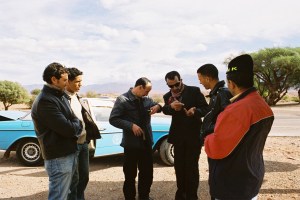 their fare the men wedge me into the backseat. Pressure of time cancels choice, so I trust the arrangement. Magnificent white clouds over the Atlas Mountains compensate. A short cigarette stop provides a memorable photo. After an hour being cramped together, the men invite me to mint tea and pancakes. We communicate in made-up language, hand gestures and smiles.
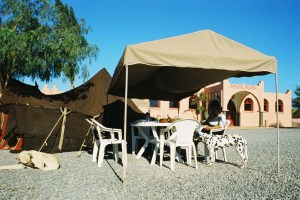
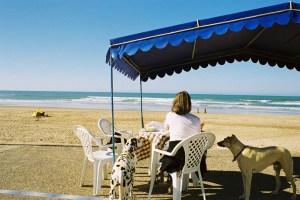 I meet up with Ulla, her van and her dog family, a Dalmatian, Leila, and an adorable adopted Moroccan street dog, Ali, in the parking area of Marjane Shopping Mall. I had visited Ulla’s home a year earlier, refreshing a connection from eventful past decades that combined in our memory. Besides, there was our joint mother tongue. Mine had become rusty. Being challenged to speak German brought not only forgotten words to the surface, but also forgotten experiences. Where I can
 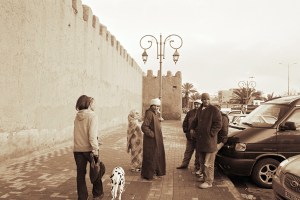 be hesitant and avoid conflict, she has a no-nonsense manner, often with an edge I admire. Shouting the name ‘Ali’ down the road for your dog to behave, is potentially asking for trouble, that is, in Morocco. The predictable raised eyebrows before the penny drops remind me of childhood pranks my mother used to censor. We make an interesting pair of travellers.
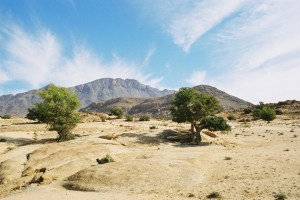
 The year before the millennium, a then dear old friend of mine, Sitara Brutnell