… distractions …

We meet monthly, a group of local friends, offering workshops or discussing on a theme. Last we explored distractions, which, well, distracted us from other things that afternoon, like the rain outside, concerns about people being unwell, family, and the buffet waiting for us in the kitchen. Most of all, it made us present to each other. I share here my reflections on the theme after our discussion. A dictionary definition of distraction is: To cause to turn away from the original focus of attention or interest; divert.

We listed outer distractions – basically life’s realities, though they tend to get in the way of more immediate objectives and disturb our peace of mind:

Physical pain, noise, smells, temperature, food, weather, world news, politics, economics, ecology, bills, insurance renewals, nuisance calls, other people’s feelings and projections, family demands, accumulated clutter, maintenance tasks, bureaucracy, lack of response to a query, mail, internet, waiting … little things … we agreed that negatives can turn positive  🙂

Life’s demands tumble into our oscillating mind patterns as dissonances that excite or inhibit our well-being. Conflict results when we resist what’s happening. We may suffer loudly or in silence, or distract ourselves from unpleasant distractions through the innumerable uplifting or numbing sensations our culture offers.

As our discussion spiralled, we homed in on personal routines for dealing with distractions. They differed for each of us, depending on mood, attitude, the state of our nervous system, and the importance of the disrupted task. Days when everything is an effort are made up for by days when everything flows – bliss.

We went on to explore inner distractions, often reactions to outer ones.

Worries, anxieties, despair, obsessive thoughts, anger, pressure of deadlines, excessive associations and ideas, day-dreaming, nagging conscience, hesitations, doubts, guilt feelings, hastily given promises, boredom, pending obligations …

Regarding hesitations and doubts, the term gut-feeling came up. Can it be trusted? Somatic memories may trigger avoidance, a signal to protect us from danger, though the signal could equally sabotage our desires and deeper needs, whereas a higher level intuition might encourage us to re-evaluate what seems obstructive, and take a risk.

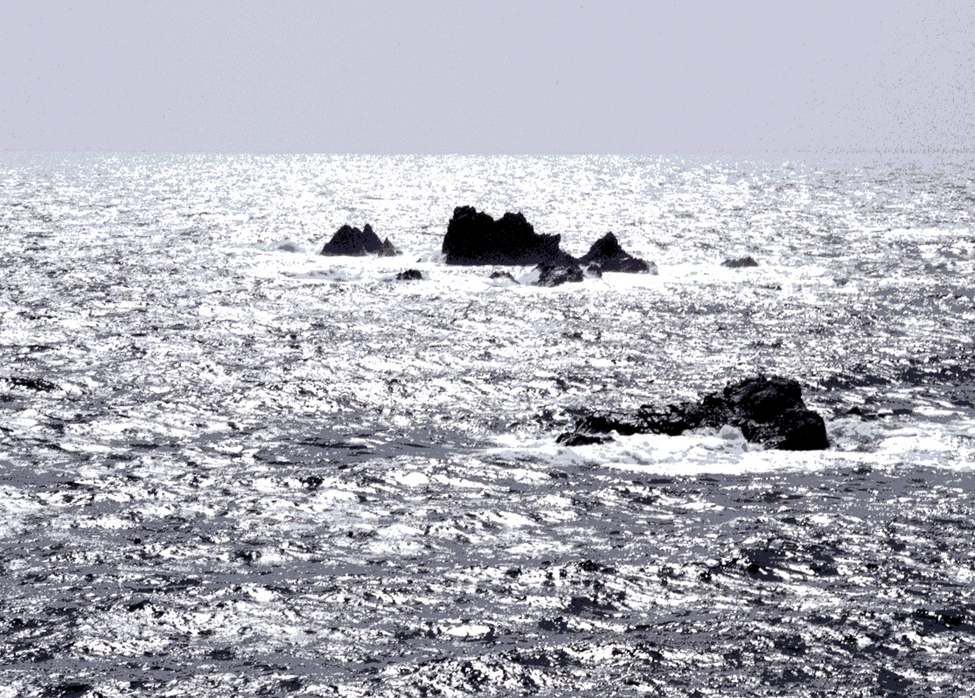
We find it exhilarating to watch wild animals chase prey, with total focus and concentration, fulfilling a vital need, which is why competitive sports are so attractive, where a clear and undivided attention towards a single objective gives an energy rush, even to the bystander. Having a passion, or specialising with narrow focus on mastering one skill or subject, is satisfying. Wave-ripples, most southern point, Lizard, poster desat
Having nothing that fully absorbs us for periods of time, we may be be tempted to roam in a vast sea of beautiful glittering mirror shards that will reflect a fuzzy sense of ourselves. But that’s fine too.

I had various passions in my life, which eventually come circling round to writing. One of my blog posts from last year contains a small excerpt from my second novel, where a character, Cara, shares a slice of the random processes of her mind. She turns out to be the myth-maker, the storyteller. If you’re a little peculiar, like me, you’ll grok this: https://courseofmirrors.wordpress.com/2012/05/10/the-wild-horse-of-the-mind/

I’m a dreamer. Like Cara shares in the excerpt, I occasionally like to let the horse of my mind run wild. I find wild things that way. Random, for better or worse, functions as the creative trickster in my writing, where distractions become allies. Sure, countless mental prompts heap up and demand execution. I procrastinate, adopting patience. My nagging voices are not jailers. They’re easily humoured until the time is right for a blitz of action.

In technological advanced societies, where the struggle for physical survival is being replaced by a struggle for identity, or its new definition, ‘brand,’ distracting prompts accumulate quickly. On the virtual stage I must become visible and speak up in order to engage with others. Love or hate the screens, messages keep wavering by. I become a switchboard for exceedingly complex influences. When switched on, I’m plugged into a bigger brain, the vast extensions of a collective nervous system. There is a challenged to assimilate differences and fast-changing knowledge. This calls for tolerance like never before. The Twitter stream, for example, of succinct messages and links, can be dizzying. However, if monitored and surfed with purpose, the information flow cuts through swaths of mindless, sensational news and opens meaningful connections across the world.

Fewer people are born into the blueprint of a tradition that defines them in terms of their roots, their country or family. The question – where do you come from – is shifting to – where do you put yourself, and to what purpose do you channel your energy? Yew-at-Waverley

Information available, the privileges we have, the choices and commitments we make, require astute intelligence of the heart, flexibility of mind, and they come with responsibilities. In today’s shadow play, we see people confront injustice head-on at the risk of becoming sacrificial heroes, which takes more courage than fighting a dragon. Others, like me, play subtler games. Those who have not found a purpose in their lives may get carried along by the sensation of it all, and continue searching for what matters most, for their deeper need.

So these are my reflection on the theme of distraction our friend introduced. We closed the meeting with a silence – an excellent practice for evoking a blank canvas/screen to re-draw one’s track on. Our time sees distractions speeded up, exposing us to multiple perceptions, some of them abhorrent to us, some of them uplifting. It is freed psychic energy that needs channelling. To develop a useful strategy for dealing with psychic energy we must look inside ourselves to find our homing device, our purpose, new communities, and new meaning.

I hope my reflections make you think about how you deal with distractions.

*     *     *

Just discovered – a brilliant article  in relation to our speedy electronic communications, it looks at the glitches that can reveal something truly distracting, and sobering … the mortifying ordeal of being known

http://opinionator.blogs.nytimes.com/2013/06/15/i-know-what-you-think-of-me/?smid=fb-share&_r=2&

12 Comments

Filed under Blog

one raindrop – ten raindrops – what’s the difference?

Before I went to bed last night I asked for a dream, as I do when I want guidance from my unconscious. After all, the greater part of our psyche is out of sight, submerged, with only the top in view, which is why Freud used the image of an iceberg to depict the psyche, the submerged part having deeper connections with the sea of the collective unconscious in which we all swim.

Iceberg - Ri han - Shutterstock

Iceberg – Ri han – Shutterstock

My question was related to the global web, and what’s rising to the surface like long drowned skeletons bobbing along the electric rapids of information, memories re-shuffled, all with a kind of speed only fearless surfers can negotiate. And how every link you and I click is traced, analysed and fed back to the media, politicians, businesses, twitter-birds, face bookers, bloggers and so on. At times it seems like a kind of vivisection in a shiny mirror looking back at us, surreal.

I’m seasoned. There was no TV in my early childhood, it astounds me what I’ve adapted to over the years, but the present tech-apps-avant-garde makes me feel like I’m missing a boat, along with, let’s take a breath, at least sixty-one-percent of the world population (that’s the kind of people with no internet at all.) And because I tend to reflect on cultural trends, searching for wider purpose, meaning and metaphors, I put this to my unconscious: please give me some insight.

On waking, the first thing I gazed at was the raindrops netting my skylight. A phrase came:

                 … one raindrop – ten raindrops – what’s the difference? …

It stuck. I stopped myself diving into associations, about raindrops, the number one, about the history of zero – as symbol for something that doesn’t exist but has become a place-holder. I stopped myself from quoting Rumi, too.

The phrase I received is enigmatic and feels creative. Does it come down to postulation, the everything-and-nothing-matters kind of power we have to envision and re-assemble stories, the delicious freedom to speculate without limits …?

Maybe purpose and meaning are becoming old hats and I’m missing the point entirely. What do you make of the phrase … either with your knowledge of maths and physics, or with your imagination? Even with the phrase or image of a dream ☼


19 Comments

Filed under Blog

… the house-guests of body electric …

SHE calls me body electric. SHE – incarnate as hu-wo-man – oh the mystery – and such hard problem for the scientists who establish evidence of truth via the elimination of untruths. Meanwhile they identify my parts, their functions and complexities …

I’m a miracle, my ears perk at the slightest sound – the little groan in the joints of wood and brick when the house moves a fraction as the weather swings about, soft tweet of a bird, the hum of fridge and its sudden shudder, a rumbling pipe, creak of loose floorboards, or the faint scrape on the stair in the middle of night, when the tip-toeing lodger sneaks to the kitchen to pinch a little honey. Not my concern, I only notice. Exquisitely attuned to my network of neurons, I pick up irregularities, tiny fluctuations of mood, unfamiliar smells, odd tastes, taut muscles … the chatter of Jego, but more of him later.

Magic-Leila's wings02Whoever I house, I prompt stretching exercises, crack joints to unblock energy, flex shoulder-blades that still mourn their wings, and shortly massage cold fingers-tips, my antenna for vibes. I rejoice in my multitasking, my handling of objects with skills no programmed AI creature could ever hope to achieve. With the unfailing accuracy of a spy, I pick up signals against the faint background buzz of the blood river and readily adjust to spheres beyond my skin palace.

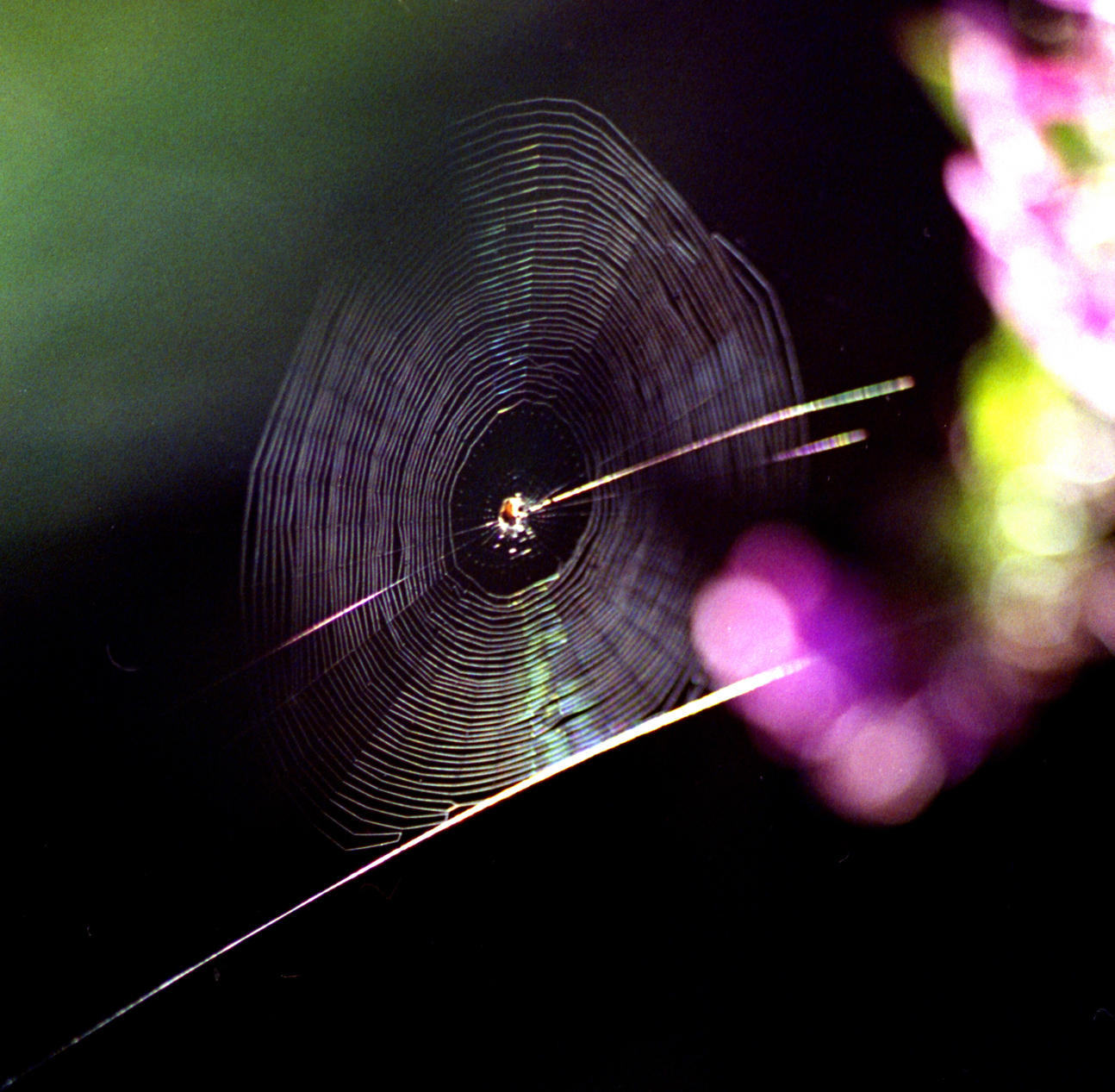
And SHE – my occupier – revels in the fleeting novelties of my gift, the senses – the paradox of pain and joy, where humour lurks between tears and laughter, moments with friends, bliss in a garden, like pruning branches for light to fall through foliage. SHE loves light. A breeze lifts the smoke of a roll-up, diaphanous shapes flow illuminated against a sunbeam until the shade swallows the spectacle, fluorescent spider webs, and blossoms fall.

Spider, 3

I have bouts of melancholy, made aware that my fine architecture is only a short, temporary abode for my occupier. It saddens me when SHE pays no attention to my signals, or is absent, travelling in abstract realms.

One day she’ll be gone altogether, leaving me behind. There’ll be no more breath and currents flowing through my organs, cells, brain — switchboards to her mind-spheres. Will she take along her impressions and associations?

I perceive phenomena in passing, pure and simple, with an artist’s sensibility. Semi permanence is the business of Jego, a sophisticated but battered and nervous entity that draws conclusions from what my senses transmit.

Example – SHE lets me drive a car to visit a friend. On instinctive pilot, I allow Jego to grab surplus energy. He elaborates on what he perceives through my senses.

That pub, why did the new owner paint it dark grey? A monstrosity, insulting the eye, aesthetically revolting, this must be someone’s idea of a cool concept, what a waste of paint!

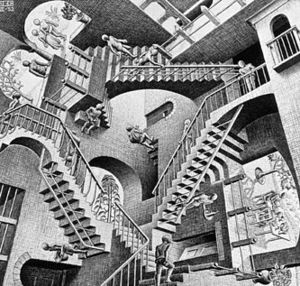
Escher's_RelativityThough amusing, his habit of sending spam into mind-clouds affect my equilibrium.

I draw attention to a stomach-cramp. Jego quickly analyses the cause before chasing another thought. It’s marvellous, and thoroughly compulsive, how he creates realities, juggles thoughts, day and night, unless SHE attempts a pause – counting breaths, reciting mantras to calm my overexcited synapses, or diligently monitoring Jego’s pranks to get him to focus on something coherent and creative.

On occasions he achieves concentration, calms, then we all relax into harmony, and for a short while a crystal-clear comprehension dawns …

Ah – we are dancers in a hologram – oh – who’s in charge?

Here Pomp makes an appearance, an intuitive entity, a messenger born of many traditions, with equally many names and disguises, a channel to the universal psyche. Though Pomp is not in charge, he knows stuff, and brings a tribute, the remembrance of an unfathomable awareness behind timeless intelligences every particle has contributed to, is essentially part of …

‘We are more than dust,’ SHE confesses, ‘and to fulfil our purpose I must embrace you, little body electric, and partake of your pain and joy.’

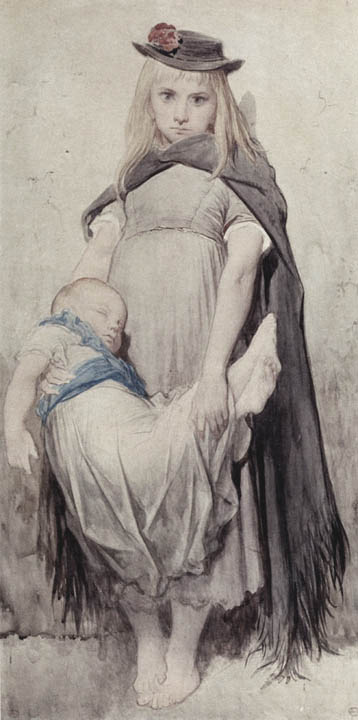
‘What about Jego?’ I ask.Dore - Jeune_Mendiant - desat

‘Poor chap, either he’s praised to heaven or cursed to hell. Some spiritual experts blame him for everything, and label him the greatest obstacle to higher evolution. It’s evidenced what happens to children we treat like that … we must be gentle with Jego.

His task is the hardest. In time, if we model tolerance and patience, he’ll learn to create more coherent realities.’

Her kind words calm me, and make me feel all warm and fuzzy.

Neti neti – not this, not this – no description suffices – what prevails is supreme consciousness, unidentified and unidentifiable, slipping in and out of embodied existence like a wind of light.

Though it gives us equal joy and pain, do you like your body electric?

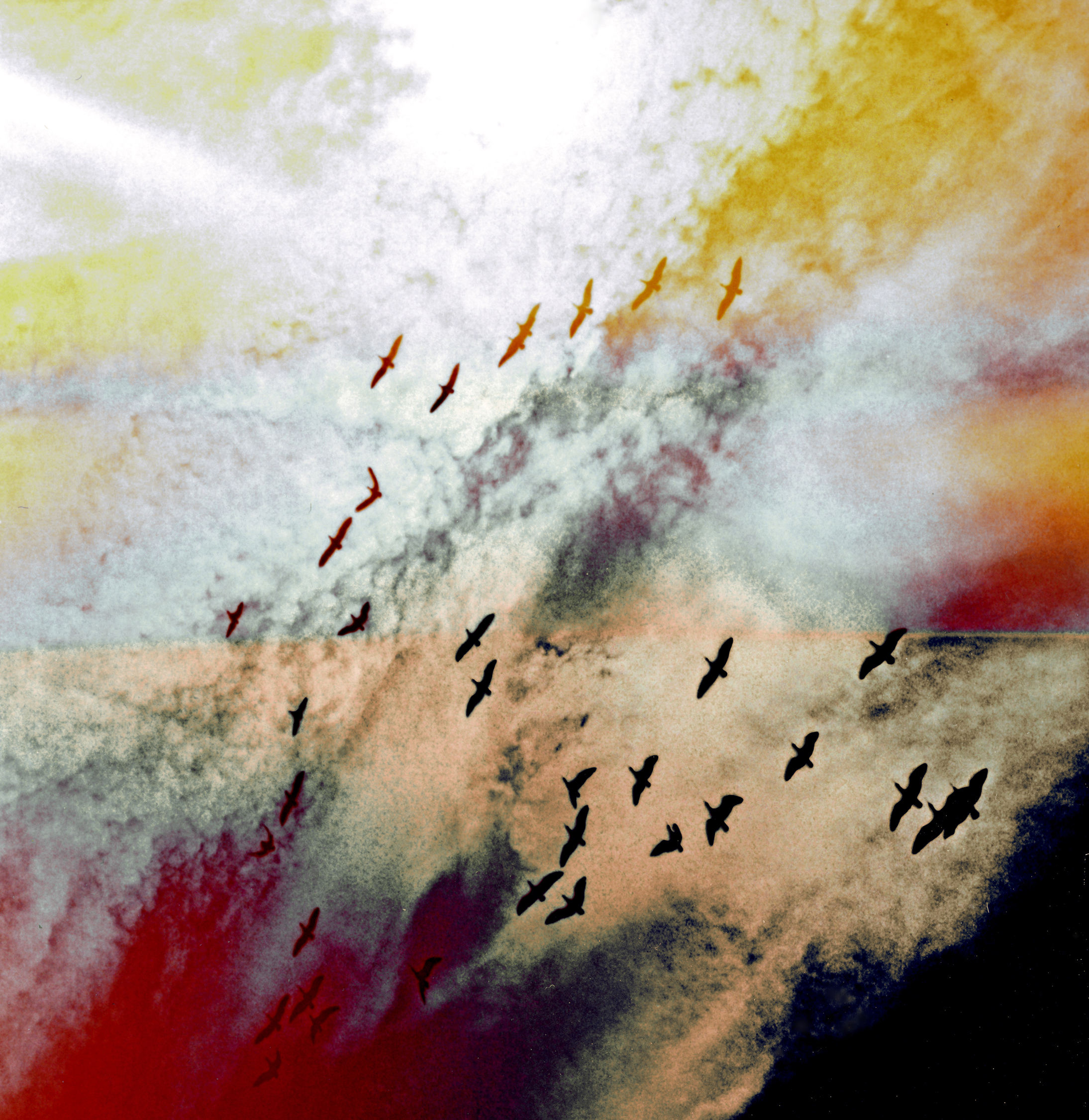
birds-1a.jpg

And are you on a warpath with your neurotic ego, or do you exercise patience?

‘There is a strange frenzy in my head, of birds flying, each particle circulating on its own. Is the one I love everywhere?’ 

~ Rumi ~ transl. Coleman Barks.

14 Comments

Filed under Blog

… story of an animation …

Cycle-off-Socialis-Close-Up_00039


You can find the inspiring story of an animation here …

https://courseofmirrors.wordpress.com/story-of-an-animation/

PandaHorseStudio-7


5 Comments

Filed under Blog

… consciousness – the mystery …

People who engage in therapeutic work with me often ask – why dig up my past, it holds pain, why look at attachment patterns, why explore the theme (myth) of my life? What a waste of time. I only want to get rid of my symptoms.

We all, without exception, suffered injuries. The creative question to ask is – how has the injury shaped my life, and what purpose does it serve? Many years ago, during a group dialogue following the inspirational talk of my Sufi teacher, we discussed three basic kinds of injuries. I connect my own experience to the third injury.

1        Having experienced physical injury can result in fight and flight behaviour – it brings a heightened sensitivity and develops a sharpening of the senses.

2        Having experienced sexual, sensual and emotional injury can result in escape from one’s self into others, estrangement from self, lack of differentiation and boundaries – the great challenge is to accept one’s self, differentiate as an individual from the tribe and take responsibility for one’s unique potential.

3        Having experienced injury on a cognitive level accelerates individuation – the escape is into deeper realities, a search for authenticity and truth and the development of symbolic reality – universal reality.

My novel, Course of Mirrors, is the fictionalised account of an aspect of my personal myth made universal – in the sense that memories of events don’t have to be real for a story to be true.

@ Natasha Tonkin

@ Natasha Tonkin

Even the most die-hard materialists among us grok that life is animated and guided by an all-pervading spirit? We are vessels, psychic switchboards for the spirit that animates and records all life.

An ungraspable phenomenon we try to name in vain.

Mental states pass through us. We call in and then process thoughts and feelings, seeking coherence, and – given we assign meaning to what happens to us – are gaining wider perspectives and deeper insights. With every new connection made and every little light brought to what is forgotten and unknown – collective consciousness grows.

Our body knows, if we care to notice, what stirs in our psyche, what wants to unfold and emerge. When energy flows freely through us our essential nature is uplifted, and our desire is aligned with the potential in us that seeks actualisation – in the way a cocoon reveals the butterfly. Our life has many cocoon and wing stages. The proverbial flutter that causes a stir in all spheres of the universe is like yet another love-transcended aspect of us emerging from yet another cocoon.

Presence, responding to situations, accepting differences and contradictions, frees energy that is ghosted and stagnant. While blocked energy creates frustrations and often painful symptoms, it is totally inevitable, since every organism evolves through condensed experiences. Life enhancing and life destroying events subject us to a pattern of repetition in time until we embrace change.

‘A truth outgrown crushes you under its weight.’   Fazal Inayat-Khan

To bring a repeating pattern to a higher level of flow requires a kind of quantum leap of consciousness. Small leaps occur frequently, especially when we befriend the unconscious and allow fresh symbols into awareness. The released light/energy brings new meaning and allows the self-actualisation of new potential.

‘It is obvious that the percolation of a timeless NOW is penetrating everything!’  –  Philippa Rees

*      *      *

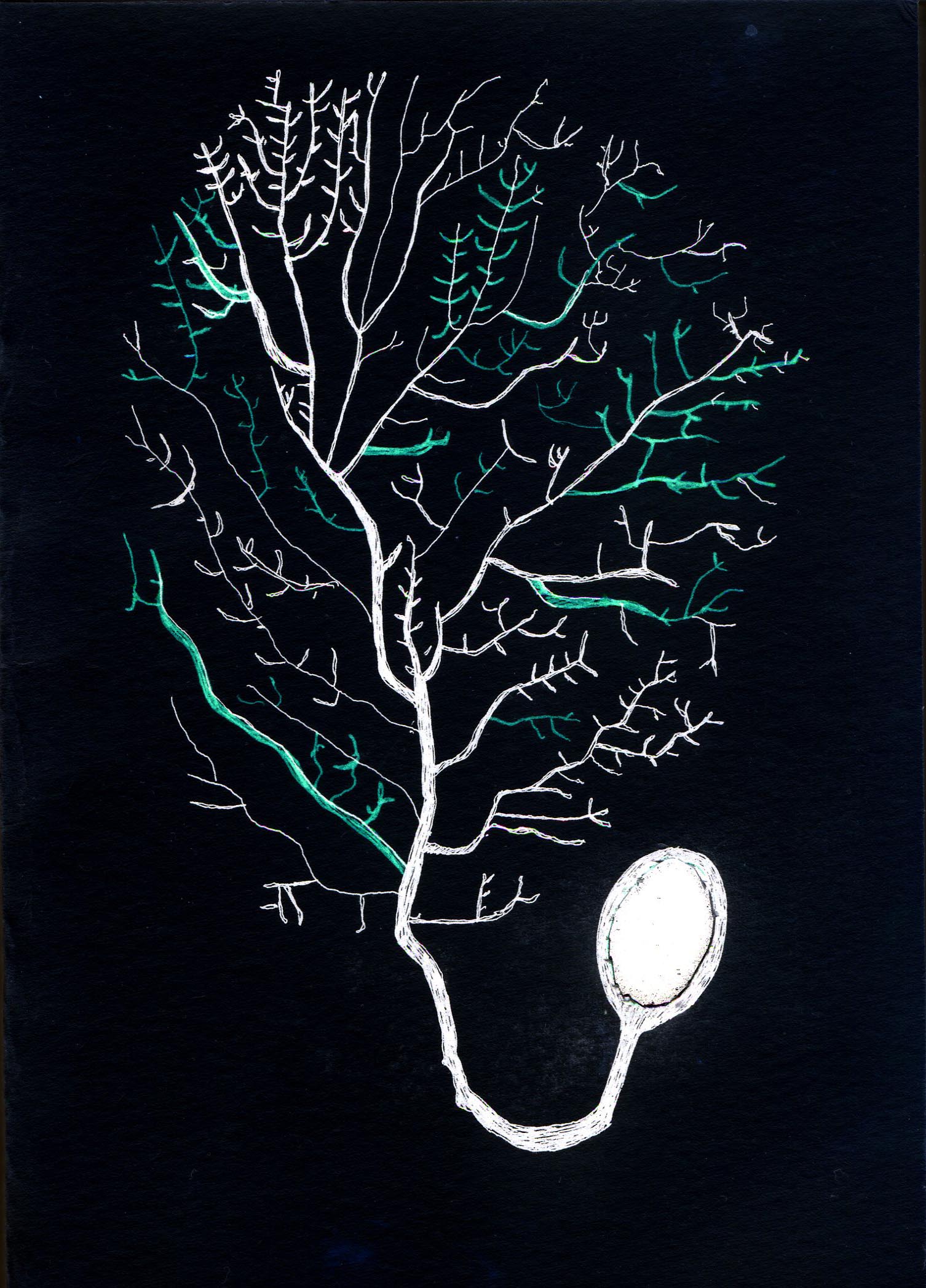
The image above is by Natasha Tonkin, my son’s partner. It was done two years ago as Christmas card and gift idea towards illustrating my novel, to help bring it to life. I scanned and inversed the image for the mirror to appear light. Natasha’s animation website: http://pandahorse.com/

Link to a book I co-edited about the Sufi teacher I mentioned above, Fazal Inayat-Khan. http://www.amazon.co.uk/Heart-Sufi-Inayat-Khan-Reflections-ebook/dp/B00BFUO0T6/ref=sr_1_1?s=books&ie=UTF8&qid=1369084226&sr=1-1&keywords=heart+of+a+sufi

Link to ‘Involution,’ an exceptional book by a kindred spirit, Philippa Rees.                                         http://involution-odyssey.com/  her book will soon hit the market. Her site is being developed.

6 Comments

Filed under Blog

… precious hopes …

The buzz of web-traffic can be exhilarating, a universe of stimulation, stories, advice, facts and know-hows. We put our name out there, mingle with travellers, seek adventure, share our thoughts, fulfil a task, meet like minds, exchange or sell something, and hopefully find synchronicity, resonance – yet at times …

P1090901 - Copy

Nasrudin rode the train to work every day. One day, as usual, the train conductor came and asked him for his ticket. He begun fumbling around in his coat pockets, and his pant pockets, and then in other people’s pockets. He looked in his briefcase, in his bags, and then in other people’s bags.

Finally the train conductor said, ‘Nasrudin, I’m sure you have a ticket. Why don’t you look for it in your breast pocket? That is where most men keep it.’

‘Oh no,’ said Nadrudin, ‘I can’t look there. Why, if it wasn’t there, I would have no hope.’

*     *     *

‘Why, if it wasn’t there, I would have no hope.’ What spooked the legendary fool’s mind that day? What do you make of the story? What does the ticket symbolise/represent for you? A hope can be so deeply meaningful to us that we keep it hidden at times, even from ourselves. Then we look for affirmation elsewhere because we couldn’t stand having our faith dashed.

Yes, I have such days. Where is the ticket to your hopes and dreams to be found? Are you keeping it close to your heart, holding it there, to remind yourself of inspirational instances when grace happened in your life, so when grace visits again you can seize the moment?

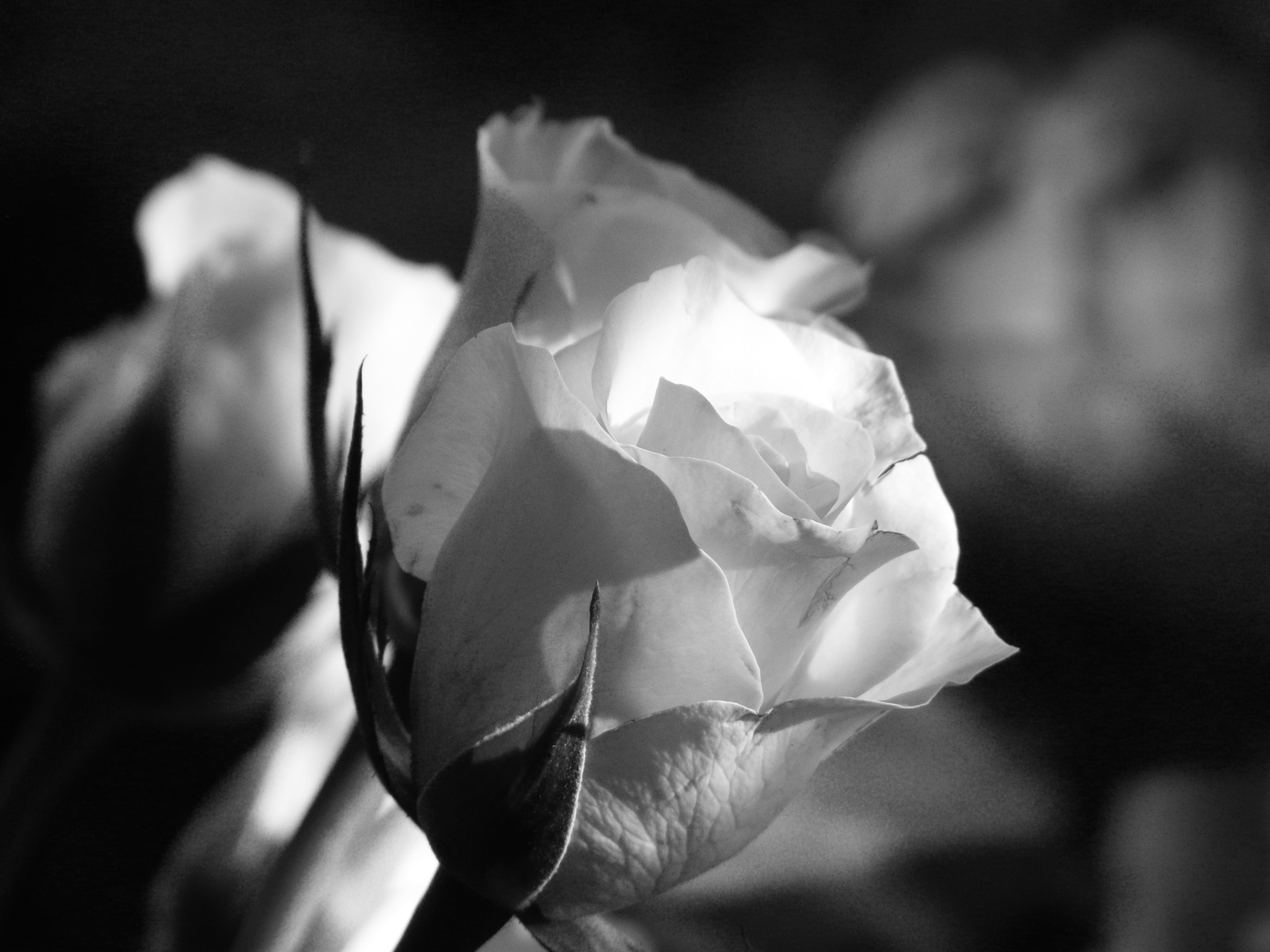
pink rose - black&white

*    *    *

I chose the particular version of this wisdom tale from a lovely book edited by Elisa Davy Pearmain, Doorways to the Soul. She calls the story The Lost Ticket. You find a link to Elisa’s website in my blog roll.

A classic collection of wisdom tales I treasure is in Caravan of Dreams, by Idris Shah.

13 Comments

Filed under Blog

… when did you last smile? …

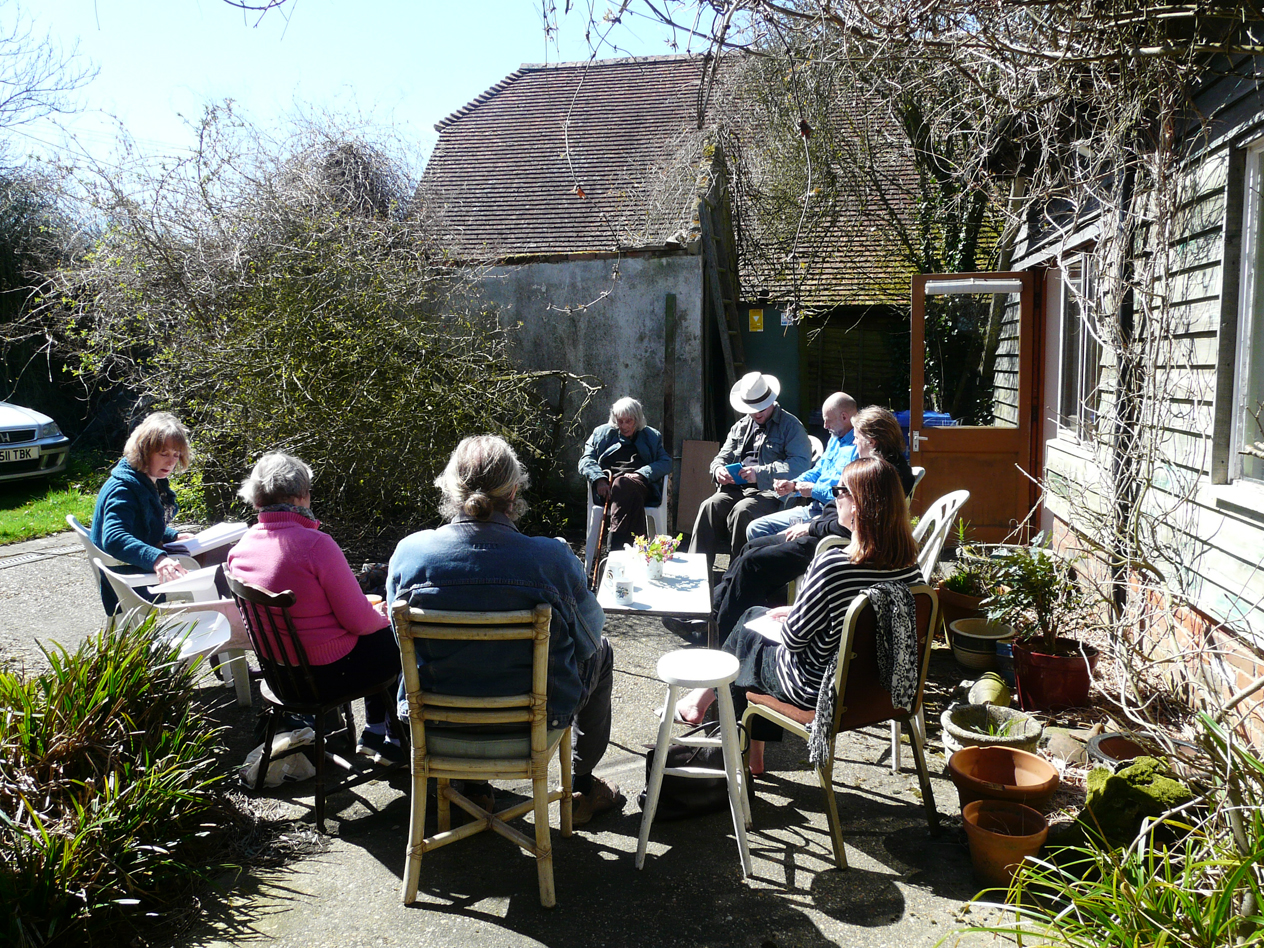
When did you last smile? The question started us going. I belong to a bunch of friends, 10 to 20, who meet monthly. We rotate the facilitation of sessions. People propose themes worthy of engagement. Our April session had the theme of Positive Psychology. The term, coined by Martin Seligman, has been called unoriginal and evokes ongoing controversies, not least because basic theories promoting well-being have been around for a long time, for centuries. Overall, the disputes are creative.

P1110122

P1110124

The off-the-track cottage and studio we hire for our monthly meetings has a delightful atmosphere. We love it, though its structure is gradually falling apart. The custodians of the property have more pressing concerns, and so have we. After a unique international creative centre was lost to us eight years ago, this liminal space offered itself. Here we challenge and cherish each other, explore ideas and welcome guests.

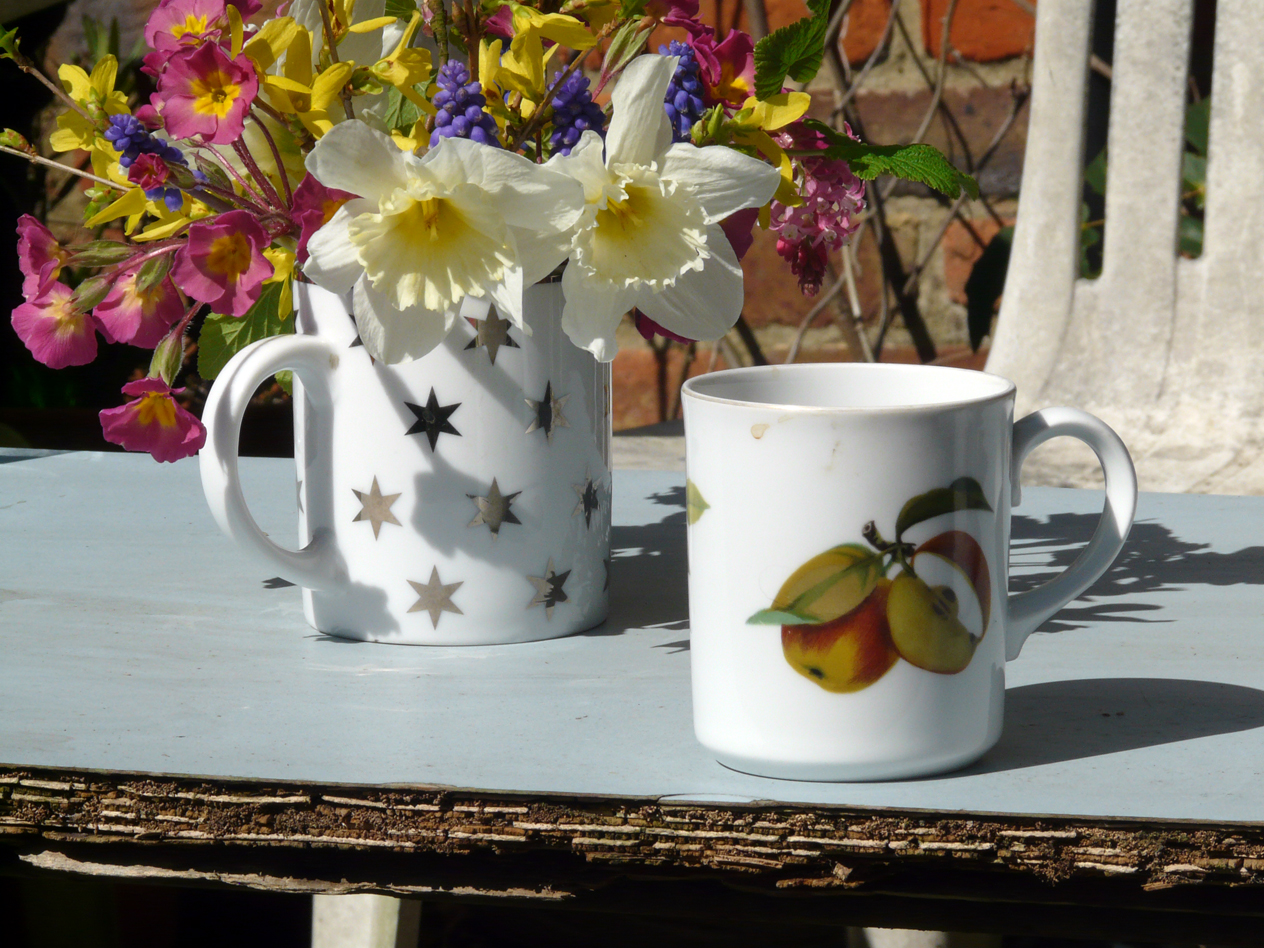
As to the initial question of the day – when did you last smile? – Of late, I frequently smile at my quirky thoughts. That day however, I recalled waking early and passing a vase brimming with pale double daffodils, splayed open to full perfection in the morning sun. No matter how fleeting an instant of wholeness, it tends to ravish me into my veiled wholeness. The exquisite flowers invigorated every cell in my body and set the tone for my day. It was a moment of transcendence, of grace.

We explored scientific findings as to what goes on in different parts of our brain when we experience emotions. There is evidence, for example, that prolonged stress weakens the immune system. Stress may be real or imagined. It can be maintained by resentment, anxiety, learned helplessness and the anticipation of negative outcomes, often based on scary experiences (even in the womb) that informed expectations, like the world is unsafe and we have no control over events. Neurobiology is fascinating, though I wonder if it can ever explain existential questions about phenomenology. Some of us bring along a lucky or unlucky disposition, but a great deal of what we become seems to depend on the interpretation and meaning we give to what is happening to us.

Bang head here

Which begs the question, can optimism be learned through challenging negative self-talk, the kind that rubs it in, like – here we go again, I should’ve know, stupid me, no matter what I do –  and so on. For some people prolonged attention to self-talk works. Many brilliant techniques have been developed to overlay fixed habits. Extensive research has gone into the mastery of happiness, especially in the US. This said – Martin Seligman, the father of Positive Psychology, acknowledges that negativity is part of the human condition. As such, I see negativity having a compelling function in social systems that first make us ill and then sell us pills, a larger story…

I tend to huff when a generic psychological approach is wrapped up as a brand and turned into an industry, and Positive Psychology has become a successful industry during the last decade. Then again, there were a great many innovators since Abraham Maslow, who, inspired by ancient wisdom traditions was the first to challenge Psychology’s focus on pathology at the time, by researching what motivates people up the hierarchy of needs, and by defining the qualities of achievers. The work of Seligman and his colleagues seeks to encourage functionality, resilience and well-being. It provides further valuable applications and insights regarding human potential that are worth studying.

I personally lean towards the subtle wisdom regained during my training with Psychosynthesis in the 1980s. We may reach peak states of awareness as our consciousness expands, bliss even, yet each higher view calls for a journey down, into denser spheres. C G Jung put it well … As far as we can discern, the sole purpose of human existence is to kindle a light of meaning in the darkness of mere being.’

P1110127

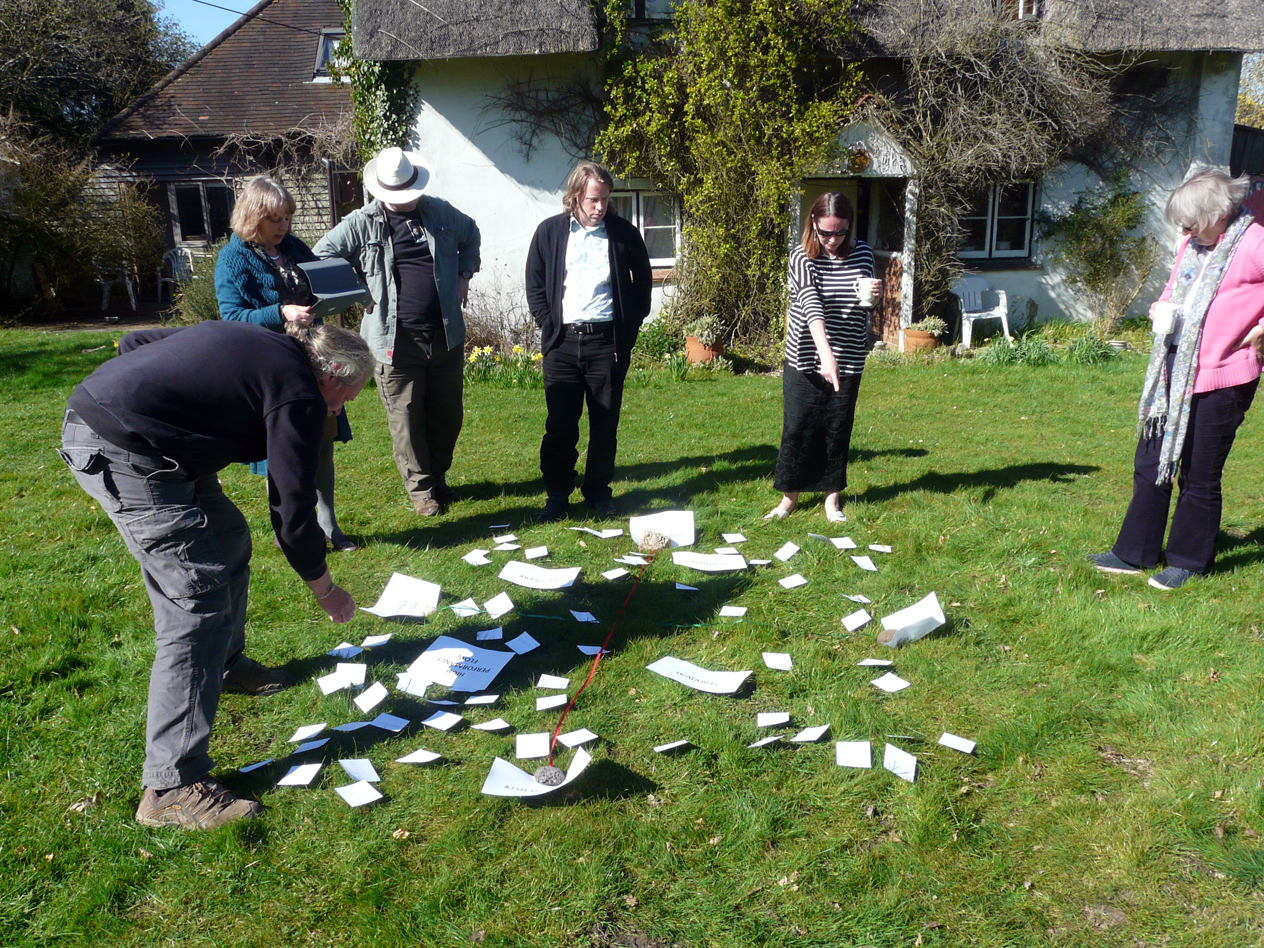
Our group is an irreverent lot. We had fun, warm and lively discussions, and we engaged with personal questions. From a set of 24 cards we chose our 5 dominant signature strengths. Humour trumped several times, followed by creativity, perseverance, appreciation, fairness and perspective. Oddly, there was one card I ignored but which jumped to the top when I did a test on-line – Appreciation of Beauty and Excellence. I later figured out why I had held back from picking up the card. This appreciation, which I have to a high degree, is also the source of lingering sadness, because Beauty and Excellence touch me deeply, are glimpsed rarely, and are hard to live up to and shine with. Then again, moments of grace, a sudden seeing that stops time, like the daffodils of that morning, carry me through periods of melancholy and questioning. The theme of the day stayed with me, and after some reflection I came to this conclusion:

I would not be happy being happy all the time. For better or worse I walk the tightrope of contradiction.

*      *      *

The cards we used are available at:  http://mindspring.uk.com/shop/strength-cards/

Here is a site with a questionnaire that measures your character strengths http://www.viacharacter.org/www/ It’s free, unless you want a longer report.

The photo of the Stress Reduction Kit poster is by Programwitch, found on Flickr.

13 Comments

Filed under Blog

… inner time – writing – rant …

Beyond my window, robins, wrens, blue tits and blackbirds are nest-building, with bursts of passion. Dipping in and out of view, they settle shortly on a deck chair, branch or flowerpot, balancing lavish bouquets of fluff, moss, twigs and leaves, before darting off towards the next promising material. The birds winging through my garden make me happy.

Yesh

My thoughts wing in similar fashion dedicated to another passion, no less preparing for a new round of birth – in my case the writing of the next chapter of a novel. I anticipate with joy each few hours of unstructured time that allows me to visit my garden of recollections, a space where myths re-weave themselves from the fluff, moss, twigs and leaves of memories. Like the visions I brought into this world, ambivalent responses to my existence, altered states, affinity with elements, genetic markers, epigenetic quirks … my bundle of life that fell into a mould and was conditioned by socially convenient patterns of time.

Dividing reality into past, present and future time, measured by clocks and dated events, called facts, is a fairly modern idea that made Science the grail of knowledge. The best of science deepens our understanding of the cosmos and improves the quality of our lives, but its method is limited, not suited to go to court on another reality dimension, inner time, infinite, immeasurable, where our experiences assume meaning. We may walk through life like snapshots of ourselves, collecting capture after capture of evidence for our existence, while longing for a dimension within, the bridge to a spiritual presence hidden between each breath, a truth impossible to evaluate? Some religions banked divine capital in heaven. Science too, in its present phase, projects a kind of heavenly capital, hijacked by corporates selling us the future, a Promised Land of artificial intelligences catering to our every need, uncannily resembling the Matrix or Plato’s cave.

My rhythm of life changed when I dropped out – the second time in my life – taking the financial risk to work from home and make time to write, which I had failed to combine with careers, family and social obligations. The experiences were vital, up to a point. Now I relax about clocks and tend to my inner worlds. I crave unstructured time. Not everyone does.

Recently a friend reflected humorously on her frustration at finding herself with one hour to spare, having miscalculated her travel time. She would have been happy had she brought a book to read. Instead, she endured a dragging hour of unplanned, wasted time. Intrigued, we reflected on this sense of loss when there is unexpectedly nothing in particular to attend to.

Is there merit in unstructured time … what do you think? Is it only for children, is it a luxury, a waste, or an opportunity to shift perspectives, discover your passion, break the mould and loosen up your ideas of reality? I don’t see unstructured time being much encouraged, or its lovely randomness being valued. I was burdened by the message that my imagination is fanciful, a kind of debility. It took me decades to claim the time for my passion, writing …

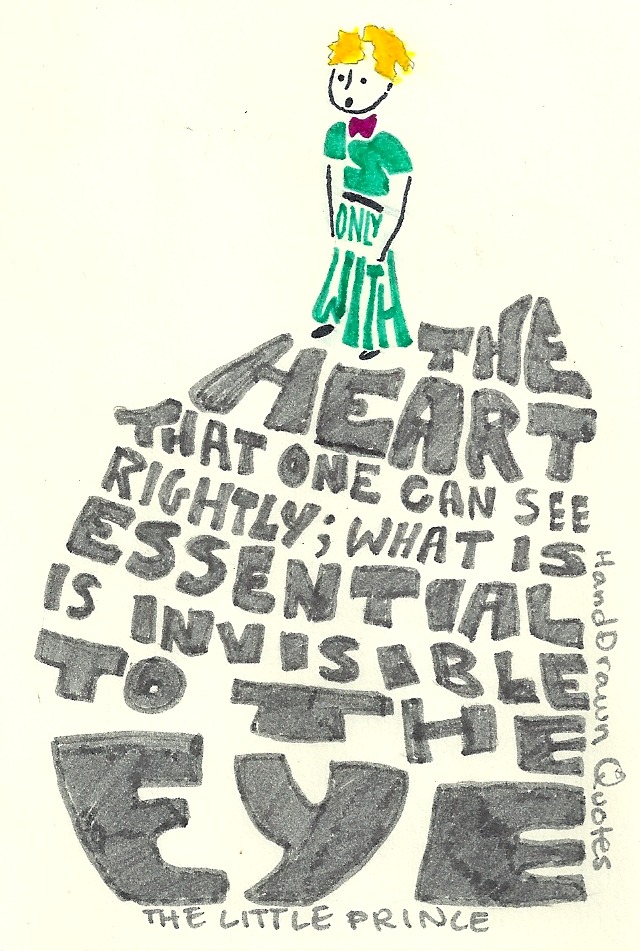
Little Prince

This seems the place to share a personal rant, blaming no one in particular, since, from where I look the rift between head and heart that is tearing apart the fabric of western societies may yet need to become wider before the peril is addressed. If the media is anything to go by, meaningful purpose, visions, let alone joie de vivre, are overshadowed by collective gloom. Feel free to disagree with my take on this. Straining under the pressure to change, I see our systems are attempting to cement a shaky launch pad towards a logarithmic future, with good intentions, though the consequences are dire. Every aspect of our lives is in danger of becoming: over-calculated, over-regulated, over-efficient, over-specialised, over-mechanised, over-prescriptive, over-secured, over-insured, over-compartmentalised, over-conglomerated, and over-economised.

On a more cheerful note, young people in their 30s, at least the ones I know, are asking sharp questions, and are finding ingenious ways to play with, while not getting sucked mindlessly into programmes that abuse data, spoon feed illusions, appeal to personal anxieties, invade privacy, and insult the intelligence of creative individuals.

Back to the birds winging through my garden …

*     *     *

To see a world in a grain of sand

And Heaven in a wild flower

Hold infinity in the palm of your hand

And eternity in an hour … W. Blake, from Auguries of Innocence


12 Comments

Filed under Blog

… healing sounds …

Healing sounds at the hub

Round and round … the cyclic drone underlying the melodic scale reverberated in Kala’s bones, re-rearranging the cells in her body. The sound of the reed organ embraced her like a cradle, made her feel held, warm, secure. The melody climbed upwards. There it was again, the wonder, the curiosity, a desire – the impulse to stretch her limbs and reach out towards a colour, almost touching it, then, with the tune circling around that pitch, the slowing down to uncertainty, with only a longing left. From a faraway place an echo sounded as if in response, people she could not see called out to her. She was restless with anticipation of a discovery, anxious too, of its beauty. The sounds kept flowing through her, or she flowed through the sounds, and the cycle repeated. Y-image posterized Or was it a spiral lifting her to the light she desired, and equally dreaded?

From an immeasurable distance she heard him shout, ‘Run, Kala, run, run … survive. Promise me to free the forbidden words.’ A band of men dressed in black were tearing her away from Liam, towards a thicket. Others rounded her up, sneering, ‘We’ll help her to free the forbidden.’ They dragged her along to the river and tossed her into the reed, like a puppet. A hand muffled her screams. She bit the hand, scratched the man’s arms and tried to pull her knee up, to kick him in the groin. He spat at her, hit her hard across the face, over and over, calling her names, laughing. Four other men wrenched her arms and legs apart and then she was crushed, and all went dark … a faint voice, a woman’s voice, reassuringly familiar, ‘I’m your mother …’

‘No!’ Kala screamed. Her eyes snapped open. A gentle hand folded over hers, reached out to brush her brows. Kala blinked, trying to understand what she was seeing. Were these her own eyes looking back at her?  Was this her mob of unruly amber curls? An ideal vision of her, mocking – strong, spirited, more substantial, more beautiful, more …

‘Hi Kala, welcome, I’m Mirre,’ your sister.

Oruba reduced the volume of the musical scale on his reed organ and let the last chord slowly fade until the tune lingered on in silence. He nodded to Mirre and left for the next room, where Zap looked up from his absorbing work. He had explored every minute feature of Kala’s lovely face, had re-composed its bone-structure from every angle. He had depicted his new love in imagined action, dancing in a meadow, drinking from a fountain, stepping from a doorway, all in the sincere belief that he could bring her back into the present that way. Oruba bent over Zap’s shoulder to look at his latest creation – Kala, her eyes open, verdant as spring. ‘Good timing,’ he said, ‘she’s come round.’

Zap jumped from his chair and hugged Oruba. ‘Can I see her?’

*     *     *

This is an excerpt from chapter 19 of Shapers (sequel to Cabal of Mirrors.) I post a snippet on my blog for a change, since visitors tend to not look at my excerpt page, where I used to rotate writings from my novels.

Kala did not know her mother, who has now been murdered, nor that she is a Shaper, people of a scientific, mystical community, admired and feared. They live in underground hubs, generously funded by the super controlled society of Rhonda, under one condition, that they keep out of politics.

The main protagonist in Shapers is not Kala but Mesa, the re-embodiment of Ana from Cabal of Mirrors. In this sequel Mesa returns from the future to collect a darkness lost. I’ll introduce her some other time. For my Beta readers, Zap, in the excerpt above, is the re-embodiment of Little Snake.

Feedback is welcome. And questions, of course.

*     *     *

The image was taken by my son, Yeshen. I only gave it a photoshop treatment.

10 Comments

Filed under Blog

… what’s your myth …

Do you paint your myth into clouds?

Vienna04cloud1

Do you find your myth on the ground?

P1110100 - low

Do you search for your myth in love?

mercats

Do you clean up writings on the wall because you weighed life on scales and found it wanting?

Graffiti under Waterloo 1 lowres

Is your myth in the process of being sculpted?

Two faces in stone

Are your myths about debunking clichés?

My Pictures 414 lower

Are you shaping your myth into the future?

Royal Academy, London - lowres

Are you the eternal traveller – like me?

Elba travels - Copy

This post was inspired by a writer friend I exchanged a few emails with. And I found myself expressing a thought in this vein … Writers and artists are like archaeologists; they dig, uncover and re-shape a personal myth until the myth takes wings and becomes universal, though many writers would deny this. And yet – think about it – the myths we live and re-shape give meaning to our lives and entice readers to explore theirs.

*    *    *

And who do we share our myths with?

Copy of Teddy and child, lowres

A listener like this chap does wonders for one’s confidence 🙂

Re-posted at:

http://thirdsundaybc.com/2013/04/21/april-2013/

21 Comments

Filed under Blog