Tag Archives: writing

… memory and place …

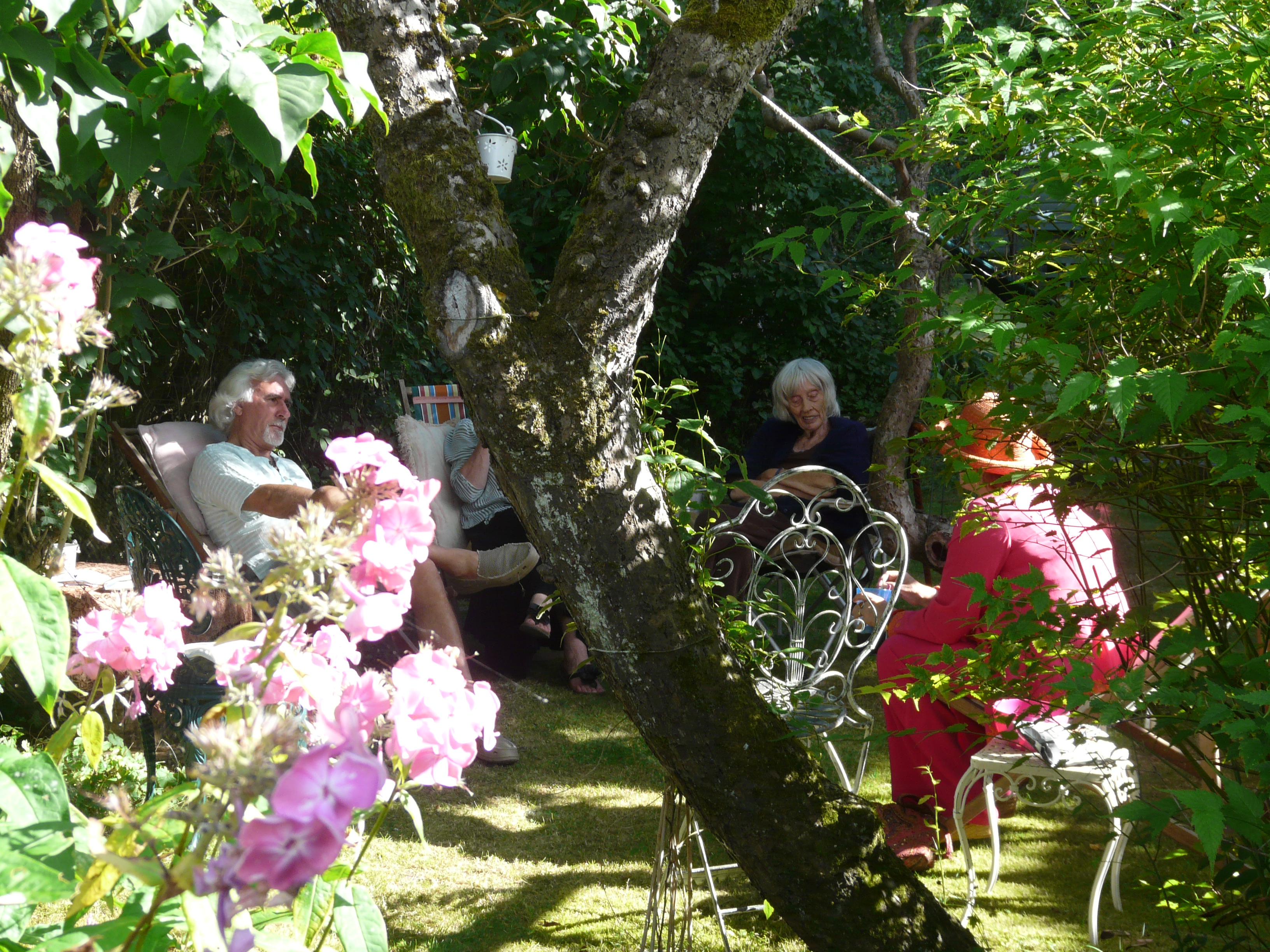
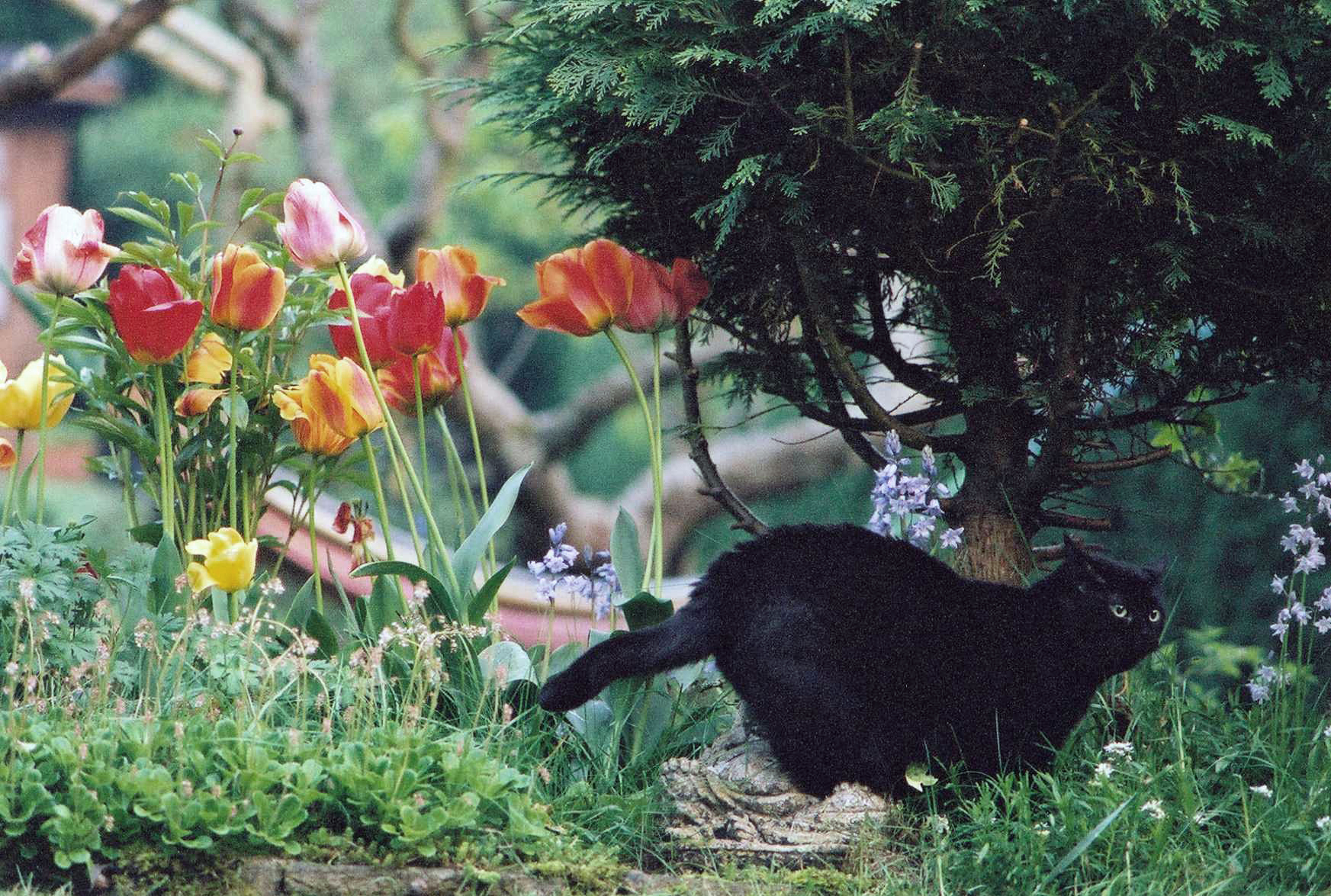
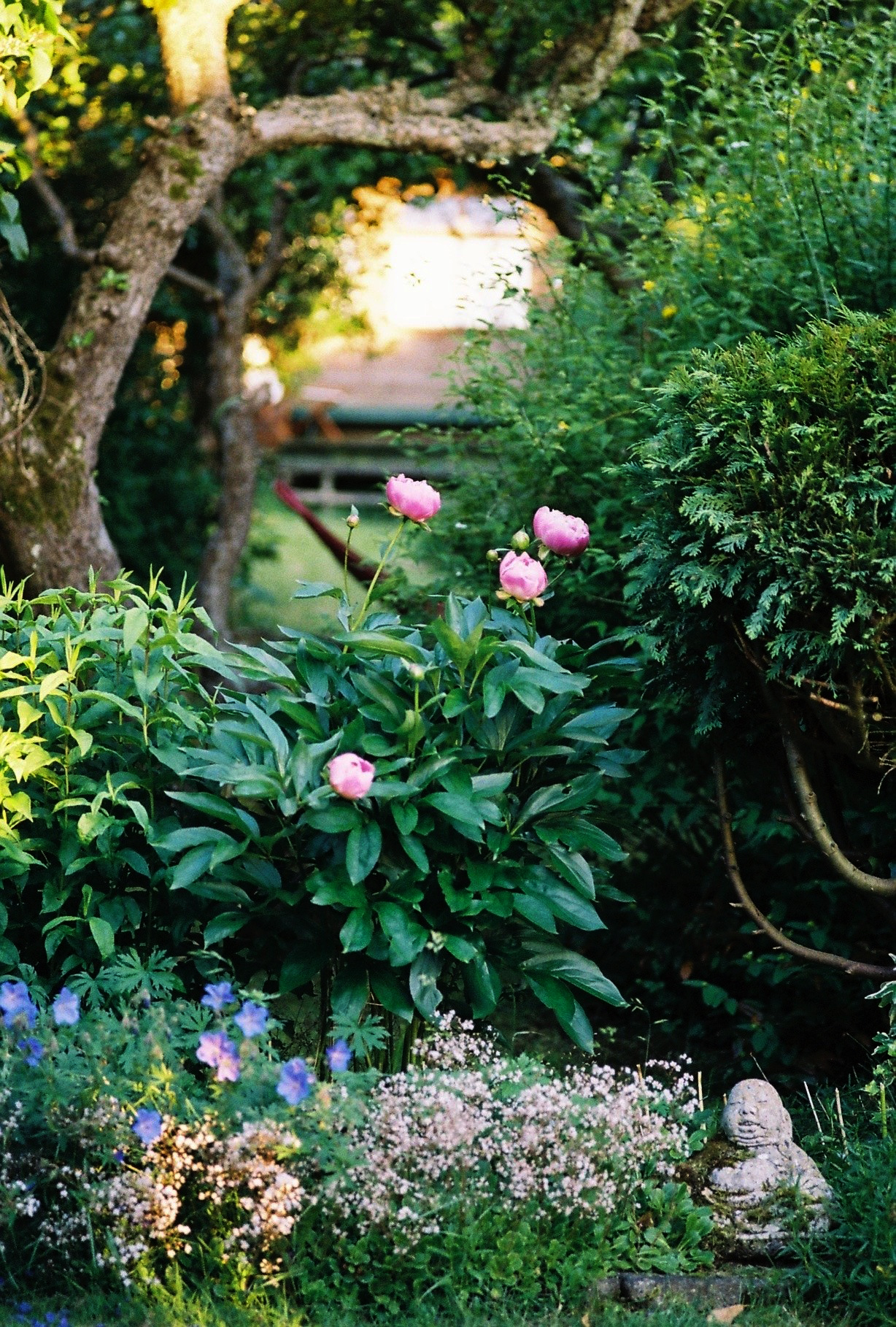
I never thought I would live in one place for 23 years, and tend a garden. Its visiting creatures provide inspiration and amusement. I cast tendrils of attachment to secret corners, the changing patches of colours and textures. I observe the cherry and apple blossoms turning into carpets on the lawn, the tulips, blue bells and peonies bursting open in spring, wild strawberries, the abundance of clematis, roses and geraniums during summer, or phlox and fruits in autumn. The space is breathed through by the seasons’ moods and muses. On rare and perfect summer days, when the sun plays through the branches, I love spending time in my hammock, reading and editing, or share the space with friends – bliss.

Yet I can count such days on the fingers of my hands. And not just because of the UK weather.

This paradise is surrounded on four sides by hedgerows, has 5 mature fruit trees and a shed and studio smothered by ivy. Those of you who have gardens with sizable plants will understand the dedication it takes to merely keep annual growth under control.

Is the effort worth it?

Twice a year I need assistance. After the heavy rain and excessive growth we had during spring and summer, my neighbour recently helped transporting two transit vans stuffed full with cuttings to the recycling dump. The excess jungle weighs on my mind each year, but once trimmed and sculpted, the cleared shapes feel like newly decorated living rooms. 

What is it about places we care for? How come we spend so much time and energy looking after them? What we experience through our senses can be fleeting, but where repetition is involves, it becomes fixed and saturated in our imagination. There is nothing as deeply impressive as living in one place through cycles of seasons. We call it home.

In these tumultuous times, a great number of people around the world are forced to leave their homes. Either they have no say in the matter, or they must leave for sheer survival, escaping adverse weather conditions or politics that undermine human dignity. But wherever we land, we inherit the history of a room, a house, a plot, a community, and in turn we leave traces, an influence.

The place survives us. Do we bless it?

Do our personal experiences – including those associated with ambivalent feelings about places and people – survive beyond the brain’s switchboard activity that ties associations into a framework of meaning and memory? My intuition tells me yes, there are spaces in many dimension, floating as in a kind of hologram, which can live on through a strong memory laid down in our imagination, like the next chapter of a story.

In the way of habituation, these subtle forms must remain in some way in the collective psyche, accessible to minds and hearts who tune into their feeling pattern. This could happen via a kind of grid of finer matter (see Eccles: http://en.wikiquote.org/wiki/John_Carew_Eccles) that interact with the denser neural network of our brains.

There are these unanswered questions: is consciousness an emergent phenomenon of matter, or is matter an emergent phenomenon of some finer, spiritual substance?

Either way, if one were to assume that we create the world hereafter by the repetitive strength of our experience, be it with places, people or the passion for a sport, craft, art, music, science,  it bears us well to find something we can love, care for, and empower with our imagination.

12 Comments

Filed under Blog

… village poem …

 My father’s recent move away from the village I grew up in meant another goodbye, though my impressions of the place live on in me, and my writing. I like to share an old, bitter-sweet lyrical poem, which recalls an aspect of my experience growing up in a village. It leaves out the lake,  the mountains, and the church-bells – their marking of time could make an epic- their melodic ring still sounds once every quarter of the hour, and every hour in full from morning to midnight, so that people should not lose themselves in relative time.


The Village Poem

Through the veil of time I drop to the heart of my village,

child again, inhaling dust and summer-heat.

Drawn to the bright blue tiles in the dairy, I suck cool air,

watch the jet of buttermilk spool from pump to cup like silk.


The milkmaid frowns at the antics of our pianist, whose mass

of silver hair trails dangerously close to a display of camembert,

while her left hand swings a crystal pendulum, her daily rite

in search of resonance. I hold an image of her fine hands

striking keys on a white grand, giving air to Bach and Brahms

below the star-lit night, painted on her study’s cupola.


She is my link to otherness, the unseen in me, the odd child,

who rejects the cream for the undercurrent of her dream.


Crisp greens at the grocer, white roots, red fruit and purple aubergines.

The woman flicks brown paper to a cone, scoops pickled kraut:

‘Take it, to nibble on your way.’ Warm wafts of steam rise up

from the cellar of the bakery, a scent of cinnamon lingers in the street.

Taming and bonding takes place; it’s easy to love and be loved

when food is bait and the tongue’s code for paradise is taste.


In shops, daily gossip thrives, turning the fate of familiar faces.

Sweet tongues do sour talk – the time it takes to pay – a hero is made

or falls from grace. Spells are cast: ‘No good will come of it,’

and refrained, ‘Just as I said, I knew it form the start.’

Confused, I veil my face and seek the last shop in the street.

Here my village becomes the village and its many tales can be read.


I inhale the vast promise of virgin books

and a smell of print more exciting than bread.

*     *     *    Ashen

An areal photo of my village, taken by my father.

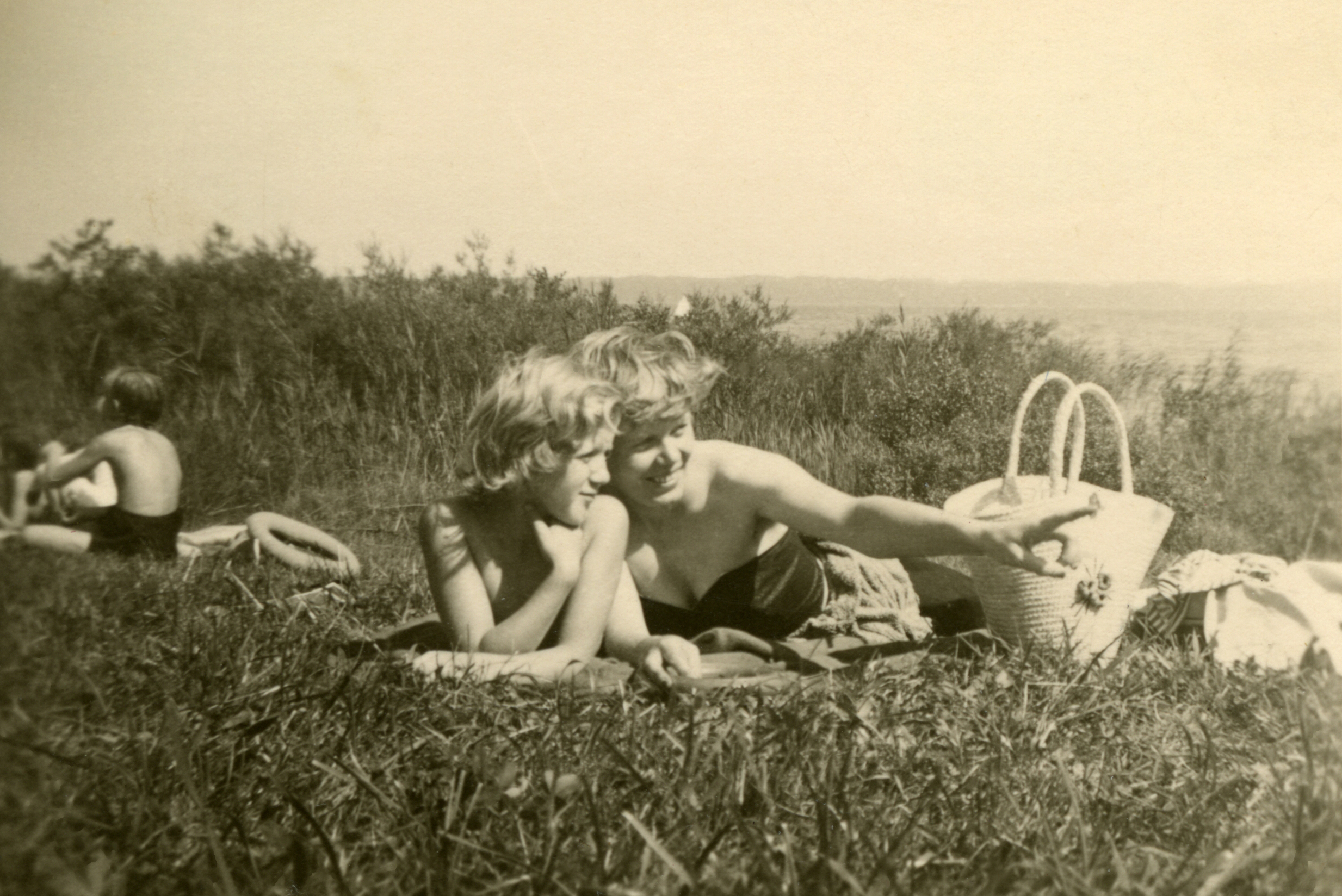
Then there is me with my mum at the lake …


And a class picture, taken around that time, from primary school. You can click on the images here to enlarge them.


27 Comments

Filed under Blog

… my father …

My father, a painter, photographer, recorder of village life, and dedicated outsider, has finally, at 94, surrendered a big chunk of his independence and moved into a smaller, protected environment, at the foot of his beloved Alps, of which he knows the name of every peak. He now lives in a small apartment, crowded by furniture and his memorabilia.

He never showed much interest in me. I should have been a boy, and I’m still trying to let go of this traditionally embedded rejection.

Due to my dad’s poor communication, the past returned like a big wave that threatened to drown me, because, whether we like it or not, we all emulate qualities of our parents. His image here is interesting as emblematic turning point. Unbeknownst to my dad, his skying skills were exploited. He was groomed by the army for Russia. While on a special training he saved the life of a girl, which is why he did not end up in the nightmarish march to Russia and instead worked as an engineer testing aeroplanes.

Thanks to a remarkable woman in the village (thank you Micha) who supported my dad with the logistics of the move during the last few weeks, all went smoothly.

Together with my son and his partner (without them I would have faltered) we sorted the chaos left behind, enduring a few days in the stirred up dust of my dad’s two relationships, the one with my mother, who died much too early, in 1987, and that with another woman, who my dad also lost to illness.

Thanks to marvellous hot sunshine, which allowed us to swim in the lakes and ponds of Bavaria, and thanks to the help of some wonderful friends in Munich and Aalen, the task was made lighter. A leaf I found (below) sums up my sentiments.


*     *     *

A DREAM

The leaf, like my life

Grows from green-sprung verve

Towards brittle glowing gold

Weathered into definition

By burning days

And moist nights

Worn veins gnarl back

To imagined beginnings

While futures curl forward

To the ever-expanding

Where every ending appears

As a glitch in time …

22 Comments

Filed under Blog

… The English Goat …

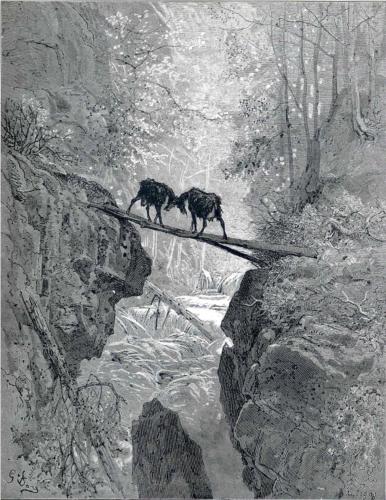
Can’t resist to share this image with you – received as a birthday present yesterday. Natasha was inspired by a recent camping trip and my story ‘Goats are Goats,’ which I posted in three instalments here.

The drawing not only hilariously fits the rainy atmosphere of my story, which happened in the Bavarian Alps, it is also strikingly emblematic for dwellers on the Green Isle. Irrespective of whether such dweller were born here, the character formed by the climate in England, Wales, Ireland and Scotland ripples into the psyche of everyone who can endure what it takes to live on a Green Isle – THE RAIN.

However, it’s the English, in the good old sense, who  talk most about the weather while stoically putting a brave face to it, after all, rain is good for the garden.

http://halftoneandeverythinginbetween.blogspot.co.uk/

Watch the page of this animation artist. Her humour is delicately subversive.


11 Comments

Filed under Blog

… Goats are Goats … part 2

Drenched, we stepped into a steaming kitchen. A sizeable family was gathered for a meal. Men had spread their wet jumpers on chairs near the central cooker. In a nook above the table hung a plain crucifix. The matriarch served food. When she saw our bedraggled state, she dropped her ladle to fetch towels. We must have looked like scarecrows.

‘Sit down, have a bite.’ Her husband heaped roast lamb and spuds on large plates for us. A young girl gawked at our exotic outfit.  We were wedged into benches, flanked by men who, while bashful, beamed at the welcome distraction. As to goats – no luck:  ‘Ja Geissen, di hamma ghabt, aber jetzt nimmer. Dass tut mir Leid.’ The woman was genuinely disappointed for us.

Goats, we learned, were not bred anymore in the area. ‘The effort outweighed the reward,’ said an elder, though unlike the farmer earlier in the day, he did not make me feel a fool for wanting a goat. The brothers were curious and showered us with questions about the outside world, we were a novelty. Ellie kept quiet, struggling with her roast leg of lamb, out of politeness. She was undecided about eating meat. Playing the martyr, I thought. A good hour passed with stories in local dialect. I caught the gist and laughed along, while Ellie occasionally managed the ghost of a grin. When the deluge reversed to plain rain, I grasped the moment to thank our hosts.

‘You could ask the cobbler in the village. He’s privy to gossip from round here.’ The elder chuckled. ‘You’ll find him in the village, next to the church.’

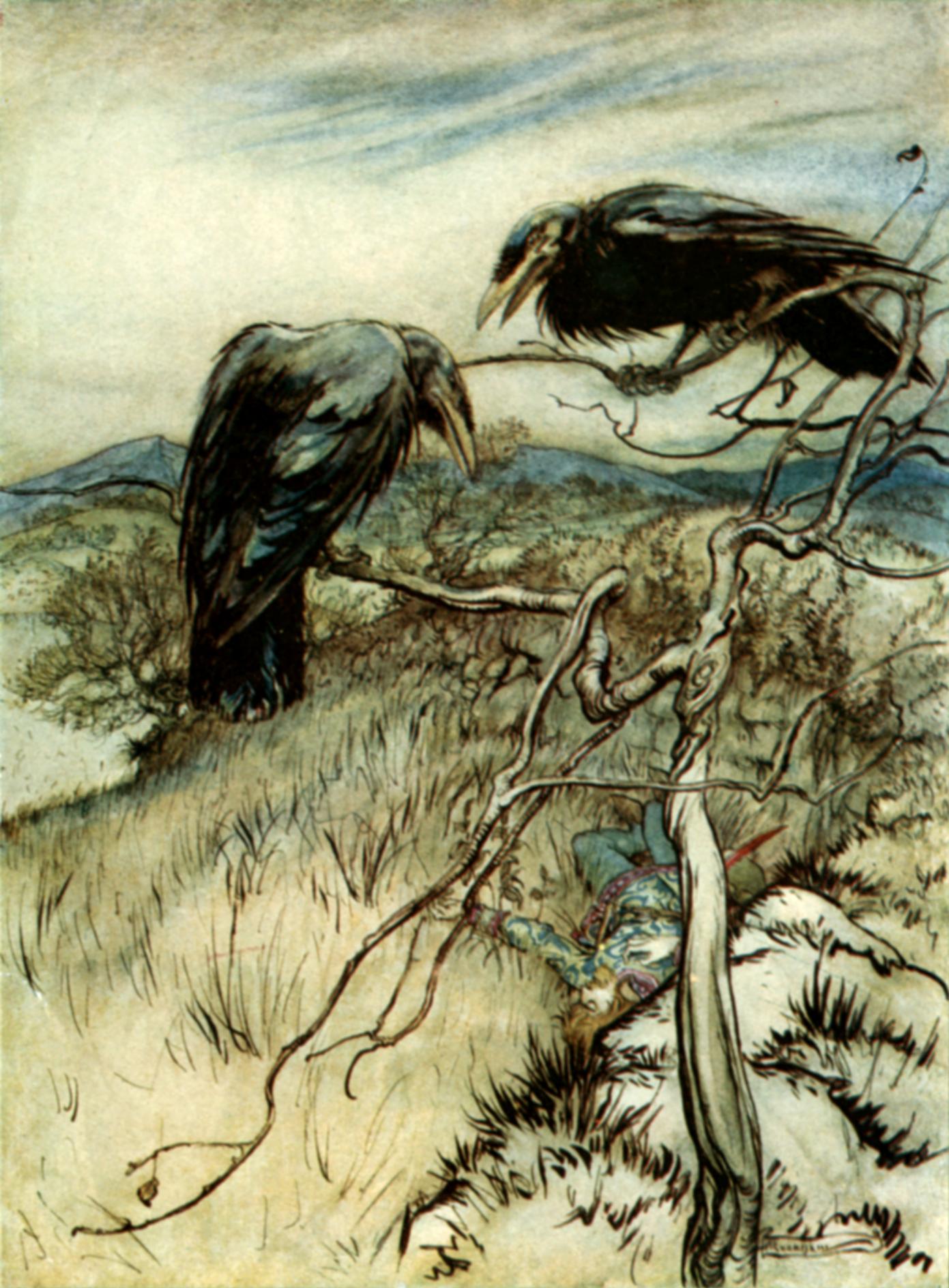
Guided by the baroque spire, I found the church and parked the car in the square. Two crows cawed, debating in a spindly tree. ‘A bad omen,’ Ellie said. 

I was gripped by a compulsion to let her hitchhike home. Her foolish superstition annoyed me. ‘All depends what you project onto crows,’ I countered.’

A lean and nifty man, the cobbler stashed not only shoes but secrets, likely for profit. There was punch behind his words, ‘Your best bet is the slaughterhouse,’ he said, ‘they might have an old goat.’

‘I don’t want to go there.’ Ellie wailed. Her moral conflict over eating meat at the farmer’s table left her feeling woozy. And the crows had put fear in her. Wet through once more, we lingered in the car and gazed at the waters dancing on the tarmac. ‘Maybe you should get a sheep,’ Ellie said.

I suffered the humiliation of defeat, while the slaughterhouse loomed as a last resort. My want for a goat prevailed. ‘I’ll enquire, you can stay put,’ I said, and firmly started the engine, heading in the direction the cobbler had indicated. Another black cloud sailed in. The torrent drummed so hard on the windshield, its wipers slowed under duress. Single drops hit the tarmac like missiles, forming a milky mist.

‘Everything’s against us,’ Ellie said. Here we go again, I thought. Yet I had to admit the dead-end. We would have to return down the mountain. The trouble was, when Ellie slipped into a low mood the air surrounding her became heavy. If I stretched my imagination I could see her succumb to a host of dark entities, hear their whispers. I regretted my decision to take Ellie along. We turned a corner, and, without warning, were faced by a stark scene. In the frame of an open industrial unit animal corpses dangled from hooks like pendulums. That instant a cow’s belly was sliced open. Blood and inner organs poured out and splashed into the drains below. Ellie shrieked and paled. Queasy myself, a vivid taste of iron in my mouth, I turned the car and stopped on the main road.

Numbed, we avoided each other’s eyes, the shocking event lingered. Part of life’s food chain, I told myself, and promptly pictured the cling-filmed bloodless meat in supermarkets.

Ellie heaved a breath. Her hands stopped trembling. She shook her head, ‘Nevermore,’ she said. The gravity in her voice, the burning determination in her eyes, hinted at a deep rage, way beyond her revulsion to meat. It seemed to me her nevermore applied to the shadowy entities that plagued her, and a no-meat pledge served to conquer her passivity.

I liked the taste of meat, but would I eat it if I had to kill the animal myself? A challenge! I reasoned with my conscience and came up with a compromise. ‘From now on, I’ll remember to honour a sacrificed life with a thank you,’ I said.

‘That’s a start.’ The sharp tone behind Ellie’s new credo brought an icy draught on the air. To escape the depressing spot, I made snail-speed through the village. The day’s span had narrowed. Overcome by failure, I gazed into the haze for answers.

… a link to part three, the last instalment is at the top of this page …

The only true wisdom is in knowing you know nothing. A wise man does not need advice and a goat won’t take it.   Anon

*      *      *

The illustrations are by Arthur Rackham and Gustave Doré

8 Comments

Filed under Blog

… Goats are Goats … part 1

Recently, Jane Alexander, another spiritual warrior, had a blog-post sparking a dialogue that brought up the theme of goats, in the widest sense :) and it reminded me of an episode with goats. So I dug up my notes and wrote a Short Story. Here the first part, one or two more to come … enjoy.

*     *     *

Friends warned me – goats are trouble, they’re stubborn, they gobble up everything in reach and reach everything, fences are useless – to no avail, my brain cells were committed. The image of a she-goat had acquired deep saturation in my heart and was fixed. At the time, none of our group who had rented the old house was keen on gardening. We were surrounded by weed-smothered acres. I envisaged the jungle cleared and converted into snow-white milk and cheese. A deeper image chimed, of the orphan Heidi sent to live with her grandfather in an alpine hut where she met Peter and his goats. The story had left an indelible impression; especially how the healing of Heidi, Peter and the wholesome milk of his goats worked on Clara, a paralysed girl. Sediments of memory that push up times’ layers and seep into new situations often justify my otherwise irrational actions.

The local farmer told me of a place where they kept goats. ‘A rarity these days,’ he said. I got up at dawn, bemoaning the grey sky. Ellie was awake, eager to join me, a curious act of will for someone who tended to apathy. I had not planned on company, but could hardly refuse since she had already prepared coffee in a Thermos, good strong coffee. We raided the fridge for provisions and folded into my old estate. The destination was a smallholding in a Bavarian hamlet, an hour’s drive away. Ellie was silent. She liked to daydream. When she talked, it was about what she noticed in her immediate vicinity. ‘See the pretty flower box up on that window?  It’s tilting and might fall on someone’s head.’ Or, commenting on a woman who offered directions, ‘She squeaks like a mouse in a trap.’  Her observations tended to ripple the air with uncanny prognostic qualities that made me shiver.

The overgrown dwelling nestled like the green-speckled cap of a giant mushroom in the slope of a hill. Across the black earth in the yard waddled flocks of white geese. I parked the car, which made a couple of birds chase their goslings under the branches of an elm that served as roof for a medley of neglected farming tools and scrap wood. An enchanted world in which a silver-haired woman stood motionless among her goose sentinels. ‘Is she aware of us?’ I wondered.

‘She wouldn’t miss a worm stirring in her yard,’ Ellie said.  Her impression mirrored mine, of the ageless crone being rooted to her environment as through fungal filaments. Stepping from the car was like agitating the boundary to another universe. There was a bout of nervous honking, and a gander hissed as I walked up to the woman. Her kind eyes twinkled, animating a leathery face inscribed with immeasurable knowledge of the elements. She told the tale of her last goat, in slow detail, giving it shape with her bony hands, as if I was a neighbour passing by who deserved the latest instalment.

Back in the car, I took a last glance and wished I had my camera. The woman stood as before, on the same spot. Ellie was humming.

‘What’re you humming?’ I asked.

‘Some tune, can’t recall – this place, you know, could be spirited away any moment.’

‘Good luck then that she gave me another lead,’ I said, ‘a place not far from here.’

The farmer ten miles down the road looked us up and down. Not an inch of ironed cloth on us, my mirror-embroidered vest, the charms dangling from Ellie’s neck – hippies – I heard him judge. ‘Goats, gosh, they’re a luxury. I sell you sheep, less hassle.’

‘Sheep are sheep,’ I said, bluntly. He carefully gauged my sanity and shook his head. The thoughts of a simple soul can be read in capital letters, not flattering, but always enlightening. I made small talk to navigate through our discord.

Eventually he offered a hint. ‘There’s a farm I used to do business with, in the mountains, near the Austrian border.’

This search was going to be a longer than anticipated. We stopped at a river for a picnic. ‘It’s not going to be straightforward, is it?’ Ellie said. ‘I hope we don’t get lost … exciting really’, she added, as if to undo her fretfulness. I never tried to persuade her of anything.

She was a strange one, Ellie, a cautious spectator, longing for others to take charge, which got her into trouble when someone she considered a friend laced her birthday cake with psychedelics. She lost coherence and was sectioned. When our small community heard about her plight, we got her released from the institution and took her in. The trauma had shaken Ellie, but opened her mind, though she swayed from moments of brightness to moments of despair.

‘We can sleep in the car,’ I said. ‘There’re blankets in the hatch.’ Determined, I drove on – into the unknown. Another 30 miles, and my Estate laboured up the steep serpentines of a gorge. The sky drew dark curtains and it began to rain.

Close to our next destination, flashes of lighting zigzagged among the cliffs. The narrow road became a roaring stream. Ellie clasped the crystals she wore for protection round her neck. I could smell her fear and tried to be brave for both of us. ‘I’ll stop at the next layby.’ To my relief, a cluster of farm buildings came into view. Sheep huddled for shelter under a copse.

‘No goats!’ Ellie said. She had a habit of stating the obvious.

‘Goats hate rain,’ I assured her. ‘They’ll be under cover on a day like this.’ Once we reached the farmhouse it poured rivers. I parked and turned off the engine. The mass of water pressing against the windshield was impenetrable, and it didn’t look as if the downpour was about to stop. ‘Let’s run for the porch,’ I said.

…   a link to part two is at the top of this page …

Do not seek to follow in the footsteps of men of old; seek goats.  Basho

*     *     *

The illustration, Goat and Vine, is by A. Rackham

19 Comments

Filed under Blog

… the wonderful visit …

I loathe most talk of angels since they became best-selling brands, but the synchronicity of Annie Lennox wearing wings and singing to an angel at the Queen’s Diamond Jubilee, and the discovery of a rare book among my shelves, brought angels up close.

H G Wells (1866-1946) has been referred to as the Father of Science Fiction. A neglected story, The Wonderful Visit, published shortly after The Time Machine, was regarded as a mocking reflection on attitudes, beliefs and the social structure of a typical English village in Victorian times. I read the social commentary as ornamentation, the comical human attempt to stay the same, round a more essential theme, the conflict that can accompany awakening.

The edition below is from 1922 and has an illustration by Conrad Heighton Leigh. The line under it is from chapter 5 – ‘He fired out of pure surprise and habit.’

A strange bird was sighted.

Ornithology being a passion of the Vicar of Siddermorton, Rev. K. Hilyer, he was going to outdo his rivals and hunt the strange bird. So it came to be that on the 4th of August 1895 he shot down an angel.

… He saw what it was, his heart was in his mouth, and he fired out of pure surprise and habit. There was a scream of superhuman agony, the wings beat the air twice, and the victim came slanting swiftly downward and struck the ground – a struggling heap of writhing body, broken wing and flying blood-stained plumes … the Vicar stood aghast, with his smoking gun in his hand. It was no bird at all, but a youth with an extremely beautiful face, clad in a robe of saffron and with iridescent wings … never had the Vicar seen such gorgeous floods of colour …

‘A man,’ said the Angel, clasping his forehead … ‘then I was not deceived, I am indeed in the Land of Dreams.’ The vicar tells him that men are real and angels are myth … ‘It almost makes one think that in some odd way there must be two worlds as it were …’

‘At least two,’ said the Vicar, and goes on ponderinghe loved geometrical speculations, ‘there may be any number of three dimensional universes packed side by side, and all dimly aware of each other.’

They met half way, where reality is loosely defined, and truth has no hold. And they shared the nature of their worlds. Eat, pain, and die were among the new terms the strange visitor had to come to grips with.

‘Pain is the warp and the waft of this life,’ said the Vicar. Riddled with remorse over having maimed the Angel’s wing he decides to looks after him. But to adjust to the Vicar’s world, the Angel must eat and accept pain, and learn all manner of things very fast indeed … Starting to read, during a phase of now legendary sunshine, I settled in my garden with a glass of red, and consequently spilled the wine on my wild strawberry blossoms due to sudden bursts of laughter.

‘What a strange life!’ said the Angel.

‘Yes,’ said the Vicar. ‘What a strange life! But the thing that makes it strange to me is new. I had taken it as a matter of course until you came into my life.’

Mr Angel is nothing like the pure and white angel of popular belief, more like the angel of Italian art, polychromatic, a musical genius with the violin. Listening … the Vicar lost all sense of duration, all sense of necessity … The reactions of the villagers oscillate across a hair-thin-divide between comedy and tragedy, while the bone of the story is psychological, and spiritual. Indirectly, the Vicar encounters his anima (his inner female) through the Angel’s love for Delia, the maid servant of the house. There is no escape. Things get intense. The Angel, over the span of a short week, is tainted by the wickedness of the world, and it crushes him. And the Vicar’s awakening from his narrow prison brings him into tragic conflict with his community.

*    *    *

Not much has changed. The world is crowded with wounded angels seeking compassion, and since our daily vocabulary offers little more than clichés for other realities, awakening rarely convinces, unless it is embodied and conveyed through atmosphere. Look out for the artist… the musician, painter, writer, animator, filmmaker … and the children.

‘If the doors of perception were cleansed every thing would appear to man as it is, Infinite. For man has closed himself up, till he sees all things thro’ narrow chinks of his cavern.’
― William BlakeThe Marriage of Heaven and Hell

The painting heading this post is by the Finnish symbolist painter Hugo Simberg.

18 Comments

Filed under Blog

… pattern which connects …

For a recent book-sharing with a group of irreverent friends (archventures), I had the wish to share so many books that I instinctively reached more or less blindly into one of my shelves. Books in my home, I must add, are in a muddle. The only order to speak of is their relationship to each other through time. I picked Alice in Wonderland and Mind and Nature. During our afternoon of reading there was not enough time to do honour to the latter, Gregory Bateson’s work. So I said I’d write up something. Oh dear. After pages and pages, I finally recalled this was supposed to be a blog-post, not a novel .

I first came upon Gregory Bateson books, ‘Steps to an Ecology of Mind’ and ‘Mind and Nature,’ during the early 1980’s, after his death. The clarity of his notion that biological forms arrange themselves through relationships struck a deep chord. What totally resonated with me was his thought that the structure of nature and the structure of mind are reflections of each other.  He had a broad perspective for a Biologist, and wanted to build a bridge between the facts of life and behaviour, and what we know of the nature of pattern and order. He was active in, and connected up many different fields of study – anthropology, psychiatry, biological evolution and genetics and the new epistemology which comes out of system-theory and ecology. He challenged basic assumptions and methods of scientific investigations, pointing to the processes beneath structures. He quoted Goethe …

A stem is what bears leaves

A leaf is that which has a bud in its angle

A stem is what was once a bud in that position …

And he provoked new thinking: ‘What pattern connects the crab to the lobster and the orchid to the primrose and all four of them to me. And me to you?’ 
His interest in morphology, the study of structure and form of organisms, involved context, meaning and communication. He distrusted reductive models of cause and effect, the scientific approach that lines up parts and classifies them, focussing on quantity.

Comparing systems, one to another, he perceived the mind as an ecological system. And he used the analogy that ideas, like seeds, can only take root and flourish according to the nature of the system receiving them. This thought alone deserves deep contemplation.

He had a way with stories … ‘There was a man who had a powerful computer, and he wanted to know whether computers could ever think. So he asked it – Will you ever be able to think like a human being? – The computer clicked and rattled and blinked, and finally it printed out its answer on a piece of paper, as these machines do. The man ran to pick up the printout, and there, neatly typed, read the following words: ‘That reminds me of a story.’ 
Concerned about the decimation of aboriginal populations (he did field-work with Margaret Mead), the degradation of ecological systems, economic oppression, and senseless wars and arms races, he took these ominous signs of contemporary life to be manifestations of deeper disorders, which he defined in terms of cybernetic systems of communication and meaning that comprise life, mind, and society. In his view, consciousness dominated by purposeful thought has a linear structure that establishes goals and ways for attaining them without being necessarily sensitive to the circular network of cause and effect that orders the systems.

Looking at human consciousness as an adaptive system, he thought the cure for its inadequacies, evidenced by the negative side-effects of purposive rationality, was not to reject it in favour of a passionate non- rationality, as in the extreme romantic position, but to augment and complete it by engaging with non-discursive, pattern-comprehending and emotional processes. He advocated the befriending of the unconscious aspects of the mind through utilising images and metaphors.

In a civilization which separates mind from body, mythologies about the survival of a transcendent mind are often meant to soften the idea of death, or even deny death as part of life. For Bateson, who saw the mind as being immanent not only in pathways of information which are located inside the body but also in external pathways, death took on a different aspect. ‘The individual nexus of pathways which I call ‘me’ is no longer so precious because that nexus is only part of a larger mind. The ideas which seemed to be me can also become immanent in you. May they survive, if true.’  (Afterword to a collection of celebratory essays, 1972)

Yet there are scientists that can no more perceive the language of nature, and politicians who feel beleaguered by sections of society that seek balance and a fresh context towards ‘an ecology of mind.’  The extreme factions of believers, for what else are they, should look again at the bridge  Bateson prepared.


This lovely video gives a taste of what it is all about :

Update … I discovered recently, in 2019, that some the links in this post don’t seem to work anymore. Here , however, is his daughter’s great documentary on Vimeo, unfortunately not free, apart from the trailer.  https://vimeo.com/ondemand/bateson

Looking at the structure of nature and the structure of mind being reflections of each other, it becomes obvious that not only does nature mirror our habit of thinking, but our thinking also mirrors the state of nature. Ecology and psychology must therefore both engage in listening, and seeing, and working ceaselessly towards the integration of knowledge and the re-adjustment of a dynamic balance.

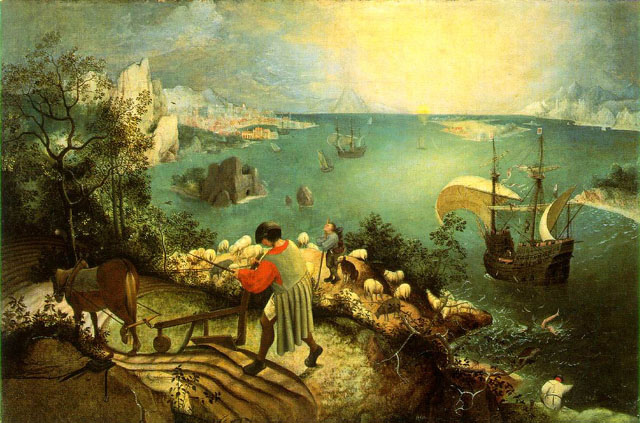
I could go on, but want to bring in a famous painting of Icarus by Brueghel.                                                             Anthony Stevens, a brilliant expositor of Jung’s thought, used the painting as cover for the first hard-cover edition (1995) of his book Private Myths.

http://www.anthonystevens.co.uk/index.html
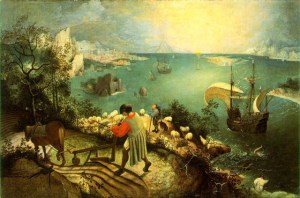


Stevens quotes from a poem by Wystan Auden:

In Brueghel’s Icarus, for instance: how everything turns away

Quite leisurely from the disaster; the ploughman may

Have heard the splash, the forsaken cry,

But for him it was not an important failure; the sun shone

As it had to on the white legs disappearing into the green

Water; and the expensive delicate ship that must have seen

Something amazing, a boy falling out of the sky,

Had somewhere to get to and sailed calmly on.

What goes up must come down. Who knows how many Big Bangs there were before the one we so ardently explore? There is an organising intelligence behind life’s cycles, while consciousness forever expands. Thinking in metaphors we can perceive similar patterns, forms in nature and mind, cosmos and psyche, mirroring each other across scale and time. In other words, life teems with realities we can tune into, as long as we assign context and meaning.

Check out Gregory Bateson’s books ‘Steps to an Ecology of Mind’ and ‘Mind and Nature.

His family continue his work: His daughter Nora and his wife – Mary Catherine Bateson:   http://www.interculturalstudies.org/main.html

Peripheral Vision

 http://www.amazon.com/exec/obidos/tg/detail/-/0060926309/mead2001centenni

Free chapters of Angels Fear:  http://www.oikos.org/angelsfear.htm

Nora Bateson, recently created a film:

http://www.anecologyofmind.com/

Last not least, the themes:  pattern which connects, mirroring and bridging, are subjects of my novels.

25 Comments

Filed under Blog

… I write here …


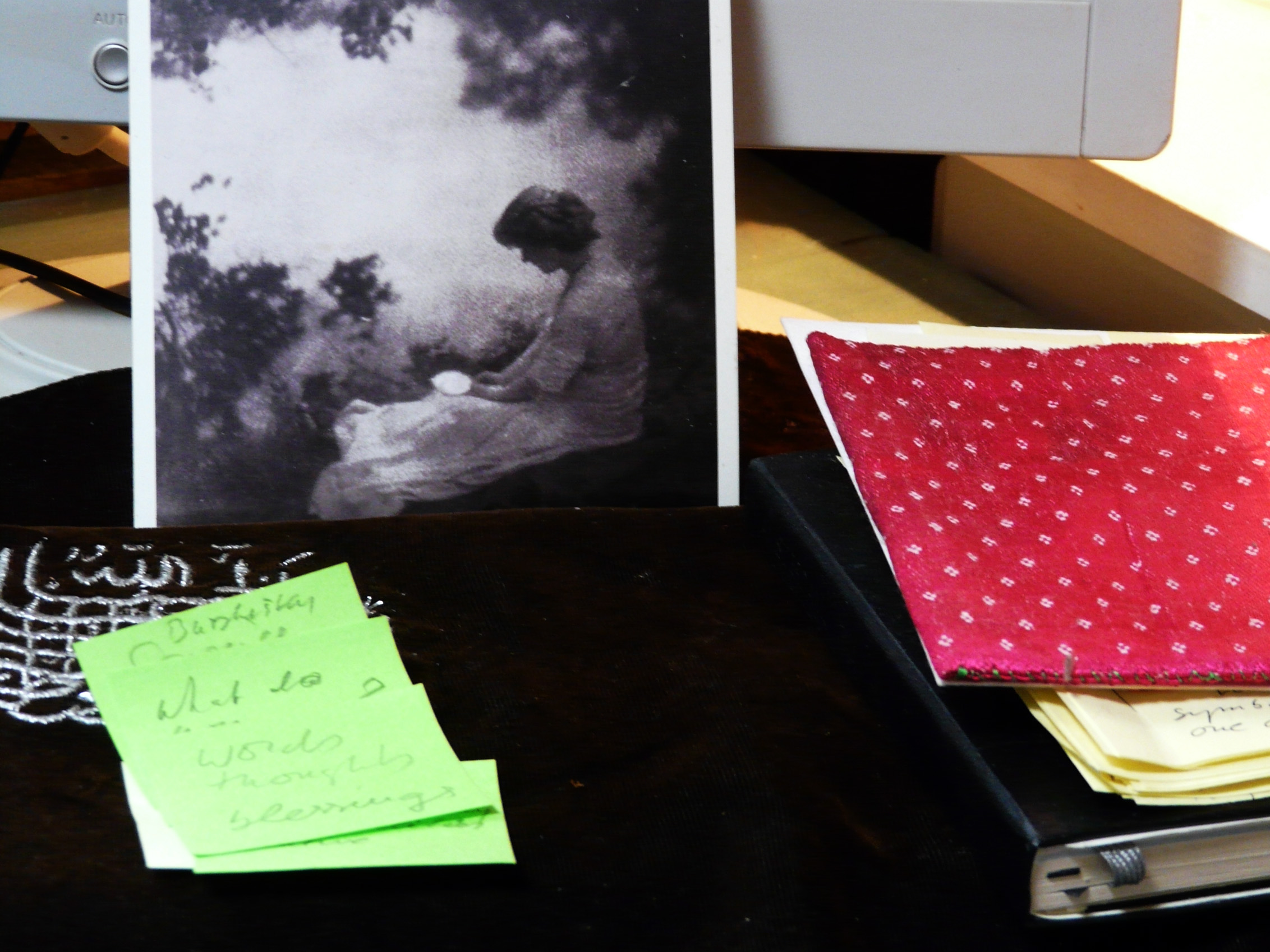
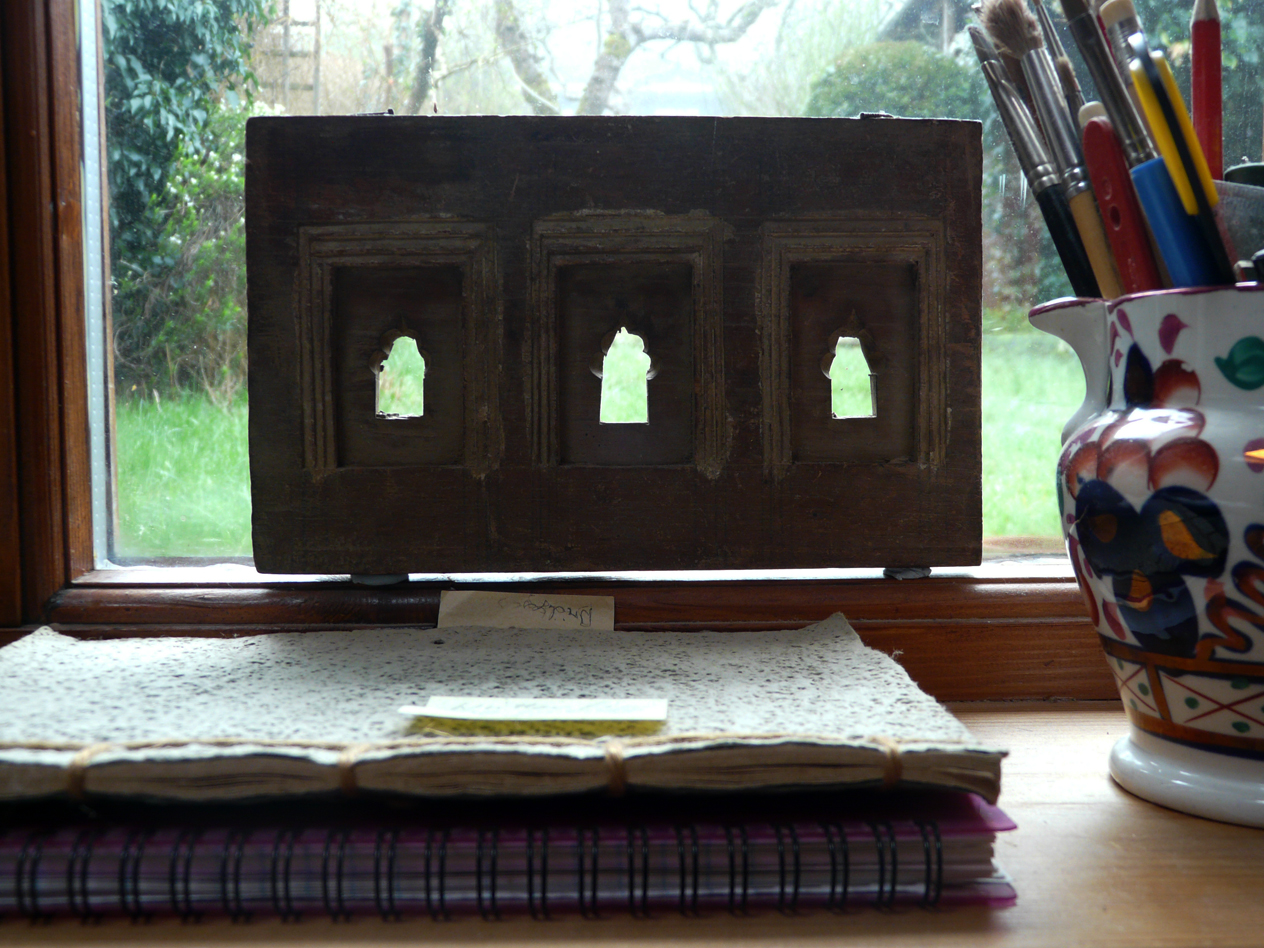
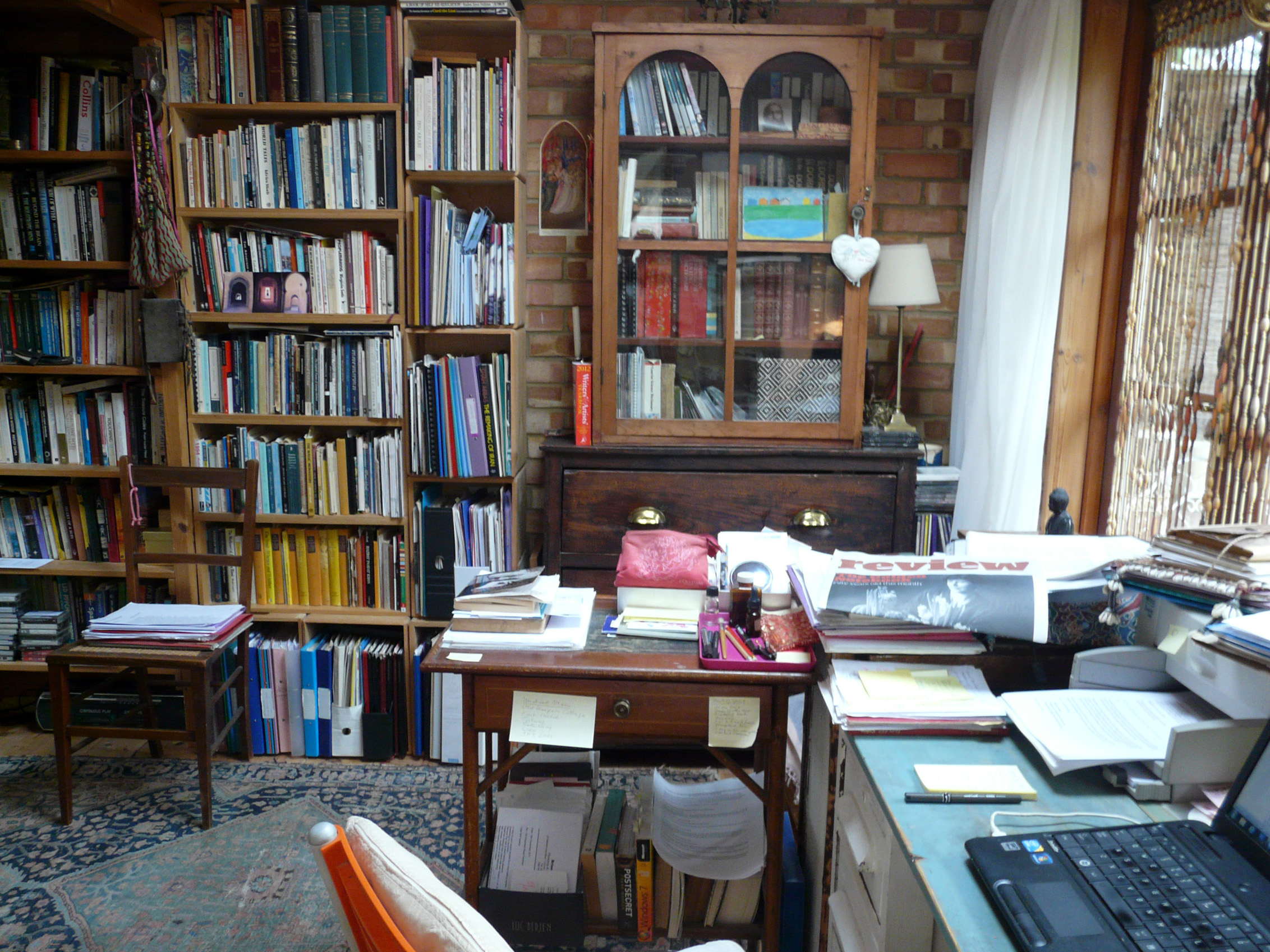
Images tend to bring us instantaneously closer.  A recent writing workshop given by a friend, made me think how inner and outer spaces affect our writing.  And I was also  inspired by Roz Morris, a generous and effective blogger http://nailyournovel.wordpress.com/page/3/ who featured her writing space in February.

I write through

the heart chamber

and the drone

of its circular charm

I write in earth

branching to the dark solitude

of birthing

the unknown

I write in water

fractals spinning

plankton under stars

coding the cosmos

I write in air

flexed by the wishbone

that loops breath to lift

wings of longing

I write in space

where spirits linger

in the scent-cloud

of a former home

I write in ether

where dreams free

greening visions

and murmur of bloom

I write here

in a room that is everywhere

bridging hearts

with companions like you

26 Comments

Filed under Blog

Alice Meynell

I had an evening online,  jumping from link to link, randomly hunting, then serendipitously finding, coming upon treasures, like the essays by Alice Meynell. The writer had been recommended to me by a tutor when I first studied in the UK  –  as example of good essays in English. Alice Mynell’s essays  helped me back into writing at the time – which is another essay.

*    *    *    *

The Illusion of Historic Time

He who has survived his childhood intelligently must become conscious of something more than a change in his sense of the present and in his apprehension of the future. He must be aware of no less a thing than the destruction of the past. Its events and empires stand where they did, and the mere relation of time is as it was. But that which has fallen together, has fallen in, has fallen close, and lies in a little heap, is the past itself—time—the fact of antiquity …

http://essays.quotidiana.org/meynell/illusion_of_historic_time/ (direct link)

Enjoy – the general link to more essays on the right, under blogroll.

And there’s another treasure I found tonight … Writers No One Reads – check the link.

Alice is one of them, I think.

2 Comments

Filed under Blog