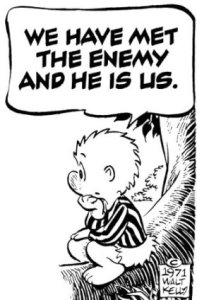
Pogo. Walt Kelly 1971
The timeless insight of mystics was frequently censured by prevailing orthodoxies and only available to a few scholars. But even though mystical writings have been made available over the last two centuries, readers form a minority. Meister Eckhart’s quote – “The Eye with which I see God is the same Eye with which God sees me,” – implies that we envision inherent archetypal ideals to then realise and embody them within.
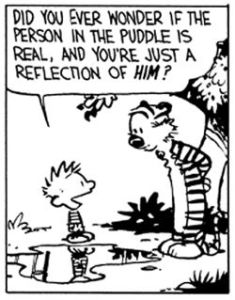
In the projected mirror we may see love, kindness, compassion and forgiveness reflected, or, depending on our state of mind, we may equally see indifference, rejection and severe judgement. What if our goodness is not rewarded? What if love betrays and we turn anger inwards? What if we battle with resentment, find fault with everything and despise sanctimonious people? The same process applies; we absorb what is mirrored via our inherent imaginative power.
To direct the moral education of citizen, spiritual offences were formulated in Greek monastic circles and coined as The Seven Deadly Sins: gluttony, lust, avarice, sadness, anger, acedia (not to care), vainglory, and pride. Over time theologians made various changes – the sin of sadness became sloth, and then Pope Gregory reduced the list in descending order to: pride, envy, gluttony, lust, anger, greed and sloth. To counteract sins, virtues were advised as humility, kindness, abstinence, chastity, patience, liberality and diligence, qualities not easy to live up to from day to day. The deadly sins instilled fear and guilt … and left deep cultural marks, self-blame being the most destructive.
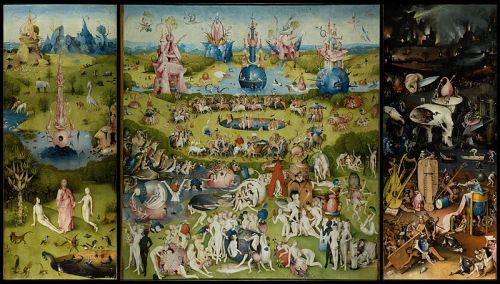 Self-blame makes for turbulent minds. Only scapegoats will ease the burden. Among all regulars a perfect scapegoat served Christianity well – Eve. The collective psyche contains not only unknown riches, but also stuff we disregard (much like the plastic that accumulates in oceans,) thoughts and deeds behind our facades we won’t acknowledge or take responsibility for, and instead conveniently place on the shoulders of suitable others.
“Projections change the world into the replica of one’s own unknown face.” Carl Jung
Balancing Freud’s focus on pathology, Abraham Maslow studied self-actualizing people and outlined a hierarchy of basic human needs. His map suggests when an early need is not adequately fulfilled; narcissistic or psychosomatic symptoms may result, blocking growth. Little is up to us. Families rarely support this process, as they can be burdened by complexes and dysfunctional behaviour patterns from one generation to the next.
‘The proper time to influence the character of a child is about a hundred years before he’s born.’ – William. R. Inge
No wonder many of us resort to blaming circumstances, parents, state, strangers, or appease all by adopting self-blame. Then again, some people rise from grim circumstances and become inspiring people. What’s their secret? It’s my guess that a strong desire for gratification, bestowed by a non-personal archetypal calling, can empower us to transcend seemingly insurmountable obstacles.
The idea of deadly sins put the fear of hell in people. Sinner were not deemed worthy to enter paradise. But if we consider that human behaviours communicates intrinsic needs that seek fulfillment in the expanding spiral of evolution towards wholeness, the very idea of using sin as a threat is naive, and more, counterproductive. Here a short look at the deadly sins …
PRIDE – an excessive belief in one’s abilities and ignorance of the grace of God.
This relates to an evolutionary trend of our time, individuation – becoming who we can be – best attempted with the mediation of a healthy ego. This process happens mainly in the West and is frowned upon by fundamentalists whose ideals are fixed on heaven. Where tradition equates with identity, displeasing the expectations of family and state carries a risk of alienation. The challenge of freeing oneself emotionally, intellectually and spiritually then becomes heroic. It means sticking to one’s inner truth against all objections and raised eyebrows. It means regard for the potential that is emerging in oneself and others. I grok these words by my Sufi friend, from a lecture during the 1980’s …
‘The experience you have within yourself of your own separate identity, to allow right and wrong to be re-defined by you, your singular contribution, is where evolution really happens. You, by becoming yourself, can open a new wavelength. What you reflect immediately influences your environment, people close and far away.’ (Fazal I. Khan)
Those who break free from parental commands when their inner truth is compromised do not seek union in the womb, but aim to experience conscious union through embodying their ideals. Life brings along companions who recognize the authenticity and backbone it takes to walk this path, even if it seems foolish and brings no answers. Yes, pride may sneak in, but equally gratitude, humility, and acknowledgement of the interdependence of all life.
ENVY – desire for the status and abilities we see in others and want for ourselves. The need is to emulate, to find aspirations that resonate within. From early on we are looking for role models to reflect our potential. If such recognition is withheld or distorted, the need can take possession of us, with all the consequences of being rejected, belittled, abused, and feeling ill done by, until we realize our own resources. Ralph Waldo Emerson evokes in his essay on self-reliance a more helpful notion of envy:
There is a time in every man’s education when he arrives at the conviction that envy is ignorance; that imitation is suicide; that he must take himself for better or worse as his portion; that though the wide universe is full of good, no kernel of nourishing corn can come to him but through his toil bestowed on that plot of ground which is given to him to till. The power which resides in him is new in nature, and none but he knows what that is, which he can do, nor does he know until he has tried. – Ralph Waldo Emerson
GLUTTONY – a craving to consume more than is required. In simple terms it is a hunger that knows not what is seeks. And yes, it is bound to become an indulgence – a chasing after stimulation, information, speculation. Until the hunger knows what it seeks it will not be satisfied. The search is intense. In spiritual terms this hunger can develop into devotion.
LUST – a craving for touch, warmth, pleasure of the body and sex. The need underlying lust is a longing for intimacy and ecstasy. It often fails to satisfy, but behind the shadow of excess is the ideal, to be consumed, like the moth by the flame.
ANGER – results from frustration and is all too human. Sadly, when our existence is denied, or we experience and witness injustice, yet lack opportunities to express anger creatively, this powerful energy will make us ill or explode in rage. That said, even conscious resistance is a creative act. We are endowed with natural aggression to even make it here. Each one of us results from the fastest sperm, the one that made it. Oppression and cold rationality feed anger. If repressed, anger takes us over.
GREED is also based on the desire for recognition. If the experience of being seen, heard and appreciated is missing, we must find opportunities to succeed in something.
SLOTH used to be called sadness – brought on by a sense of meaninglessness. Change wants to happen but one is helpless to act. These days depression is a collective phenomenon. On a personal level not acting could be seen as fear of failure, though often it is the necessary dark phase for a kind of alchemy in the psyche that leads to new wings.
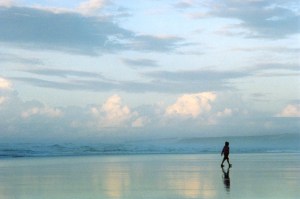 What if we have satisfied our basic needs? The horizon is never reached. Beyond every horizon is another. This includes the horizons of our mind, beyond which we hope to find purpose. We go on journeys, outer, inner, to find out why we are here. But the search never ends. We take drugs to kill this yearning, this question of ‘why’, because we can’t face that maybe the only purpose is the search.
‘The ideal is the means; its breaking is the goal.’ Hazrat Inayat Khan
And yet, the search liberates. The attachments we have to right and wrong, to good and evil, to our own importance, blocks our search for new meaning, prevents us from living with intensity. Our most precious and vital scripture is nature, life itself.
These thoughts were drafted eleven years ago. I would have liked to come up with a fuller gestalt to make my point, but presently I enjoy a holiday in psychic wilderness.
And today’s Haiku …
Devils besiege us
As do angelic spirits
Both hold their best truth
While we are mediators
In the psychic wilderness
 of impact and send the pain back, assuming the wood tolerates it better than my soft tissue. It’s a long-honoured small-scale experiment with disentangling subtle vibrations. It works for me – pain and swelling ease miraculously. Try it, for fun.
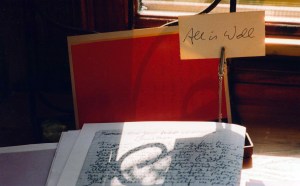 As in receiving and sending waves, I converse with my body, with trees, shrubs, flowers and creatures. I caution spiders not to come near my sleeping space. I have heart-to-heart chats with my house, laptop, car, and all manner of things. I say thank you to what I value and depend upon and even use little mantras conveying something like – all is well – I hear you gasp. I do this to disrupt mindless automatic response patterns. With people, I admit, it’s way more complicated.
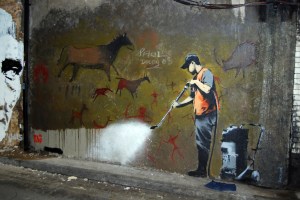 During recent centuries, western cultures developed multiple viewpoints. But what is happening to this wonderful diversity, given the hyper connectivity of the internet, where the masses turn for guidance, where people empowered by visibility offer opinions that swing back & forth in dramatic ways? Is this the dawn of a new tribalism that blanks out the unique contexts and realities of individual minds? One has to have one’s wits about these days.
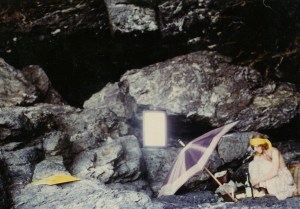 The flashing mirrors of the media blind me at times. Wary of the hive, I also like to belong. When fed up, in need of digestion, I retreat to a cave in my mind (once real) where I attend to what bubbles up from the unconscious in that zone between dreaming and waking, until I emerge from my cave into the light of a new reality, new beauty, new meaning and new questions.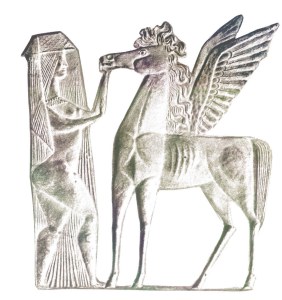
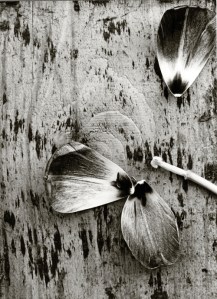 No doubt the experience of a slowly developing image in the darkroom influenced my writing. A sketch to start with, suggesting a mood, a lightness of touch, and, with some stroke of luck, an emerging symbolic element, which black & white photography is particularly well suited for. In short, a feast for the imagination, inviting associations for … poems, stories, and even cosmologies.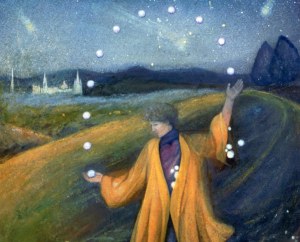
 My dream vanished. It’s going to be one of those weird days, I reckon, soon confirmed by a fleeting glance while passing a mirror. My morning ritual includes stretching muscles while coffee filters into the cup. I breakfast before the screen, skim through emails and various online papers, shake head at captions ranging from atrocious, futile to hilarious, the latter due to brexasparation. The scene beyond the window calms – wispy clouds, birds flitting from hedge to tree to hedge, familiar cats slouching across frosted grass, the ginger, the black & white bushy monster, the nimble black tom with white paws and white-tipped tail, much like an exclamation mark.
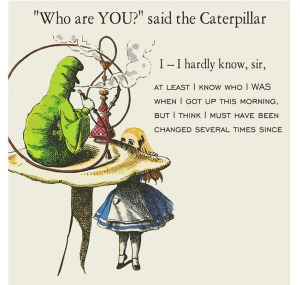 I deeply appreciate the dreams that provide an afterglow to the relationships in my life, be it the ones marked by kindness and love or the ones distorted by projections and a narrow reading of intentions. The insights that dreams bring help me to renew my sense self, no matter how delusional, it’s what I need to function in this world.
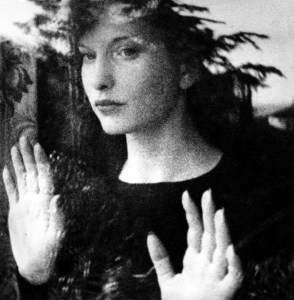 For the artist Maya Deren (1917-1951,) who created some highly influential films in her short life, scientific findings were but the raw materials of creative action: ‘The first step of creative action is the violation of the natural integrity of an original context.’ She saw the function of art and its validation in the creation of mythical realities. Her symbolic images of personal significance also chime universally.
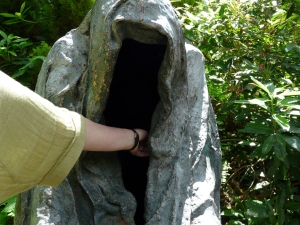 Simulated reality blinds with the Gestalt of our collective mind, where every viewpoint exists at the same time. It lacks context and shadow definition, over-exposes our field of consciousness. For Baudrillard, the schizophrenic subject can no longer produce the limits of its own being, or produce itself as a mirror. It becomes a screen, a switching center for all networks of influence. The electric sphere of the internet simulates our nervous system and turns it inside out. There remains the reality of our psychological experiences, where shadows have to be reckoned with.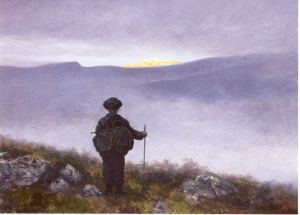
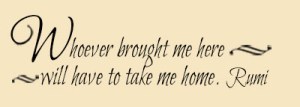 Birth and death remain the ultimate spinners of life. In the parlance of the mystic, the moment of exaltation is in the immanent glimpse of the curl of the beloved. Can the beloved be the beloved if she is fully known? And what do we know of the various dimensions where she resides?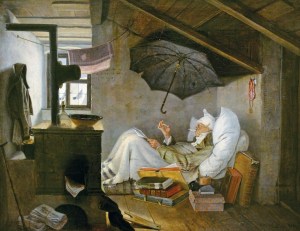
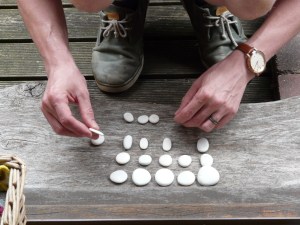
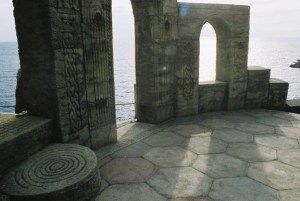 The scene takes place on a sunlit peninsula, set in a glittering sea. I play with white cubes, each feather light. The childlike part of me experiments with the beauty of forms and the building of imaginative structures that mirror colours of the sky and surrounding landscapes. Others join in, and not just friends, strangers too. We have fun, laugh and toss cubes to each other. We are building a temple to celebrate play.
 After all, there are walls and walls.
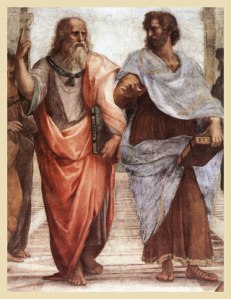 virtues of Plato’s top-down and Aristotle’s bottom-up metaphysical arguments. I explored question such as – do the aggressors in my dream represent the judgmental part of me that inhibits the creative impulse of the child that shrinks when it feel unwelcome? … Yes.
 I’m old and grumpy, a familiar sight. Small chance she wonders where I hang out when not visiting. Today she spotted me – a fluffy ginger ball dozing on a brick wall sheltered by ivy – not my regular spot. I prefer having my daily nap on a bench at the top. From that royal view downhill I keep half an eye on creature traffic, neighbour cats that shamelessly kill fledglings or lame birds, the stray dog or sly fox that slips through the hedge, reckless rodents … but it’s been drizzling all night and my favourite bench is soaking wet this morning.
 bowl near the house with fresh water, just for me to slurp. In such moments we exchange glances, and she nods. What she doesn’t like is when I get too close to her little stone Buddha. Then she shakes her head or steps from the backdoor to clap her hands. I’ve seen her turn the water hose on cats with bad manners. She should know better, I’m not one of them, I have principles.
 I bet she misses her companion, glossy and black as a moonless sky. She was gentle and tolerant of me, which is why I used to protect her from a nasty tom. Some years ago the woman dug a deep hole for her friend, near the compost heap. Not the most romantic spot to have one’s bones rest, but due ceremony was observed, which must count for love.
 I doubt she cares where I camp at night. Doesn’t know I endure the stoned torpor of Mr X, lost in a dark place. It’s not a home, the vibes upset me. But each morning I vocally rouse X from his hangovers to alert him to my dry meal. This must be my purpose – my insistence on my existence is how he tracks time, like noticing a new day. Alas, the filthy water bowl is only rarely topped, which is why I’m thankful that the woman got the message … I’m always thirsty.
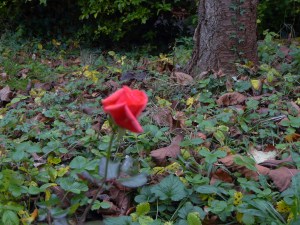
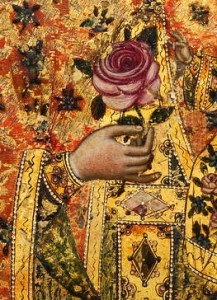 The genus Rosa, according to fossil evidence, is 35 million years old and begun to be cultivated circa 5000 years ago. Due to its tessellated structure, dome-like shape and its delightful perfume, the rose has become a symbol of the heart, of wholeness, love, beauty and perfection the world over, frequently with mystical connotation, and often highly stylised, as in Islamic art.
 While fear of loss and abandonment engenders life, it also draws us towards the mystery of infinite consciousness, the one being with countless names. Various practices, derived from spiritual traditions, can calm a turbulent mind enough for a glimpse of harmony beyond divisions. For a while, at least, we sense the larger presence, the effortless zone, the flow – and given patience, come to realise that consciousness is what we are.


