Tag Archives: haiku

… Kaif System – that sense of uplift … 

Mystical texts and phrases can annoy the rational mind, since they hardly ever get to the point or, indeed, contradict themselves. Still, at rare, often fleeting moments, sometimes in nature, a vein of light can reveal a profound truth, even in an overused mystical quote. Or, if one finds the occasional balance between the outer and inner reality, a sudden awe may unfold in consciousness and surprise.

‘Some’ scientifically minded folks, fewer these days, tend to scoff at mysticism with its vague hints and speculations as a waste of time, or look down on the fools of this world who suffer from subjective illusions. And yet, the novel feelings emerging from direct numinous experiences greatly expand the consciousness of ‘The One.’ I guess firmly set rational minds shy away from numinous personal experiences that might rattle their worldview.

The latter may shake their heads at some baffling mystical musings. I re-found this write-up on the Kaif System among many papers heaped up in corners of my home. It was shared by Morag Murray, born in Scotland, who lived and travelled in Central Asia, Tibet, India and the Far East. Her autobiography, ‘My Khyber Marriage,’ 1934, features her marriage to an Afghan chieftain. She is also known as Saira Elizabeth Luiza Shah, mother of Idries Shah.

So here goes … The Kaif System

Kaif is the effect a person, idea, event, object, etc., has upon one. But it is distinct from aesthetic pleasure or any familiarly labelled experience.

When an experience which was trivial or routine gives one a sense of uplift – this may be Kaif. Repeated experiences yielding pleasure or attractive sensations do not have Kaif.

Eating, drinking, dancing, meeting people, visiting, travel, reading, seeing, feeling, hearing, thinking – may have Kaif.

The term for something which has Kaif is Kaifdar – ‘Kaif holding.’

A person who can provoke the sensation of Kaif in an individual or a number of people is called a Kaiyyad (Rhymes with ‘I laugh.’) The instructor in Kaif is called the Sahib el-Kaif (Kaifmaster.) Also used is the term Kaifiat – which means something like ‘Howness.’

The Kaifmaster Barik Ali said: ‘Kaif is the determining ingredient in an enjoyment. If it is not there, true enjoyment is not there. If it is not there, people may divert themselves with happiness – this is not Kaifiat.

The Kaifmaster Ankabut said: ‘Kaif is imparted into a thing. It may be imparted by anyone or anything. When it leaves only the shell is left. People eat shells when they cannot get nuts.’

The Kaifshinas is the Kaif-knower. He can appreciate Kaif (Rhymes with Life.) He may not be able to induce it. His house may be untidy. But it will be full of Kaif.

Kaifju means a Seeker of Kaif. He starts by seeing other people appreciate Kaif, and tries to find it wherever it manifests itself.

Kaif is used either as an indulgence on its own, or in order to provoke higher consciousness, known as ‘the secrets’ (Asrar.)

Kaif may be found in any community, at any time, under any circumstances. It is not bound by language, history, geography.

Certain professions are held to be Kaifdar. They include those of chief of state, builder, artizan, poet and designers of all kinds. Few professions are bereft of Kaif. Certain places are more difficult for Kaifshinasi.

The very term Kaif has become cheapened, so that people use it to mean ‘This is something I like’, or ‘I enjoy that,’ or ‘He has presence,’ or ‘This is satisfying, attractive, stimulating.’ You must be aware of yourself using this term, and also of those who use it, so that the coin may not be debased.

Kaif is defeated very easily. It is defeated in its attempted manifestations by false ideas, by self-esteem, by hypocrisy of any kind

There is a danger in Kaif. People who perceive it and do not respect or honour those who have Kaif, or respect Kaifdar situations, places, and so on, become ‘inverted to themselves.’ This is a state in which a person’s bad characteristics become stronger, and where his self-control becomes less, and where his hidden unpleasantnesses undermine his very being.

Kaif is in shape and in form, as well as in shapelessness and formlessness. It lies dormant in places and among people where it is not perceived for a long time. Then only the introduction of a conscious Kaifshinas will activate it again in that community so that it may take its place to help mankind.

Kaif is not confined to humanity, but can be perceived by all living organisms.

Something which is aesthetically adequate or emotionally stimulating can at the same time be devoid of Kaif.

Certain exercises, which vary in accordance with the person, place and the general situation of his community, enhance Kaifshinasi.

Kaifmasters subject their students to experiences, related incidents, objects and other matter which have Kaif, or can provoke it.

Kaif has a ‘moment,’ called the Dumm-i-Kaif  (Breathspan of Kaif) during which it may be, as it were, ‘inhaled’. The Kaifshinas strengthens and makes permanent his perception of it by exercises which apply to this moment.

In religious, musical and even social ceremonials, a Kaifdar is present. One of his activities is to ‘infuse’ Kaif into the proceedings at a time when uninformed onlookers might assume that the people are doing nothing, or else are engaged in an activity (such as a recitation) which is only the vehicle for the application of the Kaif.

Special Kaif-chambers exist, in which an individual with the correct preparation may concentrate and accumulate Kaif, and study it in its manifestations.

In degenerated usage, such Kaif-chambers continue to be used, sometimes as devotional buildings. More often they are thought to be tombs fallen into ruin because there was no apparent use for them, or seem to have other applications, such as kitchens or bath-houses.

There is a well-known watchword: Innna el-Kaif, hadha el Kaif (Assuredly the Kaif is a Sword.) Hence the word SWORD is often used as password and even as a synonym of the working of Kaif.

Objects charged with a certain portion of Kaif are given, lent and carried by many people who know. These, like Kaif-chambers, are generally disguised as something functional, or else are ordinary objects which have been endowed with Kaif. The vulgar often confuse them with talismans or charms.

The saying: ‘Kaif-alaik!’ is a sort of blessing. It means: ‘May you have Kaif.’

In Turkey the Kaif-Agha was the individual entrusted with the royal Kaif. He was a Kaifdar, and generally assigned a court function as well.

Because its smokers have appropriated the term Kaif to describe (inaccurately) their sensations, Hashish has become known as Keef, a mispronunciation of Kaif. There is no real connexion, of course.   

   *   *   *

I tend to encapsulate instances of Kaif in photography or haiku.

You may have another term for Kaif, and ways to share inspiring experiences.

In any case …  May you have Kaif my friends …

1 Comment

Filed under Blog

… dear old, dear new, how do we marry you …

I watched some of the pageant ceremonies, processions of dignitaries, colourful guards and regiments under hundreds of flags, and I watched the new King’s formal appointments in the wake of his mother’s death. I watched in wonder at the order and precision with which the various events were executed, with drums and trumpets, every footstep synchronized, left, right, left, right … all in the presence of thousands of people lining the streets, or witnessed through the BBC coverage by innumerable viewers around the world. The deep gratitude people express for Queen Elizabeth the second is not surprising considering the innumerable people and organisations she engaged with and visibly supported from her anointed position, but as the display continues, day by day, the commemorations edge on the surreal.
 
Any momentous public outpouring of grief tends to compound our experiences of personal bereavements, and, of course, reminds us of our mortality. This event, however, is about more than the loss of a beloved Queen who used her privilege and symbolic power through seven decades to serve as best as she could. Her loss rocks the solid traditional constitution she represented. While the centuries’ old tradition of this monarchy sits uncomfortable within modern society, it is nostalgically clung to and treasured.
 
The queues of people eager to pay tribute to the Queen’s lying in state in Westminster Hall have been, and continue to be many miles long, presently with a wait of 24 hour during a chilly night. All recorded: https://www.bbc.co.uk/news/live/uk-629217 And there’s a queue tracker on You Tube https://www.youtube.com/watch?v=cJxDwDzAwEs
 
Within the crazy weaving of my mind I was searching for a thread to make sense of the unfolding pattern of unavoidable changes that loom to endanger the old order, which always calls for transitional objects that sooth the loss and helps to honour both the familiar old and the unknown new potential of the future. What can serve here as a transitional object, something to hug for comfort, equivalent to a Linus blanket?
 
I was reminded of a theme my former Sufi friend and teacher, Fazal Inayat- Khan, often explored. In the prologue to a book, Old Thinking, New Thinking, containing a handful of his lectures he reluctantly agreed to have published during the 1970’s, long out of print, Fazal gave credit to both, the old ways (formal and reliable) and the new ways that seek essence.
 
                         ‘Old thinking is a claim and new thinking is an aim.’
 
Could there be an equal validation of form and essence for the UK monarchy?
 
When my mind floats in a vague space, I tend to express my ambivalent thoughts through Haiku:
 
a pendulum swings
left right ahead back
circling by the gravity
of hidden forces
 
dryness is conservative
until it overheats
moisture conducts the traffic
of novel ideas
until rain floods the bedrock
 
Kings or Queens were historically regarded as divinities. The afterglow of such divine aura still glimmers around the mantle of monarchies in our world, and a yearning for the divine remains, with the need for an ideal, something whole to give meaning to our lives. But can a monarchy still serve as such an ideal?
 
Ultimately, the Kingdom to come is of course the Kingdom within, where archetypal qualities can spark a force that steers and rules our destiny.
 
As familiar faces of relatives and friends leave an imprint in our psyche, so do faces of people in public life. The media showers us with faces of celebrities, providing icons and avatars that embody qualities we aspire to, or despise.

Dissidents against England’s monarchy highlight the extravagant financial privileges of royalty, and the historic trail of devastating exploitation during its colonial past. Apologies and reparations must surely be ongoing. And then there is the Commonwealth, which some proclaim to be a post-colonial club: https://www.bbc.co.uk/news/uk-43715079

I’m a dreamer, without allegiance to a crown or state. I’m wary of crowds and any hive mind, totally unsuited to get embroiled in arguments about the monarchy. My gripes are with the unpleasant character assassinations of individuals, found on popular internet platforms.

Character assassination resembles kleptomania, an irresistible urge to steal someone’s glamour.

What further is there to be said right now? Do my readers here envisage a Kingdom within?

8 Comments

Filed under Blog

… dreaming with my garden …

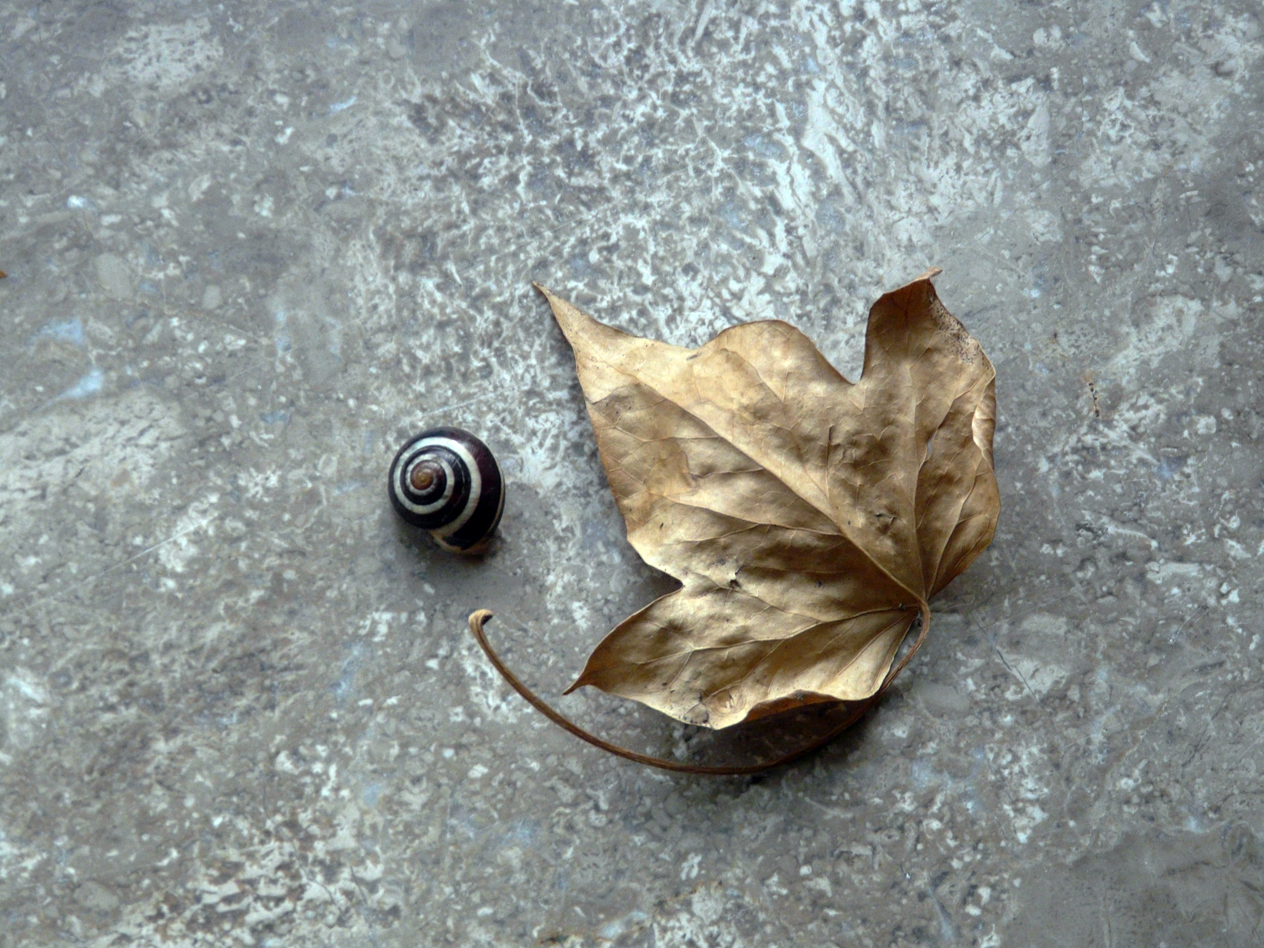
On balance, apart from the anxieties and frustrations we absorb and project, we also tend to transfer the beauty we hold inside our hearts onto our surroundings, be it what we glance in the growth and decay of nature, in the gracious motions of young and old people, animals, trees we befriend, a patch of thriving vegetables, a forget-me-not perking through a crack in the pavement, a glowing autumn leaf. We delight in the colours and shapes sculpted by the shifting light of the sun into twilight and shadows, even in neglected streets, even in ruins.

Some of us have the use of a garden or a plot of land, which offers shade and, throughout the seasons, brings joys, as well as countless tasks we may honour or ignore.

Here is to my garden …

home to its creatures

and to my guardian angels

my garden perceives

how I rehearse its being

from morning to dawn

in return it grants blessings

to my existence

and to friends gathered here

it’s my ritual

to snip a branch here and there

and nurture the shapes

of beauty I envision

we dream as one soul

as love like hot stone

releases the heat of day

into the still night

some deep ground of love

rises from below the earth

cool like the pale moon        

8 Comments

Filed under Blog

… out of the house to paint, for sanity …

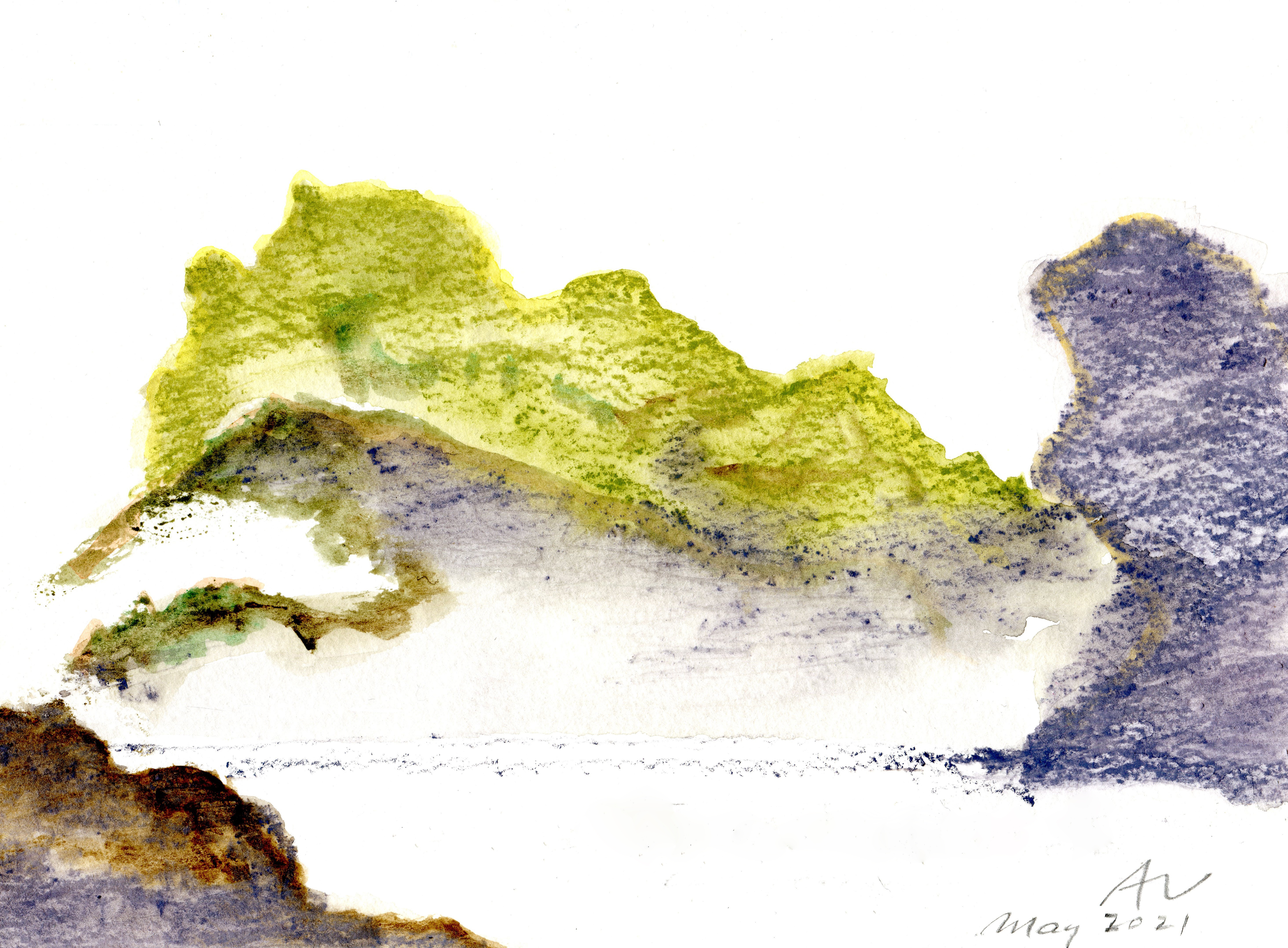
Painting of Kynance Cove, Lizard UK – Ashen Venema

How did this come about? My son was adamant I had to get out of the house and meet people again. So he signed me up for a day’s local multi-media painting course. After endless months of social exile due to the pandemic lock-downs, this was a momentous adventure. The tutor, Julie Collins, does lovely watercolours. The spaciousness of her work appealed to me.

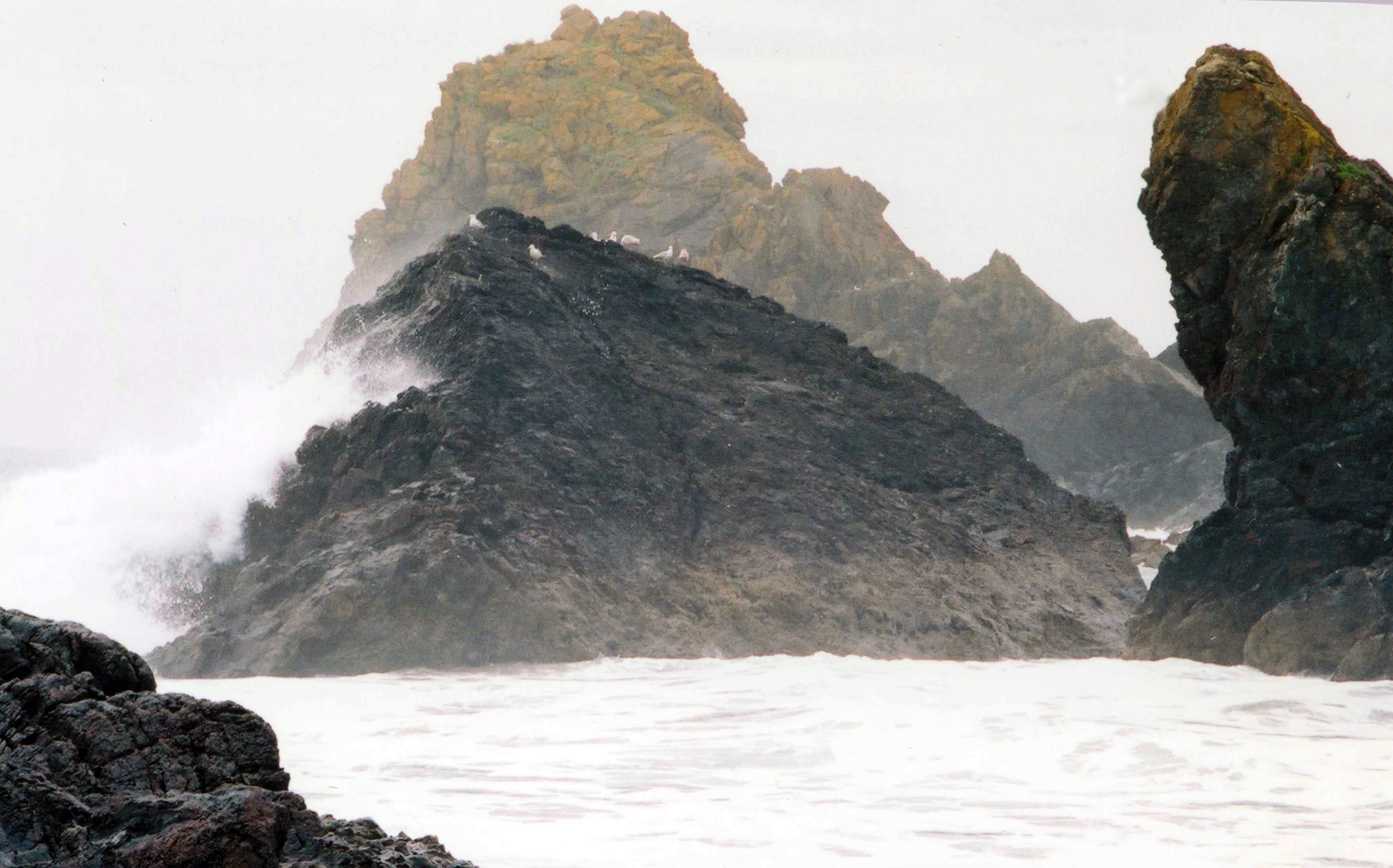
Photo of Kynance Cove by Ashen Venema

I enjoyed painting Kynance Cove from a photograph of mine, taken years ago, when a group of Sufi friends visited the Lizard peninsular in Cornwall UK. The arranged visit was in honour of Sitara, a dear old friend and teacher, who fondly remembered her childhood holidays at the Lizard.

Given that thousand-and-one things interest me, since I’ve been working on my novels I closed many doors, in an attempt not to spread my energy too thin. I usually paint an image maybe once a year, but never had any input regarding painting skills. The above image was created with water colour pencils. I stopped before I could mess it up. I like the unfinished feel of it

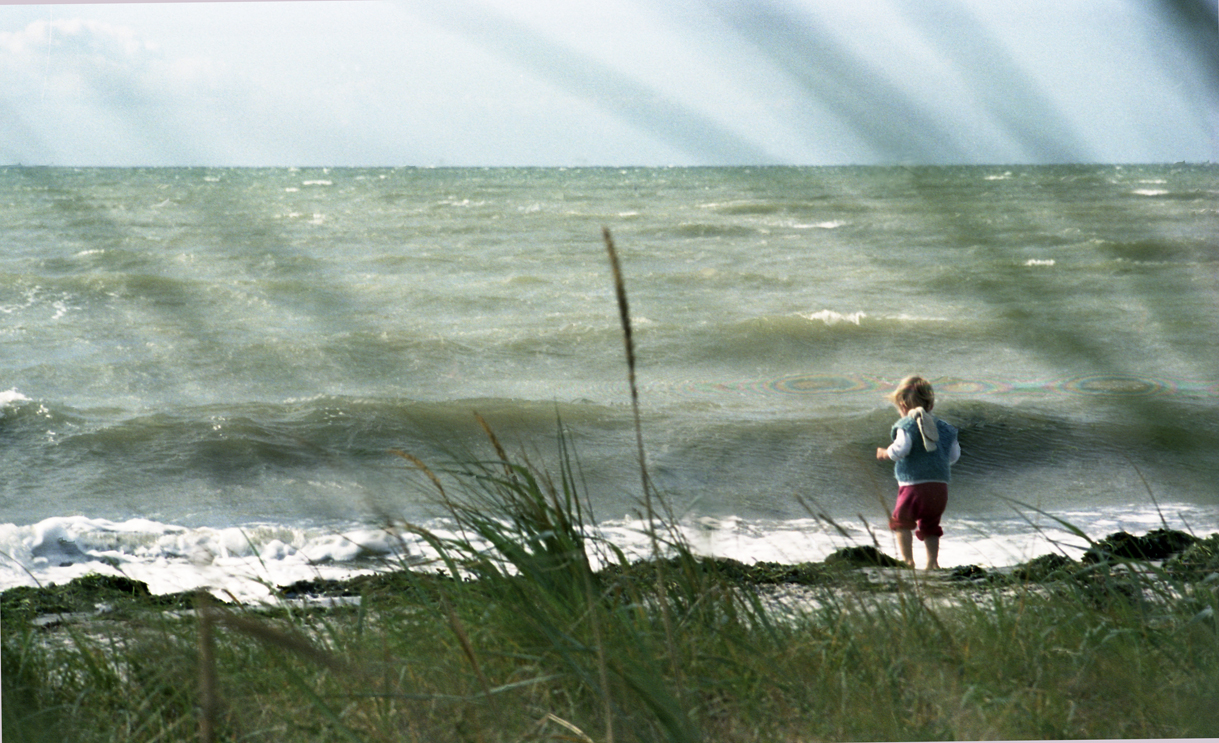
My next painting project will probably be leaning on a photo of my little soul dance on a beach during the 1980s. A style may emerge or not, depending how much time I’ll devote to practicing with watercolour, which I came to like for its fluidity. I discovered, not for the first time, that painting, well any art, is immersive, like writing … a way to forget oneself. What keeps calling me is ‘collage,’ maybe with incorporated Haiku, since Haiku seem to come of their own accord. The idea is to collect them into a chapbook. So, who knows what will happen.

First I have to overcome an existential problem. Earlier this month a UK Government letter threatened me to apply for settlement, a scheme that’s been going for a while, which I thought did not apply to me, since I have documented leave to remain indefinitely in the UK since the 1980s, despite my Dutch passport. After endless futile attempts to contact a suggested helpline, I nearly knocked down the local citizen’s advice office to get an appointment for help with the application, since online forms terrify me. So wish me luck.

Still struggling with the new wordpress format, SIGH.

21 Comments

Filed under Blog

… story codes in nature and psyche …

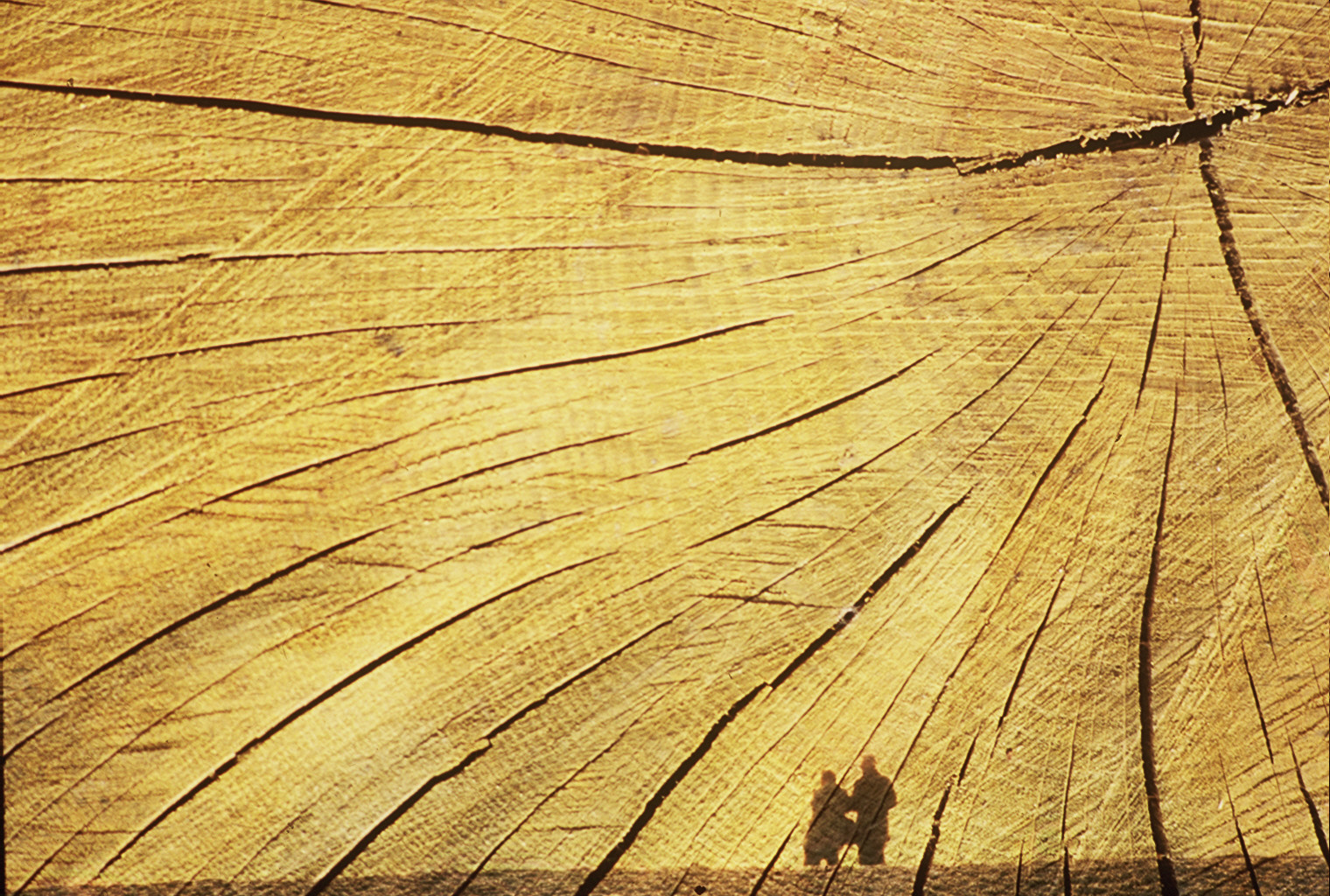
Over time, shifting seasons leave strata in matter that can be studied like pages of a book, be it in air, water, ice, earth, rock, stones, fossils, bones, or in more short-lived material. Take the rings of a tree, spiralling upwards, normally hidden, but clearly readable when the trunk is cut. Even a single hair tells a story of the duration of its growth, likely composed of fluctuating water and nutrients intake, but nevertheless showing an overall pattern of fairly consistent data within a slice of set time, like a snapshot of nature’s heirloom, whose treasures our runaway culture seems hell bent to recklessly damage.

When it comes to psychic codes, we must enter a different sphere and use a different language. Let’s say being cognizant of our changing thought patterns gives us our mythical code? What image might depict the Spirit of a generation, developed by a mania for progress, but also formed through individual and collective archetypal demands, via symbols and dormant dreams that pop up, shifting outlook and direction?

I’m spinning here a few thoughts into nowhere, or maybe the kind of noo-sphere, a term used by Vladimir Vernadsky & Theilhard de Chardin, which was later seen as an early vision of the internet. The concept resonates with the ancient concept of Akasha. Jean Raffa on her blog  https://jeanbenedictraffa.com/blog/   recently reminded me of Lynne McTaggart’s book, The Field, collating more recent scientific discoveries, again affirming how our minds are influenced, and vice versa, by an interactive field spanning the cosmos, from where we connect up and process thoughts and feelings through our body and brain (call it our radio stations.) Frequently, the purpose of anything is established in hindsight. So one could say events happen for reasons we don’t know of, and we assign meaning only at a later point in time, stretched to hours, decades, centuries or aeons.

A medley of my inner crowd, the seeker, philosopher, writer, artist and poet, all receive and transmit through slightly different wavelengths, following their interests, but affected by the media, the weather, moon phases, astrological constellations, vaguely remembered dreams, company, and my body’s metabolism. In that process I jostle for meaning that could gain purchase towards a cohesive point of view. Alas, cohesive points of view can be tricky. While keen to learn and unlearn, when I encounter a fixed point of view I sense a false solidity, while my truth seeker floats, suspended, like the protagonist in my novel, ‘Course of Mirrors.’ https://twitter.com/mushkilgusha

C G Jung suggested the mind has been developing over a very long time, and keeps developing from as yet hidden seeds that rest in the unconscious, holding ideas that will slowly grow and unfold, which implies the seeds already exist, waiting for fair conditions to be recovered.

This process is the theme of a brilliant epic, ‘Involution,’ published by Philippa Rees.

We know that when gifted individuals dare to go public with an insight that rocks or contradicts the Zeitgeist, they get vilified. The list of such intuitive people, historically and up to this present time, is long.  We owe a great debt to their insights and efforts, bringing us understanding from the unconscious. New decoding is looked at with suspicion and hardly ever welcome, though small sections of society receive and embrace new ideas and nurture their meaning until collective acceptance happens. There are also those who clearly understand a message but fear the implications. They will try to shoot messengers that threaten their profits or their hard won reputation.

Myth & stories, the most reliable cultural codes, are treated with moderate tolerance by players attached to short term gains, who may lack the imagination to grok the symbolic significance of fresh and life-enhancing interpretations.

Returning to my interest in changing thought patterns, I checked the archive of my website, going back to 2011. It shows that for more than nine years I’ve been jumping about a lot, which makes the content of my postings consistently random. But do my posts have an underlying code that relates to this past decade? Some vague answers bubble up. I’m waiting

C G Jung wrote in ‘Men and his Symbols’ … ‘We have obviously been so busy with the question of what we think that we entirely forgot to ask what the unconscious psyche thinks about us. …

Placing this writer here into the third person … considering the time slice of a decade, and given the random themes of the posts, do Ashen’s readers depict a pattern, a code? Anything like a famous elevator pitch authors should have up their sleeve, and which she seem incapable of formulating. She knows it’s cheeky to ask, but sees it as a reality test.

she must keep alive

the rare glimpse and utter awe

that consigned her fate        

a timeless moment

of totality that won’t

fit reality

only a fresh one will do

Inspired by a dark moon thought, this is a new moon post.

This image should have been on top. I admit to be totally lost in regard to the new editing format wordpress has installed. Lost as how to place images, how to do elegant links, or how to escape back to the classical editor, since I can’t open the plug-in zip. I hope to figure it out somehow. Tips are welcome.

11 Comments

Filed under Blog

…alone with the alone …

By bending towards light all life unfolds and is shaped by obstructions – and the dark, compressed sphere behind the crack that allows growth to emerge.

It’s the same for all plants and creatures, and humans, who, once visible and mirrored in other eyes and minds are drawn into a labyrinth of self-reflection that informs the self-image.

Beyond eyes, we perceive each other via dreams, intuitions, catching glimpses of transient truths and falsehoods beneath the visible. How many mirrors acknowledge, ignore or denigrate us? Our families reflects us, our social environments, school, college, university, churches, travel companions, sport clubs and interest groups in general. For some the mirrors branch out to success and fame for a talent. For others the mirrors narrow to a work environment, or peter out once the job comes to an end.

In come informal internet platforms, where simple ‘like’ and ‘love’ buttons are often pressed almost by chance. It’s easy to assume that friends who ignore our posts don’t care about us, though they may have missed it. In any case, we know there’s a limit to responsiveness. Even at private parties we only engage with a few people in any significant way.

Multiverses – Mindfunda

Is it a buried memory of the evasive calm center of life’s storm that animates our journey? Will we come to the sobering conclusion that all we are not is a facets of us, of the one being? This psychic tapestry of the dominant attitudes and repeating thoughts we have of ourselves and others work their invisible threads. Whether we’re aware of this process or not, these thoughts weave the state of our collective psyche.

And off we are into the multiverse – what is real?

In the village where I grew up (near Munich) there was a small group that discussed the ideas of Carl Gustav Jung. His ideas settled in me and have influenced my thinking ever since. I hope one day it is understood that the psyche is not confined to space and time and this insight will be acknowledged and utilised. I always rejoice when Jung gets a mention, like at Maria Popova’s wonderful website: Brainpickings … which in this link features a memorable interview with Jung. She never lets us forget about the people who inspire and keep in balance this world we live in.

Another sustaining influence for me was Ibn’ Arabi, the Sufi mystic, first encountered through Henry Corbin’s translation of the ‘Creative Imagination.’ Get a taste of the quest for what is ‘behind the many’ in this wonderful poem ‘Alone with the Alone.’

Here my latest Haiku:


an angel wings by

leaving a fluffy feather

that will dip no scale


And I can’t resist mentioning my novel, ‘Course of Mirrors.’ – Some comments about it are on my book page. The book yearns for readers. Check it out on my bookpage. 

Stay safe, avoid sensationalism, stay sane ♥

17 Comments

Filed under Blog

… meeting my foxy child in twilight …

a tall fox appears

in the garden’s night shadow

he stops – sits – alert

cautious from a safe distance

we eye each other

he triggers my cunning child

buried long ago

since grownups detest smartness

even hunt their kind

yet through our meshed lineage

recognition plays

in the nimbus between us

we affirm being

and our shape shifting stories

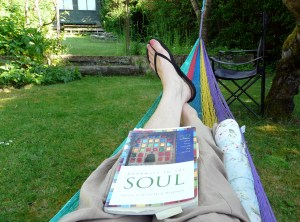
Next day I strung up my little hammock near that magic spot, with different views:                                       


Mostly, during these surreal lock down days, I sigh and groan a lot, bewildered by hilarious media stories and the never ending blame games, which, given people are bored, have gained major entertainment value – and this from my perspective of not having watched TV for years.

Keep sane my friends.

7 Comments

Filed under Blog

… a dream of being in the dark …

How to reconcile moments of pure beauty and light our restless world offers, with the heavy darkness of human ignorance? How is it the guiding spirit that is shining through everything so often escapes the unseeing eye? Is it our wounded hearts, or our anxious busy thoughts that prevent spontaneous being?  Many of us like twilight, the dawn, the dusk, mist, where darkness and light do not negate but enhance each other. They mingle. As friends do, or lovers.  Twilight is poetry in motion.
And what, you may ask, does she mean by the guiding spirit that shines through everything. It’s a core in me that connects to the one soul-being I belong to, the only self I really know. And while I’m not enlightened, I do experience timeless moments, glimpses into the sixth dimension, nodal points around which the fiction of my existence is woven.

The other day, my long-ridiculed romantic fool tossed out these lines:

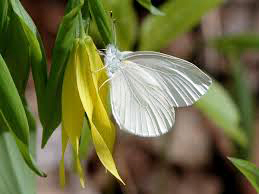
like tiny cherubs

white butterflies loop across

green teeming canvas

thou – sweet silent mystery

do you sense me sigh

when the cold moon-rock rises

as luminous globe – hello dear ones lost in time – your intense living – is forever part of me

‘Long live the dead because we live in them.’  …  Clarice Lispector, A Breath of Life

When there is no other near to share such paradoxical quickening with, I may call on those who enriched my life but are no longer present. I adore the moon, the ancient chunk of earth, reflecting and making tolerable the blinding beams of the sun, granting us poetry and symbolic language.
That night I had a dream and remembered its last facet … I’m floating through a soft, vibrant darkness. A small voice says, ‘You’re the light, look again.’ Sure enough, I spot the outline of a building and bright points, like glittering stars. A series of scenes unfolds, which brings clarity to a puzzling questions. Darkness holds memories, visions and vital knowledge, though it requires trust in the guiding spirit as a mode of orientation. Insights are shy; they wait to be found.

Nature, being energy manifested in slow motion, breathes life into countless rhythms and tunes from the recorded symphonic sounds of the universe – to continuously re-animate the one being of eternal life. Yet we humans, who pride ourselves in aiding this process with heightened consciousness, are increasingly busy destroying the homeostasis life depends on. Can a virus offer a long enough pause for the powers in charge to acknowledge this self-destructive madness? Below anger, I feel the deep sadness, the spiritual starvation, an unfulfilled longing for meaning, for being worthwhile, accepted and loved.

I sense a change of mood in the collective mind, a call for change. Upfront are manic voices using the language of warfare against the invisible enemy – let’s control it – defeat I – kill it – get on top of it. I feel this kind of rhetoric misses the point entirely.

In Sept. 2012 I did a blog post on the unseen stuff.

We must see things fresh, not through tired ideas our establishments bank on, that destroy nature’s homeostasis and spill imbalances into cultures too poor to afford resistance. I say – let our children and young people decide what’s worth living for?
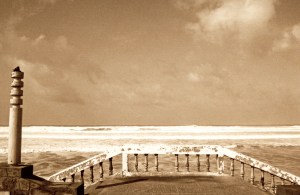
 ‘A day, whether six or seven years ago or whether six thousand years ago, is just as near to the present as yesterday. Why?  Because all time is contained in now.’   – Meister Eckhart

10 Comments

Filed under Blog

… outer and inner horizons …

Atlantic coast, Morocco

Whatever dream is dreaming through me brings stimulation, challenge, insight, learning, or, during dark times, unlearning. The latter, with its accompanying disillusionment, has tested me for a while now. I’m not alone. The whole planet seems to be going through a dark moon phase.

I like to think beyond every effort, every hill and every sea are new horizons, outer or inner, where adventure beckons, treasures might be found.

But I tend to forget that the most relevant information is gifted by the body, and the planet. It is unsettling to accept the physical signs and their metaphors, because nature’s truth is scary. It holds a mirror of knowledge surrendered over time, with glimmers that engaged the human imagination and has given us the tools of science. As living organism and self-correcting system, nature deserves deep gratitude and respect.

The mind (psyche,) a finer and faster kind of matter, with the ability to emulate nature, plants and re-plant itself in any field of interest … outraces wisdom, seeks drama, familiar patterns, fertilises, grows, invents, designs, builds ideal dwellings, ideal systems, ideal worlds … be they citadels of power suppressing the underdog, utopias of love and liberty, or creative realms, where artists embrace and make the ordinary luminous and sacred. The mind loves myth-making, explores symbols, plays with forms and random connections, re-interprets reality and generate new meaning.

Continuously rejuvenated, mind pursues all imaginable universes across time, seeking eternity, since, even if unawares, it envisions the wholeness of its original home, where it will never be lost, but forever be enfolded by unlimited potential.

Yet when it comes to the daily business on this planet, the mind fares best when listening to the body, the living matter, the feminine principle (irrespective of gender,) and appreciates its cosmic interconnections, since all secrets arise from nature’s dark chambers. A severance from these intricate physical and mythical roots of our being can result in a devastating sense of futility, where the question, ‘What’s the point?’ brings up no action worth considering, no ideal worth following. Somber and futile looms a future that wants to fix waves into particles.

The thought brought on a Haiku last week …
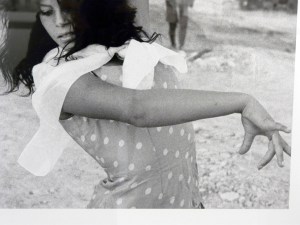
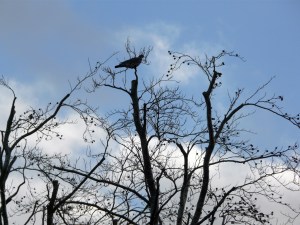
 

if I were this calm

river without internal

discord – I would miss

how the waves urge particles

in random beauty

While unsettling at times, I must attend and listen to my body – learn and unlearn, flow with change, light and darkness, of dust, the chorus of wind and birds.


From an exhibition in Amsterdam, Dec 2014

And, hopefully, I’ll catch ever now and then a spark of Duende,’  the poetic escape. Goethe called it the spirit of the earth – a mysterious force that everyone feels and no philosophy has explained.

Follow the ‘Duende’ link above for Lorca’s talk.

Below, a related post from 2017 – Both links open new pages without losing the page of this post.

… letting go of letting go …


6 Comments

Filed under Blog

… debates at beech tree junction …

From my desk I see the crowns of a few massive beech trees on the hill beyond my garden. Come autumn, tons of leaves used to smother my mossy lawn until, thankfully, the branches were cut back last year. Wood pigeons value the majestic view across town from up there, as much as they like gobbling up my Stella cherries before I ever have the slightest chance of harvesting them. And yet, I like the pigeons’ cooing code by which they talk to each other in spring, and I find their peculiar waddling, neck-pushing walk in search of worms amusing. Presently the bare branches of the beeches show the pigeons’ constellation throughout the day, bringing on some thoughts … and a Haiku.
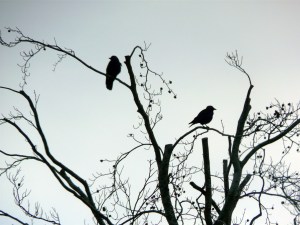
at beech tree junction

each morning the ruler lands

sometimes with a mate

later the pigeons gather

and debate migrants

they conclude – not our problem

skies are border-less

Re: migrants, given the human longing for belonging, it is the brave feat of ‘exits,’ people who leave their birth land for whatever reason, which expands tolerance, as well as emotional and intellectual independence from the collective pull towards loyalty for any one group or ideology.

Recently I came upon this quote by Italo Calvino, which resonates:

‘The ideal place for me is the one in which it is most natural to live as a foreigner.’ – Italo Calvino               

16 Comments

Filed under Blog