

Any momentous public outpouring of grief tends to compound our experiences of personal bereavements, and, of course, reminds us of our mortality. This event, however, is about more than the loss of a beloved Queen who used her privilege and symbolic power through seven decades to serve as best as she could. Her loss rocks the solid traditional constitution she represented. While the centuries’ old tradition of this monarchy sits uncomfortable within modern society, it is nostalgically clung to and treasured.
The queues of people eager to pay tribute to the Queen’s lying in state in Westminster Hall have been, and continue to be many miles long, presently with a wait of 24 hour during a chilly night. All recorded: https://www.bbc.co.uk/news/live/uk-629217 And there’s a queue tracker on You Tube https://www.youtube.com/watch?v=cJxDwDzAwEs
Within the crazy weaving of my mind I was searching for a thread to make sense of the unfolding pattern of unavoidable changes that loom to endanger the old order, which always calls for transitional objects that sooth the loss and helps to honour both the familiar old and the unknown new potential of the future. What can serve here as a transitional object, something to hug for comfort, equivalent to a Linus blanket?
I was reminded of a theme my former Sufi friend and teacher, Fazal Inayat- Khan, often explored. In the prologue to a book, Old Thinking, New Thinking, containing a handful of his lectures he reluctantly agreed to have published during the 1970’s, long out of print, Fazal gave credit to both, the old ways (formal and reliable) and the new ways that seek essence.
‘Old thinking is a claim and new thinking is an aim.’
Could there be an equal validation of form and essence for the UK monarchy?
When my mind floats in a vague space, I tend to express my ambivalent thoughts through Haiku:
a pendulum swings
left right ahead back
circling by the gravity
of hidden forces
dryness is conservative
until it overheats
moisture conducts the traffic
of novel ideas
until rain floods the bedrock
Kings or Queens were historically regarded as divinities. The afterglow of such divine aura still glimmers around the mantle of monarchies in our world, and a yearning for the divine remains, with the need for an ideal, something whole to give meaning to our lives. But can a monarchy still serve as such an ideal?
Ultimately, the Kingdom to come is of course the Kingdom within, where archetypal qualities can spark a force that steers and rules our destiny.
As familiar faces of relatives and friends leave an imprint in our psyche, so do faces of people in public life. The media showers us with faces of celebrities, providing icons and avatars that embody qualities we aspire to, or despise.
Dissidents against England’s monarchy highlight the extravagant financial privileges of royalty, and the historic trail of devastating exploitation during its colonial past. Apologies and reparations must surely be ongoing. And then there is the Commonwealth, which some proclaim to be a post-colonial club: https://www.bbc.co.uk/news/uk-43715079
I’m a dreamer, without allegiance to a crown or state. I’m wary of crowds and any hive mind, totally unsuited to get embroiled in arguments about the monarchy. My gripes are with the unpleasant character assassinations of individuals, found on popular internet platforms.
Character assassination resembles kleptomania, an irresistible urge to steal someone’s glamour.
What further is there to be said right now? Do my readers here envisage a Kingdom within?
 To fill in the distorted or simply incomplete gestalt gathered from early caregivers, we find ourselves during our lifetime in families of various constellations … in groupings of friends, educational settings, teams working towards a project, callings, interest groups, animal care, subcultures, political, vocational and spiritual clusters. In these groups we slot into roles we project, or are projected onto us with qualities others are drawn to engage with, for whatever reason, often to explore a hidden part inside, mother, father, sister, brother, child, lover, hidden in the light or hidden in the dark. Much of this search now happens virtually, through screens, though it can’t replace the actual physical resonance a gestalt needs.
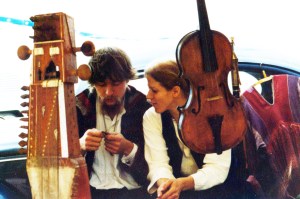 Family can also mean a collection of symbolically meaningful objects, toys, letters, books, art, tools, stones. I collect stones and endow them with memories. My ex-husband extended his loving father role to string instruments. (I wrote about his loss in my previous post.)
 At stages in our life we fit, or are fitted, into a network of psychological potential. These are intense phases. Yet irrespective of time gone since people parted ways, families dispersed, places were lost … when a former close friend dies, insight descends, rises, arrives from the past, from the future and from spheres unknown. Memories will shift their meaning. Slowly our sense of self is re-aligned. We capture a condensation of what was symbolically exchanged, essence is revealed.
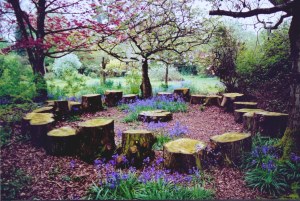 singing a phrase for an hour, or longer, with short intervals when the organ’s tune breaks into musical improvisations, only to return to the melody and phrase. In the end the sound slows and fades, leaving the echo of your voice as an indispensable part of all voices.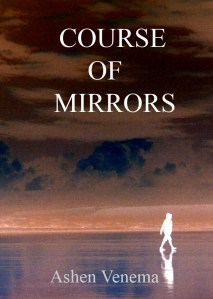
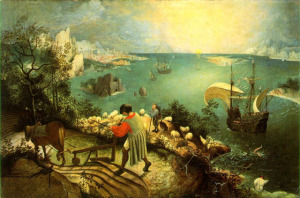 To remain grounded and prevent the fate of Icarus, I tolerate the company of my little devils.
 We mostly think through conventional forms and givens, for practical reasons, while another way of thinking embraces invisible and unknown dynamics via intuition – like the seeming particle/wave paradox in quantum mechanics, where a local particle also exists as a non-local wave. The two perceptions can potentially mingle creatively, but, notably in times of social uncertainty, they clash, and fewer people maintain the ability to tolerate
 In my last post I touched upon the half-imagined essence shining through a work in progress – via incubation, the search for one’s language (in whatever form,) through the heart. This kind of search is bound to involve deep personal experiences, be it related to an outer or inner place, as the myth of one’s existential journey, which, when authentically communicated and shared tends to assume universal significance.
 Talking in the dark, their hands occasionally touching, Louise and Addie come to value their fragile pact. Even Addie’s abandoned visiting grandson is wooed by the loving regard between his grandmother and her new friend, and their tolerance and tender concern for him, which is, the way I read it, the initiation of a small boy into the wisdom of respect. While the petty gossip of townsfolk adds to the fun of their social transgression and strengthen the closeness they’re forging, the jealous objections of Louis’s daughter and Addie’s son are truly hurtful, and in the end decisive.
 As painters or sculptors do, I frequently step back from my writing projects, searching for the core, a half imagined essence to shine through and re-animate the creative flow. Skills alone don’t do it, techniques alone don’t do it, nor style. As long as the essence of what I try to express floats in the unconscious, my efforts will baffle and tease me.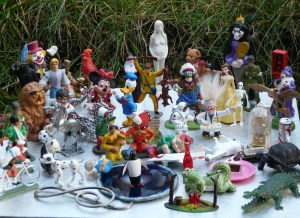


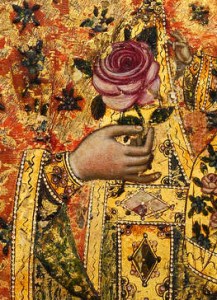 The genus Rosa, according to fossil evidence, is 35 million years old and begun to be cultivated circa 5000 years ago. Due to its tessellated structure, dome-like shape and its delightful perfume, the rose has become a symbol of the heart, of wholeness, love, beauty and perfection the world over, frequently with mystical connotation, and often highly stylised, as in Islamic art.
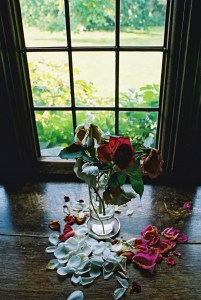 While fear of loss and abandonment engenders life, it also draws us towards the mystery of infinite consciousness, the one being with countless names. Various practices, derived from spiritual traditions, can calm a turbulent mind enough for a glimpse of harmony beyond divisions. For a while, at least, we sense the larger presence, the effortless zone, the flow – and given patience, come to realise that consciousness is what we are.
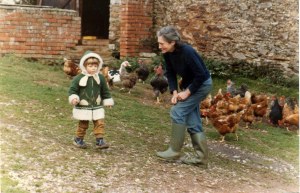 Our selfless neighbours left an indelible impression on my son. They made him a valued and loved part of a small community. Our farmer friend, Hope, was hungry for knowledge, though never realised her dream of travelling as a journalist. She had however the most vivid visions of Tibet; a place neither of us had visited but felt strong emotional connection with. Not the first time, I had a shock of appreciation for the unremembered sparking instant rapport slipping through time.
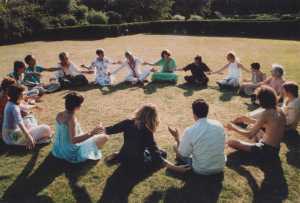 I was thirty then, had travelled much and been involved with innumerable internationally composed groupings, circles upon circles – this was to continue for decades to come. Among the groups were people who felt strangely familiar, like Hope. We would guard out solitude, cry together, or laugh hilariously about silly things. Equally there were those wary of me, often for reasons unknown to themselves, which made me wary of them. You may know this treading-on-eggshells feeling.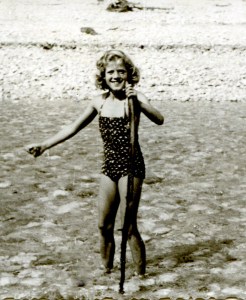
 August –
 few years ago during a
 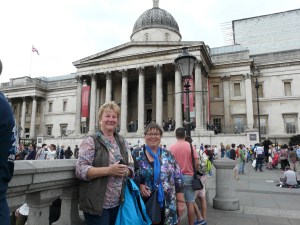 From there we wove our way through St James Park and ended up at Buckingham Palace.
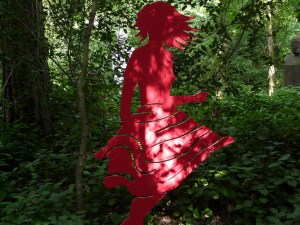 life, shine through our energy field, temperament, movement, voice, characteristics and life-interest. The qualities my friends nourished in me as a child, I still value today, the unconditional kind heart of Gaby, and Lieselotte’s ability to assess situations quickly and get things done. I saw that they also nourish these qualities in each other. Sadly they had to return home and miss my party last weekend.
 The Party… lovely sunshine, guest coming and going. An unknown sponsor even ordered a birthday balloon to sail above my garden 🙂 My good-weather-wish came true. Some of us kept a circle outside until midnight among sparkling lights. The occasional apple dropped.
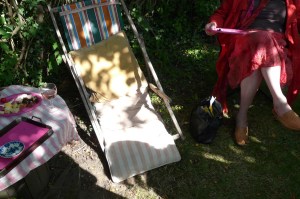 than my own. Glasses clinked. There was silliness, acknowledgements, revelations.
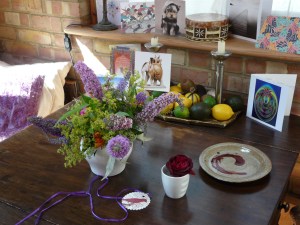 From The Prophet …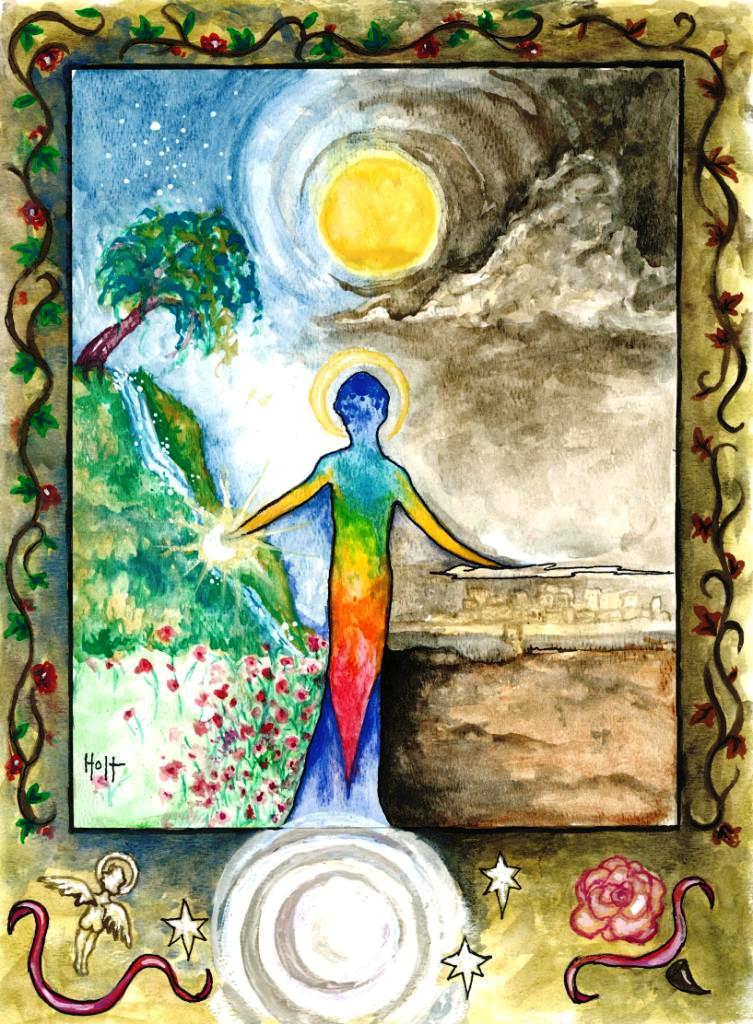


 Course of Mirrors