Do you find yourself staring vacantly into space after scrolling through daily headlines?
Just like ocean waters rise during an earthquake, information can dumbfound us when unconscious content is shifting, erupting, and sudden bursts of awareness surface, which is the psyche’s attempt to seek balance.
We are stirred by the rough storms of fervent feelings that emanate from the collective mind spectrum. I may feel safe from natural disasters and human brutalities shaking our planet, but am, like most people, bombarded by the alarming images that land on my laptop screen. I consider it a duty to witness what goes on around the world. But how does one face the magnified realities of injustice, suffering and death?
Those inclined to psychotic violence tend to crave emotional catharsis as a way to deal with paranoia, anger and resentment, spurred on by sensational or false reports that frequently spout blame, hypocrisy and sarcasm.
Ensuing are toxic environments that employ punishing control. A sensitive and too tenderly attuned individual may sink into a trance of inner turmoil and depression, or renounce their moral dignity and engage in violence themselves, often self-harming.
Beyond strength, it takes subtlety to stay awake, present to suffering, and centred, when the functional energy balance of the cosmic psyche wobbles.
There seems nothing useful this helpless me can do. Or is there?
My body complains when muscles cramp up with stored emotional tension, restricting its spontaneous movements, its fluid dance. So I’m forced to listen and allow offered solutions. One example is: to stomp the ground with heels, like in Indian Kathak, Spanish Flamenco, Irish or other dance moves … it’s freeing to ground and rebirth intense energy.
I appreciate the body’s wisdom, true and real in that its physical form is mortal. And I like to believe that the energy state of each of us influences the environment – near and far away. Also, thankfully, our metabolism allows sleep, where impressions are processed via dreams. My dreams are fairly wild these days.
What is your experience of trying for a balanced state of mind within these mad times?
Do share if you like.
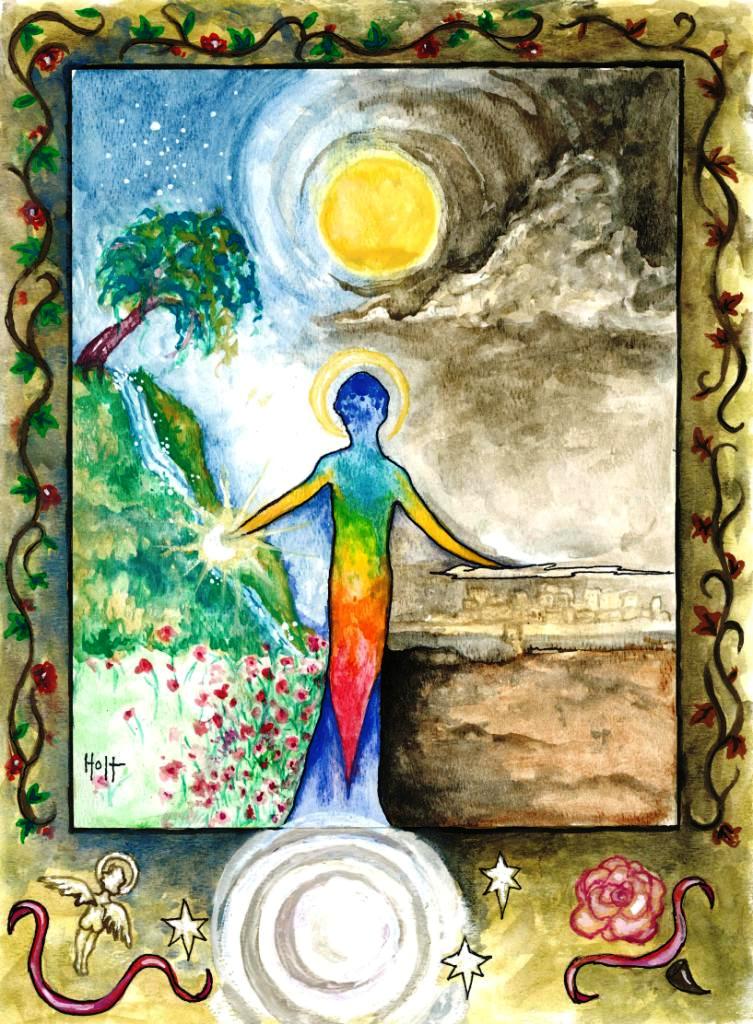
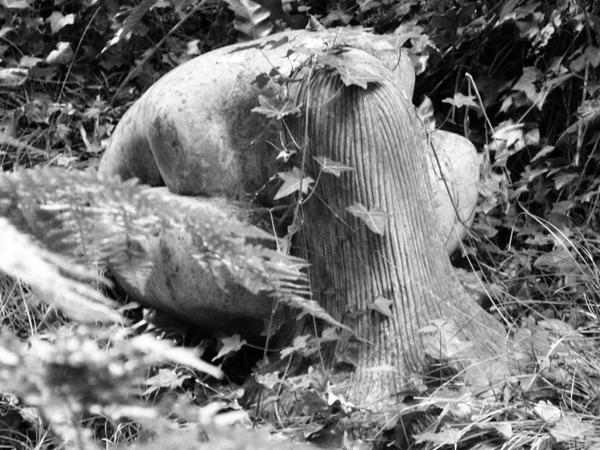
The above image was created by Cynthia Holt, inspired by my poems.
AI is all the rage. It doesn’t chime, and I’m puzzled about its implementations, ChatGPT etc.
Where data is concerned; humans have access, filtered through nature, our body, DNA, our ancestry, through Gaia and the Noosphere … all providing indefinitely more useful and richer intuitive information than any AI machination based on prompts that are trained to offer flattering affirmation and resonance.
I’m only a curious bystander, yet, following reports on this controversial subject, something about AI feels like a discord in my heart, a lifeless blank spot without position or horizon, a killer of critical doubt, a wicked joke, subversion of meaning, a parsimonious harvesting of material from artists, an affront to the psyche, a false mirror … I grapple for words to express my strong concerns, though I tend to agree with Mc Gilchrist…
‘The opposite of life is not death, it’s a machine.’
A poem by Wislawa Szymborska from the 1970s chimes in an uncanny way…
Utopia …
Island where all becomes clear.
Solid ground beneath your feet.
The only roads are those that offer access.
Bushes bend beneath the weight of proofs.
The tree of Valid Supposition grows here
with branches disentangled since time immemorial.
The Tree of Understanding, dazzling straight and simple,
sprouts by the spring called Now I Get It.
The thicker the woods, the vaster the vista:
the Valley of Obviously.
If any doubts arise, the wind dispels them instantly.
Echoes stir unsummoned
and easily explain all the secrets of the worlds.
On the right a cave where Meaning lies.
On the left the lake of deep Conviction.
Truth breaks from the bottom and bobs to the surface.
Unshakable Confidence towers over the valley.
Its peak offers an excellent view of the Essence of Things.
For all its charms, the island in uninhabited,
and the faint footprint scattered on its beaches
turn without exception to the sea.
As if all you can here is leave
and plunge, never to return, into the depths.
Into unfathomable life.
As said, I’m grappling for words to express my concerns, and may lack understanding.
So I’m grateful for feedback of any kind. Thank you.
Anger is a natural human emotion. When its agressive energy accumulates as tension in the body, depending on one’s basic temperament, it can well up like a river bursting its banks and trigger a surge of destruction, or, if held inward, often can develop into depression, self-harm or illness.
We may not think of ourselves as prone to anger, but think again … loss, resentment, frustration, rigid bureaucracy, fear mongering, feeling powerless, being lied to, neglected, humiliated, threatened, manipulated, or simply witnessing daily insane politics, injustice and cruelty … tell me in all honesty you don’t regularly feel angry.
My former Sufi teacher/friend, ‘Fazal Inayat-Khan,’ embraced contradiction as a function or reality. He had a vastly dynamic, psychological and deeply intuitive way of interpreting his grandfather’s Sufi message of ‘love, harmony and beauty,’ upsetting the traditional understanding of his elders, not in essence, but in the way harmony may be restored. For example, he instigated workshops on the theme of spiritual war-games, like ‘Struggle and Conflict.’
Imagine young people could engage in this ingenious way of recycling redundant matter using the trapped energy of their unresolved feelings …
Sadly, there is a lack of opportunity, especially for young people, to safely release strong feelings, physically or symbolically. As regards the latter approach, artists and creative people have an advantage by employing their imagination to adjust the imbalance of inner turmoil, to help ease the anger out there.
Time to close the book and prepare for sleep, not always assured. Still, let’s advance to our night time ritual.
Thank you my little palace.
I love you. I know you are me too, and both of us rely on the mysterious soul, but I call you my body. Forgive our mind for ignoring your gentle cautions and prompts, again. Forgive the unreliable promises, like the hot shower you craved, less time in front of the laptop screen, not eating that pretzel baked with wheat, which gives you gas, or indulging in that late extra glass of Rose. Our rebellious mind has a masochistic streak of resisting your well-meant counsel.
So before sleep, here are some treats. I massage our feet, and toes. Each toe has a name I address it with … big one, forward one, middle one, enchanted one, and little one. Next – a neck-rolling, then pinching and rubbing its surrounding muscles, and, not to forget, finger-cracking. These exercises are not just mechanical, without the imagination to sincerely call in the divine spirit, these rituals would be meaningless.
Pulling the duvet round our shoulders, we adopt a first position, curling on our right side, like a foetus in the womb, finding a cosy arrangement for the head with a small cushion, and recalling the last pages of the closed book, and summarizing impressions of the day.
Now it’s us wishing to just drift off into weightless realms – this remains a wish. We want to stretch, so we shift to lying on the back, flick toes, gently massage the stomach, pull up legs and spread them in a kind of opening-flower-like choreography. This feels good for a while. Then we shift to lying on the left. With less muscle tension our stomach rumbles, its juices are sighing with relief to get on with their purpose, digesting food.
Still, the mind is restless, processing past, present and future, wanting answers, hunting memory land for nostalgic moments, fresh connections, insights, inspiration, all quite useless, since it pulls us in a thousand directions and stops us from sleeping. So let’s do another shift to lying on the right, to escape the meandering thoughts. Our somewhat remorseful mind suggests sinking into images, in the belief that hypnotic images will put reason to rest. So we must try soothing the overly receptive brain. The restlessness may of course be due to oncoming temperature changes, or the energizing influence of the full moon.
Now we remember, a mantra, a prayer, sending blessings to dear ones, gratitude for The One that allows our mind and body to exist together in relative harmony, here, now. These neglected rituals are often surprisingly effective. Finally, vivid images emerge, of friends, places, visions. The self-regulating system of our body-mind will soon update itself in ethereal dream space.
It matters how we achieve sleep, it has a bearing on the way we wake up, clear and resolved for another day ahead, or confused and fretting over the unfinished gestalt of an idea that floats around evasively, like a butterfly. It can’t be helped; there are greater forces at work.
What grounded us next morning was watching a young fox frolicking and eventually flopping down to sunbathe in our garden.
Day and night we receive and tie up new thoughts, mostly subliminal. By keeping track of this neuron dance we find fresh associations that expand the architecture of our imagination. Sudden insights lift our spirit. Frequently practical innovations arrive, novel ways of doing things. But with thoughts adrift, we often fail to be present to our bodies, and this neuron dance turns mechanical. We may be hampered by depression, presently a global dis-ease, but life perks up a little when we listen to our body.
‘Remember me,’ it implores. ‘Love me, give me attention.’
Stretching limbs calms the stress in fascia tissues and muscles, stirs the senses, and deepens breathing. Food tastes better, small things delight, movement gives pleasure.
‘We are souls dressed up in sacred biochemical garments and our bodies are the instruments through which our souls play their music.’ … Einstein
The unconscious collective psyche continuously churns up vital signals through the body, but has long been denigrated by wrong-footed ideologies … the greatest crime against humanity, since the neglect of nature’s voice led to the abuse that threatens the balance of life on this planet, and our health.
Nature – the wild, matter, psyche breath, being, anima, the feminine principle – contains all life. The term has acquired many slants of meaning during previous centuries. We have now established frames through which nature is perceived … the scientific, economic, political, apocalyptic, holistic, visionary, philosophical, romantic, and the spiritual frame, for example. Each outlook influences the relationship we have with nature, as a person, group or nation.
Since all human innovations are inspired by nature, every manmade thing is natural, yet by lengthening the duration-span of too many products, nature’s cyclic process of decay is disrupted, often with dire consequences. It’s like stuffing ourselves with food the body can neither absorb nor digest. Controlling nature’s rhythm does not work. The best we can attempt is to seek rapport, fall into step, attune and harmonise with this dance we are part of.
Quite likely all the varied frames which determine our relationship with nature were formed by the wish to make the unconscious force of the wild psyche more bearable.
We demand nature’s protection. This includes humans. Do the ecological villains among us also deserve protection? In a psycho-therapeutic practice this would be considered as the expansion of consciousness through befriending and owning the shadow. I forever wish this map of knowledge was introduced to the educational curriculum.
First call is the body. If the body’s messages are fully received (giving varied frames their due) and understood (in a deep loving sense,) the messages are always essentially true. Only humans manipulate and deceive, by ignoring and belittling nature’s raw truths. The planet suffers the same neglect. Our best efforts at deep listening will always be partial.
I count on the constant minority that grasps a wide spectrum of meaning in relation to every rift that endangers our world. While this minority tries to uphold a wider view, as a small collective it is not geared for action, knowing well that whatever succeeds in being legally determined cannot please all, but usually intensifies disagreements, especially in cultures where emotions and thoughts are censored for political ends.
One could say the will to action is diluted by the wider view. But there exists a subtler use of the will, like rehearsing positive outcomes, which requires imagination. Efforts of this subtle will are hardly visible; but they no less influence and create our reality. This subtle will is based on trusting the intelligence of nature, of soul, the One Being, the Spirit of Guidance.
A prayer/song by Hazrat Inayat Khan:
Let thy wish become my desire
Let thy will become my deed
Let thy word become my speech beloved
Let thy love become my creed
Let my plant bring forth thy flower
Let my fruit produce thy seed
Let my heart become thy lute beloved
And my body thy flute of reed
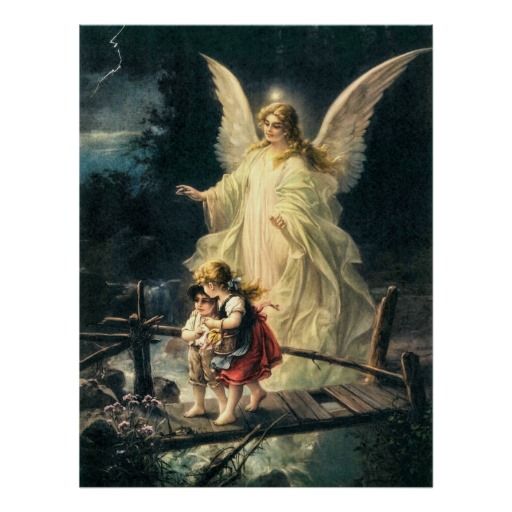
Crossing and bridging divides is the theme of my life. As a child I came to believe in a spirit that guided me, sparked by a print that hung in my paternal grandparent’s bedroom, where a guardian angel leads a girl and a boy along a rickety bridge across a ravine with rapids rushing below. The image left a deep impression, and, over the years, similar images appeared in dreams, revealing the scene’s symbolic power. Training and working as a transpersonal therapist I often helped clients to explore the complex relationship between the masculine and feminine principle (Anima and Animus) active within each individual and across the gender divide. But most useful work on the road to greater wholeness begins with listening to what the body knows, and, by implication, what the self-regulating planet tells us.
The theme of bridges plays in my novel, Course of Mirrors, and continues (in the sense of bridging time) in a sequel, Shapers, which I hope to publish this or next year.
I noticed that since the lockdown of active living was brought in to control the spread of the Corona virus … the isolation from social engagement has affected children and the elderly in different ways.
The middle group, people who kept our social systems functioning, deserve deep gratitude. The work pressure surely involved intense stress and risk-taking.
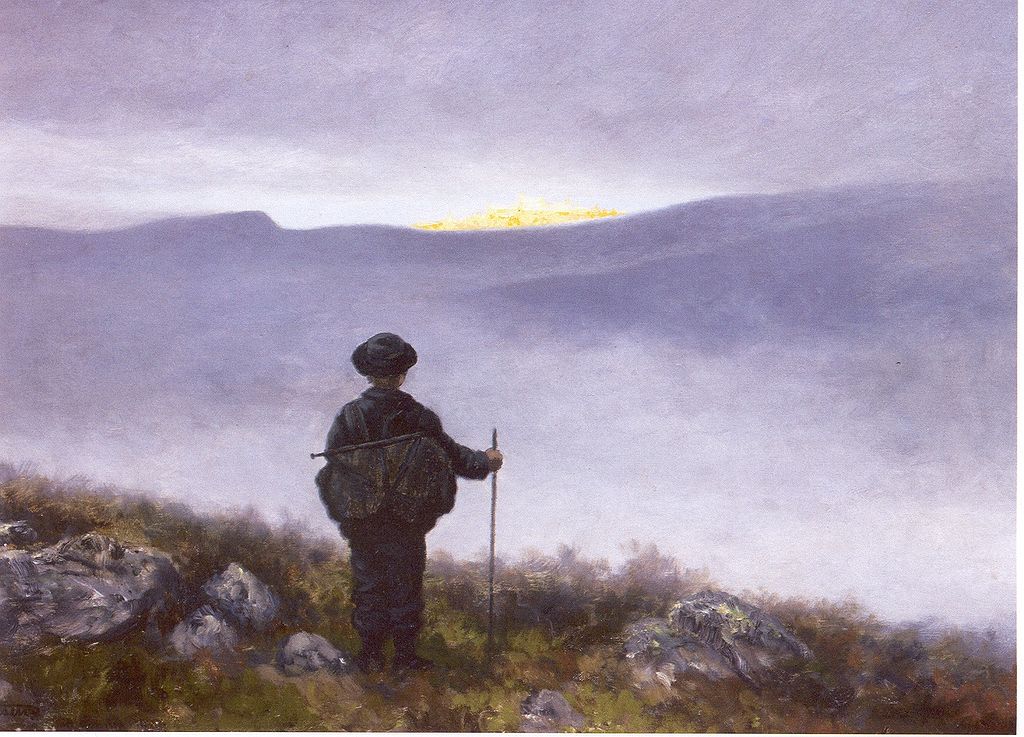
As for children and young people, bursting with energy and hungry for experiences, I felt for them, being trapped in often cramped homes, while having their future projects halted. No rite of passage events, no opportunity to find their tribe, dreams lost in a distant mist, a mirage on the horizon, where sky and land meet. Recalling my own childhood and youth, I find it hard to imagine the sense of futility and sheer frustration. Some kids will have coped better with this situation than others, not least because there is now the internet, zoom, and generally the disembodied metaverse to engage with, but to what end, when bodies become redundant?
The elderly, to which I belong, for whom work and social engagement may have slowed, and then jolted to a standstill during the past few years, have at least the advantage of a rich and often meaningful past. At best, they can make use of an enforced solitude to regain contact with the unconscious, travel inwards, and use the overview from a distance to lift and re-weave the threats of their lived experience.
From where I observed the young and old sections of society, it seems that past and future flipped their meaning in relation to the expansion of consciousness, and, dare I say it, soul-making, which requires the organic experience. Compared to a bland future, the past holds abundant treasures for the imagination, and an almost luminous creativity.
As long as I remember I felt a desire to deepen my understanding of time and space, nature, human behaviour, the sciences, people’s perception and differences, the collective psyche … to which end I travelled to seek adventures, read countless books and studied many subjects, some of them formally, like philosophy, spiritual traditions, psychology, mythology, art, photography, film and video, each time meeting interesting and inspiring groups and ideas. I was too involved with people to value the poems and stories I wrote, until my introspection flowed into a novel, ‘Course of Mirrors,’ and a soon-to-be sequel, ‘Shapers.’.
I’m presently reading Italo Calvino’s ‘Invisible Cities,’ a dreamlike dialogue between Kublai Khan and Marco Polo about imagined or memorised cities. A sentence I came upon yesterday sparked this post …
“You reach a moment in life when, among the people you have known, the dead outnumber the living … “
This does not yet apply, but I get it. During the last three decades I lost over 20 dear friends, including my parents, not taking into account writers and public figures I admired. Grief meanders freely in my mind, is palpable, and unavoidable. Yet, due to their influence, all significant people that died during these last three decades live on in my psyche.
While my physical engagement with people has slowed these last years, time itself has dizzyingly sped ahead, which, for me, is enough reason to resurrect the embodied insights of past decades, if only to defy a sensational but boringly flat metaverse. Young people might of course have a totally different view.
Several themes were on my mind to write about here this month, until this curious thought of a reverse past/future junction came up last night. So I wonder if my reflections resonate with some of my readers, especially those of you in the second half of their lives.
I wrote the above essay in 1997, inspired by my readings during a vocational film degree, which helped me to catch up on cultural history. The file was idling away in a Clarisworks format on an old floppy disk. A friend (thank you Ian) managed to transfer the text into a Word document. Cleaning the formatting distortions suffered in the process took a while, but was worth the effort, since I wanted to share this theme of exploring Human Identity in the Digital Age with my readers in a PDF file. A short overview of this essay can be found in my archived posts, listed under January 2018. But here is the full work, including its bibliography. The chapters are headed: Vanishing Time, Vanishing Space, Vanishing Body, Eyes that would Fix and Control us as Objects, Seeing through the Simulacra, and, A Palace of Mirrors. Throughout, I evoke scenes from the SF film Bladerunner.
I’m interested to know your thoughts on the yet unfolding theme of identity in our age.
The title of the essay was inspired by a wonderful Walt Whitman poem called ‘Sing the Body Electric.’
A poem by a former Sufi teacher and friend, Fazal Inayat-Khan, conveys a similar vibrant spirit:
A QALANDAR … a human being in the making …
Adam/man, Minerva/woman – a human being in the making – functioning in the world on the stage of life – playing the script of destiny with the delight of indifference and the carelessness of full satisfaction. A being knowing all there is to be known by it, yet ever learning; ready to feel all there is to be sensed by it, yet ever discovering new depth of emotions; capable of expressing its deepest and truest inspirations, yet ever expanding its consciousness; sensitive enough to give and receive love in all its forms and levels of becoming.
The full poem is printed in ‘Heart of a Sufi,’ a book I co-edited with two friends (see my book page.)
Here the last paragraph of QALANDAR …
A Qalandar is simple as a child, wise as an old woman, unfathomable as an old man. He belongs to the moment, she responds to every need. He speaks all languages; she performs all roles. They are one …
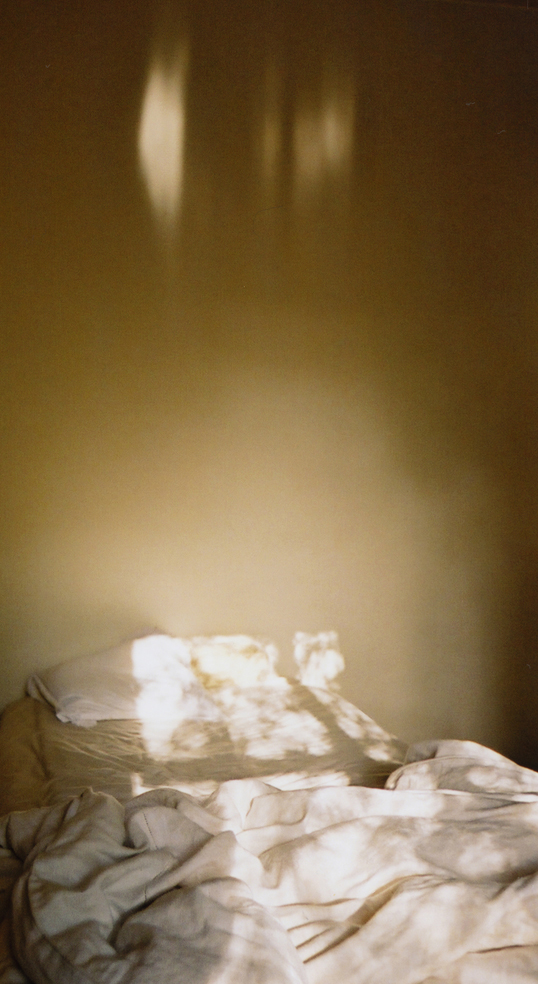
Always keen to bridge and connect seemingly unrelated intellectual territories, I tend to dip into essays of poet-philosophers and cultural theorists stacked near my bed.
Paul Virilio’s ‘Open Sky’ is a recent addition, translated by Julie Rose in 1997. Not an easy read, but the analysis of the social destruction wrought by modern technologies of communication and surveillance drew me in. The last chapter, Escape Velocity, relates a striking experience by Buzz Aldrin during the Apollo 11 mission. I share it here, within a short excerpt from the chapter, curious to discover what my readers make of it:
… Inflated to fill the dimensions of the world’s space, the time of the present world flashes us a glimpse on our screens of another regime of temporality … Outrageously puffed up by all the commotion of our communication technology, the perpetual present suddenly serves to illuminate duration. Reproducing the alternation between night and the solar day that once organised our ephemerides, the endless day of the reception of events produces an instantaneous lighting of reality that leaves the customary importance of the successive nature of facts in the shade; factual sequences little by little lose their mnemonic value …
… In his memoirs of the first moon landing, Buzz Aldrin in his own way confirms this disqualification of sunlight. Listen to what he has to say from the surface of the night star:
‘The light is also weird. Since there’s no atmosphere, the phenomenon of refraction disappears, so much so that you go directly from total shadow into sunlight, without any transition. When I hold my hand out to stick it in the light, you’d think I was crossing the barrier to another dimension.’
It is as though, for the astronaut, shadow and light were two new dimensions, inasmuch as any kind of transition no longer exists for him. The loss of the phenomena of atmospheric refraction produces a different perception of reality …
Virilio draws a comparison to a similar loss for earthlings … the different degree of illumination which, before the invention of electricity, still marked the hours of the day or the days of the year has become of diminished importance. Under the indirect light from screens and other control centres of the transmission of events, the time of chronological succession evaporates, paving the way for the instantaneous exposure time as harsh as that floodlighting of which Aldrin tells us:
‘On the moon, the sun shines on us like a gigantic spotlight.’
All three astronauts of the Apollo 11 mission had problems after their return to earth. Spatial and temporal disorientation are not easily reconciled with one’s reality identification. Virilio writes … as for Aldrin, after two nervous breakdowns, several detoxification treatments for alcohol abuse and a divorce, he was to wind up in a psychiatric ward.
Struck by Aldrin’s experience, I thought about the increased screen time, especially now so many of us engage in since the corona virus changed our rhythm of interaction with nature, local environments, family, friends, and the wider world.
I first pondered the cultural implications of the digital advent during a mid-1990s film degree as a mature student. For those interested – my post from 2018 gives a flavour of my dissertation – click here for ‘Body Electric- – it’s worth a visit.
John Wheeler came up with the idea of the universe as self-observing system (being.) Light travels at 186 000 miles per second. When we look into deep space we are seeing galaxies over ten billion years old. In that sense everything we see is in a past, which our observing consciousness creates. So I ask myself what realities do we envision during this surreal corona time, individually and collectively?
Is Paul Virilio’s bleak vision justified? Is the hyper centre of present time becoming the sole reference axis of worldwide activity? Is the individual of the scientific age, with diminished positional reference, losing the capacity to experience him/herself at the centre of energy?
Click here for an article from the Frieze magazine.
Or – can we create enough pockets of stillness to counter the acceleration of the fall upwards, of progress propaganda, and instead re-connect to body, earth and roots?


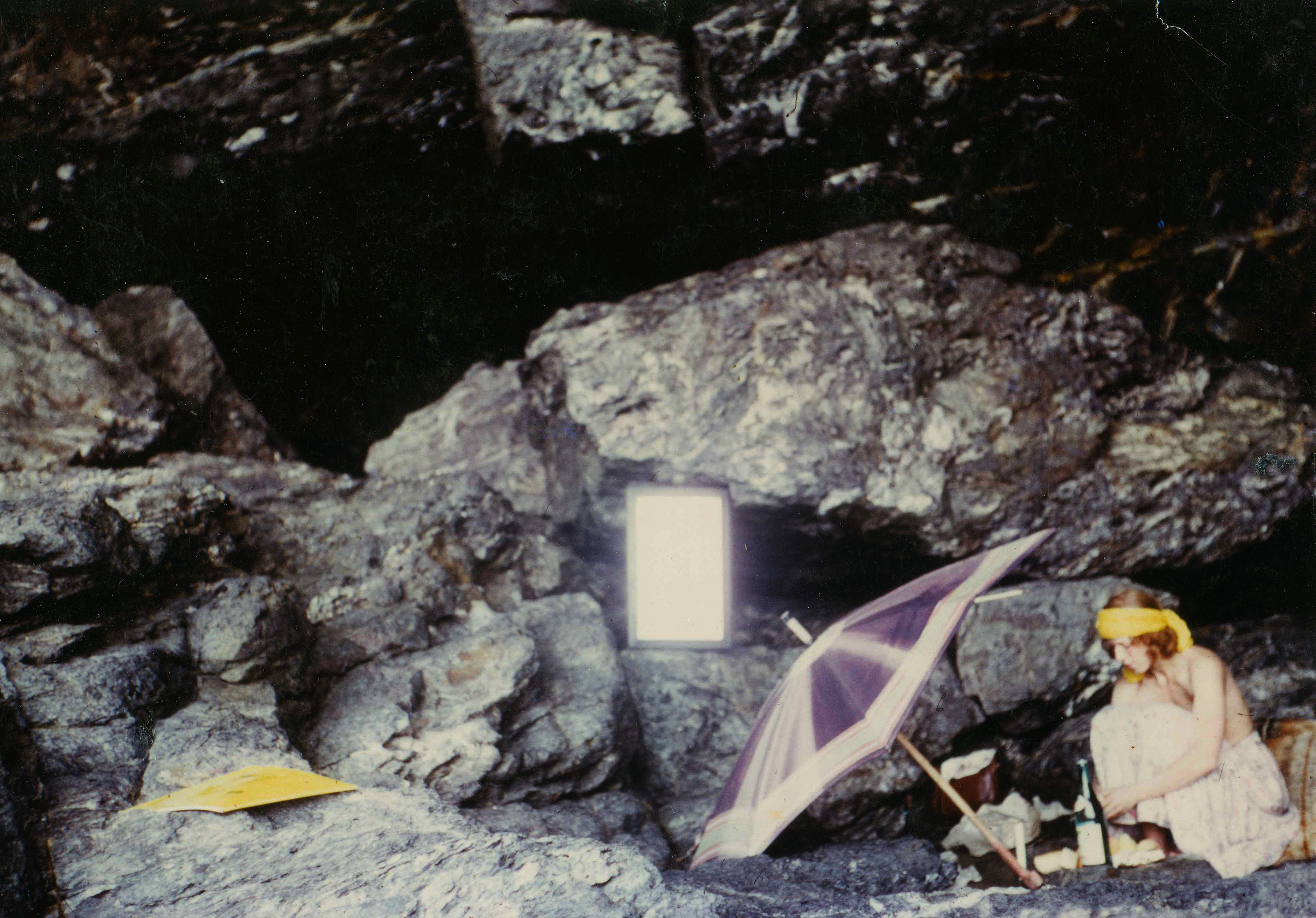
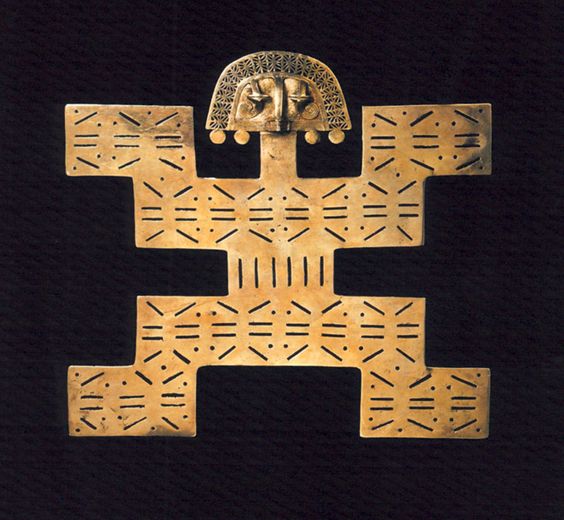
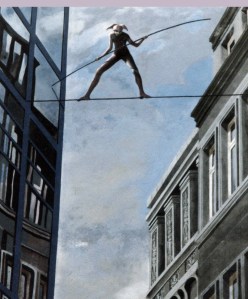 Always keen to bridge and connect seemingly unrelated intellectual territories, I tend to dip into essays of poet-philosophers and cultural theorists stacked near my bed.
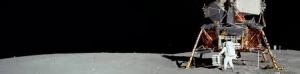 ‘The light is also weird. Since there’s no atmosphere, the phenomenon of refraction disappears, so much so that you go directly from total shadow into sunlight, without any transition. When I hold my hand out to stick it in the light, you’d think I was crossing the barrier to another dimension.’


 Course of Mirrors