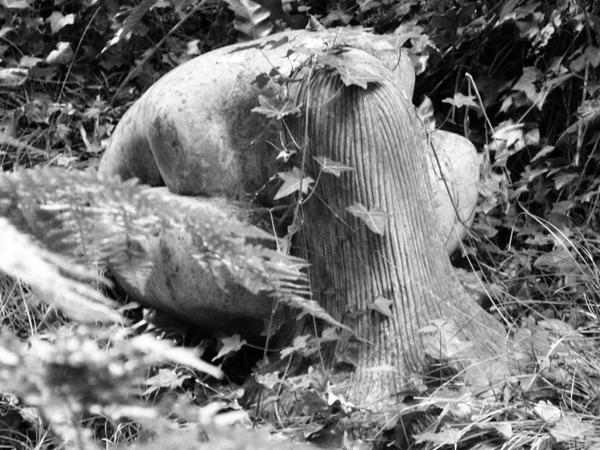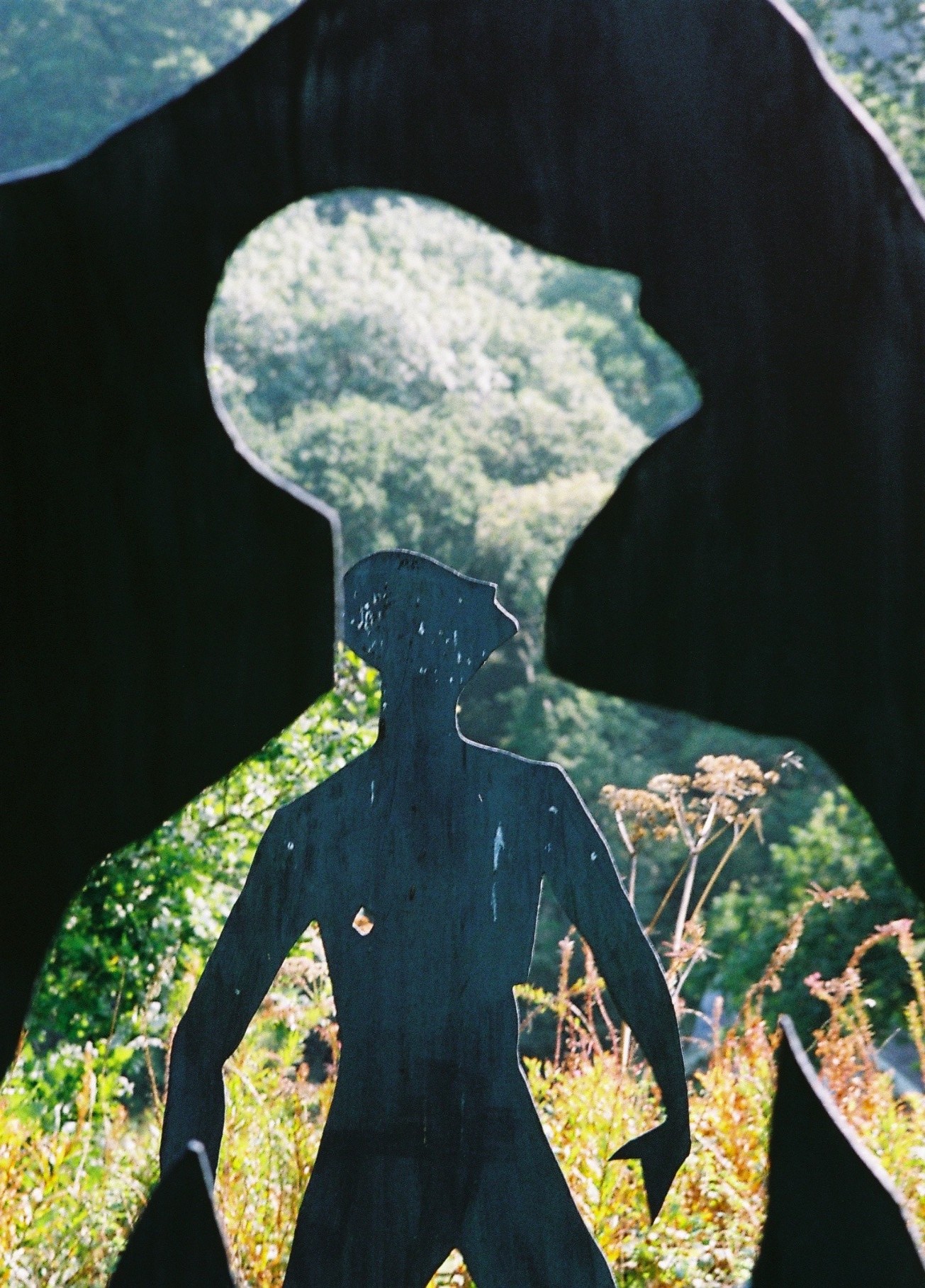
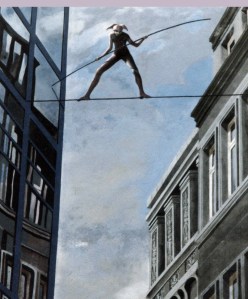
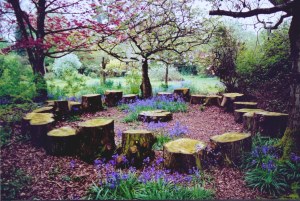
Installation by Frederick Franck
While I write, wrestle with style, query words battling for attention and set out sequences to string ideas together, anyone watching me might assume I’m a nervous wreck. My body, perfectly able to string an arrow to a bow and hit a target, has a wild notion of focus when it comes to writing. It shifts and wriggles, gets up pretending I need a coffee, ends up cleaning the sink, checks the porch for post and so on, all the while allowing my word sculpting to continue until, bingo …. I rely on intuition, which slips into little silences, opens a crack in the surface of things and reveals a hidden layer, and, occasionally offers a glimpse into the infinity of now. A tiny glimpse is all it takes to relax, sharpen senses and spark a creative dialogue between my inner voices that often quarrel and fool around like the average family.
I respect moderate conflict, it stirs up mud but clears the air, and even when the inner crowd gets fed-up with listening – grace, solitude, or a good night’s sleep bring additional insights, bridge divides and re-establish a tolerable rhythm of chaos and peace.
Am I fooling myself? Is my knack for intuition just guesswork. Is it inborn? Does it evolve with experience, as a kind of deeper listening skill humanity moves towards? Can it be learned? Is it worth defending? Or is it the relic of a go-with-the-flow philosophy that avoids closer analysis of my thought processes and behaviour? I seem to struggle with two kinds of temperaments, one looking for the particle and the other for the wave, stretched between rational and irrational numbers. The two temperaments compete but need each other.
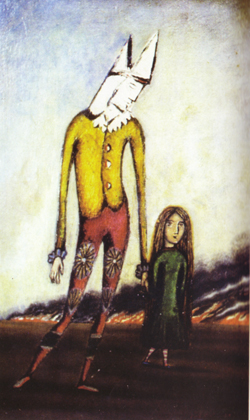
Pilgrim Fool by Celcil Collins
Scientists and statisticians tend to approach the unknown rationally, and seem set to eradicate human incompetence and messiness. Some frenzied rational prophets go as far as knocking anything that can’t be quantified and evidenced. I value logic, what annoys me is the attitude that scoffs at people who hold hands with the fool.
There are more reliable methods than the vagaries of intuition, shown in a New York Times piece by Gary Wolf ‘The Data Driven Life’ from April 2010, a long but brilliant article that received many pages of diverse comments. Not everyone is keen on the Quantified Self.
I resist being monitored and quantified by data, fixed as particle, ticked off for my risk-taking folly, my random cross-referencing. The geeks and outliers the article describes have fun recording their every move. And I grant that someone suffering from high blood pressure or apnoea benefits from being nudged by a gadget to take a deep breath. I remember being excited and applauding the first biofeedback devices that affirmed how thoughts affect our physiology and vice versa. When it comes to data dependency, I have a hunch it will starve emotional intelligence, which I strongly believe develops through mastery of language.
Working a few years for Social Services, we used to write narrative assessments until a computer programme with tick boxes was introduced. We hated it. Conveying observations in writing was shoved aside as time-consuming, subjective and vague, while quantitative recording was hailed as reliable, though its data hinges no less on interpretation and application.
Recently I skimmed an article suggesting future novels will be written by computers. My cynic leapt from its slumber and argued that a machine hasn’t got 100 Billion neurons and can’t be intimate with nature, is immune to changing metabolisms and moods – hour by hour, night and day. Immune to what comes on the breath, with wind, dust, rain and radio waves that travel through the cosmos, nor is a machine influenced by dreams, synchronicities, diets, layers of revolving memories, kind gestures, general anxieties, rejection, loss of control, loss of a loved one, global news … the unpredictable influx of thoughts and emotions that our mind continuously sifts, evaluates and re-interprets.
Irrational humans can’t be quantified and controlled, which may be why since ancient times there has been an ambition to create artificial beings. Here a bit of fun from Turing and his colleague Strachey – a reasoned-out love letter, achieved through programming a 1951 computer to make sentences via algorithms, having been fed on love synonyms from a Thesaurus:
Honey Dear – My sympathetic affection beautifully attracts your affectionate enthusiasm. You are my loving adoration: my breathless adoration. My fellow feeling breathlessly hopes for your dear eagerness. My lovesick adoration cherishes your avid ardour.
Yours wistfully, M.U.C. (Manchester University Computer)
…. M. U. C. is eager, if a little verbose and breathless :)
Since then, artificial intelligence is even more breathless with numbers, but operates highly sophisticated technology that improved the quality of our lives. I admit I’m fascinated by the concept of cyborgs, but don’t want to get plucked into the human network protocol .
Our privacy is at stake. And our relationship with nature? … its record of life and the human experience, the treasure house of the collective unconscious, translated and re-membered through DNA, invisible spheres and the very light we breathe. Anything alive changes from moment to moment. And our experiences, insights and expectations have a vital part in the changing.
Nature is the book I grew up with, it taught me stuff: About growing … put a seed into earth, tend to its needs and its story flowers. About resilience … a seedling lost in a dark corner will grow towards any spot of light, no matter how it must bend and curl its stalk around obstacles. About connections … the dynamic geometry of the tiniest plants and vast galaxies are reflected in each other.
Enough samples to show the obvious – nature teaches through metaphors. My theme is resilience. I take risks and accept that struggling makes me inventive, expands my consciousness, polishes my heart and challenges me to think for myself.
My moan extends to the growing practice of enticing people to emulate machines in service of progress and economic efficiency, in jobs that dull the senses and dull the mind.
Meanwhile I cheer the unruly folk, including fools, dreamers, innovators, artists, poets and writers with an ear towards the hidden – who translate past and future newly into the present – the open-minded, who can tolerate conflict, value intuitive signals that chime in the heart, and who can occasionally endure being suspended like a leaf on a gossamer thread.
What do you, my reader, think?

 Always keen to bridge and connect seemingly unrelated intellectual territories, I tend to dip into essays of poet-philosophers and cultural theorists stacked near my bed.
 ‘The light is also weird. Since there’s no atmosphere, the phenomenon of refraction disappears, so much so that you go directly from total shadow into sunlight, without any transition. When I hold my hand out to stick it in the light, you’d think I was crossing the barrier to another dimension.’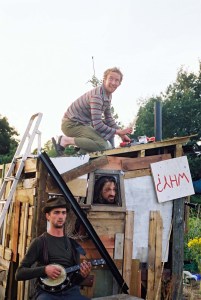

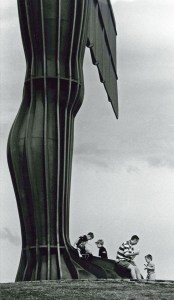
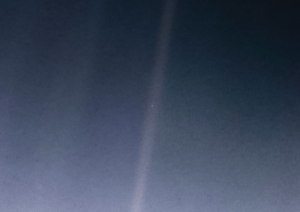 And then consider Carl Sagan’s tender reflections on the pale blue dot, the Mote of Dust, as in a sunbeam, the home we all have in common, a selfie, seen from afar. “Where everyone’s love, everyone you know, everyone you ever heard of, every human being who ever was, lived out their lives.”
 The thought brought on a Haiku last week …
 singing a phrase for an hour, or longer, with short intervals when the organ’s tune breaks into musical improvisations, only to return to the melody and phrase. In the end the sound slows and fades, leaving the echo of your voice as an indispensable part of all voices.
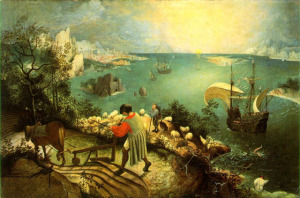 To remain grounded and prevent the fate of Icarus, I tolerate the company of my little devils.
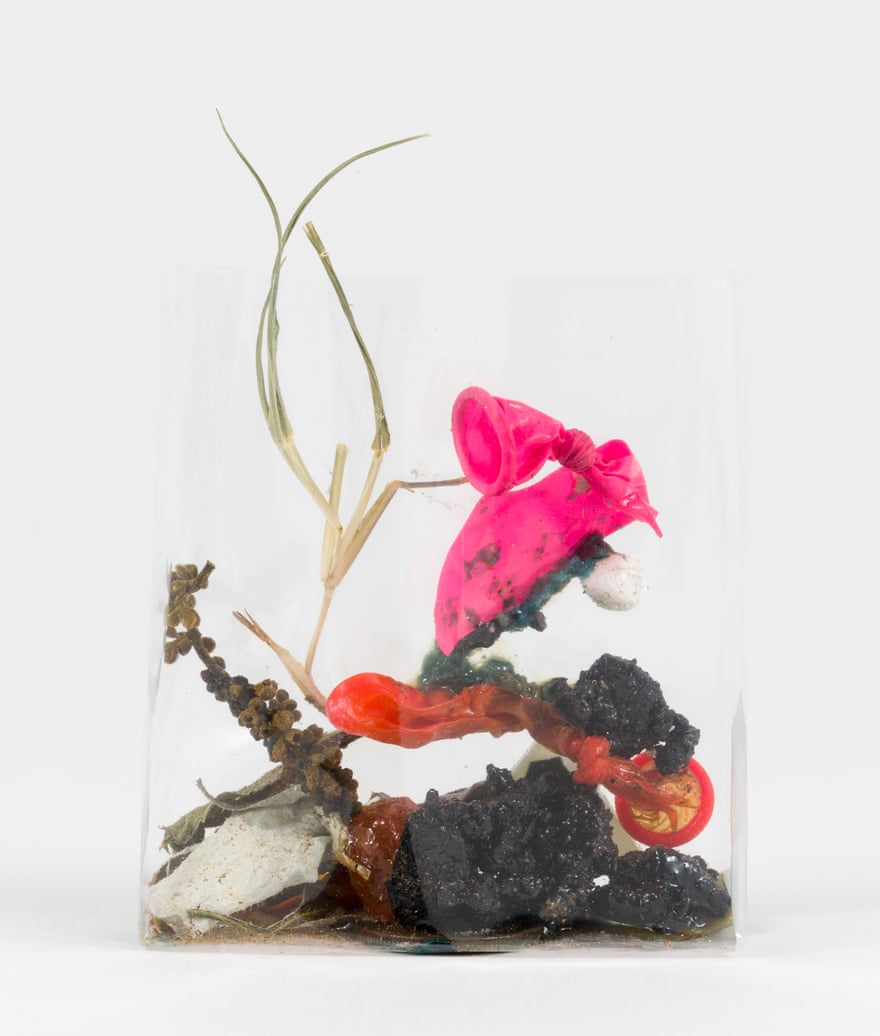 The eye-catching miniatures created by Yuji Agematsu pulled me back to my student phase in Munich during the 1970ies, when a group of friends looked out for small items like roots, twigs, leaves, seeds, grasses, feathers, stones, shells, dried or fresh flowers, the occasional bottle top or bits of shiny sweet wrappers, and sampled such bits into cellophane bags. We then handed these tiny poetry worlds to pedestrians or people sitting outside cafes in the then student district of Munich, Schwabing. It gave us thrill when recipients expressed a shock of surprise.
 In this
 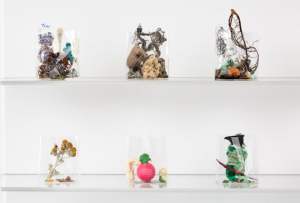 Yuji’s search for trash treasures developed into a language that emotionally embraces urban archaeology. He attracts bits of litter we may regard with a smirk, mostly ignore or simply not notice. While his miniature installations are scaled down to finger size sculptures, the mind-expanding and transformative effect equals grand scale installations. My experience, apart from the cognitive surprise, was being left with a bodily sensation, a deep feeling connection with these miniatures.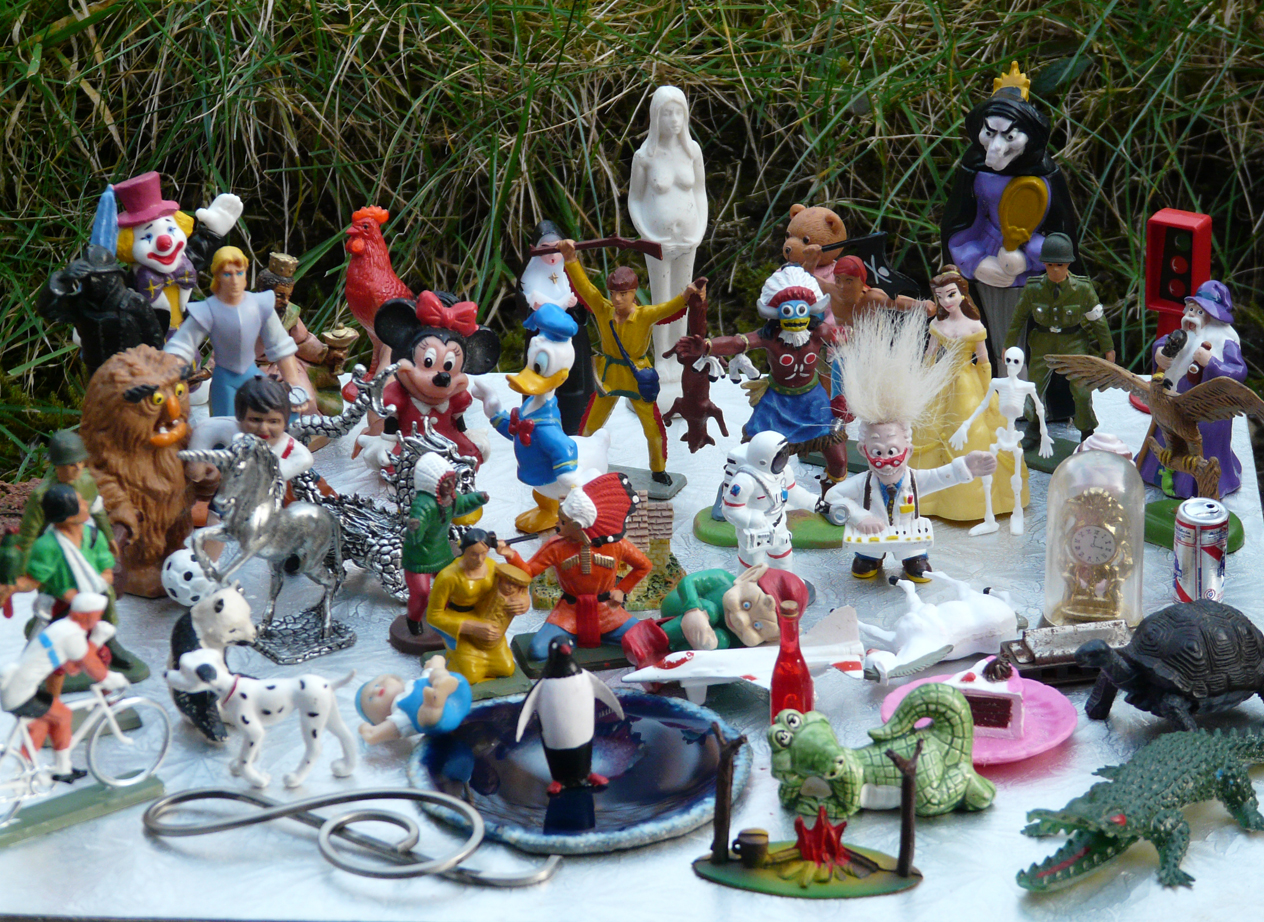
 I have miniature installation in my home, on windowsills … unable to resist picking up feathers, seeds, leaves, driftwood, pebbles and so on, which often hold the story of an eternal moment in time.
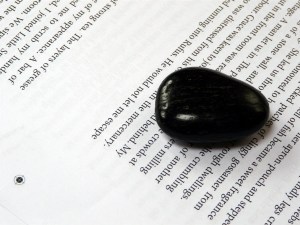 A small black stone, for example, features prominently as a protagonist in my novel,