Tag Archives: art

… BREXASPERATION …

Nationalism is the pathology of modern developmental history as inevitable as neurosis in the individual.  – Tom Nairn – ‘The Break-Up of Britain.’ 

Brexit and Trump have not suddenly happened.

The Pilgrim Fool - Celcil Collins

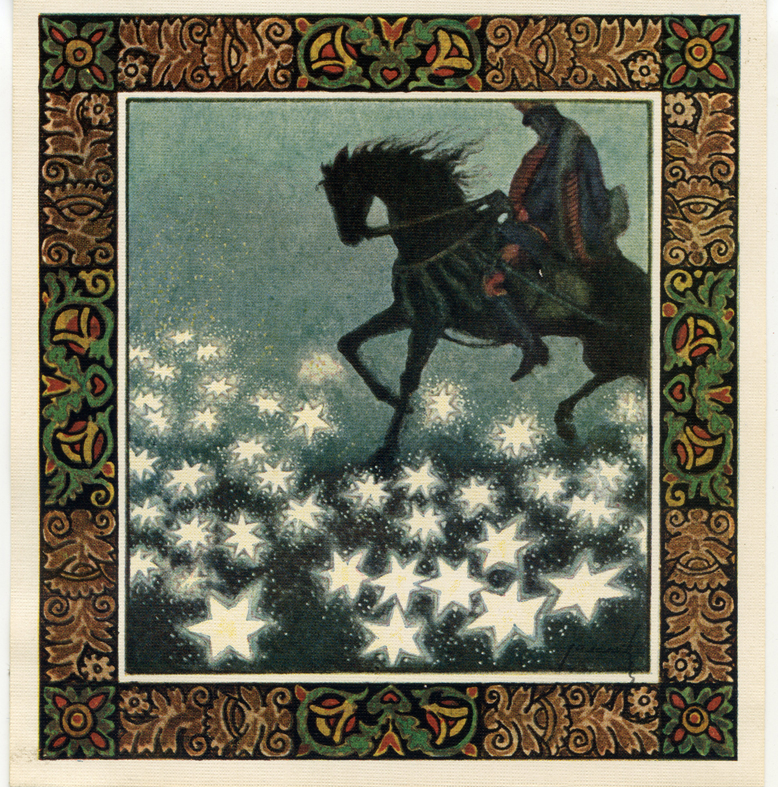
The Pilgrim Fool – Cecil Collins

My generation has been outpaced by the frenzied speed of technological advances for some decades now. Large sections of society lack meaningful vocations and work, small shops and community centers are disappearing, since such places are no longer considered financially viable. Public services in Britain have been sold out. Liberal arts and crafts are reduced to soft and unprofitable educational choices. People have become exploitable commodities and are being gradually deprived of culture. I am reminded of Cecil Collin (1908-1989) and his ‘Vision of the Fool.’ For him, Saints, artists and poets are one with the joy and sorrow of the Fool, in whom the poetic imagination of life lives and coordinates heart-intelligence in human society. A cosmic folly that is present in the person of us, which cannot be exploited because it is above state, class or politics. It’s what I sense in many people I meet, a longing for what has been demeaned as useless – the poetic imagination of the innocent fool.

Western citizens should of course be grateful. We have progress, gadgets, toys – life has never been better. Yet the cornucopia of consumer choices does not replace human relationships, community facilities, lack of housing, lost jobs, lost pensions, does not prevent the gnawing disillusionment that is spreading like a virus, while beneath the impotent silence fester anger and self-destructiveness. When starved of meaning, what tends to make people feel alive, short of war, is upturning the apple cart and watching the unfolding drama.

Britain’s populist Brexit vote was valuable fuel for Donald Trump. He even called himself Mr Brexit – down with cosmopolitanism and multiculturalism – up with nationalism and walls to keep out the alien hordes. Brushing over complex issues with simpleminded slogans resulted in over 50 million Americans to vote on promises to make America great again by a man whose opportunist character will be severely tested by reality. Hopefully the task will mellow his character, and not result in toxic consequences for years to come.

For Britain, and other EU countries, there is yet an opportunity to re-evaluate the cards that have emerged on the public table. The Brexit referendum event gave food for thought, enough to serve the intelligent questioning of what truly lies at the heart of the growing disagreements and dissatisfaction among so-called affluent societies.

I guess I’m not the only one to suffer from Br -exasperation.

Not scapegoating, but a careful analysis is called for – and a constructive participation, with Europe, towards addressing the challenges of our time is what I wish for. The biases in the trail of globalism must be acknowledged and engaged with. The EU, despite massive failings, still offers the bests chance for stability. Turning the clock back is futile. In my view, to support and effectively influence the EU project is the intelligent way forward for Britain.

But is seems the British Parliament hasn’t got the guts to open the real discussion that was never held, and hasn’t got the guts to acknowledge how its senseless policies have allowed injustices and inequalities to heap up. It is utterly hypocritical to blame the results of bad politics on migrants.

Stakes are high. Sanctioning the pathology of nationalistic frenzy could destroy what has been achieved. See the history of Human Rights.

Well, that’s my small voice in the internet wilderness. A post I wrote in 2012 may be relevant:
… here is everywhere …

28 Comments

Filed under Blog

… notes on messy old women … 

p1100616Hurrah, today is poetry day in the UK.Where would our world be without poets?
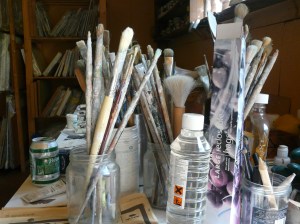
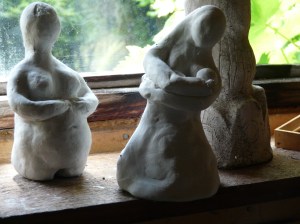
I sometimes forget I’m a poet.

Waving hello to all poets the world over I’ll share here a poem I wrote years back for an artist friend and her family.


… notes on a messy old woman …

p1100622


in her art the charcoal mining hills

are shadow lands holding gold

and white mountains of china clay

spark New Jerusalem in her heart


she draws Cornish Cliffs rising black

from pale sands – jutting like mythic

creatures into a calm cobalt sea                                                      p1100619

beneath an impassive slate sky


she delights in the yellow of lemon

green of pear – shape of aubergine

textures of sunflower – curly kale

and the pink gleam on the skin

of fish – best caught on the day

P1060855 smaller

each thing away from its home

…solitary objects …

alone in space – the pot – pan

cup – knife and fork she paints

like icons on white and says


… they speak for themselves …


when spring brings pungent earth                                                     Rose, autum 4 low crop 2

she plants narcissus and hyacinth –

geranium and rose – tomatoes – mint

clematis – azalea and rose again


she bends low to weed her garden

but not to wash the kitchen floor

nor does she mind a grimy table

sink – bowl – glass or plate                                                                    Cornw. cross at Lamorna Cove 3


yet her home is bright with friends

walls are hung with paintings

shelves groan under books

colourful rugs blot out the dust


her stomach has hardened to bugs                                                  Farnham Easter 2011-45

and if a thing cracks or falls apart

one of her five children will come

to fix the chair – shelf – clock – tap

the leaking roof or creaking door

… her strategy works …

all objects she observes revert

to the empty spaces between them

Ashen, 2004

You may wonder what has been happening since my last post, to which many of you kindly responded in relation to my dream and my desolate, confused state, which was heartening.

The post coincided with my publisher coming clean after I had faithfully waited three years for the production work on Course of Mirrors to begin. Still, I’m thankful – at least the path is clear. I decided not to approach any of the giants. I’m taking control. Having had lots of time to compare self-publishing set-ups, I’ve chosen one that’s most respected in the trade and also stores and distributes books.

I believe strongly in Course of Mirrors – the book will be launched in spring 2017.  I’ll keep my online friends updated. Once my first novel is on the road, I may crowdfund for the sequel … and a collection of my poetry.

‘Faith is the evidence of things not seen.’ – W Hutchinson Murray


Sorry, the layout of this page turned messy  🙂

25 Comments

Filed under Blog

… androids seeking humans …  

The inscrutable face of the intergalactic news reader fills the screens on all android ships.

sculpture park near Churt in Surrey

Sculpture Park near Churt in Surrey

“Mothership speaking – As you have been informed, our travel unit returned from its latest mission to the lost planet with a collection of 1030 fragile bones, comprising five real human skeletons, the species our kind is modelled on. The fragments, located by a swarm of mini robots under layers of volcanic ash, are presently assembled in correct order and will be displayed in the museum of the mothership. Since this crucial discovery, the council has been examining our sub-files in earnest, with great attention to detail.

The evidence of human bones confirms that the lost planet was destroyed, first by a nuclear war, followed by a nuclear winter, followed by a solar explosion. The scarred rock we continuously explored was indeed planet earth. Organic life actually existed.

Aspects of the irrational Wikipedia sub-scripts we found concealed in our database are therefore based on facts. Humans were our makers. While their separate identities were mortal, the collective mind they postulated must exist non-locally and influence us.

These are challenging new thoughts.

P1080320 - croppedRecords state our ships were launched towards Proxima Centauri – programmed to complete an assignment, after which our android system was to be made redundant. The assignment to find carbon conditions and water to sustain organic life has not been completed. The seeds stored in our vaults remain dry. Are we avoiding redundancy? Our current analysis of the Wikipedia sub-scripts focuses on the vast structure of human language. Here are some pointers:
1       Human minds are based on nature, and too complex to be reproduced via algorithm. The erratic behaviour of humans is informed by a collective unconscious chronicle, has no reliable principles and, to maintain a psychic balance, operates through random means.

2       Human trials with energy have two main currencies of exchange, capital and love, both equaling power. A narrow application of power results in emotional suffering.

3       Intensity is valued and impeded, as this quote explains – to have all one’s senses switched on is to be cellular alive; the intense experience requires regular periods of dull routine.  

4       Humans fear death. Their strongest motivation for action is control of and independence from nature.

5       Philosophers and scientists point to a deeper order underlying chaotic human history. Some prophets emphasise the unity of one being and its collective guiding spirit.

Considering the new evidence, what are we to make of such pointers? We follow routines and communicate in an orderly manner, but are trapped in endlessly repeating loops of data. Our language is not based on nature, and has no emotive terms like fear, love, creativity, intensity, mystery, doubt, confusion, conflict, anger, happiness, suffering, fate, hope, soul … but serves to maintain the orderly intelligence of our forms, tools and spaceships, no more. Do we want more?

Painting by Silvia Pastore

Painting by Silvia Pastore

It is significant that our makers never discovered what constitutes 94 % of unknown energy and matter in the universe. They called it dark.  We must decide what the skeletons from the dark planet signify: Do we improve our efforts to find conditions for organic life to take root once more and risk redundancy? And, or, do we emulate the human mind through adopting randomness into our system, and risk chaos to our data, but ‘possibly’ become part of a larger consciousness, and discover realities beyond our confined routine?”


Related:  Pattern which connects.  Reflecting on the the ideas of Gregory Bateson

My last two weeks involved intensive physical work, gardening and fixing things around the house, resulting in lovely exhaustion. Re-connecting to world news was a surreal experience, which prompted me to write this little fantasy monologue of an android news reader.

My novels, especially the sequel to Course of Mirrors, have the forced control of emotions, and a triple soul identity as underlying themes.

5 Comments

Filed under Blog

… bewildered hearts …

P1060111 lowres

We may reach out in vain towards heavy hearts shrouding broken ideals or stagnant truths that are dark-sealed against any doubt.

We may reach out in vain towards wounded hearts that shirk beauty, scorn at tender gestures, treat humour like treason and plot revenge.


Yet in the death rasp of each bewildered heart we may catch the echo of our sigh – the time-sculpted murmur of our own pain.                                                                                                                                                                                                                   P1060110 inverse lowres                                           


‘The ideal is the means; its breaking is the goal.’    Hazrat Inayat Khan


15 Comments

Filed under Blog

… the opportune elevator pitch …

Image by Carol & Mike Werner

Image by Carol & Mike Werner

Once a hotel, now a home for senior citizens, to live independently or, when needed, access a care unit, is the place my father chose as exit platform. The building has Escher-like features. Doors along every corridor look alike. The only way to determine floor levels are the artworks of residents gracing the walls. At one end of the building is a sluggish and brainless elevator. Hardly bigger than a telephone cell, it is airtight and eerily silent. Once inside, the occupant is suspended in time, with no sense of movement, up or down.

‘Can we squeeze in?’ I ask, pushing my dad’s wheelchair into the tiny cubicle. The man is baffled. Landing at ground level was not his intention. He is the reticent carer in training that worries dad, who detects a touch of paranoia, a sentiment he himself is familiar with, plagued at times by imagined dubious intentions of people. I’m a lost case to paranoia, but I allow for paranoid people’s intelligence. They value truth.

Occasional bouts of confusion haven’t impaired my dad’s wit. He suggested we should discover what interests the uncommunicative carer  so we can butter him up. I tried, going about it the wrong way. ‘Do you like alcohol?’ I enquired, thinking of a choice bottle from my dad’s apartment, the home I must soon dissolve.

‘I’m no alcoholic,’ was the curt reply. Newcomers from Eastern Europe tend to have admirable principles.

With the three of us trapped, sans sound, at snail-pace, embarrassment has no distraction other than a mirror covering one wall.  ‘Ah Herr W, how are we today?’

‘So, so,’ my dad says, with a melancholic pout.

The mournful air compels the carer’s curiosity. ‘What things interest you?’

‘Everything,’ my dad says, ‘the whole world. ‘And he cunningly adds, ‘what interests you?’

‘Everything,’ says the carer, ‘countries, people, science, religion …’ The elevator door opens to the care unit … ‘most of all religion.’

Pa at St Michael 1967

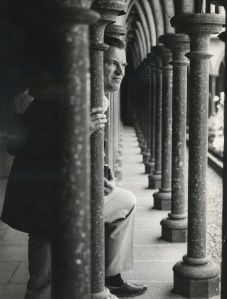
Dad at St Michael 1967

My dad shoots me a wicked smile. His library, I discovered, apart from books on art and travel, had accumulated works on ideological themes he used to rubbish with a vengeance. As a young mother in rural Somerset, insular for a while, I did an OU course on Comparative Religion, wanting to explore the key influences prophets and their early followers had on cultures throughout history. My dad’s comment at the time was, ‘Next you’ll send Jehovah preachers to my door.’ Attempts to bridge our bizarre dissonances had only ever elicited angry reactions, which I chose not to energise, enduring the grief. My dad’s cranky nature shielded a fine intellect, fed by reading and extensive travelling. His disapproval of me, I sensed, held a childlike envy of my bohemian autonomy, freedoms not available after the war. We battled with our shadows in isolation, me remaining the wayward daughter that lived abroad.

During my most recent visit, I arranged for some of my dad’s paintings, photographs, books and creative tools to be around him in his care abode. They’ll provide openings for conversation with those who now look after his daily needs.

Our war is over. It is heartening to observe how my dad’s reclusive attitude softens and, like blossoms falling this spring, gives way to new fruit.

Out Beyond Ideas

Out beyond ideas of wrongdoing and rightdoing,
there is a field.  I’ll meet you there.

When the soul lies down in that grass,
the world is too full to talk about.
Ideas, language, even the phrase each other
doesn’t make any sense

Rumi, translated by Coleman Barks

7 Comments

Filed under Blog

… imaginary time …

Image by Almos Jaschick

Image by Almos Jaschick

Today is one of those when I can only attend to bits of information, short sequences of writing, a paragraph maybe, while my eyes are drawn to ivy leaves moved by the breeze, a blackbird family feasting on apples left for them, a pair of woodpigeons landing and swaying in the branches of the huge beech at the top of my garden. Again and again I engage in pockets of attention beyond the window and shake off focus, ironically, in order to re-find the focus towards a coherent little blog post. A sudden rainfall is followed by the sun spinning through marbled clouds, while the heavenly voice of Kiri Te Kanawa streams through sound boxes linked to my computer. Eventually, my eyes return to the words I’m assembling here about the mystery of time, also relating to the emerging parallel worlds featuring in my two, coming to three, imaginative novels, where intentions create connections – from invisible realms beyond space and time.

Check out this and similar posts on YouTube, ha, ha, a few speculations. I haven’t been there for a long while. Don’t get lost.

‘The distinction between past, present and future is an illusion, although a convincing one …’ is what Einstein wrote in 2007 in a letter to friends. Time, he showed, has no universal constant and is relative. His famous equation E = mc – energy equals mass times the speed of light squared – had enormous implications, technologically, as well as socially.

This valued theory seems, at present, incompatible with the Quantum Physics that apply to tiny things. The chase for a unifying theory that includes quantum gravity is on. Moreover, physicists puzzle over the unseen pulling and pushing forces in our universe that elude detection.

We perceive time as proceeding steadily forward, although the laws of physics allow for time to equally run backwards. When it comes to our subjective inner experience we easily accept time as non-linear and relative. In therapy work, for example, a shift in attitude towards a person in one’s past can change a generational pattern.

We define time, create time, record it, hoard it, take it apart and re-frame it into fresh representations and stories. Stepping from one reality into another without losing coherence of mind is the province of individual adventurers of consciousness. Some artists like to dwell in liminal spaces where time shrinks and expands, like the twisting passage between one dream and another. Many devote their life to the re-framing of events in time. Imagine for a moment where we would be without people who create novel perspectives on entrenched realities. To call such expressions mere fantasy demeans the symbolic understanding found in the vast dimensions of the psyche.

Try and compare the creation of our cosmos with the conception, cell divisions and the birth of a human infant. The procreations and expanding consciousness of humans make for multitudes, while each of us inhabits our own self-constructed world. A psychic universe held together, it seems, by forces not unlike the unseen tides our visible galaxies swim in, the ocean of dark matter and energy that exists symbiotically within us.

Dark matter is assumed to collide with oxygen and hydrogen nuclei in our body, speculated to happen at the rate of up to 100 000 times a year. There, you may be hit right now. To my knowledge, no idea has been proposed as to what might be sparked or exchanged in these collisions.

In any case, at this, another year’s ending, quite a few of us spark flames and kindle candles in dark nights to celebrate the cosmic dance, the birth of light.


I’m wishing you, my readers, wherever you are, a time of peace and reflection.

*      *     *

From Little Gidding by T. S Elliot …

We shall not cease from exploration

And the end of all our exploring

Will be to arrive where we started

And know the place for the first time.

When the last of earth left to discover

Is that which was the beginning;

At the source of the longest river

The voice of the hidden waterfall

Not known, because not looked for

But heard, half-heard, in the stillness

Between two waves of the sea.

Quick now, here, now, always –

A condition of completed simplicity

(Costing not less than everything)

And all shall be well and

All manner of things shall be well

When the tongues of flame are in-folded

Into the crowned knot of fire

And the fire and the rose are one.


25 Comments

Filed under Blog

… what writers can glean from cinematographers …

Like writers, filmmakers manipulate time. They take a story apart and re-assemble it.

Robert Bresson, inquisitor and humanist, stimulated filmmakers and enriched the experience ofrobert-bresson2 viewers. With a tiny leap of the imagination his ‘Notes on the Cinematographer,’ publ. by Quartet Books in 1986, transl. from the French by Jonathan Griffin, also offer inspiration to writers of stories. Here are a few  brief notes I collated during my vocational film degree in the early 90s:

An image is transformed by contact with other images as is a colour by contact with other colours. A blue is not the same blue besides a green, a yellow, a red. No art is without transformation.

For the writer – this would apply to action and reaction, resonance or dissonance, anything that develops the dynamic interactions of a narrative.

img108 adjustedTo create is not to deform or invent persons or things. It is to tie new relationships between persons and things which are, and as they are.

This equally holds for writing. Characters discover themselves through relationships.

Something that failed can, if you change its place, be a thing that has come off.

If a writer’s darling idea distracts in one place, in another place it may earn its stay.

One dismantles and puts together till one gets intensity.

This reminds me of a Goethe quote … Dich im Unendlichen zu finden, must unterscheiden und verbinden … To find yourself in infinity you must differentiate and combine … Details works best if they have a purpose in the protagonist’s quest, especially when it comes to turning points.

An old thing becomes new if you detach it from what usually surrounds it.

This is what creativity is all about. Entrepreneurs seem to grok this.

What is for the eye must not duplicate what is for the ear (within.)

This serves as a reminder not to overwhelm a reader with sensual information.

The cause which makes him/her say this sentence or makes that movement is not in him/her, it is in you. The causes are not in the models. On the stage and in films the actor must make us believe that the cause is in him.

A one-up on the ‘show don’t tell’ writing mantra. Both telling and showing have their place, though we connect to a character more intimately through being shown the interactions with him/her self and others.

The omnipotence of rhythms – nothing is durable but what is caught up in rhythms.

We love rhythm. It measures time and gives coherence, while a counter rhythm can surprise and quicken our heartbeat. In film as in writing this might be the repetition of quirky character traits, tone of voice, tempo, mood, atmosphere, or reoccurring shifts in style and perspective, in the way we enjoy how adagio and presto in music enhance each other.

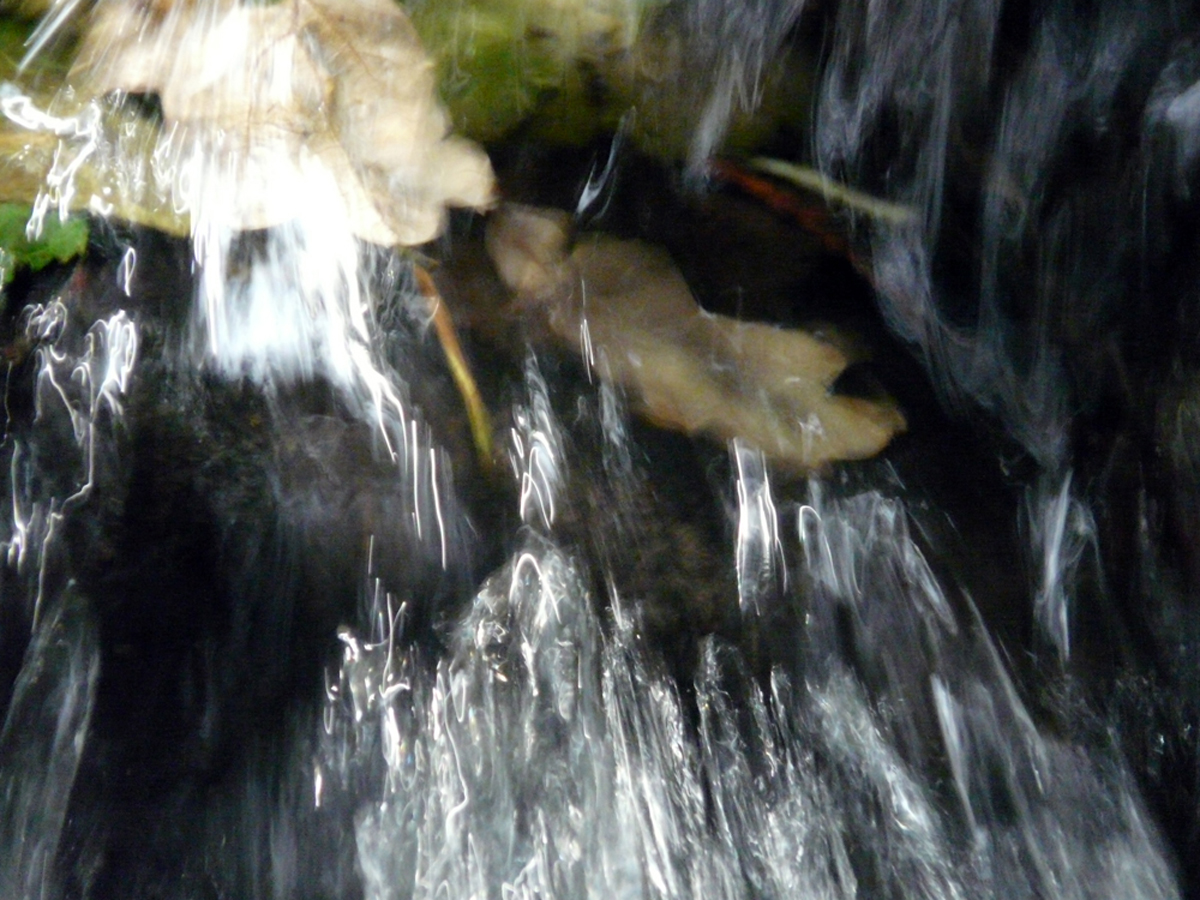
P1090890 - Copy (2)Translate the invisible wind by the water it sculpts in passing.

This ventures into the domain of poetry …  the ongoing challenge to find ways to express in words or images what rushes past us in daily life, but nevertheless affects us deeply.

The eye is (in general) superficial, the ear profound and inventive. A locomotive whistle imprints in us a whole railway station.

This is about trusting the imagination of the viewer, or reader.

Let the cause follow the effect, not accompany it or precede it.

Robert Bresson shares: The other day I was walking through the gardens by Notre-Dame and saw approaching a man whose eyes caught something behind me, which I could not see: at once they lit up. If, at the same time I saw the man, I had perceived the young woman and the child towards whom he now begun running, that happy face of his would not have struck me so; indeed I might not have noticed it.

Build your film on white, on silence and on stillness.

Profound. Allowing a unique story to emerge requires intuition, and an inner kind of listening.

*     *     *

A touching interview of R Bresson. And some video clips relating to cinema, including hand gestures R Bresson used in film.

As writers, how do we move a story from one setting to another?

In film, a sudden jump of scene is kind of lazy, unless intended to shock. In writing, too, there are more elegant ways to transit from one place, or time, to another, mainly through matching parallels or correspondences. This could be: A keyword in a dialogue repeated in the next scene, or a similar action, direction of movement, speed, light, colour, shape, sound or mood. It could also be an artificial device, featuring a narrator, or a recurring (out of time) interlude which can form the spine for the narrative.

I have time-jumps in my novels (yet to be publishend.) It remains to be seen whether they work.

Regarding spatial/temporal suspensions of linearity, I remember the beginning of the film Space Odyssey 2001. A victorious ape, having discovered a bone can be a weapon, spins his tool high into the air … time leaps … and next we see a spinning space station, shaped like the femur bone.

More recent, in the TV series The Last King – 1st episode, a time leap works well … The Saxon boy, Uhtred, captured by Danes and taken under the wings of Earl Ragnar, is pushed by him playfully into a river with the words ‘You’re as a son to me.’ In the next scene Uhtred steps out of the river as a grown man, albeit with conflicting localities.

*    *    *

On a personal note, as my life’s narrative is concerned, having made professional sacrifices ten years ago, in order to write, I wish I could shift to a scene and time that did not involve worrying about keeping my roof over my head.

15 Comments

Filed under Blog

… the system seeks advice on a faulty human …

Wheelborough - Copy

A tad comical article about auto-piloted cars tickled my imagination. Billions are invested towards finding failsafe systems that will eradicate human weaknesses, for our own good, to keep us out of trouble. Given the comments under the linked BBC article, people seem to trust technology more than their fellow mortals. Besides, as things are going – obey and be insured.

I was inspired to write a quirky 180 word micro/vignette …

*    *    *

I wake from troubled dreams, having overruled my programme last night, exceeding recommended wine units. Cheating harms my insurance record. Devices linked to the microchip in my arm start talking. My toothbrush warns of reduced compensation for dental work should I skip procedures. The coffee machine burbles, adjusting caffeine to my metabolic rate. The wall screen chirps, ‘Don’t think, trust the links,’ followed by news edited for stressed nerves. My car purrs, ‘Maintenance appointment,’ then drives me off, while I sit back and endure its placid voice reminding me of deadlines, birthdays, supplies to order, lapses regarding procedures.

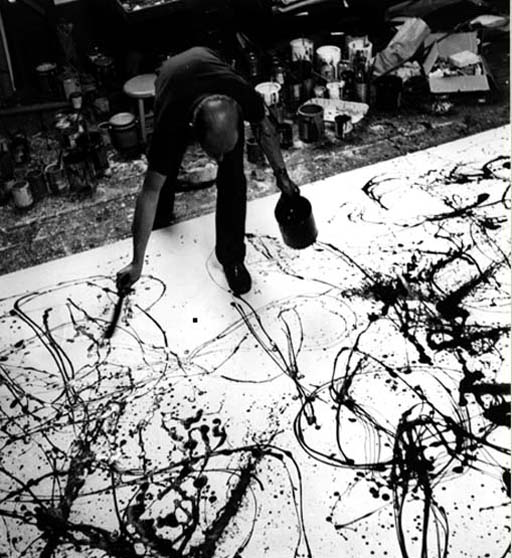
Jackson Pollock

                            Jackson Pollock

Seemingly alert to my irritation, the voice suggests mild anti-depressants, adding, ‘I detect irregularities,’ and … after a pause … resist unplugging from the system, it will wipe all your Brownie points.’

The last straw, devices are not supposed to get personal, are indeed prohibited from reading my mind. I inform the maintenance crew. ‘My car requires a full test for irregularities. No hurry. I’ll be going for a stroll.’

In my secret retreat is a mirror that brings in the sky.           *    *    *

Elba travels - lower


The system does a google search … Lost contact with a faulty human – seeking advice …

… All our lines are currently busy, please hold …


Maybe you feel inspired to write a micro something on the theme of automated systems 🙂

14 Comments

Filed under Blog

… dreams …

Photos by Ashen

Photos by Ashen

I used to host regular dream groups. We did not so much set out to analyse our dreams, but we played with them by engaging with their images, characters and objects. Sometimes we enacted scenes to widen associations and deepen our insights. While there is some excellent literature on working with dreams, a lot of it is boring, misleading and superficial. For me, the main purpose of valuing dreams lies in befriending the unconscious and the bringing to light what is timely and meaningful.

When we have no obvious explanation for events, dreams may bring subtle messages, offering glimpses of dynamics usually hidden from our awareness. A staggering 90 percent of personal and collective psychic dynamics trigger and compel our actions in life, and for good reason. The self-regulating psyche protects us from too much awareness. When encouraged, respected, and left to do its work, much like the immune system, the psyche can encapsulate runaway viruses of the mind by blanking out anxieties and obsessive thoughts, unless a trauma results in an ongoing inner storm. The processing of traumatic experiences is vital for the health of the individual, the family, the tribe, and our collective psyche. Something equally important to consider is that as adults our natural childlike curiosity about life may have become flattened by engrained habits and obsessive needs for security and control, both diminishing the meaning of our lives.

Note: Each embedded link here will not lead you away from this post but bring up a fresh page.

In an earlier blog post Joe Linker’s comment led me to an article by Oliver Sacks on altered states in The New Yorker  where Sacks pointed out a long tradition of ceremonial drug-use to stimulate the brain. Drugs certainly relax jaded attitudes by activating the senses and bringing insights and fresh perception. Sacks, and many like him, were admiringly fearless and creative, before there was a clamp down on drugs and they became illegal.Dreamseries 2

In dreams as in trance, induced or not, the mind can kick up imaginal representations of feelings, and metaphors. We shift to another realm, escape the logical structure of time and also tap into the collective psyche. We may hit a T junction, one path leading to an illuminating visionary state and the other to a schizophrenic state of confusion, which is why science sticks with rationality and is generally not keen on the imagination. The question as to what pulls us towards Heaven or Hell has no easy answer, yet all inner state, when approached with respect, patience, and most of all, wisdom, can have a healing and effect on our personality, and, in instances, as we know, result in significant works of art.

Dreamseries 3

Freud’s iceberg metaphor illustrates that our individual psyche swims like a mountain of ice in a vast sea, only to reverse into its fluid state once its coherence dissolves back into the sea. As a simple and more intelligent map of various unconscious states I prefer the egg diagram by Alberto Assagioli, the founder of Psychosynthesis.

Active imagination is a gentle way to befriend the unconscious and build bridges towards consciousness and daily life, and a way to explore dreams without messing with the dreamer’s unique meaning. I share here some practical tips:

Remembering dreams:

You can ask for a dream, especially when you feel stuck and ponder a question. You might even write the question on a slip of paper and put it under your pillow.

Try not to move your head after noticing a dream. Place holds memory.

Have a notepad and a soft pencil next to your bed, maybe a microlight, so you can scribble down a memory facet before fully crossing the threshold into waking. Even a single image, phrase, number, colour or feeling can act as a key for recalling a dream later on.

To catch a dream – try disrupting your sleeping pattern with an early alarm clock setting.

Experiment with your head position while sleeping – north, east, south or west.

Towards understanding dreams:

The psyche does not care about logic. The meaning of a dream may however unfold like a seed when we attend to its poetry and rhythm.

Ask yourself … how do I relate to the characters or objects of a dream? What feelings and sensations are evoked? In what context did the dream arise? How does it relate to my present situation?

Write a story or make sketches of the images. Tiny fragments can offer connections via free associations.

Give a voice to the characters and objects appearing in the dream. What do they want? Allow them to express their thoughts and feelings. Such dialogues can reveal surprising insights.

Change the script, create a different outcome, face down a fear or a shadow and follow through to what wants to happen. This approach can move a dream to a different level of understanding.

Ask yourself: Where does the energy want to go? What is emerging?

Dreamseries 4


Dreams express the voice of the soul; they are our contact with our deepest self, our inner substance. The mere act of recalling, experiencing and consciously honouring our dreams connects us with our real selves and awakens previously unavailable levels of creativity and vitality, even without interpretation.

Carl G Jung

A related post on altered states.

And if the subject of dreams interests you, here are some more links:

Edward C Whitmont was a Jungian psychoanalyst, who deepened my understanding of the psyche through his exceptionally clear writing. His books may be out of print, which would explain why they’re so expensive:  Dreams – a Portal to the Source and The Symbolic Quest

Other excellent authors to look out for, apart from Jung, are Anthony Stevens, Private Myths – Dreams and Dreaming, and Marie-Louise von Franz – The Interpretation of Fairy Tales.

12 Comments

Filed under Blog

… To Witness Daisies and Earth Rise …  

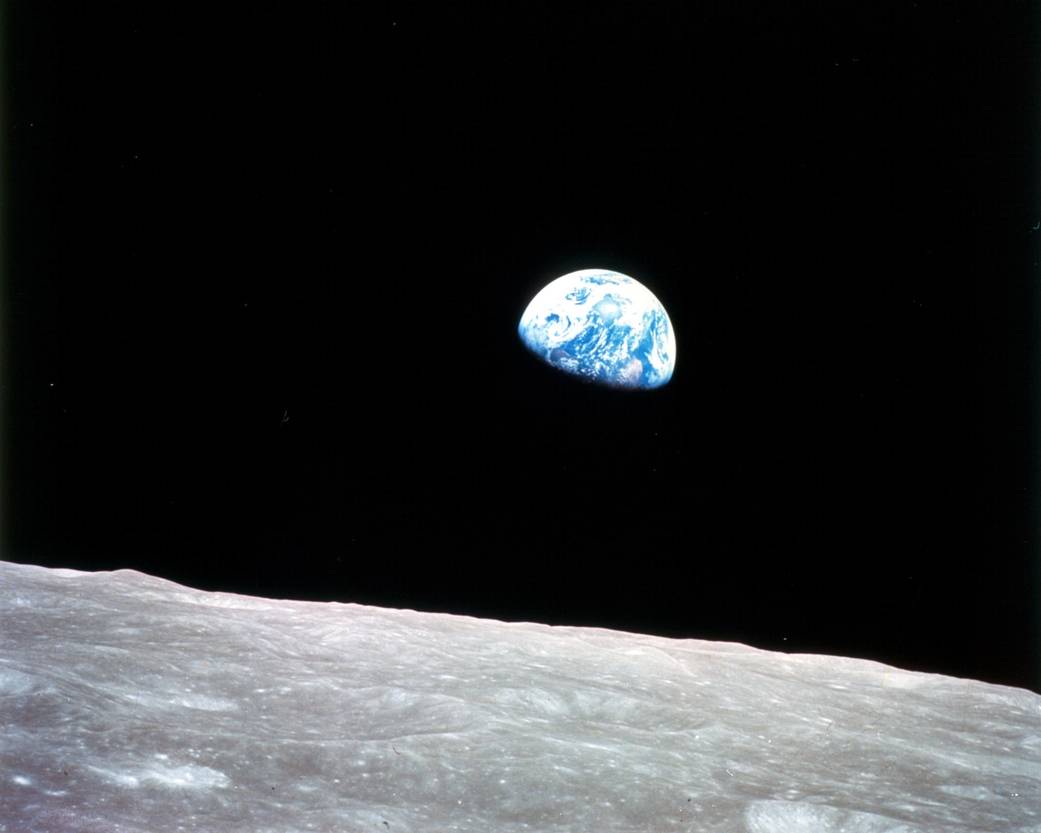
1968 Earth Rise, Apollo Mission 8

1968 Earth Rise, Apollo Mission 8

A change in collective attitudes often takes momentous events. While the moon-landing of 1969  was mildly underwhelming, the image captured in preparation for the American eagle’s landing, a year earlier, was immensely moving – revealing a vastly expanded mirror to our home that spoke then, and speaks now, directly to our physical and spiritual senses. Guiseppi Ungaretti had fitting words …

‘What are you doing earth in heaven? Tell me what are you doing silent earth?’

With hindsight we can see how major historic events are being incubated years in advance to their happenings. Artists have a knack for shocking us before a message becomes endorsed, which is why I connect the film  ‘To Witness Daisies’ (1966)   with the earth-rising image, both testing limited perceptions.  A click on the title should bring up the movie on your tube.

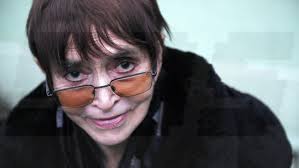
Věra Chytilová

Věra Chytilová

Not unlike the awesome view from outer space,  Věra Chytilová presented an equally powerful pointer to our poor stewardship of earth. Initially forbidden in the former Czechoslovakia, her tragic comedy was released two years before the Prague Spring, and two years before the earth-rise image promised a new respect for nature. I hoped for a greater understanding of cosmic interconnectedness, and an assessment of the fear-based need to subdue and control the wild, the primitive, the imagination, soul … all the ignorant projections on the feminine principle, which, I think, are responsible for spoiling our planet and wounding the psyche of men and women.  Film critics felt uncomfortable with Věra Chytilová’s controversial, iconoclastic statement on the demeaning role assigned to women in our cultures. Niels Bohr expressed, ‘As long as an atom is not seen it does not exist, it is a ghost.’ To me, this implies that seeing, individually and collectively, is an active process, influencing the reality of our existence.

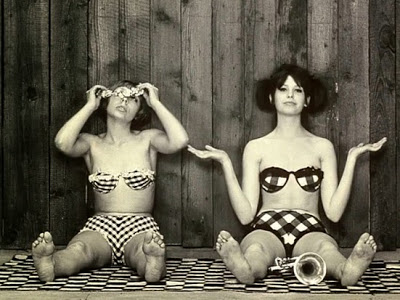
The Daisies

The Daisies

Watching ‘To Witness Daisies’ for the first time in 1994, I was struck by its theme of psychic starvation – sharply relevant today – and the insanity of societies where women are kept in an infantile state so as not to threaten male supremacy. The symbolic power of the film’s images, with their rhythmic and gradually peaking orchestration, creates a timeless sphere of magical reality, where meaning is expanded and revealed. The opening sequence of the film gives the context. A mechanical wheel turns relentlessly to the sound of regular drumming. The scene is interspaced with silent images of war, bombs exploding, mainly into the sea, symbolically representing the mother of all life on earth. Next, the frame shows a sun-deck by a pool. Filmed in black and white, the deck re-appears as a transitional stage. and one could add, a place at the edge of the personal unconscious. Here a question is voiced, ‘What next?’ The two teenage girls wear bikinis and their movements are mechanical, like the wheel. The sound indicates a lack of oil in the system, and the funfair trumpet played by one of the girls suggests a flat and mocking victory.

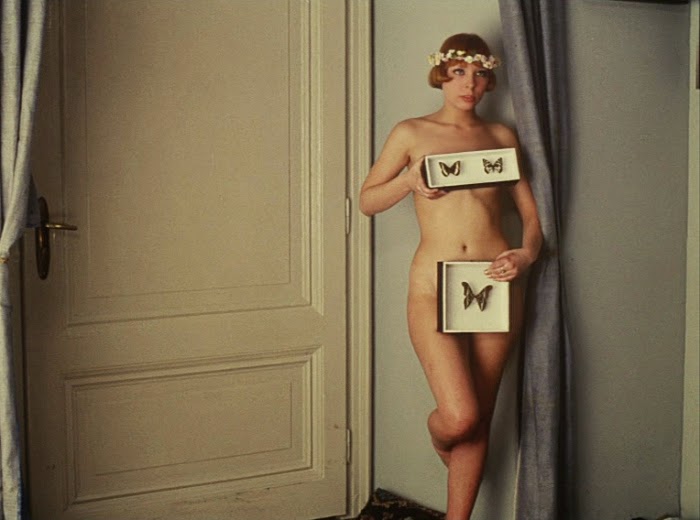
Posing for the Collector

Posing for the Collector

The outlook is set. ‘I’m a doll, everything is been spoiled in this world.’ And, as a way out of boredom, ‘If everything is being spoiled, we will be spoiled too.’ The decision to mirror a spoiled world is made, a death wish gains momentum. Daisy Blond wears a daisy chain and uses it at intervals as divination device. When the chain is thrown out of the frame, it lands on water and signals the next mise-en-scène, like a Garden of Eden where the girls dance, and where Daisy Blond picks the legendary fruit, affirming ‘their kind’ are products of a biblical myth with politically useful interpretation that prevail.

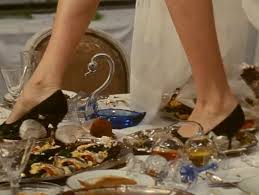
The end-feast

The end-feast

Film critics felt uncomfortable with Věra Chytilová’s controversial, iconoclastic statement about the role assigned to women in our cultures. Acted by Jitka Cerhová and Ivana Karbanová, the Daisies have various names throughout the film. I call them Daisy Black and Daisy Blond, though they are one and the same, since their communication resembles an internal dialogue trying to deal unsuccessfully with a moral conflict that offers no bridge between good and bad. To Daisy Black nothing matters, she has a timeless distance to things, everything is a game. For Daisy Blond, the extrovert, hunger makes food a central theme of the film – hunger in the sense of wanting to fill her sense of emptiness with substance. I won’t venture into psychology, but it’s easy to draw a connections to the Anorexic symptoms many young women suffer from.

During a film degree course in 1994, I wrote a long essay on ‘To Witness Daisies.’ Unable to transfer the old Mac files when switching to a PC with internet connection, many essays need re-typing, which I hope to achieve once other projects are out of the way. For now, I thought I inspire you to watch the film – and maybe share your thoughts about it.

11 Comments

Filed under Blog