
My poet sits in a corner, banned, feeling dejected, with shaking head, upset about my philosopher’s need to fret about social realities, which, however, can’t be ignored. So there goes …
With longstanding friends around the world, and across the channel between Britain and the continent, my kind feels stranded on this island. By my kind I mean ordinary people, who took opportunities to travel, read, are forever curious and learned to be tolerant of differnces.
Where time ago, I used to send well over 100 Xmas cards, this is now too costly. I discovered that posting a card/letter to Europe, for example, has gone up to nearly £2.00. Recently I sent a slim book to Amsterdam, at standard rate for £9.00. When the book hadn’t arrived after four weeks, seemingly lost, I sent another copy, this time with tracking and signature request, costing £13.65 – a week passed, and it has not arrived.
I feel my roots being severed, much like what happens with the ruthless assault on nature, perpetuated by ignorance of politicians and the greed of heedless corporations. My network of connections is resigned to the Metaverse, devoid of touch and smell.
The physical world has become bothersome, unprofitable.
In that vein … banks are closing, arguing that ‘most’ people bank online. Small post-offices are closing for not being cost-effective; supermarket checkouts are replaced by self-scanning ports in order to save on personnel, and small shops fold, since rents are becoming untenable.
And I, by using a simple mobile, not a smart phone, am already a redundant species.
My lot could be worse. My son is caring and offers support, as do friends when they sense I’m struggling. But there are large sections of our societies who, be it through age, or dire lack of resources, are cast into isolation. This is wrong, and ultimately creates germs of stress, depression and, basically, insanity, affecting every age group. Beyond shelter and food, people want to feel useful. They need community, connections, and companionships. It’s not just the aging or impoverished citizens, or migrants, but generally many dispirited young people who experience a lack of meaningful social engagement.
The decline of spaces where people can meet face to face and chat requires novel solutions.
For decades I envisioned housing projects, with accommodations of varied sizes, where young and old people could occupy independent units around a kind of village green, with a communal building at its centre. Apart from a shared space for meetings and celebrations, this building could house a shared library and IT facilities accessible to everyone. Residents could look after each other and offer their skills on a voluntary basis. All sorts of mutual exchanges could happen, from childcare to animal sharing, transport sharing, tool sharing, skill sharing, sharing of knowledge, therapeutic activities. I also imagine an art studio, and a vegetable/flower garden, tended by those who love gardening – the list is endless. More than a dream, it is achievable. This way of living may not suit everyone, but what’s in the way of such housing projects to happen on a large scale?
I’m not an influencer. I can’t make enough people believe in enlightened social projects to make them manifest. Many influencers, who reach the political stage, have to sadly compromise the integrity of their ideals on the way up the slippery pole. So my various great ideas over the last decades, like this one … https://courseofmirrors.com/2012/05/15/is-a-parent-ever-unemployed/ … are slumbering, awaiting their time. I’m surely not the only one who mulls over solutions to the sad state of affairs around the world.
With hard work and scarce financial gain I did manifest a few worthwhile social visions over the years … art projects, therapy groups, support groups for carers, an independent living project for people with disabilities. At one point I even won a care in the community award for a charity. I co-facilitated creative workshops in many prisons, set up by a friend, who also achieved funding via the Arts Council. There was a time when I ran training courses for Parent Link facilitators, to prepare parents and teachers to run a 12 session course on reflective listening. The charity was celebrated by all course participants, but needed a fundraiser. Half-hearted promises of government support never happened, so the marvellous brainchild of the founders of the Parent Network charity, Ivan Sokolov and Jacquie Pearson had to fold.
These days I’m done with groups; the many wonderful groups I supported, and was supported by, now appear in my time-travelling novels.
I glance at my poet, my wise poet nods, with a shy smile, and says, “All is Well.”
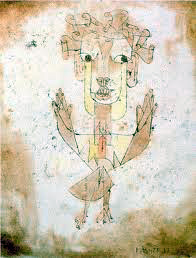
 We mostly think through conventional forms and givens, for practical reasons, while another way of thinking embraces invisible and unknown dynamics via intuition – like the seeming particle/wave paradox in quantum mechanics, where a local particle also exists as a non-local wave. The two perceptions can potentially mingle creatively, but, notably in times of social uncertainty, they clash, and fewer people maintain the ability to tolerate
 were solved at reasonable costs. In fact, every problem solved … cementing dangerous steps, replacing old iron guttering, massive clearing of garden overgrowth, sorting a blocked man-hole … felt like a heroic victory. You should have seen me stirring the shit in the manhole with a long iron rod. I kept on for hours since it has worked once before, many years ago. I spare you the hilarious details. In the end I called in the experts. Craftspeople who know their job have my admiration. Societies couldn’t function without them.

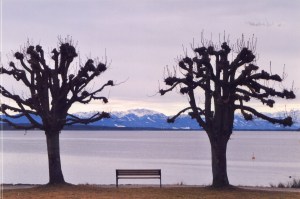 The Alps of Bavaria stand in bright glory or shrouded in mist, depending on the mood of the weather. Their snow-covered peaks were the dramatic panorama of my childhood, and called me beyond horizons, first east, then west.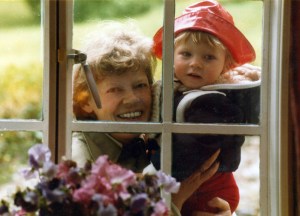
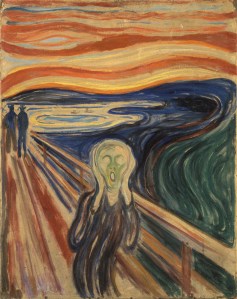
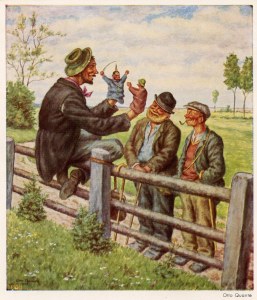 Long-festering issues are popping up in ugly shapes on our flat screens.
 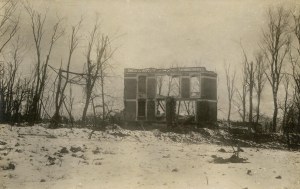 People fleeing from war-zones, natural disasters and nil prospects, attracted to the seemingly coherent structures of democracies, want to re-build their existence, are mostly educated, keen to work, and are longing to regain their self-esteem. Why not focus on the opportunities in this situation? Ask how the migration phenomenon can benefit societies? And how Britain can creatively support Europe in a process that simply cannot be stopped?


 Course of Mirrors