Mystical texts and phrases can annoy the rational mind, since they hardly ever get to the point or, indeed, contradict themselves. Still, at rare, often fleeting moments, sometimes in nature, a vein of light can reveal a profound truth, even in an overused mystical quote. Or, if one finds the occasional balance between the outer and inner reality, a sudden awe may unfold in consciousness and surprise.
‘Some’ scientifically minded folks, fewer these days, tend to scoff at mysticism with its vague hints and speculations as a waste of time, or look down on the fools of this world who suffer from subjective illusions. And yet, the novel feelings emerging from direct numinous experiences greatly expand the consciousness of ‘The One.’ I guess firmly set rational minds shy away from numinous personal experiences that might rattle their worldview.
The latter may shake their heads at some baffling mystical musings. I re-found this write-up on the Kaif System among many papers heaped up in corners of my home. It was shared by Morag Murray, born in Scotland, who lived and travelled in Central Asia, Tibet, India and the Far East. Her autobiography, ‘My Khyber Marriage,’ 1934, features her marriage to an Afghan chieftain. She is also known as Saira Elizabeth Luiza Shah, mother of Idries Shah.
So here goes … The Kaif System
Kaif is the effect a person, idea, event, object, etc., has upon one. But it is distinct from aesthetic pleasure or any familiarly labelled experience.
When an experience which was trivial or routine gives one a sense of uplift – this may be Kaif. Repeated experiences yielding pleasure or attractive sensations do not have Kaif.
Eating, drinking, dancing, meeting people, visiting, travel, reading, seeing, feeling, hearing, thinking – may have Kaif.
The term for something which has Kaif is Kaifdar – ‘Kaif holding.’
A person who can provoke the sensation of Kaif in an individual or a number of people is called a Kaiyyad (Rhymes with ‘I laugh.’) The instructor in Kaif is called the Sahib el-Kaif (Kaifmaster.) Also used is the term Kaifiat – which means something like ‘Howness.’
The Kaifmaster Barik Ali said: ‘Kaif is the determining ingredient in an enjoyment. If it is not there, true enjoyment is not there. If it is not there, people may divert themselves with happiness – this is not Kaifiat.
The Kaifmaster Ankabut said: ‘Kaif is imparted into a thing. It may be imparted by anyone or anything. When it leaves only the shell is left. People eat shells when they cannot get nuts.’
The Kaifshinas is the Kaif-knower. He can appreciate Kaif (Rhymes with Life.) He may not be able to induce it. His house may be untidy. But it will be full of Kaif.
Kaifju means a Seeker of Kaif. He starts by seeing other people appreciate Kaif, and tries to find it wherever it manifests itself.
Kaif is used either as an indulgence on its own, or in order to provoke higher consciousness, known as ‘the secrets’ (Asrar.)
Kaif may be found in any community, at any time, under any circumstances. It is not bound by language, history, geography.
Certain professions are held to be Kaifdar. They include those of chief of state, builder, artizan, poet and designers of all kinds. Few professions are bereft of Kaif. Certain places are more difficult for Kaifshinasi.
The very term Kaif has become cheapened, so that people use it to mean ‘This is something I like’, or ‘I enjoy that,’ or ‘He has presence,’ or ‘This is satisfying, attractive, stimulating.’ You must be aware of yourself using this term, and also of those who use it, so that the coin may not be debased.
Kaif is defeated very easily. It is defeated in its attempted manifestations by false ideas, by self-esteem, by hypocrisy of any kind
There is a danger in Kaif. People who perceive it and do not respect or honour those who have Kaif, or respect Kaifdar situations, places, and so on, become ‘inverted to themselves.’ This is a state in which a person’s bad characteristics become stronger, and where his self-control becomes less, and where his hidden unpleasantnesses undermine his very being.
Kaif is in shape and in form, as well as in shapelessness and formlessness. It lies dormant in places and among people where it is not perceived for a long time. Then only the introduction of a conscious Kaifshinas will activate it again in that community so that it may take its place to help mankind.
Kaif is not confined to humanity, but can be perceived by all living organisms.
Something which is aesthetically adequate or emotionally stimulating can at the same time be devoid of Kaif.
Certain exercises, which vary in accordance with the person, place and the general situation of his community, enhance Kaifshinasi.
Kaifmasters subject their students to experiences, related incidents, objects and other matter which have Kaif, or can provoke it.
Kaif has a ‘moment,’ called the Dumm-i-Kaif (Breathspan of Kaif) during which it may be, as it were, ‘inhaled’. The Kaifshinas strengthens and makes permanent his perception of it by exercises which apply to this moment.
In religious, musical and even social ceremonials, a Kaifdar is present. One of his activities is to ‘infuse’ Kaif into the proceedings at a time when uninformed onlookers might assume that the people are doing nothing, or else are engaged in an activity (such as a recitation) which is only the vehicle for the application of the Kaif.
Special Kaif-chambers exist, in which an individual with the correct preparation may concentrate and accumulate Kaif, and study it in its manifestations.
In degenerated usage, such Kaif-chambers continue to be used, sometimes as devotional buildings. More often they are thought to be tombs fallen into ruin because there was no apparent use for them, or seem to have other applications, such as kitchens or bath-houses.
There is a well-known watchword: Innna el-Kaif, hadha el Kaif (Assuredly the Kaif is a Sword.) Hence the word SWORD is often used as password and even as a synonym of the working of Kaif.
Objects charged with a certain portion of Kaif are given, lent and carried by many people who know. These, like Kaif-chambers, are generally disguised as something functional, or else are ordinary objects which have been endowed with Kaif. The vulgar often confuse them with talismans or charms.
The saying: ‘Kaif-alaik!’ is a sort of blessing. It means: ‘May you have Kaif.’
In Turkey the Kaif-Agha was the individual entrusted with the royal Kaif. He was a Kaifdar, and generally assigned a court function as well.
Because its smokers have appropriated the term Kaif to describe (inaccurately) their sensations, Hashish has become known as Keef, a mispronunciation of Kaif. There is no real connexion, of course.
* * *
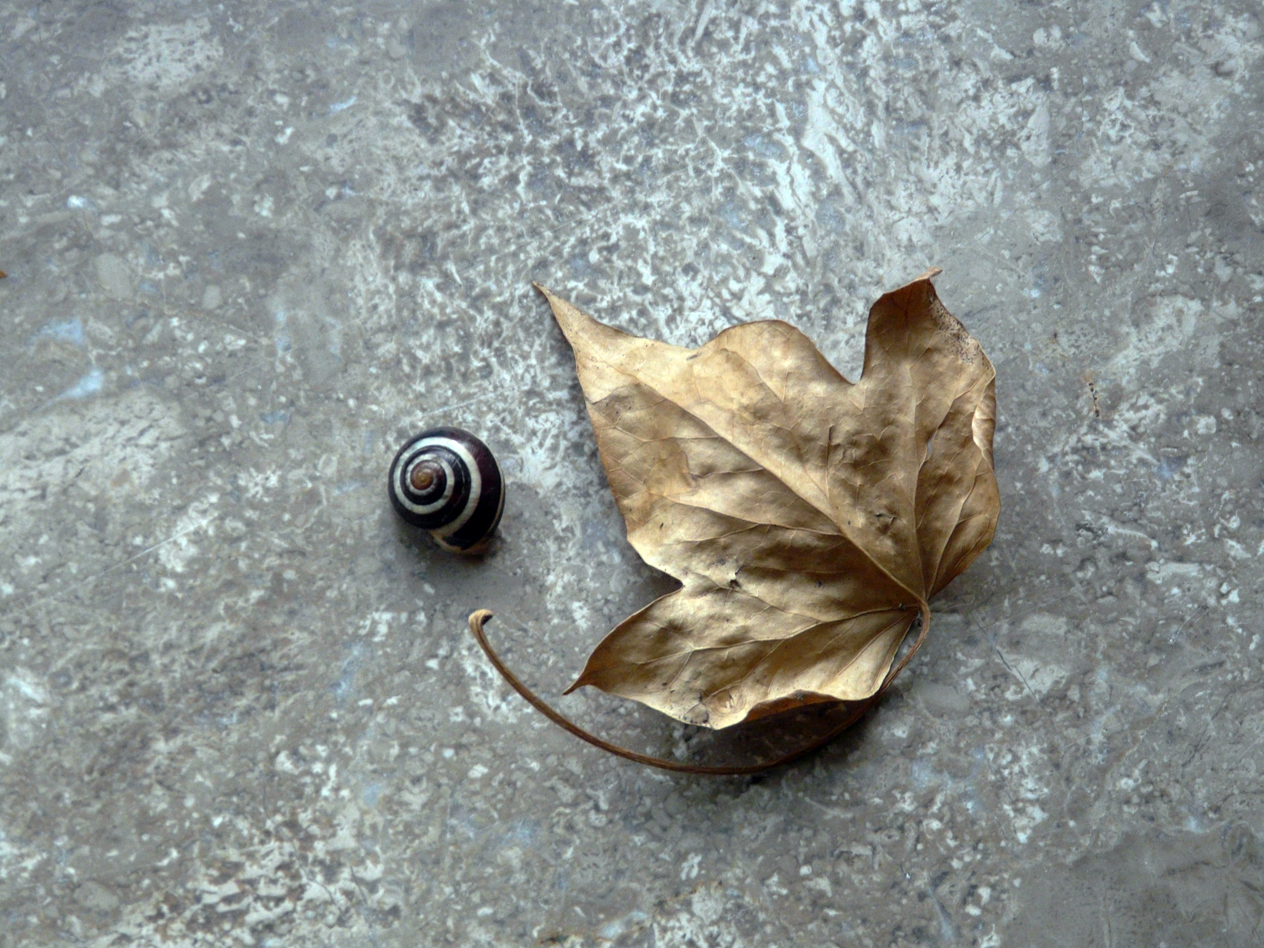
I tend to encapsulate instances of Kaif in photography or haiku.
You may have another term for Kaif, and ways to share inspiring experiences.
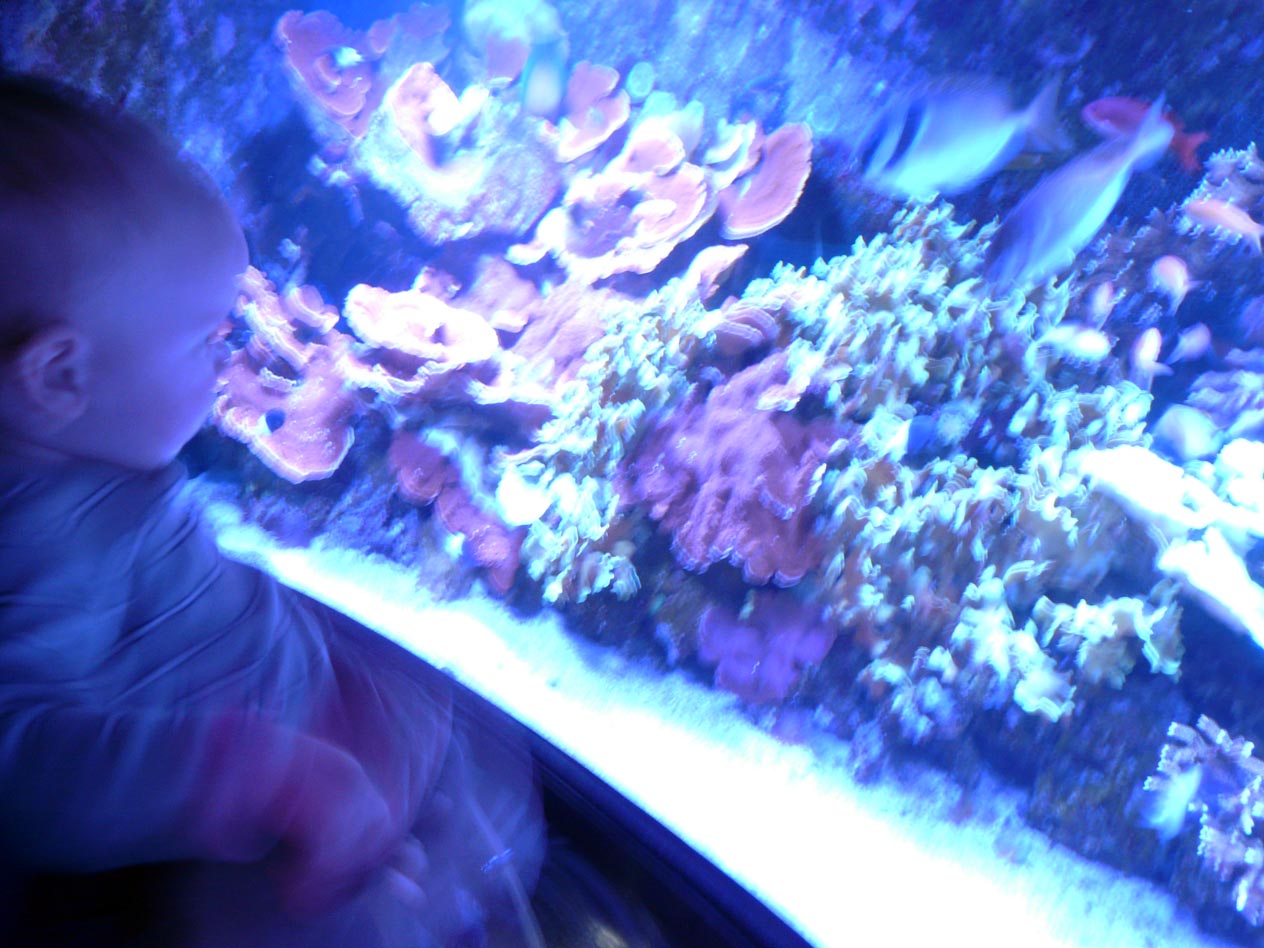
The poem was inspired during a recent visit to the London Aquarium with my ten months old grandson and his parents. The child gazed in wonder at the graceful ethereal dance of fish in their water world, a hand span from his face. His astonishment was catching.
I’m convinced we all have intuitive access to intimate knowledge of life throughout all stages of evolution, sensed with eyes open or closed, though often masked by the imposing literal forms of perception our education gives greater value to.
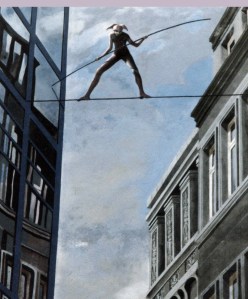
Through genes and the endowment of a universal mind, children easily embrace complex visionary experiences and insights, like catching the essence and poetry of things around them. That is, if their imagination is encouraged. Later on, it may take some rope-walking skills to bring the inner presence that unites us to the divisive outer world.
Inspired and taken from ‘The Mind World’ – Volume Four of Hazrat Inayat Khan’s lectures.
The heart, in Sufi terms, functions as a mirror – and more …
Whatever is reflected in the heart does not only remain a reflection but becomes a creative power productive of the phenomena of a similar nature.
So, for example, a heart that is holding in itself and reflecting the rose will find roses everywhere. Roses will be attracted to the heart and roses will be produced from it and for it.
As this reflection deepens and becomes stronger it becomes creative of the phenomenon of roses and the symbolic qualities we associate with roses.
Equally, the heart that holds and reflects wounds will find wounds everywhere. It will attract wounds and it will create wounds; for that is the phenomenon of reflection.
There are examples to be found in the world of people who by retaining a thought have created on the physical plane its manifestation, its phenomenon.
The reason is – that the phenomenon is not only an image as produced in the mirror – but that reflection in the heart is the most powerful thing.
It is life itself – and it is creative.
If the heart is calm enough to receive reflections fully and clearly, one can choose for oneself which reflection to retain and which to repel.
☼ ☼ ☼
A calm heart is of course a rare event, especially in the turbulent and rushed environment most of us live in, or fight for existence. We may however remember such moments of grace. And to appreciate the process of reflection as a psychic law can explain many mysteries.
My two quest novels, ‘Course of Mirrors,’ and its sequel, ‘Shapers,’ (found on my book page,) are inspired by the phenomenon of reflection.
Exciting … If you type … Ashen Venema, Shapers … into google, you’ll find several platforms that allow you to pre-order #shapers. The e-book link will follow once the paperback is released.
*
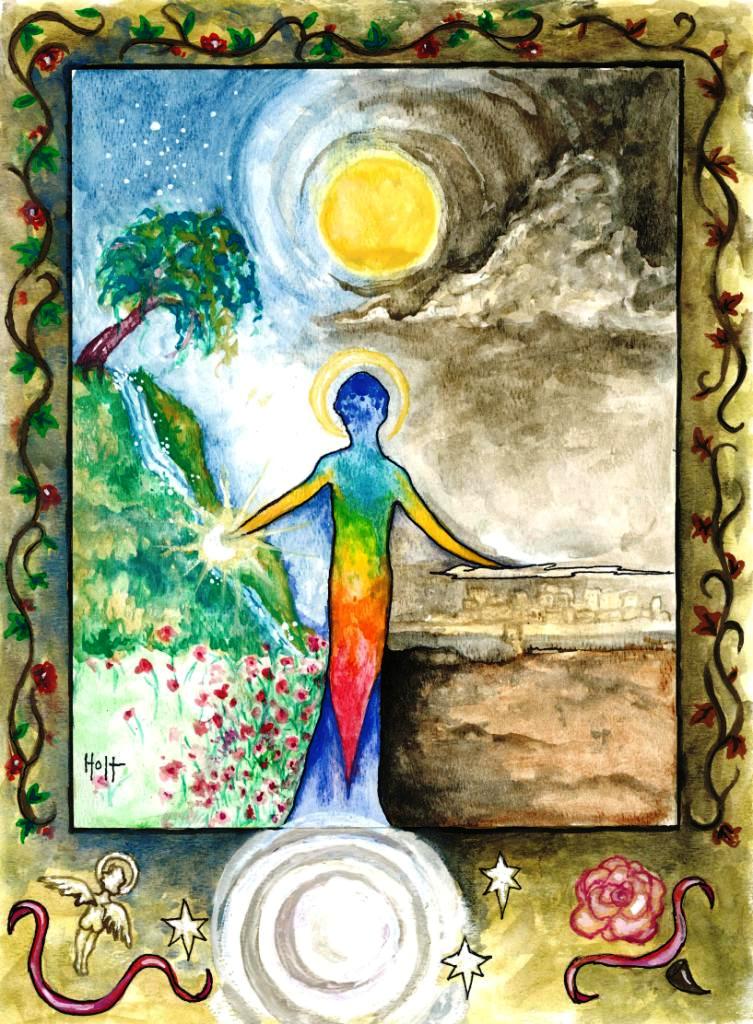
The image above is a painting by Cynthia Holt, inspired by some of my poems. I lost contact. Can’t find her now
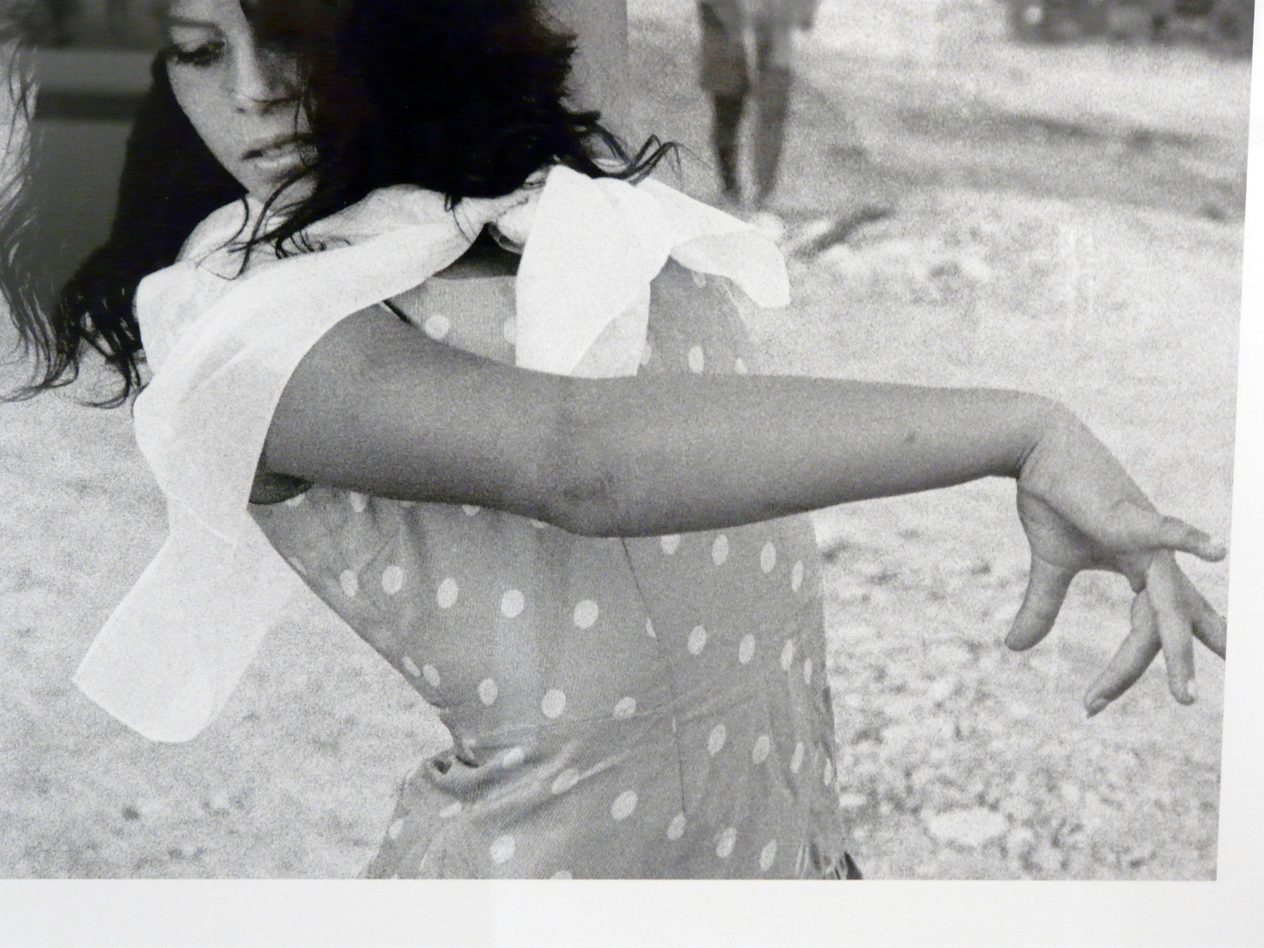
Last month I shared my translation of one of R M Rilke’s Sonnets. Following on, I dug up the poem ‘Spanish Dancer,’ by Rilke, thinking that after our dark moon phase, we could do well with connecting to the Carmen spirit so powerfully expressed in the flamenco dance. When translating poems from German I mainly disregard form & rhyme, instead I try and lift the feeling and essence I experience while reading.
The wonderful image is from a 2014 photo exhibition I saw in Amsterdam. So sorry, I don’t have the photographer’s name.
SPANISH DANCER
As a match, struck by the hand, white,
before turning to flame, breaks out
into flickering tongues, so within
the circle of close onlookers begins,
quickening, bright and hot, her spiral
dance to flicker and catch.
And suddenly it is flame, fully flame.
With one glance she ignites her hair
and in an instant swirls with daring skill
her entire dress into this ardent blaze
from which, like startled serpents, her
naked arms dart alive, rattling.
And then: as if the fire might relent,
she gathers it all in and casts it off,
imperious, with a gesture of contempt,
and sees: there, raging on the ground
it lies flaring on and will not submit.
But victorious, assured, with a sweet,
hailing smile she raises her face
and stamps the blaze, with small, firm feet.
Spanische Tanzerin, Rainer Maria Rilke, Neue Gedichte, 1907
Translation: Ashen Venema
Spanische Tänzerin
Wie in der Hand ein Schwefelzündholz, weiß, eh es zur Flamme kommt, nach allen Seiten zuckende Zungen streckt -: beginnt im Kreis naher Beschauer hastig, hell und heiß ihr runder Tanz sich zuckend auszubreiten.
Und plötzlich ist er Flamme, ganz und gar.
Mit einem: Blick entzündet sie ihr Haar und dreht auf einmal mit gewagter Kunst ihr ganzes Kleid in diese Feuersbrunst, aus welcher sich, wie Schlangen die erschrecken, die nackten Arme wach und klappernd strecken.
Und dann: als würde ihr das Feuer knapp, nimmt sie es ganz zusamm und wirft es ab sehr herrisch, mit hochmütiger Gebärde und schaut: da liegt es rasend auf der Erde und flammt noch immer und ergiebt sich nicht -. Doch sieghaft, sicher und mit einem süßen grüßenden Lächeln hebt sie ihr Gesicht Und stampft es aus mit kleinen festen Füßen.
As it assumes possession rather than obeys the mind,
Ignoring the hesitant gesture of a radiant hand
It wilfully forges ahead, cutting sharp into stone.
Nor does it ever slow down enough for us to win distance,
Yet oiled by itself remains in the silent halls of fact.
It circles in living and claims to know best about living,
And with equal resolve creates, destroys, indifferent to all.
Yet our being remains spun in the mysteries of birthing,
Origins from enchanted wells, a play of pristine powers,
To behold only with eyes closed, and in adoration.
Words still softly dissolve before the unspeakable state,
While the most resonant stones give form to ever new sounds,
Gathering music into the divine unmade.
Rainer Maria Rilke
Translated by Ashen Venema
A friend called earlier, lovingly concerned, wondering why I hadn’t posted anything this month. I don’t plan posts ahead, but asking myself – what lingers in my mind – this poem by R M Rilke asked for attention. I used it to upfront a film degree dissertation (as a mature student) during the mid-90s … ‘Body Electric,’ An Exploration of Human Identity in the Digital Age. Once I discover how to transfer Mac Claris Work from floppy discs into a Word doc. or PDF, I’ll share the dissertation and other articles with my readers.
I like translating poems from German into English, poems by R M Rilke, W Goethe, H Hesse. It’s an adventure to find the right word and phrase. Maybe I should share such translations more often. The title of this post … without sleep and dreams we’d go mad … relates to the above Rilke’s poem, since the internet with its avalanche of information can assume a machine-like relentlessness, and yet, we can’t do without it, which makes me grateful for being able to sleep, so my psyche can assimilate new information during dreams.
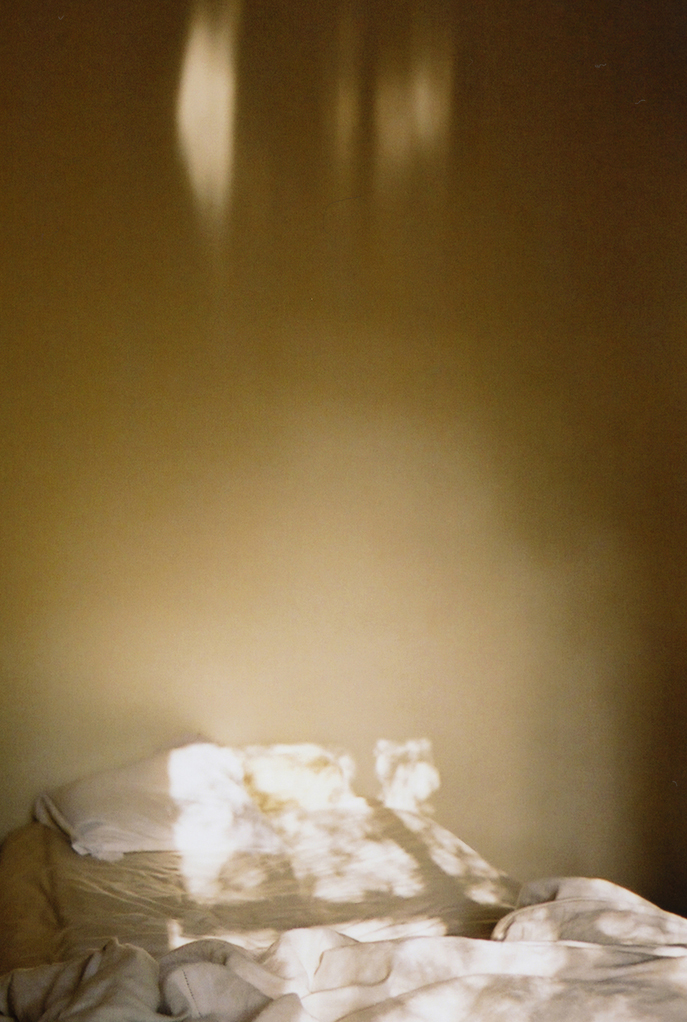
One book of poems I have always at my bedside, for when I need to shift my thoughts, is Wislawa Szymborka’s New and Collected poems 1957 -1997, translated by Stanislaw Baranczak and Clare Cavenagh, published by Faber and Faber 1999
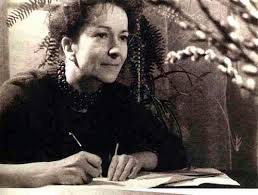
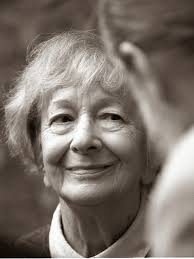
She lived from July 2, 1923–February 1, 2012
Apologies for not having the photographers’ names for the two images of her that are spanning decades.
I like the humour, the ironic style, the contradictions running through the poems like a clear spring.
I thought I share a poem in full, since I posted a fragment on Twitter the other day. And also because I remember the protagonist in my novel, Course Mirrors,’ is in search of The Real.
THE REAL WORLD
The real world doesn’t take flight
the way dreams do.
No muffled voice, no doorbell
can dispel it,
no shriek, no crash
can cut it short.
Images in dream
are hazy and ambiguous,
and can generally be explained
in many different ways.
Reality means reality:
that’s tougher nut to crack.
Dreams have keys.
The real world opens on its own
and can’t be shut.
Report cards and stars
pour from it,
butterflies and flatiron warmers
shower down,
headless caps
and shards of clouds.
Together they form a rebus
that can’t be solved.
Without us dreams couldn’t exist.
The one on whom the real world depends
is still unknown,
and the products of his insomnia
are available to anyone
who wakes up.
Dreams aren’t crazy—
it’s the real world that’s insane,
if only in the stubbornness
with which it sticks
to the current of events.
In dreams our recently deceased
are still alive,
in perfect health, no less,
and restored to the full bloom of youth.
The real world lays the corpse
in front of us.
The real world doesn’t blink an eye.
Dreams are featherweights,
and memory can shake them off with ease.
The real world doesn’t have to fear forgetfulness.
It’s a tough customer.
It sits on our shoulders,
weighs on our hearts,
tumbles to our feet.
There’s no escaping it,
it tags along each time we flee.
And there’s no stop
along our escape route
where reality isn’t expecting us.
Poets, not being profitable, get little screen-time. Wislawa Szymborska says … ‘Their work is hopelessly unphotogenic. Someone sits at a table or lies on a sofa while staring motionless at a wall or ceiling. Once in a while this person writes down seven lines only to cross out one of them fifteen minutes later, and then another hour passes, during which nothing happens … Who could stand to watch this kind of thing?’
‘I’ve mentioned inspiration. Contemporary poets answer evasively when asked what it is, and if it actually exists. It’s not that they’ve never known the blessing of this inner impulse. It’s just not easy to explain something to someone else that you don’t understand yourself.’
‘Whatever inspiration is, it’s born from a continuous “I don’t know.’
Her words bring to mind a Rumi quote: ‘Sell your cleverness and buy bewilderment.’
Follow this link to Brainpickings and find a number of write ups about Wislawa Szymborska
Brainpicking’s Bulgarian creator, Maria Popova honours language, and somehow manages to bring context and coherence to the irrational and the imagination. Her curiosity is unlimited. She writes about my favourite people in the world. Among them are poets like Wislawa Szymborska.
Always keen to bridge and connect seemingly unrelated intellectual territories, I tend to dip into essays of poet-philosophers and cultural theorists stacked near my bed.
Paul Virilio’s ‘Open Sky’ is a recent addition, translated by Julie Rose in 1997. Not an easy read, but the analysis of the social destruction wrought by modern technologies of communication and surveillance drew me in. The last chapter, Escape Velocity, relates a striking experience by Buzz Aldrin during the Apollo 11 mission. I share it here, within a short excerpt from the chapter, curious to discover what my readers make of it:
… Inflated to fill the dimensions of the world’s space, the time of the present world flashes us a glimpse on our screens of another regime of temporality … Outrageously puffed up by all the commotion of our communication technology, the perpetual present suddenly serves to illuminate duration. Reproducing the alternation between night and the solar day that once organised our ephemerides, the endless day of the reception of events produces an instantaneous lighting of reality that leaves the customary importance of the successive nature of facts in the shade; factual sequences little by little lose their mnemonic value …
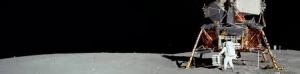
… In his memoirs of the first moon landing, Buzz Aldrin in his own way confirms this disqualification of sunlight. Listen to what he has to say from the surface of the night star:
‘The light is also weird. Since there’s no atmosphere, the phenomenon of refraction disappears, so much so that you go directly from total shadow into sunlight, without any transition. When I hold my hand out to stick it in the light, you’d think I was crossing the barrier to another dimension.’
It is as though, for the astronaut, shadow and light were two new dimensions, inasmuch as any kind of transition no longer exists for him. The loss of the phenomena of atmospheric refraction produces a different perception of reality …
Virilio draws a comparison to a similar loss for earthlings … the different degree of illumination which, before the invention of electricity, still marked the hours of the day or the days of the year has become of diminished importance. Under the indirect light from screens and other control centres of the transmission of events, the time of chronological succession evaporates, paving the way for the instantaneous exposure time as harsh as that floodlighting of which Aldrin tells us:
‘On the moon, the sun shines on us like a gigantic spotlight.’
All three astronauts of the Apollo 11 mission had problems after their return to earth. Spatial and temporal disorientation are not easily reconciled with one’s reality identification. Virilio writes … as for Aldrin, after two nervous breakdowns, several detoxification treatments for alcohol abuse and a divorce, he was to wind up in a psychiatric ward.
Struck by Aldrin’s experience, I thought about the increased screen time, especially now so many of us engage in since the corona virus changed our rhythm of interaction with nature, local environments, family, friends, and the wider world.
I first pondered the cultural implications of the digital advent during a mid-1990s film degree as a mature student. For those interested – my post from 2018 gives a flavour of my dissertation – click here for ‘Body Electric- – it’s worth a visit.
John Wheeler came up with the idea of the universe as self-observing system (being.) Light travels at 186 000 miles per second. When we look into deep space we are seeing galaxies over ten billion years old. In that sense everything we see is in a past, which our observing consciousness creates. So I ask myself what realities do we envision during this surreal corona time, individually and collectively?
Is Paul Virilio’s bleak vision justified? Is the hyper centre of present time becoming the sole reference axis of worldwide activity? Is the individual of the scientific age, with diminished positional reference, losing the capacity to experience him/herself at the centre of energy?
Click here for an article from the Frieze magazine.
Or – can we create enough pockets of stillness to counter the acceleration of the fall upwards, of progress propaganda, and instead re-connect to body, earth and roots?



 One book of poems I have always at my bedside, for when I need to shift my thoughts, is Wislawa Szymborka’s New and Collected poems 1957 -1997, translated by Stanislaw Baranczak and Clare Cavenagh, published by Faber and Faber 1999
 through the poems like a clear spring.
 Always keen to bridge and connect seemingly unrelated intellectual territories, I tend to dip into essays of poet-philosophers and cultural theorists stacked near my bed.
 ‘The light is also weird. Since there’s no atmosphere, the phenomenon of refraction disappears, so much so that you go directly from total shadow into sunlight, without any transition. When I hold my hand out to stick it in the light, you’d think I was crossing the barrier to another dimension.’


 Course of Mirrors