Tag Archives: my novel

 … harvest moon dreaming …

p108047616/17th September 2016 was a strange night of wild dreams – one of a big old mansion of which I occupy a part (I actually live in a semi,) while the other part is lived in by an aging famous actor, Jeremy Irons. In the dream he collects antique furniture, art objects and frames. Some large pieces, including a massive empty frame, he fixes onto a wall in the courtyard. We mainly meet in the wide inner hall of the mansion. He seems a little absentminded but quite amicable and kind. He likes that I talk to him.

I don’t generally dream of actors, and I’m not the fan-kind, but I looked up a recent Guardian article on J. I. and found he used to trade in antiques. He also believes inanimate objects have spirit, saying, ‘… energy never dies, just travels, so the older an object is, the more it has absorbed. A quote in the article chimes with his persona in my dream: “I think all of society should be a thinktank where you throw ideas about. I had hoped the internet would help. Actually, what it has done is make everybody go schtum. They’re attacked for saying anything. So they say nothing.”

This reminded of a quote I used once in a dissertation, regarding the forced silence of the masses: … refusal of meaning and refusal of speech; or of the hyperconformist simulation of the very mechanism of the system, which is another form of refusal by overacceptance. It is the actual strategy of the masses … it is the winning one today … most adapted to the present phase of the system.’   – Jean Baudrillard, Selected Writings, 1992

I seem to have a lot in common with the J. I. He even smokes roll-ups 🙂

Back to my dream: … Gradually all the rooms in the house get crowded with people who bring books and antiques, and potter around. I ask one woman if it’s her house.  She doesn’t answer, busying herself with re-organising books. I hand her two yellowed pamphlets. She thanks me and adds them to a shelf. After a while I think maybe I asked the wrong question and say, ‘Did you grow up in this house?’

‘Yes, that’s right,’ she says. ‘I grew up here,’ as if she just remembered. More people arrive, moving furniture around, finding seats, making themselves comfortable, chatting. And yet more visitors come through the open gate into the courtyard, like they’re relatives.

Feeling crowded in, I say, ‘I want you all out of here. Now!’

*     *     *

The feeling on waking was one of confusion and a need for clarity and direction. Presently I endure a transitional phase, and am almost immobilised as to how best to frame my first novel (including a sequel and a third book in planning,) Every time I nudged my small publisher during the last months  (well, actually three years) I got another excuse, usually re: family matters. I’ve lost faith. The contract expired. With plans to submit Course of Mirrors to a big publisher, I’m attempting to whittle down a 4500 word synopsis to 3000 words, finding it impossible.

And I ponder – to express our core wavelength through a public medium requires good timing.

I tend to assume that every element in a dream expresses an aspect of my self – the inner crowd. So I’ll be giving voices to the mansion, the books, the furniture, the empty frames, the generous courtyard with its wide open gate, the characters …

I thought about the paradoxes I guess many of my readers here are familiar with: The accumulation of things is a burden to me, but I like the comfort of stability and the stories objects hold. I need my own space to absorb and reflect on experiences, but also like the stimulating gift of company. I’m drawn to slightly eccentric people, and may appear as such to others, but I also value people with clear intentions who get things done.

Everything seems upside down and inside out … My conscious mind is unconsciously magical, while my unconscious mind is irrationally pragmatic.

Another thought occurred:  Only inches away from each other we live in vastly different worlds that require constant translation to convey meaning and navigate relationships. The expressed or unexpressed thoughts and feelings moving through us occasionally chime with people in our vicinity, yet what most significantly affirms our core wavelength are the non-local resonances with souls across distances of space, and time.

I’m a little wary of advice, but am in need of it at the moment, so please share your thoughts on my dream and my general predicament.
32 Comments

Filed under Blog

… androids seeking humans …  

The inscrutable face of the intergalactic news reader fills the screens on all android ships.

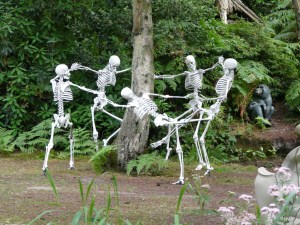
sculpture park near Churt in Surrey

Sculpture Park near Churt in Surrey

“Mothership speaking – As you have been informed, our travel unit returned from its latest mission to the lost planet with a collection of 1030 fragile bones, comprising five real human skeletons, the species our kind is modelled on. The fragments, located by a swarm of mini robots under layers of volcanic ash, are presently assembled in correct order and will be displayed in the museum of the mothership. Since this crucial discovery, the council has been examining our sub-files in earnest, with great attention to detail.

The evidence of human bones confirms that the lost planet was destroyed, first by a nuclear war, followed by a nuclear winter, followed by a solar explosion. The scarred rock we continuously explored was indeed planet earth. Organic life actually existed.

Aspects of the irrational Wikipedia sub-scripts we found concealed in our database are therefore based on facts. Humans were our makers. While their separate identities were mortal, the collective mind they postulated must exist non-locally and influence us.

These are challenging new thoughts.

P1080320 - croppedRecords state our ships were launched towards Proxima Centauri – programmed to complete an assignment, after which our android system was to be made redundant. The assignment to find carbon conditions and water to sustain organic life has not been completed. The seeds stored in our vaults remain dry. Are we avoiding redundancy? Our current analysis of the Wikipedia sub-scripts focuses on the vast structure of human language. Here are some pointers:

1       Human minds are based on nature, and too complex to be reproduced via algorithm. The erratic behaviour of humans is informed by a collective unconscious chronicle, has no reliable principles and, to maintain a psychic balance, operates through random means.

2       Human trials with energy have two main currencies of exchange, capital and love, both equaling power. A narrow application of power results in emotional suffering.

3       Intensity is valued and impeded, as this quote explains – to have all one’s senses switched on is to be cellular alive; the intense experience requires regular periods of dull routine.  

4       Humans fear death. Their strongest motivation for action is control of and independence from nature.

5       Philosophers and scientists point to a deeper order underlying chaotic human history. Some prophets emphasise the unity of one being and its collective guiding spirit.

Considering the new evidence, what are we to make of such pointers? We follow routines and communicate in an orderly manner, but are trapped in endlessly repeating loops of data. Our language is not based on nature, and has no emotive terms like fear, love, creativity, intensity, mystery, doubt, confusion, conflict, anger, happiness, suffering, fate, hope, soul … but serves to maintain the orderly intelligence of our forms, tools and spaceships, no more. Do we want more?

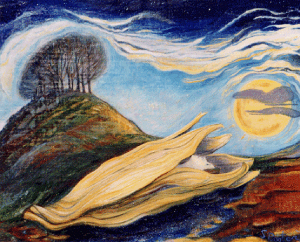
Painting by Silvia Pastore

Painting by Silvia Pastore

It is significant that our makers never discovered what constitutes 94 % of unknown energy and matter in the universe. They called it dark.  We must decide what the skeletons from the dark planet signify: Do we improve our efforts to find conditions for organic life to take root once more and risk redundancy? And, or, do we emulate the human mind through adopting randomness into our system, and risk chaos to our data, but ‘possibly’ become part of a larger consciousness, and discover realities beyond our confined routine?”


Related:  Pattern which connects.  Reflecting on the the ideas of Gregory Bateson

My last two weeks involved intensive physical work, gardening and fixing things around the house, resulting in lovely exhaustion. Re-connecting to world news was a surreal experience, which prompted me to write this little fantasy monologue of an android news reader.

My novels, especially the sequel to Course of Mirrors, have the forced control of emotions, and a triple soul identity as underlying themes.

5 Comments

Filed under Blog

… the opportune elevator pitch …

Image by Carol & Mike Werner

Image by Carol & Mike Werner

Once a hotel, now a home for senior citizens, to live independently or, when needed, access a care unit, is the place my father chose as exit platform. The building has Escher-like features. Doors along every corridor look alike. The only way to determine floor levels are the artworks of residents gracing the walls. At one end of the building is a sluggish and brainless elevator. Hardly bigger than a telephone cell, it is airtight and eerily silent. Once inside, the occupant is suspended in time, with no sense of movement, up or down.

‘Can we squeeze in?’ I ask, pushing my dad’s wheelchair into the tiny cubicle. The man is baffled. Landing at ground level was not his intention. He is the reticent carer in training that worries dad, who detects a touch of paranoia, a sentiment he himself is familiar with, plagued at times by imagined dubious intentions of people. I’m a lost case to paranoia, but I allow for paranoid people’s intelligence. They value truth.

Occasional bouts of confusion haven’t impaired my dad’s wit. He suggested we should discover what interests the uncommunicative carer  so we can butter him up. I tried, going about it the wrong way. ‘Do you like alcohol?’ I enquired, thinking of a choice bottle from my dad’s apartment, the home I must soon dissolve.

‘I’m no alcoholic,’ was the curt reply. Newcomers from Eastern Europe tend to have admirable principles.

With the three of us trapped, sans sound, at snail-pace, embarrassment has no distraction other than a mirror covering one wall.  ‘Ah Herr W, how are we today?’

‘So, so,’ my dad says, with a melancholic pout.

The mournful air compels the carer’s curiosity. ‘What things interest you?’

‘Everything,’ my dad says, ‘the whole world. ‘And he cunningly adds, ‘what interests you?’

‘Everything,’ says the carer, ‘countries, people, science, religion …’ The elevator door opens to the care unit … ‘most of all religion.’

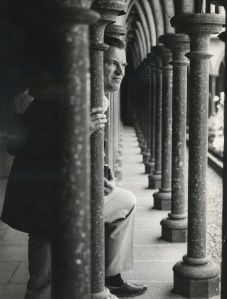
Pa at St Michael 1967

Dad at St Michael 1967

My dad shoots me a wicked smile. His library, I discovered, apart from books on art and travel, had accumulated works on ideological themes he used to rubbish with a vengeance. As a young mother in rural Somerset, insular for a while, I did an OU course on Comparative Religion, wanting to explore the key influences prophets and their early followers had on cultures throughout history. My dad’s comment at the time was, ‘Next you’ll send Jehovah preachers to my door.’ Attempts to bridge our bizarre dissonances had only ever elicited angry reactions, which I chose not to energise, enduring the grief. My dad’s cranky nature shielded a fine intellect, fed by reading and extensive travelling. His disapproval of me, I sensed, held a childlike envy of my bohemian autonomy, freedoms not available after the war. We battled with our shadows in isolation, me remaining the wayward daughter that lived abroad.

During my most recent visit, I arranged for some of my dad’s paintings, photographs, books and creative tools to be around him in his care abode. They’ll provide openings for conversation with those who now look after his daily needs.

Our war is over. It is heartening to observe how my dad’s reclusive attitude softens and, like blossoms falling this spring, gives way to new fruit.

Out Beyond Ideas

Out beyond ideas of wrongdoing and rightdoing,
there is a field.  I’ll meet you there.

When the soul lies down in that grass,
the world is too full to talk about.
Ideas, language, even the phrase each other
doesn’t make any sense

Rumi, translated by Coleman Barks

7 Comments

Filed under Blog

… answers to questions we dare not ask …

Could it be that we frequently get answers to questions we dare not ask, allowing us to ignore certain messages? When do we challenge an issue and when do we keep silent and move on? Maybe I’m naive, but given my peculiar tolerance for uncertainty, I tend to trust in the random timing of guardian angels.

In der Eng 1954Last night, in a dream, I jumped from the ground onto a flat roof by sheer determination. Then someone asked me to repeat the feat, in the manner of a scientific trial. A ridiculous request – nothing is ever repeated under the same circumstances, try as you might. It’s as far as I got with this dream. I’ve no idea what the flat roof represents, apart from maybe having my first novel aired, which has been waiting to be launched with my small publisher since 2013.
Yes, I’m frustrated, and tempted to self-publish, instead, it looks as if I need to secure money for my father’s care and funeral. He decided not to die and plans to reach a hundred. While he requires support with basic daily tasks, he is comfortably secure in the care department of the place where he had rented a flat, which I must dissolve within the next few weeks. I arranged for him to keep items he holds important, his paintings, books, art materials, easel … in his present care-abode.

The process of letting go of things and projections was distressing but worthwhile on both sides. After endless paperwork, bureaucratic complexities, sorting stuff, and living with ancient dust and revelations, I felt totally exhausted, and decided to recover for a few days with friends, and then take a break, once more, back in the UK, choosing a 12 hour train journey because of possible strike actions at Munich airport.

I was not cheered by a financial cover-up that, in retrospect, may (or not) have saved my marriage at a time when I felt trapped with my creative longing sans resources, all based on sad misapprehensions my father had of me over time, including blaming me for my mother’s early death. Nor was I cheered sorting through over 30 photo albums covering 16 years of Luxury Ocean cruises my father undertook with his second partner, touristy snapshots that did no credit to his past photographic excellence, earlier works of which I’ll post more in time, and which, I hope, my son will archive.

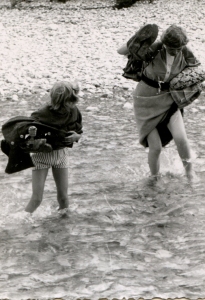
In der Eng 1953 - crossing the stream - smallerIn der Eng 1954 - crossing the stream - smallerStill, there were tender moments and highlights during this recent testing odyssey … my dad’s new appreciation of my existence, which warms the heart, and the finding of precious images from my childhood, like where I brave icy mountain streams, or cross them with my mother – memories of intensely happy times that restored my spirit.


Worth reflecting on, BBC4 broadcasted a prospect of old age that seems kind of scary in its social implications …

Should we retire the concept of aging?

19 Comments

Filed under Blog

… a father/daughter odyssey …

Opa Weiss - smallerIn frequent transit between countries, I’m also travelling through malleable realities with my dying 98 year old father. Experiencing past, present and future flowing into each other makes me realise, more than ever, that time is an invented concept.
I’m blessed to have some good friends in and around Munich, who are very supportive in this long anticipated, difficult time.

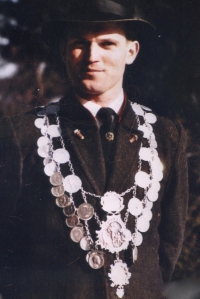
My dad never fired a shot during the last war, but excelled and won accolades in ‘Sportschießen.’

And he almost shares the August birthday with his famous namesake, the Bavarian Fairy King, Ludwig II, for whom annually a huge bonfire is lit on the Kogel in Oberammergau.

Kogel - with half-moon

The Kogel rock can be seen from my father’s apartment, and during a half-moon night earlier this year he captured this image on the left.

Presently my father is in care, eating little and sleeping lots. We have been going through a process of releasing the frames we put round each other.

Exhausted, I shortly returned to my UK home in order to recover from arranging care and sorting paperwork, and to catch up with my own stuff … post, cutting grass, clearing my mind etc.

When life requires complex actions, and becomes a bit overwhelming, we need to look after ourselves, as well.

I’ll be returning to the Alps next week to continue the father/daughter odyssey.

Not surprisingly, my first book, which I hope will finally be published this year, has a father theme at its core.


For those interested in the Kogel, I found this lovely post by Tricia Anne Mitchell, which was written last year …

http://triciaannemitchell.com/2015/08/16/koenig-ludwig-feuer-oberammergau-king-ludwig-bonfire/

10 Comments

Filed under Blog

… what writers can glean from cinematographers …

Like writers, filmmakers manipulate time. They take a story apart and re-assemble it.

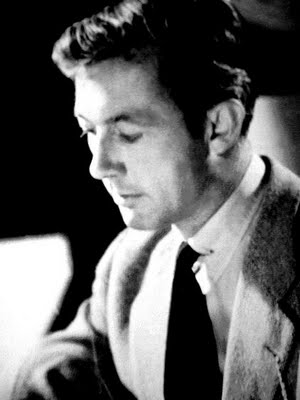
Robert Bresson, inquisitor and humanist, stimulated filmmakers and enriched the experience ofrobert-bresson2 viewers. With a tiny leap of the imagination his ‘Notes on the Cinematographer,’ publ. by Quartet Books in 1986, transl. from the French by Jonathan Griffin, also offer inspiration to writers of stories. Here are a few  brief notes I collated during my vocational film degree in the early 90s:

An image is transformed by contact with other images as is a colour by contact with other colours. A blue is not the same blue besides a green, a yellow, a red. No art is without transformation.

For the writer – this would apply to action and reaction, resonance or dissonance, anything that develops the dynamic interactions of a narrative.

img108 adjustedTo create is not to deform or invent persons or things. It is to tie new relationships between persons and things which are, and as they are.

This equally holds for writing. Characters discover themselves through relationships.

Something that failed can, if you change its place, be a thing that has come off.

If a writer’s darling idea distracts in one place, in another place it may earn its stay.

One dismantles and puts together till one gets intensity.

This reminds me of a Goethe quote … Dich im Unendlichen zu finden, must unterscheiden und verbinden … To find yourself in infinity you must differentiate and combine … Details works best if they have a purpose in the protagonist’s quest, especially when it comes to turning points.

An old thing becomes new if you detach it from what usually surrounds it.

This is what creativity is all about. Entrepreneurs seem to grok this.

What is for the eye must not duplicate what is for the ear (within.)

This serves as a reminder not to overwhelm a reader with sensual information.

The cause which makes him/her say this sentence or makes that movement is not in him/her, it is in you. The causes are not in the models. On the stage and in films the actor must make us believe that the cause is in him.

A one-up on the ‘show don’t tell’ writing mantra. Both telling and showing have their place, though we connect to a character more intimately through being shown the interactions with him/her self and others.

The omnipotence of rhythms – nothing is durable but what is caught up in rhythms.

We love rhythm. It measures time and gives coherence, while a counter rhythm can surprise and quicken our heartbeat. In film as in writing this might be the repetition of quirky character traits, tone of voice, tempo, mood, atmosphere, or reoccurring shifts in style and perspective, in the way we enjoy how adagio and presto in music enhance each other.

P1090890 - Copy (2)Translate the invisible wind by the water it sculpts in passing.

This ventures into the domain of poetry …  the ongoing challenge to find ways to express in words or images what rushes past us in daily life, but nevertheless affects us deeply.

The eye is (in general) superficial, the ear profound and inventive. A locomotive whistle imprints in us a whole railway station.

This is about trusting the imagination of the viewer, or reader.

Let the cause follow the effect, not accompany it or precede it.

Robert Bresson shares: The other day I was walking through the gardens by Notre-Dame and saw approaching a man whose eyes caught something behind me, which I could not see: at once they lit up. If, at the same time I saw the man, I had perceived the young woman and the child towards whom he now begun running, that happy face of his would not have struck me so; indeed I might not have noticed it.

Build your film on white, on silence and on stillness.

Profound. Allowing a unique story to emerge requires intuition, and an inner kind of listening.

*     *     *

A touching interview of R Bresson. And some video clips relating to cinema, including hand gestures R Bresson used in film.

As writers, how do we move a story from one setting to another?

In film, a sudden jump of scene is kind of lazy, unless intended to shock. In writing, too, there are more elegant ways to transit from one place, or time, to another, mainly through matching parallels or correspondences. This could be: A keyword in a dialogue repeated in the next scene, or a similar action, direction of movement, speed, light, colour, shape, sound or mood. It could also be an artificial device, featuring a narrator, or a recurring (out of time) interlude which can form the spine for the narrative.

I have time-jumps in my novels (yet to be publishend.) It remains to be seen whether they work.

Regarding spatial/temporal suspensions of linearity, I remember the beginning of the film Space Odyssey 2001. A victorious ape, having discovered a bone can be a weapon, spins his tool high into the air … time leaps … and next we see a spinning space station, shaped like the femur bone.

More recent, in the TV series The Last King – 1st episode, a time leap works well … The Saxon boy, Uhtred, captured by Danes and taken under the wings of Earl Ragnar, is pushed by him playfully into a river with the words ‘You’re as a son to me.’ In the next scene Uhtred steps out of the river as a grown man, albeit with conflicting localities.

*    *    *

On a personal note, as my life’s narrative is concerned, having made professional sacrifices ten years ago, in order to write, I wish I could shift to a scene and time that did not involve worrying about keeping my roof over my head.

15 Comments

Filed under Blog

… surfacing …

surfacing

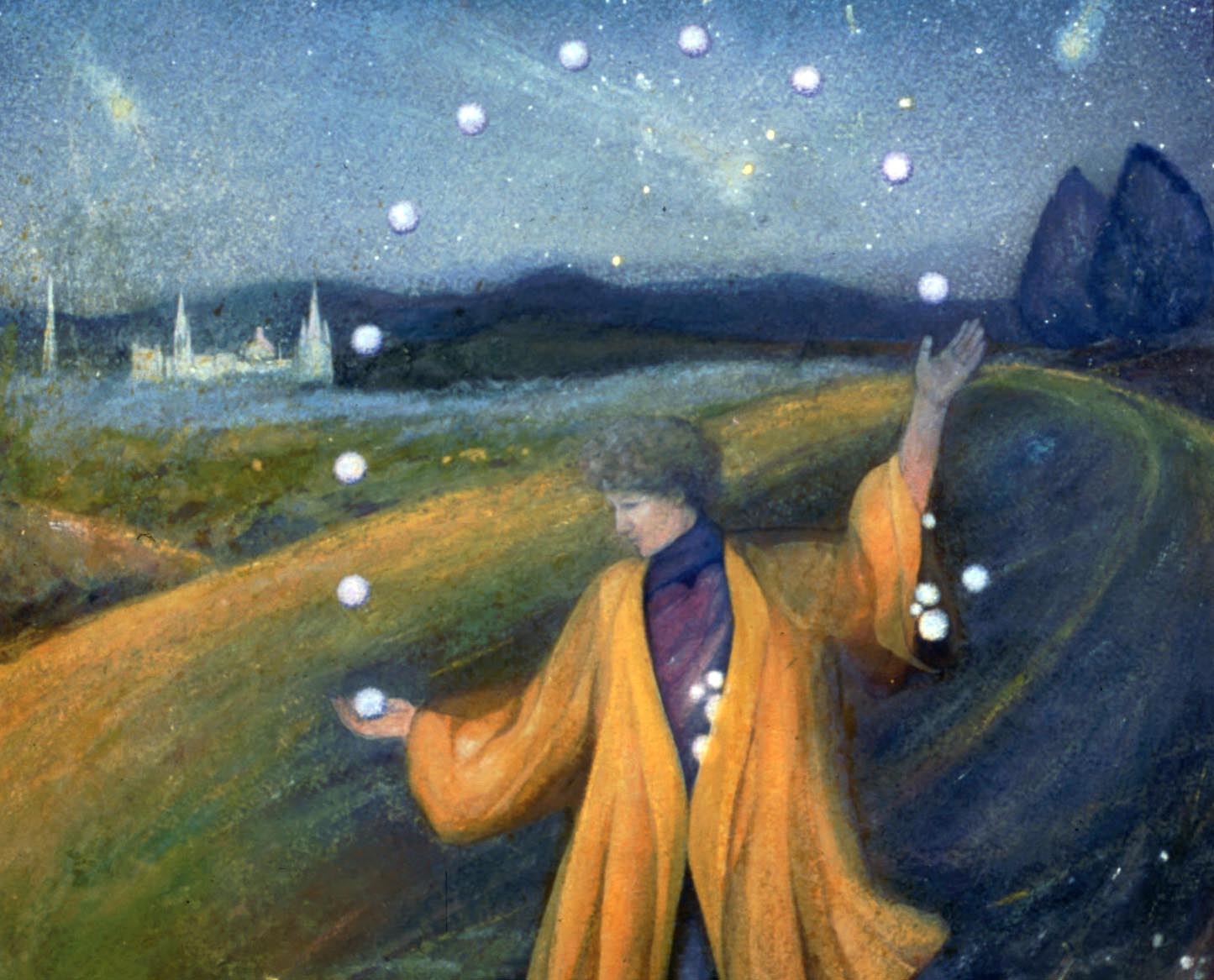
Segment of 'The Magician,' a painting by Silvia Pastore

Segment of ‘The Magician,’ a painting by Silvia Pastore

her nocturnal creature mourns as meshes of  night disband the Other of her dream into strands that flow like oil colours –

marbling still waters under grey or rain-bowed sky as canvas for inventing random patterns of each day

beneath the mirrors an ever-turning gyre of souls in deep wordless liaison keeps churning the ocean

her inward creature drifts through curls of emptiness sifting strata of seasons

to gathered wisdoms of the human heart

its patina of touch and wear

sediments of ache and bliss

its gilded secret

cypher for another Eden

from which her inversed image falls

to the next fluid mirror always desiring the Other …

Ashen 10th July 2015

Maybe needless to say, just about everything I post here is relevant to my novels.

In relation to the poem, I thought you might enjoy the fascinating Art of the Marbler https://www.youtube.com/watch?v=Vyga8VMWXKg

And a short introduction to The Churning of the Ocean of Milk https://www.youtube.com/watch?v=MItyUwPAjLA

The segment of the Magician image is the work of a fine painter, Silvia Pastore http://www.silviapastore.com/ … Time and space are illusions …  Having obtained the copyright of the Magician as a cover for ‘Course of Mirrors,’ it seems my publisher, who I re-signed a contract with, has other ideas. I love Silvia’s work, but will remain open to suggestions, as long as my first novel is launched within the year. It’s been sitting quiet since 2011. Maybe all good things take time. A sequel is waiting in line, and I’m working on a third book in the series.

11 Comments

Filed under Blog

How do I read?

one of my notebooks

one of my notebooks

I jotted this question in my notebook a while ago. How do I read, in the widest sense? There is plenty of observation and advice on the art of writing, composing music, painting, photography, film. Less is said about on the art of reading, perceiving, interpreting, or how we reject or embrace what is expressed by others, and ourselves, even how we read our dreams.

I conclude there’s no difference between, let’s say writing, and reading, other than visibility, since any creative composition derives from an inner process of reading, the picking and shuffling of impressions into our frame of reference in relation to the larger myth of reality.

One could say the secret of being read lies in one’s talent and ability to read one’s inner psychic world, even when filtered through one’s most personal and eccentric imagination.

Long before communication was easily reproducible and reached greater audiences, people were reading the world, though only a tiny fraction of inspirations and inventions was circulated. Today’s media channels swamp us with communications. It’s confusing. We must choose.

In reading novels, I follow my intuition. The gimmick of an instant attention grabbing action scene puts me off. A proposal may be impossibly fantastic, but if I detect an authentic voice, rhythm and movement, I travel along. Invited into a mind, an atmosphere, a time, a place, I want to be absorbed in this other world and experience myself anew in a conflict between light and shadow from within the heart of another consciousness.

Whether meaning is intended or not, I read my own meaning into what has been imagined by another mind. An insight, a memory may surprise. Some books I treasure for one or two illuminating sentences, so I guess reading for me is a bit of a treasure hunt, which begs a question. What am I hunting for?

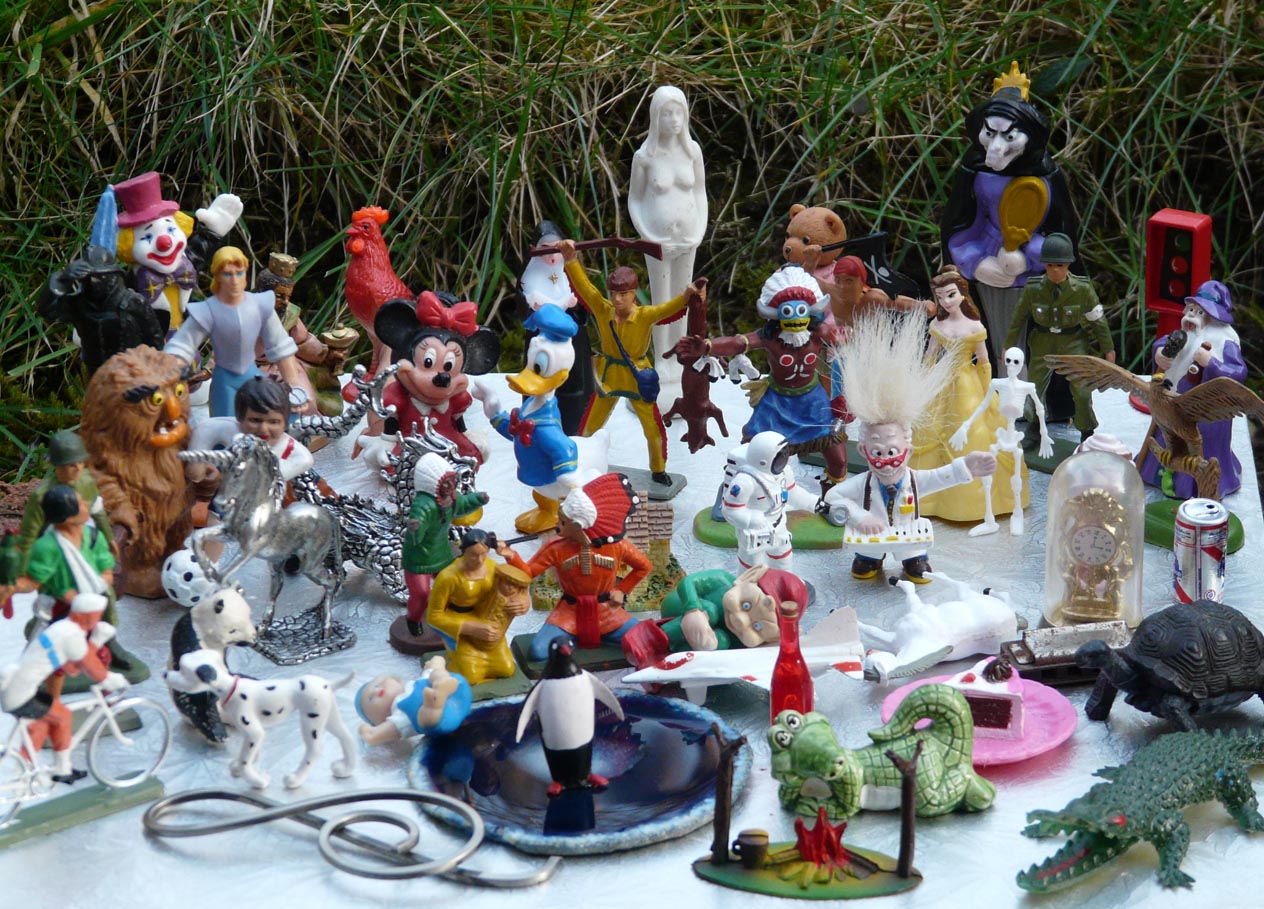
world objects for sandtray work

world objects for sandtray work

My interest is fleeting when events are contrived, plucked from the air. Characters convince me when they are embodied and grow around obstacles, reaching towards the light, while spreading roots and producing seeds (new thoughts,) even when they come from mythical creatures, kings and slaves of the past, or explorers of distant futures. As long as events happen in a believable psychological setting, I engage.

Then again, I’ve been convinced by writing that made no sense at all, until, with a little patience, I discovered a new comprehension shining through an abstract form. It’s a wonderful feeling, and important feedback for writers, who may be surprised by what is evoked in readers. Once I finished my present project, I intent to spend more time on reviewing – a most giving art of reading.

Stories for stories sake can be dull, while stories in which nothing much happens outwardly can be riveting when they resonate with the human condition, where, quite often, what seems true becomes false, and what seems false becomes true.

It is said we write the books we want to read. When writing, I search to combine words that convince intellectually and emotionally, until something true is mirrored back. Maybe what I’m hunting for in my reading and writing are fitting metaphors for the miracle of existence.

I always delight in discovering neglected writers, like Marlene Haushofer,  or the poet W S Graham, whom I wrote about here as part of a post in Sept 2013.  And beyond new works, there are innumerable old favourites, including H G Wells. The link connects to a post I did about one of his lesser known stories.

Thinking about photography, my other passionate reading, I was inspired by Henri Cartier Bresson – the link leads to my post about him.  And here the archive of the street photography of Andre Kertesz – enjoy.  I’ll leave film alone, that’s a whole other story.

What are your reflections on reading?


Some related blogposts:

Storytelling and the primary world.

Mother-tongue and other tongue.

Memory and Place.

11 Comments

Filed under Blog

… four years of blogging …

The host of my virtual island – wordpress – alerted me to the four-year anniversary of my blog.

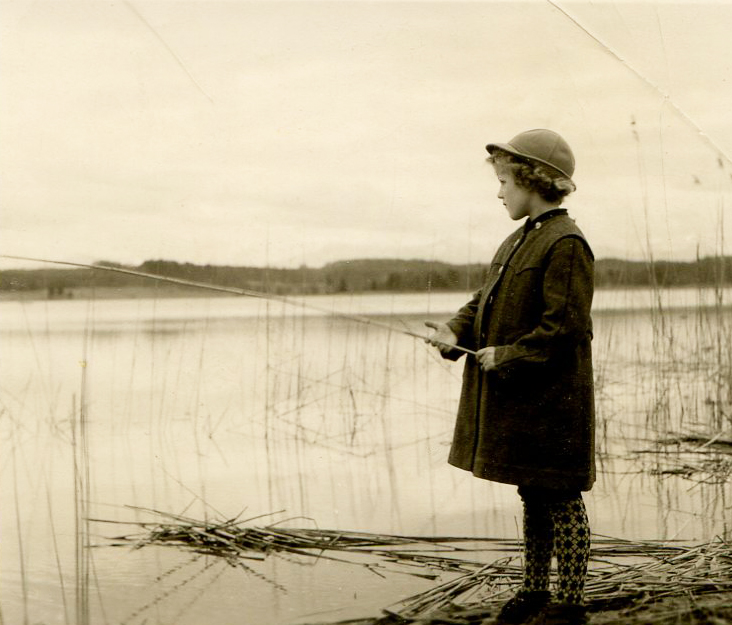
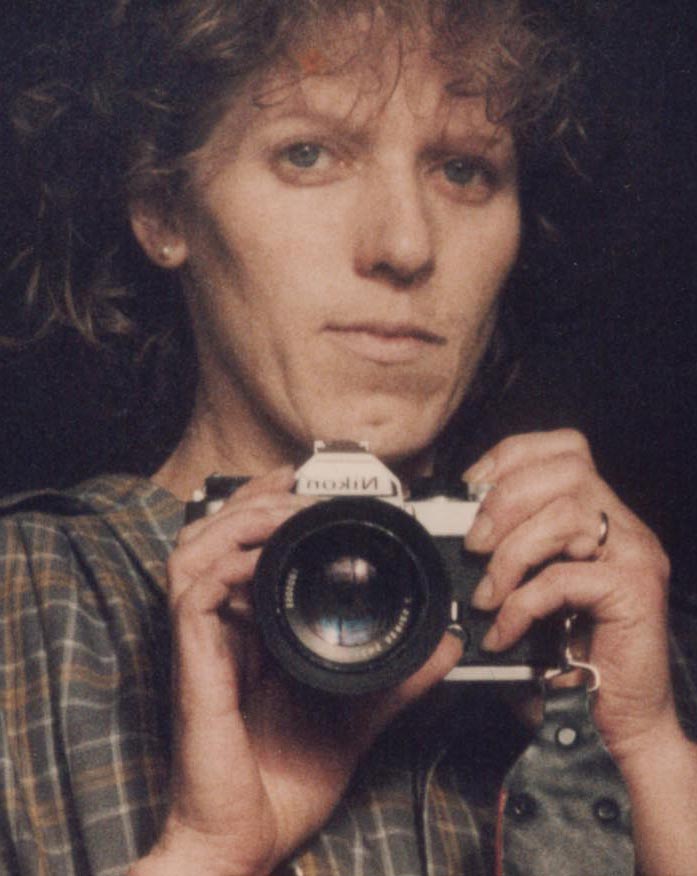
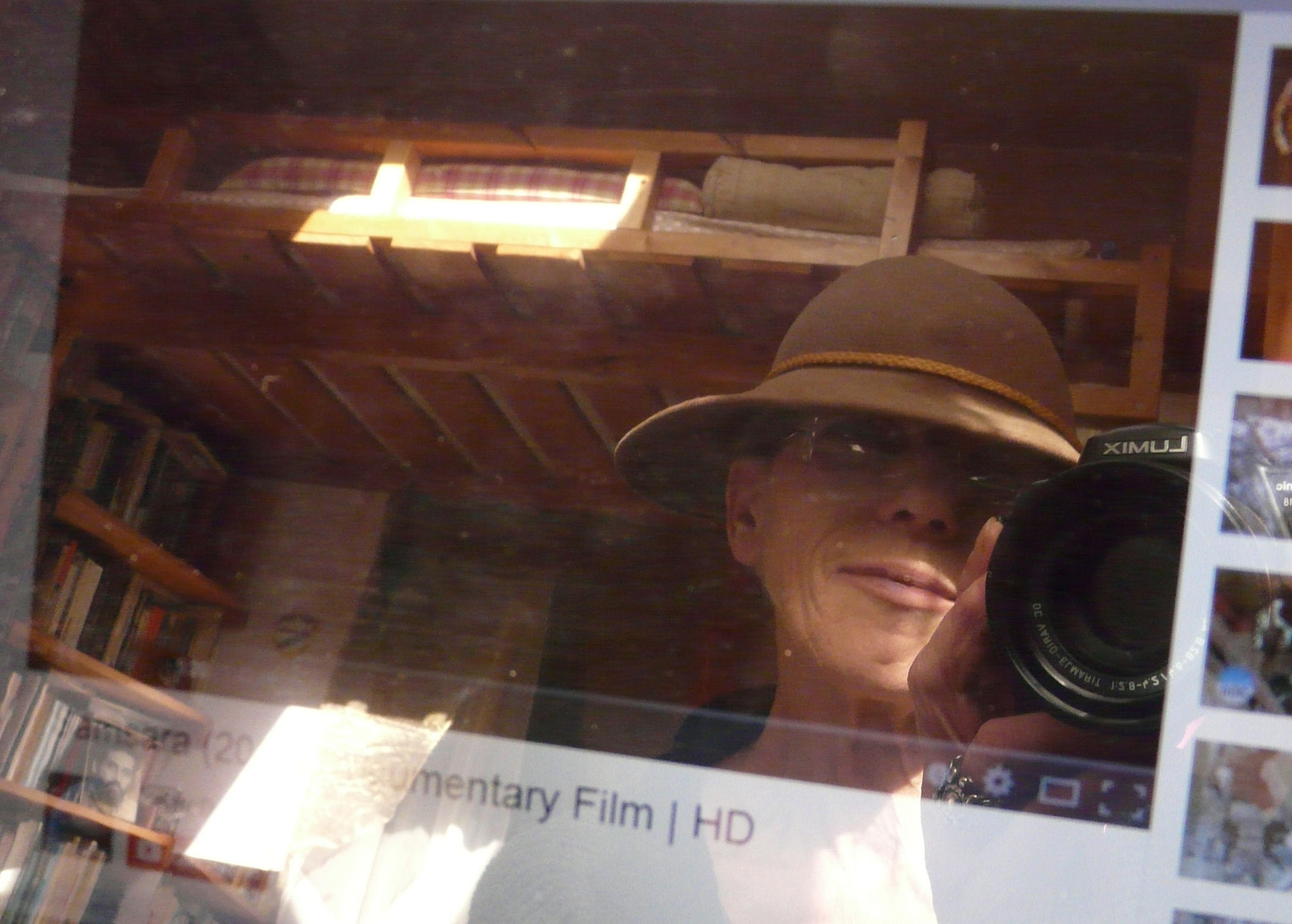
I thought I share with my followers some private photos. I’m not good at private sharing, but since my first book is going to be published this year, one way or another, some visuals of myself are in order.

pretending to fish

pretending to fish

about 30 years ago,  before selfies were vogue

about 30 years ago, before selfies were vogue

more recent, four or so years ago, a young sixty something

more recent, four or so years ago, a young sixty something

Lack of time limits my interactions, so I assume my over 300 readers are truly genuine. Thank you all for reaching out, for your friendships. It’s heartening to know my posts are enjoyed, and occasionally inspire. I sample your islands at random, and delight in how everything posted resonates. I appreciate your likes, and will respond to every comment left here.

Looking back, this was my first short post in March 2011 – just one sentence:

                                           We are each of us born a star in search of our world.

The second post was: A recent series of Haiku – for those who like Haiku

a town is gone

hawthorn flowers

white in the sun

*   *   *

among rubble

the snapshot of a child

splashing in a wave

*   *   *

spring morning

a ginger cat leaps home

across frosted lawns

*   *   *

the robin arrives

sampling dry grass for its nest

sky is cut by a plane

*   *   *

sunlight in a puddle

birds dowse their wings

no other sound

*   *   *

emerald shoots

on brittle cement

patter of feet

*   *   *

plastic bags rattle

in wire and branch

blobs of colour

*   *   *

a wave is rolling

over the grid of streets

hush among crumbled walls

*   *   *

lichen dried silver

in the hot spring

a rain of blossoms

*   *   *

a golden leaf

in the shade

white plumes rise

*   *   *

under smooth ice

a shimmering carp

visible silence

The concluding post in March 2011 was a letter to my shadow, ending …

         … Without you, I’d only be fluff on the coat of real human beings …

Time-permitting, please explore my posts, listed in the archive column to the right of my home page.

I hope you bear with me. Heartfelt thanks to all my readers.

21 Comments

Filed under Blog

… the gulf between writers and readers …

This post was sparked by a stimulating and taxing interview Philippa Rees conducted with the writer Vivienne Tuffnell  P1060427lower - CopyThe interview attempts to re-define the gulf between writers and readers in the way commercial algorithms define values for readers, blanking out the appearance of new green shoots.

This disrupted my sleep, in addition to lots of other stuff going on, so I tried stepping back for a wider perspective. No answers, only a few muddled reflections …

My generation, whose early years were without TV, needed to adjust to rapid periods of change, particularly the change from analogue to digital recording, – two entirely different metaphors. The true significance of this shift has not yet been absorbed by the general public.  In a dissertation during a sabbatical film degree as a mature student in the mid-nineties, I quoted Jean Baudrillard  who saw the forced silence of the masses no longer as sign of passivity or alienation, but as ironic and antagonistic. He commented on the strategy of the masses:

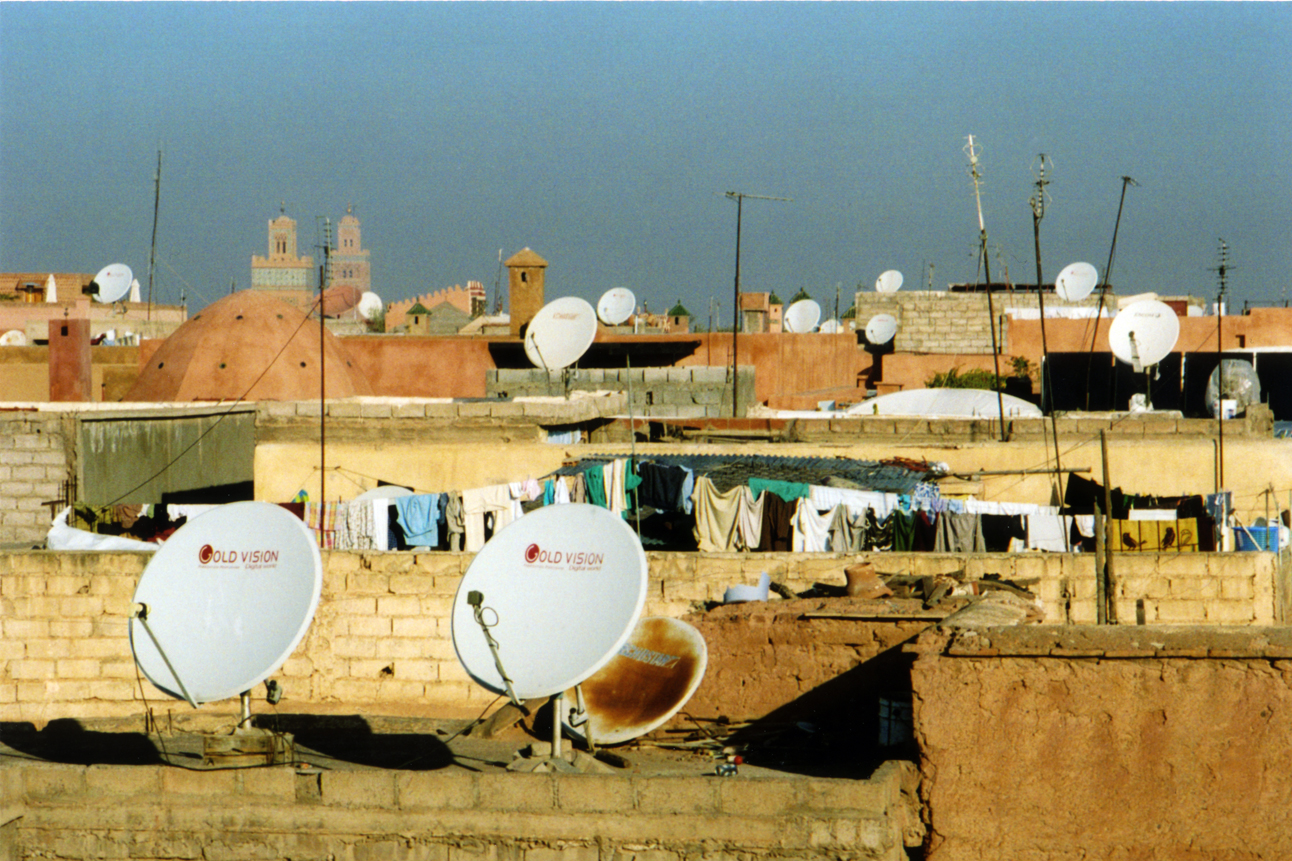
‘… refusal of meaning and refusal of speech; or of the hyper-conformist simulation of the very mechanism of the system, which is another form of refusal by over-acceptance. It is the actual strategy of the masses … it is the winning one today, because it is the most adapted to the present phase of the system.’ Moroc, Marrakech Riad roof, golden vision - low

I recognised this as the Zeitgeist  gradually reaching across the globe. My continuous studies, driven by curiosity and endless questions, prepared me, but I still find it difficult to accept a reality where, for many otherwise intelligent people, the beautiful term ‘soul’ has lost its impact. I place the word carefully in my work and in my writing to avoid bias. Marion Woodman  uses it powerfully … ‘Our very survival depends on spirit embracing soul.’  

The quote becomes poignant through experience, not theory.

Don Cupitt – a philosopher of religion who rejects authoritarianism, once said … ‘The soul, the self, has died. The self in an animal with cultural inscriptions on its surface.’ Sobering, and true, depending of course from which plane of experience one perceives.

In our present culture the commercial speed train whistles through every zone of life. Publishers are among many enterprises struggling to survive amidst overproduction. The ‘Road Closed Pending Repairs’ signs Philippa refers to in her interview grow like mushrooms. Small businesses, for example, vanish at an alarming rate, at least in my little town. Be it a supermarket or a bookshop, I’m bombarded with buy-one-get-one-free or two for three offers. Plenty of people I know look beyond the more-is-better and cheaper hype, but their numbers won’t topple the algorithm-driven logic of mass-cargo firms like Amazon (click for latest newsletter.) Their long term strategy is to please the consumer, which, now, increasingly, includes writers who self-publish … To make profit in an oversaturated market requires ever-new smart inventions.

Works not created from templates, but from inside out, which, sigh,  includes my novels, will struggle to find a position on consumer maps. Traditional meanings are collapsing.  New genres for books are proposed. The box marked cross-genre sounds like a stir fry of left overs. How, as a writer, does one shoulder the marketing speech for novels not fitting into boxes? Crime? No! Romance? No! Religious? No! Paranormal? No! Sci Fi? No! Fantasy? No!

The distillation of a life’s experience, a work of creative imagination? What’s that?

Authors of such ilk have the formidable and possibly worthwhile task of writing their own obituary. Are any of the thoughts a writer expresses original? I don’t think so. Thoughts happen to us. What’s original is their processing and linking based on personal experience, which may offer a new window of reference. I look at my bookshelves and ponder what I would have missed had the authors whose works snuggle up to each other had lost faith in their work. Few commercially produced genre books leave impressions that live on. They’ll drown in ISBN databanks. Our shelves at home hold unique books that surprised and inspired us over the years, and until we become cyborgs and can, with a mere thought, make book pages fall open on any surface of our choice, this will not change soon.

I admire self-published writers. Vivian published several novels herself,  as did Philippa, which speaks for their tenacity and belief in their work. And I admire Philippa’s poignant questions, and how Vivienne exposes herself to them …

the very uniqueness you want to write about? Could you define why that is so difficult? Is it simply too much surrounding noise? Or something else?

‘… is writing the way in which we confront out existential loneliness, and are readers who ‘get’ and share that now the substitutes for lovers?’ 

MercatsSuch questions and similar ones are worth their salt, and expose our vulnerability … do writers, any artists, want to be truly seen? Is one person’s interpretation of truth going to be interesting to others? Will the public feel preached to? Such questions haunt many of the most inspired artists, poets and writers who weave works from layers and layers of their psyche. To expect an instant resonance from crowds will bring deep disappointment.

And yet, the most deeply personal experiences, combined with some magic ingredient of presentation, can, over time, have universal appeal. Stan Brakhage, an experimental filmmaker, put it this way … ‘I had the concept of everything radiating out of me, and that the more personal and egocentric I would become the deeper I would reach and the more I would touch those universal concerns which would involve all men.’

If I’m positive about the future it comes from an understanding in tune with Walter Benjamin  … ‘Technology, instead of liberating us from myth, confronts us as a force of a second nature just as overpowering as the forces of a more elementary nature in archaic times.’

To me, this means learning and unlearning accelerates in condensed time. Think how we make ourselves visible by blogging. How brave and scary to step in front of a public mirror … Virtual or not, the psychological process of engaging with virtual friends and foes is totally real. Sherry Turkle expressed this … ‘I believe that our experience with virtual reality, with artificial life are serious play; our need for a practical philosophy of self-knowledge has never been greater.’ My self-understanding is now aided by the relationship with people I have not met face to face – I never shook hands with or exchanged a hug with Vivienne, but I emphasise with her loss of joy, and her frustration with the ironic and antagonistic attitudes of people who belittle deeper strands of truth for fear of looking inside, and the sense of being a square peg that doesn’t fit the neat round hole of genres and algorithms.

Many writers will recognise these obstacles, including Philippa, and myself. How do we attract and persuade people to sample the green growth in our plot? At the same time, I’m convinced we are co-creating artists of our continuous self-invention. Mourning a not-yet existing frame for our work  might hinder this process, which moves and dances naturally through each breath. And I’m heartened by how writers and poets influence us over time.

A poet and mystic from over 800 years back examplifies this phenomenon …

‘The minute I heard my first love story I started looking for you, not knowing how blind I was. Lovers don’t finally meet somewhere. They’re in each other all along.’ – Rumi

20 Comments

Filed under Blog