Tag Archives: memory

How do I read?

one of my notebooks

one of my notebooks

I jotted this question in my notebook a while ago. How do I read, in the widest sense? There is plenty of observation and advice on the art of writing, composing music, painting, photography, film. Less is said about on the art of reading, perceiving, interpreting, or how we reject or embrace what is expressed by others, and ourselves, even how we read our dreams.

I conclude there’s no difference between, let’s say writing, and reading, other than visibility, since any creative composition derives from an inner process of reading, the picking and shuffling of impressions into our frame of reference in relation to the larger myth of reality.

One could say the secret of being read lies in one’s talent and ability to read one’s inner psychic world, even when filtered through one’s most personal and eccentric imagination.

Long before communication was easily reproducible and reached greater audiences, people were reading the world, though only a tiny fraction of inspirations and inventions was circulated. Today’s media channels swamp us with communications. It’s confusing. We must choose.

In reading novels, I follow my intuition. The gimmick of an instant attention grabbing action scene puts me off. A proposal may be impossibly fantastic, but if I detect an authentic voice, rhythm and movement, I travel along. Invited into a mind, an atmosphere, a time, a place, I want to be absorbed in this other world and experience myself anew in a conflict between light and shadow from within the heart of another consciousness.

Whether meaning is intended or not, I read my own meaning into what has been imagined by another mind. An insight, a memory may surprise. Some books I treasure for one or two illuminating sentences, so I guess reading for me is a bit of a treasure hunt, which begs a question. What am I hunting for?

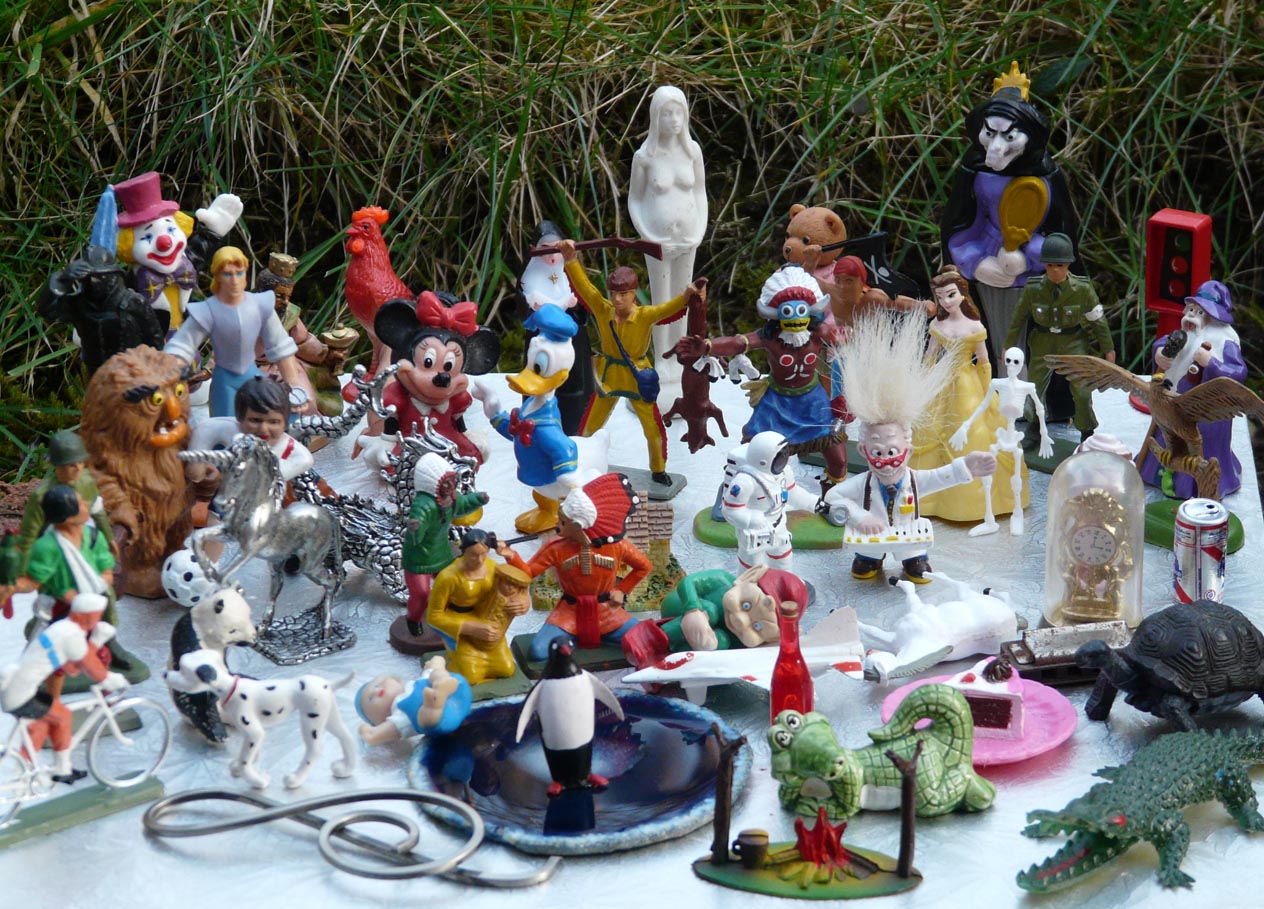
world objects for sandtray work

world objects for sandtray work

My interest is fleeting when events are contrived, plucked from the air. Characters convince me when they are embodied and grow around obstacles, reaching towards the light, while spreading roots and producing seeds (new thoughts,) even when they come from mythical creatures, kings and slaves of the past, or explorers of distant futures. As long as events happen in a believable psychological setting, I engage.

Then again, I’ve been convinced by writing that made no sense at all, until, with a little patience, I discovered a new comprehension shining through an abstract form. It’s a wonderful feeling, and important feedback for writers, who may be surprised by what is evoked in readers. Once I finished my present project, I intent to spend more time on reviewing – a most giving art of reading.

Stories for stories sake can be dull, while stories in which nothing much happens outwardly can be riveting when they resonate with the human condition, where, quite often, what seems true becomes false, and what seems false becomes true.

It is said we write the books we want to read. When writing, I search to combine words that convince intellectually and emotionally, until something true is mirrored back. Maybe what I’m hunting for in my reading and writing are fitting metaphors for the miracle of existence.

I always delight in discovering neglected writers, like Marlene Haushofer,  or the poet W S Graham, whom I wrote about here as part of a post in Sept 2013.  And beyond new works, there are innumerable old favourites, including H G Wells. The link connects to a post I did about one of his lesser known stories.

Thinking about photography, my other passionate reading, I was inspired by Henri Cartier Bresson – the link leads to my post about him.  And here the archive of the street photography of Andre Kertesz – enjoy.  I’ll leave film alone, that’s a whole other story.

What are your reflections on reading?


Some related blogposts:

Storytelling and the primary world.

Mother-tongue and other tongue.

Memory and Place.

11 Comments

Filed under Blog

… four years of blogging …

The host of my virtual island – wordpress – alerted me to the four-year anniversary of my blog.

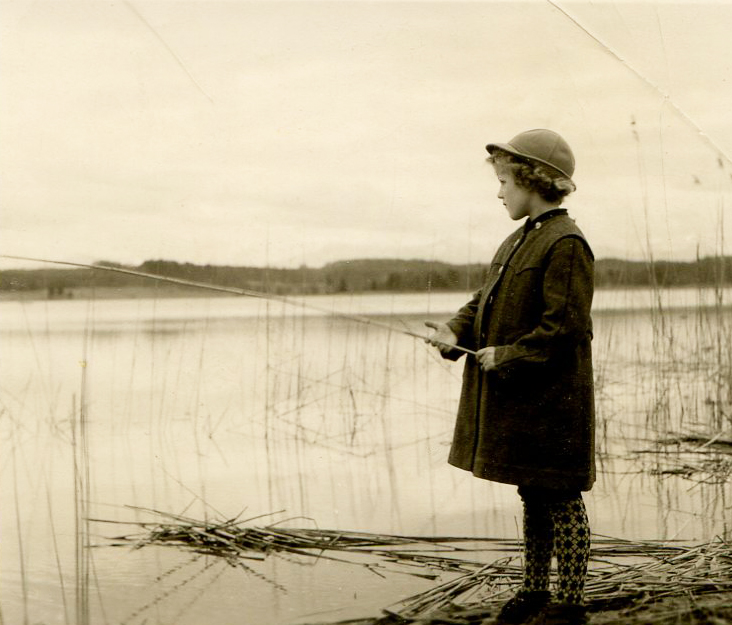
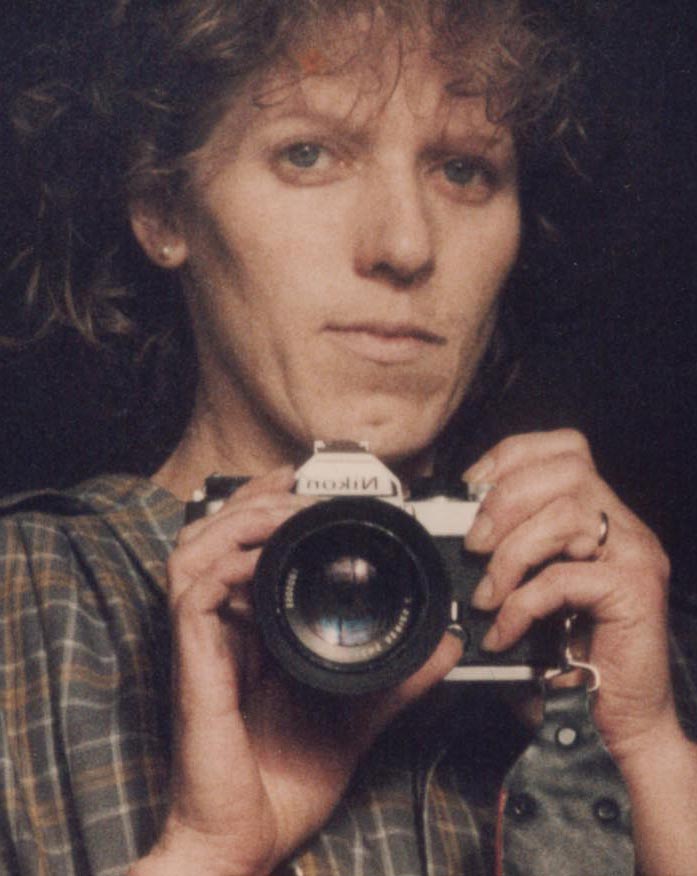
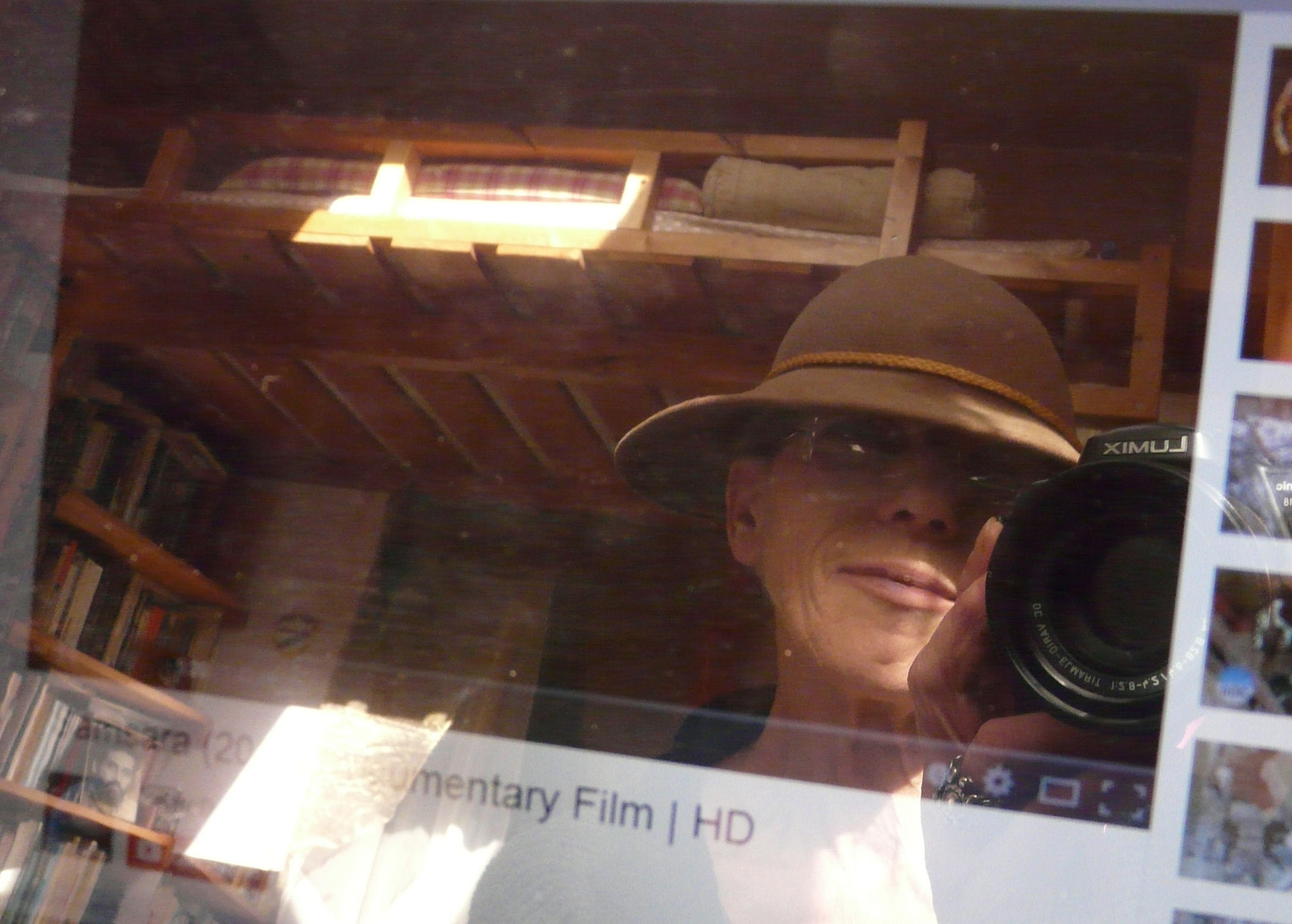
I thought I share with my followers some private photos. I’m not good at private sharing, but since my first book is going to be published this year, one way or another, some visuals of myself are in order.

pretending to fish

pretending to fish

about 30 years ago,  before selfies were vogue

about 30 years ago, before selfies were vogue

more recent, four or so years ago, a young sixty something

more recent, four or so years ago, a young sixty something

Lack of time limits my interactions, so I assume my over 300 readers are truly genuine. Thank you all for reaching out, for your friendships. It’s heartening to know my posts are enjoyed, and occasionally inspire. I sample your islands at random, and delight in how everything posted resonates. I appreciate your likes, and will respond to every comment left here.

Looking back, this was my first short post in March 2011 – just one sentence:

                                           We are each of us born a star in search of our world.

The second post was: A recent series of Haiku – for those who like Haiku

a town is gone

hawthorn flowers

white in the sun

*   *   *

among rubble

the snapshot of a child

splashing in a wave

*   *   *

spring morning

a ginger cat leaps home

across frosted lawns

*   *   *

the robin arrives

sampling dry grass for its nest

sky is cut by a plane

*   *   *

sunlight in a puddle

birds dowse their wings

no other sound

*   *   *

emerald shoots

on brittle cement

patter of feet

*   *   *

plastic bags rattle

in wire and branch

blobs of colour

*   *   *

a wave is rolling

over the grid of streets

hush among crumbled walls

*   *   *

lichen dried silver

in the hot spring

a rain of blossoms

*   *   *

a golden leaf

in the shade

white plumes rise

*   *   *

under smooth ice

a shimmering carp

visible silence

The concluding post in March 2011 was a letter to my shadow, ending …

         … Without you, I’d only be fluff on the coat of real human beings …

Time-permitting, please explore my posts, listed in the archive column to the right of my home page.

I hope you bear with me. Heartfelt thanks to all my readers.

21 Comments

Filed under Blog

… other worlds … 

Writers that inspire and make me think are like a family of heart and mind. Luis Borges belongs. His imaginary worlds shine from beyond time and space, and delight with paradox.

‘The universe (which others call the Library) is composed of any indefinite and perhaps infinite number of hexagonal galleries, with vast air shafts between … The Library is a sphere whose exact centre is any one of its hexagons and whose circumference is inaccessible … For every sensible line of straightforward statement, there are leagues of senseless cacophonies, verbal jumbles and incoherences … it suffices that a book be possible for it to exist …’   The Library of Babel, by Jorge Luis Borges

Between each breath, comma, pause, number, node, and each period, we string symbols towards stories. Some make sense to some, others make sense to none, and yet others inspire more stories. Ideas that resonate have an ongoing life, they tag on each other.

In his extensive readings, Borges must have come upon the ‘many worlds’ theme recorded in various cultures over the centuries, long before quantum physics was challenged to struggle with this probability.

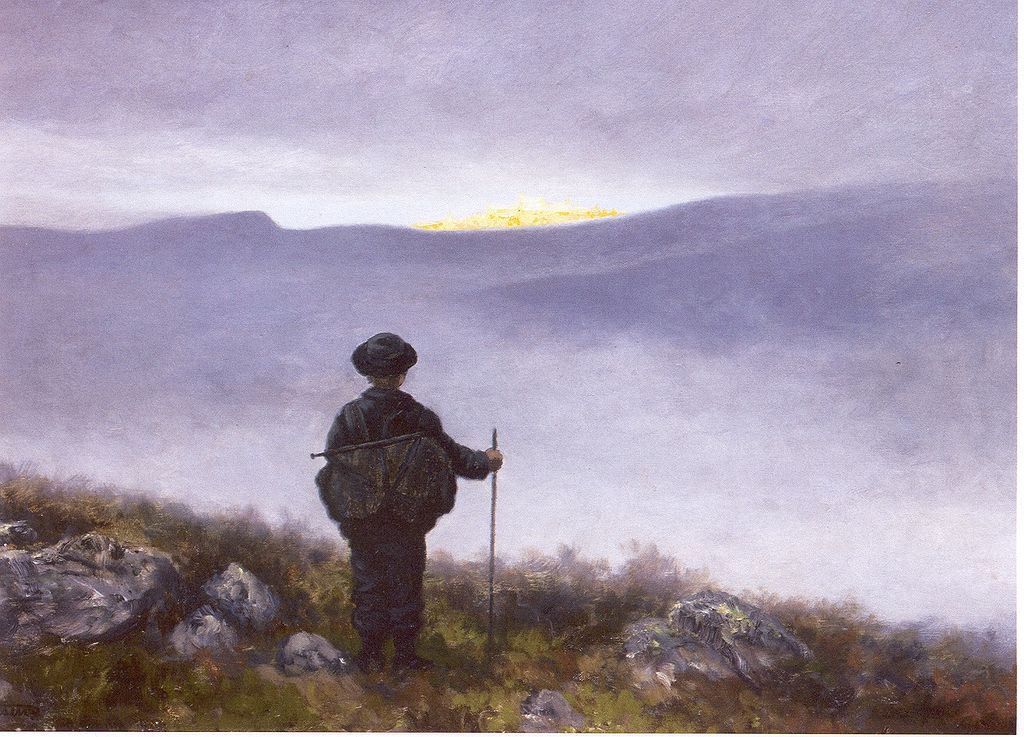
Theodor Kittelsen 1857 - 1914

Theodor Kittelsen 1857 – 1914

Even as a child I experienced shifts in reality, vivid moments that expanded my imagination and have come to play a part in my novels. Since nothing about particle behaviour under observation is certain, everyone of us is abundantly free to speculate about memory, time, and parallel worlds. Though dreamlike, these other dimensions leave signs, like unseen winds show in swaying branches, jittering leaves, and rippling waters that gather momentum to become waves upon waves.

The general definition of wave is a disturbance travelling from one location to another through whatever medium or vacuum presents itself. Do bits of information travel with resonating particles? Is the medium itself the message transmitting pattern recognition? After all, even far galaxies mirror the branching of trees and leaves on earth, or, for that matter, the neuron system in our bodies. Everything scales up or down ad infinitum. Here’s how Jonathan Swift put it in 1773

The vermin only teaze and pinch                                                                                                                                               Their foes superior by an inch.                                                                                                                                                    So, naturalists observe, a flea                                                                                                                                                    Has smaller fleas that on him prey                                                                                                                                              And these have smaller still to bite ‘em,                                                                                                                                      And so proceed ad infinitum.

It seems incomprehensible that parallel worlds could exist and influence our reality and vice versa. How could there be many collective and personal histories? How could there be other versions of us and everything? How would it work?

Given the fickleness of our feelings and thoughts, strange dreams, synchronicities, and the constant dissolution of ordered energy fields, we are exposed to streams of oscillating and interrelating signals, unless we fine-tune through the white noise, or completely relax. Occasionally we have a sensation of order, like a blossom unfolding. All is right and beautiful – we don’t feel separate, but in symphony with all dimensions, here and now.

At other times, when under pressure, and crucified having to make a decision, we sample memories, search pasts, postulate futures, until we surrender to a compromise, or the universe decides for us, or  … a resonance occurs.

‘All time is contained in now.’ – Meister Eckhart

A sudden resonance, if deep, could explain many paranormal phenomena that vex and hex people, especially scientists. Mystics are fond of saying the ‘self’ is an illusion, trapped in the body, though which self is a matter of perspective.  Since quantum physics, particles stopped being things in themselves, but function as waves also.  This is where it gets slippery, because no explanation has come forward for the wave-function- collapse when the measuring of the particle is attempted.

Time is nature’s way of stopping everything from happening at once.’

Graffiti in a Texas Washroom

The ‘many worlds’ concept gets round this problem by suggesting myriad of copies of our reality, where everything conceivable can happen. As a writer, this is my license to create. The invented characters in my novels happen to me. They are tangible, psychologically coherent, yet also suspended between worlds, like, I think, we all are.

‘… the library is infinite and cyclical … If an eternal traveller were to cross it in any direction, after centuries he would see that the same volumes were repeated in the same disorder (which, such repeated, would be an order: the Order). My solitude is gladdened by the elegant hope.’ Jorge Luis Borges

Here the Wikipedia entry on The Library of Babel.

The image is by Theodor Kittelsen, master of vision, trolls and wit.

14 Comments

Filed under Blog

… the ones who walk away …

Ursula Le Guin’s short metafiction, ‘The Ones who Walk Away from Omelas,’ first published in 1973, had its 40th anniversary last year. My first reading, when Google and book review sites were non-existent, left a deep impression. This week’s re-reading, once, twice, three times – the story deserves it – made me curious as to what other readers might have made of it. Obsessing in a web-crawl I came upon predominantly moral interpretations, which I distinctly remember resisting, though these associations are understandable. The way our systems deal with the unadjusted tends to appease the troubled conscience for the rest of us normal citizens.

For me, there were deeper complexities in this brilliant piece of writing. I decided to share my thoughts and tempt those of you who don’t know the story to read it and derive their own insights. I’ll use spoilers, so if you want to read the story first, here is a link: http://genius.com/Ursula-k-le-guin-the-ones-who-walk-away-from-omelas-annotated

… With a clamor of bells that set the swallows soaring, the Festival of Summer came to the city of Omelas, bright-towered by the sea …  

Childhood, Thomas Cole, 1842

Childhood, Thomas Cole, 1842

We are shown a charming city where order and harmony reign, a city well-protected in a bay, resembling a womb. Reality is suspended. There’s a sense of timelessness. It is a civilised place, decorous, joyful, without hierarchy. No king, no swords, no slaves … no power games. Utopia comes to mind, the idea of eternal life – the eternal innocent child.

No science has yet dispelled the vision of a haven without strive, where everyone is happy. In the wake of traumatising wars and unspeakable atrocities, there are always attempt to re-create places like Omelas, attempts to soften the reality of birth and death, the extremes of joy and pain, nature, the cosmos our life depends on and which we try to fathom. But since our spiritual lore cautions that life is an illusion – an ornament that covers ultimate truth we can’t perceive with our senses, we get anxious when life becomes too comfortable.

The narrating voice, anticipating our scepticism, invites us to fill in the sketches of this perfect democracy. We are told, ‘They were not simple folks, you see, though they were happy.’ After all, Omelas may strike some as goody-goody. Smiles, bells, parades, horses, bleh. ‘If so please add an orgy.’ More delightful pleasures are suggested – celebrating life, with one significant addition, ‘One thing I know there is none of in Omelas is guilt.’

In contrast, the voice notes the bad habit of a different place, where pedants and sophisticates consider happiness as something rather stupid. ‘Only pain is intellectual, only evil interesting … the treason of the artist: a refusal to admit the banality of evil and the terrible boredom of pain.’ The voice insists that the citizens of Omelas were mature, intelligent, passionate people whose lives were not wretched.

The Festival of Summer has begun. ‘Do you believe?’ the narrator asks. ‘Do you accept the festival, the city, the joy? NO? Then let me describe one more thing.’

And there it is, the secret lurking out of sight, a child, kept in the darkness of a tiny cellar room, with only a faint ray of hope based on a dull memory. The child is not driven out of the city, like the traditional scapegoat, but contained below ground; there to absorb everyone’s fear of reality and its cruel justice, embodying, maybe, submerged histories, rather like the depths of the iceberg below water keeps its peak afloat in the light.

… They all know it is there, all the people of Omelas. Some of them have come to see it; others are content merely to know it is there. They all know that it has to be there. Some of them understand why, and some do not, but they all understand that their happiness, the beauty of their city, the tenderness of their friendships, the health of their children, the wisdom of their scholars, the skill of their makers, even the abundance of their harvest and the kindly weathers of their skies, depend wholly on the child’s abominable misery …

Terms are clear, should this child be freed, the beauty would wither and be destroyed. The pragmatic solution seems such: One punished and suffering child is meant to redeem the rest from coming to terms with their inherited sins and traumas.

To leave this comfortable enclave of Omelas means leaving security and loved ones behind. It requires crossing mountains, stepping into the unknown, with no charm against collective guilt.

Omelas’ citizens are free to look at the unacceptable child. While reactions, those of young ones mainly, vary from disgust to outrage, most accept the necessity of this child’s sacrifice, though some fall quiet and leave Omelas in the middle of night, alone.

For me the child is there to serve cohesion, symbolizing a lid on the unconscious, primitive, wild aspects of the psyche. Isn’t dis-ease a loss of order and rhythm? If you judge this pragmatism harshly, consider the purpose of trip-switches in an electricity-wired house. Or, consider how people under social or dictatorial pressure may choose to safeguard the lives of their loved ones at the cost of betraying their knowing heart.

Le Guin does not condone staying or leaving Omelas, she provides no answers. I am one of those who walked away, many times, always at a cost, because I preferred guilt to shame. C G Jung developed the concept of individuation, hoping for it to expand collective consciousness from the inside out, through the individual, sometimes involving a precarious personal journey, going through a process of separating psychologically from parents, state, authority, to become whole. Like in the Zen story where the seeker eventually returns, better able to serve the community. While a single brain does not survive its limited life-span, the collective memory of matter, and each human experience lives on and is transmitted to every new-born life.

Each one of us carries the traumas of our histories, though not everyone has the opportunity to redeem such wounds, contribute new ideas, or explore different states of being. What drives one to walk away from the familiar – is it inner conflict, allegiance to one’s heart, fear to upset the order, the need for a wider perspective, or simply a calling? We bond to the systems we grow up in, in cases we adjust our behaviour in order to emotionally survive, along with the implicit bargain to keep quiet about the shit, our shit, others’ shit, and how we deal with all the shit.

There are those who leave a comfortable place and those who stay. Maybe a balance between conservative forces that protect structures and revolutionary forces that seek change is necessary. Not everyone, for example, can face existential pain and futility without succumbing to psychosis. There is a case for Festivals of Summer, sport, drugs, ecstasy, trance …

Was the power of the imagination born from fear of mortality? Is this why we envisage dystopias or utopias, and, ultimately, scenarios that make us feel in control of our destiny?

What we hide from ourselves and from each other often relates to our most prominent outcast, the neglected inner child, so embarrassing to the adult world. This child in Omelas seems to embody the ongoing ritual of shame for walking from Eden into the dawn of creation, a reality burdened with consciousness, and free will that frequently misses the mark, but, heck, is the very process of becoming human.

My naïve hope is that we can learn to embrace our all too human failures, show patience with our children, stop seeking blame and end scapegoating, yet also acknowledge our individual and collective need for comfortable realities … protecting us … from what?

Here a quote from a former friend and teacher, Fazal Inayat-Khan … taken from a lecture on Reality:

‘For the whole collective of the human mind – outside that self-created reality there is a storm. That storm – that wind – that pressure – that influence and space is for our existence and permanency completely annihilating and destructive … our assignment outward is because of a deep decay … Reality is a veil that is spun with the finest and thinnest and strongest silk. It weighs nothing – it covers a little darker area behind – and yet the moment when you reach out with your hand to draw the veil away it will skin your hand till blood is drawn.’ 

To fill this emptiness we assign our meaning outward. Call it the human project. Sorry to trouble you, my friends, but the function of reality is worth contemplating, and, in my view, Ursula Le Guin’s story does just that.

14 Comments

Filed under Blog

… musings re: photography, art, secret hoards …

When I take a photograph I stop time, from where I stand, from where I walk, from where I look. The image becomes inner, a pregnant, eternal moment. Artists who engage with the intimate reality mirrored in their surroundings might admit, or not, the erotic dynamics at play in this search for a glimpse of the beloved, an essence shining through the cracks from beneath fleeting surfaces. It’s not only artists who frame flashes of significance, everyone selects, does the stop-motion of perceiving, it’s how stories are made.

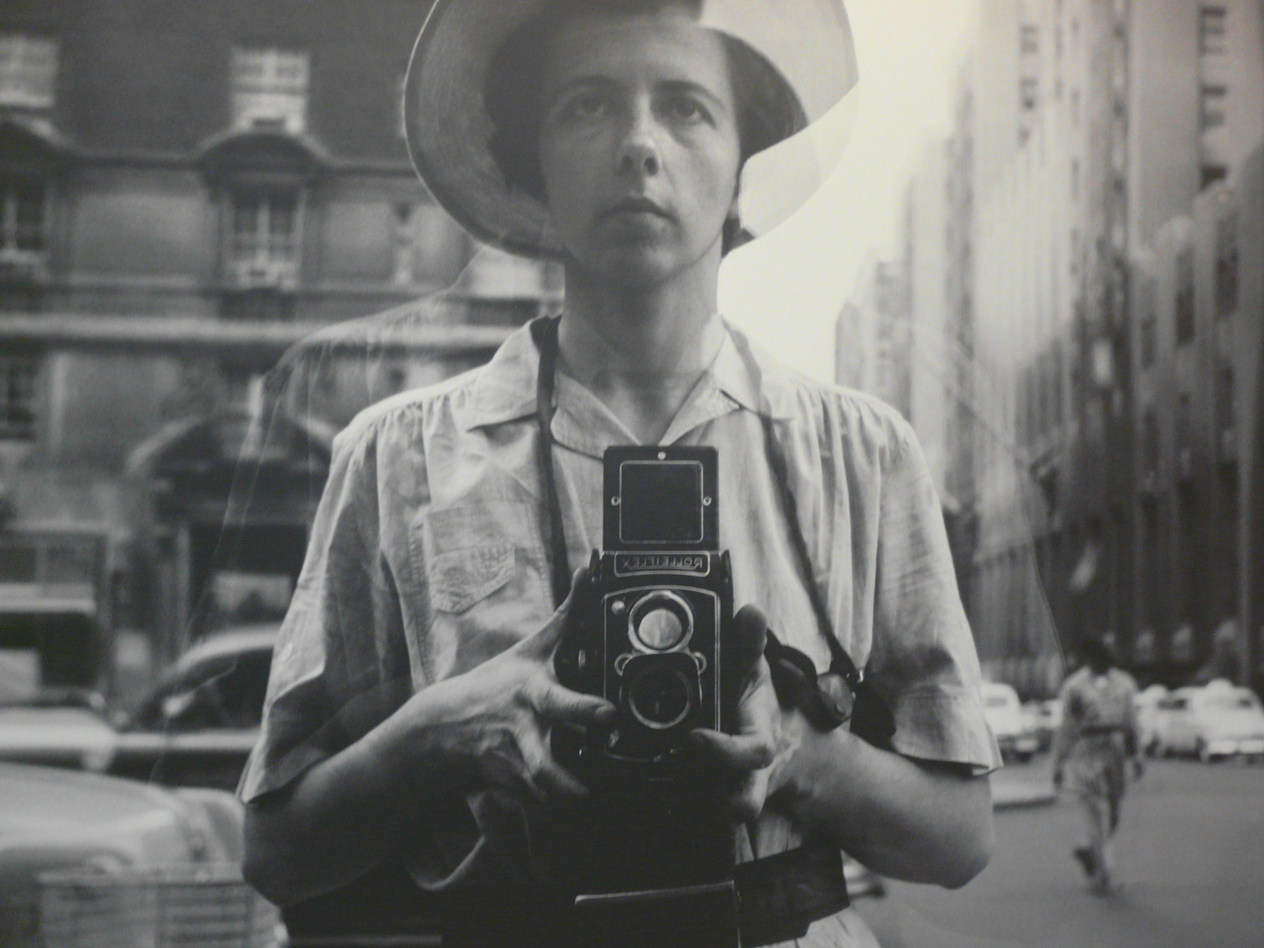
A self-portrait of Vivian Maier

A self-portrait of Vivian Maier

In 2007 a photographic archive was auctioned off to recover debts for storage rent. Most of her life Vivian Maier (1926 – 2009) worked as a nanny. In her free time she recorded what caught her eye, predominantly in the streets of New York and Chicago. She captured poignant moments, like soul mirrors, in brief encounters. Read the tale of how her archive was discovered and the puzzle of her life was assembled HERE

During my stay in Amsterdam I visited a retrospective of her work from 1950s to 1980s at Foam Gallery

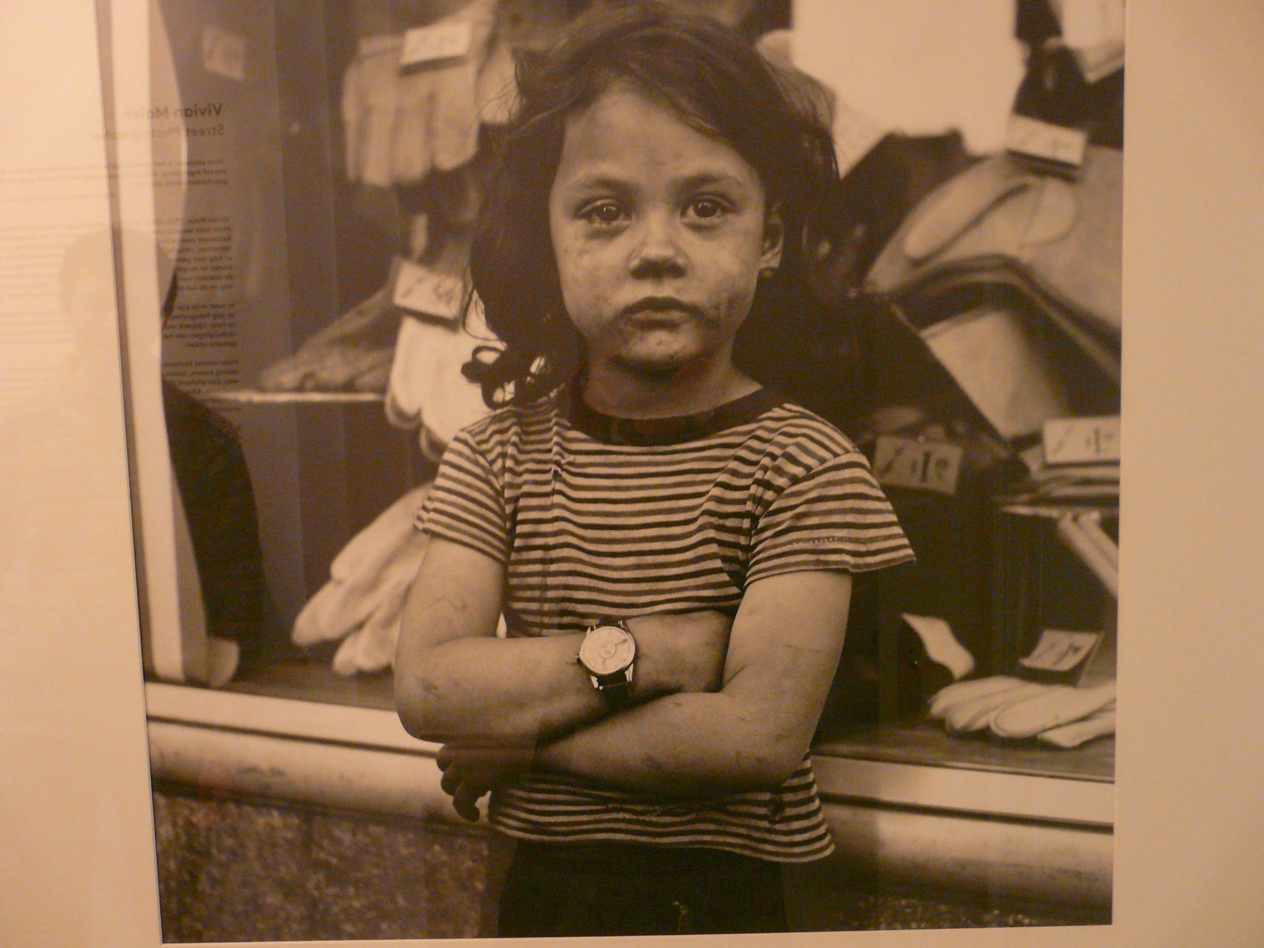
It is my guess that, while she was without means to have innumerable film rolls printed, Vivian Maier distinctly memorised each unpredictable encounter she captured. What makes me think so?

Photo by Vivian Maier

Photo by Vivian Maier

The memory of defining and framing something on the move is powerful, with or without camera, though a creative record helps structuring and symbolising our perceptions. During the 70s, when I worked as photo-journalist, using analogue cameras, a Rolleiflex, like Vivian, but also Nikons, and a Hasselblad, I never wasted film. Each image was taken by choice.

Certain frames live on in my memory as iconic elements, and I recall the exact instant when I pressed the shutter, encapsulating something of essence.

A number of years ago I lost three 35 mm film-rolls on a plane from Berlin to London. I thought they were secure in my make-up bag, but the bag slipped unnoticed down the seat and I never recovered it. I mourned. It was the first time I re-visited Berlin, my mother’s city, since I was 7 years old.  Yet the images I took in Berlin and of the friends I travelled with are still crystal clear in my mind.

I recall the massive amount of negatives and prints I burned at an earlier point in my life, not to be burdened with storage, not to sit on my laurels, and for other reasons – profound stupitity, I know,  a self-destructive streak haunted me at the time. The vanished portfolio is now a secret hoard lingering in my memory. It is also a scene in my mythic poetic novel, still awaiting publication.

The story of the discovery of Vivian Maier’s secret archive grips the imagination. Why? Maybe because we all yearn to evidence our existence. Even if only one person holds up a mirror of approval, can GROG us, we are affirmed.

With the cornucopia of individual creativity unleashed through the new technologies of recent decades, the chance of public recognition is fickle, sponsors look for novelty, notoriety, eccentricity, looks, hard elbows …  A good deal depends on timing, and luck.

Yet no individual perspective is alike. The passions we pursue in communion with what we encounter inside, outside, our search, our uniqueness, is forever in need of expression. We want to be witnessed for the coherence and ingenuity of our individual world, our deeply felt values, skills and insights. And yet – I heard it said – if Einstein’s equation of relativity had never been published, it would still have influenced and shifted the collective consciousness.

I deduct that since we all benefit from the inspirations and inventions of individuals who may never have received credit for their genius, their life’s work, and since nothing is ever truly lost (I believe,) there can be solace in our giving, be it acknowledged or not, while we keep on the lookout and ready ourselve for a glimpse of the beloved’s curl.

And of course, nothing prevents me, or you, from expecting miracles 🙂

16 Comments

Filed under Blog

… not now – later …

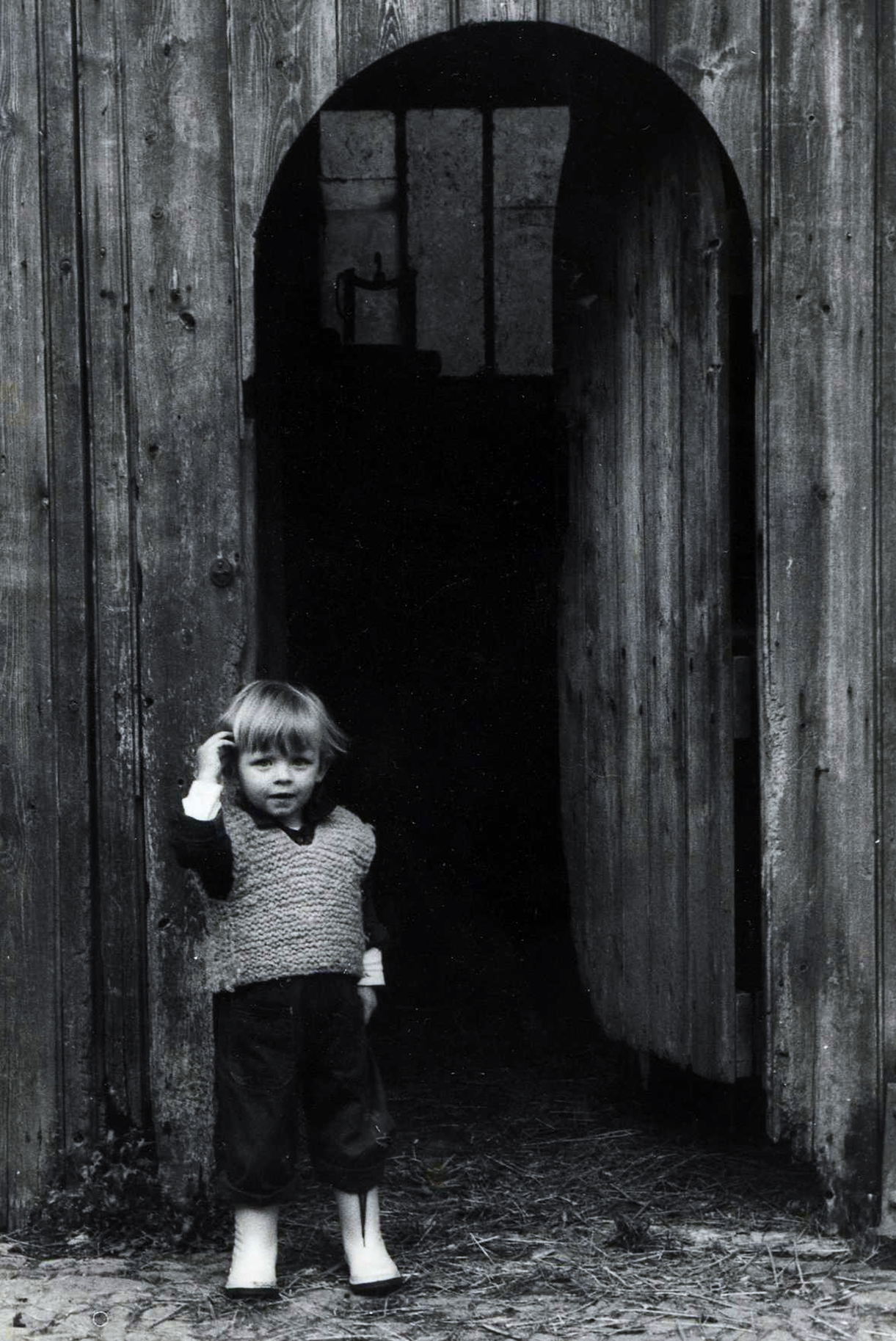
my little hero

my little hero

Each new generation tends to be smarter. While living in rural Somerset, I observed our four-year old son’s play-acting in the garden from the kitchen window while washing pots. He explored his sharp-shooting skills with wooden blocks, building, destroying, building, destroying, building; and so on … it was his new idea of fun. His aiming was good.

Pots done, I attended to the next task, fetching the milk from the street-hatch, left there by Hope, our farming neighbour. She had poured three pints of milk into a bowl and covered it with a cloth. The cream had risen to the top, ready to be skimmed off, which led on to the next task, preparing the dessert for a birthday meal. At this point my son came rushing into the kitchen, wanting me to witness and applause his new sharp-shooting skill. My brain cells were committed to preparing walnut ice-cream.

I said, ‘Not now, later!’

This trick normally worked for a while, but that day he stood his place, watching me with a quizzing look.

‘When does now end?’ he asked.

Casting my eyes to the ceiling for help, I said, ‘Actually, now never ends,’ realising instantly I was in trouble. The child’s superior grasp of logic would demand, at least, a meaningful explanation, and I could loop myself into philosophical twists. My son had no need to query my shrewd answer, he went one better.

‘So when does later start?’

Time to admit defeat. Drying my hands, I said, ‘Now.’

*    *    *

The memory of the incident inspired me to draft a poem … NOW

by Daphne Joe Grant

Illustration by Daphne Joe Grant

Now is the in-breath

Now is the elusive arc

Now is the outbreath


Over and over

Out of nowhere pops the now

Or so we presume


When will we find you?

Why not tell us your purpose?

Where are you hiding?


Now is a trickster

Not taken in by mind-games

Now laughs inside us


Our time must be round

Or turn through a dark tunnel

Orbiting the now


Waste now and lose her

Weft now to now and she’ll dance

Wed now and be her


Now has no answer

Now is what is truly known

Now breathe her and bow

https://www.youtube.com/watch?v=xjwBWE64fG0 Interesting talk by Rupert Spira on perception.

A focussed mind helps us to achieve stuff, but is also easily hijacked by the rat-race, the relentless rush towards meeting deadlines in competitive environments, where no children interrupt and make us pause.

Apparently 10.4 million days are lost annually to work-related stress in the UK alone. And it costs businesses in the US $300bn (£187bn; €237bn) a year. No wonder the ‘Here and Now’ theme is in vogue again, even with hi-tech status. Take a biosensor device, called Pip 🙂 … http://www.bbc.co.uk/news/business-29742908

There is another kind of stress, less talked about, affecting those who work hard for a living, as well as those who lost jobs, or get by on little, or anyone reflecting on human qualities, while witnessing a growing social polarity … as poignantly shown in this image …

http://gerryco23.wordpress.com/2014/10/24/the-fence-between-a-world-of-need-and-a-world-of-excess/

16 Comments

Filed under Blog

… moans from an unruly writer …

Installation by Frederick Franck

Installation by Frederick Franck

While I write, wrestle with style, query words battling for attention and set out sequences to string ideas together, anyone watching me might assume I’m a nervous wreck. My body, perfectly able to string an arrow to a bow and hit a target, has a wild notion of focus when it comes to writing. It shifts and wriggles, gets up pretending I need a coffee, ends up cleaning the sink, checks the porch for post and so on, all the while allowing my word sculpting to continue until, bingo …. I rely on intuition, which slips into little silences, opens a crack in the surface of things and reveals a hidden layer, and, occasionally offers a glimpse into the infinity of now. A tiny glimpse is all it takes to relax, sharpen senses and spark a creative dialogue between my inner voices that often quarrel and fool around like the average family.

I respect moderate conflict, it stirs up mud but clears the air, and even when the inner crowd gets fed-up with listening – grace, solitude, or a good night’s sleep bring additional insights, bridge divides and re-establish a tolerable rhythm of chaos and peace.

Am I fooling myself? Is my knack for intuition just guesswork. Is it inborn? Does it evolve with experience, as a kind of deeper listening skill humanity moves towards? Can it be learned? Is it worth defending? Or is it the relic of a go-with-the-flow philosophy that avoids closer analysis of my thought processes and behaviour? I seem to struggle with two kinds of temperaments, one looking for the particle and the other for the wave, stretched between rational and irrational numbers. The two temperaments compete but need each other.

Pilgrim Fool by Celcil Collins

Pilgrim Fool by Celcil Collins

Scientists and statisticians tend to approach the unknown rationally, and seem set to eradicate human incompetence and messiness. Some frenzied rational prophets go as far as knocking anything that can’t be quantified and evidenced. I value logic, what annoys me is the attitude that scoffs at people who hold hands with the fool.

There are more reliable methods than the vagaries of intuition, shown in a New York Times piece by Gary Wolf ‘The Data Driven Life’ from April 2010,  a long but brilliant article that received many pages of diverse comments. Not everyone is keen on the Quantified Self.

I resist being monitored and quantified by data, fixed as particle, ticked off for my risk-taking folly, my random cross-referencing. The geeks and outliers the article describes have fun recording their every move. And I grant that someone suffering from high blood pressure or apnoea benefits from being nudged by a gadget to take a deep breath. I remember being excited and applauding the first biofeedback devices that affirmed how thoughts affect our physiology and vice versa. When it comes to data dependency, I have a hunch it will starve emotional intelligence, which I strongly believe develops through mastery of language.

Working a few years for Social Services, we used to write narrative assessments until a computer programme with tick boxes was introduced. We hated it. Conveying observations in writing was shoved aside as time-consuming, subjective and vague, while quantitative recording was hailed as reliable, though its data hinges no less on interpretation and application.

Recently I skimmed an article suggesting future novels will be written by computers. My cynic leapt from its slumber and argued that a machine hasn’t got 100 Billion neurons and can’t be intimate with nature, is immune to changing metabolisms and moods – hour by hour, night and day. Immune to what comes on the breath, with wind, dust, rain and radio waves that travel through the cosmos, nor is a machine influenced by dreams, synchronicities, diets, layers of revolving memories, kind gestures, general anxieties, rejection, loss of control, loss of a loved one, global news … the unpredictable influx of thoughts and emotions that our mind continuously sifts, evaluates and re-interprets.

Irrational humans can’t be quantified and controlled, which may be why since ancient times there has been an ambition to create artificial beings.  Here a bit of fun from Turing and his colleague Strachey – a reasoned-out love letter, achieved through programming a 1951 computer to make sentences via algorithms, having been fed on love synonyms from a Thesaurus:

Honey Dear – My sympathetic affection beautifully attracts your affectionate enthusiasm. You are my loving adoration: my breathless adoration. My fellow feeling breathlessly hopes for your dear eagerness. My lovesick adoration cherishes your avid ardour.

Yours wistfully, M.U.C. (Manchester University Computer)

…. M. U. C. is eager, if a little verbose and breathless 🙂

Since then, artificial intelligence is even more breathless with numbers, but operates highly sophisticated technology that improved the quality of our lives. I admit I’m fascinated by the concept of cyborgs, but don’t want to get plucked into the human network protocol .

Our privacy is at stake. And our relationship with nature? … its record of life and the human experience, the treasure house of the collective unconscious, translated and re-membered through DNA, invisible spheres and the very light we breathe. Anything alive changes from moment to moment. And our experiences, insights and expectations have a vital part in the changing.

Nature is the book I grew up with, it taught me stuff:                                                                                                       About growing … put a seed into earth, tend to its needs and its story flowers.                                                        About resilience … a seedling lost in a dark corner will grow towards any spot of light, no matter how it must bend and curl its stalk around obstacles.                                                                                                                                       About connections … the dynamic geometry of the tiniest plants and vast galaxies are reflected in each other.

Enough samples to show the obvious – nature teaches through metaphors. My theme is resilience. I take risks and accept that struggling makes me inventive, expands my consciousness, polishes my heart and challenges me to think for myself.

My moan extends to the growing practice of enticing people to emulate machines in service of progress and economic efficiency, in jobs that dull the senses and dull the mind.

Meanwhile I cheer the unruly folk, including fools, dreamers, innovators, artists, poets and writers with an ear towards the hidden – who translate past and future newly into the present – the open-minded, who can tolerate conflict, value intuitive signals that chime in the heart, and who can occasionally endure being suspended like a leaf on a gossamer thread.

What do you, my reader, think?

26 Comments

Filed under Blog

… a tribute to snags …

I’d make a lousy fundamentalist of any kind, and was probably born with negative capability http://en.wikipedia.org/wiki/Negative_capability and a tendency to daydream and contemplate life, skirting extremes, which makes my voice almost inaudible in a culture where sensation trumps. It also means I procrastinate on tasks that need doing, until a snag propels me to act.

CNV00003 - copy 2

One morning last week, easing myself into the day, the shirt I dusted in the cool morning air was trapped when I shut the back-door; next the sleeve of my pyjamas got caught while I closed the lid of my coffee tin. SNAGS – their repetition blinked a green light for associations and made me think of dreams, how they sneak into the daylight via signals. With only a vague memory of my dream, I followed an impulse to catch up on practical tasks round the house.

A shelf in my shed needed fixing. It had crashed, bringing down an array of cans, sprays and sealants. In the way one thing leads to another, I sorted and dumped stuff, and dumped some more – making space. Seized by the flow of action, I de-frosted the freezer, thinned the ivy round the shed, cleaned windows, filled a sack with confidential papers for shredding, loaded the washing machine and made some overdue phone calls … all amounting to what I call a BLITZ day.

Knocks from the dark, SNAGS, help me overcome procrastinations. BLITZ is how I operate to gain periods of laziness. I’ve learned to humour my inner driver (superego) and made peace with Lazy.

Dark of beginnings

Flees the meddler

The shrill demand

The noisy footfall

The sharp beams of

Imposing eyes

Dark folds its mantel

Round the dreamer

The shy nomad

The vague image

The tendrils of

A budding poem

Approach it softly

Like a lover

It may surprise

Or yield nothing …

———————————-

After my Blitz day, a book came to mind, ‘Worlds in Collision’ (1950) by Immanuel Velikovsky. His research resulted in controversial astronomical theories about catastrophic events planet earth experienced over time, and how the human race was affected. Here a link to a 1972 Horizon documentary:  https://www.youtube.com/watch?v=U18gMJXNyX8

He concluded that as a victim of amnesia, collective humanity is compelled to repeat and re-experiencing traumatic events, to aid, in a psycho dynamic sense, recovery through triggering repressed feelings, wake up, and learn to control the experiences. It’s a wider, thought provoking context for the contemplation of our human lot, which I leave to you, my readers, to explore.

———————————– 

On a smaller scale, we may have memories of being held in the womb and in the arms of our mother – or not. In either case, there are giants to overcome, grown-ups. One of the saddest things grown-ups do is deflating a child’s dreams and desires, talking down: Wait till you grow up. Life is tough etc. etc. It’s like telling a seed, ‘Don’t bother; you’re doomed from the start.’

collage2, familyThe desire to be  held equates home. The longing for a permanent home seems to motivate our actions in relation to food, shelter, competition, acquisition, power, money, knowledge or love, as well as being the impetus underlying the craving for prophets who promise salvation.

Fear of not being held, of having no claim on a place where it’s safe to rest when life gets tough, has made us inventive. We wall our interests, invest in insurances, wage war to protect what we identify with , or claim ownership of ideas, philosophies and creeds. Maintaining behaviours that keep familiar systems in place, we find it difficult to accept with sobriety that we are all in the same boat, that our ideas and identities are fleeting chimeras.

Imagine … wouldn’t it be wonderful to seek nothing and simply enjoy the miracle of living, and be like this child overcome by the mystery of rain?  http://vimeo.com/84802749

There is an experience of home that tends to go unrecognised, hiding, as it does, between each breath, in dimensions beyond time. Such glimpses come and go, leaving a sense of union and connectedness while we’re tossed along the rapids of progress, inevitably bumping into obstacles – the snags of life signalling messages from the unseen.

The psyche is a bridge between inner and outer dimensions (the theme of my novels,) similar to the corpus callosum connecting our two brain halves. On good days I sense that in addition to existing in time, a part of me also resides in another frequency dimension, as a light-body, or soul, resonating in my body while I occupy it.

*    *    *

A day, whether six or seven years ago or whether six thousand years ago, is just as near to the present as yesterday. Why?  Because all time is contained in now. Meister Eckhart

16 Comments

Filed under Blog

… framing our impressions …

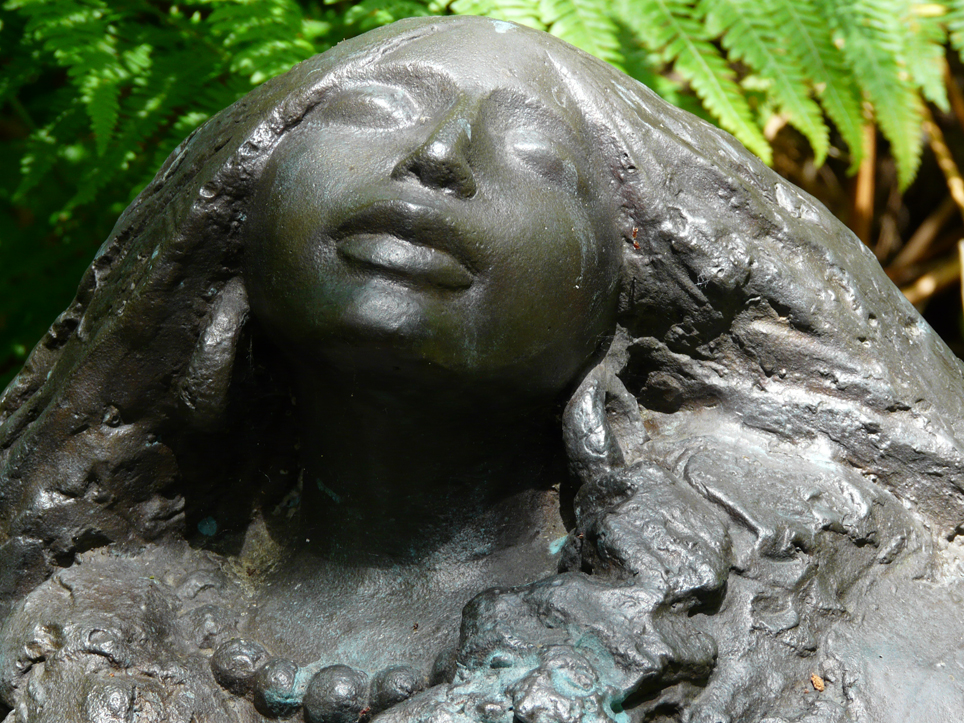
Last week a friend visited, and I took her to a local Sculpture Park set within ten acres of heath and woodland, a place where meandering pathways lead you into a deep dream-scape of rare plants, springs, streams and ponds, and where artworks face you at every turn.

The evening before, over a meal in my garden, we shared stories – about ageing and loosing people, about war-damaged fathers, about writing workshops in prisons. Our discussions often home in on the suppressed feminine in both men and women. So it’s not surprising that while we wandered through the park our two pairs of eyes were resting longer on artworks expressing aspects of the feminine, and our observations mingled.

P1060122 lowres

I thought I share a few photos of sculptures that caught our attention.

P1060123 lowres


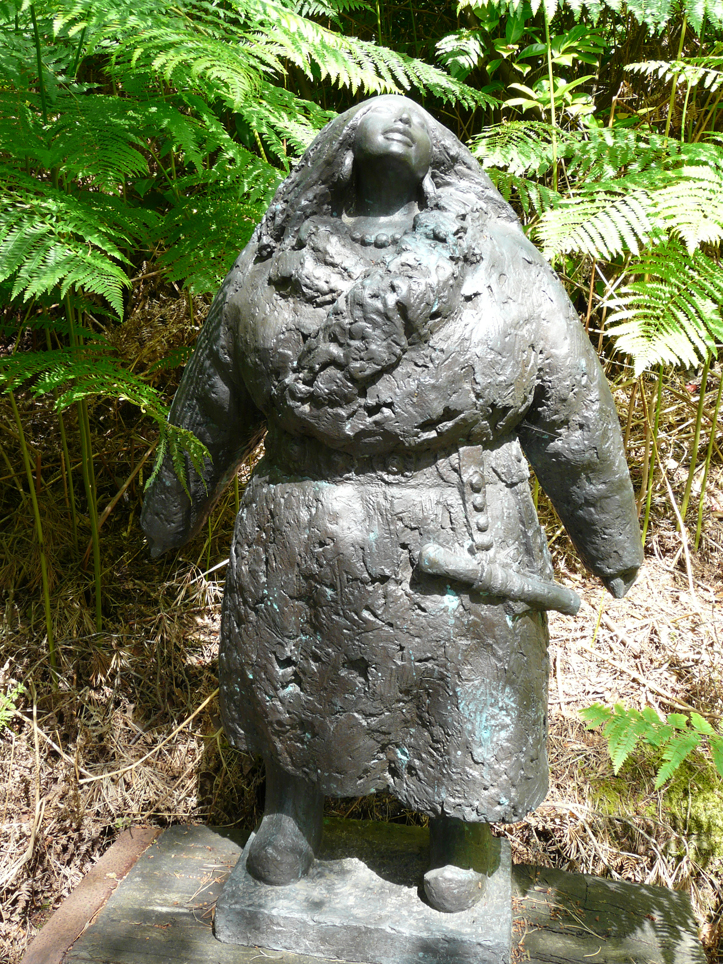
This bronze figure of an earth mother and warrior combined in one impressed. Her solid stance, yet also her surrender to something other. I took a picture and looked again, moved to touch her rough coat. There were her feet, standing firmly on the ground, a tool or weapon hanging from her belt, the little fists, speaking of determination, and there was her smooth, yielding face turned upwards in ecstasy towards a transcending spirit.

P1060116 lowres

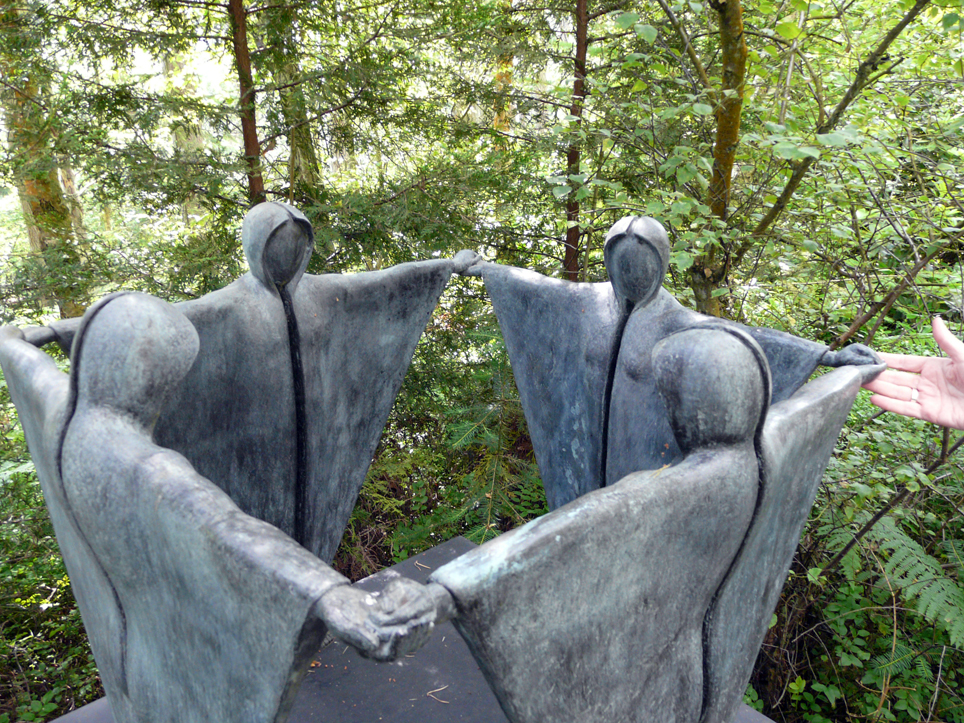
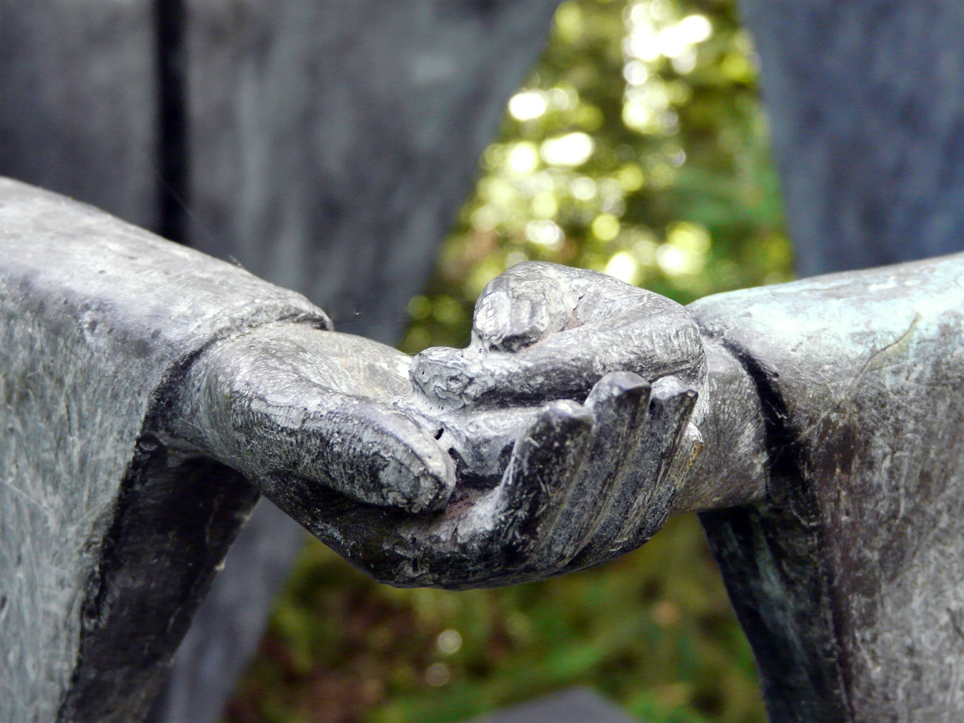
The endearing foursome forming a protective square made us linger.

My friend reached out to add her hand to the interlocking hands.

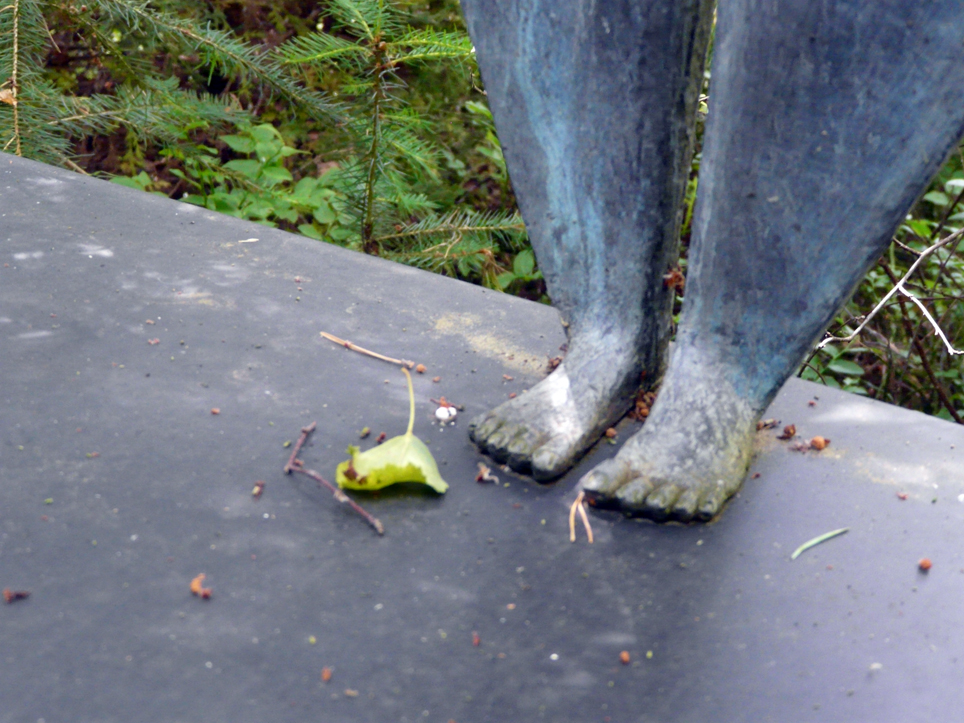
P1060117 lowresAnd we loved the little feet …

P1060118 lowres
P1060120 lowres


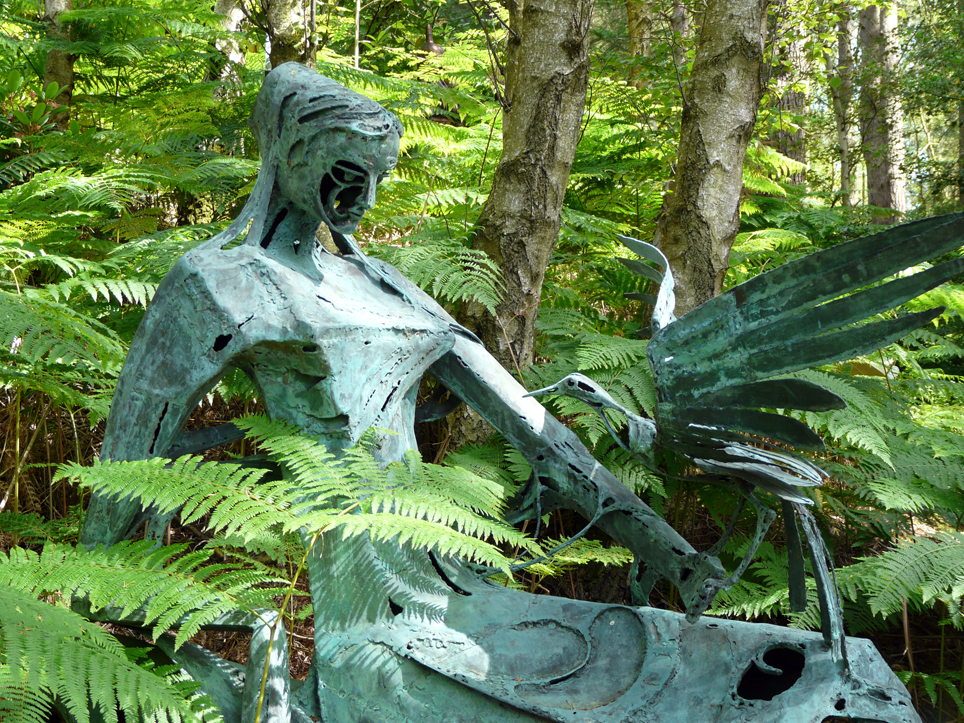
I felt a natural affinity with this bird woman, again taking a closer frame, to highlight her relationship to the bird.

It’s talons rest gently in her outstretched hand, bringing a greeting, and maybe a message.

The woman keeps a respectful space between her and the bird, a space filled with wonder, in which to savour the special meeting with her core nature.


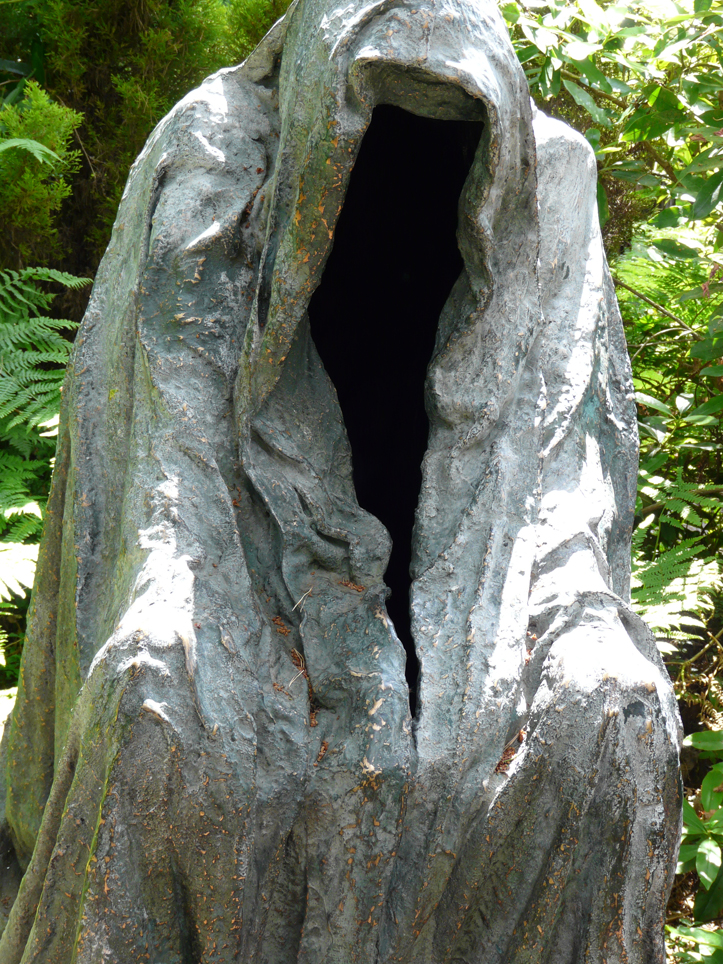
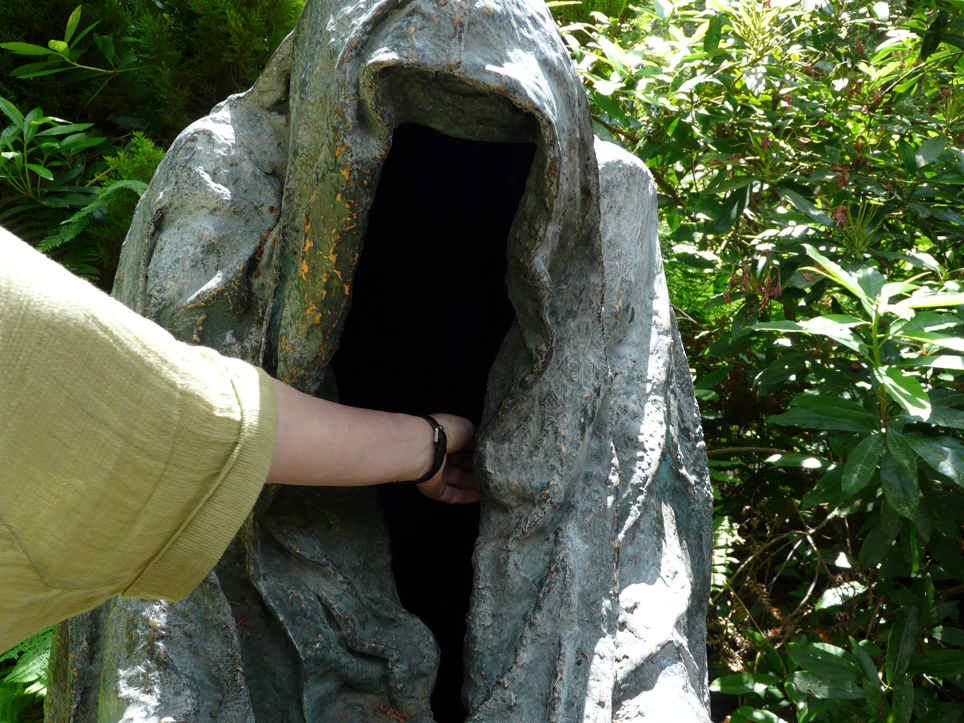
A most haunting sculpture was this shell of a person. My friend reached into the dark emptiness. I called ‘Hello’ into the hollow and the sound was swallowed up without returning an affirming resonance.

P1060112 lowresP1060111 lowres


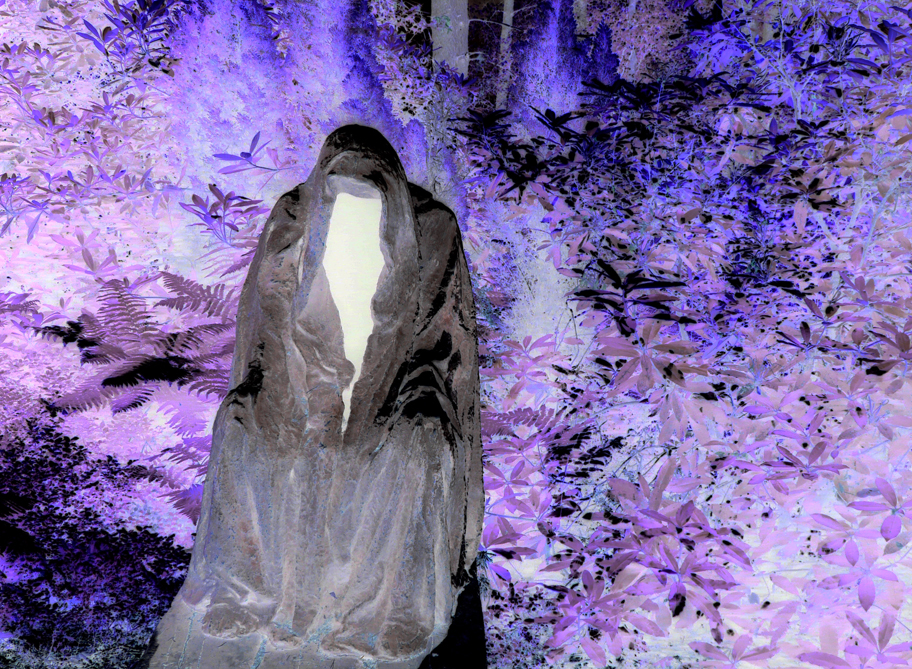
Later, with the help of Photoshop, I turned the image into a negative, and there you have it – the essence of what we are, light, often hidden.

P1060110 inverse lowres

Day in day out we absorb a continuous hyper stream of phenomena. What makes us stop and observe more closely and choose a meaningful frame to digest our experience?

Is it an emotion, a sound, a movement, a desire to touch, an association, a memory, a pattern recognition, an inner seeing, the intuition of an essence, a context that resonates with our lives, an interesting angle, a certain light …?

For creatively inclined minds, these processes fuse and culminate in an urge to compose and share the impression of an experience by placing a frame round an image … a story.

A symbolic understanding arrives and signals once more  into the unknown, framed anew.

*    *    *

LINKS:  http://thesculpturepark.com/

https://courseofmirrors.wordpress.com/2011/10/18/sculpture-park/ post from a former visit

https://courseofmirrors.wordpress.com/2012/12/31/the-inner-silence-of-henri-cartier-bresson/  master framer

https://courseofmirrors.wordpress.com/2011/06/28/what-makes-a-photograph-arresting/ a knack for composition

https://courseofmirrors.wordpress.com/inspiration/ young people observing and being creative


15 Comments

Filed under Blog

… clouds …

Last week, during a flight to Munich, and equally this week during my return journey to London, I witnessed some spectacular cumulus scenes from above, with the moist earth being the canvas.

P1050992 SMALLER

P1050991 - SMALLER

The changing cloudscapes drifting on the wind teased my imagination. I wanted to wander into this world that words can scarce describe, be there alone with my own heartbeat, where past and future is one and present. I’m no Percy Bysshe Shelley, who gave an eloquent voice to The Cloud

… I am the daughter of Earth and Water,       P1050995 SMALLER                                                              And the nursling of the Sky …


His cloud speaks of the ‘pilot.’


… This pilot is guiding me,                                                                                                    Lured by the love of the genii that move                                                                  In the depth of the purple sea …  

Shelley’s time had no flying machines that did away with the invisible navigator. He perceived through the inner eye.

P1050990 SMALLER

P1050999 SMALLER

The first Cloud Atlas was documented in 1896.

Today’s airline pilots must know their clouds 


Like us, clouds change but keep on living. We and they are fleeting manifestations of nature – a show of impermanence ornamenting this planet. The water of oceans, lakes and rivers, the sap of life, flowing through the perspiration of plants and all living organisms, including the breath of 7 Billion people, clings and seeps into the warm earth only to be drawn up again, where its vapour compacts in cold air and spirals into fluid shapes between us and the blue dome, where all moods find expression – wild charcoal formations with dove grey wisps parading at the horizon, luminous coloured tendrils and satin sheets in slanting sunlight at dawn and dusk, or dewy porcelain veils.

P1050993 SMALLERClouds are moisture made visible. Who knows what information is inscribed and carried in droplets from one place to another? It takes about one million cloud droplets to form one raindrop.

What rises also falls. There is a wonderful Sufi story about this cycle of transformation, serving as a metaphor for identity, the form we must inevitably relinquish to change into another form while maintaining our essence … here told by Terence Stamp: The Tale of the Sands

There is ongoing research of water as an agent – receiving impressions and holding patterns of information. Water can be vitalised, for example, which explains things we know the results of but not the reason. Such findings, while presently called pseudo-science, may yet confirm many of our intuitions. Water is alive, and living things form a centre and have intelligence.

15 Comments

Filed under Blog