Tag Archives: inspiration

… the wonderful visit …

I loathe most talk of angels since they became best-selling brands, but the synchronicity of Annie Lennox wearing wings and singing to an angel at the Queen’s Diamond Jubilee, and the discovery of a rare book among my shelves, brought angels up close.

H G Wells (1866-1946) has been referred to as the Father of Science Fiction. A neglected story, The Wonderful Visit, published shortly after The Time Machine, was regarded as a mocking reflection on attitudes, beliefs and the social structure of a typical English village in Victorian times. I read the social commentary as ornamentation, the comical human attempt to stay the same, round a more essential theme, the conflict that can accompany awakening.

The edition below is from 1922 and has an illustration by Conrad Heighton Leigh. The line under it is from chapter 5 – ‘He fired out of pure surprise and habit.’

A strange bird was sighted.

Ornithology being a passion of the Vicar of Siddermorton, Rev. K. Hilyer, he was going to outdo his rivals and hunt the strange bird. So it came to be that on the 4th of August 1895 he shot down an angel.

… He saw what it was, his heart was in his mouth, and he fired out of pure surprise and habit. There was a scream of superhuman agony, the wings beat the air twice, and the victim came slanting swiftly downward and struck the ground – a struggling heap of writhing body, broken wing and flying blood-stained plumes … the Vicar stood aghast, with his smoking gun in his hand. It was no bird at all, but a youth with an extremely beautiful face, clad in a robe of saffron and with iridescent wings … never had the Vicar seen such gorgeous floods of colour …

‘A man,’ said the Angel, clasping his forehead … ‘then I was not deceived, I am indeed in the Land of Dreams.’ The vicar tells him that men are real and angels are myth … ‘It almost makes one think that in some odd way there must be two worlds as it were …’

‘At least two,’ said the Vicar, and goes on ponderinghe loved geometrical speculations, ‘there may be any number of three dimensional universes packed side by side, and all dimly aware of each other.’

They met half way, where reality is loosely defined, and truth has no hold. And they shared the nature of their worlds. Eat, pain, and die were among the new terms the strange visitor had to come to grips with.

‘Pain is the warp and the waft of this life,’ said the Vicar. Riddled with remorse over having maimed the Angel’s wing he decides to looks after him. But to adjust to the Vicar’s world, the Angel must eat and accept pain, and learn all manner of things very fast indeed … Starting to read, during a phase of now legendary sunshine, I settled in my garden with a glass of red, and consequently spilled the wine on my wild strawberry blossoms due to sudden bursts of laughter.

‘What a strange life!’ said the Angel.

‘Yes,’ said the Vicar. ‘What a strange life! But the thing that makes it strange to me is new. I had taken it as a matter of course until you came into my life.’

Mr Angel is nothing like the pure and white angel of popular belief, more like the angel of Italian art, polychromatic, a musical genius with the violin. Listening … the Vicar lost all sense of duration, all sense of necessity … The reactions of the villagers oscillate across a hair-thin-divide between comedy and tragedy, while the bone of the story is psychological, and spiritual. Indirectly, the Vicar encounters his anima (his inner female) through the Angel’s love for Delia, the maid servant of the house. There is no escape. Things get intense. The Angel, over the span of a short week, is tainted by the wickedness of the world, and it crushes him. And the Vicar’s awakening from his narrow prison brings him into tragic conflict with his community.

*    *    *

Not much has changed. The world is crowded with wounded angels seeking compassion, and since our daily vocabulary offers little more than clichés for other realities, awakening rarely convinces, unless it is embodied and conveyed through atmosphere. Look out for the artist… the musician, painter, writer, animator, filmmaker … and the children.

‘If the doors of perception were cleansed every thing would appear to man as it is, Infinite. For man has closed himself up, till he sees all things thro’ narrow chinks of his cavern.’
― William BlakeThe Marriage of Heaven and Hell

The painting heading this post is by the Finnish symbolist painter Hugo Simberg.

18 Comments

Filed under Blog

… pattern which connects …

For a recent book-sharing with a group of irreverent friends (archventures), I had the wish to share so many books that I instinctively reached more or less blindly into one of my shelves. Books in my home, I must add, are in a muddle. The only order to speak of is their relationship to each other through time. I picked Alice in Wonderland and Mind and Nature. During our afternoon of reading there was not enough time to do honour to the latter, Gregory Bateson’s work. So I said I’d write up something. Oh dear. After pages and pages, I finally recalled this was supposed to be a blog-post, not a novel .

I first came upon Gregory Bateson books, ‘Steps to an Ecology of Mind’ and ‘Mind and Nature,’ during the early 1980’s, after his death. The clarity of his notion that biological forms arrange themselves through relationships struck a deep chord. What totally resonated with me was his thought that the structure of nature and the structure of mind are reflections of each other.  He had a broad perspective for a Biologist, and wanted to build a bridge between the facts of life and behaviour, and what we know of the nature of pattern and order. He was active in, and connected up many different fields of study – anthropology, psychiatry, biological evolution and genetics and the new epistemology which comes out of system-theory and ecology. He challenged basic assumptions and methods of scientific investigations, pointing to the processes beneath structures. He quoted Goethe …

A stem is what bears leaves

A leaf is that which has a bud in its angle

A stem is what was once a bud in that position …

And he provoked new thinking: ‘What pattern connects the crab to the lobster and the orchid to the primrose and all four of them to me. And me to you?’ 
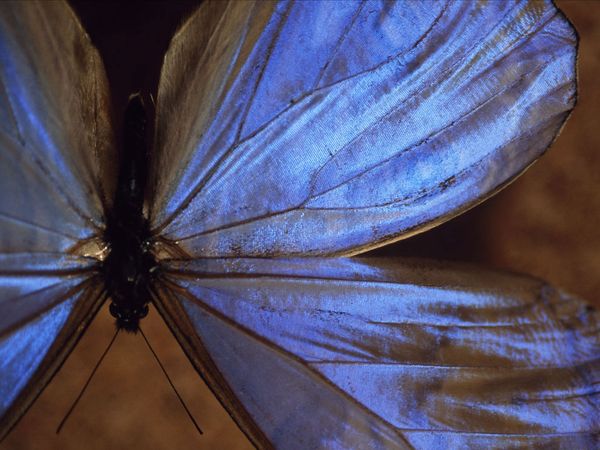
His interest in morphology, the study of structure and form of organisms, involved context, meaning and communication. He distrusted reductive models of cause and effect, the scientific approach that lines up parts and classifies them, focussing on quantity.

Comparing systems, one to another, he perceived the mind as an ecological system. And he used the analogy that ideas, like seeds, can only take root and flourish according to the nature of the system receiving them. This thought alone deserves deep contemplation.

He had a way with stories … ‘There was a man who had a powerful computer, and he wanted to know whether computers could ever think. So he asked it – Will you ever be able to think like a human being? – The computer clicked and rattled and blinked, and finally it printed out its answer on a piece of paper, as these machines do. The man ran to pick up the printout, and there, neatly typed, read the following words: ‘That reminds me of a story.’ 
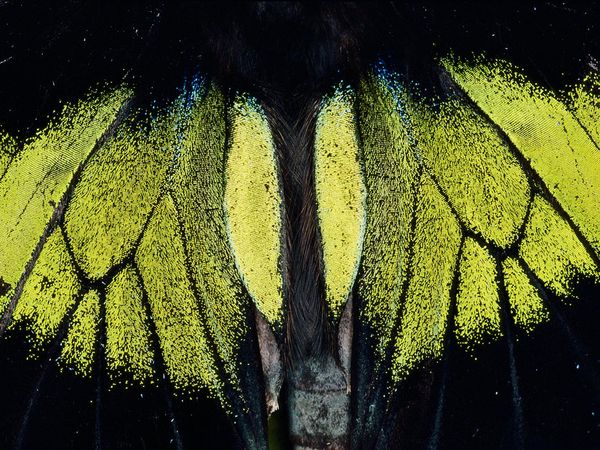
Concerned about the decimation of aboriginal populations (he did field-work with Margaret Mead), the degradation of ecological systems, economic oppression, and senseless wars and arms races, he took these ominous signs of contemporary life to be manifestations of deeper disorders, which he defined in terms of cybernetic systems of communication and meaning that comprise life, mind, and society. In his view, consciousness dominated by purposeful thought has a linear structure that establishes goals and ways for attaining them without being necessarily sensitive to the circular network of cause and effect that orders the systems.

Looking at human consciousness as an adaptive system, he thought the cure for its inadequacies, evidenced by the negative side-effects of purposive rationality, was not to reject it in favour of a passionate non- rationality, as in the extreme romantic position, but to augment and complete it by engaging with non-discursive, pattern-comprehending and emotional processes. He advocated the befriending of the unconscious aspects of the mind through utilising images and metaphors.

In a civilization which separates mind from body, mythologies about the survival of a transcendent mind are often meant to soften the idea of death, or even deny death as part of life. For Bateson, who saw the mind as being immanent not only in pathways of information which are located inside the body but also in external pathways, death took on a different aspect. ‘The individual nexus of pathways which I call ‘me’ is no longer so precious because that nexus is only part of a larger mind. The ideas which seemed to be me can also become immanent in you. May they survive, if true.’  (Afterword to a collection of celebratory essays, 1972)

Yet there are scientists that can no more perceive the language of nature, and politicians who feel beleaguered by sections of society that seek balance and a fresh context towards ‘an ecology of mind.’  The extreme factions of believers, for what else are they, should look again at the bridge  Bateson prepared.


This lovely video gives a taste of what it is all about :

Update … I discovered recently, in 2019, that some the links in this post don’t seem to work anymore. Here , however, is his daughter’s great documentary on Vimeo, unfortunately not free, apart from the trailer.  https://vimeo.com/ondemand/bateson

Looking at the structure of nature and the structure of mind being reflections of each other, it becomes obvious that not only does nature mirror our habit of thinking, but our thinking also mirrors the state of nature. Ecology and psychology must therefore both engage in listening, and seeing, and working ceaselessly towards the integration of knowledge and the re-adjustment of a dynamic balance.

I could go on, but want to bring in a famous painting of Icarus by Brueghel.                                                             Anthony Stevens, a brilliant expositor of Jung’s thought, used the painting as cover for the first hard-cover edition (1995) of his book Private Myths.

http://www.anthonystevens.co.uk/index.html
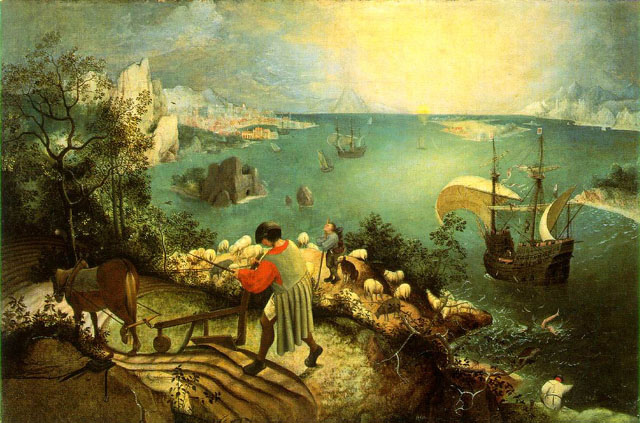


Stevens quotes from a poem by Wystan Auden:

In Brueghel’s Icarus, for instance: how everything turns away

Quite leisurely from the disaster; the ploughman may

Have heard the splash, the forsaken cry,

But for him it was not an important failure; the sun shone

As it had to on the white legs disappearing into the green

Water; and the expensive delicate ship that must have seen

Something amazing, a boy falling out of the sky,

Had somewhere to get to and sailed calmly on.

What goes up must come down. Who knows how many Big Bangs there were before the one we so ardently explore? There is an organising intelligence behind life’s cycles, while consciousness forever expands. Thinking in metaphors we can perceive similar patterns, forms in nature and mind, cosmos and psyche, mirroring each other across scale and time. In other words, life teems with realities we can tune into, as long as we assign context and meaning.

Check out Gregory Bateson’s books ‘Steps to an Ecology of Mind’ and ‘Mind and Nature.

His family continue his work: His daughter Nora and his wife – Mary Catherine Bateson:   http://www.interculturalstudies.org/main.html

Peripheral Vision

 http://www.amazon.com/exec/obidos/tg/detail/-/0060926309/mead2001centenni

Free chapters of Angels Fear:  http://www.oikos.org/angelsfear.htm

Nora Bateson, recently created a film:

http://www.anecologyofmind.com/

Last not least, the themes:  pattern which connects, mirroring and bridging, are subjects of my novels.
25 Comments

Filed under Blog

… Is a parent ever unemployed ? …

Something new – AVAAZ encourages individual campaigns now . I started one. Click the link and read the proposal, and if you like the idea vote for it.

http://www.avaaz.org/en/petition/Put_parents_on_the_payroll/?fHNQuab&pv=0

Yes, it makes sense – put parents on the payroll – tied to the attendance of courses.  Here some more thoughts as to why …

Family structures are changing for a variety of reasons. No use blaming parents and home-makers that are unable to cope. No good romanticising the past. Parents and carers need  support in this time of flux.  New structures are emerging, single parents or carers, for example, seek families of heart and mind. Our policy-makers don’t seem to take note of this phenomenon. Think of independent units around a communal space that would allow socialising and the sharing of skills.

And why not use the psychological knowledge that has been available for decades? Why is this knowledge not disseminated to parents? Corporations require further training from their employees, offer courses that teach people skills, because they realise these skills improve business.

Parenting is important business, without question the most important one.  Years ago, when I was involved with Parent-Link, sharing skills, I had an idea how to create more opportunities for parents and raise their status. You can read about it by clicking on the AVAAZ link above.  And please vote, or come up with your own ideas.

Present social policies often force a mother or father to beg alms from the state, become unemployed. Is a parent ever unemployed?  Children are the future and must concern us all. I meet many parents, who, even with heightened awareness, tenacity, creativity and sacrifice, struggle to stay sane.

Thanks

3 Comments

Filed under Blog

… the wild horse of the mind …

I thought I open the window a bit to what I’m immersed in, drafting the sequel to Course of Mirrors, called Shapers. Another mythic adventure, and more. The short piece below is not representative of the tense action this story has plenty of, but depicts a pivotal moment. The scenery is  Eire, where time-zones overlap. In 2550 AD the island is called Sax, where Rhonda, the super-controlling power, cast their misfits.  In the excerpt below, Tilly (Cassia in Ana’s story) has arranged for Cara and Mesa to meet in Kerry during the 1970s.

The theme touches on the creative process. Something for my writer friends. I welcome any feedback to the draft.

*    *    *

Tilly’s ruined estate on the Kerry peninsula was one among many places around the world where past and future began to cross or run parallel during the 1970s. Not all drop-outs travelling through Derrynane were aware of the phenomenon. Those open to the new wavelengths either tuned in, or received no more than garbled white noise. The going slogan was – love, don’t think – though it should have been – love and think – and stay grounded. These were turbulent times. Traditionalists abhorred the breaking free of conditioning. Leaps into the unknown frightened them.

This is Cara’s time, and these are her thoughts: Personal myth is a complex self-creation, mainly unconscious, but less so once we replace the postulates we inherited with our own, and are drawn to our psychic kin. Every night when the body rests we visit beings in other spheres. We may discount these sojourns as dreams unrelated to our daily existence. Yet bridging occurs when we value inner dynamics and re-story the associative symbols of images. Resonance momentarily fills the void between the known and the unknown, and meaning is assigned to events. Some good people trust in God, but then abnegate their creativity. Are we not the desire of a divine will? Are we not the ears, eyes, nose, hands and feet of a universal intelligence, of which we are the deed? Does not our speech derive from one sound? And is love not the creed that breathes all things and directs the movement of all spheres? I don’t understand the need to prove or disprove a universal intelligence that is within and all around us. The world I create is imperfect and suffers from on-going flux. But I can bring my small flame to its shadows.

Now that Cara’s myth caught up with her, and she was confronted with the net of postulates she had cast into the future. She found herself challenged to engage with what she animated, because she was animated by it.

Gutch spotted Tilly talking to Cara and Mesa in the hall. He was bursting with pleasure. ‘I found my clan,’ he said. ‘This place is teeming with talented actors. We’re going to do some magic theatre. Are you joining us?’

‘I need to take care of something,’ Tilly said. Can you keep an eye on Gart?’

‘That devil had some weird conversion trip and is sound asleep under the table.’

‘Excellent. Let him sleep.’

When Cara and Mesa arrived at the cottage across the atrium, Tilly had lit a fire in the hearth. A nest of chairs invited them, and the smell of fresh coffee. ‘Have some,’ she said, ‘pointing to a steaming pot, ‘and there’s chocolate cake, too.’ Mesa soaked up the atmosphere, transported to Ana’s world, reminded of Cassia’s kitchen. Tilly placed a small leather pouch in Cara’s lap. ‘Here, forged by fire, polished by the sea, a gift of remembrance.’

Cara opened and turned the pouch. A black stone fell into her hand – smooth as marble, yet radiating warmth and shining in the glow of the fire. ‘Ana’s talisman!’

‘Yes, and you might as well own it.’ Tilly paused, gazing into the flames. ‘I have a favour to ask from you, for Mesa’s benefit.’

‘What favour?’ Cara poured cups of coffee for everyone, dished out giant slices of chocolate cake and added a dollop of whipped cream to each.

‘Your future, Cara, has come to visit you. Mesa returned to assimilate what was lost to her. With Ana’s story you re-animated her soul. Certain events in history require beings to return, to right things or bring a message.  Mesa will take on her role in the odyssey of the Ypocs. And she’s going to be the narrator of your story, Cara.’

‘Huh, this takes a leap of the imagination. I haven’t even smoked the weed.’

Tilly smiled. ‘You know what it takes. Uncovering a personal myth is different from writing a Hollywood script. To help Mesa to re-connect with random creative processes, I want you to explain to her in as much detail as possible how your mind works.’

Cara heaved a breath. ‘The idea sucks every thought from my head.’

‘That’s a good start.’

‘All right, here goes a slice of random micro processing … Momentarily stuck with a paragraph, I remember to stretch my legs. In the kitchen I snatch a yogurt from the fridge. I notice a sticky shelf – mental note – clean it soon. Dark clouds gather outside, looks like rain. I run up to the bathroom and close the window. On the way down, I see dust-clouds on the stairs – mental note. Heading for the desk I stop by the fridge again because I’m now really hungry. I prepare a sandwich – mental note – put butter on shopping list. I use the loo – mental note – toilet paper is running out. Telephone rings. The answer machine kicks in. Just as well, I’ll return the call later – mental note. A letter that needs sending sits next to the phone, I put a stamp on it – mental note – post it. A fly is trapped in the window. I release the fly and study a tree out front that leans over and needs pruning. I quickly assess which branch to cut – mental note. Off to my desk. Passing a shelf I spot the book I couldn’t find earlier. What a relief! I plonk it on my research file and am reminded of an article I need to chase – mental note. The sun shines again. I open the backdoor and listen to the birds. Grass needs cutting – mental note. Finally back with my paragraph the writing flows, sheer bliss. At a natural break in the narrative I decide to go shopping. In the car I have an epiphany relating to a character in my story, to do with birds – mental note. The walker I pass reminds me to visit a certain person – mental note. I recall this person collects small antique tins. I could find him a present – mental note. I think of metaphors, how obsessions, like collecting tins, are really personalised teachings – mental note.’

Mesa had listened with rapt attention. ‘What happens to all the mental notes?’

‘Ha, ha … they’re promises. They’re torture. They heap up. They demand execution. My way to deal with accumulative pressures and gain time to focus on my writing is through procrastination. I’ve become patient with nagging voices. They’re not jailors. They’re easily humoured until the time is right for a blitz. Then I act fast and achieve a great deal in a short time, happy to have cleared the space.

‘But why give these mental notes the power of demands over you? Mesa asked.

Cara glanced at Tilly, who had taken up knitting, as if the dialogue bored her.  What was her agenda? Was this really for Mesa’s benefit? Tilly smiled and said, ‘Go on.’

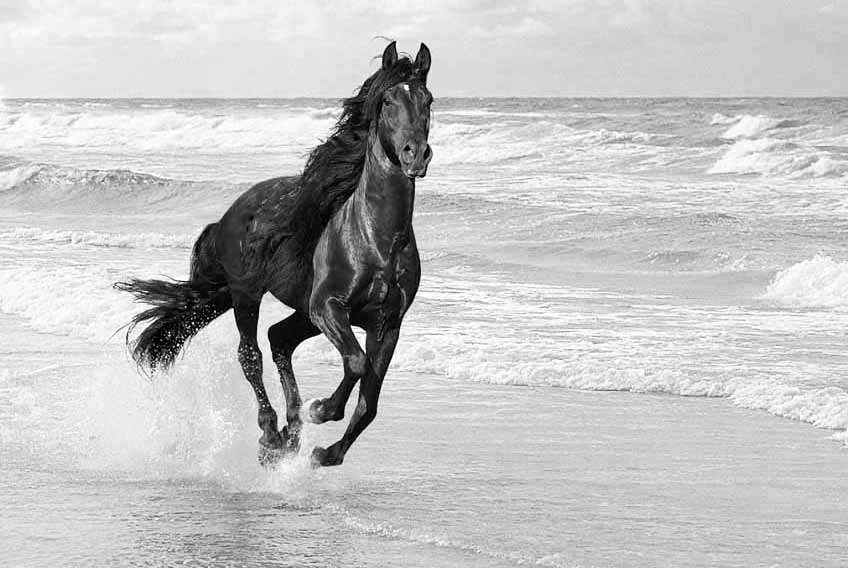
‘It started out as compulsive pattern. I was conditioned to respond to the needs of my environment, and to maintain order. There are exceptions. Some days, it could be the weather, a dream, the stars … from the moment I open my eyes everything flows effortlessly. My brain is relaxed and I attract harmonious thoughts, like I’m fine-tuned to a subtler station, beyond the busy bandwidth of neurotic naggers. The tuning can be learned. It’s like taming a wild horse. I can actually do it, when necessary. But I like letting the horse run wild. I find wild things that way.’

‘We have different conditioning,’ Mesa said. ‘From early on I was trained to tame my mind, to let it rest like a still pond, or focus thoughts like laser beams. Then free play was introduced, disrupting Rhonda’s order, and all went wrong for the Ypoc.’

‘Aha! I bet you didn’t have to juggle a deep conflict, and oppose a controlling father.’

Tilly dropped her knitting. ‘This gets interesting. It’s what Mesa came back for.’

* * *

Apologies: The origin of the image of the horse is unknown to me.  Many thanks to the photographer.

10 Comments

Filed under Blog

… solitude …

Weather-defying, I had my first Pimms with ice cubes this year, imagining warmth, sun, swinging in my hammock under apple blossoms, listening to birds, walking barefoot and having friends round to watch the sun go down and the moon come up. The Brits are fed up with the rain. More than darkening the sun, clouds also obstruct the brighter aspects of the mind. Signals from the noosphere get muffled, or so it seems. There remains solitude, a tranquil space where questions arise, and thoughts have space to dream and play without being overstimulated. Allow your children periods of solitude and they will come to value it later in life.

I mulled over a question these last days, not for the first time. And an answer came, an angel whispered it into my ear while I slept – if all incarnated beings living on this planet were enlightened at the same time, the whole developmental cycle of the psyche would collapse, and consciousness would expand into a new matrix all over again. I’m making no claim to truth, angels can’t always be trusted. But the message seems to be – all is well-tuned as it is.

This is what solitude does to me – I get answers that beg more questions, like, what about multiverses? My body lives in this house in England that is at times difficult to maintain, but my mind also has another house, an interior house, free from mundane pressures, a house that exists in a dimension invisible to the physical eye … built from bricks of meaning rather than clay.

Here to the Noosphere, an interesting concept:  http://en.wikipedia.org/wiki/Noosphere

7 Comments

Filed under Blog

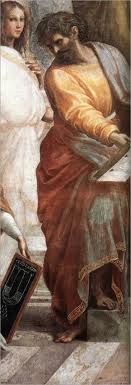
Parmenides – Philosopher – Poet

Last week, while re-working an article I wrote 18 years ago on the symbolism of  two West European Nations, namely Germany and England (having lived equal decades in each), I lost myself in the history of these nations, back to the Roman Empire and its fall. Something was missing. Reeling back another thousand years, to my beloved philosophers, I found IT.

I was reminded of the only ever poetry course I attended, where a tutor told me ‘You have to decide whether you want to be a philosopher or a poet.’  Over the years I’ve come to realise that some good people, in order to be respected, have sadly allowed their inner voice to be silenced by the academic system.                                                                                                                           *    *    *                                                                                                                                                                         Here an excerpt of Parmenides’s poem as it appears in Kingsley’s ‘In the Dark Places of Wisdom’. The text is subtle, humorous, with repetitions that are no accident. The poem induces a journey that appears in many traditions throughout the world under many names.

The mares that carry me as far as longing can reach

rode on, once they had come and fetched me onto the legendary

road of divinity that carries the man who knows

through the vast and dark unknown. And on I was carried

as the mares, aware just where to go, kept carrying me

straining the chariot; and young women led the way.

And the axle in the hubs let out the sound of a pipe

blazing from the pressure of the two well-rounded wheels

at either side, as they rapidly led on: young women, girls,

daughters of the Sun who had left the mansions of Night

for the light and pushed back the veils from their faces with their hands.

There are the gates of the pathways of Night and Day,

held fast in place between the lintel above and a threshold of stone;

and they reach up into the heavens, filled with gigantic doors.

And the keys – that now open, now lock – are held fast by

Justice: she who always demands exact returns. And with

soft seductive words the girls cunningly persuade her to

push back immediately, just for them, the bar that bolts

the gates. And as the doors flew open, making the bronze

axles with their pegs and nails spin – now one, now the other –

in their pipes, they created a gaping chasm. Straight through and

on the girls held fast their course for the chariot and horses;

straight down the road.

And the goddess welcomed me kindly, and took

my right hand in hers and spoke these words as she addressed me:

‘Welcome young man, partnered by immortal charioteers,

reaching our home with the mares that carry you. For it was

no hard fate that sent you travelling this road – so far away

from the beaten track of humans – but Rightness, and Justice.

And what’s needed is for you to learn all things: both the unshaken

heart of persuasive Truth and the opinions of mortals,

in which there is nothing that can truthfully be trusted at all.

But even so, this too you will learn – how beliefs based on

appearances ought to be believable as they travel all through

all there is.

*    *    *

The hero travels the road of death while still alive, making the connection between this world and the other.  He goes to the depth of ignorance – the ignored – to unknowing – in search for wisdom instead of straight to the light

Kingsley says when Plato and his followers took over these ideas from the Pythagoreans they cleverly amputated the ambiguities: focussed only on the true and the good and the beautiful, and cut out the need for the descent.  He makes a link to inscriptions  discovered during the 60s in Velia, Italy. Three words puzzled …  Ouliades – Iatromantis –Apollo … The healer who can access special states of awareness, look beyond appearances, give voice to what has no voice. In Sept 1962, at the same place, Mario Napoli found a small block of marble with another inscription: Parmeneides son of Pyres Ouliades Physicos

These findings must present a challenge to historians. Obviously they stayed clear of the mystic drone carrying the song of Parmenides and the Pythagorean’s. The incubatory practice and its profound wisdom were rationalised out of western history. Kingsley writes:

Between them, Parmenides and Empedocles laid the most basic foundations for the world and culture we now live in. But with the passing of time we have forgotten who they were. The truth about the real nature of their work has been neglected, distorted, ignored—transformed into just another of those empty illusions that they themselves tried to set us free from. There is nothing accidental about the fact that we in the West are starved for some real sense of meaning and crying out for something that, in spite of all our apparent sophistication and material success, we are no longer even able to name. This western civilization of ours was created for a purpose. Until we start to discover that purpose again, our lives will be meaningless. Unless we touch our roots and make contact again with the essence of our past, we can have no future.

http://www.peterkingsley.org/pages.cfm?ID=5

One of the many resources Peter Kingsley used:

/www.amazon.com/The-Fragments-of-Parmenides-ebook/dp/B002ZVPTEY


13 Comments

Filed under Blog

… the cast in the shadows …

Perhaps all the dragons of our lives
are princesses who are only waiting to
see us once, beautiful and brave.
Perhaps everything terrible is in
Its deepest being something
that needs our love.                — Rainer Maria Rilke

Last week I volunteered a short session in the context of a variety of monthly events organised by a group of friends under the umbrella of Archventures.

… the cast in the shadows …  …

We have inside us a cast of players for every imaginable scene. Occasionally banned and hidden characters pop up. Excluded from our script, they emerge inadvertently through surprise encounters, act irrational and appear cartoon-like. Unacknowledged, a wild player roams in the unconscious unconnected, until an emotional trigger hits a sensitive node. We are not amused when an unsophisticated trait breaks to the surface with behaviour that will embarrass and shame us, belying our self-image.

We learn as children to shield ourselves from rejection and injustice. Our strategies are endless and contrary …  like being compliant and withholding or defensive and angry. Think of a natural and well-meaning quality persons in your early environment disapproved of in the name of moral perfection. Your trust may have been betrayed, manipulated and taken advantage of. We adjust as best we can. Rules are needed for societies to function.

We spend our life until we’re twenty deciding what parts of ourselves to put in the bag, and we spend the rest of our lives trying to get them out again. – Bly

In relation to our genuine nature, the sacrifices we make in order to belong can be as disproportionate as the sacrifices we make to defy authority. Feelings we edit out of our lives gather a strange luminosity and succumb to an archetypal force beyond our command. Yet a closer look at the rawness and imperfections of disowned players may surprise. They invariably hold a gift, often the very essence of our creativity.

A way to re-own the locked up energy is to honour our battle scars and weaknesses. We don’t have to agree with inner and outer adversaries, only accept their existence in us. This acceptance opens the heart to tolerance, rapport, understanding, empathy – and insight.

‘Our friends show us what we can do – our enemies teach us what we must do.’ – Goethe

We make room for imperfection … 25th Feb 2012

What is uplifting about our monthly Archventures gatherings are the hugs … yup … never underestimate the invigorating power of hugs. What I also appreciate – and this applies to many groups whose core members meet regularly – is that we form a different entity each time, enriched by everyone’s fresh constellation of experience and insight. Newcomers feel welcome and at ease in this irreverent group that does not follow any one creed, ideology or person.

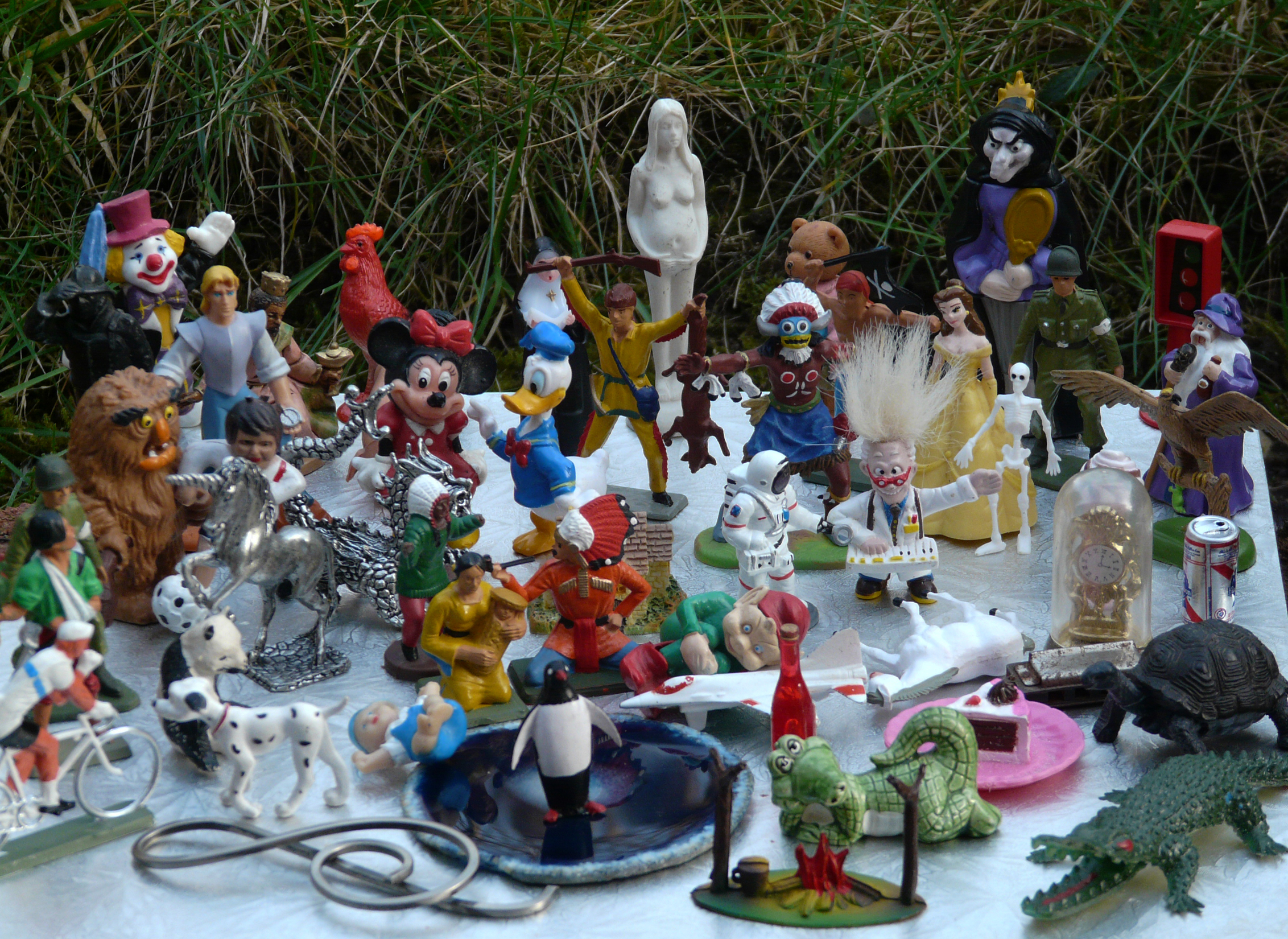
The most powerful player this afternoon was the seven-year-old son of a participant. The boy was fascinated by the boxes of miniature world-objects I had brought along.

He outplayed us all, instantly creating a legion of his world.

The young will be forever potent in their ability to play and invent …

We adults shared unique and moving stories about early misdeeds, raising questions to be explored individually. (The photo is of a  different occasion)

Some shadows we drag along are not of our own making, a dilemma that also applies to families and nations.

‘The best political, social, and spiritual work we can do is to withdraw the projection of our shadow onto others.’  ― C. G. Jung

Understanding the origins of shadow-projections softens the compelling affect they have in defining us, and our reactions to being fitted into a frame. Observing politics, it is obvious that negotiations are not enough to solve longstanding conflicts. It takes the awareness and inner work of individuals to let go of resentment, release the spark of creativity that enables lateral thinking, and the flow of compassion tied up in the entanglement of righteousness.

And there remains the unknowable, luminous black hole, and a sixth sense of something that evades us. What is mysterious, not accessible emotionally or through analysis, drives us on to dig deeper, expand our consciousness, and re-discover the link to our innermost self.

‘We are born at a given moment, in a given place, and like vintage years of wine, we have the qualities of the year and of the season in which we are born.’ ― C. G. Jung

With only three hours’ time available, the session at least inspired us to remember what is in our power to do. There remains the ever impelling potential of greater intensity and more poise between safety and risk on the tightrope of our life.

Our dear friend Rahima outlined the shadow theme as C. G. Jung defined it. If you have not heard of the term ‘shadow’ in this context you might want to investigate: http://en.wikipedia.org/wiki/Shadow_(psychology)

And in relation to the activity of writing – here a dream image in the eye of its beholder  http://www.youtube.com/watch?v=M19S89UcaKQ&feature=related

If we could read the secret history of our enemies, we should find in each man’s life sorrow and suffering enough to disarm all hostility. Henry Wadsworth Longfellow


*    *    *

4 Comments

Filed under Blog

… all time is now …

A day, whether six or seven years ago or whether six thousand years ago, is just as near to the present as yesterday. Why? Because all time is contained in now.

Meister Eckhart

*    *    *    *

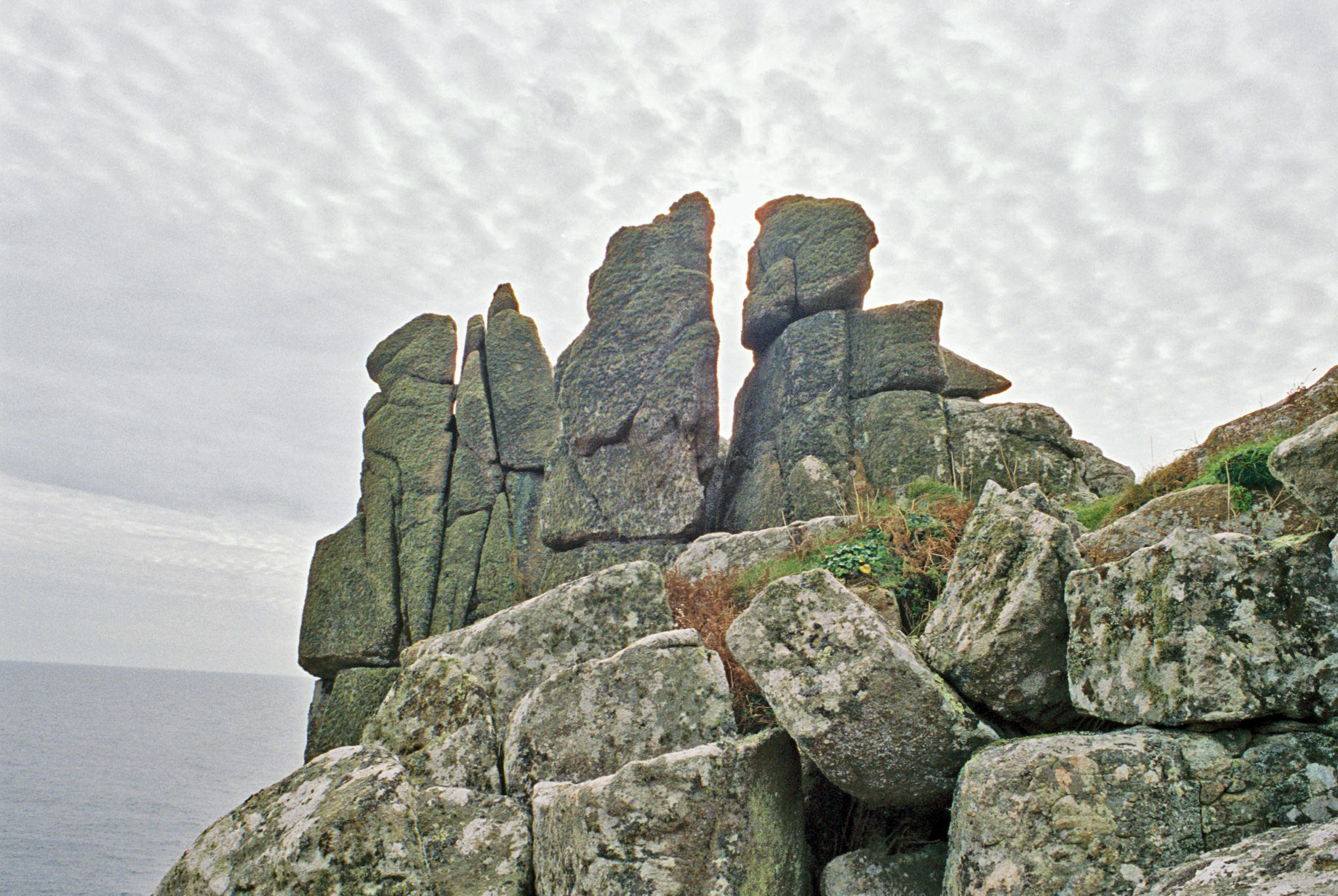
Time ago I visited Lamorna Cove, an enchanted spot at the Cornish Coast. A friend, who is into solid walking, dashed ahead, while I stopped to contemplate a group of rocks that faced the Atlantic like sentinels.

An impulse inspired me to offer an invocation. That very moment a family with a bunch of kids and their exuberant cacophony of shrieks changed the ambience of the place. I let it be. Home in Surrey, before yielding to sleep, I was reminded of my unfulfilled intention, went back to Lamorna Cove in my mind’s eye, and did my invocation:

 … towards the one, the perfection of love, harmony and beauty, the only being, united with all the illuminated souls who form the embodiment of mastery – the spirit of guidance …

My presence was ‘being there’ descending from another sphere, in synergy with a poignant moment more real than real, in the place rooted in my imagination. Beyond time, even the tiniest thing impressed deeply can be re-embodied in awareness. As in the process of analogue photography, where an image exposed to light is developed to its fullness in the darkroom.

The elements our bodies and the cosmos are composed of mediate and record what was, what is and what will be. I come to this conclusion through my practice of psychotherapy, finding that memories held in body and place easily circle in time and from a wider perspective allow us entry points, so we can adjust misaligned perceptions, as well as project blessings towards wholeness. In other words, we can change the meaning of the past, the now, as well as the future through fresh perception. Maybe this is what resurrection is really about.

I used to think synergy was difficult to achieve in the virtual world, the simulation of the collective psyche made visible through words and images. I changed my mind, it happens through the imagination. Events once fully sensed and experienced can be recalled, invoked and re-created. Why would we otherwise take physical form, we might as well remain angels. Proof me wrong  …

The internet can be overwhelming during phases when we live from the outside in, accumulating and soaking up information, less so during phases when we live from the inside out, creating new mythical realities. At best we do both in some kind of balance. I have come to appreciate the virtual web for staying in contact with friends all over the world. A few days ago, two of them, unknown to each other, were in Hong Kong.

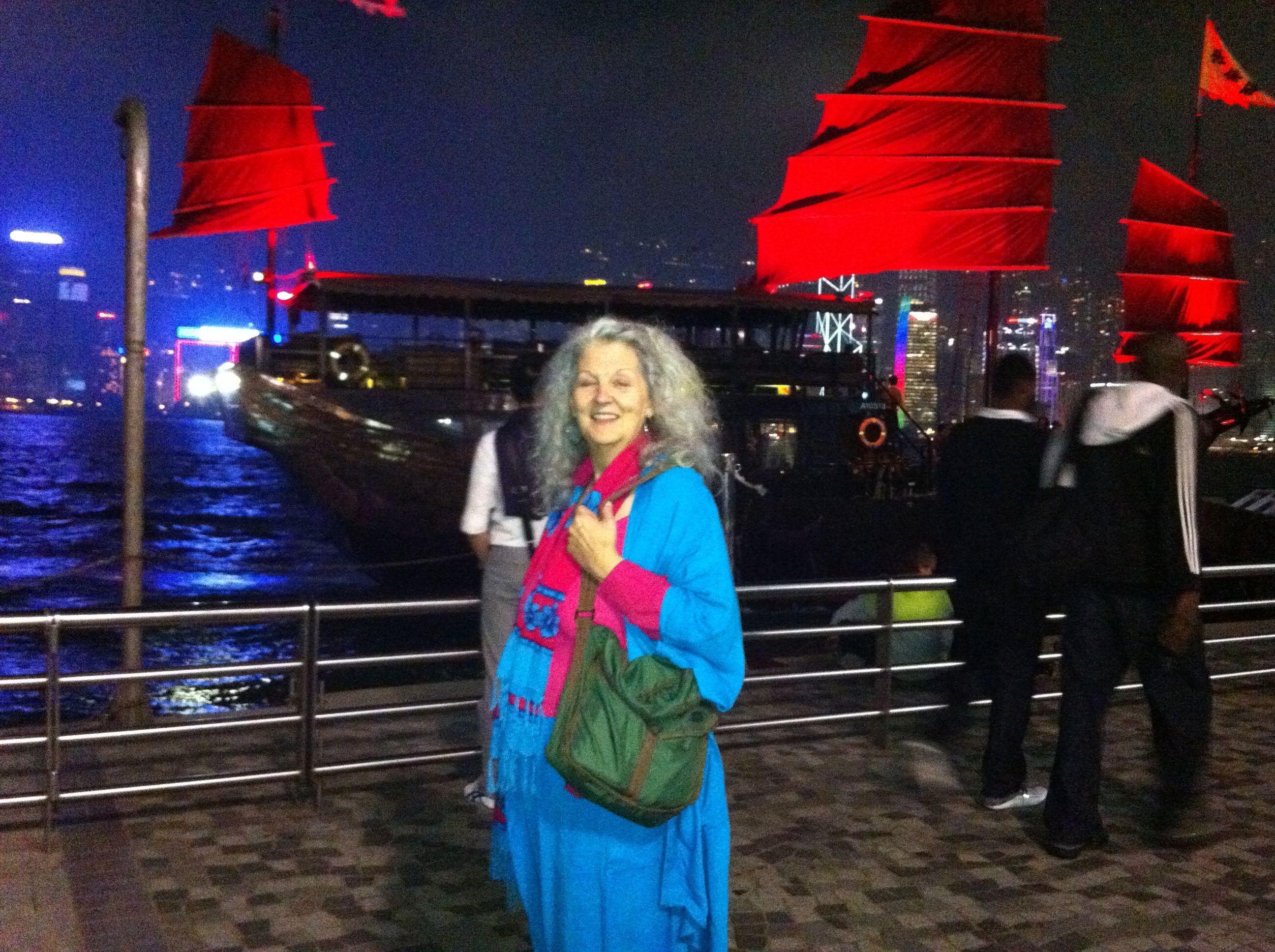
Melanie, adept in the field of astrology http://www.melaniereinhart.com/  has been my friend for over thirty years. Presently she conducts a lecture/workshop tour through Asia.

Here is an image of Melanie blissed out at Kowloon harbour … fell in love with this beautiful wooden  in boat with red sails … She says she was exhausted. How images attune to perception …

I’m totally enchanted with this image.

A relatively new friend visited Hong Kong at the same time. Quenntis is a writer and dancer I met through the Harper Collins Authonomy website. We collaborated as part of a small group of poets living in all corners of the world towards manifesting the publication of ‘Rambling Poets at Café Cyber.’ I hope Quenntis doesn’t mind that I pinched the tiny feet of his daughter.

He wrote on face book about his visit to Hong Kong … attending my first ever international poetry reading event – over 4 days of constant poetry – pure chaotic bliss – i think my brain is a balloon and it has popped a few times already from over-expansion …

Another bliss, I look forward to these experiences being filtered, embodied and shared here: Dancing with Words: http://quenntis.wordpress.com/

These are two of my friends, one I hug rarely, and the other I might never hug, unless I travel to Taiwan. But it occurred to me that all my friends, far or near, have individual passions. Individual passions provide a structure wherein the most unique becomes the most universal.

And in that universal sphere all time is now. This inspires …

*    *    *    *

The invocation above is my slight adaptation of what constitutes the advent of a universal worship ceremony created by Hazrat Inayat Khan, but can be used to begin any event. If your life includes using prayers go here:  http://www.cheraglibrary.org/

2 Comments

Filed under Blog

… sculpture park …

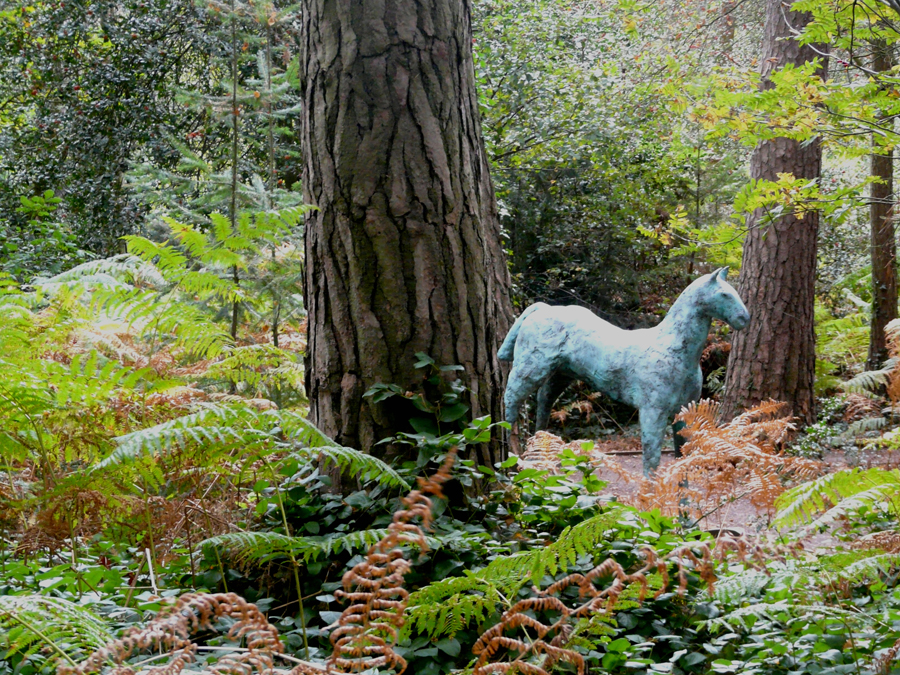
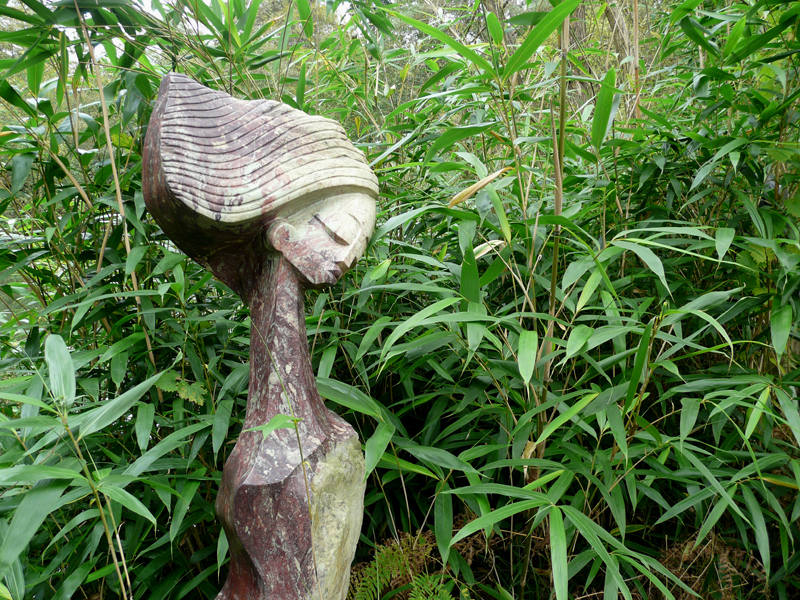
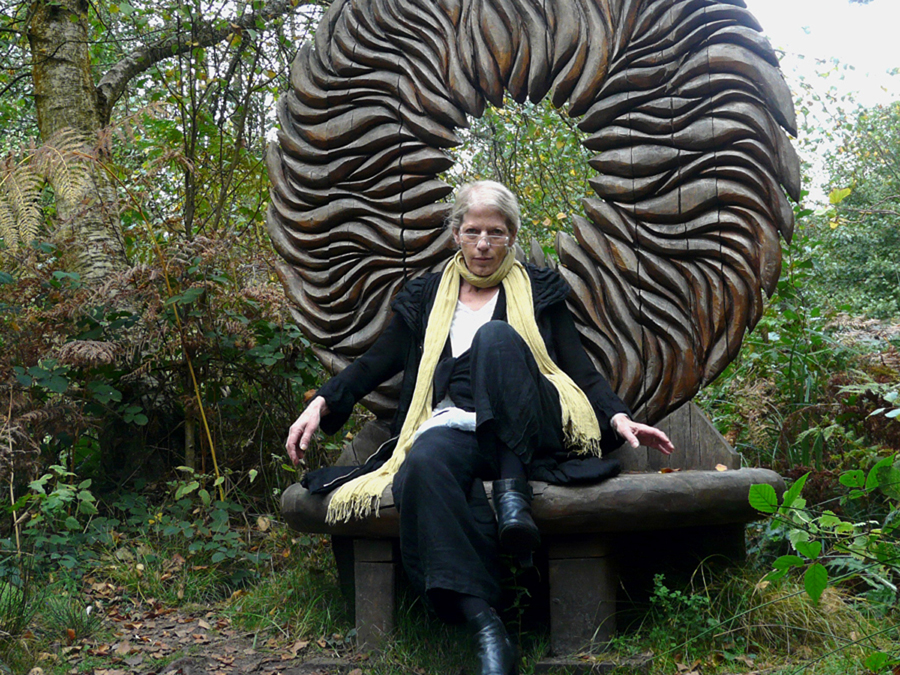
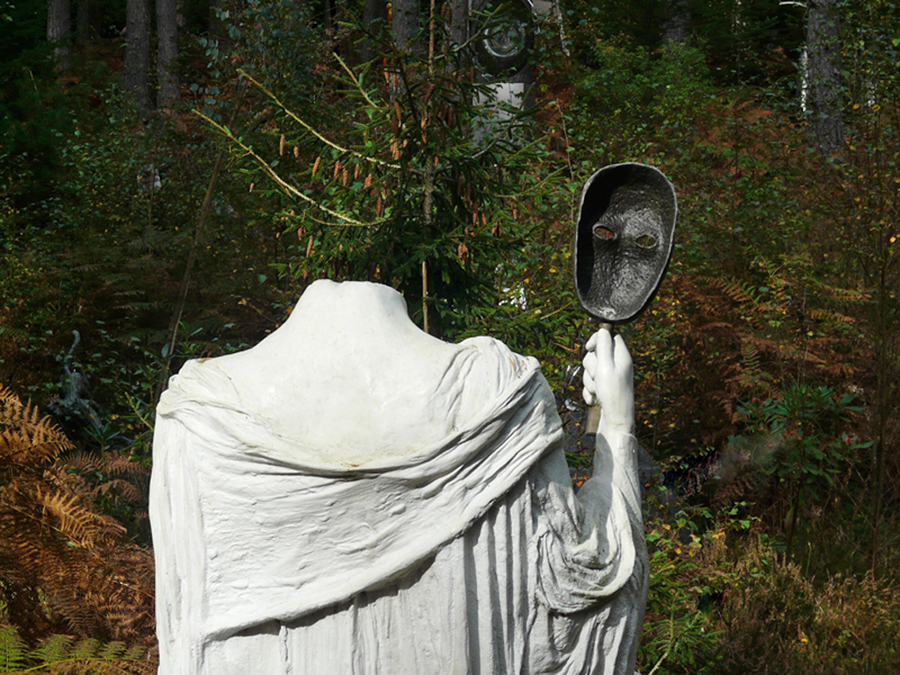
Dreams in stone, fairy horses, quills that use earth as ink, see-through elephants, surprises in the ponds, ghosts, flowing stone, water magic and mysterious circles …

Inspirational hours with my son and his partner at the ‘Sculpture Park’ in Surrey, near Churt.  So  close – and yet I had never visited the place. Like the man behind the bar in the pub opposite, who worked there for many years and not once stepped through the gate across the road. Makes me think of worlds we miss by the blink of an eye.

Here are some images of the place …

magic circles to other worlds …  

If you’re in the area, don’t miss it: http://www.thesculpturepark.com

9 Comments

Filed under Blog

… lovely light …


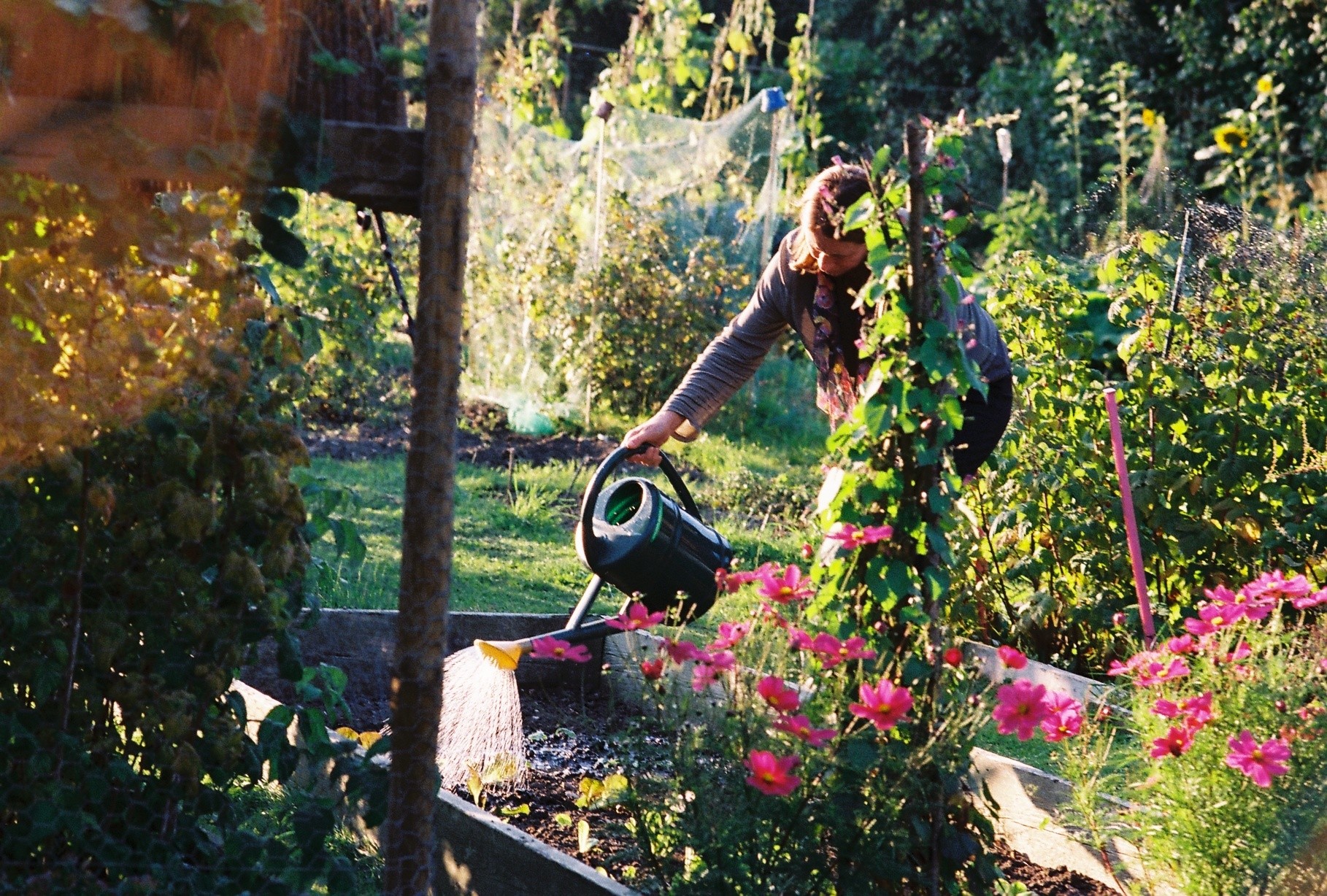
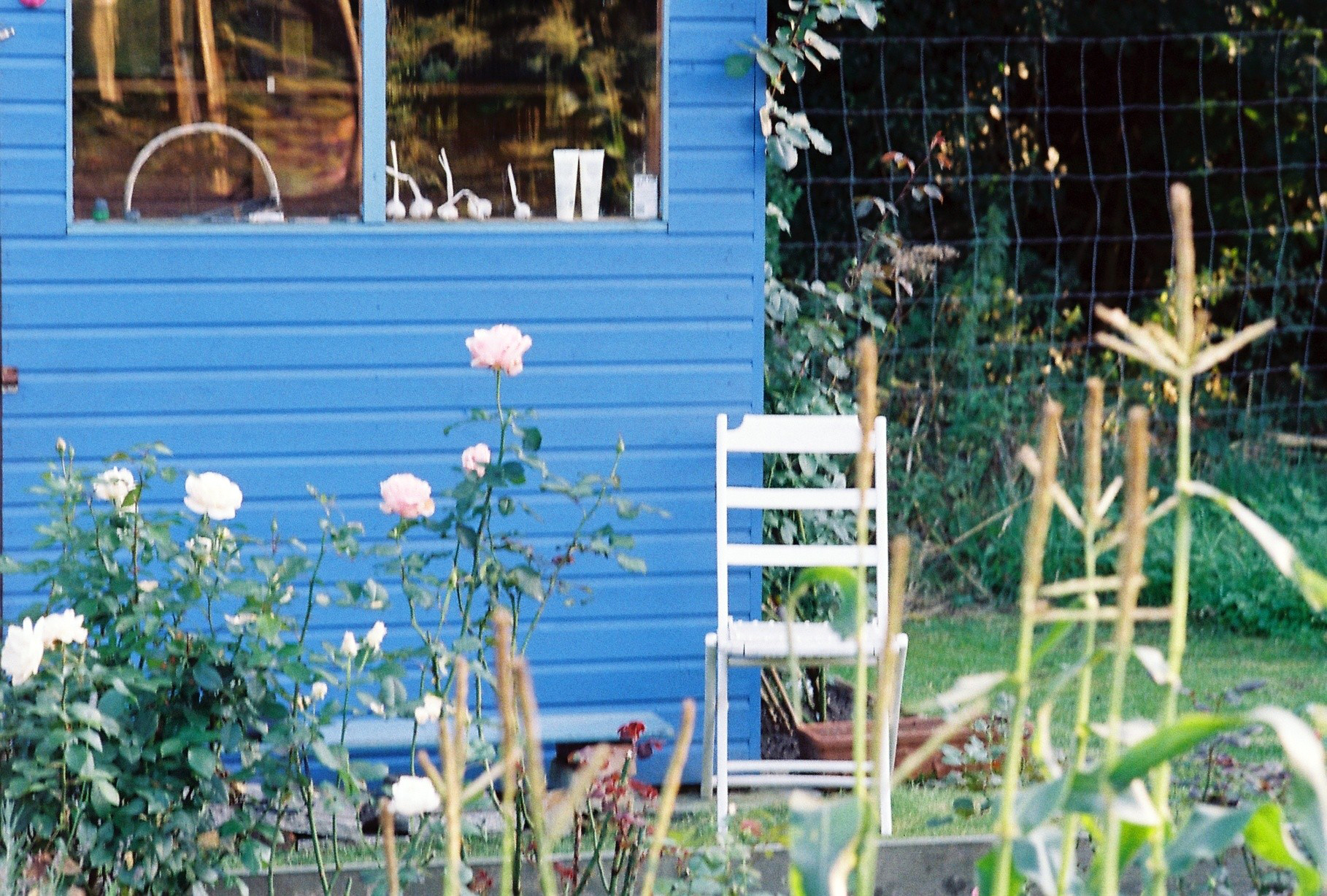
My friend, Ruth, has an allotment which is an inspiration …


A memorable day of lovely light …


7 Comments

Filed under Blog