
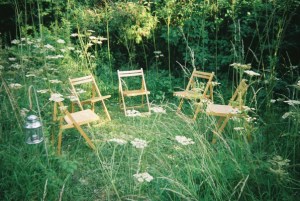
 Democracy starts inside us. One way to explore our inner crowd is through allowing the different aspects of our personality to have a voice, including ones we dislike or suppress, like parts burdened with shame, self-loathing and self-hate. Together with their inner persecutors and defenders, they tend to pop up involuntarily with strong emotional force during stress, or an experience that all too often had its first traumatic installment way back in childhood.
During a 1980s training with the Psychosynthesis Institute in London, we gave names to what we called our sub-personalities. The concept encapsulated what I had sensed for a long while, that I host various distinct entities inside me that can spring to live with their unique voices, interests, sensitivities and defenses in response to circumstances.
Take a dwelling that houses a family of all ages. From day to day there are debates, intimidation, fights, making up, tenderness, fun, humour, but always reoccurring conflicts, like an angered sibling can easily spark a massive row. Then ask who is in charge? A family with conflicting needs lives inside each of us.
As baby, toddler, teen, young adult and so on, we succeed or fail in overcoming obstructions. We learn, or unlearn. Ideally we mature and the understanding of ourselves deepens. Some memories we cherish, others we bury. Yet each time a traumatic condensed experience re-occurs, dormant anxieties may explode and cause us to overreact to situations out of all proportions.
The needy child seeking attention is easily recognised. Where early hope for safety and acknowledgement was frustrated, the inner child in the adult draws on an arsenal of acquired strategies, be it nagging, crying, pleading, pleasing, withdrawal, or, equally, rage. Stonewalling and sarcasm can serve as defense. The little person in us may have been confused by contradictory demands, manipulated by a toxic parent or severely damaged through abuse, yet still struggles for acceptance and love.
Another well-worn sub-personality opts for control, a no nonsense character, who detests, let’s say, hesitation and vulnerability. So when a firm response to a present situation is required, this despot may simply order the child to pipe down and shut up. End of story. You get the drift.
Internal conflicts can be harsh. Without awareness of the warring cast in us, we tend to blame others for our upsets. Alternatively we punish ourselves. Identifying and befriending judgmental players is vital before we can reach the vulnerable and fearful part that has become numb and possibly unconscious, or discover the creative dreamer that was ridiculed. Or, indeed, lift a dis-empowered warrior, who must learn to say ‘No!’
Without a mentor, this awareness journey is a daunting task.
 Unable to afford Jungian analysis, my spiritual search became an escape from what I saw as our revengeful, destructive and corrupt world.
Meeting a remarkable, brilliantly creative Sufi teacher, who embraced psychology as a basis for the spiritual quest, was my turning point in the mid 1970s. Grounding and digging started with a workshop called ‘Earthing.’
I had had a wild life up to then, a path I don’t regret. My empathy and patient listening lacked skill, but attracted interesting and eccentric people into my life. However, I needed to accept my limits, and better understand myself, others, and the absurd world we are born into, with the inherited traumas from our parents’ and generation before them.

World objects from my sand tray
A welcome to my inner journey was imaginative play, giving voice to the different parts of myself through monologues, imagery, objects, drama, art, sculpting, painting and writing, etc., all effective in daring to acknowledge conflicting needs. Due to choices enforced by my early environment, I host a philosopher and poet at odds with each other, as well as a cynic and a romantic. Their conflicts are as creative as they are intimidating.
In the digital realm people have come to make up aliases based on their ambivalent shadow aspects, like appearing in different disguises on Twitter, sometimes for the sole fun of contradicting each other. As a writer one might contemplate publishing trash genre that sells well, under pseudonyms, though it seems crass, like a soloist hijacking the performance of a symphony.
Stepping aside from internal conflict, invites my unbiased mediator. My quick route to self-remembrance is saying ‘hello’ to my body, whose every cell holds a record of old wounds. The body (the earth by implication) has endured horrendous exploitation, and to call it into awareness, with all its scars, is a huge challenge for some people.
‘You do not have to be good.
You do not have to walk on your knees
For a hundred miles through the desert, repenting.
You only have to let the soft animal of your body
love what it loves … ‘ from Wild Geese by Marie Oliver
In the present global turmoil, my inner child craves empathy and compassion to endure the pain of the world, including pain I feel observing how some public figures ignorantly out-ward their inner stress through creating enemies – divide and conquer – a steely defense, and a betrayal of the heart. Then again, truth to the face rarely convinces, it lacks depth, and blunts out the whispers from the dark.
Many brilliant books facilitate psychological understanding, but when it comes to moving through a dark tunnel (also called the Night Sea Journey) it is best to seek a skilled companion as guide. In my therapy practice I came upon heart-breaking stories of abuse, especially sexual abuse. The last few decades have shown the full horror of such deeply intrusive and traumatising incidents, and how widespread they are, across all social settings.
‘You’re not alone’ … is the message by Tim Ferris, in a recent very moving and powerful podcast he conducted with Debbie Millman.
PRESS HERE for his Healing Journey after Childhood Abuse (including an extensive resource list)
He ends with a beautiful re-framing of suffering … The obstacles are the path.
This attitude brings meaning to our mysterious existence, to our individual and collective journeys. Obstacles force us to question rules, habits and behaviour. Suffering through adversity, hardship, ignorance, injustice and violence teaches us empathy for each other, and expands consciousness towards our interdependence and essential wholeness.
I could add a list of books here, but if the above concepts speak to you, click on the Tim Ferris link, even if you choose not to listen to his podcast, scroll down his page and find a list of books and resources.
To end this post, despite all grounding over the years, I’m still at heart a space cadet, exploring time travelling in ‘Shapers,’ the sequel to my first novel, ‘Course of Mirrors.’
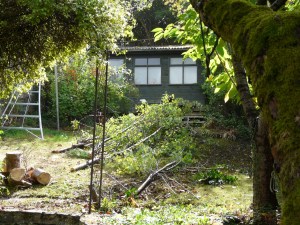 were solved at reasonable costs. In fact, every problem solved … cementing dangerous steps, replacing old iron guttering, massive clearing of garden overgrowth, sorting a blocked man-hole … felt like a heroic victory. You should have seen me stirring the shit in the manhole with a long iron rod. I kept on for hours since it has worked once before, many years ago. I spare you the hilarious details. In the end I called in the experts. Craftspeople who know their job have my admiration. Societies couldn’t function without them.


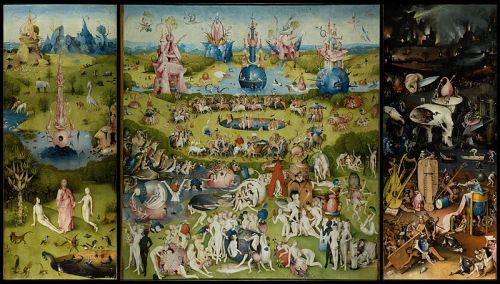 Self-blame makes for turbulent minds. Only scapegoats will ease the burden. Among all regulars a perfect scapegoat served Christianity well – Eve. The collective psyche contains not only unknown riches, but also stuff we disregard (much like the plastic that accumulates in oceans,) thoughts and deeds behind our facades we won’t acknowledge or take responsibility for, and instead conveniently place on the shoulders of suitable others.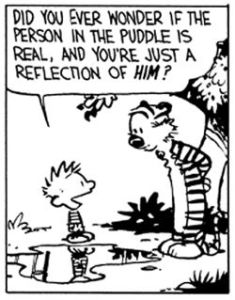
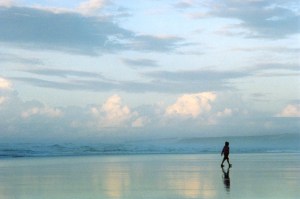 What if we have satisfied our basic needs? The horizon is never reached. Beyond every horizon is another. This includes the horizons of our mind, beyond which we hope to find purpose. We go on journeys, outer, inner, to find out why we are here. But the search never ends. We take drugs to kill this yearning, this question of ‘why’, because we can’t face that maybe the only purpose is the search.
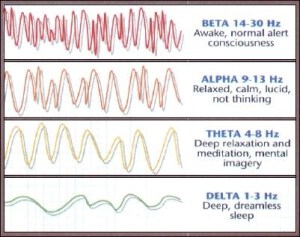 of impact and send the pain back, assuming the wood tolerates it better than my soft tissue. It’s a long-honoured small-scale experiment with disentangling subtle vibrations. It works for me – pain and swelling ease miraculously. Try it, for fun.
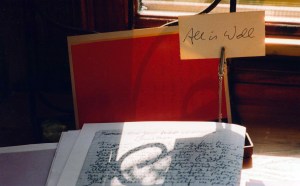 As in receiving and sending waves, I converse with my body, with trees, shrubs, flowers and creatures. I caution spiders not to come near my sleeping space. I have heart-to-heart chats with my house, laptop, car, and all manner of things. I say thank you to what I value and depend upon and even use little mantras conveying something like – all is well – I hear you gasp. I do this to disrupt mindless automatic response patterns. With people, I admit, it’s way more complicated.
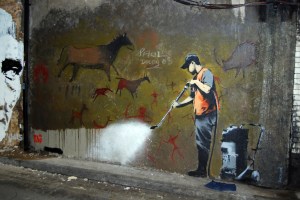 During recent centuries, western cultures developed multiple viewpoints. But what is happening to this wonderful diversity, given the hyper connectivity of the internet, where the masses turn for guidance, where people empowered by visibility offer opinions that swing back & forth in dramatic ways? Is this the dawn of a new tribalism that blanks out the unique contexts and realities of individual minds? One has to have one’s wits about these days.
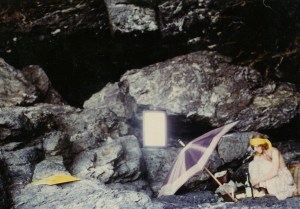 The flashing mirrors of the media blind me at times. Wary of the hive, I also like to belong. When fed up, in need of digestion, I retreat to a cave in my mind (once real) where I attend to what bubbles up from the unconscious in that zone between dreaming and waking, until I emerge from my cave into the light of a new reality, new beauty, new meaning and new questions.
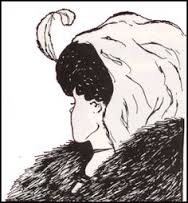 moment arrives when black and white spaces inverse and clusters of stars shine from another dimension. The background has moved to the foreground. A tiny shift in our outlook can result in a new interpretation of what we see, like in the
  irritate us lie foremost in a person’s unique temperament and inherent tendencies. Background does not explain the mystery of characteristics we are born with, the random mix of evolutionary records in our bodies, a wisdom our minds expand upon through resonance with the
  How come I’m invigorated by rushing waters, calmed by a smooth stone, a golden sunset? How do I sense the pulse in a tree, or what life is like for a boar, rat, ox, tiger, rabbit, dragon, snake, horse, sheep, monkey, rooster, dog – unless all nature’s qualities also reside in me?
 At social gatherings we may come upon clusters of meerkats grooming each other, turtles plodding through the crowd looking for a mate or a fresh salad leaf, peacocks, obsessed with their splendour, blustery cockerels, loving old dogs, sharp-eyed falcons, enchanting robins, and so on. …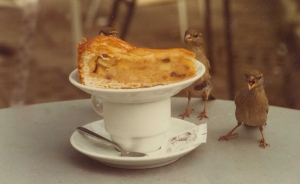
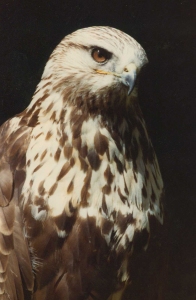 with a butterfly nature tying up with a partner who occasionally roars. Given the rich lore of sensibilities mixing and battling in the human psyche, strangers should be less strange than we make them out to be.
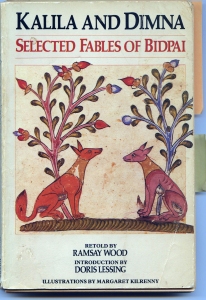 The Persian translation became the Fables of Bidpai. Lovely collections of







 Course of Mirrors