Cartoon de Salvo
Stay home – the resounding advice to stem a globally spreading virus, made me think of what home actually means, to me, to you, to us. Is it a sheltering porch or a railway bridge providing the roof under which one can curl up and sleep? Is it a room, a flat, a house, a village, a town, a metropolis, a country, a nation? The present urgent injunction to stay home obviously refers to a space surrounded by walls.
Is home an extension of us? Is it a place to get away from habits and rituals, or a place to return to and feel safe? Is it a place that keeps others out, or a place that invites others in? Does home offer solitude? Is it place where we are cared for and care for others, or a place where we feel controlled, as in a prison, an inhibiting place, a crowded place, a dark place, a place of chaos, where we find rejection instead of intimacy? Is it an imagined place in the sky, where wisps of cloud move this way and that way, carried by the flow of air?
We shape places, ideal places, inside or outside, through the imagination.
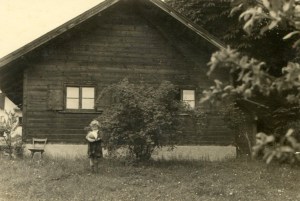
me aged five or six
Each place I lived in I made into a temporary home, a bit of colour here and there, a few cherished objects. I have no trouble to sensually recall their ambiance … Four homes within the village I grew up in. A tiny student accommodation in Munich, followed by varies flats, rural communities, and a VW van in which I travelled through Europe. Two places in Amsterdam I remember, one horrid and surreal, the other blissful, where my son was conceived. Then a cottage in Somerset, various flats near London, a spiritual home in Surrey, and a small semi I acquired. Memories were anchored in each place.
From stories shared in my therapy practice over the years, I understand impression of our very first home wield a repetitive power throughout our life that’s difficult to shake off. Yet the experiences we share have no walls, instead, imagination has a powerful role in our ideal vision of ‘home,’ even if rarely achieved. Personal and collective memories lend us the styles, the architecture and environment we envision, we sense we had once, or will have again. Many of us are alienated from such ideal, just like the Ugly Duckling, where inner and outer worlds don’t chime. But the call is there. And the call creates a most poignant contradiction, a creative tension resulting in great works of art that link and weave vastly different scales (physically and spiritually) together and inspire new dimension of experience in all of us.
And yet we witness the heartbreak of people uprooted from lands that provided their basic needs, compelled into the unknown by famine or war. Displaced people must persevere as best they can. They carry their only remaining home with them – their body.
The body we inhabit is indeed the only physical home we absolutely own, for better or worse, which only death can take. But how many are at odds with their own bodies. And how many are at odds with nature, and the very planet we live on
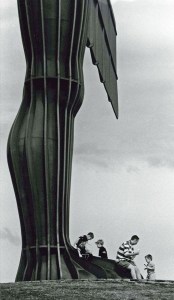
Angel of the North – image by Sylvia Selzer
And here I’d first like to share the deeply fascinating process of an artist, Antony Gromley.
Don’t miss this documentary by the amazing Alan Yentob, click on the link and a new page will open: Antony Gromley – Imagine
He shares his childhood experience, and how he started out by making casts of his own body, to explore what it means to inhabit a body, a human life.
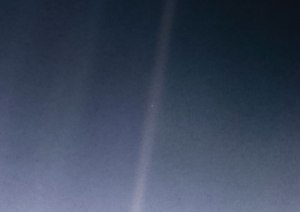 And then consider Carl Sagan’s tender reflections on the pale blue dot, the Mote of Dust, as in a sunbeam, the home we all have in common, a selfie, seen from afar. “Where everyone’s love, everyone you know, everyone you ever heard of, every human being who ever was, lived out their lives.”
“That’s here. That’s home. That’s us.”
 A few days ago, waking at dawn, I had retained a dream vision:
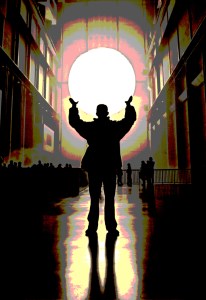 Maybe the dimension of Tate Modern’s Turbine Hall could suffice, but only a Turner price gets you there. In case you don’t know, the Turbine Hall is the place that allowed visitors to touch the sun, like my son did during an Olafur Eliasson’s weather project exhibition a few years ago.
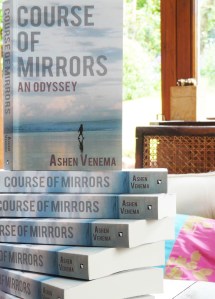 Normally, a writer’s work is condensed and hidden between the neat covers of a book, or captured on e-book screens, one click by one click. The concept of spreading the pages out in real space fascinates me, and ideas keep tumbling in. Like making the text respond to the concentration of the reader, or the lack, in which case sentences would ripple, as if floating on water.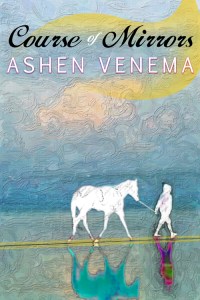
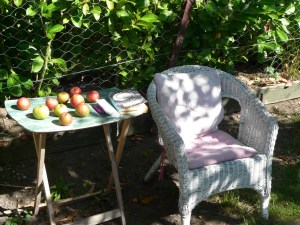 Embodying the perfect autumn warmth, a divine stillness, devoid of mental chatter, other than a faint hum of the river of cars flowing along the town’s bypass, and the gentlest sound of a disintegrating wood chime in my cherry tree, whatever else happens in the world is another dream.
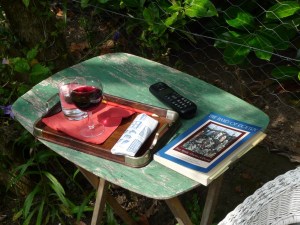 This time of year I like reading in the garden. Last week I forgot to take a book inside – ‘The Hand of Poetry,’ collected poems from Sanai, Attar, Rumi, Saadi and Hafiz, translated by Coleman/Barks, with introductions taken from talks by Inayat Khan. During a short but heavy shower that night, the book greedily feasted on rain. I found it blown up, like a balloon, to double its size.
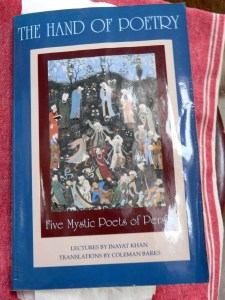 and three times over. On the third day I hung the book by its spine on the washing line. Once dry, I managed to press the volume with a heavy vintage iron into reasonable shape again. The ordeal required my undivided attention. The re-read pages during those hours lodged themselves with refreshed presence in my heart.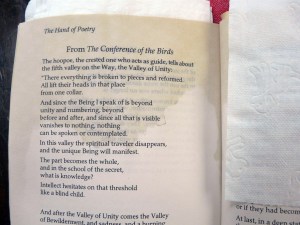
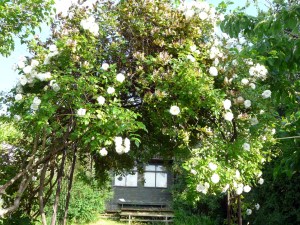 Meanwhile I enjoy some treasures close by …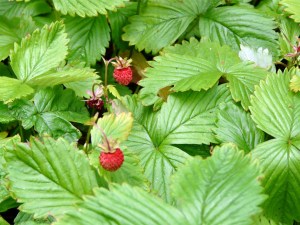
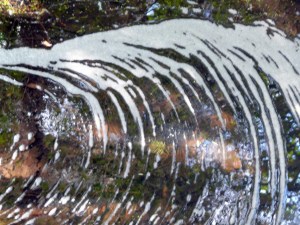 let sleep do its work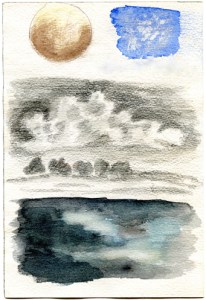
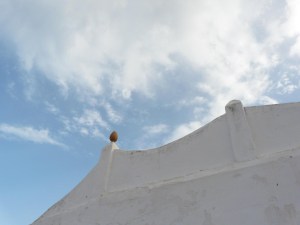 Writers and readers have their unique (often indirect) discernment of text and image; a fluid perception spots moods in the sky, or envisages what’might be happening behind doors.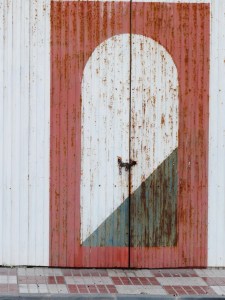
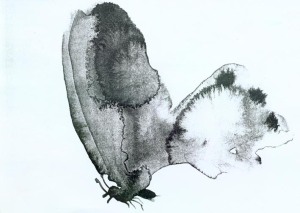
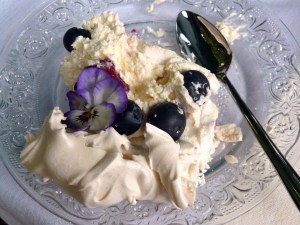 Our senses, physical and otherwise, make us feel alive, grant pleasure, and no doubt increase our hunger for taste, touch, smell, sight and sound, and more senses besides.
 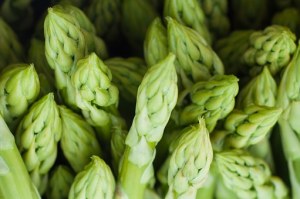 … the small, round boiled new potatoes were the sweet, starchy berries of the earth. Their light brown skins stretched enticingly over the creamy white fruit within. The asparagus, almost luminescent green, redolent of a waving forest of green marine plants viewed through the warm clear waters of a tropical island bay, fresh and tender in the soft embrace of the mouth and chewy enough for the teeth to relish their work of liberating the cacophony of nourishing juices over the vibrant, aroused tongue.
 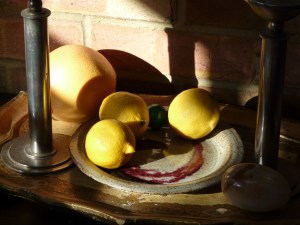 The salmon, its raw fishiness tamed by gentle heat in the company of thin slices of lime, into a piquancy which thrashed around the palette like wild seas. And, the final trigger to culinary orgasm, a tangy, herby sauce, which pulled the palette this way and that, like stretching a rubber band, taking it for moments into the realms of sublimity.
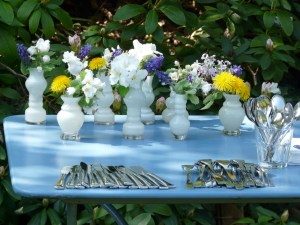 During gatherings of friends, we love sharing stories as well as food delicacies … the displays and the bouquet of flavours wafting on the air on such occasions may well attract hungry ancestors, grateful for such feasts.
 Numerous children, if not all, bring along an openness that allows them a peek through the chinks in the veils that cover ordinary reality. Sudden insights, call them special, spiritual, paranormal, transpersonal, mystical, timeless, ecstasy of oneness … dreams … experiences that make no sense to a rational adult and may evoke fear of the unconscious. Sooner or later children may learn that a vivid imagination, as it is often called, brings no rewards and is of no solid use in a world geared to material respectability and control.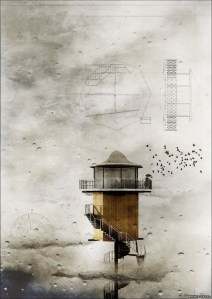
 In my last post I touched upon the half-imagined essence shining through a work in progress – via incubation, the search for one’s language (in whatever form,) through the heart. This kind of search is bound to involve deep personal experiences, be it related to an outer or inner place, as the myth of one’s existential journey, which, when authentically communicated and shared tends to assume universal significance.
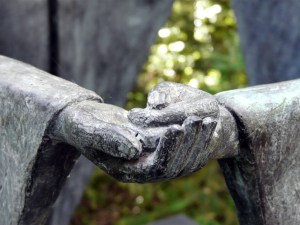 Talking in the dark, their hands occasionally touching, Louise and Addie come to value their fragile pact. Even Addie’s abandoned visiting grandson is wooed by the loving regard between his grandmother and her new friend, and their tolerance and tender concern for him, which is, the way I read it, the initiation of a small boy into the wisdom of respect. While the petty gossip of townsfolk adds to the fun of their social transgression and strengthen the closeness they’re forging, the jealous objections of Louis’s daughter and Addie’s son are truly hurtful, and in the end decisive.
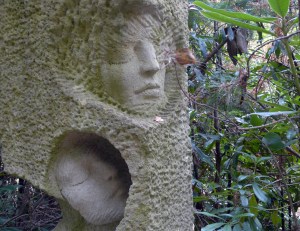 As painters or sculptors do, I frequently step back from my writing projects, searching for the core, a half imagined essence to shine through and re-animate the creative flow. Skills alone don’t do it, techniques alone don’t do it, nor style. As long as the essence of what I try to express floats in the unconscious, my efforts will baffle and tease me.