
On occasional good days, mundane tasks, problem solving on the go, are like meditations, and how I begin, how I sequence, and how I end a task, has a fine rhythm to it.
Let’s say I prepare a meal, I go about it in the simplest, energy and time efficient way, via knacks acquired through practice. This applies to washing, cleaning, shopping, gardening, fixing things etc. …
What delights, is when I do a little thing different, like change the sequence of, or slow down the attention and attitude towards a task, and in the process discover symbolic correspondences. By symbolic I mean here the recognition of pattern similarities between different fields (contexts, scales, environments,) from being awed by how the geometries in nature resemble galaxies, to how the moon cycle affects plants in the same way as my mood. Creative minds are haunted by beauty and meaning. They may discover how their life’s myth is hidden in the narrative of a fairy tale, or, as suggested by Blake, see the world in a grain of sand …
Observing how I do myself, slightly distanced from the task at hand, can open novel perspectives. In the expanded space even a dream-image from the night before can revisit.
I can also project observing eyes on anything or anyone, including cats, dogs, foxes, birds, trees … let’s assume a fly – the fly that defies its instincts and does not go for the window or door, but insists on buzzing around my head, I could invest that fly with the function of spying on me and in the process craft an epic spy fly tale.
I’m easily sucked into stories, because fresh points of view sometimes bring on an AHA moment from the unconscious nowhere (suddenly now here.) I could call it a singularity, unfolding in my embodied being in time, and changing the way I operate my relationship with myself, others, and the world at large.
Imagination, playfulness, thinking out of the box and intuition bring joy to body and mind.
Imagination in German is – Einbildungskraft – the strength to make connections and build something in the sphere of one’s mind. For those who don’t make use of this human capacity, life may become reactive and stale. While hunger is a basic need, the desire for a variety of tastes is acquired.
We have our peculiarities in the ways we communicate between inside subjective reality and outside objective reality, the way we approach a problem, do things, see things, interpret events, and in the way we are influenced by the weather, our digestive system, or personal and collective moods. Each of us is unique in how we engage with the universal consciousness we are embedded in. Specialists with a narrow focus tend to make boring company, and will, I guess, soon be replaced by AI avatars, but well-rounded and irrational humans, aware of being present in their bodies and all the experience and memories held in their bodies, cannot be replicated.
So I reckon we cannot reboot human lives
Once they become spiritual beings
They reboot humans
With fresh information
And meaning
“Long live the dead because we live in them.”
― Clarice Lispector – A Breath of Life
At times I envisage copies of myself, to shake hands with, or relieve me of tasks I consider tedious … though these copies nest of course inside my psyche, assigned with different yet overlapping functions. Ideally I wish for this cluster of subs, let’s call them subpersonalities, to cooperate, and such synchronicities do occur on rare occasion. They are wondrous moments of being, infused with the deeper intelligence of universal consciousness.
Oh, and please buy, read and review my latest novel.
SHAPERS, the sequel to Course of Mirrors … https://www.troubador.co.uk/bookshop/sci-fi/shapers/
Available on many platforms and through bookshops.
You’ll meet characters you know
And maybe yourself
You’ll meet the past in the now
And the future too
In this subversive tale
I and thou become
Entwined in one being
 To fill in the distorted or simply incomplete gestalt gathered from early caregivers, we find ourselves during our lifetime in families of various constellations … in groupings of friends, educational settings, teams working towards a project, callings, interest groups, animal care, subcultures, political, vocational and spiritual clusters. In these groups we slot into roles we project, or are projected onto us with qualities others are drawn to engage with, for whatever reason, often to explore a hidden part inside, mother, father, sister, brother, child, lover, hidden in the light or hidden in the dark. Much of this search now happens virtually, through screens, though it can’t replace the actual physical resonance a gestalt needs.
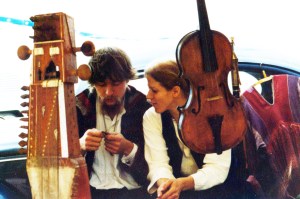 Family can also mean a collection of symbolically meaningful objects, toys, letters, books, art, tools, stones. I collect stones and endow them with memories. My ex-husband extended his loving father role to string instruments. (I wrote about his loss in my previous post.)
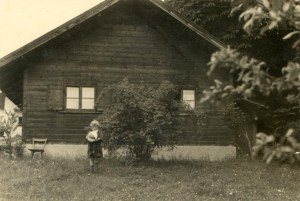
 At stages in our life we fit, or are fitted, into a network of psychological potential. These are intense phases. Yet irrespective of time gone since people parted ways, families dispersed, places were lost … when a former close friend dies, insight descends, rises, arrives from the past, from the future and from spheres unknown. Memories will shift their meaning. Slowly our sense of self is re-aligned. We capture a condensation of what was symbolically exchanged, essence is revealed.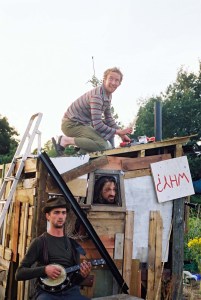
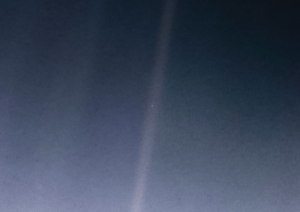 And then consider Carl Sagan’s tender reflections on the pale blue dot, the Mote of Dust, as in a sunbeam, the home we all have in common, a selfie, seen from afar. “Where everyone’s love, everyone you know, everyone you ever heard of, every human being who ever was, lived out their lives.”
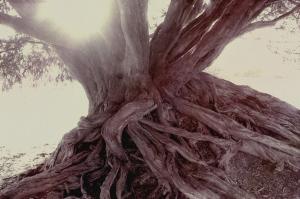 Numerous children, if not all, bring along an openness that allows them a peek through the chinks in the veils that cover ordinary reality. Sudden insights, call them special, spiritual, paranormal, transpersonal, mystical, timeless, ecstasy of oneness … dreams … experiences that make no sense to a rational adult and may evoke fear of the unconscious. Sooner or later children may learn that a vivid imagination, as it is often called, brings no rewards and is of no solid use in a world geared to material respectability and control.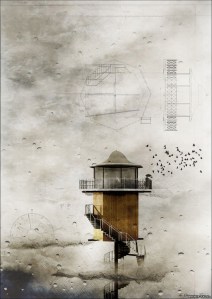
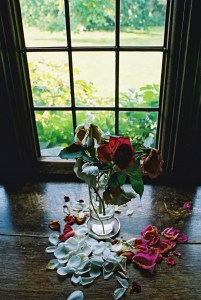
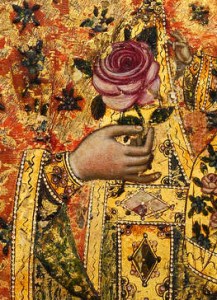 The genus Rosa, according to fossil evidence, is 35 million years old and begun to be cultivated circa 5000 years ago. Due to its tessellated structure, dome-like shape and its delightful perfume, the rose has become a symbol of the heart, of wholeness, love, beauty and perfection the world over, frequently with mystical connotation, and often highly stylised, as in Islamic art.
 While fear of loss and abandonment engenders life, it also draws us towards the mystery of infinite consciousness, the one being with countless names. Various practices, derived from spiritual traditions, can calm a turbulent mind enough for a glimpse of harmony beyond divisions. For a while, at least, we sense the larger presence, the effortless zone, the flow – and given patience, come to realise that consciousness is what we are.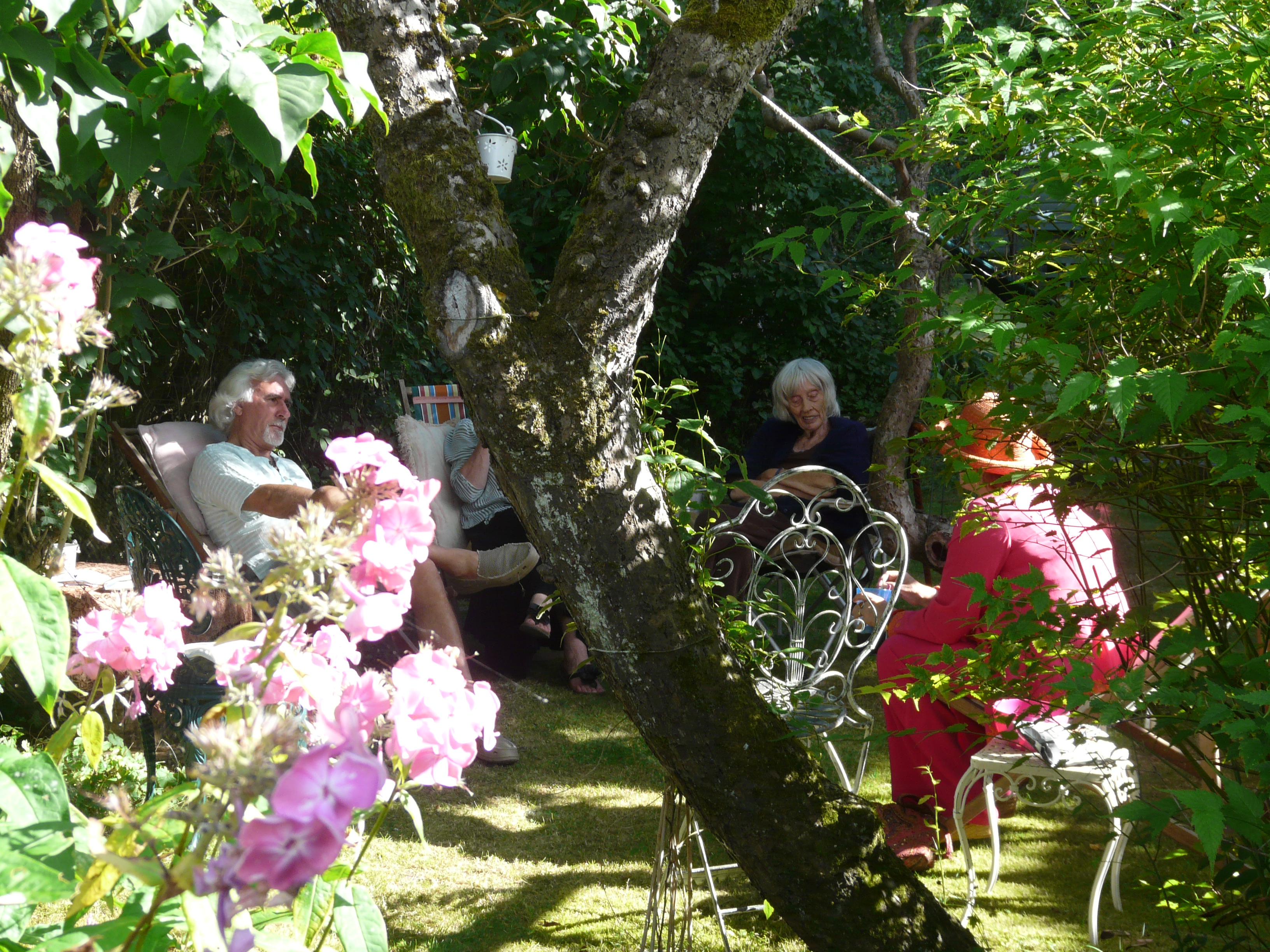


 Course of Mirrors