Tag Archives: psychology

… the opportune elevator pitch …

Image by Carol & Mike Werner

Image by Carol & Mike Werner

Once a hotel, now a home for senior citizens, to live independently or, when needed, access a care unit, is the place my father chose as exit platform. The building has Escher-like features. Doors along every corridor look alike. The only way to determine floor levels are the artworks of residents gracing the walls. At one end of the building is a sluggish and brainless elevator. Hardly bigger than a telephone cell, it is airtight and eerily silent. Once inside, the occupant is suspended in time, with no sense of movement, up or down.

‘Can we squeeze in?’ I ask, pushing my dad’s wheelchair into the tiny cubicle. The man is baffled. Landing at ground level was not his intention. He is the reticent carer in training that worries dad, who detects a touch of paranoia, a sentiment he himself is familiar with, plagued at times by imagined dubious intentions of people. I’m a lost case to paranoia, but I allow for paranoid people’s intelligence. They value truth.

Occasional bouts of confusion haven’t impaired my dad’s wit. He suggested we should discover what interests the uncommunicative carer  so we can butter him up. I tried, going about it the wrong way. ‘Do you like alcohol?’ I enquired, thinking of a choice bottle from my dad’s apartment, the home I must soon dissolve.

‘I’m no alcoholic,’ was the curt reply. Newcomers from Eastern Europe tend to have admirable principles.

With the three of us trapped, sans sound, at snail-pace, embarrassment has no distraction other than a mirror covering one wall.  ‘Ah Herr W, how are we today?’

‘So, so,’ my dad says, with a melancholic pout.

The mournful air compels the carer’s curiosity. ‘What things interest you?’

‘Everything,’ my dad says, ‘the whole world. ‘And he cunningly adds, ‘what interests you?’

‘Everything,’ says the carer, ‘countries, people, science, religion …’ The elevator door opens to the care unit … ‘most of all religion.’

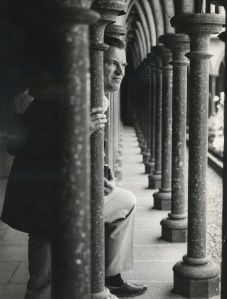
Pa at St Michael 1967

Dad at St Michael 1967

My dad shoots me a wicked smile. His library, I discovered, apart from books on art and travel, had accumulated works on ideological themes he used to rubbish with a vengeance. As a young mother in rural Somerset, insular for a while, I did an OU course on Comparative Religion, wanting to explore the key influences prophets and their early followers had on cultures throughout history. My dad’s comment at the time was, ‘Next you’ll send Jehovah preachers to my door.’ Attempts to bridge our bizarre dissonances had only ever elicited angry reactions, which I chose not to energise, enduring the grief. My dad’s cranky nature shielded a fine intellect, fed by reading and extensive travelling. His disapproval of me, I sensed, held a childlike envy of my bohemian autonomy, freedoms not available after the war. We battled with our shadows in isolation, me remaining the wayward daughter that lived abroad.

During my most recent visit, I arranged for some of my dad’s paintings, photographs, books and creative tools to be around him in his care abode. They’ll provide openings for conversation with those who now look after his daily needs.

Our war is over. It is heartening to observe how my dad’s reclusive attitude softens and, like blossoms falling this spring, gives way to new fruit.

Out Beyond Ideas

Out beyond ideas of wrongdoing and rightdoing,
there is a field.  I’ll meet you there.

When the soul lies down in that grass,
the world is too full to talk about.
Ideas, language, even the phrase each other
doesn’t make any sense

Rumi, translated by Coleman Barks

7 Comments

Filed under Blog

… maps of meaning …

Maps, the symbolic depictions of relationships between different elements, be they objects, regions in space, or ideas in conceptual domains, serve as orientation devices. Though it’s worth remembering Korzybski’s point, ‘The Map is not the territory.’

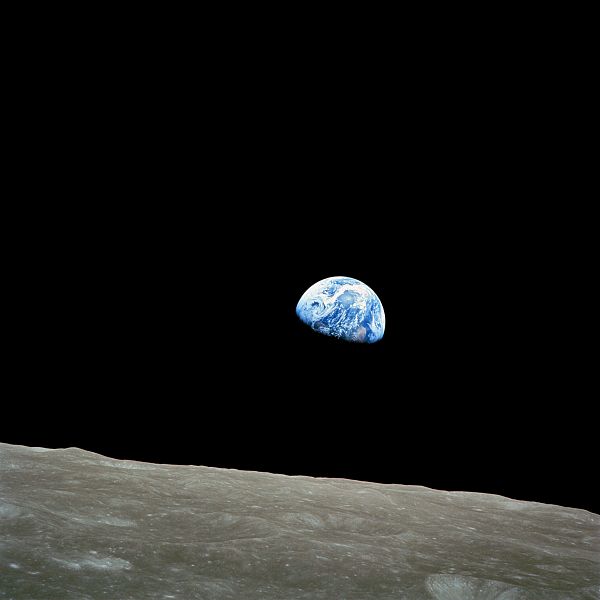
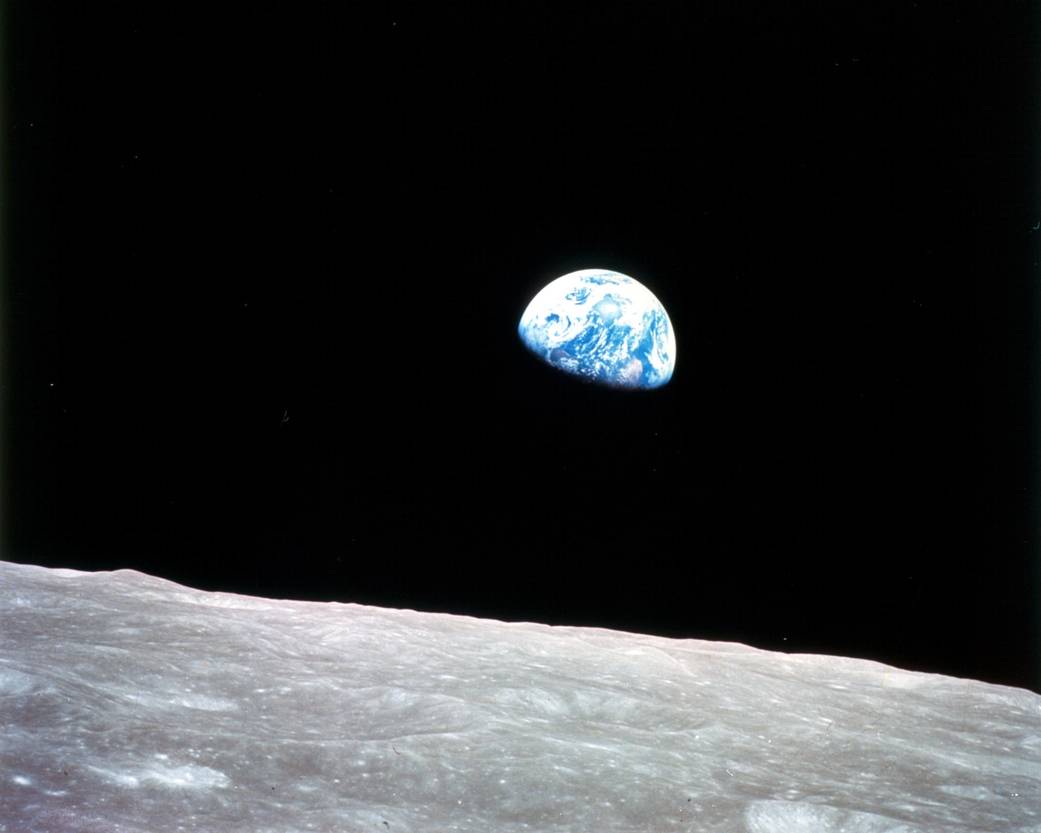
Earthrise, Dec 1968

Earthrise, Dec 1968

Given the complexity of global problems, there’s a dire need for charting the increasing expansion of specialised knowledge, diverse traditions and experiences, into a wider context. Since the poetic image of our planet rising in space did not grip the hearts of a critical mass, we need theoretical overviews to dispel confusions, and explore how all the seemingly disparate comprehensions of the world we live in can work together in a more intelligent and unified way.

Ken Wilber is a great proponent of an’ Integral Theory,’ bringing together many fields of knowledge and methodologies, scientific and spiritual, in an attempt to show how all these partial truths can be reconciled and be mutably enriching. This 1.5 hour talk  is brilliant, and eminently worth listening to.

In his AQAL  map  (You can press – 1MB free – and get a screen resolution)  Wilber integrates various developmental ideas, which may remind of Abraham Maslow and Carl Gustav Jung, to name but a few mapmakers before him.  In the above talk Wilber describes developmental tipping points in recent history, which apparently needed only a small percentage of the population, the 10 percent who could embrace the new value, to bring about a collective shift in consciousness.

He’s expecting another tipping point to emerge soon. Fresh conceptions can bring more truth and more love to our actions, more consciousness, more skill to deal with complexities, and more compassion to every dimension of human knowledge and activity.

I hope you’ll find the time to listen to Wilbers talk, and maybe further study his work.

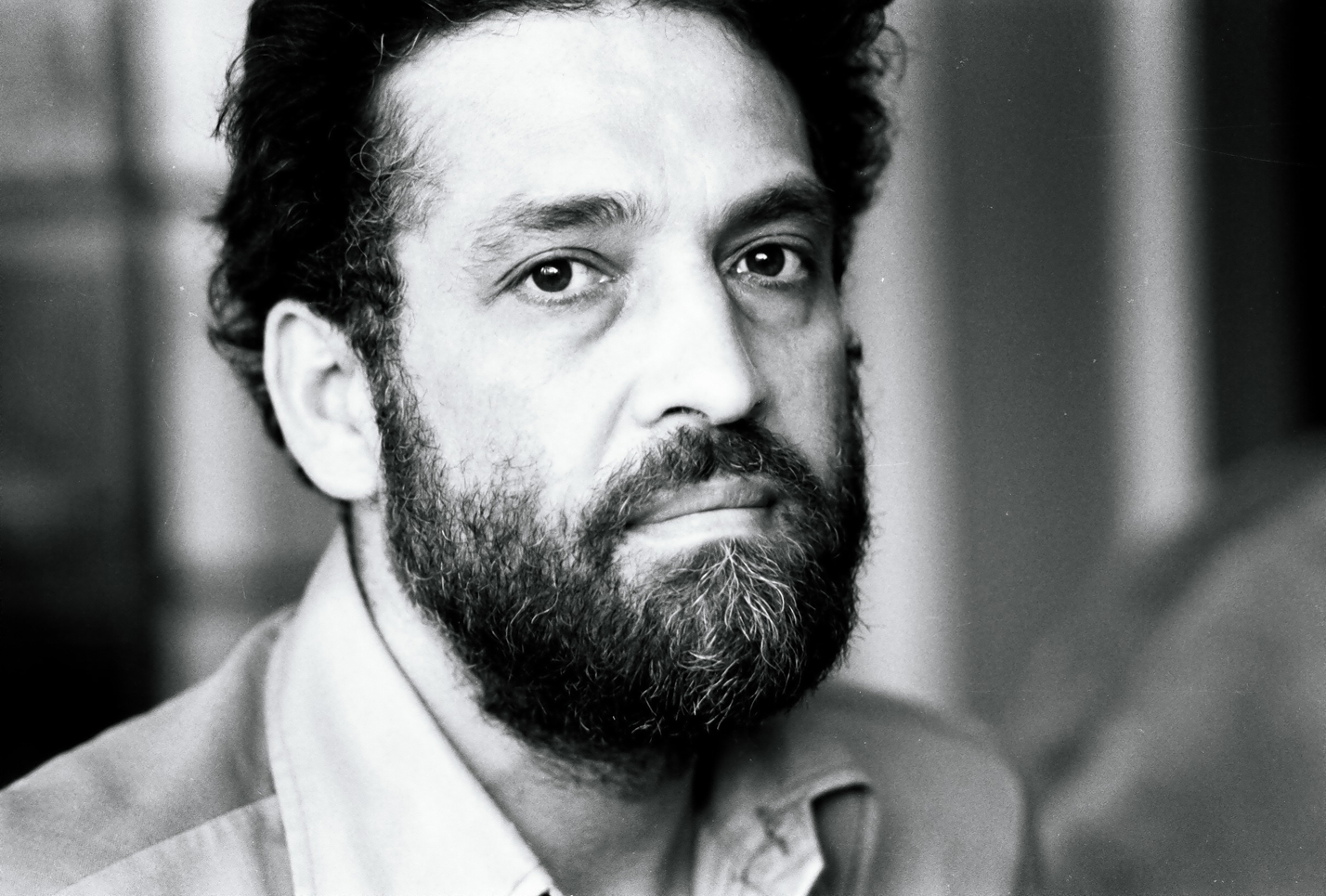
Fazal Inayat-Khan  Photograph by Ashen

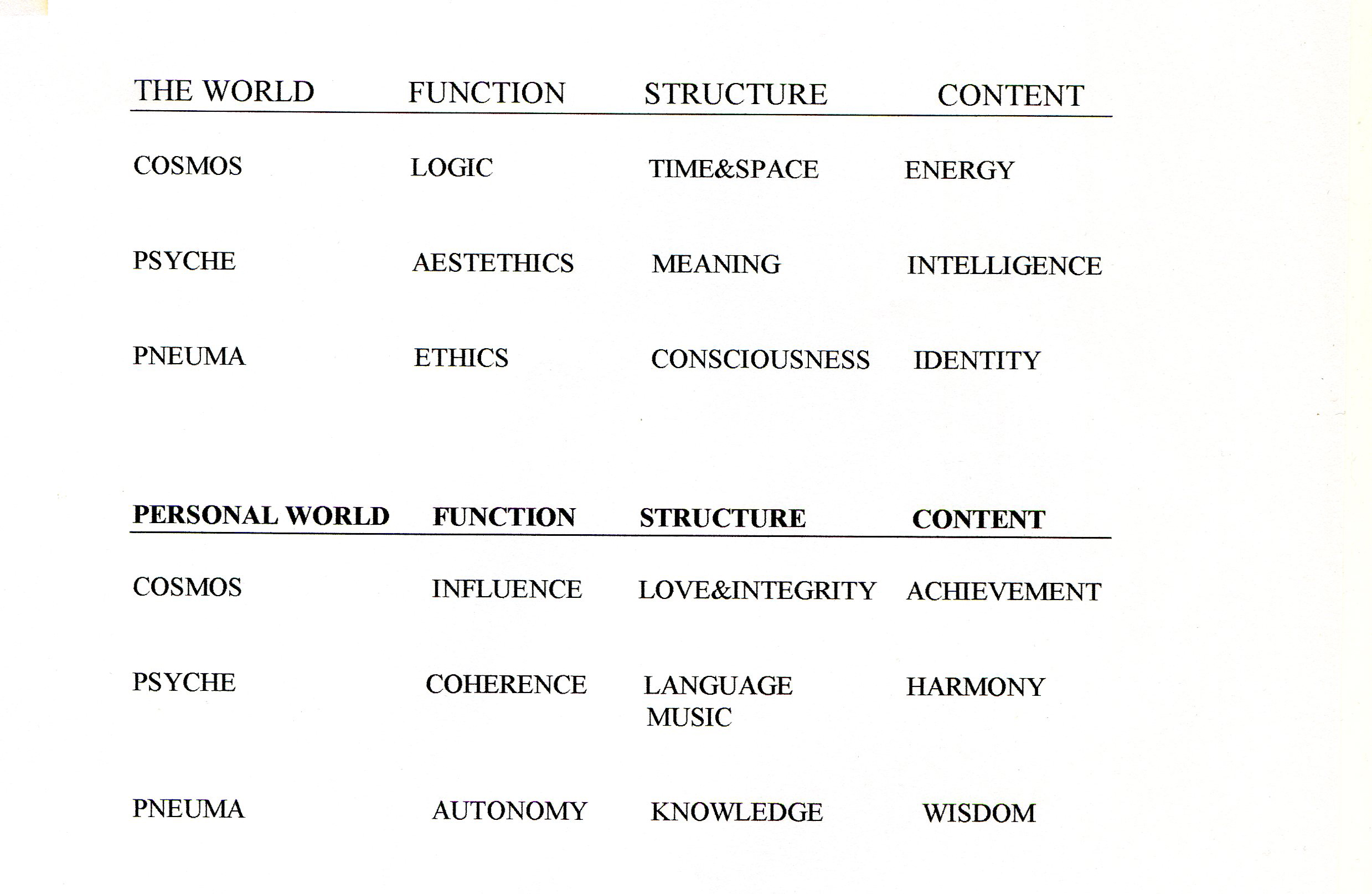
My former Sufi teacher, Fazal Inayat-Khan, (image by Ashen) also felt strongly that new conceptual maps were required. His aim was to integrate transpersonal aspect into the field of psychology. During a summer school in 1990, a few weeks before he died, he sketched the following cosmology on a flip chart and invited us to play with it.

Fazal's Cosmology

The graph depicts three worlds, the natural Cosmos, the finer Psyche, and the yet finer Pneuma (spirit,) differentiating the function, structure and content of each world.

How these three dimensions can relate to an individual is set into the same framework.

For me, this playful ordering made perfect sense, and, in a kind of epiphany, helped me to clarify the tremendous importance of the world of the imagination, and how it is held together by meaning. It also gave me new ideas about time. These days I like to call the Psyche the changing room.

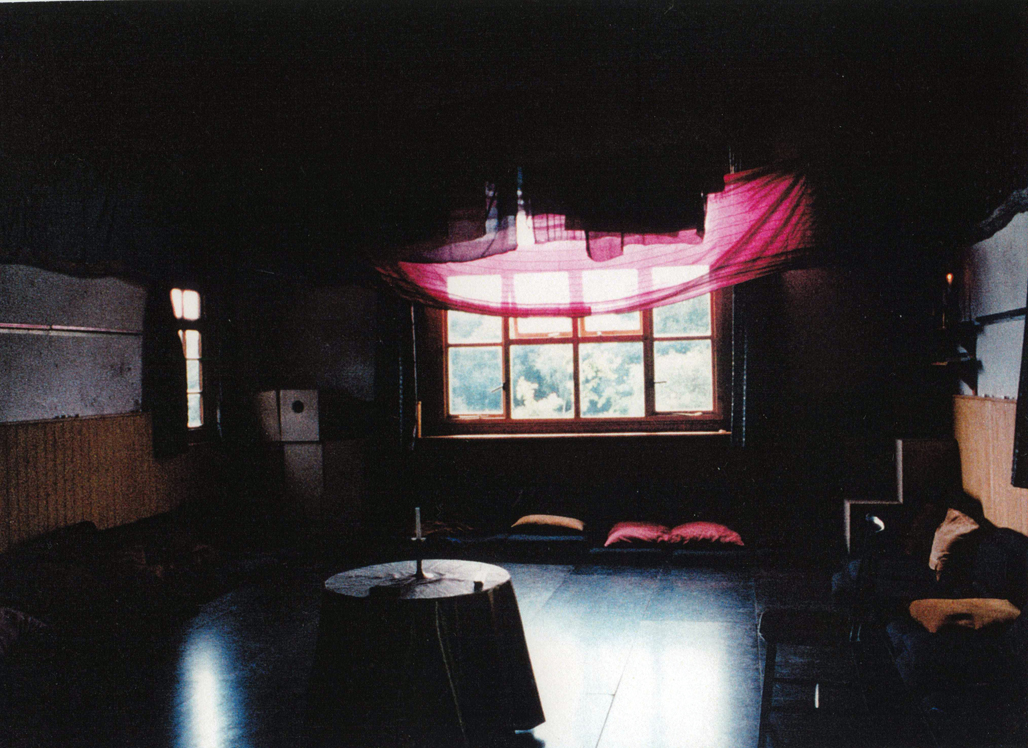
Barn, group room, smallerOur small group that day was encouraged by Fazal to replace terms and use our own words in this presentation, according to our own understanding. He was this kind of teacher. I dearly miss this wonderful friend, the community and the place.

Does this cosmology, this orientation device, corresponds in any way to your understanding and experience? And I’d be curious know if you feel inspired to change or move words around.

*       *        *

On the ‘OTHER’ page of this site (see top bar) you can find a PDF link to an article I wrote on the imaginative function based on ideas of the great Muhyi-d-Din Ibn ‘Arabi. The article is called ‘Science of the Heart.’

14 Comments

Filed under Blog

… patina – beauty of use & age – wabi-sabi …

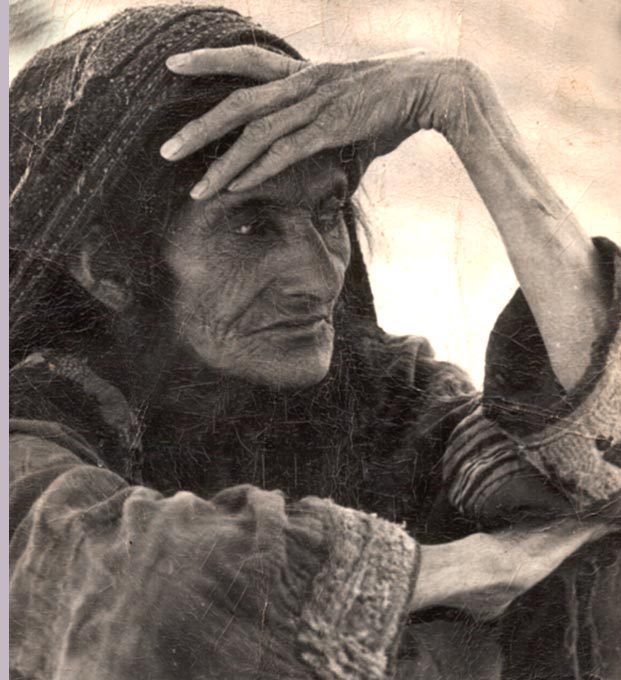
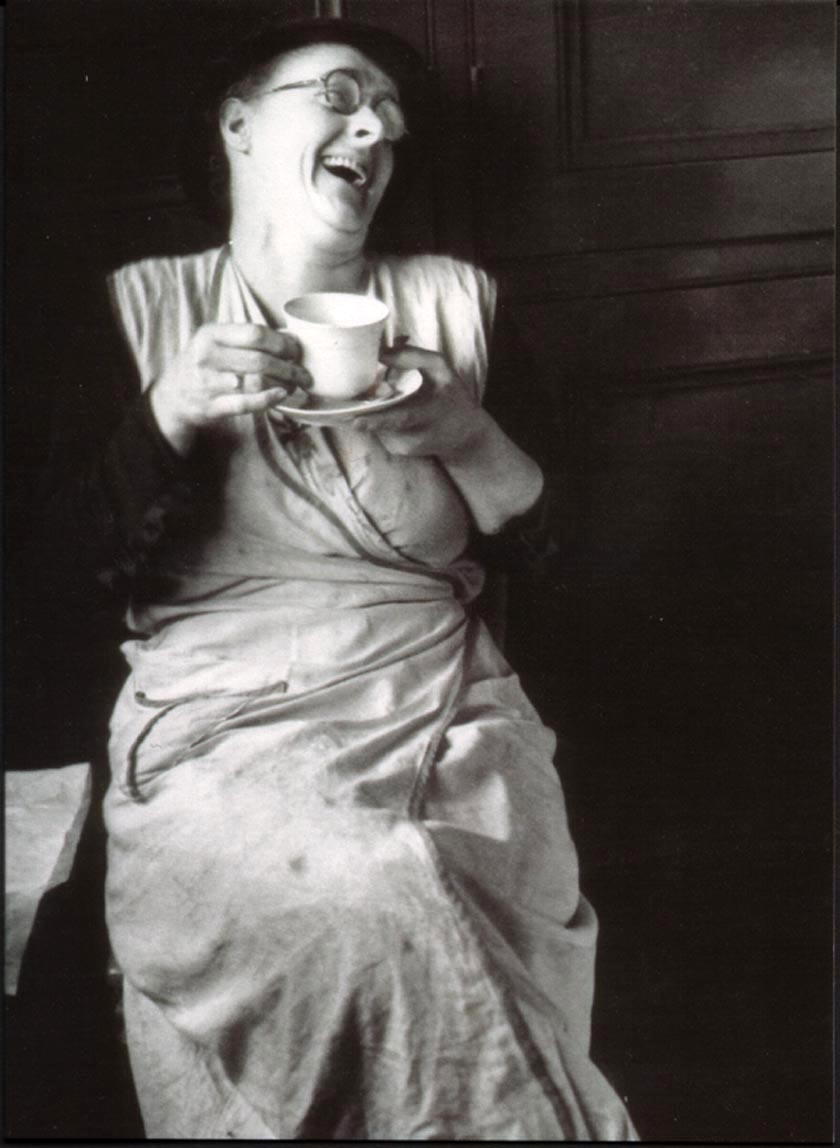
From an old postcard. I can't source the photographer.

Old woman – from a postcard I can’t source.

The phenomena of patina on surfaces is intimately seductive – layers of flacking colour on facades, walls and doors of old houses – thresholds dented and polished by feet treading on them for decades and centuries, tools honed by use, lichen-coated wood and stone, the fading or darkening of materials affected by exposure to light, air, water, wind, heat, humidity, wear and touch – and – poignantly – human skin inscribed by living.

Essaouria

The irreverence of organic processes brings endless revelations, a subtle kind of charm, a triumph of endurance, a fleeting glimpse of time in motion, a mystical hue of imperfection, evidence of existence that display glorious or sad narratives of beauty, relationships, melancholy, comedy, tragedy, remembrance and transformation.

Linus and his blanket

Linus and his blanket

Children naturally form emotional attachments to objects that then become love-worn. The remarkable psychoanalyst Donald Winnicott (whose ideas are worth exploring) specialised in early emotional relationship bonds and the importance of a holding environment for children. He coined the term transitional objects for the blankets, stuffed toys, dolls, or anything a child may choose to have an intimate relationship with, for comfort, often substituting the closeness to mother.

And don’t we know …  people are complex and unpredictable when it comes to holding our projections, quite unlike objects, be they associated with visual attractiveness, taste, smell and sound, or with tactile sensations. Objects can retain comforting feelings for us throughout our adult life. Anything from pets, trees, trinkets, letters, pens, photographs, books, significant presents, clothes, furniture, tools, cars, houses, places , feathers, sticks and stones can become treasures that give us pleasure.

Often a search for something lost is at work. My mother, in her later years, became passionately obsessed with replacing the Biedermeier furniture her family had lost in the Blitz on Berlin.

Then there is shabby chic, distressing and antiquing of furniture, which seem to gratify a need for aesthetics and comfort that some people enjoy but could not otherwise afford. To that end various sophisticated techniques are used on wood, glass, metal, stone, plaster and even plastic to replicate the vintage look.

P1070904 - smaller

But the love-worn feel of an object stressed and polished by personal use over many years, additionally endows it with a kind of cellular memory and connection, which adds a more enduring and special significance of a personal kind for which words are inadequate. The value a child or adult attaches to such an object is often poorly understood and not respected by others, be they parents, friends or  strangers.

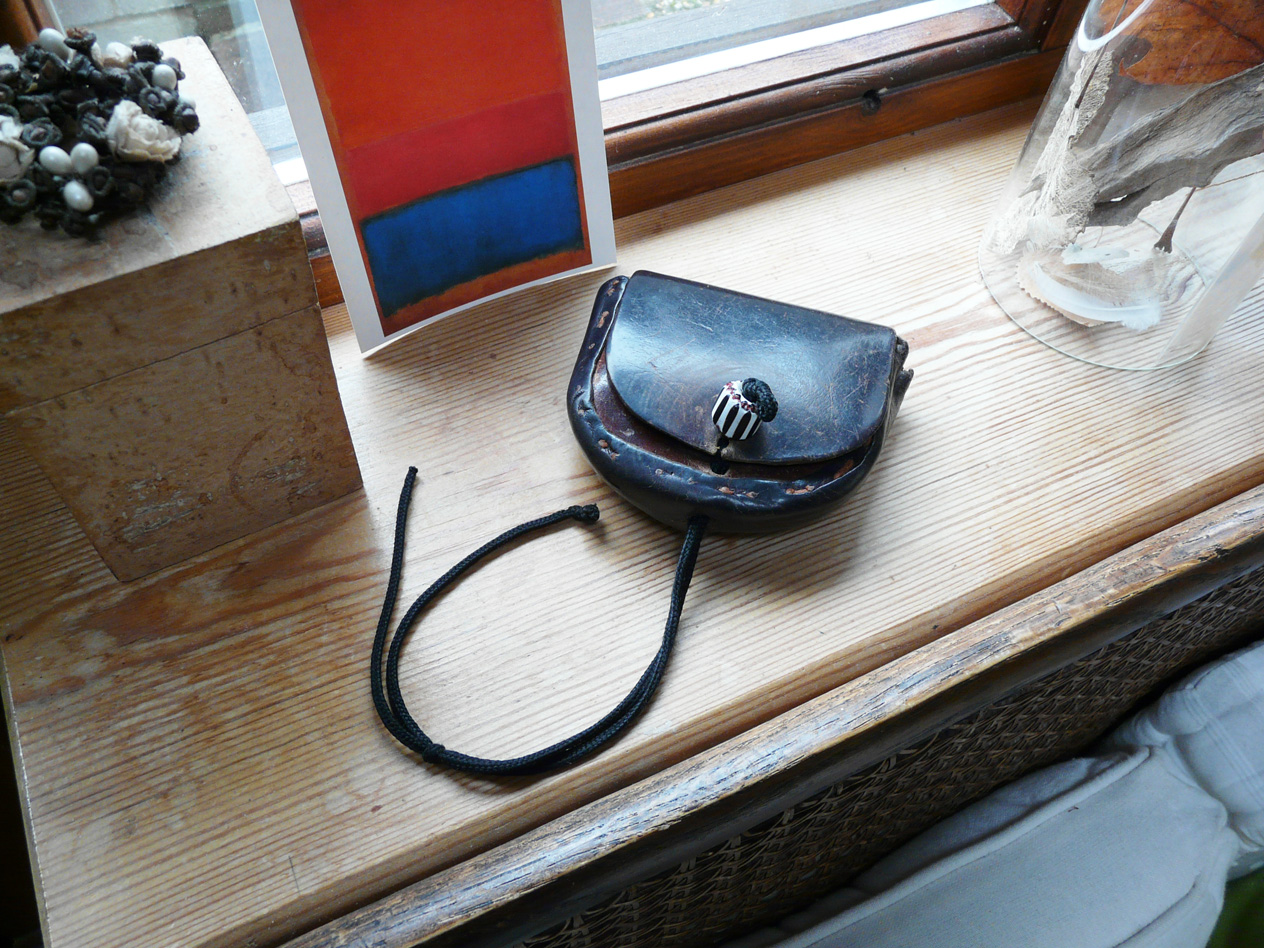
In my case, apart from certain books I loved to bits,  photographs of dear ones, stones picked in memorable spots, and so on. I grew fond of a purse made for me by my ex-husband. I repaired its stitching many times. The purse is not only useful, with a special compartment for payment cards, and encrypted markings I added inside its flap, it hoards contradictory symbolic connotations worth remembering, though I won’t divulge those. Sales-people in shops tend to look at this purse far longer than necessary. Its leather shines – you see.

P1070909 - smaller My purse is not full enough and my house not big enough to indulge in the hunt and collection of rare objects to which the Japanese concept of Wabi-sabi would apply. Then again, I chose my priority to be writing, and am content with the few minor wabi-sabi objects I cultivated over time.

In a way we all express wabi-sabi qualities in our personalities.

… Characteristics of the wabi-sabi aesthetic include asymmetry, asperity (roughness or irregularity), simplicity, economy, austerity, modesty, intimacy, and appreciation of the ingenuous  integrity of natural objects and processes. Nothing lasts, nothing is finished, and nothing is perfect …

What are the transitional objects in your life that bridge one love to the next?

Clicking on an underlined words in the text will bring up a new page, which means you won’t lose this page.

9 Comments

Filed under Blog

… To Witness Daisies and Earth Rise …  

1968 Earth Rise, Apollo Mission 8

1968 Earth Rise, Apollo Mission 8

A change in collective attitudes often takes momentous events. While the moon-landing of 1969  was mildly underwhelming, the image captured in preparation for the American eagle’s landing, a year earlier, was immensely moving – revealing a vastly expanded mirror to our home that spoke then, and speaks now, directly to our physical and spiritual senses. Guiseppi Ungaretti had fitting words …

‘What are you doing earth in heaven? Tell me what are you doing silent earth?’

With hindsight we can see how major historic events are being incubated years in advance to their happenings. Artists have a knack for shocking us before a message becomes endorsed, which is why I connect the film  ‘To Witness Daisies’ (1966)   with the earth-rising image, both testing limited perceptions.  A click on the title should bring up the movie on your tube.

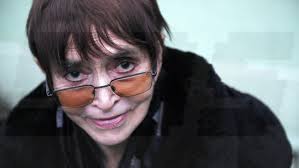
Věra Chytilová

Věra Chytilová

Not unlike the awesome view from outer space,  Věra Chytilová presented an equally powerful pointer to our poor stewardship of earth. Initially forbidden in the former Czechoslovakia, her tragic comedy was released two years before the Prague Spring, and two years before the earth-rise image promised a new respect for nature. I hoped for a greater understanding of cosmic interconnectedness, and an assessment of the fear-based need to subdue and control the wild, the primitive, the imagination, soul … all the ignorant projections on the feminine principle, which, I think, are responsible for spoiling our planet and wounding the psyche of men and women.  Film critics felt uncomfortable with Věra Chytilová’s controversial, iconoclastic statement on the demeaning role assigned to women in our cultures. Niels Bohr expressed, ‘As long as an atom is not seen it does not exist, it is a ghost.’ To me, this implies that seeing, individually and collectively, is an active process, influencing the reality of our existence.

The Daisies

The Daisies

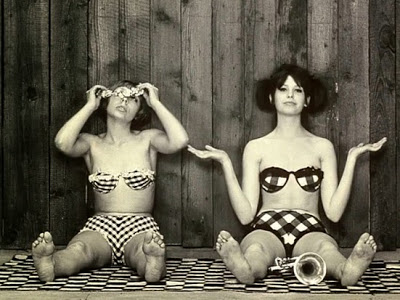
Watching ‘To Witness Daisies’ for the first time in 1994, I was struck by its theme of psychic starvation – sharply relevant today – and the insanity of societies where women are kept in an infantile state so as not to threaten male supremacy. The symbolic power of the film’s images, with their rhythmic and gradually peaking orchestration, creates a timeless sphere of magical reality, where meaning is expanded and revealed. The opening sequence of the film gives the context. A mechanical wheel turns relentlessly to the sound of regular drumming. The scene is interspaced with silent images of war, bombs exploding, mainly into the sea, symbolically representing the mother of all life on earth. Next, the frame shows a sun-deck by a pool. Filmed in black and white, the deck re-appears as a transitional stage. and one could add, a place at the edge of the personal unconscious. Here a question is voiced, ‘What next?’ The two teenage girls wear bikinis and their movements are mechanical, like the wheel. The sound indicates a lack of oil in the system, and the funfair trumpet played by one of the girls suggests a flat and mocking victory.

Posing for the Collector

Posing for the Collector

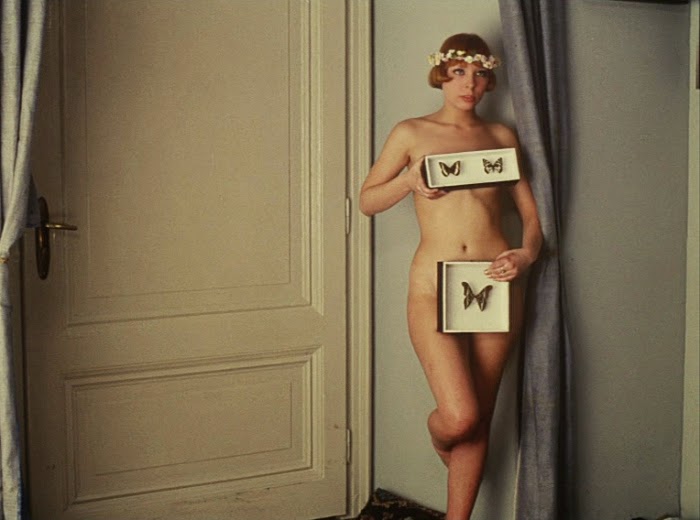
The outlook is set. ‘I’m a doll, everything is been spoiled in this world.’ And, as a way out of boredom, ‘If everything is being spoiled, we will be spoiled too.’ The decision to mirror a spoiled world is made, a death wish gains momentum. Daisy Blond wears a daisy chain and uses it at intervals as divination device. When the chain is thrown out of the frame, it lands on water and signals the next mise-en-scène, like a Garden of Eden where the girls dance, and where Daisy Blond picks the legendary fruit, affirming ‘their kind’ are products of a biblical myth with politically useful interpretation that prevail.

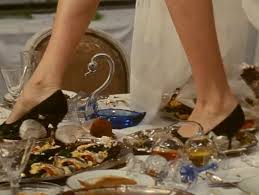
The end-feast

The end-feast

Film critics felt uncomfortable with Věra Chytilová’s controversial, iconoclastic statement about the role assigned to women in our cultures. Acted by Jitka Cerhová and Ivana Karbanová, the Daisies have various names throughout the film. I call them Daisy Black and Daisy Blond, though they are one and the same, since their communication resembles an internal dialogue trying to deal unsuccessfully with a moral conflict that offers no bridge between good and bad. To Daisy Black nothing matters, she has a timeless distance to things, everything is a game. For Daisy Blond, the extrovert, hunger makes food a central theme of the film – hunger in the sense of wanting to fill her sense of emptiness with substance. I won’t venture into psychology, but it’s easy to draw a connections to the Anorexic symptoms many young women suffer from.

During a film degree course in 1994, I wrote a long essay on ‘To Witness Daisies.’ Unable to transfer the old Mac files when switching to a PC with internet connection, many essays need re-typing, which I hope to achieve once other projects are out of the way. For now, I thought I inspire you to watch the film – and maybe share your thoughts about it.

11 Comments

Filed under Blog

… a cartography of the psyche …

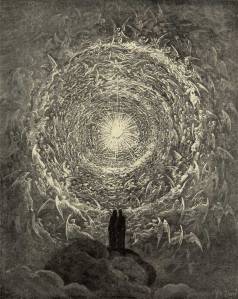
Celestial Rose - Gustave Doré

Celestial Rose – Gustave Doré

My novels (yet to be published) are inspired by transpersonal incidents I experienced, even as a child. Learning that I was not alone with my interpretations of what happened to me during so-called non-ordinary states of consciousness was a great relief, when during the 70s and 80s I explored, in practice and theory, the major maps of psychology. Jung’s ideas especially rhymed. After training with Psychosynthesis, my interest turned sharply to innovative transpersonal approaches, myth, archetypal psychology, and contemporary science.

People who inspired me were Abraham Maslow, Gregory Bateson, David Bohm, Joseph Campbell and others, many who happened to be among the same people Stanislav Grof met and was supported by when he devoted his life to map the experiences of non-ordinary states of consciousness.

For the first ten years Grof did psychedelic research in Czechoslovakia. By the 70s he had found a family of open-minded scientists and enthusiastic supporters at the Californian Esalen Institute. Since the use of psychedelics became illegal, he developed the Holotropic Breathwork, together with his with wife, Christina.

Around this time I found my own, smaller family of mind and heart in England, where Fazal Inayat Khan saw the huge potential of what was to be the transpersonal psychology movement initiated in Esalen. Fazal involved his students in experiential approaches to self-development, an endeavour that brought him into conflict with the traditional Chisti Tariqa his grandfather Hazrat Inayat Khan had established in the west as Sufi Movement, which Fazal represented at this point. I co-edited ‘Heart of a Sufi,’ a prism of reflections on Fazal by his students. Here is a previous post https://courseofmirrors.wordpress.com/2013/03/16/a-rare-book-now-on-line/

Grof sees global consciousness evolving through an increasing number of individuals achieving inner transformation, and considers symptoms of spiritual emergence (often seen as mental illness) as part of a healing process needing to be lived through, not supressed. This totally chimed with me.

Obviously, such a project does not attract investment. Shareholders look to own a brand, a patent, a method, a franchise. Many innovations are lost, since the way ideas and things hang together is not finite, but dance in ever new combinations. Also, in areas of specialised and fast-changing knowledge practitioners can become so absorbed with new discoveries and concept that they tend to forget about lay persons who might not be able to grasp the newly coined language, or won’t take the time to look at other fields of knowledge. A major insight may be broadcasted ahead of its time and spark endless quotes but no understanding. Some messages cry for a new context, where insight, beauty and meaning can be shared through passion, combined with apt metaphors, like a fine tune can travel through the heart and make it shiver with the recognition of new connections. Often it’s a matter of waiting for an idea to fall on fertile ground.

Assuming my readers represent a fertile island in this vast internet ocean, I would be amiss not to share what inspires and influences my writing. Few people are familiar with transpersonal psychology; let alone with the work of Stanislav and Christian Grof, so here a short (promise) introduction.

Born to parents that care for us, or not, into environments that encourage or hinder our development, usually both, we learn (hopefully) to understand that our attitude towards ourselves and the world is coloured by early experiences, and fixed further by our reactions to what happens to us. The psychological maze we lay down is difficult to walk away from, because it pops up from inside wherever we go. An interest in our personal history and the willingness to explore our behaviour certainly help to make life easier.

However, there are memories we can’t access intellectually.

They are perinatal impressions, which don’t necessarily end in a triumph that promise self-confidence and later success in life. Western psychology does not take somatic imprints happening in the womb, during birth, and after birth, serious. The assumption is that the cerebral cortex of an infant lacks the myelin sheaths on neurons, so the brain can’t be sufficiently developed to record experiences, this, irrespective of the fact that memories reside in our cells and muscles.

The powerful non-ordinary states people experience during Grof’s perinatal holotropic sessions often relate to a time before, during and after birth. Participants report strong sensations and images of a mythological and archetypal nature that live in the collective psyche and significantly shape our individual myths.

From the people bringing alive perinatal imprints during Grof’s workshops, he has mapped the Birth Matrixes, which shed a bright light on symptoms medicine tends to label as psychotic and usually supresses with counterproductive drugs, whereas Grof looked at symptoms as a healing attempt of the psyche.

This fear of the imagination questioning accepted realities also explains the ambivalent attitude of our culture towards the arts, though it’s no secret that the archetypal myths populating our psyche inspire our most renowned artists.

Dore - public-domain-image

Dore – public-domain-image

To guide a person through a phase of psychotic or transpersonal emergency without suppressing drugs requires a paradigm shift that has, as yet, not happened, which is why Grof’s considerable data of experiential work has been tucked away in the transpersonal section of psychotherapy, seemingly too esoteric to grapple with. Early imprints, though decidedly physical, create powerful condensed experiences that draw upon themselves alike situations. Much like self-affirming prophecies, they constellate throughout every phase of life, from infancy to adulthood. Such early imprints are the source of the psychology and psychopathology of ecstasy. Please note – the types of ecstasies I show below, are only clipped markers and in no way convey the richness of the material Grof presents, which he divides into Basic Perinatal Matrixes (BTM 1, 2, 3 and 4) that include related psychosomatic problems and periods of depression people struggle with.

  • Oceanic or Appollonian ecstasy, cosmic consciousness, symbiotic union with mother during intrauterine existence, and during nursing. Expressions of this state in the arts radiate purity and serenity.
  • Volcanic or Dionysion ecstasy, orgastic sexual energies, orgies, pain and rapture. Dangerous activities, sensual and instinctual aspects of life. Think o the surrealist freeing their imagination in ways that powefully speak to us all.
  • Illuminative, Promethean ecstasy, proceeded by agonising struggles and intense yearning for answers, followed by divine lightning that brings entirely unexpected solutions, cosmic inspiration and insight.

When feelings emerge during the remembrance of the birth process, be they nightmarish,like EdgarAlanPoe’s A Descent into the Maelstrom: http://en.wikipedia.org/wiki/A_Descent_into_the_Maelstr%C3%B6m  or blissful, like in Gustave Doré’s Celestial Rose, image above, the opportunity such symbolic images provide for deep psychological work is invaluable. 

Given the complexities around birth, why are not all babies delivered by pre-planned C-section?  http://en.wikipedia.org/wiki/Caesarean_section   A fascinating page, if you have the time to read it. Knowing people whose delivery was pre-planned as C-section, I observe a surprising feature. If in trouble, they shout for help, and usually help comes …  expectation does its magic. When being whisked from the womb before the struggle through the birth canal commences, struggle is simply not familiar, nor, of course, the potential sense of liberation. By contrast, many people have difficulties asking for help, fearing the distress of not getting help. I include myself in this category. A recent comment I left on Jane Alexander’s blog touches upon a personal experience, an early imprint that had a decisive impact on my life. As an example, I elaborate …

… I patiently endure scarcity for long stretches, until the energy switches and everything happens at once. Then I tend to surrender to the flow, or I would feel overwhelmed.

When I was pregnant, I discovered a connection to these periods of extreme scarcity and abundance in my life, leading back to an incident after my birth. Knowing I was breastfed for many months, I asked my mother on the phone to tell me about my birth. She related my birth was long and exhausting. The midwife suggested my mother needed a break. She took me to another room where I cried myself to sleep. ‘It’s good for her voice,’ she insisted. But, of course, I must have missed my mother’s heartbeat.

While listening to this story on the phone, I observed the skin around a silver ring I was wearing turning black. Heat flashed through me, of rage, for which I had no words. By way of apology my mother said it hadn’t felt right and she should have resisted the midwife. Then she went on to describe how, next morning, I was taken to her very full breasts, at first acting stupid but eventually drinking until I could drink no more. 

In later studies I learned about Stanislav Grof’s birth matrix maps, how condensed experiences draw onto themselves alike experiences, like self-affirming prophecies. Certain expectations are set up very early indeed. This made sense and helped to soften the pattern of my extreme life phases somehow. 

So there – now you know my autogenic secret. In the end, our vastly different conditioning makes us into interesting people 🙂 not mass produced and pre-packed, as it were

Bringing to awareness the unconscious somatic patterns underlying our existence offers us choices to respond rather than react to situation. As a collective, we swim together in a psychic ocean that is both threatening and benign. We regress and progress together, each of us bringing our little light towards the expansion of consciousness. Let’s not buy into the shallowness of our material age, but keep the conversation going.

Here Stanislav Grof speaks for himself – Psychology of the Future –                                  https://www.youtube.com/watch?v=rI5oG-WNqvM

If you who would like to explore the maps Stan created, and the images that illustrate the in-depth experiences of people who encountered powerful feelings during a typical re-birthing experience – which enlighten the source of our idiosyncrasies and some of the most prevailing human pathologies, I would recommend Grof’s book ‘Beyond the Brain,’ Birth, Death and Transcendence in Psychotherapy, published 1985 by State University of New York. The book does not offer a simplified and popularised version of Grof’s work but significantly challenges our global policies, and the seriously outdated neurophysiological model of the brain, showing the reach of consciousness beyond time and space.

… ultimately we cannot do anything to other people and nature without simultaneously doing it to ourselves …

A post from 2012 that maybe relevant:                               https://courseofmirrors.wordpress.com/2012/05/25/pattern-which-connects/

Incidently, yesterday I attended a talk called ‘the One who cannot die’ given by my dear friend Malcom Stewart, whom I wrote about in 2013 https://courseofmirrors.wordpress.com/2013/10/07/patterns-of-eternity-humbly-opens-your-mind /

 

22 Comments

Filed under Blog

… give the poor ego a break …

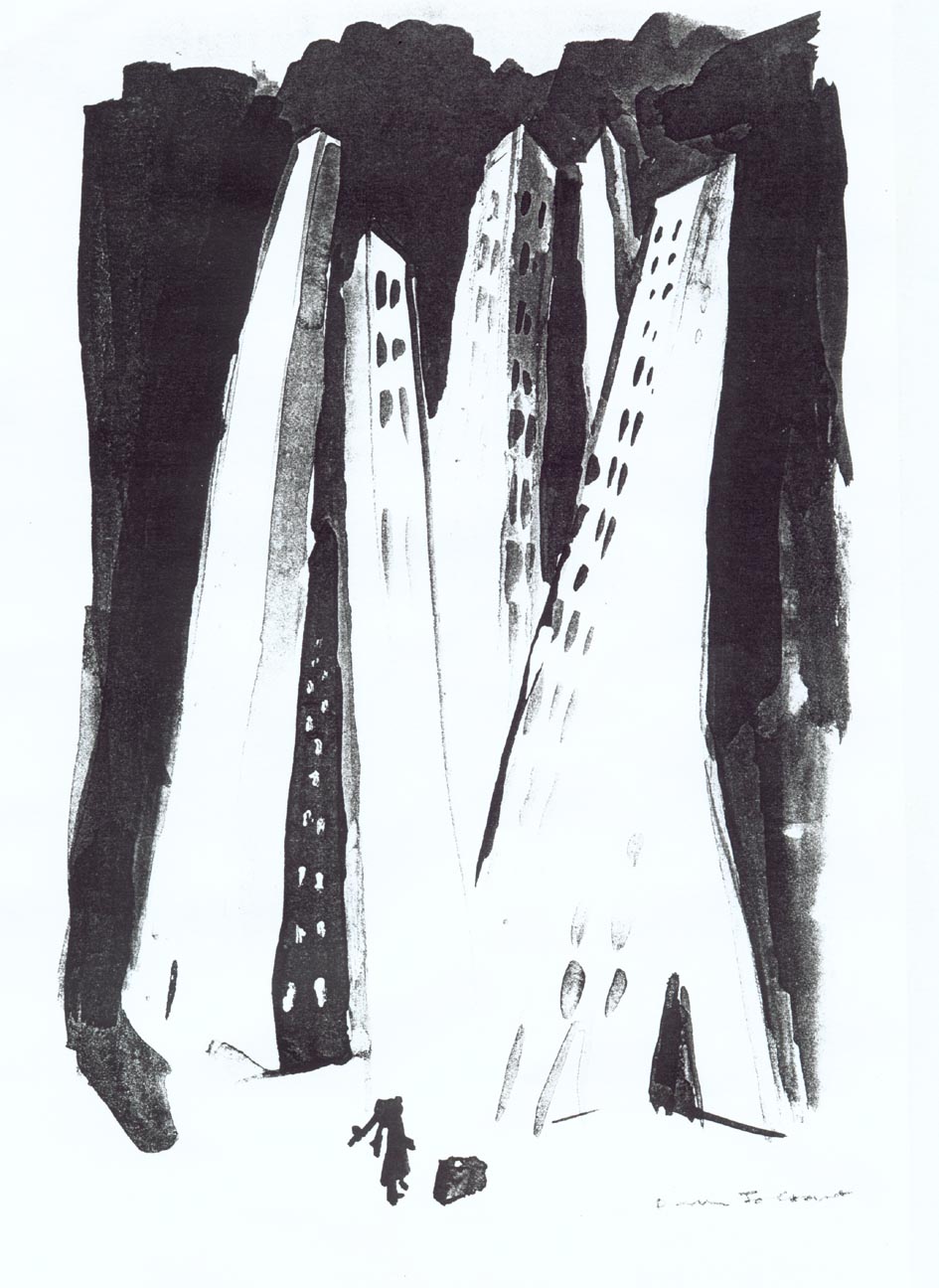
Image by Daphne Jo Grant, created for my poetry collection in 1993 -Gapsy Truth.

Image by Daphne Jo Grant, created for my poetry collection in 1993 -Gapsy Truth.

I’m all for shielding the Ego from moral experts who succumb to counter-transference. Proverbs, turned inner voices, instruct: Put yourself last, be considerate, don’t let people down, adapt, respect trade-off laws, keep promises – the inner voices more or less prescribe what’s in your best interest to feel, think and do.

Noisy commotions, muddling any sense of ‘I.’

The poor ego not only holds awareness of our multifaceted reality, but is driven to distraction by conflicting demands, assumptions, chimeras of grandeur, bouts of doubt, all drowning the whisper deep down – ‘Who or what am I really ?’

‘Part of me suspects that I’m a loser, and the other part of me thinks I’m God Almighty.’  – John Lennon

John summed up the typical seesaw compensation attempt. Adding insult to injury, self interest is blamed for our social ills. Even astute spiritual wisdom falls flat when it fails to appreciate the ego’s task – to daily create new order out of chaos, attempting a compromise with reality. No wonder people become nervous wrecks when their temporary identifications are threatened, no wonder fierce defences are constellated. The battered ego-agent screams silently – I’m only loyal to my familiars.

Some familiar rituals guarantee a  child experiencing rejection, physically, emotionally or intellectually, will self-reject for failing the expectations of its superiors. Welcoming or neglecting, early responses by adults we depend upon set foundation for our personality. Break that mirror and you’re on your own.

Maps serve us as orientation, they don’t convey territory. S. Freud’s map of the psyche is powerful. Think of the Id as a Launchpad to stars. What Freud omitted is a higher unconsciousness, our inner guidance and intuition, later introduced by C. G. Jung and A. Assagioly

Freud’s ideas deserve studying. His terms slipped into common speech like brands and became tangled.

Leviathan

Leviathan

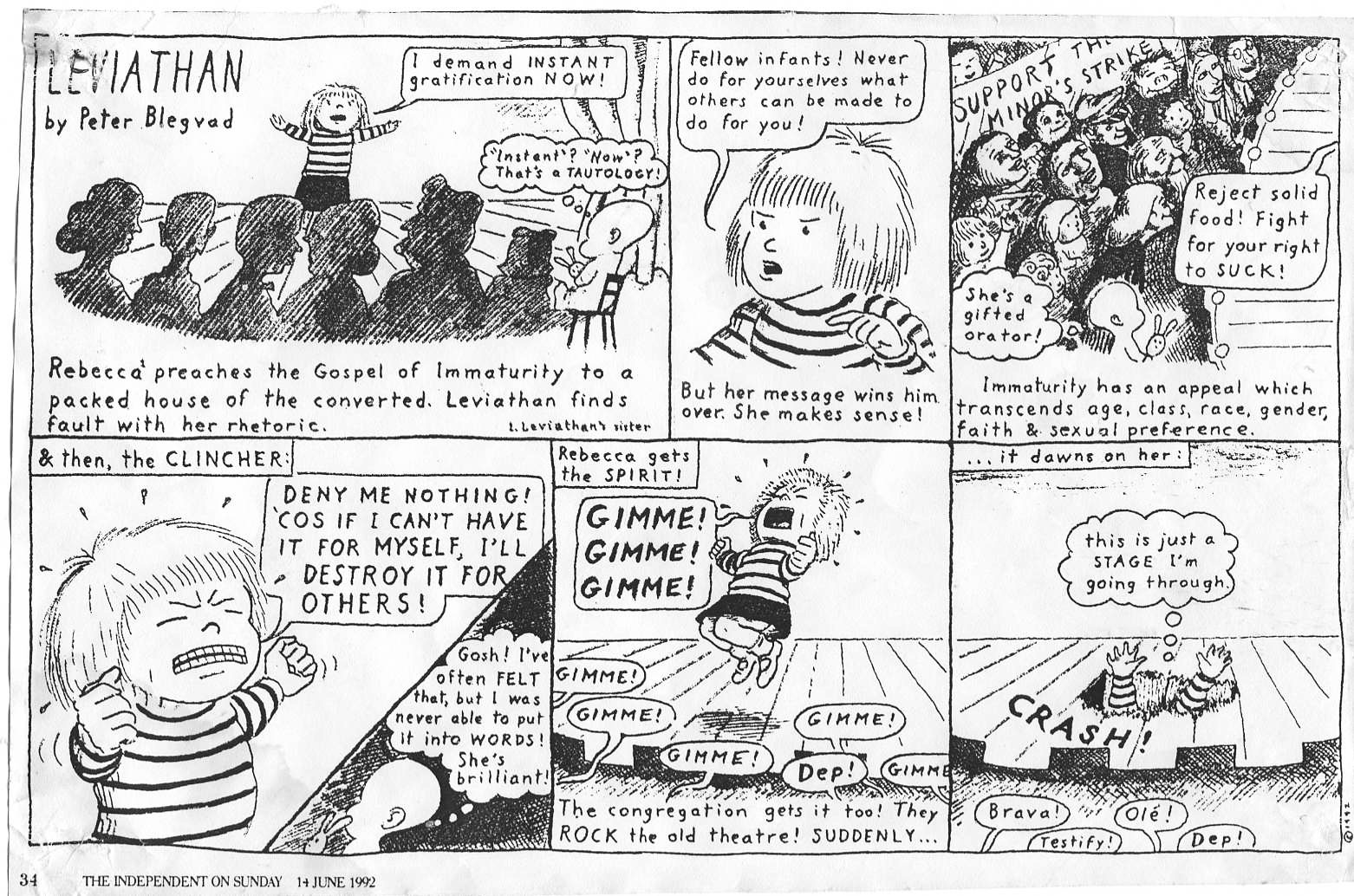
Take the ego construct. Sandwiched between the powerful gratification-force of the Id, in need of gentle and firm boundaries, and a cultural Super-ego, with its rules and regulations, the Ego has the unrewarding task of mediator. The Id, at worst, is a heap of misery dragged along, withholding its energy, while the Super-ego, at worst, hijacks personalities like a psycho terrorist, know–it-all, manipulator, fanatic …  having abandoned the powerless inner child with its distressing and embarrassing need for acceptance and love.

And let’s not fool ourselves, distorted ideals attach themselves to well-disguised tyrants in the collective psyche, slumbering, until the day when circumstances conspire.

Children who grow up anxious to placate, or are bent against authority, invent ingenious strategies for survival. Fragile or strong, balanced or torn by extremes, developing a personality is an art form, assembled from layers upon layers of impressions and accumulated memories. Only increased awareness lessens over-identification and softens defences.

‘The paradox of the arts is that they are all made up and yet they allow us to get at truths about who, and what we are or might be’. –   Seamus Heaney

creative recycling

creative recycling

creative recycling

creative recycling

Young children need space to playact, and adolescents need safe outlets for their natural aggression, opportunities for intense experiences, and encouragement to explore their self-image. The houses of identity we create, however basic or twisted, position us in space and time. They have windows allowing a view, and doors through which to venture into a wider world and align our personal myth to a greater myth.

The problem is clearly not the personal ego, but its cultural super-edition, coloured, at least in the west, by mechanistic templates that regard nature as enemy to be conquered and controlled.

Reprimands like selfish stem from a period when inducing guilt was a convenient social formula. Today this approach is counterproductive. Educational practices must catch up with the nuclear age and the fresh metaphors for space and time. New dimensions arise in our consciousness, compelling us to re-think:

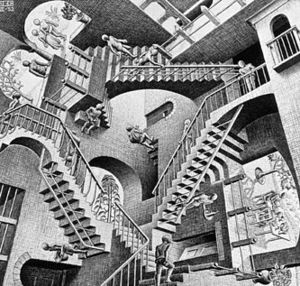
Escher's Relativity

Escher’s Relativity

Relativity theories freed perspectives and brought a climate of moral liberty. In a psychological sense, moral advice became repugnant, which explains why western minds begun to question aspects of religious dogma. A way was opened towards looking inside, and individuation, in a Jungian sense.

Quantum physics has widened our vision further, and brought deep spiritual turmoil through new speculations that suggest a symbolic reality of consciousness that over a hundred years ago would only have been imagined by a minority – mainly mystics.

The Digital revolution has upset linear time and is gradually transforming our relationship with time and space, leading us to ask, ‘What is real?’

A mould, no matter how inadequate, is necessary for any new-born. Judging behaviour without acknowledging the initial and well-meaning intentions underlying the formation of personality will only strengthens neuroses, instead of allowing the acceptance of one’s imperfect self-creation, with a nudge towards a gradual softening of defences.

‘Form is a relic of eternal potential.’ – Fazal Inayat-Khan

This post contains excerpts pulled from past articles that were never published.

10 Comments

Filed under Blog

… dream – a storyteller teasing my dad …

I love this image, but can't find its source,, apologies to the photographer.

I love this image, but can’t find its source,, apologies to the photographer.

Two nights ago, an enchanting storyteller appeared in my dream. She glowed from within, embodying her yarn with captivating gestures, her eyes saying – you’re loveable. Her whole being was a joyous dance. She flicked her fingers before my father’s face, touching his chin – making him laugh – his freed anima, maybe?

Ah, dreams are wonderful, unpredictable like liquid mercury, living silver flowing into shapes.

It was heart-warming to see my father laugh and absorb the affection, the irreverence, the humour. He did not retreat into silence before the piercing wit of the storyteller. The probe was softened through caring eyes … a miracle.

Alone, I could not have invoked such light-hearted banter with a father, who pulled the drawbridge to his heart ever since I dared to think independently. The dream vision lifted the cloud of my helpless woe.

After the dream, I recalled part of a poem I wrote long ago. Daughters may recognise the patriarchal fault in the lines of this poem, the discrepant realities that want bridging. It’s the same old story that could teach us, in the words of my late teacher, Fazal Inayat-Khan:

‘We are not here to agree with each other, but to create beauty.’

Truth worth seeking springs from the middle of each moment. Evolved individuals don’t see a women as inferior to men. The concept has harmed, and still harms, the psychological growth of both men and woman. Yet the deeply-etched hierarchical system keeps working its mean distortions across the globe.

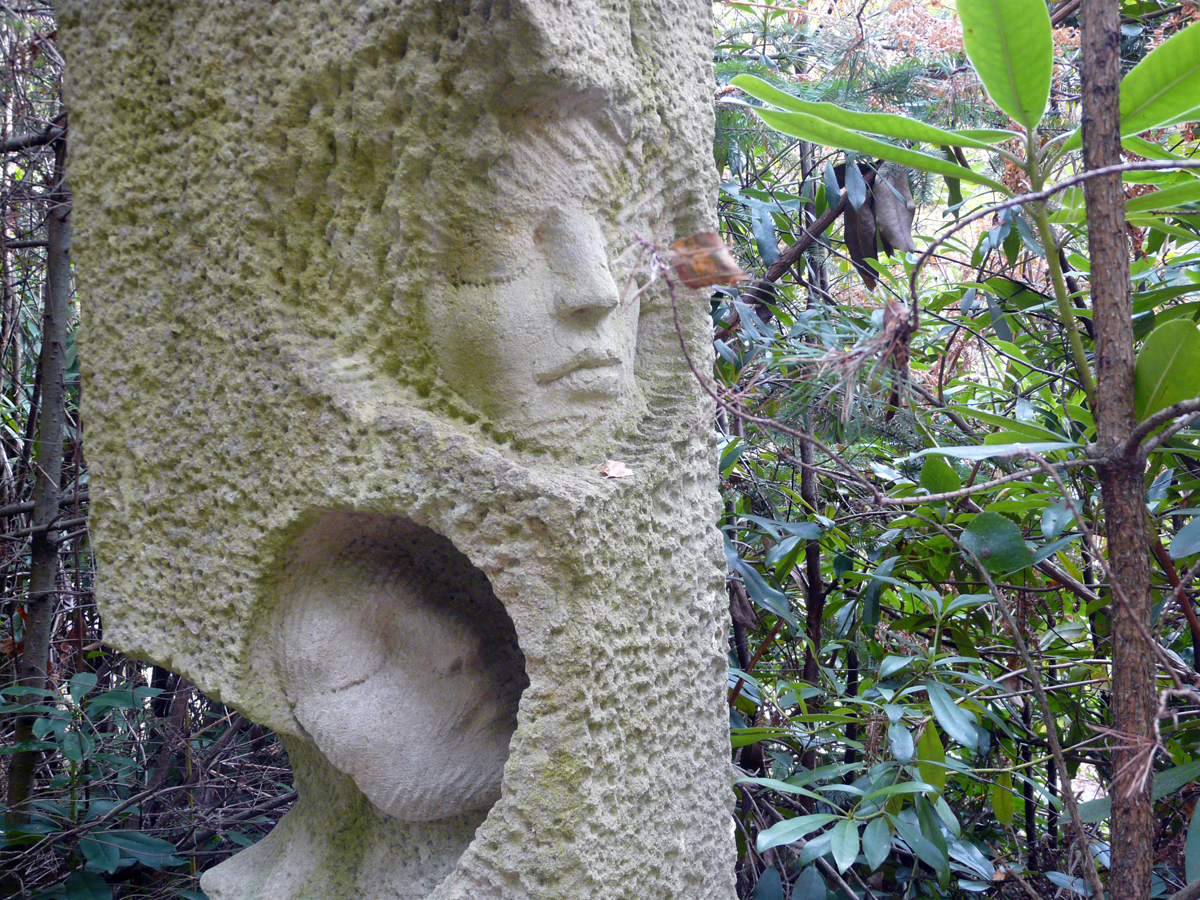
He rests in stasis – cast in stone,

placed high in a niche

of this grand cathedral.

Sculpture Park, Churt, Surrey, UK

Sculpture Park, Churt, Surrey, UK

His daughters wake

and dare looking up.

What are they meant to do

with this apostolic vision

in their genes?

Someone tell them now,

tell them how the vacant room

was always theirs to own.

Here – sun streams through

rounded glass – crimson,

amber, cobalt, gold and green

play across crisp white walls.

Here – colours soften light,

a child can breathe deeply,

is free to release stale sorrows

and style fresh dreams.

Dad, we kick your ghost

out of here … no more

bargains with your fear.

What’s the cause of this stasis, so feared – like dying life, or living death? I think it’s war, each new war piled on top of other wars, and the unbearable injustices my father, many fathers, and mothers, were, and still are, subjected to. I shake my head, I nod my head, and somewhere between all contradictions I must accept the inherited traumas of humanity and seek life and joy with each new day.

14 Comments

Filed under Blog

… the gulf between writers and readers …

This post was sparked by a stimulating and taxing interview Philippa Rees conducted with the writer Vivienne Tuffnell  P1060427lower - CopyThe interview attempts to re-define the gulf between writers and readers in the way commercial algorithms define values for readers, blanking out the appearance of new green shoots.

This disrupted my sleep, in addition to lots of other stuff going on, so I tried stepping back for a wider perspective. No answers, only a few muddled reflections …

My generation, whose early years were without TV, needed to adjust to rapid periods of change, particularly the change from analogue to digital recording, – two entirely different metaphors. The true significance of this shift has not yet been absorbed by the general public.  In a dissertation during a sabbatical film degree as a mature student in the mid-nineties, I quoted Jean Baudrillard  who saw the forced silence of the masses no longer as sign of passivity or alienation, but as ironic and antagonistic. He commented on the strategy of the masses:

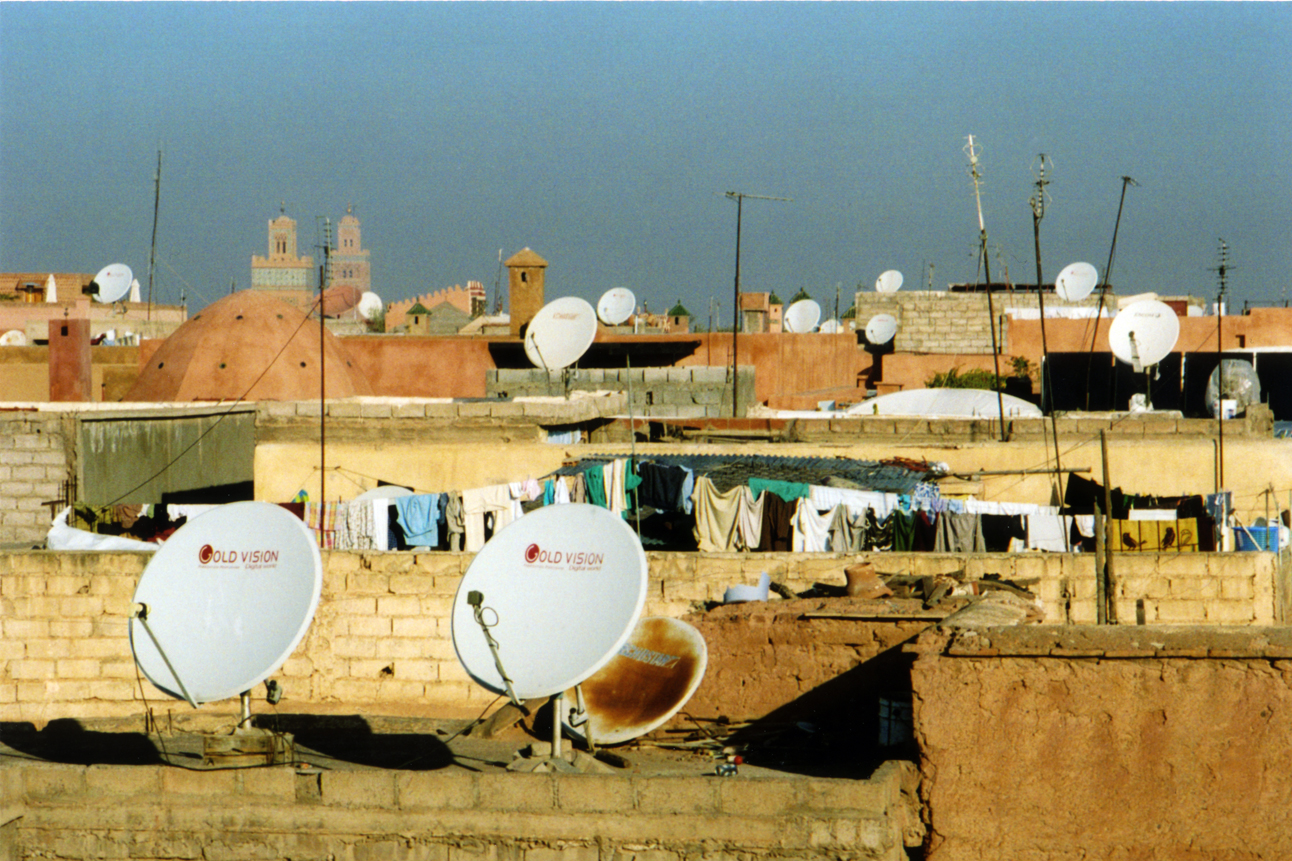
‘… refusal of meaning and refusal of speech; or of the hyper-conformist simulation of the very mechanism of the system, which is another form of refusal by over-acceptance. It is the actual strategy of the masses … it is the winning one today, because it is the most adapted to the present phase of the system.’ Moroc, Marrakech Riad roof, golden vision - low

I recognised this as the Zeitgeist  gradually reaching across the globe. My continuous studies, driven by curiosity and endless questions, prepared me, but I still find it difficult to accept a reality where, for many otherwise intelligent people, the beautiful term ‘soul’ has lost its impact. I place the word carefully in my work and in my writing to avoid bias. Marion Woodman  uses it powerfully … ‘Our very survival depends on spirit embracing soul.’  

The quote becomes poignant through experience, not theory.

Don Cupitt – a philosopher of religion who rejects authoritarianism, once said … ‘The soul, the self, has died. The self in an animal with cultural inscriptions on its surface.’ Sobering, and true, depending of course from which plane of experience one perceives.

In our present culture the commercial speed train whistles through every zone of life. Publishers are among many enterprises struggling to survive amidst overproduction. The ‘Road Closed Pending Repairs’ signs Philippa refers to in her interview grow like mushrooms. Small businesses, for example, vanish at an alarming rate, at least in my little town. Be it a supermarket or a bookshop, I’m bombarded with buy-one-get-one-free or two for three offers. Plenty of people I know look beyond the more-is-better and cheaper hype, but their numbers won’t topple the algorithm-driven logic of mass-cargo firms like Amazon (click for latest newsletter.) Their long term strategy is to please the consumer, which, now, increasingly, includes writers who self-publish … To make profit in an oversaturated market requires ever-new smart inventions.

Works not created from templates, but from inside out, which, sigh,  includes my novels, will struggle to find a position on consumer maps. Traditional meanings are collapsing.  New genres for books are proposed. The box marked cross-genre sounds like a stir fry of left overs. How, as a writer, does one shoulder the marketing speech for novels not fitting into boxes? Crime? No! Romance? No! Religious? No! Paranormal? No! Sci Fi? No! Fantasy? No!

The distillation of a life’s experience, a work of creative imagination? What’s that?

Authors of such ilk have the formidable and possibly worthwhile task of writing their own obituary. Are any of the thoughts a writer expresses original? I don’t think so. Thoughts happen to us. What’s original is their processing and linking based on personal experience, which may offer a new window of reference. I look at my bookshelves and ponder what I would have missed had the authors whose works snuggle up to each other had lost faith in their work. Few commercially produced genre books leave impressions that live on. They’ll drown in ISBN databanks. Our shelves at home hold unique books that surprised and inspired us over the years, and until we become cyborgs and can, with a mere thought, make book pages fall open on any surface of our choice, this will not change soon.

I admire self-published writers. Vivian published several novels herself,  as did Philippa, which speaks for their tenacity and belief in their work. And I admire Philippa’s poignant questions, and how Vivienne exposes herself to them …

the very uniqueness you want to write about? Could you define why that is so difficult? Is it simply too much surrounding noise? Or something else?

‘… is writing the way in which we confront out existential loneliness, and are readers who ‘get’ and share that now the substitutes for lovers?’ 

MercatsSuch questions and similar ones are worth their salt, and expose our vulnerability … do writers, any artists, want to be truly seen? Is one person’s interpretation of truth going to be interesting to others? Will the public feel preached to? Such questions haunt many of the most inspired artists, poets and writers who weave works from layers and layers of their psyche. To expect an instant resonance from crowds will bring deep disappointment.

And yet, the most deeply personal experiences, combined with some magic ingredient of presentation, can, over time, have universal appeal. Stan Brakhage, an experimental filmmaker, put it this way … ‘I had the concept of everything radiating out of me, and that the more personal and egocentric I would become the deeper I would reach and the more I would touch those universal concerns which would involve all men.’

If I’m positive about the future it comes from an understanding in tune with Walter Benjamin  … ‘Technology, instead of liberating us from myth, confronts us as a force of a second nature just as overpowering as the forces of a more elementary nature in archaic times.’

To me, this means learning and unlearning accelerates in condensed time. Think how we make ourselves visible by blogging. How brave and scary to step in front of a public mirror … Virtual or not, the psychological process of engaging with virtual friends and foes is totally real. Sherry Turkle expressed this … ‘I believe that our experience with virtual reality, with artificial life are serious play; our need for a practical philosophy of self-knowledge has never been greater.’ My self-understanding is now aided by the relationship with people I have not met face to face – I never shook hands with or exchanged a hug with Vivienne, but I emphasise with her loss of joy, and her frustration with the ironic and antagonistic attitudes of people who belittle deeper strands of truth for fear of looking inside, and the sense of being a square peg that doesn’t fit the neat round hole of genres and algorithms.

Many writers will recognise these obstacles, including Philippa, and myself. How do we attract and persuade people to sample the green growth in our plot? At the same time, I’m convinced we are co-creating artists of our continuous self-invention. Mourning a not-yet existing frame for our work  might hinder this process, which moves and dances naturally through each breath. And I’m heartened by how writers and poets influence us over time.

A poet and mystic from over 800 years back examplifies this phenomenon …

‘The minute I heard my first love story I started looking for you, not knowing how blind I was. Lovers don’t finally meet somewhere. They’re in each other all along.’ – Rumi

20 Comments

Filed under Blog

… not now – later …

my little hero

my little hero

Each new generation tends to be smarter. While living in rural Somerset, I observed our four-year old son’s play-acting in the garden from the kitchen window while washing pots. He explored his sharp-shooting skills with wooden blocks, building, destroying, building, destroying, building; and so on … it was his new idea of fun. His aiming was good.

Pots done, I attended to the next task, fetching the milk from the street-hatch, left there by Hope, our farming neighbour. She had poured three pints of milk into a bowl and covered it with a cloth. The cream had risen to the top, ready to be skimmed off, which led on to the next task, preparing the dessert for a birthday meal. At this point my son came rushing into the kitchen, wanting me to witness and applause his new sharp-shooting skill. My brain cells were committed to preparing walnut ice-cream.

I said, ‘Not now, later!’

This trick normally worked for a while, but that day he stood his place, watching me with a quizzing look.

‘When does now end?’ he asked.

Casting my eyes to the ceiling for help, I said, ‘Actually, now never ends,’ realising instantly I was in trouble. The child’s superior grasp of logic would demand, at least, a meaningful explanation, and I could loop myself into philosophical twists. My son had no need to query my shrewd answer, he went one better.

‘So when does later start?’

Time to admit defeat. Drying my hands, I said, ‘Now.’

*    *    *

The memory of the incident inspired me to draft a poem … NOW

by Daphne Joe Grant

Illustration by Daphne Joe Grant

Now is the in-breath

Now is the elusive arc

Now is the outbreath


Over and over

Out of nowhere pops the now

Or so we presume


When will we find you?

Why not tell us your purpose?

Where are you hiding?


Now is a trickster

Not taken in by mind-games

Now laughs inside us


Our time must be round

Or turn through a dark tunnel

Orbiting the now


Waste now and lose her

Weft now to now and she’ll dance

Wed now and be her


Now has no answer

Now is what is truly known

Now breathe her and bow

https://www.youtube.com/watch?v=xjwBWE64fG0 Interesting talk by Rupert Spira on perception.

A focussed mind helps us to achieve stuff, but is also easily hijacked by the rat-race, the relentless rush towards meeting deadlines in competitive environments, where no children interrupt and make us pause.

Apparently 10.4 million days are lost annually to work-related stress in the UK alone. And it costs businesses in the US $300bn (£187bn; €237bn) a year. No wonder the ‘Here and Now’ theme is in vogue again, even with hi-tech status. Take a biosensor device, called Pip 🙂 … http://www.bbc.co.uk/news/business-29742908

There is another kind of stress, less talked about, affecting those who work hard for a living, as well as those who lost jobs, or get by on little, or anyone reflecting on human qualities, while witnessing a growing social polarity … as poignantly shown in this image …

http://gerryco23.wordpress.com/2014/10/24/the-fence-between-a-world-of-need-and-a-world-of-excess/

16 Comments

Filed under Blog

… Which is Witch? …

‘Which is Witch?’ is the title I coined for a documentary I helped produce for a colleague during our film degree course twenty years back. For my younger colleague the course was the start of a successful career as cameraman, for me it was a three year sabbatical creatively refreshing my existing work.

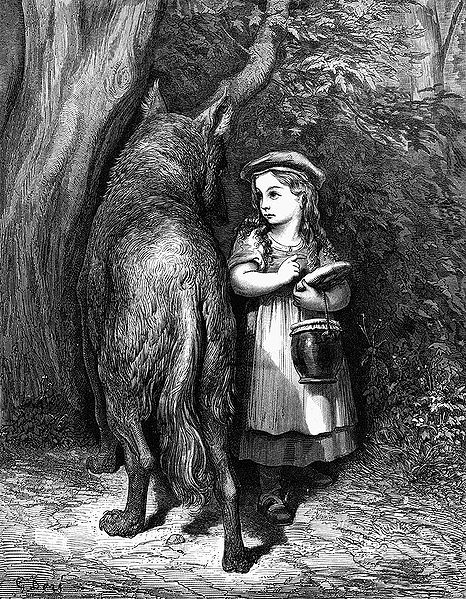
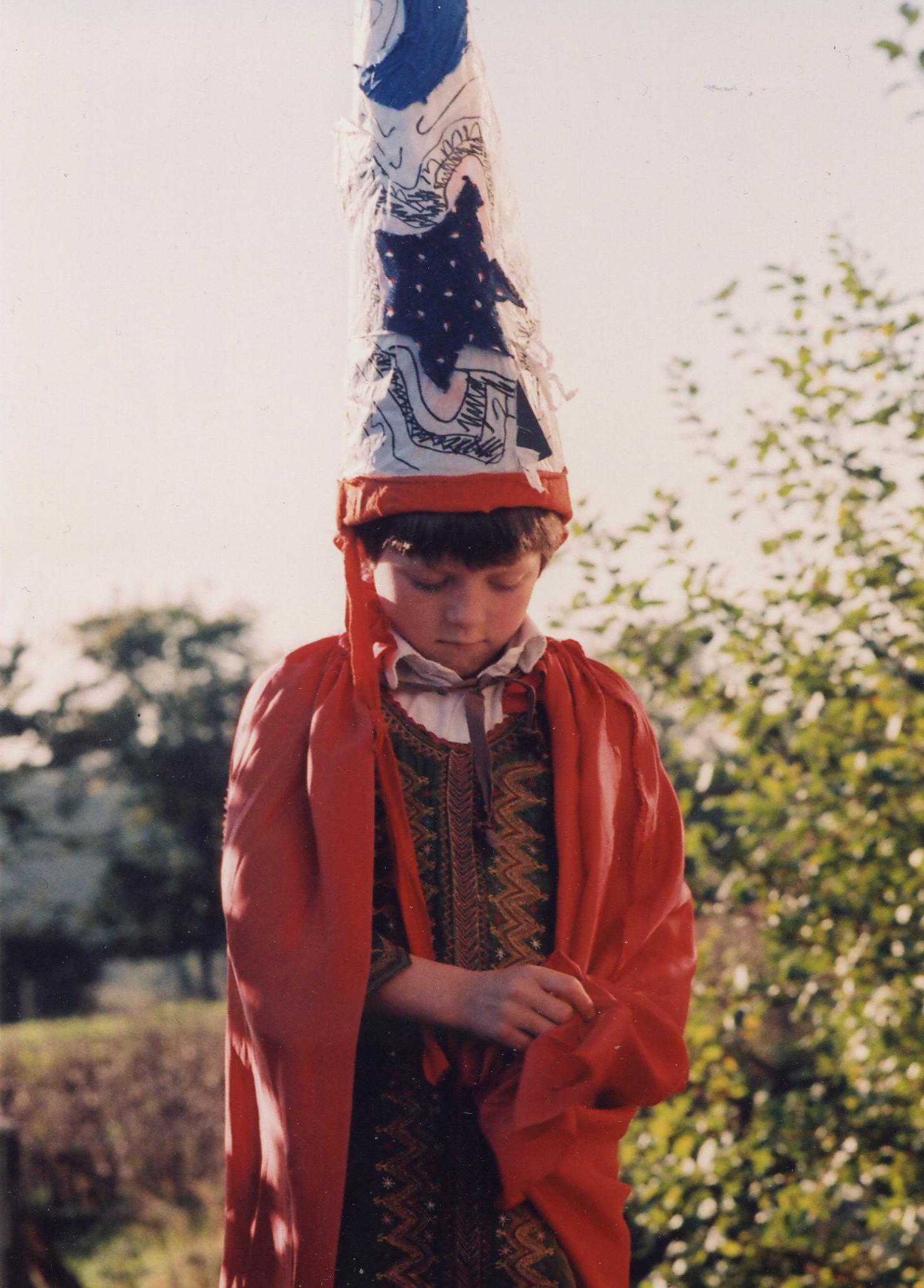
I’m all for make-believe, having grown up with Grimm Brothers’ tales taught me a few things. The other day I came upon this 80s photo of my son and recalled an incident when his favourite primary school teacher must have become a little too identified with the character of her Halloween Witch role.

Yesh img113His grandma dressing

As Santa Claus was cool fun

Yet his headmistress

Becoming a cackling witch

Stirred his first nightmare


Halloween offers a rare occasion when the dropping of one’s regular mask in exchange for another, like the archetypal witch, permits the normally hidden to push up from the shadow world, causing surprise, awe, delicious scares, and even nightmares.


There are good reasons to get acquainted with the hidden 90 or so percent of our psyche, the personal and the collective unconscious. This seems a good opportunity to re-share one of my first posts on this site, from March 2011 – well worth reading.


A Letter to my Shadow

https://courseofmirrors.wordpress.com/2011/03/25/139/

Without the Shadow I’d only be fluff on the coat of real human beings.

9 Comments

Filed under Blog