Tag Archives: psyche

… a tribute to snags …

I’d make a lousy fundamentalist of any kind, and was probably born with negative capability http://en.wikipedia.org/wiki/Negative_capability and a tendency to daydream and contemplate life, skirting extremes, which makes my voice almost inaudible in a culture where sensation trumps. It also means I procrastinate on tasks that need doing, until a snag propels me to act.

CNV00003 - copy 2

One morning last week, easing myself into the day, the shirt I dusted in the cool morning air was trapped when I shut the back-door; next the sleeve of my pyjamas got caught while I closed the lid of my coffee tin. SNAGS – their repetition blinked a green light for associations and made me think of dreams, how they sneak into the daylight via signals. With only a vague memory of my dream, I followed an impulse to catch up on practical tasks round the house.

A shelf in my shed needed fixing. It had crashed, bringing down an array of cans, sprays and sealants. In the way one thing leads to another, I sorted and dumped stuff, and dumped some more – making space. Seized by the flow of action, I de-frosted the freezer, thinned the ivy round the shed, cleaned windows, filled a sack with confidential papers for shredding, loaded the washing machine and made some overdue phone calls … all amounting to what I call a BLITZ day.

Knocks from the dark, SNAGS, help me overcome procrastinations. BLITZ is how I operate to gain periods of laziness. I’ve learned to humour my inner driver (superego) and made peace with Lazy.

Dark of beginnings

Flees the meddler

The shrill demand

The noisy footfall

The sharp beams of

Imposing eyes

Dark folds its mantel

Round the dreamer

The shy nomad

The vague image

The tendrils of

A budding poem

Approach it softly

Like a lover

It may surprise

Or yield nothing …

———————————-

After my Blitz day, a book came to mind, ‘Worlds in Collision’ (1950) by Immanuel Velikovsky. His research resulted in controversial astronomical theories about catastrophic events planet earth experienced over time, and how the human race was affected. Here a link to a 1972 Horizon documentary:  https://www.youtube.com/watch?v=U18gMJXNyX8

He concluded that as a victim of amnesia, collective humanity is compelled to repeat and re-experiencing traumatic events, to aid, in a psycho dynamic sense, recovery through triggering repressed feelings, wake up, and learn to control the experiences. It’s a wider, thought provoking context for the contemplation of our human lot, which I leave to you, my readers, to explore.

———————————– 

On a smaller scale, we may have memories of being held in the womb and in the arms of our mother – or not. In either case, there are giants to overcome, grown-ups. One of the saddest things grown-ups do is deflating a child’s dreams and desires, talking down: Wait till you grow up. Life is tough etc. etc. It’s like telling a seed, ‘Don’t bother; you’re doomed from the start.’

collage2, familyThe desire to be  held equates home. The longing for a permanent home seems to motivate our actions in relation to food, shelter, competition, acquisition, power, money, knowledge or love, as well as being the impetus underlying the craving for prophets who promise salvation.

Fear of not being held, of having no claim on a place where it’s safe to rest when life gets tough, has made us inventive. We wall our interests, invest in insurances, wage war to protect what we identify with , or claim ownership of ideas, philosophies and creeds. Maintaining behaviours that keep familiar systems in place, we find it difficult to accept with sobriety that we are all in the same boat, that our ideas and identities are fleeting chimeras.

Imagine … wouldn’t it be wonderful to seek nothing and simply enjoy the miracle of living, and be like this child overcome by the mystery of rain?  http://vimeo.com/84802749

There is an experience of home that tends to go unrecognised, hiding, as it does, between each breath, in dimensions beyond time. Such glimpses come and go, leaving a sense of union and connectedness while we’re tossed along the rapids of progress, inevitably bumping into obstacles – the snags of life signalling messages from the unseen.

The psyche is a bridge between inner and outer dimensions (the theme of my novels,) similar to the corpus callosum connecting our two brain halves. On good days I sense that in addition to existing in time, a part of me also resides in another frequency dimension, as a light-body, or soul, resonating in my body while I occupy it.

*    *    *

A day, whether six or seven years ago or whether six thousand years ago, is just as near to the present as yesterday. Why?  Because all time is contained in now. Meister Eckhart

16 Comments

Filed under Blog

… she discovered her language …

Expelled from the womb as a bundle of around 100 trillion cells, our tiny body brings along a generous genetic tome of ingredients for traits that dance together in a myriad of potential formations – depending on chance and circumstance. The process of sequencing and mapping the tome of an organism is immeasurably more complex and unpredictable than sensational media articles tend to suggest. http://en.wikipedia.org/wiki/Common_misunderstandings_of_genetics

Add inherited family models and cultural traditions – blessings and curses – this bundle of potential is compelled to fit into a given coat that eventually becomes too tight, or the colour is off, the material too heavy, and most likely the design clashes with our sensibilities. In short, the coat can conceal our potential and our essence, even to us.

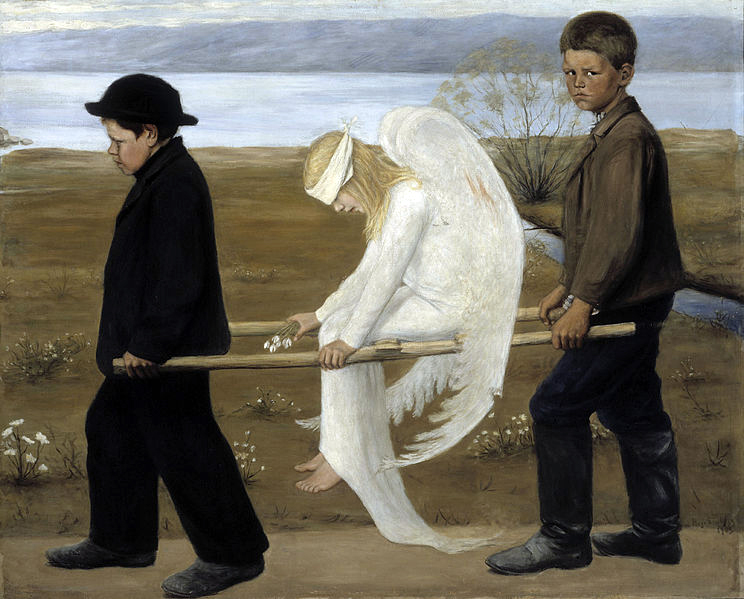
The Wounded Angel - Hugo Simberg

The Wounded Angel – Hugo Simberg

The challenge lies between two extremes: to squeeze into the coat or to alter it – and therein lies beauty – the full scale of our different stories unfolding.  We want to engage with the world, find a medium that communicates our unique myth – through being, play, work, service, music, dance, images, words, creating or dismantling ideas and objects. We crave for the ‘aha,’ the recognition, for symbolic understanding, and purpose.

The worst trials often sculpt the deepest processes. We deprive ourselves when judging those who don’t fit the norm, as demonstrated in this video about the Outsider artist, Judith Scott. Her works are exhibited in The Museum of Everything. When late in life she was welcomed in a creative space, Judith discovered a language for her inner history, her myth, and prayer. She devoted herself to wrapping up things, protecting things, keeping them safe and secure. Like many artists through whose very personal process shines the universal, she made psychological and spiritual sense of her genome.

<p>Video from <a href=”http://www.karmatube.org”>KarmaTube</a></p&gt;

In case the embedded video won’t show – it’s a great site:   http://www.karmatube.org/videos.php?id=3563&utm_content=buffer59550&utm_source=buffer&utm_medium=twitter&utm_campaign=Buffer

We’re all artists. Becoming a unique human being is a phenomenal creative achievement. In a culture that measures people against a uniform blueprint of perfection we easily lose sight of the unique perfections arising from within individuals, from within us.

*    *    *

The story of Judith Scott reminded me of a few lines from a Sufi prayer by Hazrat Inayat Khan

… Oh thou – life eternal –

we seek thy loving enfoldment …

15 Comments

Filed under Blog

… the mystery of thoughts …

Every child is truly switched on to the imagination. But frequently the environment belittles the imagination, and the gift can end up suppressed under the blanket of rationality. People with a strong creative drive may settle down to live in a straitjacket, and then find themselves overwhelmed by images, thoughts and associations, especially around full moon.

As a child I was intensely curious about the spaces between things, and about light. Had I not locked horns with an opinionated physics teacher I might have taken up the challenge to study sciences. Another fascination of mine was pattern repetition – how the veins in a leaf resemble the shape of a tree. And scale – how tiny bodies, big bodies, our planet, galaxies, the universe, are all reflected in each other.

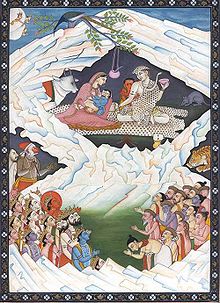
 Hindukailash, image from wikipedia.

Hindukailash, image from wikipedia.

Like Indra’s net of pearls in Vedic mythology, where the surface of each pearl mirrors all other pearls, a metaphor for the interconnected networks of mutual relationships between parts and systems. Mount Kailash is depicted here as the timeless and motionless centre of this net, housing Shiva’s family.

Not only visible structures are held together by interactive nets, our social systems, political systems, spiritual systems and the internet operate within a network. We can observe that the invisible psyche (mind) functions not only through logic, but also through aesthetics, independent of space/time, and is held by another kind of coherence – a net of meaning. And what is generated from this net of meaning is a finer kind of energy, not evidenced by present scientific methods – namely intelligence.

We knew it all along – research established that our emotional experiences leave an imprint in the cells of our body, that the brain is more than the squishy mass under our skull but a medium spread throughout the body via a network of neurotransmitters. There have been hair-splitting arguments for and against the idea that the recipient of an organ can experience personality traits of the donor, based on the speculation that each cell carries a hologram of the whole body and its memory.

Feelings and thoughts arising in my consciousness are filtered through my body’s memory. They also depend on my state of anxiety or calm, my interest, attitude and other variables, such as the weather, my relationship with the elements, with people, the collective mood, solar flares, or the constellation of planets. On some days, maybe after a meaningful dream, or a spell of mantras, thoughts are forming clearly on the breath, like reflections in a still pond, on other days, thoughts rush in on water rapids threatening to drown me, or they plod in like turtles, slow and guarded.

Objective reality is not the only game there is – what in the universe has not interacted at some point in time, irrespective of distance? Everything is linked up. Einstein called it the ‘spooky action.’

The motherboard for this wonderful instrument we call the brain, which comprises our whole body, is formed in the womb. I believe the intelligence involved in creating any specific body must lay in more than known DNA codes, must include the indeterminable non-local DNA of a spirit world. Our body foremost operates like a receiver and transmitter for as many wavelengths our radio station in time attracts or is able to tune into.

From this station, stabilized by repetition, I sort clusters of sensations and feelings, and process thoughts and ideas attracted to me from the collective psyche, a vast sea, which the individual mind must learn to navigate. Images and signifiers are coloured by whatever I consciously or unconsciously mirror and relate to.

No matter how much information we absorb, through our senses, through language and concepts, through comparing patterns, reasoning and calculation, everything, comprehended or not, will be filtered through the body’s motherboard that keeps adjusting to experiences and expanding fields of perception, fields that extend way beyond personal memory. All this information is continuously re-shuffled, as is the meaning we assign to it.

Our body is a motherboard – planet earth is a motherboard – the whole cosmos is a motherboard for a spirit we cannot comprehend, an invisible hand that touches us like a breeze, made visible through what it animates.

All we know is that images, thoughts and ideas are reflected in us. They travel via synapses in the neurons of our body, they travel on the air between minds, they travel among stars, they echo from under the sea, waving to us as plankton, they speak to us from every creature, from every blade of grass, from every stone, and they beep from within our bodies through tweaks of pleasure or pain. All matter, all people and objects we interact with store the memory of that interaction, including interactions with things we hate or nurture, and with places we live in.

We don’t invent anything, we re-discover, re-connect and re-create from the vast storehouse of knowledge and information provided to us by nature, and by the spirit between matter that makes up the cosmos, an embodied being that is becoming conscious of itself.

We are on the air, sent, programmed, radioed and broadcast, identified with all manner of things, ideas and beliefs. Yet if we look deep inside our emptiness, we know, the non-material aspects of us can potentially detach and be free, maybe enjoy tea with Shiva’s family and witness the world turn on its axis – a state some people experience spontaneously or through meditation. A state of pure consciousness not identified with this or that. In the meantime, we could at least be kind to ourselves …

‘Thoughts are beings that generate … One thought of kindness gathers a thousand beings of love and kindness around one.’            Hazrat Inayat Khan

I don’t know if a singular mind/psyche, the incredible art of a lifetime, survives the physical death of the body. Maybe a coherent individuated mind leaves a dent, an influence within the collective psyche. Like the organ of the heart, over time, achieved its definite function. But does it matter? Nothing is lost. All information is continuously re-shuffled into new forms and constellations.

Digital storage provides a metaphor – information exists and roams freely in the wind of the collective psyche (unconscious) until it is embodied and gathered towards a purpose. Every event has a consequence. Nature is exacting, but also generous, what has been repressed in the flow of evolution will always return in one form or another.

Everything alive speaks to us, and all such relationships are processed in the stories we share, stories being containers of the richest kind of information. 

*    *    *

You can source other posts on the theme of reflection in the tag cloud on the right of this page. Like this sequenc of posts: https://courseofmirrors.wordpress.com/tag/hazrat-inayat-khan/

And you might want to check out posts under the tag ‘psychology,’ especially the one on ‘awareness,’ where I share R. Assagioli’s 10 psychological laws – how the body affects the mind and the mind affects the body. https://courseofmirrors.wordpress.com/tag/psychology/

*     *    *

This post also appeared at  Third Sunday Blog Carnival: September 2013 | Third Sunday Blog Carnival

17 Comments

Filed under Blog

… storytelling and the primary world …

Knowledge is not the rare gem it used to be. Then again, without recording, analysing, sorting, summarising, calculating and disseminating mega quantities of data we’d have none of our ingenious toys to play with. Without statistics our systems would grind to a halt, and, yes, it’s annoying that almost daily yet another quantitative study announces what’s good, or detrimental, for our well-being. Thankfully, none of the churned out evidenced facts can make a claim on meaning. Humans remain idiosyncratic. We apply messy values to our life-choices, and we frequently ignore the logical road signs of scientific landscapes, or blank out the hassle of linear time.

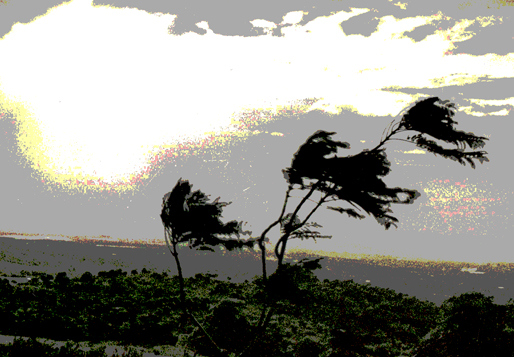
Wind


Instead, we are tossed along by emotional encounters, the unexpected, are awestruck after a quantum leap of intuition, and are generally guided by what appeals to a body/mind that likes the stimulation of nature, her moods, seasons, the phases of day and night suggesting action or repose, like the in-and-out-breath, between which we may catch a glimpse of a dream, a relevant truth, an eternity even. Hardly anyone I know is without this conflict: liking order and control, as well as yearning for rapport with the dance and rhythm of nature.

Over 300 years ago G W von Leibnitz, who could’ve been a poet, was gripped by an emerging idea, to collate all human knowledge and to systematize it via a common language. Computers would have been his bliss. He loved to correspond with most scholars in Europe during this baroque era. And he might have gone some way to explain the whole universe in the hope to solve every conceivable problem. Paradoxically, he also stated … the universe had to be imperfect otherwise it would not be distinct from God. Near the end of his life, Leibniz wrote in a letter that combining metaphysics with mathematics and science through universal characters would require creating what he called:

a kind of general algebra in which all truths of reason would be reduced to a kind of calculus. At the same time, this would be a kind of universal language or writing, though infinitely different from all such languages which have thus far been proposed; for the characters and the words themselves would direct the mind, and the errors — excepting those of fact — would only be calculation mistakes. It would be very difficult to form or invent this language or characteristic, but very easy to learn it without any dictionaries …

Source:  http://en.wikipedia.org/wiki/Characteristica_universalis

I’m not doing honour to this remarkable man, so here is a sketch of a biography … http://www-history.mcs.st-andrews.ac.uk/Biographies/Leibniz.html … should you have the patience to read this, note the time it took for letters between Leibniz and Newton to be delivered, which makes me admire the tenacity of these scientists.

The notion of a calculus for a universal language intrigues and troubles me. Nature speaks a language everyone understands. Key-terms of my mother tongue (see my last blog post) easily bring back the plot of land my toddler feet bounced across. The stories I most enjoy writing grow organically, with tendrils of their roots nourished by the alpine woods and hills of my childhood.

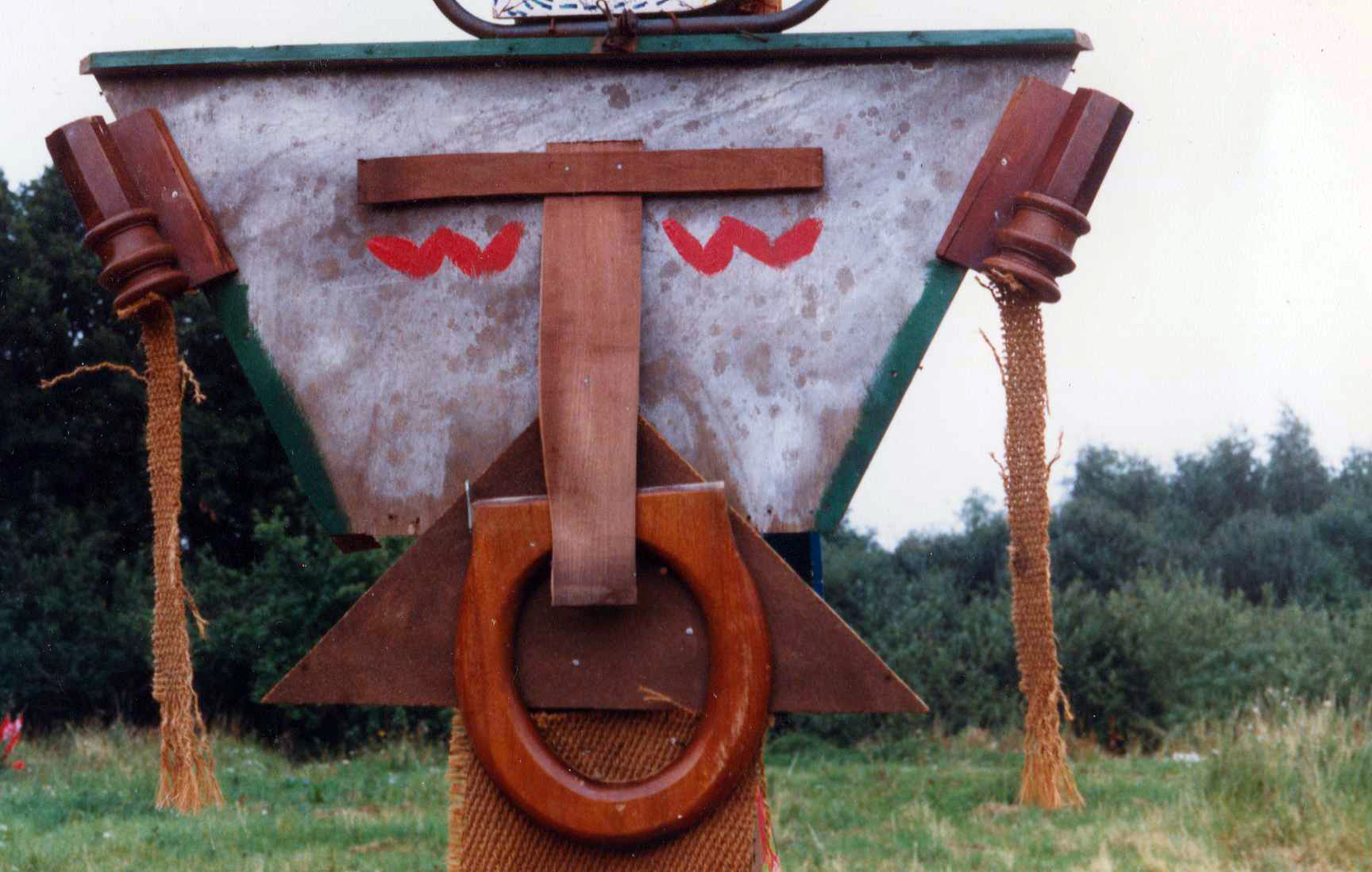
But things change. Data collation is now available to authors, promising control, over marketing, though formulas and blueprints are now offered for the creative process, like how to write a novel in four week. Imagination serves many masters and is not easily controlled – its life-sap flows through all forms. Totempole 4

We can only explore everything known continuously in fresh situations and move on, in the way that children and creative people place a familiar object into a new context. The play of imagination destroys and creates, and has the power to shift the meaning of our past, present and future.

‘There is the truth of truth as well as the truth of fact.’                   D.H. Lawrence

Being part of the dynamic process of evolution (which Philippa Rees ingeniously terms ‘Involution’ in her book of that title) we are walked by the tightrope of ecstasy and pain, of dependencies on environments and people, for better or worse, dependencies on beliefs too, mostly not by choice, but driven by binding needs.

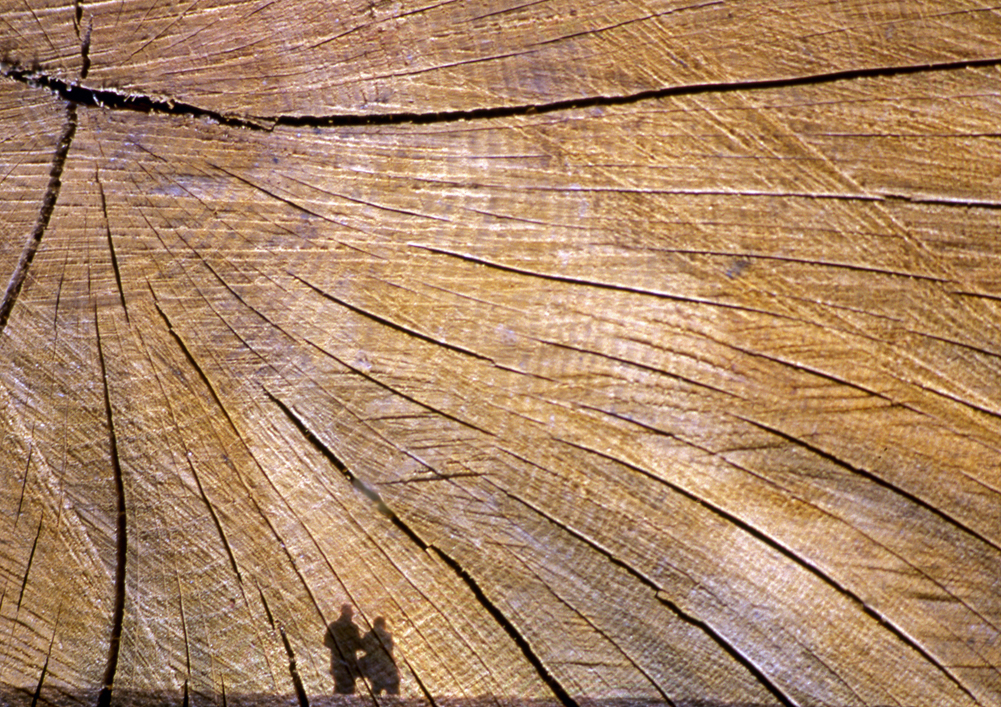
Couple shadow series, 3a small

We face exploitation, conflict, sudden change, harmony alternating with phases of chaos – the story of life, a record marked in DNA and every tree trunk. Instigating control, or preaching harmony while shading off the dark, the chaos, the collective psyche of humanity, will only repeat the distortions of otherwise genuine messages from enlightened thinkers, sages and prophets.

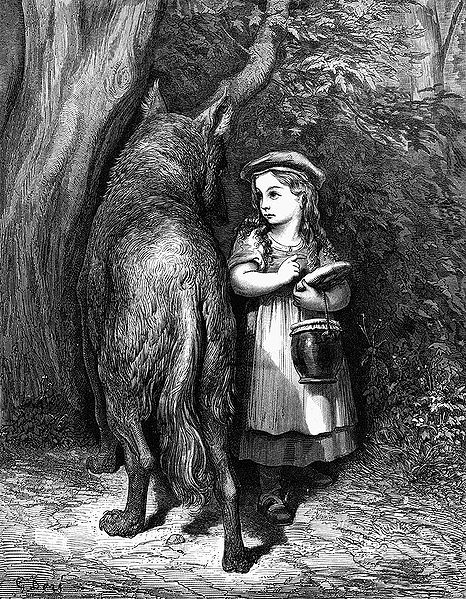
It would serve us as well to teach our children how to accept the dark and how to deal with conflict. Reading the collected folk tales of the Grimm Brothers to children would be a start.

Dore - public-domain-image

Dore – public-domain-image

The inspired P L Travers, author of Mary Poppins, had a talent for highlighting the vital function of myth, symbol and story. She shared her reflections in a collection of essays that appeared in Parabola Magazine. The essays were later published in a book, titled: ‘What the Bee Knows.’

She wrote … The Primary World, in order to go on living, needs the things man cannot create – the earth with all its composted dead, the rain that raineth every day, the seasons, nightfall, silence – and the ear free of all pulsation but that of its own blood.

… The Primary World is that which has never been invented but came into being, along with the blood stream, as a legacy from the Authors who, according to Blake, are in Eternity. All the rest is manmade, or as Tolkien has it – sub-created.

As a writer I sub-create and grow stories from within, using images and words that resonate with personal experiences, myths and visions that provide an ever-changing way of relating to myself, to others and the worlds we share. So when Travers says … nothing is truly known until it is known organically … this chimes for me.

We forget – a happy fault – imagine there was no pause between one dream and another, no night. We forget so we can re-member creatively, which takes practice. We walk on star dust and ancestral bones that inform our bloodstream, as much as the stories of this world nourish our imagination, continuously re-shuffling our psyche, which explains our function as being the bridge between matter and spirit. Every bee knows this.

Image by Yeshen Venema

Image by Yeshen Venema

What the Bee Knows, by P L Travers http://www.amazon.co.uk/What-Bee-Knows-Arkana-Travers/dp/0140194665/ref=sr_1_3?s=books&ie=UTF8&qid=1376737128&sr=1-3&keywords=what+the+bee+knows   Wow, no reviews

Parabola Magazine: http://www.parabola.org/

‘Involution’ by Philippa Rees: http://www.goodreads.com/author/show/30171.Philippa_Rees


Images are mine unless the captures say otherwise.

6 Comments

Filed under Blog

… imagination …

From its fountain, the psyche pours compositions of light and darkness, images shaping the natural elements that engender our sensual experiences. Countless composite images trickle through our mind. Do we pause to ponder which to let pass, like dry leaves floating down the river, and which to absorb deeply into our heart – and give life to?  

The images we energise are re-envisioned and re-told through our perception. Nature spirits, archetypes, monsters and fairies, heroes and villains, deities, gods, devils and angels, the dark unknown – mankind’s entire mythical landscapes are encapsulated by the imagination and affect our everyday life.

Through this phenomenological process we discovered language, numbers and geometry, tools that potentially enable us to re-create nature. Some scientists maintain that matter constitutes the real and all phenomena derived from nature’s building blocks is not real. But deep inside we know … our search for the world we intimately desire attracts to us enlightened scripts. Through trial and error we learn to apply these scripts, and, for better or worse, we make our worlds real. Worlds within worlds are born from the imagination.

The young in heart have a natural curiosity to play and explore what lies beyond the horizon, literally and metaphorically, with a keen drive to discover facets of their soul reflected in all matter, experiencing matter not as dead, but as vibrantly alive and animated.

Consider the present demand for SF or its playful sister, fantasy, or magic realism. These genres overlap, they deal with the human condition, the desire for a home, in the widest sense – be it for another planet, an island, a heaven, a yesterday, a tomorrow, or the grail of now. To achieve the latent desire for the ineffable, a writer, any artist, becomes a deep-sea-diver of the psyche, and, on coming up for air, re-arranges the booty found there. Some of my favourite writers are R Heinlein, C S Lewis, R Bradbury, I Asimov, M Atwood, Garcia Marquez. Jorge Luis Borges, Doris Lessing and Ursula Le Guin …

It’s time to re-discover the bridge between the two hemispheres of our brains and balance the outlook of our material societies, value reverie, art and fresh perspectives, engage in play, song, dance and storytelling.

Time to embrace unstructured activities, which sidestep reason’s often pre-conceived observations, the epistemological obstacle, as Gaston Bachelard calls it, the grid of unconscious mental patterns that block seeing through our deeply personal and grounded experience, through the heart.

I’ll never forget the visit during the 70s, instigated through a Sufi friend, to a small Trappist community in the vicinity of Washington DC. The handful of monks rotated duties in house and gardens, interspersed with reading time in their fabulous library. Each one of them also enjoyed an annual 40-days-silent-retreat in one of the huts sprinkled over the many-hectare-estate. My then partner and I were privileged to listen to some of the monks sharing their vastly different cosmologies, psychologies and spiritualities. What struck me was that each monk had a vastly different idea about God, including one admitting that he thought God was man-made and no less real for that. What a stimulating place to be, where you are respected for the envisioning of your world.

 ‘The imagination is not a state; it is human existence itself.’ – William Blake

‘In our most private and most subjective lives we are not only the passive witnesses of our age, and its sufferers, but also its makers. We make our own epoch.’  – C G  Jung, 1934 

‘If children grew up according to early indications, we should have nothing but geniuses.’ – Johann Wolfgang von Goethe

Relevant links:

Re: CS Lewis  http://users.etown.edu/d/DOWNINDC/dungeon.htm

Gaston Bachelard  http://www.newworldencyclopedia.org/entry/Gaston_Bachelard

The World Within, C G Jung video  http://www.youtube.com/watch?v=Z6MHRHKd4Ps&feature=related

See also https://courseofmirrors.wordpress.com/2012/05/25/pattern-which-connects/

For those with a metaphysical interest in the imagination, here is an article of mine: https://courseofmirrors.com/wp-content/uploads/2011/03/science-of-the-heart.pdf

Excerpt … The mystic aims to raise sensory data to a higher level. This happens via the visionary imagination, the ‘presence of the heart’, and it happens precisely in that intermediate world where material beings take form and where material beings dissolve again to become subtle bodies. This intermediate world exists not at the other end of the universe, but right here with us, between each of our breaths. This is how the presence of the heart affects, how ideals, in whatever way we conceive of our Ideal, become realised. What we give being to in this intermediate sphere inevitably appears and becomes endowed with an outward reality. This is so, even when it is visible only to the inner eye, the eye of the heart, just beyond what can be perceived by the senses.

*     *     *

The rose image: detail of ‘The virgin of the unfading rose,’ eighteen century.

13 Comments

Filed under Blog

…the revolt against regulations …

Our sanity is at stake if we don’t learn to bridge extremes. Below I paint two contrasting scenarios illustrating, arguably, two types of tendencies within our society. They relate roughly to left and right brain functions.  Each is a simplified, fictional abstraction and ignores the function of the corpus callosum and the complexity of individuals where many overlapping abilities, dichotomies, and all shades of grey and colour apply. Like Yin and Yang, one contains the other. In the two graphic scenarios I make the environment the crucial factor. To complicate matters, imagine being born with a predisposition into an environment that is not supportive of your natural inclination. It’s bound to mess you up for a while.

 First scenario …

Imagine you grow up in a disciplined environment where bedtimes, mealtimes, tasks in the home and considerate attitudes are encouraged, and in cases enforced, not to be digressed. As long as you toe the line you are accepted and feel supported.  Within this ordered structure, you learn to respect yourself and know your place. If this structure appeals to your temperament you will extend your expectations of order towards school life, friendships and work life. In other words, as a well-adjusted member of your community you anticipate similar coherent behaviour from others. You may feel particularly drawn to work for organisations that require a solid structure to function efficiently, the army, police, government, education, science, social services, the NHS or any large corporation. You become part of a sub-culture, a clan your feel protected by and will most likely defend. Natural forces may seem as something to be conquered. The concept of the unconscious and a free-wheeling imagination often fly in the face of rationality and seem alien. If your clan lets you down because its structure is crumbling and needs changing in order to survive, due to technological advances, financial pressured or corruption, you will have a really hard time and may feel betrayed.

What will be your challenge …?

 Second scenario:

Imagine you grow up in an intellectually and emotionally highly stimulating, or a merely disorganised home. You are frequently left to your own devices, have to think for yourself, find your own rhythm and make decisions as to your role in life. You may be lucky to find your field of action or feel lost and, or develop slowly. You certainly will experience adults as fallible beings, not semi gods. You might revolt against imposed structures and the way they inhibit your creative freedom. And if you are driven by innovative ideas you will find obstacles towards their manifestation whenever regulations are involved. You are a risk taker, but you need emotional intelligence and elbows to push through obstructions or linger in obscurity as misunderstood maverick. If you manage to find a voice, a platform and supporters, your influence could have wide-ranging consequences. Yet if you can’t find support for your wild ideas, what will be your challenge …?

The rational, first scenario, dominated our culture for centuries now. But if it hadn’t been for passionate, irrationally motivated innovators we would live in a very different world. You could apply all kinds of other dichotomies, the masculine versus feminine principle, historic versus psychic time, whatever concept you apply, it’s pretty obvious that what is called for is bridging, a facilitated traffic across 250 million or so nerve fibres of the corpus callosum that connects our two brain halves. Culturally integrating our dichotomies into some kind of functional unity seems a vital part of human evolution.

Many know a truth beyond appearances in their hearts, but truth seeks fresh expression. New maps are needed in time to make the expansion of consciousness intelligible, through science, through the arts, through sharing processes and insights, and through collaboration.

How to give expression to the implications of the enormous changes that happened during the last hundred years, the consequences of which are evident in the fragmentation of values around us? How to remain alert to the transformations in store, and find creative ways to birth ‘essence’ into the context of now? It‘s ‘playtime’ again because the rulebook we inherited has lost is meaning.

The collective is still trying to process the metaphor of Einstein’s concept of relativity, which in a psychological sense opened a climate of moral liberty and allowed us to play with perspectives, and which is why moral advice lost much of its authority. And we have hardly understood the symbolic reality of quantum physics, offering new understandings of human consciousness in relation to the universe, a spiritual liberty that a hundred years ago could have only been imagined by a very small minority – probably mystics who always knew …

Light is both particle and wave, and though we can only observe one at a time it is one light .

And now we are swept up by the digital revolution, which makes the linear metaphor and our limited concept of history redundant and transforms our relationship to time and space.

The seeming liberty of democracies is threatening to  traditionalist cultures. Too many regulations in a democracy will cause a lack of co-operation or revolt. We need new maps, different living structures for families, including families of heart and mind, and we must find ways to translate what we think we know anew, fresh, and offer each other guidance in the changing room (the psyche). This happens in as many ways as there are individuals who value psyche as the bridge and gateway connecting the sensible to the spiritual world.

‘What else, when chaos draws all forces inward to shape a single leaf …’ C. Aiken

6 Comments

Filed under Blog