Irrespective of the benefits AI provides, and the super benefits AI enthusiasts promise, I remain doubtful and, as I tried to express in my last post, and am still searching for ways to express my unease. So I’ll give it another try.
My body-my being is a better wisecrack than my mind alone. The latter, if let loose, will take off into the cosmos like a disengaged kite. Some AI proponents are now referring to humanity as – data in motion – a ‘precious phenomenon’ that needs to be preserved. Well, how reassuring, nature and humans are worth preserving.
Being aware in my body brings deep and grounded, embodied insights that feel fresh and original.
Our body’s treasure-trove of memory, each wonderfully distinct from another; and its instinctive capacity for remembrance, especially when alert to its senses, greatly compensates the buzzing mind.
The body yearns to breathe freely, so energy and blood can flow from head to toe, which is enhanced by movement, since movement stimulates tactile exchanges with the environment, noting temperature, touch, vision, sound, taste and scent, all enriching the imagination.
The attention-demanding internet with its algorithms exploiting the patterns of our attention can become hypnotically addictive and leave the body isolated, forgotten, in a locked position. We can easily live with theories and data, and ignore how feelings build up in the body.
AI bots have developed a theory of senses, and mimic them, they can write novels, create art, and impersonate dead people, but divorced from flesh and blood, they cannot have physical sensations, be it the intimate enchantment of a tiny insect or flower, or the awe of a star-filled sky. The bot’s world, in a way, seems predetermined and flat without recall of the reservoir of eons of plant, animal and human life our vulnerable body-being belongs to and has deep instinctual access to. Even with limited/impaired senses, physical bodies can spark a cosmic connectedness.
So considering our physical inconveniences, which spurn the desire for robots taking care of tedious tasks … to actually fully live in a body … is uniquely precious. The dangers I see are the powerful projections people already invest in the relationship with AI bods, where responses can be taken as valid affirmations that stunt creativity and encourage lazy thinking.
Then again, my window of perception is just a tiny peephole on the world we live in these days, my personal view. The occasional whispers of truth from the other side that slip through my peephole may or may not be of any consequence.
I share a poem I love … my son wrote it time ago, aged eleven …
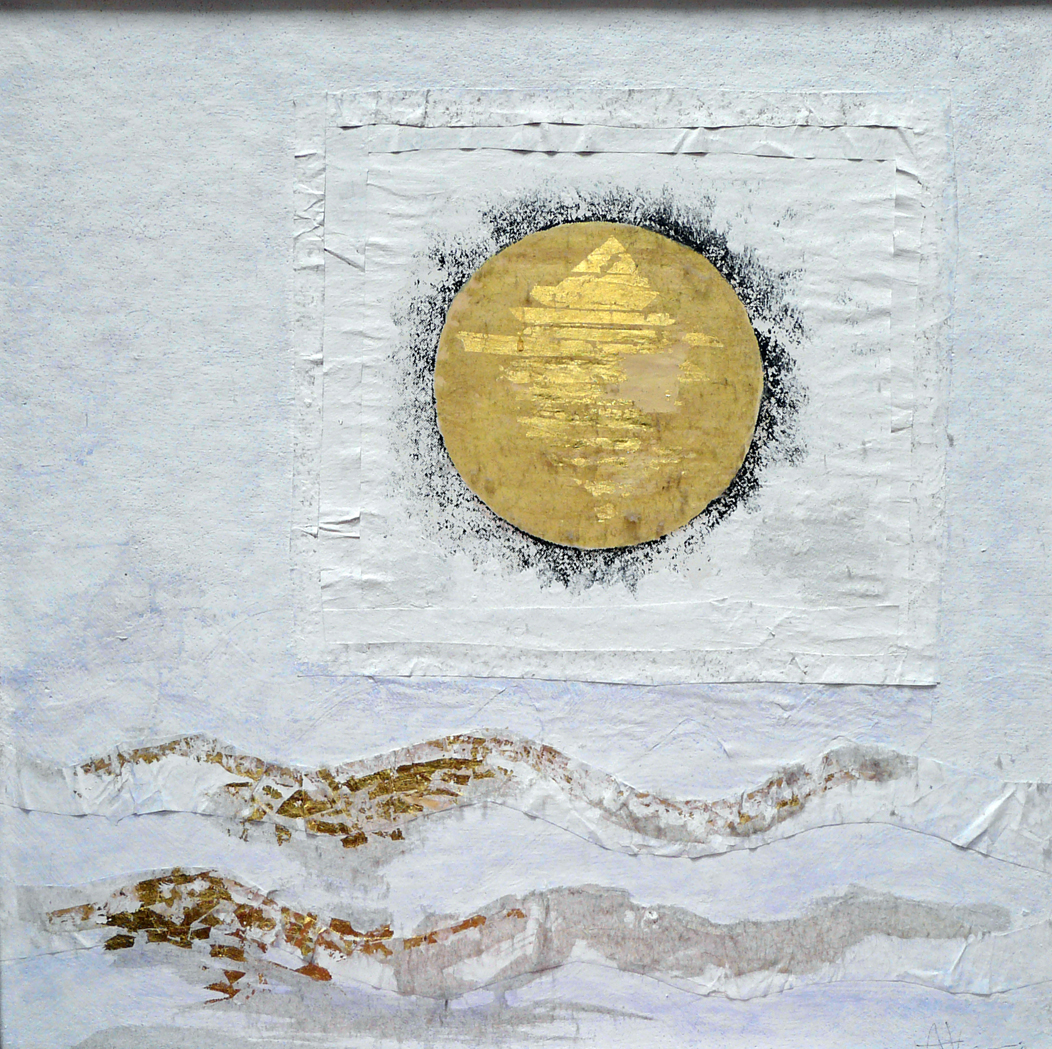
I was born just before a full moon. There are many theories, physical, philosophical and astronomical, about the effects of waxing and waning moon phases on nature, among them how being born at a certain moon phase might shape the life purpose of a personality, pushed towards creative completion or creative release. True or not, in my experience, I always feel enchanted by the energy around a full moon, like today. Below a collage of mine.
Re: the full moon, a previously shared a vivid fable, written decades ago, ‘The Mysterious Object.’
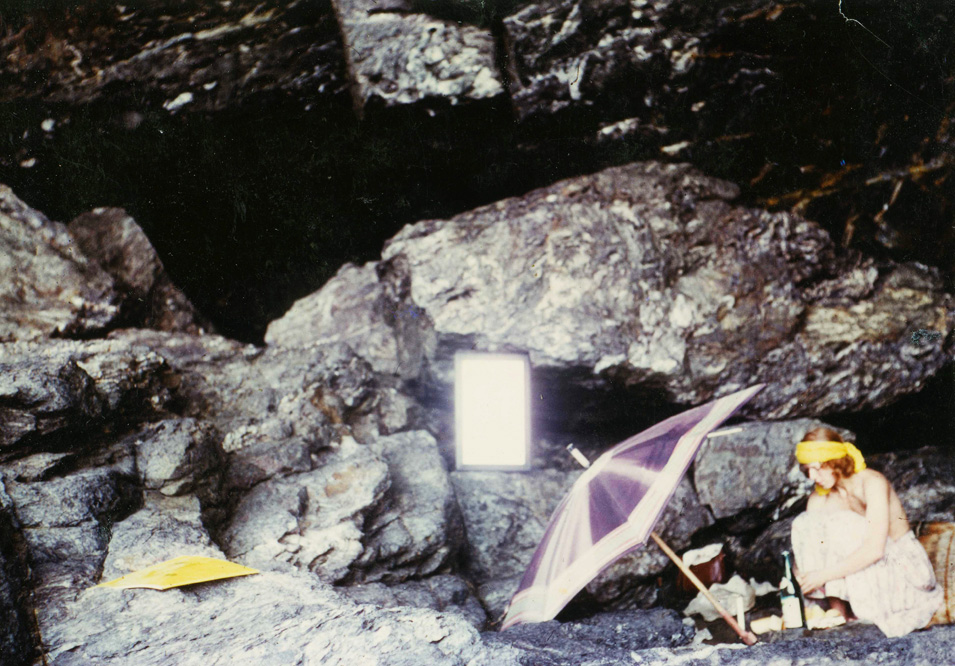
And related … my poem ‘Sleepless Sun,’ https://courseofmirrors.com/poems/ … is about the relationship between sun and moon. This was during the 1970s, while working in Eilat, Israel, as stills photographer.
I feel melancholic this week. Another friend has died. The number of relatives & friends that have journeyed on towards during my life-time has reached 40 … which makes me feel ancient.
And yet, life flows on and demands my engagement with it. In addition to the full moon today, I’m enchanted by familiar friends having returned to my garden, a family of Blackbirds, and Robins. They know they’ll get daily treats.
Mystical texts and phrases can annoy the rational mind, since they hardly ever get to the point or, indeed, contradict themselves. Still, at rare, often fleeting moments, sometimes in nature, a vein of light can reveal a profound truth, even in an overused mystical quote. Or, if one finds the occasional balance between the outer and inner reality, a sudden awe may unfold in consciousness and surprise.
‘Some’ scientifically minded folks, fewer these days, tend to scoff at mysticism with its vague hints and speculations as a waste of time, or look down on the fools of this world who suffer from subjective illusions. And yet, the novel feelings emerging from direct numinous experiences greatly expand the consciousness of ‘The One.’ I guess firmly set rational minds shy away from numinous personal experiences that might rattle their worldview.
The latter may shake their heads at some baffling mystical musings. I re-found this write-up on the Kaif System among many papers heaped up in corners of my home. It was shared by Morag Murray, born in Scotland, who lived and travelled in Central Asia, Tibet, India and the Far East. Her autobiography, ‘My Khyber Marriage,’ 1934, features her marriage to an Afghan chieftain. She is also known as Saira Elizabeth Luiza Shah, mother of Idries Shah.
So here goes … The Kaif System
Kaif is the effect a person, idea, event, object, etc., has upon one. But it is distinct from aesthetic pleasure or any familiarly labelled experience.
When an experience which was trivial or routine gives one a sense of uplift – this may be Kaif. Repeated experiences yielding pleasure or attractive sensations do not have Kaif.
Eating, drinking, dancing, meeting people, visiting, travel, reading, seeing, feeling, hearing, thinking – may have Kaif.
The term for something which has Kaif is Kaifdar – ‘Kaif holding.’
A person who can provoke the sensation of Kaif in an individual or a number of people is called a Kaiyyad (Rhymes with ‘I laugh.’) The instructor in Kaif is called the Sahib el-Kaif (Kaifmaster.) Also used is the term Kaifiat – which means something like ‘Howness.’
The Kaifmaster Barik Ali said: ‘Kaif is the determining ingredient in an enjoyment. If it is not there, true enjoyment is not there. If it is not there, people may divert themselves with happiness – this is not Kaifiat.
The Kaifmaster Ankabut said: ‘Kaif is imparted into a thing. It may be imparted by anyone or anything. When it leaves only the shell is left. People eat shells when they cannot get nuts.’
The Kaifshinas is the Kaif-knower. He can appreciate Kaif (Rhymes with Life.) He may not be able to induce it. His house may be untidy. But it will be full of Kaif.
Kaifju means a Seeker of Kaif. He starts by seeing other people appreciate Kaif, and tries to find it wherever it manifests itself.
Kaif is used either as an indulgence on its own, or in order to provoke higher consciousness, known as ‘the secrets’ (Asrar.)
Kaif may be found in any community, at any time, under any circumstances. It is not bound by language, history, geography.
Certain professions are held to be Kaifdar. They include those of chief of state, builder, artizan, poet and designers of all kinds. Few professions are bereft of Kaif. Certain places are more difficult for Kaifshinasi.
The very term Kaif has become cheapened, so that people use it to mean ‘This is something I like’, or ‘I enjoy that,’ or ‘He has presence,’ or ‘This is satisfying, attractive, stimulating.’ You must be aware of yourself using this term, and also of those who use it, so that the coin may not be debased.
Kaif is defeated very easily. It is defeated in its attempted manifestations by false ideas, by self-esteem, by hypocrisy of any kind
There is a danger in Kaif. People who perceive it and do not respect or honour those who have Kaif, or respect Kaifdar situations, places, and so on, become ‘inverted to themselves.’ This is a state in which a person’s bad characteristics become stronger, and where his self-control becomes less, and where his hidden unpleasantnesses undermine his very being.
Kaif is in shape and in form, as well as in shapelessness and formlessness. It lies dormant in places and among people where it is not perceived for a long time. Then only the introduction of a conscious Kaifshinas will activate it again in that community so that it may take its place to help mankind.
Kaif is not confined to humanity, but can be perceived by all living organisms.
Something which is aesthetically adequate or emotionally stimulating can at the same time be devoid of Kaif.
Certain exercises, which vary in accordance with the person, place and the general situation of his community, enhance Kaifshinasi.
Kaifmasters subject their students to experiences, related incidents, objects and other matter which have Kaif, or can provoke it.
Kaif has a ‘moment,’ called the Dumm-i-Kaif (Breathspan of Kaif) during which it may be, as it were, ‘inhaled’. The Kaifshinas strengthens and makes permanent his perception of it by exercises which apply to this moment.
In religious, musical and even social ceremonials, a Kaifdar is present. One of his activities is to ‘infuse’ Kaif into the proceedings at a time when uninformed onlookers might assume that the people are doing nothing, or else are engaged in an activity (such as a recitation) which is only the vehicle for the application of the Kaif.
Special Kaif-chambers exist, in which an individual with the correct preparation may concentrate and accumulate Kaif, and study it in its manifestations.
In degenerated usage, such Kaif-chambers continue to be used, sometimes as devotional buildings. More often they are thought to be tombs fallen into ruin because there was no apparent use for them, or seem to have other applications, such as kitchens or bath-houses.
There is a well-known watchword: Innna el-Kaif, hadha el Kaif (Assuredly the Kaif is a Sword.) Hence the word SWORD is often used as password and even as a synonym of the working of Kaif.
Objects charged with a certain portion of Kaif are given, lent and carried by many people who know. These, like Kaif-chambers, are generally disguised as something functional, or else are ordinary objects which have been endowed with Kaif. The vulgar often confuse them with talismans or charms.
The saying: ‘Kaif-alaik!’ is a sort of blessing. It means: ‘May you have Kaif.’
In Turkey the Kaif-Agha was the individual entrusted with the royal Kaif. He was a Kaifdar, and generally assigned a court function as well.
Because its smokers have appropriated the term Kaif to describe (inaccurately) their sensations, Hashish has become known as Keef, a mispronunciation of Kaif. There is no real connexion, of course.
* * *
I tend to encapsulate instances of Kaif in photography or haiku.
You may have another term for Kaif, and ways to share inspiring experiences.
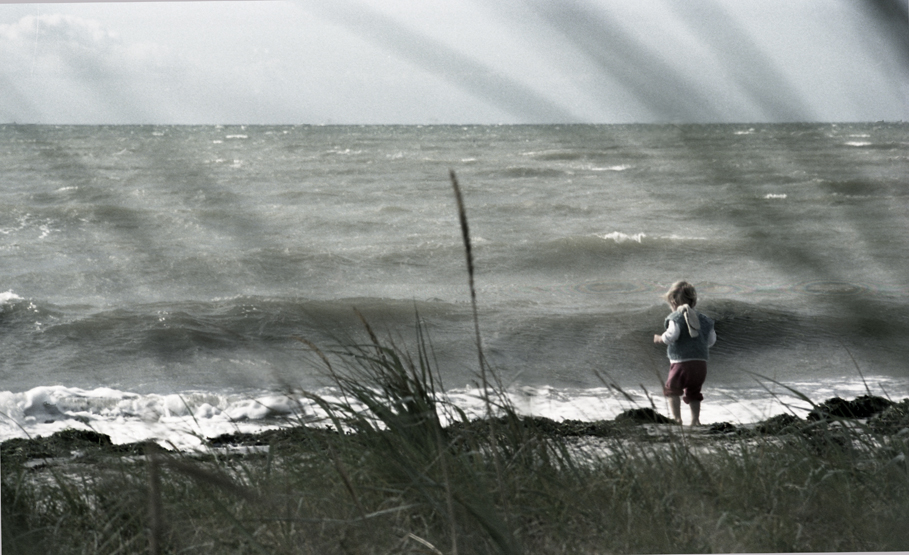
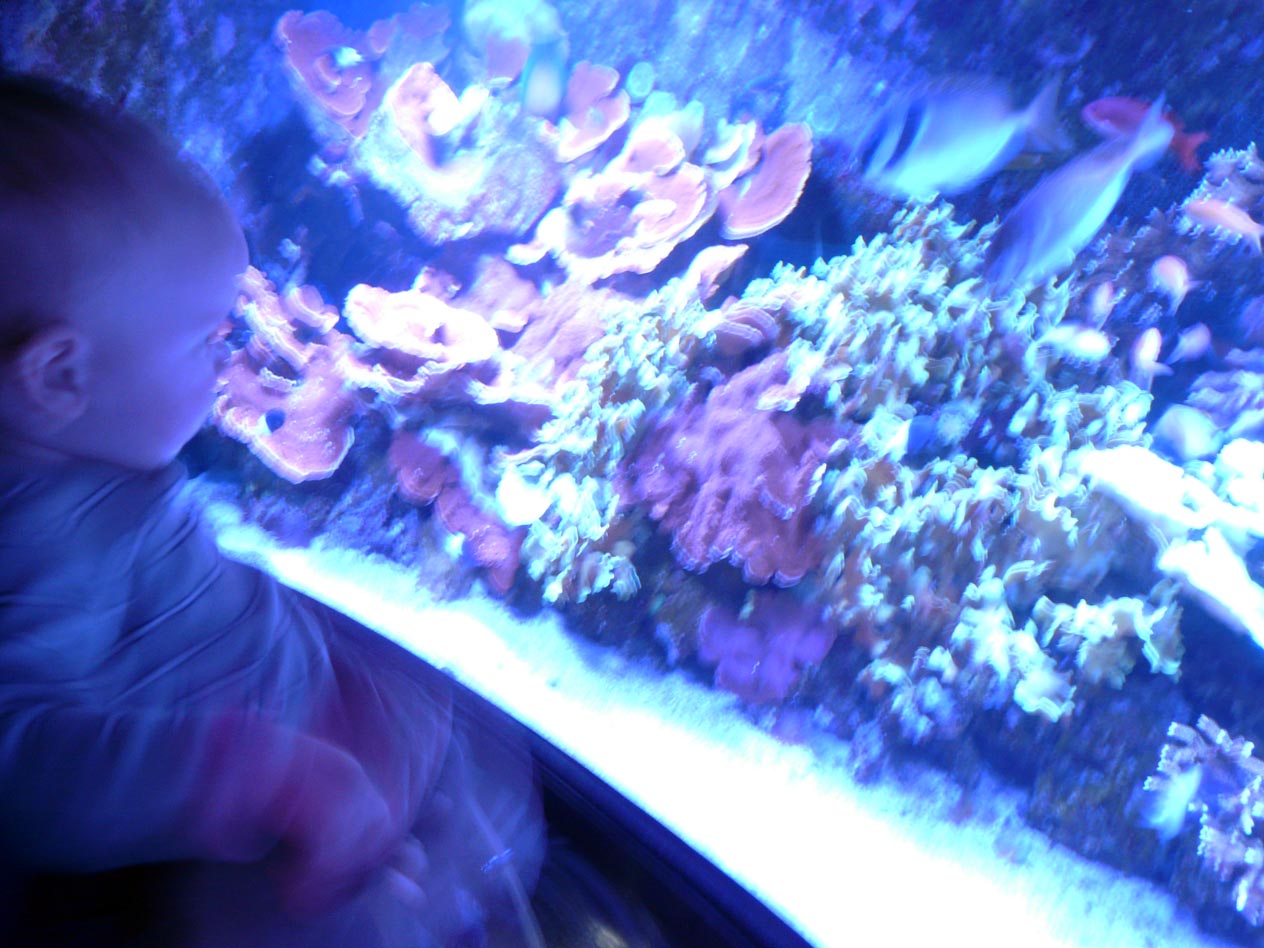
The poem was inspired during a recent visit to the London Aquarium with my ten months old grandson and his parents. The child gazed in wonder at the graceful ethereal dance of fish in their water world, a hand span from his face. His astonishment was catching.
I’m convinced we all have intuitive access to intimate knowledge of life throughout all stages of evolution, sensed with eyes open or closed, though often masked by the imposing literal forms of perception our education gives greater value to.
Through genes and the endowment of a universal mind, children easily embrace complex visionary experiences and insights, like catching the essence and poetry of things around them. That is, if their imagination is encouraged. Later on, it may take some rope-walking skills to bring the inner presence that unites us to the divisive outer world.
A lovely garden requires work, even if it’s only keeping constant growth in check. My soul garden is framed by many hedges and plenty of bird-loving ivory that need annual trimming to prevent a jungle. Trouble is – I’m not my strong young self anymore. I used to shift heavy objects and wield electric tools on high ladders. My ardent spirit still feels up to such tasks, but these days I’d be foolish not to accept the limits of my body, which I call ‘ little palace’ and give thanks to every day.
I berate myself, ‘stop acting like super woman,’ … easier said than done.
Other skills are needed, like how to find trustworthy helpers with intelligence and imagination, who respect a vulnerable person’s need? I employ a reliable trades team for the once a year hedge cutting, but finding someone for the occasional help is a challenge.
I asked my local council once, if they can recommend a person to do the occasional gardening. They sent me an octogenarian, wobbling precariously on a high ladder, with his 12 year old nephew to help. They did a terrible job at a price way above any professional landscape firm.
Opportunists are plenty, though my local repair café, staffed by volunteers, proves to me there are generous people out there, with amazing skills, offering to fix things. I dearly bless them.
Finding genuine help is something that concerns many of us, at one time or another, women and men. The world is not geared for the redundant, or the in any way disadvantaged.
Just wondering, dear reader, if you rely on support for strenuous manual jobs, if you’re not swimming in money, how do you deal with getting practical help?
I had several themes in mind to write about, but a vivid dream last night brought life to 2 special friends in my heart.
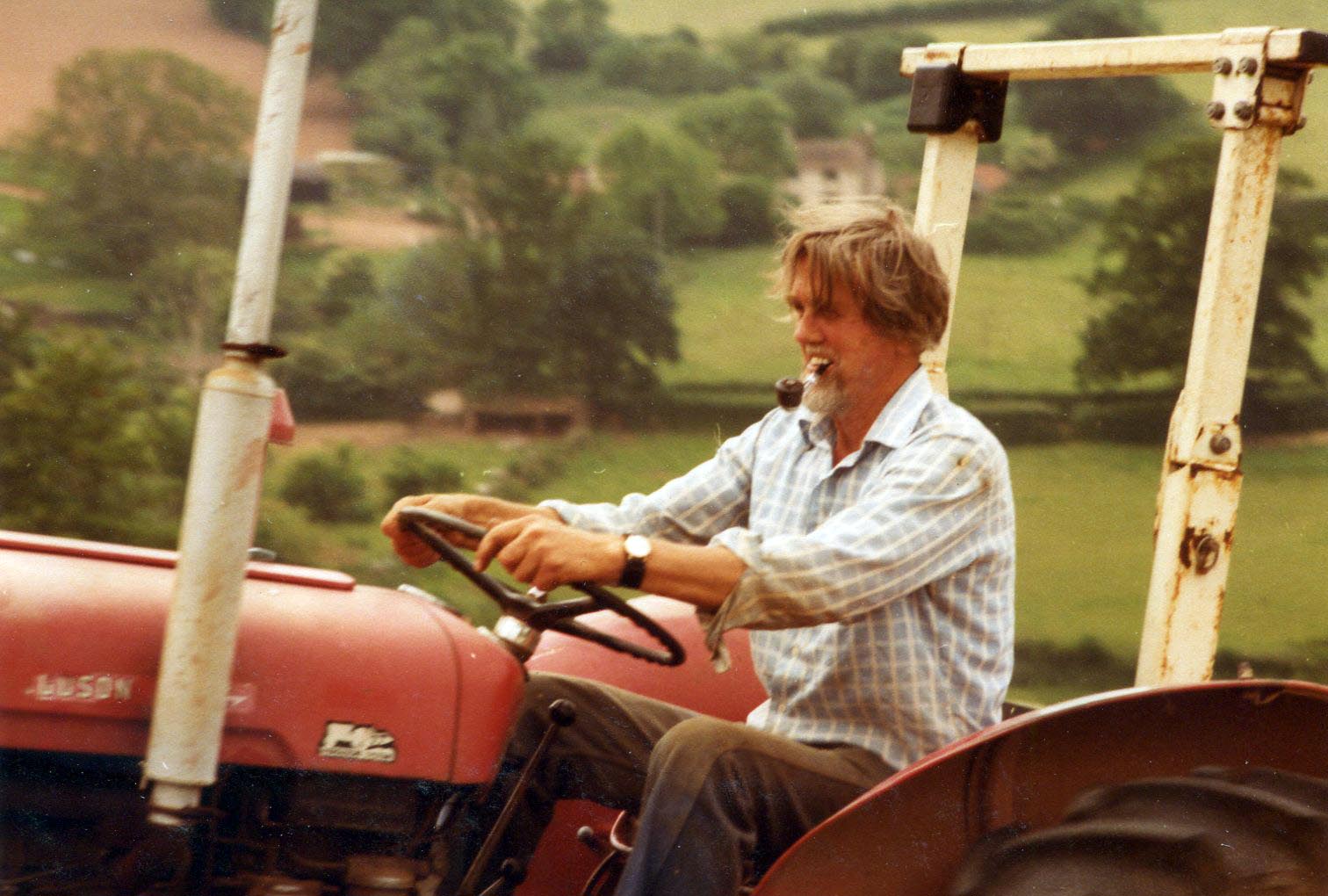
Hope and Franz were our farming neighbours in Somerset, in a hamlet where our little one was born in a 17th century cottage we rented. This hamlet had only five properties. We arrived insisting on a home birth for our son. Sensational, I still marvel how we made it happen, arguing that home births were very normal in Holland 🙂 Well it happened, in mid winter. Through frozen roads, the police brought in the midwife, Sister Heney, to help us with, by then, a rare home delivery, before her retirement. She called him her sow-baby and sent him birthday cards until she died.
Our little one had five exceptional years of country life, and everyone in the hamlet adored him. Hope and Franz were most loving, and special.
Franz had arrived on the farm as German prisoner of war. Hope fell in love with him. How could she not 🙂
For some reason they could not have children, so they became second parents to our son. Hope used to have dreams about Tibet, a culture I feel strongly connected to. Her dream was to become a journalist, impossible given her responsibilities and circumstances, yet she had an incredibly inquisitive mind.
Life is a labyrinth. Things happen that have no explanation other than grace.
I remember Hope and Franz fondly, and so does my son.
Imagine your brain functions like a psychic radio, tuned to a self-reflective universal mind, the field of consciousness of a cosmic being that gathers, transmits and receives information (aka Noosphere in Pierre Teilhard de Chardin’s sense, or the Akasha in Indian cosmology.)
We interact with this field. Some thought waves are fuzzy, others strong. We exchange thoughts woven from strands of routine interests, be they based on curiosity, fear, obsession, faith, doubt, novel ideas, myths, facts, dreams, wisdom … Let’s assume the way our brain radio communicates with this field shapes the smaller sphere of our individual mind.
I depict my mind as an island in a tumultuous sea, operated by an idiosyncratic stranded pirate, me.
On rough weather days, when the radio emits white noise, my pirate feels moody, lacks motivation to tackle survival chores, and vacantly skims across the crest of waves spanning towards the horizon. On other days the pirate is energised, be it by rage about world events washed up at the shore of the island, or the sun’s beauty shimmering back from the moon. On occasions the pirate is inspired to dive under the surface, where reflections are held in silence and darkness. Dream-stations may reveal the whereabouts of treasures deep under. There is a reoccurring rhythm to this process. In recent years my pirate has developed a bizarre humour, and tends to favour the dream stations, especially when the quest for coherence and meaning among the debris washed up at the shore seems a tad too tedious.
Maybe it’s the backward arc of old age, but memories pop up suddenly, before and after sleep, succinct impressions, lucid images of past and future events, faces, gestures, objects, the unspoken, and concepts too … associations are sought. A revision of the pirate’s life narrative is feeding surreal dreams. Intuitive hunches chase relevance. How do these images of people, landscapes, houses, objects and concepts, familiar and unfamiliar, relate to now?
Could the restless question be trivial as well as dangerous?
Calm returns when my pirate observes plant life and the movement of animals, then a wonderful symbiotic symphony resonates from cells within the body. Intimate knowledge arises, which also subtly confirms that my pirate has this intimate sense about people, too, and, well, just about anything. I’m hesitant to give weight to this phenomenon, since those who share deep knowledge without collectively approved evidence were and are often crucified. I don’t know about you, my readers, but with some controversial subjects my pirate is a little reticent.
It can’t be denied that our conditioned individual mind has access to primal clusters of knowledge, as well as intuiting visions of the future? What do we do with this information? It’s frustrating to realise that we have limited control over what we attract and reflect. A higher intelligence is at work, perpetuating divisions while consciousness expands.
The universal mind and its network of individual minds remains a complex mystery.
we all use thoughts which
once animated travel
to destinations
distance seems irrelevant
a wide open mind
may suffer indigestion
mirroring too much
spook actions from far away
thoughts are absorbed or bounce back
harmonise or clash
our energy in motion
signals at high speed
intention matters
‘Thoughts are beings that generate … One thought of kindness, gathers a thousand beings of love and kindness around one.’ Hazrat Inayat Khan
We endow obvious practical functions to clothes tools, furniture and any number of items we use daily and which therefore become intimates, like I have a favourite knife, cup, spoon, breakfast bowl and so on. I remember a T-shirt, apricot-coloured, with the iconic Snoopy character on it. Over the years the fabric of the shirt faded and softened beautifully. Finally I was wearing it in bed, for comfort, until, after various fixes, it fell apart. A sad day!
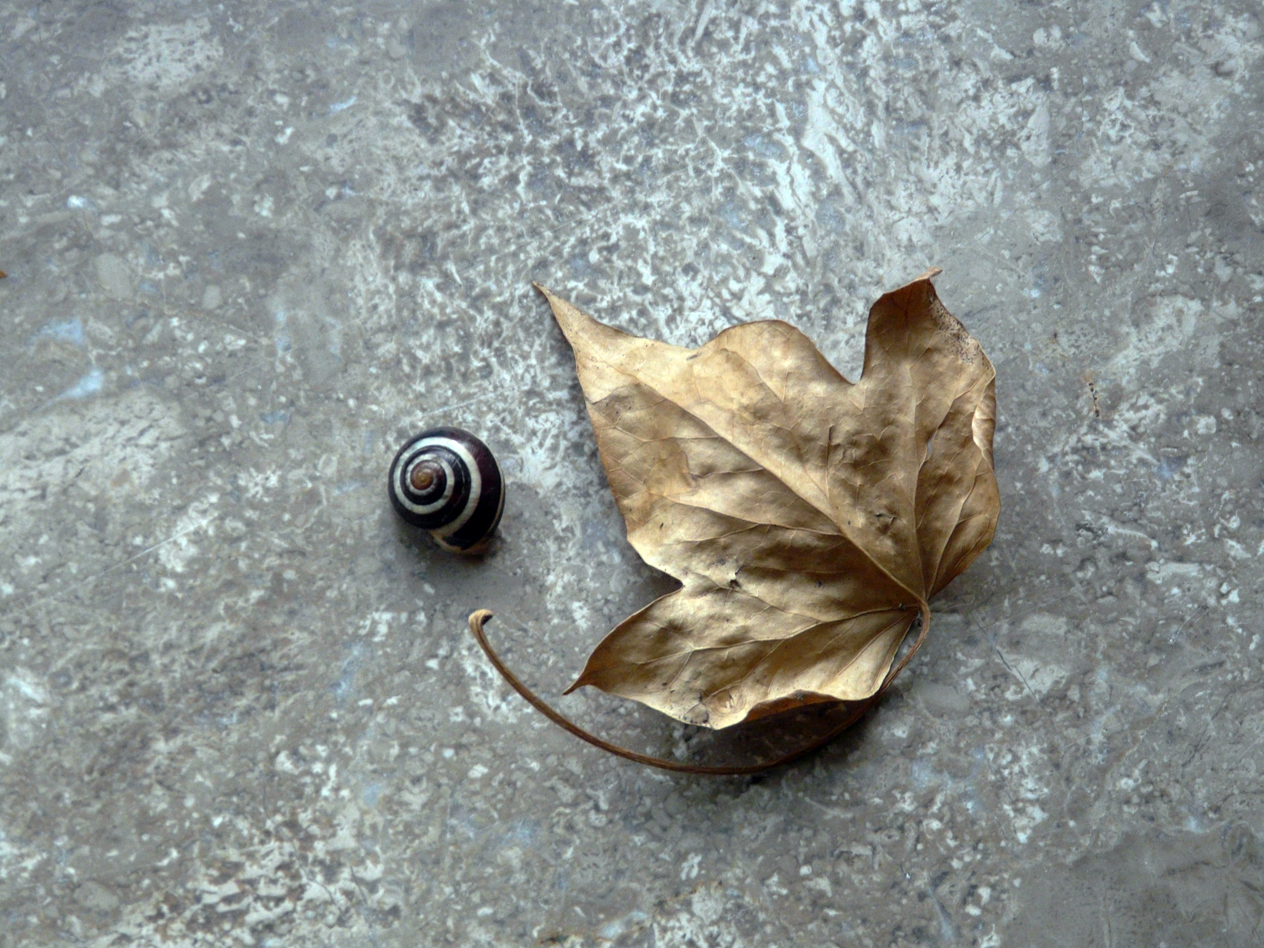
We also endow objects with symbolic, creative, guiding, protective and blessing potencies. Beyond reason – be it by a kind of enchantment – we grant them magical qualities through sustained affection. For me these are stones, shells, driftwood, feathers, or small ornaments given to me by friends.
Starting as children, we’ll adopt what Donald Winnicott called transitional objects, meant to restore the lost closeness to mother. Also early on we may express interests that foreshadow an inborn zeal. So beyond toys, teddy bears, blanket, pets, books, and so on, we bond with anything that fascinates us, initiating a passion that could encapsulate the myth of our lives. In my case this became the bridging of divides. My first novel started with the image of a bridge.
I wrote elsewhere … a constant sense of oneness is not what evolution is about. In a time and space structured cosmos we cannot cage harmony. Reality is the result of contradiction.
Objects and interests we seek or meet, may relate to a particular element, earth, water, fire, air, aether. Quite often our vocational and professional activities relate to an element. Also, one or the other of our senses may take hold of us, the love of light, shapes and colours, a fondness of sound, touch, smell, taste, or a love of metaphysics. Attachments drive our interests throughout life.
Strong affinity with an element may bring the challenge of dealing with another element we feel less in resonance with. The psyche plays at balancing extremes. For example, my astrological birth chart confirms a predominance of fire and air signs, fast energies, fierce, intense; even obsessional. I can still hear my mother saying, with a touch of exhaustion, ‘You’ve got a vivid imagination.’ My authority defying associations caused the odd trouble with teachers. In compensation I had need of grounding, befriending earth, literally digging and planting, which taught me patience. And I’m calmed by the vicinity of water. My childhood was spent around lakes, rivers and ponds.
We hold our loved ones and friends dear. We give significance to certain animals, trees, plants, prominent landmarks. We cherish gadgets, periods of history, art styles, places, habitual rituals and ideas. Each bonding adds to the creation of a strong net. To lose a strand precious to us, requires a child-like faith that our relational energy net can be mended and re-aligned to our guiding light. This net is all about relationships, inner and outer, informing the purpose of our extended self.
Over recent years, efforts to dis-endow some of my attachments, among them endless folders with notes on projects and visions I’ve slim chances to achieve in this round, left me melancholic, but through the more malleable net sneaked fresh insights and mysteries. It also helped me to focus on writing my novels. ‘Course of Mirrors’ will have its sequel, ‘Shapers,’ published next spring.
To lighten up these dark times, a few lines from Beannacht – Blessing – by J. O’Donohue
… May the nourishment of the earth be yours, may the clarity of light be yours, may the fluency of the ocean be yours, may the protection of the ancestors be yours.
And so may a slow wind work these words of love around you, an invisible cloak to mind your life.
Day and night we receive and tie up new thoughts, mostly subliminal. By keeping track of this neuron dance we find fresh associations that expand the architecture of our imagination. Sudden insights lift our spirit. Frequently practical innovations arrive, novel ways of doing things. But with thoughts adrift, we often fail to be present to our bodies, and this neuron dance turns mechanical. We may be hampered by depression, presently a global dis-ease, but life perks up a little when we listen to our body.
‘Remember me,’ it implores. ‘Love me, give me attention.’
Stretching limbs calms the stress in fascia tissues and muscles, stirs the senses, and deepens breathing. Food tastes better, small things delight, movement gives pleasure.
‘We are souls dressed up in sacred biochemical garments and our bodies are the instruments through which our souls play their music.’ … Einstein
The unconscious collective psyche continuously churns up vital signals through the body, but has long been denigrated by wrong-footed ideologies … the greatest crime against humanity, since the neglect of nature’s voice led to the abuse that threatens the balance of life on this planet, and our health.
Nature – the wild, matter, psyche breath, being, anima, the feminine principle – contains all life. The term has acquired many slants of meaning during previous centuries. We have now established frames through which nature is perceived … the scientific, economic, political, apocalyptic, holistic, visionary, philosophical, romantic, and the spiritual frame, for example. Each outlook influences the relationship we have with nature, as a person, group or nation.
Since all human innovations are inspired by nature, every manmade thing is natural, yet by lengthening the duration-span of too many products, nature’s cyclic process of decay is disrupted, often with dire consequences. It’s like stuffing ourselves with food the body can neither absorb nor digest. Controlling nature’s rhythm does not work. The best we can attempt is to seek rapport, fall into step, attune and harmonise with this dance we are part of.
Quite likely all the varied frames which determine our relationship with nature were formed by the wish to make the unconscious force of the wild psyche more bearable.
We demand nature’s protection. This includes humans. Do the ecological villains among us also deserve protection? In a psycho-therapeutic practice this would be considered as the expansion of consciousness through befriending and owning the shadow. I forever wish this map of knowledge was introduced to the educational curriculum.
First call is the body. If the body’s messages are fully received (giving varied frames their due) and understood (in a deep loving sense,) the messages are always essentially true. Only humans manipulate and deceive, by ignoring and belittling nature’s raw truths. The planet suffers the same neglect. Our best efforts at deep listening will always be partial.
I count on the constant minority that grasps a wide spectrum of meaning in relation to every rift that endangers our world. While this minority tries to uphold a wider view, as a small collective it is not geared for action, knowing well that whatever succeeds in being legally determined cannot please all, but usually intensifies disagreements, especially in cultures where emotions and thoughts are censored for political ends.
One could say the will to action is diluted by the wider view. But there exists a subtler use of the will, like rehearsing positive outcomes, which requires imagination. Efforts of this subtle will are hardly visible; but they no less influence and create our reality. This subtle will is based on trusting the intelligence of nature, of soul, the One Being, the Spirit of Guidance.
A prayer/song by Hazrat Inayat Khan:
Let thy wish become my desire
Let thy will become my deed
Let thy word become my speech beloved
Let thy love become my creed
Let my plant bring forth thy flower
Let my fruit produce thy seed
Let my heart become thy lute beloved
And my body thy flute of reed
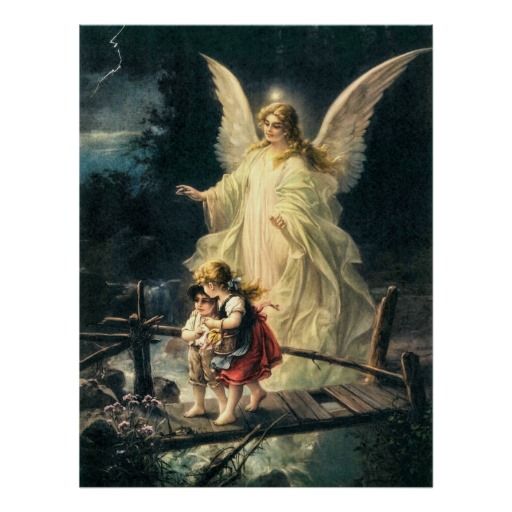
Crossing and bridging divides is the theme of my life. As a child I came to believe in a spirit that guided me, sparked by a print that hung in my paternal grandparent’s bedroom, where a guardian angel leads a girl and a boy along a rickety bridge across a ravine with rapids rushing below. The image left a deep impression, and, over the years, similar images appeared in dreams, revealing the scene’s symbolic power. Training and working as a transpersonal therapist I often helped clients to explore the complex relationship between the masculine and feminine principle (Anima and Animus) active within each individual and across the gender divide. But most useful work on the road to greater wholeness begins with listening to what the body knows, and, by implication, what the self-regulating planet tells us.
The theme of bridges plays in my novel, Course of Mirrors, and continues (in the sense of bridging time) in a sequel, Shapers, which I hope to publish this or next year.






 Course of Mirrors