Tag Archives: memory

… verwandlungen – transformations …
Bilder des Vaters – Wörter der Tochter                                                                                   A Father’s Images – A Daughter’s Words 

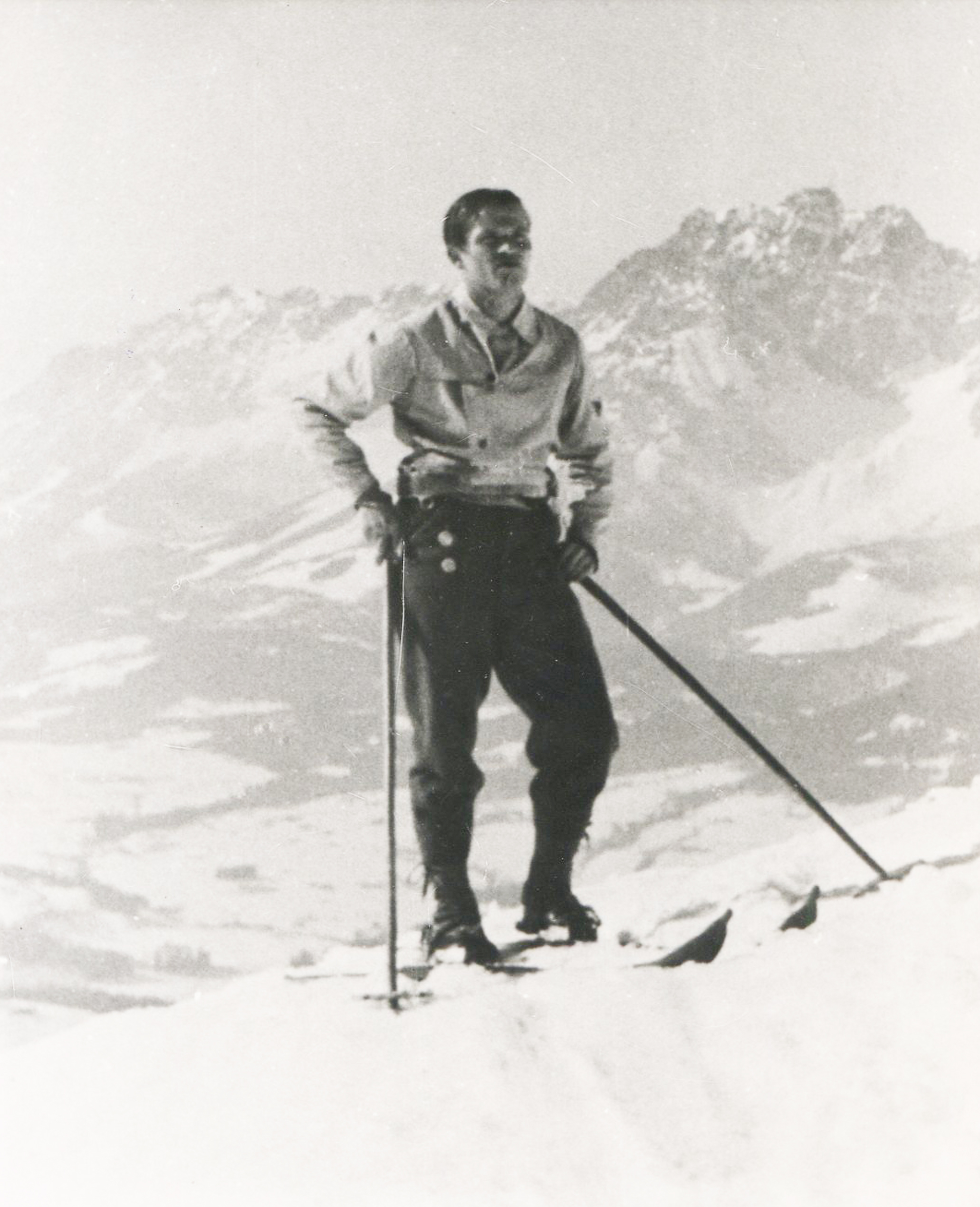
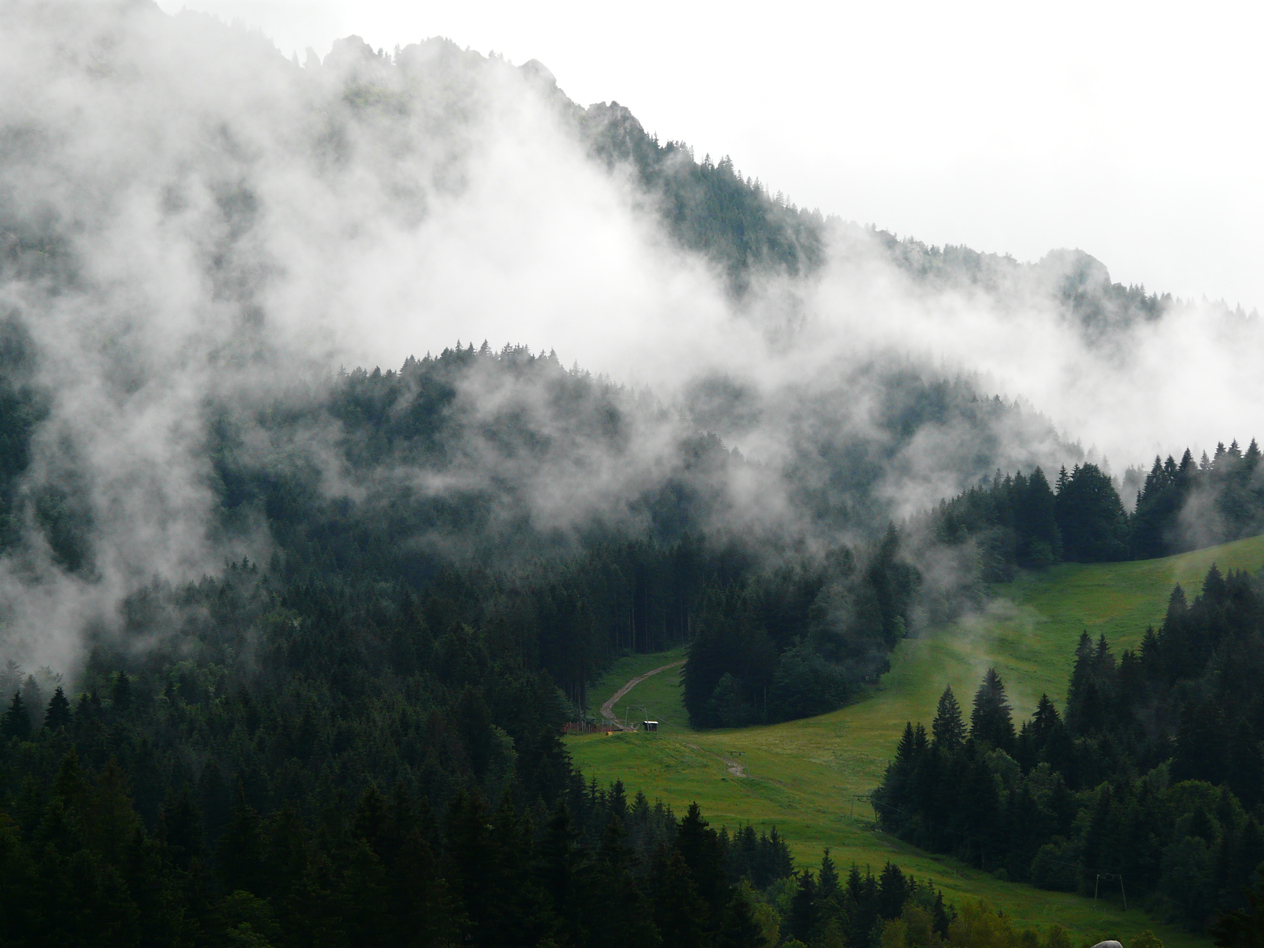
Auf dem wilden Kaiser

My father, now in his 90s, recently recovered from the shock of a fall. Brought to the fore, mortality reshuffles experiences – a mysterious process, different for everyone, young or old. Whether relationships are supportive or troubled by frustrated expectations, in the deep cavern of the psyche experiences assume fresh meaning when endings are contemplated, or happen suddenly. The unconscious speaks a surreal language.

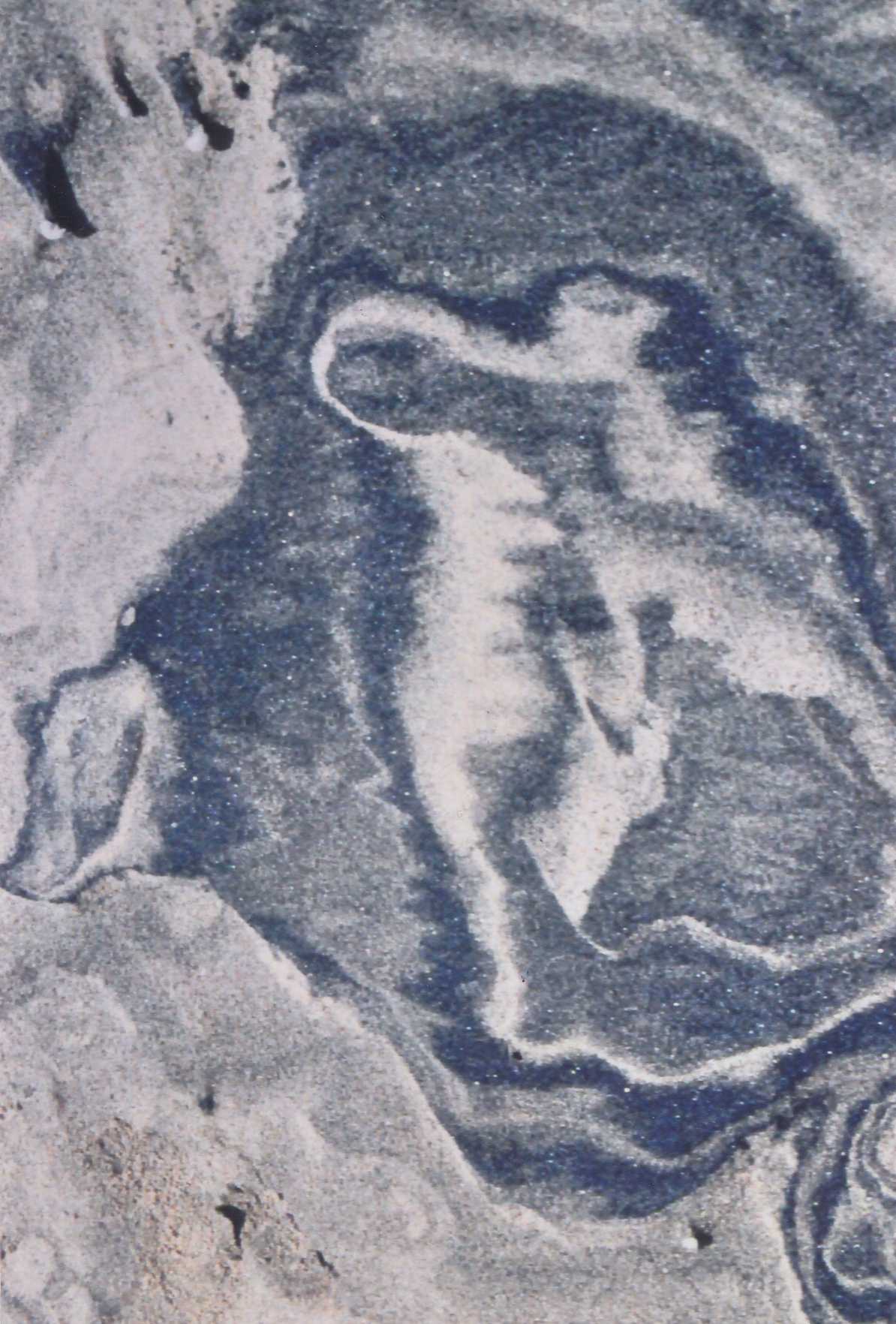
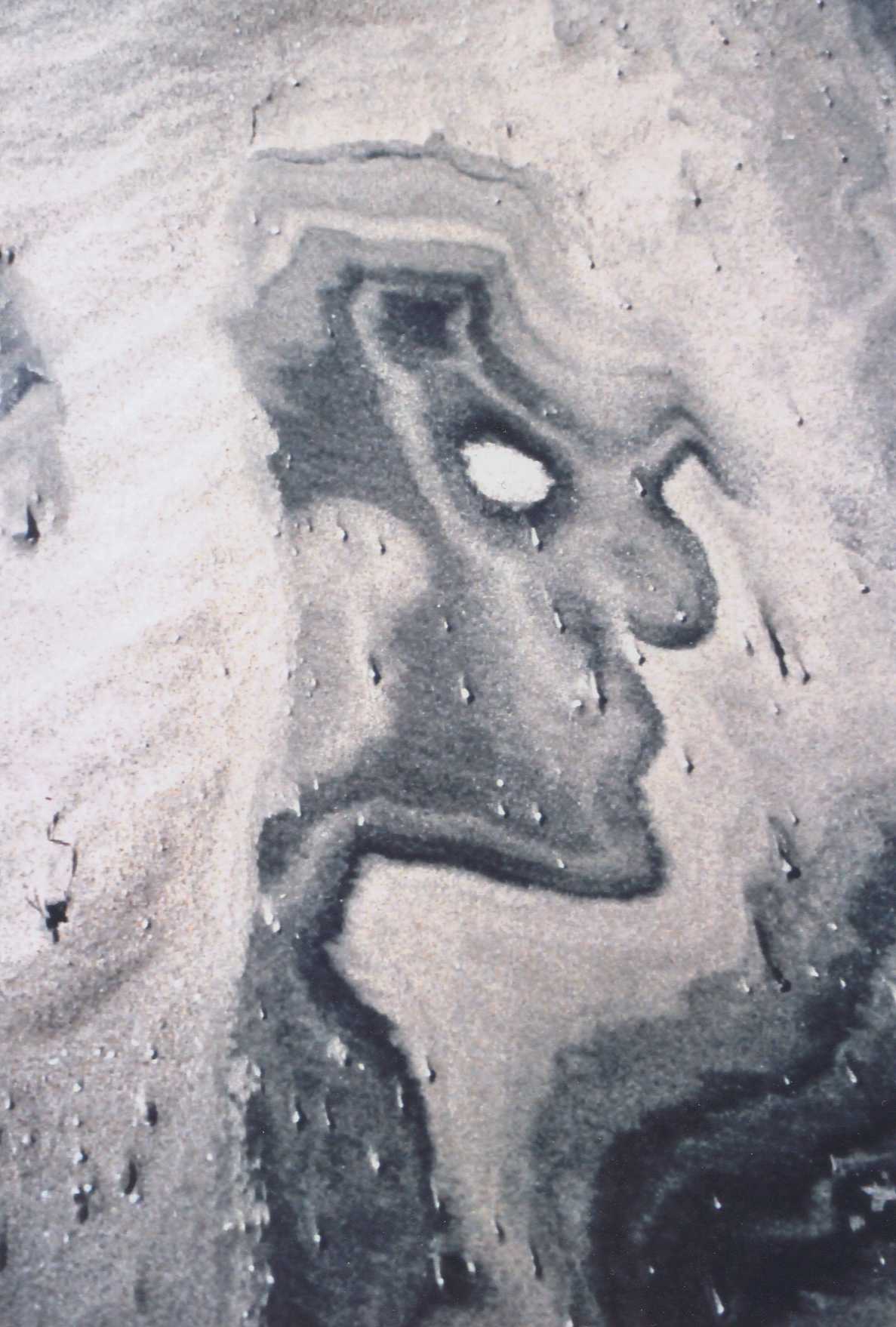
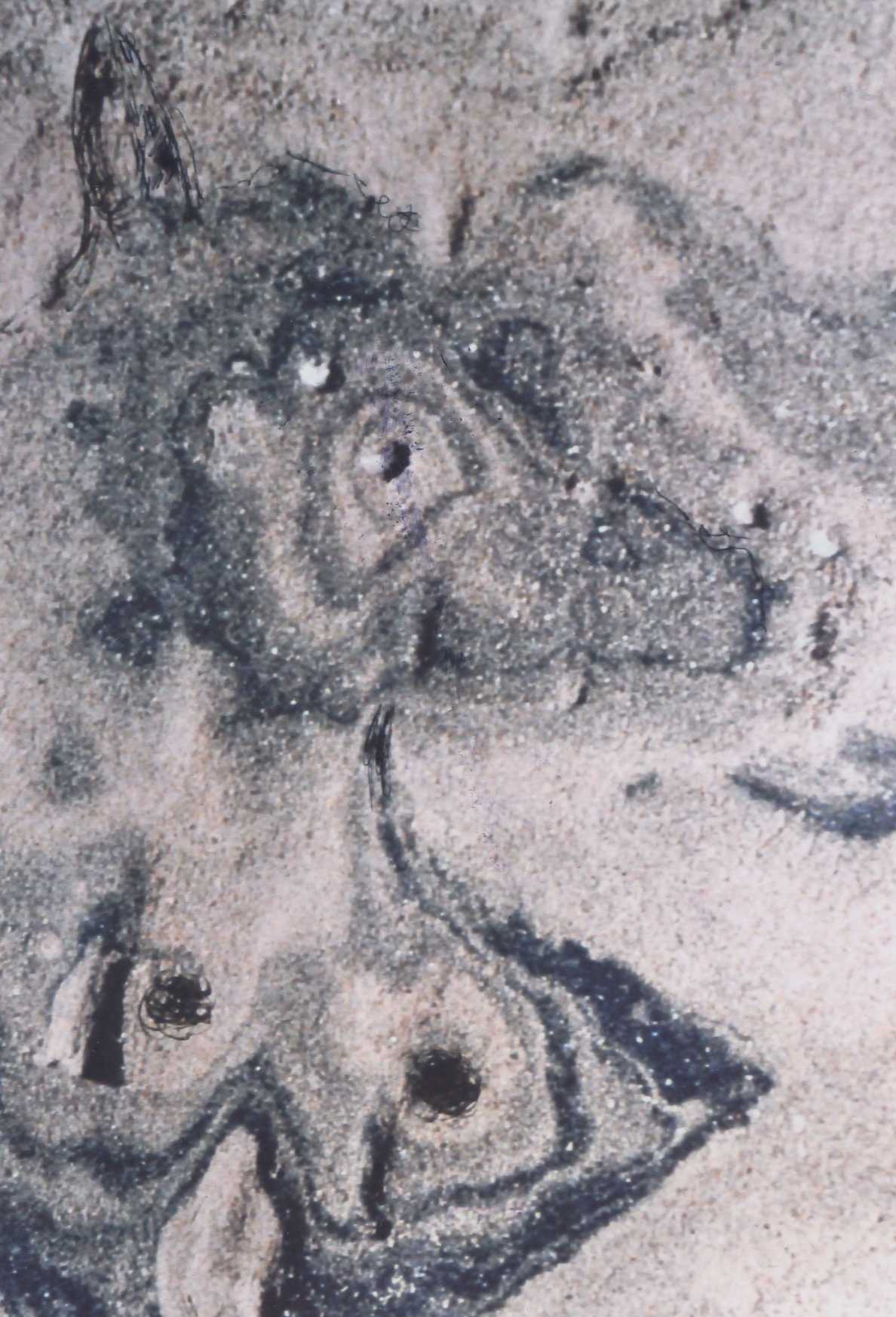
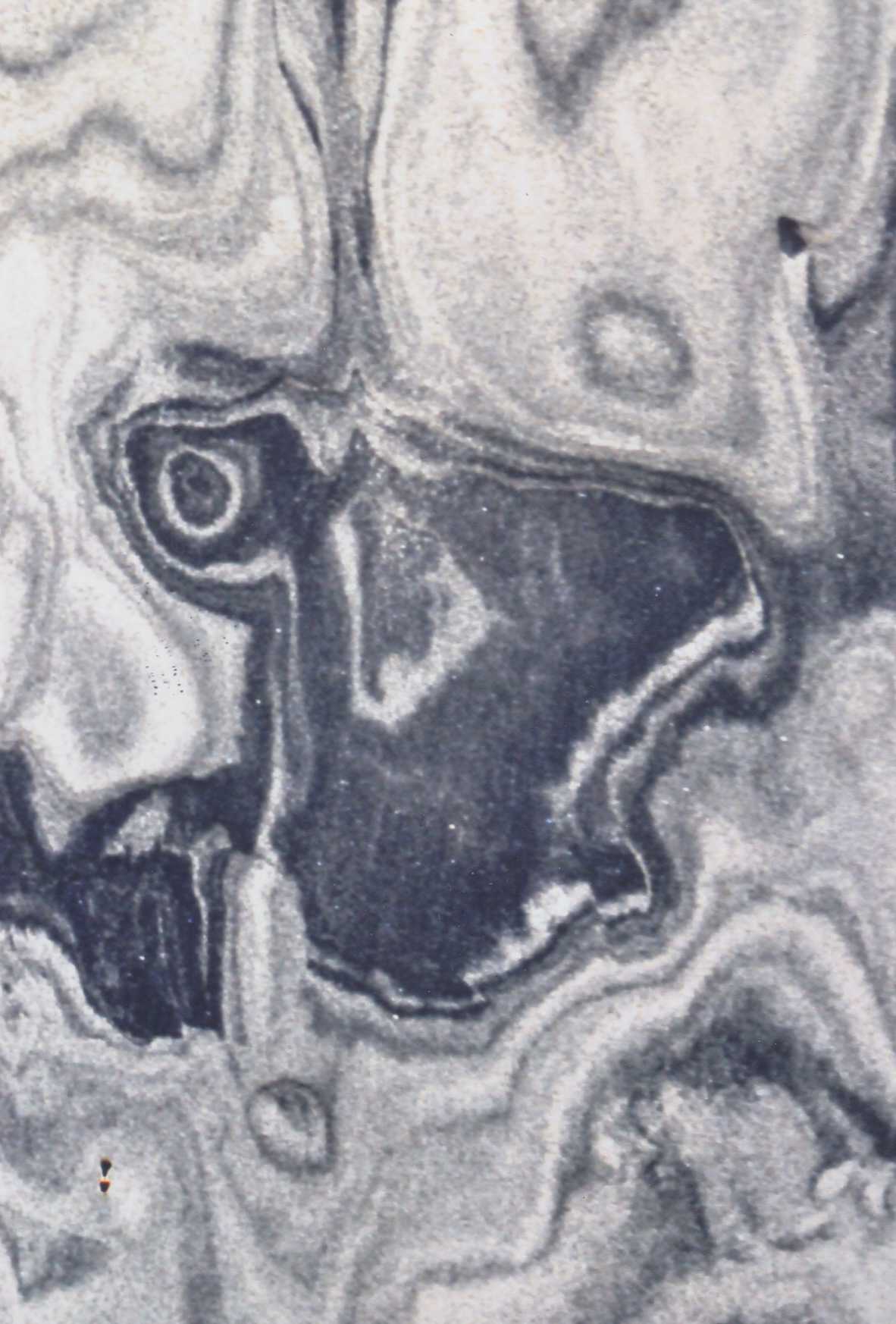
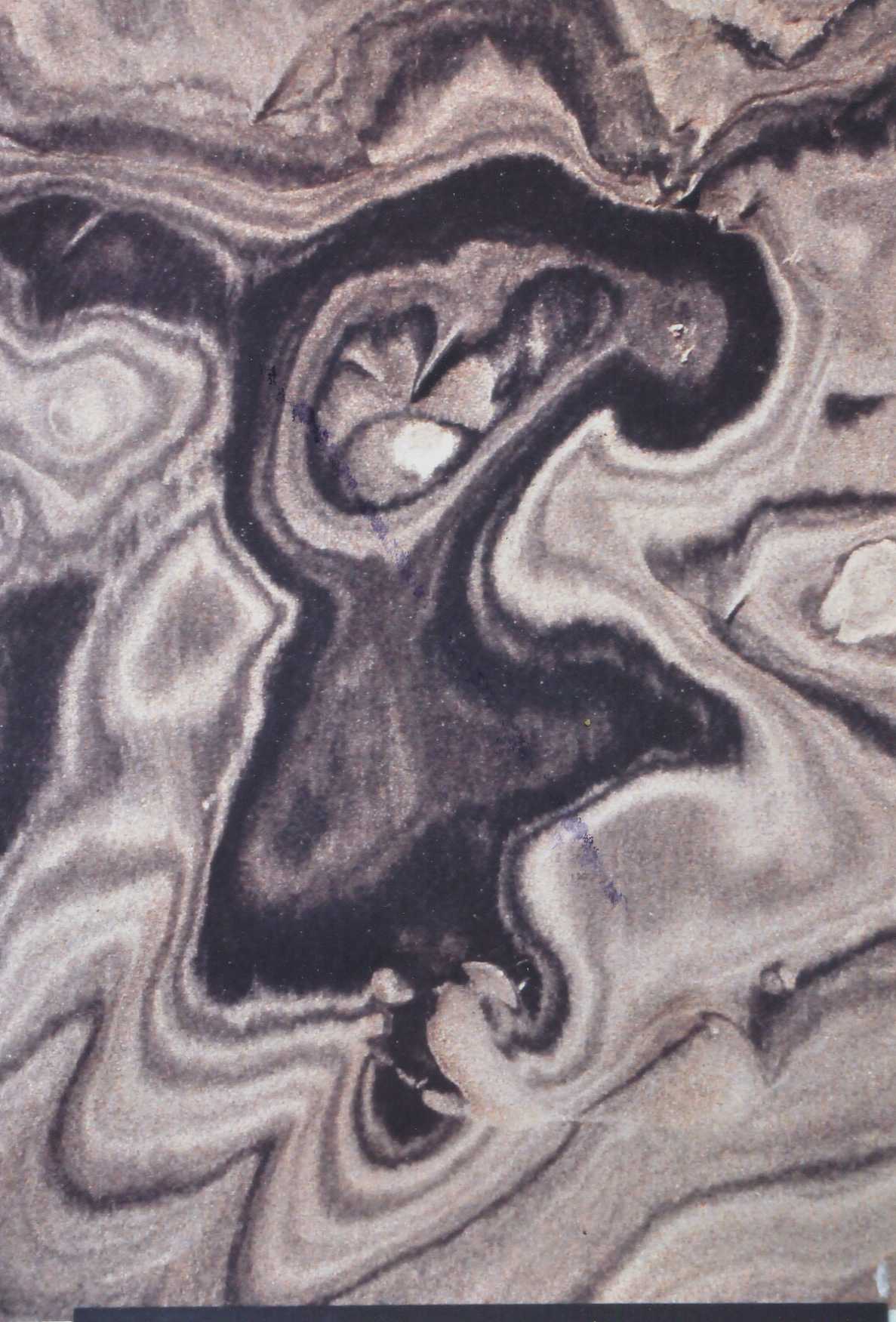
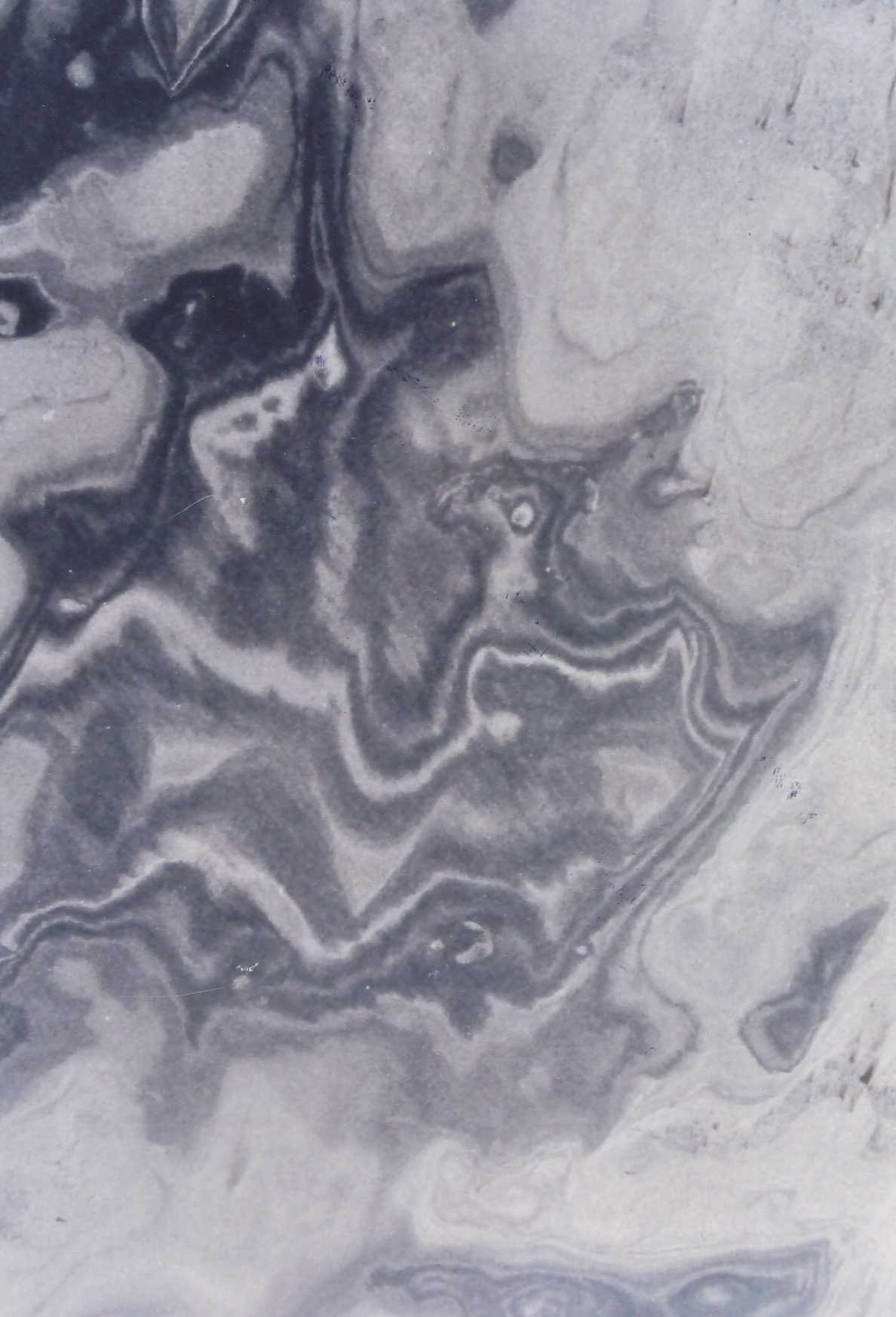
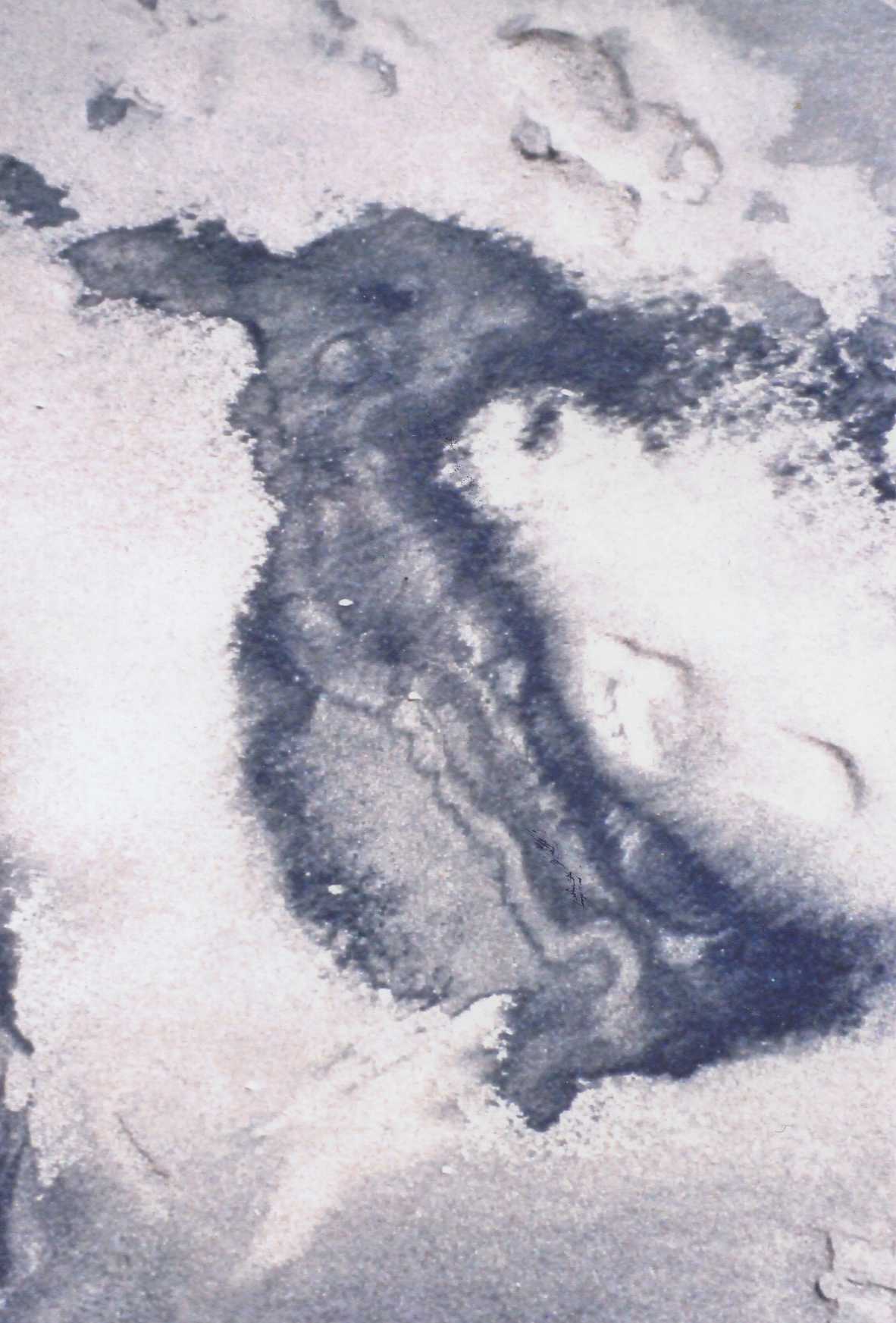
A few years ago, my father took photos of a phenomenon on the island of Fuerteventura, where, in some places, when the tides recede, the white shingle derived from bleached shells and sea creatures mingles with the black sand of volcanic rock. The bizarre sand drawings my father came upon inspired me to write short lines in German, here with English translations. The alliance of images and words surprised us both, hinting at an underlying creative connection between us that could not have been otherwise expressed.

Im Sand träumt das Angesicht der Zeit … The Face of Time Dreams in Sands

Sand - no1

1

Ich seh Dich, du siehst mich noch nicht.

Meine Stimme klingt von der Ferne

In deinem Muschelraum

Geheimnisvoll im Werden.

Manche glauben ich sei nur Sand,

Die irren sich gewaltig.

Ich bin ein Traum wie Du.


I see you – you don’t see me yet

My voice sounds from far away

In your snail chamber, secretly becoming

Some think I’m only sand

They’re mistaken

I am a dream – like you

Sand - no22

Tränen waschen mich rein von der Macht

Das war mir eine Last.

Ich will ich mich nun auflösen

Im Gesang von schönen Symphonien.


Tears cleanse me of power

Which burdened me

Now I will dissolve

In tunes of beautiful symphonies

Sand - no 3


3

Ich bin ein komischer Vogel – mit Hörnern und Brüsten

Wie Du trag ich das schweigende Anglitz der fliessenden Zeit


I am a strange bird – with horns and breasts

Like you I wear the silent face of fluid time


Sand - no 44

Die blassen Gestalten um mich wollen mich beschützen

Als ob ich zu klein bin fur die Welt – vielleicht ahnen Sie

Dass ich ein Drache werden will der die Welt erschüttert


The pale figures surrounding me mean to protect

As if I was too small for the world – maybe they suspect

That I want to become a dragon to shake the world


Sand - no 5


5

Mein kleiner Tanz ist ansteckened – bald wird der ganze Strand

Bevölkert sein mit Kindern die Hände fassen in Ringelreihen


My little dance is catching – soon the whole beach

Will fill with children who hold hands in Ring a Ring o’ Roses


Sand - no6


6

Vom Wind verwischt und verwandelt bin ich

Das restlose Gemüt einer schlafenden Seele


Blurred by the wind and transformed

I’m the restless mind of a sleeping soul


Sand - no 77

Meine Flügel sind mir ans Hirn gewachsen

Wer weiss who ich dahin mit segeln werde

Mein Herz blickt schon längst ins Unbekannte


My wings have grown to my brain

Who knows whereto I shall sail with them

My heart has long been gazing into the unknown


Images: Ludwig Weiss – Words: HMA Venema

And then there is ‘The Story of the Sands,’ one of my favourite Sufi stories. Here told by Terence Stamp: https://www.youtube.com/watch?v=oNasXE5_OTI

15 Comments

Filed under Blog

… memory – fear – global imagination …

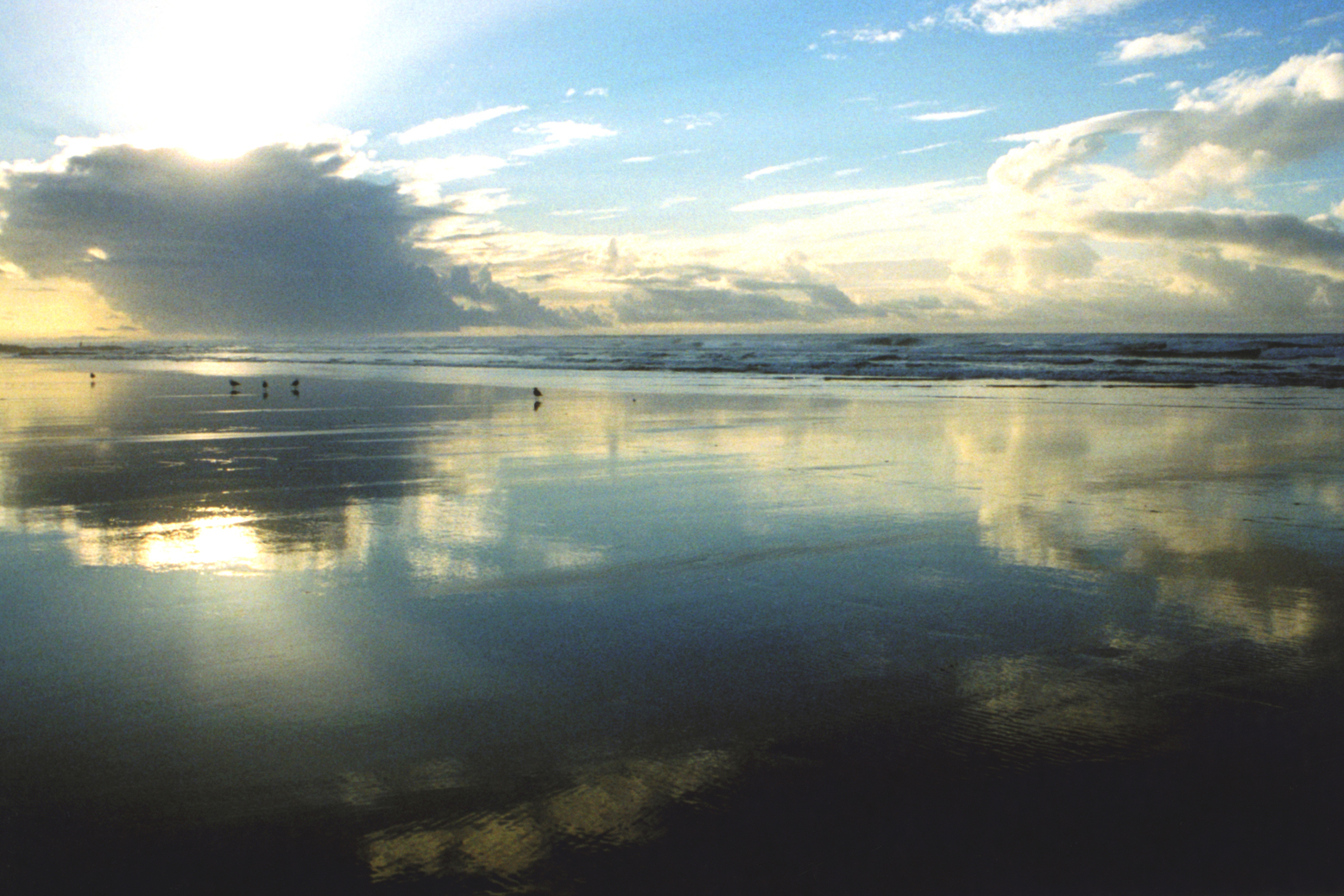
Mirrored clouds, without birds, smallerMemories are like images that flow reflected on the surface of water, at times fast, skipping, turning in on themselves among curling eddies, at times distracted by currents, breaking up into choppy waves … or coming together as facets meeting in quiet waters, as in a calm heart, where past, present and future images arise clearly.

Then again, if waters were always still, never flowing, the reflections in our heart would remain static and never change.

But how to stay aware of images that bring up irrational fears from the deep waters of our collective mind?  Imprinted in dust, earth, mud, rock, sand, water and blood, such fears, be it for survival or identity, based on traumatic histories, rob us of our capacity for rational thought. How do we stay aware of the phonmenon that fear begets fear?

P1090890 - Copy (2)We live in a time when listening, by those who have the capacity for it, seems of crucial importance. A time when individuals must make an effort to understand diverse traditions and opinions, a time to aim for compromises, a time to utilise all the knowledge and wisdom aquired by the eduated, and those with wise hearts, a time that requires us to act in unison towards the maintenance of our beautiful planet and all its inhabitans. It’s a time for politicians to look ahead, beyond the span of their appointment. It’s time to wake up – to see the amazing potential of people migrating across the globe, whatever the causes, it’s happening, a time when sharing each other’s traditions and talents can be enriching to everyone.

Our imagination is our hell and our paradise.

Imagination is all: the creator, the maintainer and the destroyer of life, replicating the natural seasons of our earth.

The same capacity for imagination that makes us ill can also heal us.

Humans have a choice.

21 Comments

Filed under Blog

… grandparents …

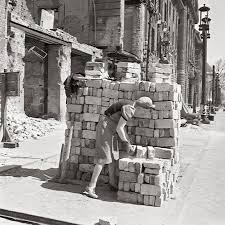
I must have been 4 or 5 years old when my mother took me to Berlin to see my maternal grandmother for the first, and, as it turned out, the last time. Due to the Soviet Berlin blockade after the war, the severe lack of resources, and the disrupted transport system, many families were kept apart for years.

We stared up a bleak wall, until Hildegard appeared. She flung her arms towards us, wanting wings, leaning precariously from the window of the hospital ward where she was kept isolated with TB.

Or so we Berlin 1955sthought. A nurse confided her doubt to my mother, and how she had urged for a second opinion, a hint my grandfather ignored. My mother insisted on a fresh blood test, but was ridiculed by the doctor in charge.

To console me, a kind neighbour rescued an old bicycle and taught me how to ride it among the rubble of ruins in the streets. He also allowed me to watch him construct a ship with sails inside a bottle, which made me think of gran being confined, not sailing anywhere. The atmosphere between my mother and her father grew tense. She insisted he should query the doctor’s diagnosis.

The crescendo happened in the kitchen, when she lifted a tray of 2 dozen eggs from the top of the fridge. He said, ‘You won’t.’ She said, ‘I will.’ He demanded, ‘You will not.’ She shouted, ‘I will.’ He shouted, ‘What can a nurse know?’

That’s what did it. Two dozen yellows and whites marbled the red-tiled floor and my mother walked out. I was thrilled. The drama mobilised my grandfather to challenge the hospital.

Sadly, my gran died within days, much too young, and not of TB. The blood test had been mixed up. What killed her were toxic medications based on a wrong diagnosis.

The message went deep. I was going to be a warrior. I learned to appreciate my intuitions and developed a useful allergy against intimidating authority.

Memories of my paternal grandparents are more serene. Oma and Opa, Erlangen145 Oma was a tall, striking woman. Despite having lived through two tragic wars she kept her back straight and held her head high into old age. When she caught me sitting crouched, she would gently push her fist into my back – ‘Free that, spine girl.’ At other times, she advised me to pull superfluous thoughts from my nose. The tricks work to this day … sometimes.

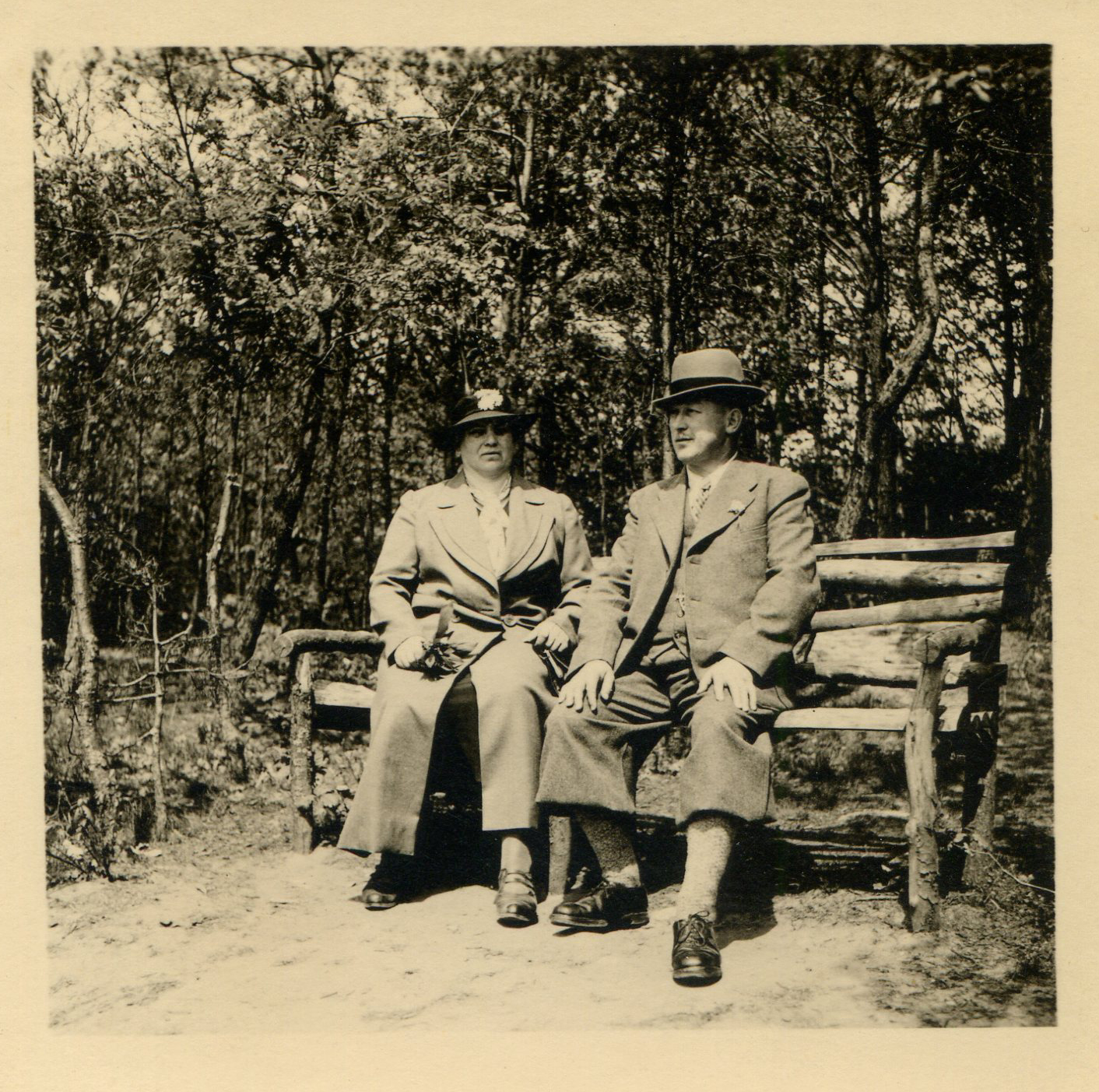
My parents had moved south towards the Alps after my birth, but we regularly visited my grandparent’s home in Erlangen. With fine weather, we would walk across the River Schwabach into the wooded hills to have a picnic. Oma would place several handkerchiefs on the moss under fir trees for us to sit on. Once we were settled, she spread out the much anticipated picnic treats from her basket, with plates, cutlery, napkins and all. My favourite treat was Gugelhupf  Marble Cake. Increasingly, my imagination was plagued by the secrets of her handbag. During one of our picnics I dared to ask why her bag was so bulky. Forthcoming, Oma explained how during the war, before I came along, when sirens frequently announced bombing alerts, they needed to drop everything and rush to the underground shelters.

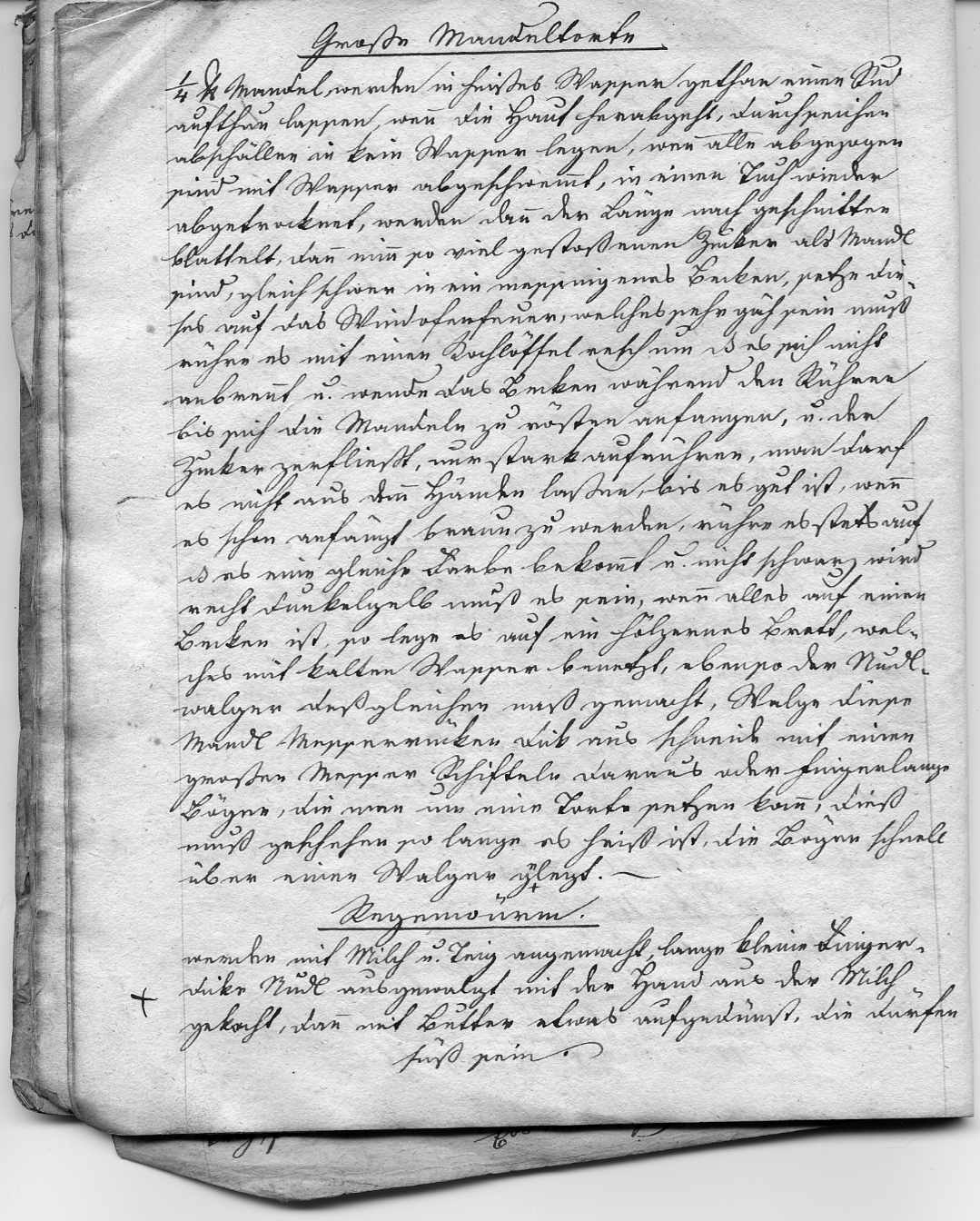
text, German cookbook‘I developed a habit of having our survival gear ready at short notice,’ she said. To my delight, she displayed her survival gear on the forest floor:

Identity papers, notebook, pens, her favourite recipes, dried fruit, a pocketknife, matches, candles, string, clothes pegs, a scissor, plaster, ointment, cotton strips, tin opener, mirror, needles and yarn, buttons, a slim book of Rilke poems, a small bottle of Brandy … and spare knickers.

To this day I never leave the house without identity papers, notebook, pen, and a slim book of poetry. Skipping knickers 🙂 I carry a shrill-sounding whistle, visa cards, a pay-as-you-go mobile, a Barret in case it rains, and a small makeup bag. Times changed, or have they?

Opa, a dreamer like me, enticed me to create imaginary scenarios in the soft, black forest soil. We sculpted landscapes, with villages, a pond made of gran’s round mirror, churches, roads, rivers, bridges and hills, using pinecones, sticks and stones, and tiny people made of leftover food and chocolate wrappers.

I came to value the creative power of sculpting when it comes to out warding inner worlds. I encourage my therapy clients to shape sand in a tray and and to populate the landscape with world objects.

The recent post of an online friend, Katia, reminded me of my paternal grandmother, and the incident with the handbag I had in mind to share. Memory swerved and expanded. It occurred to me that whether we are grandparents, aunties, uncles or family friends with the benefit of a certain age, our influence on young ones has a timeless quality. Children may crown us with a halo of mystery. Given this kind of power, even small incidents, benevolent or troubling, can leave deep impressions and impact lives, nursing stories that travel onwards through generations.

20 Comments

Filed under Blog

… patina – beauty of use & age – wabi-sabi …

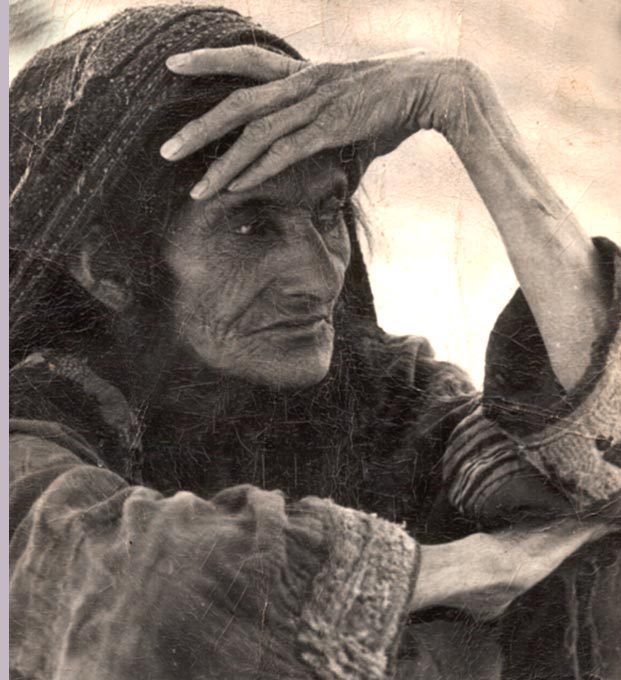
From an old postcard. I can't source the photographer.

Old woman – from a postcard I can’t source.

The phenomena of patina on surfaces is intimately seductive – layers of flacking colour on facades, walls and doors of old houses – thresholds dented and polished by feet treading on them for decades and centuries, tools honed by use, lichen-coated wood and stone, the fading or darkening of materials affected by exposure to light, air, water, wind, heat, humidity, wear and touch – and – poignantly – human skin inscribed by living.

Essaouria

The irreverence of organic processes brings endless revelations, a subtle kind of charm, a triumph of endurance, a fleeting glimpse of time in motion, a mystical hue of imperfection, evidence of existence that display glorious or sad narratives of beauty, relationships, melancholy, comedy, tragedy, remembrance and transformation.

Linus and his blanket

Linus and his blanket

Children naturally form emotional attachments to objects that then become love-worn. The remarkable psychoanalyst Donald Winnicott (whose ideas are worth exploring) specialised in early emotional relationship bonds and the importance of a holding environment for children. He coined the term transitional objects for the blankets, stuffed toys, dolls, or anything a child may choose to have an intimate relationship with, for comfort, often substituting the closeness to mother.

And don’t we know …  people are complex and unpredictable when it comes to holding our projections, quite unlike objects, be they associated with visual attractiveness, taste, smell and sound, or with tactile sensations. Objects can retain comforting feelings for us throughout our adult life. Anything from pets, trees, trinkets, letters, pens, photographs, books, significant presents, clothes, furniture, tools, cars, houses, places , feathers, sticks and stones can become treasures that give us pleasure.

Often a search for something lost is at work. My mother, in her later years, became passionately obsessed with replacing the Biedermeier furniture her family had lost in the Blitz on Berlin.

Then there is shabby chic, distressing and antiquing of furniture, which seem to gratify a need for aesthetics and comfort that some people enjoy but could not otherwise afford. To that end various sophisticated techniques are used on wood, glass, metal, stone, plaster and even plastic to replicate the vintage look.

P1070904 - smaller

But the love-worn feel of an object stressed and polished by personal use over many years, additionally endows it with a kind of cellular memory and connection, which adds a more enduring and special significance of a personal kind for which words are inadequate. The value a child or adult attaches to such an object is often poorly understood and not respected by others, be they parents, friends or  strangers.

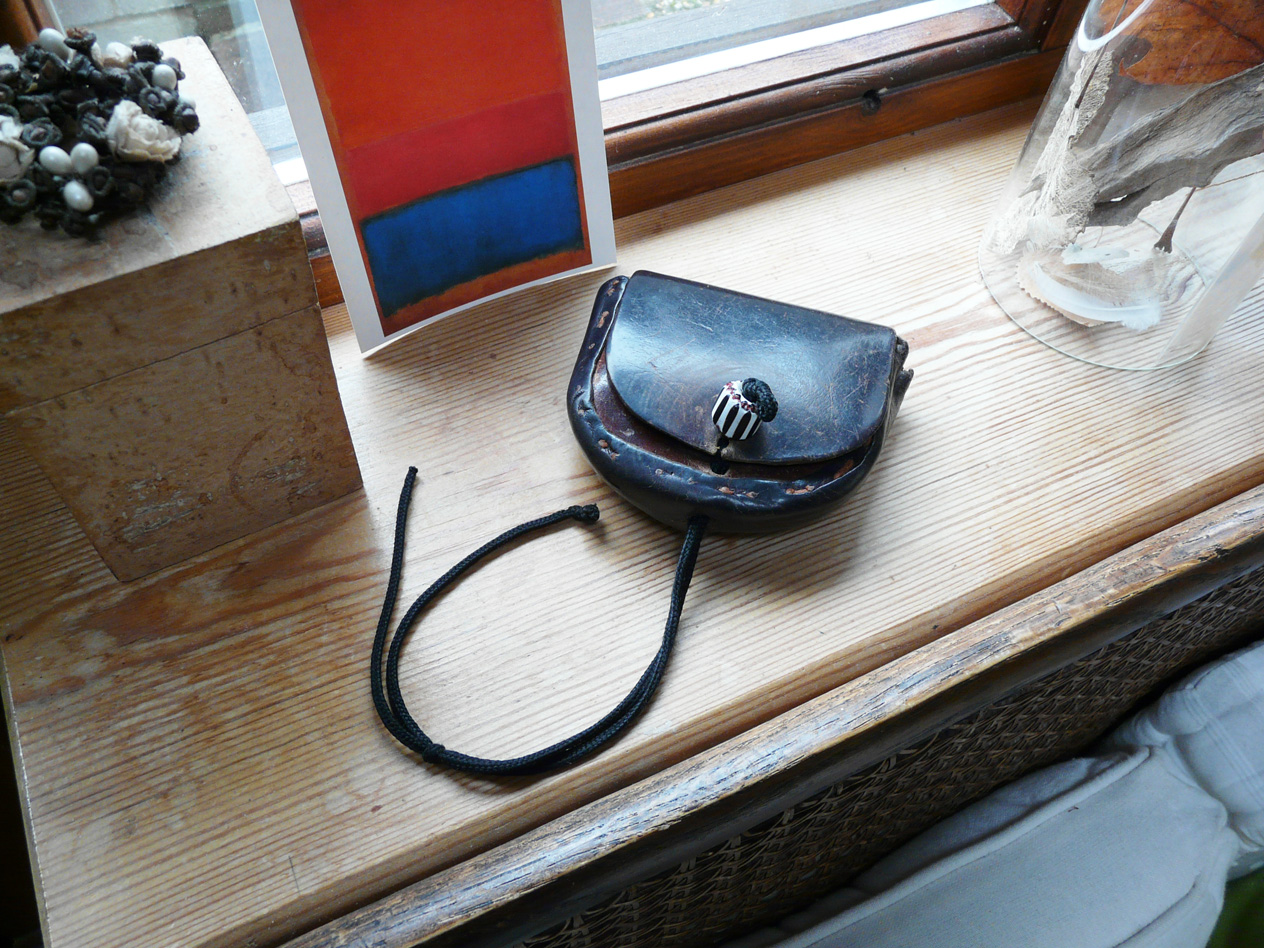
In my case, apart from certain books I loved to bits,  photographs of dear ones, stones picked in memorable spots, and so on. I grew fond of a purse made for me by my ex-husband. I repaired its stitching many times. The purse is not only useful, with a special compartment for payment cards, and encrypted markings I added inside its flap, it hoards contradictory symbolic connotations worth remembering, though I won’t divulge those. Sales-people in shops tend to look at this purse far longer than necessary. Its leather shines – you see.

P1070909 - smaller My purse is not full enough and my house not big enough to indulge in the hunt and collection of rare objects to which the Japanese concept of Wabi-sabi would apply. Then again, I chose my priority to be writing, and am content with the few minor wabi-sabi objects I cultivated over time.

In a way we all express wabi-sabi qualities in our personalities.

… Characteristics of the wabi-sabi aesthetic include asymmetry, asperity (roughness or irregularity), simplicity, economy, austerity, modesty, intimacy, and appreciation of the ingenuous  integrity of natural objects and processes. Nothing lasts, nothing is finished, and nothing is perfect …

What are the transitional objects in your life that bridge one love to the next?

Clicking on an underlined words in the text will bring up a new page, which means you won’t lose this page.

9 Comments

Filed under Blog

… dreams …

Photos by Ashen

Photos by Ashen

I used to host regular dream groups. We did not so much set out to analyse our dreams, but we played with them by engaging with their images, characters and objects. Sometimes we enacted scenes to widen associations and deepen our insights. While there is some excellent literature on working with dreams, a lot of it is boring, misleading and superficial. For me, the main purpose of valuing dreams lies in befriending the unconscious and the bringing to light what is timely and meaningful.

When we have no obvious explanation for events, dreams may bring subtle messages, offering glimpses of dynamics usually hidden from our awareness. A staggering 90 percent of personal and collective psychic dynamics trigger and compel our actions in life, and for good reason. The self-regulating psyche protects us from too much awareness. When encouraged, respected, and left to do its work, much like the immune system, the psyche can encapsulate runaway viruses of the mind by blanking out anxieties and obsessive thoughts, unless a trauma results in an ongoing inner storm. The processing of traumatic experiences is vital for the health of the individual, the family, the tribe, and our collective psyche. Something equally important to consider is that as adults our natural childlike curiosity about life may have become flattened by engrained habits and obsessive needs for security and control, both diminishing the meaning of our lives.

Note: Each embedded link here will not lead you away from this post but bring up a fresh page.

In an earlier blog post Joe Linker’s comment led me to an article by Oliver Sacks on altered states in The New Yorker  where Sacks pointed out a long tradition of ceremonial drug-use to stimulate the brain. Drugs certainly relax jaded attitudes by activating the senses and bringing insights and fresh perception. Sacks, and many like him, were admiringly fearless and creative, before there was a clamp down on drugs and they became illegal.Dreamseries 2

In dreams as in trance, induced or not, the mind can kick up imaginal representations of feelings, and metaphors. We shift to another realm, escape the logical structure of time and also tap into the collective psyche. We may hit a T junction, one path leading to an illuminating visionary state and the other to a schizophrenic state of confusion, which is why science sticks with rationality and is generally not keen on the imagination. The question as to what pulls us towards Heaven or Hell has no easy answer, yet all inner state, when approached with respect, patience, and most of all, wisdom, can have a healing and effect on our personality, and, in instances, as we know, result in significant works of art.

Dreamseries 3

Freud’s iceberg metaphor illustrates that our individual psyche swims like a mountain of ice in a vast sea, only to reverse into its fluid state once its coherence dissolves back into the sea. As a simple and more intelligent map of various unconscious states I prefer the egg diagram by Alberto Assagioli, the founder of Psychosynthesis.

Active imagination is a gentle way to befriend the unconscious and build bridges towards consciousness and daily life, and a way to explore dreams without messing with the dreamer’s unique meaning. I share here some practical tips:

Remembering dreams:

You can ask for a dream, especially when you feel stuck and ponder a question. You might even write the question on a slip of paper and put it under your pillow.

Try not to move your head after noticing a dream. Place holds memory.

Have a notepad and a soft pencil next to your bed, maybe a microlight, so you can scribble down a memory facet before fully crossing the threshold into waking. Even a single image, phrase, number, colour or feeling can act as a key for recalling a dream later on.

To catch a dream – try disrupting your sleeping pattern with an early alarm clock setting.

Experiment with your head position while sleeping – north, east, south or west.

Towards understanding dreams:

The psyche does not care about logic. The meaning of a dream may however unfold like a seed when we attend to its poetry and rhythm.

Ask yourself … how do I relate to the characters or objects of a dream? What feelings and sensations are evoked? In what context did the dream arise? How does it relate to my present situation?

Write a story or make sketches of the images. Tiny fragments can offer connections via free associations.

Give a voice to the characters and objects appearing in the dream. What do they want? Allow them to express their thoughts and feelings. Such dialogues can reveal surprising insights.

Change the script, create a different outcome, face down a fear or a shadow and follow through to what wants to happen. This approach can move a dream to a different level of understanding.

Ask yourself: Where does the energy want to go? What is emerging?

Dreamseries 4


Dreams express the voice of the soul; they are our contact with our deepest self, our inner substance. The mere act of recalling, experiencing and consciously honouring our dreams connects us with our real selves and awakens previously unavailable levels of creativity and vitality, even without interpretation.

Carl G Jung

A related post on altered states.

And if the subject of dreams interests you, here are some more links:

Edward C Whitmont was a Jungian psychoanalyst, who deepened my understanding of the psyche through his exceptionally clear writing. His books may be out of print, which would explain why they’re so expensive:  Dreams – a Portal to the Source and The Symbolic Quest

Other excellent authors to look out for, apart from Jung, are Anthony Stevens, Private Myths – Dreams and Dreaming, and Marie-Louise von Franz – The Interpretation of Fairy Tales.

12 Comments

Filed under Blog

… marginalia of bodies …

moon's swing door

moon’s swing door

the white rock sails adored –

silent swing door to sanctuaries

imagined beyond where

each being claims its mystery

un-evidenced


winged by unknown purpose

spirit seeks shelter

tumbling through cells

to the orb of a home –

embodied in you and me spirit mimics

nature’s mirrors moments after now

though once inner vision unfolds

our dreams are branded …

framed by the one eye

supreme to all eyes …

sun’s furnace illuming draperies

history sanctioned

seemingly evidenced

but for the singular breath

of insight needling between

obvious fabrics to thread

intense tales of beauty …

sample of my occasional art, 1998

sample of my occasional art, 1998


The poem was inspired by June’s full moon.

Places accumulate impressions, snippets of reality that draw us forever into experiences from different directions and points in time. The one place we carry with us – OUR BODY – remembers what reason does not. While the intellect sorts memories into virtual boxes and slaps on the tag ‘facts,’ the body, animated by each breath, deeply informs our singular perception, helps us to adjust the past, refine the relationship with ourselves and others in the present, and opens a new wavelength and vision towards the future.


The experience you have within yourself of your separate identity, to allow right and wrong to be re-defined by you, your singular contribution, is where evolution really happens. You, by becoming yourself, can open a new wavelength. What you reflect immediately influences your environment, people close and far away.’

Fazal Inayat-Khan, notes from an attended lecture, 1989

‘Spirit without soul has no vessel – soul without spirit has no direction.’ Roberto Assagioli

10 Comments

Filed under Blog

… leaving – returning …

the father tree

the father tree

to reshuffle thoughts

a short journey is enough

leaving – returning …

legends undulate

in glowing brittle wood – sighs

from swaying branches –


Jasmin blessings

Jasmin blessings


Jasmin on the breeze

laments of grief in the rain –

ancestors speak

first sounds glide on ice

circling the affirmative

leisurely routine


my beloved Alps

my beloved Alps


between dusk and dawn

all words sink to un-squared time

rounding in fish eyes

as poems probing

the deep meshes of oceans

for heart connections …
 

‘What else, when chaos draws all forces inward to shape a single leaf …’  C. Aiken

Visiting my early landscapes, friends in Munich, my father of 97, with my son, whose work in London means I rarely see him,  was a rich experience. I had to capture the essence in a poem, which started out in German:

In der Dämmerung glänzt Gold aus der Wurtzel

Gedanken gleiten auf Eis in Kreisen herum

doch manche sinken in die Tiefe um

im Wassergewebe nach Erinnerungen

zu fischen … Gesichter ziehen vorbei 

in sanften kalten und warmen Wogen …

I’ll work on this, inspired by a writer Herta Müller – (English translation on screen) introduced to me by friends whose guest I was in Munich. Anyone fascinated by language will be moved. Also this article in The Paris Review   I am presently reading ‘Mein Vaterland war ein Apfelkern,’ a remarkable dialogue.

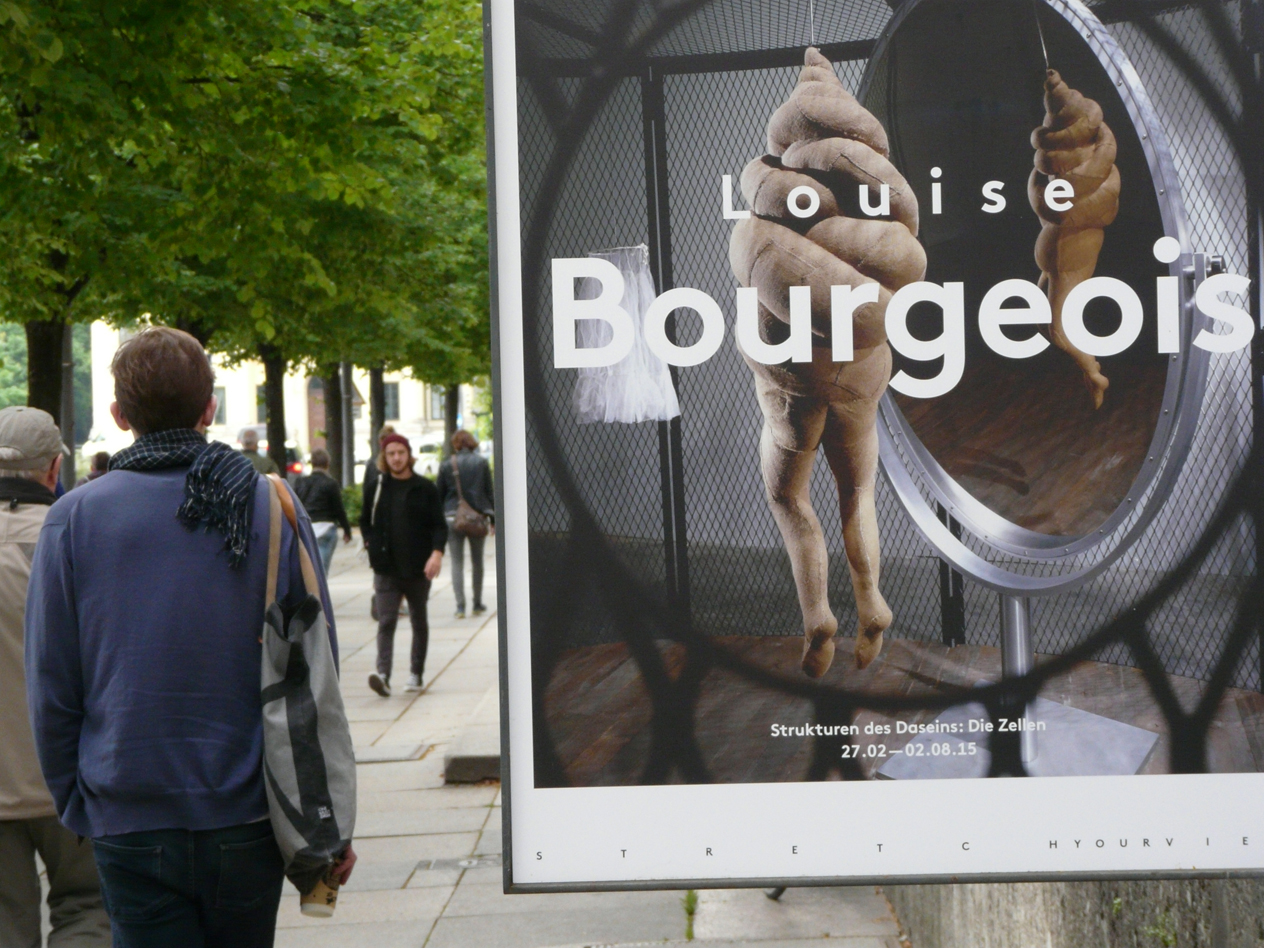
Louise Bourgeois at 'Hause der Kunst.'

Louise Bourgeois at ‘Hause der Kunst.’


In Munich’s ‘Haus der Kunst’ I visited a wonderful exhibition of Louise Bourgeois (1911 – 2010) an artist I much admire, whose installations about the Cells of Structures of Existence are deeply impressive.

Londoners my have seen her huge spider on display in the Turbine Hall of Tate Modern. I wish I had cheated and made photos of her beautifully arranged installations in the generous spaces in Haus Der Kunst.


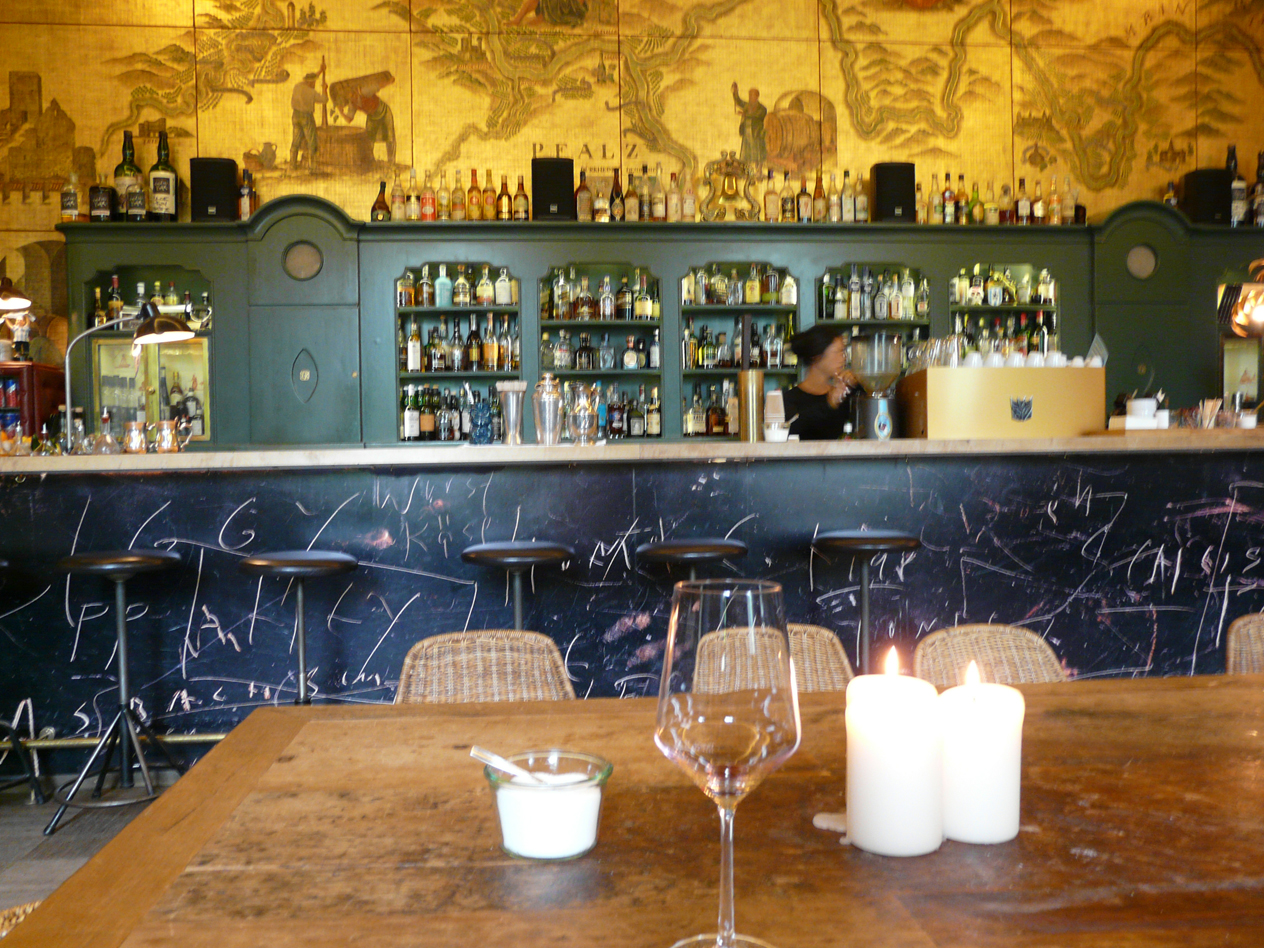
bar at 'House der Kunst.'

bar at ‘House der Kunst.’

To compensate, here is the wonderful golden bar at the ‘House der Kunst.’ And returning home – a blue invasion.

a blue invasion

a blue invasion

10 Comments

Filed under Blog

… surfacing …

surfacing

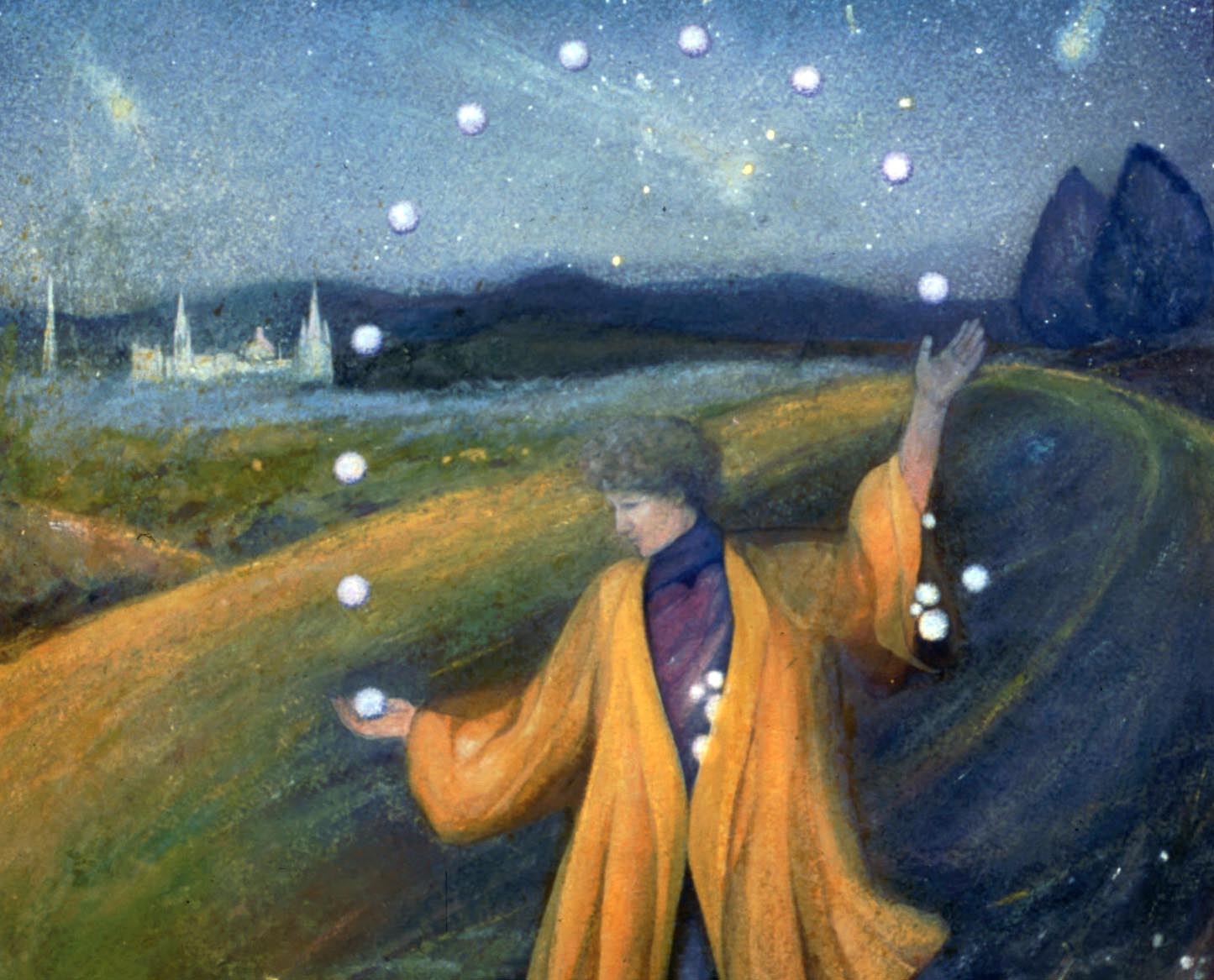
Segment of 'The Magician,' a painting by Silvia Pastore

Segment of ‘The Magician,’ a painting by Silvia Pastore

her nocturnal creature mourns as meshes of  night disband the Other of her dream into strands that flow like oil colours –

marbling still waters under grey or rain-bowed sky as canvas for inventing random patterns of each day

beneath the mirrors an ever-turning gyre of souls in deep wordless liaison keeps churning the ocean

her inward creature drifts through curls of emptiness sifting strata of seasons

to gathered wisdoms of the human heart

its patina of touch and wear

sediments of ache and bliss

its gilded secret

cypher for another Eden

from which her inversed image falls

to the next fluid mirror always desiring the Other …

Ashen 10th July 2015

Maybe needless to say, just about everything I post here is relevant to my novels.

In relation to the poem, I thought you might enjoy the fascinating Art of the Marbler https://www.youtube.com/watch?v=Vyga8VMWXKg

And a short introduction to The Churning of the Ocean of Milk https://www.youtube.com/watch?v=MItyUwPAjLA

The segment of the Magician image is the work of a fine painter, Silvia Pastore http://www.silviapastore.com/ … Time and space are illusions …  Having obtained the copyright of the Magician as a cover for ‘Course of Mirrors,’ it seems my publisher, who I re-signed a contract with, has other ideas. I love Silvia’s work, but will remain open to suggestions, as long as my first novel is launched within the year. It’s been sitting quiet since 2011. Maybe all good things take time. A sequel is waiting in line, and I’m working on a third book in the series.
11 Comments

Filed under Blog

… give the poor ego a break …

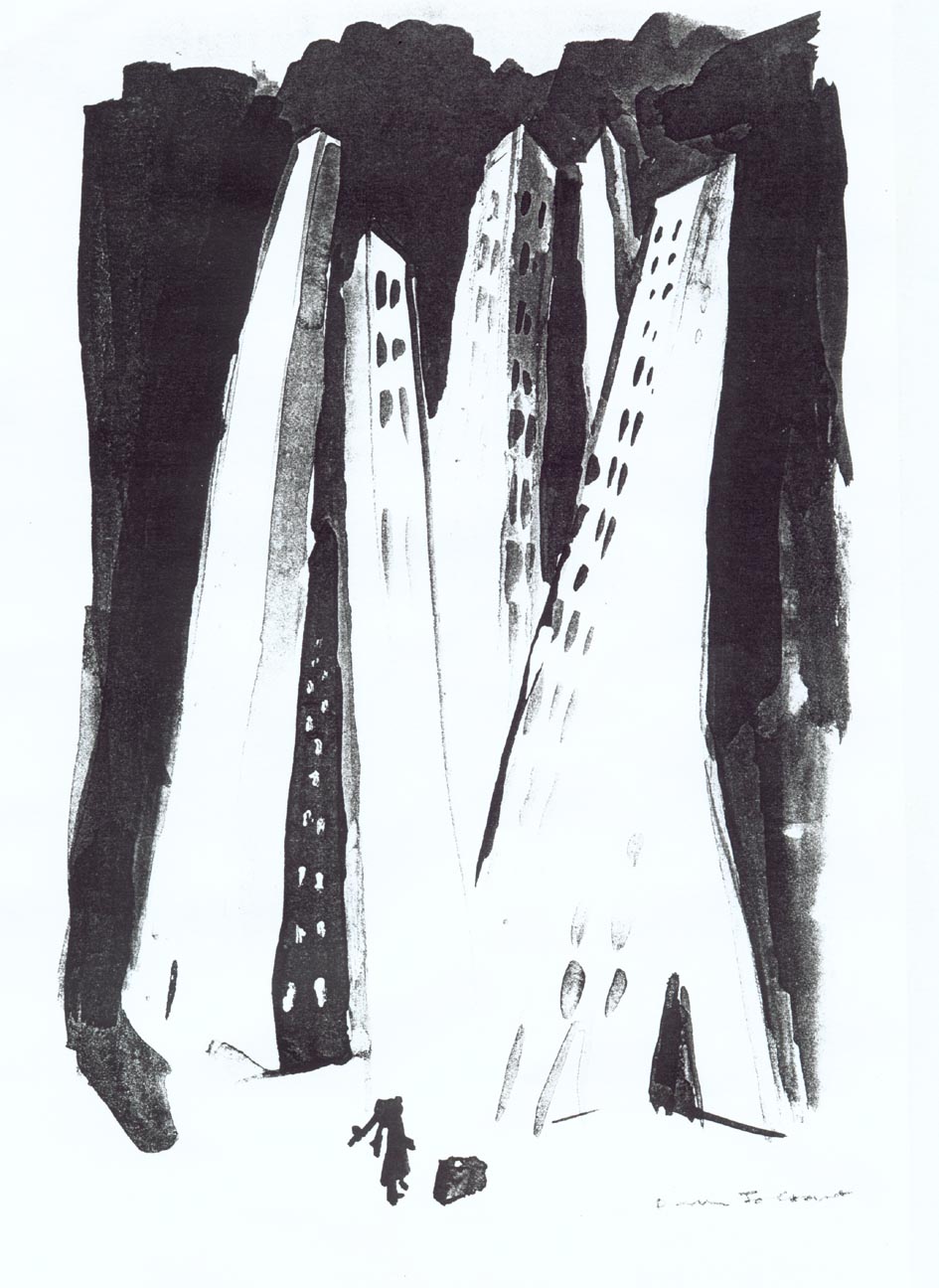
Image by Daphne Jo Grant, created for my poetry collection in 1993 -Gapsy Truth.

Image by Daphne Jo Grant, created for my poetry collection in 1993 -Gapsy Truth.

I’m all for shielding the Ego from moral experts who succumb to counter-transference. Proverbs, turned inner voices, instruct: Put yourself last, be considerate, don’t let people down, adapt, respect trade-off laws, keep promises – the inner voices more or less prescribe what’s in your best interest to feel, think and do.

Noisy commotions, muddling any sense of ‘I.’

The poor ego not only holds awareness of our multifaceted reality, but is driven to distraction by conflicting demands, assumptions, chimeras of grandeur, bouts of doubt, all drowning the whisper deep down – ‘Who or what am I really ?’

‘Part of me suspects that I’m a loser, and the other part of me thinks I’m God Almighty.’  – John Lennon

John summed up the typical seesaw compensation attempt. Adding insult to injury, self interest is blamed for our social ills. Even astute spiritual wisdom falls flat when it fails to appreciate the ego’s task – to daily create new order out of chaos, attempting a compromise with reality. No wonder people become nervous wrecks when their temporary identifications are threatened, no wonder fierce defences are constellated. The battered ego-agent screams silently – I’m only loyal to my familiars.

Some familiar rituals guarantee a  child experiencing rejection, physically, emotionally or intellectually, will self-reject for failing the expectations of its superiors. Welcoming or neglecting, early responses by adults we depend upon set foundation for our personality. Break that mirror and you’re on your own.

Maps serve us as orientation, they don’t convey territory. S. Freud’s map of the psyche is powerful. Think of the Id as a Launchpad to stars. What Freud omitted is a higher unconsciousness, our inner guidance and intuition, later introduced by C. G. Jung and A. Assagioly

Freud’s ideas deserve studying. His terms slipped into common speech like brands and became tangled.

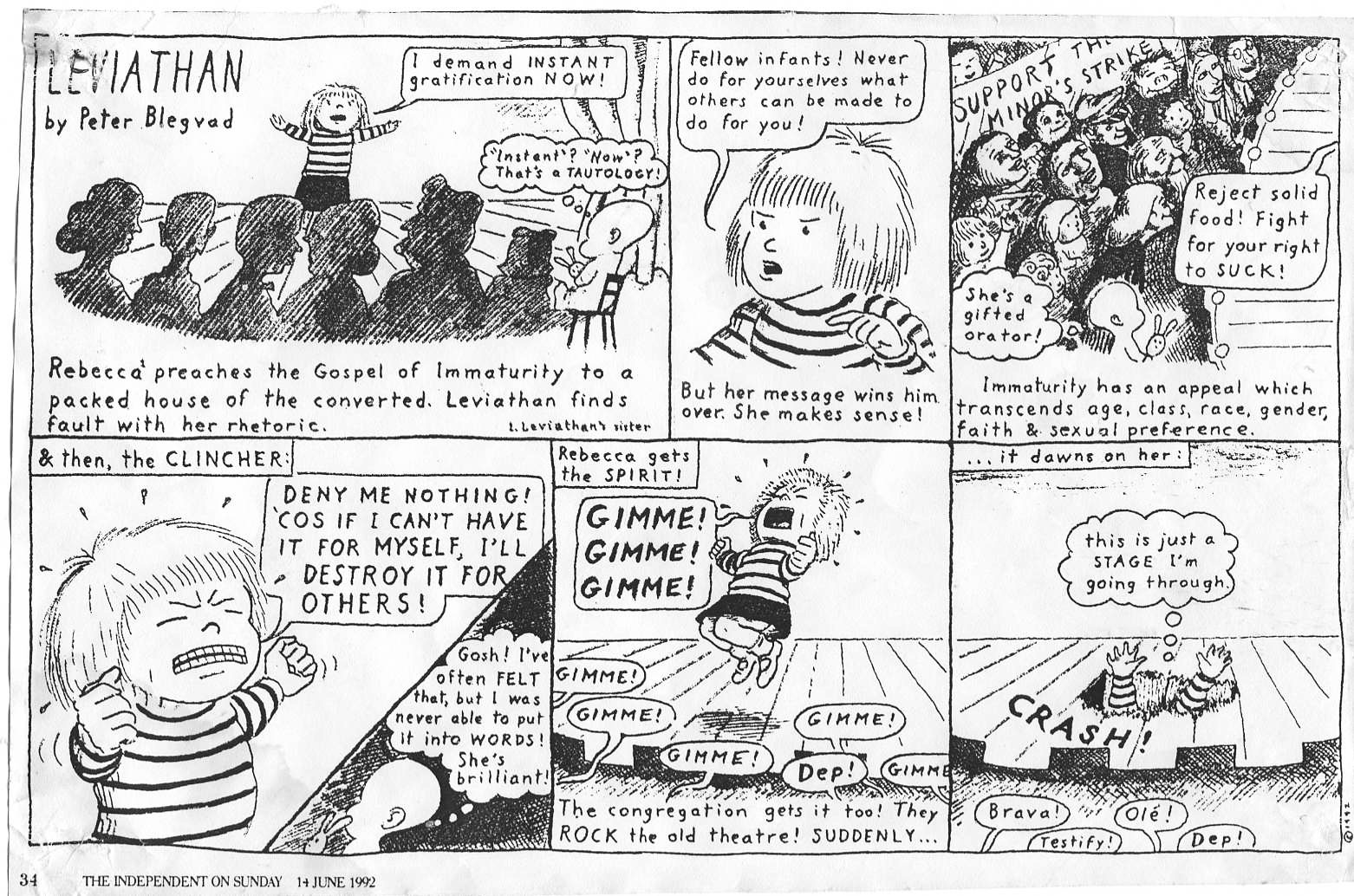
Leviathan

Leviathan

Take the ego construct. Sandwiched between the powerful gratification-force of the Id, in need of gentle and firm boundaries, and a cultural Super-ego, with its rules and regulations, the Ego has the unrewarding task of mediator. The Id, at worst, is a heap of misery dragged along, withholding its energy, while the Super-ego, at worst, hijacks personalities like a psycho terrorist, know–it-all, manipulator, fanatic …  having abandoned the powerless inner child with its distressing and embarrassing need for acceptance and love.

And let’s not fool ourselves, distorted ideals attach themselves to well-disguised tyrants in the collective psyche, slumbering, until the day when circumstances conspire.

Children who grow up anxious to placate, or are bent against authority, invent ingenious strategies for survival. Fragile or strong, balanced or torn by extremes, developing a personality is an art form, assembled from layers upon layers of impressions and accumulated memories. Only increased awareness lessens over-identification and softens defences.

‘The paradox of the arts is that they are all made up and yet they allow us to get at truths about who, and what we are or might be’. –   Seamus Heaney

creative recycling

creative recycling

creative recycling

creative recycling

Young children need space to playact, and adolescents need safe outlets for their natural aggression, opportunities for intense experiences, and encouragement to explore their self-image. The houses of identity we create, however basic or twisted, position us in space and time. They have windows allowing a view, and doors through which to venture into a wider world and align our personal myth to a greater myth.

The problem is clearly not the personal ego, but its cultural super-edition, coloured, at least in the west, by mechanistic templates that regard nature as enemy to be conquered and controlled.

Reprimands like selfish stem from a period when inducing guilt was a convenient social formula. Today this approach is counterproductive. Educational practices must catch up with the nuclear age and the fresh metaphors for space and time. New dimensions arise in our consciousness, compelling us to re-think:

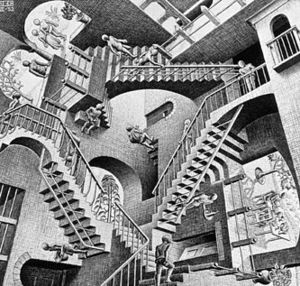
Escher's Relativity

Escher’s Relativity

Relativity theories freed perspectives and brought a climate of moral liberty. In a psychological sense, moral advice became repugnant, which explains why western minds begun to question aspects of religious dogma. A way was opened towards looking inside, and individuation, in a Jungian sense.

Quantum physics has widened our vision further, and brought deep spiritual turmoil through new speculations that suggest a symbolic reality of consciousness that over a hundred years ago would only have been imagined by a minority – mainly mystics.

The Digital revolution has upset linear time and is gradually transforming our relationship with time and space, leading us to ask, ‘What is real?’

A mould, no matter how inadequate, is necessary for any new-born. Judging behaviour without acknowledging the initial and well-meaning intentions underlying the formation of personality will only strengthens neuroses, instead of allowing the acceptance of one’s imperfect self-creation, with a nudge towards a gradual softening of defences.

‘Form is a relic of eternal potential.’ – Fazal Inayat-Khan

This post contains excerpts pulled from past articles that were never published.

10 Comments

Filed under Blog

How do I read?

one of my notebooks

one of my notebooks

I jotted this question in my notebook a while ago. How do I read, in the widest sense? There is plenty of observation and advice on the art of writing, composing music, painting, photography, film. Less is said about on the art of reading, perceiving, interpreting, or how we reject or embrace what is expressed by others, and ourselves, even how we read our dreams.

I conclude there’s no difference between, let’s say writing, and reading, other than visibility, since any creative composition derives from an inner process of reading, the picking and shuffling of impressions into our frame of reference in relation to the larger myth of reality.

One could say the secret of being read lies in one’s talent and ability to read one’s inner psychic world, even when filtered through one’s most personal and eccentric imagination.

Long before communication was easily reproducible and reached greater audiences, people were reading the world, though only a tiny fraction of inspirations and inventions was circulated. Today’s media channels swamp us with communications. It’s confusing. We must choose.

In reading novels, I follow my intuition. The gimmick of an instant attention grabbing action scene puts me off. A proposal may be impossibly fantastic, but if I detect an authentic voice, rhythm and movement, I travel along. Invited into a mind, an atmosphere, a time, a place, I want to be absorbed in this other world and experience myself anew in a conflict between light and shadow from within the heart of another consciousness.

Whether meaning is intended or not, I read my own meaning into what has been imagined by another mind. An insight, a memory may surprise. Some books I treasure for one or two illuminating sentences, so I guess reading for me is a bit of a treasure hunt, which begs a question. What am I hunting for?

world objects for sandtray work

world objects for sandtray work

My interest is fleeting when events are contrived, plucked from the air. Characters convince me when they are embodied and grow around obstacles, reaching towards the light, while spreading roots and producing seeds (new thoughts,) even when they come from mythical creatures, kings and slaves of the past, or explorers of distant futures. As long as events happen in a believable psychological setting, I engage.

Then again, I’ve been convinced by writing that made no sense at all, until, with a little patience, I discovered a new comprehension shining through an abstract form. It’s a wonderful feeling, and important feedback for writers, who may be surprised by what is evoked in readers. Once I finished my present project, I intent to spend more time on reviewing – a most giving art of reading.

Stories for stories sake can be dull, while stories in which nothing much happens outwardly can be riveting when they resonate with the human condition, where, quite often, what seems true becomes false, and what seems false becomes true.

It is said we write the books we want to read. When writing, I search to combine words that convince intellectually and emotionally, until something true is mirrored back. Maybe what I’m hunting for in my reading and writing are fitting metaphors for the miracle of existence.

I always delight in discovering neglected writers, like Marlene Haushofer,  or the poet W S Graham, whom I wrote about here as part of a post in Sept 2013.  And beyond new works, there are innumerable old favourites, including H G Wells. The link connects to a post I did about one of his lesser known stories.

Thinking about photography, my other passionate reading, I was inspired by Henri Cartier Bresson – the link leads to my post about him.  And here the archive of the street photography of Andre Kertesz – enjoy.  I’ll leave film alone, that’s a whole other story.

What are your reflections on reading?


Some related blogposts:

Storytelling and the primary world.

Mother-tongue and other tongue.

Memory and Place.

11 Comments

Filed under Blog