Tag Archives: imagination

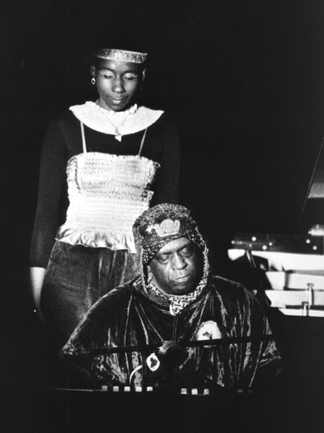
… sun ra – a glittering show …

Fallen angels being such a wonderful subject – had I been black, and a talented musician with total passion for jazz, I’d have joined Sun Ra’s Akestra. He was an intense and fascinating man, one of those people who move through chaos to get to harmony, who have their pulse on the future. They tend to attract a select fellowship. Tuned into a novel wavelength, they enjoyed an accelerated period of growth together, a hell of a time.

With his experiential musicians, Sun Ra expanded the bandwidth for the performances of his cosmic vision and shared the breadth of his trickster consciousness with a larger audience, exemplifying a crash course in creativity.

You might like to watch this excellent BBC documentary by Don Letts. Sun Ra, Brother from another Planet:

http://www.youtube.com/watch?v=LqZHzpAYVIk

Listening to musicians and friends who worked with Sun Ra, I noticed how they respect each other, all through the elation of creating a fresh sound-language. One interviewee remarked on Sun Ra’s urgency, his alacrity, another quoted him: ‘Are you going to be replaced by a button? If you can do THIS you always have a job,’ you might not make any money but you have a job.’ Everyone in their way confirms Sun Ra’s genuineness, his seriousness, and his humour. He was a catalyst. His compositions were often off-chord, which some found off-putting, couldn’t get into.

It’s a sound form other spheres  that transcends known categories and opens new horizons. I love the saxophone doing what it can do, almost playing by itself. And I love the glittering hats of the musicians.

Here’s the early cult movie – Space is the Place – from 1974 – The mystery of Mister Ra. http://www.youtube.com/watch?v=NwNtxFH6IjU&feature=fvwrel

Sweet show of a joker, the film shows a mythological duel between Sun Ra and The Overseer, between an angel from Saturn and a fallen angel.

                ‘You just want to talk about realities, no myth.

                 Well, I’m the myth talking to you.’ 


The photo of Sun Ra with June Tyson

Is by Michael Wilderman

http://www.jazzvisionsphotos.com/

10 Comments

Filed under Blog

… the wonderful visit …

I loathe most talk of angels since they became best-selling brands, but the synchronicity of Annie Lennox wearing wings and singing to an angel at the Queen’s Diamond Jubilee, and the discovery of a rare book among my shelves, brought angels up close.

H G Wells (1866-1946) has been referred to as the Father of Science Fiction. A neglected story, The Wonderful Visit, published shortly after The Time Machine, was regarded as a mocking reflection on attitudes, beliefs and the social structure of a typical English village in Victorian times. I read the social commentary as ornamentation, the comical human attempt to stay the same, round a more essential theme, the conflict that can accompany awakening.

The edition below is from 1922 and has an illustration by Conrad Heighton Leigh. The line under it is from chapter 5 – ‘He fired out of pure surprise and habit.’

A strange bird was sighted.

Ornithology being a passion of the Vicar of Siddermorton, Rev. K. Hilyer, he was going to outdo his rivals and hunt the strange bird. So it came to be that on the 4th of August 1895 he shot down an angel.

… He saw what it was, his heart was in his mouth, and he fired out of pure surprise and habit. There was a scream of superhuman agony, the wings beat the air twice, and the victim came slanting swiftly downward and struck the ground – a struggling heap of writhing body, broken wing and flying blood-stained plumes … the Vicar stood aghast, with his smoking gun in his hand. It was no bird at all, but a youth with an extremely beautiful face, clad in a robe of saffron and with iridescent wings … never had the Vicar seen such gorgeous floods of colour …

‘A man,’ said the Angel, clasping his forehead … ‘then I was not deceived, I am indeed in the Land of Dreams.’ The vicar tells him that men are real and angels are myth … ‘It almost makes one think that in some odd way there must be two worlds as it were …’

‘At least two,’ said the Vicar, and goes on ponderinghe loved geometrical speculations, ‘there may be any number of three dimensional universes packed side by side, and all dimly aware of each other.’

They met half way, where reality is loosely defined, and truth has no hold. And they shared the nature of their worlds. Eat, pain, and die were among the new terms the strange visitor had to come to grips with.

‘Pain is the warp and the waft of this life,’ said the Vicar. Riddled with remorse over having maimed the Angel’s wing he decides to looks after him. But to adjust to the Vicar’s world, the Angel must eat and accept pain, and learn all manner of things very fast indeed … Starting to read, during a phase of now legendary sunshine, I settled in my garden with a glass of red, and consequently spilled the wine on my wild strawberry blossoms due to sudden bursts of laughter.

‘What a strange life!’ said the Angel.

‘Yes,’ said the Vicar. ‘What a strange life! But the thing that makes it strange to me is new. I had taken it as a matter of course until you came into my life.’

Mr Angel is nothing like the pure and white angel of popular belief, more like the angel of Italian art, polychromatic, a musical genius with the violin. Listening … the Vicar lost all sense of duration, all sense of necessity … The reactions of the villagers oscillate across a hair-thin-divide between comedy and tragedy, while the bone of the story is psychological, and spiritual. Indirectly, the Vicar encounters his anima (his inner female) through the Angel’s love for Delia, the maid servant of the house. There is no escape. Things get intense. The Angel, over the span of a short week, is tainted by the wickedness of the world, and it crushes him. And the Vicar’s awakening from his narrow prison brings him into tragic conflict with his community.

*    *    *

Not much has changed. The world is crowded with wounded angels seeking compassion, and since our daily vocabulary offers little more than clichés for other realities, awakening rarely convinces, unless it is embodied and conveyed through atmosphere. Look out for the artist… the musician, painter, writer, animator, filmmaker … and the children.

‘If the doors of perception were cleansed every thing would appear to man as it is, Infinite. For man has closed himself up, till he sees all things thro’ narrow chinks of his cavern.’
― William BlakeThe Marriage of Heaven and Hell

The painting heading this post is by the Finnish symbolist painter Hugo Simberg.

18 Comments

Filed under Blog

… pattern which connects …

For a recent book-sharing with a group of irreverent friends (archventures), I had the wish to share so many books that I instinctively reached more or less blindly into one of my shelves. Books in my home, I must add, are in a muddle. The only order to speak of is their relationship to each other through time. I picked Alice in Wonderland and Mind and Nature. During our afternoon of reading there was not enough time to do honour to the latter, Gregory Bateson’s work. So I said I’d write up something. Oh dear. After pages and pages, I finally recalled this was supposed to be a blog-post, not a novel .

I first came upon Gregory Bateson books, ‘Steps to an Ecology of Mind’ and ‘Mind and Nature,’ during the early 1980’s, after his death. The clarity of his notion that biological forms arrange themselves through relationships struck a deep chord. What totally resonated with me was his thought that the structure of nature and the structure of mind are reflections of each other.  He had a broad perspective for a Biologist, and wanted to build a bridge between the facts of life and behaviour, and what we know of the nature of pattern and order. He was active in, and connected up many different fields of study – anthropology, psychiatry, biological evolution and genetics and the new epistemology which comes out of system-theory and ecology. He challenged basic assumptions and methods of scientific investigations, pointing to the processes beneath structures. He quoted Goethe …

A stem is what bears leaves

A leaf is that which has a bud in its angle

A stem is what was once a bud in that position …

And he provoked new thinking: ‘What pattern connects the crab to the lobster and the orchid to the primrose and all four of them to me. And me to you?’ 
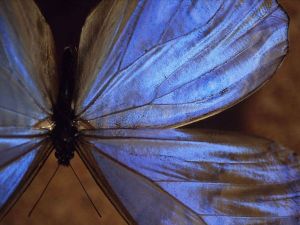
His interest in morphology, the study of structure and form of organisms, involved context, meaning and communication. He distrusted reductive models of cause and effect, the scientific approach that lines up parts and classifies them, focussing on quantity.

Comparing systems, one to another, he perceived the mind as an ecological system. And he used the analogy that ideas, like seeds, can only take root and flourish according to the nature of the system receiving them. This thought alone deserves deep contemplation.

He had a way with stories … ‘There was a man who had a powerful computer, and he wanted to know whether computers could ever think. So he asked it – Will you ever be able to think like a human being? – The computer clicked and rattled and blinked, and finally it printed out its answer on a piece of paper, as these machines do. The man ran to pick up the printout, and there, neatly typed, read the following words: ‘That reminds me of a story.’ 
Concerned about the decimation of aboriginal populations (he did field-work with Margaret Mead), the degradation of ecological systems, economic oppression, and senseless wars and arms races, he took these ominous signs of contemporary life to be manifestations of deeper disorders, which he defined in terms of cybernetic systems of communication and meaning that comprise life, mind, and society. In his view, consciousness dominated by purposeful thought has a linear structure that establishes goals and ways for attaining them without being necessarily sensitive to the circular network of cause and effect that orders the systems.

Looking at human consciousness as an adaptive system, he thought the cure for its inadequacies, evidenced by the negative side-effects of purposive rationality, was not to reject it in favour of a passionate non- rationality, as in the extreme romantic position, but to augment and complete it by engaging with non-discursive, pattern-comprehending and emotional processes. He advocated the befriending of the unconscious aspects of the mind through utilising images and metaphors.

In a civilization which separates mind from body, mythologies about the survival of a transcendent mind are often meant to soften the idea of death, or even deny death as part of life. For Bateson, who saw the mind as being immanent not only in pathways of information which are located inside the body but also in external pathways, death took on a different aspect. ‘The individual nexus of pathways which I call ‘me’ is no longer so precious because that nexus is only part of a larger mind. The ideas which seemed to be me can also become immanent in you. May they survive, if true.’  (Afterword to a collection of celebratory essays, 1972)

Yet there are scientists that can no more perceive the language of nature, and politicians who feel beleaguered by sections of society that seek balance and a fresh context towards ‘an ecology of mind.’  The extreme factions of believers, for what else are they, should look again at the bridge  Bateson prepared.


This lovely video gives a taste of what it is all about :

Update … I discovered recently, in 2019, that some the links in this post don’t seem to work anymore. Here , however, is his daughter’s great documentary on Vimeo, unfortunately not free, apart from the trailer.  https://vimeo.com/ondemand/bateson

Looking at the structure of nature and the structure of mind being reflections of each other, it becomes obvious that not only does nature mirror our habit of thinking, but our thinking also mirrors the state of nature. Ecology and psychology must therefore both engage in listening, and seeing, and working ceaselessly towards the integration of knowledge and the re-adjustment of a dynamic balance.

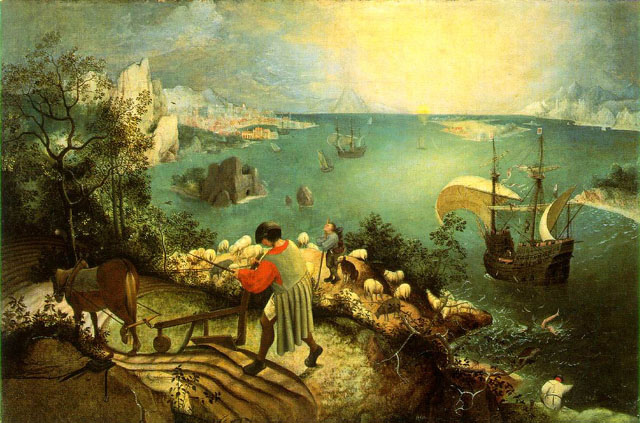
I could go on, but want to bring in a famous painting of Icarus by Brueghel.                                                             Anthony Stevens, a brilliant expositor of Jung’s thought, used the painting as cover for the first hard-cover edition (1995) of his book Private Myths.

http://www.anthonystevens.co.uk/index.html
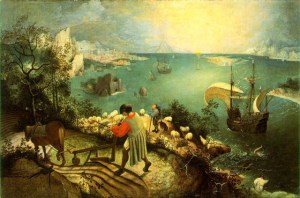


Stevens quotes from a poem by Wystan Auden:

In Brueghel’s Icarus, for instance: how everything turns away

Quite leisurely from the disaster; the ploughman may

Have heard the splash, the forsaken cry,

But for him it was not an important failure; the sun shone

As it had to on the white legs disappearing into the green

Water; and the expensive delicate ship that must have seen

Something amazing, a boy falling out of the sky,

Had somewhere to get to and sailed calmly on.

What goes up must come down. Who knows how many Big Bangs there were before the one we so ardently explore? There is an organising intelligence behind life’s cycles, while consciousness forever expands. Thinking in metaphors we can perceive similar patterns, forms in nature and mind, cosmos and psyche, mirroring each other across scale and time. In other words, life teems with realities we can tune into, as long as we assign context and meaning.

Check out Gregory Bateson’s books ‘Steps to an Ecology of Mind’ and ‘Mind and Nature.

His family continue his work: His daughter Nora and his wife – Mary Catherine Bateson:   http://www.interculturalstudies.org/main.html

Peripheral Vision

 http://www.amazon.com/exec/obidos/tg/detail/-/0060926309/mead2001centenni

Free chapters of Angels Fear:  http://www.oikos.org/angelsfear.htm

Nora Bateson, recently created a film:

http://www.anecologyofmind.com/

Last not least, the themes:  pattern which connects, mirroring and bridging, are subjects of my novels.

25 Comments

Filed under Blog

… the wild horse of the mind …

I thought I open the window a bit to what I’m immersed in, drafting the sequel to Course of Mirrors, called Shapers. Another mythic adventure, and more. The short piece below is not representative of the tense action this story has plenty of, but depicts a pivotal moment. The scenery is  Eire, where time-zones overlap. In 2550 AD the island is called Sax, where Rhonda, the super-controlling power, cast their misfits.  In the excerpt below, Tilly (Cassia in Ana’s story) has arranged for Cara and Mesa to meet in Kerry during the 1970s.

The theme touches on the creative process. Something for my writer friends. I welcome any feedback to the draft.

*    *    *

Tilly’s ruined estate on the Kerry peninsula was one among many places around the world where past and future began to cross or run parallel during the 1970s. Not all drop-outs travelling through Derrynane were aware of the phenomenon. Those open to the new wavelengths either tuned in, or received no more than garbled white noise. The going slogan was – love, don’t think – though it should have been – love and think – and stay grounded. These were turbulent times. Traditionalists abhorred the breaking free of conditioning. Leaps into the unknown frightened them.

This is Cara’s time, and these are her thoughts: Personal myth is a complex self-creation, mainly unconscious, but less so once we replace the postulates we inherited with our own, and are drawn to our psychic kin. Every night when the body rests we visit beings in other spheres. We may discount these sojourns as dreams unrelated to our daily existence. Yet bridging occurs when we value inner dynamics and re-story the associative symbols of images. Resonance momentarily fills the void between the known and the unknown, and meaning is assigned to events. Some good people trust in God, but then abnegate their creativity. Are we not the desire of a divine will? Are we not the ears, eyes, nose, hands and feet of a universal intelligence, of which we are the deed? Does not our speech derive from one sound? And is love not the creed that breathes all things and directs the movement of all spheres? I don’t understand the need to prove or disprove a universal intelligence that is within and all around us. The world I create is imperfect and suffers from on-going flux. But I can bring my small flame to its shadows.

Now that Cara’s myth caught up with her, and she was confronted with the net of postulates she had cast into the future. She found herself challenged to engage with what she animated, because she was animated by it.

Gutch spotted Tilly talking to Cara and Mesa in the hall. He was bursting with pleasure. ‘I found my clan,’ he said. ‘This place is teeming with talented actors. We’re going to do some magic theatre. Are you joining us?’

‘I need to take care of something,’ Tilly said. Can you keep an eye on Gart?’

‘That devil had some weird conversion trip and is sound asleep under the table.’

‘Excellent. Let him sleep.’

When Cara and Mesa arrived at the cottage across the atrium, Tilly had lit a fire in the hearth. A nest of chairs invited them, and the smell of fresh coffee. ‘Have some,’ she said, ‘pointing to a steaming pot, ‘and there’s chocolate cake, too.’ Mesa soaked up the atmosphere, transported to Ana’s world, reminded of Cassia’s kitchen. Tilly placed a small leather pouch in Cara’s lap. ‘Here, forged by fire, polished by the sea, a gift of remembrance.’

Cara opened and turned the pouch. A black stone fell into her hand – smooth as marble, yet radiating warmth and shining in the glow of the fire. ‘Ana’s talisman!’

‘Yes, and you might as well own it.’ Tilly paused, gazing into the flames. ‘I have a favour to ask from you, for Mesa’s benefit.’

‘What favour?’ Cara poured cups of coffee for everyone, dished out giant slices of chocolate cake and added a dollop of whipped cream to each.

‘Your future, Cara, has come to visit you. Mesa returned to assimilate what was lost to her. With Ana’s story you re-animated her soul. Certain events in history require beings to return, to right things or bring a message.  Mesa will take on her role in the odyssey of the Ypocs. And she’s going to be the narrator of your story, Cara.’

‘Huh, this takes a leap of the imagination. I haven’t even smoked the weed.’

Tilly smiled. ‘You know what it takes. Uncovering a personal myth is different from writing a Hollywood script. To help Mesa to re-connect with random creative processes, I want you to explain to her in as much detail as possible how your mind works.’

Cara heaved a breath. ‘The idea sucks every thought from my head.’

‘That’s a good start.’

‘All right, here goes a slice of random micro processing … Momentarily stuck with a paragraph, I remember to stretch my legs. In the kitchen I snatch a yogurt from the fridge. I notice a sticky shelf – mental note – clean it soon. Dark clouds gather outside, looks like rain. I run up to the bathroom and close the window. On the way down, I see dust-clouds on the stairs – mental note. Heading for the desk I stop by the fridge again because I’m now really hungry. I prepare a sandwich – mental note – put butter on shopping list. I use the loo – mental note – toilet paper is running out. Telephone rings. The answer machine kicks in. Just as well, I’ll return the call later – mental note. A letter that needs sending sits next to the phone, I put a stamp on it – mental note – post it. A fly is trapped in the window. I release the fly and study a tree out front that leans over and needs pruning. I quickly assess which branch to cut – mental note. Off to my desk. Passing a shelf I spot the book I couldn’t find earlier. What a relief! I plonk it on my research file and am reminded of an article I need to chase – mental note. The sun shines again. I open the backdoor and listen to the birds. Grass needs cutting – mental note. Finally back with my paragraph the writing flows, sheer bliss. At a natural break in the narrative I decide to go shopping. In the car I have an epiphany relating to a character in my story, to do with birds – mental note. The walker I pass reminds me to visit a certain person – mental note. I recall this person collects small antique tins. I could find him a present – mental note. I think of metaphors, how obsessions, like collecting tins, are really personalised teachings – mental note.’

Mesa had listened with rapt attention. ‘What happens to all the mental notes?’

‘Ha, ha … they’re promises. They’re torture. They heap up. They demand execution. My way to deal with accumulative pressures and gain time to focus on my writing is through procrastination. I’ve become patient with nagging voices. They’re not jailors. They’re easily humoured until the time is right for a blitz. Then I act fast and achieve a great deal in a short time, happy to have cleared the space.

‘But why give these mental notes the power of demands over you? Mesa asked.

Cara glanced at Tilly, who had taken up knitting, as if the dialogue bored her.  What was her agenda? Was this really for Mesa’s benefit? Tilly smiled and said, ‘Go on.’

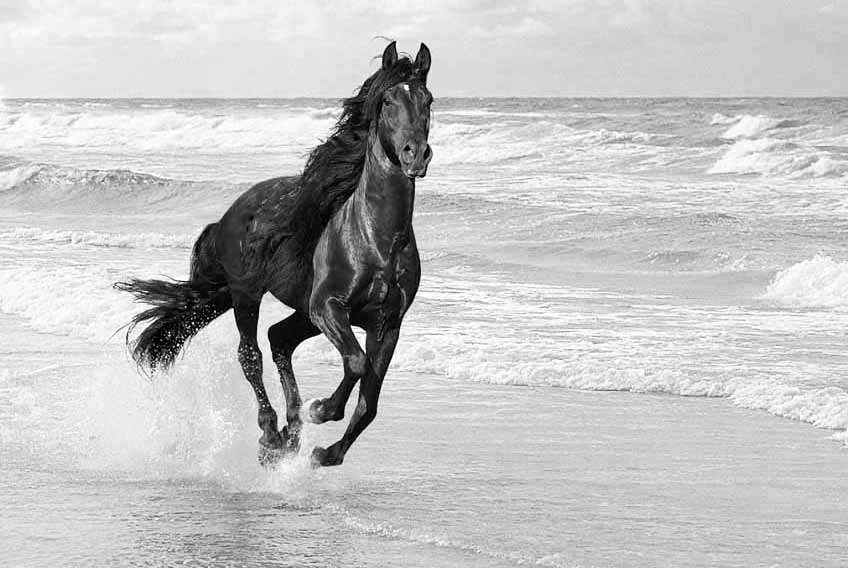
‘It started out as compulsive pattern. I was conditioned to respond to the needs of my environment, and to maintain order. There are exceptions. Some days, it could be the weather, a dream, the stars … from the moment I open my eyes everything flows effortlessly. My brain is relaxed and I attract harmonious thoughts, like I’m fine-tuned to a subtler station, beyond the busy bandwidth of neurotic naggers. The tuning can be learned. It’s like taming a wild horse. I can actually do it, when necessary. But I like letting the horse run wild. I find wild things that way.’

‘We have different conditioning,’ Mesa said. ‘From early on I was trained to tame my mind, to let it rest like a still pond, or focus thoughts like laser beams. Then free play was introduced, disrupting Rhonda’s order, and all went wrong for the Ypoc.’

‘Aha! I bet you didn’t have to juggle a deep conflict, and oppose a controlling father.’

Tilly dropped her knitting. ‘This gets interesting. It’s what Mesa came back for.’

* * *

Apologies: The origin of the image of the horse is unknown to me.  Many thanks to the photographer.

10 Comments

Filed under Blog

… solitude …

Weather-defying, I had my first Pimms with ice cubes this year, imagining warmth, sun, swinging in my hammock under apple blossoms, listening to birds, walking barefoot and having friends round to watch the sun go down and the moon come up. The Brits are fed up with the rain. More than darkening the sun, clouds also obstruct the brighter aspects of the mind. Signals from the noosphere get muffled, or so it seems. There remains solitude, a tranquil space where questions arise, and thoughts have space to dream and play without being overstimulated. Allow your children periods of solitude and they will come to value it later in life.

I mulled over a question these last days, not for the first time. And an answer came, an angel whispered it into my ear while I slept – if all incarnated beings living on this planet were enlightened at the same time, the whole developmental cycle of the psyche would collapse, and consciousness would expand into a new matrix all over again. I’m making no claim to truth, angels can’t always be trusted. But the message seems to be – all is well-tuned as it is.

This is what solitude does to me – I get answers that beg more questions, like, what about multiverses? My body lives in this house in England that is at times difficult to maintain, but my mind also has another house, an interior house, free from mundane pressures, a house that exists in a dimension invisible to the physical eye … built from bricks of meaning rather than clay.

Here to the Noosphere, an interesting concept:  http://en.wikipedia.org/wiki/Noosphere

7 Comments

Filed under Blog

… lap of fate … part five

This is the fifth and final part of a short story inspired during a recent visit to Spain. If you enjoyed the read, and are so inspired, please leave me some much needed feedback in the comment section. I’m happy to return the favour, and will soon do reviews again. If you have come here for the first time, you might want to scroll down the home page to get to ‘part one’ of the short story, posted on April 30th. Thanks you dear readers who followed the evolving narrative, and those of you who left comments and/or pressed the ‘like’ button.

I’m still learning how to operate this site, but this is post no 80 since I started this blog last April … hurrah! And I have another reason to celebrate. A dear friend helped me today clean up the first three chapters of my novel, Course of Mirrors, a final leap towards sending out queries. No more excuses.

*    *    *

Here then the final instalment of … Lap of Fate

… The weight of my revelation receded like a wave sucked back into the sea. Confused by the señora’s flat response, I latched onto the distraction of soft paws resounding from the spiral stairs. Abu, the dog, poked his head through the opening to sample the mood. Neck tilted, he sneaked towards me and pushed his wet snout into my lap. Touched by his show of affection, I stroked his pelt, at which he burst into a whirling dance, trying to catch his own tail. Abu’s antics dispersed the static air around my chest. I cried and laughed in one.

The senora’s worried face softened to a smile. ‘What a pretty dog.’

Straightening her back, she regarded me as if seeing me for the first time. ‘My dear child,’ she said. ‘You released a ghost I created. Antonio may or may not have believed my story. The truth is, I miscarried at four months, there was no Juanita, but I had so strongly wanted her to exist in the world, like a fresh and blameless me, I made her up.’

I flinched, recalling my own painful miscarriage, when a river of hormones came to a drastic halt and left a dark hole in my body, like a consuming abyss. I had other children, who thrived. Though my past held secrets, it never detained me from living, unlike the señora, whose child was held captive in the tabernacle of this studio.

‘Antonio cherished me. He was intuitive. He sought to restore my creative spirit by painting me expectant.’ Her shoulders dropped. ‘He died. I was desolate and clung to my old story, imagining Juanita out there in the world having a better chance at life. I must have dreamed you into being.’

The synchronicity of our longing astounded. ‘When I learned of my adoption, I started daydreaming too, convinced my birthmother was out there somewhere regretting her decision to abandon me. I imagined her looking for me, wanting me back.’

Her eyes shone as she took my hands. ‘Does it matter – mi angel?’ she said. ‘All children, born from mind or body, are wanted by life. They deserve to be loved.’

A car horn sounded.

‘Oh dear, we must apologise to the agent,’ she said.

I begged her to stay on, offering a lift to her hotel later in the day. The senora accepted, which freed the agent to drive back to town. His wide grin showed he was happy my break-in had been absolved, and I had made friends with his client.

Alma was her name. Alma Ruiz Gonzales. First, we opened all shutters of the studio to let the sun in and more – a peculiar hint from heaven. Light coming from a far window hit a round mirror standing at an angle on the wall. The reflection in the glass rebounded to cast a circular sunspot on one of the paintings, framing the cardinal with the girl sitting on his lap.

Alma shrieked – with excitement, struck by a sudden idea. With her dazzling crown of hair she looked like a crazed woman as she rummaged in a toolbox. In triumph, she held up a Stanley knife. I thought for a moment she was going to lash out and slash the painting. Instead she found a sharp pen, marked the lit area on the canvas, cautiously inserted the knife, and began to cut with small sawing movements round the curved line. It may have been poor eyesight, but it seemed as if  she put her ear to the cleaving sound of the blade. Her lean and leathery hands nudged along with amazing precision, until the severed circular shape could be lifted from the canvas. Her dedication was riveting. Moving on to the second painting, of the cardinal with the snake in his lap, she cleanly sliced out another circle. Both canvases now had a hole large enough to crawl through, edged only by the backdrop of lavish chandeliers, a facet of the cardinal’s scarlet skull-cap and his polished shoes.

‘Why waste good frames?’ she said.

I shook with laughter, bringing Alma to the edge of hysterics. She slumped on a chair to clutch her belly. Our unrestrained mirth thoroughly cleared the air of any lingering ghosts.

I suggested we eat something. Alma opened the backdoor to an enclosed courtyard adjoining the semi. She wiped clean a bench and table, while I fed Abu more of my chocolate and prepared a snack for Alma and me. We had our meal in the yard and chatted about mundane things, like the weather, and neighbours.

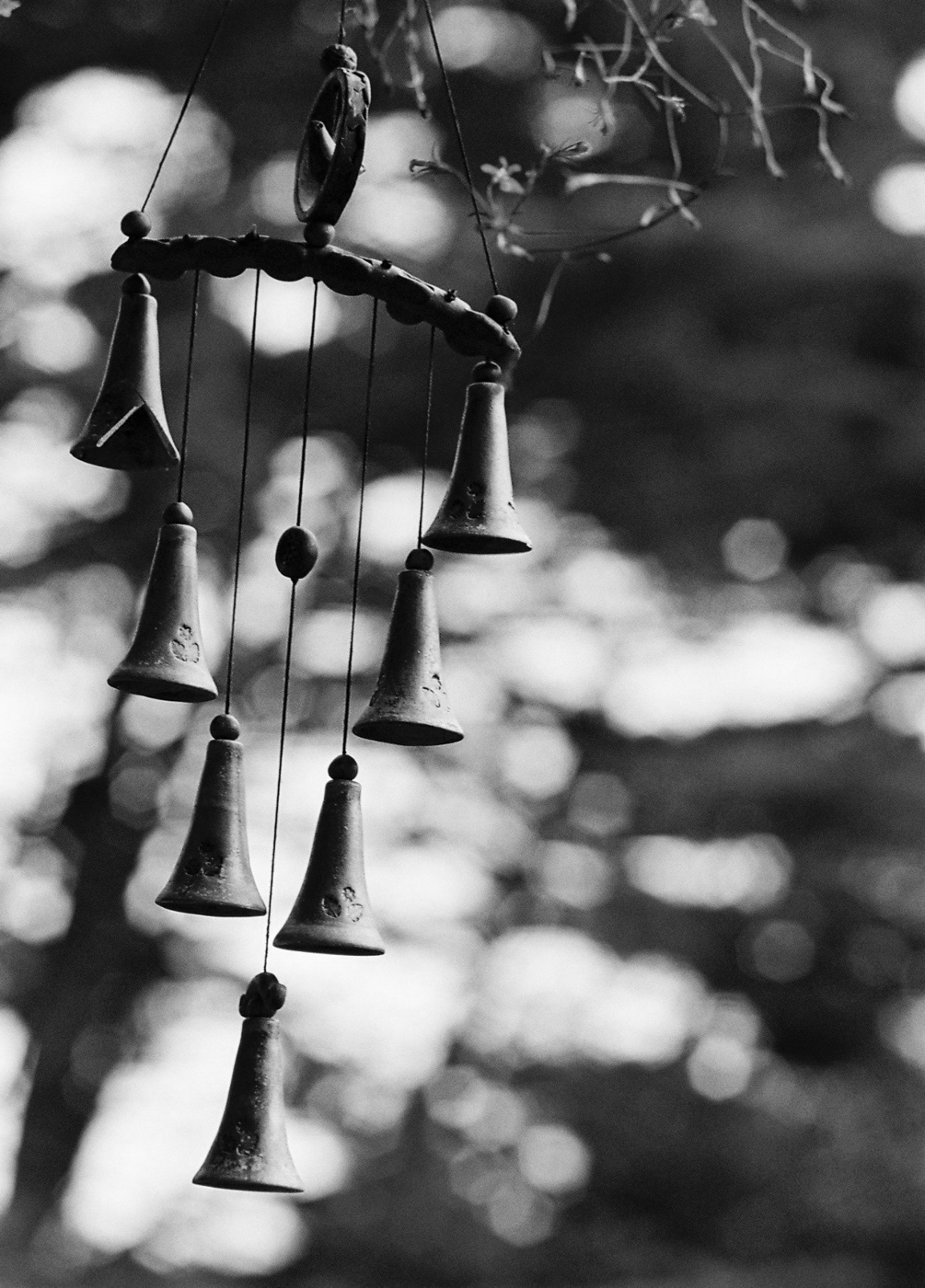
I poured us some Merlot. During an isle of silence, the chime bells in a nearby branch moved to a breeze. The melodious ring unsealed more tragedy. Alma shared she had given birth to an actual child, from Antonio, a son, who was stillborn.

‘It’s odd, but at the time I thought of the cardinal’s fixation on me,’ she said, ‘it could have been him … trying to return. Maybe his soul feared I would make his life a misery.’

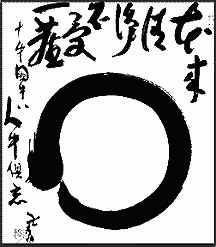
Mother, Son and a not-so Holy Ghost, I thought. There is no end to the novel ways we make sense of what happens to us. And until we mourn our losses and move on, the meaning we give to what life throws at us could be right, or wrong.

After our meal we went to work. During sunset, the art world was impiously deprived.  The cut-out centrepieces of two magnificent paintings, depicting a cardinal’s obsession, were released into the ether. The fire was moderate, and held in check by a bed of stones. Leaning on her cane, Alma watched the flames lick at the snake and gnaw at the flawed beatitude of her abuser. ‘May his soul find peace,’ she said.

The historic aura of the paintings mingled with the cooling air in the hills of Granada and rearranged the past. Brilliant purple, white and scarlet paint simmered and charred, turning canvas into a crumbly leaden tablet with white markings that looked very much like a snake eating its own tail.

*    *    *

11 Comments

Filed under Blog

… lap of fate … part four

The fourth sequence …  not the last yet … if you like to read the whole story so far, scroll down the page to part one.

*    *    *

Silence contains an ocean of possibilities. The silence between us churned with muffled presences pushing up for light and air. Breaking into the old woman’s secret tabernacle had been wrong, and yet, curiously apt. I felt the same inevitability when I saw the house for the first time. Words buzzed in my mind, vying for attention, wanting out. I took a risk. ‘They’re masterful paintings,’ I said, ‘and deeply stirring.’

She faced me, the stranger mirroring her grief. And, as if she craved the occasion to share this burden of her conflict, tears came, unchecked. I helped her to a chair.

‘Esta bien?’ the agent called from the bottom of the stairs, probing, to allay his unease.

‘Toda esta bien,’ she sobbed, ‘espere en el coche.’ She sent the man to wait in his car, and added, to my amazement, ‘Dejame en paz con mi angel ingles.’ I had been called many things before, but never an angel. She pointed to the cardinal. ‘Los Rojos … fue asesinado.’ There was no anger in her voice, only sadness. From what I had read of events during the Spanish Civil War, and the Red Terror, the cardinal must have died a terrible death.

I pulled up a chair and gently touched her back, picking up a dull quiver, as from the neglected body of a guitar that lacks timbre. I had met women and men trying to come to terms with incestuous compulsions, victims and perpetrators, yearning for spiritual love. Some never strike the right note to connect heaven and earth, like the cardinal, a child-man, who sought innocence and destroyed it.

‘I was a daughter to him. He spoiled me.’

‘You speak English!’

‘I went to live in London when I came of age.’ Sensing my tolerance, she said, almost inaudible, ‘I worked there for many years … in a nightclub … until I met my love, Antonio.’

‘The painter!’

‘Yes.’ She reached across the table for an object wrapped in black silk and unpeeled a small canvas. Her fingertips traced over painted brows before she handed me the mediocre portrait of a sombre man, whose eyes were nevertheless genial, even humorous. ‘Not a good likeness, I can’t paint well,’ she said. ‘I only copy surfaces. He was the artist. He perceived through the heart.’

‘You caught his spirit,’ I said. ‘As for his brilliant art, you allowed him to see your truth, in that place where betrayed hearts waver in a limbo of doubt.’

‘Yes, you understand. His seeing helped me endure the contradictions. Still …’ she looked through fresh tears towards the painting of herself in the shadow, ‘… the past ensnares.’

On impulse, I held the candle to the woman’s naked image among snakes and noticed what I had missed, the slight bulge of her belly.

‘I told Antonio of my years in London. How I got myself pregnant and gave birth between the pews of a church. How I couldn’t care for the girl and never heard what happened after I left her on a bench,  clean, wrapped up warm, with a name written on her belly, Juanita. Later, there was nothing about the event in the news. Nothing, as if she never existed.’

In my ears rung the refrain – she never existed. Thoughts raced. I had been abandoned, and was adopted. My mother found me in a chapel near Basing. No other woman ever claimed me.

She sensed my distress and misread its source. ‘St Patrick’s Church was a safe place. There was no 0ne I could trust. My work in London was illegal.’

A nauseating sensation of floating made me clasp the frame of my chair. St Patrick was mother’s favourite saint. My parents moved from Soho to Hampshire when I came into their lives. Before I knew of my adoption, father once remarked about a streak of Spanish blood in his family, to justify my dark hair.

The woman looked forlorn, gazing inward. ‘It’s a dream I must let go,’ she said.

Palms sweating, I likened myself to the woman before me, her intense blue eyes, and the shape of her forehead, elongated fingers … ‘What year was it?’ The question burst out involuntarily. Embarrassed, I added, ‘Sorry, it’s none of my business. I shouldn’t pry.’

She absorbed herself in the layers of cracked paint coating the floorboards. ‘I think it was the year this man, Armstrong, stepped on the moon with the wrong foot.’

‘The wrong foot?’

‘The left foot! It was on TV…’ She looked up. ‘Or maybe it was the year before.’

Hysterical – comedy and tragedy blurred. She couldn’t even remember the year.

‘Why do you ask?’

A genuine concern in her voice made me respond, ‘I was adopted in 1967.’ Wasted words, she had not heard me. Lost in a faraway place, she said, ‘So long ago.’

My anguish finally caught her attention. She pressed my hand. ‘What’s wrong dear?’

I had started this madness with my fixation on the hacienda. I raised the stakes with my blind bet on the semi. And now I pledged my heart on a wild speculation over my birth. The senora’s recall was nebulous, as through a misted glass. My hope was based on nothing but fuzzy coincidences. And the dots I was joining up might yield no more than bizarre scribbles, but it was too late to quit. The dim studio space with its little stray light and the lone flame of a candle had become a womb. I wanted the shutters open. As my chest tightened with apprehension, I jumped to my feet and walked round my chair. Catching my breath, I braved the truth. I faced the old lady and filled in my fantasy:

‘Imagine a woman after a string of miscarriages. She finds Juanita in St Patrick’s Church and thinks her favourite saint granted her prayers. She whisks the infant off to a chapel in Hampshire to blur the trail in case the birth-mother has regrets … I was adopted and called Jane. My birth certificate shows 10 July 1967.’

The senora swallowed her breath. ‘A mi Dios …’

Her exclamation was one of mild surprise. Nothing. No heart-rocking epiphany, no jubilant outburst, no falling into each other’s arms. No … something was terribly wrong …

On more instalment at … https://courseofmirrors.wordpress.com/2012/02/18/lap-of-fate-part-five/

7 Comments

Filed under Blog

… lap of fate … part three

Anticipated by some, here is another instalment of Lap of Fate The short story is under construction and open to changes. I am grateful, well, hungry for feedback. Thanks.

*    *    *

I recited a short prayer and pushed the wall section until the opening was big enough to step through. The staircase! … I rushed to get a candle. Bracing myself, I climbed up the spiral, shielding the wavering candle-flame with my hand. Sunlight needled through the shutters and revealed a lofty space with a further staircase leading to galleried sections under the roof.

I noticed a scattering of shrivelled oil-paints tubes, brushes in jars and an array of structures. Three easels held frames shrouded by dust-sheets. I removed the first covering. An exquisite oil painting of a beautiful woman standing naked and serene, eyes closed, in a pit of snakes –  so lifelike I expected them to slip from the canvas and drop to the floor.

Absurd, how slithery creatures scare and repulse me. My feet itched to run. Instead, I warmed to the composed calm of the woman and had the sensation of a déjà vu that felt strangely like coming home.

Feeling brave, I pulled away the cloth from the second frame. Clergy never appealed to me, though this seated, scarlet-clad cardinal beguiled me with a beatific smile … until I noticed his hands caressing a snake coiled in his lap.

I drew back, not from the snake, whose singularity had a stylised quality,  but from the allusion that piety and sexuality might energise each other, and the underlying desire for unity could be seen to satisfy the same end. An idea my adopted mother might have called blasphemous. The painting would cause a scandal in this still deeply-religious country. I stretched my imagination towards a symbolic interpretation, the lore of circular time, but dismissed it as an excuse to silence lingering doubts. I began to grasp the ambiguity behind keeping this space in darkness. Yet there was a sincerity. The depiction of sexuality, intimacy, devotion and parody showed no attempt to glorify or vilify.

Contents aside, I was awed by the genius of the artist and anticipated another masterpiece, being fairly snug about my capacity for tolerance. The third painting made me flinch – the same clergyman in the same chair, rapt by the same exalted smile. His frock parted, he held a young girl to his lap. What made the image truly disturbing were the hands of the man, fine hands, bunching the girl’s lifted nightdress round her waist ….

Abu was barking outside. I had been too captivated to hear the car. ‘Oh Madre de dios … me ayude!’ A woman sounded hysterical as she dragged herself up the narrow stairway, causing the metal structure to judder with the clanging prod of her cane.

‘La senora!’ called the familiar voice of the agent, anxious for his client.

‘Su estancia alli abajo, el Sr Lopez Diaz.’ The harsh command warned him to stay out of this.

I stuck my candle to the last easel and faced the inevitable showdown. A shock of white hair surfaced from the stair-hole. Fragile, much older than I had expected, she gave the impression of a china doll, dressed with meticulous care. Her gaunt body was dominated by intense blue eyes. Like mine – a fleeting thought. She was the woman in the first painting, and the girl whose trust and dependency for love was exploited by the cardinal. I reached out – afraid she might fall, but remained rooted to the spot, petrified. The exposed paintings seemed to claim her, pull at her with invisible tentacles. Finally she gasped for breath and shuffled to a table for support. She shot me an anxious glance, weighed my reaction to the appalling image, and stepped towards it, leaning forward on her cane. I sensed a struggle, as if she tried to borrow my eyes, while hers misted, veiling infinite sadness.

Candlelight caught on the cardinal’s scarlet skull-cap, the pale legs of the girl, and the angelic face, raised adoringly towards her abuser’s smile …

Continued at … https://courseofmirrors.wordpress.com/2012/02/12/lap-of-fate-part-four/

8 Comments

Filed under Blog

… lap of fate … part two

The second part of the short story inspired by a recent visit to Spain. As events unfold, I may insert subtle alterations to earlier instalments.

*    *    *

That moment my mobile played its carefree tune. Here comes the sun … I knew it would be the agent, having second thoughts about allowing a single, middle-aged woman to camp in a deserted house. I fumbled in my bag on the floor for the phone. ‘Hello. Yes, yes, gracias. I’m fine. Chimney … flue is clear, all cosy with the fire. And the night sky is magnificent … no, no, I’ve everything I need … yes, todo está bien. Thanks again. Bye, bye.’

The super-dry logs had burned to embers and a threat lurked in the far corner. I conjured up creatures coiled to jump at me any moment. Snakes! Oh no, big mistake, don’t think of snakes. I lay motionless. Blinking, to keep my eyes open, I stared across and beyond the floor to where I thought the thing was hiding. I saw a glitter there. I felt observed.

A growl – or was it a lament? My heart thumped in my throat as I reached into my bag for the tobacco-pouch. I flicked my lighter, lit a candle and held it up.  Curled on the heap of rags to where I had brushed the scraps earlier was a dog, a slight, elegant creature with short pale pelt. Its wild, not fearful, but contesting this-is-my-territory look fixed on me. Cornered dogs were dangerous, though this one chose the risk. To confront a human intruder takes courage. Water, food, some gesture was needed to befriend the animal.

In slow motion I shifted my feet to the ground, unscrewed the bottle of water next to my bed and walked towards the stone-ledge round the chimney where I had dumped my cooking gear. I lit a candle and poured water into a bowl. My movements were tracked for the slightest sign of mismatch. I set the bowl down in the middle of the room and retreated to my bed. Exhausted from the effort, I rolled myself a cigarette.

The dog didn’t stir. ‘Come on, the water is for you.’ Ears perked, that was all. Our eyes locked in combat – a staring test. ‘What do you want?’ I got up and broke off a piece from my bread, added a chunk of goat’s cheese and placed the morsels next to the water. Back under my blankets I prepared myself for a long wait.

From outside came a bark. My visitor growled.  Company was unwelcome. There must be an opening for animals to slip in to the house. Tomorrow I would camp upstairs and close the door on me. Tomorrow was a long way off. My thoughts drifted to Cora, the puppy that had been given to me for my tenth’s birthday, a spaniel. Neighbours adopted her when my father died and we moved into an apartment. Cora liked chocolate.

A slight thud – snakelike, the dog slid along the floor towards the offerings. Outside another bark broke the silence. My friend tensed but kept quiet. Did I think  – my friend? After careful sniffing he daintily consumed the meal, and, without giving me another glance, bounced from the room and disappeared. The presence of a dog that had eaten my food was oddly reassuring. I blew out the candle and fell asleep.

A chorus of birds signalled sunrise. I glanced to the corner of the room now empty of last night’s visitor. The rags turned out to be a frayed woollen cape and shreds of trousers splattered with oil paint, bringing the mysterious artist to mind. With an urgent need to freshen up and explore I skipped breakfast and made for the stream. The clear water purled through my hands like liquid gems. I splashed my face and would take a dip later on. Looking back at the house it appeared seamless, as one, but for the bleak air surrounding the semi.

There are instances when man-made laws ask for transgression. My state-of-the art Swiss army knife had a screwdriver. I detached the padlock from one of the spider-webbed shutters. Peering into the twilight, there were rattan chairs, a round table, dated kitchen facilities and an ornate spiral staircase near the partition wall, against which was an empty shelf.

A snarling – my friend. ‘What’s the matter with you?’ I screwed the padlock back into position. To pacify the dog, I surrendered a bite of my treasured dark chocolate and made sure all food was out of reach on the chimney mantle. While he devoured the treat, I moved across the hall into the rooms adjoining the semi and noticed a shelf looking similar to the one on the other side. My new friend had sneaked up and was yapping. His puzzling behaviour and the coincident of fixed shelves on both sides of the wall in the same position sparked an idea. In the past, my shots in the dark had been rewarding, giving me a certain confidence in areas of the immeasurable.

The sound of a rough engine labouring up the hill distracted my musings. Annoyed, I went to check on the intrusion – a banged-up jeep. The local farmer wanted to know what was going on. In my broken Spanish I said I was planning to buy the property and had been allowed to stay here. The furrow between his brows deepened. He waved an arm, ‘Asustado,’ he said.

‘Un momento!’ I ran to fetch my dictionary.

‘Frecuentado por fantasmas,’ he emphasized on my return.

‘Yo no creo en fantasmas,’ I said, standing my ground.

He shook his head and forcefully reversed the car. I caught ‘turista estupido’ before the jeep vanished in a plume of dust.  So the place was spooked, or neighbours wanted me to believe so. Not that I disrespected ghosts. They gave an edge to my goal, is how I saw it.

The dog re-appeared. ‘You must be the guardian of this place,’ I said. He wagged his tail. Finally – an acknowledgement of my presence – and acceptance. I smiled and went to boil water for a much desired cup of coffee. ‘I’ll call you Abu,’ I said, rolling a cigarette, at which he wagged his tail with even more enthusiasm. There was text on my mobile, a message from the agent. ‘Owner expected today. She not sell semi yet but reduce price.’

My mind quickened. She needed the money. I would tackle the ghosts and buy the entire house. Back at the partition wall, I scanned every inch of the shelf and discovered a hook behind a plank. I pulled. Nothing happened. I pulled again and pushed at the same time – the whole shelving creaked and shifted. Abu’s frantic bark made me twinge. His pelt of hair stood on ends.  He tucked in his tail and sprinted off as if chased by an abysmal force …

Continued at  … https://courseofmirrors.wordpress.com/2012/02/06/lap-of-fate-part-three/

6 Comments

Filed under Blog

… lap of fate … part one

Part one of a short story inspired by a visit to Spain … please note, all characters are invented.

*    *    *

’No worry, ‘he said during my first viewing. ‘ Solo tiene valor sentimental para la señora …’ meaning, I guessed, the semi-detached part of the house had only sentimental value for the old lady. He was cautious with words, and my Spanish dismal or I would have pushed for more information.  By chance, the elderly expat owner of a local restaurant was more forthcoming.

‘Hacienda Colina, you want to buy the abandoned place? I remember Señora Ruiz Gonzales. She dined here on rare occasions, with her artist friend, a mysterious man. There was gossip.’

She had offered bait, I asked, ‘What about?’

‘They weren’t married.’ I shrugged my shoulders. She nodded. ‘People are biased. I heard her parents died young. She grew up in a convent. When she returned to live here with her painter, she was, well, let’s say mature,’ a laugh escaped her, ‘like me.’

‘What happened, why did she leave?’

‘Her lover died. Let’s see … sixteen years ago.’ The woman pressed a hand to her heart. ‘The señora  moved to Barcelona.’ It seemed rude to pry further. A last snippet came. ‘She returns annually to commemorate her friend.’

The discreet agent had hinted at an unfinished tale. And, as if anticipating a resolution, he promised, ‘You get first right to buy semi,’ stressing it was not a financial issue.

Hoping to learn more, I had asked him. ‘Can I look inside?’

‘Sorry, no key.’

Not even a glimpse. Window- shutters were closed and secured. My obvious disappointment and desire to buy made him agreeable to let me camp in the main house for a week. I assured him I would make do with the poor facilities. It was a blind bet, but I wanted to know the spirit of the place.

A writer’s dream – the worn two-story house nestling against the hill in the afternoon sun had golden mean proportions that intuitively appealed and captured my heart yet again. There was rightness about this spot in the hills of Granada. I would put my English home on the market as soon as had clarity about this property, especially the wing I wanted included in the sale.

Navigating potholes during the last stretch, I scraped the exhaust of my rental car. A four-wheeler, like the agent’s, would have been sensible. As well I brought all basic supplies for the week, including incense, candles and broom. Water and power were laid on but not connected, a small matter. I carried bottled water,  gas-cooker and blankets. And stored in a shed smothered by rampant honeysuckle, there was plenty of wood, though no fires had been lit in the dwelling for years. The agent had been philosophical. ‘Smoke in room means birds have built nest in chimney.’

One hour of sunlight left. I parked at the arched side gate, turned off the engine and savoured the silence, made exquisite by the murmur of a small stream close by. A familiar inner voice scoffed – the peace will be ruptured if anyone were to occupy the semi. I warned the critic – get lost – and walked round to the front. No fancy terraces here, Spanish peasants had worked hard to survive and overcome the prejudice against olive oil.

They would have found scarce time to laze and adore the gnarled trees, their crowns iridescent like clouds of dragonfly wings against the slanting rays of the sun. Beyond, the south-western valley filled with muted light. I would build French doors and a balcony to the upstairs bedrooms, providing a covered porch below. The design was clear in my mind, down to the wine and fig plants growing up the posts. And a dip further down the slope was  asking  for the purple rain of a jacaranda tree. I already saw myself sitting under the porch, writing my next novel.

Work to be done before nightfall. I let myself in to the hall and opened the window in a front room that had a large fireplace. I gathered an armful of kindling from the olive orchard and set it alight in the hearth. First victory, no bird nests blocked the flue! I brought in chunky logs from the shed and stoked up the fire.

Before getting food and bedding from the car, I swept dust and litter into one corner where there was already a pile of rags. Once I had placed candles all round and set out generous amounts of my favourite Japanese incense the room was transformed. With a little bread, cheese and a bottle of Merlot, I sat out front on a rock to watch the hills sharpen to black topped by luminous purple.

My desire for change was urgent. I felt overwhelmed by excess information, excess communication and excess demands, having lived in one place for far too long. But what was I doing here, in this desolate spot, discounting the probable myth of a Spanish ancestor, what was I seeking to unearth through solitude?

Inside, the fire glowed and crackled. I pushed an old table to the window and sat on a rickety chair looking up at the darkening sky. The empty page of a notebook remained just that, empty. Grimy walls swallowed the light my sea of candles might otherwise have reflected. I grabbed a blanket and went outside. With only a faint sliver of moon, the brilliant copula of stars dispersed my fussy mood. Yes, I wanted solitude, the rawness of nature and an open link with the cosmos, vast space to connect up the most vibrant threads of my life, to create stories that made sense. Instead of spinning more silk, I was going to weave inspired tapestries.

I locked the outer gate and, from habit, left the inner doors ajar. Bliss – days ahead with no junk through the letterbox, no e-mails, no obligations – a week of reflection and tranquillity. I unfolded the camping bed, arranged my blankets and blew out all candles. The glowing logs cast a ring of mellow light. Images returned, from today’s hectic shopping spree for my survival kit. Sleep did not come. The warren of empty rooms played tricks on me. What had possessed me to come here alone?

Twisting shadows pranced across the ceiling. I shut my eyes, imagining the colours and fabrics I would transport here to soften the place.

A scream pierced the silence, something outside, an animal. The window had none of the iron grids usual for this area, and it was open. High enough, I thought. Nobody could climb through unless they used a ladder. Of course, a bat or an owl could fly in. Gosh, where did all these stupid thoughts come from? A flash alerted, not of light, but of a dark shape intercepting the illuminated space before the fire. My food bags must have attracted a rat. The shape swelled in size and seemed to retreat into a corner. My rational voice demanded I shine my torch onto the creature. My torch, I realised, was at the hotel, the last item on the table, left behind  …

*    *    *

Continued at … https://courseofmirrors.wordpress.com/2012/02/02/lap-of-fate-part-two/

11 Comments

Filed under Blog