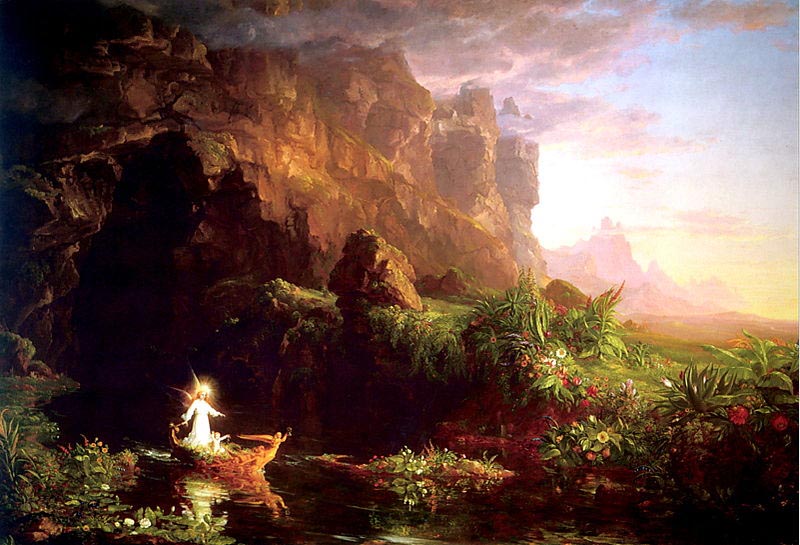
… pattern which connects …

For a recent book-sharing with a group of irreverent friends (archventures), I had the wish to share so many books that I instinctively reached more or less blindly into one of my shelves. Books in my home, I must add, are in a muddle. The only order to speak of is their relationship to each other through time. I picked Alice in Wonderland and Mind and Nature. During our afternoon of reading there was not enough time to do honour to the latter, Gregory Bateson’s work. So I said I’d write up something. Oh dear. After pages and pages, I finally recalled this was supposed to be a blog-post, not a novel .

I first came upon Gregory Bateson books, ‘Steps to an Ecology of Mind’ and ‘Mind and Nature,’ during the early 1980’s, after his death. The clarity of his notion that biological forms arrange themselves through relationships struck a deep chord. What totally resonated with me was his thought that the structure of nature and the structure of mind are reflections of each other.  He had a broad perspective for a Biologist, and wanted to build a bridge between the facts of life and behaviour, and what we know of the nature of pattern and order. He was active in, and connected up many different fields of study – anthropology, psychiatry, biological evolution and genetics and the new epistemology which comes out of system-theory and ecology. He challenged basic assumptions and methods of scientific investigations, pointing to the processes beneath structures. He quoted Goethe …

A stem is what bears leaves

A leaf is that which has a bud in its angle

A stem is what was once a bud in that position …

And he provoked new thinking: ‘What pattern connects the crab to the lobster and the orchid to the primrose and all four of them to me. And me to you?’ 

His interest in morphology, the study of structure and form of organisms, involved context, meaning and communication. He distrusted reductive models of cause and effect, the scientific approach that lines up parts and classifies them, focussing on quantity.

Comparing systems, one to another, he perceived the mind as an ecological system. And he used the analogy that ideas, like seeds, can only take root and flourish according to the nature of the system receiving them. This thought alone deserves deep contemplation.

He had a way with stories … ‘There was a man who had a powerful computer, and he wanted to know whether computers could ever think. So he asked it – Will you ever be able to think like a human being? – The computer clicked and rattled and blinked, and finally it printed out its answer on a piece of paper, as these machines do. The man ran to pick up the printout, and there, neatly typed, read the following words: ‘That reminds me of a story.’ 

Concerned about the decimation of aboriginal populations (he did field-work with Margaret Mead), the degradation of ecological systems, economic oppression, and senseless wars and arms races, he took these ominous signs of contemporary life to be manifestations of deeper disorders, which he defined in terms of cybernetic systems of communication and meaning that comprise life, mind, and society. In his view, consciousness dominated by purposeful thought has a linear structure that establishes goals and ways for attaining them without being necessarily sensitive to the circular network of cause and effect that orders the systems.

Looking at human consciousness as an adaptive system, he thought the cure for its inadequacies, evidenced by the negative side-effects of purposive rationality, was not to reject it in favour of a passionate non- rationality, as in the extreme romantic position, but to augment and complete it by engaging with non-discursive, pattern-comprehending and emotional processes. He advocated the befriending of the unconscious aspects of the mind through utilising images and metaphors.

In a civilization which separates mind from body, mythologies about the survival of a transcendent mind are often meant to soften the idea of death, or even deny death as part of life. For Bateson, who saw the mind as being immanent not only in pathways of information which are located inside the body but also in external pathways, death took on a different aspect. ‘The individual nexus of pathways which I call ‘me’ is no longer so precious because that nexus is only part of a larger mind. The ideas which seemed to be me can also become immanent in you. May they survive, if true.’  (Afterword to a collection of celebratory essays, 1972)

Yet there are scientists that can no more perceive the language of nature, and politicians who feel beleaguered by sections of society that seek balance and a fresh context towards ‘an ecology of mind.’  The extreme factions of believers, for what else are they, should look again at the bridge  Bateson prepared.


This lovely video gives a taste of what it is all about :

Update … I discovered recently, in 2019, that some the links in this post don’t seem to work anymore. Here , however, is his daughter’s great documentary on Vimeo, unfortunately not free, apart from the trailer.  https://vimeo.com/ondemand/bateson

Looking at the structure of nature and the structure of mind being reflections of each other, it becomes obvious that not only does nature mirror our habit of thinking, but our thinking also mirrors the state of nature. Ecology and psychology must therefore both engage in listening, and seeing, and working ceaselessly towards the integration of knowledge and the re-adjustment of a dynamic balance.

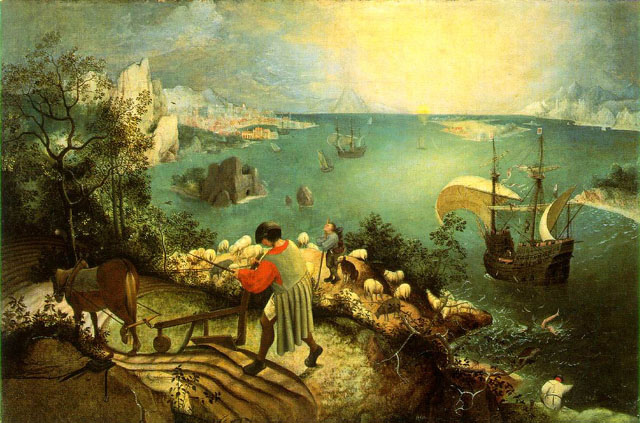
I could go on, but want to bring in a famous painting of Icarus by Brueghel.                                                             Anthony Stevens, a brilliant expositor of Jung’s thought, used the painting as cover for the first hard-cover edition (1995) of his book Private Myths.

http://www.anthonystevens.co.uk/index.html


Stevens quotes from a poem by Wystan Auden:

In Brueghel’s Icarus, for instance: how everything turns away

Quite leisurely from the disaster; the ploughman may

Have heard the splash, the forsaken cry,

But for him it was not an important failure; the sun shone

As it had to on the white legs disappearing into the green

Water; and the expensive delicate ship that must have seen

Something amazing, a boy falling out of the sky,

Had somewhere to get to and sailed calmly on.

What goes up must come down. Who knows how many Big Bangs there were before the one we so ardently explore? There is an organising intelligence behind life’s cycles, while consciousness forever expands. Thinking in metaphors we can perceive similar patterns, forms in nature and mind, cosmos and psyche, mirroring each other across scale and time. In other words, life teems with realities we can tune into, as long as we assign context and meaning.

Check out Gregory Bateson’s books ‘Steps to an Ecology of Mind’ and ‘Mind and Nature.

His family continue his work: His daughter Nora and his wife – Mary Catherine Bateson:   http://www.interculturalstudies.org/main.html

Peripheral Vision

 http://www.amazon.com/exec/obidos/tg/detail/-/0060926309/mead2001centenni

Free chapters of Angels Fear:  http://www.oikos.org/angelsfear.htm

Nora Bateson, recently created a film:

http://www.anecologyofmind.com/

Last not least, the themes:  pattern which connects, mirroring and bridging, are subjects of my novels.

25 Comments

Filed under Blog

… Is a parent ever unemployed ? …

Something new – AVAAZ encourages individual campaigns now . I started one. Click the link and read the proposal, and if you like the idea vote for it.

http://www.avaaz.org/en/petition/Put_parents_on_the_payroll/?fHNQuab&pv=0

Yes, it makes sense – put parents on the payroll – tied to the attendance of courses.  Here some more thoughts as to why …

Family structures are changing for a variety of reasons. No use blaming parents and home-makers that are unable to cope. No good romanticising the past. Parents and carers need  support in this time of flux.  New structures are emerging, single parents or carers, for example, seek families of heart and mind. Our policy-makers don’t seem to take note of this phenomenon. Think of independent units around a communal space that would allow socialising and the sharing of skills.

And why not use the psychological knowledge that has been available for decades? Why is this knowledge not disseminated to parents? Corporations require further training from their employees, offer courses that teach people skills, because they realise these skills improve business.

Parenting is important business, without question the most important one.  Years ago, when I was involved with Parent-Link, sharing skills, I had an idea how to create more opportunities for parents and raise their status. You can read about it by clicking on the AVAAZ link above.  And please vote, or come up with your own ideas.

Present social policies often force a mother or father to beg alms from the state, become unemployed. Is a parent ever unemployed?  Children are the future and must concern us all. I meet many parents, who, even with heightened awareness, tenacity, creativity and sacrifice, struggle to stay sane.

Thanks

3 Comments

Filed under Blog

… the wild horse of the mind …

I thought I open the window a bit to what I’m immersed in, drafting the sequel to Course of Mirrors, called Shapers. Another mythic adventure, and more. The short piece below is not representative of the tense action this story has plenty of, but depicts a pivotal moment. The scenery is  Eire, where time-zones overlap. In 2550 AD the island is called Sax, where Rhonda, the super-controlling power, cast their misfits.  In the excerpt below, Tilly (Cassia in Ana’s story) has arranged for Cara and Mesa to meet in Kerry during the 1970s.

The theme touches on the creative process. Something for my writer friends. I welcome any feedback to the draft.

*    *    *

Tilly’s ruined estate on the Kerry peninsula was one among many places around the world where past and future began to cross or run parallel during the 1970s. Not all drop-outs travelling through Derrynane were aware of the phenomenon. Those open to the new wavelengths either tuned in, or received no more than garbled white noise. The going slogan was – love, don’t think – though it should have been – love and think – and stay grounded. These were turbulent times. Traditionalists abhorred the breaking free of conditioning. Leaps into the unknown frightened them.

This is Cara’s time, and these are her thoughts: Personal myth is a complex self-creation, mainly unconscious, but less so once we replace the postulates we inherited with our own, and are drawn to our psychic kin. Every night when the body rests we visit beings in other spheres. We may discount these sojourns as dreams unrelated to our daily existence. Yet bridging occurs when we value inner dynamics and re-story the associative symbols of images. Resonance momentarily fills the void between the known and the unknown, and meaning is assigned to events. Some good people trust in God, but then abnegate their creativity. Are we not the desire of a divine will? Are we not the ears, eyes, nose, hands and feet of a universal intelligence, of which we are the deed? Does not our speech derive from one sound? And is love not the creed that breathes all things and directs the movement of all spheres? I don’t understand the need to prove or disprove a universal intelligence that is within and all around us. The world I create is imperfect and suffers from on-going flux. But I can bring my small flame to its shadows.

Now that Cara’s myth caught up with her, and she was confronted with the net of postulates she had cast into the future. She found herself challenged to engage with what she animated, because she was animated by it.

Gutch spotted Tilly talking to Cara and Mesa in the hall. He was bursting with pleasure. ‘I found my clan,’ he said. ‘This place is teeming with talented actors. We’re going to do some magic theatre. Are you joining us?’

‘I need to take care of something,’ Tilly said. Can you keep an eye on Gart?’

‘That devil had some weird conversion trip and is sound asleep under the table.’

‘Excellent. Let him sleep.’

When Cara and Mesa arrived at the cottage across the atrium, Tilly had lit a fire in the hearth. A nest of chairs invited them, and the smell of fresh coffee. ‘Have some,’ she said, ‘pointing to a steaming pot, ‘and there’s chocolate cake, too.’ Mesa soaked up the atmosphere, transported to Ana’s world, reminded of Cassia’s kitchen. Tilly placed a small leather pouch in Cara’s lap. ‘Here, forged by fire, polished by the sea, a gift of remembrance.’

Cara opened and turned the pouch. A black stone fell into her hand – smooth as marble, yet radiating warmth and shining in the glow of the fire. ‘Ana’s talisman!’

‘Yes, and you might as well own it.’ Tilly paused, gazing into the flames. ‘I have a favour to ask from you, for Mesa’s benefit.’

‘What favour?’ Cara poured cups of coffee for everyone, dished out giant slices of chocolate cake and added a dollop of whipped cream to each.

‘Your future, Cara, has come to visit you. Mesa returned to assimilate what was lost to her. With Ana’s story you re-animated her soul. Certain events in history require beings to return, to right things or bring a message.  Mesa will take on her role in the odyssey of the Ypocs. And she’s going to be the narrator of your story, Cara.’

‘Huh, this takes a leap of the imagination. I haven’t even smoked the weed.’

Tilly smiled. ‘You know what it takes. Uncovering a personal myth is different from writing a Hollywood script. To help Mesa to re-connect with random creative processes, I want you to explain to her in as much detail as possible how your mind works.’

Cara heaved a breath. ‘The idea sucks every thought from my head.’

‘That’s a good start.’

‘All right, here goes a slice of random micro processing … Momentarily stuck with a paragraph, I remember to stretch my legs. In the kitchen I snatch a yogurt from the fridge. I notice a sticky shelf – mental note – clean it soon. Dark clouds gather outside, looks like rain. I run up to the bathroom and close the window. On the way down, I see dust-clouds on the stairs – mental note. Heading for the desk I stop by the fridge again because I’m now really hungry. I prepare a sandwich – mental note – put butter on shopping list. I use the loo – mental note – toilet paper is running out. Telephone rings. The answer machine kicks in. Just as well, I’ll return the call later – mental note. A letter that needs sending sits next to the phone, I put a stamp on it – mental note – post it. A fly is trapped in the window. I release the fly and study a tree out front that leans over and needs pruning. I quickly assess which branch to cut – mental note. Off to my desk. Passing a shelf I spot the book I couldn’t find earlier. What a relief! I plonk it on my research file and am reminded of an article I need to chase – mental note. The sun shines again. I open the backdoor and listen to the birds. Grass needs cutting – mental note. Finally back with my paragraph the writing flows, sheer bliss. At a natural break in the narrative I decide to go shopping. In the car I have an epiphany relating to a character in my story, to do with birds – mental note. The walker I pass reminds me to visit a certain person – mental note. I recall this person collects small antique tins. I could find him a present – mental note. I think of metaphors, how obsessions, like collecting tins, are really personalised teachings – mental note.’

Mesa had listened with rapt attention. ‘What happens to all the mental notes?’

‘Ha, ha … they’re promises. They’re torture. They heap up. They demand execution. My way to deal with accumulative pressures and gain time to focus on my writing is through procrastination. I’ve become patient with nagging voices. They’re not jailors. They’re easily humoured until the time is right for a blitz. Then I act fast and achieve a great deal in a short time, happy to have cleared the space.

‘But why give these mental notes the power of demands over you? Mesa asked.

Cara glanced at Tilly, who had taken up knitting, as if the dialogue bored her.  What was her agenda? Was this really for Mesa’s benefit? Tilly smiled and said, ‘Go on.’

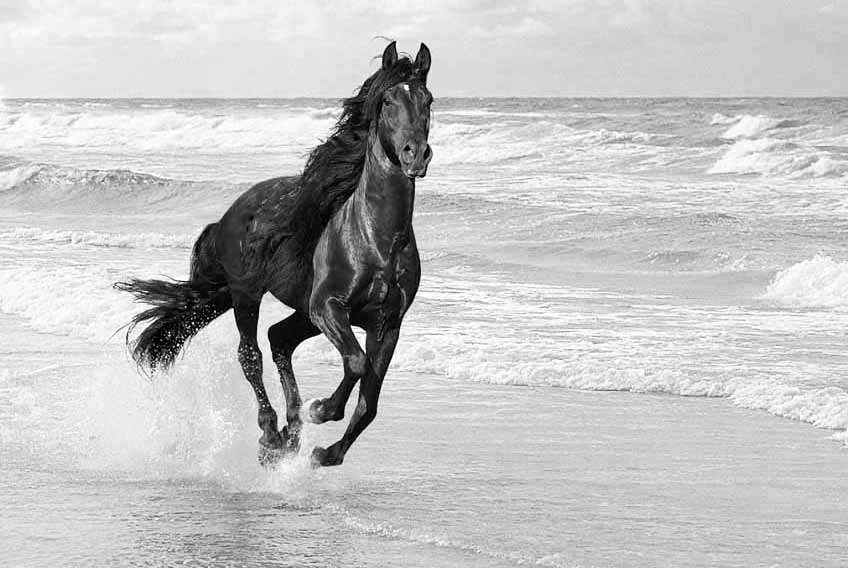
‘It started out as compulsive pattern. I was conditioned to respond to the needs of my environment, and to maintain order. There are exceptions. Some days, it could be the weather, a dream, the stars … from the moment I open my eyes everything flows effortlessly. My brain is relaxed and I attract harmonious thoughts, like I’m fine-tuned to a subtler station, beyond the busy bandwidth of neurotic naggers. The tuning can be learned. It’s like taming a wild horse. I can actually do it, when necessary. But I like letting the horse run wild. I find wild things that way.’

‘We have different conditioning,’ Mesa said. ‘From early on I was trained to tame my mind, to let it rest like a still pond, or focus thoughts like laser beams. Then free play was introduced, disrupting Rhonda’s order, and all went wrong for the Ypoc.’

‘Aha! I bet you didn’t have to juggle a deep conflict, and oppose a controlling father.’

Tilly dropped her knitting. ‘This gets interesting. It’s what Mesa came back for.’

* * *

Apologies: The origin of the image of the horse is unknown to me.  Many thanks to the photographer.

10 Comments

Filed under Blog

… solitude …

Weather-defying, I had my first Pimms with ice cubes this year, imagining warmth, sun, swinging in my hammock under apple blossoms, listening to birds, walking barefoot and having friends round to watch the sun go down and the moon come up. The Brits are fed up with the rain. More than darkening the sun, clouds also obstruct the brighter aspects of the mind. Signals from the noosphere get muffled, or so it seems. There remains solitude, a tranquil space where questions arise, and thoughts have space to dream and play without being overstimulated. Allow your children periods of solitude and they will come to value it later in life.

I mulled over a question these last days, not for the first time. And an answer came, an angel whispered it into my ear while I slept – if all incarnated beings living on this planet were enlightened at the same time, the whole developmental cycle of the psyche would collapse, and consciousness would expand into a new matrix all over again. I’m making no claim to truth, angels can’t always be trusted. But the message seems to be – all is well-tuned as it is.

This is what solitude does to me – I get answers that beg more questions, like, what about multiverses? My body lives in this house in England that is at times difficult to maintain, but my mind also has another house, an interior house, free from mundane pressures, a house that exists in a dimension invisible to the physical eye … built from bricks of meaning rather than clay.

Here to the Noosphere, an interesting concept:  http://en.wikipedia.org/wiki/Noosphere

7 Comments

Filed under Blog

… immortal strawberries …

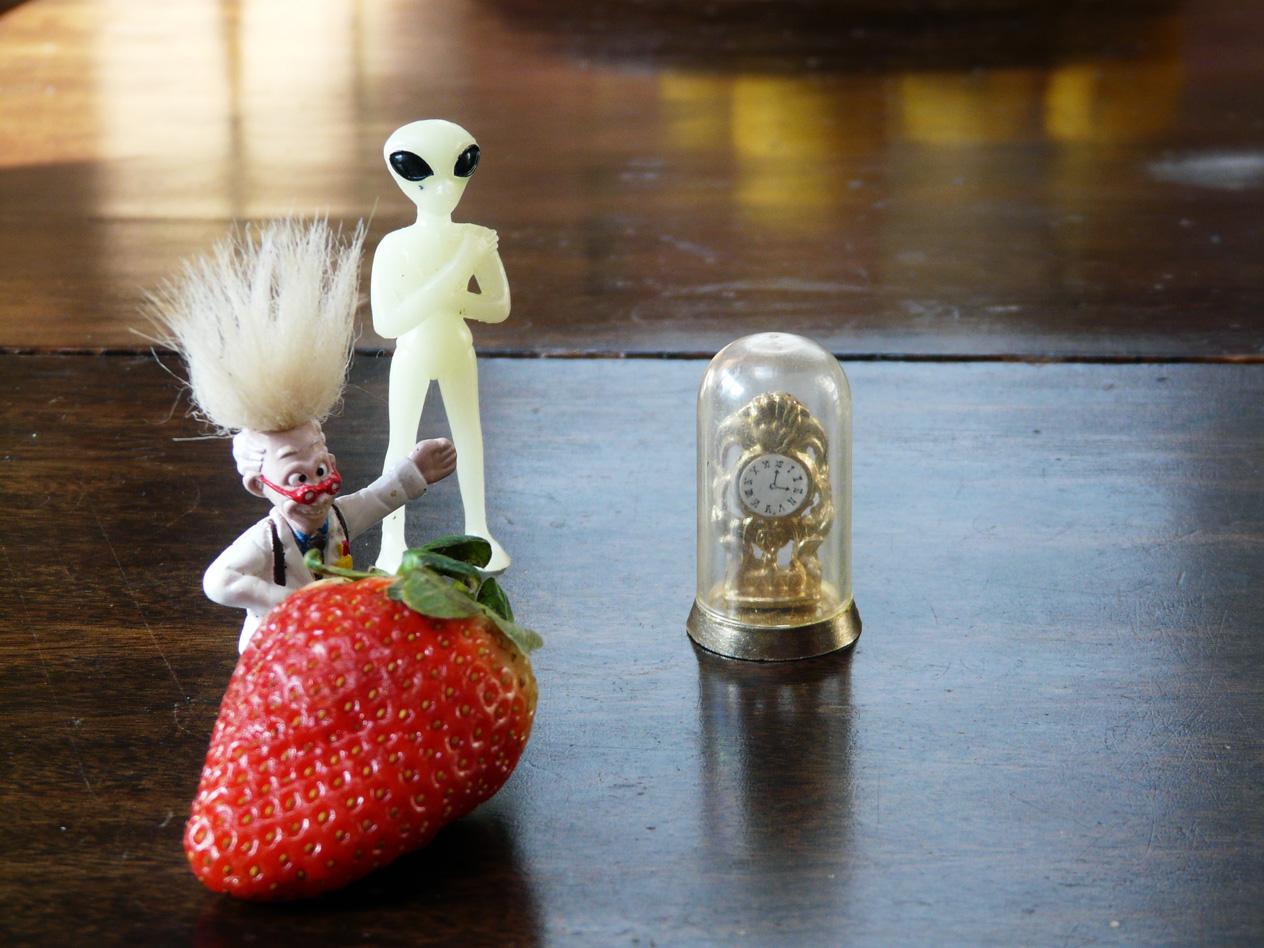
Last week I bought my first strawberries of the year. Not having guests, I used one berry every morning in my muesli for the last seven days. The one in the photo is seven days old – an immortal batch. I suspect irradiation …

Generally, would immortality solve all out problems? I hear you laughing. Think again. The battle is on to eliminate decay, any quirk of nature, and of course the insurance claims in the waiting when technologies go wrong, and equally when what is known is not applied. (I wished the latter held true in education.) Objectors to the seemingly elegant solution of irradiation from fruit, grain, herbs, eggs, meat, hamburgers, letters,  blood, and what next …  have their say:  http://www.centerforfoodsafety.org/campaign/food-irradiation/

But hold your gun, nothing is simple these days. Since financial concerns in a free market drive research and decision-making, food industries must also evaluate liability risks. This article on the legal perspective of irradiation by Denis W. Stearns makes interesting reading: http://www.marlerblog.com/uploads/file/DOC065(1).pdf  The book itself is a ‘little’ expensive: http://eu.wiley.com/WileyCDA/WileyTitle/productCd-0813808820.html

Daring a leap, here’s a unique take on the freedom of corporations and the accepted risk of going into the future: http://www.documentairenet.nl/review/the-yes-men-fix-the-world/

It seems the age of reason has reached its fill and is superseded by another ‘Oracle of Delphi’ phase – called – ‘The Miracle of the Free Market,’ which may be just another periodical quirk of the natural up-and-down learning-spiral in the human experiment. What do you think?

17 Comments

Filed under Blog

… I write here …


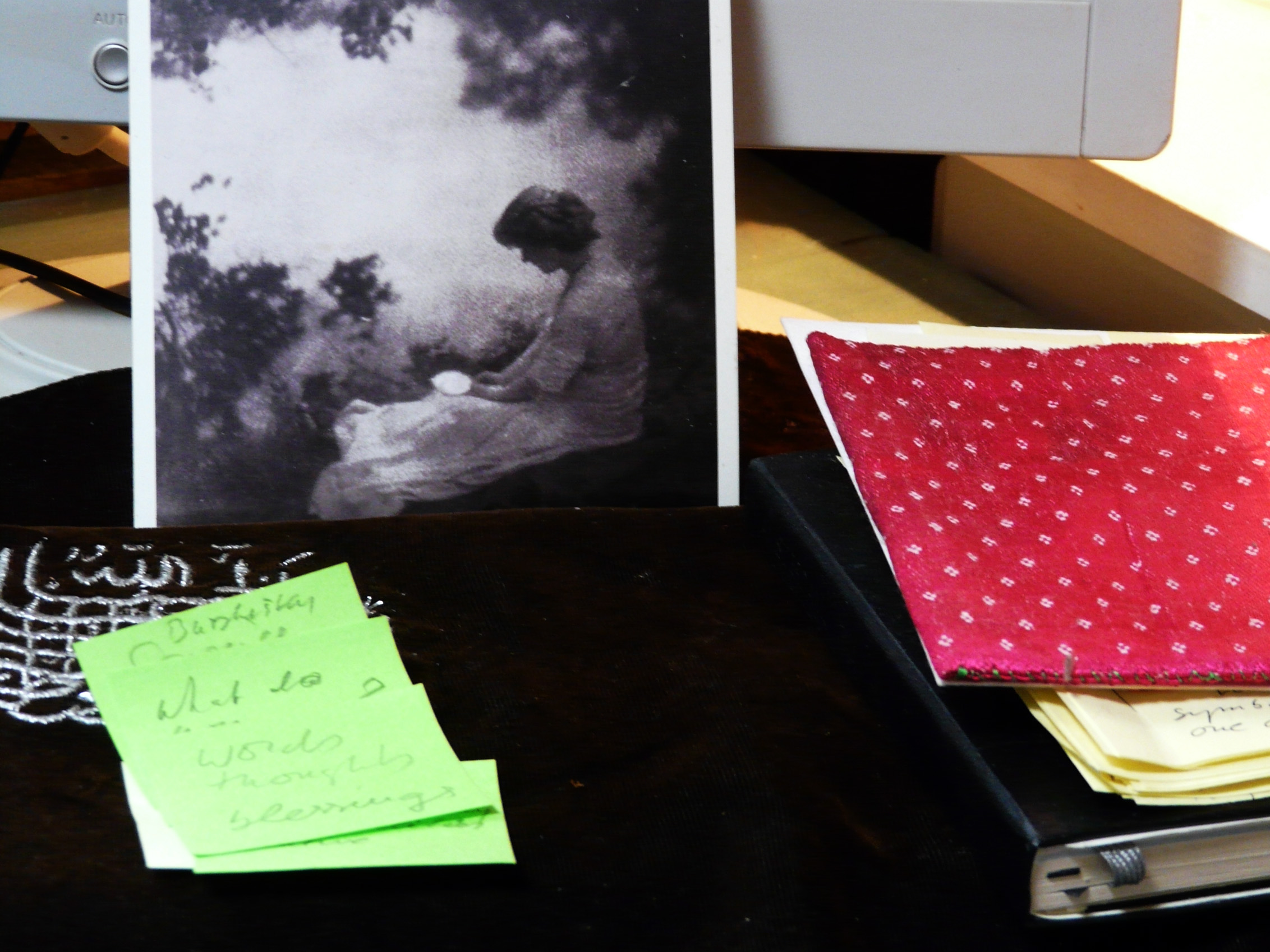
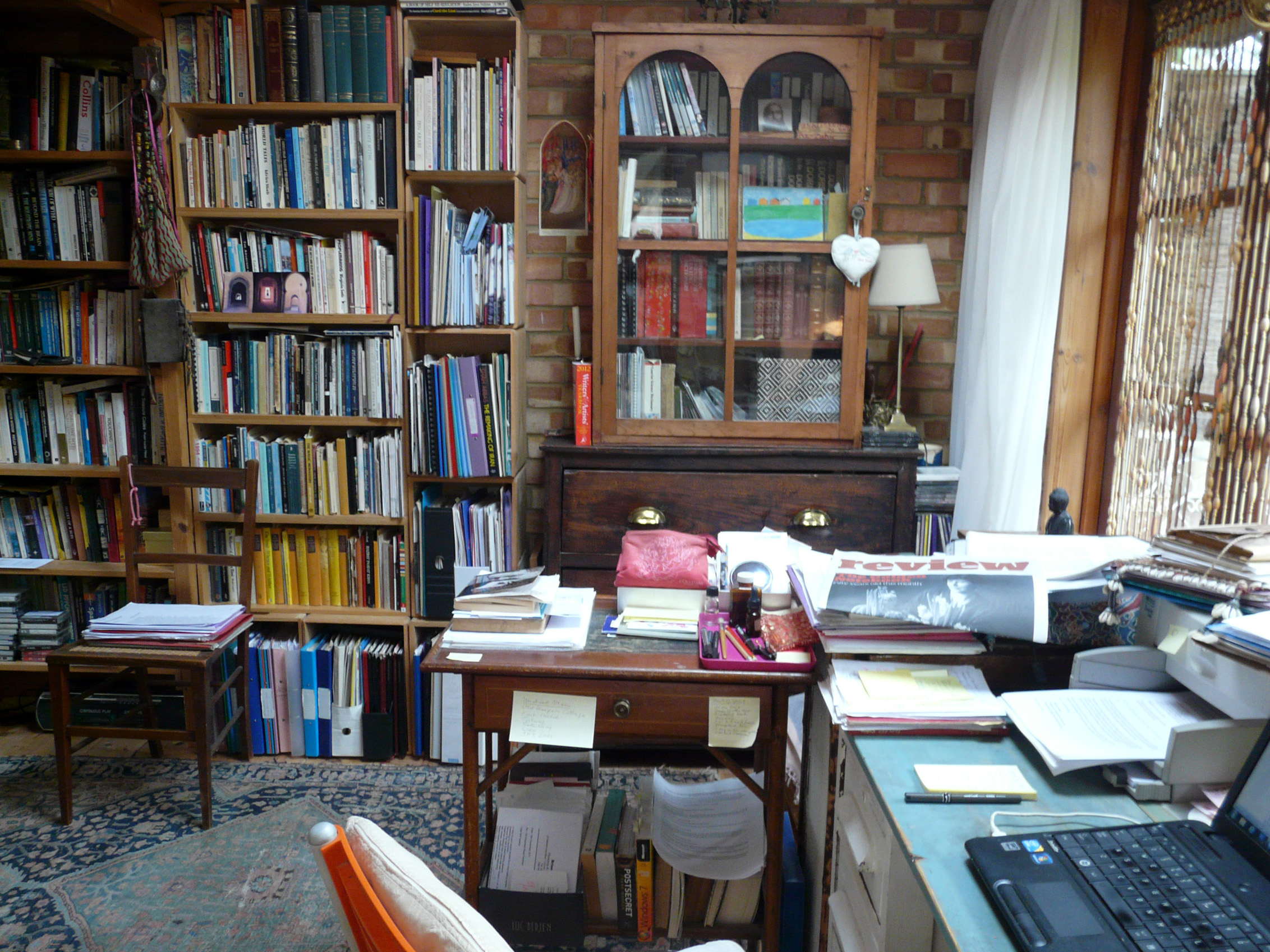
Images tend to bring us instantaneously closer.  A recent writing workshop given by a friend, made me think how inner and outer spaces affect our writing.  And I was also  inspired by Roz Morris, a generous and effective blogger http://nailyournovel.wordpress.com/page/3/ who featured her writing space in February.

I write through

the heart chamber

and the drone

of its circular charm

I write in earth

branching to the dark solitude

of birthing

the unknown

I write in water

fractals spinning

plankton under stars

coding the cosmos

I write in air

flexed by the wishbone

that loops breath to lift

wings of longing

I write in space

where spirits linger

in the scent-cloud

of a former home

I write in ether

where dreams free

greening visions

and murmur of bloom

I write here

in a room that is everywhere

bridging hearts

with companions like you

26 Comments

Filed under Blog

… here is everywhere …

Nationalism is the pathology of modern developmental history as inevitable as neurosis in the individual.   – Tom Nairn, The Break-Up of Britain

The growth dynamics of nations and those of individuals have striking parallels, especially when it comes to the forming of an identity in relation to the other, and the ongoing struggle to maintain or adjust set habits to changing circumstances. For instance, when religious authority declines, the blame for the ills of a nation can no longer be projected onto the omnipotent godhead. People find themselves challenged to reflect on how they contributed towards the ills and become accountable for their actions.   The psychological development towards spiritual independence and interdependence – for individuals or nation states – is a humbling process in that it confronts us with our failures, imperfections, and the need to learn from our experience and cultivate human qualities.
I’m German-English, my official citizenship is Dutch. Though I live in England, I have felt at home in the Arabian deserts, along the Mediterranean coast, among friends wherever they are. But is there one location from where I look out onto the world, one place that is traditionally called home? To not betray all my loves it would have to be the bridge, in a metaphorical sense. The theme of my first novel starts out with a bridge across opposites. On that bridge my protagonist has an encounter with herself where here becomes everywhere.

I feel like an ancient being torturing language to express the simplicity of experience, digging through layers of false evidence, sifting through sediments of unreliable gossip for grains of truth. Words fall from my pen like dust settling after another hole dug, showing the trifle of an image that needs a night of dreaming to cohere into a sentence, and then more sentences, resonating with a universal narrative, re-arranged in time as if the story is yet to happen.

Germany – Before print was instrumented by Luther’s Reformation, the Latin language represented the voice of divine authority – the father. A lone human hero, Martin Luther (1483-1546), Doctor of Theology, not a prophet, disputed the church’s practice of selling indulgences, which urged him to write his 95 thesis, among them: Why does the pope, whose wealth today is greater than the wealth of the richest Crassus, build the basilica of St. Peter with the money of poor believers rather than with his own money?’ When Luther’s followers printed his 95 theses and displayed them in public places, their controversial contents spread like wildfire. The papal hegemony was rattled. Convinced that salvation was not gained by merit but by the grace of God alone, Luther went into hiding and translated the bible into the most spoken vernacular. Time seemed to call for a voice like his. In some historic records he is accused of hiding under the mantle of the princes rather than siding with the folk, of not grasping the opportunity towards the forming of a German nation. Luther’s theme of grace was limited. When his efforts of converting the Jews failed, his loathsome sentiments incited their persecution. Yet he was seen as encapsulating the struggle of the German people for an identity while living under the shadow of the slain father, the Roman Empire, which compelled the German psyche to emulate its glory.

A.J.P. Taylor writes in The Course of German History: ‘Since Charlemagne founded the Reich in 800, more political energy went into maintaining German states independent of the Reich, or even hostile to it, than into the Reich itself.’ By the fifteenth century, the Holy Roman Empire of the German Nations was divided against itself. Through the intense struggle for wholeness emerged some of the world’s finest philosophers, scientists, writers, musicians and mystics, as well as the most ignorant and corrupted leaders.

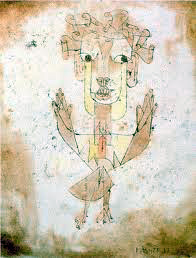
Walter Benjamin had a vision of Hope and Despair, inspired by a painting:
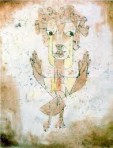
A Klee drawing named “Angelus Novus” shows an angel looking as though he is about to move away from something he is fixedly contemplating.  His eyes are staring, his mouth is open, his wings are spread.  This is how one pictures the angel of history. His face is turned toward the past. Where we perceive a chain of events, he sees one single catastrophe that keeps piling ruin upon ruin and hurls it in front of his feet.  The angel would like to stay, awaken the dead, and make whole what has been smashed.  But a storm is blowing from Paradise; it has got caught in his wings with such violence that the angel can no longer close them.  The storm irresistibly propels him into the future to which his back is turned, while the pile of debris before him grows skyward. This storm is what we call progress.    

                   – Walter Benjamin, Ninth Thesis on the Philosophy of History

The extremes of enlightened spirituality and regressive brutality happen wherever human fallibility seeks to reconcile itself with the divine ideal. A geographically hemmed in Germany was not relaxed about its identity, which was further knocked by the Versailles Peace Treaty. Debates about the effects of the treaty are ongoing. Germany was blamed for the First World War and had vindictive reparations imposed that aided hyperinflation. The crushed self-respect of its people called in a saviour, who tragically sublimated his oppressed childhood with vastly inflated ideals.

Sanity might have prevailed in the darkest hour had Germany given more value to its folk tales. They leave nothing of human nature untold. The secret mysteries of the heart are found in mythical tales all over the world, and while set in local landscapes, their themes are similarly transcending race. These coded treasures are basically the stuff of all yearning for the home or source, a human phenomenon riddled with the tensions of fixation and avoidance.
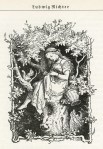
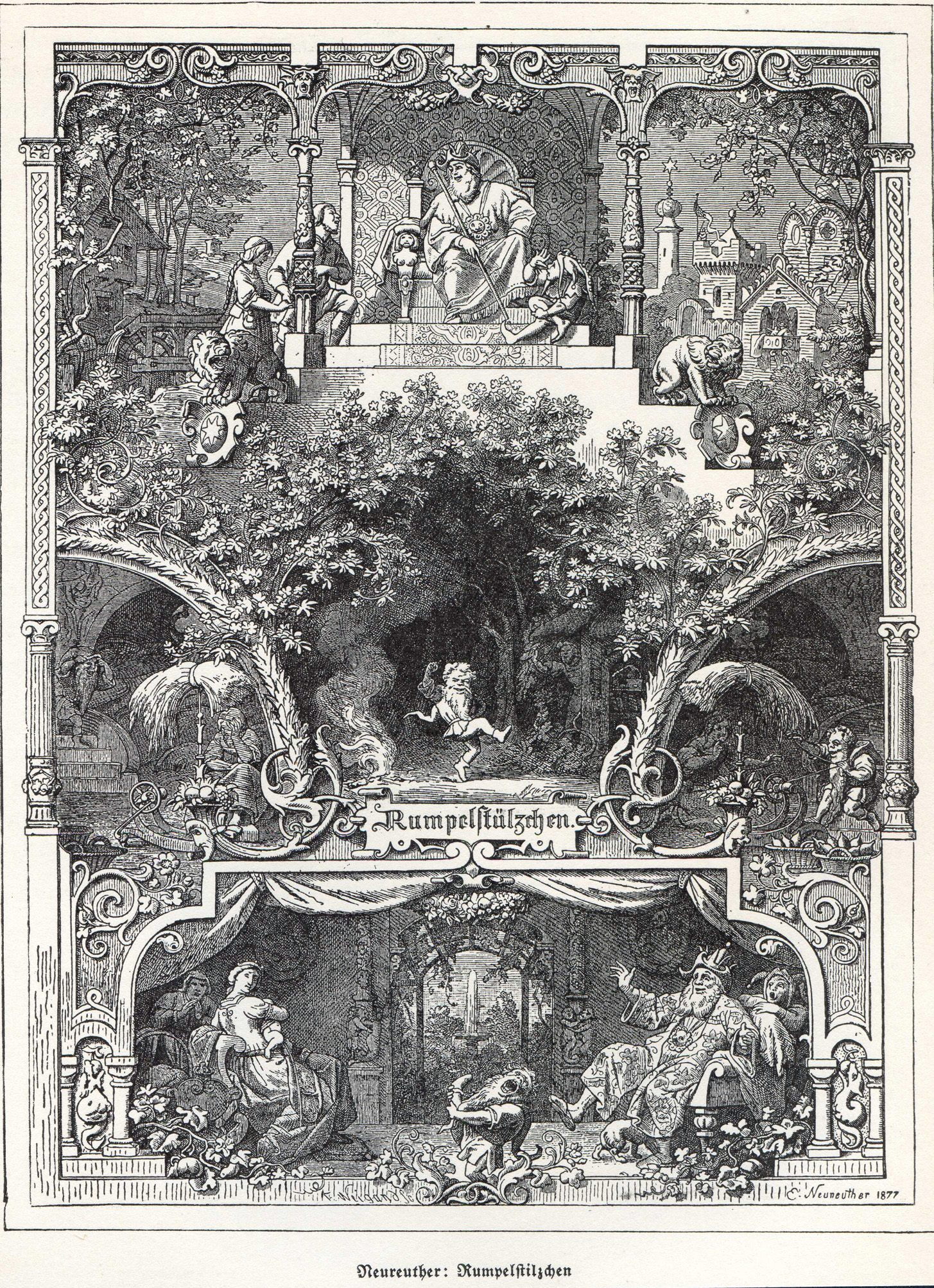
A hint of the tenacity available to the German people can be found in the tales collected by the Brothers Grimm when storytelling was still practised with the potency of embodied memory. Children growing up with the characters, animals and landscapes of these stories are absorbing timeless themes through symbols and metaphors. Censors protested, and still do, that these themes are cruel and unfit for the innocent child.
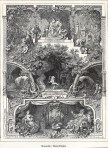
The Grimm brothers comment in the introduction to the second, updated 1819 edition of their collection: ‘The right usage discovers nothing bad is in these tales, but as a beautiful word has it – a testimony in our heart. Children point without fear into the stars while others, as popular belief has it, would insult the angels.’

Was the melancholy that gripped so many German people their nemesis or their salvation? Tales that contain symbols of mythic time need to be deciphered again and again within a temporal context. Yet because the emotive power of symbols defies rationality, the sentiments evoked are always in danger of being abused by myopic national concerns. When a nation loses balance by being overly defended or irrationally unleashed, differences of religion, race or politics are thought to explain the matter – yet we all know there is no pure race.

England, like Germany, struggled through internal conflicts but achieved a sense of unity by conquering the world. Felling forests to build boats which sailed under the banner of the Royal Navy, explorers and missionaries spreading across the waters formed a Colonial Empire that brought great wealth and influence. The Commonwealth still lingers like a halo and gives Britain a sense of sovereign pride. Cultural Imperialism, natural to nations with access to the sea, had created the other at a safe distance rather than at home. Yet spoils of victory, too, come at a cost.
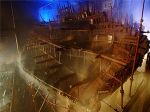
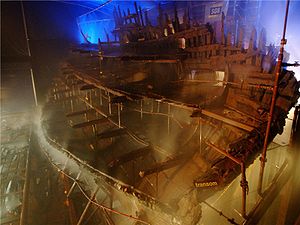
When the flagship of King Henry VIII was lifted from the depth of the Solent Estuary into the twentieth century on 11 Oct 1982, the Mary Rose flared back into view and boosted national confidence, adding a powerful impetus to Mrs Thatcher’s resolution to win back the Falklands. It worked – just. Yet now it seems conflicting images of the past, informed by freed-up information providing more and more varied perspectives, are testing every nation’s conscience.

In the twenty-first century, with migration being a global reality, nations are obliged to open their doors to the other. Given changing policies, foreign individuals are often able to acquire legal membership. Since the Schengen agreement, European borders, apart from Britain’s, can be crossed freely, though the agreement is regularly challenged by exceptional circumstances. http://www.migrationinformation.org/Feature/display.cfm?ID=859 

Migrants – who are we?  If there are tendrils resembling roots, they connect to the deep impressions left by parental figures and childhood landscapes, and to the layers of national symbolic themes, ancient, historic and contemporary. Social and ethnic codes ricochet among children in every school-playground, even between neighbours like Germany and Britain. We use icons to sum each other up. At times they move us to tears, at times to laughter, often they serve humorous self-reflection, but mostly they envelope us in a ritualistic trance:


Bratwurst with Sauerkraut, Fish & Chips, Schubert and Kurt Weil songs, God save the Queen, the first four notes of Beethoven’s 5th symphony, a blinking eye of Shakespeare in a hologram,   Goethe’s Faust, the Thatched Cottage, das Edelweiss, The Royal Jewels, der Adler, Jack and Jill, King Ludwig’s Castles, Stonehenge, Rapunzel, Big Ben, Karl Valentin, Spike Mulligan, Lorelei, or the Mary Rose:

In order to preserve them, we gave the Mary Rose Trust a chemical solution called polyethylene glycol. Once these items (such as wooden bowl and leather shoes) have been soaked in this solution, they undergo a freeze-drying process that will preserve them for posterity … ‘You can be sure of Shell.’     (Shell advertisement  1985)

Patrick Wright in his book ‘On Living in the Old Country,’ recounts the findings of a young journalist, Charles Moore. He was commissioned in 1982, after Lord Scarman’s report on the Brixton disorders, to interview the really oppressed people in the area, defined as the elderly white people of Lambeth. The findings expose a national sentiment which, in essence, could equally apply to other nations and individuals: it remembers the state of grace and laments the fall which is said to occur when ‘the blacks’ and the welfare state arrive:

In the beginning there was order, friendliness, dignity, sharing and mutual respect: ‘Everyone mucked in and was properly neighbourly.’

A betrayal of the idea of paradise – in the absence of divine certainty someone or something other needs to become bad, in order to preserve the good.

Seeking fault with the other is meant to shield paradise. An oversight – truth stagnates in the fenced gardens of eternity. Enduring human vitality flows from change and is born of vulnerability. The trance of blame sucks us into its gravitational slow time. Unawares, we perpetuate the shielding in the collective psyche, leaving it for the next generation to absolve.

Recorded history is like a rope broken in many places and knotted together again and again. In the light of new truths these knots are strained and made brittle until they snap. Tribes, nations and ideas are strung along this rope. But new concepts of time are changing our perceptions; many individuals struggle to free themselves of knotted history. The desire to make things solid is an automatic reaction to the fear of losing the familiar we nurture – people, environments, passions and beliefs we bond with, that are mirroring us and allow us to discover ourselves. The problem is not loss, but the manner in which we deal with loss, as if it is destroying our identity. Inevitably, if not death, someone or something will be the agent of change in our lives.  Something dear is wrenched from us, a way of life is gone, those around us and the rest of the world may care for a moment, but our identity, the sum of all our embodied experiences, is ours to keep or lose. The valid anger in the face of change is not lifted by words of wisdom, only plastered up. The heart has to suffer and soften before the conscious decision of an individual can unplug resentment and embrace the enduring presence that truly connects us within. Only individuals can release blame and lift the veil of ignorance.

Dich im Unendlichen zu finden, must du unterscheiden und dann verbinden.

To find yourself in the infinite, you must first distinguish then combine.

–  Johann Wolfgang von Goethe

A truly global citizenship must be composed of enough individuals brave enough to explore their own psyche, brave enough to think for themselves and realise that our collective identity unfolds beyond the existence of individual transitory lifespans. We know that, given respect, tolerance and stimulation, a child will engage with life creatively and trusts in the future. Applying this insight to how we educate our children nourishes the collective intelligence of humanity.

The German filmmaker Edgar Reitz has with great sensitivity restored a balanced meaning of the German Heimat in his TV series of the same name, spanning from 1919 to the fall of the Berlin Wall. The series follows three ordinary families and comprises 52 hours of film. The yearning to belong, so distorted by the idealism of the Third Reich, is shown in localised context and conveys the human aspects of the war story. The impetus for the creation of this document was an American Holocaust series on TV in 1978. Reitz was horrified that German intellectuals seemed to accept the sentimental spin as treatment for national guilt.

The knots in the rope of time we constructed are brittle with guilt, the burdening guilt of not loving humanity enough to fully take on its pain, the way Christ did. He said, ‘Thy will be done.’ Does such surrender of will, even if taken symbolically, really release us of using our own will to effect change?    The concept of surrender is more subtle than giving up the power to will. I see surrender as an alignment of our conscious will to the dynamic flow of change, the universal will, enabling evolution to happen and work freely through us, so that here is everywhere. In instances when this shift happens inside, we are.

*    *     *

References other than mentioned in the text:

The Angel of History: Walter Benjamin’s Vision of Hope and Despair – by Raymond Barglow, published in ‘Tikkun Magazine,’ November 1998

Recently 500 more tales, collected by a contemporary of the Grimm Brothers, were uncovered:

http://apps.facebook.com/theguardian/books/2012/mar/05/five-hundred-fairytales-discovered-germany

 

5 Comments

Filed under Blog

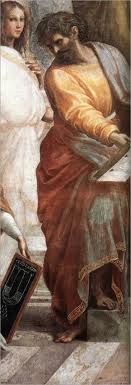
Parmenides – Philosopher – Poet

Last week, while re-working an article I wrote 18 years ago on the symbolism of  two West European Nations, namely Germany and England (having lived equal decades in each), I lost myself in the history of these nations, back to the Roman Empire and its fall. Something was missing. Reeling back another thousand years, to my beloved philosophers, I found IT.

I was reminded of the only ever poetry course I attended, where a tutor told me ‘You have to decide whether you want to be a philosopher or a poet.’  Over the years I’ve come to realise that some good people, in order to be respected, have sadly allowed their inner voice to be silenced by the academic system.                                                                                                                           *    *    *                                                                                                                                                                         Here an excerpt of Parmenides’s poem as it appears in Kingsley’s ‘In the Dark Places of Wisdom’. The text is subtle, humorous, with repetitions that are no accident. The poem induces a journey that appears in many traditions throughout the world under many names.

The mares that carry me as far as longing can reach

rode on, once they had come and fetched me onto the legendary

road of divinity that carries the man who knows

through the vast and dark unknown. And on I was carried

as the mares, aware just where to go, kept carrying me

straining the chariot; and young women led the way.

And the axle in the hubs let out the sound of a pipe

blazing from the pressure of the two well-rounded wheels

at either side, as they rapidly led on: young women, girls,

daughters of the Sun who had left the mansions of Night

for the light and pushed back the veils from their faces with their hands.

There are the gates of the pathways of Night and Day,

held fast in place between the lintel above and a threshold of stone;

and they reach up into the heavens, filled with gigantic doors.

And the keys – that now open, now lock – are held fast by

Justice: she who always demands exact returns. And with

soft seductive words the girls cunningly persuade her to

push back immediately, just for them, the bar that bolts

the gates. And as the doors flew open, making the bronze

axles with their pegs and nails spin – now one, now the other –

in their pipes, they created a gaping chasm. Straight through and

on the girls held fast their course for the chariot and horses;

straight down the road.

And the goddess welcomed me kindly, and took

my right hand in hers and spoke these words as she addressed me:

‘Welcome young man, partnered by immortal charioteers,

reaching our home with the mares that carry you. For it was

no hard fate that sent you travelling this road – so far away

from the beaten track of humans – but Rightness, and Justice.

And what’s needed is for you to learn all things: both the unshaken

heart of persuasive Truth and the opinions of mortals,

in which there is nothing that can truthfully be trusted at all.

But even so, this too you will learn – how beliefs based on

appearances ought to be believable as they travel all through

all there is.

*    *    *

The hero travels the road of death while still alive, making the connection between this world and the other.  He goes to the depth of ignorance – the ignored – to unknowing – in search for wisdom instead of straight to the light

Kingsley says when Plato and his followers took over these ideas from the Pythagoreans they cleverly amputated the ambiguities: focussed only on the true and the good and the beautiful, and cut out the need for the descent.  He makes a link to inscriptions  discovered during the 60s in Velia, Italy. Three words puzzled …  Ouliades – Iatromantis –Apollo … The healer who can access special states of awareness, look beyond appearances, give voice to what has no voice. In Sept 1962, at the same place, Mario Napoli found a small block of marble with another inscription: Parmeneides son of Pyres Ouliades Physicos

These findings must present a challenge to historians. Obviously they stayed clear of the mystic drone carrying the song of Parmenides and the Pythagorean’s. The incubatory practice and its profound wisdom were rationalised out of western history. Kingsley writes:

Between them, Parmenides and Empedocles laid the most basic foundations for the world and culture we now live in. But with the passing of time we have forgotten who they were. The truth about the real nature of their work has been neglected, distorted, ignored—transformed into just another of those empty illusions that they themselves tried to set us free from. There is nothing accidental about the fact that we in the West are starved for some real sense of meaning and crying out for something that, in spite of all our apparent sophistication and material success, we are no longer even able to name. This western civilization of ours was created for a purpose. Until we start to discover that purpose again, our lives will be meaningless. Unless we touch our roots and make contact again with the essence of our past, we can have no future.

http://www.peterkingsley.org/pages.cfm?ID=5

One of the many resources Peter Kingsley used:

/www.amazon.com/The-Fragments-of-Parmenides-ebook/dp/B002ZVPTEY


13 Comments

Filed under Blog

… boredom – gratification – creation …

You’re sitting in front of the latest evolutionary creative gadget, your laptop screen, bored, uninspired, the familiar feeling before singularity strikes. You have an appetite for – you don’t know what – sweet – maybe – but not too sweet. You go to the fridge. A little pot says: pleasure is everything – give in to happiness – prudence is sooo 1658 – trust your impulses – break free – all hail to the Gu decadents – light and velvety chocolate mousse made to our chef’s family recipe … the text shrinks to list the calories, you don’t want to know …

Anyone remember Levi from Peter Blegvad’s fabulous cartoons?

And Leviathan, the famous character in the bible?

Any hope of subduing him is false; the mere sight of him is overpowering

His snorting throws out flashes of light; his eyes are like the rays of dawn

He makes the depths churn like a boiling cauldron and stirs up the sea like a pot of ointment

… the never-ending story of creation …

4 Comments

Filed under Blog

… smoking elegies – another facet …

Fusion

He was clear-minded and ambitious, with precise plans for his career. We met at Munich’s Domicile, a jazz bar, where an intimate haze of smoke welcomed and embraced you like an accomplice. The cool gaze and pure intent of his grey-freckled eyes took exclusive possession of me. Jazz and smoke fused us. Our cellular resonance defied the gravity of committed brain cells and gave my heart wings. He moved into my flat, warning me upfront that on completion of his apprenticeship at the most prodigious hotel in town he would return to the States to put his culinary management knowledge to the test. He was going to own not just one restaurant, but a chain of them. He convinced on several points.

One: he totally and reliably engaged with what was before him. The moment he stepped through the door after his day at the hotel, the outside world was no more, only us, together. We showered, cooked delicious meals, listened to music and spent  most of our time in bed. The pure intensity of his presence ricocheted like a charge between us and left no room for anything besides. In this rarefied sphere, lovemaking became a cycle of small deaths and resurrections. Some of my friends had angry fits under the porch of my door, knowing full well I was home but inaccessible. My king-sized futon had become a sacred island floating in a vast ocean.

Two: he was a strategist, which, together with point one, makes an unbeatable combination for material success. But most of all, he understood branding, the powerful imprint repetition leaves in the mind. It happened religiously during our celebratory smoke after lovemaking and became a surreal ritual. With his thumbnail he cut a cross into the filter of his cigarettes. The cross was tied to a mantra he kept secret. I thought this was cute and took up the habit, inventing my own mantra.

Two months passed in eternal bliss of now, until the appointed time for his flight back to the States approached. I started hurting bad. He wanted no soppy goodbyes at the airport. He was not going to be tied down. Only when he had made a million by the age of 30, he said, would he focus on having a family. He left no address. For months I continued punching crosses into my cigarette filters to strengthen my ambition, and, inadvertently, remember him. It became an obsession. Only my mantra, unlike his, was not based on a strategy. And the branding thing annoyed me after a while. I favoured the meandering dance of a poetic life.

His clarity left a strong impression. Hopefully he found what he was looking for. I came to perceive my early ambition as metaphor, and owned up to a misspelling. The path my aim prescribed sharpened many skills, but was littered with Freudian slips that lead into emotional woods. And yet, looking back, every re-start, every detour in my life stimulated creativity and inventiveness, crucial unlearning, greater tolerance with myself and others, and a more symbolic understanding of my existence.

The ideal is the means – its breaking is the goal.   Hazrat Inayat Khan


10 Comments

Filed under Blog