Nationalism is the pathology of modern developmental history as inevitable as neurosis in the individual. – Tom Nairn, The Break-Up of Britain
The growth dynamics of nations and those of individuals have striking parallels, especially when it comes to the forming of an identity in relation to the other, and the ongoing struggle to maintain or adjust set habits to changing circumstances. For instance, when religious authority declines, the blame for the ills of a nation can no longer be projected onto the omnipotent godhead. People find themselves challenged to reflect on how they contributed towards the ills and become accountable for their actions.  The psychological development towards spiritual independence and interdependence – for individuals or nation states – is a humbling process in that it confronts us with our failures, imperfections, and the need to learn from our experience and cultivate human qualities.
I’m German-English, my official citizenship is Dutch. Though I live in England, I have felt at home in the Arabian deserts, along the Mediterranean coast, among friends wherever they are. But is there one location from where I look out onto the world, one place that is traditionally called home? To not betray all my loves it would have to be the bridge, in a metaphorical sense. The theme of my first novel starts out with a bridge across opposites. On that bridge my protagonist has an encounter with herself where here becomes everywhere.
I feel like an ancient being torturing language to express the simplicity of experience, digging through layers of false evidence, sifting through sediments of unreliable gossip for grains of truth. Words fall from my pen like dust settling after another hole dug, showing the trifle of an image that needs a night of dreaming to cohere into a sentence, and then more sentences, resonating with a universal narrative, re-arranged in time as if the story is yet to happen.
Germany – Before print was instrumented by Luther’s Reformation, the Latin language represented the voice of divine authority – the father. A lone human hero, Martin Luther (1483-1546), Doctor of Theology, not a prophet, disputed the church’s practice of selling indulgences, which urged him to write his 95 thesis, among them: Why does the pope, whose wealth today is greater than the wealth of the richest Crassus, build the basilica of St. Peter with the money of poor believers rather than with his own money?’ When Luther’s followers printed his 95 theses and displayed them in public places, their controversial contents spread like wildfire. The papal hegemony was rattled. Convinced that salvation was not gained by merit but by the grace of God alone, Luther went into hiding and translated the bible into the most spoken vernacular. Time seemed to call for a voice like his. In some historic records he is accused of hiding under the mantle of the princes rather than siding with the folk, of not grasping the opportunity towards the forming of a German nation. Luther’s theme of grace was limited. When his efforts of converting the Jews failed, his loathsome sentiments incited their persecution. Yet he was seen as encapsulating the struggle of the German people for an identity while living under the shadow of the slain father, the Roman Empire, which compelled the German psyche to emulate its glory.
A.J.P. Taylor writes in The Course of German History: ‘Since Charlemagne founded the Reich in 800, more political energy went into maintaining German states independent of the Reich, or even hostile to it, than into the Reich itself.’ By the fifteenth century, the Holy Roman Empire of the German Nations was divided against itself. Through the intense struggle for wholeness emerged some of the world’s finest philosophers, scientists, writers, musicians and mystics, as well as the most ignorant and corrupted leaders.
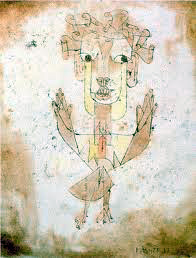
Walter Benjamin had a vision of Hope and Despair, inspired by a painting:
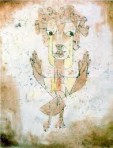
A Klee drawing named “Angelus Novus” shows an angel looking as though he is about to move away from something he is fixedly contemplating. His eyes are staring, his mouth is open, his wings are spread. This is how one pictures the angel of history. His face is turned toward the past. Where we perceive a chain of events, he sees one single catastrophe that keeps piling ruin upon ruin and hurls it in front of his feet. The angel would like to stay, awaken the dead, and make whole what has been smashed. But a storm is blowing from Paradise; it has got caught in his wings with such violence that the angel can no longer close them. The storm irresistibly propels him into the future to which his back is turned, while the pile of debris before him grows skyward. This storm is what we call progress.
– Walter Benjamin, Ninth Thesis on the Philosophy of History
The extremes of enlightened spirituality and regressive brutality happen wherever human fallibility seeks to reconcile itself with the divine ideal. A geographically hemmed in Germany was not relaxed about its identity, which was further knocked by the Versailles Peace Treaty. Debates about the effects of the treaty are ongoing. Germany was blamed for the First World War and had vindictive reparations imposed that aided hyperinflation. The crushed self-respect of its people called in a saviour, who tragically sublimated his oppressed childhood with vastly inflated ideals.
Sanity might have prevailed in the darkest hour had Germany given more value to its folk tales. They leave nothing of human nature untold. The secret mysteries of the heart are found in mythical tales all over the world, and while set in local landscapes, their themes are similarly transcending race. These coded treasures are basically the stuff of all yearning for the home or source, a human phenomenon riddled with the tensions of fixation and avoidance.
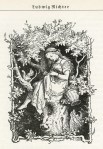
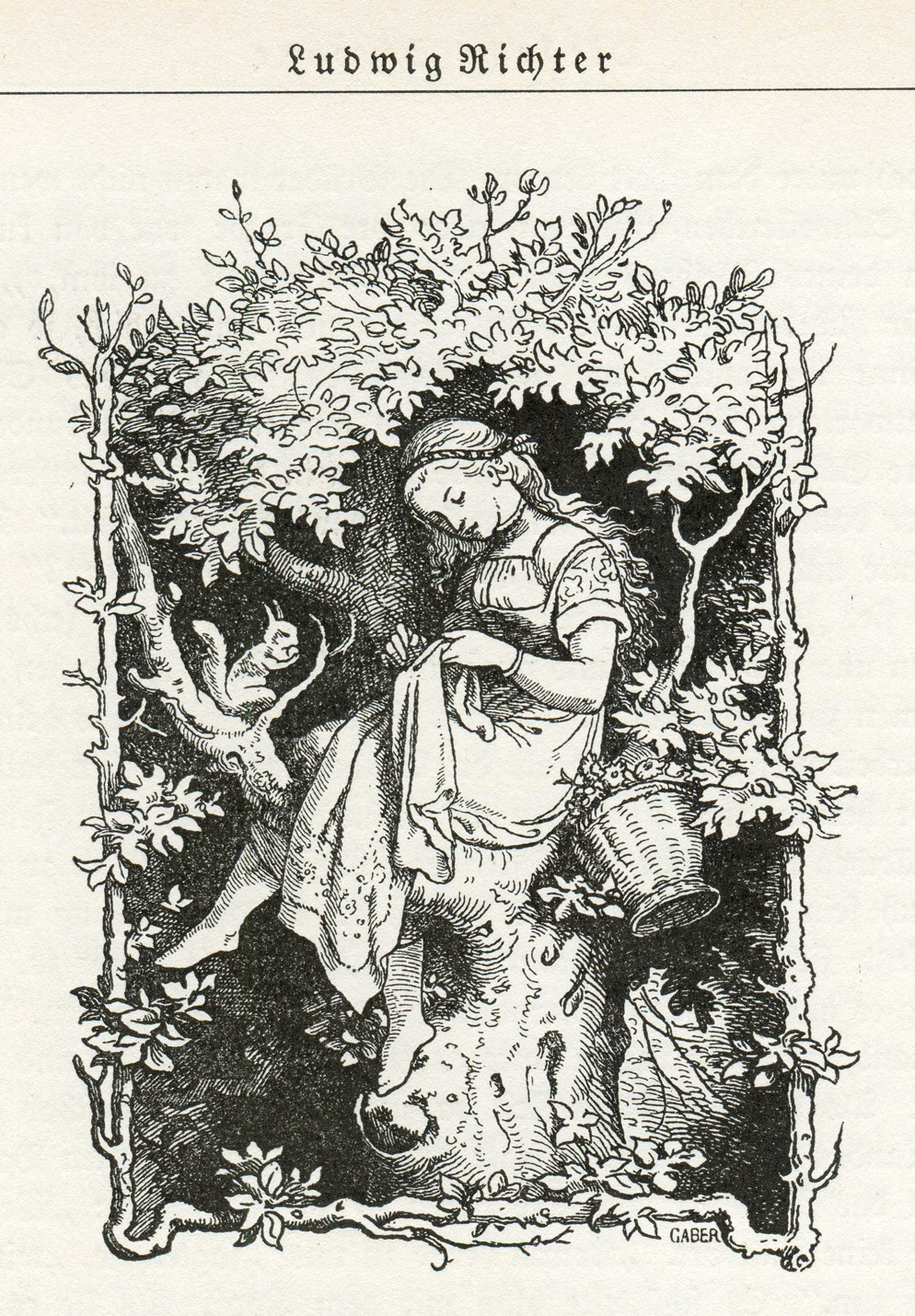
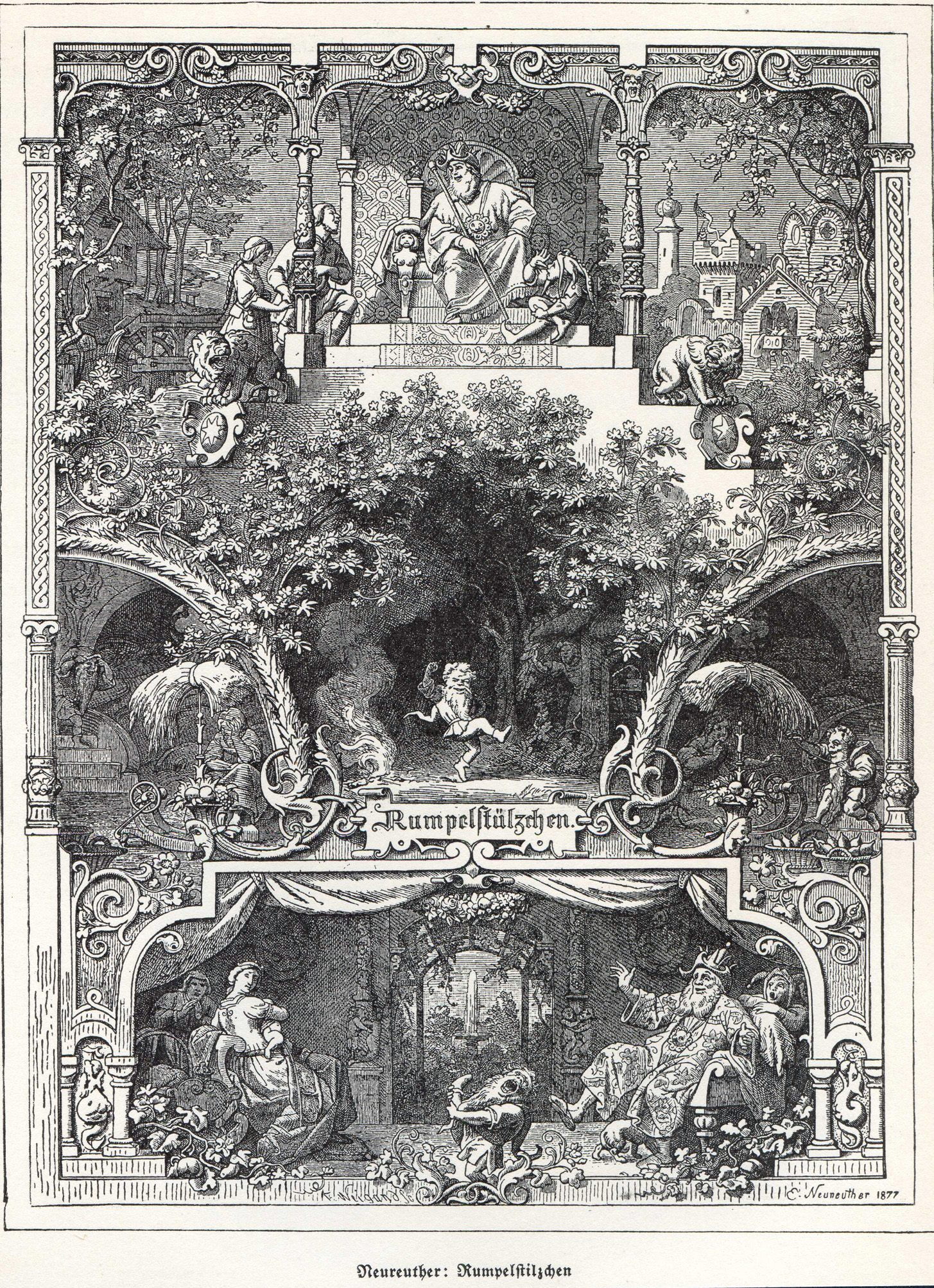
A hint of the tenacity available to the German people can be found in the tales collected by the Brothers Grimm when storytelling was still practised with the potency of embodied memory. Children growing up with the characters, animals and landscapes of these stories are absorbing timeless themes through symbols and metaphors. Censors protested, and still do, that these themes are cruel and unfit for the innocent child.
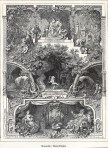
The Grimm brothers comment in the introduction to the second, updated 1819 edition of their collection: ‘The right usage discovers nothing bad is in these tales, but as a beautiful word has it – a testimony in our heart. Children point without fear into the stars while others, as popular belief has it, would insult the angels.’
Was the melancholy that gripped so many German people their nemesis or their salvation? Tales that contain symbols of mythic time need to be deciphered again and again within a temporal context. Yet because the emotive power of symbols defies rationality, the sentiments evoked are always in danger of being abused by myopic national concerns. When a nation loses balance by being overly defended or irrationally unleashed, differences of religion, race or politics are thought to explain the matter – yet we all know there is no pure race.
England, like Germany, struggled through internal conflicts but achieved a sense of unity by conquering the world. Felling forests to build boats which sailed under the banner of the Royal Navy, explorers and missionaries spreading across the waters formed a Colonial Empire that brought great wealth and influence. The Commonwealth still lingers like a halo and gives Britain a sense of sovereign pride. Cultural Imperialism, natural to nations with access to the sea, had created the other at a safe distance rather than at home. Yet spoils of victory, too, come at a cost.
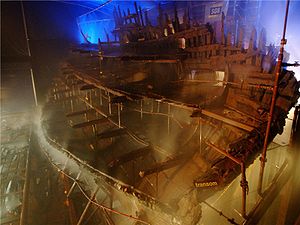
 When the flagship of King Henry VIII was lifted from the depth of the Solent Estuary into the twentieth century on 11 Oct 1982, the Mary Rose flared back into view and boosted national confidence, adding a powerful impetus to Mrs Thatcher’s resolution to win back the Falklands. It worked – just. Yet now it seems conflicting images of the past, informed by freed-up information providing more and more varied perspectives, are testing every nation’s conscience.
In the twenty-first century, with migration being a global reality, nations are obliged to open their doors to the other. Given changing policies, foreign individuals are often able to acquire legal membership. Since the Schengen agreement, European borders, apart from Britain’s, can be crossed freely, though the agreement is regularly challenged by exceptional circumstances. http://www.migrationinformation.org/Feature/display.cfm?ID=859
Migrants – who are we?  If there are tendrils resembling roots, they connect to the deep impressions left by parental figures and childhood landscapes, and to the layers of national symbolic themes, ancient, historic and contemporary. Social and ethnic codes ricochet among children in every school-playground, even between neighbours like Germany and Britain. We use icons to sum each other up. At times they move us to tears, at times to laughter, often they serve humorous self-reflection, but mostly they envelope us in a ritualistic trance:
 Bratwurst with Sauerkraut, Fish & Chips, Schubert and Kurt Weil songs, God save the Queen, the first four notes of Beethoven’s 5th symphony, a blinking eye of Shakespeare in a hologram, Goethe’s Faust, the Thatched Cottage, das Edelweiss, The Royal Jewels, der Adler, Jack and Jill, King Ludwig’s Castles, Stonehenge, Rapunzel, Big Ben, Karl Valentin, Spike Mulligan, Lorelei, or the Mary Rose:
In order to preserve them, we gave the Mary Rose Trust a chemical solution called polyethylene glycol. Once these items (such as wooden bowl and leather shoes) have been soaked in this solution, they undergo a freeze-drying process that will preserve them for posterity … ‘You can be sure of Shell.’ (Shell advertisement 1985)
Patrick Wright in his book ‘On Living in the Old Country,’ recounts the findings of a young journalist, Charles Moore. He was commissioned in 1982, after Lord Scarman’s report on the Brixton disorders, to interview the really oppressed people in the area, defined as the elderly white people of Lambeth. The findings expose a national sentiment which, in essence, could equally apply to other nations and individuals: it remembers the state of grace and laments the fall which is said to occur when ‘the blacks’ and the welfare state arrive:
In the beginning there was order, friendliness, dignity, sharing and mutual respect: ‘Everyone mucked in and was properly neighbourly.’
A betrayal of the idea of paradise – in the absence of divine certainty someone or something other needs to become bad, in order to preserve the good.
Seeking fault with the other is meant to shield paradise. An oversight – truth stagnates in the fenced gardens of eternity. Enduring human vitality flows from change and is born of vulnerability. The trance of blame sucks us into its gravitational slow time. Unawares, we perpetuate the shielding in the collective psyche, leaving it for the next generation to absolve.
Recorded history is like a rope broken in many places and knotted together again and again. In the light of new truths these knots are strained and made brittle until they snap. Tribes, nations and ideas are strung along this rope. But new concepts of time are changing our perceptions; many individuals struggle to free themselves of knotted history. The desire to make things solid is an automatic reaction to the fear of losing the familiar we nurture – people, environments, passions and beliefs we bond with, that are mirroring us and allow us to discover ourselves. The problem is not loss, but the manner in which we deal with loss, as if it is destroying our identity. Inevitably, if not death, someone or something will be the agent of change in our lives. Something dear is wrenched from us, a way of life is gone, those around us and the rest of the world may care for a moment, but our identity, the sum of all our embodied experiences, is ours to keep or lose. The valid anger in the face of change is not lifted by words of wisdom, only plastered up. The heart has to suffer and soften before the conscious decision of an individual can unplug resentment and embrace the enduring presence that truly connects us within. Only individuals can release blame and lift the veil of ignorance.
Dich im Unendlichen zu finden, must du unterscheiden und dann verbinden.
To find yourself in the infinite, you must first distinguish then combine.
– Johann Wolfgang von Goethe
A truly global citizenship must be composed of enough individuals brave enough to explore their own psyche, brave enough to think for themselves and realise that our collective identity unfolds beyond the existence of individual transitory lifespans. We know that, given respect, tolerance and stimulation, a child will engage with life creatively and trusts in the future. Applying this insight to how we educate our children nourishes the collective intelligence of humanity.
The German filmmaker Edgar Reitz has with great sensitivity restored a balanced meaning of the German Heimat in his TV series of the same name, spanning from 1919 to the fall of the Berlin Wall. The series follows three ordinary families and comprises 52 hours of film. The yearning to belong, so distorted by the idealism of the Third Reich, is shown in localised context and conveys the human aspects of the war story. The impetus for the creation of this document was an American Holocaust series on TV in 1978. Reitz was horrified that German intellectuals seemed to accept the sentimental spin as treatment for national guilt.
The knots in the rope of time we constructed are brittle with guilt, the burdening guilt of not loving humanity enough to fully take on its pain, the way Christ did. He said, ‘Thy will be done.’ Does such surrender of will, even if taken symbolically, really release us of using our own will to effect change?  The concept of surrender is more subtle than giving up the power to will. I see surrender as an alignment of our conscious will to the dynamic flow of change, the universal will, enabling evolution to happen and work freely through us, so that here is everywhere. In instances when this shift happens inside, we are.
* * *
References other than mentioned in the text:
The Angel of History: Walter Benjamin’s Vision of Hope and Despair – by Raymond Barglow, published in ‘Tikkun Magazine,’ November 1998
Recently 500 more tales, collected by a contemporary of the Grimm Brothers, were uncovered:
http://apps.facebook.com/theguardian/books/2012/mar/05/five-hundred-fairytales-discovered-germany












 Course of Mirrors