Tag Archives: spirituality

… silent blessings …

I’m sure I’m not alone in practising daily silent blessings. What, you may ask, does she mean by blessings?

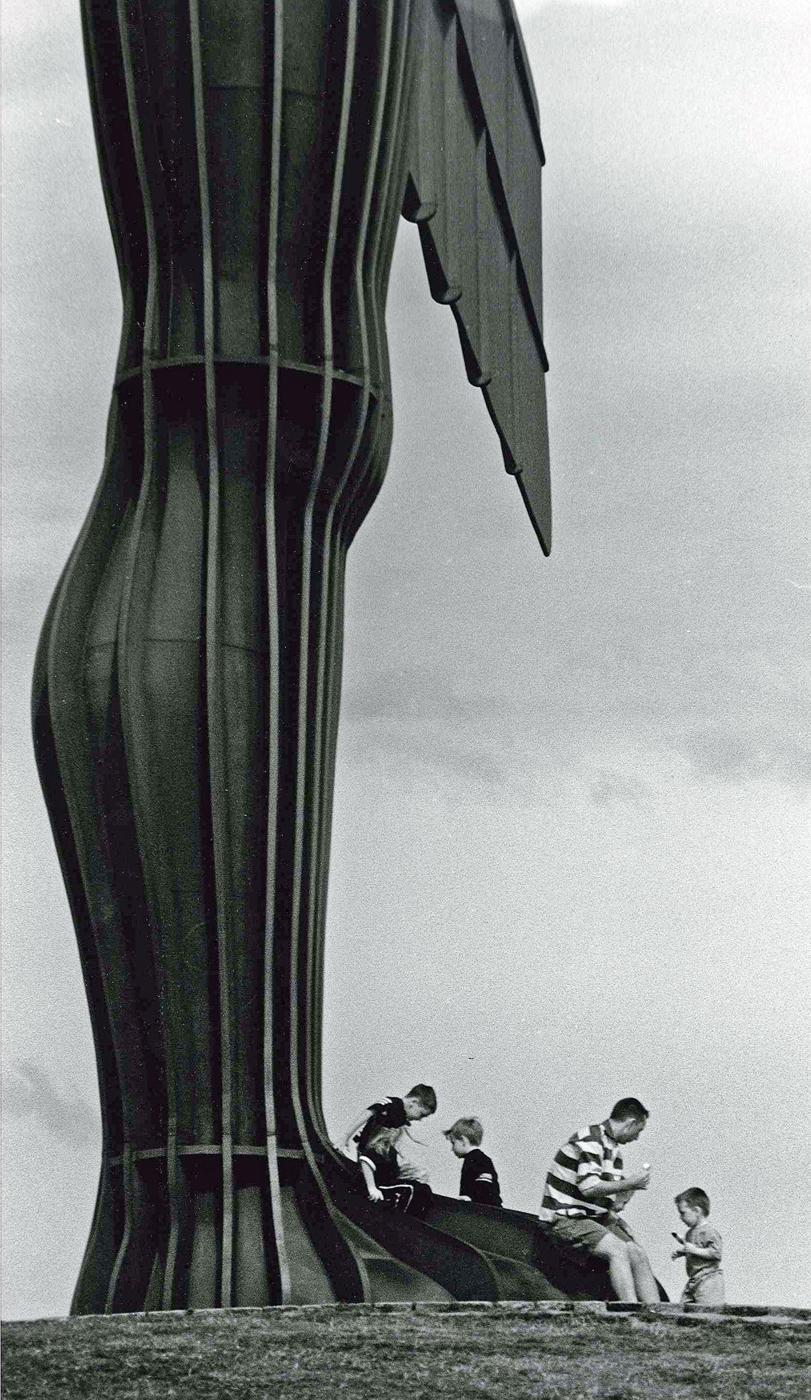
Sylvia Selzer’s photo of the Angel of the North is the most poignant image of an angel I’ve come across.

 ‘The Angel of the North’ – photo by Sylvia Selzer

In my small world, ever since I can remember, I felt guided.  As a child I had a lucid vision of an angel, possibly an aspect of me – or us – existing in another dimension. My upbringing was not religious, but I developed a deep appreciation for beauty – of movement, sound, rhythm, light, colour, form – as well as a healthy disrespect for hypocrisy.

Then, during the 1980s I was ordained as a Cherag  – the Sufi term for someone who performs worships and conducts ceremonies. I questioned the honour. Performing is not my strength. The response of my Sufi teacher – Fazal Inayat-Khan – was heartening: ‘You’re a light-bringer (which is what Cherag means,) and whether or not you formally worship is irrelevant. You have the capacity to bless. Go and bless the world.’

It works like a pebble thrown into a still pond, along with a loving desire, which then ripples outwards.

To bless can become a habit.

You may ask – who’s she to dish out blessings? And anyway, what can it possibly achieve other than making her feel good? Precisely, it makes me feel good.  I don’t seek evidence – measure, weigh or put value on the practice. Being no saint, I also have plenty of less generous habits. But as regards blessings – think about it, what’s there to lose?

It is not the road ahead that wears you out – it is the grain of sand in your shoe.’     Proverb

The Angel of the North is a contemporary sculpture, designed by Antony Gromley, located in Geteshead, Tyne and Wear, England. Sylvia Selzer’s photo of ‘The Angel of the North’ is the most poignant image of an angel I’ve come across.

18 Comments

Filed under Blog

… dappled light – a vital joy …

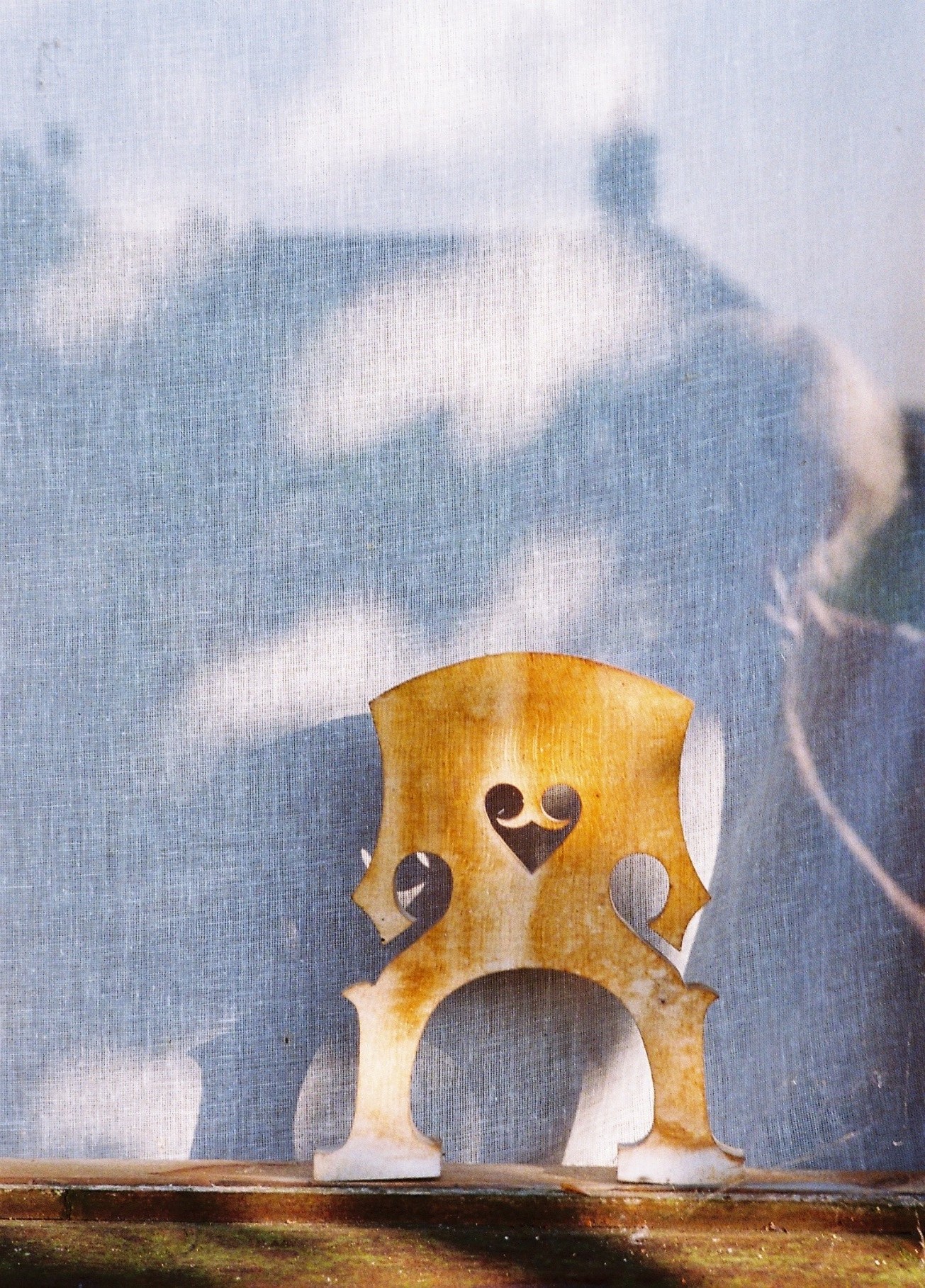
Cello bridge two orbs surge and ebb

as gold-white-silver-and-blue

flicker through the mesh

of vapour and dust

and amid clouds and branches

needle shadow lace

through myths and hollows

in dappled light on solids

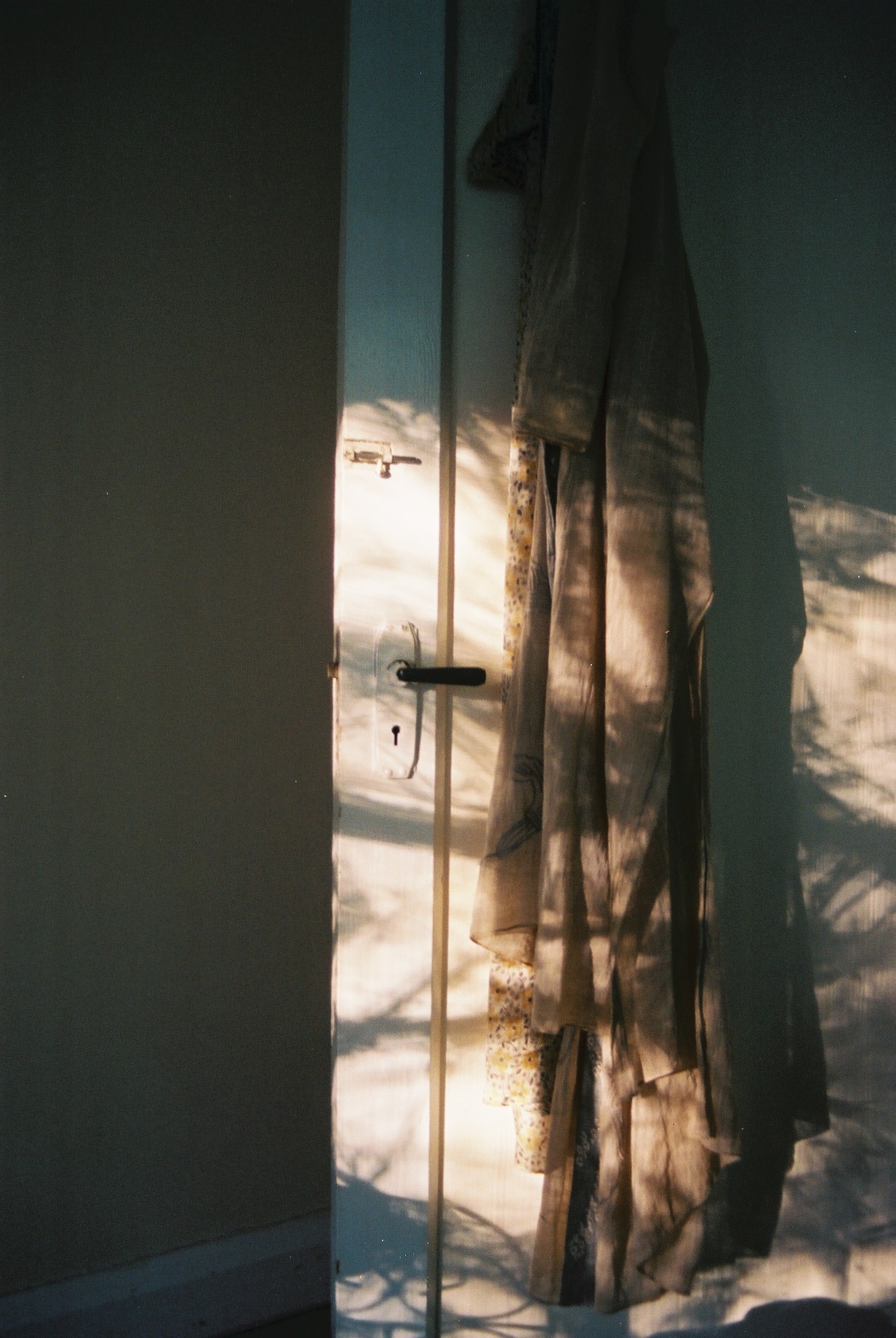
… visible pointers

Shadow on door - Copyto deep-breathing space

within – the fulcrum from whence

unfolds everything

*    *    *

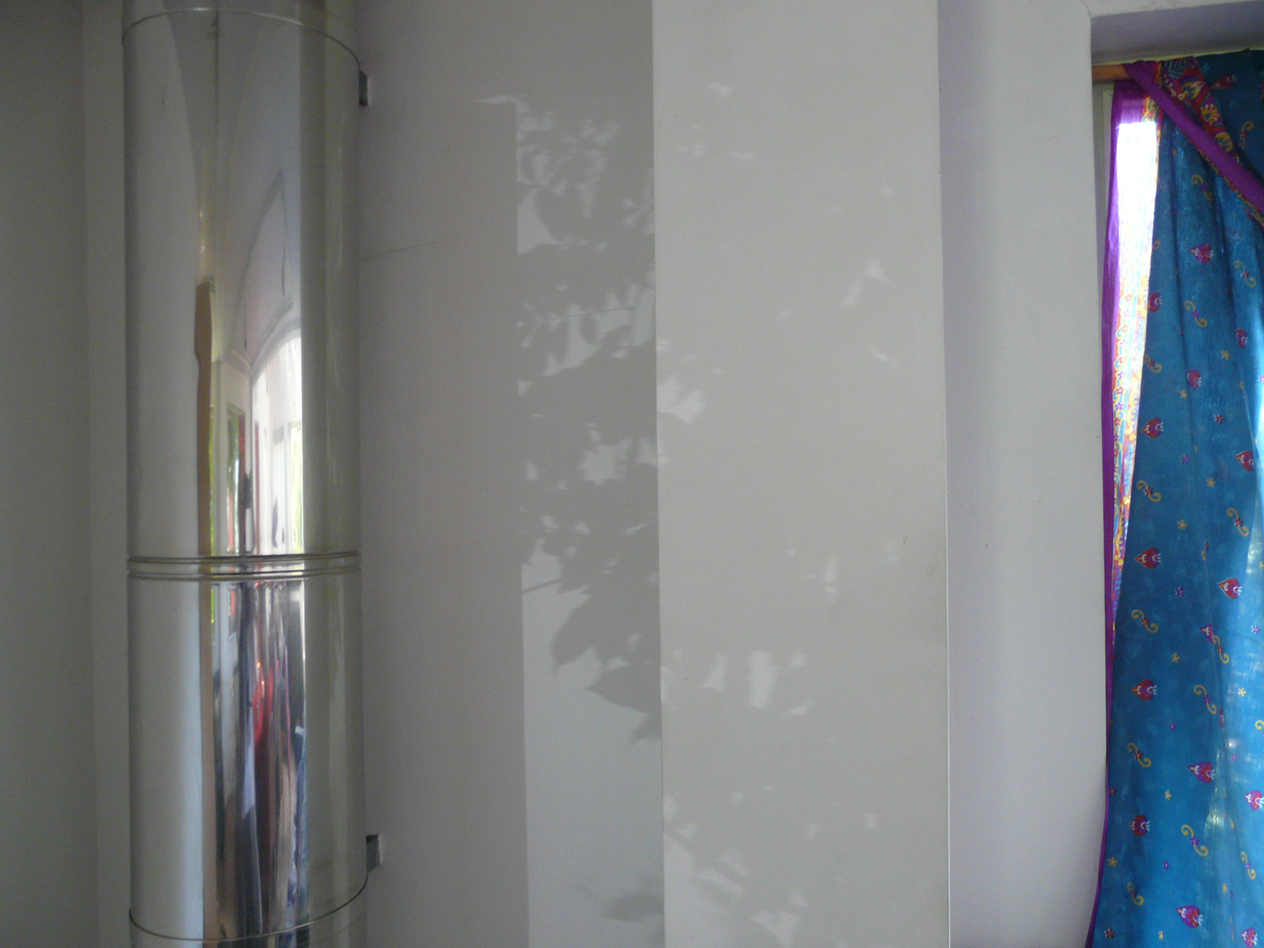
P1100852 - low

I found a poem by Gerard Manley Hopkins (1844-89) – ‘Pied Beauty’ – more musical and sophisticated than my Haiku attempt,and with sincerity of devotion I can’t muster. Enjoy …

Glory be to God for dappled things–
For skies of couple-colour as a brinded cow;
For rose-moles all in stipple upon trout that swim;
Fresh-firecoal chestnut-falls; finches’ wings;
Landscape plotted and pieced–fold, fallow, and plough;
And all trades, their gear and tackle and trim.

All things counter, original, spare, strange;
Whatever is fickle, freckled (who knows how?)
With swift, slow; sweet, sour; adazzle, dim;
He fathers-forth whose beauty is past change:
Praise Him.

*    *    *

My thoughts on dappled light are a spin-off from an exchange of comments with my on-line friend Joe Linker who asked:   ‘Framing – How much light to reveal? Shuttering – How much darkness to avoid?’

Imacon Color Scanner

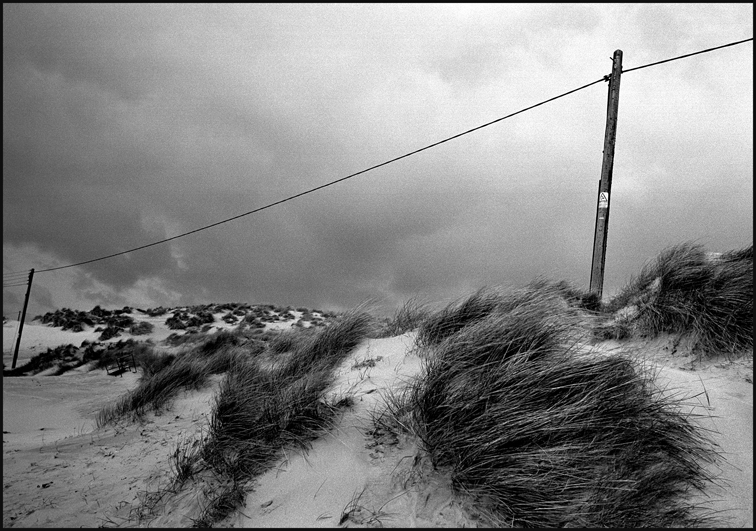
Here a scene from a stormy day in Rye with optimal exposure.

Analogue photography provides brilliant metaphors. No matter how interesting the chosen frame, shutter speed is vital. Too much light will turn the negative dense and dark, bringing bleached-out definitions to the positive print. Too little light produces a thin, transparent negative, resulting in a hard or soggy positive where subtleties of tone are lost. The amount of light is regulated by shutter speed.

In writing this is equivalent to the balance of rhythm, sound and shape of words drawing you into the frame.       I’ll keep practising 🙂

20 Comments

Filed under Blog

… a tribute to snags …

I’d make a lousy fundamentalist of any kind, and was probably born with negative capability http://en.wikipedia.org/wiki/Negative_capability and a tendency to daydream and contemplate life, skirting extremes, which makes my voice almost inaudible in a culture where sensation trumps. It also means I procrastinate on tasks that need doing, until a snag propels me to act.

CNV00003 - copy 2

One morning last week, easing myself into the day, the shirt I dusted in the cool morning air was trapped when I shut the back-door; next the sleeve of my pyjamas got caught while I closed the lid of my coffee tin. SNAGS – their repetition blinked a green light for associations and made me think of dreams, how they sneak into the daylight via signals. With only a vague memory of my dream, I followed an impulse to catch up on practical tasks round the house.

A shelf in my shed needed fixing. It had crashed, bringing down an array of cans, sprays and sealants. In the way one thing leads to another, I sorted and dumped stuff, and dumped some more – making space. Seized by the flow of action, I de-frosted the freezer, thinned the ivy round the shed, cleaned windows, filled a sack with confidential papers for shredding, loaded the washing machine and made some overdue phone calls … all amounting to what I call a BLITZ day.

Knocks from the dark, SNAGS, help me overcome procrastinations. BLITZ is how I operate to gain periods of laziness. I’ve learned to humour my inner driver (superego) and made peace with Lazy.

Dark of beginnings

Flees the meddler

The shrill demand

The noisy footfall

The sharp beams of

Imposing eyes

Dark folds its mantel

Round the dreamer

The shy nomad

The vague image

The tendrils of

A budding poem

Approach it softly

Like a lover

It may surprise

Or yield nothing …

———————————-

After my Blitz day, a book came to mind, ‘Worlds in Collision’ (1950) by Immanuel Velikovsky. His research resulted in controversial astronomical theories about catastrophic events planet earth experienced over time, and how the human race was affected. Here a link to a 1972 Horizon documentary:  https://www.youtube.com/watch?v=U18gMJXNyX8

He concluded that as a victim of amnesia, collective humanity is compelled to repeat and re-experiencing traumatic events, to aid, in a psycho dynamic sense, recovery through triggering repressed feelings, wake up, and learn to control the experiences. It’s a wider, thought provoking context for the contemplation of our human lot, which I leave to you, my readers, to explore.

———————————– 

On a smaller scale, we may have memories of being held in the womb and in the arms of our mother – or not. In either case, there are giants to overcome, grown-ups. One of the saddest things grown-ups do is deflating a child’s dreams and desires, talking down: Wait till you grow up. Life is tough etc. etc. It’s like telling a seed, ‘Don’t bother; you’re doomed from the start.’

collage2, familyThe desire to be  held equates home. The longing for a permanent home seems to motivate our actions in relation to food, shelter, competition, acquisition, power, money, knowledge or love, as well as being the impetus underlying the craving for prophets who promise salvation.

Fear of not being held, of having no claim on a place where it’s safe to rest when life gets tough, has made us inventive. We wall our interests, invest in insurances, wage war to protect what we identify with , or claim ownership of ideas, philosophies and creeds. Maintaining behaviours that keep familiar systems in place, we find it difficult to accept with sobriety that we are all in the same boat, that our ideas and identities are fleeting chimeras.

Imagine … wouldn’t it be wonderful to seek nothing and simply enjoy the miracle of living, and be like this child overcome by the mystery of rain?  http://vimeo.com/84802749

There is an experience of home that tends to go unrecognised, hiding, as it does, between each breath, in dimensions beyond time. Such glimpses come and go, leaving a sense of union and connectedness while we’re tossed along the rapids of progress, inevitably bumping into obstacles – the snags of life signalling messages from the unseen.

The psyche is a bridge between inner and outer dimensions (the theme of my novels,) similar to the corpus callosum connecting our two brain halves. On good days I sense that in addition to existing in time, a part of me also resides in another frequency dimension, as a light-body, or soul, resonating in my body while I occupy it.

*    *    *

A day, whether six or seven years ago or whether six thousand years ago, is just as near to the present as yesterday. Why?  Because all time is contained in now. Meister Eckhart

16 Comments

Filed under Blog

… physical books I loved to bits…

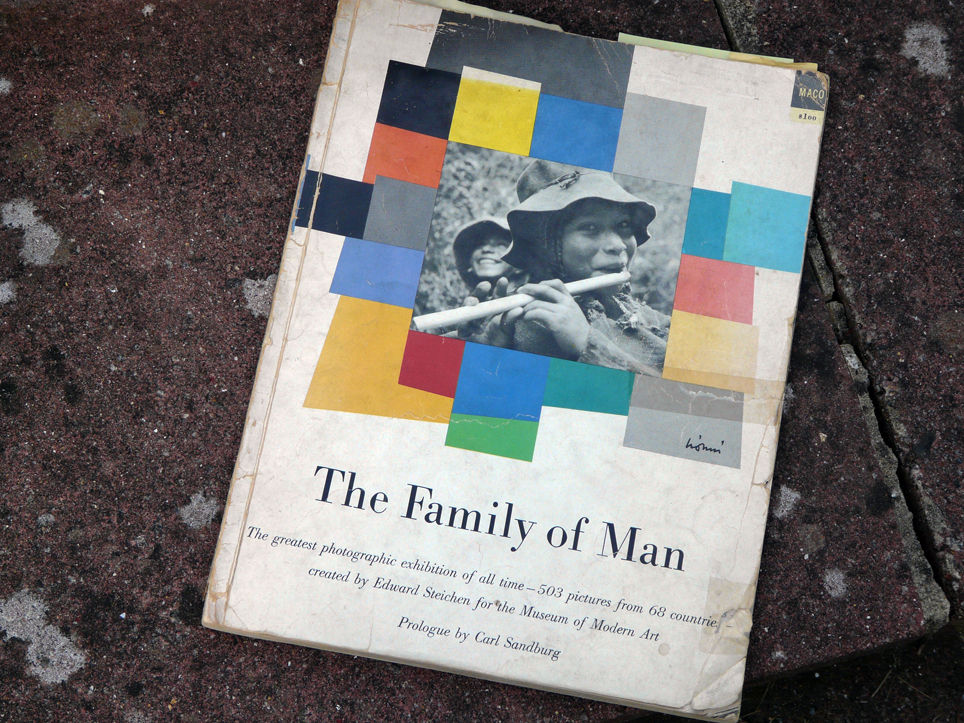
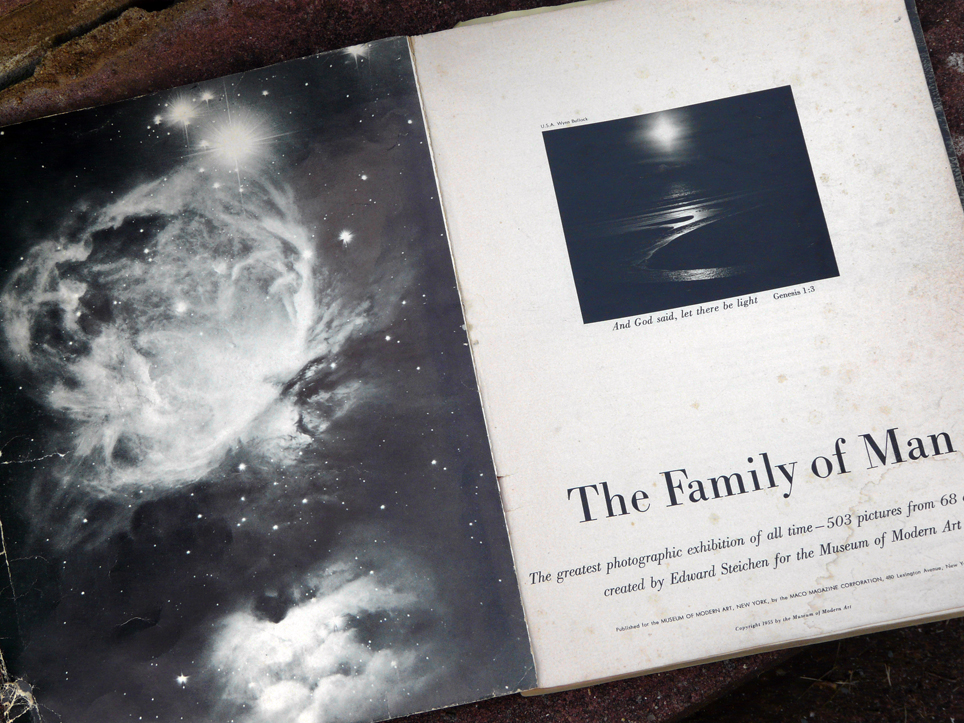
Aged eighteen, while staying with a family friend in London, I came upon the catalogue of the greatest photographic exhibition of all time – The Family of Man – a mirror to the essential oneness of mankind throughout the world.

The exhibition was assembled by Edward Steichen for the Museum of Modern Art and contained photographs from sixty-eight nations …

P1060180 smaller


There is only one man in the world

and his name is All man

There is only one woman in the world

and her name is All Woman

There is only one child in the world

and the child’s name is All Children


The inspiring collection of images decided my first career as a photographer.

P1060181 smaller

Ironic, given that my parents’ photographic business had held no interest for me. I realised my search was for what shone through reality, the essence in people and situation. I was inspired by poetry, story, light and shadow, movement, point of view and framing.

Fully embracing this passion started an active and adventurous period of my life, with opportunities to travel and mingle with groups of highly eccentric and creative people.


A decade later, at New York’s Kennedy airport, after a several momentous months in Washington DC, while waiting for a flight back to Amsterdam with my husband to be, a title on a book rack screamed for my attention … well, it jumped at me like a dream tiger.

P1060064 lowres

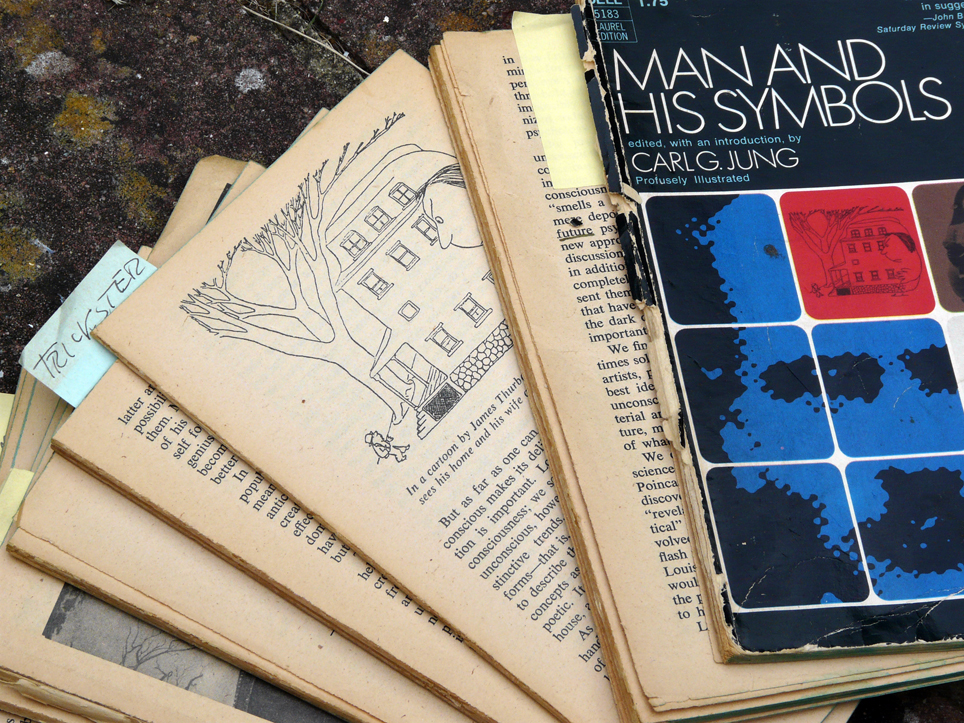
Man and his Symbols.

You couldn’t find a better window into the ideas of Carl Gustav Jung.

It was Jung’s last project, addressed to a wider public, readers who would not normally come upon the over 17 volumes of his work.

Due to its pocket size, as you can see, the yellowed pages of my copy travelled and have been well-read over the years ….

The book came about through the persistence of the remarkably diverse John Freeman: http://www.newstatesman.com/politics/politics/2013/03/john-freeman-face-face-enigma

He interviewed Jung in a Face to Face programme for TV: https:/ /www.youtube.com/watch?v=FPGMWF7kU_8

Seeing the programme, Wolfgang Foges (Aldus Books,) urged Freeman to persuade Jung to write a book for the general public. Jung firmly refused – until he had a dream. He consequently asked Freeman to act as editor and co-ordinator with the average reader in mind. So it became a collective project between Jung and four of his followers, M L von Franz, Joseph L Henderson, Aniela Jaffe and Jolande Jacoby, and was completed before Jung’s death in 1961,

In his introduction Freeman suggests the reader will find it a persuasive and profoundly absorbing journey … which, for me, was true from the start. During eight hours on the plane, with an occasional glance at my partner, the receding skyscrapers of Manhattan, and the expanse of oceans, my interest in dreams and the unconscious were powerfully validated. The book makes a convincing case for the imaginative life as the most distinctive characteristic of human beings. I totally grokked this: The unconscious is no mere repository of the past but also full of germs of future psychic situations and ideas … they grow up from the dark depths of the mind like a lotus and form a most important part of the subliminal psyche.

Two years on, having become a mother, and living for five years in rural Somerset with treasured time to study, it was C G Jung’s work that inspired me to delve into cultural and mythological research, leading on to my training in psychotherapy, and later still, to write novels.

My shelves contain many more books I loved to bits, and I wonder if digital version of these publications would have had the same lasting impact.

Frankly, I doubt it.

Only today I shared a tattered copy of Kahlil Gibran’s ‘The Prophet’ with a supervision client. She had never heard of the poet and was delighted.

Do you have books that fall apart through love and physical touch and still inspire?


17 Comments

Filed under Blog

… surprise – blog tour interlude …

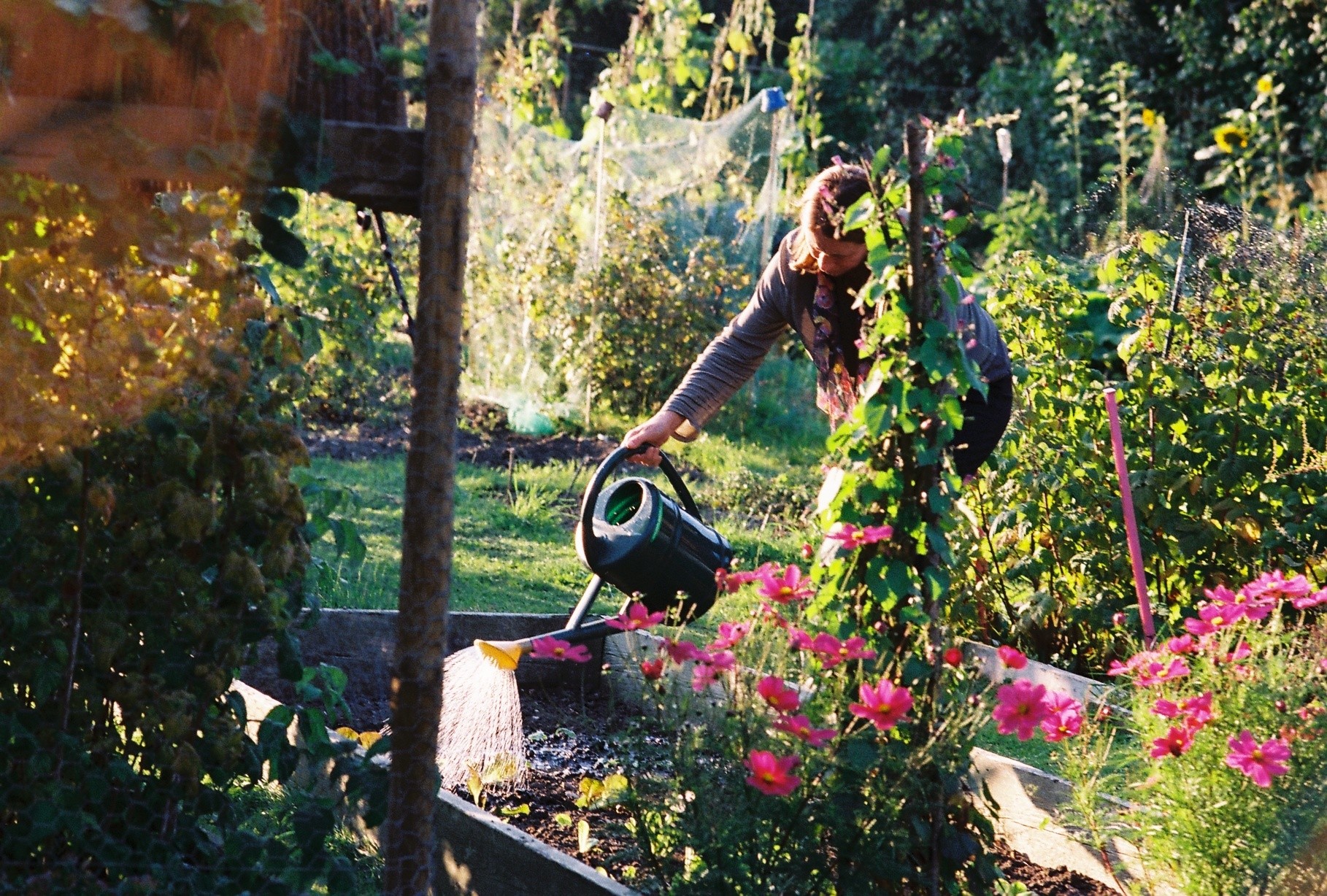
Ruth - watering plants in her allotment.

Ruth – watering plants in her allotment.

Wow – my friend Ruth Paris  joined a blog tour, which is the ritual of charting and connecting-up undiscovered blog-islands in the virtual sea. I was so impressed she took on this challenge I’ve so far avoided, my hand reached for the baton before I knew it. Besides, Ruth’s posts about her ‘middle-of-the-roundabout allotment project’  on her Huerto site are a pleasure to share. Here some photos from Sept 2011. Her recipe page alone is worth a visit … and certainly the virtual islands of the friends she introduces. And it’s true, she does pick out the teeny little stones and whispers encouragement to the weakest seedling. Look at her ‘about’ page and you find she also wears another hat.

The theme of gardens has irresistible appeal. I like the thought Ruth shares, inspired by our joint friend Shazadi – since we can’t change the world we can at least cultivate our gardens – which applies to earth-tilling plots as well as the metaphorical kind. In that sense, here are my responses to the 4 deceptively simple questions this tour asks of its participants.

1 – What am I working on?

I’m editing my second novel, a sequel to ‘Course of Mirrors,’ completed two years back. Last year I was contracted by a small, devoted publisher and am looking forward to having my first novel released in a few months. English not being my first language (more about this here) – allows me the perception of a stranger in the strange land of my psyche, not unlike the protagonist in R. Heinlein’s book. In a way we’re all exiles owning a planet somewhere – be it an inner world.

2 – How does my work differ from others of this genre?

I puzzle over the term – genre. It may apply to career writers, which I’m not. Writing is my moving on from photography, another tool to symbolically express what drives me. Set in an imaginary world, my characters outward their inner conflict, the archetypal tragic/comic exodus I feel entitled to elaborate on. If genre it must be, my novels could be called mythic poetic adventures, gripping magical quests.

3 – Why do I write what I do? 

I may fool myself, but I can’t help thinking that re-creating or co-creating history can make us whole. I’m fascinated by how our fragile identity is formed through early mirroring, how people and environments define us. How we oblige like sleepwalkers and build a myth on these early templates, and inevitably mirror others.  And yet, small shifts in awareness can change our perception from deep within. Each of us brings along something unique we’re yearning to recognise. Without the recall of that signature we feel a lack.  Having been intensely involved with many groups and sub-cultures throughout my life I now tend the seeds I gathered and cultivate my soul garden. using the magic of words that string together and create music, sculpt feelings and even lift the invisible.

4 – How does my writing process work?

It didn’t, until the pressure became so great I decided a few years ago to reduce my professional work and commit time to writing. When a character takes shape and is called on a journey, I trust the narrative will unfold in my imagination. With consistent attention there eventually emerges the emotional coherence of a short story, or a chapter, and another. For me, this process, though enjoyable, happens in semi-darkness. I can’t force the outcome.

Editing is fun, and sometimes torture, which is when I crave diversions – watch birds, make coffee, fix things, blitz-clean the house, sort finances, prune hedges, cut grass … and relieve my pangs of guilt for neglecting friend by stepping out from my solitude. I may go harvesting in public spaces – that is, observing how people move, which I find endlessly fascinating.  On really bad days doubt intervenes and I sulk over the ‘who-do-you-think-you-are’ syndrome,’ until I accept I’m no Shakespeare.

In the end it is always being with friends and reading that refreshes my conviction in writing.  On many levels engaging with people and their stories helped me understand my private myth, and more.

*     *     *

A few entries on gardens from my archive https://courseofmirrors.wordpress.com/tag/garden/

The task of choosing further runners for this tour from a tapestry of amazingly creative people gave me a headache. To stem the flood, I’ll cheat the rules and introduce only 2 writers to weave the thread onward and hopefully reveal more secret islands.

Philippa Rees

Philippa

Philippa

The book that wrote my life … Philippa says of – INVOLUTION – an Odyssey Reconciling Science and God – an epic poem, and a spiritual revelation. It’s been called a tour de force. In nine cantos the work travels through pre-human involution, the enfolding of consciousness in matter, early man’s emergence on the Serengeti … through the recorded civilizations of Greece, Rome, the Dark Ages, the Renaissance towards Enlightenment and finally Modernisms’ success of science – of which the latter, ironically, obscures the internal story – the story of direct intuition, nous, experience.

I totally grok this.

And I’m looking forward to meeting Philippa this weekend. She’ll join a gathering of my friends and share what sparked her life-long project. I imagine she’s good company, holding memories of gripping stories, including her childhood in South Africa, which she’s beginning to share on her blog, ‘Careless Talk,’ accessed here.

Diane Dickson

Diane

Diane

Diane is a prolific writer of short stories and novellas. She hardly pauses, and generously shares the developing instalments of her work on her website. I’m totally addicted to her posts. Increasingly, she publishes e-books through Kindle and now also in print-versions.

Her characters are usually teetering on the edge of change before they slip into a life-changing crisis. The protagonists are often so hilarious you want to shout – get your act together. Then there’s a cliff-hanger and you’ve  to wait a day or two for the next instalment. Stories range from light-hearted, uplifting, to mysterious and dark and they all have surprising twists. As I said, I’m addicted. A recent published tale is:

The Man who lost his Manbag and Found Himself‘ Here’s a modern day odyssey, and a simple recipe for losing your identity.

Both authors presented here, like so many I came to know during these last years, fought their own publishing battles. I hugely admire and have great respect for their skill and perseverance. There was never a time I did not find selling myself daunting. Even during days of professional success I relied on others to shout out the existence of my ware. I need someone to hold my hand.

Some of my friends are slow in developing their island on the internet, yet offer compassionate mentor-ship I can’t emulate. Notably Evlynn Sharp  We worked on various projects together, and I feel deep gratitude for her support.

*     *     *

And here more cheating – I’d like to introduce the islands of two young people engaged in the buzz of life, with scarce time for leisurely blog-tours. They’re brilliant at what they do. They make me proud, my son, Yeshen and his wife Natasha Tonkin, a director of animated films.

I wrote about them recently https://courseofmirrors.wordpress.com/2014/03/23/weddings-still-happen/

14 Comments

Filed under Blog

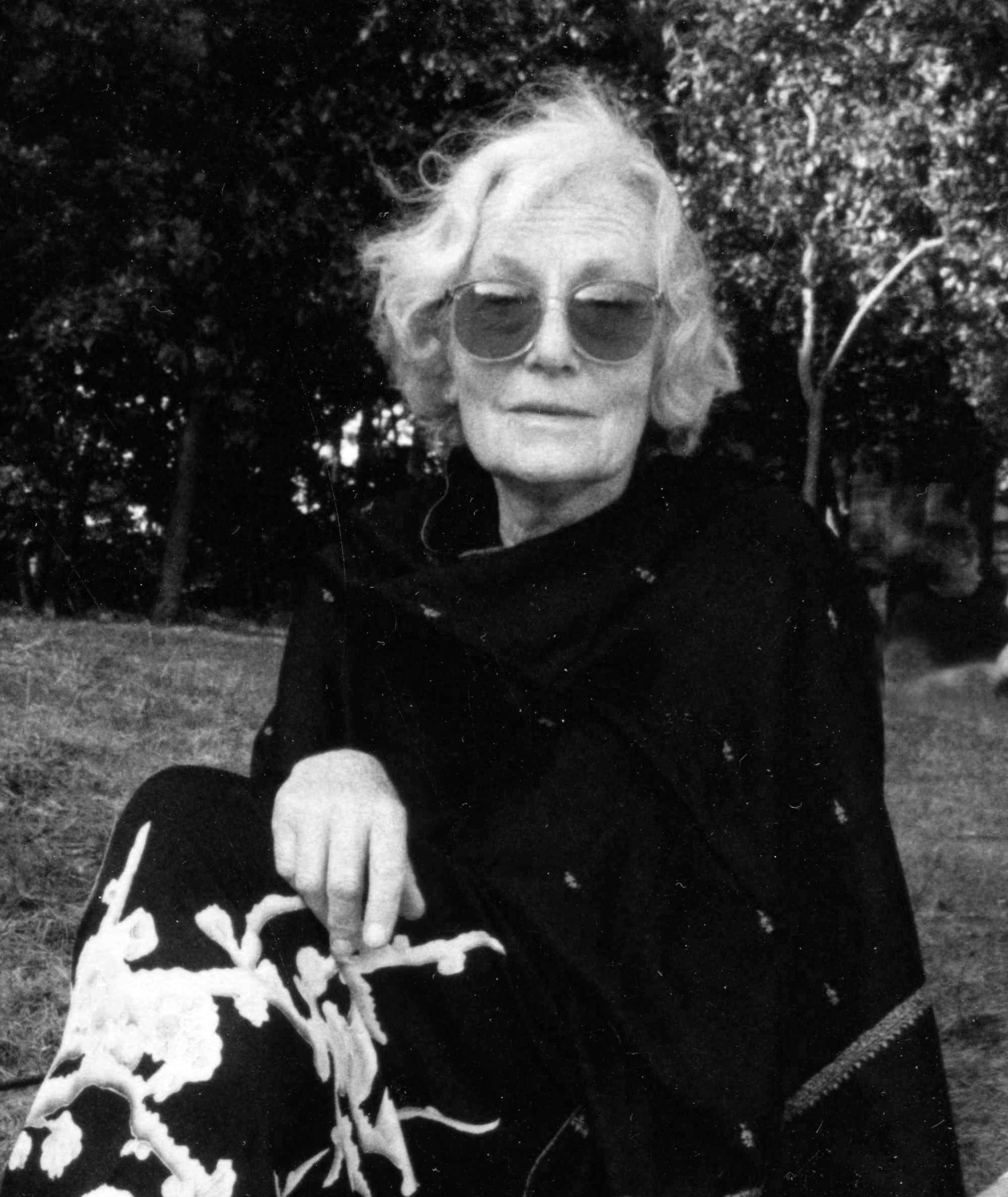
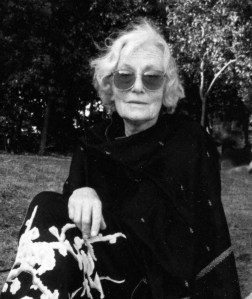
Sitara Brutnell – 1914 – 2004

Sitara Brutnell

Sitara Brutnell


Today’s post is to honour a remarkable woman who died ten years ago, aged nearly 90, having lived her life devoted to the Sufi Message of Love, Harmony and Beauty. Sitara Brutnell was a musician whose brilliant ear for pitch and rhythm extended to the fine-tuning of her personality. By enduring the dissonances life throws at us without dispensing blame, and reading people and situations deeper, she became receptive to the spirit of inner guidance.

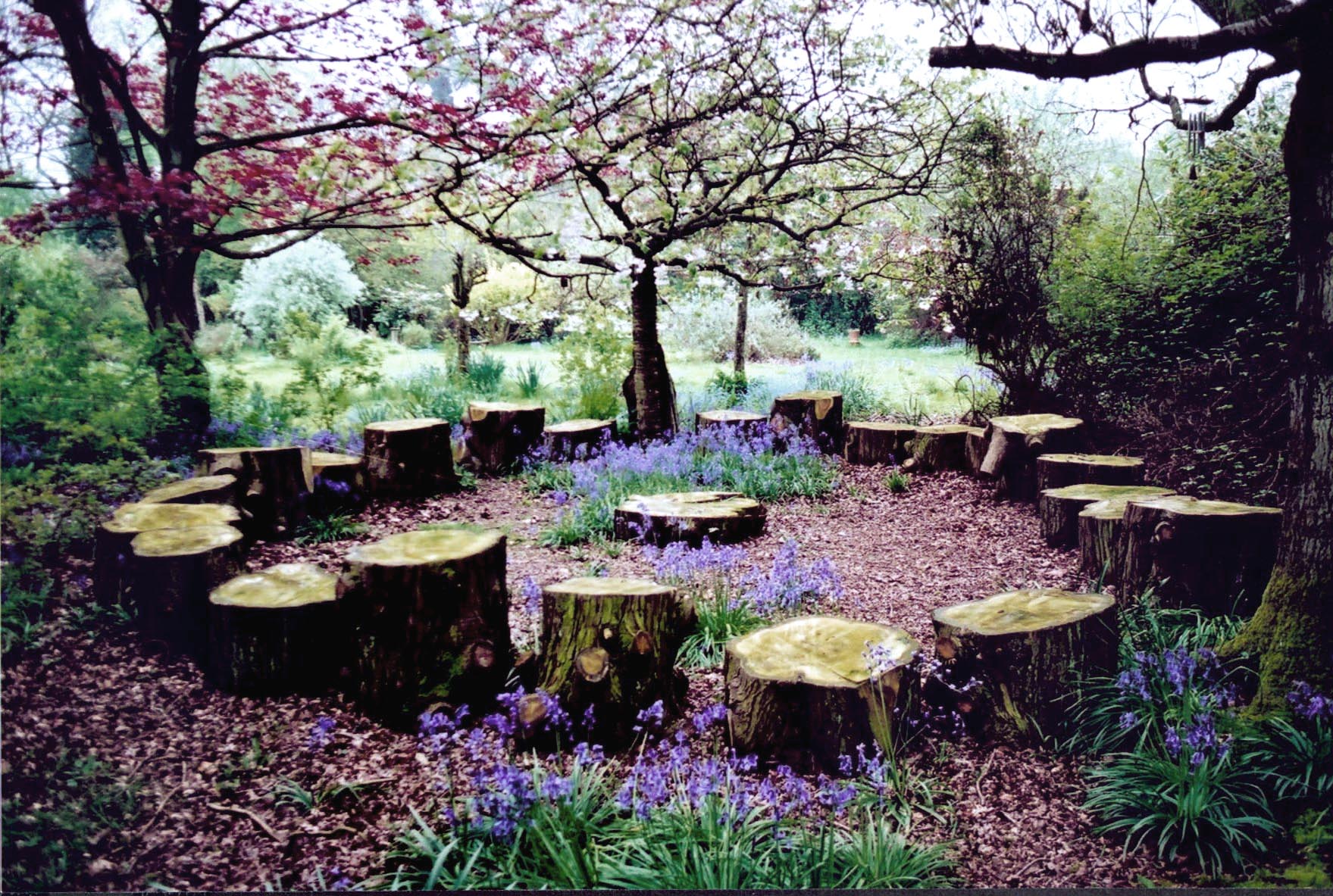
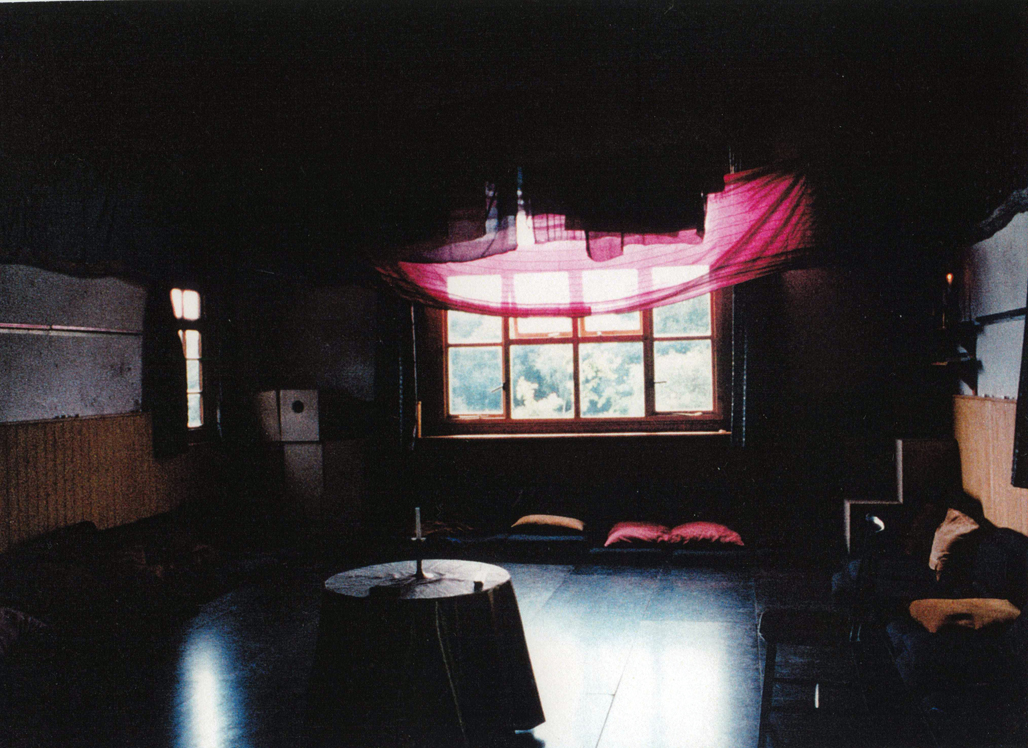
Like her parents before her, she supported the work of the Sufi Movement and continued hosting its leaders after Hazrat Inayat Khan in her home, enjoying many musical soirées. One of Hazrat’s successors was his youngest brother, Musharaff Khan (1895-1967), who handed his role to the 26-year-old Fazal Inayat-Khan. So in 1968 the Sufi Movement was challenged by a dynamic and innovative Pir and custodian, a position Fazal eventually surrendered, giving credence to his own unique teaching approach, calling it The Way of Action, and later Sufi Way. Sitara stood by him for almost three decades, and after his untimely death in 1990, the leadership of Sufi Way fell to her. My Pictures 438 - CopyAknar Circle in Roughwood
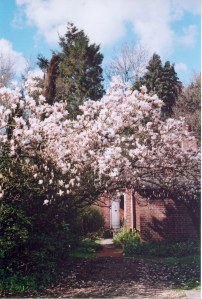
She is remembered as a wonderful musician, and for her kindness, humour, sparkling mind, frequent expressions of gratitude and her warm hospitality.

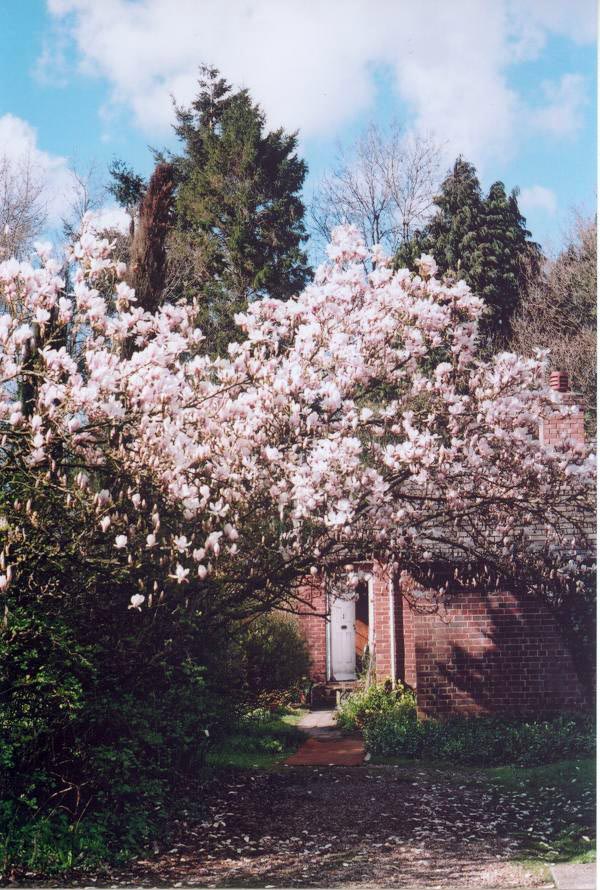
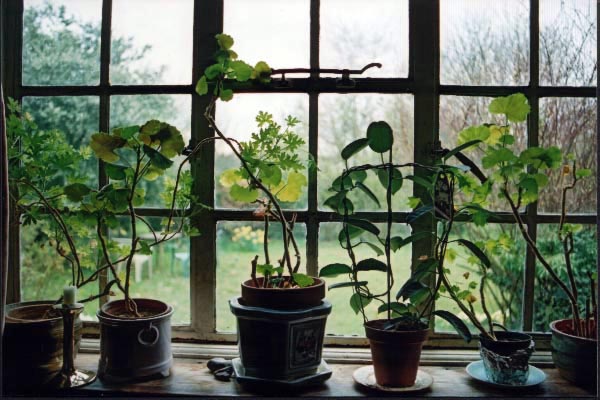
The door to Sitara’s home was always opens to her many friends spanning the globe. There was hardly a time when she did not gracefully entertain guests who treasured Roughwood as a place to relax and be nurtured, like she lovingly nurtured her pot plants, no matter how straggly they lined up on her windowsill. The wild flowers in the secret nooks of her garden looked after themselves. Sheltered by high trees and bounded by fields, this magical place was only a few miles away from Four Winds, Fazal’s residence, and the then official spiritual home of Sufi Way, which was like a buzzing metropolis of the psyche compared to the sanctuary of Roughwood. My Pictures 410 - Copyat Roughwood,window13-04-04
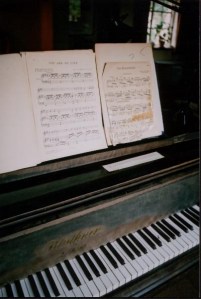
It is tremendously reassuring to come back to rooms where everything has over time claimed its place. Shelves packed with old books, well-worn furniture and carpets, paintings and prints on the walls, items on the mantelpiece, like the tiny carved gazelle, the Japanese ginger jar, red-veined serpentine stones from the Lizard – interspersed with rotating tokens of love – the photograph sent from a family in America, a child’s drawing, a postcard from South Africa … each object holding a story. And stories popped from shells with every question of where and what. We held garden working-parties, chasing away moles, poetry gatherings, celebrated birthdays …
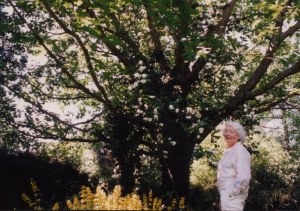
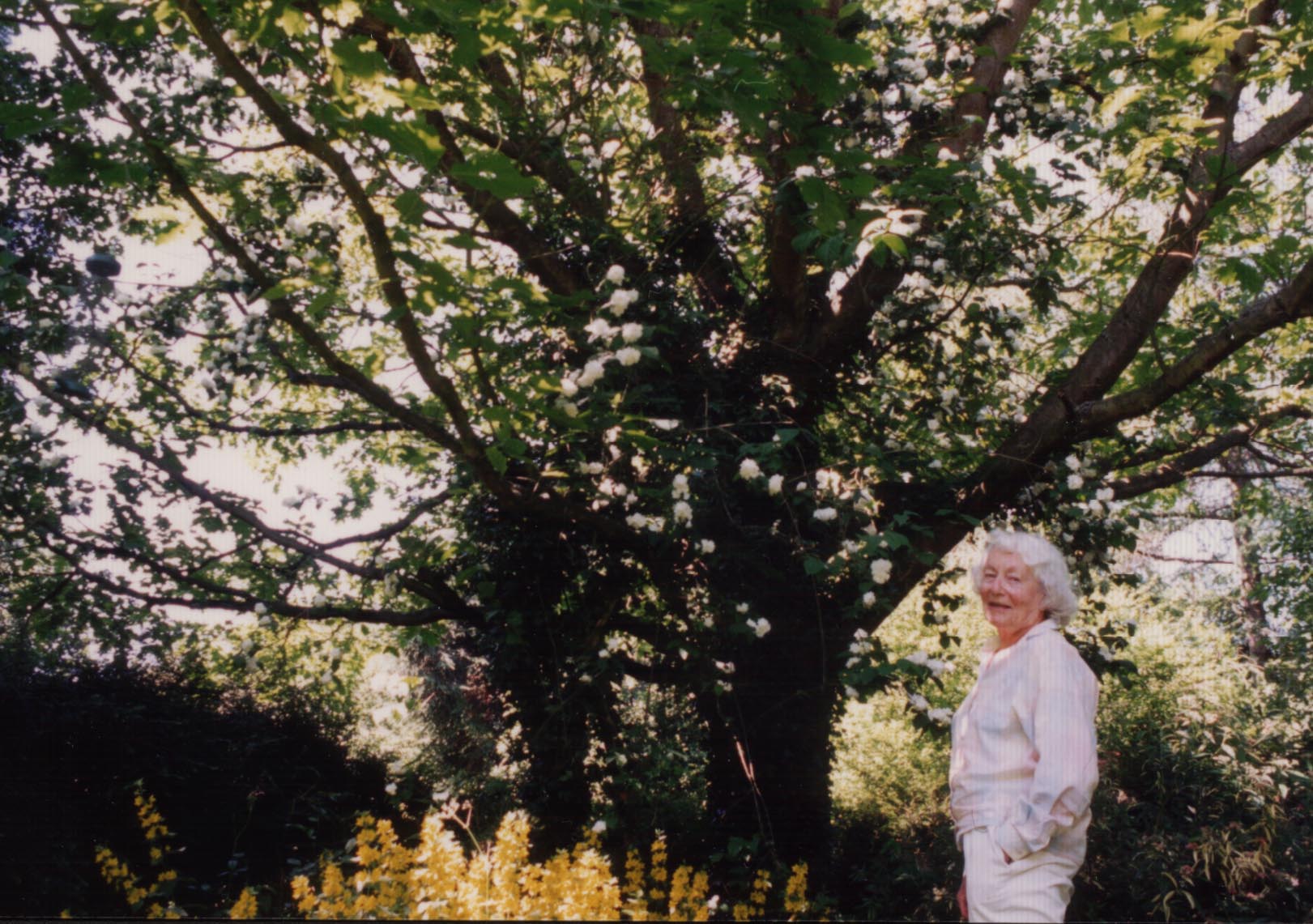
The year roses grew in the tree.

The year roses grew in the tree.

Following Fazal’s death, his partner, Wendy Rose-Neil, a transpersonal therapist, put Four Winds on the map as a venue for London’s workshop facilitators, and Sitara, aged 76, though daunted by the task, embraced her spiritual leadership role with grace. Helped by the local and international community, she continued regular Sufi Way activities, and encouraged Sufi friends and professional therapists among us to run workshops. In this and many other ways Four Winds maintained itself financially for another decade and served a wide community.

This positive development ended abruptly after Sitara’s death. The new Pir, Elias Amidon, sold both Roughwood and Four Winds to raise money to achieve more flexibility for Sufi Way. I am still grieving the loss of the places and the multicultural network that was truly inclusive, beyond the brand of Sufism, which is not to say that the inclusive approach is not continued elsewhere. However, attempts of local people to buy Four Winds from the newly created charity failed. The two spiritual homes in England now only exist in the rich memory of companionships.
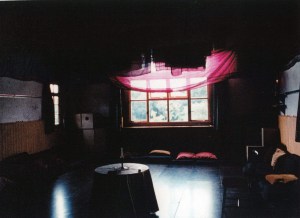
Barn at Four Winds

Barn at Four Winds

It was impressive how Sitara embraced the challenges of the next generation, how she joined the freedom of enquiry of the 70s and 80s. Over three decades, people from all walks of life and all corners of the earth gathered yearly for Summer, Winter and Spring schools at Four Winds, which was a vortex  of creativity, with stimulating lectures and discussions, psychological war games and intense experiential meditative and contemplative practices that deepened lives and formed lasting friendships.

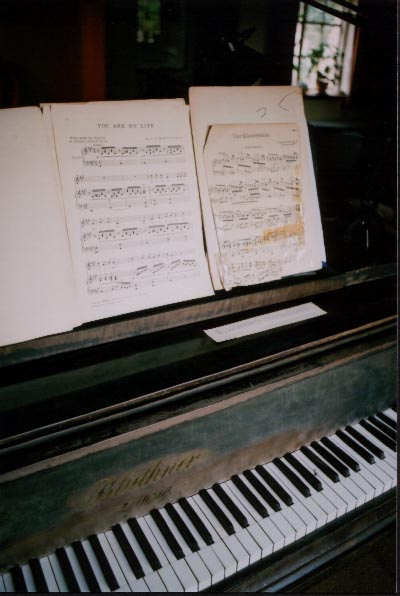
Though an unlikely team, Fazal and Sitara complemented each other. While Fazal, with the sincerity, contradiction of doubt and faith, intensity and humour of a Qalandar *, challenged the assumptions of his students and encouraged unlearning, Sitara was the blessing guardian, typed up hundreds of Fazal’s lectures and regaled us with piano recitals on her Grand, songs, esoteric readings, tea-time-treats of Battenberg cake, stories, and the consistency of her welcoming home. What they had in common, apart from disseminating the essence of Hazrat Inayat Khan’s message, was their love for music, keen curiosity in life and the playful deflation of any pretensions to grandiosity.

For one of the famed spontaneous Magic Theatre performances at Four Winds, Sitara offered a poem that gives a flavour of her delightful poise:

Lord thou knowest better than I know myself

that I am growing older and will someday be old.

Keep me from the fatal habit of thinking that I must say something

on every subject and on every occasion.

Release me lord from craving to straighten out everyone’s affairs.

Make me thoughtful not moody, helpful but not bossy.

With my vast store of wisdom it does seem a pity not to use it all …

but thou knowest lord that I want a few friends in the end.

Keep my mind free from the recital of endless details;

give me wings to get to the point;

seal my lips on my aches and pains …

they are increasing

and love of rehearsing them has become sweeter as the years go on.

I dare not ask lord, for grace enough to enjoy the tales of other pains,

but help me to endure them with patience.

Teach me that glorious lesson that, occasionally, I may be mistaken. 

Keep me reasonably sweet lord.

I do not want to be a saint …

some of them are so hard to live with,

but a sour old person is one of the crowning works of the devil.

Give me the ability to see good things in unexpected places

and talents in unexpected people.

And give me oh lord the grace to tell them so.


(The author of this poem is anonymous, but Sitara wrote poems in the same vein)

*    *    *

* A Qalandar is traditionally a wandering dervish, a free spirit with a strong love for humankind. Fazal Inayat-Khan once wrote a breath-taking poem called ‘Qalandar’ at Roughwood. It can be found in this book: Heart of a Sufi – A Prism of Reflections, link: https://courseofmirrors.wordpress.com/2013/03/16/a-rare-book-now-on-line/

The present Sufi Way: http://sufiway.org/ And an article by Fazal Inayat-Khan that sheds light on the various branches that grew from the tree of the Sufi Movement: http://sufiway.org/about-us/our-lineage/12-about/33-western-sufism

If you’re inclined to explore the spiritual message of Hazrat Inayat Khan, you’ll find plenty of links and source material on these and many other sites, all free: https://wahiduddin.net/mv2/   http://www.cheraglibrary.org/

Thank you Sitara, thank you Fazal, and thanks to all the friends in this adventure. You are still enriching my life.

10 Comments

Filed under Blog

… meeting the other …

None but nature could have written a better curriculum for becoming human …


Attend for a moment to you breathing. If you’re aware of heaviness in any part of your body, breathe the colour of water under a blue sky into that part and let the tension drift into the earth with the out-breath.

In your mind’s eye, find yourself in a meadow, abundant with scented wild flowers. Nearby is the outcrop of a mountain and a welcoming dry cave stirs your curiosity. Entering the cave, you find a spacious passage from which comes a luminous glow. All of a sudden you’re walking on air, and – like a feather on a breeze – you’re floating, floating gently downward into velvety twilight. In your heart you know you’re guided towards a special encounter.

A waft of fresh air brushes your skin. You find yourself standing in a soft beam of light from high above at the centre of a dome-shaped cavern. The circular wall of the dome has tunnels that lead in all directions. You must choose one. Be patient.

White Window, St Cathrine's Chapel - more lowresWithin your reach sits a small bronze bell. Lift the bell and give it a slight nudge. As the clear sound of the bell reverberates in your heart, you’re drawn to one particular tunnel and you know this is the one to follow.

Warm air greets you with otherworldly scents, the crystal walls of the passage glimmer. Soon brightness appears ahead, momentarily blinding. You step forward and slowly make out a landscape of rolling hills with the sun reflecting in a silver stream that meanders towards a distant sea. 

Close by, you notice a strong presence under a solitary tree and feel your heart chime in perfect harmony with the presence. A near transparent human form steps out and mirrors your innermost being. Eyes, radiating love and acceptance, completely affirm you. For an instant you are – you are natural mind, pure consciousness.

A soft voice says: Where is the other?

Pondering the question, a shrouded figure moves, from hiding behind your back, boldly into view. It is a repulsive creature and you want to shush it away.

Greetings to your other, the soft voice of your essence says. Then you realise what the apparition represents, everything you reject and prefer to keep hidden from your consciousness, all you find objectionable, embarrassing and unacceptable in others, and in yourself.

Understanding happens. By denying your inferior being you are also ruled by its whims. And realisation comes – of your body’s wisdom, and of knowledge gained from human frailty you were too proud to value. You see with fresh eyes  and extend the very love and acceptance you absorbed from your essence. The other straightens, lightens. There’s a new respect, an affirmation, a softening.

Turn and look again into the deep compassionate eyes of your essence, absorb this capacity for tolerance in your heart, allow the healing.

Then bow to your essence and return the way you came. Give a nod of acknowledgement to your other, so the shrouded figure won’t slink behind, become resentful and trip you up. Let it walk in view, accepted, even with gratitude for its imperfections and its treasures.

*    *    *

Continuing from my last two posts, this is further classic theme for an inner journey, usually adjusted to the context in which it is used. I kept the narrative short and succinct. Even if you don’t enter the journey experientially, alone, or read to by friend, and allow your own images to emerge, the scenario might spark reflections, and drawings or writings for your diary or chapbook.

It’s humbling to recognise our flaws and the blame we assign to others, and yet, no matter how many veils are falling from our eyes, there’ll always be more projections to be owned, more grudges to let go of, more misunderstandings to tolerate, more hurts to absolve, and more to be embodied of what feeds us from dark roots. Our struggles with conflict and contradiction polish the heart, feed our imagination and create our realities. None but nature could have written a better curriculum for becoming human.

http://www.youtube.com/watch?v=9NrAGJEMnHE          Marie Louise von Franz – The Way of the Dream 2.1 – Our Shadow Knows

One does not become enlightened by imagining figures of light, but by making the darkness conscious. – C G Jung, CW 13: Alchemical Studies. P.335

Everyone carries a shadow, and the less it is embodied in the individual’s conscious life, the blacker and denser it is. At all counts, it forms an unconscious snag, thwarting our most well-meant intentions. – C G Jung

If we could read the secret history of our enemies, we should find in each man’s life sorrow and suffering enough to disarm all hostility. – H W Longfellow

9 Comments

Filed under Blog

… the child in us …

Close your eyes and imagine standing on a beach … warm sand under your bare feet – a light sea breeze brushing your skin – gulls sailing above the sparkling crests of waves. Breathe a while, to the rhythm of the surf lapping at the shore – in – out – in – out – in – out – and let your eyes rest on the silver skyline.

There is nobody here but you – and a visitor – a child you invite to appear as it will.

At what distance does the little person appear?

Observe its posture, age, gender?

What do you sense about it?

Does it look at you, or not?

Is it curious, shy, withdrawn?

Notice your thoughts and feelings, don’t draw conclusions – do nothing.

Sense the realm of consciousness this little person lives in, and still your mind. If the child plays with shells do the same, remaining where you are. If the child skips along the surf, wait. If it takes one step towards you, wait. If it turns its back on you or walks away, sit down and wait. All the while communicate silently – I’m here as a friend.

Yeshen in Surf, colour - lowresHe or she may come close – or not – play with you – or not. Be patient. This little one represents your essence and must be free to approach the strange adult you’ve become as it chooses and when it’s ready. Maybe next time. Don’t over-act. Even if the child is friendly, keep in mind it may try to please your expectations. Remain calm, interested, approachable.

*    *    *

Visiting an imaginary coastline, metaphorically a boundary between the conscious and the less conscious psyche, brings insights even if no images emerge. Try and silence your usual thinking process. Enter the scene as in a daydream, or have a friend slowly read the text.

Insights change from day to day, according to mood. You could experience joy, get a glimpse of what’s important in your life, or be prompted to engage in frank reflections – a valuable process, helping us to develop empathy.

For example, if sadness or pain knock at the sight of this child, ask yourself … have guardians chided your curiosity and strong spirit, or humiliated your weakness and poor confidence? As a result your own adult may have unwittingly come to reject your child as unworthy, regarding it as ungrateful, stubborn, nagging, or awkward with the shame of buried secrets?  Consider – fear of abandonment, punishment or guilt about early fantasies may compel children to please grown ups in order to cope and emotionally survive. The legacy could be a distrust one’s own feelings. Signals received as pain, or love, might equally overwhelm.

Next time you hear a baby or toddler screams, let’s say, in a supermarket, observe what happens in your body, and watch other shoppers. It grates at our nerves at best, and can trigger physically embedded memories of helplessness, and sometimes more. Good to remember when we  judge people who shout and act irrationally. There are behavioural therapies to desensitize triggers that threaten to overwhelm people with rage. Then again, active imagination is more deeply transforming, and the symbolic expression of complex emotions (see later) frees energy and meaning, making a difference to our collective state of consciousness.

If some of these reflections ring true,  return to the imaginary shore as long as it takes to earn the trust of your child. Your adult’s task is simply to be present, reflect, and allow the younger being to initiate communication.

In daily life, begin to set aside pockets of time for that little person in you, encourage a symbolic process, without pressure, to write or draw about early joys, pains, hurts or dark thoughts, like having hated a parent, or once wished someone to drop dead. Children have such fleeting fantasies when they feel threatened and powerless. It’s normal. Holding on to self blame is the problem.

Suffering brought to consciousness lifts the spell of self blame. Despite appearances of confidence and adult bravado, the child in us is often anxious. Deep down may linger legitimate anger, and, deeper still, sadness and the longing for a precious moment of total acceptance. We call it love. It takes time to soften hearts.

Imagination serves multiple roles. It can draw us into habitual loops of negativity and self harm, or stimulate insights and enhance creativity. Artists know this. Imagination can also heal psychic wounds frequently handed down through generations. The healing aspect is especially powerful when employed consciously. Jung called it ‘Active Imagination.’

In this way, every imaginary journeys can be followed up by freeing condensed energy and meaning – symbolically – through drawing, painting, writing, movement, music or play, allowing what wants to emerge, be it forgotten wonders, or burdens, like unacknowledged anger a child had no means to express in early life.

And most significantly, nurturing a trusting relationship and rapport with our younger being invites the Beloved – our essence – and with it the light of intuition and inner guidance.

‘Lovers don’t finally meet somewhere. They’re in each other all along.’  ― Rumi –

Perhaps all the dragons of our lives
are princesses who are only waiting to
see us once, beautiful and brave.
Perhaps everything terrible is in
Its deepest being something
that needs our love.               
— Rainer Maria Rilke –


The imagery above is in continuation of my last post ‘journey into mystery.’

https://courseofmirrors.wordpress.com/2014/02/06/journey-into-mystery/

23 Comments

Filed under Blog

… journey into mystery …

Close your eyes … switch on a light in the area around your heart and see the image of a rose bud emerge … at first a luminous tip of colour … the bud stirs … the sepals gradually turn outwards. See the petals unfold in a slow and fluid movement … until the rose has opened and exudes its delicate fragrance.

Imagine the rose expanding in size … to a palatial sphere that invites into its passages. Overcome the weight of your thoughts and wander barefoot with feather-light steps towards the luminous centre. Rest here for a while … absorb the tenderness of the realm’s ambience and the exquisite fragrance of rose into every cell of your body.

Rose, autum 4 low crop 2

Become the rose …

Move your consciousness upwards … lift on spirit wings and witness the rose palace merge with the landscape below. Soar higher and look down on clusters of houses, roads, cities, fields, hills, rivers, woods … see the shape of countries, continents, coastlines and oceans spread and curve the horizon. Move higher still, until the whole earth floats in deep space like a marble.

Feeling light and trusting, imagine you are level with the moon and look back at the shining marble turning in space … ribbons of white cloud, blue oceans, pale sands, green forests, red rock and snow-topped mountains – your home – vast in your memory but also small enough to be held in your palm.

Think of the people who have been and are close to you … in love … or alienated by hurt and dispute … people you shelter in your heart or have expelled from it. Sense the mysterious weaving of souls in the tapestry of the universe … your separate thread belonging and active in the creation of earth, the home of your human family.

Know that every sincere thought travels … know the creative potential alive within you is reflected in all life forms throughout the universe …

We are the mirror as well as the face in it.
We are tasting the taste this minute                                                                                                                                                                 of eternity. We are pain                                                                                                                                                                                        and what cures pain. We are                                                                                                                                                                                  the sweet, cold water and the jar that pours. – Rumi


Slowly descend – return to earth – into the rose palace.

Step away from the luminous sphere … let it ebb back into the small flower, petals folding … see the bud float into you open hand … sense how its power wishes to stay alive in you … for its beauty to unfold whenever you need loving. Here is how – place the rose and the whole experience of rose-becoming into your heart.

*    *    *

Over the years I composed many similar imageries with archetypal themes. They are tools of reflection I use with clients and in workshops. When I guide, the process becomes subtly interactive and explorative. Some journeys are safe to walk alone, like the one above, and they are as powerful as your imagination allows.

Should I share more such imageries? Let me know.

Here a more elaborate space visit … http://aeon.co/film/overview/

The poem from ‘Open Secret’ – Rumi transl. by John Moyne and Coleman Barks.

28 Comments

Filed under Blog

… accessing altered states …

After last week’s dark matter, I welcomed a beam of light, provided by a friend who engaged a small group into exploring how to access altered states, states of consciousness outside the ‘normal’ Beta brainwave frequency (between 13 and 30 Hz cycles per second) defined as awake and alert state.

Falcon -lower res

Imagine everyone was normal, or, by definition, alert, outward orientated and falcon-eyed. Present governments and corporations would be challenged. So it seems a paradox that our culture puts pathological labels on altered states of consciousness, which are as common as day and night, and as changeable as the seasons. Artists, athletes, train spotters, kids on play consoles, football fans, shoppers wandering dazed through supermarkets … are all under the spell of certain wavelengths. Depending as to where our energy is drawn to or focussed at, we may be carried by any collective mood, be it of disenchantment or Joie de Vivre. Whatever wave we surf on or drown in, when we resonate with a like-minded tribe, we feel less alone. There is no such thing as a ‘normal’ state.

The frequency of our brainwaves shifts in two ways: changes in mood alter our physiology – changes in physiology alter our mood.

Re: changing our physiology – our friend brought along a few technical gadgets and apps we played with. Listening to the pulse of higher Beta frequencies, for example, tricks the body into stimulating synapses and can activate higher energy centres (chakras.) See, for example the link to mind-machines at the end of this post. There are apps offering similar devices that can be downloaded from the internet.

 One exercise we did without gadgets lightened my heart, which had been battered last week. We formed groups of three’s and had one person facing two others who stood close together and slowly moved their outer arms, independently. The person observing moved their left and right arms in accord with the arms of the two people they were facing, trying to match the disparate movements. This involved right and left brain attention. After about 10 minutes the rapport achieved was beyond words – peace and spaciousness and a deep appreciation of where the other was innermost, like being taken into a sacred circle. This blissful sense of connectedness works best among people who have trust and sympathy for each other.

A traveller puts his head under the edge of the firmament - original (1888) printing of the Flammarion engraving.

A traveller puts his head under the edge of the firmament – original (1888) printing of the Flammarion engraving.

I use methods of mirroring, matching and mismatching sparingly in my work with clients. And if appropriate, I offer guided imagery, which induces a light trance state that facilitates fluid awareness, images, and striking insight.

As children we may have been mirrored in ways that affirmed, ignored or rejected our sense of reality. Affirmation happens through rapport, a sense of being accepted and recognised. Lack of rapport and interference can send us on less-walked, though potentially creative journeys. With the advent of virtual global networks the chances of finding rapport have widened. Then again, given the internet is also a mirror to our collective unconscious, we may occasionally drift rudderless in the hive mind, which is also a kind of trance, feeding us stuff.

Trance states draw us into collective wave-signals. We need rapture to remind us of a greater unity, like when millions of us look up to the full moon at the same time, or watch global events on our screens. We need those reminders of belonging like the air we breathe. Innumerable focussed activities produce altered states: art, games, sport, dance, voice, music, spiritual practices, rituals and mind altering drugs, dreaming, writing, reading, guided imagery, meditation, sound frequencies, light pulses … the sun 🙂 and so on.

Altered states of consciousness fluctuate. I’m not alone in having had lucid dreams and out-of-body experiences, sensations of oneness and peace, as well as being subjected to global traumas and the occasional attack of negativity. Means that improve our rapport with ourselves, others, nature, and the cosmos – means that regulate and tune our psychic energy and gain us a wider perspective on our existence, seem more wholesome than antidepressants. Though it’s useful to keep in mind that subliminal sound/light pulses can be applied to manipulate the public.

No doubt biofeedback devices have a future. Hopefully technological advances will lead to the realisationand evidence that humans are part of one intelligent, pulsating organism – the cosmos – expanding and contracting – yet in a continuous process of becoming conscious of itself and connecting to deeper and further dimensions.

Sites that may interest:                                                                                                               http://en.wikipedia.org/wiki/Mind_machine                                                      http://synthesislearning.com/article/brwav.htm                                                              http://www.brainwavecollege.com/what-are-brainwaves.htm    http://www.nlpu.com/NewDesign/NLPU_WhatIsNLP.html

A Ted talk on advanced applications of brainwave readings                     http://www.ted.com/talks/tan_le_a_headset_that_reads_your_brainwaves.html

There are many related blog posts on this sit, here the most relevant:                                                                                               http ://courseofmirrors.wordpress.com/2014/01/11/thoughts-on-dark-matter/                                                                    https://courseofmirrors.wordpress.com/2013/08/28/the-mystery-of-thoughts/                                                                     https://courseofmirrors.wordpress.com/2011/05/14/thoughts-on-awareness/

14 Comments

Filed under Blog