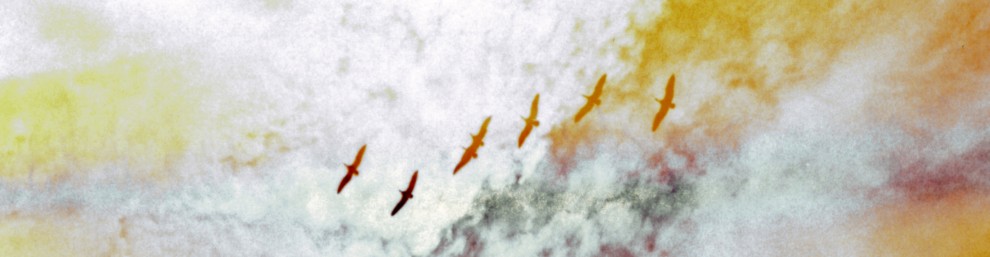
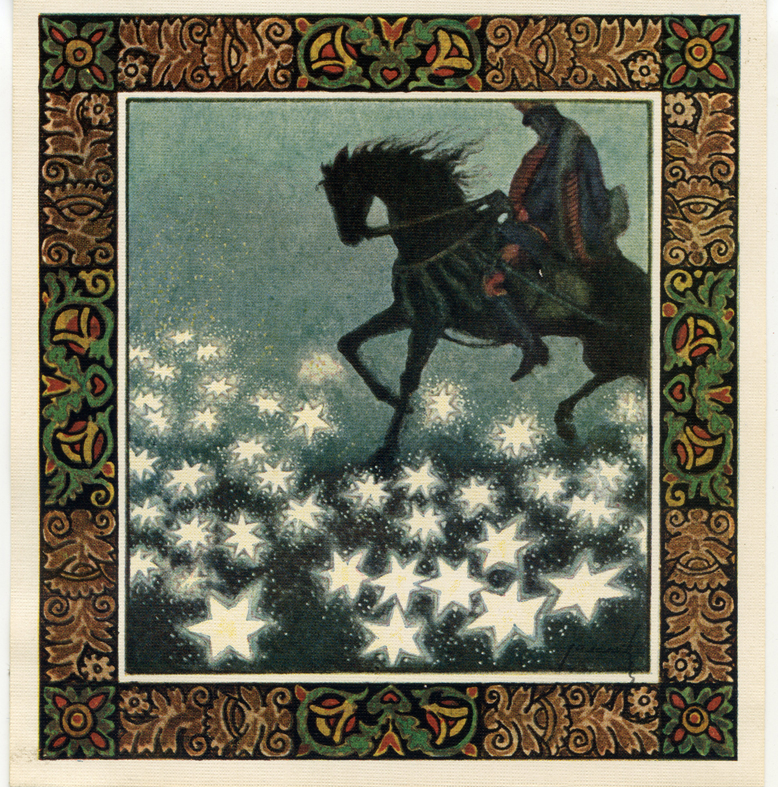
Image by Almos Jaschick
Today is one of those when I can only attend to bits of information, short sequences of writing, a paragraph maybe, while my eyes are drawn to ivy leaves moved by the breeze, a blackbird family feasting on apples left for them, a pair of woodpigeons landing and swaying in the branches of the huge beech at the top of my garden. Again and again I engage in pockets of attention beyond the window and shake off focus, ironically, in order to re-find the focus towards a coherent little blog post. A sudden rainfall is followed by the sun spinning through marbled clouds, while the heavenly voice of Kiri Te Kanawa streams through sound boxes linked to my computer. Eventually, my eyes return to the words I’m assembling here about the mystery of time, also relating to the emerging parallel worlds featuring in my two, coming to three, imaginative novels, where intentions create connections – from invisible realms beyond space and time.
Check out this and similar posts on YouTube, ha, ha, a few speculations. I haven’t been there for a long while. Don’t get lost.
‘The distinction between past, present and future is an illusion, although a convincing one …’ is what Einstein wrote in 2007 in a letter to friends. Time, he showed, has no universal constant and is relative. His famous equation E = mc2 – energy equals mass times the speed of light squared – had enormous implications, technologically, as well as socially.
This valued theory seems, at present, incompatible with the Quantum Physics that apply to tiny things. The chase for a unifying theory that includes quantum gravity is on. Moreover, physicists puzzle over the unseen pulling and pushing forces in our universe that elude detection.
We perceive time as proceeding steadily forward, although the laws of physics allow for time to equally run backwards. When it comes to our subjective inner experience we easily accept time as non-linear and relative. In therapy work, for example, a shift in attitude towards a person in one’s past can change a generational pattern.
We define time, create time, record it, hoard it, take it apart and re-frame it into fresh representations and stories. Stepping from one reality into another without losing coherence of mind is the province of individual adventurers of consciousness. Some artists like to dwell in liminal spaces where time shrinks and expands, like the twisting passage between one dream and another. Many devote their life to the re-framing of events in time. Imagine for a moment where we would be without people who create novel perspectives on entrenched realities. To call such expressions mere fantasy demeans the symbolic understanding found in the vast dimensions of the psyche.
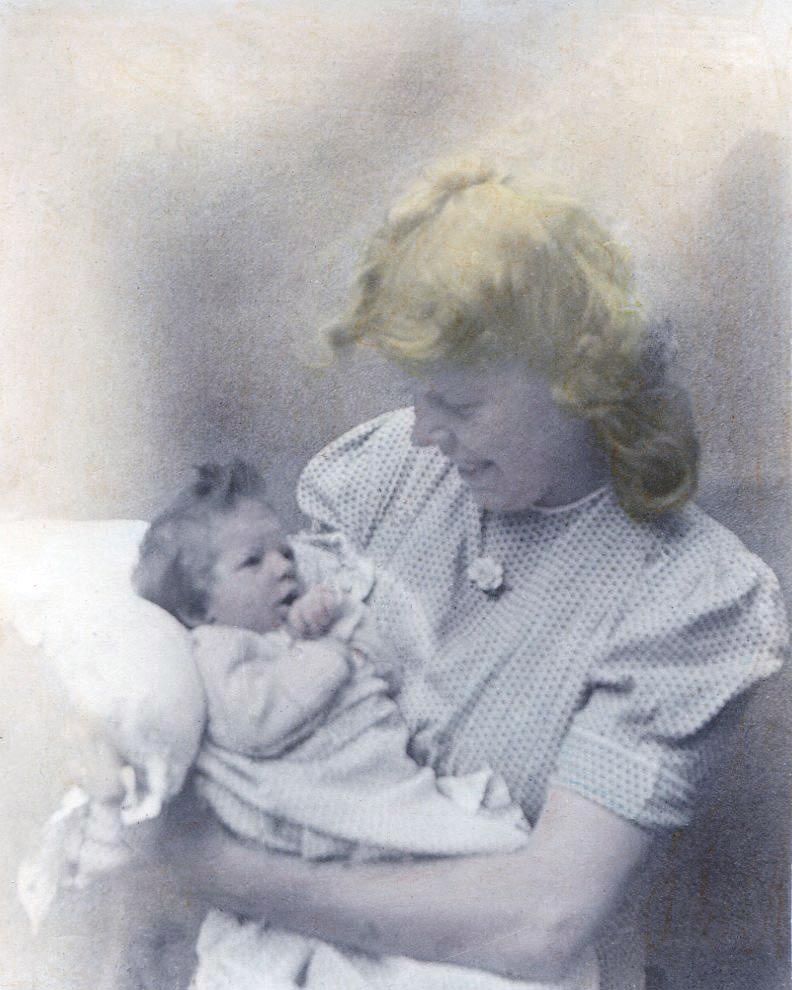
Try and compare the creation of our cosmos with the conception, cell divisions and the birth of a human infant. The procreations and expanding consciousness of humans make for multitudes, while each of us inhabits our own self-constructed world. A psychic universe held together, it seems, by forces not unlike the unseen tides our visible galaxies swim in, the ocean of dark matter and energy that exists symbiotically within us.
Dark matter is assumed to collide with oxygen and hydrogen nuclei in our body, speculated to happen at the rate of up to 100 000 times a year. There, you may be hit right now. To my knowledge, no idea has been proposed as to what might be sparked or exchanged in these collisions.
In any case, at this, another year’s ending, quite a few of us spark flames and kindle candles in dark nights to celebrate the cosmic dance, the birth of light.
I’m wishing you, my readers, wherever you are, a time of peace and reflection.
* * *
From Little Gidding by T. S Elliot …
We shall not cease from exploration
And the end of all our exploring
Will be to arrive where we started
And know the place for the first time.
When the last of earth left to discover
Is that which was the beginning;
At the source of the longest river
The voice of the hidden waterfall
Not known, because not looked for
But heard, half-heard, in the stillness
Between two waves of the sea.
Quick now, here, now, always –
A condition of completed simplicity
(Costing not less than everything)
And all shall be well and
All manner of things shall be well
When the tongues of flame are in-folded
Into the crowned knot of fire
And the fire and the rose are one.
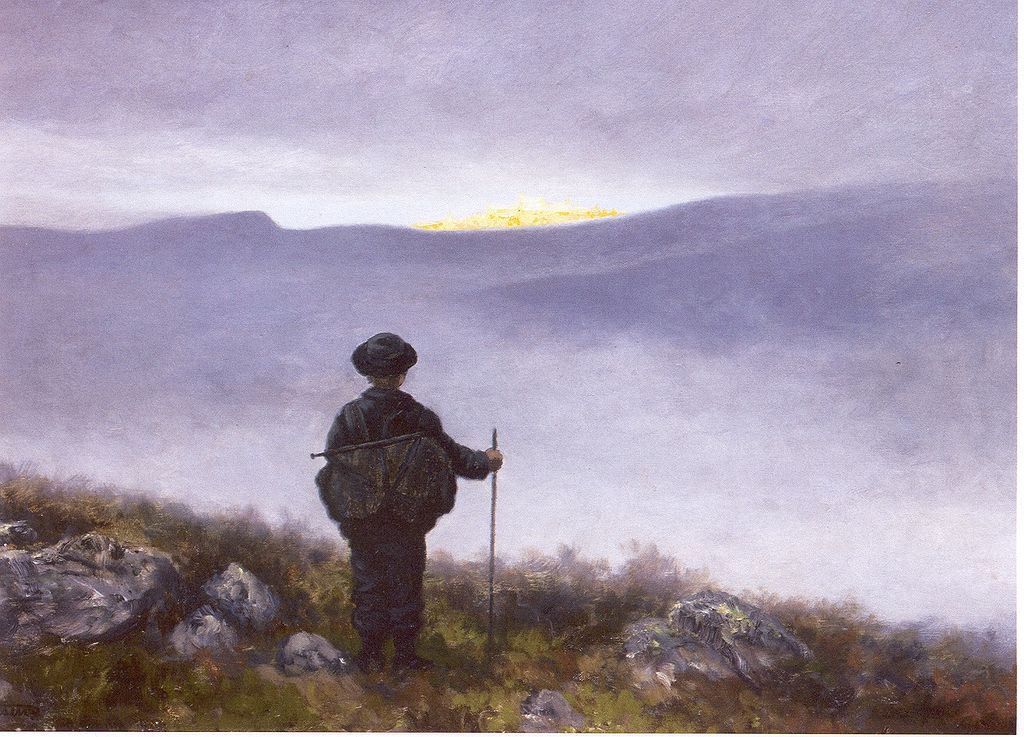
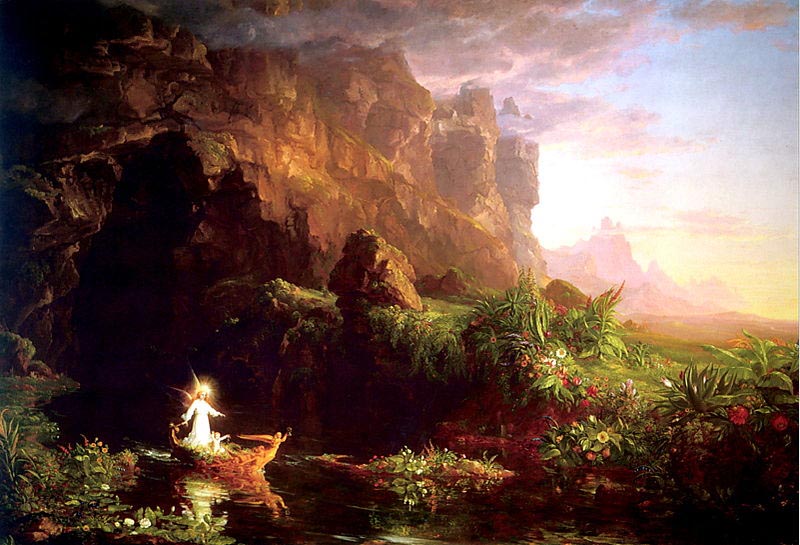
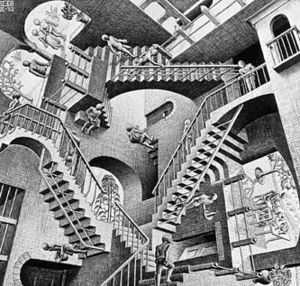


 Course of Mirrors
… the wonderful visit …
I loathe most talk of angels since they became best-selling brands, but the synchronicity of Annie Lennox wearing wings and singing to an angel at the Queen’s Diamond Jubilee, and the discovery of a rare book among my shelves, brought angels up close.
H G Wells (1866-1946) has been referred to as the Father of Science Fiction. A neglected story, The Wonderful Visit, published shortly after The Time Machine, was regarded as a mocking reflection on attitudes, beliefs and the social structure of a typical English village in Victorian times. I read the social commentary as ornamentation, the comical human attempt to stay the same, round a more essential theme, the conflict that can accompany awakening.
The edition below is from 1922 and has an illustration by Conrad Heighton Leigh. The line under it is from chapter 5 – ‘He fired out of pure surprise and habit.’
A strange bird was sighted.
Ornithology being a passion of the Vicar of Siddermorton, Rev. K. Hilyer, he was going to outdo his rivals and hunt the strange bird. So it came to be that on the 4th of August 1895 he shot down an angel.
… He saw what it was, his heart was in his mouth, and he fired out of pure surprise and habit. There was a scream of superhuman agony, the wings beat the air twice, and the victim came slanting swiftly downward and struck the ground – a struggling heap of writhing body, broken wing and flying blood-stained plumes … the Vicar stood aghast, with his smoking gun in his hand. It was no bird at all, but a youth with an extremely beautiful face, clad in a robe of saffron and with iridescent wings … never had the Vicar seen such gorgeous floods of colour …
‘A man,’ said the Angel, clasping his forehead … ‘then I was not deceived, I am indeed in the Land of Dreams.’ The vicar tells him that men are real and angels are myth … ‘It almost makes one think that in some odd way there must be two worlds as it were …’
‘At least two,’ said the Vicar, and goes on pondering … he loved geometrical speculations, ‘there may be any number of three dimensional universes packed side by side, and all dimly aware of each other.’
They met half way, where reality is loosely defined, and truth has no hold. And they shared the nature of their worlds. Eat, pain, and die were among the new terms the strange visitor had to come to grips with.
‘Pain is the warp and the waft of this life,’ said the Vicar. Riddled with remorse over having maimed the Angel’s wing he decides to looks after him. But to adjust to the Vicar’s world, the Angel must eat and accept pain, and learn all manner of things very fast indeed … Starting to read, during a phase of now legendary sunshine, I settled in my garden with a glass of red, and consequently spilled the wine on my wild strawberry blossoms due to sudden bursts of laughter.
‘What a strange life!’ said the Angel.
‘Yes,’ said the Vicar. ‘What a strange life! But the thing that makes it strange to me is new. I had taken it as a matter of course until you came into my life.’
Mr Angel is nothing like the pure and white angel of popular belief, more like the angel of Italian art, polychromatic, a musical genius with the violin. Listening … the Vicar lost all sense of duration, all sense of necessity … The reactions of the villagers oscillate across a hair-thin-divide between comedy and tragedy, while the bone of the story is psychological, and spiritual. Indirectly, the Vicar encounters his anima (his inner female) through the Angel’s love for Delia, the maid servant of the house. There is no escape. Things get intense. The Angel, over the span of a short week, is tainted by the wickedness of the world, and it crushes him. And the Vicar’s awakening from his narrow prison brings him into tragic conflict with his community.
* * *
Not much has changed. The world is crowded with wounded angels seeking compassion, and since our daily vocabulary offers little more than clichés for other realities, awakening rarely convinces, unless it is embodied and conveyed through atmosphere. Look out for the artist… the musician, painter, writer, animator, filmmaker … and the children.
‘If the doors of perception were cleansed every thing would appear to man as it is, Infinite. For man has closed himself up, till he sees all things thro’ narrow chinks of his cavern.’
― William Blake, The Marriage of Heaven and Hell
The painting heading this post is by the Finnish symbolist painter Hugo Simberg.
Share this:
18 Comments
Filed under Blog
Tagged as 19th century, Angels, Anima, Annie Lennox, artists, awakening, beliefs, books, children, circular and linear time, comedy, communication, Conrad Heighton Leigh, English, fallen angel, father of science fiction, H G Wells, heaven, Hugo Bimberg, illustration, imagination, inner conflict, inspiration, lover, Marriage of Heaven and Hell, men, metaphors, morals, musical genius, other realities, pain, painting, perception, preconceptions, Queen, reality, relationship, religion, remorse, Siddermorton, social commentary, spirituality, symbolic understanding, The Queen's Diamond Jubilee, The Time Machine, The Wonderful Visit, tragedy, unique moments, Vicar, village, violin, William Blake, wisdom, wounded angels, writing