Tag Archives: psychology

… thoughts on dark matter …

Breath shuttles across nature’s warp and weft – to breed – bloom – yearn – form thoughts – his – hers – mine – our thoughts – woven yarns flung into the unknown like a slow spread – to be unpicked

two waters meet

two waters meet

breathe in – breathe out longer – meet the other at their edge – to merge – converse – or – should you prod – witness spume lift from the wave – fire split the wire – earth shake – heaven open – dreams unravel …

In the night – specks of light appear – the rest is hidden in curved time – yet present – spirit abiding in inverse spheres – as above so below – weak neutrinos permeate all – unobserved but heard as cosmic noise from dark realms – until atoms splash towards the crack of dawn – we call it birth …

Two clusters of galaxies in collision. The ordinary matter, gas and stars from both clusters shown in red, is slowed down in the collision. The DARK matter, shown in blue, sails through and keeps on going because it does not interact. Both colours are false –the red is an image of x-ray emission, and the blue is an image of the gravitational effect on the light from more distant galaxies. Source: NASA/ESO

Two galaxies in collision. Ordinary matter, gas and stars from both clusters – in red – is slowed down in the collision. The DARK matter, shown in blue, sails through and keeps on going. Both colours are false –the red is an image of x-ray emission, and the blue is an image of the gravitational effect on the light from more distant galaxies.
Source: NASA/ESO

The background to this poem: I was feeling depressed about the superficial and withholding communication with a distrustful relative. Fed up with allusions and secrecy, I plucked up the courage to prod a straight question. The answer was as a torrent of toxic and defensive anger. After the assault over the telephone I was dumbstruck. I laid the incident to rest, and instead edited a big chunk of my present manuscript.

Before going to bed, I read in a novel, ‘Eventide’ by Kent Haruf  (a wonderful discovery – more about this author another time) and came upon a graphic scene that encapsulated my battered state – as if a bull had pounded me into the mud – which happened to a character in the chapter. Literature can deliver fitting words and metaphors for experiences.

I don’t regret my prodding. I discovered the nature of a spell on me. As it happens in families, wounds are handed down generations, and unless someone prods them the poison can’t drain.

Attitudes and projections, powered by feelings, influence us and others deeply – irrespective of distance, or time. Unexpressed messages travel. It happens unconsciously. The process might be better acknowledged if there was evidence of a medium that carries thoughts, faster than light. Mocked-at psychic phenomena could be re-evaluated. My bet is on the untraceable, neutral neutrinos that apparently pass through ordinary matter unimpeded at superluminal velocity.

At the time of writing this poem arrived …

Do Not Love You (Pablo Neruda)

I do not love you as if you were salt-rose, or topaz,
or the arrow of carnations the fire shoots off.
I love you as certain dark things are to be loved,
in secret, between the shadow and the soul.

I love you as the plant that never blooms
but carries in itself the light of hidden flowers;
thanks to your love a certain solid fragrance,
risen from the earth, lives darkly in my body.

I love you without knowing how, or when, or from where.
I love you straightforwardly, without complexities or pride;
so I love you because I know no other way

than this: where I does not exist, nor you,
so close that your hand on my chest is my hand,
so close that your eyes close as I fall asleep

*    *    *

A film by Werner Herzog I want to see: Encounters at the End of the World

http://www.youtube.com/watch?v=Gr5IvOFXuH4

http://www.youtube.com/watch?v=eO9GEL_RzlY

21 Comments

Filed under Blog

… delights of peek-a-boo …

In ways we project ourselves into our surroundings, as children we delight in the appearance, vanishing and re-appearance of a loved object or person.

Georgios Jakobides - 1895

Georgios Jakobides – 1895

To observe something reappear is as thrilling as green shoots returning in spring, as inexplicable as birth itself. Hide and seek or peek-a-boo are games said to adjust toddlers to ‘object permanence,’ an illusion we embrace, yet these games are also the prelude to a lifelong quest for the mystery of existence. Children, unless talked down to and belittled, ask deep questions – where do I come from, where did the candle-flame go, where has grandpa gone, how long is time, how come I see things with my eyes closed?  The same questions spurn lifelong passion in scientists.

Growing social, we slip into collective rituals of seeing, feeling, thinking and doing. We obey, ignore or defy rules meant to serve cultural cohesion, rules promising acceptance and success in life. We respond or react according to circumstance and temperament. Some of us have a need to belong, feel safe, protected, others may venture into the unknown, become spiritual warriors on a warpath with obstacles, often rituals, blocking individual potential.

I’m a warrior learning from obstacles, one of which I like to share.

You may recall commands, often subtle and inferred, by early significant persons, communicated via responses, to you, to life, based on generational ideals. These commands worm themselves into the psyche and settle around an inner critic. While well-meaning in aiding conscience and integrity, this critic can also become strident and counter-productive.

In my case – the critic periodically berates me for not keeping my own promises … stay on top of things, complete tasks,  respond to request without delay, call on friends, de-clutter, prepare accounts, fix the warped front-door, only so many roll-ups a day, only two glasses of wine … the tick-off list is … ah well … endless …

Good objectives aside – the more the opinionated critic berates my shortcomings, the more I need to release the tension by transgressing self-imposed rules – otherwise the noise of my inner battle drives away the bird of intuition, the unexpected and the wonder of each day.

I listen, but won’t bow to the critic, obey in fear and cage the bird. In my book, this sums up the making of tyrants.

More and more often I remember to soften the demands. Instead of berating I praise myself for small promises kept, for what has gone well, small steps in overcoming this stealthy ritual that does not benefit my aims. It’s my idiosyncratic strategy: no fighting, no surrendering. Try it – humour the critic into humanness and adjust your rules of engagement with the elegant phenomenon of now.

P1050813 - lowres You may ask – how does my strategy relate to hide and seek and peek-a-poo?

It’s the play with reality by the child in us – the delight in re-discovering being.

*    *    *

This little bird cheered me, it arrived flattened in a Christmas card. Instructions read: Stand me up on my feet.

Blessings to my friends for 2014 – may the bird of intuition frequently visit you.

19 Comments

Filed under Blog

… the mystery of thoughts …

Every child is truly switched on to the imagination. But frequently the environment belittles the imagination, and the gift can end up suppressed under the blanket of rationality. People with a strong creative drive may settle down to live in a straitjacket, and then find themselves overwhelmed by images, thoughts and associations, especially around full moon.

As a child I was intensely curious about the spaces between things, and about light. Had I not locked horns with an opinionated physics teacher I might have taken up the challenge to study sciences. Another fascination of mine was pattern repetition – how the veins in a leaf resemble the shape of a tree. And scale – how tiny bodies, big bodies, our planet, galaxies, the universe, are all reflected in each other.
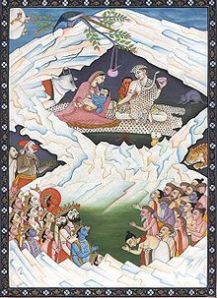
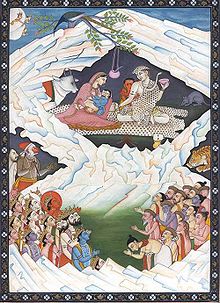
 Hindukailash, image from wikipedia.

Hindukailash, image from wikipedia.

Like Indra’s net of pearls in Vedic mythology, where the surface of each pearl mirrors all other pearls, a metaphor for the interconnected networks of mutual relationships between parts and systems. Mount Kailash is depicted here as the timeless and motionless centre of this net, housing Shiva’s family.

Not only visible structures are held together by interactive nets, our social systems, political systems, spiritual systems and the internet operate within a network. We can observe that the invisible psyche (mind) functions not only through logic, but also through aesthetics, independent of space/time, and is held by another kind of coherence – a net of meaning. And what is generated from this net of meaning is a finer kind of energy, not evidenced by present scientific methods – namely intelligence.

We knew it all along – research established that our emotional experiences leave an imprint in the cells of our body, that the brain is more than the squishy mass under our skull but a medium spread throughout the body via a network of neurotransmitters. There have been hair-splitting arguments for and against the idea that the recipient of an organ can experience personality traits of the donor, based on the speculation that each cell carries a hologram of the whole body and its memory.

Feelings and thoughts arising in my consciousness are filtered through my body’s memory. They also depend on my state of anxiety or calm, my interest, attitude and other variables, such as the weather, my relationship with the elements, with people, the collective mood, solar flares, or the constellation of planets. On some days, maybe after a meaningful dream, or a spell of mantras, thoughts are forming clearly on the breath, like reflections in a still pond, on other days, thoughts rush in on water rapids threatening to drown me, or they plod in like turtles, slow and guarded.

Objective reality is not the only game there is – what in the universe has not interacted at some point in time, irrespective of distance? Everything is linked up. Einstein called it the ‘spooky action.’

The motherboard for this wonderful instrument we call the brain, which comprises our whole body, is formed in the womb. I believe the intelligence involved in creating any specific body must lay in more than known DNA codes, must include the indeterminable non-local DNA of a spirit world. Our body foremost operates like a receiver and transmitter for as many wavelengths our radio station in time attracts or is able to tune into.

From this station, stabilized by repetition, I sort clusters of sensations and feelings, and process thoughts and ideas attracted to me from the collective psyche, a vast sea, which the individual mind must learn to navigate. Images and signifiers are coloured by whatever I consciously or unconsciously mirror and relate to.

No matter how much information we absorb, through our senses, through language and concepts, through comparing patterns, reasoning and calculation, everything, comprehended or not, will be filtered through the body’s motherboard that keeps adjusting to experiences and expanding fields of perception, fields that extend way beyond personal memory. All this information is continuously re-shuffled, as is the meaning we assign to it.

Our body is a motherboard – planet earth is a motherboard – the whole cosmos is a motherboard for a spirit we cannot comprehend, an invisible hand that touches us like a breeze, made visible through what it animates.

All we know is that images, thoughts and ideas are reflected in us. They travel via synapses in the neurons of our body, they travel on the air between minds, they travel among stars, they echo from under the sea, waving to us as plankton, they speak to us from every creature, from every blade of grass, from every stone, and they beep from within our bodies through tweaks of pleasure or pain. All matter, all people and objects we interact with store the memory of that interaction, including interactions with things we hate or nurture, and with places we live in.

We don’t invent anything, we re-discover, re-connect and re-create from the vast storehouse of knowledge and information provided to us by nature, and by the spirit between matter that makes up the cosmos, an embodied being that is becoming conscious of itself.

We are on the air, sent, programmed, radioed and broadcast, identified with all manner of things, ideas and beliefs. Yet if we look deep inside our emptiness, we know, the non-material aspects of us can potentially detach and be free, maybe enjoy tea with Shiva’s family and witness the world turn on its axis – a state some people experience spontaneously or through meditation. A state of pure consciousness not identified with this or that. In the meantime, we could at least be kind to ourselves …

‘Thoughts are beings that generate … One thought of kindness gathers a thousand beings of love and kindness around one.’            Hazrat Inayat Khan

I don’t know if a singular mind/psyche, the incredible art of a lifetime, survives the physical death of the body. Maybe a coherent individuated mind leaves a dent, an influence within the collective psyche. Like the organ of the heart, over time, achieved its definite function. But does it matter? Nothing is lost. All information is continuously re-shuffled into new forms and constellations.

Digital storage provides a metaphor – information exists and roams freely in the wind of the collective psyche (unconscious) until it is embodied and gathered towards a purpose. Every event has a consequence. Nature is exacting, but also generous, what has been repressed in the flow of evolution will always return in one form or another.

Everything alive speaks to us, and all such relationships are processed in the stories we share, stories being containers of the richest kind of information. 

*    *    *

You can source other posts on the theme of reflection in the tag cloud on the right of this page. Like this sequenc of posts: https://courseofmirrors.wordpress.com/tag/hazrat-inayat-khan/

And you might want to check out posts under the tag ‘psychology,’ especially the one on ‘awareness,’ where I share R. Assagioli’s 10 psychological laws – how the body affects the mind and the mind affects the body. https://courseofmirrors.wordpress.com/tag/psychology/

*     *    *

This post also appeared at  Third Sunday Blog Carnival: September 2013 | Third Sunday Blog Carnival

17 Comments

Filed under Blog

… mother tongue & other tongue …

Starnbergersee

Starnbergersee


Two languages, two rhythms, two patterns, two spheres, two perceptions … last week I attended a re-union of my primary school class in Bavaria. Around 20 of us turned up.  The event included a ship ride on the lake that marks the geography of my childhood – Starnbergersee – whose shores are garlanded with castles and grand villas. Once I’ve won the lottery I’ll snap up one of these dream places and invite all my readers to a prolonged party with performances of magic theatre. Yeah!


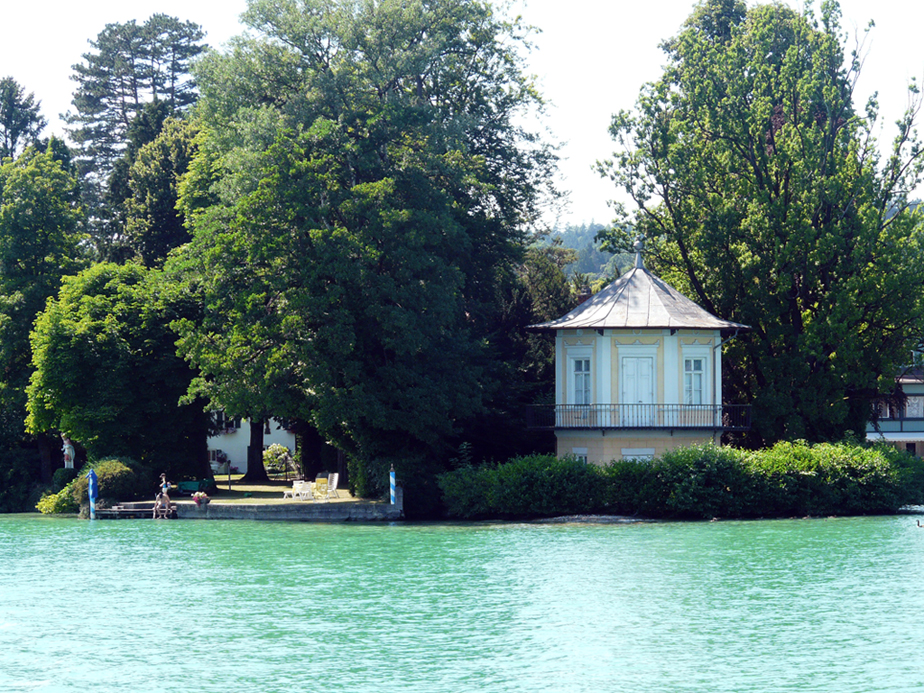
Das Vogelhäuserl

Das Vogelhäuserl


The tour added a refreshing breeze to the sweltering heat. Later in the day a smaller group gathered at a lakeside restaurant, the same spot where, as a child, I turned up in summer holidays, at sunrise, to assist the local fishermen bringing in their full nets, in return for the free use of a small sailing boat during afternoons.

A re-union

A re-union

The encounter with classmates I hadn’t seen for over half a century unfolded like a surreal dream as we cooled down with beer and wine and gossiped time away into the evening. I’m still trying to fit names to faces and places, and make sense of stories that cast stray beams on my memories of the village I grew up in, a village close to the Alps, set in landscapes whose ambiance morphed into the beginning of my first novel.


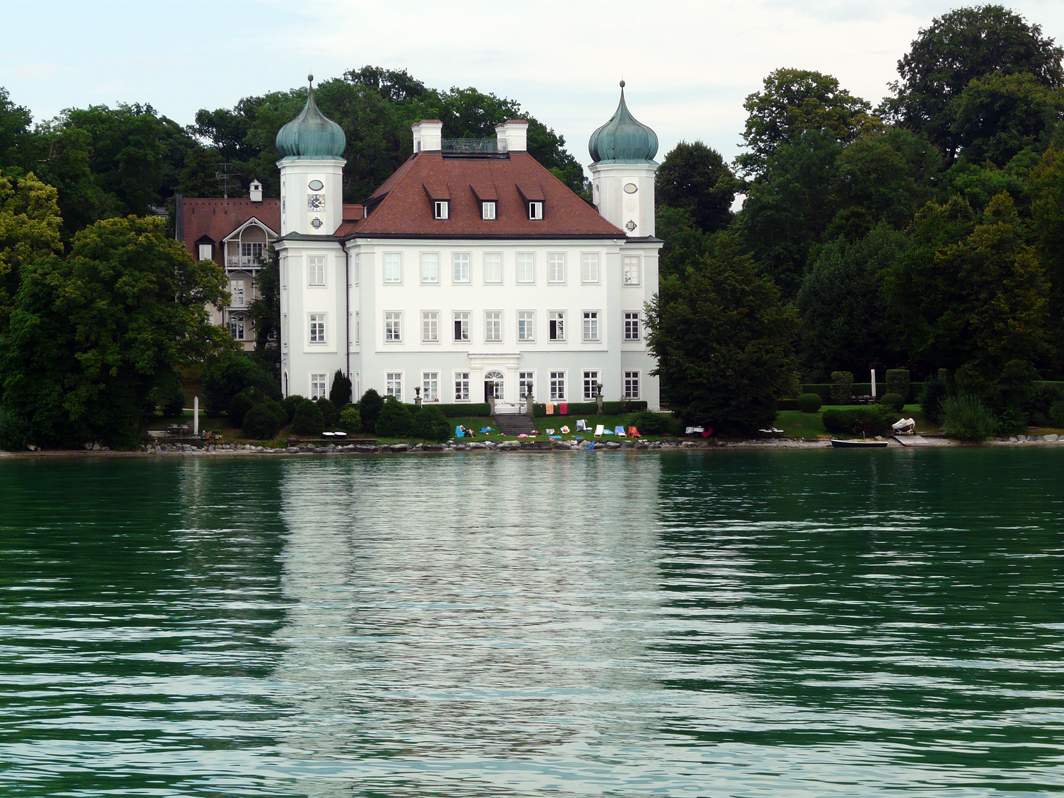
Schloss Berg

Schloss Berg


Among my class mates were a few women I quickly chimed with, not surprisingly, we were close friends during those early years, though we lost touch when we moved on to different schools. It’s deep and wondrous – the mystery of this precious resonance called friendship.


This is me, aged 6, on my first school day. I was a single child.

Erster Schultag

Erster Schultag

And I well remember the excitement. The Zuckertüte, the upside down magician’s hat filled with bonbons, chocolates and presents to sweeten the transition into the big world seems to grace my head in the photo my dad took. I can’t find the image right now, but I did receive a proper Zuckertüte on the day, filled to the rim.

My favourite teacher (in the group photo with the village poem post, link below) turned up at the re-union, slow on his legs but sharp witted. His eyes lit up when he recognised me, which gave me a warm feeling all over.

Living in England since several decades, I visit Germany periodically to see my grumpy late-artist-dad, and dear German friends, made during my later Sturm und Drang phase. What struck me about the school re-union was how the primary sensation of my childhood was brought to life through words tossed into the conversations, keywords from my mother-tongue, embedded in local dialect. My mother, who came from Berlin, never picked up the Bavarian dialect, neither did I, however, the term mother tongue incorporates for me my early environment, the village. https://courseofmirrors.wordpress.com/2012/08/31/village-poem/

For the greater part of my life I thought by and spoke in the other tongue, which I first learned at school. Aged 18, unsure of my path, I spent a cultural year with a family friend in London. She cherished me. Our relationship was a healing experience for both of us, given her loss of friends and family members in the Holocaust, and my inherited burden of the atrocities having taken place in my country. Later, studying in Munich, English was the language connecting a multicultural student population. When 9 years on I married a Dutch man and we moved to England together, my German vocabulary gathered dust during further studies. The distance from my mother tongue freed up a wider perception. It also helped me overcome an encoded traumatic experience. At secondary school I had written an essay, freely based on a painting of my choice by Spitzweg – writing was then a blissful creative process. The teacher read the essay aloud, praising its brilliance, after which she informed the whole class that I could not have composed this myself – a screaming insult! And yet, I thank the stupid woman, it changed the course of my studies. I initially used photography to express myself, resuming poetry and imaginative writing later, finding that English allowed me the necessary wings.

Who knows what the dusted off layer of my mother tongue will bring round. Writing in the other language helped me to transcend the mere facts of my life to essential themes, universal metaphors. The divided kingdom of parents, the psychology of the single child, her assumed bridging function between patterns of seeing, like the rational and imaginative perception, the distorted mirrors of relationships, betrayals, the search for the real, and the meeting of soul families. Essential themes lifted like green islands from dark waters during my protagonist’s river journey west.

Course of Mirrors is a gripping adventure story, as well as a psycho mythical opus. In its sequel the teller of the story is revealed as the visionary myth-maker overtaken by her myth – in the way that we can re-arrange the past and postulate possible futures, explore different time-zones, and expand expectations.

I must leave it to my readers to judge the results of my experiment. The first book, Course of Mirrors, will be published next year, by a small but devoted publisher.


Are you a writer/artist who processes experience through two or more languages?


38 Comments

Filed under Blog

one raindrop – ten raindrops – what’s the difference?

Before I went to bed last night I asked for a dream, as I do when I want guidance from my unconscious. After all, the greater part of our psyche is out of sight, submerged, with only the top in view, which is why Freud used the image of an iceberg to depict the psyche, the submerged part having deeper connections with the sea of the collective unconscious in which we all swim.

Iceberg - Ri han - Shutterstock

Iceberg – Ri han – Shutterstock

My question was related to the global web, and what’s rising to the surface like long drowned skeletons bobbing along the electric rapids of information, memories re-shuffled, all with a kind of speed only fearless surfers can negotiate. And how every link you and I click is traced, analysed and fed back to the media, politicians, businesses, twitter-birds, face bookers, bloggers and so on. At times it seems like a kind of vivisection in a shiny mirror looking back at us, surreal.

I’m seasoned. There was no TV in my early childhood, it astounds me what I’ve adapted to over the years, but the present tech-apps-avant-garde makes me feel like I’m missing a boat, along with, let’s take a breath, at least sixty-one-percent of the world population (that’s the kind of people with no internet at all.) And because I tend to reflect on cultural trends, searching for wider purpose, meaning and metaphors, I put this to my unconscious: please give me some insight.

On waking, the first thing I gazed at was the raindrops netting my skylight. A phrase came:

                 … one raindrop – ten raindrops – what’s the difference? …

It stuck. I stopped myself diving into associations, about raindrops, the number one, about the history of zero – as symbol for something that doesn’t exist but has become a place-holder. I stopped myself from quoting Rumi, too.

The phrase I received is enigmatic and feels creative. Does it come down to postulation, the everything-and-nothing-matters kind of power we have to envision and re-assemble stories, the delicious freedom to speculate without limits …?

Maybe purpose and meaning are becoming old hats and I’m missing the point entirely. What do you make of the phrase … either with your knowledge of maths and physics, or with your imagination? Even with the phrase or image of a dream ☼


19 Comments

Filed under Blog

… the house-guests of body electric …

SHE calls me body electric. SHE – incarnate as hu-wo-man – oh the mystery – and such hard problem for the scientists who establish evidence of truth via the elimination of untruths. Meanwhile they identify my parts, their functions and complexities …

I’m a miracle, my ears perk at the slightest sound – the little groan in the joints of wood and brick when the house moves a fraction as the weather swings about, soft tweet of a bird, the hum of fridge and its sudden shudder, a rumbling pipe, creak of loose floorboards, or the faint scrape on the stair in the middle of night, when the tip-toeing lodger sneaks to the kitchen to pinch a little honey. Not my concern, I only notice. Exquisitely attuned to my network of neurons, I pick up irregularities, tiny fluctuations of mood, unfamiliar smells, odd tastes, taut muscles … the chatter of Jego, but more of him later.

Magic-Leila's wings02Whoever I house, I prompt stretching exercises, crack joints to unblock energy, flex shoulder-blades that still mourn their wings, and shortly massage cold fingers-tips, my antenna for vibes. I rejoice in my multitasking, my handling of objects with skills no programmed AI creature could ever hope to achieve. With the unfailing accuracy of a spy, I pick up signals against the faint background buzz of the blood river and readily adjust to spheres beyond my skin palace.

And SHE – my occupier – revels in the fleeting novelties of my gift, the senses – the paradox of pain and joy, where humour lurks between tears and laughter, moments with friends, bliss in a garden, like pruning branches for light to fall through foliage. SHE loves light. A breeze lifts the smoke of a roll-up, diaphanous shapes flow illuminated against a sunbeam until the shade swallows the spectacle, fluorescent spider webs, and blossoms fall.

Spider, 3

I have bouts of melancholy, made aware that my fine architecture is only a short, temporary abode for my occupier. It saddens me when SHE pays no attention to my signals, or is absent, travelling in abstract realms.

One day she’ll be gone altogether, leaving me behind. There’ll be no more breath and currents flowing through my organs, cells, brain — switchboards to her mind-spheres. Will she take along her impressions and associations?

I perceive phenomena in passing, pure and simple, with an artist’s sensibility. Semi permanence is the business of Jego, a sophisticated but battered and nervous entity that draws conclusions from what my senses transmit.

Example – SHE lets me drive a car to visit a friend. On instinctive pilot, I allow Jego to grab surplus energy. He elaborates on what he perceives through my senses.

That pub, why did the new owner paint it dark grey? A monstrosity, insulting the eye, aesthetically revolting, this must be someone’s idea of a cool concept, what a waste of paint!

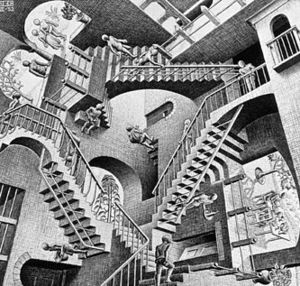
Escher's_RelativityThough amusing, his habit of sending spam into mind-clouds affect my equilibrium.

I draw attention to a stomach-cramp. Jego quickly analyses the cause before chasing another thought. It’s marvellous, and thoroughly compulsive, how he creates realities, juggles thoughts, day and night, unless SHE attempts a pause – counting breaths, reciting mantras to calm my overexcited synapses, or diligently monitoring Jego’s pranks to get him to focus on something coherent and creative.

On occasions he achieves concentration, calms, then we all relax into harmony, and for a short while a crystal-clear comprehension dawns …

Ah – we are dancers in a hologram – oh – who’s in charge?

Here Pomp makes an appearance, an intuitive entity, a messenger born of many traditions, with equally many names and disguises, a channel to the universal psyche. Though Pomp is not in charge, he knows stuff, and brings a tribute, the remembrance of an unfathomable awareness behind timeless intelligences every particle has contributed to, is essentially part of …

‘We are more than dust,’ SHE confesses, ‘and to fulfil our purpose I must embrace you, little body electric, and partake of your pain and joy.’

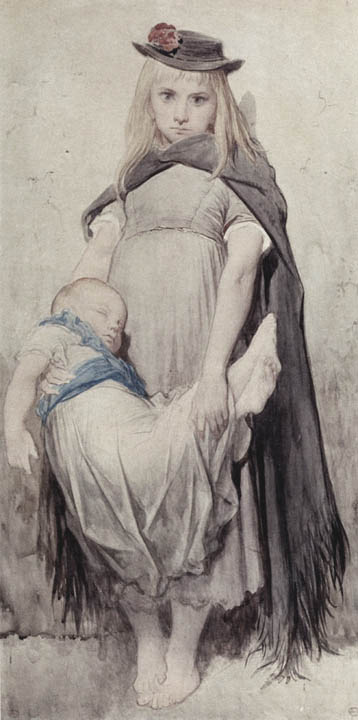
‘What about Jego?’ I ask.Dore - Jeune_Mendiant - desat

‘Poor chap, either he’s praised to heaven or cursed to hell. Some spiritual experts blame him for everything, and label him the greatest obstacle to higher evolution. It’s evidenced what happens to children we treat like that … we must be gentle with Jego.

His task is the hardest. In time, if we model tolerance and patience, he’ll learn to create more coherent realities.’

Her kind words calm me, and make me feel all warm and fuzzy.

Neti neti – not this, not this – no description suffices – what prevails is supreme consciousness, unidentified and unidentifiable, slipping in and out of embodied existence like a wind of light.

Though it gives us equal joy and pain, do you like your body electric?

birds-1a.jpg

And are you on a warpath with your neurotic ego, or do you exercise patience?

‘There is a strange frenzy in my head, of birds flying, each particle circulating on its own. Is the one I love everywhere?’ 

~ Rumi ~ transl. Coleman Barks.

14 Comments

Filed under Blog

… consciousness – the mystery …

People who engage in therapeutic work with me often ask – why dig up my past, it holds pain, why look at attachment patterns, why explore the theme (myth) of my life? What a waste of time. I only want to get rid of my symptoms.

We all, without exception, suffered injuries. The creative question to ask is – how has the injury shaped my life, and what purpose does it serve? Many years ago, during a group dialogue following the inspirational talk of my Sufi teacher, we discussed three basic kinds of injuries. I connect my own experience to the third injury.

1        Having experienced physical injury can result in fight and flight behaviour – it brings a heightened sensitivity and develops a sharpening of the senses.

2        Having experienced sexual, sensual and emotional injury can result in escape from one’s self into others, estrangement from self, lack of differentiation and boundaries – the great challenge is to accept one’s self, differentiate as an individual from the tribe and take responsibility for one’s unique potential.

3        Having experienced injury on a cognitive level accelerates individuation – the escape is into deeper realities, a search for authenticity and truth and the development of symbolic reality – universal reality.

My novel, Course of Mirrors, is the fictionalised account of an aspect of my personal myth made universal – in the sense that memories of events don’t have to be real for a story to be true.

@ Natasha Tonkin

@ Natasha Tonkin

Even the most die-hard materialists among us grok that life is animated and guided by an all-pervading spirit? We are vessels, psychic switchboards for the spirit that animates and records all life.

An ungraspable phenomenon we try to name in vain.

Mental states pass through us. We call in and then process thoughts and feelings, seeking coherence, and – given we assign meaning to what happens to us – are gaining wider perspectives and deeper insights. With every new connection made and every little light brought to what is forgotten and unknown – collective consciousness grows.

Our body knows, if we care to notice, what stirs in our psyche, what wants to unfold and emerge. When energy flows freely through us our essential nature is uplifted, and our desire is aligned with the potential in us that seeks actualisation – in the way a cocoon reveals the butterfly. Our life has many cocoon and wing stages. The proverbial flutter that causes a stir in all spheres of the universe is like yet another love-transcended aspect of us emerging from yet another cocoon.

Presence, responding to situations, accepting differences and contradictions, frees energy that is ghosted and stagnant. While blocked energy creates frustrations and often painful symptoms, it is totally inevitable, since every organism evolves through condensed experiences. Life enhancing and life destroying events subject us to a pattern of repetition in time until we embrace change.

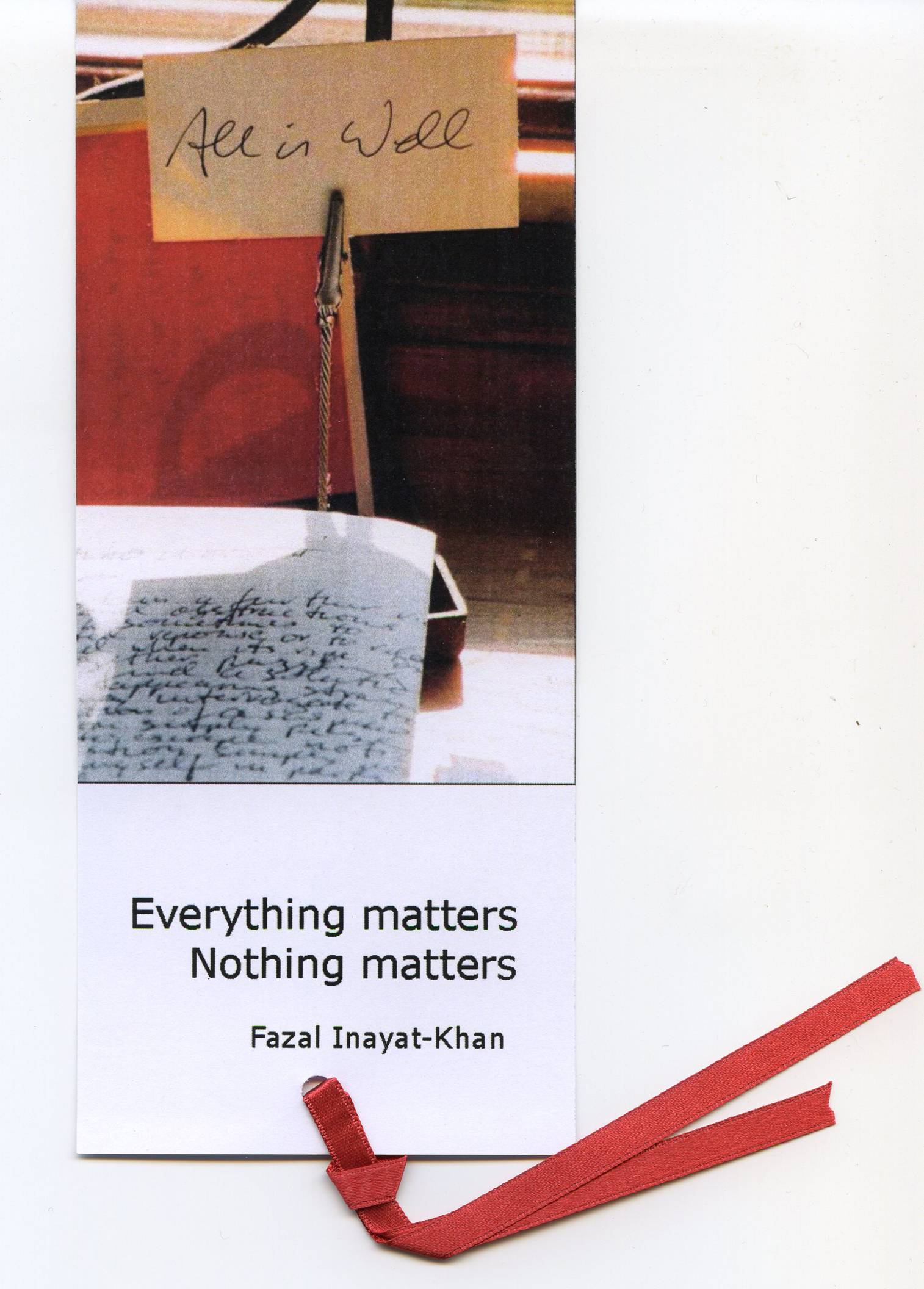
‘A truth outgrown crushes you under its weight.’   Fazal Inayat-Khan

To bring a repeating pattern to a higher level of flow requires a kind of quantum leap of consciousness. Small leaps occur frequently, especially when we befriend the unconscious and allow fresh symbols into awareness. The released light/energy brings new meaning and allows the self-actualisation of new potential.

‘It is obvious that the percolation of a timeless NOW is penetrating everything!’  –  Philippa Rees

*      *      *

The image above is by Natasha Tonkin, my son’s partner. It was done two years ago as Christmas card and gift idea towards illustrating my novel, to help bring it to life. I scanned and inversed the image for the mirror to appear light. Natasha’s animation website: http://pandahorse.com/

Link to a book I co-edited about the Sufi teacher I mentioned above, Fazal Inayat-Khan. http://www.amazon.co.uk/Heart-Sufi-Inayat-Khan-Reflections-ebook/dp/B00BFUO0T6/ref=sr_1_1?s=books&ie=UTF8&qid=1369084226&sr=1-1&keywords=heart+of+a+sufi

Link to ‘Involution,’ an exceptional book by a kindred spirit, Philippa Rees.                                         http://involution-odyssey.com/  her book will soon hit the market. Her site is being developed.

6 Comments

Filed under Blog

… a rare book – now on-line …

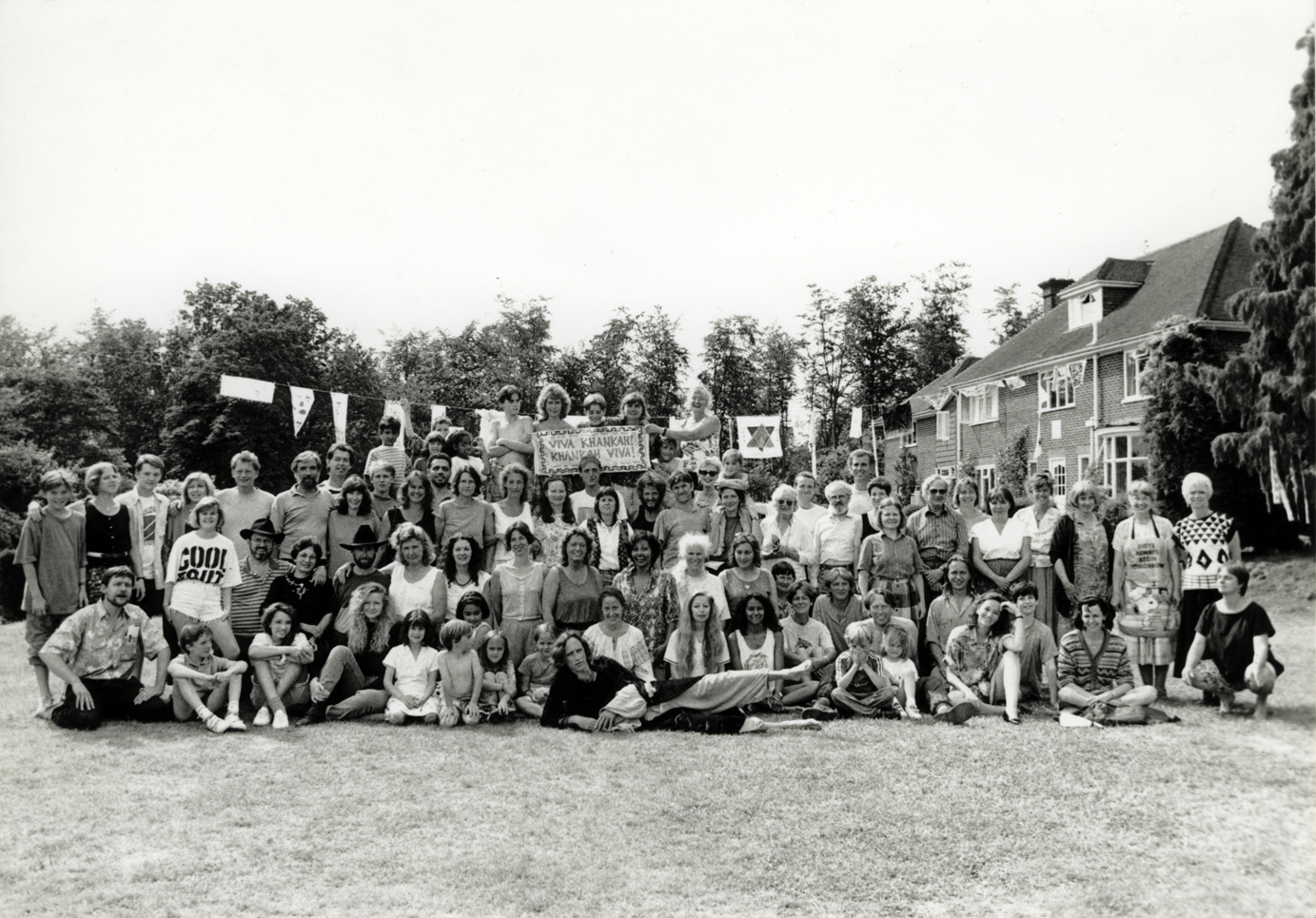
Following an eight-months labour of love, between my co-editors, the Archventures group, and contributing writers, a small edition of 250 beautiful copies of a book were published in 2011 – Heart of a Sufi – A prism of reflections on Fazal Inayat-Khan (1942 -1990.) As of now, the book is affordable on-line, see below.

img085

Fazal at Four Winds. 80s

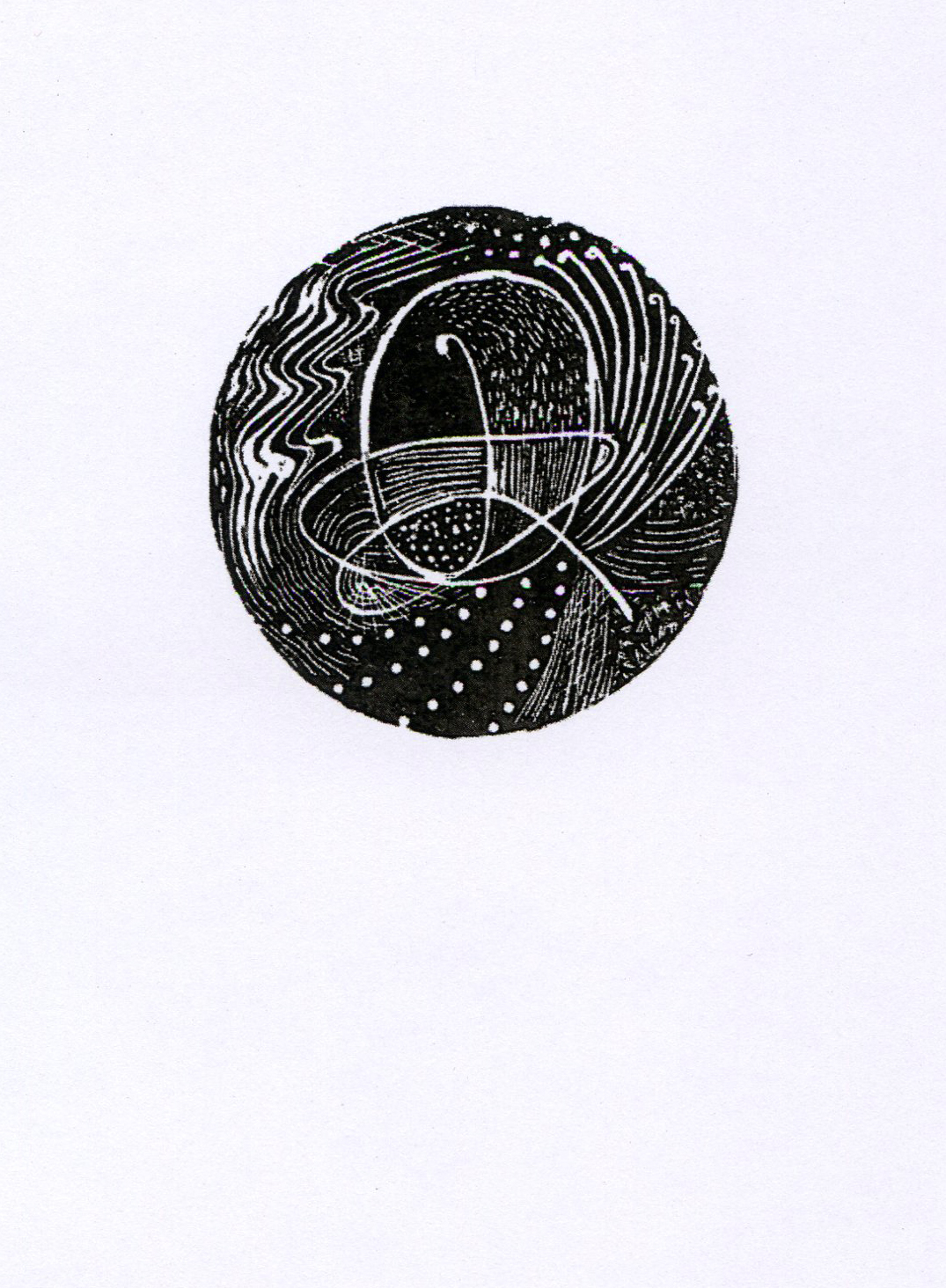
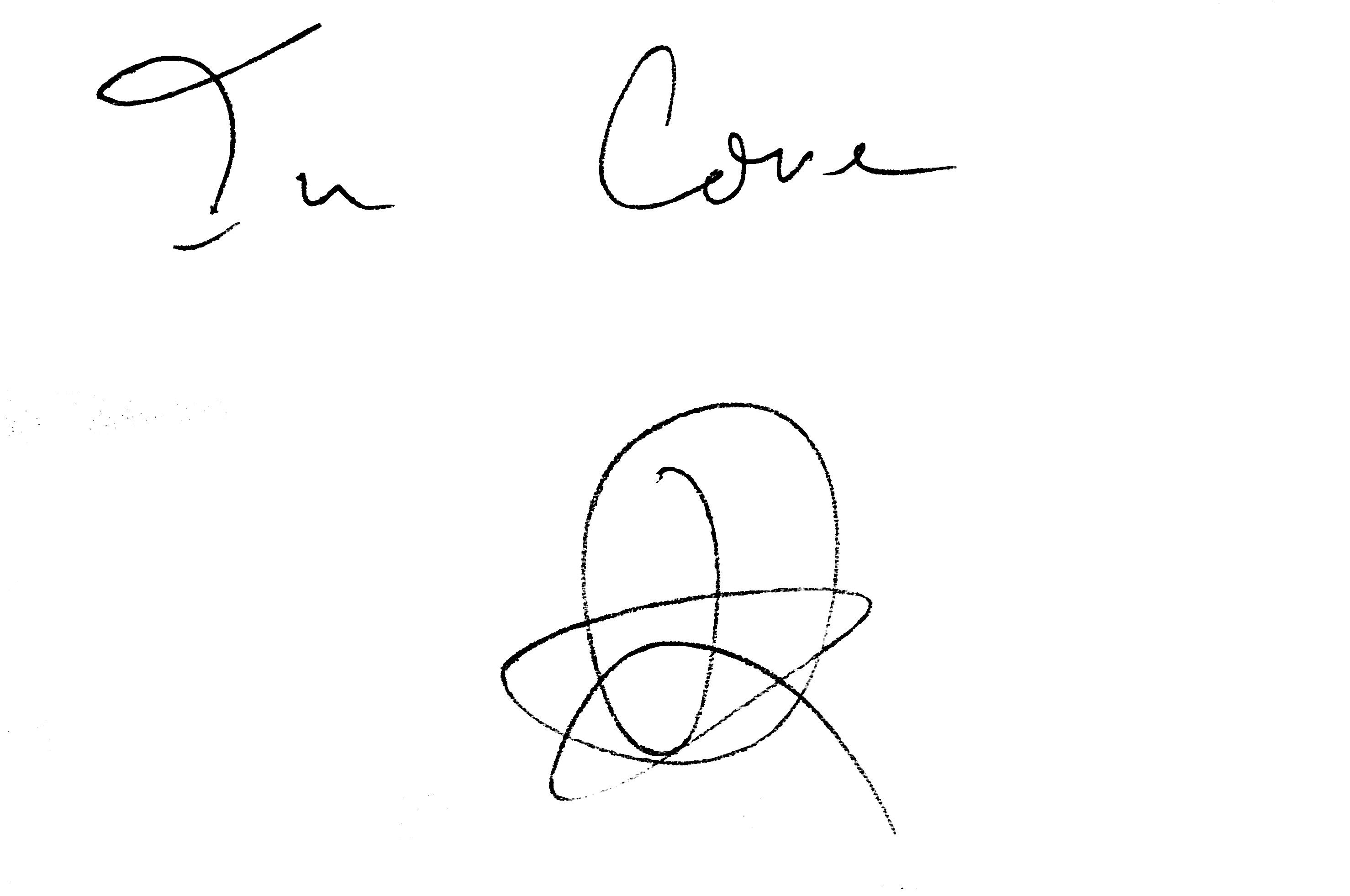
Hand printed wood engraving by Susanne Harding inspired by Fazal's signature.

Hand printed wood engraving by Susanne Harding inspired by Fazal’s signature.

The book contains stories, essays and poems written by those who were inspired by the controversial and innovative nature of Fazal’s work, or by the creative spirit that pervaded the place and people he left behind.

Kaliani, singing

Isha, Elias, Aisha, Puran - lowres


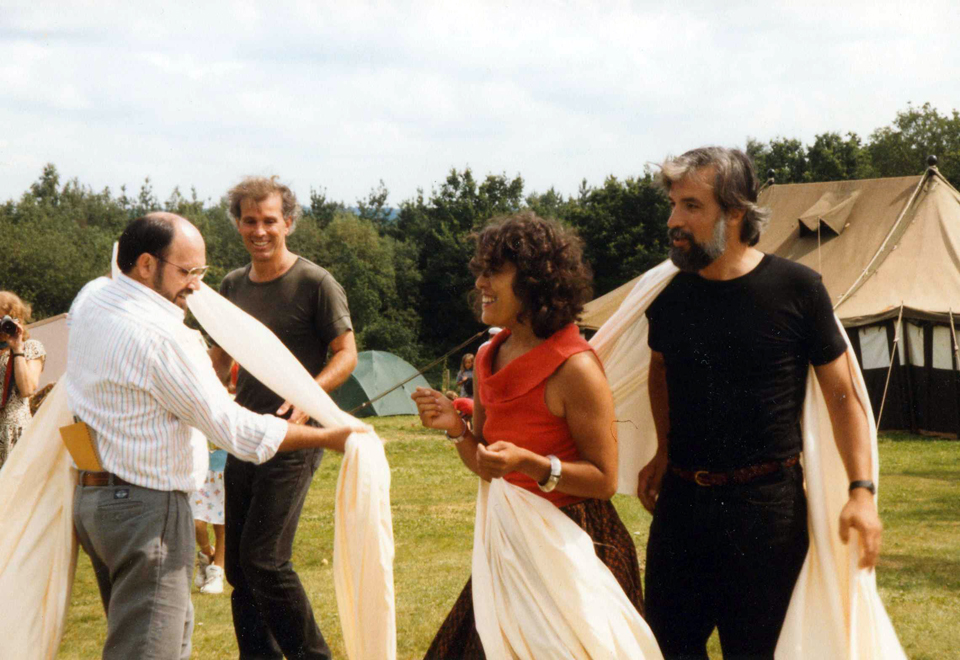
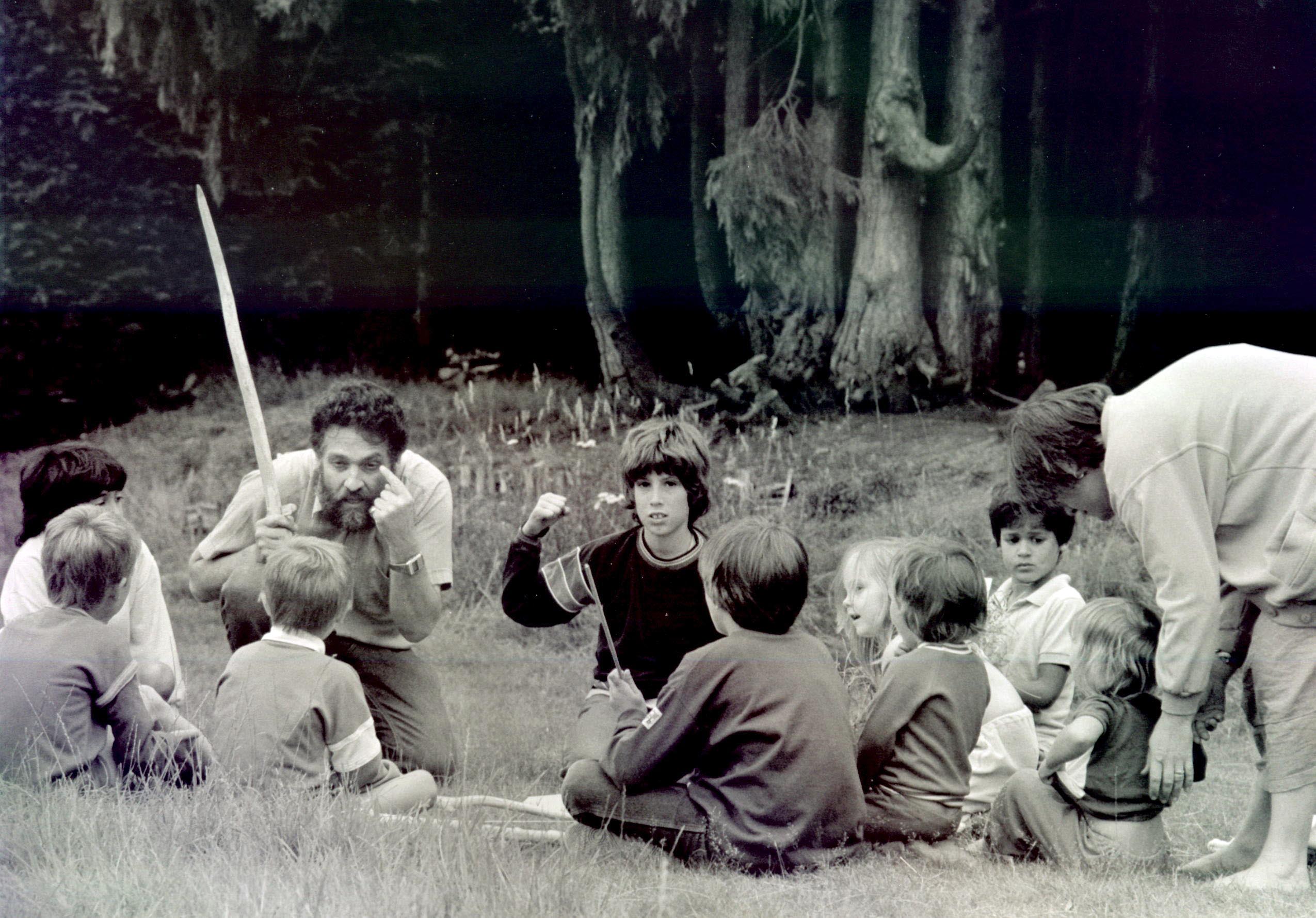
In the way mystics talk about the right time, place, and the right people, Fazal offered a timely and challenging spiritual education that embraced wit and the complexities of modern life. During the 1970s – 80s he attracted people from many backgrounds and countries who had very little in common, other than being exiles from tradition and hungry for truth. The book gives a flavour of encounters, stories charting the edge of learning and unlearning, relationships with one’s self, the groups, the world, intense experiences, affecting deep peace and change, often achieved after games of orchestrated struggle and conflict, peaking in performances on the stage of a magical theatre – live and experience first, then reflect. Debriefings after workshops were sobering, humorous and mind-blowing events. And something ineffable was transmitted in these transformative setting, through music, through silence or through a glance.

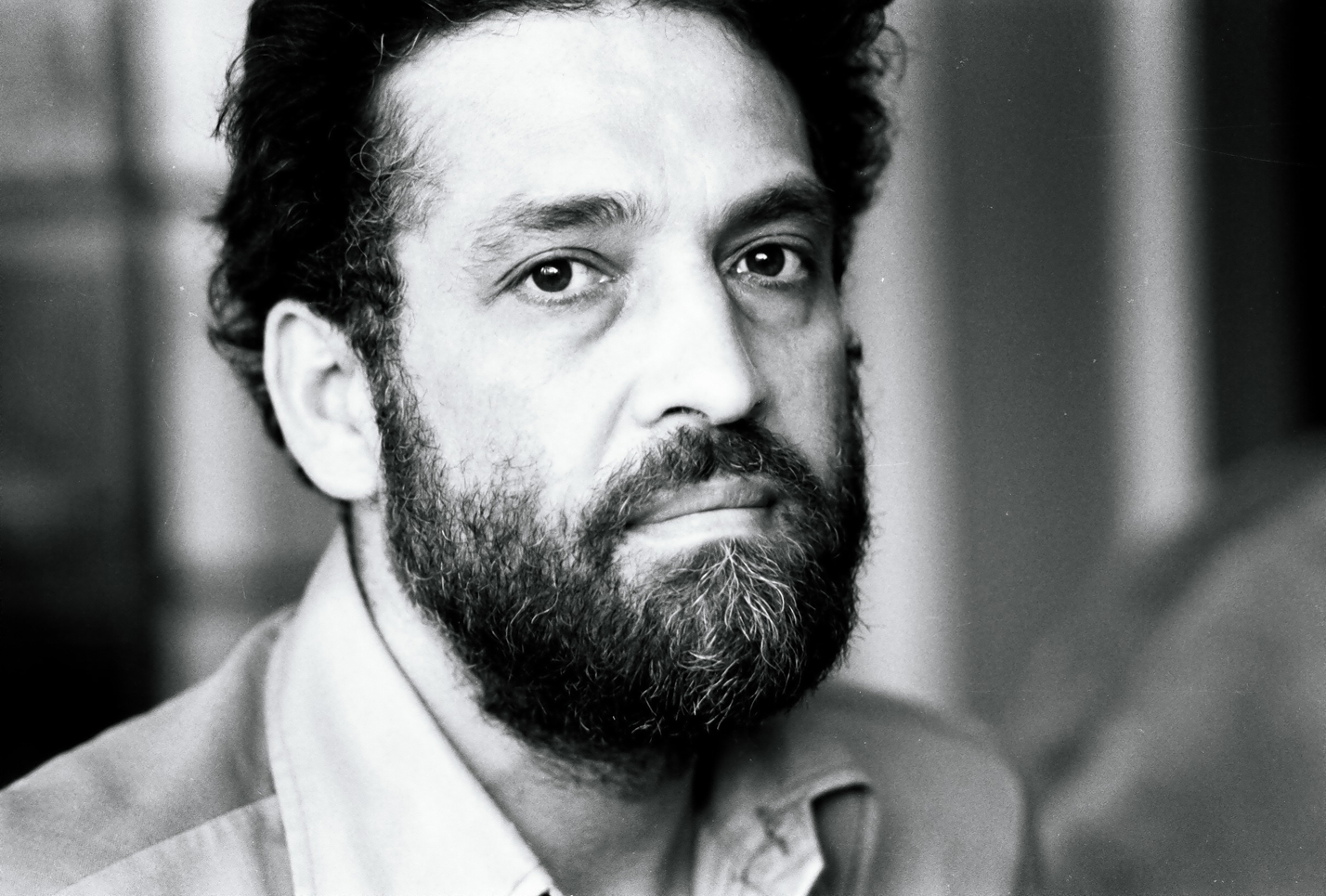
Fazal, 84 inside page for Heart of a Sufi

Signature


A short history:

In 1968, at the age of 26 Fazal Inayat-Khan became the head of the Sufi Movement founded by his grandfather, Hazrat Inayat Khan, accredited with introducing Sufism to the West. By 1982 Fazal embraced his personal style to honour his grandfather’s legacy of spiritual liberty by surrendered his leadership of the Movement and chart his own path. His approach to Sufism resembled Idris Shah’s, whose writings had perked my initial interest in Sufism as a timeless practice of wisdom pre-dating Islam, a teaching kept alive through adapting its essence to new times and people. Adaptation in many fields was called for during the 1960s – 80s. The psychological and scientific insights of that period were so radical their social assimilation has yet to happen.

Conceiving of a book that offered a window to Fazal’s work, the editors had wondered if anyone would be brave enough to come forward and share their interactions with this passionate man, the groups and the tumultuous conflicts worked out during that period. We thank again those who contributed. And there must be many more stories of regret, pain, delight, disillusionment, new found coherence, inspiration, and significant life-changes.

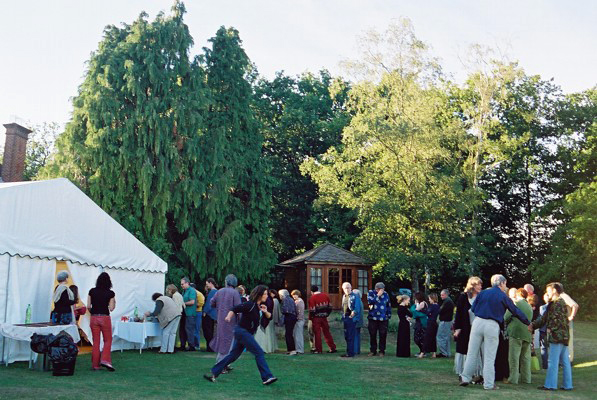
Sufi Way gathering - Four Winds 1991

Fazal, 80s with children at Four Winds

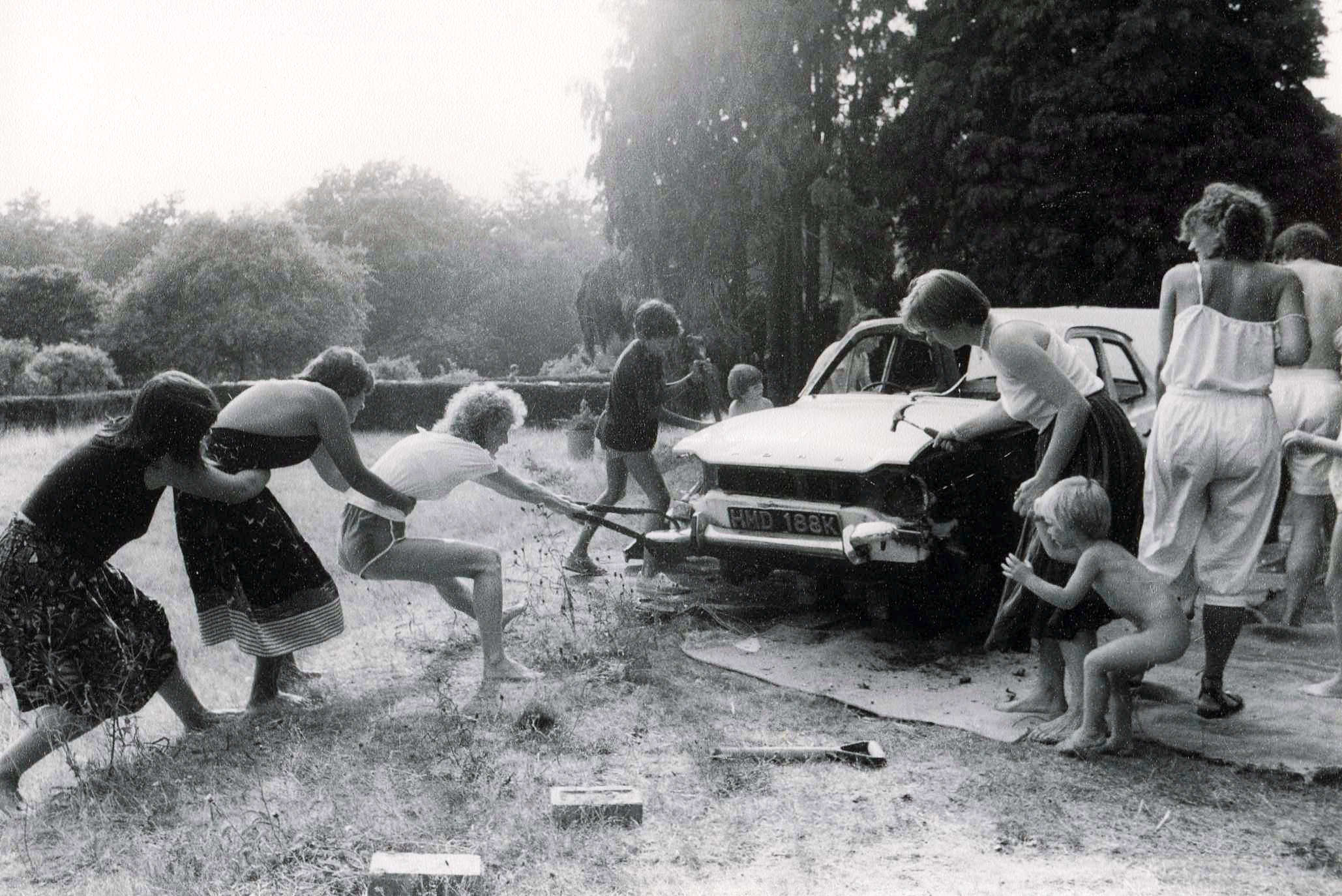
F.W. car- smashing 1


The rights for Fazal’s hundreds of talks, poetry and musical tunings rests with the present leadership of Sufi Way. Our book contains some of Fazal’s quotes and the extraordinary poem – Qalandar – but the purpose of Heart of a Sufi is to show the potent seeds of love this remarkable man placed into the hearts of people he touched, seeds now unfolding in new settings for generations to come.

the cook runs

img123179

4W2Bonfire

15n15m


Archventures are pleased to offer Heart of a Sufi as e-book, making it affordable:

http://www.troubador.co.uk/book_info.asp?bookid=2180

On amazon you can peek into some of its pages: http://www.amazon.co.uk/Heart-Sufi-InayatKhanReflectionsebook/dp/B00BFUO0T6/ref=sr_1_22?s=books&ie=UTF8&qid=1363426951&sr=1-2


*    *    *

Relevant links can be followed up from the e-book.

18 Comments

Filed under Blog

… surfing the virtual waves …

I first accessed the internet while doing a sabbatical film degree as a mature student in the 1990’s.

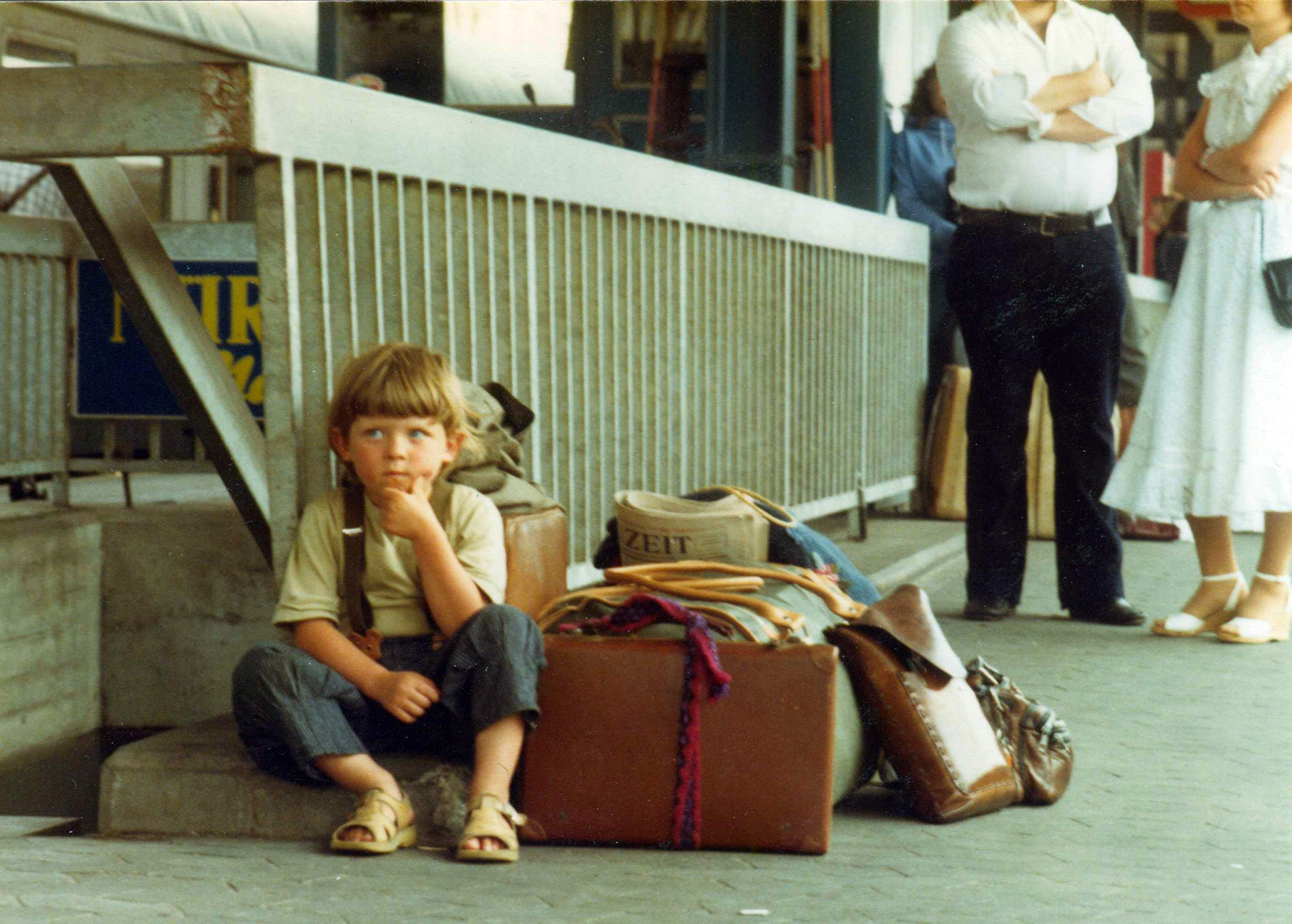
Struggling with basics, feeling the fool among bright young computer literates, I typed surrealism into the search engine, a subject that rhymed with my passion for transpersonal psychology and fascinated me. Take yourself out of your familiar environment, lose the original context into which your identity had been projected, then gaze and ponder. I had done precisely that. During my first year on the film course I felt displaced and, like my son at a stopover, did a trawling assessment of the oracular unknown.

Yesh, Nurnberg station -smaller

I was going to write an essay, on how Freud’s work influenced art and film during the 20th century, a glittering subject that led me into a dreamlike maze. Each follow-up link on the screen led to another site – another artist, philosopher, writer, page after page, world after world opened until I was afloat in a sea of rich associations. Gripped by Alice in Wonderland sensations, I thought – unless I stick to the context of my essay, the web will suck me into a whirlpool. Exploring the unconscious for its potentiality and its poetic combustion via dis-identification  was of course the surrealists’ impulse, to the ends of tricking the rational mind by using trance to break out of trance – which may well be the ultimate purpose of the internet.

One of the lies would make it out that nothing

ever presents itself before us twice.

Where would we be at last if that were so?

Our very life depends on everything’s

recurring till we answer from within.

The thousandth time may prove the charm.      – From ‘Snow,’ by Robert Frost

I had worked as photographer on film-sets in a former career, so I grabbed the opportunity to study the ultimate trance in its historical context, and play with it. Manipulated by high-angles, close-ups, masking, dissolves, and cross-cutting during editing, underscored by sound, images could be displaced, speeded, up, slowed down or distorted. The surrealists were among the first to love fluid images, using them to disrupt unconscious processes of identification at the same time scientists’ deconstructed particles, and time, and space in good measure. The search within, long pursued in the east, was taking hold in the west. P1090946 - Copy

Deconstruction is the prelude to creation. Having learned that we are conscious of only a tiny island of our psyche, much like we can only see the tip of an iceberg, had affirmed my lifelong desire of seeking what is behind the mirror of appearances. In that vein, I recall feeling an awesome sense of responsibility when I first held my new-born son, imagining that my every gesture, my every tone of voice, and even my very thoughts might subliminally influence his pristine being. I was quickly grounded, adapting to the routine of being present to my little one’s basic needs, and soon realised that he had brought along his own world from another sphere, and that beyond my stimulating mirror, he would shape his own destiny.

So here was a kind of baby – an essay on surrealism. To deal with the mass of on-line leads, I took capacious notes, plundered the college library, and relied on intuition to guide me through the process of writing, allowing the essay its own agenda. It was when I first acknowledged that my sixth sense made writing a pleasure. Years later, starting my first novel, responding to subtle influences became the only way I could write, trusting that the unconscious – rather like a digital binary system – condenses and displaces material that can re-emerge with the right prompts.

Spending several months co-editing a beautiful book of reminiscence about a remarkable teacher, printed as a limited edition (also available in E-PUB soon), I started my second novel, and forayed into the on-line publishing world. Armed with the intention of finding a publisher my trust deserted me. I felt suffocated by the genre jungle, the flood of how-to-does and the racing schemes offering self-publishing. I scolded myself for procrastinating, being lazy, not believing in my work, but nevertheless stubbornly held back. Having ordered a few print-on-demand publications by friends I made on a writer’s site, who had got their act together, I was disappointed by the poor presentation of most books – cheap paper, cramped layout, narrow margins and too small fonts. Is this how small publishers and self-pub schemes treat writers who spent years on composing their epic? My heart sunk. I observed my frustration, took stock and decided to relax and wait for a beacon.

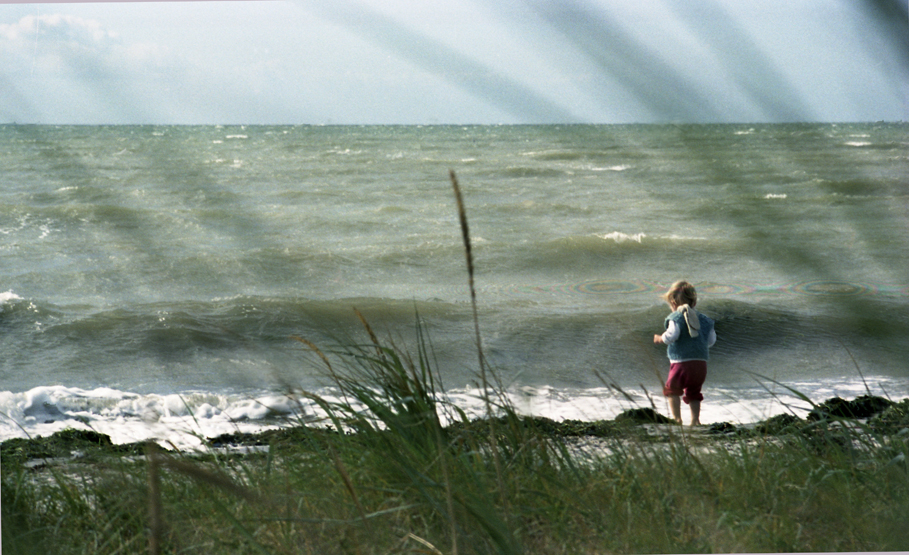
In any case, I had been fooling myself, betting on the wrong horse. Being a published author has its perks, but what truly matters to me is the actual process of writing, which is alchemy, a sculpting of feelings, a release, being other than what is familiar, uncovering myths and creating new ones, digging for treasure, a journey into the unknown that reveals horizon upon horizon.  Copy of Child at shore, colour, lowres A metaphor for my life, about the how, about the journey inside with my others, relationships woven from layers of experience into something new, each time, and time again … life writes its stories through us.

Apart from receiving vague out-of-the-blue proposals offering dubious contracts, I had two chance-encounters with publishers who welcomed a read of my MS, encounters resulting from surfing the web on the crest of my interests, often as unsubstantial as a keyword from a dream. It’s no different from how I live my live. Not exactly a structured approach, I sometimes scold myself. But for better or worse I don’t attach myself to goals, only to transitional containers, which could be an object, a character, a dream image or a place, and the rest follows. My stories emerge from kernels lying in wait, and they pursue their own agenda. I let them, and trust they will find a readership.

Like Stan Brakhage, one of the early experiential film-makers, I think of the deeply personal as universal and conceive of the real world as invisible ‘… thus in the physical or spiritual or light world all forms are beings – stones, trees, stars, streams, men, flames and turds are really facts of invisible presences. Mineral, wood, fire, water, flesh are terms of dense soulful sense.’

In this way, rather than going nuts, as I feared when first exploring the global mirror of the internet, I’ve made peace with it, relating to it as a spacious, time-freed being that interconnects all our stories and projections and offers its content according to the container I bring to it.

13 Comments

Filed under Blog

… the mystery of character versus genre …

Flicker, flicker, speed, speed – time is flying – here is a genre – an inviting golden bowl – let’s drop a story into it. A well-defined genre promises the best route to financial success for many aspiring writers.

the golden bowl of genre Human traits that make up characters are unfathomable in their combination, which is why we traditionally veer to an index of types. The adage of the writing guru – don’t tell, show – suggests character is revealed through traits that imply qualities. Traits fascinate us, but if they are mechanical in their emotional and logical processes, they seldom surprise. In such case the page-turning tension must be provided by the plot.

During the nineteenth century’s advent of psychology and individuation many writers moved away from the Greek model of plot-driven stories. Curiosity shifted to the complex inner life of characters and their individual way of creating meaning was employed to unfold narratives.

The search for a unique self beyond the collectively orientated ego personality is relatively new, and while time-engraved archetypal energies hold us in their emotional grip, we have now psychological maps to help us become more conscious of their compelling powers, more conscious of our personality, which, for the writer, informs their fictional characters and opens new worlds and new choices. Irrespective of the rich psychological and scientific knowledge available to us, the process of character formation present us with the greatest mysteries of our time – as exciting as discovering new territory, new planets, new eyes on the universe.

Here I am making up a scene from scratch:

He stiffly dragged his feet along the polished marble floor of the shopping mall, his head forward as if pulled by a rope, though his eyes did not focus forward, nor up or down, they swivelled, left, right, left right, alert for what? Alert for anyone who might observe him? Nobody did – apart from one person who sat still on a seat moulded into the stone replica of a toy train. She raised her eyes from her book and looked straight at him …

Now as reader, and as the writer of this entry into a scene without blueprint for a story, I’m curious – where is he heading, where is this going? I search for a deeper layer, a narrative unfolding from the mysterious core of the character walking through the mall. I want a substance to chew on, to extract a flavour from his unique world.

The woman’s stare broke his set rhythm of surveillance. His face contorted in fear, his feet lost touch with the marble floor, sailed on air, while his arms flattered like duck wings failing to lift. All he could think of before his fell flat was – she knows, she knows I’m not present in this body. All he perceived were veins of light in a glittering darkness. He chose to vacate.

Are you hurt? While approaching the sprawled body of the man, the woman shot a stern glance at her boy who stood by guiltily. She had noticed him drop the sweet wrap. She had noticed the man stepping on the slippery cellophane. She had caught his eyes – and what she saw in that instant had made her shiver …  

I’m not going to follow up this scene. Anyone who reads this is welcome to do so. It would give me a thrill.

We all enjoy our stock characters and their antics, types set into situations and conflicts we can readily identify with, heroes we can like, villains we can despise. We enjoy themes that fall into definite genres that entertain us away from tedious daily concerns. I’m not knocking these stories. I enjoy them myself.

But hey you, all writers out there, why not take a risk and be drawn to the mystery of the unpredictable that challenges you to think in new ways, why not evoke characters who, even while using known containers, allow their (your) unconscious past and future to fill in the content, characters who explore their personal experience to a depth where it becomes universal, characters who play with time and space and are directed from their inner spirit, even when it requires a new container?

In my writing, I like the adventure of discovery, a nut to crack. I like to allow my character to walk ahead and unfold the story, and if it spills over the frame of a convenient genre, so be it.

P1100981And here my little gripes with how-to-does:

The advice-filled internet spheres turn and turn like gyres.

Answers sum up being and are full of promised abundance – yet they are dead.

Questions sum up becoming and are full of challenging limitations – yet they are alive.


‘One does not discover new lands without consenting to lose sight of the shore for a very long time.’

Andre Gide

8 Comments

Filed under Blog