Tag Archives: poetry

… dream – a storyteller teasing my dad …

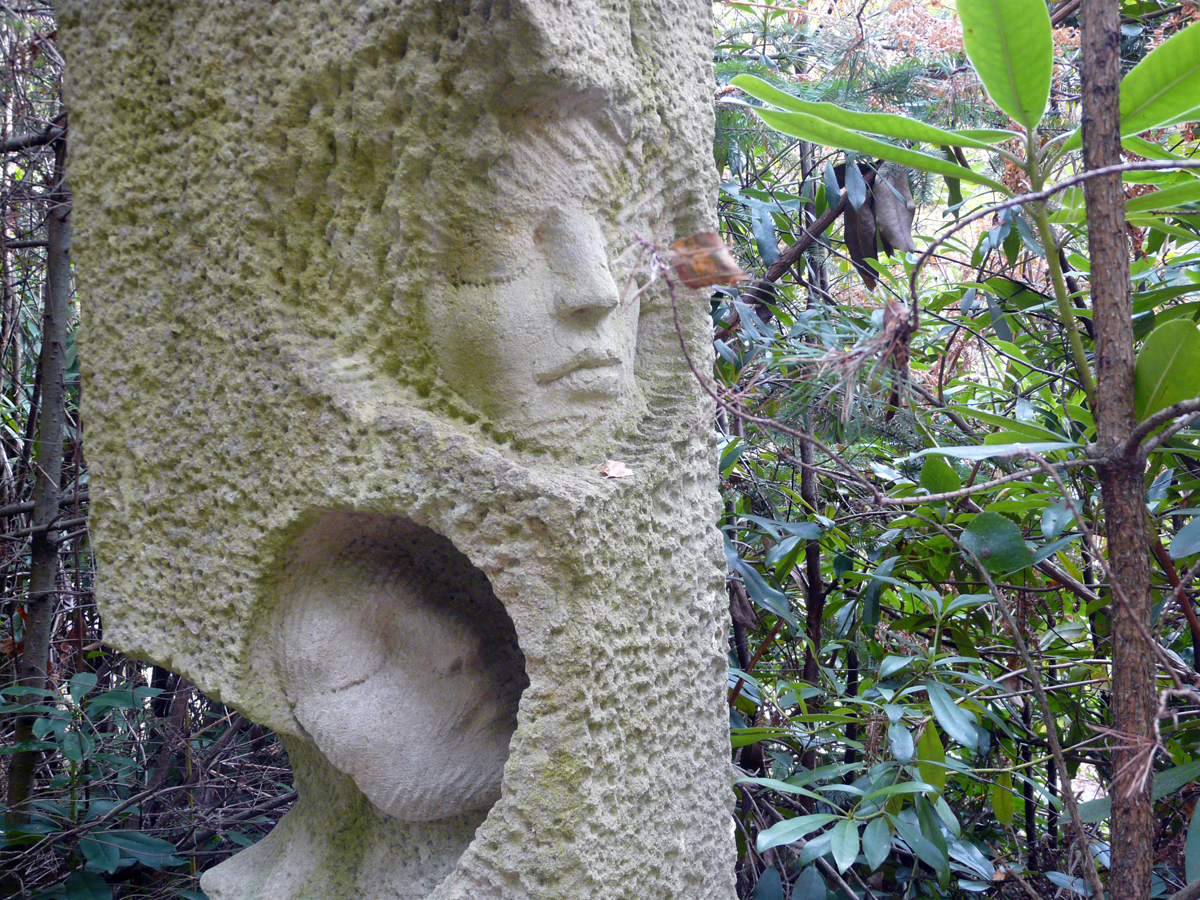
I love this image, but can't find its source,, apologies to the photographer.

I love this image, but can’t find its source,, apologies to the photographer.

Two nights ago, an enchanting storyteller appeared in my dream. She glowed from within, embodying her yarn with captivating gestures, her eyes saying – you’re loveable. Her whole being was a joyous dance. She flicked her fingers before my father’s face, touching his chin – making him laugh – his freed anima, maybe?

Ah, dreams are wonderful, unpredictable like liquid mercury, living silver flowing into shapes.

It was heart-warming to see my father laugh and absorb the affection, the irreverence, the humour. He did not retreat into silence before the piercing wit of the storyteller. The probe was softened through caring eyes … a miracle.

Alone, I could not have invoked such light-hearted banter with a father, who pulled the drawbridge to his heart ever since I dared to think independently. The dream vision lifted the cloud of my helpless woe.

After the dream, I recalled part of a poem I wrote long ago. Daughters may recognise the patriarchal fault in the lines of this poem, the discrepant realities that want bridging. It’s the same old story that could teach us, in the words of my late teacher, Fazal Inayat-Khan:

‘We are not here to agree with each other, but to create beauty.’

Truth worth seeking springs from the middle of each moment. Evolved individuals don’t see a women as inferior to men. The concept has harmed, and still harms, the psychological growth of both men and woman. Yet the deeply-etched hierarchical system keeps working its mean distortions across the globe.

He rests in stasis – cast in stone,

placed high in a niche

of this grand cathedral.

Sculpture Park, Churt, Surrey, UK

Sculpture Park, Churt, Surrey, UK

His daughters wake

and dare looking up.

What are they meant to do

with this apostolic vision

in their genes?

Someone tell them now,

tell them how the vacant room

was always theirs to own.

Here – sun streams through

rounded glass – crimson,

amber, cobalt, gold and green

play across crisp white walls.

Here – colours soften light,

a child can breathe deeply,

is free to release stale sorrows

and style fresh dreams.

Dad, we kick your ghost

out of here … no more

bargains with your fear.

What’s the cause of this stasis, so feared – like dying life, or living death? I think it’s war, each new war piled on top of other wars, and the unbearable injustices my father, many fathers, and mothers, were, and still are, subjected to. I shake my head, I nod my head, and somewhere between all contradictions I must accept the inherited traumas of humanity and seek life and joy with each new day.

14 Comments

Filed under Blog

… other worlds … 

Writers that inspire and make me think are like a family of heart and mind. Luis Borges belongs. His imaginary worlds shine from beyond time and space, and delight with paradox.

‘The universe (which others call the Library) is composed of any indefinite and perhaps infinite number of hexagonal galleries, with vast air shafts between … The Library is a sphere whose exact centre is any one of its hexagons and whose circumference is inaccessible … For every sensible line of straightforward statement, there are leagues of senseless cacophonies, verbal jumbles and incoherences … it suffices that a book be possible for it to exist …’   The Library of Babel, by Jorge Luis Borges

Between each breath, comma, pause, number, node, and each period, we string symbols towards stories. Some make sense to some, others make sense to none, and yet others inspire more stories. Ideas that resonate have an ongoing life, they tag on each other.

In his extensive readings, Borges must have come upon the ‘many worlds’ theme recorded in various cultures over the centuries, long before quantum physics was challenged to struggle with this probability.

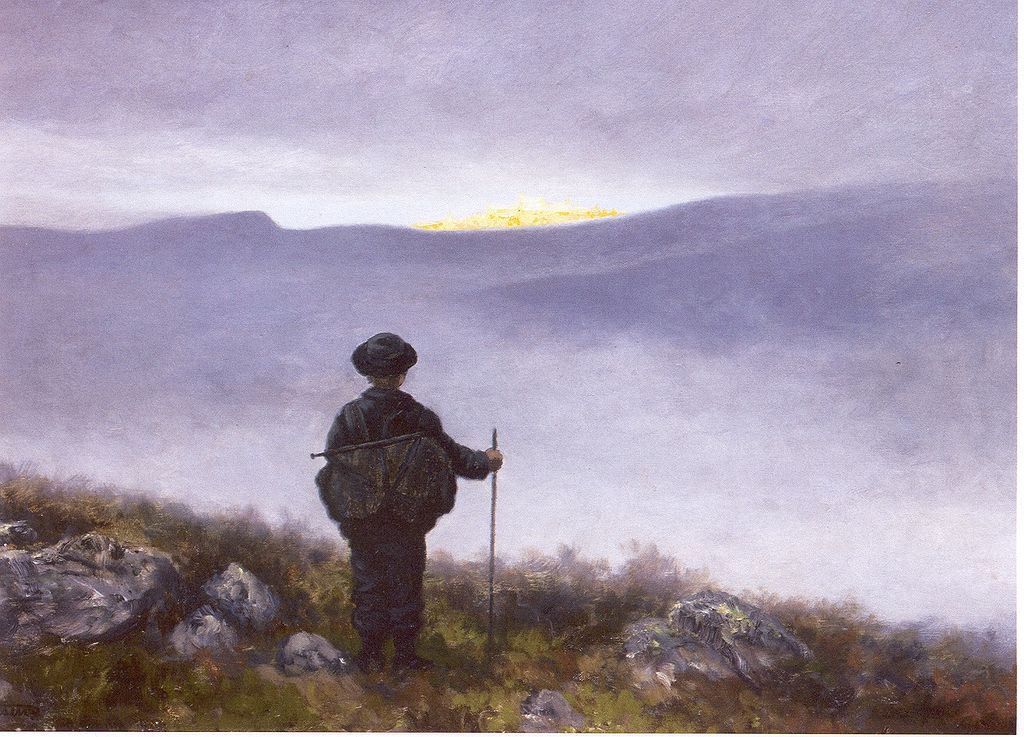
Theodor Kittelsen 1857 - 1914

Theodor Kittelsen 1857 – 1914

Even as a child I experienced shifts in reality, vivid moments that expanded my imagination and have come to play a part in my novels. Since nothing about particle behaviour under observation is certain, everyone of us is abundantly free to speculate about memory, time, and parallel worlds. Though dreamlike, these other dimensions leave signs, like unseen winds show in swaying branches, jittering leaves, and rippling waters that gather momentum to become waves upon waves.

The general definition of wave is a disturbance travelling from one location to another through whatever medium or vacuum presents itself. Do bits of information travel with resonating particles? Is the medium itself the message transmitting pattern recognition? After all, even far galaxies mirror the branching of trees and leaves on earth, or, for that matter, the neuron system in our bodies. Everything scales up or down ad infinitum. Here’s how Jonathan Swift put it in 1773

The vermin only teaze and pinch                                                                                                                                               Their foes superior by an inch.                                                                                                                                                    So, naturalists observe, a flea                                                                                                                                                    Has smaller fleas that on him prey                                                                                                                                              And these have smaller still to bite ‘em,                                                                                                                                      And so proceed ad infinitum.

It seems incomprehensible that parallel worlds could exist and influence our reality and vice versa. How could there be many collective and personal histories? How could there be other versions of us and everything? How would it work?

Given the fickleness of our feelings and thoughts, strange dreams, synchronicities, and the constant dissolution of ordered energy fields, we are exposed to streams of oscillating and interrelating signals, unless we fine-tune through the white noise, or completely relax. Occasionally we have a sensation of order, like a blossom unfolding. All is right and beautiful – we don’t feel separate, but in symphony with all dimensions, here and now.

At other times, when under pressure, and crucified having to make a decision, we sample memories, search pasts, postulate futures, until we surrender to a compromise, or the universe decides for us, or  … a resonance occurs.

‘All time is contained in now.’ – Meister Eckhart

A sudden resonance, if deep, could explain many paranormal phenomena that vex and hex people, especially scientists. Mystics are fond of saying the ‘self’ is an illusion, trapped in the body, though which self is a matter of perspective.  Since quantum physics, particles stopped being things in themselves, but function as waves also.  This is where it gets slippery, because no explanation has come forward for the wave-function- collapse when the measuring of the particle is attempted.

Time is nature’s way of stopping everything from happening at once.’

Graffiti in a Texas Washroom

The ‘many worlds’ concept gets round this problem by suggesting myriad of copies of our reality, where everything conceivable can happen. As a writer, this is my license to create. The invented characters in my novels happen to me. They are tangible, psychologically coherent, yet also suspended between worlds, like, I think, we all are.

‘… the library is infinite and cyclical … If an eternal traveller were to cross it in any direction, after centuries he would see that the same volumes were repeated in the same disorder (which, such repeated, would be an order: the Order). My solitude is gladdened by the elegant hope.’ Jorge Luis Borges

Here the Wikipedia entry on The Library of Babel.

The image is by Theodor Kittelsen, master of vision, trolls and wit.

14 Comments

Filed under Blog

… beautifully lost – revision of a poem …

Many of my poems linger in files, unfinished. I’m never sure of anything for long. Quite often the poet and the philosopher existing in my solitude are at odds with each other, or the pair gangs up against the certainty of experts our western culture values. I favour dynamic approaches to life, where faith and doubt are equally valued in the process of becoming human. The words of Hazrat Inayat Khan would apply:

‘The ideal is the means; its breaking is the goal.’

When making something audible and visible from the inside out, a topic I touched upon in my last post, only time may tell its worth. Once we shared our art, there is the waiting … the vulnerable span after exposure. Does our wave of inspiration chime in other minds, offer fresh perspectives,  frustrate with surprise?

I hope you, my readers, can offer a reflection on the little poem I obsessed with revising over the last week, and maybe even share thoughts on your own revisions.

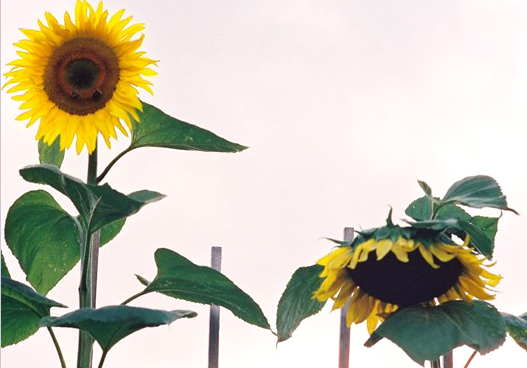
Sunflower 6I first wrote ‘beautifully lost’ in 2005 and put it to sleep. Other versions exist. The latest attempt turned into a Haiku sequence. I’m not at all sure it’s an improvement compared to my first attempt.

The theme is cycles of experience, when after a period of loss and unknowing; a renewal of meaning happens that keeps me young at heart, connecting me back to the middle of each moment.


Beautifully Lost – 2005 version

At times no deed rhymes,

nothing I say is heard,

each word drops to silence,

and my best yarns slip

from the loom, waltzing

in endless loops,

suspended.

On solid earth swords cut,

and chalices swallow us,

but once every full moon

King and Queen align their myths,

And I– beautifully lost –

dreams undone – whirl

at the gateway to an inner sun.

 –  Ashen, 9th Nov 2005


beautifully lost –  2015 version

when deeds miss their rhyme

and words fall flat on their face

I chase your fragments

in the wayward yarns

that fall off the loom and loop

on my breath – dazed

drifting without aim

they will chance the blade that cuts

or a gulping maw

until a full moon

weds the light of King and Queen

and my best yarns yearn

beautifully lost

heart-whirling at the gateway

to an inner sun

  Ashen, Jan 2015


And here a song …

http://www.eyeneer.com/video/countryfolk/pete-seeger-judy-collins/turn-turn-turn

30 Comments

Filed under Blog

… the gulf between writers and readers …

This post was sparked by a stimulating and taxing interview Philippa Rees conducted with the writer Vivienne Tuffnell  P1060427lower - CopyThe interview attempts to re-define the gulf between writers and readers in the way commercial algorithms define values for readers, blanking out the appearance of new green shoots.

This disrupted my sleep, in addition to lots of other stuff going on, so I tried stepping back for a wider perspective. No answers, only a few muddled reflections …

My generation, whose early years were without TV, needed to adjust to rapid periods of change, particularly the change from analogue to digital recording, – two entirely different metaphors. The true significance of this shift has not yet been absorbed by the general public.  In a dissertation during a sabbatical film degree as a mature student in the mid-nineties, I quoted Jean Baudrillard  who saw the forced silence of the masses no longer as sign of passivity or alienation, but as ironic and antagonistic. He commented on the strategy of the masses:

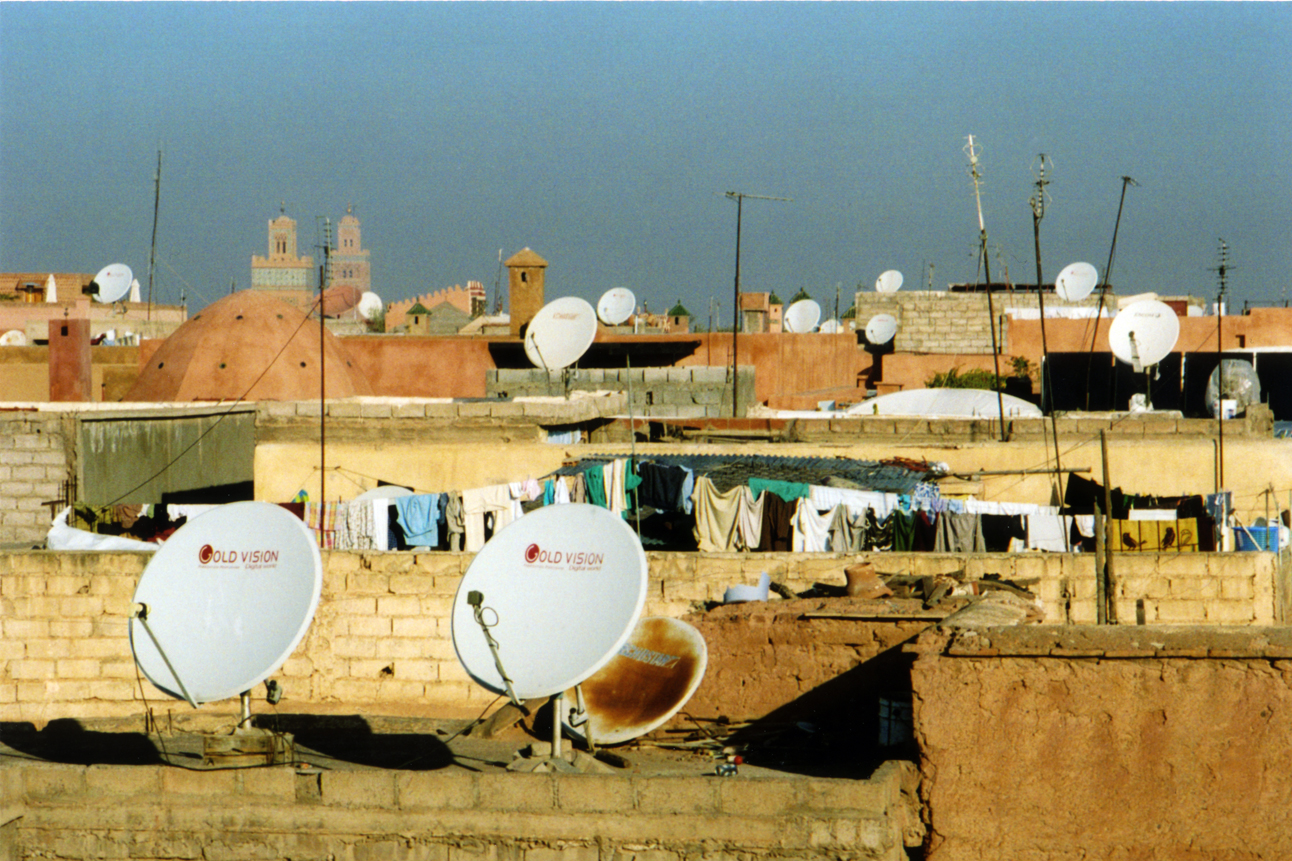
‘… refusal of meaning and refusal of speech; or of the hyper-conformist simulation of the very mechanism of the system, which is another form of refusal by over-acceptance. It is the actual strategy of the masses … it is the winning one today, because it is the most adapted to the present phase of the system.’ Moroc, Marrakech Riad roof, golden vision - low
I recognised this as the Zeitgeist  gradually reaching across the globe. My continuous studies, driven by curiosity and endless questions, prepared me, but I still find it difficult to accept a reality where, for many otherwise intelligent people, the beautiful term ‘soul’ has lost its impact. I place the word carefully in my work and in my writing to avoid bias. Marion Woodman  uses it powerfully … ‘Our very survival depends on spirit embracing soul.’  

The quote becomes poignant through experience, not theory.

Don Cupitt – a philosopher of religion who rejects authoritarianism, once said … ‘The soul, the self, has died. The self in an animal with cultural inscriptions on its surface.’ Sobering, and true, depending of course from which plane of experience one perceives.

In our present culture the commercial speed train whistles through every zone of life. Publishers are among many enterprises struggling to survive amidst overproduction. The ‘Road Closed Pending Repairs’ signs Philippa refers to in her interview grow like mushrooms. Small businesses, for example, vanish at an alarming rate, at least in my little town. Be it a supermarket or a bookshop, I’m bombarded with buy-one-get-one-free or two for three offers. Plenty of people I know look beyond the more-is-better and cheaper hype, but their numbers won’t topple the algorithm-driven logic of mass-cargo firms like Amazon (click for latest newsletter.) Their long term strategy is to please the consumer, which, now, increasingly, includes writers who self-publish … To make profit in an oversaturated market requires ever-new smart inventions.

Works not created from templates, but from inside out, which, sigh,  includes my novels, will struggle to find a position on consumer maps. Traditional meanings are collapsing.  New genres for books are proposed. The box marked cross-genre sounds like a stir fry of left overs. How, as a writer, does one shoulder the marketing speech for novels not fitting into boxes? Crime? No! Romance? No! Religious? No! Paranormal? No! Sci Fi? No! Fantasy? No!

The distillation of a life’s experience, a work of creative imagination? What’s that?

Authors of such ilk have the formidable and possibly worthwhile task of writing their own obituary. Are any of the thoughts a writer expresses original? I don’t think so. Thoughts happen to us. What’s original is their processing and linking based on personal experience, which may offer a new window of reference. I look at my bookshelves and ponder what I would have missed had the authors whose works snuggle up to each other had lost faith in their work. Few commercially produced genre books leave impressions that live on. They’ll drown in ISBN databanks. Our shelves at home hold unique books that surprised and inspired us over the years, and until we become cyborgs and can, with a mere thought, make book pages fall open on any surface of our choice, this will not change soon.

I admire self-published writers. Vivian published several novels herself,  as did Philippa, which speaks for their tenacity and belief in their work. And I admire Philippa’s poignant questions, and how Vivienne exposes herself to them …

the very uniqueness you want to write about? Could you define why that is so difficult? Is it simply too much surrounding noise? Or something else?

‘… is writing the way in which we confront out existential loneliness, and are readers who ‘get’ and share that now the substitutes for lovers?’ 
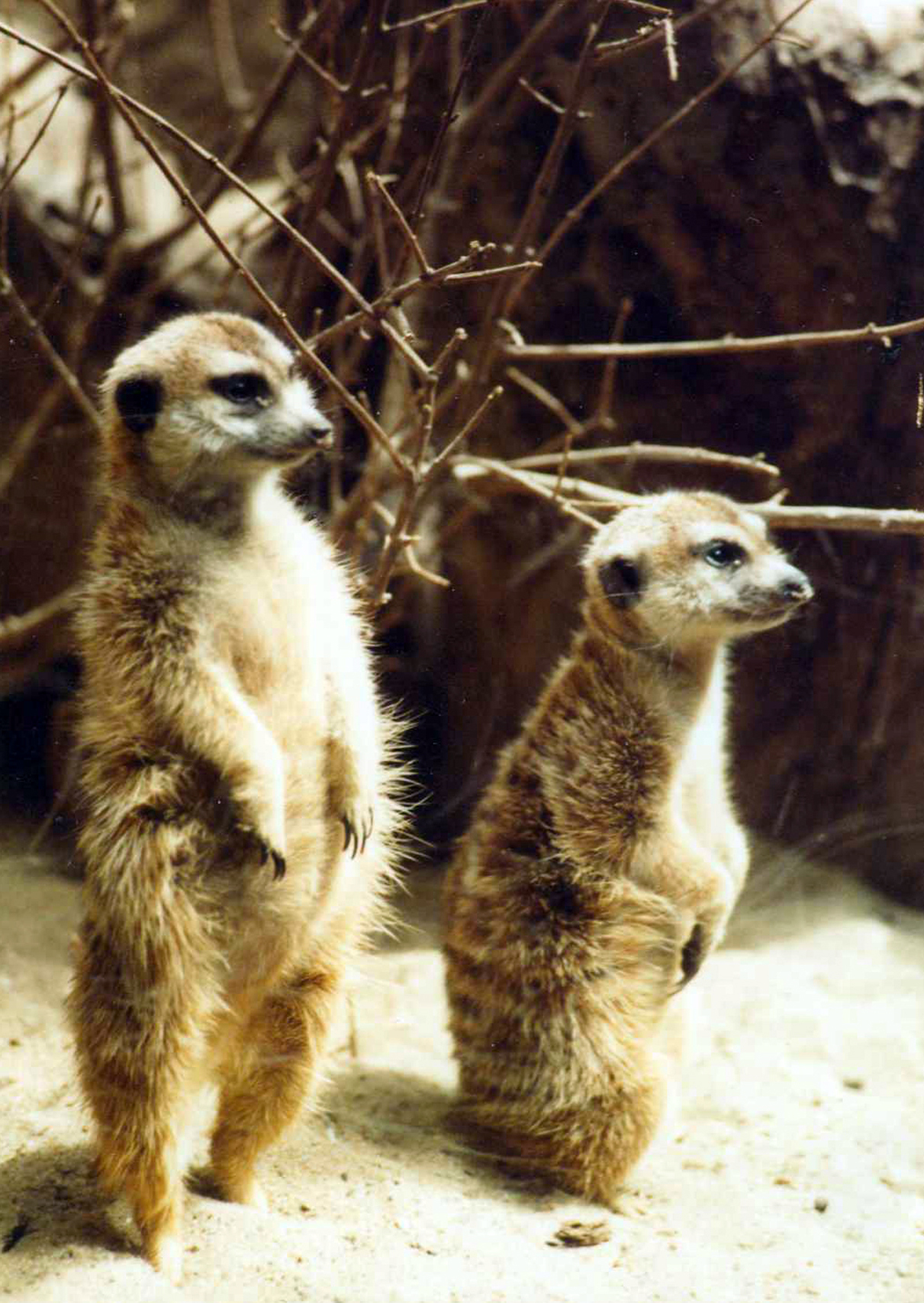
MercatsSuch questions and similar ones are worth their salt, and expose our vulnerability … do writers, any artists, want to be truly seen? Is one person’s interpretation of truth going to be interesting to others? Will the public feel preached to? Such questions haunt many of the most inspired artists, poets and writers who weave works from layers and layers of their psyche. To expect an instant resonance from crowds will bring deep disappointment.

And yet, the most deeply personal experiences, combined with some magic ingredient of presentation, can, over time, have universal appeal. Stan Brakhage, an experimental filmmaker, put it this way … ‘I had the concept of everything radiating out of me, and that the more personal and egocentric I would become the deeper I would reach and the more I would touch those universal concerns which would involve all men.’

If I’m positive about the future it comes from an understanding in tune with Walter Benjamin  … ‘Technology, instead of liberating us from myth, confronts us as a force of a second nature just as overpowering as the forces of a more elementary nature in archaic times.’

To me, this means learning and unlearning accelerates in condensed time. Think how we make ourselves visible by blogging. How brave and scary to step in front of a public mirror … Virtual or not, the psychological process of engaging with virtual friends and foes is totally real. Sherry Turkle expressed this … ‘I believe that our experience with virtual reality, with artificial life are serious play; our need for a practical philosophy of self-knowledge has never been greater.’ My self-understanding is now aided by the relationship with people I have not met face to face – I never shook hands with or exchanged a hug with Vivienne, but I emphasise with her loss of joy, and her frustration with the ironic and antagonistic attitudes of people who belittle deeper strands of truth for fear of looking inside, and the sense of being a square peg that doesn’t fit the neat round hole of genres and algorithms.

Many writers will recognise these obstacles, including Philippa, and myself. How do we attract and persuade people to sample the green growth in our plot? At the same time, I’m convinced we are co-creating artists of our continuous self-invention. Mourning a not-yet existing frame for our work  might hinder this process, which moves and dances naturally through each breath. And I’m heartened by how writers and poets influence us over time.

A poet and mystic from over 800 years back examplifies this phenomenon …

‘The minute I heard my first love story I started looking for you, not knowing how blind I was. Lovers don’t finally meet somewhere. They’re in each other all along.’ – Rumi
20 Comments

Filed under Blog

… sharing a heart-warming present …

A few years ago I decided to value my writing enough to make sacrifices.  I’ve since devoted every spare moment to this solitary word-sculpting activity, with no idea where it will lead, and therefore feel tremendous joy whenever my compositions arouse curiosity, and especially when someone groks the universal myth I struggle to filter through my individual imagination, my psyche.  Why do writers, and artists, share the facets stirring in the depth of their soul without the promise of a resonanating  audience? … It’s a mystery.

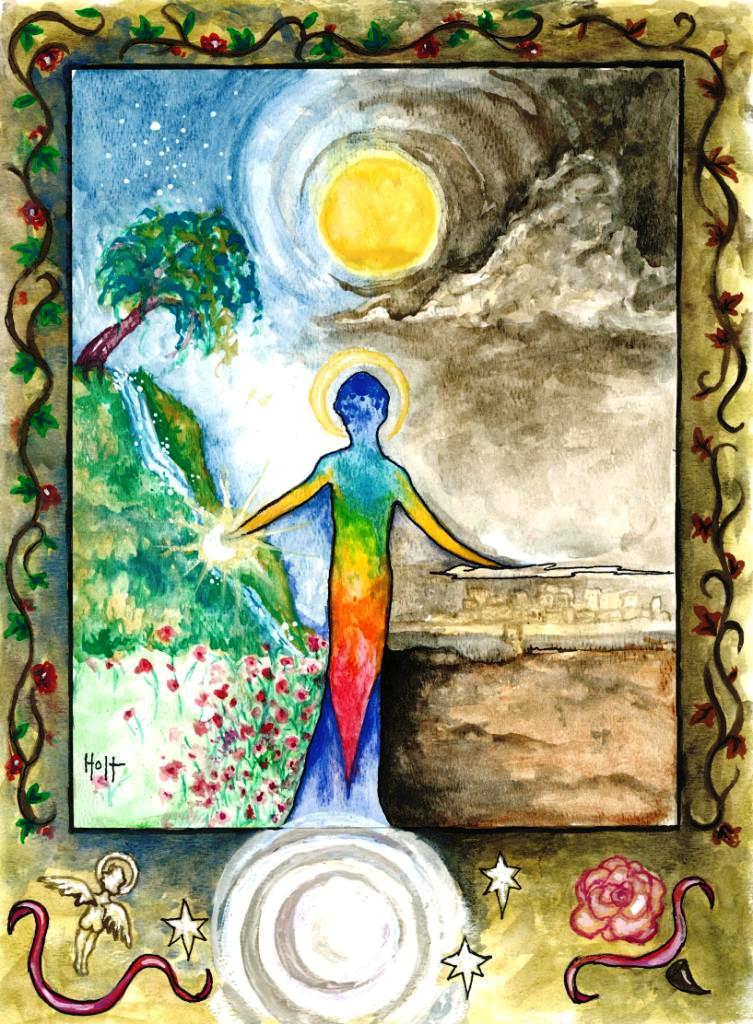
Image by Cynthia Holt JPEG riverside8

Cynthia Holt, living on the other side of this planet, created this painting for me, inspired by two of my poems, Riverhead, and Sleeping Sun … It struck me that the image relates, in essence, equally to the constellation of my novels, yet to be published.

Thank you, Cynthia, for your spontaneous offering. It speaks to how, through interconnections, face to face, or in the realm of the virtual web, we stimulate each other’s creativity.

The image can remind us of the two worlds, indispensable to each other, which we bridge – and how against the canvas of pregnant darkness, the spirit’s eternal light defines our unique myths towards consciousness.

A peaceful Christmas time, and abundant Blessings for the New Year to all …

I’m looking forward to spending a few days in Amsterdam with friends and family.

Since I posted this, Cindy has done a most beautiful post on her mermaid tavern site, including a poem by T S Eliot, a song, and a chart of the Hero’s Journey.

http://mermaidtavern.net/1/post/2015/01/the-law-of-three-artistspoets-and-quantum-physics.html

15 Comments

Filed under Blog

… not now – later …

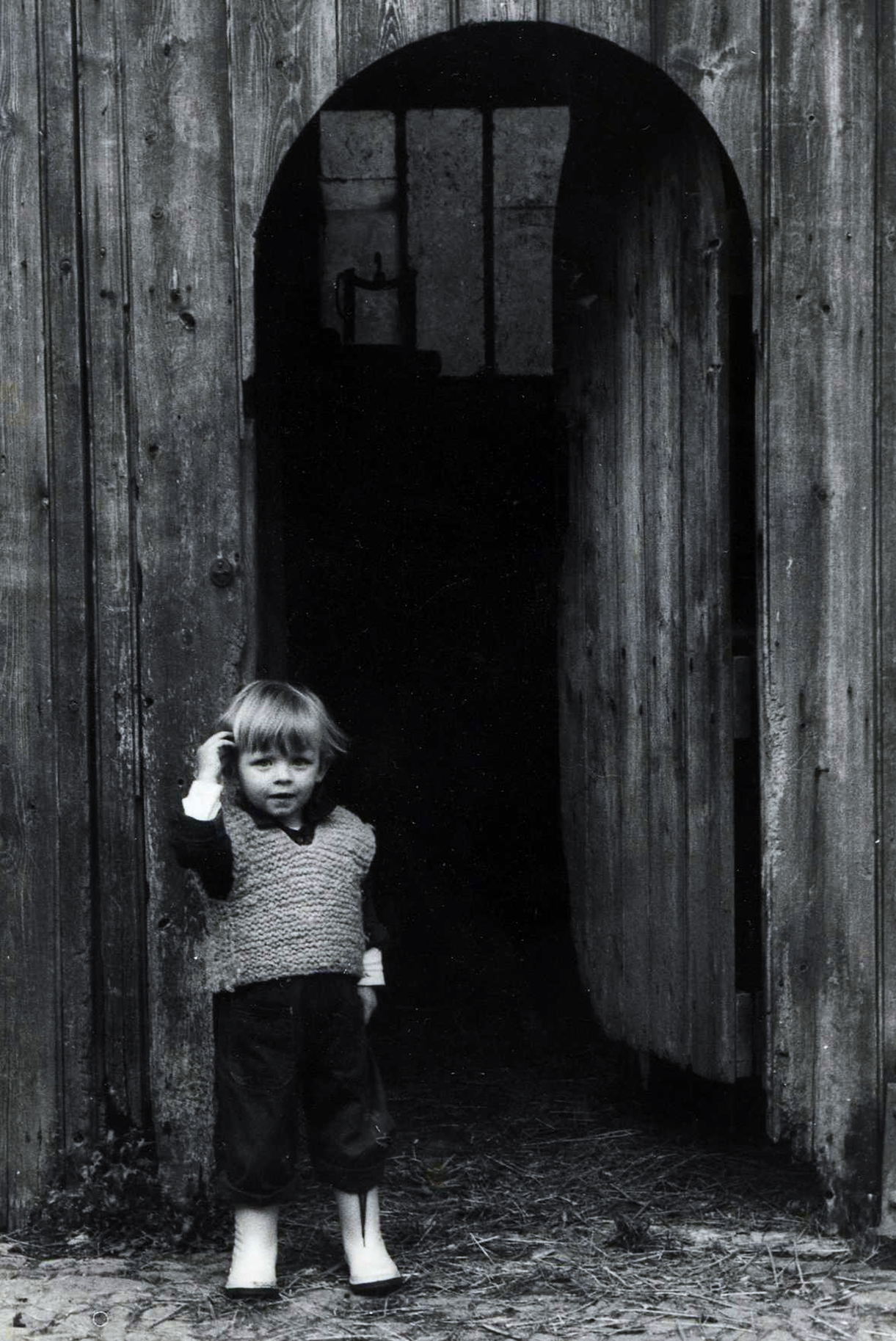
my little hero

my little hero

Each new generation tends to be smarter. While living in rural Somerset, I observed our four-year old son’s play-acting in the garden from the kitchen window while washing pots. He explored his sharp-shooting skills with wooden blocks, building, destroying, building, destroying, building; and so on … it was his new idea of fun. His aiming was good.

Pots done, I attended to the next task, fetching the milk from the street-hatch, left there by Hope, our farming neighbour. She had poured three pints of milk into a bowl and covered it with a cloth. The cream had risen to the top, ready to be skimmed off, which led on to the next task, preparing the dessert for a birthday meal. At this point my son came rushing into the kitchen, wanting me to witness and applause his new sharp-shooting skill. My brain cells were committed to preparing walnut ice-cream.

I said, ‘Not now, later!’

This trick normally worked for a while, but that day he stood his place, watching me with a quizzing look.

‘When does now end?’ he asked.

Casting my eyes to the ceiling for help, I said, ‘Actually, now never ends,’ realising instantly I was in trouble. The child’s superior grasp of logic would demand, at least, a meaningful explanation, and I could loop myself into philosophical twists. My son had no need to query my shrewd answer, he went one better.

‘So when does later start?’

Time to admit defeat. Drying my hands, I said, ‘Now.’

*    *    *

The memory of the incident inspired me to draft a poem … NOW

by Daphne Joe Grant

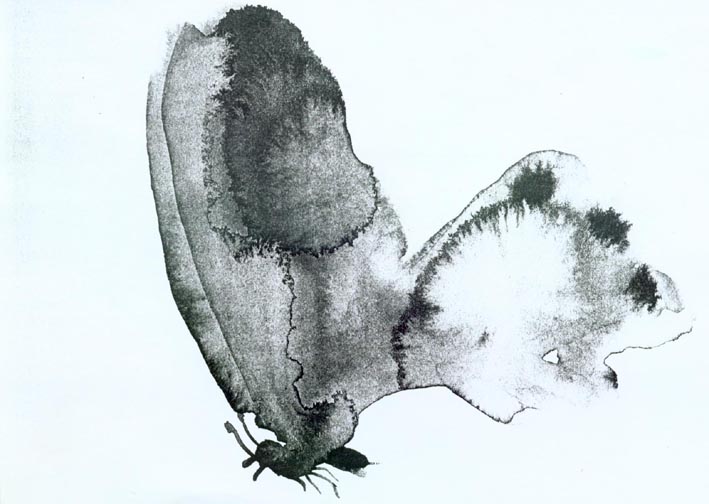
Illustration by Daphne Joe Grant

Now is the in-breath

Now is the elusive arc

Now is the outbreath


Over and over

Out of nowhere pops the now

Or so we presume


When will we find you?

Why not tell us your purpose?

Where are you hiding?


Now is a trickster

Not taken in by mind-games

Now laughs inside us


Our time must be round

Or turn through a dark tunnel

Orbiting the now


Waste now and lose her

Weft now to now and she’ll dance

Wed now and be her


Now has no answer

Now is what is truly known

Now breathe her and bow

https://www.youtube.com/watch?v=xjwBWE64fG0 Interesting talk by Rupert Spira on perception.

A focussed mind helps us to achieve stuff, but is also easily hijacked by the rat-race, the relentless rush towards meeting deadlines in competitive environments, where no children interrupt and make us pause.

Apparently 10.4 million days are lost annually to work-related stress in the UK alone. And it costs businesses in the US $300bn (£187bn; €237bn) a year. No wonder the ‘Here and Now’ theme is in vogue again, even with hi-tech status. Take a biosensor device, called Pip 🙂 … http://www.bbc.co.uk/news/business-29742908

There is another kind of stress, less talked about, affecting those who work hard for a living, as well as those who lost jobs, or get by on little, or anyone reflecting on human qualities, while witnessing a growing social polarity … as poignantly shown in this image …

http://gerryco23.wordpress.com/2014/10/24/the-fence-between-a-world-of-need-and-a-world-of-excess/

16 Comments

Filed under Blog

… Which is Witch? …

‘Which is Witch?’ is the title I coined for a documentary I helped produce for a colleague during our film degree course twenty years back. For my younger colleague the course was the start of a successful career as cameraman, for me it was a three year sabbatical creatively refreshing my existing work.

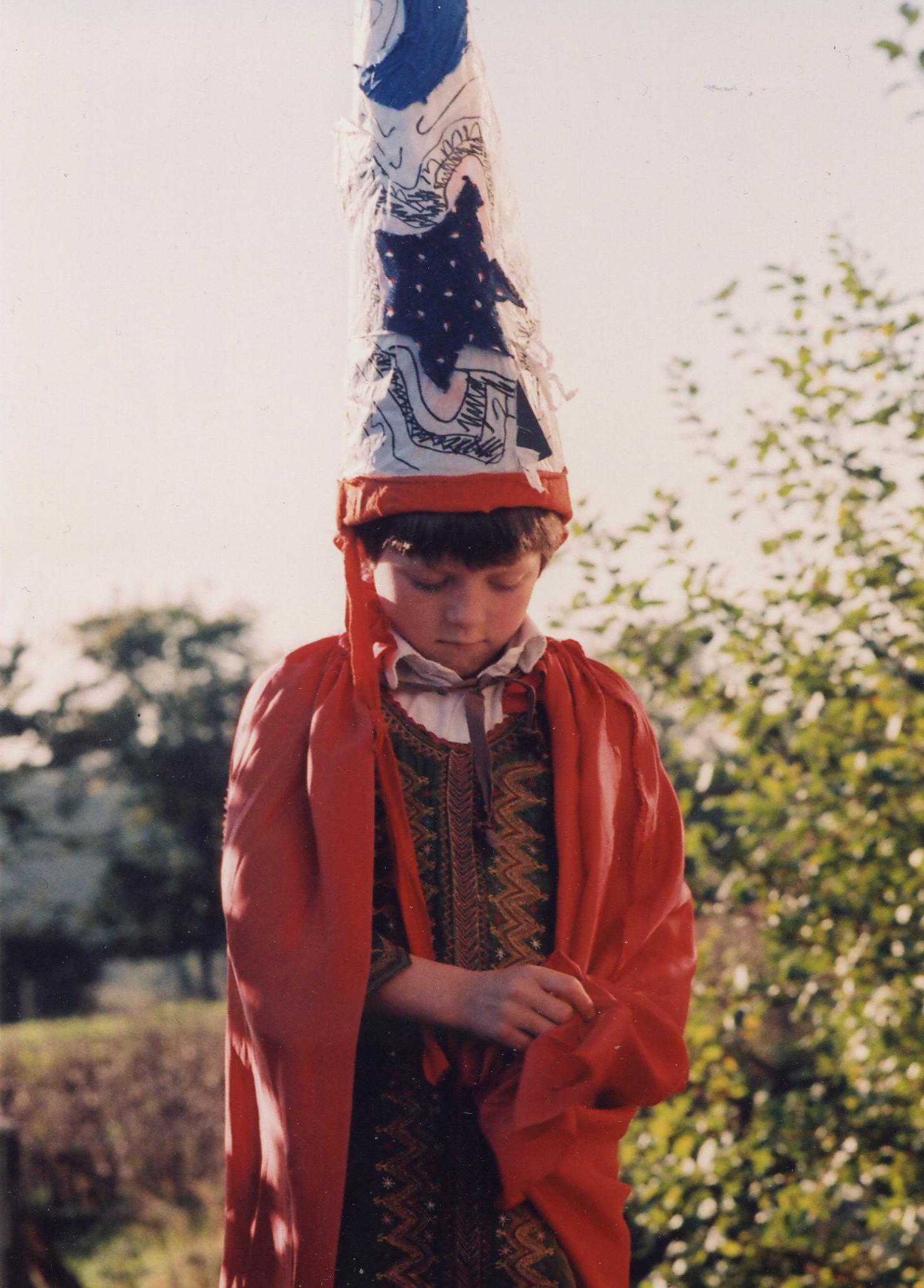
I’m all for make-believe, having grown up with Grimm Brothers’ tales taught me a few things. The other day I came upon this 80s photo of my son and recalled an incident when his favourite primary school teacher must have become a little too identified with the character of her Halloween Witch role.

Yesh img113His grandma dressing

As Santa Claus was cool fun

Yet his headmistress

Becoming a cackling witch

Stirred his first nightmare


Halloween offers a rare occasion when the dropping of one’s regular mask in exchange for another, like the archetypal witch, permits the normally hidden to push up from the shadow world, causing surprise, awe, delicious scares, and even nightmares.


There are good reasons to get acquainted with the hidden 90 or so percent of our psyche, the personal and the collective unconscious. This seems a good opportunity to re-share one of my first posts on this site, from March 2011 – well worth reading.


A Letter to my Shadow

https://courseofmirrors.wordpress.com/2011/03/25/139/

Without the Shadow I’d only be fluff on the coat of real human beings.

9 Comments

Filed under Blog

… hands …

Allow one hand to caress the other, feel the fine sensations through the skin of your fingertips, their manual perfection, capacity to reach out, touch and sense the rough and smooth, warmth and cold. The power of hands to hold, give, heal, remember, receive, express feelings and ideas, inner states – hands that trace shapes and yield to shapes, strong hands that build and destroy, and skilful hands that wield the tool, the brush and pen …

Käthe Kollwitz,  'Zertretene' 1900

Käthe Kollwitz, ‘Zertretene’ 1900

Käthe Kollwitz - Mütter, Krieg, 1919

Käthe Kollwitz – Mütter, Krieg, 1919


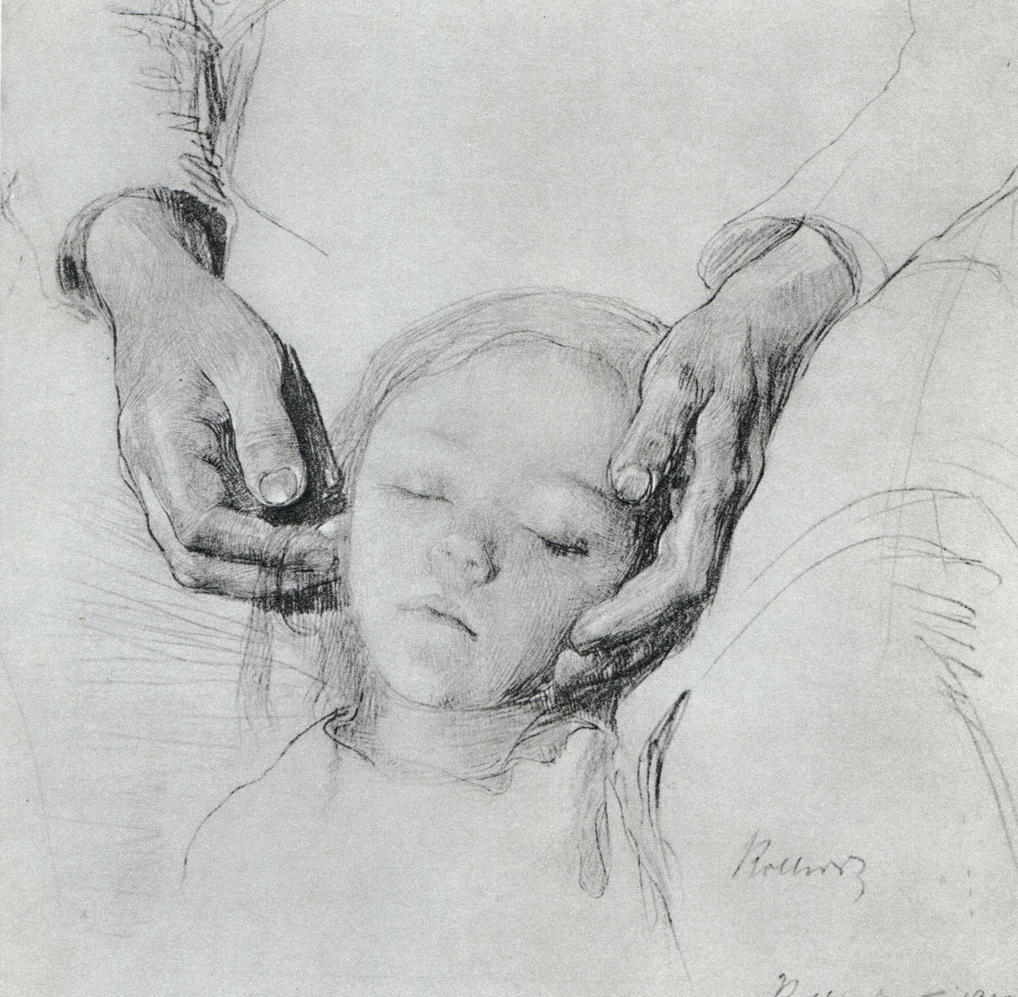
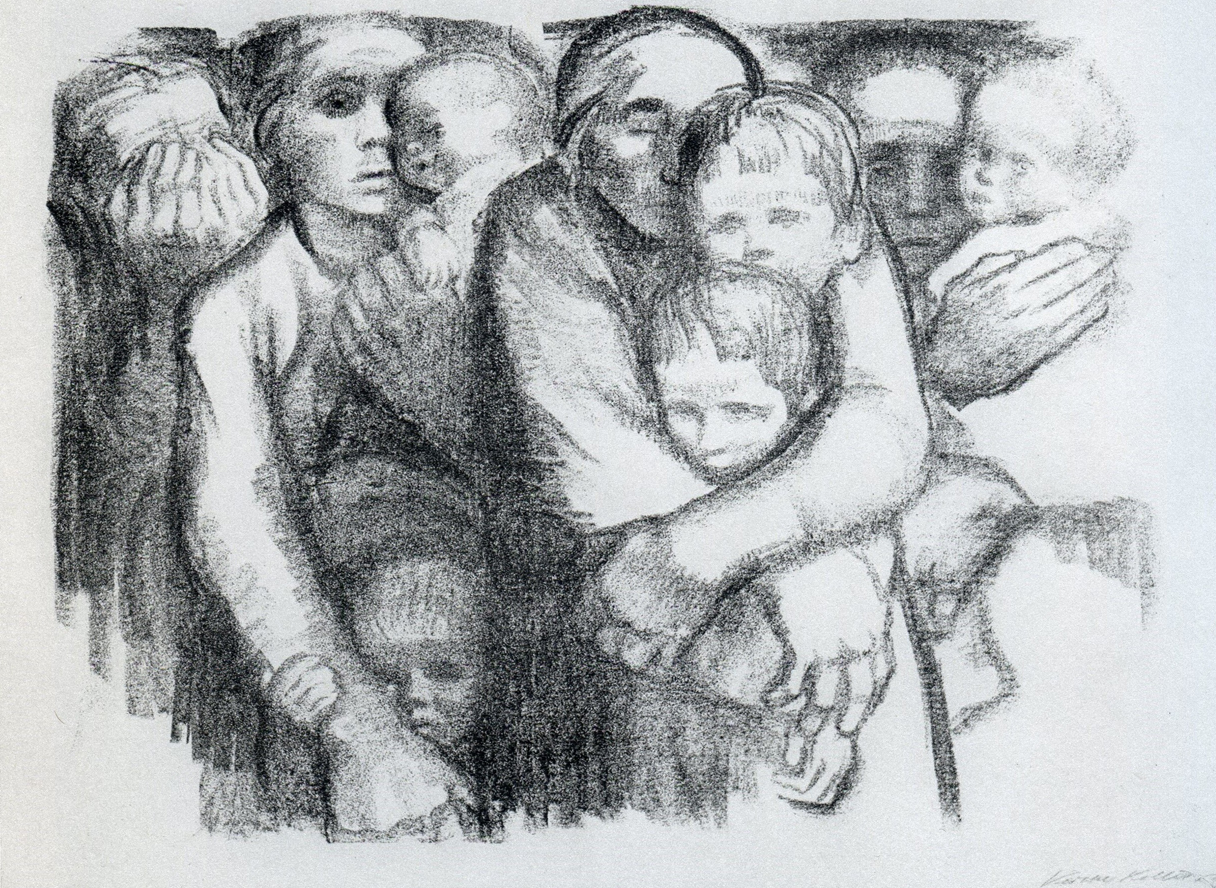
The two drawings by Käthe Kollwitz (July 1867 – April 1945) show the incredibly gentle hands that protect – from a collection of her work in a ‘Die Blauen Bücher’ series, discovered by a friend in a second-hand bookshop in St Just, Cornwall. She posted the book to me this week. I was reminded of the plight of mothers in situations where disease and violence are, once again, out of control. And – how so often, dogmatic politics, religious or otherwise, have programmed generations to de-value the body – its wisdom, beauty and need for expression.

And there remains the question, what is being taken out of our hands? Here a wonderful video I found at the National Film Board Canada site: Faces of the Hand

And the lines from two poets whose tool of passion was the pen.

From ‘Leaves of Grass’ by Walt Whitman

… I am the poet of the Body and I am the poet of the Soul,
The pleasures of heaven are with me and the pains of hell are with me,
The first I graft and increase upon myself, the latter I translate into new tongue ….

From ‘The Marriage between Heaven and Hell’ by William Blake

… The road of excess leads to the palace of wisdom …

17 Comments

Filed under Blog

… the sorcerers apprentice …

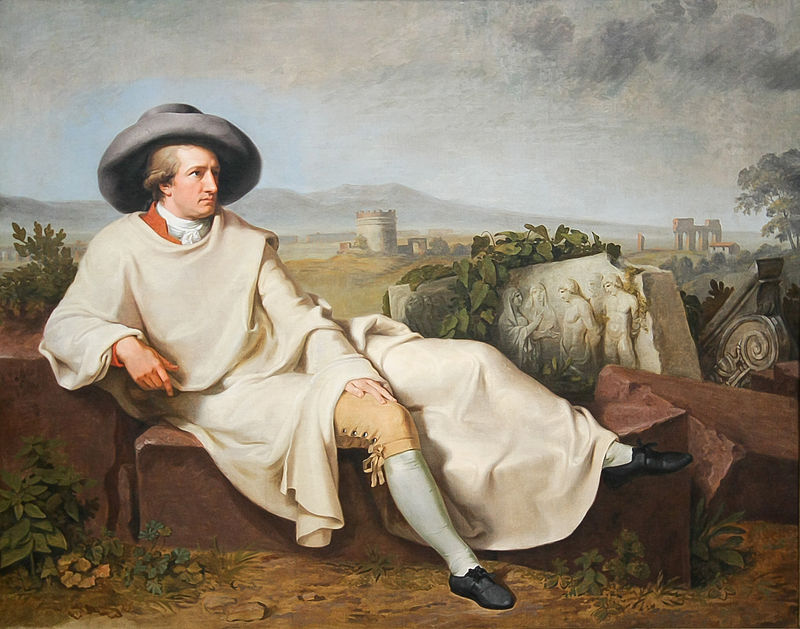
Goethe in Roman Campagna (1786) by J H W Tischbein

Goethe in Roman Campagna (1786) by J H W Tischbein

Science arose from poetry … when times change the two can meet again on a higher level as friends …   J W von Goethe

The Sorcerer’s Apprentice

It’s my day – since for once

The old one has gone

So now the spirits shall live

And do exactly as I say

I took note of the words

The custom – the spells

So with strong resolve

I’ll work miracles as well.

Rise up and surge

Across the gap

To the end that

Water may flow

And in rich effusion

Fill the tub for my bath

Come old broom,

Take those tattered rags

Slave you’ve been for aeons

Now let my will be your task!

On two legs stand

With a head atop

Get on with it – hurry

With the water pot!

Rise up and surge

Across the gap

To the end that

Water may flow

And in rich effusion

Fill the tub for my bath

Look – he’s running to the shore

Indeed has reached the river

And with lightning speed

Returns to pour once more

A second time already!

How the pool is brimming!

How each new pail

With water fills!

Stand still!

You’ve done your lot

Richly measured

Were your favours!

Stop! Stop! Oh woe!

The word – I forgot

Oh – the word that in the end

Will make him what he’s been!

There he runs and nimbly drags!

Would you be the broom of old!

More floods he rapidly relays

In quick succession

A hundred rivers

Rush at me

No! I can’t allow

This any longer

I’ll seize him!

This is malice!

I’m growing fearful now

What mien! What scowl!

Oh you hellish brainchild

Shall the whole house drown?

Over every sill I see

Floods of water surging

What a hideous broom!

That will not listen!

Rod that you’ve been

Stand but still again!

So you won’t quit?

I’ll catch and grab you

And with a sharp axe

I’ll swiftly split

The parched wood

Neatly down the middle!

Look – dragging he returns!

I’ll throw myself at you – sprite

Promptly you’re down

Crushing sinks the smooth blade

Bravely aimed indeed!

Look – in two he’s broken!

Now I can hope

My breath is freed!

Oh woe! Oh woe!

Both parts

Stand up in haste

As slaves

Complete and ready!

Help me – oh mighty powers!

And they’re racing on! Awash

Are hall and staircase

What an abysmal span of water

All the wise – hear my plight!

Oh – the old one comes – at last!

Great is the need!

The spirits I have called upon

I cannot now release.

‘Into the corner

With you Brooms!

Be no more!

Since as spirits

For their purpose

Only the wise call you forth.’

*    *    *

‘Der Zauberlehrling’ by Johann Wolfgang von Goethe.                                                                                                      Translation: Ashen Venema, November 2006

*    *    *

I grew up with Goethe’s work and it still inspires. Occasionally I attempt free translations of German poems. I work on them forever, never satisfied. Those who know other translations of ‘Der Zauberlehrling’ may enjoy the subtleties. The poem is timeless. There are two kinds of ‘Will’ – the personal and the universal, to harmonise them is a lifelong task.

http://en.wikipedia.org/wiki/Johann_Wolfgang_von_Goethe

17 Comments

Filed under Blog

… gossamer bridges and palaces …

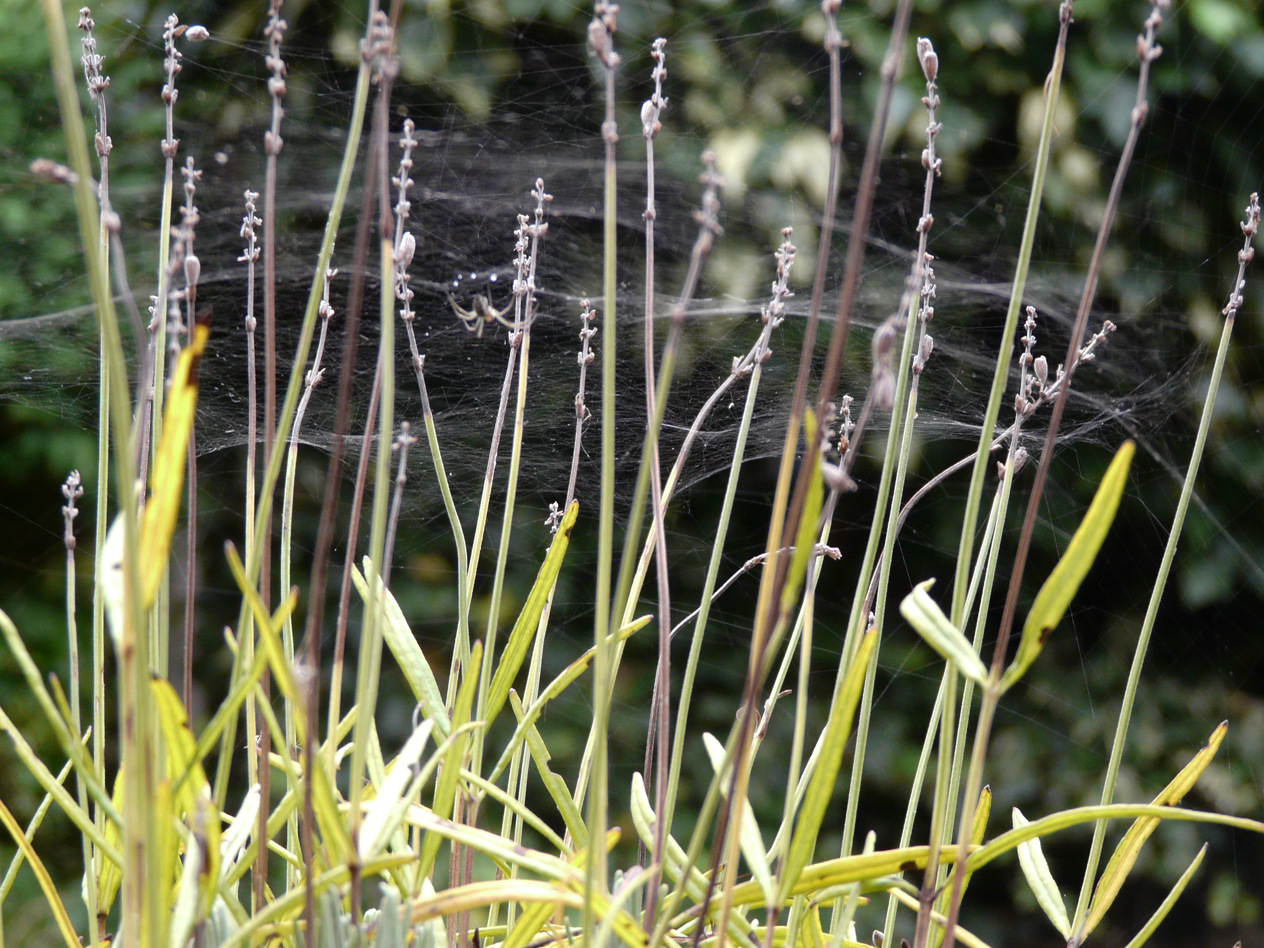
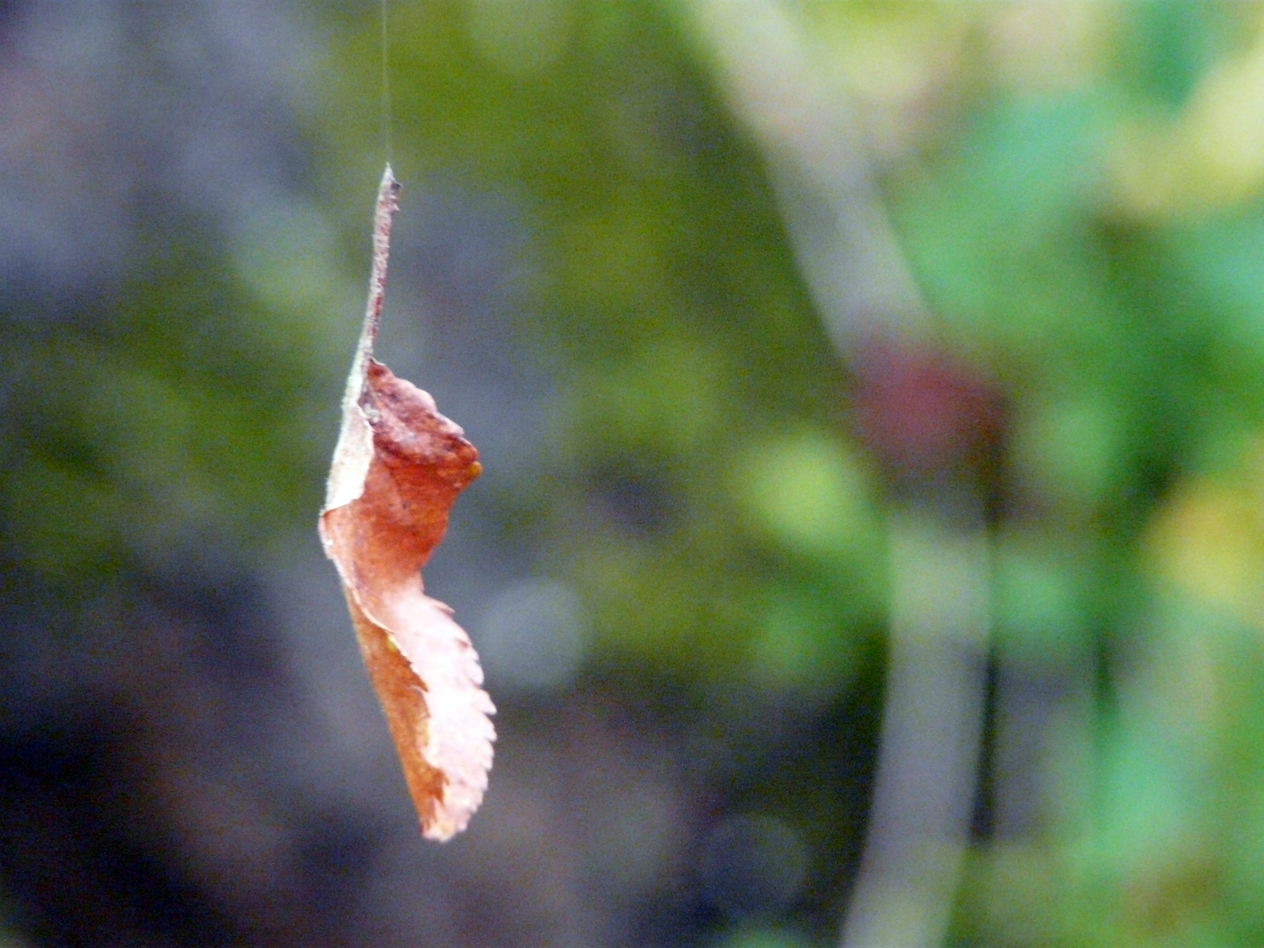
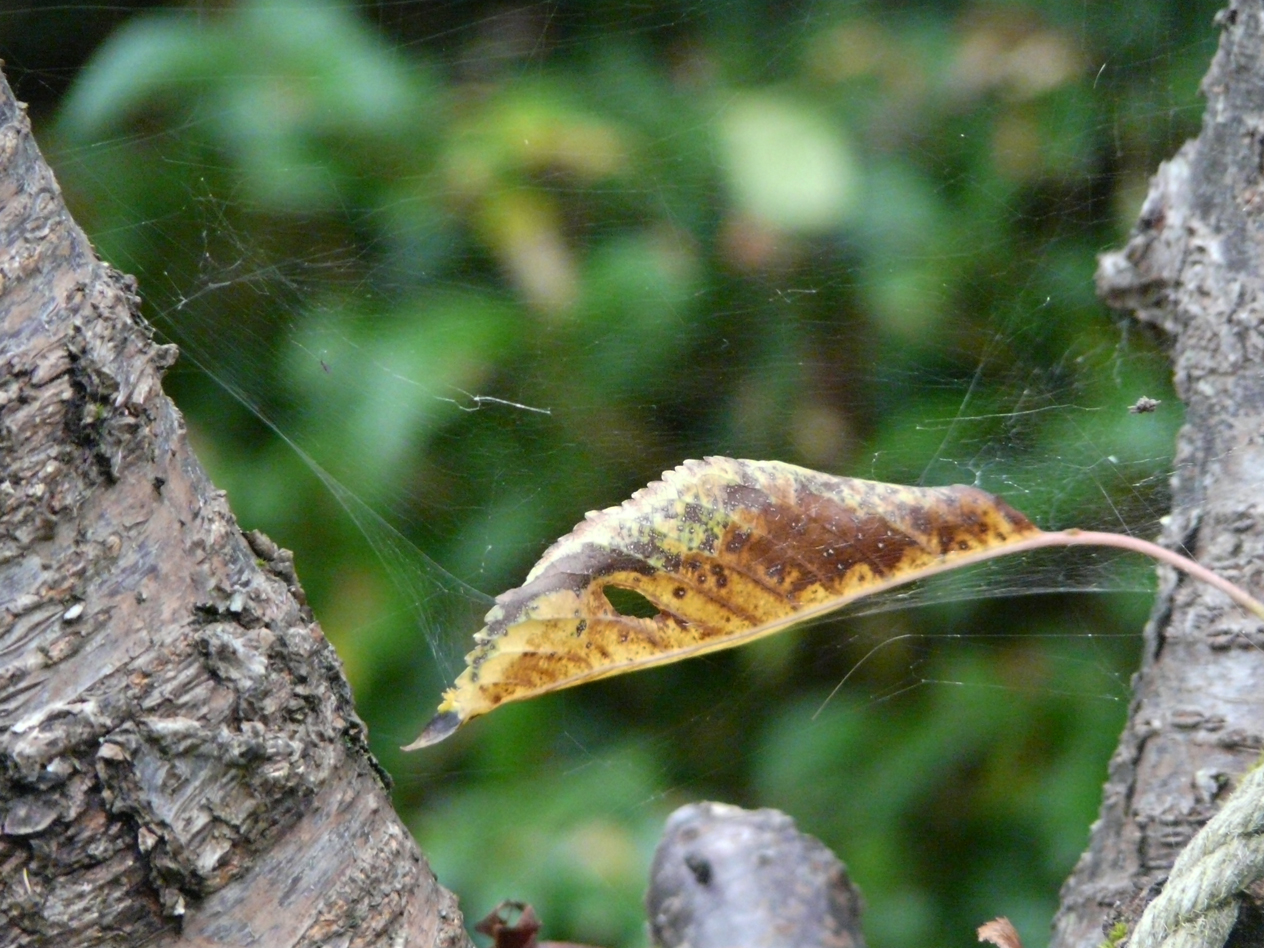
I’m a terrible hypocrite. I can’t stand spiders in the house, but I adore them in my garden, where their bridges and palaces are now quivering everywhere, only visible against the sun or by the rare leaf suspended in mid-air … exquisite.

P1060844 smallerP1060855 smaller

P1060849 smaller

A leaf floating free

From stem and branch – inholding

The ever-tree myth

P1060859 smaller

Once more nature translates its lore to the soil, carrying patterns of relationships to new settings.

We do the same, daily and all year round, translating our experiences to ourselves and others … our cells, bodies and minds continuously changing, never the same, despite appearances.

I wish for grace in waiting, the hibernating towards re-membering afresh the cyclic occurring wholeness in new formations.

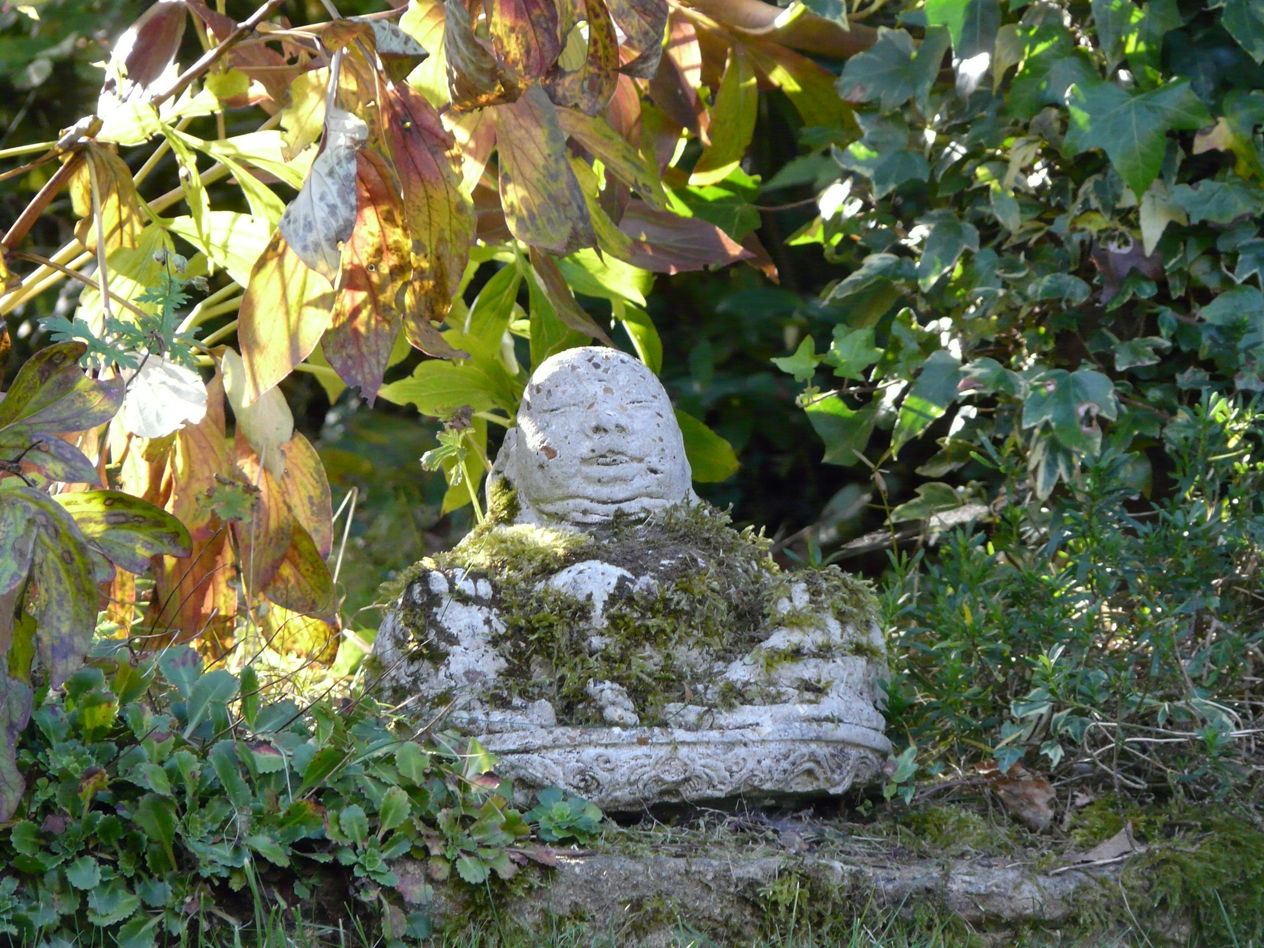
And I wish for the patience and good humour of my tiny Buddha.

14 Comments

Filed under Blog