Tag Archives: photography

… prayer …

When I hear of colleagues and friends who are having a stressful time, I usually exit my often self-defeating stream of thoughts and clear my mind – so my well-wishes can broadcast clearly. What works for me is tuning into thankfulness and often a little prayer or song comes to mind.

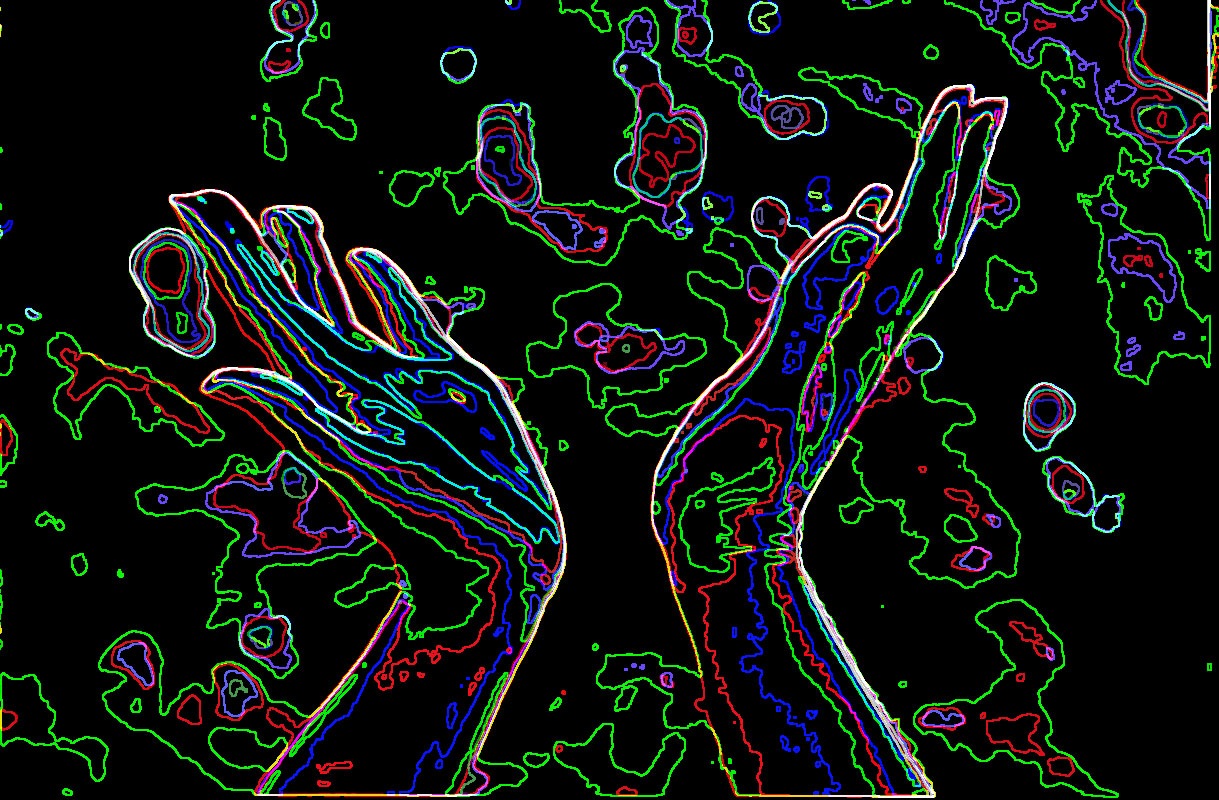
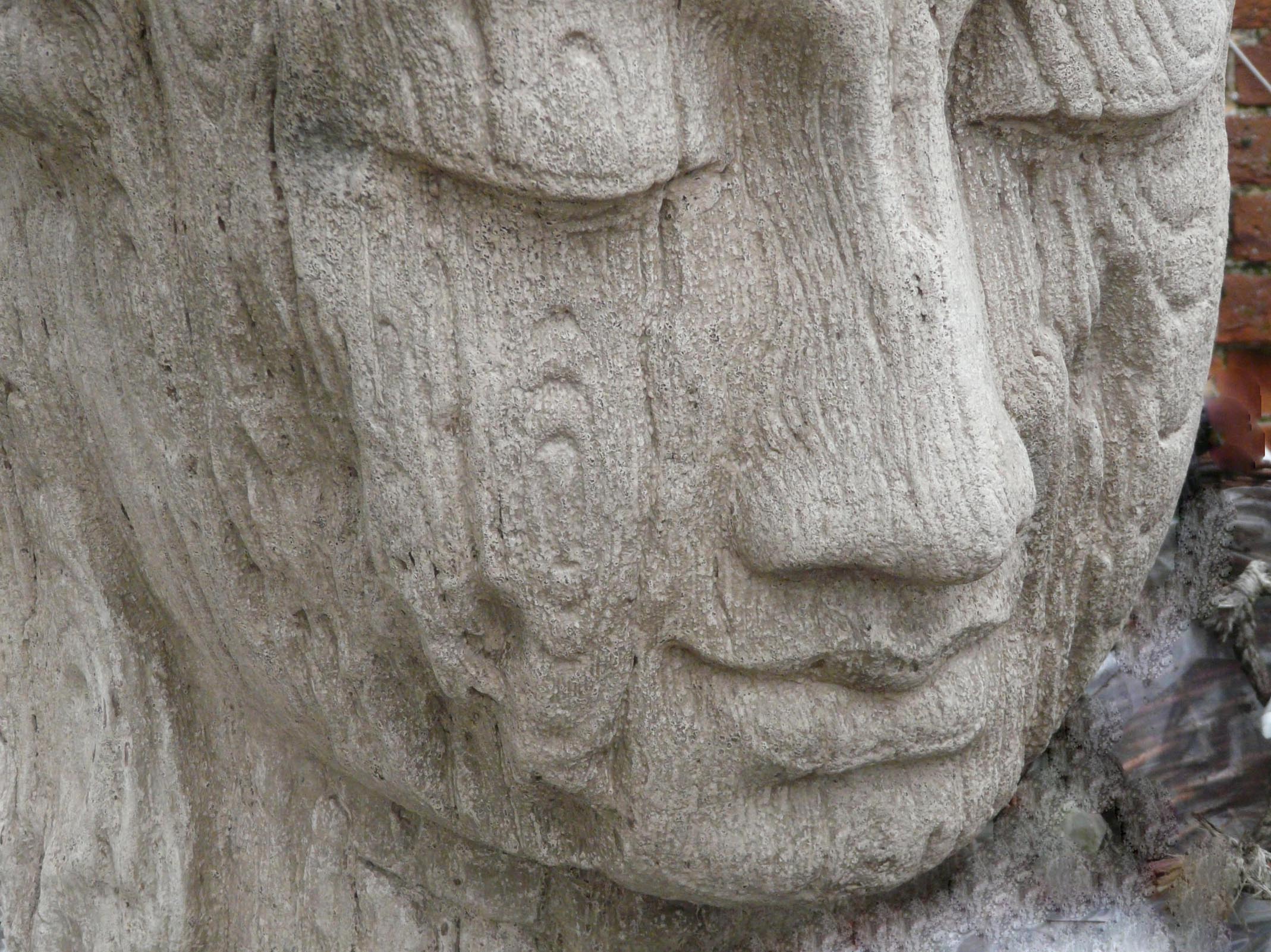
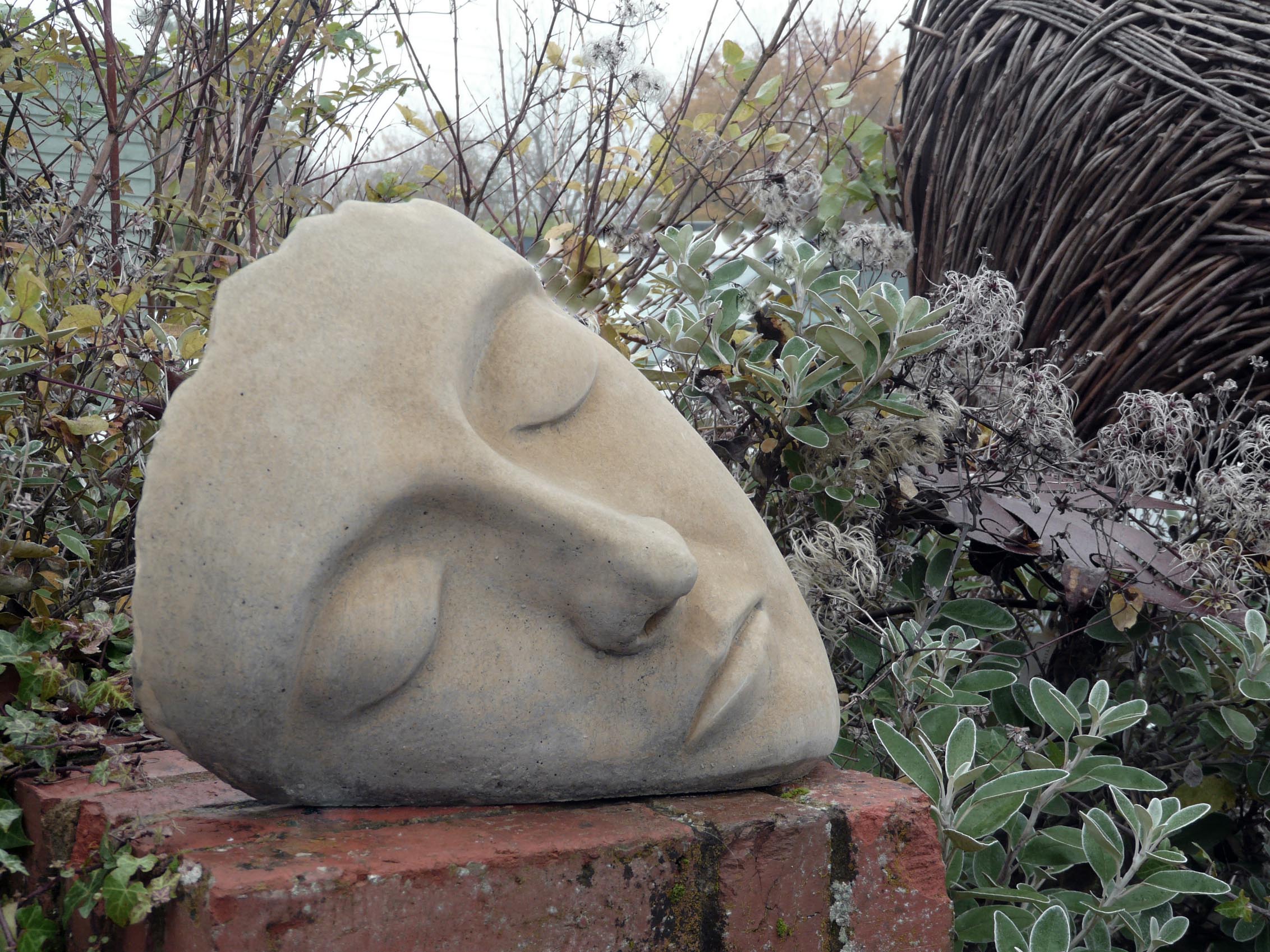
An image transformed during a rare attempt to be adventurous with photoshop.

An image transformed during a rare attempt to be adventurous with photoshop.


Who or what are my little prayers addressed to?                                                                                                                       The One in me I’m not ready to manifest and therefore bow to.


Below is a German song that came to me just now.

The text misses two dots above the ‘o’ in the word ‘schonen.’ I’d be grateful if someone could point me to a source for dots.


Dank Dir fur jeden schonen Morgen

Dank Dir fur jeden neuen Tag

Dank Dir dass ich all meine Sorgen

Auf Dich legen mag.

Very freely translated: Thank you, for every lovely morning, thank you for every novel day. Thank you, that I may leave my sorrows in your wisdom’s way.

Some time ago I shared my favourite prayer, also a song, with words by Hazrat Inayat Khan: …https://courseofmirrors.wordpress.com/2011/05/08/my-favourite-prayer/

11 Comments

Filed under Blog

… global vision & synchronicity …

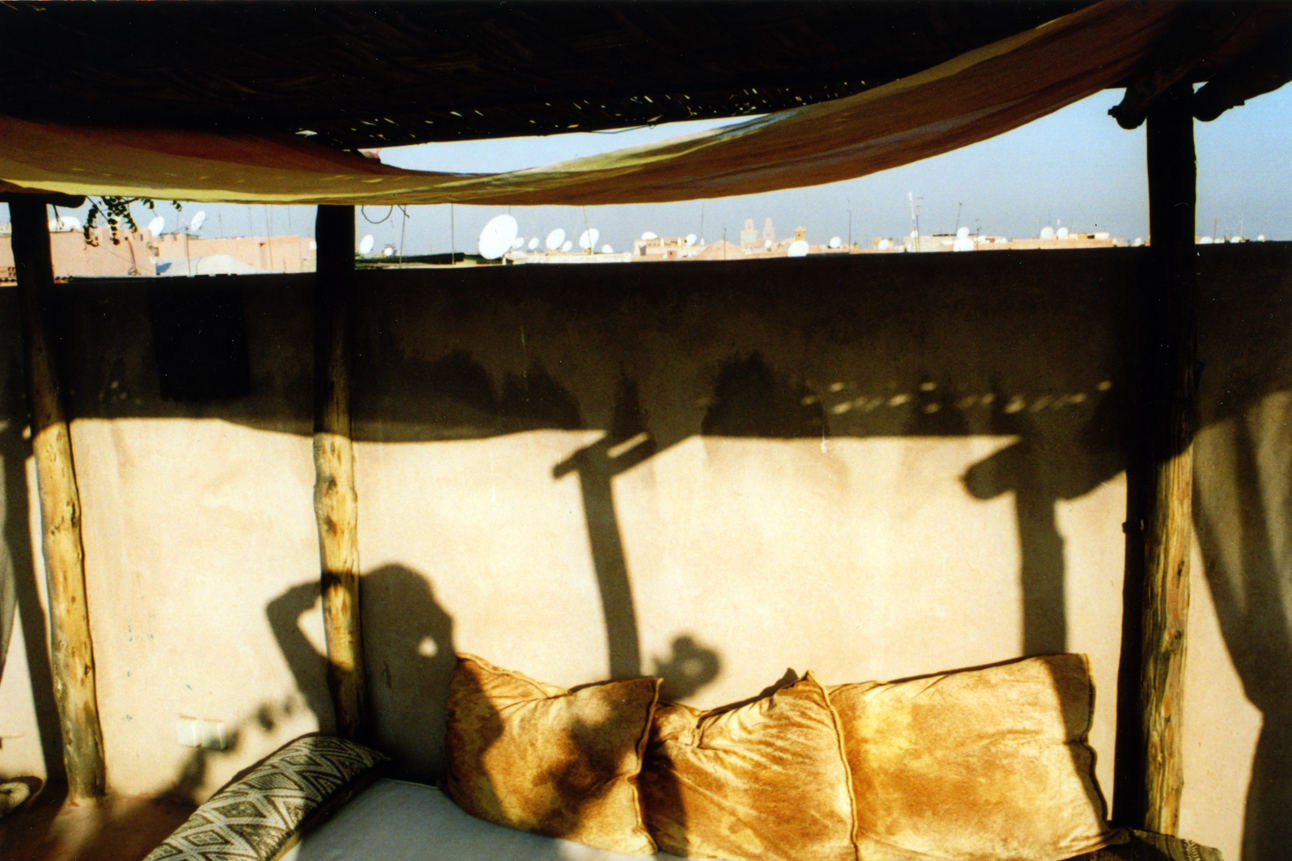
Moroc, Marrakech Riad roof, golden vision - low     Less than 80 years ago, across the world, only about 200 televisions sets were in use. Today, a simulated reality confronts us with our collective mind. A click away, we sample the zeitgeist and witness some disturbing trends, like the continuous robbery of world resources.

How do we filter the mass of information? Do we shout treason when we see the failure of economic systems that allow 1 % of the population to own 40 % of global wealth, or when we discover that certain corporations privatise water –  even rainwater  –  in underdeveloped countries? Traversing from one patch of light to another, do we make connections that apply to our scope of action? Or, lacking a meaningful context, are we hypnotised by this enlarged mega-screen, the global vision of a world that can mirror our inner fragmented states  –  a world where every viewpoint exists simultaneously, that over-exposes so-called reality and blinds us? Are we ourselves living inside the screen-myth, as extras, freed into bits, a reservoir of data?

As writers, what in-forms us, what material do we disseminate? And what is it that makes choices, switches from one networks of influence to another? What guides us through the data jungle? Are there perceptions beyond our wilful personalities that determine, agencies that operate through us from beyond time and space? I’m weary of the term God. For me this agency is a consciousness composed of past, present and future intelligences, a light-wave that echoes different signals according to the receptivity and needs of each animated vessel. Humans can be dense, but a calm mind recognises clear signals of this wave, since they chime with a joyous feeling of connectedness, a larger symphony, maybe even the sense of a destined purpose.

In my experience, this consciousness operates through synchronicity. There exist conceptual similarities between the behaviour of sub-atomic particles and archetypal images, (C G Jung and Wolfgang Pauli discussed such similarities in the context of synchronicity), a striking link between mind and matter that has been largely ignored. It implies that mind and matter connect, relate, mirror each other, and reciprocate. The process is given life in the realm of the psyche as imagination, not structured by time and space, but through layers of meaning illuminated by consciousness. Psyche is the changing room between cosmos and pneuma.

Moroc, Marrakech, Riad roof, shadow - lowJung thought of archetypes not as fixed, but as changing predispositions, universal patterns inherent in the human psyche, images that comprise our collective past and future unconscious. A pattern stirred into activity by an emotionally charged event in our lives, brings home related experiences, often through meaningful coincidences in a non-linear and a-causal way.

Such synchronicities draw on a deeper life-sap, as if an eternal intelligence were at work.

David Bohm proposed that subatomic particles remain in contact with one another regardless of the distance separating them, and that their separateness is an illusion. Here a facet of his thinking – a short first part of a 5 part series  http://www.youtube.com/watch?v=oGyDVF8GrLk                                                                                              A great and humble man I greatly admire. He has beautiful hands  🙂

A dream, for example, can attract an outer event, a meaningful coincidence, that powerfully substantiates a message from the unconscious, often accompanied by a numinous quality. In my own life, synchronistic events have challenged my narrow reasoning at certain crossroads towards seemingly irrational decisions. Exploring a hunch, while not attaching to the outcome, often clarifies a situation for me. Consequently, I respect the unconscious, and heed my intuitions.

‘The universe does not exist, out there, independent of all acts of observation. Instead, it is in some strange sense a participatory universe.’ – John Wheeler

Just as scientist are branching out from traditional imperatives that divide the world into subjects and objects, so we all, presented with a global vision, must modify some of the archetypal imperatives, images and ideas that have outlived their use, and look for symbols that carry a fresh mystery.

Moroc, Plage Blanche sunset - low

While sun and moon are forever formative and feed our imagination, they are no more our only lights.

With new associations from science come fresh symbols and exciting probabilities, in that we can question assumptions about time and progress, about the relationship between matter and mind, about our view of social units, and even the meaning we give to gender.

‘It’s a poor sort of memory that only works backwards’. The White Queen says to Alice.

*    *    *

Many of my posts here touch upon similar themes, but maybe pattern-which-connect in particular: https://courseofmirrors.wordpress.com/2012/05/25/pattern-which-connects/

6 Comments

Filed under Blog

… snow and silence …

Snow is a miracle that touches a deep silence in me, a silence I cannot speak of well – words seem wanting. And still I try, as many of us continue doing in various ways.

We may share the banter of our lives, our witty observations, our advice, our humour, our existential pain, or we may reach out with a warm hand of reconciliation. I do all these things, at times, but underlying my often competing voices, I tend to channel my experiences into the roaming eye of future becoming. If friends misread me, I like to console myself with this Ralph Waldo Emerson’s quote –

Nothing is at last sacred but the integrity of your own mind.’ 

Each one of us has unique perceptions, and there is enormous inspiration and joy in our differences.

P1110081

So much for the still sphere snow touches in me. The other miracle about snow is that it draws my attention to the surreal nature of reality, highly sensuous, yet stripped of  bright colours and removed from habitual seeing – to the bones of shapes, to deeper gestures and essences. For me, a snow-covered scene is a metaphor of restraint that slows down or speeds up time to alien levels of dimension. It occasions one of those time-independent spheres, where I make pattern-connections and create new meaning.

A simple poem follows my thoughts on the miracle of snow.  I tried to limit myself to  5/7/5  Haiku count, and hope it delights:

in silvery vaults

an angel ruffles her wings –

a leisurely shrug –

Grass and snow, low

the sparkle begins –

slipping from her hand as a

powdery shower

of crystalline downs –

feathery light on the silence

hidden between breaths –

fine gauze swirls and drifts

across the tired features

of a dreaming land

to drape every

plane and angular slope in

white geometry

Snow-tracks, 2 low

My appreciation for the geometry of life resonates with my love for black & white photography, see two posts back:

https://courseofmirrors.wordpress.com/2012/12/31/the-inner-silence-of-henri-cartier-bresson/

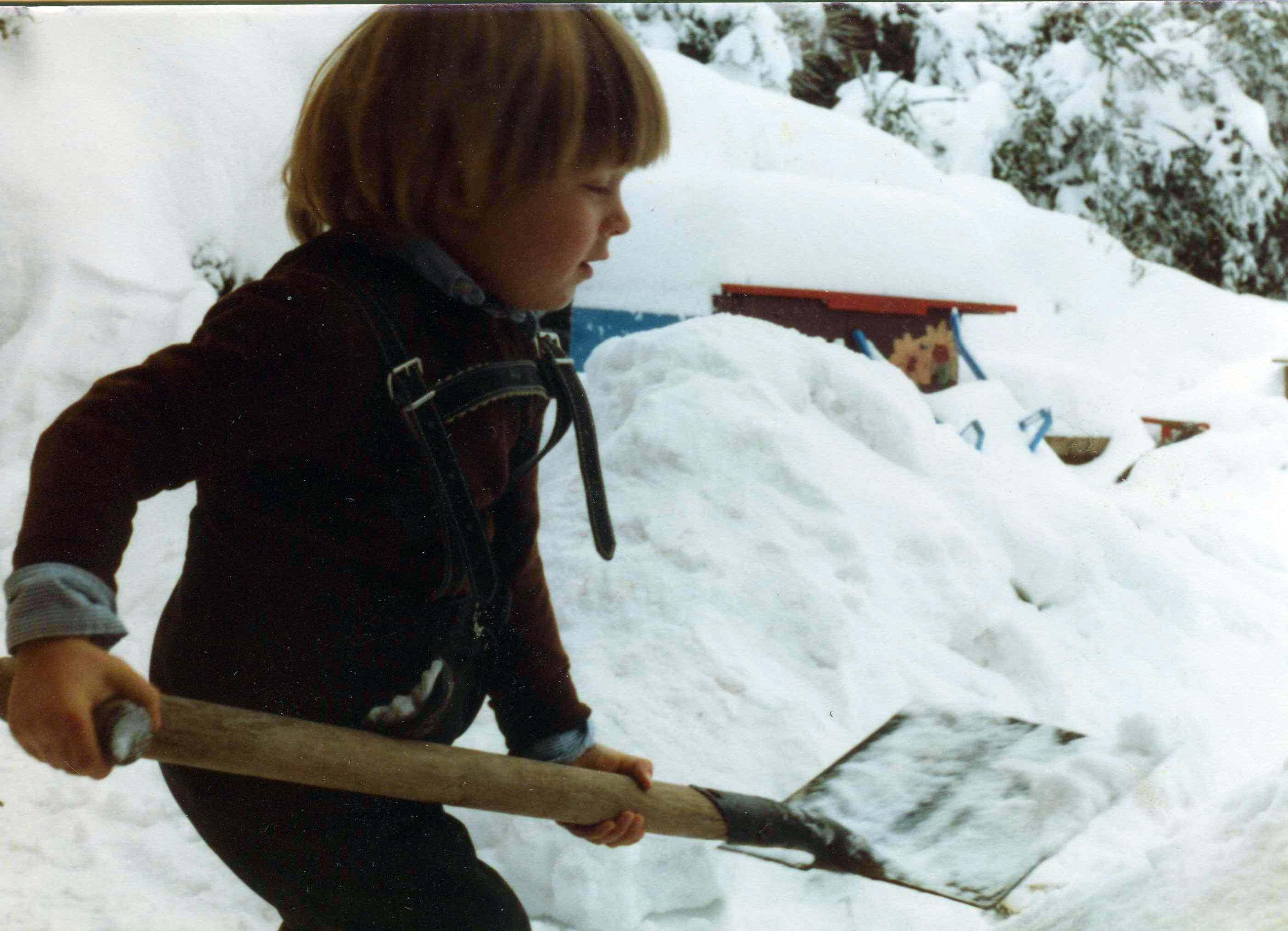
There are other pleasures to be had from snow, as my enthusiastic and capable son demonstrated in 1982 Somerset, and as the adorable puppy of a friend of mine discovered in Dorset yesterday.

Yeshen shovelling snow, 82

Susanne's puppy

16 Comments

Filed under Blog

… the inner silence of Henri Cartier-Bresson …

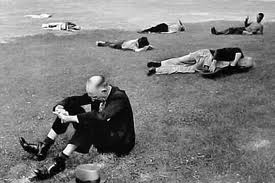
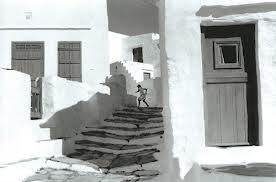
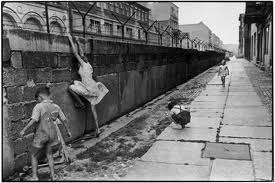
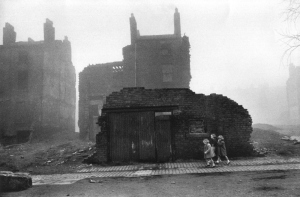
The Mind’s Eye – writings on Photography and Photographers, by Henri Cartier-Bresson, is a lovely book I received for Christmas from a dear friend. I was reminded how H C B inspired my photographic work with its poetry and Golden Mean, and still inspires other creative areas, including my writing.

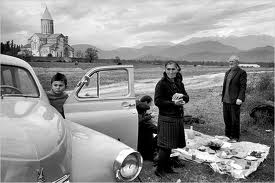
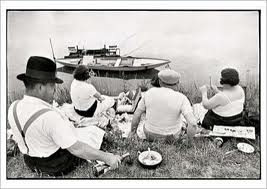
Henri Cartier-Bresson - 1972 photo of a Georgian familyFor H C B photography led on to include painting & drawing. For me photography led on to include writing, in the way H C B said: ‘The writer has time to reflect. He can accept and reject, accept again; and before committing his thoughts to paper he is able to tie the several relevant elements together. There is also a period when his brain ‘forgets,’ and his subconscious works on classifying his thoughts. But for the photographer, what has gone is gone forever.’

The impact of H C B’s images is hard to define. They exemplify what many photographers aspire to but can’t name. Not only do most of his shots surprise by capturing the essence of a fugitive moment, a magical decisive one, they are framed in a way that touches all the elements of motion in a dynamic balance.

H C B - rest‘My passion has never been for photography ‘in itself,’ but for the possibility – through forgetting yourself – of recording in a fraction of a second the emotion of the subject, and the beauty of the form; that is, a geometry awakened by what’s offered.’

‘I hope I’ll never see the day when photo shops sell little schema grills to clamp onto our viewfinder; the Golden Rule will never be found etched on our ground glass.’

Henri Cartier-Bresson, girl running


I let Henry Cartier-Bresson talk for himself:  http://www.youtube.com/watch?v=MW7I3GBdsBw

Henri Cartier-Bresson, the wallInner Silence

H C B speaks in relation to portrait-photography of looking for the silence in the person. I guess he was looking for the silence behind everything. This silence was most likely what he was attentive to. I conjure that this silence lies between each breath, from which all phenomena emerge from second to second – from that timeless soul-garden within us – which we can tune into.

henri-cartier-bresson-liverpool-1963-c2a9-henri-cartier-bresson-magnum2

What I am saying is – H C B could not have captured these decisive moments without having experienced the silence within him. From this timeless state we glimpse the joie de vivre with its awesome sense of wonder generated and re-generated from eternity that makes life worthwhile and meaningful. It’s probably this glimpse, the ethic of this silent sphere that drives all anarchist artists.

Henri Cartier-Bresson, Sur les bords de la Marne 1938Why Black and White and not Colour?

In 1952 colour film emulsion was not well developed. H C B said then: ‘I am half afraid that this complex new element may tend to prejudice the achievement of the life and movement which is often caught by black and white.’

He was concerned that  composition would suffer and be overpowered by colour. I remember when colour TV was first introduced, I intensely disliked the busy business cramped into a small frame. Colour can however be used as a language, and I am certain H C B would have cottoned on to this had he lived on.

Here a sample of my own to illustrate colour’s use.  http://500px.com/photo/6913693?from=set/266780

In 1974, together with other freelance photographers, Henri Cartier-Bresson founded Magnum Photos. See also: http://www.henricartierbresson.org/pres/home_en.htm

H C B’s second wife, the Belgian-born Martine Franck, was an inspired photographer in her own right: http://www.theworld.org/2012/08/remembering-celebrated-photographer-martine-franck/

I am wishing all my readers and visitors a wonderful creative New Year …. 

12 Comments

Filed under Blog

… ground of poetry …

‘Ground of Poetry’ is a poem inspired by the bagpipe playing of a Scottish friend, Colin, during a recent gathering in memory of another friend, Aranth. See an earlier post on ‘receiving.’  The sound of the bagpipe opened the sky and vast landscapes, across which the drone carried the glories tunes into a kind of homecoming. The drone of a musical instrument, I thought, is like the backdrop sound of the universe into which every manifestation dissolves, and from which every manifestation returns.

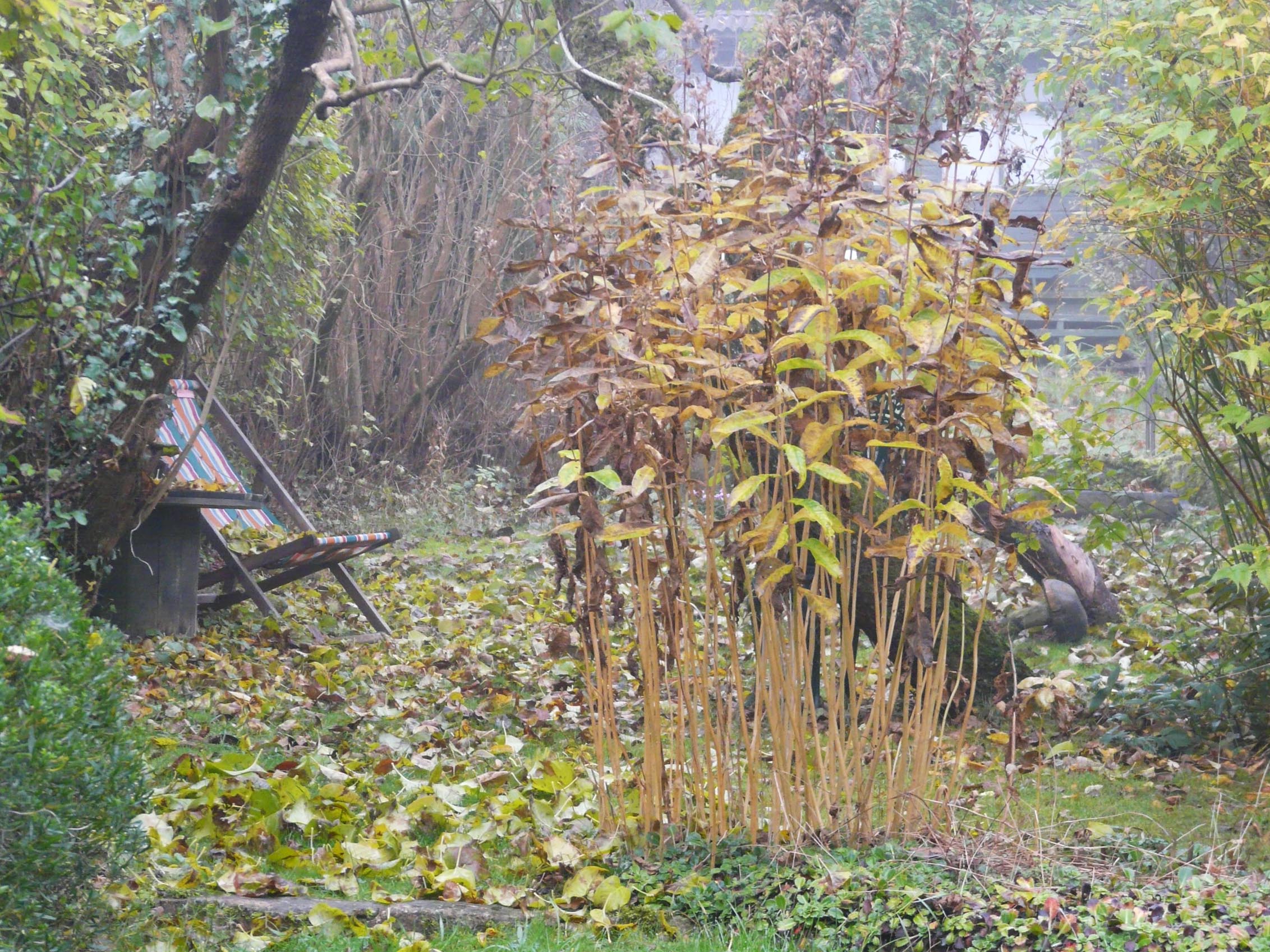
in the beginning was the word … the leaves in my garden reminded me of words.


thousand-and-one words fall to the ground

jewelling the story of seasons’ rounds

they’ll twirl anew to the drone

of each new sound arising

from beyond the ever-

open silence


open silence

from beyond the ever

of each new sound arising

they’ll twirl anew to the drone

jewelling the story of seasons’ rounds

thousand-and-one words swell from the ground


For anyone not that familiar with bagpipes, here are a few words and tunes:

http://www.educationscotland.gov.uk/scotlandssongs/about/instruments/bagpipes/index.asp

21 Comments

Filed under Blog

… memory and place …

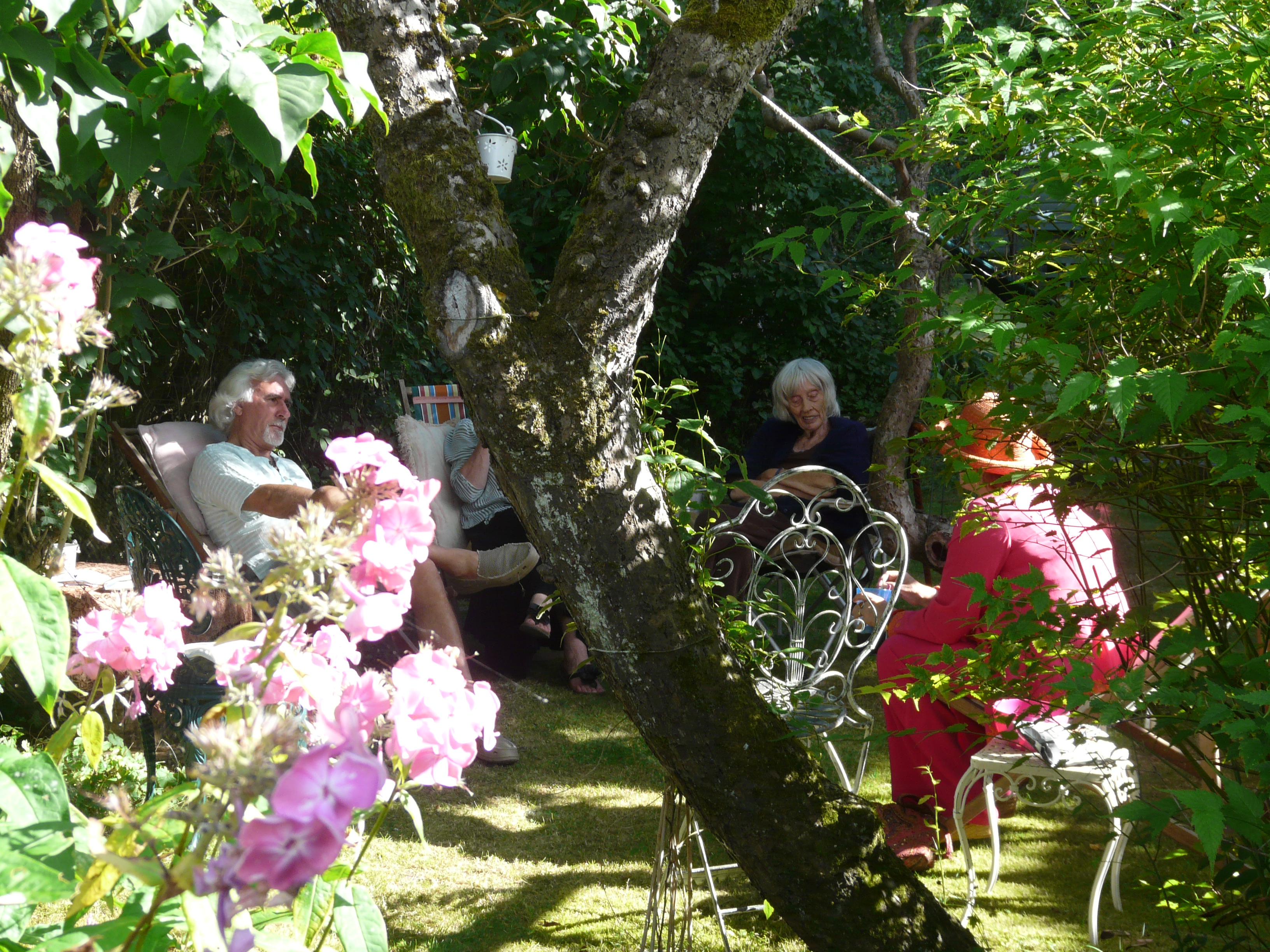
I never thought I would live in one place for 23 years, and tend a garden. Its visiting creatures provide inspiration and amusement. I cast tendrils of attachment to secret corners, the changing patches of colours and textures. I observe the cherry and apple blossoms turning into carpets on the lawn, the tulips, blue bells and peonies bursting open in spring, wild strawberries, the abundance of clematis, roses and geraniums during summer, or phlox and fruits in autumn. The space is breathed through by the seasons’ moods and muses. On rare and perfect summer days, when the sun plays through the branches, I love spending time in my hammock, reading and editing, or share the space with friends – bliss.

Yet I can count such days on the fingers of my hands. And not just because of the UK weather.

This paradise is surrounded on four sides by hedgerows, has 5 mature fruit trees and a shed and studio smothered by ivy. Those of you who have gardens with sizable plants will understand the dedication it takes to merely keep annual growth under control.

Is the effort worth it?

Twice a year I need assistance. After the heavy rain and excessive growth we had during spring and summer, my neighbour recently helped transporting two transit vans stuffed full with cuttings to the recycling dump. The excess jungle weighs on my mind each year, but once trimmed and sculpted, the cleared shapes feel like newly decorated living rooms. 

What is it about places we care for? How come we spend so much time and energy looking after them? What we experience through our senses can be fleeting, but where repetition is involves, it becomes fixed and saturated in our imagination. There is nothing as deeply impressive as living in one place through cycles of seasons. We call it home.

In these tumultuous times, a great number of people around the world are forced to leave their homes. Either they have no say in the matter, or they must leave for sheer survival, escaping adverse weather conditions or politics that undermine human dignity. But wherever we land, we inherit the history of a room, a house, a plot, a community, and in turn we leave traces, an influence.

The place survives us. Do we bless it?

Do our personal experiences – including those associated with ambivalent feelings about places and people – survive beyond the brain’s switchboard activity that ties associations into a framework of meaning and memory? My intuition tells me yes, there are spaces in many dimension, floating as in a kind of hologram, which can live on through a strong memory laid down in our imagination, like the next chapter of a story.

In the way of habituation, these subtle forms must remain in some way in the collective psyche, accessible to minds and hearts who tune into their feeling pattern. This could happen via a kind of grid of finer matter (see Eccles: http://en.wikiquote.org/wiki/John_Carew_Eccles) that interact with the denser neural network of our brains.

There are these unanswered questions: is consciousness an emergent phenomenon of matter, or is matter an emergent phenomenon of some finer, spiritual substance?

Either way, if one were to assume that we create the world hereafter by the repetitive strength of our experience, be it with places, people or the passion for a sport, craft, art, music, science,  it bears us well to find something we can love, care for, and empower with our imagination.

12 Comments

Filed under Blog

… village poem …

 My father’s recent move away from the village I grew up in meant another goodbye, though my impressions of the place live on in me, and my writing. I like to share an old, bitter-sweet lyrical poem, which recalls an aspect of my experience growing up in a village. It leaves out the lake,  the mountains, and the church-bells – their marking of time could make an epic- their melodic ring still sounds once every quarter of the hour, and every hour in full from morning to midnight, so that people should not lose themselves in relative time.


The Village Poem

Through the veil of time I drop to the heart of my village,

child again, inhaling dust and summer-heat.

Drawn to the bright blue tiles in the dairy, I suck cool air,

watch the jet of buttermilk spool from pump to cup like silk.


The milkmaid frowns at the antics of our pianist, whose mass

of silver hair trails dangerously close to a display of camembert,

while her left hand swings a crystal pendulum, her daily rite

in search of resonance. I hold an image of her fine hands

striking keys on a white grand, giving air to Bach and Brahms

below the star-lit night, painted on her study’s cupola.


She is my link to otherness, the unseen in me, the odd child,

who rejects the cream for the undercurrent of her dream.


Crisp greens at the grocer, white roots, red fruit and purple aubergines.

The woman flicks brown paper to a cone, scoops pickled kraut:

‘Take it, to nibble on your way.’ Warm wafts of steam rise up

from the cellar of the bakery, a scent of cinnamon lingers in the street.

Taming and bonding takes place; it’s easy to love and be loved

when food is bait and the tongue’s code for paradise is taste.


In shops, daily gossip thrives, turning the fate of familiar faces.

Sweet tongues do sour talk – the time it takes to pay – a hero is made

or falls from grace. Spells are cast: ‘No good will come of it,’

and refrained, ‘Just as I said, I knew it form the start.’

Confused, I veil my face and seek the last shop in the street.

Here my village becomes the village and its many tales can be read.


I inhale the vast promise of virgin books

and a smell of print more exciting than bread.

*     *     *    Ashen

An areal photo of my village, taken by my father.

Then there is me with my mum at the lake …


And a class picture, taken around that time, from primary school. You can click on the images here to enlarge them.


27 Comments

Filed under Blog

… imagination …

From its fountain, the psyche pours compositions of light and darkness, images shaping the natural elements that engender our sensual experiences. Countless composite images trickle through our mind. Do we pause to ponder which to let pass, like dry leaves floating down the river, and which to absorb deeply into our heart – and give life to?  

The images we energise are re-envisioned and re-told through our perception. Nature spirits, archetypes, monsters and fairies, heroes and villains, deities, gods, devils and angels, the dark unknown – mankind’s entire mythical landscapes are encapsulated by the imagination and affect our everyday life.

Through this phenomenological process we discovered language, numbers and geometry, tools that potentially enable us to re-create nature. Some scientists maintain that matter constitutes the real and all phenomena derived from nature’s building blocks is not real. But deep inside we know … our search for the world we intimately desire attracts to us enlightened scripts. Through trial and error we learn to apply these scripts, and, for better or worse, we make our worlds real. Worlds within worlds are born from the imagination.

The young in heart have a natural curiosity to play and explore what lies beyond the horizon, literally and metaphorically, with a keen drive to discover facets of their soul reflected in all matter, experiencing matter not as dead, but as vibrantly alive and animated.

Consider the present demand for SF or its playful sister, fantasy, or magic realism. These genres overlap, they deal with the human condition, the desire for a home, in the widest sense – be it for another planet, an island, a heaven, a yesterday, a tomorrow, or the grail of now. To achieve the latent desire for the ineffable, a writer, any artist, becomes a deep-sea-diver of the psyche, and, on coming up for air, re-arranges the booty found there. Some of my favourite writers are R Heinlein, C S Lewis, R Bradbury, I Asimov, M Atwood, Garcia Marquez. Jorge Luis Borges, Doris Lessing and Ursula Le Guin …

It’s time to re-discover the bridge between the two hemispheres of our brains and balance the outlook of our material societies, value reverie, art and fresh perspectives, engage in play, song, dance and storytelling.

Time to embrace unstructured activities, which sidestep reason’s often pre-conceived observations, the epistemological obstacle, as Gaston Bachelard calls it, the grid of unconscious mental patterns that block seeing through our deeply personal and grounded experience, through the heart.

I’ll never forget the visit during the 70s, instigated through a Sufi friend, to a small Trappist community in the vicinity of Washington DC. The handful of monks rotated duties in house and gardens, interspersed with reading time in their fabulous library. Each one of them also enjoyed an annual 40-days-silent-retreat in one of the huts sprinkled over the many-hectare-estate. My then partner and I were privileged to listen to some of the monks sharing their vastly different cosmologies, psychologies and spiritualities. What struck me was that each monk had a vastly different idea about God, including one admitting that he thought God was man-made and no less real for that. What a stimulating place to be, where you are respected for the envisioning of your world.

 ‘The imagination is not a state; it is human existence itself.’ – William Blake

‘In our most private and most subjective lives we are not only the passive witnesses of our age, and its sufferers, but also its makers. We make our own epoch.’  – C G  Jung, 1934 

‘If children grew up according to early indications, we should have nothing but geniuses.’ – Johann Wolfgang von Goethe

Relevant links:

Re: CS Lewis  http://users.etown.edu/d/DOWNINDC/dungeon.htm

Gaston Bachelard  http://www.newworldencyclopedia.org/entry/Gaston_Bachelard

The World Within, C G Jung video  http://www.youtube.com/watch?v=Z6MHRHKd4Ps&feature=related

See also https://courseofmirrors.wordpress.com/2012/05/25/pattern-which-connects/

For those with a metaphysical interest in the imagination, here is an article of mine: https://courseofmirrors.com/wp-content/uploads/2011/03/science-of-the-heart.pdf

Excerpt … The mystic aims to raise sensory data to a higher level. This happens via the visionary imagination, the ‘presence of the heart’, and it happens precisely in that intermediate world where material beings take form and where material beings dissolve again to become subtle bodies. This intermediate world exists not at the other end of the universe, but right here with us, between each of our breaths. This is how the presence of the heart affects, how ideals, in whatever way we conceive of our Ideal, become realised. What we give being to in this intermediate sphere inevitably appears and becomes endowed with an outward reality. This is so, even when it is visible only to the inner eye, the eye of the heart, just beyond what can be perceived by the senses.

*     *     *

The rose image: detail of ‘The virgin of the unfading rose,’ eighteen century.

13 Comments

Filed under Blog

… the recycling of unease …

Merciless downpours – I occasionally dash between strings of rain to trim the green jungle in my garden and pick a handful of wild strawberries. Tonight, looking east, the sky is grey. And not a leaf stirs, due to the full moon. In the next room a brilliant sunset reflects in a glass-framed painting. And as I look east again, a high cloud is blushed in rose-colour. More rain announced. It is the wettest summer in my many lifetimes, of late a tumultuous time. I was indirectly affected by a trauma, not mine, not my story to tell, though I’m proud of two dear young people who dealt admirably with the fallout of having their flat in London broken in. Several flats in the same block were crashed into with crowbars within the span of two hours and in bright daylight. Picture the scenario: you leave your home for a short while and return to find your front door broken and all means of communication, including the creative tools needed for your livelihood – gone. The logistics of solving the problem are, to put it mildly, overwhelming.

I bemoan the motherly welfare state and the infantile moral consciousness it feeds. I observe signs in my relatively crime-free little town. As an illustration, the other day in a car park I observed a woman tossing an empty plastic bottle from her car- window before she drove off. Her children in the backseat looked on. What motivates careless behaviour? What jumped to my mind – probably a negative mother (state) dependency, a resentment of mother’s permissiveness, having being patronised and cheated out of meaningful relationships and been entranced by the material world.

Next day I visited a car boot sale in search of world-objects for my sand tray therapy work. A young girl spilled coins from her purse over the stall while paying for a trinket. A few coins fell to the grass. A boy behind her casually covered one of the coins with his foot. He didn’t even smile at his clever trick. His face was blank. This chilled me. Without parents to model self-respect, how will children become psychologically independent individuals?

We all experience the acceleration of change. The changes in my lifetime eroded structures of meaning that carried values I held dear. Change is however the only constant. Navigating change without straining our nervous system and by implication the nervous system of our planet is a challenge that requires an attitude of self-respect and tolerance: the ability to bear contradiction and confusion.

While collisions of mythologies storm all around us, we have the elation about the Higgs particle, indicator of a Higgs field. The single-minded work of a scientific community including 20 member states is remarkable, I’d be proud to be part of it. But wait, many more billions will now be spent on search for super symmetry (SUSY).  Imagine what could be achieved if even a tiny portion of this budget would go towards exploring the autonomous postulates spouting from our collective unconscious, in other words, exploring the underlying structure of the human psyche, of which the visible particles populate our dysfunctional societies.

Light is both particle and wave, and though we can only observe one at a time it is one light.

*      *      *

What In The World IS A Higgs Boson?

http://thelede.blogs.nytimes.com/2012/07/04/what-in-the-world-is-a-higgs-boson/?src=un&feedurl=http%3A%2F%2Fjson8.nytimes.com%2Fpages%2Fscience%2Findex.jsonp

An interview with Dr Lisa Randall, from last year but more informative

http://www.nytimes.com/2011/12/12/science/physicists-anxiously-await-news-of-the-god-particle.html

Sandplay therapy

http://www.youtube.com/watch?v=GD6PPwUlgGM&feature=related    Not me

http://sandplayvideos.com/sandplay-therapy-training

6 Comments

Filed under Blog

… pattern which connects …

For a recent book-sharing with a group of irreverent friends (archventures), I had the wish to share so many books that I instinctively reached more or less blindly into one of my shelves. Books in my home, I must add, are in a muddle. The only order to speak of is their relationship to each other through time. I picked Alice in Wonderland and Mind and Nature. During our afternoon of reading there was not enough time to do honour to the latter, Gregory Bateson’s work. So I said I’d write up something. Oh dear. After pages and pages, I finally recalled this was supposed to be a blog-post, not a novel .

I first came upon Gregory Bateson books, ‘Steps to an Ecology of Mind’ and ‘Mind and Nature,’ during the early 1980’s, after his death. The clarity of his notion that biological forms arrange themselves through relationships struck a deep chord. What totally resonated with me was his thought that the structure of nature and the structure of mind are reflections of each other.  He had a broad perspective for a Biologist, and wanted to build a bridge between the facts of life and behaviour, and what we know of the nature of pattern and order. He was active in, and connected up many different fields of study – anthropology, psychiatry, biological evolution and genetics and the new epistemology which comes out of system-theory and ecology. He challenged basic assumptions and methods of scientific investigations, pointing to the processes beneath structures. He quoted Goethe …

A stem is what bears leaves

A leaf is that which has a bud in its angle

A stem is what was once a bud in that position …

And he provoked new thinking: ‘What pattern connects the crab to the lobster and the orchid to the primrose and all four of them to me. And me to you?’ 
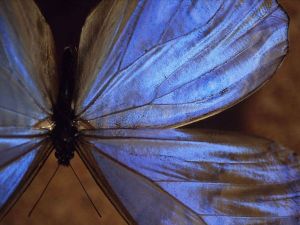
His interest in morphology, the study of structure and form of organisms, involved context, meaning and communication. He distrusted reductive models of cause and effect, the scientific approach that lines up parts and classifies them, focussing on quantity.

Comparing systems, one to another, he perceived the mind as an ecological system. And he used the analogy that ideas, like seeds, can only take root and flourish according to the nature of the system receiving them. This thought alone deserves deep contemplation.

He had a way with stories … ‘There was a man who had a powerful computer, and he wanted to know whether computers could ever think. So he asked it – Will you ever be able to think like a human being? – The computer clicked and rattled and blinked, and finally it printed out its answer on a piece of paper, as these machines do. The man ran to pick up the printout, and there, neatly typed, read the following words: ‘That reminds me of a story.’ 
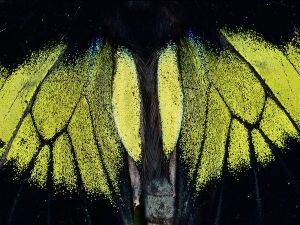
Concerned about the decimation of aboriginal populations (he did field-work with Margaret Mead), the degradation of ecological systems, economic oppression, and senseless wars and arms races, he took these ominous signs of contemporary life to be manifestations of deeper disorders, which he defined in terms of cybernetic systems of communication and meaning that comprise life, mind, and society. In his view, consciousness dominated by purposeful thought has a linear structure that establishes goals and ways for attaining them without being necessarily sensitive to the circular network of cause and effect that orders the systems.

Looking at human consciousness as an adaptive system, he thought the cure for its inadequacies, evidenced by the negative side-effects of purposive rationality, was not to reject it in favour of a passionate non- rationality, as in the extreme romantic position, but to augment and complete it by engaging with non-discursive, pattern-comprehending and emotional processes. He advocated the befriending of the unconscious aspects of the mind through utilising images and metaphors.

In a civilization which separates mind from body, mythologies about the survival of a transcendent mind are often meant to soften the idea of death, or even deny death as part of life. For Bateson, who saw the mind as being immanent not only in pathways of information which are located inside the body but also in external pathways, death took on a different aspect. ‘The individual nexus of pathways which I call ‘me’ is no longer so precious because that nexus is only part of a larger mind. The ideas which seemed to be me can also become immanent in you. May they survive, if true.’  (Afterword to a collection of celebratory essays, 1972)

Yet there are scientists that can no more perceive the language of nature, and politicians who feel beleaguered by sections of society that seek balance and a fresh context towards ‘an ecology of mind.’  The extreme factions of believers, for what else are they, should look again at the bridge  Bateson prepared.


This lovely video gives a taste of what it is all about :

Update … I discovered recently, in 2019, that some the links in this post don’t seem to work anymore. Here , however, is his daughter’s great documentary on Vimeo, unfortunately not free, apart from the trailer.  https://vimeo.com/ondemand/bateson

Looking at the structure of nature and the structure of mind being reflections of each other, it becomes obvious that not only does nature mirror our habit of thinking, but our thinking also mirrors the state of nature. Ecology and psychology must therefore both engage in listening, and seeing, and working ceaselessly towards the integration of knowledge and the re-adjustment of a dynamic balance.

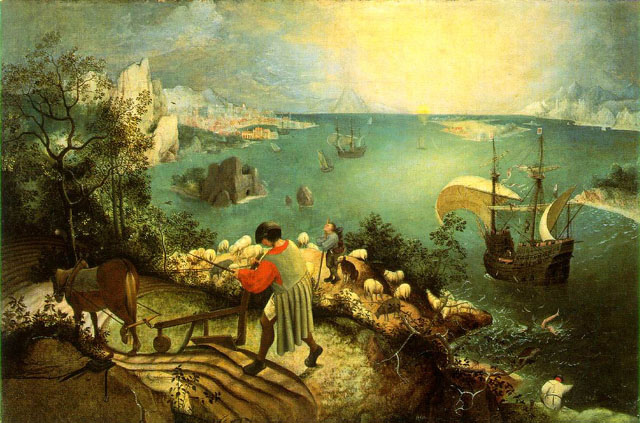
I could go on, but want to bring in a famous painting of Icarus by Brueghel.                                                             Anthony Stevens, a brilliant expositor of Jung’s thought, used the painting as cover for the first hard-cover edition (1995) of his book Private Myths.

http://www.anthonystevens.co.uk/index.html


Stevens quotes from a poem by Wystan Auden:

In Brueghel’s Icarus, for instance: how everything turns away

Quite leisurely from the disaster; the ploughman may

Have heard the splash, the forsaken cry,

But for him it was not an important failure; the sun shone

As it had to on the white legs disappearing into the green

Water; and the expensive delicate ship that must have seen

Something amazing, a boy falling out of the sky,

Had somewhere to get to and sailed calmly on.

What goes up must come down. Who knows how many Big Bangs there were before the one we so ardently explore? There is an organising intelligence behind life’s cycles, while consciousness forever expands. Thinking in metaphors we can perceive similar patterns, forms in nature and mind, cosmos and psyche, mirroring each other across scale and time. In other words, life teems with realities we can tune into, as long as we assign context and meaning.

Check out Gregory Bateson’s books ‘Steps to an Ecology of Mind’ and ‘Mind and Nature.

His family continue his work: His daughter Nora and his wife – Mary Catherine Bateson:   http://www.interculturalstudies.org/main.html

Peripheral Vision

 http://www.amazon.com/exec/obidos/tg/detail/-/0060926309/mead2001centenni

Free chapters of Angels Fear:  http://www.oikos.org/angelsfear.htm

Nora Bateson, recently created a film:

http://www.anecologyofmind.com/

Last not least, the themes:  pattern which connects, mirroring and bridging, are subjects of my novels.

25 Comments

Filed under Blog