Tag Archives: my novel

… interludes – and poetry by W S Graham …

I’ve neglected you, my reader friends, immersed in writing the sequel to ‘Course of Mirrors’ and a few interludes. Like, my writing fixation was pleasantly disrupted last week through meeting my son at Covent Garden, and later attending the launch of ‘The Inflatable Buddha’ by András Kepes at the Hungarian Cultural Centre in London.
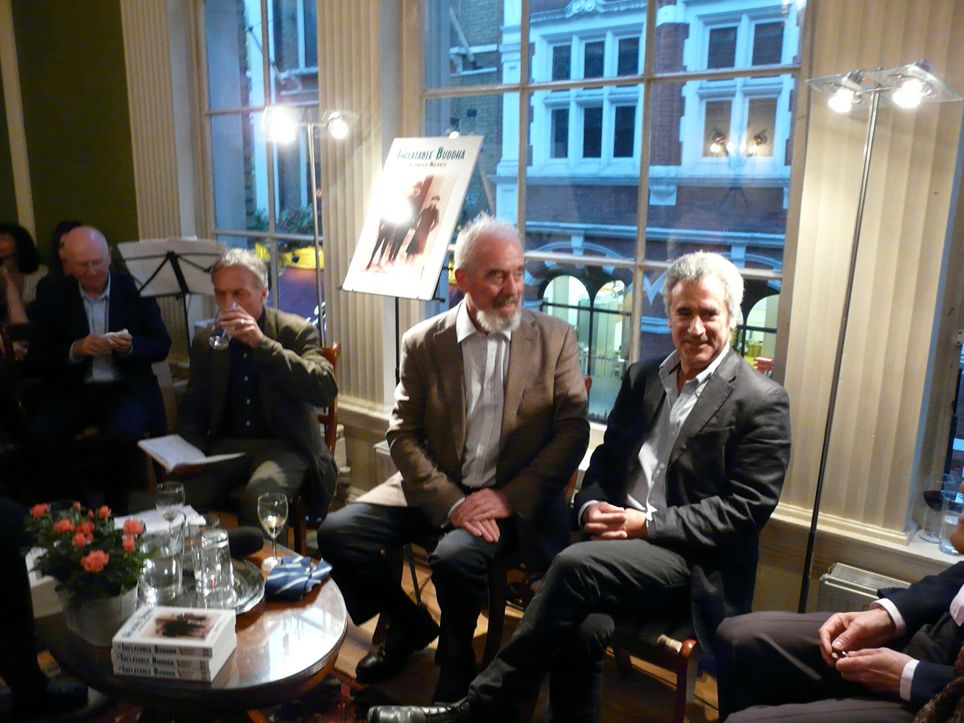
Armadillo Central launches 'The Inflatable Buddha.'

Armadillo Central launches ‘The Inflatable Buddha.’


It is the newest project of my to-be publisher http://www.armadillocentral.com/  András’s novel offers a more subtle perspective than officially recorded history, showing the fictional lives and wits of three ordinary, idiosyncratic Hungarians during the twentieth century. The sample readings enticed me, and I’m now looking  forward to reading the book. The well-attended, grand launch event also gave me a taste of what is to come – being exposed to questions about my own epic .


Then came a traumatic interlude to my writing …
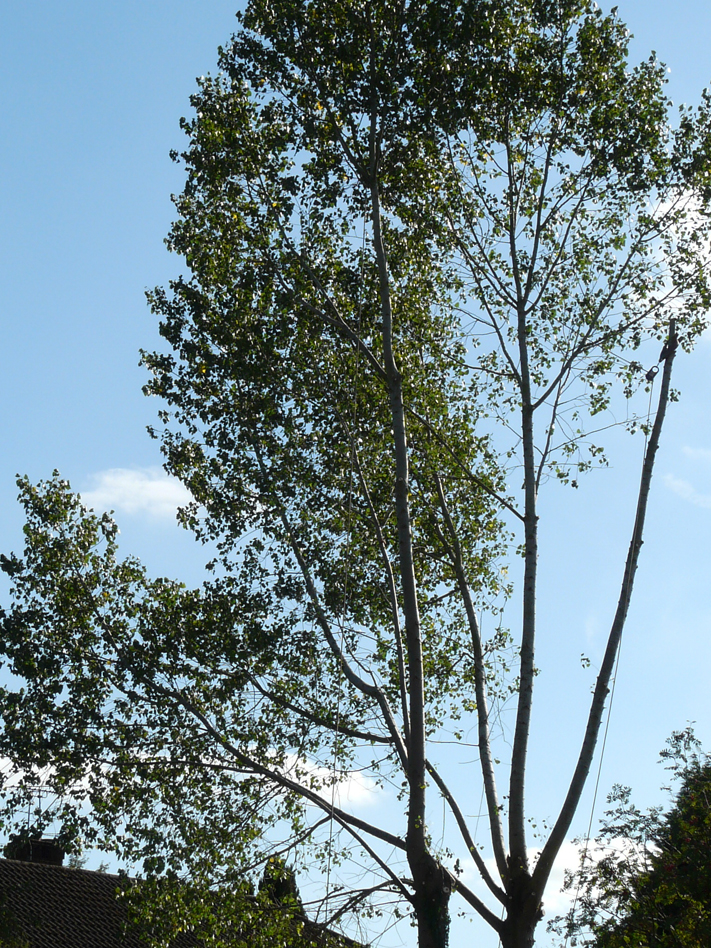
I mourn the shimmer and music of its leaves.

I mourn the shimmer and music of its leaves.

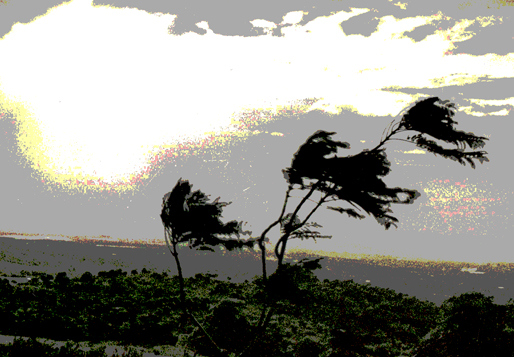
During the last two days, to the grinding noise of chainsaws and a shredder, I mourned the loss of a beautiful poplar/aspen tree in my neighbourhood, which has grown too high for its owner. The now mutilated tree (the image shows a third of its size) will be gone completely next week. I’ll miss the shimmer and the watery music of its leaves, produced by the slightest breeze, and the golden hearts trailing into my garden come autumn. I picked a few early leaves to treasure, pressed to dry in my dictionary.

Today a most pleasant surprise … a poetry book arrived unexpectedly in the post, sent by a Scottish friend/poet, who is at this moment working with a visual artist on a project about Tin-mining in St Ives. Due to blank spots in my education I rely on stumbling upon poets less publicised, and was delighted to receive this gift of an expertly edited ‘New Collected Poems’ by W S Graham. So I thought I’ll share excerpts from his poems – on themes that will chime with fellow writers .

W. S. Graham (1918-1986) grew up in Clydeside, Scotland, and initially followed the footsteps of his father, who was a structural engineer in the ship-building trade. However, a year studying philosophy and literature at an adult education centre outside Edinburgh set him on the path of writing poetry for the rest of his life, irrespective of meagre financial rewards. He travelled to London and New York City, but later lived with his wife in Cornwall.
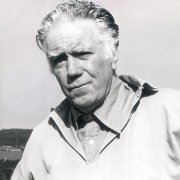
W S Graham, image by Sally Fear

W S Graham, image by Sally Fear

I was delving into the book this morning. Here some facets, unconnected lines, the first from THE NIGHTFISHING    (1955) – a melodic composition, speaking to the seen and unseen,  from a night in a herring boat out on the North Sea.

… Gently the quay bell

Strikes the held air …

Strikes the held air like

Opening a door

So that all the dead

Brought to harmony

Speak out on silence …

I am befriended by

This sea which utters me …

… Far out calls

The continual sea.

Now within the dead

Of night and the dead

Of all my life I go.

I’m one ahead of them

Turned in below

I’m borne in their eyes

Through the staring world.

The present opens its arms …

… Each word is but a longing

Set out to break from a difficult home. Yet in

It’s meaning I am …

… The bow wakes hardly a spark at the black hull.

The night and day both change their flesh about

In merging levels …

The iron sea engraved to our faintest breath

The spray fretted and fixed at a high temper,

A script of light …

… The streaming morning in its tensile light

Leans to us and looks over on the sea.

It’s time to haul. The air stirs its faint pressures

A slat of wind …

… The white net flashing under the watched water,

The near net dragging back with the full belly

Of a good take certain …


Some of the last lines of – THE NIGHT CITY – a turning point … I found Eliot and he said yes … T S Eliot was then with Faber and Faber. He became Graham’s publisher.

… Midnight. I hear the moon

Light chiming on St Paul’s

The City is empty. Night

Watchmen are drinking their tea …

Between the big buildings

I sat like a flea crouched

In the stopped works of a watch.


From IMPLEMENTS IN THEIR PLACES (1977) I picked a refrain from WHAT IS LANGUAGE USING US FOR ?

… What is the language using us for?

It uses us all and in its dark

Of dark actions selections differ …


And last – AIMED AT NOBODY – Poems from Notebooks (1993)

PROEM

It does not matter who you are,

It does not matter who I am.

This book has not been purposely

made for any reason.

It has made itself by circumstances

It is aimed at nobody at all.

It is now left just as an object by me

to be encountered by somebody else.


*    *    *

This may well be how it feels for most writers who simply can’t help sculpting experiences into words. What do you think?
6 Comments

Filed under Blog

… the mystery of thoughts …

Every child is truly switched on to the imagination. But frequently the environment belittles the imagination, and the gift can end up suppressed under the blanket of rationality. People with a strong creative drive may settle down to live in a straitjacket, and then find themselves overwhelmed by images, thoughts and associations, especially around full moon.

As a child I was intensely curious about the spaces between things, and about light. Had I not locked horns with an opinionated physics teacher I might have taken up the challenge to study sciences. Another fascination of mine was pattern repetition – how the veins in a leaf resemble the shape of a tree. And scale – how tiny bodies, big bodies, our planet, galaxies, the universe, are all reflected in each other.

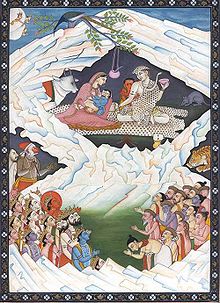
 Hindukailash, image from wikipedia.

Hindukailash, image from wikipedia.

Like Indra’s net of pearls in Vedic mythology, where the surface of each pearl mirrors all other pearls, a metaphor for the interconnected networks of mutual relationships between parts and systems. Mount Kailash is depicted here as the timeless and motionless centre of this net, housing Shiva’s family.

Not only visible structures are held together by interactive nets, our social systems, political systems, spiritual systems and the internet operate within a network. We can observe that the invisible psyche (mind) functions not only through logic, but also through aesthetics, independent of space/time, and is held by another kind of coherence – a net of meaning. And what is generated from this net of meaning is a finer kind of energy, not evidenced by present scientific methods – namely intelligence.

We knew it all along – research established that our emotional experiences leave an imprint in the cells of our body, that the brain is more than the squishy mass under our skull but a medium spread throughout the body via a network of neurotransmitters. There have been hair-splitting arguments for and against the idea that the recipient of an organ can experience personality traits of the donor, based on the speculation that each cell carries a hologram of the whole body and its memory.

Feelings and thoughts arising in my consciousness are filtered through my body’s memory. They also depend on my state of anxiety or calm, my interest, attitude and other variables, such as the weather, my relationship with the elements, with people, the collective mood, solar flares, or the constellation of planets. On some days, maybe after a meaningful dream, or a spell of mantras, thoughts are forming clearly on the breath, like reflections in a still pond, on other days, thoughts rush in on water rapids threatening to drown me, or they plod in like turtles, slow and guarded.

Objective reality is not the only game there is – what in the universe has not interacted at some point in time, irrespective of distance? Everything is linked up. Einstein called it the ‘spooky action.’

The motherboard for this wonderful instrument we call the brain, which comprises our whole body, is formed in the womb. I believe the intelligence involved in creating any specific body must lay in more than known DNA codes, must include the indeterminable non-local DNA of a spirit world. Our body foremost operates like a receiver and transmitter for as many wavelengths our radio station in time attracts or is able to tune into.

From this station, stabilized by repetition, I sort clusters of sensations and feelings, and process thoughts and ideas attracted to me from the collective psyche, a vast sea, which the individual mind must learn to navigate. Images and signifiers are coloured by whatever I consciously or unconsciously mirror and relate to.

No matter how much information we absorb, through our senses, through language and concepts, through comparing patterns, reasoning and calculation, everything, comprehended or not, will be filtered through the body’s motherboard that keeps adjusting to experiences and expanding fields of perception, fields that extend way beyond personal memory. All this information is continuously re-shuffled, as is the meaning we assign to it.

Our body is a motherboard – planet earth is a motherboard – the whole cosmos is a motherboard for a spirit we cannot comprehend, an invisible hand that touches us like a breeze, made visible through what it animates.

All we know is that images, thoughts and ideas are reflected in us. They travel via synapses in the neurons of our body, they travel on the air between minds, they travel among stars, they echo from under the sea, waving to us as plankton, they speak to us from every creature, from every blade of grass, from every stone, and they beep from within our bodies through tweaks of pleasure or pain. All matter, all people and objects we interact with store the memory of that interaction, including interactions with things we hate or nurture, and with places we live in.

We don’t invent anything, we re-discover, re-connect and re-create from the vast storehouse of knowledge and information provided to us by nature, and by the spirit between matter that makes up the cosmos, an embodied being that is becoming conscious of itself.

We are on the air, sent, programmed, radioed and broadcast, identified with all manner of things, ideas and beliefs. Yet if we look deep inside our emptiness, we know, the non-material aspects of us can potentially detach and be free, maybe enjoy tea with Shiva’s family and witness the world turn on its axis – a state some people experience spontaneously or through meditation. A state of pure consciousness not identified with this or that. In the meantime, we could at least be kind to ourselves …

‘Thoughts are beings that generate … One thought of kindness gathers a thousand beings of love and kindness around one.’            Hazrat Inayat Khan

I don’t know if a singular mind/psyche, the incredible art of a lifetime, survives the physical death of the body. Maybe a coherent individuated mind leaves a dent, an influence within the collective psyche. Like the organ of the heart, over time, achieved its definite function. But does it matter? Nothing is lost. All information is continuously re-shuffled into new forms and constellations.

Digital storage provides a metaphor – information exists and roams freely in the wind of the collective psyche (unconscious) until it is embodied and gathered towards a purpose. Every event has a consequence. Nature is exacting, but also generous, what has been repressed in the flow of evolution will always return in one form or another.

Everything alive speaks to us, and all such relationships are processed in the stories we share, stories being containers of the richest kind of information. 

*    *    *

You can source other posts on the theme of reflection in the tag cloud on the right of this page. Like this sequenc of posts: https://courseofmirrors.wordpress.com/tag/hazrat-inayat-khan/

And you might want to check out posts under the tag ‘psychology,’ especially the one on ‘awareness,’ where I share R. Assagioli’s 10 psychological laws – how the body affects the mind and the mind affects the body. https://courseofmirrors.wordpress.com/tag/psychology/

*     *    *

This post also appeared at  Third Sunday Blog Carnival: September 2013 | Third Sunday Blog Carnival

17 Comments

Filed under Blog

… storytelling and the primary world …

Knowledge is not the rare gem it used to be. Then again, without recording, analysing, sorting, summarising, calculating and disseminating mega quantities of data we’d have none of our ingenious toys to play with. Without statistics our systems would grind to a halt, and, yes, it’s annoying that almost daily yet another quantitative study announces what’s good, or detrimental, for our well-being. Thankfully, none of the churned out evidenced facts can make a claim on meaning. Humans remain idiosyncratic. We apply messy values to our life-choices, and we frequently ignore the logical road signs of scientific landscapes, or blank out the hassle of linear time.

Wind


Instead, we are tossed along by emotional encounters, the unexpected, are awestruck after a quantum leap of intuition, and are generally guided by what appeals to a body/mind that likes the stimulation of nature, her moods, seasons, the phases of day and night suggesting action or repose, like the in-and-out-breath, between which we may catch a glimpse of a dream, a relevant truth, an eternity even. Hardly anyone I know is without this conflict: liking order and control, as well as yearning for rapport with the dance and rhythm of nature.

Over 300 years ago G W von Leibnitz, who could’ve been a poet, was gripped by an emerging idea, to collate all human knowledge and to systematize it via a common language. Computers would have been his bliss. He loved to correspond with most scholars in Europe during this baroque era. And he might have gone some way to explain the whole universe in the hope to solve every conceivable problem. Paradoxically, he also stated … the universe had to be imperfect otherwise it would not be distinct from God. Near the end of his life, Leibniz wrote in a letter that combining metaphysics with mathematics and science through universal characters would require creating what he called:

a kind of general algebra in which all truths of reason would be reduced to a kind of calculus. At the same time, this would be a kind of universal language or writing, though infinitely different from all such languages which have thus far been proposed; for the characters and the words themselves would direct the mind, and the errors — excepting those of fact — would only be calculation mistakes. It would be very difficult to form or invent this language or characteristic, but very easy to learn it without any dictionaries …

Source:  http://en.wikipedia.org/wiki/Characteristica_universalis

I’m not doing honour to this remarkable man, so here is a sketch of a biography … http://www-history.mcs.st-andrews.ac.uk/Biographies/Leibniz.html … should you have the patience to read this, note the time it took for letters between Leibniz and Newton to be delivered, which makes me admire the tenacity of these scientists.

The notion of a calculus for a universal language intrigues and troubles me. Nature speaks a language everyone understands. Key-terms of my mother tongue (see my last blog post) easily bring back the plot of land my toddler feet bounced across. The stories I most enjoy writing grow organically, with tendrils of their roots nourished by the alpine woods and hills of my childhood.

But things change. Data collation is now available to authors, promising control, over marketing, though formulas and blueprints are now offered for the creative process, like how to write a novel in four week. Imagination serves many masters and is not easily controlled – its life-sap flows through all forms. Totempole 4

We can only explore everything known continuously in fresh situations and move on, in the way that children and creative people place a familiar object into a new context. The play of imagination destroys and creates, and has the power to shift the meaning of our past, present and future.

‘There is the truth of truth as well as the truth of fact.’                   D.H. Lawrence

Being part of the dynamic process of evolution (which Philippa Rees ingeniously terms ‘Involution’ in her book of that title) we are walked by the tightrope of ecstasy and pain, of dependencies on environments and people, for better or worse, dependencies on beliefs too, mostly not by choice, but driven by binding needs.

Couple shadow series, 3a small

We face exploitation, conflict, sudden change, harmony alternating with phases of chaos – the story of life, a record marked in DNA and every tree trunk. Instigating control, or preaching harmony while shading off the dark, the chaos, the collective psyche of humanity, will only repeat the distortions of otherwise genuine messages from enlightened thinkers, sages and prophets.

It would serve us as well to teach our children how to accept the dark and how to deal with conflict. Reading the collected folk tales of the Grimm Brothers to children would be a start.

Dore - public-domain-image

Dore – public-domain-image

The inspired P L Travers, author of Mary Poppins, had a talent for highlighting the vital function of myth, symbol and story. She shared her reflections in a collection of essays that appeared in Parabola Magazine. The essays were later published in a book, titled: ‘What the Bee Knows.’

She wrote … The Primary World, in order to go on living, needs the things man cannot create – the earth with all its composted dead, the rain that raineth every day, the seasons, nightfall, silence – and the ear free of all pulsation but that of its own blood.

… The Primary World is that which has never been invented but came into being, along with the blood stream, as a legacy from the Authors who, according to Blake, are in Eternity. All the rest is manmade, or as Tolkien has it – sub-created.

As a writer I sub-create and grow stories from within, using images and words that resonate with personal experiences, myths and visions that provide an ever-changing way of relating to myself, to others and the worlds we share. So when Travers says … nothing is truly known until it is known organically … this chimes for me.

We forget – a happy fault – imagine there was no pause between one dream and another, no night. We forget so we can re-member creatively, which takes practice. We walk on star dust and ancestral bones that inform our bloodstream, as much as the stories of this world nourish our imagination, continuously re-shuffling our psyche, which explains our function as being the bridge between matter and spirit. Every bee knows this.

Image by Yeshen Venema

Image by Yeshen Venema

What the Bee Knows, by P L Travers http://www.amazon.co.uk/What-Bee-Knows-Arkana-Travers/dp/0140194665/ref=sr_1_3?s=books&ie=UTF8&qid=1376737128&sr=1-3&keywords=what+the+bee+knows   Wow, no reviews

Parabola Magazine: http://www.parabola.org/

‘Involution’ by Philippa Rees: http://www.goodreads.com/author/show/30171.Philippa_Rees


Images are mine unless the captures say otherwise.

6 Comments

Filed under Blog

… mother tongue & other tongue …

Starnbergersee

Starnbergersee


Two languages, two rhythms, two patterns, two spheres, two perceptions … last week I attended a re-union of my primary school class in Bavaria. Around 20 of us turned up.  The event included a ship ride on the lake that marks the geography of my childhood – Starnbergersee – whose shores are garlanded with castles and grand villas. Once I’ve won the lottery I’ll snap up one of these dream places and invite all my readers to a prolonged party with performances of magic theatre. Yeah!


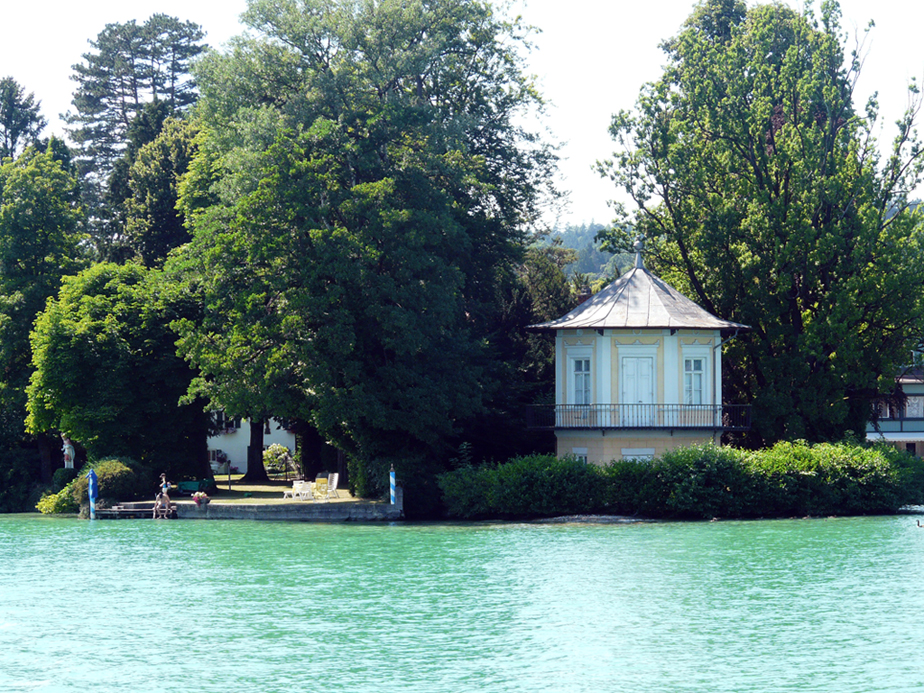
Das Vogelhäuserl

Das Vogelhäuserl


The tour added a refreshing breeze to the sweltering heat. Later in the day a smaller group gathered at a lakeside restaurant, the same spot where, as a child, I turned up in summer holidays, at sunrise, to assist the local fishermen bringing in their full nets, in return for the free use of a small sailing boat during afternoons.

A re-union

A re-union

The encounter with classmates I hadn’t seen for over half a century unfolded like a surreal dream as we cooled down with beer and wine and gossiped time away into the evening. I’m still trying to fit names to faces and places, and make sense of stories that cast stray beams on my memories of the village I grew up in, a village close to the Alps, set in landscapes whose ambiance morphed into the beginning of my first novel.


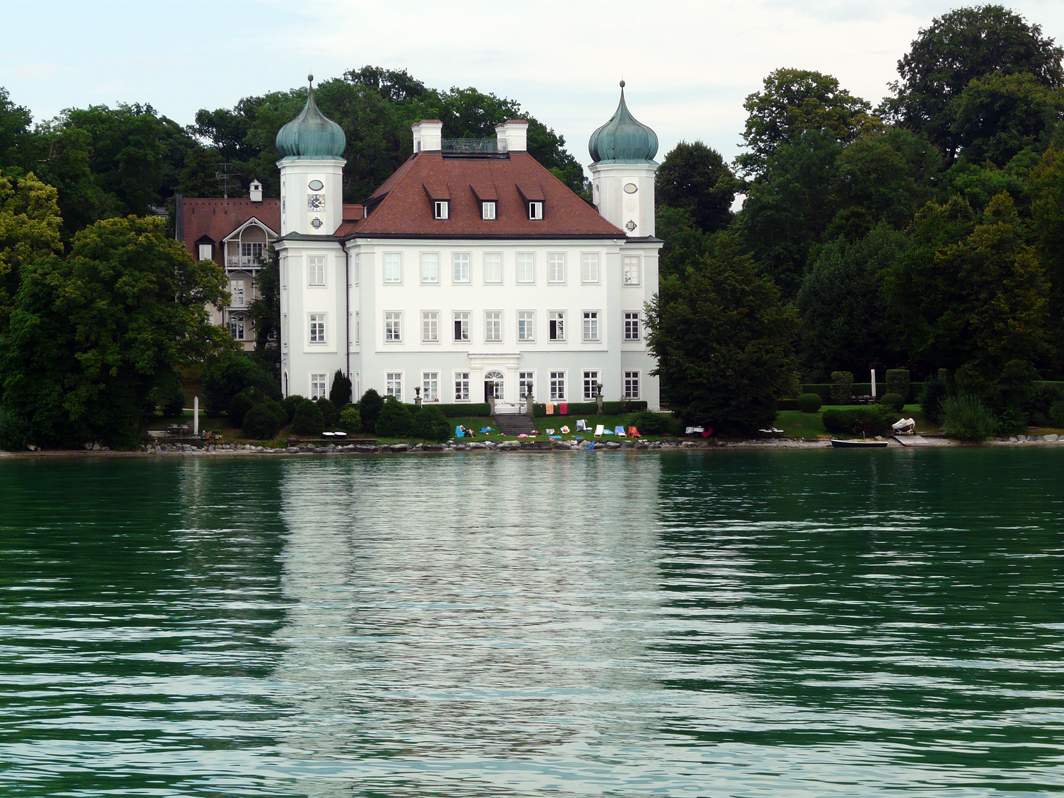
Schloss Berg

Schloss Berg


Among my class mates were a few women I quickly chimed with, not surprisingly, we were close friends during those early years, though we lost touch when we moved on to different schools. It’s deep and wondrous – the mystery of this precious resonance called friendship.


This is me, aged 6, on my first school day. I was a single child.

Erster Schultag

Erster Schultag

And I well remember the excitement. The Zuckertüte, the upside down magician’s hat filled with bonbons, chocolates and presents to sweeten the transition into the big world seems to grace my head in the photo my dad took. I can’t find the image right now, but I did receive a proper Zuckertüte on the day, filled to the rim.

My favourite teacher (in the group photo with the village poem post, link below) turned up at the re-union, slow on his legs but sharp witted. His eyes lit up when he recognised me, which gave me a warm feeling all over.

Living in England since several decades, I visit Germany periodically to see my grumpy late-artist-dad, and dear German friends, made during my later Sturm und Drang phase. What struck me about the school re-union was how the primary sensation of my childhood was brought to life through words tossed into the conversations, keywords from my mother-tongue, embedded in local dialect. My mother, who came from Berlin, never picked up the Bavarian dialect, neither did I, however, the term mother tongue incorporates for me my early environment, the village. https://courseofmirrors.wordpress.com/2012/08/31/village-poem/

For the greater part of my life I thought by and spoke in the other tongue, which I first learned at school. Aged 18, unsure of my path, I spent a cultural year with a family friend in London. She cherished me. Our relationship was a healing experience for both of us, given her loss of friends and family members in the Holocaust, and my inherited burden of the atrocities having taken place in my country. Later, studying in Munich, English was the language connecting a multicultural student population. When 9 years on I married a Dutch man and we moved to England together, my German vocabulary gathered dust during further studies. The distance from my mother tongue freed up a wider perception. It also helped me overcome an encoded traumatic experience. At secondary school I had written an essay, freely based on a painting of my choice by Spitzweg – writing was then a blissful creative process. The teacher read the essay aloud, praising its brilliance, after which she informed the whole class that I could not have composed this myself – a screaming insult! And yet, I thank the stupid woman, it changed the course of my studies. I initially used photography to express myself, resuming poetry and imaginative writing later, finding that English allowed me the necessary wings.

Who knows what the dusted off layer of my mother tongue will bring round. Writing in the other language helped me to transcend the mere facts of my life to essential themes, universal metaphors. The divided kingdom of parents, the psychology of the single child, her assumed bridging function between patterns of seeing, like the rational and imaginative perception, the distorted mirrors of relationships, betrayals, the search for the real, and the meeting of soul families. Essential themes lifted like green islands from dark waters during my protagonist’s river journey west.

Course of Mirrors is a gripping adventure story, as well as a psycho mythical opus. In its sequel the teller of the story is revealed as the visionary myth-maker overtaken by her myth – in the way that we can re-arrange the past and postulate possible futures, explore different time-zones, and expand expectations.

I must leave it to my readers to judge the results of my experiment. The first book, Course of Mirrors, will be published next year, by a small but devoted publisher.


Are you a writer/artist who processes experience through two or more languages?


38 Comments

Filed under Blog

… distractions …

We meet monthly, a group of local friends, offering workshops or discussing on a theme. Last we explored distractions, which, well, distracted us from other things that afternoon, like the rain outside, concerns about people being unwell, family, and the buffet waiting for us in the kitchen. Most of all, it made us present to each other. I share here my reflections on the theme after our discussion. A dictionary definition of distraction is: To cause to turn away from the original focus of attention or interest; divert.

We listed outer distractions – basically life’s realities, though they tend to get in the way of more immediate objectives and disturb our peace of mind:

Physical pain, noise, smells, temperature, food, weather, world news, politics, economics, ecology, bills, insurance renewals, nuisance calls, other people’s feelings and projections, family demands, accumulated clutter, maintenance tasks, bureaucracy, lack of response to a query, mail, internet, waiting … little things … we agreed that negatives can turn positive  🙂

Life’s demands tumble into our oscillating mind patterns as dissonances that excite or inhibit our well-being. Conflict results when we resist what’s happening. We may suffer loudly or in silence, or distract ourselves from unpleasant distractions through the innumerable uplifting or numbing sensations our culture offers.

As our discussion spiralled, we homed in on personal routines for dealing with distractions. They differed for each of us, depending on mood, attitude, the state of our nervous system, and the importance of the disrupted task. Days when everything is an effort are made up for by days when everything flows – bliss.

We went on to explore inner distractions, often reactions to outer ones.

Worries, anxieties, despair, obsessive thoughts, anger, pressure of deadlines, excessive associations and ideas, day-dreaming, nagging conscience, hesitations, doubts, guilt feelings, hastily given promises, boredom, pending obligations …

Regarding hesitations and doubts, the term gut-feeling came up. Can it be trusted? Somatic memories may trigger avoidance, a signal to protect us from danger, though the signal could equally sabotage our desires and deeper needs, whereas a higher level intuition might encourage us to re-evaluate what seems obstructive, and take a risk.

We find it exhilarating to watch wild animals chase prey, with total focus and concentration, fulfilling a vital need, which is why competitive sports are so attractive, where a clear and undivided attention towards a single objective gives an energy rush, even to the bystander. Having a passion, or specialising with narrow focus on mastering one skill or subject, is satisfying. Wave-ripples, most southern point, Lizard, poster desat

Having nothing that fully absorbs us for periods of time, we may be be tempted to roam in a vast sea of beautiful glittering mirror shards that will reflect a fuzzy sense of ourselves. But that’s fine too.

I had various passions in my life, which eventually come circling round to writing. One of my blog posts from last year contains a small excerpt from my second novel, where a character, Cara, shares a slice of the random processes of her mind. She turns out to be the myth-maker, the storyteller. If you’re a little peculiar, like me, you’ll grok this: https://courseofmirrors.wordpress.com/2012/05/10/the-wild-horse-of-the-mind/

I’m a dreamer. Like Cara shares in the excerpt, I occasionally like to let the horse of my mind run wild. I find wild things that way. Random, for better or worse, functions as the creative trickster in my writing, where distractions become allies. Sure, countless mental prompts heap up and demand execution. I procrastinate, adopting patience. My nagging voices are not jailers. They’re easily humoured until the time is right for a blitz of action.

In technological advanced societies, where the struggle for physical survival is being replaced by a struggle for identity, or its new definition, ‘brand,’ distracting prompts accumulate quickly. On the virtual stage I must become visible and speak up in order to engage with others. Love or hate the screens, messages keep wavering by. I become a switchboard for exceedingly complex influences. When switched on, I’m plugged into a bigger brain, the vast extensions of a collective nervous system. There is a challenged to assimilate differences and fast-changing knowledge. This calls for tolerance like never before. The Twitter stream, for example, of succinct messages and links, can be dizzying. However, if monitored and surfed with purpose, the information flow cuts through swaths of mindless, sensational news and opens meaningful connections across the world.

Fewer people are born into the blueprint of a tradition that defines them in terms of their roots, their country or family. The question – where do you come from – is shifting to – where do you put yourself, and to what purpose do you channel your energy? Yew-at-Waverley

Information available, the privileges we have, the choices and commitments we make, require astute intelligence of the heart, flexibility of mind, and they come with responsibilities. In today’s shadow play, we see people confront injustice head-on at the risk of becoming sacrificial heroes, which takes more courage than fighting a dragon. Others, like me, play subtler games. Those who have not found a purpose in their lives may get carried along by the sensation of it all, and continue searching for what matters most, for their deeper need.

So these are my reflection on the theme of distraction our friend introduced. We closed the meeting with a silence – an excellent practice for evoking a blank canvas/screen to re-draw one’s track on. Our time sees distractions speeded up, exposing us to multiple perceptions, some of them abhorrent to us, some of them uplifting. It is freed psychic energy that needs channelling. To develop a useful strategy for dealing with psychic energy we must look inside ourselves to find our homing device, our purpose, new communities, and new meaning.

I hope my reflections make you think about how you deal with distractions.

*     *     *

Just discovered – a brilliant article  in relation to our speedy electronic communications, it looks at the glitches that can reveal something truly distracting, and sobering … the mortifying ordeal of being known

http://opinionator.blogs.nytimes.com/2013/06/15/i-know-what-you-think-of-me/?smid=fb-share&_r=2&

12 Comments

Filed under Blog

… consciousness – the mystery …

People who engage in therapeutic work with me often ask – why dig up my past, it holds pain, why look at attachment patterns, why explore the theme (myth) of my life? What a waste of time. I only want to get rid of my symptoms.

We all, without exception, suffered injuries. The creative question to ask is – how has the injury shaped my life, and what purpose does it serve? Many years ago, during a group dialogue following the inspirational talk of my Sufi teacher, we discussed three basic kinds of injuries. I connect my own experience to the third injury.

1        Having experienced physical injury can result in fight and flight behaviour – it brings a heightened sensitivity and develops a sharpening of the senses.

2        Having experienced sexual, sensual and emotional injury can result in escape from one’s self into others, estrangement from self, lack of differentiation and boundaries – the great challenge is to accept one’s self, differentiate as an individual from the tribe and take responsibility for one’s unique potential.

3        Having experienced injury on a cognitive level accelerates individuation – the escape is into deeper realities, a search for authenticity and truth and the development of symbolic reality – universal reality.

My novel, Course of Mirrors, is the fictionalised account of an aspect of my personal myth made universal – in the sense that memories of events don’t have to be real for a story to be true.

@ Natasha Tonkin

@ Natasha Tonkin

Even the most die-hard materialists among us grok that life is animated and guided by an all-pervading spirit? We are vessels, psychic switchboards for the spirit that animates and records all life.

An ungraspable phenomenon we try to name in vain.

Mental states pass through us. We call in and then process thoughts and feelings, seeking coherence, and – given we assign meaning to what happens to us – are gaining wider perspectives and deeper insights. With every new connection made and every little light brought to what is forgotten and unknown – collective consciousness grows.

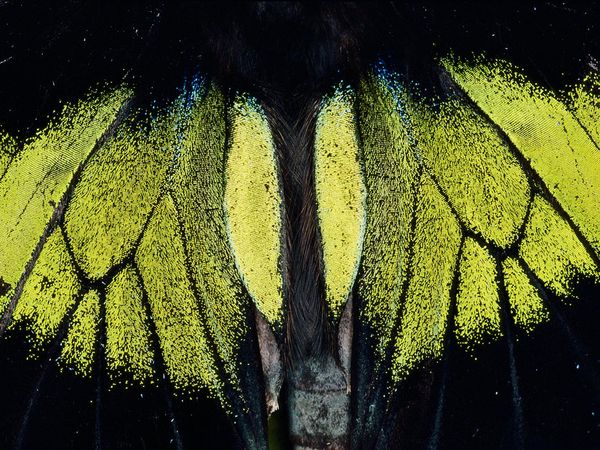
Our body knows, if we care to notice, what stirs in our psyche, what wants to unfold and emerge. When energy flows freely through us our essential nature is uplifted, and our desire is aligned with the potential in us that seeks actualisation – in the way a cocoon reveals the butterfly. Our life has many cocoon and wing stages. The proverbial flutter that causes a stir in all spheres of the universe is like yet another love-transcended aspect of us emerging from yet another cocoon.

Presence, responding to situations, accepting differences and contradictions, frees energy that is ghosted and stagnant. While blocked energy creates frustrations and often painful symptoms, it is totally inevitable, since every organism evolves through condensed experiences. Life enhancing and life destroying events subject us to a pattern of repetition in time until we embrace change.

‘A truth outgrown crushes you under its weight.’   Fazal Inayat-Khan

To bring a repeating pattern to a higher level of flow requires a kind of quantum leap of consciousness. Small leaps occur frequently, especially when we befriend the unconscious and allow fresh symbols into awareness. The released light/energy brings new meaning and allows the self-actualisation of new potential.

‘It is obvious that the percolation of a timeless NOW is penetrating everything!’  –  Philippa Rees

*      *      *

The image above is by Natasha Tonkin, my son’s partner. It was done two years ago as Christmas card and gift idea towards illustrating my novel, to help bring it to life. I scanned and inversed the image for the mirror to appear light. Natasha’s animation website: http://pandahorse.com/

Link to a book I co-edited about the Sufi teacher I mentioned above, Fazal Inayat-Khan. http://www.amazon.co.uk/Heart-Sufi-Inayat-Khan-Reflections-ebook/dp/B00BFUO0T6/ref=sr_1_1?s=books&ie=UTF8&qid=1369084226&sr=1-1&keywords=heart+of+a+sufi

Link to ‘Involution,’ an exceptional book by a kindred spirit, Philippa Rees.                                         http://involution-odyssey.com/  her book will soon hit the market. Her site is being developed.

6 Comments

Filed under Blog

… surfing the virtual waves …

I first accessed the internet while doing a sabbatical film degree as a mature student in the 1990’s.

Struggling with basics, feeling the fool among bright young computer literates, I typed surrealism into the search engine, a subject that rhymed with my passion for transpersonal psychology and fascinated me. Take yourself out of your familiar environment, lose the original context into which your identity had been projected, then gaze and ponder. I had done precisely that. During my first year on the film course I felt displaced and, like my son at a stopover, did a trawling assessment of the oracular unknown.

Yesh, Nurnberg station -smaller

I was going to write an essay, on how Freud’s work influenced art and film during the 20th century, a glittering subject that led me into a dreamlike maze. Each follow-up link on the screen led to another site – another artist, philosopher, writer, page after page, world after world opened until I was afloat in a sea of rich associations. Gripped by Alice in Wonderland sensations, I thought – unless I stick to the context of my essay, the web will suck me into a whirlpool. Exploring the unconscious for its potentiality and its poetic combustion via dis-identification  was of course the surrealists’ impulse, to the ends of tricking the rational mind by using trance to break out of trance – which may well be the ultimate purpose of the internet.

One of the lies would make it out that nothing

ever presents itself before us twice.

Where would we be at last if that were so?

Our very life depends on everything’s

recurring till we answer from within.

The thousandth time may prove the charm.      – From ‘Snow,’ by Robert Frost

I had worked as photographer on film-sets in a former career, so I grabbed the opportunity to study the ultimate trance in its historical context, and play with it. Manipulated by high-angles, close-ups, masking, dissolves, and cross-cutting during editing, underscored by sound, images could be displaced, speeded, up, slowed down or distorted. The surrealists were among the first to love fluid images, using them to disrupt unconscious processes of identification at the same time scientists’ deconstructed particles, and time, and space in good measure. The search within, long pursued in the east, was taking hold in the west. P1090946 - Copy

Deconstruction is the prelude to creation. Having learned that we are conscious of only a tiny island of our psyche, much like we can only see the tip of an iceberg, had affirmed my lifelong desire of seeking what is behind the mirror of appearances. In that vein, I recall feeling an awesome sense of responsibility when I first held my new-born son, imagining that my every gesture, my every tone of voice, and even my very thoughts might subliminally influence his pristine being. I was quickly grounded, adapting to the routine of being present to my little one’s basic needs, and soon realised that he had brought along his own world from another sphere, and that beyond my stimulating mirror, he would shape his own destiny.

So here was a kind of baby – an essay on surrealism. To deal with the mass of on-line leads, I took capacious notes, plundered the college library, and relied on intuition to guide me through the process of writing, allowing the essay its own agenda. It was when I first acknowledged that my sixth sense made writing a pleasure. Years later, starting my first novel, responding to subtle influences became the only way I could write, trusting that the unconscious – rather like a digital binary system – condenses and displaces material that can re-emerge with the right prompts.

Spending several months co-editing a beautiful book of reminiscence about a remarkable teacher, printed as a limited edition (also available in E-PUB soon), I started my second novel, and forayed into the on-line publishing world. Armed with the intention of finding a publisher my trust deserted me. I felt suffocated by the genre jungle, the flood of how-to-does and the racing schemes offering self-publishing. I scolded myself for procrastinating, being lazy, not believing in my work, but nevertheless stubbornly held back. Having ordered a few print-on-demand publications by friends I made on a writer’s site, who had got their act together, I was disappointed by the poor presentation of most books – cheap paper, cramped layout, narrow margins and too small fonts. Is this how small publishers and self-pub schemes treat writers who spent years on composing their epic? My heart sunk. I observed my frustration, took stock and decided to relax and wait for a beacon.

In any case, I had been fooling myself, betting on the wrong horse. Being a published author has its perks, but what truly matters to me is the actual process of writing, which is alchemy, a sculpting of feelings, a release, being other than what is familiar, uncovering myths and creating new ones, digging for treasure, a journey into the unknown that reveals horizon upon horizon.  Copy of Child at shore, colour, lowres A metaphor for my life, about the how, about the journey inside with my others, relationships woven from layers of experience into something new, each time, and time again … life writes its stories through us.

Apart from receiving vague out-of-the-blue proposals offering dubious contracts, I had two chance-encounters with publishers who welcomed a read of my MS, encounters resulting from surfing the web on the crest of my interests, often as unsubstantial as a keyword from a dream. It’s no different from how I live my live. Not exactly a structured approach, I sometimes scold myself. But for better or worse I don’t attach myself to goals, only to transitional containers, which could be an object, a character, a dream image or a place, and the rest follows. My stories emerge from kernels lying in wait, and they pursue their own agenda. I let them, and trust they will find a readership.

Like Stan Brakhage, one of the early experiential film-makers, I think of the deeply personal as universal and conceive of the real world as invisible ‘… thus in the physical or spiritual or light world all forms are beings – stones, trees, stars, streams, men, flames and turds are really facts of invisible presences. Mineral, wood, fire, water, flesh are terms of dense soulful sense.’

In this way, rather than going nuts, as I feared when first exploring the global mirror of the internet, I’ve made peace with it, relating to it as a spacious, time-freed being that interconnects all our stories and projections and offers its content according to the container I bring to it.

13 Comments

Filed under Blog

… global vision & synchronicity …

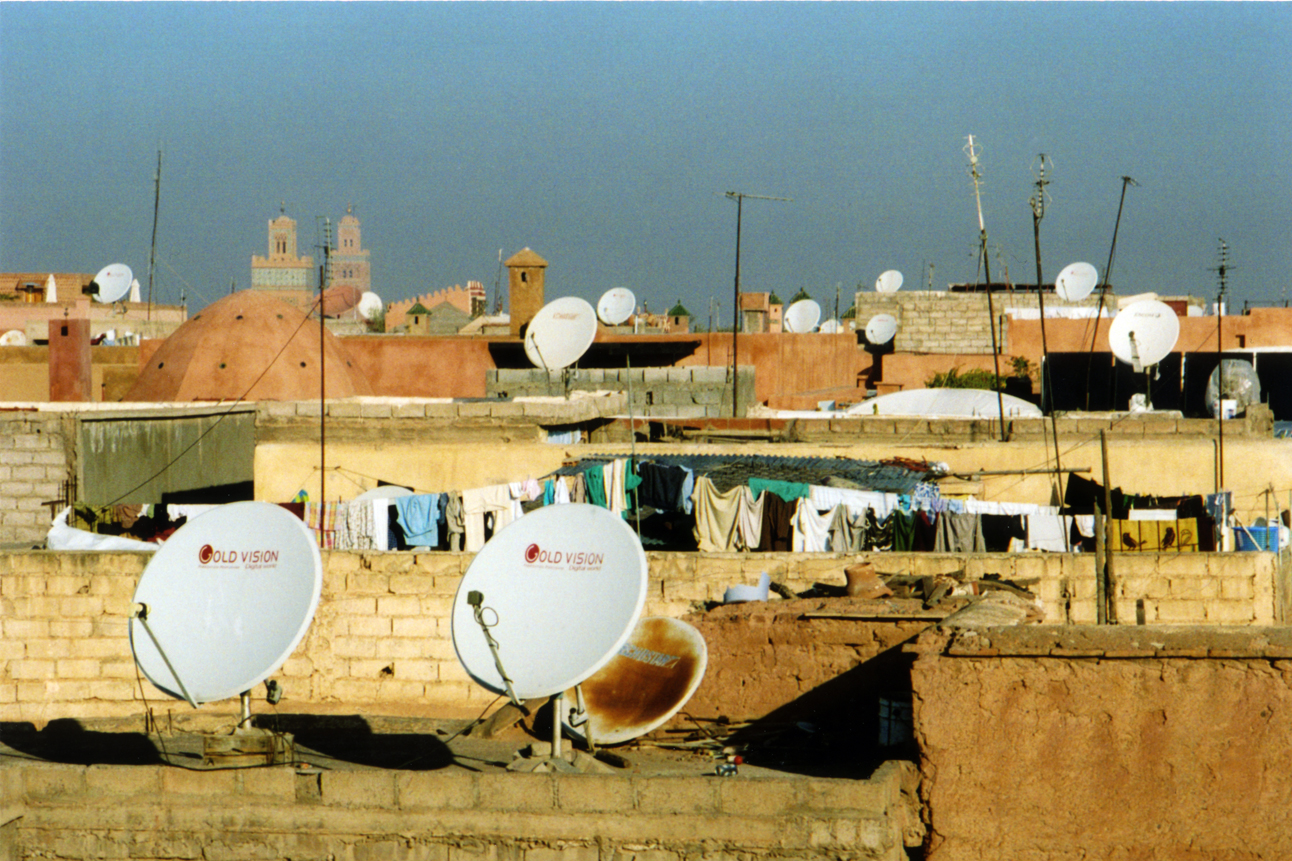
Moroc, Marrakech Riad roof, golden vision - low     Less than 80 years ago, across the world, only about 200 televisions sets were in use. Today, a simulated reality confronts us with our collective mind. A click away, we sample the zeitgeist and witness some disturbing trends, like the continuous robbery of world resources.

How do we filter the mass of information? Do we shout treason when we see the failure of economic systems that allow 1 % of the population to own 40 % of global wealth, or when we discover that certain corporations privatise water –  even rainwater  –  in underdeveloped countries? Traversing from one patch of light to another, do we make connections that apply to our scope of action? Or, lacking a meaningful context, are we hypnotised by this enlarged mega-screen, the global vision of a world that can mirror our inner fragmented states  –  a world where every viewpoint exists simultaneously, that over-exposes so-called reality and blinds us? Are we ourselves living inside the screen-myth, as extras, freed into bits, a reservoir of data?

As writers, what in-forms us, what material do we disseminate? And what is it that makes choices, switches from one networks of influence to another? What guides us through the data jungle? Are there perceptions beyond our wilful personalities that determine, agencies that operate through us from beyond time and space? I’m weary of the term God. For me this agency is a consciousness composed of past, present and future intelligences, a light-wave that echoes different signals according to the receptivity and needs of each animated vessel. Humans can be dense, but a calm mind recognises clear signals of this wave, since they chime with a joyous feeling of connectedness, a larger symphony, maybe even the sense of a destined purpose.

In my experience, this consciousness operates through synchronicity. There exist conceptual similarities between the behaviour of sub-atomic particles and archetypal images, (C G Jung and Wolfgang Pauli discussed such similarities in the context of synchronicity), a striking link between mind and matter that has been largely ignored. It implies that mind and matter connect, relate, mirror each other, and reciprocate. The process is given life in the realm of the psyche as imagination, not structured by time and space, but through layers of meaning illuminated by consciousness. Psyche is the changing room between cosmos and pneuma.

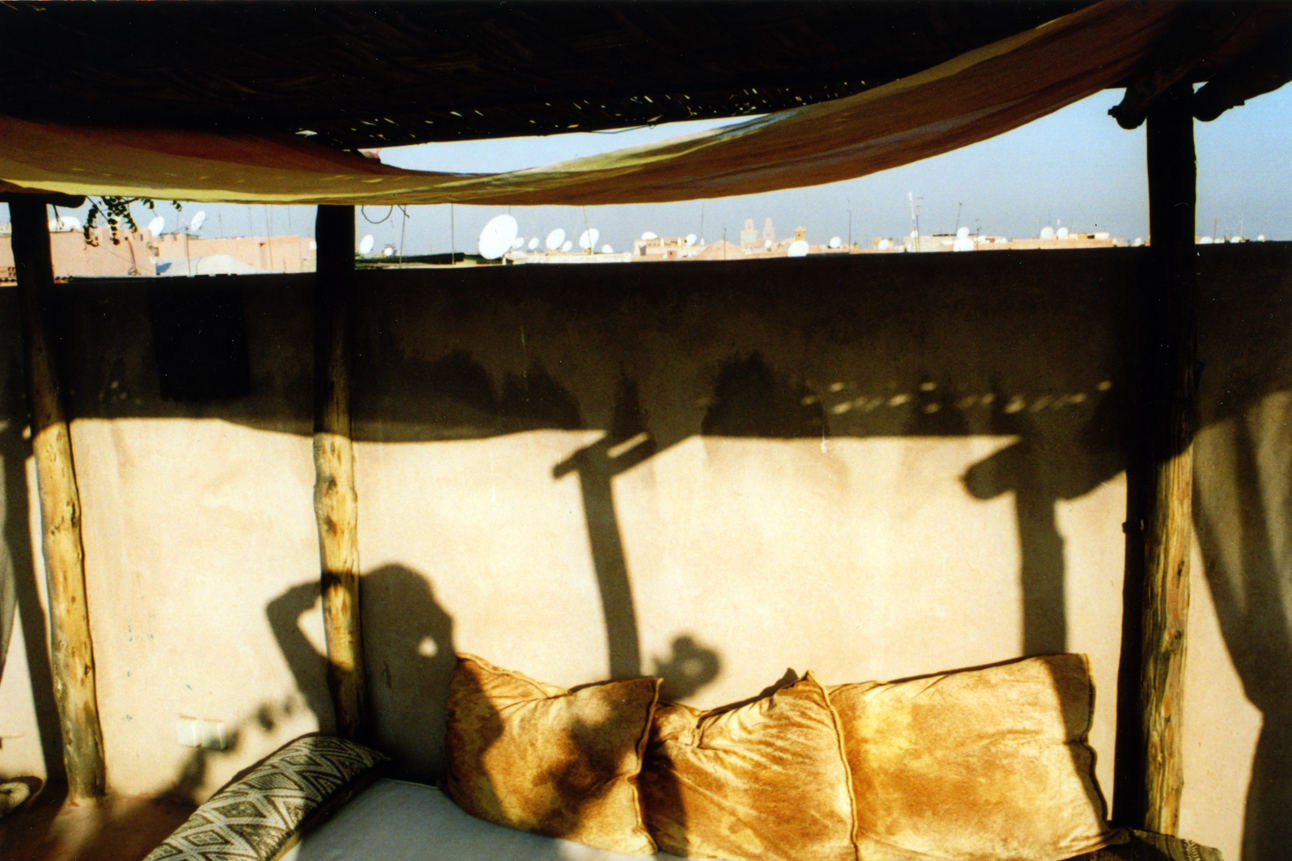
Moroc, Marrakech, Riad roof, shadow - lowJung thought of archetypes not as fixed, but as changing predispositions, universal patterns inherent in the human psyche, images that comprise our collective past and future unconscious. A pattern stirred into activity by an emotionally charged event in our lives, brings home related experiences, often through meaningful coincidences in a non-linear and a-causal way.

Such synchronicities draw on a deeper life-sap, as if an eternal intelligence were at work.

David Bohm proposed that subatomic particles remain in contact with one another regardless of the distance separating them, and that their separateness is an illusion. Here a facet of his thinking – a short first part of a 5 part series  http://www.youtube.com/watch?v=oGyDVF8GrLk                                                                                              A great and humble man I greatly admire. He has beautiful hands  🙂

A dream, for example, can attract an outer event, a meaningful coincidence, that powerfully substantiates a message from the unconscious, often accompanied by a numinous quality. In my own life, synchronistic events have challenged my narrow reasoning at certain crossroads towards seemingly irrational decisions. Exploring a hunch, while not attaching to the outcome, often clarifies a situation for me. Consequently, I respect the unconscious, and heed my intuitions.

‘The universe does not exist, out there, independent of all acts of observation. Instead, it is in some strange sense a participatory universe.’ – John Wheeler

Just as scientist are branching out from traditional imperatives that divide the world into subjects and objects, so we all, presented with a global vision, must modify some of the archetypal imperatives, images and ideas that have outlived their use, and look for symbols that carry a fresh mystery.

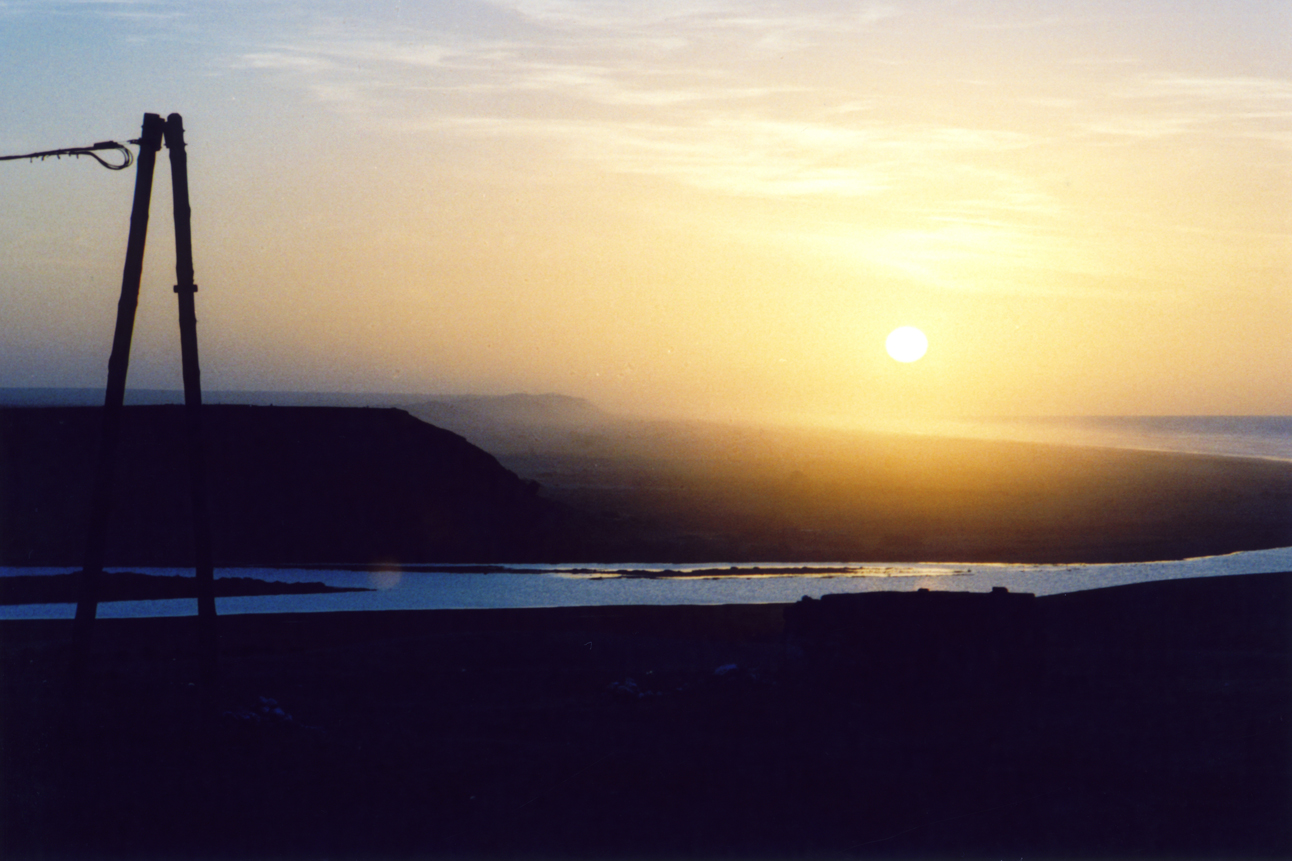
Moroc, Plage Blanche sunset - low

While sun and moon are forever formative and feed our imagination, they are no more our only lights.

With new associations from science come fresh symbols and exciting probabilities, in that we can question assumptions about time and progress, about the relationship between matter and mind, about our view of social units, and even the meaning we give to gender.

‘It’s a poor sort of memory that only works backwards’. The White Queen says to Alice.

*    *    *

Many of my posts here touch upon similar themes, but maybe pattern-which-connect in particular: https://courseofmirrors.wordpress.com/2012/05/25/pattern-which-connects/

6 Comments

Filed under Blog

… pattern which connects …

For a recent book-sharing with a group of irreverent friends (archventures), I had the wish to share so many books that I instinctively reached more or less blindly into one of my shelves. Books in my home, I must add, are in a muddle. The only order to speak of is their relationship to each other through time. I picked Alice in Wonderland and Mind and Nature. During our afternoon of reading there was not enough time to do honour to the latter, Gregory Bateson’s work. So I said I’d write up something. Oh dear. After pages and pages, I finally recalled this was supposed to be a blog-post, not a novel .

I first came upon Gregory Bateson books, ‘Steps to an Ecology of Mind’ and ‘Mind and Nature,’ during the early 1980’s, after his death. The clarity of his notion that biological forms arrange themselves through relationships struck a deep chord. What totally resonated with me was his thought that the structure of nature and the structure of mind are reflections of each other.  He had a broad perspective for a Biologist, and wanted to build a bridge between the facts of life and behaviour, and what we know of the nature of pattern and order. He was active in, and connected up many different fields of study – anthropology, psychiatry, biological evolution and genetics and the new epistemology which comes out of system-theory and ecology. He challenged basic assumptions and methods of scientific investigations, pointing to the processes beneath structures. He quoted Goethe …

A stem is what bears leaves

A leaf is that which has a bud in its angle

A stem is what was once a bud in that position …

And he provoked new thinking: ‘What pattern connects the crab to the lobster and the orchid to the primrose and all four of them to me. And me to you?’ 

His interest in morphology, the study of structure and form of organisms, involved context, meaning and communication. He distrusted reductive models of cause and effect, the scientific approach that lines up parts and classifies them, focussing on quantity.

Comparing systems, one to another, he perceived the mind as an ecological system. And he used the analogy that ideas, like seeds, can only take root and flourish according to the nature of the system receiving them. This thought alone deserves deep contemplation.

He had a way with stories … ‘There was a man who had a powerful computer, and he wanted to know whether computers could ever think. So he asked it – Will you ever be able to think like a human being? – The computer clicked and rattled and blinked, and finally it printed out its answer on a piece of paper, as these machines do. The man ran to pick up the printout, and there, neatly typed, read the following words: ‘That reminds me of a story.’ 

Concerned about the decimation of aboriginal populations (he did field-work with Margaret Mead), the degradation of ecological systems, economic oppression, and senseless wars and arms races, he took these ominous signs of contemporary life to be manifestations of deeper disorders, which he defined in terms of cybernetic systems of communication and meaning that comprise life, mind, and society. In his view, consciousness dominated by purposeful thought has a linear structure that establishes goals and ways for attaining them without being necessarily sensitive to the circular network of cause and effect that orders the systems.

Looking at human consciousness as an adaptive system, he thought the cure for its inadequacies, evidenced by the negative side-effects of purposive rationality, was not to reject it in favour of a passionate non- rationality, as in the extreme romantic position, but to augment and complete it by engaging with non-discursive, pattern-comprehending and emotional processes. He advocated the befriending of the unconscious aspects of the mind through utilising images and metaphors.

In a civilization which separates mind from body, mythologies about the survival of a transcendent mind are often meant to soften the idea of death, or even deny death as part of life. For Bateson, who saw the mind as being immanent not only in pathways of information which are located inside the body but also in external pathways, death took on a different aspect. ‘The individual nexus of pathways which I call ‘me’ is no longer so precious because that nexus is only part of a larger mind. The ideas which seemed to be me can also become immanent in you. May they survive, if true.’  (Afterword to a collection of celebratory essays, 1972)

Yet there are scientists that can no more perceive the language of nature, and politicians who feel beleaguered by sections of society that seek balance and a fresh context towards ‘an ecology of mind.’  The extreme factions of believers, for what else are they, should look again at the bridge  Bateson prepared.


This lovely video gives a taste of what it is all about :

Update … I discovered recently, in 2019, that some the links in this post don’t seem to work anymore. Here , however, is his daughter’s great documentary on Vimeo, unfortunately not free, apart from the trailer.  https://vimeo.com/ondemand/bateson

Looking at the structure of nature and the structure of mind being reflections of each other, it becomes obvious that not only does nature mirror our habit of thinking, but our thinking also mirrors the state of nature. Ecology and psychology must therefore both engage in listening, and seeing, and working ceaselessly towards the integration of knowledge and the re-adjustment of a dynamic balance.

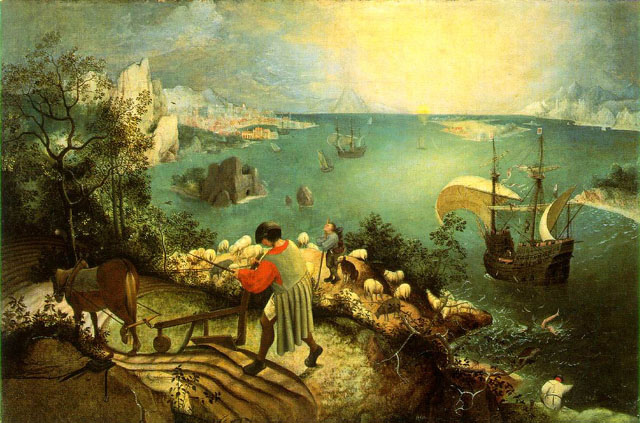
I could go on, but want to bring in a famous painting of Icarus by Brueghel.                                                             Anthony Stevens, a brilliant expositor of Jung’s thought, used the painting as cover for the first hard-cover edition (1995) of his book Private Myths.

http://www.anthonystevens.co.uk/index.html


Stevens quotes from a poem by Wystan Auden:

In Brueghel’s Icarus, for instance: how everything turns away

Quite leisurely from the disaster; the ploughman may

Have heard the splash, the forsaken cry,

But for him it was not an important failure; the sun shone

As it had to on the white legs disappearing into the green

Water; and the expensive delicate ship that must have seen

Something amazing, a boy falling out of the sky,

Had somewhere to get to and sailed calmly on.

What goes up must come down. Who knows how many Big Bangs there were before the one we so ardently explore? There is an organising intelligence behind life’s cycles, while consciousness forever expands. Thinking in metaphors we can perceive similar patterns, forms in nature and mind, cosmos and psyche, mirroring each other across scale and time. In other words, life teems with realities we can tune into, as long as we assign context and meaning.

Check out Gregory Bateson’s books ‘Steps to an Ecology of Mind’ and ‘Mind and Nature.

His family continue his work: His daughter Nora and his wife – Mary Catherine Bateson:   http://www.interculturalstudies.org/main.html

Peripheral Vision

 http://www.amazon.com/exec/obidos/tg/detail/-/0060926309/mead2001centenni

Free chapters of Angels Fear:  http://www.oikos.org/angelsfear.htm

Nora Bateson, recently created a film:

http://www.anecologyofmind.com/

Last not least, the themes:  pattern which connects, mirroring and bridging, are subjects of my novels.

25 Comments

Filed under Blog

… the wild horse of the mind …

I thought I open the window a bit to what I’m immersed in, drafting the sequel to Course of Mirrors, called Shapers. Another mythic adventure, and more. The short piece below is not representative of the tense action this story has plenty of, but depicts a pivotal moment. The scenery is  Eire, where time-zones overlap. In 2550 AD the island is called Sax, where Rhonda, the super-controlling power, cast their misfits.  In the excerpt below, Tilly (Cassia in Ana’s story) has arranged for Cara and Mesa to meet in Kerry during the 1970s.

The theme touches on the creative process. Something for my writer friends. I welcome any feedback to the draft.

*    *    *

Tilly’s ruined estate on the Kerry peninsula was one among many places around the world where past and future began to cross or run parallel during the 1970s. Not all drop-outs travelling through Derrynane were aware of the phenomenon. Those open to the new wavelengths either tuned in, or received no more than garbled white noise. The going slogan was – love, don’t think – though it should have been – love and think – and stay grounded. These were turbulent times. Traditionalists abhorred the breaking free of conditioning. Leaps into the unknown frightened them.

This is Cara’s time, and these are her thoughts: Personal myth is a complex self-creation, mainly unconscious, but less so once we replace the postulates we inherited with our own, and are drawn to our psychic kin. Every night when the body rests we visit beings in other spheres. We may discount these sojourns as dreams unrelated to our daily existence. Yet bridging occurs when we value inner dynamics and re-story the associative symbols of images. Resonance momentarily fills the void between the known and the unknown, and meaning is assigned to events. Some good people trust in God, but then abnegate their creativity. Are we not the desire of a divine will? Are we not the ears, eyes, nose, hands and feet of a universal intelligence, of which we are the deed? Does not our speech derive from one sound? And is love not the creed that breathes all things and directs the movement of all spheres? I don’t understand the need to prove or disprove a universal intelligence that is within and all around us. The world I create is imperfect and suffers from on-going flux. But I can bring my small flame to its shadows.

Now that Cara’s myth caught up with her, and she was confronted with the net of postulates she had cast into the future. She found herself challenged to engage with what she animated, because she was animated by it.

Gutch spotted Tilly talking to Cara and Mesa in the hall. He was bursting with pleasure. ‘I found my clan,’ he said. ‘This place is teeming with talented actors. We’re going to do some magic theatre. Are you joining us?’

‘I need to take care of something,’ Tilly said. Can you keep an eye on Gart?’

‘That devil had some weird conversion trip and is sound asleep under the table.’

‘Excellent. Let him sleep.’

When Cara and Mesa arrived at the cottage across the atrium, Tilly had lit a fire in the hearth. A nest of chairs invited them, and the smell of fresh coffee. ‘Have some,’ she said, ‘pointing to a steaming pot, ‘and there’s chocolate cake, too.’ Mesa soaked up the atmosphere, transported to Ana’s world, reminded of Cassia’s kitchen. Tilly placed a small leather pouch in Cara’s lap. ‘Here, forged by fire, polished by the sea, a gift of remembrance.’

Cara opened and turned the pouch. A black stone fell into her hand – smooth as marble, yet radiating warmth and shining in the glow of the fire. ‘Ana’s talisman!’

‘Yes, and you might as well own it.’ Tilly paused, gazing into the flames. ‘I have a favour to ask from you, for Mesa’s benefit.’

‘What favour?’ Cara poured cups of coffee for everyone, dished out giant slices of chocolate cake and added a dollop of whipped cream to each.

‘Your future, Cara, has come to visit you. Mesa returned to assimilate what was lost to her. With Ana’s story you re-animated her soul. Certain events in history require beings to return, to right things or bring a message.  Mesa will take on her role in the odyssey of the Ypocs. And she’s going to be the narrator of your story, Cara.’

‘Huh, this takes a leap of the imagination. I haven’t even smoked the weed.’

Tilly smiled. ‘You know what it takes. Uncovering a personal myth is different from writing a Hollywood script. To help Mesa to re-connect with random creative processes, I want you to explain to her in as much detail as possible how your mind works.’

Cara heaved a breath. ‘The idea sucks every thought from my head.’

‘That’s a good start.’

‘All right, here goes a slice of random micro processing … Momentarily stuck with a paragraph, I remember to stretch my legs. In the kitchen I snatch a yogurt from the fridge. I notice a sticky shelf – mental note – clean it soon. Dark clouds gather outside, looks like rain. I run up to the bathroom and close the window. On the way down, I see dust-clouds on the stairs – mental note. Heading for the desk I stop by the fridge again because I’m now really hungry. I prepare a sandwich – mental note – put butter on shopping list. I use the loo – mental note – toilet paper is running out. Telephone rings. The answer machine kicks in. Just as well, I’ll return the call later – mental note. A letter that needs sending sits next to the phone, I put a stamp on it – mental note – post it. A fly is trapped in the window. I release the fly and study a tree out front that leans over and needs pruning. I quickly assess which branch to cut – mental note. Off to my desk. Passing a shelf I spot the book I couldn’t find earlier. What a relief! I plonk it on my research file and am reminded of an article I need to chase – mental note. The sun shines again. I open the backdoor and listen to the birds. Grass needs cutting – mental note. Finally back with my paragraph the writing flows, sheer bliss. At a natural break in the narrative I decide to go shopping. In the car I have an epiphany relating to a character in my story, to do with birds – mental note. The walker I pass reminds me to visit a certain person – mental note. I recall this person collects small antique tins. I could find him a present – mental note. I think of metaphors, how obsessions, like collecting tins, are really personalised teachings – mental note.’

Mesa had listened with rapt attention. ‘What happens to all the mental notes?’

‘Ha, ha … they’re promises. They’re torture. They heap up. They demand execution. My way to deal with accumulative pressures and gain time to focus on my writing is through procrastination. I’ve become patient with nagging voices. They’re not jailors. They’re easily humoured until the time is right for a blitz. Then I act fast and achieve a great deal in a short time, happy to have cleared the space.

‘But why give these mental notes the power of demands over you? Mesa asked.

Cara glanced at Tilly, who had taken up knitting, as if the dialogue bored her.  What was her agenda? Was this really for Mesa’s benefit? Tilly smiled and said, ‘Go on.’

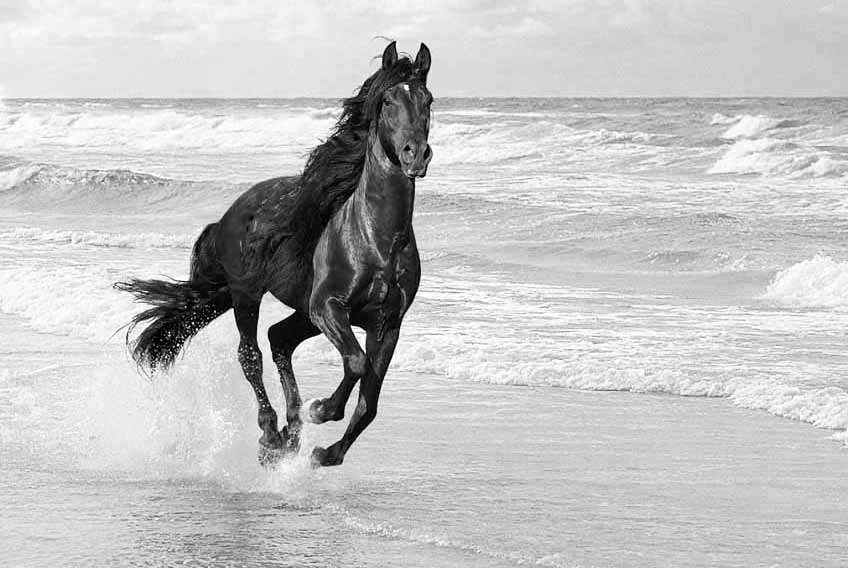
‘It started out as compulsive pattern. I was conditioned to respond to the needs of my environment, and to maintain order. There are exceptions. Some days, it could be the weather, a dream, the stars … from the moment I open my eyes everything flows effortlessly. My brain is relaxed and I attract harmonious thoughts, like I’m fine-tuned to a subtler station, beyond the busy bandwidth of neurotic naggers. The tuning can be learned. It’s like taming a wild horse. I can actually do it, when necessary. But I like letting the horse run wild. I find wild things that way.’

‘We have different conditioning,’ Mesa said. ‘From early on I was trained to tame my mind, to let it rest like a still pond, or focus thoughts like laser beams. Then free play was introduced, disrupting Rhonda’s order, and all went wrong for the Ypoc.’

‘Aha! I bet you didn’t have to juggle a deep conflict, and oppose a controlling father.’

Tilly dropped her knitting. ‘This gets interesting. It’s what Mesa came back for.’

* * *

Apologies: The origin of the image of the horse is unknown to me.  Many thanks to the photographer.

10 Comments

Filed under Blog