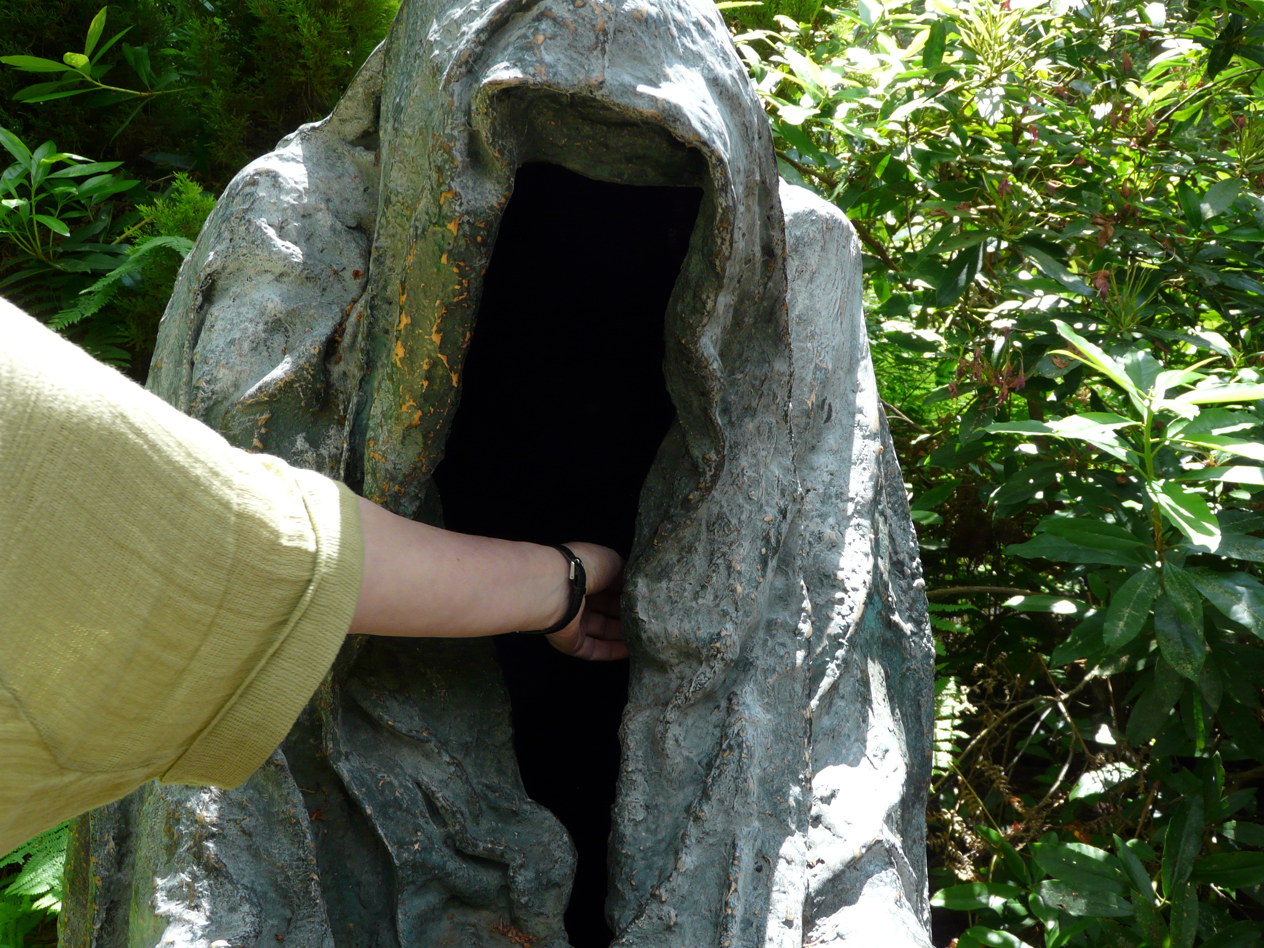
You and I have secrets so well hidden in dark corners of our psyche; the only chance of discovery is us bumping into them through some synchronistic event. Angels may be involved. Secrets keep us under a spell, just like we get needy for the absent puzzle pieces that prevent a scene from completion, which nags on our sense of cohesion. Depending on the temperament of any given day this can result in restlessness, procrastination, or apathy. The pieces exist, we know that much. But in our lives the missing pieces represent holes, patches of nothingness that beg to be filled. And some will never be filled, unless imagination enters like a grace, and offers fresh possibilities.
Beneath this yearning for cohesion chimes a faint drone. From that drone a vague theme, image or a melody we can’t place may arrive from nowhere, persisting in teasing us.
I sum this sensation up as ‘waiting.’ Waiting for the fog to clear, waiting for a connection, a response to a question, waiting for a birth, waiting for a death, waiting for the heart’s eye to light up, waiting for inspiration, waiting for a door to open, a hint … like in Samuel Beckett’s absurd play, ‘Waiting for Godot,’ where the passive Estragon and the impatient Vladimir are adrift in their minds, hoping for a meaningful sign. Some early viewers angrily left the theater. Maybe it annoyed them that the play exposes the absurd inner dialogues everyone experiences at times. Critics have voiced fascinating interpretations. For me, the philosophical variance between Aristotle and Plato comes to mind.
Years ago, my dear Sufi friend/teacher, Fazal Inayat-Khan, introduced the term ‘psychogenic secret’ during a workshop he instigated. The term could be understood as the distorted or buried memory of an incident that compels our behaviour in ways we cannot fathom. Consequently, shadowy aspects of our personality may appear in relationships, when others see us in ways we cannot comprehend. Consistency upholds our mental habits until their significance wears down. But once we discover and acknowledge a twist in our interpretation of relational events, a thread will untangle and jingle the famed ‘aha moment.’
It is tricky to share a personal experience, though an example of twisted psychology is in order here. Far back, at primary school, a triangle of girls was jealous of me for having as friend and neighbour the favourite boy in our class. He had train sets and lots of Enid Blyton books. They alleged I had been stealing stuff from their and other pupils’ desks. Their concerted accusation required me to empty my schoolbag in front of the head teacher and the whole class. The crafty girls had planted a fancy pencil, a sharpener, a metal ruler and a pop-star image between my notebooks. The items were quickly claimed by their owners. Disputing the abhorrent deed was hopeless. I felt deeply humiliated. And my parents were unable to refute the evidence. The insult sunk deep and festered.
Much later, during student years, I casually stole a chunk of butter from a shop to round up a meal for friends. Observing my lack of conscience, and the ease, even pleasure, with which I stole the butter mortified and shamed me. It took a while to process my turmoil until I drew the connection which stopped me in my track towards becoming a bank robber with supernatural powers … I realised it was my irrational comeuppance, a kind of revenge for being once wrongly blamed and shamed.
My example might spark your imagination. Intricacies as to how psychogenic secrets can operate, be they based on humiliation, small or big traumas and betrayals, frequently appear in fairy tales, stories, novels, including mine, notably in the forthcoming sequel to Course of Mirrors, ‘Shapers,’ to be released in spring.
I’ve learned to tolerate psychogenic secrets I’m ignorant of, the holes in my life, by allowing my dreamer to use the empty patches as frames for stories that humour the unknown.
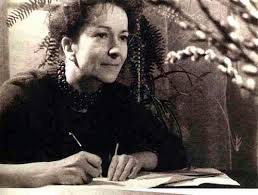 One book of poems I have always at my bedside, for when I need to shift my thoughts, is Wislawa Szymborka’s New and Collected poems 1957 -1997, translated by Stanislaw Baranczak and Clare Cavenagh, published by Faber and Faber 1999
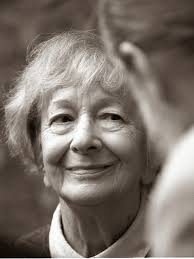 through the poems like a clear spring.
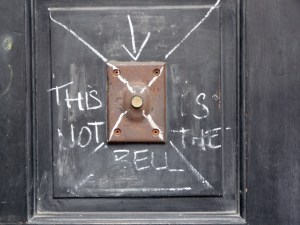 The morose question of whether to be or not to be has moved on to whether to appear or not to appear. Appearances can deceive according to context. Or as my spiritual friend, Fazal Inayat Khan used to say, ‘Form is a relic of eternal potential.’ Things that have lost their former function have joined the archive of icons, metaphors.
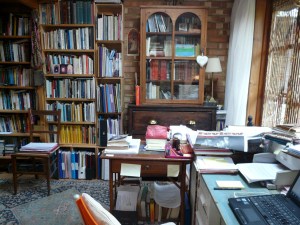 Those involved in research, students, scientist, and writes, know the challenges of filing and stacking information. My own filing mirrors the ad hoc workings of my brain. To find stuff again is a matter of focus, luck and intuition. While occasionally frustrating, I trust my larger self and the collective unconscious. It is my oracular method, circumventing any too strict measurements promoted as our new saviour, algorithms. I value rationality, just not when it discounts spontaneous human creativity, heart felt compassion, and the inspiring moods of nature.
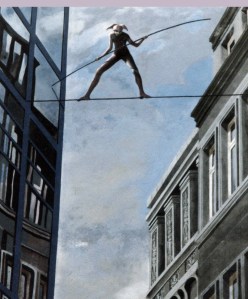 Always keen to bridge and connect seemingly unrelated intellectual territories, I tend to dip into essays of poet-philosophers and cultural theorists stacked near my bed.
 ‘The light is also weird. Since there’s no atmosphere, the phenomenon of refraction disappears, so much so that you go directly from total shadow into sunlight, without any transition. When I hold my hand out to stick it in the light, you’d think I was crossing the barrier to another dimension.’
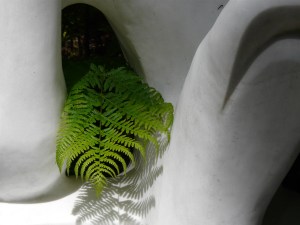 By bending towards light all life unfolds and is shaped by obstructions – and the dark, compressed sphere behind the crack that allows growth to emerge.
 Here my latest Haiku: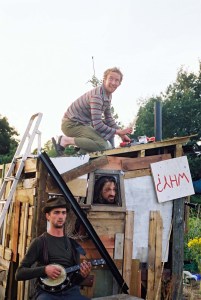
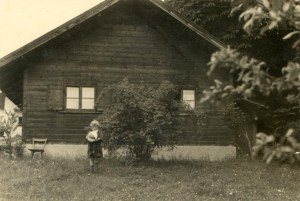
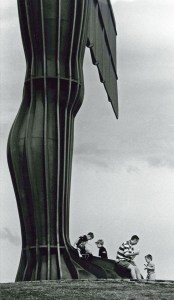
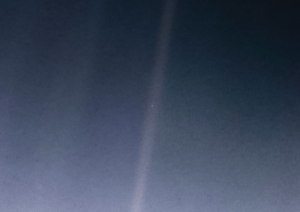 And then consider Carl Sagan’s tender reflections on the pale blue dot, the Mote of Dust, as in a sunbeam, the home we all have in common, a selfie, seen from afar. “Where everyone’s love, everyone you know, everyone you ever heard of, every human being who ever was, lived out their lives.”
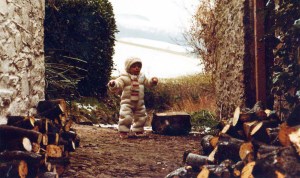 The midwife rushed after us, having overheard we wanted a home birth, but were told she had retired and the new midwife would not arrive in time. ‘Not true,’ she said, which settled it. In my wisdom I had brought my husband along. Sister Heney was delighted to attend a rare home birth for her last delivery. All went well. My epiphany snow baby, she later said. It didn’t take a helicopter landing on the opposite field to transport us to a hospital, only a police land rover to bring this dear midwife up through ice-covered lanes and snowfall to the cottage in the Quantock Hills where snow baby was duly born. We lived in this Somerset hamlet for five blissful years, with the kindest neighbours one could wish for.
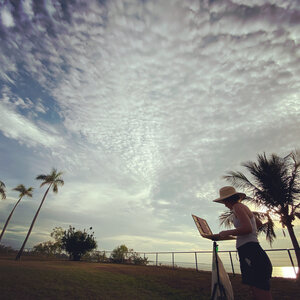 My son recently had another birthday. He allowed me to share a blog-post. In it he relates his holiday in Darwin, Australia, where his wife’s family lives.
 When not actually engaged with it every single day, at least contemplating the in-depth editing of ‘Shapers,’ is my daily routine.
 The wind blustered cold though, and I was grateful for the hat I brought along, and the tissues to dry my runny nose and watering eyes.
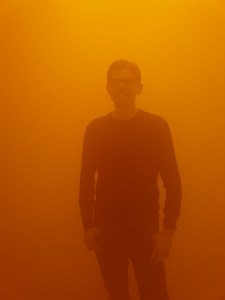 The 39 meters long fog tunnel took me by surprise. I hardly saw anything beyond a meter around me. Space became mysterious and unfathomable deep. I had a sense of being totally lost while also feeling held, though assured in the knowledge that my son was near, and that I could call him and reach out for his hand.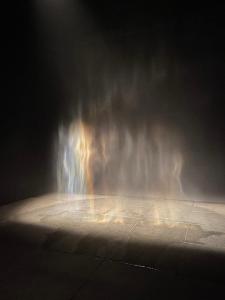
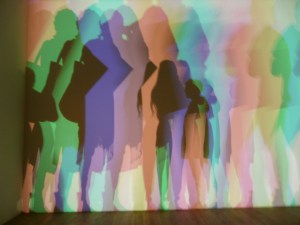 In one room, a kind of Plato’s cave, our back-lit bodies made colourful shadows ahead that shrunk or grew in size as we stepped forward or backwards, or overlapped and multiplied as we moved sideways. The magic was achieved through a row of primal coloured light beams projected onto the wall we visitors faced. Thing is, we are more intrigued, animated and comforted by reflections than the light itself.
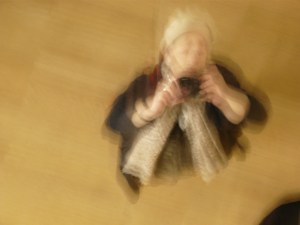 Here is a ceiling looking back at me. When ceilings fill the frame of our perception, the only landmark we catch is our own image.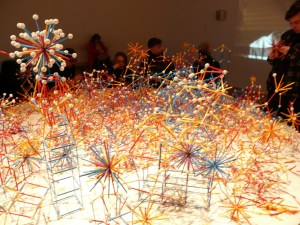
 We mostly think through conventional forms and givens, for practical reasons, while another way of thinking embraces invisible and unknown dynamics via intuition – like the seeming particle/wave paradox in quantum mechanics, where a local particle also exists as a non-local wave. The two perceptions can potentially mingle creatively, but, notably in times of social uncertainty, they clash, and fewer people maintain the ability to tolerate
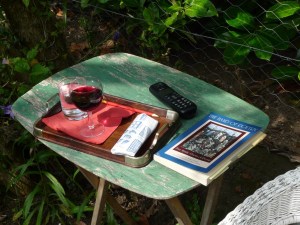 This time of year I like reading in the garden. Last week I forgot to take a book inside – ‘The Hand of Poetry,’ collected poems from Sanai, Attar, Rumi, Saadi and Hafiz, translated by Coleman/Barks, with introductions taken from talks by Inayat Khan. During a short but heavy shower that night, the book greedily feasted on rain. I found it blown up, like a balloon, to double its size.
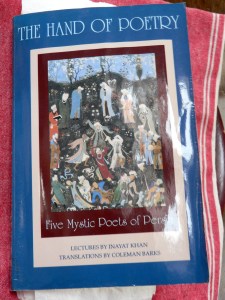 and three times over. On the third day I hung the book by its spine on the washing line. Once dry, I managed to press the volume with a heavy vintage iron into reasonable shape again. The ordeal required my undivided attention. The re-read pages during those hours lodged themselves with refreshed presence in my heart.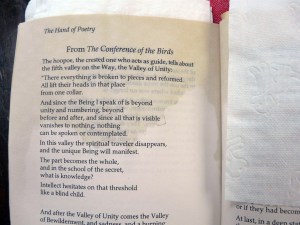
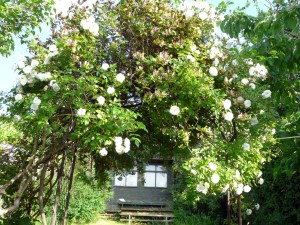 Meanwhile I enjoy some treasures close by …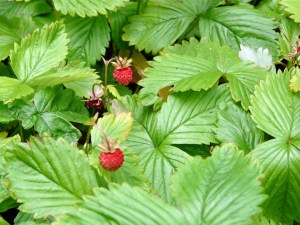


 Course of Mirrors