As an example, not a general theory, a parent who habitually keeps everything organised, clean and in place, may feel displeasure when their child does not follow this model. Sensing displeasure, the child may feel restrained and controlled, and possibly develop a reaction via contrary behaviour. Of course, reactions to initial conditions are way more complex. But both, excessive order and excessive chaos in the early environment set a tone.
My early impressions were in the middle, yet plenty of condensed experiences pull me into repetitive behaviour. But people for whom, let’s say, the organised model felt intolerable, meeting an adult partner who likes order, even in a mild way, easily hooks into their initial reaction. The desire for order is stability, beauty, keeping the wild and unpredictable at bay, and also serves as a buffer against anxiety. But someone who felt restricted by order may easily feel controlled. In this two-way process, any projection also frames the projector, and various complex relationships are such defined, with children, partners, work colleagues, mentors, groups, and even political parties. The irony is that instead of choosing a partner or group where this conflict does not arise, we often unconsciously attract an early model we disliked, maybe because of its familiarity, maybe because of the implied challenge. I assume it’s a psychological trick allowing for lessons in tolerance and, hopefully in time, a reframing of one’s life story.
While periods of stability are necessary, it is from chaos that creativity is born and new forms emerge, which is why some artists embrace chaos, allowing for the spontaneous discovery of new patterns and hidden harmonies.
To voluntary endure the dissonance between order and chaos is a spiritual quest towards an attitude of transcendence.
In this sense, and with the emphasis on becoming, my Sufi teacher, Fazal Inayat-Khan, who was also a musician and poet, used to orchestrate chaos in workshops for his students to great effect. He trained us well for the turbulent cultural changes that are now upon us, a global rite of passage we best consciously engage with. Faith in the unknown tends to signal our guiding spirit to open unsuspected doors towards a deeper resonance with the collective psyche.
“Beauty is mysterious as well as terrible. God and the devil are fighting there, and the battlefield is the heart of man.’ — Fyodor Dostoevsky
‘The Gods envy the perfection of man, because perfection has no need of the Gods. But since no one is perfect, we need the Gods.’ … Carl Jung, Liber Novus, page 244
‘The ideal is the means; its breaking is the goal.’ Hazrat Inayat Khan
Ever since I came upon James Gleick’s book ‘Chaos,’ the William Heinemann Ltd 1988 edition, I was fascinated by the concept which has radically changed scientific enquiries, as well as giving new meaning to my practice of transpersonal therapy.
James Gleick’s book also contains the amazing Mandelbrot set. Here a short introduction …
https://www.youtube.com/watch?v=3orIIcKD8p4
James Gleick’s newest publication is on ‘Information.’
Phew … here I’m challenged … a new wordpress format with its insistence on ‘blocks,’ disallows me the use of the classic editor. It’s a headache to create a post.
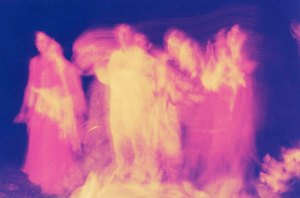 To fill in the distorted or simply incomplete gestalt gathered from early caregivers, we find ourselves during our lifetime in families of various constellations … in groupings of friends, educational settings, teams working towards a project, callings, interest groups, animal care, subcultures, political, vocational and spiritual clusters. In these groups we slot into roles we project, or are projected onto us with qualities others are drawn to engage with, for whatever reason, often to explore a hidden part inside, mother, father, sister, brother, child, lover, hidden in the light or hidden in the dark. Much of this search now happens virtually, through screens, though it can’t replace the actual physical resonance a gestalt needs.
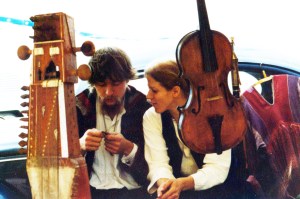 Family can also mean a collection of symbolically meaningful objects, toys, letters, books, art, tools, stones. I collect stones and endow them with memories. My ex-husband extended his loving father role to string instruments. (I wrote about his loss in my previous post.)
 At stages in our life we fit, or are fitted, into a network of psychological potential. These are intense phases. Yet irrespective of time gone since people parted ways, families dispersed, places were lost … when a former close friend dies, insight descends, rises, arrives from the past, from the future and from spheres unknown. Memories will shift their meaning. Slowly our sense of self is re-aligned. We capture a condensation of what was symbolically exchanged, essence is revealed.
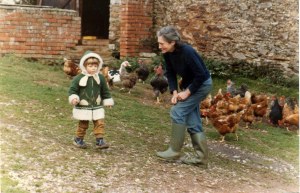 Our selfless neighbours left an indelible impression on my son. They made him a valued and loved part of a small community. Our farmer friend, Hope, was hungry for knowledge, though never realised her dream of travelling as a journalist. She had however the most vivid visions of Tibet; a place neither of us had visited but felt strong emotional connection with. Not the first time, I had a shock of appreciation for the unremembered sparking instant rapport slipping through time.
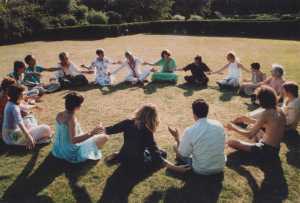 I was thirty then, had travelled much and been involved with innumerable internationally composed groupings, circles upon circles – this was to continue for decades to come. Among the groups were people who felt strangely familiar, like Hope. We would guard out solitude, cry together, or laugh hilariously about silly things. Equally there were those wary of me, often for reasons unknown to themselves, which made me wary of them. You may know this treading-on-eggshells feeling.


 Course of Mirrors