 Sun, finally, bliss. I sit in the garden, reading, among Robin friends flitting through the apple blossoms. After two hours in the heat my body needs shade. I resolve to clear some cobwebbed drawers in the shed.
The moment I lift a weighty plastic bag, I know it contains German pfennige (pennies,) about 2 kg in weight, at least. These one & two penny coins were meant to buy my wedding shoes. It escapes me how I came to start this collection. In any case, the coins were never used, though the wedding took place, and the marriage lasted for a good while. Two eccentrics … but that’s another story.
For the rest of the day I fell into a kind of Scrooge Duck hallucination, since, as I learned from Google,  some two pfennig coins had acquired high iconic value. Up to 1968 German pennies were of copper, from there on steel was added, which made the coins magnetic.
So, equipped with a small magnet from the door of my fridge, a magnifying glass, various breakfast bowls, a glass of water, and another glass of wine, I returned to my sun spot and commenced with methodical sorting, looking for two ghosts – a 1967 coin marked G (printed in Karlsruhe) that had already steel in it, and a 1969 late limited edition of still pure copper, marked J (printed in Hamburg.)
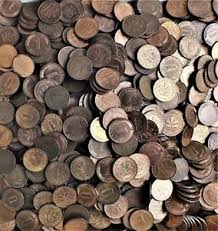 With hundreds of pennies, the odds seemed promising, at least compared to the lottery ticket I buy once a week.
I felt a rush of energy I hadn’t felt for some time. Purpose with a promise is a high energy state, I thought, giggling to myself, a habit of late, due to the surreal atmosphere since the corona virus lock down. What if? What if I find a penny worth £3000 to £5000 to collectors? I could afford to market my book, regain confidence to publish the sequel, have some work done around here, fix the shed roof, asks a painter in, buy a number of books, and leave a chunk aside for emergencies.
Well, I was as meticulous as can be, but by the time dusk chill set in, I hadn’t discovered even one ghosts. Some coins might fetch a few £s from collectors, given more research. Thing is, I’d make a good buyer for a business, having excellent taste and a knack for bargains, but selling is not my forte.
Nor am I a talented collector; otherwise, for instance, I wouldn’t have burned negatives and photographs of praiseworthy experiential novelty, including images of celebrities taken during the 1960s/1970s. Vain laurels, I thought then, devaluing my achievements. Nor would I have gifted away hundreds of vinyl records of that period, and precious books, all in a minimalist attempt to travel light into a new adventure. Profit, for better or worse, has always been secondary. And that’s another story …
The only things I collect, or maybe they collect me, are small stones. The irony of choosing to treasure such solid items is not lost on me. It’s to counter-balance my high energy states. These states, which I love, though they also exhaust, generated many satisfying projects, often in relation to groups. I gradually learned to balance the energies between my extrovert and introvert, between intense emotional and cognitive investment and periods of drifting and dreaming – incubating a new beginning – waiting for another decisive moment of clarity. How this energy seesaw was impressed in me directly after my birth is another story …
Instances of high energy in the last decade were more solitary, though I had great supporters, the co-editing Heart of a Sufi, which came out in 2011, and the writing and editing my novels, Course of Mirrors, and its sequel, Shapers. The former came out in 2017. Since then stressful events dented my spirits, a lunatic Brexit, my father’s erratic care needs, which wrecked my income, his death in 2018, and the global lock down to halt a virus, but spreading hopelessness like a trance. Procrastination became keyword for just about everything.
Somehow my short-lived penny passion brought back a taste of excitement, which beautifully sums up the essence of my first novel – finally an elevator pitch – that amazing feeling of getting on the road and the road pulling you along like a magnet to a half-imagined mysterious goal.
It’s sobering that the magic carpet of journeying has been grounded worldwide. And with the present road blocks, investing energy into a journey seems pointless, unless it’s an inner journey. Here I’m fortunate to hold rich life experiences. Being reminded what a strong purpose feels like, will, I hope, motivate me to value my writing again.
Sadness pops up when I think of teens, the young, whose natural impulse is to be active and connect physically with their peer groups, and whose desire for journeying is now frustrated – in stark contrast to the inspiring decades of my youth during the 60s/70s. Old or young, we’re all missing spontaneity, direct contact, stimulating discussions, hugs. One can never have enough hugs. Too many people struggle at present in isolation, or, indeed, in strained togetherness.
 How do I cope? I don’t watch TV, haven’t done so for years. I prefer to read coherent articles and watch movies on BFI. And I’m lucky to have a garden, with nature to touch and absorb. The lilac tree waves, the laurel hedge sparkles; Robins build their nests, tulips nod in the breeze. Oh, and to end my ramblings, I just picked some delicate violets and forget-me-nots from my garden. They both have five leaves.
It’s time for me to read my odyssey once more, to attract the wind of light required for refining the sequel. You, too, might enjoy the read, for a taste of
… that amazing feeling of getting on the road and the road pulling you along like a magnet to a half-imagined mysterious goal.
Links regarding Course of Mirrors appear on my book page
 When not actually engaged with it every single day, at least contemplating the in-depth editing of ‘Shapers,’ is my daily routine.
 The wind blustered cold though, and I was grateful for the hat I brought along, and the tissues to dry my runny nose and watering eyes.
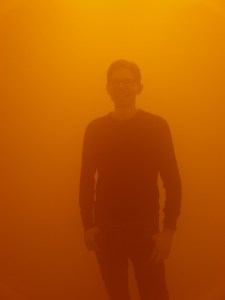 The 39 meters long fog tunnel took me by surprise. I hardly saw anything beyond a meter around me. Space became mysterious and unfathomable deep. I had a sense of being totally lost while also feeling held, though assured in the knowledge that my son was near, and that I could call him and reach out for his hand.
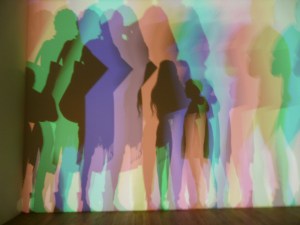 In one room, a kind of Plato’s cave, our back-lit bodies made colourful shadows ahead that shrunk or grew in size as we stepped forward or backwards, or overlapped and multiplied as we moved sideways. The magic was achieved through a row of primal coloured light beams projected onto the wall we visitors faced. Thing is, we are more intrigued, animated and comforted by reflections than the light itself.
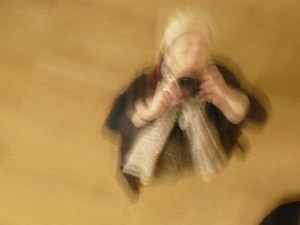 Here is a ceiling looking back at me. When ceilings fill the frame of our perception, the only landmark we catch is our own image.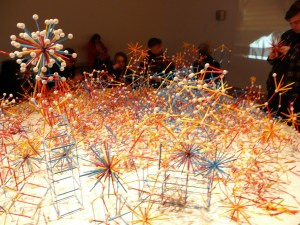
 I was in Prague. My then companion, for his birthday celebration, had organised a small group of friends to spend a weekend in this beautiful city, coinciding with the moon landing. We could afford a 5 star hotel, due to a bargain currency exchange rate in the wake of the short-lived
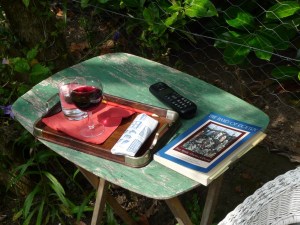 This time of year I like reading in the garden. Last week I forgot to take a book inside – ‘The Hand of Poetry,’ collected poems from Sanai, Attar, Rumi, Saadi and Hafiz, translated by Coleman/Barks, with introductions taken from talks by Inayat Khan. During a short but heavy shower that night, the book greedily feasted on rain. I found it blown up, like a balloon, to double its size.
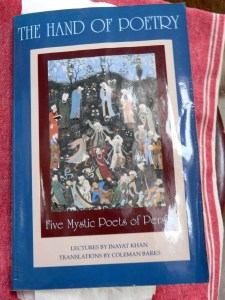 and three times over. On the third day I hung the book by its spine on the washing line. Once dry, I managed to press the volume with a heavy vintage iron into reasonable shape again. The ordeal required my undivided attention. The re-read pages during those hours lodged themselves with refreshed presence in my heart.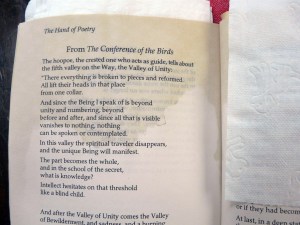
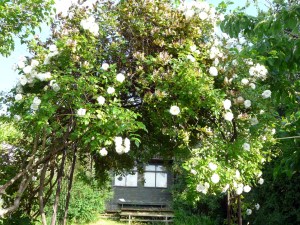 Meanwhile I enjoy some treasures close by …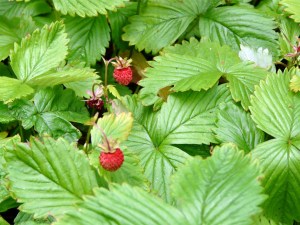
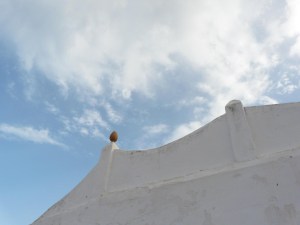 Writers and readers have their unique (often indirect) discernment of text and image; a fluid perception spots moods in the sky, or envisages what’might be happening behind doors.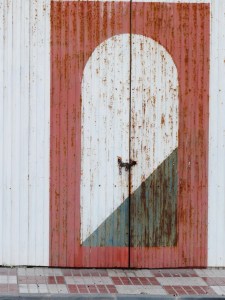
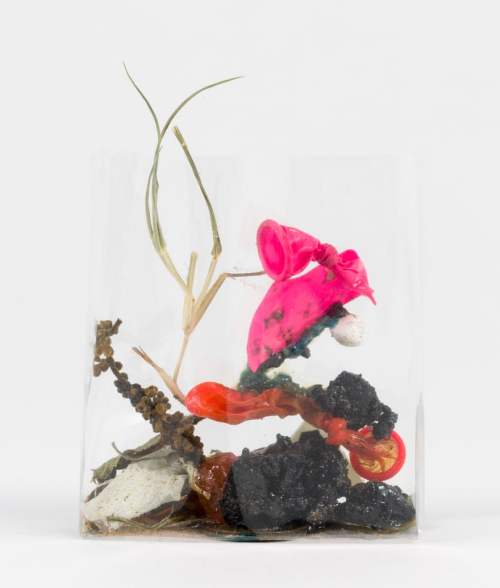 The eye-catching miniatures created by Yuji Agematsu pulled me back to my student phase in Munich during the 1970ies, when a group of friends looked out for small items like roots, twigs, leaves, seeds, grasses, feathers, stones, shells, dried or fresh flowers, the occasional bottle top or bits of shiny sweet wrappers, and sampled such bits into cellophane bags. We then handed these tiny poetry worlds to pedestrians or people sitting outside cafes in the then student district of Munich, Schwabing. It gave us thrill when recipients expressed a shock of surprise.
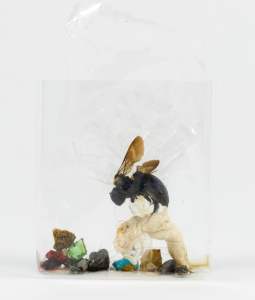 In this
 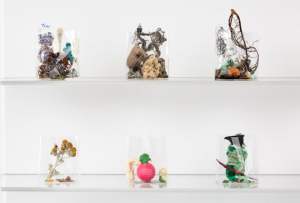 Yuji’s search for trash treasures developed into a language that emotionally embraces urban archaeology. He attracts bits of litter we may regard with a smirk, mostly ignore or simply not notice. While his miniature installations are scaled down to finger size sculptures, the mind-expanding and transformative effect equals grand scale installations. My experience, apart from the cognitive surprise, was being left with a bodily sensation, a deep feeling connection with these miniatures.
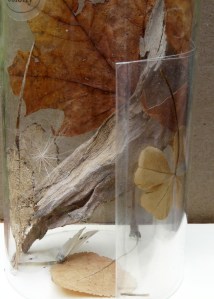 I have miniature installation in my home, on windowsills … unable to resist picking up feathers, seeds, leaves, driftwood, pebbles and so on, which often hold the story of an eternal moment in time.
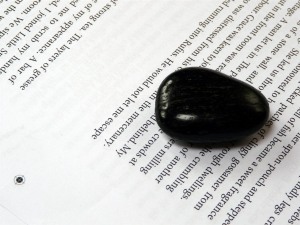 A small black stone, for example, features prominently as a protagonist in my novel,
 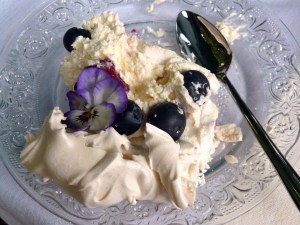 Our senses, physical and otherwise, make us feel alive, grant pleasure, and no doubt increase our hunger for taste, touch, smell, sight and sound, and more senses besides.
 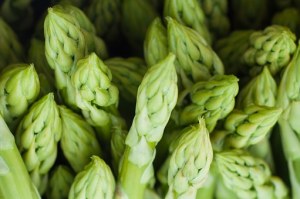 … the small, round boiled new potatoes were the sweet, starchy berries of the earth. Their light brown skins stretched enticingly over the creamy white fruit within. The asparagus, almost luminescent green, redolent of a waving forest of green marine plants viewed through the warm clear waters of a tropical island bay, fresh and tender in the soft embrace of the mouth and chewy enough for the teeth to relish their work of liberating the cacophony of nourishing juices over the vibrant, aroused tongue.
 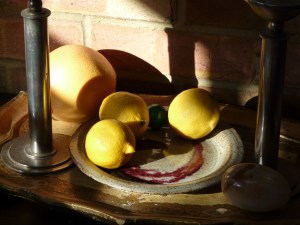 The salmon, its raw fishiness tamed by gentle heat in the company of thin slices of lime, into a piquancy which thrashed around the palette like wild seas. And, the final trigger to culinary orgasm, a tangy, herby sauce, which pulled the palette this way and that, like stretching a rubber band, taking it for moments into the realms of sublimity.
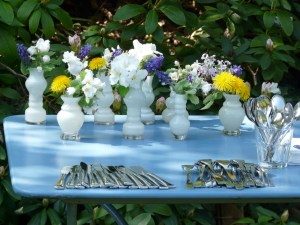 During gatherings of friends, we love sharing stories as well as food delicacies … the displays and the bouquet of flavours wafting on the air on such occasions may well attract hungry ancestors, grateful for such feasts.
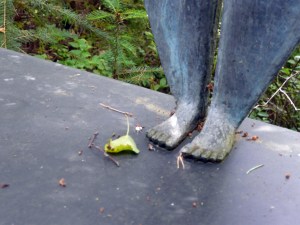 In my last post I touched upon the half-imagined essence shining through a work in progress – via incubation, the search for one’s language (in whatever form,) through the heart. This kind of search is bound to involve deep personal experiences, be it related to an outer or inner place, as the myth of one’s existential journey, which, when authentically communicated and shared tends to assume universal significance.
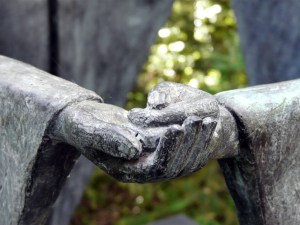 Talking in the dark, their hands occasionally touching, Louise and Addie come to value their fragile pact. Even Addie’s abandoned visiting grandson is wooed by the loving regard between his grandmother and her new friend, and their tolerance and tender concern for him, which is, the way I read it, the initiation of a small boy into the wisdom of respect. While the petty gossip of townsfolk adds to the fun of their social transgression and strengthen the closeness they’re forging, the jealous objections of Louis’s daughter and Addie’s son are truly hurtful, and in the end decisive.
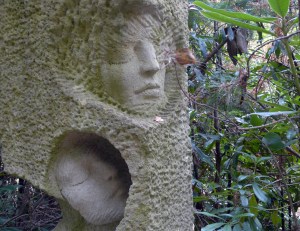 As painters or sculptors do, I frequently step back from my writing projects, searching for the core, a half imagined essence to shine through and re-animate the creative flow. Skills alone don’t do it, techniques alone don’t do it, nor style. As long as the essence of what I try to express floats in the unconscious, my efforts will baffle and tease me.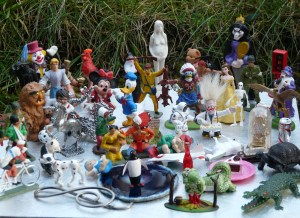
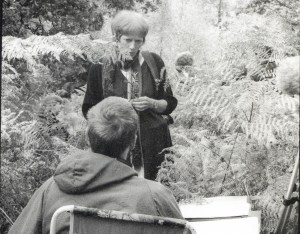
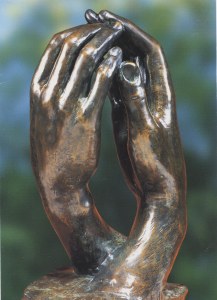
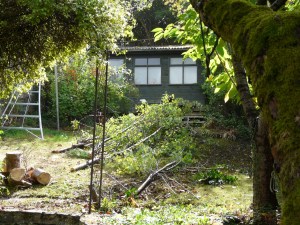 were solved at reasonable costs. In fact, every problem solved … cementing dangerous steps, replacing old iron guttering, massive clearing of garden overgrowth, sorting a blocked man-hole … felt like a heroic victory. You should have seen me stirring the shit in the manhole with a long iron rod. I kept on for hours since it has worked once before, many years ago. I spare you the hilarious details. In the end I called in the experts. Craftspeople who know their job have my admiration. Societies couldn’t function without them.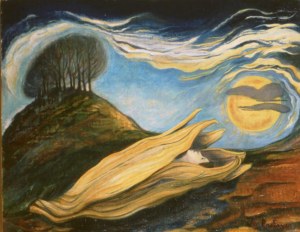
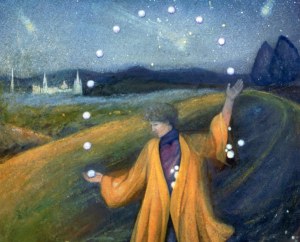


 Course of Mirrors