… biofeedback & the mystery of breath …

Ill-health suits numerous corporations whose massive revenues rely on it. The hypocrisy of this situation is obvious. Most ill-health develops through a lack of rhythm between activity and relaxation, and the lack of places where people can find a calm environment and the privacy to relax. To start with, imagine the benefits if relaxation were to become a main subject taught in schools … ? Children would learn that everything travels on the breath.

http://sufimessage.com/eastern-rose-garden/mystery-of-breath.html

Biofeedback has been known in the East for thousands of years. Hindu practices like Yoga and Pranayama, for example, are essentially biofeedback methods. Some yogis are known to achieve control over their physiological processes.

One of the instruments developed in the West to measure physiological processes is the electroencephalographEEG. It demonstrates the amplitude of electrical activity in the brain. The feedback provides awareness that enables the manipulation of physiological functions at will, including brainwaves, muscle tone, heart rate and pain perception. One of the benefits of biofeedback is that it can improve psychological health, since the physiological changes occur in conjunction with changes to thoughts and emotions.

By consciously experiencing the relationship between body and mind sensations, desired changes can be maintained. The method has been used successfully with groups of young people to improve management of anger. I don’t know why it is not applied more widely.

*    *    *

A disclaimer – this post is meant to draw attention to biofeedback, no more. If you are interested in this subject and want more precise information please explore relevant sources of information.

Below are some basic states of consciousness. 

Beta State (13 -20Hz)

Day-to-day state of attention, orientated to the outside world, geared to focused, practical tasks. Higher than 20 Hz tends to produce hyper vigilance and anxiety.

Alpha State (7.8-14Hz)

A level reached during relaxation, when stress lowers, the pulse slows and blood pressure drops. According to the quality of consciousness, intuition operates, and subconscious information can be accessed, like childhood memories or past lives. Inspirational and creative moments are more frequent. It is also the state just before falling asleep and just after waking.

Theta State (3.2-7.8 Hz)

This level of deep relaxation is good for regression. Images and emotions can surface vividly. Creative imagination, self-reflection and cognitive processing of perception become possible. There can be a feeling of inner peace and being at one with the world. When a detachment from the physical body is sought, pain ceases to exist. REM sleep dreaming and hypnosis belong in this state.

Delta State (0.1-3.2Hz)

Some mystics and intuitive people can access this level while awake, in other words, they are able to remain conscious during deep meditation. Normally this state happens only during deep sleep, when unconscious or during a coma.


9 Comments

Filed under Blog

… inner voices …

She talks to me, I talk to her

We echo each other’s time

For comfort

Or we discuss patterns

That cohere – and entangle

In this wondrous web of tales

Glimpsed during twilight

She mirrors for me what was

I mirror for her what becomes

Yet in the silence between us

Flows a vibrant river

Pulsing with our true name …


Ashen

I was writing the above poem when this image arrived –  of the Cardo Mountains in Tarragona – the sky at sunset seen on the 5th of January 2012 by my friends, Agnieszka and Harold, from their terrace. It conveys something of that mystery between times.


4 Comments

Filed under Blog

… about time …

Finding this ancient tale again, I wished a king had asked me years ago to write the story about a quest for The Real …

A LITTLE STORY ABOUT TIME

Among Chuang-Tzu’s many skills, he was an expert draftsman. The King asked him to draw a crab. Chuang-Tzu replied that he needed five years, a country house, and twelve servants. Five years later the drawing was still not begun. ’I need another five years,’ said Chuang-Tzu. The King granted them. At the end of these ten years, Chuang-Tzu took up his brush and, in an instant, with a single stroke he drew a crab, the most perfect crab ever seen.

Still, some things happen for a reason before the reason emerges.

A very inspiring New Year to all of you here …


2 Comments

Filed under Blog

… circular versus linear time …

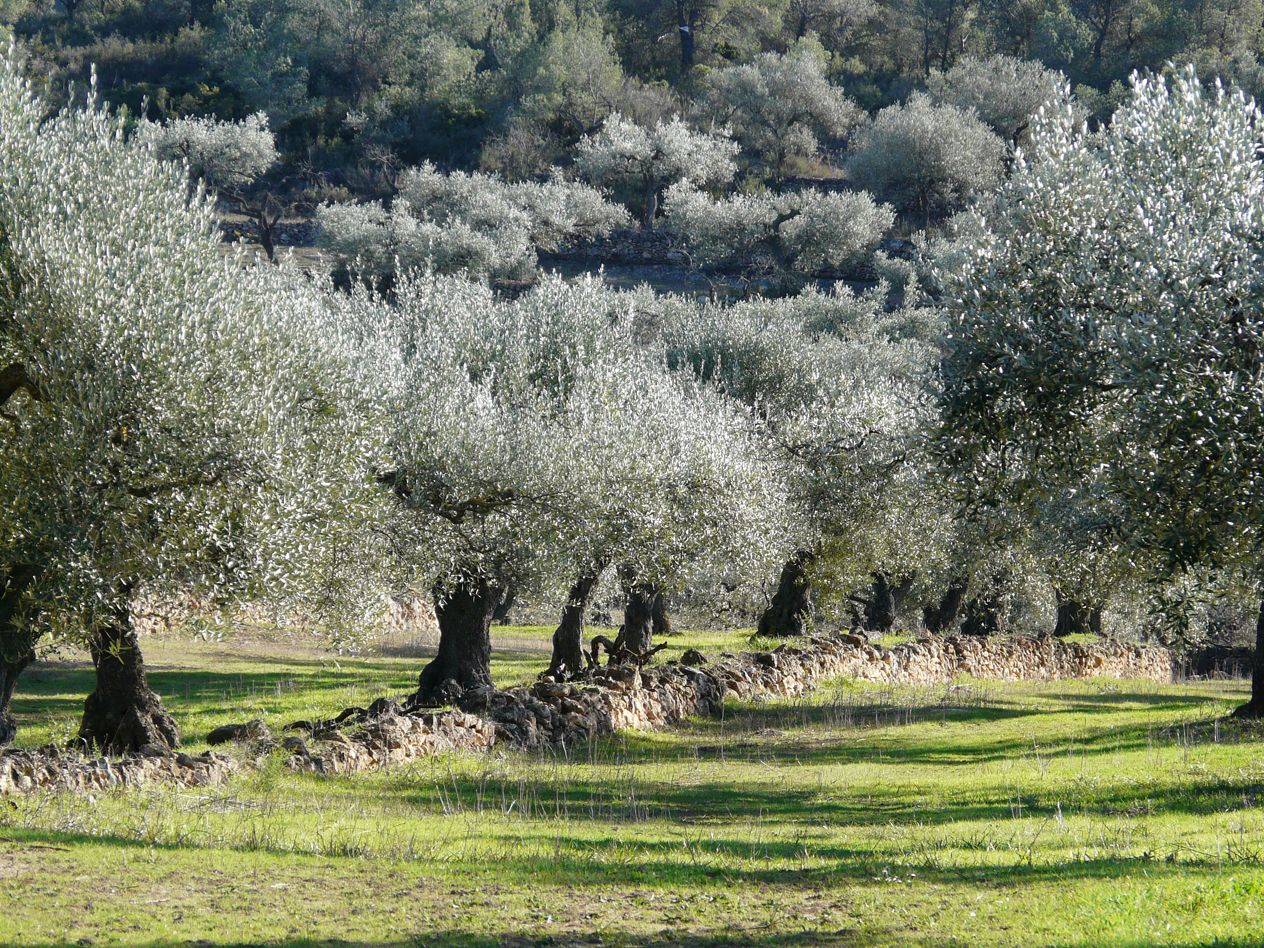
In rural Spain the young people leave for the city to chase the future. Houses crumble in the hills where the past is guarded by the older generation, or so it seems. When families shrink the olives stay where they drop, and nothing sells without a brand.

Some brave souls, like my friends, Harold and Agnieszka, return to the land and make self-sufficiency into an art form – a beautiful ecological haven where water comes from a well, food from the land, and the sun’s light and heat is captured to provide under-floor heating, as well as casting an iridescent haze that cheers the heart and bronzes the skin.

Total calm descends during late afternoons, when the sky becomes a canvas to all colours and darkens to night, sparkling with deep layers of stars invisible to the city folk. In the blink of an eye the world appears again in a new gloss of day.

Harold pondered on the slow, enduring movement in circular time, recalling the other life we all know too well, where the measure of things completed is treasured before we rush on to the next project.

Both qualities of time, circular and linear, have their beauty.

As I walked in the olive groves, a  thought popped up – followers follow those who feed them. Could one be neither follower nor feeder (leader)? Would this bypass nature’s law? Like resting at the centre of the grindstone and not be crushed? Would it be living like a beggar receiving what is surplus and freely given? Like where presence alone illuminates the heart in which peace abides blessed by the invisible source. There are such states, tiny escapes, small eternities, in-betweens, unexpected gifts of nothingness, when the world stops to laugh at its beautiful mirage.

So here we are, after Christopher Columbus, standing now proudly pointing at the horizon beyond Barcelona’s harbour, while a plane comes in tickling his finger, he who at one stroke widened and shrunk the world with his vision. Would he want to play with this shape and time-shifting capacity? What territories would he explore today?

Returning through Gatwick I had a tantrum. I rarely have tantrums. How it happened that I landed in a queue of people who (presumably) volunteered to undergo an iris-recognition-test I can’t recall.

This is the future, where you walk through a cubicle and look into a mirror that reads your eyes to establish whether they correspond to the photo in your passport. Each unique individual becomes data enshrined for their lifetime and beyond. I sabotaged the process for several irrational sentiments. Who wants to look straight at their exhausted mien after hours of queuing and ignominies  at an airport? I hated the intrusion – eyes being the mirrors of the soul – and, I figured, thousands of jobs will be lost since scanning passport and eyes alone will herd the masses along.

I found myself in the cubicle avoiding the mirror, which meant the stupid gate remained closed and I was trapped. The official encouraged me repeatedly to look directly into the mirror … I blinked frantically … of course the gates refused to let me through. Finally I stomped my foot like an angry toddler and consequently was allowed to pass through a human gate.  In that instance I powerfully grasped the indignities and the dehumanising experiences so many people had to endure and do so continuously, being sifted by whatever power resides, experiences I was spared all my life. And this is me, who am normally fairly open to new technological inventions. Is this my limit regarding progress, or do I sense an issue here,  a host of abuses that potentially lie in the wake of artificial eyes … ? What do you think?

Here are some images from my week in Spain …

http://www.facebook.com/media/set/?set=a.10150489460439004.392235.795239003&type=1&l=b0fd26f7ad


6 Comments

Filed under Blog

… cognitive dissonance, yes …

First of all – I’m wishing all my friend and foes sparkling, blessed and worthwhile festive days.

In the New Year – wouldn’t be great if we could take first steps all over again? … And resist making others walk, since  they get more satisfaction from accomplishing this feat themselves.

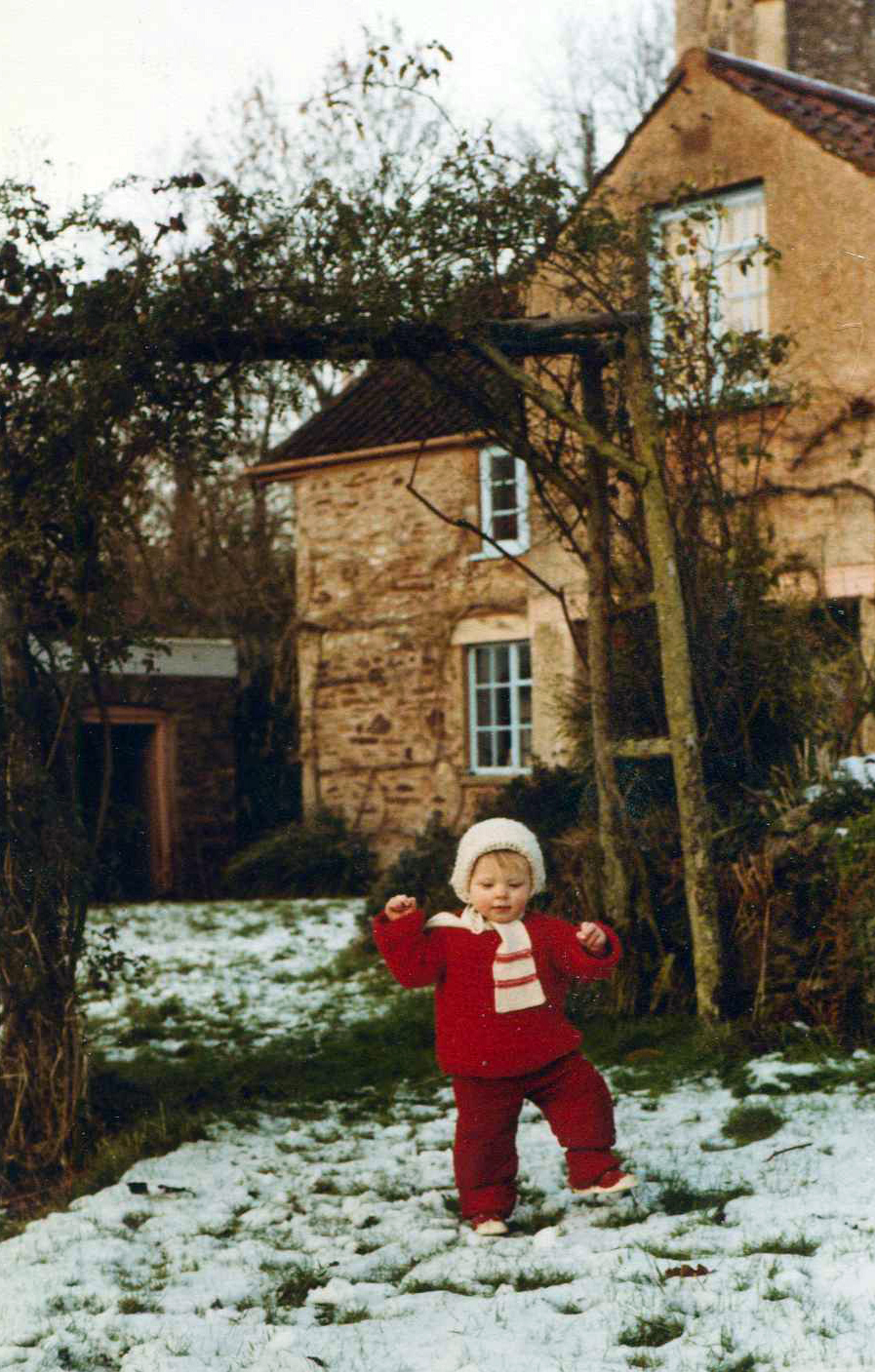
I’ll never forget the first day my son walked, on his first birthday. He rose, took a few steps, fell, rose again, took a few more steps, fell, and so on … By the end of the day he walked – beaming with pleasure. I had the wisdom not to interfere – a wisdom I did not always apply to myself or other people in my life.

And if you’ve walked beyond the edge … you might like Gide’s quote …

‘One does not discover new lands without consenting to lose sight of the shore for a very long time.’

Which brings me to the theme of ‘cognitive dissonance.’

The Four Horse Men …

http://www.youtube.com/watch?v=9DKhc1pcDFM&feature=player_embedded#!

http://www.youtube.com/watch?v=TaeJf-Yia3A&feature=relmfu

Watching these hour-long sincere debates between Richard Dawkins, Daniel Dennet, Sam Harris and Christopher Hitchen, I had the following thoughts:

Split brains are unstable … a good thing, because  cognitive dissonance is vital for evolution …

Knowledge will always be a blessing and a curse and that’s our challenge …

*    *    *

And here the poignant reflection of a man whose’s thoughts penetrate the heart:

‘Thoughts are beings that generate … One thought of kindness gathers a thousand beings of love and kindness around one.’            

Hazrath Inayat Khan


Leave a comment

Filed under Blog

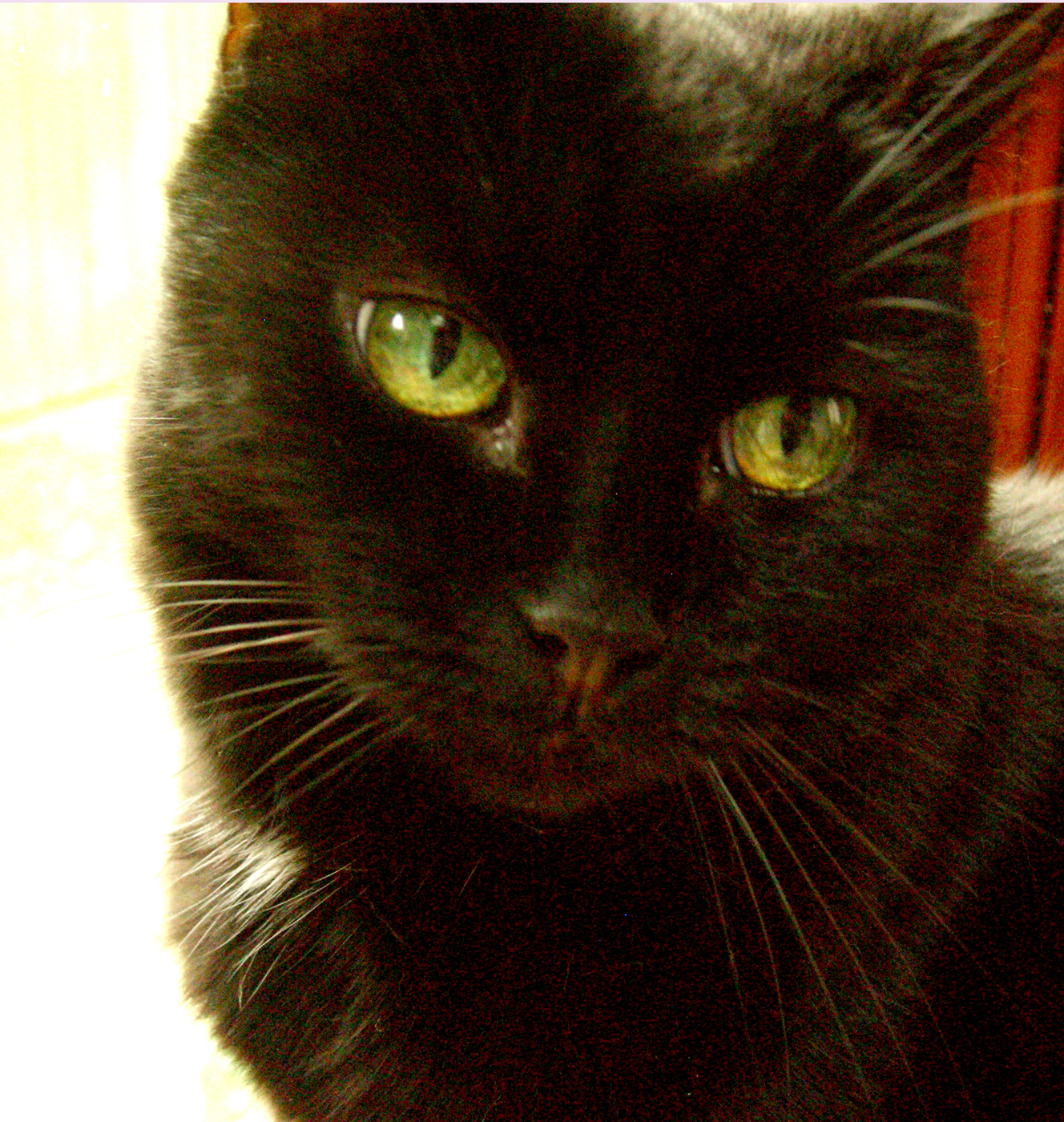
… I miss my cat …

Yes I do …


When I sat down quietly to meditate she joined me, unfailingly,

from wherever she was hunting. I always thought that was amazing.


12 Comments

Filed under Blog

… we attract more of what we hold in our heart …

I appreciate feedback – please comment. Wrapped up in doing another edit of Course of Mirrors before I head for Spain , I came upon this scene in chapter 21 – below – where Cara, Ana’s soul-sister from the twentieth century, interacts with her in a dream. In the previous scene Ana finally learns from her mother who her natural father is and has her suspicion confirmed. To mend hearts is not easy.

This first novel was character driven, and I get never tired of editing (reading) it. This must be a good sign.

*    *    *

Having wandered unseeing through a copse, I nearly  tripped over a branch. Beyond a downhill clearing, amongst a cluster of beeches, were the tell-signs of a tree house.
Animated, I ran as fast as my legs allowed. A rope ladder dangled from the beech, which I climbed. Under tattered canvas awnings the generous platform had a low table and seating. In a casket, I found items wrapped in waxed cloth – oil-lamps, and blankets. My beloved sanctuary all over again, Luke must have been here or even built the den. Expecting a clue I found one. Carved in the main trunk were the weathered remains of the familiar heart with wings and underneath it faint letters – S&Z – clear evidence to torture my mind – S for Sirus. And Z for Zara, whom I had not met. They were pupils of Ruskin. They would not have known they were siblings. I had heard of their tender friendship. Sudden jealousy crushed me. Luke cared for her – I had no special place in his heart. I wrapped a blanket round me like a tent. Was he still caged in that dark room? Fingering the ruby heart, memory brought a scent – musk trailing in Luke’s step. Curling up on the hard planks, a fantasy unfolded – us together in Magna Spring. We could both explore new ways of seeing … the song of a blackbird lulled me to sleep … 

I walk through endless corridors. A shimmering being by my side radiates golden light and opens a door for me to step through – and another – door upon door. I am guided through a labyrinth. I wake to voices. My eyes open to the surroundings of a sick ward. I don’t want to be here and shut my eyes again.

‘Is she all right? Has she lost her voice?’ Mother worries.

The ward sister reassures. ‘She will come round.’

 I want to prolong the peace and drift into another dream. Cara appears and says, ‘This was my dream. The golden being resembles your Sat, a protective presence that is part of me.’ Cara observes my surprise. ‘Unseen beings live within us. Reality – in any world – is what we accept as real in our imagination. Come, Ana, I will show you something.’

She takes my hand. We enter a small room crammed with students around complex machinery. Colourful lights flicker on dark panels with rows of buttons. They are marked by numbers and letters. The atmosphere is one of a starlit night. Behind the panels sits the tutor, a burly man with a red beard, resembling Tatum. He talks excitedly about the expansion of a single bird sound and demonstrates how this is done. 

At the press of a button the melodious trill of a blackbird fills the room. The tutor runs his fingers over the lights and slides knobs on a panel. The blackbird’s tune repeats itself. Its sound is stretched and then overlaid, softened, strengthened, speeded up, slowed down, turned round in time and overlaid again, forwards and backwards. The tutor extracts a rhythm, sets a base note and adds different keys at different speeds, until the bird’s song has been absorbed into a strange and beautiful symphony. A hush fills the room. The tutor sits back and beams. We share his happiness. ‘This, my friends, can evolve from the trill of a blackbird, using a digital system.’ 

I want this explained. Cara pulls my hand and we drift into another space, a garden, where we settle on a stone seat. She looks at me with eyes that always seem like my own. ‘In your world, sensual date is recorded on surfaces. Scores, texts, images and numerical figures are imprinted on tablets and fibres. Copies are made, and copies of copies that eventually decay. In my lifetime we record sound and condense any kind of information into binary codes, which can be multiplied and rearranged indefinitely. 

‘What’s a binary code?’ I ask 

‘A system based on light pulses that switch on and off. Used in endless combinations and sequences these pulses transmit unimaginable amounts of information – weightless – in abeyance – send as bit-strings to a particular location. On arrival they are temporarily assigned to a context, decoded, expanded and reassembled. A play of random associations can offer fresh insights, as happens in dreams. Snippets, like the bird sound that became a symphony.’

What she describes is beyond my grasp, but the idea of reassembly sparks my excitement. ‘I cut my paintings of seascapes into squares and patch them together into a new image, joining different perspectives to express my sense of the vast body of water.’

Cara laughs, ‘Exactly you’ve been using the same idea!’

‘Some fellow students think I am making a farce of reality. My tutor thinks I show what is beyond the eye. It is not a lie. I express what I perceive, a kind of energy.’ 

Cara says, ‘our heart-mirrors reflect deeper realities. Value your imagination, but choose what you give energy to, be clear what you want to reflect. When a thought is ripe it manifests. What we hold in our heart acts like a magnet, attracting more of the same.’

I woke with the phrase – we attract more of what we hold in our heart – and cringed. What I held in my heart today was resentment. I did not want more of the same. Climbing back up the hill to the mansion I saw my mother standing with Rheine. They looked out over the harbour from where faint music and revelling could be heard. My conscience pleaded and would not be ignored. Rheine met me halfway. We embraced easily, deeply, like back in Kars, when we were refugees in the night. Rheine was going to be my witness. I reached for mother’s hand. She stepped close, eyes wide in astonishment. ‘Mother,’ I said, ‘I love you.’ She folded into my arms, like a child. For that moment I was the mother she had longed to have.
 

7 Comments

Filed under Blog

…the revolt against regulations …

Our sanity is at stake if we don’t learn to bridge extremes. Below I paint two contrasting scenarios illustrating, arguably, two types of tendencies within our society. They relate roughly to left and right brain functions.  Each is a simplified, fictional abstraction and ignores the function of the corpus callosum and the complexity of individuals where many overlapping abilities, dichotomies, and all shades of grey and colour apply. Like Yin and Yang, one contains the other. In the two graphic scenarios I make the environment the crucial factor. To complicate matters, imagine being born with a predisposition into an environment that is not supportive of your natural inclination. It’s bound to mess you up for a while.

 First scenario …

Imagine you grow up in a disciplined environment where bedtimes, mealtimes, tasks in the home and considerate attitudes are encouraged, and in cases enforced, not to be digressed. As long as you toe the line you are accepted and feel supported.  Within this ordered structure, you learn to respect yourself and know your place. If this structure appeals to your temperament you will extend your expectations of order towards school life, friendships and work life. In other words, as a well-adjusted member of your community you anticipate similar coherent behaviour from others. You may feel particularly drawn to work for organisations that require a solid structure to function efficiently, the army, police, government, education, science, social services, the NHS or any large corporation. You become part of a sub-culture, a clan your feel protected by and will most likely defend. Natural forces may seem as something to be conquered. The concept of the unconscious and a free-wheeling imagination often fly in the face of rationality and seem alien. If your clan lets you down because its structure is crumbling and needs changing in order to survive, due to technological advances, financial pressured or corruption, you will have a really hard time and may feel betrayed.

What will be your challenge …?

 Second scenario:

Imagine you grow up in an intellectually and emotionally highly stimulating, or a merely disorganised home. You are frequently left to your own devices, have to think for yourself, find your own rhythm and make decisions as to your role in life. You may be lucky to find your field of action or feel lost and, or develop slowly. You certainly will experience adults as fallible beings, not semi gods. You might revolt against imposed structures and the way they inhibit your creative freedom. And if you are driven by innovative ideas you will find obstacles towards their manifestation whenever regulations are involved. You are a risk taker, but you need emotional intelligence and elbows to push through obstructions or linger in obscurity as misunderstood maverick. If you manage to find a voice, a platform and supporters, your influence could have wide-ranging consequences. Yet if you can’t find support for your wild ideas, what will be your challenge …?

The rational, first scenario, dominated our culture for centuries now. But if it hadn’t been for passionate, irrationally motivated innovators we would live in a very different world. You could apply all kinds of other dichotomies, the masculine versus feminine principle, historic versus psychic time, whatever concept you apply, it’s pretty obvious that what is called for is bridging, a facilitated traffic across 250 million or so nerve fibres of the corpus callosum that connects our two brain halves. Culturally integrating our dichotomies into some kind of functional unity seems a vital part of human evolution.

Many know a truth beyond appearances in their hearts, but truth seeks fresh expression. New maps are needed in time to make the expansion of consciousness intelligible, through science, through the arts, through sharing processes and insights, and through collaboration.

How to give expression to the implications of the enormous changes that happened during the last hundred years, the consequences of which are evident in the fragmentation of values around us? How to remain alert to the transformations in store, and find creative ways to birth ‘essence’ into the context of now? It‘s ‘playtime’ again because the rulebook we inherited has lost is meaning.

The collective is still trying to process the metaphor of Einstein’s concept of relativity, which in a psychological sense opened a climate of moral liberty and allowed us to play with perspectives, and which is why moral advice lost much of its authority. And we have hardly understood the symbolic reality of quantum physics, offering new understandings of human consciousness in relation to the universe, a spiritual liberty that a hundred years ago could have only been imagined by a very small minority – probably mystics who always knew …

Light is both particle and wave, and though we can only observe one at a time it is one light .

And now we are swept up by the digital revolution, which makes the linear metaphor and our limited concept of history redundant and transforms our relationship to time and space.

The seeming liberty of democracies is threatening to  traditionalist cultures. Too many regulations in a democracy will cause a lack of co-operation or revolt. We need new maps, different living structures for families, including families of heart and mind, and we must find ways to translate what we think we know anew, fresh, and offer each other guidance in the changing room (the psyche). This happens in as many ways as there are individuals who value psyche as the bridge and gateway connecting the sensible to the spiritual world.

‘What else, when chaos draws all forces inward to shape a single leaf …’ C. Aiken

6 Comments

Filed under Blog

… bottoms & tyranny of perfection & mirror neurons …

I recently walked through an antiques warehouse looking for a present and kept meeting the same two women. One did the talking, dropping names of capitals from around the world, where she was last week, where she was going to be tomorrow, how she would meet up with so-and-so and what had become of so-and-so. Her friend, slightly less classy, walked a step behind, listening. During my tour of stalls I met the pair three times and each time the globetrotter’s monologue spun on like gerbils do in a wheel – more capitals, more exotic locations, more gossip about affluent associates …

My interest went as far as wondering about the placid listener. Next I stood behind the women in a queue, waiting to pay. There had been a commotion. A crystal (glass) skull had broken into myriads of bits. Surreal, I thought, and became attentive to the scene.

This Crystal Skull can be found in the British Museum, apparent source: Mexico. It’s a fake, though the myth about Crystal Skulls is well alive, with some pertaining they were intended as a form of computer that records energy and vibration that occur around them …

A sales girl vacumed the carpet before the cashpoint. The delay seemed stressful to the classy woman. Her monologue stopped. Instead, she scrutinised the girl doing her cleaning dance, looking her up and down, eyes frequently coming to rest at her bottom, followed by a mien of displeasure and subtle head-shaking as if her sense of aesthetics was offended.

My interest increased. I had disliked my bottom when I was a teen. It turned pear-shaped whereas I wished it to be, oh I don’t know, apple-shaped. My parents didn’t give me this complex. I reasoned later the sudden break in my intensive sport activities eventuated the phase. So I stood there thinking, heck, there is nothing wrong with the girl’s bottom. The classy woman seemed to have very high standards of style, or irrational fears of imperfection. Modern dress sense being what it is I, too, catch myself gasping at wobbly bottoms revealed by leggings. But the bottom of the young woman was firm and unique.

The sales girl went about her job in a graceful and efficient manner. She seemed oblivious to the disapproving stares, though something must have registered, her movements became slightly awkward. And then it happened … she toppled a wire stand and hundreds of cellophane wrapped greeting cards slithered all over the floor. Dissonance – go figure.

Why am I sharing this incident? Apart from the cultural imperative of a perfect shape imposed on women, and perpetuated by women, involuntary labelling tends to shoot down everything that falls short of ideal means we hold up for ourselves, personally or socially. Unconscious mirroring, as useful as it is to the evolution of culture, also fixes attitudes and beliefs, disabling and limiting us.

Without the ability to self-reflect and challenge habitually thoughts, committed brain cells run the show below our awareness, especially when we feel stressed. The term, ‘mirror neurons’ may be new but the concept of reflection is well known, in that we are connected through what we hold in the mirror of our heart. I know, I know, it’s my pet subject. You find it hinted at throughout my site here.

Within the last decades technology produced a global mirror, you are looking into it now. And what a teaching it offers … every thought gains speed in a play of probabilities. Attitudes and beliefs lift beyond our backyard, they go viral at the push of a button, and, significantly, become visible. With awareness, we are not automatically compelled to react. We have a choice not to be hooked into projections, and a choice how to respond. It becomes clear that each one of us has an influence …

*    *    *

If you are interested in the fascinating subject of mirror neurons, here is a link:

VS Ramachandran … I do love the way he rolls his RRRs

http://www.ted.com/talks/vs_ramachandran_the_neurons_that_shaped_civilization.html

http://www.youtube.com/watch?v=sq6u4XVrr58


4 Comments

Filed under Blog

… tuning into your unique frequency …

Are you ambivalent about spirituality? There are countless paths, tradition, groups and teachers to follow … but since authorities and hierarchies have become suspect, for good reason, spiritual advice, like any other advice, can seem like a cacophony of white noise. There is a collective expansion of consciousness gaining momentum that challenges each of us to come into resonance with our body, and a deeper aspect of our mind, the heart. It is through the heart that we can open the channel to your unique frequency, and receive guidance from the truer Self in us, our eternal witness that connects us to the source.

The rose, a potent symbol for the Self, appears in various transpersonal practices. The visualisation below is a variation of an idea used in Assagioli’s Psychosynthesis and the Sufism of Hazrat Inayat Khan. You can elaborate on the words and guide your own journey silently, or have a friend read it out, or record your voice and listen back to it. The intention behind the practice is to become receptive to the core of you, to tune the heart to the love you are, we all are, in essence. Practising this visualisation opens a channel to your inner guidance that will attract the outer circumstances you need.

*     *    *

Find a safe place. Close your eyes. Be aware of your body and simply follow and feel your breath until its rhythm settles. After a while, bring your attention to your heart, whose spiritual counterpart exists as your true identity in another sphere. Make a space for thoughts and images that arrive. Don’t reject anything, observe, don’t bother to label, judge or follow links. Instead, face and feel whatever arises, let it pass, and simply return your attention to your breath. You may need to stay with this process of accepting and releasing thoughts and images for a while.

Once your mind and body have calmed and you feel receptive, allow the image of a garden to emerge, your private garden. Visualise this special garden … notice a rose bush with a bud still enveloped by its green sepals. The bud draws you close to witness its opening.

See the shielding green sepals stir and offer you a glimpse of the colour beneath. Now the rose receives the light of your attention, its petals slowly turn outwards and open in a fluid movement, like the arms of a dancer. Observe this opening dance. Sense the same unfolding also happening deep within you. Fully absorb the hues and the tenderness of the rose leaning towards the light, behold its perfect beauty and inhale its delicate scent.

Now allow the rose slowly to expand … until it grows into a transparent rose temple filled with light and large enough to step into. Move directly to the centre and rest there for a while. Become the rose temple. Absorb the gentle atmosphere, the hues, the rhythmic grace, the sound, the fragrance, the splendour and continuous unfolding towards the light. Absorb the sensation completely … be at one with all your multiple selves … at peace within your essence, your wholeness, your true being. You are your own unique lover and your own unique beloved.

Now rise and step away from the centre. Leave the rose temple behind. Turn and behold its magnificence once more, and then adjust its shape to a small rose that fits into the palm of your hand … Place that rose into your heart … Know it resides there, maybe closed, but ready to open whenever you  use your intention to connect to the wonderful feeling of wholeness. All you have to do is remember, and the symbolic power of the rose will evoke the presence of your timeless Self.

*    *    *

4 Comments

Filed under Blog