Tag Archives: your unique frequency

… sun ra – a glittering show …

Fallen angels being such a wonderful subject – had I been black, and a talented musician with total passion for jazz, I’d have joined Sun Ra’s Akestra. He was an intense and fascinating man, one of those people who move through chaos to get to harmony, who have their pulse on the future. They tend to attract a select fellowship. Tuned into a novel wavelength, they enjoyed an accelerated period of growth together, a hell of a time.

With his experiential musicians, Sun Ra expanded the bandwidth for the performances of his cosmic vision and shared the breadth of his trickster consciousness with a larger audience, exemplifying a crash course in creativity.

You might like to watch this excellent BBC documentary by Don Letts. Sun Ra, Brother from another Planet:

http://www.youtube.com/watch?v=LqZHzpAYVIk

Listening to musicians and friends who worked with Sun Ra, I noticed how they respect each other, all through the elation of creating a fresh sound-language. One interviewee remarked on Sun Ra’s urgency, his alacrity, another quoted him: ‘Are you going to be replaced by a button? If you can do THIS you always have a job,’ you might not make any money but you have a job.’ Everyone in their way confirms Sun Ra’s genuineness, his seriousness, and his humour. He was a catalyst. His compositions were often off-chord, which some found off-putting, couldn’t get into.

It’s a sound form other spheres  that transcends known categories and opens new horizons. I love the saxophone doing what it can do, almost playing by itself. And I love the glittering hats of the musicians.

Here’s the early cult movie – Space is the Place – from 1974 – The mystery of Mister Ra. http://www.youtube.com/watch?v=NwNtxFH6IjU&feature=fvwrel

Sweet show of a joker, the film shows a mythological duel between Sun Ra and The Overseer, between an angel from Saturn and a fallen angel.

                ‘You just want to talk about realities, no myth.

                 Well, I’m the myth talking to you.’ 


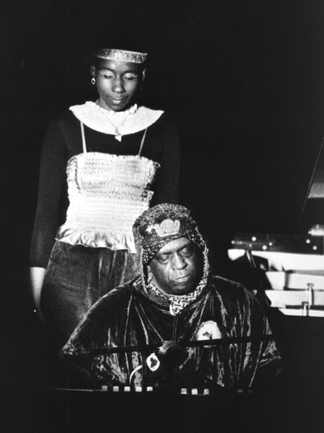
The photo of Sun Ra with June Tyson

Is by Michael Wilderman

http://www.jazzvisionsphotos.com/

10 Comments

Filed under Blog

… pattern which connects …

For a recent book-sharing with a group of irreverent friends (archventures), I had the wish to share so many books that I instinctively reached more or less blindly into one of my shelves. Books in my home, I must add, are in a muddle. The only order to speak of is their relationship to each other through time. I picked Alice in Wonderland and Mind and Nature. During our afternoon of reading there was not enough time to do honour to the latter, Gregory Bateson’s work. So I said I’d write up something. Oh dear. After pages and pages, I finally recalled this was supposed to be a blog-post, not a novel .

I first came upon Gregory Bateson books, ‘Steps to an Ecology of Mind’ and ‘Mind and Nature,’ during the early 1980’s, after his death. The clarity of his notion that biological forms arrange themselves through relationships struck a deep chord. What totally resonated with me was his thought that the structure of nature and the structure of mind are reflections of each other.  He had a broad perspective for a Biologist, and wanted to build a bridge between the facts of life and behaviour, and what we know of the nature of pattern and order. He was active in, and connected up many different fields of study – anthropology, psychiatry, biological evolution and genetics and the new epistemology which comes out of system-theory and ecology. He challenged basic assumptions and methods of scientific investigations, pointing to the processes beneath structures. He quoted Goethe …

A stem is what bears leaves

A leaf is that which has a bud in its angle

A stem is what was once a bud in that position …

And he provoked new thinking: ‘What pattern connects the crab to the lobster and the orchid to the primrose and all four of them to me. And me to you?’ 
His interest in morphology, the study of structure and form of organisms, involved context, meaning and communication. He distrusted reductive models of cause and effect, the scientific approach that lines up parts and classifies them, focussing on quantity.

Comparing systems, one to another, he perceived the mind as an ecological system. And he used the analogy that ideas, like seeds, can only take root and flourish according to the nature of the system receiving them. This thought alone deserves deep contemplation.

He had a way with stories … ‘There was a man who had a powerful computer, and he wanted to know whether computers could ever think. So he asked it – Will you ever be able to think like a human being? – The computer clicked and rattled and blinked, and finally it printed out its answer on a piece of paper, as these machines do. The man ran to pick up the printout, and there, neatly typed, read the following words: ‘That reminds me of a story.’ 
Concerned about the decimation of aboriginal populations (he did field-work with Margaret Mead), the degradation of ecological systems, economic oppression, and senseless wars and arms races, he took these ominous signs of contemporary life to be manifestations of deeper disorders, which he defined in terms of cybernetic systems of communication and meaning that comprise life, mind, and society. In his view, consciousness dominated by purposeful thought has a linear structure that establishes goals and ways for attaining them without being necessarily sensitive to the circular network of cause and effect that orders the systems.

Looking at human consciousness as an adaptive system, he thought the cure for its inadequacies, evidenced by the negative side-effects of purposive rationality, was not to reject it in favour of a passionate non- rationality, as in the extreme romantic position, but to augment and complete it by engaging with non-discursive, pattern-comprehending and emotional processes. He advocated the befriending of the unconscious aspects of the mind through utilising images and metaphors.

In a civilization which separates mind from body, mythologies about the survival of a transcendent mind are often meant to soften the idea of death, or even deny death as part of life. For Bateson, who saw the mind as being immanent not only in pathways of information which are located inside the body but also in external pathways, death took on a different aspect. ‘The individual nexus of pathways which I call ‘me’ is no longer so precious because that nexus is only part of a larger mind. The ideas which seemed to be me can also become immanent in you. May they survive, if true.’  (Afterword to a collection of celebratory essays, 1972)

Yet there are scientists that can no more perceive the language of nature, and politicians who feel beleaguered by sections of society that seek balance and a fresh context towards ‘an ecology of mind.’  The extreme factions of believers, for what else are they, should look again at the bridge  Bateson prepared.


This lovely video gives a taste of what it is all about :

Update … I discovered recently, in 2019, that some the links in this post don’t seem to work anymore. Here , however, is his daughter’s great documentary on Vimeo, unfortunately not free, apart from the trailer.  https://vimeo.com/ondemand/bateson

Looking at the structure of nature and the structure of mind being reflections of each other, it becomes obvious that not only does nature mirror our habit of thinking, but our thinking also mirrors the state of nature. Ecology and psychology must therefore both engage in listening, and seeing, and working ceaselessly towards the integration of knowledge and the re-adjustment of a dynamic balance.

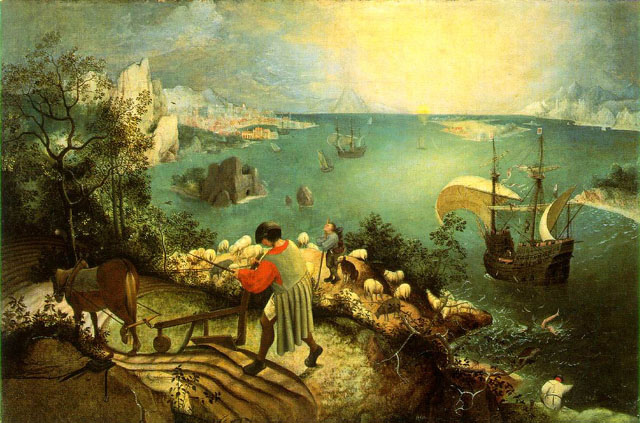
I could go on, but want to bring in a famous painting of Icarus by Brueghel.                                                             Anthony Stevens, a brilliant expositor of Jung’s thought, used the painting as cover for the first hard-cover edition (1995) of his book Private Myths.

http://www.anthonystevens.co.uk/index.html



Stevens quotes from a poem by Wystan Auden:

In Brueghel’s Icarus, for instance: how everything turns away

Quite leisurely from the disaster; the ploughman may

Have heard the splash, the forsaken cry,

But for him it was not an important failure; the sun shone

As it had to on the white legs disappearing into the green

Water; and the expensive delicate ship that must have seen

Something amazing, a boy falling out of the sky,

Had somewhere to get to and sailed calmly on.

What goes up must come down. Who knows how many Big Bangs there were before the one we so ardently explore? There is an organising intelligence behind life’s cycles, while consciousness forever expands. Thinking in metaphors we can perceive similar patterns, forms in nature and mind, cosmos and psyche, mirroring each other across scale and time. In other words, life teems with realities we can tune into, as long as we assign context and meaning.

Check out Gregory Bateson’s books ‘Steps to an Ecology of Mind’ and ‘Mind and Nature.

His family continue his work: His daughter Nora and his wife – Mary Catherine Bateson:   http://www.interculturalstudies.org/main.html

Peripheral Vision

 http://www.amazon.com/exec/obidos/tg/detail/-/0060926309/mead2001centenni

Free chapters of Angels Fear:  http://www.oikos.org/angelsfear.htm

Nora Bateson, recently created a film:

http://www.anecologyofmind.com/

Last not least, the themes:  pattern which connects, mirroring and bridging, are subjects of my novels.

25 Comments

Filed under Blog

… the wild horse of the mind …

I thought I open the window a bit to what I’m immersed in, drafting the sequel to Course of Mirrors, called Shapers. Another mythic adventure, and more. The short piece below is not representative of the tense action this story has plenty of, but depicts a pivotal moment. The scenery is  Eire, where time-zones overlap. In 2550 AD the island is called Sax, where Rhonda, the super-controlling power, cast their misfits.  In the excerpt below, Tilly (Cassia in Ana’s story) has arranged for Cara and Mesa to meet in Kerry during the 1970s.

The theme touches on the creative process. Something for my writer friends. I welcome any feedback to the draft.

*    *    *

Tilly’s ruined estate on the Kerry peninsula was one among many places around the world where past and future began to cross or run parallel during the 1970s. Not all drop-outs travelling through Derrynane were aware of the phenomenon. Those open to the new wavelengths either tuned in, or received no more than garbled white noise. The going slogan was – love, don’t think – though it should have been – love and think – and stay grounded. These were turbulent times. Traditionalists abhorred the breaking free of conditioning. Leaps into the unknown frightened them.

This is Cara’s time, and these are her thoughts: Personal myth is a complex self-creation, mainly unconscious, but less so once we replace the postulates we inherited with our own, and are drawn to our psychic kin. Every night when the body rests we visit beings in other spheres. We may discount these sojourns as dreams unrelated to our daily existence. Yet bridging occurs when we value inner dynamics and re-story the associative symbols of images. Resonance momentarily fills the void between the known and the unknown, and meaning is assigned to events. Some good people trust in God, but then abnegate their creativity. Are we not the desire of a divine will? Are we not the ears, eyes, nose, hands and feet of a universal intelligence, of which we are the deed? Does not our speech derive from one sound? And is love not the creed that breathes all things and directs the movement of all spheres? I don’t understand the need to prove or disprove a universal intelligence that is within and all around us. The world I create is imperfect and suffers from on-going flux. But I can bring my small flame to its shadows.

Now that Cara’s myth caught up with her, and she was confronted with the net of postulates she had cast into the future. She found herself challenged to engage with what she animated, because she was animated by it.

Gutch spotted Tilly talking to Cara and Mesa in the hall. He was bursting with pleasure. ‘I found my clan,’ he said. ‘This place is teeming with talented actors. We’re going to do some magic theatre. Are you joining us?’

‘I need to take care of something,’ Tilly said. Can you keep an eye on Gart?’

‘That devil had some weird conversion trip and is sound asleep under the table.’

‘Excellent. Let him sleep.’

When Cara and Mesa arrived at the cottage across the atrium, Tilly had lit a fire in the hearth. A nest of chairs invited them, and the smell of fresh coffee. ‘Have some,’ she said, ‘pointing to a steaming pot, ‘and there’s chocolate cake, too.’ Mesa soaked up the atmosphere, transported to Ana’s world, reminded of Cassia’s kitchen. Tilly placed a small leather pouch in Cara’s lap. ‘Here, forged by fire, polished by the sea, a gift of remembrance.’

Cara opened and turned the pouch. A black stone fell into her hand – smooth as marble, yet radiating warmth and shining in the glow of the fire. ‘Ana’s talisman!’

‘Yes, and you might as well own it.’ Tilly paused, gazing into the flames. ‘I have a favour to ask from you, for Mesa’s benefit.’

‘What favour?’ Cara poured cups of coffee for everyone, dished out giant slices of chocolate cake and added a dollop of whipped cream to each.

‘Your future, Cara, has come to visit you. Mesa returned to assimilate what was lost to her. With Ana’s story you re-animated her soul. Certain events in history require beings to return, to right things or bring a message.  Mesa will take on her role in the odyssey of the Ypocs. And she’s going to be the narrator of your story, Cara.’

‘Huh, this takes a leap of the imagination. I haven’t even smoked the weed.’

Tilly smiled. ‘You know what it takes. Uncovering a personal myth is different from writing a Hollywood script. To help Mesa to re-connect with random creative processes, I want you to explain to her in as much detail as possible how your mind works.’

Cara heaved a breath. ‘The idea sucks every thought from my head.’

‘That’s a good start.’

‘All right, here goes a slice of random micro processing … Momentarily stuck with a paragraph, I remember to stretch my legs. In the kitchen I snatch a yogurt from the fridge. I notice a sticky shelf – mental note – clean it soon. Dark clouds gather outside, looks like rain. I run up to the bathroom and close the window. On the way down, I see dust-clouds on the stairs – mental note. Heading for the desk I stop by the fridge again because I’m now really hungry. I prepare a sandwich – mental note – put butter on shopping list. I use the loo – mental note – toilet paper is running out. Telephone rings. The answer machine kicks in. Just as well, I’ll return the call later – mental note. A letter that needs sending sits next to the phone, I put a stamp on it – mental note – post it. A fly is trapped in the window. I release the fly and study a tree out front that leans over and needs pruning. I quickly assess which branch to cut – mental note. Off to my desk. Passing a shelf I spot the book I couldn’t find earlier. What a relief! I plonk it on my research file and am reminded of an article I need to chase – mental note. The sun shines again. I open the backdoor and listen to the birds. Grass needs cutting – mental note. Finally back with my paragraph the writing flows, sheer bliss. At a natural break in the narrative I decide to go shopping. In the car I have an epiphany relating to a character in my story, to do with birds – mental note. The walker I pass reminds me to visit a certain person – mental note. I recall this person collects small antique tins. I could find him a present – mental note. I think of metaphors, how obsessions, like collecting tins, are really personalised teachings – mental note.’

Mesa had listened with rapt attention. ‘What happens to all the mental notes?’

‘Ha, ha … they’re promises. They’re torture. They heap up. They demand execution. My way to deal with accumulative pressures and gain time to focus on my writing is through procrastination. I’ve become patient with nagging voices. They’re not jailors. They’re easily humoured until the time is right for a blitz. Then I act fast and achieve a great deal in a short time, happy to have cleared the space.

‘But why give these mental notes the power of demands over you? Mesa asked.

Cara glanced at Tilly, who had taken up knitting, as if the dialogue bored her.  What was her agenda? Was this really for Mesa’s benefit? Tilly smiled and said, ‘Go on.’

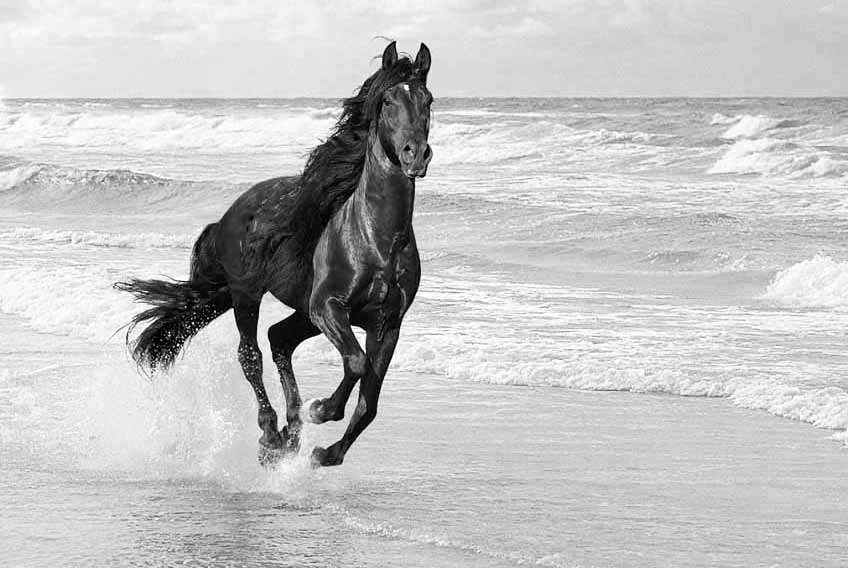
‘It started out as compulsive pattern. I was conditioned to respond to the needs of my environment, and to maintain order. There are exceptions. Some days, it could be the weather, a dream, the stars … from the moment I open my eyes everything flows effortlessly. My brain is relaxed and I attract harmonious thoughts, like I’m fine-tuned to a subtler station, beyond the busy bandwidth of neurotic naggers. The tuning can be learned. It’s like taming a wild horse. I can actually do it, when necessary. But I like letting the horse run wild. I find wild things that way.’

‘We have different conditioning,’ Mesa said. ‘From early on I was trained to tame my mind, to let it rest like a still pond, or focus thoughts like laser beams. Then free play was introduced, disrupting Rhonda’s order, and all went wrong for the Ypoc.’

‘Aha! I bet you didn’t have to juggle a deep conflict, and oppose a controlling father.’

Tilly dropped her knitting. ‘This gets interesting. It’s what Mesa came back for.’

* * *

Apologies: The origin of the image of the horse is unknown to me.  Many thanks to the photographer.

10 Comments

Filed under Blog

… solitude …

Weather-defying, I had my first Pimms with ice cubes this year, imagining warmth, sun, swinging in my hammock under apple blossoms, listening to birds, walking barefoot and having friends round to watch the sun go down and the moon come up. The Brits are fed up with the rain. More than darkening the sun, clouds also obstruct the brighter aspects of the mind. Signals from the noosphere get muffled, or so it seems. There remains solitude, a tranquil space where questions arise, and thoughts have space to dream and play without being overstimulated. Allow your children periods of solitude and they will come to value it later in life.

I mulled over a question these last days, not for the first time. And an answer came, an angel whispered it into my ear while I slept – if all incarnated beings living on this planet were enlightened at the same time, the whole developmental cycle of the psyche would collapse, and consciousness would expand into a new matrix all over again. I’m making no claim to truth, angels can’t always be trusted. But the message seems to be – all is well-tuned as it is.

This is what solitude does to me – I get answers that beg more questions, like, what about multiverses? My body lives in this house in England that is at times difficult to maintain, but my mind also has another house, an interior house, free from mundane pressures, a house that exists in a dimension invisible to the physical eye … built from bricks of meaning rather than clay.

Here to the Noosphere, an interesting concept:  http://en.wikipedia.org/wiki/Noosphere

7 Comments

Filed under Blog

… tuning into your unique frequency …

Are you ambivalent about spirituality? There are countless paths, tradition, groups and teachers to follow … but since authorities and hierarchies have become suspect, for good reason, spiritual advice, like any other advice, can seem like a cacophony of white noise. There is a collective expansion of consciousness gaining momentum that challenges each of us to come into resonance with our body, and a deeper aspect of our mind, the heart. It is through the heart that we can open the channel to your unique frequency, and receive guidance from the truer Self in us, our eternal witness that connects us to the source.

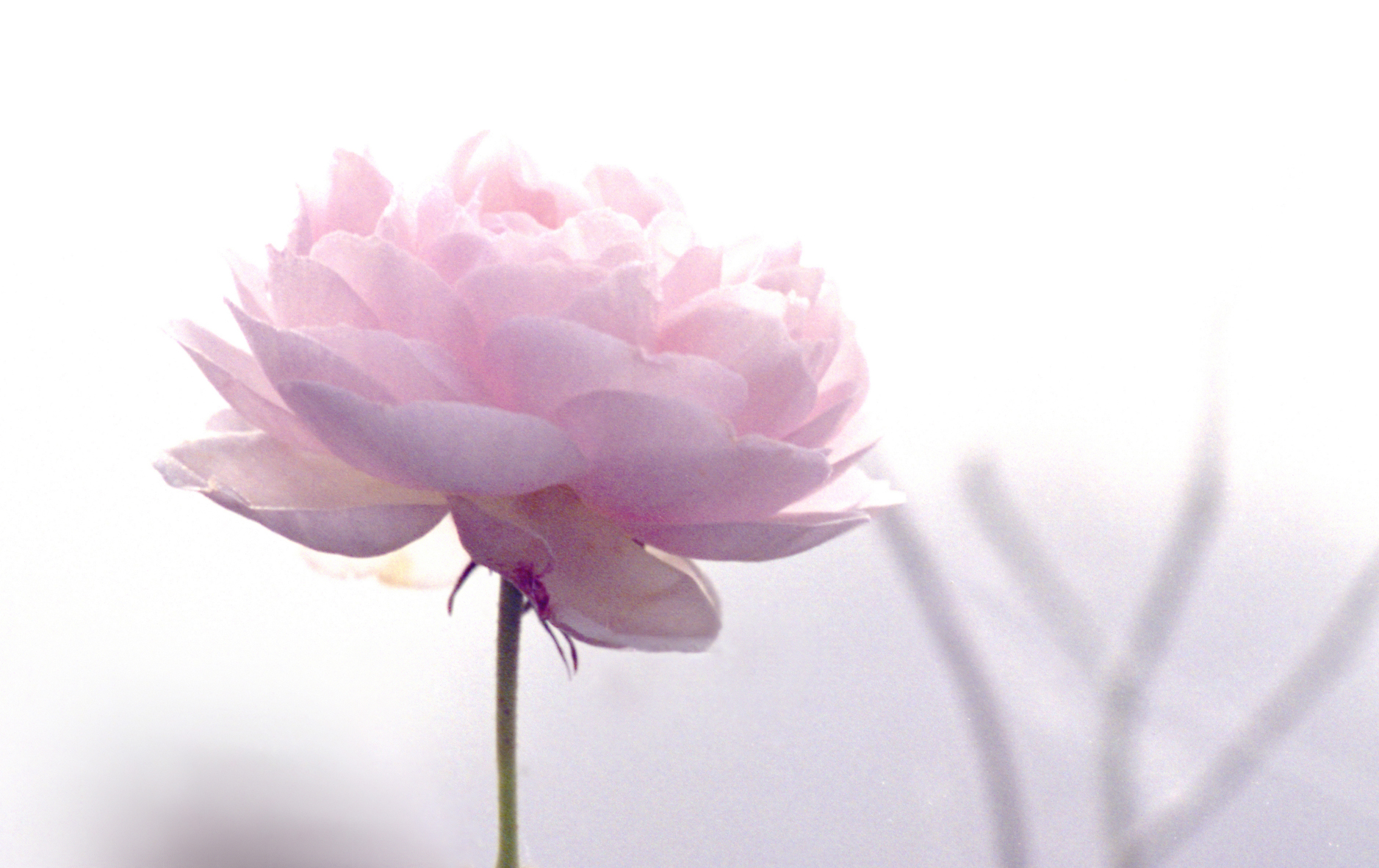
The rose, a potent symbol for the Self, appears in various transpersonal practices. The visualisation below is a variation of an idea used in Assagioli’s Psychosynthesis and the Sufism of Hazrat Inayat Khan. You can elaborate on the words and guide your own journey silently, or have a friend read it out, or record your voice and listen back to it. The intention behind the practice is to become receptive to the core of you, to tune the heart to the love you are, we all are, in essence. Practising this visualisation opens a channel to your inner guidance that will attract the outer circumstances you need.

*     *    *

Find a safe place. Close your eyes. Be aware of your body and simply follow and feel your breath until its rhythm settles. After a while, bring your attention to your heart, whose spiritual counterpart exists as your true identity in another sphere. Make a space for thoughts and images that arrive. Don’t reject anything, observe, don’t bother to label, judge or follow links. Instead, face and feel whatever arises, let it pass, and simply return your attention to your breath. You may need to stay with this process of accepting and releasing thoughts and images for a while.

Once your mind and body have calmed and you feel receptive, allow the image of a garden to emerge, your private garden. Visualise this special garden … notice a rose bush with a bud still enveloped by its green sepals. The bud draws you close to witness its opening.

See the shielding green sepals stir and offer you a glimpse of the colour beneath. Now the rose receives the light of your attention, its petals slowly turn outwards and open in a fluid movement, like the arms of a dancer. Observe this opening dance. Sense the same unfolding also happening deep within you. Fully absorb the hues and the tenderness of the rose leaning towards the light, behold its perfect beauty and inhale its delicate scent.

Now allow the rose slowly to expand … until it grows into a transparent rose temple filled with light and large enough to step into. Move directly to the centre and rest there for a while. Become the rose temple. Absorb the gentle atmosphere, the hues, the rhythmic grace, the sound, the fragrance, the splendour and continuous unfolding towards the light. Absorb the sensation completely … be at one with all your multiple selves … at peace within your essence, your wholeness, your true being. You are your own unique lover and your own unique beloved.

Now rise and step away from the centre. Leave the rose temple behind. Turn and behold its magnificence once more, and then adjust its shape to a small rose that fits into the palm of your hand … Place that rose into your heart … Know it resides there, maybe closed, but ready to open whenever you  use your intention to connect to the wonderful feeling of wholeness. All you have to do is remember, and the symbolic power of the rose will evoke the presence of your timeless Self.

*    *    *

4 Comments

Filed under Blog