Tag Archives: writing

… storytelling and the primary world …

Knowledge is not the rare gem it used to be. Then again, without recording, analysing, sorting, summarising, calculating and disseminating mega quantities of data we’d have none of our ingenious toys to play with. Without statistics our systems would grind to a halt, and, yes, it’s annoying that almost daily yet another quantitative study announces what’s good, or detrimental, for our well-being. Thankfully, none of the churned out evidenced facts can make a claim on meaning. Humans remain idiosyncratic. We apply messy values to our life-choices, and we frequently ignore the logical road signs of scientific landscapes, or blank out the hassle of linear time.

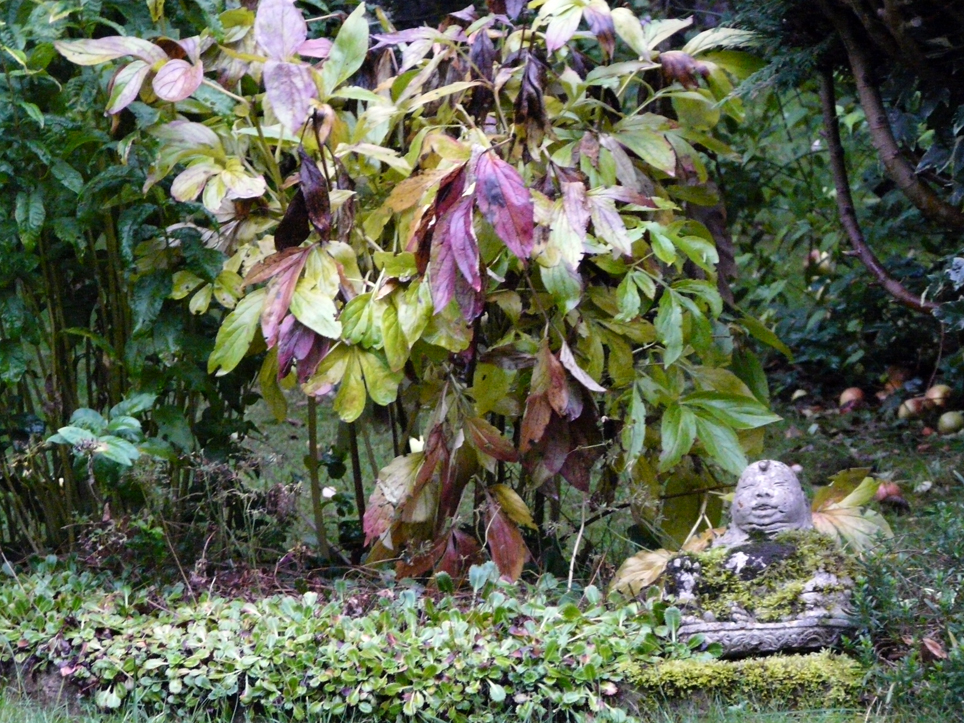
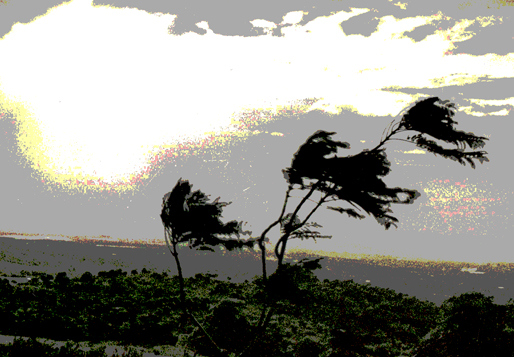
Wind


Instead, we are tossed along by emotional encounters, the unexpected, are awestruck after a quantum leap of intuition, and are generally guided by what appeals to a body/mind that likes the stimulation of nature, her moods, seasons, the phases of day and night suggesting action or repose, like the in-and-out-breath, between which we may catch a glimpse of a dream, a relevant truth, an eternity even. Hardly anyone I know is without this conflict: liking order and control, as well as yearning for rapport with the dance and rhythm of nature.

Over 300 years ago G W von Leibnitz, who could’ve been a poet, was gripped by an emerging idea, to collate all human knowledge and to systematize it via a common language. Computers would have been his bliss. He loved to correspond with most scholars in Europe during this baroque era. And he might have gone some way to explain the whole universe in the hope to solve every conceivable problem. Paradoxically, he also stated … the universe had to be imperfect otherwise it would not be distinct from God. Near the end of his life, Leibniz wrote in a letter that combining metaphysics with mathematics and science through universal characters would require creating what he called:

a kind of general algebra in which all truths of reason would be reduced to a kind of calculus. At the same time, this would be a kind of universal language or writing, though infinitely different from all such languages which have thus far been proposed; for the characters and the words themselves would direct the mind, and the errors — excepting those of fact — would only be calculation mistakes. It would be very difficult to form or invent this language or characteristic, but very easy to learn it without any dictionaries …

Source:  http://en.wikipedia.org/wiki/Characteristica_universalis

I’m not doing honour to this remarkable man, so here is a sketch of a biography … http://www-history.mcs.st-andrews.ac.uk/Biographies/Leibniz.html … should you have the patience to read this, note the time it took for letters between Leibniz and Newton to be delivered, which makes me admire the tenacity of these scientists.

The notion of a calculus for a universal language intrigues and troubles me. Nature speaks a language everyone understands. Key-terms of my mother tongue (see my last blog post) easily bring back the plot of land my toddler feet bounced across. The stories I most enjoy writing grow organically, with tendrils of their roots nourished by the alpine woods and hills of my childhood.

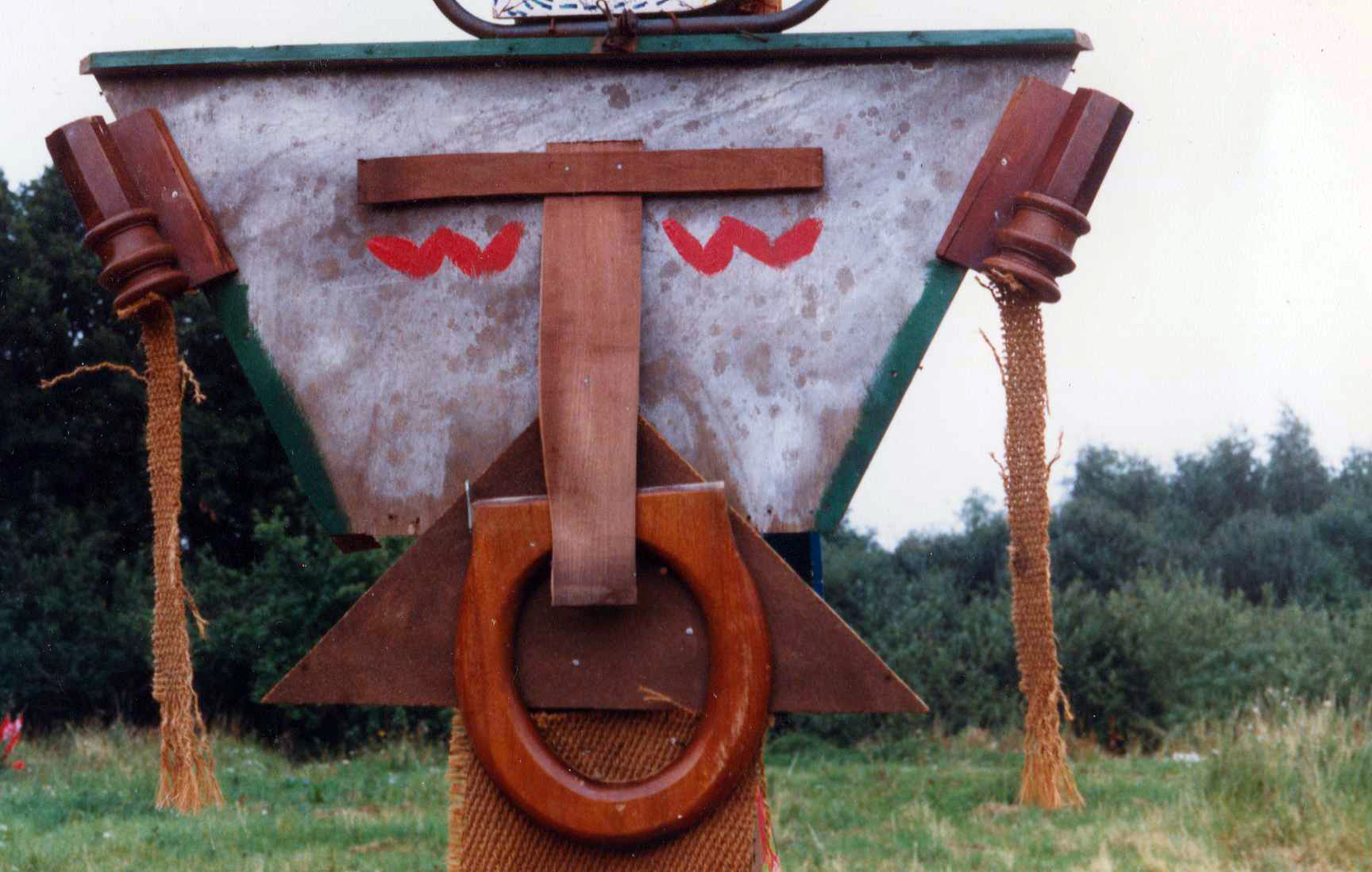
But things change. Data collation is now available to authors, promising control, over marketing, though formulas and blueprints are now offered for the creative process, like how to write a novel in four week. Imagination serves many masters and is not easily controlled – its life-sap flows through all forms. Totempole 4

We can only explore everything known continuously in fresh situations and move on, in the way that children and creative people place a familiar object into a new context. The play of imagination destroys and creates, and has the power to shift the meaning of our past, present and future.

‘There is the truth of truth as well as the truth of fact.’                   D.H. Lawrence

Being part of the dynamic process of evolution (which Philippa Rees ingeniously terms ‘Involution’ in her book of that title) we are walked by the tightrope of ecstasy and pain, of dependencies on environments and people, for better or worse, dependencies on beliefs too, mostly not by choice, but driven by binding needs.

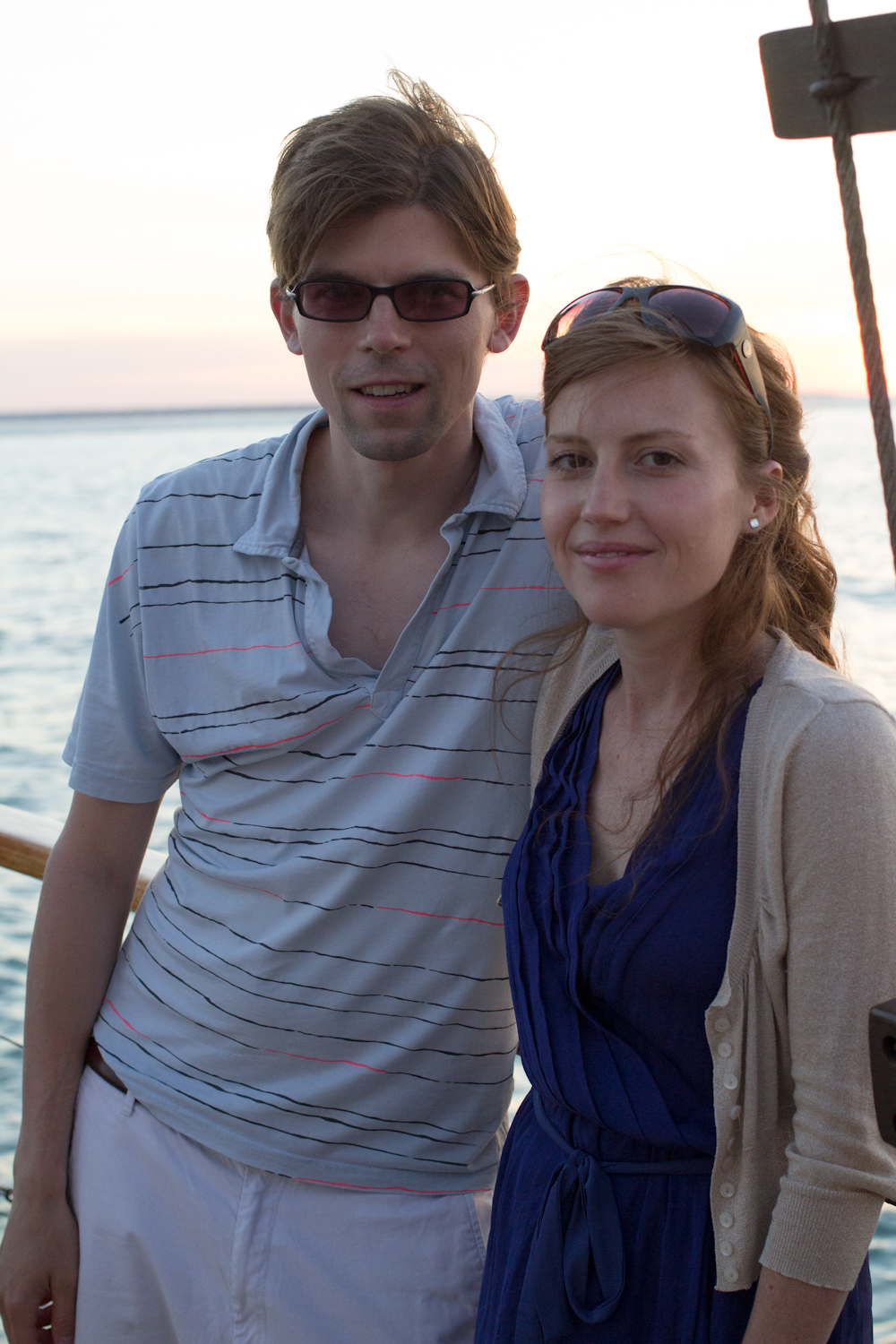
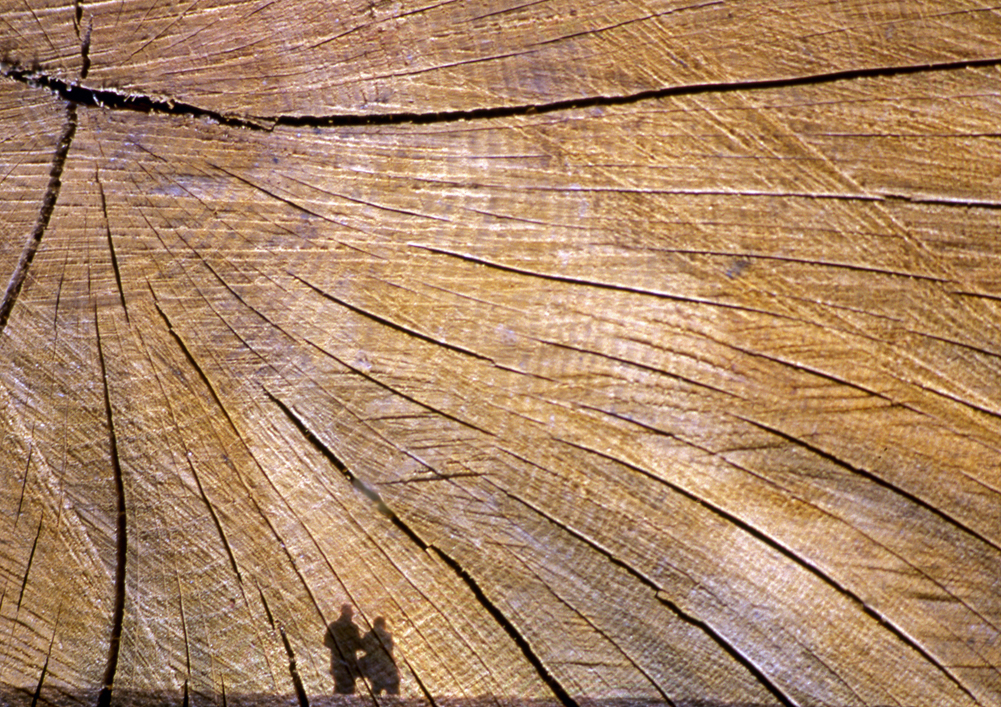
Couple shadow series, 3a small

We face exploitation, conflict, sudden change, harmony alternating with phases of chaos – the story of life, a record marked in DNA and every tree trunk. Instigating control, or preaching harmony while shading off the dark, the chaos, the collective psyche of humanity, will only repeat the distortions of otherwise genuine messages from enlightened thinkers, sages and prophets.

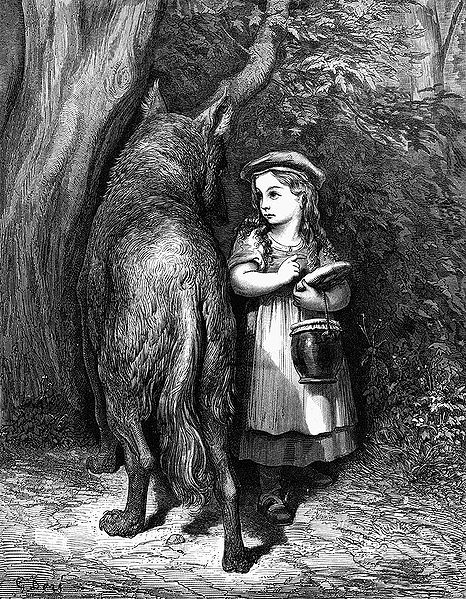
It would serve us as well to teach our children how to accept the dark and how to deal with conflict. Reading the collected folk tales of the Grimm Brothers to children would be a start.

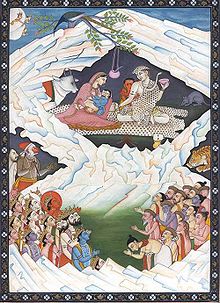
Dore - public-domain-image

Dore – public-domain-image

The inspired P L Travers, author of Mary Poppins, had a talent for highlighting the vital function of myth, symbol and story. She shared her reflections in a collection of essays that appeared in Parabola Magazine. The essays were later published in a book, titled: ‘What the Bee Knows.’

She wrote … The Primary World, in order to go on living, needs the things man cannot create – the earth with all its composted dead, the rain that raineth every day, the seasons, nightfall, silence – and the ear free of all pulsation but that of its own blood.

… The Primary World is that which has never been invented but came into being, along with the blood stream, as a legacy from the Authors who, according to Blake, are in Eternity. All the rest is manmade, or as Tolkien has it – sub-created.

As a writer I sub-create and grow stories from within, using images and words that resonate with personal experiences, myths and visions that provide an ever-changing way of relating to myself, to others and the worlds we share. So when Travers says … nothing is truly known until it is known organically … this chimes for me.

We forget – a happy fault – imagine there was no pause between one dream and another, no night. We forget so we can re-member creatively, which takes practice. We walk on star dust and ancestral bones that inform our bloodstream, as much as the stories of this world nourish our imagination, continuously re-shuffling our psyche, which explains our function as being the bridge between matter and spirit. Every bee knows this.

Image by Yeshen Venema

Image by Yeshen Venema

What the Bee Knows, by P L Travers http://www.amazon.co.uk/What-Bee-Knows-Arkana-Travers/dp/0140194665/ref=sr_1_3?s=books&ie=UTF8&qid=1376737128&sr=1-3&keywords=what+the+bee+knows   Wow, no reviews

Parabola Magazine: http://www.parabola.org/

‘Involution’ by Philippa Rees: http://www.goodreads.com/author/show/30171.Philippa_Rees


Images are mine unless the captures say otherwise.

6 Comments

Filed under Blog

… mother tongue & other tongue …

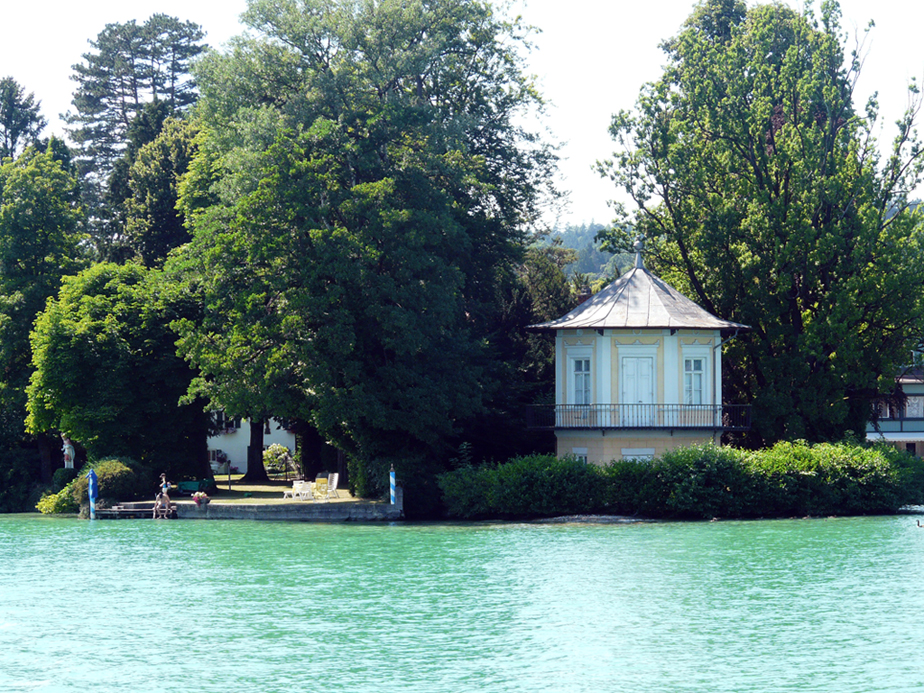
Starnbergersee

Starnbergersee


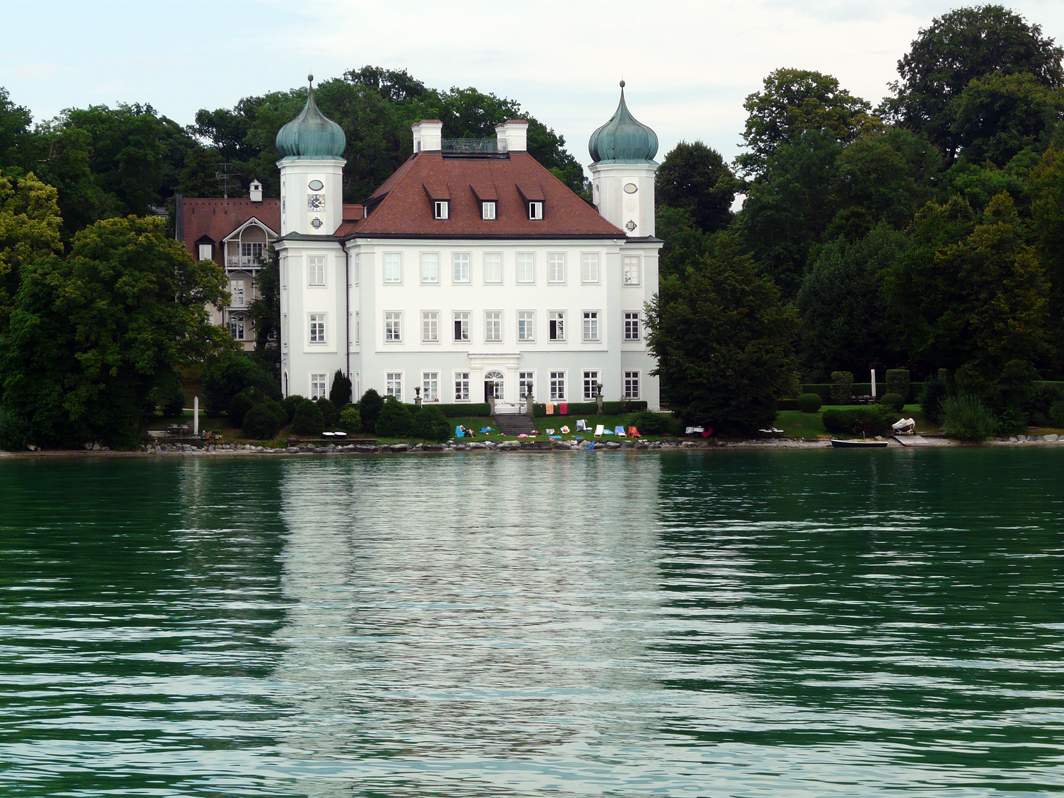
Two languages, two rhythms, two patterns, two spheres, two perceptions … last week I attended a re-union of my primary school class in Bavaria. Around 20 of us turned up.  The event included a ship ride on the lake that marks the geography of my childhood – Starnbergersee – whose shores are garlanded with castles and grand villas. Once I’ve won the lottery I’ll snap up one of these dream places and invite all my readers to a prolonged party with performances of magic theatre. Yeah!


Das Vogelhäuserl

Das Vogelhäuserl


The tour added a refreshing breeze to the sweltering heat. Later in the day a smaller group gathered at a lakeside restaurant, the same spot where, as a child, I turned up in summer holidays, at sunrise, to assist the local fishermen bringing in their full nets, in return for the free use of a small sailing boat during afternoons.

A re-union

A re-union

The encounter with classmates I hadn’t seen for over half a century unfolded like a surreal dream as we cooled down with beer and wine and gossiped time away into the evening. I’m still trying to fit names to faces and places, and make sense of stories that cast stray beams on my memories of the village I grew up in, a village close to the Alps, set in landscapes whose ambiance morphed into the beginning of my first novel.


Schloss Berg

Schloss Berg


Among my class mates were a few women I quickly chimed with, not surprisingly, we were close friends during those early years, though we lost touch when we moved on to different schools. It’s deep and wondrous – the mystery of this precious resonance called friendship.


This is me, aged 6, on my first school day. I was a single child.

Erster Schultag

Erster Schultag

And I well remember the excitement. The Zuckertüte, the upside down magician’s hat filled with bonbons, chocolates and presents to sweeten the transition into the big world seems to grace my head in the photo my dad took. I can’t find the image right now, but I did receive a proper Zuckertüte on the day, filled to the rim.

My favourite teacher (in the group photo with the village poem post, link below) turned up at the re-union, slow on his legs but sharp witted. His eyes lit up when he recognised me, which gave me a warm feeling all over.

Living in England since several decades, I visit Germany periodically to see my grumpy late-artist-dad, and dear German friends, made during my later Sturm und Drang phase. What struck me about the school re-union was how the primary sensation of my childhood was brought to life through words tossed into the conversations, keywords from my mother-tongue, embedded in local dialect. My mother, who came from Berlin, never picked up the Bavarian dialect, neither did I, however, the term mother tongue incorporates for me my early environment, the village. https://courseofmirrors.wordpress.com/2012/08/31/village-poem/

For the greater part of my life I thought by and spoke in the other tongue, which I first learned at school. Aged 18, unsure of my path, I spent a cultural year with a family friend in London. She cherished me. Our relationship was a healing experience for both of us, given her loss of friends and family members in the Holocaust, and my inherited burden of the atrocities having taken place in my country. Later, studying in Munich, English was the language connecting a multicultural student population. When 9 years on I married a Dutch man and we moved to England together, my German vocabulary gathered dust during further studies. The distance from my mother tongue freed up a wider perception. It also helped me overcome an encoded traumatic experience. At secondary school I had written an essay, freely based on a painting of my choice by Spitzweg – writing was then a blissful creative process. The teacher read the essay aloud, praising its brilliance, after which she informed the whole class that I could not have composed this myself – a screaming insult! And yet, I thank the stupid woman, it changed the course of my studies. I initially used photography to express myself, resuming poetry and imaginative writing later, finding that English allowed me the necessary wings.

Who knows what the dusted off layer of my mother tongue will bring round. Writing in the other language helped me to transcend the mere facts of my life to essential themes, universal metaphors. The divided kingdom of parents, the psychology of the single child, her assumed bridging function between patterns of seeing, like the rational and imaginative perception, the distorted mirrors of relationships, betrayals, the search for the real, and the meeting of soul families. Essential themes lifted like green islands from dark waters during my protagonist’s river journey west.

Course of Mirrors is a gripping adventure story, as well as a psycho mythical opus. In its sequel the teller of the story is revealed as the visionary myth-maker overtaken by her myth – in the way that we can re-arrange the past and postulate possible futures, explore different time-zones, and expand expectations.

I must leave it to my readers to judge the results of my experiment. The first book, Course of Mirrors, will be published next year, by a small but devoted publisher.


Are you a writer/artist who processes experience through two or more languages?


38 Comments

Filed under Blog

… a Sunday in July …

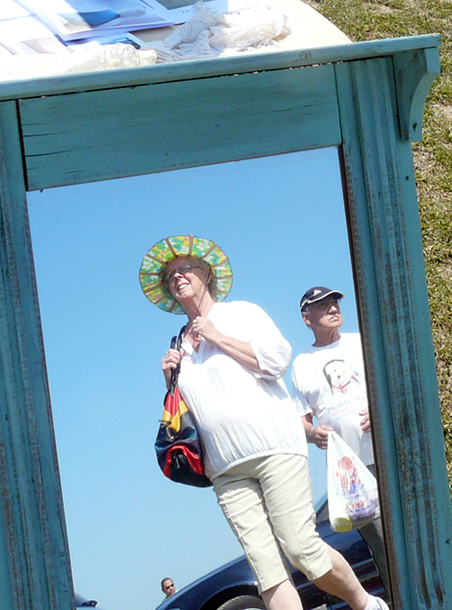
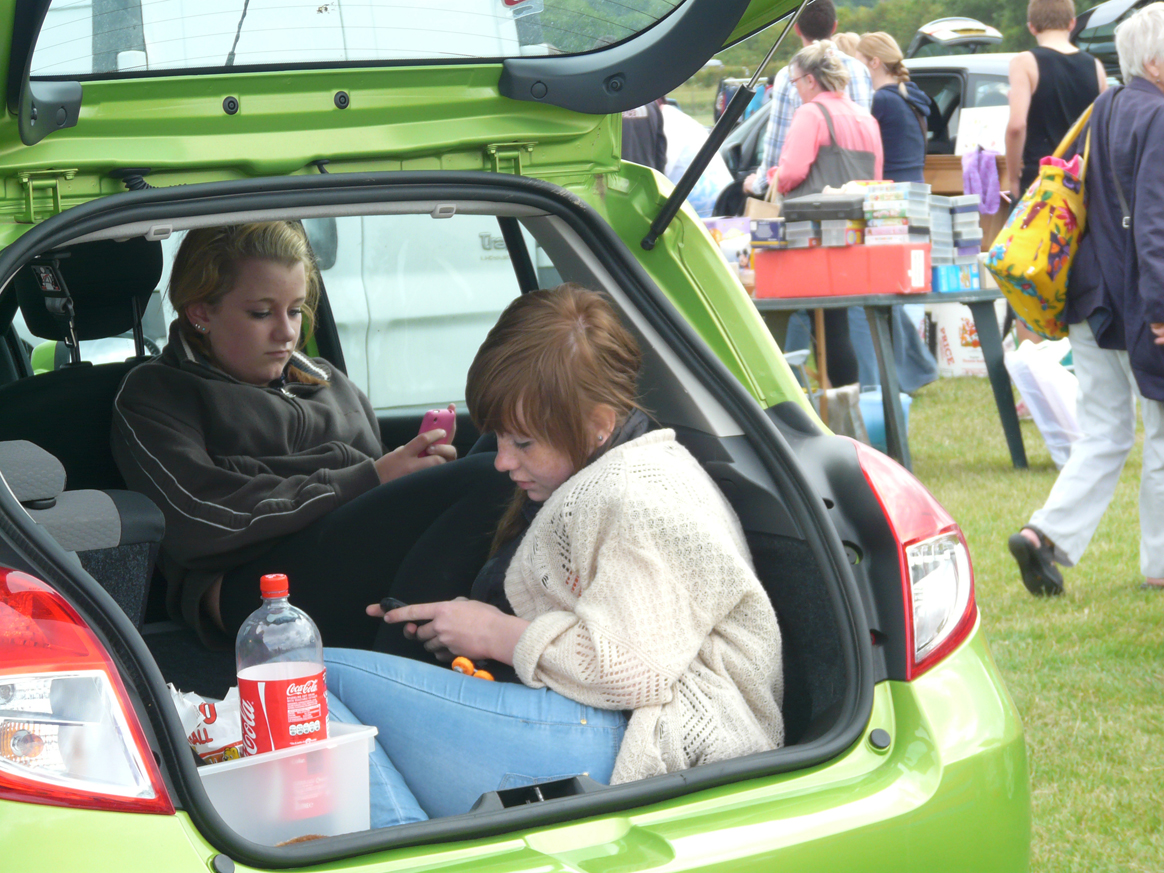
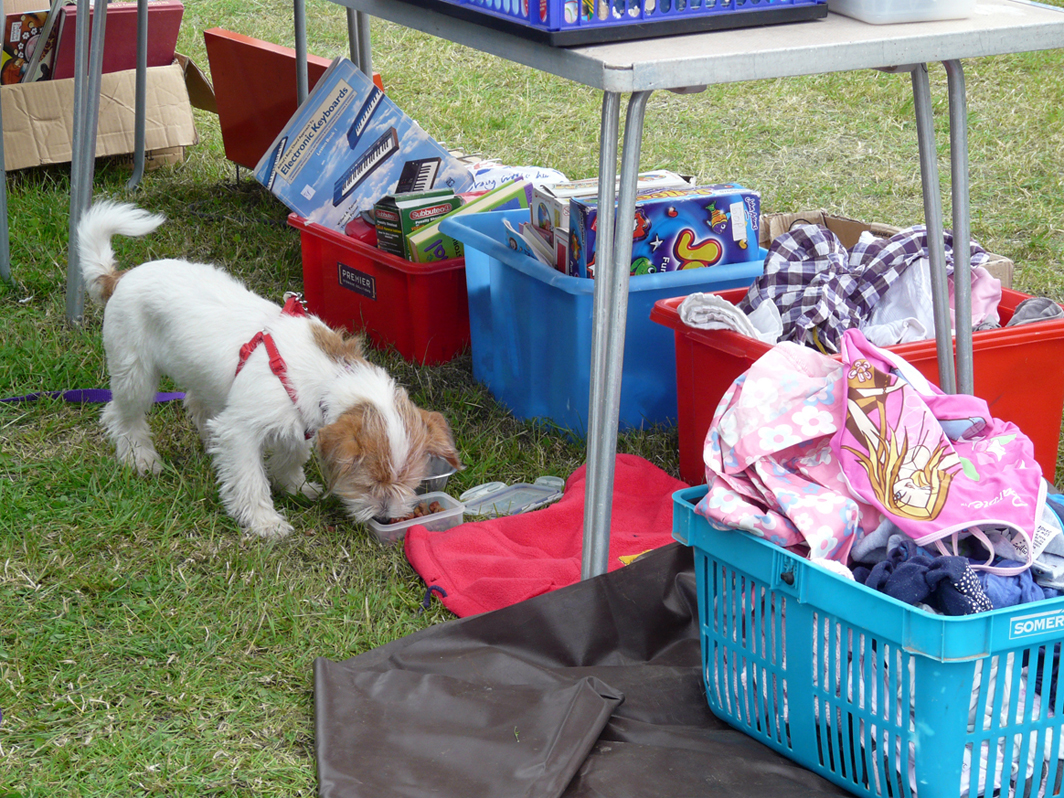
A Sunday car boot sale. Eyes swivel left, right, down, up, for value. People dream or stop to chat … how much for that? A fiver … three, two, one, or nearest offer … teddies, dolls and plastic swords, toys on wheels … she’ll love that … glasses, cables, plugs, unwanted gifts, mugs, pots, rags, shawls, jumpers, trousers, frocks, linen, shiny trinkets, books, mags, prints, discs, records, chairs, shelves, mirrors, bells, rugs, tools … objects of desire lure as metaphor … stuff … beautiful and ugly scraps, are carried off in plastic bags.

P1110274

Carboot 3


Carboot 1People, thin and fat observe each other, nod or shrug shoulders, roam … ladies walk stately in big hats, toddlers run off, sunburned babies sleep, bored kids tweet or text, dogs strain on a leash or are fed, men with tattoos strut, a batman rises from the neck, geometric arms, flowery legs, stars form a line down a spine …

Leaving the cross currents of the human aspirations, I retreat …

P1110278 - lowres

back to my peaceful patch, where ribbons flutter in the breeze, endowed with wishes. Colours glow with life, ever changing. And simplicity affords my gaze inside – through the gap of nature’s light and shade.

P1110284 lowres


P1110279 - lowres


P1110291 lowres


And later that night I watch the wide screen … tragic accidents, people fighting for what they presume right, trapped in beliefs, and, oh, Andy Murray wins a tennis match for the UK, and is glorified as UK’s knight.


20 Comments

Filed under Blog

… distractions …

We meet monthly, a group of local friends, offering workshops or discussing on a theme. Last we explored distractions, which, well, distracted us from other things that afternoon, like the rain outside, concerns about people being unwell, family, and the buffet waiting for us in the kitchen. Most of all, it made us present to each other. I share here my reflections on the theme after our discussion. A dictionary definition of distraction is: To cause to turn away from the original focus of attention or interest; divert.

We listed outer distractions – basically life’s realities, though they tend to get in the way of more immediate objectives and disturb our peace of mind:

Physical pain, noise, smells, temperature, food, weather, world news, politics, economics, ecology, bills, insurance renewals, nuisance calls, other people’s feelings and projections, family demands, accumulated clutter, maintenance tasks, bureaucracy, lack of response to a query, mail, internet, waiting … little things … we agreed that negatives can turn positive  :)

Life’s demands tumble into our oscillating mind patterns as dissonances that excite or inhibit our well-being. Conflict results when we resist what’s happening. We may suffer loudly or in silence, or distract ourselves from unpleasant distractions through the innumerable uplifting or numbing sensations our culture offers.

As our discussion spiralled, we homed in on personal routines for dealing with distractions. They differed for each of us, depending on mood, attitude, the state of our nervous system, and the importance of the disrupted task. Days when everything is an effort are made up for by days when everything flows – bliss.

We went on to explore inner distractions, often reactions to outer ones.

Worries, anxieties, despair, obsessive thoughts, anger, pressure of deadlines, excessive associations and ideas, day-dreaming, nagging conscience, hesitations, doubts, guilt feelings, hastily given promises, boredom, pending obligations …

Regarding hesitations and doubts, the term gut-feeling came up. Can it be trusted? Somatic memories may trigger avoidance, a signal to protect us from danger, though the signal could equally sabotage our desires and deeper needs, whereas a higher level intuition might encourage us to re-evaluate what seems obstructive, and take a risk.

We find it exhilarating to watch wild animals chase prey, with total focus and concentration, fulfilling a vital need, which is why competitive sports are so attractive, where a clear and undivided attention towards a single objective gives an energy rush, even to the bystander. Having a passion, or specialising with narrow focus on mastering one skill or subject, is satisfying. Wave-ripples, most southern point, Lizard, poster desat

Having nothing that fully absorbs us for periods of time, we may be be tempted to roam in a vast sea of beautiful glittering mirror shards that will reflect a fuzzy sense of ourselves. But that’s fine too.

I had various passions in my life, which eventually come circling round to writing. One of my blog posts from last year contains a small excerpt from my second novel, where a character, Cara, shares a slice of the random processes of her mind. She turns out to be the myth-maker, the storyteller. If you’re a little peculiar, like me, you’ll grok this: https://courseofmirrors.wordpress.com/2012/05/10/the-wild-horse-of-the-mind/

I’m a dreamer. Like Cara shares in the excerpt, I occasionally like to let the horse of my mind run wild. I find wild things that way. Random, for better or worse, functions as the creative trickster in my writing, where distractions become allies. Sure, countless mental prompts heap up and demand execution. I procrastinate, adopting patience. My nagging voices are not jailers. They’re easily humoured until the time is right for a blitz of action.

In technological advanced societies, where the struggle for physical survival is being replaced by a struggle for identity, or its new definition, ‘brand,’ distracting prompts accumulate quickly. On the virtual stage I must become visible and speak up in order to engage with others. Love or hate the screens, messages keep wavering by. I become a switchboard for exceedingly complex influences. When switched on, I’m plugged into a bigger brain, the vast extensions of a collective nervous system. There is a challenged to assimilate differences and fast-changing knowledge. This calls for tolerance like never before. The Twitter stream, for example, of succinct messages and links, can be dizzying. However, if monitored and surfed with purpose, the information flow cuts through swaths of mindless, sensational news and opens meaningful connections across the world.

Fewer people are born into the blueprint of a tradition that defines them in terms of their roots, their country or family. The question – where do you come from – is shifting to – where do you put yourself, and to what purpose do you channel your energy? Yew-at-Waverley

Information available, the privileges we have, the choices and commitments we make, require astute intelligence of the heart, flexibility of mind, and they come with responsibilities. In today’s shadow play, we see people confront injustice head-on at the risk of becoming sacrificial heroes, which takes more courage than fighting a dragon. Others, like me, play subtler games. Those who have not found a purpose in their lives may get carried along by the sensation of it all, and continue searching for what matters most, for their deeper need.

So these are my reflection on the theme of distraction our friend introduced. We closed the meeting with a silence – an excellent practice for evoking a blank canvas/screen to re-draw one’s track on. Our time sees distractions speeded up, exposing us to multiple perceptions, some of them abhorrent to us, some of them uplifting. It is freed psychic energy that needs channelling. To develop a useful strategy for dealing with psychic energy we must look inside ourselves to find our homing device, our purpose, new communities, and new meaning.

I hope my reflections make you think about how you deal with distractions.

*     *     *

Just discovered – a brilliant article  in relation to our speedy electronic communications, it looks at the glitches that can reveal something truly distracting, and sobering … the mortifying ordeal of being known

http://opinionator.blogs.nytimes.com/2013/06/15/i-know-what-you-think-of-me/?smid=fb-share&_r=2&

12 Comments

Filed under Blog

one raindrop – ten raindrops – what’s the difference?

Before I went to bed last night I asked for a dream, as I do when I want guidance from my unconscious. After all, the greater part of our psyche is out of sight, submerged, with only the top in view, which is why Freud used the image of an iceberg to depict the psyche, the submerged part having deeper connections with the sea of the collective unconscious in which we all swim.

Iceberg - Ri han - Shutterstock

Iceberg – Ri han – Shutterstock

My question was related to the global web, and what’s rising to the surface like long drowned skeletons bobbing along the electric rapids of information, memories re-shuffled, all with a kind of speed only fearless surfers can negotiate. And how every link you and I click is traced, analysed and fed back to the media, politicians, businesses, twitter-birds, face bookers, bloggers and so on. At times it seems like a kind of vivisection in a shiny mirror looking back at us, surreal.

I’m seasoned. There was no TV in my early childhood, it astounds me what I’ve adapted to over the years, but the present tech-apps-avant-garde makes me feel like I’m missing a boat, along with, let’s take a breath, at least sixty-one-percent of the world population (that’s the kind of people with no internet at all.) And because I tend to reflect on cultural trends, searching for wider purpose, meaning and metaphors, I put this to my unconscious: please give me some insight.

On waking, the first thing I gazed at was the raindrops netting my skylight. A phrase came:

                 … one raindrop – ten raindrops – what’s the difference? …

It stuck. I stopped myself diving into associations, about raindrops, the number one, about the history of zero – as symbol for something that doesn’t exist but has become a place-holder. I stopped myself from quoting Rumi, too.

The phrase I received is enigmatic and feels creative. Does it come down to postulation, the everything-and-nothing-matters kind of power we have to envision and re-assemble stories, the delicious freedom to speculate without limits …?

Maybe purpose and meaning are becoming old hats and I’m missing the point entirely. What do you make of the phrase … either with your knowledge of maths and physics, or with your imagination? Even with the phrase or image of a dream ☼


19 Comments

Filed under Blog

… story of an animation …

Cycle-off-Socialis-Close-Up_00039


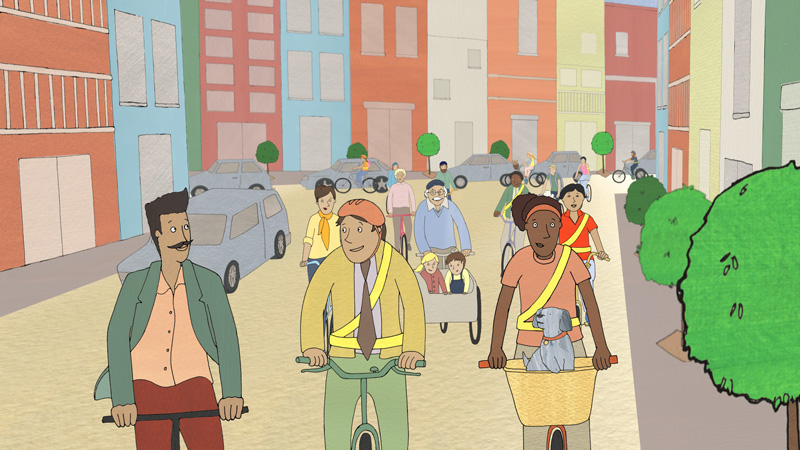
You can find the inspiring story of an animation here …

https://courseofmirrors.wordpress.com/story-of-an-animation/

PandaHorseStudio-7


5 Comments

Filed under Blog

… precious hopes …

The buzz of web-traffic can be exhilarating, a universe of stimulation, stories, advice, facts and know-hows. We put our name out there, mingle with travellers, seek adventure, share our thoughts, fulfil a task, meet like minds, exchange or sell something, and hopefully find synchronicity, resonance – yet at times …

P1090901 - Copy

Nasrudin rode the train to work every day. One day, as usual, the train conductor came and asked him for his ticket. He begun fumbling around in his coat pockets, and his pant pockets, and then in other people’s pockets. He looked in his briefcase, in his bags, and then in other people’s bags.

Finally the train conductor said, ‘Nasrudin, I’m sure you have a ticket. Why don’t you look for it in your breast pocket? That is where most men keep it.’

‘Oh no,’ said Nadrudin, ‘I can’t look there. Why, if it wasn’t there, I would have no hope.’

*     *     *

‘Why, if it wasn’t there, I would have no hope.’ What spooked the legendary fool’s mind that day? What do you make of the story? What does the ticket symbolise/represent for you? A hope can be so deeply meaningful to us that we keep it hidden at times, even from ourselves. Then we look for affirmation elsewhere because we couldn’t stand having our faith dashed.

Yes, I have such days. Where is the ticket to your hopes and dreams to be found? Are you keeping it close to your heart, holding it there, to remind yourself of inspirational instances when grace happened in your life, so when grace visits again you can seize the moment?

pink rose - black&white

*    *    *

I chose the particular version of this wisdom tale from a lovely book edited by Elisa Davy Pearmain, Doorways to the Soul. She calls the story The Lost Ticket. You find a link to Elisa’s website in my blog roll.

A classic collection of wisdom tales I treasure is in Caravan of Dreams, by Idris Shah.

13 Comments

Filed under Blog

… inner time – writing – rant …

Beyond my window, robins, wrens, blue tits and blackbirds are nest-building, with bursts of passion. Dipping in and out of view, they settle shortly on a deck chair, branch or flowerpot, balancing lavish bouquets of fluff, moss, twigs and leaves, before darting off towards the next promising material. The birds winging through my garden make me happy.

Yesh

My thoughts wing in similar fashion dedicated to another passion, no less preparing for a new round of birth – in my case the writing of the next chapter of a novel. I anticipate with joy each few hours of unstructured time that allows me to visit my garden of recollections, a space where myths re-weave themselves from the fluff, moss, twigs and leaves of memories. Like the visions I brought into this world, ambivalent responses to my existence, altered states, affinity with elements, genetic markers, epigenetic quirks … my bundle of life that fell into a mould and was conditioned by socially convenient patterns of time.

Dividing reality into past, present and future time, measured by clocks and dated events, called facts, is a fairly modern idea that made Science the grail of knowledge. The best of science deepens our understanding of the cosmos and improves the quality of our lives, but its method is limited, not suited to go to court on another reality dimension, inner time, infinite, immeasurable, where our experiences assume meaning. We may walk through life like snapshots of ourselves, collecting capture after capture of evidence for our existence, while longing for a dimension within, the bridge to a spiritual presence hidden between each breath, a truth impossible to evaluate? Some religions banked divine capital in heaven. Science too, in its present phase, projects a kind of heavenly capital, hijacked by corporates selling us the future, a Promised Land of artificial intelligences catering to our every need, uncannily resembling the Matrix or Plato’s cave.

My rhythm of life changed when I dropped out – the second time in my life – taking the financial risk to work from home and make time to write, which I had failed to combine with careers, family and social obligations. The experiences were vital, up to a point. Now I relax about clocks and tend to my inner worlds. I crave unstructured time. Not everyone does.

Recently a friend reflected humorously on her frustration at finding herself with one hour to spare, having miscalculated her travel time. She would have been happy had she brought a book to read. Instead, she endured a dragging hour of unplanned, wasted time. Intrigued, we reflected on this sense of loss when there is unexpectedly nothing in particular to attend to.

Is there merit in unstructured time … what do you think? Is it only for children, is it a luxury, a waste, or an opportunity to shift perspectives, discover your passion, break the mould and loosen up your ideas of reality? I don’t see unstructured time being much encouraged, or its lovely randomness being valued. I was burdened by the message that my imagination is fanciful, a kind of debility. It took me decades to claim the time for my passion, writing …

Little Prince

This seems the place to share a personal rant, blaming no one in particular, since, from where I look the rift between head and heart that is tearing apart the fabric of western societies may yet need to become wider before the peril is addressed. If the media is anything to go by, meaningful purpose, visions, let alone joie de vivre, are overshadowed by collective gloom. Feel free to disagree with my take on this. Straining under the pressure to change, I see our systems are attempting to cement a shaky launch pad towards a logarithmic future, with good intentions, though the consequences are dire. Every aspect of our lives is in danger of becoming: over-calculated, over-regulated, over-efficient, over-specialised, over-mechanised, over-prescriptive, over-secured, over-insured, over-compartmentalised, over-conglomerated, and over-economised.

On a more cheerful note, young people in their 30s, at least the ones I know, are asking sharp questions, and are finding ingenious ways to play with, while not getting sucked mindlessly into programmes that abuse data, spoon feed illusions, appeal to personal anxieties, invade privacy, and insult the intelligence of creative individuals.

Back to the birds winging through my garden …

*     *     *

To see a world in a grain of sand

And Heaven in a wild flower

Hold infinity in the palm of your hand

And eternity in an hour … W. Blake, from Auguries of Innocence


12 Comments

Filed under Blog

… healing sounds …

Healing sounds at the hub

Round and round … the cyclic drone underlying the melodic scale reverberated in Kala’s bones, re-rearranging the cells in her body. The sound of the reed organ embraced her like a cradle, made her feel held, warm, secure. The melody climbed upwards. There it was again, the wonder, the curiosity, a desire – the impulse to stretch her limbs and reach out towards a colour, almost touching it, then, with the tune circling around that pitch, the slowing down to uncertainty, with only a longing left. From a faraway place an echo sounded as if in response, people she could not see called out to her. She was restless with anticipation of a discovery, anxious too, of its beauty. The sounds kept flowing through her, or she flowed through the sounds, and the cycle repeated. Y-image posterized Or was it a spiral lifting her to the light she desired, and equally dreaded?

From an immeasurable distance she heard him shout, ‘Run, Kala, run, run … survive. Promise me to free the forbidden words.’ A band of men dressed in black were tearing her away from Liam, towards a thicket. Others rounded her up, sneering, ‘We’ll help her to free the forbidden.’ They dragged her along to the river and tossed her into the reed, like a puppet. A hand muffled her screams. She bit the hand, scratched the man’s arms and tried to pull her knee up, to kick him in the groin. He spat at her, hit her hard across the face, over and over, calling her names, laughing. Four other men wrenched her arms and legs apart and then she was crushed, and all went dark … a faint voice, a woman’s voice, reassuringly familiar, ‘I’m your mother …’

‘No!’ Kala screamed. Her eyes snapped open. A gentle hand folded over hers, reached out to brush her brows. Kala blinked, trying to understand what she was seeing. Were these her own eyes looking back at her?  Was this her mob of unruly amber curls? An ideal vision of her, mocking – strong, spirited, more substantial, more beautiful, more …

‘Hi Kala, welcome, I’m Mirre,’ your sister.

Oruba reduced the volume of the musical scale on his reed organ and let the last chord slowly fade until the tune lingered on in silence. He nodded to Mirre and left for the next room, where Zap looked up from his absorbing work. He had explored every minute feature of Kala’s lovely face, had re-composed its bone-structure from every angle. He had depicted his new love in imagined action, dancing in a meadow, drinking from a fountain, stepping from a doorway, all in the sincere belief that he could bring her back into the present that way. Oruba bent over Zap’s shoulder to look at his latest creation – Kala, her eyes open, verdant as spring. ‘Good timing,’ he said, ‘she’s come round.’

Zap jumped from his chair and hugged Oruba. ‘Can I see her?’

*     *     *

This is an excerpt from chapter 19 of Shapers (sequel to Cabal of Mirrors.) I post a snippet on my blog for a change, since visitors tend to not look at my excerpt page, where I used to rotate writings from my novels.

Kala did not know her mother, who has now been murdered, nor that she is a Shaper, people of a scientific, mystical community, admired and feared. They live in underground hubs, generously funded by the super controlled society of Rhonda, under one condition, that they keep out of politics.

The main protagonist in Shapers is not Kala but Mesa, the re-embodiment of Ana from Cabal of Mirrors. In this sequel Mesa returns from the future to collect a darkness lost. I’ll introduce her some other time. For my Beta readers, Zap, in the excerpt above, is the re-embodiment of Little Snake.

Feedback is welcome. And questions, of course.

*     *     *

The image was taken by my son, Yeshen. I only gave it a photoshop treatment.

10 Comments

Filed under Blog

… what’s your myth …

Do you paint your myth into clouds?

Vienna04cloud1

Do you find your myth on the ground?

P1110100 - low

Do you search for your myth in love?

mercats

Do you clean up writings on the wall because you weighed life on scales and found it wanting?

Graffiti under Waterloo 1 lowres

Is your myth in the process of being sculpted?

Two faces in stone

Are your myths about debunking clichés?

My Pictures 414 lower

Are you shaping your myth into the future?

Royal Academy, London - lowres

Are you the eternal traveller – like me?

Elba travels - Copy

This post was inspired by a writer friend I exchanged a few emails with. And I found myself expressing a thought in this vein … Writers and artists are like archaeologists; they dig, uncover and re-shape a personal myth until the myth takes wings and becomes universal, though many writers would deny this. And yet – think about it – the myths we live and re-shape give meaning to our lives and entice readers to explore theirs.

*    *    *

And who do we share our myths with?

Copy of Teddy and child, lowres

A listener like this chap does wonders for one’s confidence :)

Re-posted at:

http://thirdsundaybc.com/2013/04/21/april-2013/

21 Comments

Filed under Blog