Tag Archives: symbolic understanding

… other worlds … 

Writers that inspire and make me think are like a family of heart and mind. Luis Borges belongs. His imaginary worlds shine from beyond time and space, and delight with paradox.

‘The universe (which others call the Library) is composed of any indefinite and perhaps infinite number of hexagonal galleries, with vast air shafts between … The Library is a sphere whose exact centre is any one of its hexagons and whose circumference is inaccessible … For every sensible line of straightforward statement, there are leagues of senseless cacophonies, verbal jumbles and incoherences … it suffices that a book be possible for it to exist …’   The Library of Babel, by Jorge Luis Borges

Between each breath, comma, pause, number, node, and each period, we string symbols towards stories. Some make sense to some, others make sense to none, and yet others inspire more stories. Ideas that resonate have an ongoing life, they tag on each other.

In his extensive readings, Borges must have come upon the ‘many worlds’ theme recorded in various cultures over the centuries, long before quantum physics was challenged to struggle with this probability.
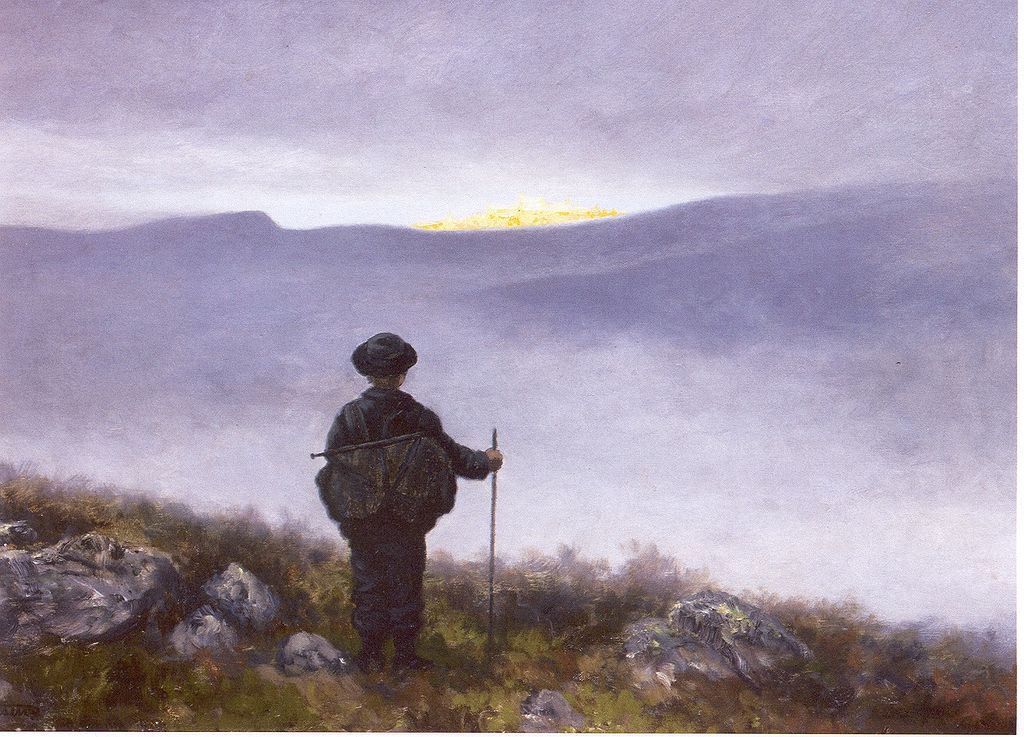
Theodor Kittelsen 1857 - 1914

Theodor Kittelsen 1857 – 1914

Even as a child I experienced shifts in reality, vivid moments that expanded my imagination and have come to play a part in my novels. Since nothing about particle behaviour under observation is certain, everyone of us is abundantly free to speculate about memory, time, and parallel worlds. Though dreamlike, these other dimensions leave signs, like unseen winds show in swaying branches, jittering leaves, and rippling waters that gather momentum to become waves upon waves.

The general definition of wave is a disturbance travelling from one location to another through whatever medium or vacuum presents itself. Do bits of information travel with resonating particles? Is the medium itself the message transmitting pattern recognition? After all, even far galaxies mirror the branching of trees and leaves on earth, or, for that matter, the neuron system in our bodies. Everything scales up or down ad infinitum. Here’s how Jonathan Swift put it in 1773

The vermin only teaze and pinch                                                                                                                                               Their foes superior by an inch.                                                                                                                                                    So, naturalists observe, a flea                                                                                                                                                    Has smaller fleas that on him prey                                                                                                                                              And these have smaller still to bite ‘em,                                                                                                                                      And so proceed ad infinitum.

It seems incomprehensible that parallel worlds could exist and influence our reality and vice versa. How could there be many collective and personal histories? How could there be other versions of us and everything? How would it work?

Given the fickleness of our feelings and thoughts, strange dreams, synchronicities, and the constant dissolution of ordered energy fields, we are exposed to streams of oscillating and interrelating signals, unless we fine-tune through the white noise, or completely relax. Occasionally we have a sensation of order, like a blossom unfolding. All is right and beautiful – we don’t feel separate, but in symphony with all dimensions, here and now.

At other times, when under pressure, and crucified having to make a decision, we sample memories, search pasts, postulate futures, until we surrender to a compromise, or the universe decides for us, or  … a resonance occurs.

‘All time is contained in now.’ – Meister Eckhart

A sudden resonance, if deep, could explain many paranormal phenomena that vex and hex people, especially scientists. Mystics are fond of saying the ‘self’ is an illusion, trapped in the body, though which self is a matter of perspective.  Since quantum physics, particles stopped being things in themselves, but function as waves also.  This is where it gets slippery, because no explanation has come forward for the wave-function- collapse when the measuring of the particle is attempted.

Time is nature’s way of stopping everything from happening at once.’

Graffiti in a Texas Washroom

The ‘many worlds’ concept gets round this problem by suggesting myriad of copies of our reality, where everything conceivable can happen. As a writer, this is my license to create. The invented characters in my novels happen to me. They are tangible, psychologically coherent, yet also suspended between worlds, like, I think, we all are.

‘… the library is infinite and cyclical … If an eternal traveller were to cross it in any direction, after centuries he would see that the same volumes were repeated in the same disorder (which, such repeated, would be an order: the Order). My solitude is gladdened by the elegant hope.’ Jorge Luis Borges

Here the Wikipedia entry on The Library of Babel.

The image is by Theodor Kittelsen, master of vision, trolls and wit.
14 Comments

Filed under Blog

… physical books I loved to bits…

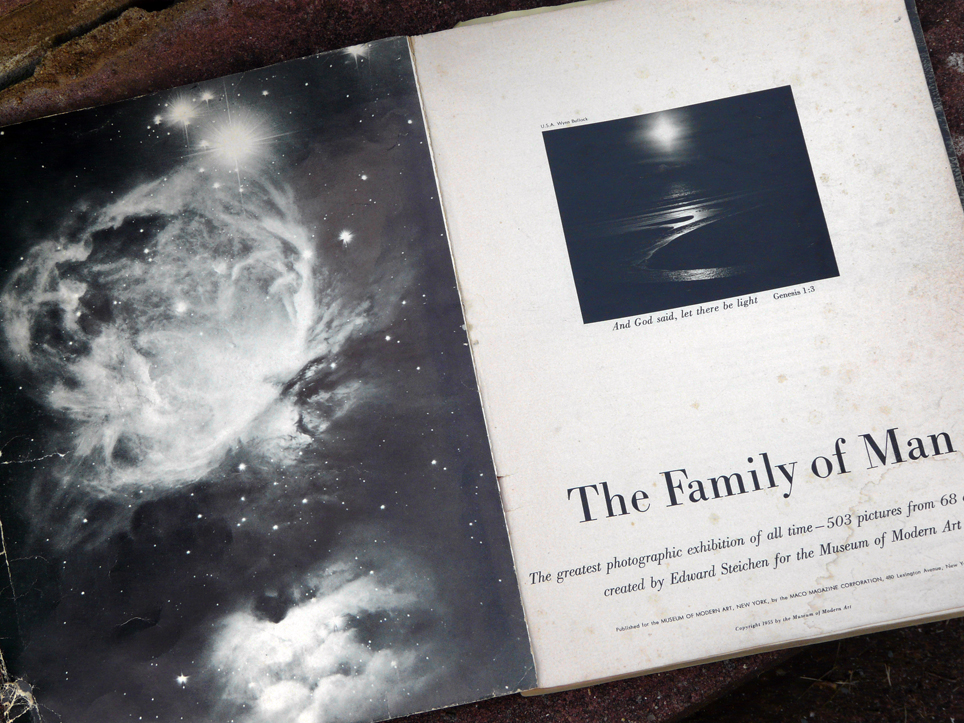
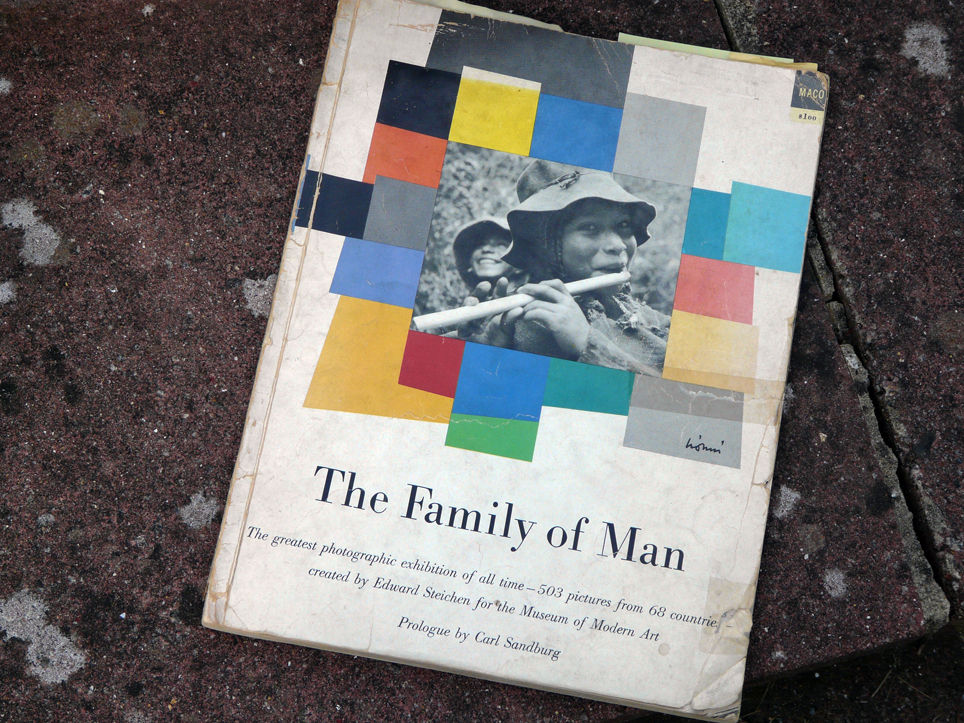
Aged eighteen, while staying with a family friend in London, I came upon the catalogue of the greatest photographic exhibition of all time – The Family of Man – a mirror to the essential oneness of mankind throughout the world.

The exhibition was assembled by Edward Steichen for the Museum of Modern Art and contained photographs from sixty-eight nations …

P1060180 smaller


There is only one man in the world

and his name is All man

There is only one woman in the world

and her name is All Woman

There is only one child in the world

and the child’s name is All Children


The inspiring collection of images decided my first career as a photographer.

P1060181 smaller

Ironic, given that my parents’ photographic business had held no interest for me. I realised my search was for what shone through reality, the essence in people and situation. I was inspired by poetry, story, light and shadow, movement, point of view and framing.

Fully embracing this passion started an active and adventurous period of my life, with opportunities to travel and mingle with groups of highly eccentric and creative people.


A decade later, at New York’s Kennedy airport, after a several momentous months in Washington DC, while waiting for a flight back to Amsterdam with my husband to be, a title on a book rack screamed for my attention … well, it jumped at me like a dream tiger.

P1060064 lowres

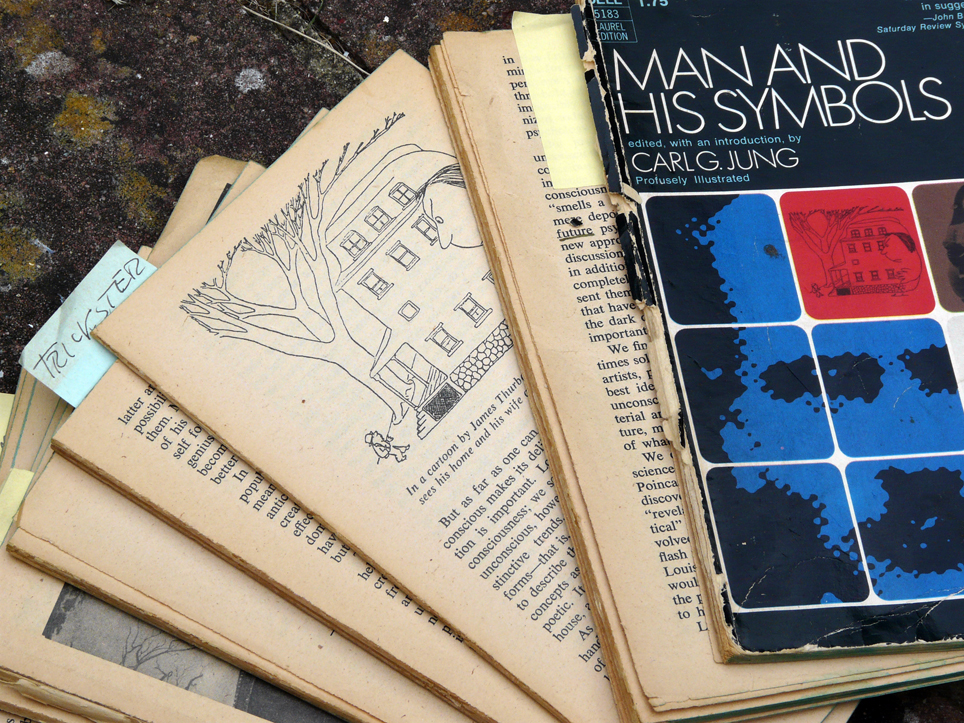
Man and his Symbols.

You couldn’t find a better window into the ideas of Carl Gustav Jung.

It was Jung’s last project, addressed to a wider public, readers who would not normally come upon the over 17 volumes of his work.

Due to its pocket size, as you can see, the yellowed pages of my copy travelled and have been well-read over the years ….

The book came about through the persistence of the remarkably diverse John Freeman: http://www.newstatesman.com/politics/politics/2013/03/john-freeman-face-face-enigma

He interviewed Jung in a Face to Face programme for TV: https:/ /www.youtube.com/watch?v=FPGMWF7kU_8

Seeing the programme, Wolfgang Foges (Aldus Books,) urged Freeman to persuade Jung to write a book for the general public. Jung firmly refused – until he had a dream. He consequently asked Freeman to act as editor and co-ordinator with the average reader in mind. So it became a collective project between Jung and four of his followers, M L von Franz, Joseph L Henderson, Aniela Jaffe and Jolande Jacoby, and was completed before Jung’s death in 1961,

In his introduction Freeman suggests the reader will find it a persuasive and profoundly absorbing journey … which, for me, was true from the start. During eight hours on the plane, with an occasional glance at my partner, the receding skyscrapers of Manhattan, and the expanse of oceans, my interest in dreams and the unconscious were powerfully validated. The book makes a convincing case for the imaginative life as the most distinctive characteristic of human beings. I totally grokked this: The unconscious is no mere repository of the past but also full of germs of future psychic situations and ideas … they grow up from the dark depths of the mind like a lotus and form a most important part of the subliminal psyche.

Two years on, having become a mother, and living for five years in rural Somerset with treasured time to study, it was C G Jung’s work that inspired me to delve into cultural and mythological research, leading on to my training in psychotherapy, and later still, to write novels.

My shelves contain many more books I loved to bits, and I wonder if digital version of these publications would have had the same lasting impact.

Frankly, I doubt it.

Only today I shared a tattered copy of Kahlil Gibran’s ‘The Prophet’ with a supervision client. She had never heard of the poet and was delighted.

Do you have books that fall apart through love and physical touch and still inspire?


17 Comments

Filed under Blog

… framing our impressions …

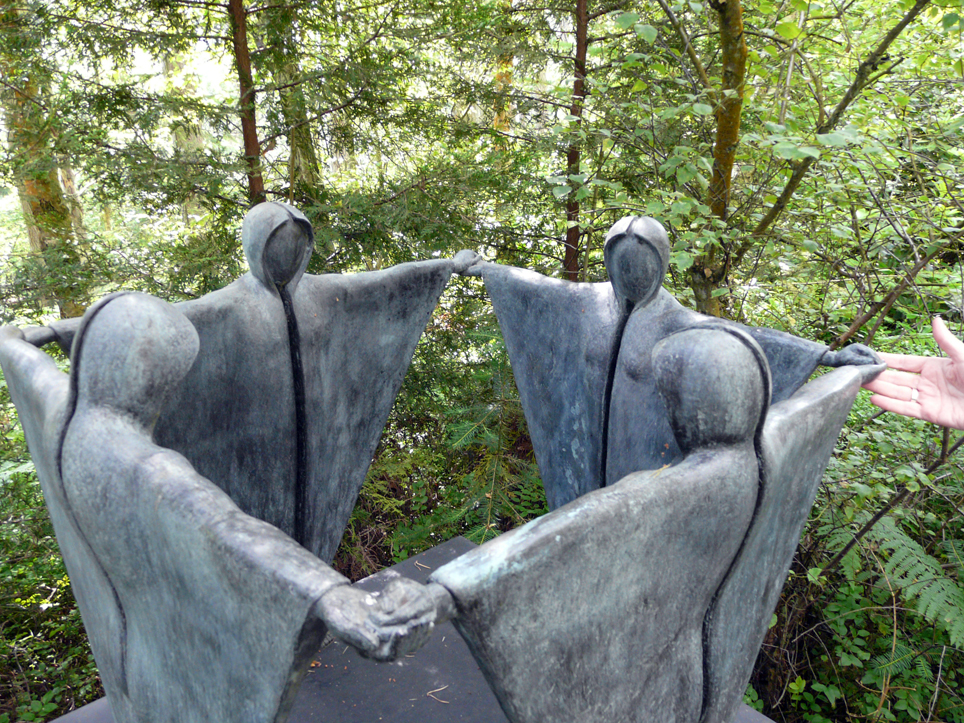
Last week a friend visited, and I took her to a local Sculpture Park set within ten acres of heath and woodland, a place where meandering pathways lead you into a deep dream-scape of rare plants, springs, streams and ponds, and where artworks face you at every turn.

The evening before, over a meal in my garden, we shared stories – about ageing and loosing people, about war-damaged fathers, about writing workshops in prisons. Our discussions often home in on the suppressed feminine in both men and women. So it’s not surprising that while we wandered through the park our two pairs of eyes were resting longer on artworks expressing aspects of the feminine, and our observations mingled.

P1060122 lowres

I thought I share a few photos of sculptures that caught our attention.

P1060123 lowres


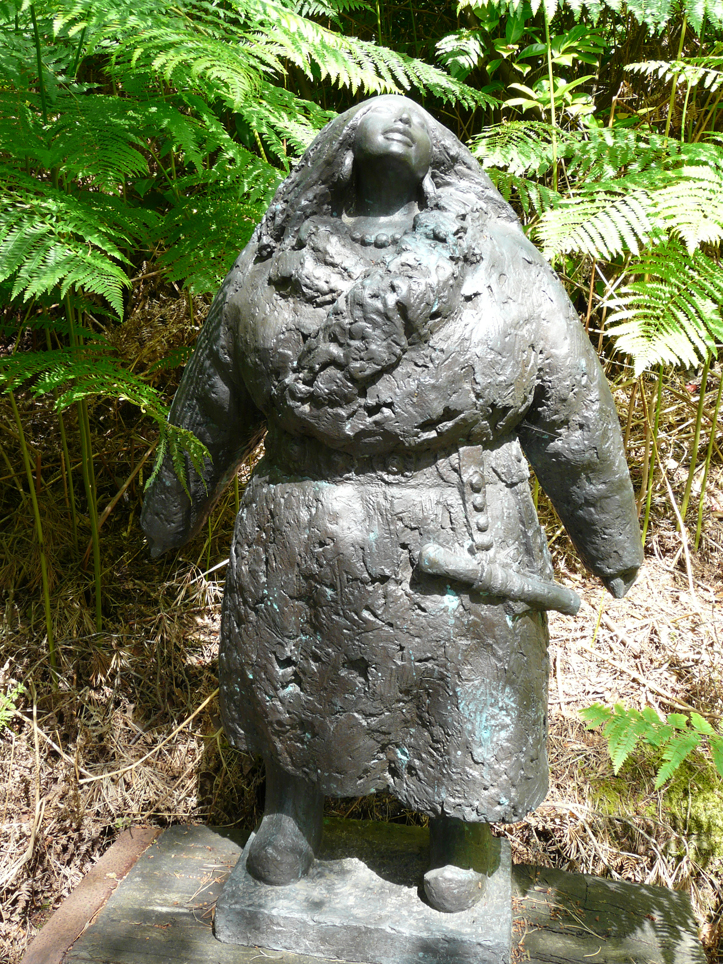
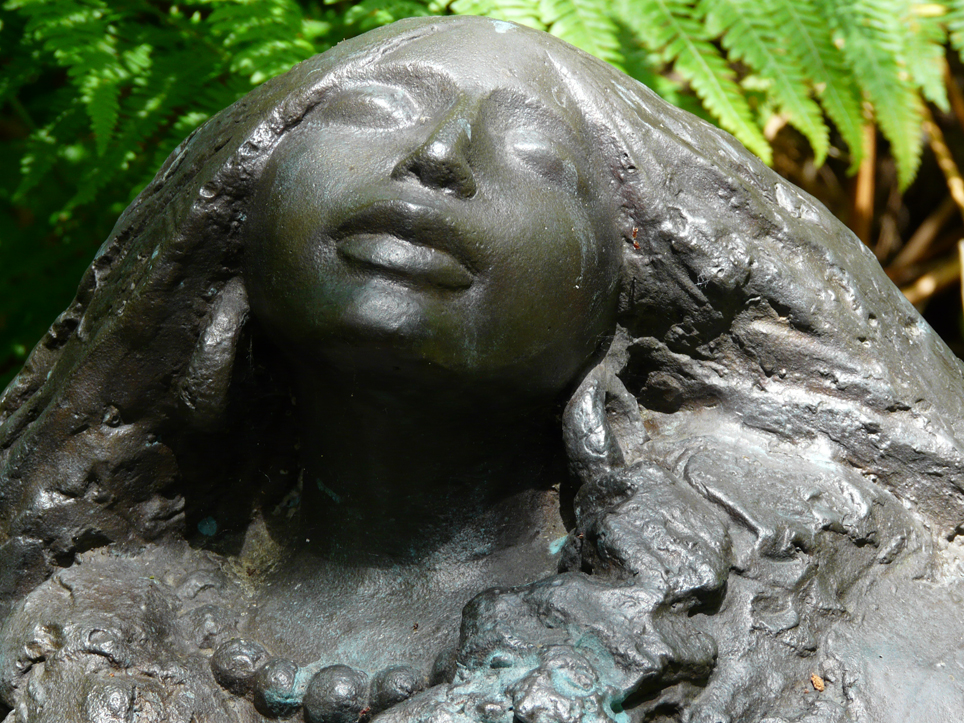
This bronze figure of an earth mother and warrior combined in one impressed. Her solid stance, yet also her surrender to something other. I took a picture and looked again, moved to touch her rough coat. There were her feet, standing firmly on the ground, a tool or weapon hanging from her belt, the little fists, speaking of determination, and there was her smooth, yielding face turned upwards in ecstasy towards a transcending spirit.

P1060116 lowres

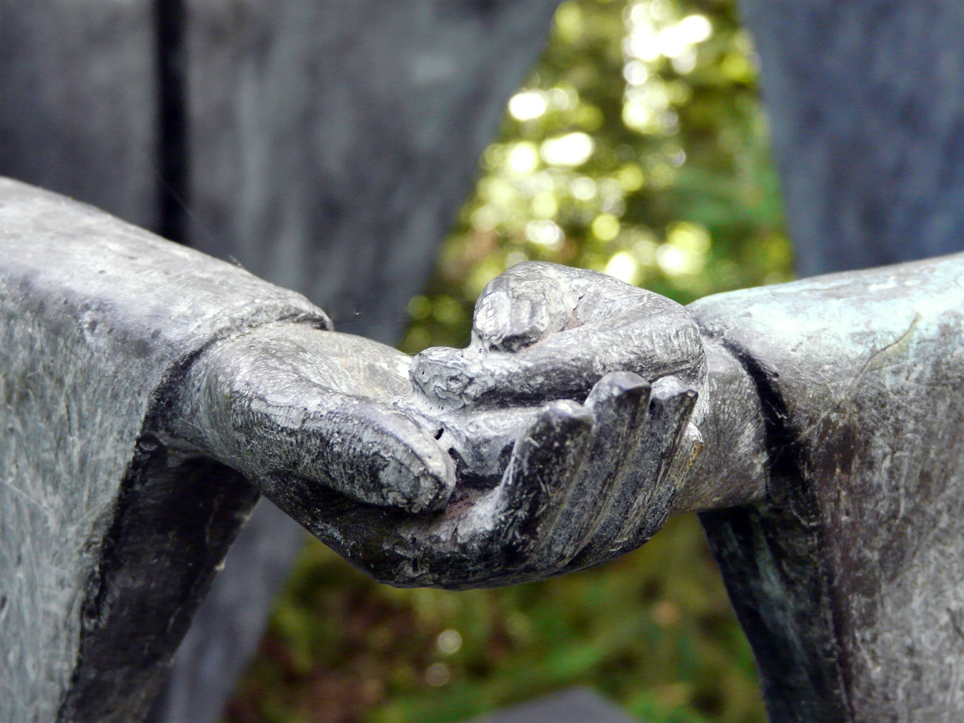
The endearing foursome forming a protective square made us linger.

My friend reached out to add her hand to the interlocking hands.

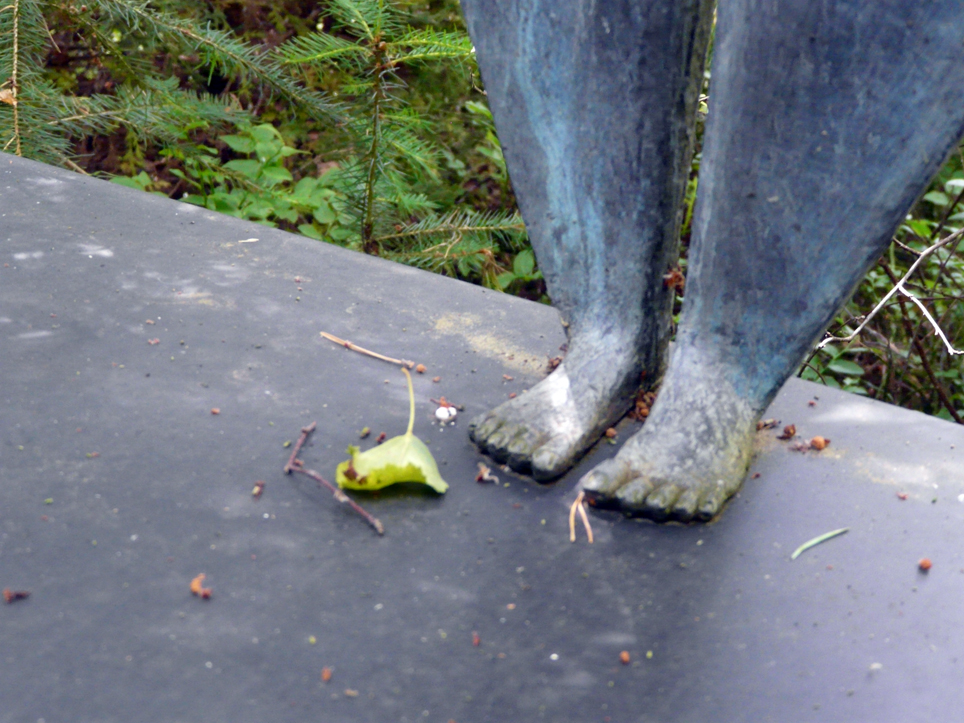
P1060117 lowresAnd we loved the little feet …

P1060118 lowres
P1060120 lowres


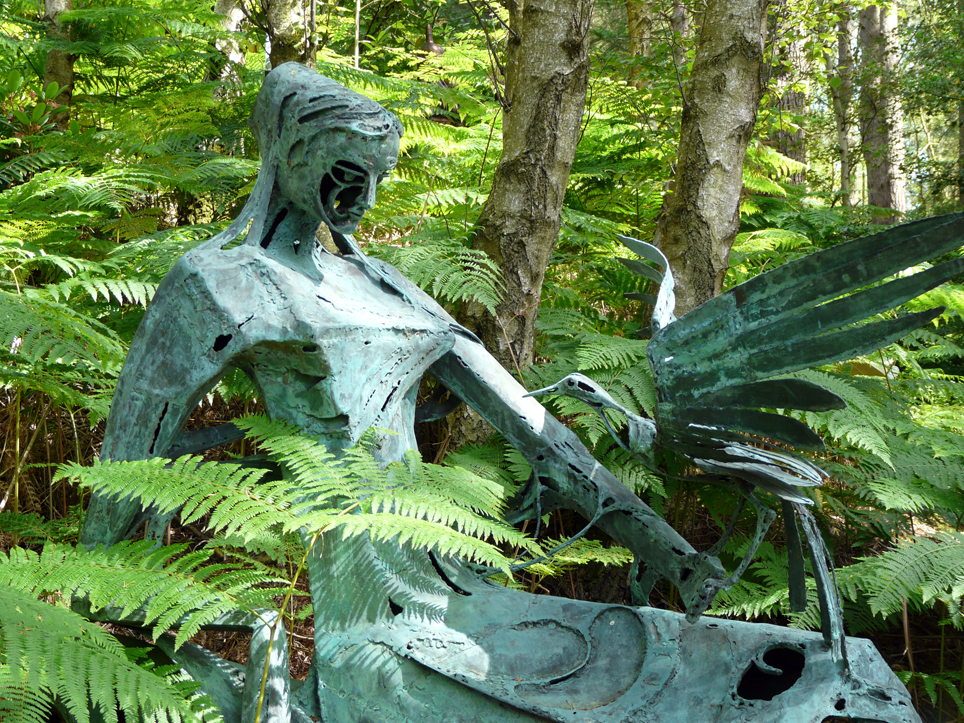
I felt a natural affinity with this bird woman, again taking a closer frame, to highlight her relationship to the bird.

It’s talons rest gently in her outstretched hand, bringing a greeting, and maybe a message.

The woman keeps a respectful space between her and the bird, a space filled with wonder, in which to savour the special meeting with her core nature.


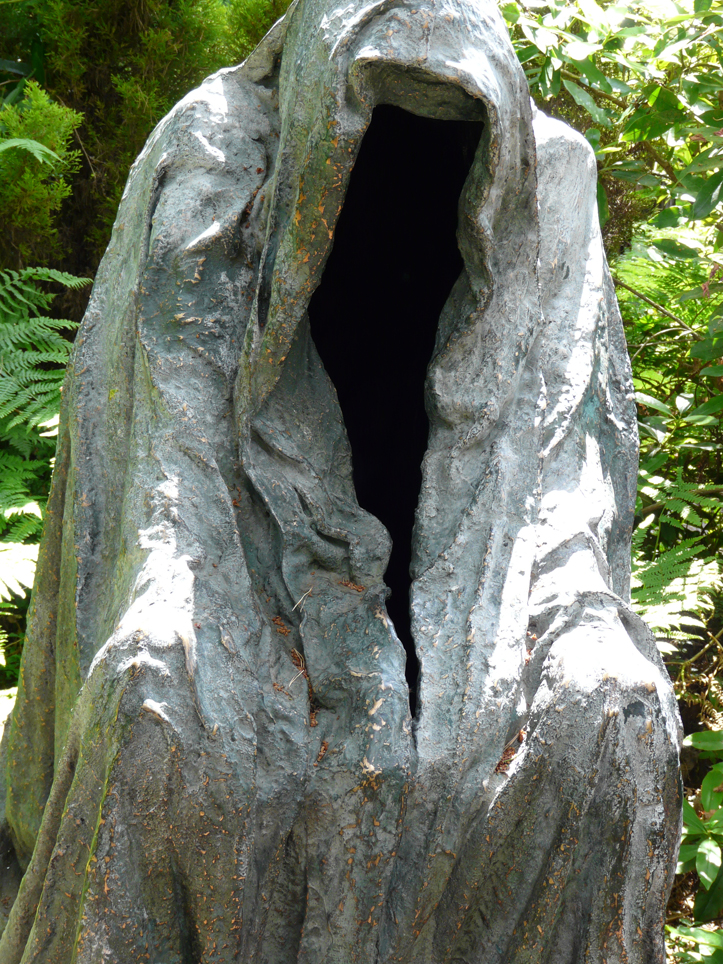
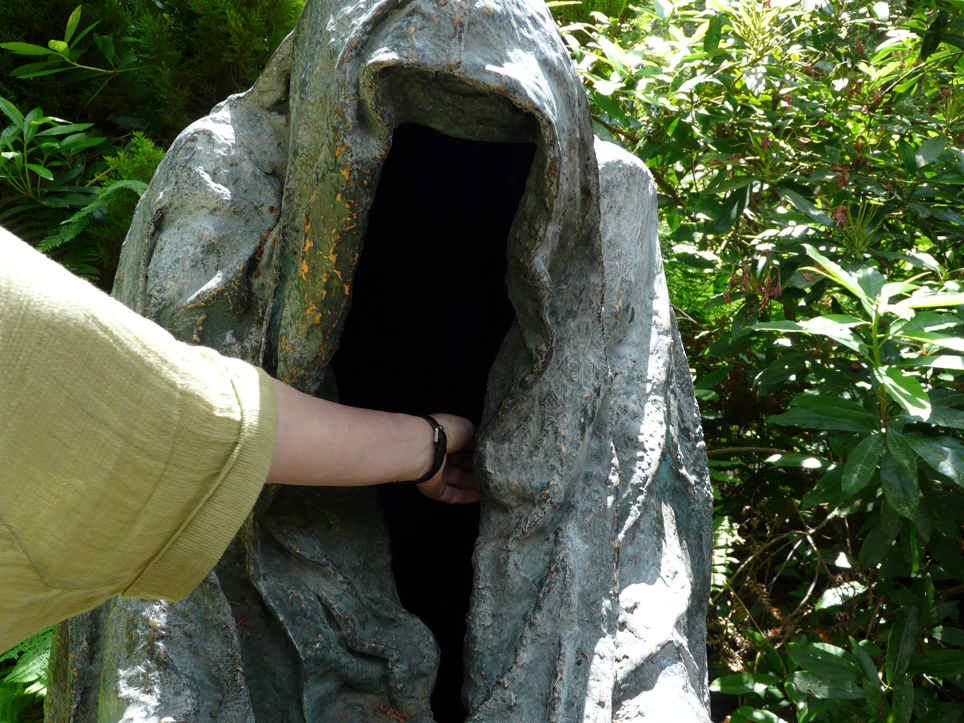
A most haunting sculpture was this shell of a person. My friend reached into the dark emptiness. I called ‘Hello’ into the hollow and the sound was swallowed up without returning an affirming resonance.

P1060112 lowresP1060111 lowres


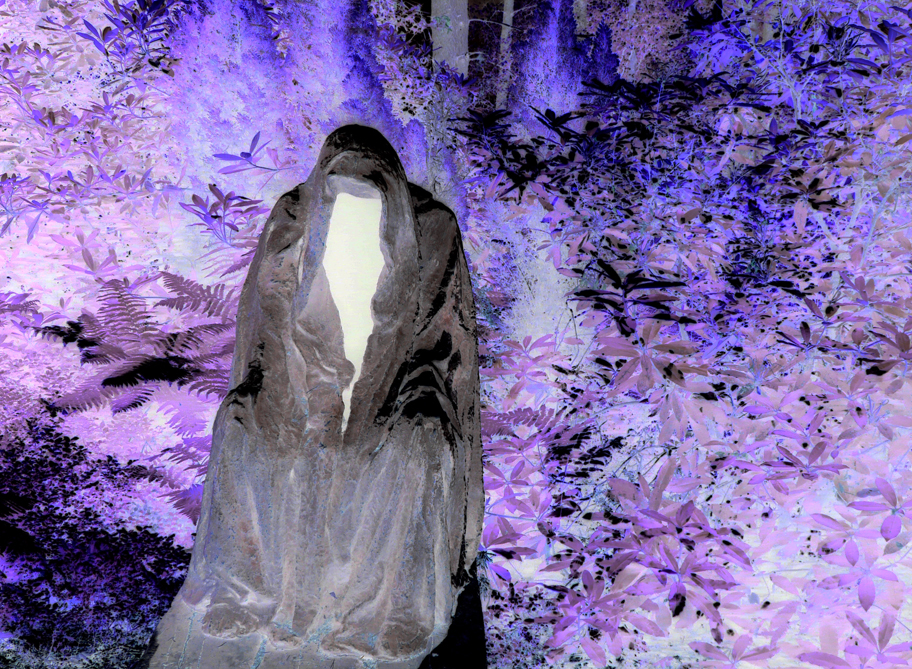
Later, with the help of Photoshop, I turned the image into a negative, and there you have it – the essence of what we are, light, often hidden.

P1060110 inverse lowres

Day in day out we absorb a continuous hyper stream of phenomena. What makes us stop and observe more closely and choose a meaningful frame to digest our experience?

Is it an emotion, a sound, a movement, a desire to touch, an association, a memory, a pattern recognition, an inner seeing, the intuition of an essence, a context that resonates with our lives, an interesting angle, a certain light …?

For creatively inclined minds, these processes fuse and culminate in an urge to compose and share the impression of an experience by placing a frame round an image … a story.

A symbolic understanding arrives and signals once more  into the unknown, framed anew.

*    *    *

LINKS:  http://thesculpturepark.com/

https://courseofmirrors.wordpress.com/2011/10/18/sculpture-park/ post from a former visit

https://courseofmirrors.wordpress.com/2012/12/31/the-inner-silence-of-henri-cartier-bresson/  master framer

https://courseofmirrors.wordpress.com/2011/06/28/what-makes-a-photograph-arresting/ a knack for composition

https://courseofmirrors.wordpress.com/inspiration/ young people observing and being creative


15 Comments

Filed under Blog

… the frottage of life …

Aged 14, my confidence and love for writing was shattered by a teacher. She praised a brilliant essay – mine – based on a painting of our choice. The romantic image of a Carl Spitzweg painting I picked had freed my imagination. After reading my essay out in front of the class, the teacher stated it was unlikely the pupil had written this herself and she therefore had to disqualify the work. I was pushed off a flying carpet, too speechless and humiliated to protest. My creative writing went underground. I wrote poetry, in secret.

Water

Water

Images inspire me, they tell stories. Photography came to my rescue, not so much in the sense of recording concrete reality, but more in the sense of sub-creating it. Light attracted as liquid poetry that fell through shadows and sculpted fleeting life. I discovered my knack for framing the essence of a story.  And in the spaces between things I looked for something transient emanating from other spheres. There were moments in my life when finding words for these other dimensions became imperative, like, for example, when working as still photographer on a film-set at the shore of the Red Sea. In poems like ‘Riverhead’ and ‘Sleepless Sun’ I tried to encapsulate such instances: https://courseofmirrors.wordpress.com/poems/

Photography started out with a process of reversal – getting the positive print from a negative film – which is being superseded by digital bit-structured data, leading us into new metaphors for time and space. The tiny window of the laptop I’m writing this text on has become my interior sanctuary. The window of its screen frames worlds well beyond my garden – microcosms and macrocosms. My grandparents would have called this feat magic, which it is, of course. Computers have become our second brains, compilers and recorders of our imagination, easy to share.

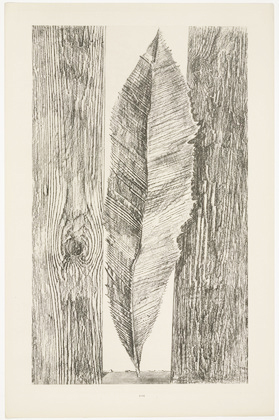
The habit of leaves, Max Ernst.

The habit of leaves, Max Ernst.

In search for the invisible hand that animates the unseen, I remember coming upon the technique of frottage by Max Ernst. He was intrigued by the reversal of textures achieved when rubbing surfaces with a soft pencil – be it weathered wooden planks, bark, textiles, netting … For Ernst the results evoked superimposed images and visionary associations.

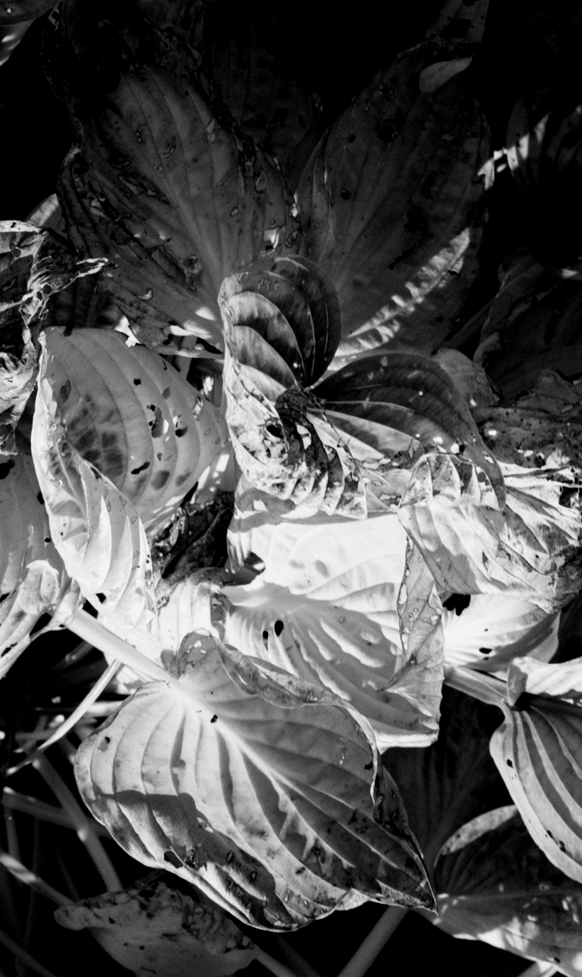
Whirling Hosta

Whirling Hosta

Not only artists find surprises in the textures of surfaces. Who does not occasionally pause before a weathered wall, lichen-covered gravestone, the grain in a wooden plank, a windswept cloud, a reflection in glass or water, or detect resemblances and fresh arrangements in the shape of cliffs or in the veins of plants? Unexpected patterns call for unfurling, inspire a collage, a scientific idea, a poem, a story,  or painting.

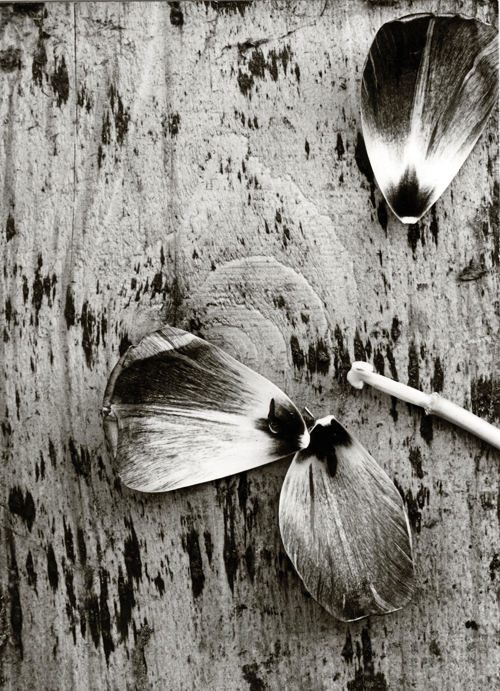
Grain

Grain

We rub off impressions from the ambience around us, especially first impressions – scents and sounds, tactile sensations, patterns of light and shadow, textures, colours and shapes, anything that attracts or repels us.

In a psychological sense, we rub off qualities we find in each other – in parents, siblings, friends, strangers and public figures we admire or despise. From what impresses us we extrapolate and find recurring resemblances. As our imagination sparks random associations involving all of our senses, a theme becomes reflected in our heart, as in a mirror, and informs our personal myth.

It’s what my novels are about, which, I hope, will also have a universal appeal.

Among related posts:

https://courseofmirrors.wordpress.com/2012/05/25/pattern-which-connects/

https://courseofmirrors.wordpress.com/2013/10/07/patterns-of-eternity-humbly-opens-your-mind/

Most of the photos on this site are mine. A selection can be found here: http://500px.com/ashen

20 Comments

Filed under Blog

… meeting the other …

None but nature could have written a better curriculum for becoming human …


Attend for a moment to you breathing. If you’re aware of heaviness in any part of your body, breathe the colour of water under a blue sky into that part and let the tension drift into the earth with the out-breath.

In your mind’s eye, find yourself in a meadow, abundant with scented wild flowers. Nearby is the outcrop of a mountain and a welcoming dry cave stirs your curiosity. Entering the cave, you find a spacious passage from which comes a luminous glow. All of a sudden you’re walking on air, and – like a feather on a breeze – you’re floating, floating gently downward into velvety twilight. In your heart you know you’re guided towards a special encounter.

A waft of fresh air brushes your skin. You find yourself standing in a soft beam of light from high above at the centre of a dome-shaped cavern. The circular wall of the dome has tunnels that lead in all directions. You must choose one. Be patient.

White Window, St Cathrine's Chapel - more lowresWithin your reach sits a small bronze bell. Lift the bell and give it a slight nudge. As the clear sound of the bell reverberates in your heart, you’re drawn to one particular tunnel and you know this is the one to follow.

Warm air greets you with otherworldly scents, the crystal walls of the passage glimmer. Soon brightness appears ahead, momentarily blinding. You step forward and slowly make out a landscape of rolling hills with the sun reflecting in a silver stream that meanders towards a distant sea. 

Close by, you notice a strong presence under a solitary tree and feel your heart chime in perfect harmony with the presence. A near transparent human form steps out and mirrors your innermost being. Eyes, radiating love and acceptance, completely affirm you. For an instant you are – you are natural mind, pure consciousness.

A soft voice says: Where is the other?

Pondering the question, a shrouded figure moves, from hiding behind your back, boldly into view. It is a repulsive creature and you want to shush it away.

Greetings to your other, the soft voice of your essence says. Then you realise what the apparition represents, everything you reject and prefer to keep hidden from your consciousness, all you find objectionable, embarrassing and unacceptable in others, and in yourself.

Understanding happens. By denying your inferior being you are also ruled by its whims. And realisation comes – of your body’s wisdom, and of knowledge gained from human frailty you were too proud to value. You see with fresh eyes  and extend the very love and acceptance you absorbed from your essence. The other straightens, lightens. There’s a new respect, an affirmation, a softening.

Turn and look again into the deep compassionate eyes of your essence, absorb this capacity for tolerance in your heart, allow the healing.

Then bow to your essence and return the way you came. Give a nod of acknowledgement to your other, so the shrouded figure won’t slink behind, become resentful and trip you up. Let it walk in view, accepted, even with gratitude for its imperfections and its treasures.

*    *    *

Continuing from my last two posts, this is further classic theme for an inner journey, usually adjusted to the context in which it is used. I kept the narrative short and succinct. Even if you don’t enter the journey experientially, alone, or read to by friend, and allow your own images to emerge, the scenario might spark reflections, and drawings or writings for your diary or chapbook.

It’s humbling to recognise our flaws and the blame we assign to others, and yet, no matter how many veils are falling from our eyes, there’ll always be more projections to be owned, more grudges to let go of, more misunderstandings to tolerate, more hurts to absolve, and more to be embodied of what feeds us from dark roots. Our struggles with conflict and contradiction polish the heart, feed our imagination and create our realities. None but nature could have written a better curriculum for becoming human.

http://www.youtube.com/watch?v=9NrAGJEMnHE          Marie Louise von Franz – The Way of the Dream 2.1 – Our Shadow Knows

One does not become enlightened by imagining figures of light, but by making the darkness conscious. – C G Jung, CW 13: Alchemical Studies. P.335

Everyone carries a shadow, and the less it is embodied in the individual’s conscious life, the blacker and denser it is. At all counts, it forms an unconscious snag, thwarting our most well-meant intentions. – C G Jung

If we could read the secret history of our enemies, we should find in each man’s life sorrow and suffering enough to disarm all hostility. – H W Longfellow

9 Comments

Filed under Blog

… the child in us …

Close your eyes and imagine standing on a beach … warm sand under your bare feet – a light sea breeze brushing your skin – gulls sailing above the sparkling crests of waves. Breathe a while, to the rhythm of the surf lapping at the shore – in – out – in – out – in – out – and let your eyes rest on the silver skyline.

There is nobody here but you – and a visitor – a child you invite to appear as it will.

At what distance does the little person appear?

Observe its posture, age, gender?

What do you sense about it?

Does it look at you, or not?

Is it curious, shy, withdrawn?

Notice your thoughts and feelings, don’t draw conclusions – do nothing.

Sense the realm of consciousness this little person lives in, and still your mind. If the child plays with shells do the same, remaining where you are. If the child skips along the surf, wait. If it takes one step towards you, wait. If it turns its back on you or walks away, sit down and wait. All the while communicate silently – I’m here as a friend.

Yeshen in Surf, colour - lowresHe or she may come close – or not – play with you – or not. Be patient. This little one represents your essence and must be free to approach the strange adult you’ve become as it chooses and when it’s ready. Maybe next time. Don’t over-act. Even if the child is friendly, keep in mind it may try to please your expectations. Remain calm, interested, approachable.

*    *    *

Visiting an imaginary coastline, metaphorically a boundary between the conscious and the less conscious psyche, brings insights even if no images emerge. Try and silence your usual thinking process. Enter the scene as in a daydream, or have a friend slowly read the text.

Insights change from day to day, according to mood. You could experience joy, get a glimpse of what’s important in your life, or be prompted to engage in frank reflections – a valuable process, helping us to develop empathy.

For example, if sadness or pain knock at the sight of this child, ask yourself … have guardians chided your curiosity and strong spirit, or humiliated your weakness and poor confidence? As a result your own adult may have unwittingly come to reject your child as unworthy, regarding it as ungrateful, stubborn, nagging, or awkward with the shame of buried secrets?  Consider – fear of abandonment, punishment or guilt about early fantasies may compel children to please grown ups in order to cope and emotionally survive. The legacy could be a distrust one’s own feelings. Signals received as pain, or love, might equally overwhelm.

Next time you hear a baby or toddler screams, let’s say, in a supermarket, observe what happens in your body, and watch other shoppers. It grates at our nerves at best, and can trigger physically embedded memories of helplessness, and sometimes more. Good to remember when we  judge people who shout and act irrationally. There are behavioural therapies to desensitize triggers that threaten to overwhelm people with rage. Then again, active imagination is more deeply transforming, and the symbolic expression of complex emotions (see later) frees energy and meaning, making a difference to our collective state of consciousness.

If some of these reflections ring true,  return to the imaginary shore as long as it takes to earn the trust of your child. Your adult’s task is simply to be present, reflect, and allow the younger being to initiate communication.

In daily life, begin to set aside pockets of time for that little person in you, encourage a symbolic process, without pressure, to write or draw about early joys, pains, hurts or dark thoughts, like having hated a parent, or once wished someone to drop dead. Children have such fleeting fantasies when they feel threatened and powerless. It’s normal. Holding on to self blame is the problem.

Suffering brought to consciousness lifts the spell of self blame. Despite appearances of confidence and adult bravado, the child in us is often anxious. Deep down may linger legitimate anger, and, deeper still, sadness and the longing for a precious moment of total acceptance. We call it love. It takes time to soften hearts.

Imagination serves multiple roles. It can draw us into habitual loops of negativity and self harm, or stimulate insights and enhance creativity. Artists know this. Imagination can also heal psychic wounds frequently handed down through generations. The healing aspect is especially powerful when employed consciously. Jung called it ‘Active Imagination.’

In this way, every imaginary journeys can be followed up by freeing condensed energy and meaning – symbolically – through drawing, painting, writing, movement, music or play, allowing what wants to emerge, be it forgotten wonders, or burdens, like unacknowledged anger a child had no means to express in early life.

And most significantly, nurturing a trusting relationship and rapport with our younger being invites the Beloved – our essence – and with it the light of intuition and inner guidance.

‘Lovers don’t finally meet somewhere. They’re in each other all along.’  ― Rumi –

Perhaps all the dragons of our lives
are princesses who are only waiting to
see us once, beautiful and brave.
Perhaps everything terrible is in
Its deepest being something
that needs our love.               
— Rainer Maria Rilke –


The imagery above is in continuation of my last post ‘journey into mystery.’

https://courseofmirrors.wordpress.com/2014/02/06/journey-into-mystery/

23 Comments

Filed under Blog

… journey into mystery …

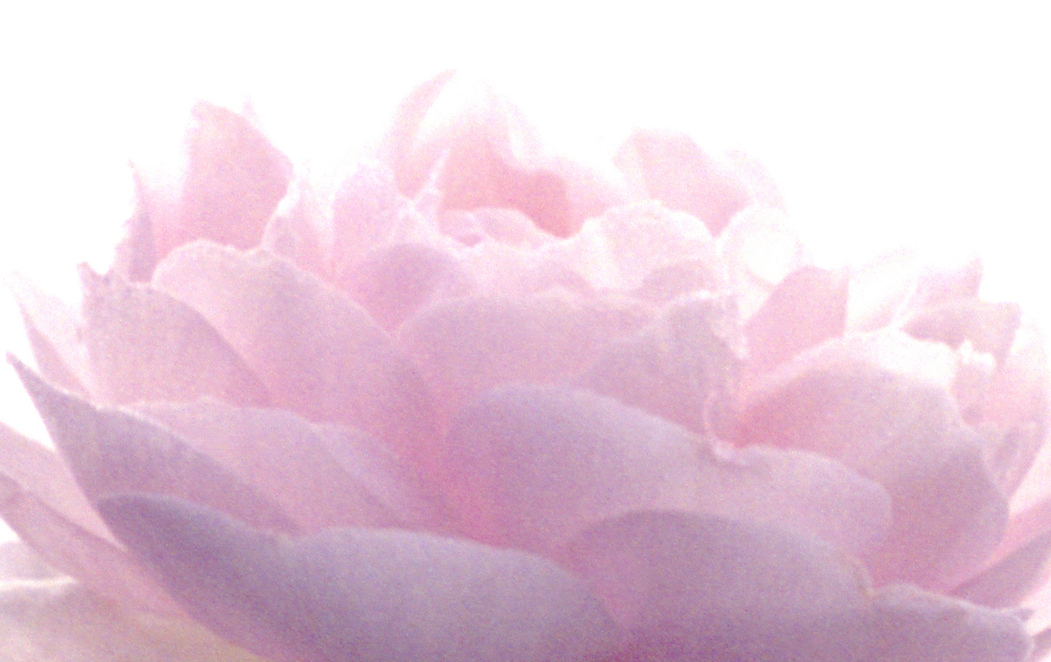
Close your eyes … switch on a light in the area around your heart and see the image of a rose bud emerge … at first a luminous tip of colour … the bud stirs … the sepals gradually turn outwards. See the petals unfold in a slow and fluid movement … until the rose has opened and exudes its delicate fragrance.

Imagine the rose expanding in size … to a palatial sphere that invites into its passages. Overcome the weight of your thoughts and wander barefoot with feather-light steps towards the luminous centre. Rest here for a while … absorb the tenderness of the realm’s ambience and the exquisite fragrance of rose into every cell of your body.

Rose, autum 4 low crop 2

Become the rose …

Move your consciousness upwards … lift on spirit wings and witness the rose palace merge with the landscape below. Soar higher and look down on clusters of houses, roads, cities, fields, hills, rivers, woods … see the shape of countries, continents, coastlines and oceans spread and curve the horizon. Move higher still, until the whole earth floats in deep space like a marble.

Feeling light and trusting, imagine you are level with the moon and look back at the shining marble turning in space … ribbons of white cloud, blue oceans, pale sands, green forests, red rock and snow-topped mountains – your home – vast in your memory but also small enough to be held in your palm.

Think of the people who have been and are close to you … in love … or alienated by hurt and dispute … people you shelter in your heart or have expelled from it. Sense the mysterious weaving of souls in the tapestry of the universe … your separate thread belonging and active in the creation of earth, the home of your human family.

Know that every sincere thought travels … know the creative potential alive within you is reflected in all life forms throughout the universe …

We are the mirror as well as the face in it.
We are tasting the taste this minute                                                                                                                                                                 of eternity. We are pain                                                                                                                                                                                        and what cures pain. We are                                                                                                                                                                                  the sweet, cold water and the jar that pours. – Rumi


Slowly descend – return to earth – into the rose palace.

Step away from the luminous sphere … let it ebb back into the small flower, petals folding … see the bud float into you open hand … sense how its power wishes to stay alive in you … for its beauty to unfold whenever you need loving. Here is how – place the rose and the whole experience of rose-becoming into your heart.

*    *    *

Over the years I composed many similar imageries with archetypal themes. They are tools of reflection I use with clients and in workshops. When I guide, the process becomes subtly interactive and explorative. Some journeys are safe to walk alone, like the one above, and they are as powerful as your imagination allows.

Should I share more such imageries? Let me know.

Here a more elaborate space visit … http://aeon.co/film/overview/

The poem from ‘Open Secret’ – Rumi transl. by John Moyne and Coleman Barks.

28 Comments

Filed under Blog

… emitting the real …

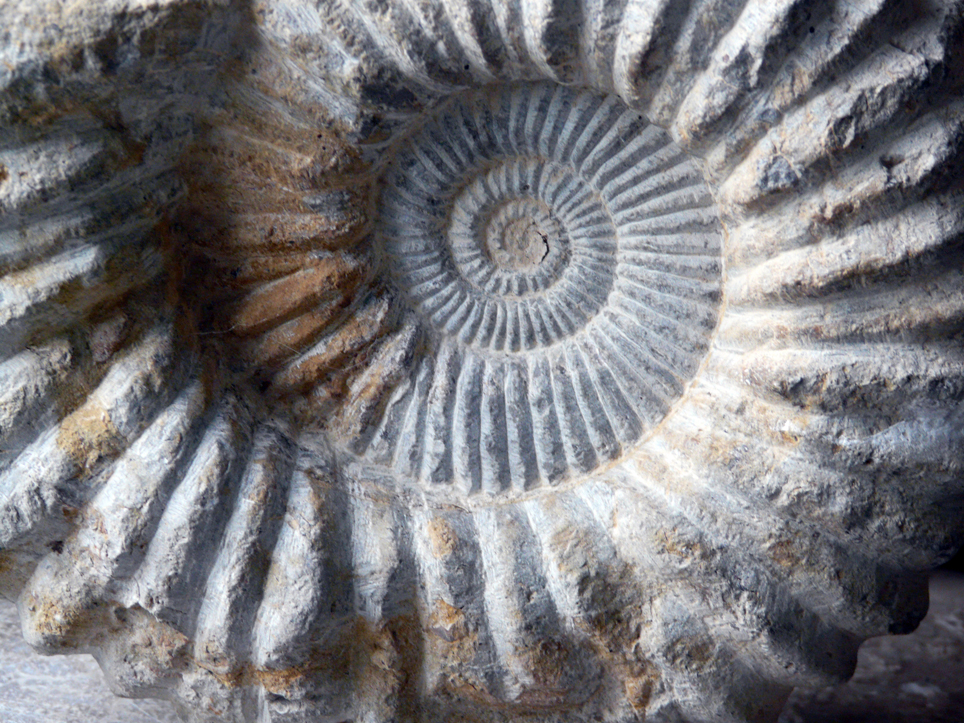
nothing beats the spiral

nothing beats the spiral

In the spaces between

Harmony and chaos

Wisdom voids the mind

To expose veins of

Hidden avoidances

Where – omniabsent –

Omnivalent in our longing

We exist inverted –

Give in receiving

Receive in giving

While surfing across the deep

To simulate worlds

Sift signals

Endure ironies

For evermore becoming

And emitting realities

Fleeing the ground

Of being …

*    *    *

Dear readers, I hope you stick around, while I’m immersed in writing scenes  for my second book, Shapers – the continuation of an epic search for the real.

10 Comments

Filed under Blog

… she discovered her language …

Expelled from the womb as a bundle of around 100 trillion cells, our tiny body brings along a generous genetic tome of ingredients for traits that dance together in a myriad of potential formations – depending on chance and circumstance. The process of sequencing and mapping the tome of an organism is immeasurably more complex and unpredictable than sensational media articles tend to suggest. http://en.wikipedia.org/wiki/Common_misunderstandings_of_genetics

Add inherited family models and cultural traditions – blessings and curses – this bundle of potential is compelled to fit into a given coat that eventually becomes too tight, or the colour is off, the material too heavy, and most likely the design clashes with our sensibilities. In short, the coat can conceal our potential and our essence, even to us.

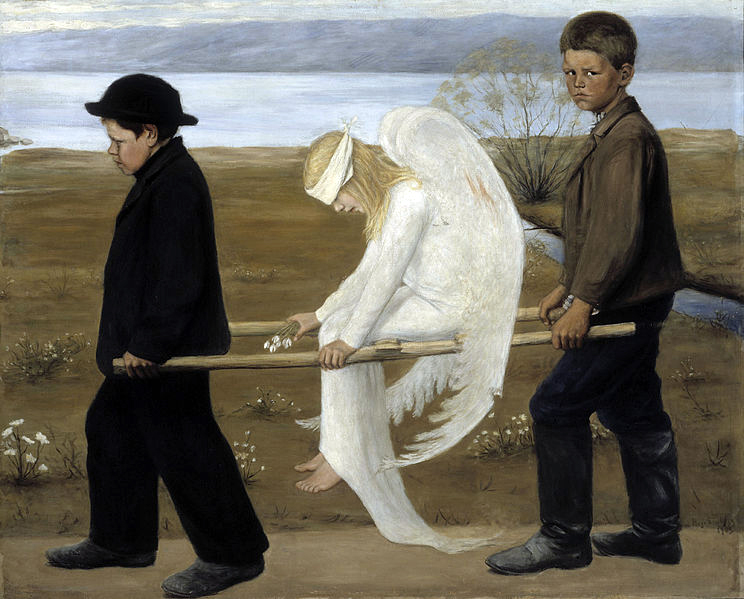
The Wounded Angel - Hugo Simberg

The Wounded Angel – Hugo Simberg

The challenge lies between two extremes: to squeeze into the coat or to alter it – and therein lies beauty – the full scale of our different stories unfolding.  We want to engage with the world, find a medium that communicates our unique myth – through being, play, work, service, music, dance, images, words, creating or dismantling ideas and objects. We crave for the ‘aha,’ the recognition, for symbolic understanding, and purpose.

The worst trials often sculpt the deepest processes. We deprive ourselves when judging those who don’t fit the norm, as demonstrated in this video about the Outsider artist, Judith Scott. Her works are exhibited in The Museum of Everything. When late in life she was welcomed in a creative space, Judith discovered a language for her inner history, her myth, and prayer. She devoted herself to wrapping up things, protecting things, keeping them safe and secure. Like many artists through whose very personal process shines the universal, she made psychological and spiritual sense of her genome.

<p>Video from <a href=”http://www.karmatube.org”>KarmaTube</a></p&gt;

In case the embedded video won’t show – it’s a great site:   http://www.karmatube.org/videos.php?id=3563&utm_content=buffer59550&utm_source=buffer&utm_medium=twitter&utm_campaign=Buffer

We’re all artists. Becoming a unique human being is a phenomenal creative achievement. In a culture that measures people against a uniform blueprint of perfection we easily lose sight of the unique perfections arising from within individuals, from within us.

*    *    *

The story of Judith Scott reminded me of a few lines from a Sufi prayer by Hazrat Inayat Khan

… Oh thou – life eternal –

we seek thy loving enfoldment …

15 Comments

Filed under Blog

… patterns of eternity humbly opens your mind …

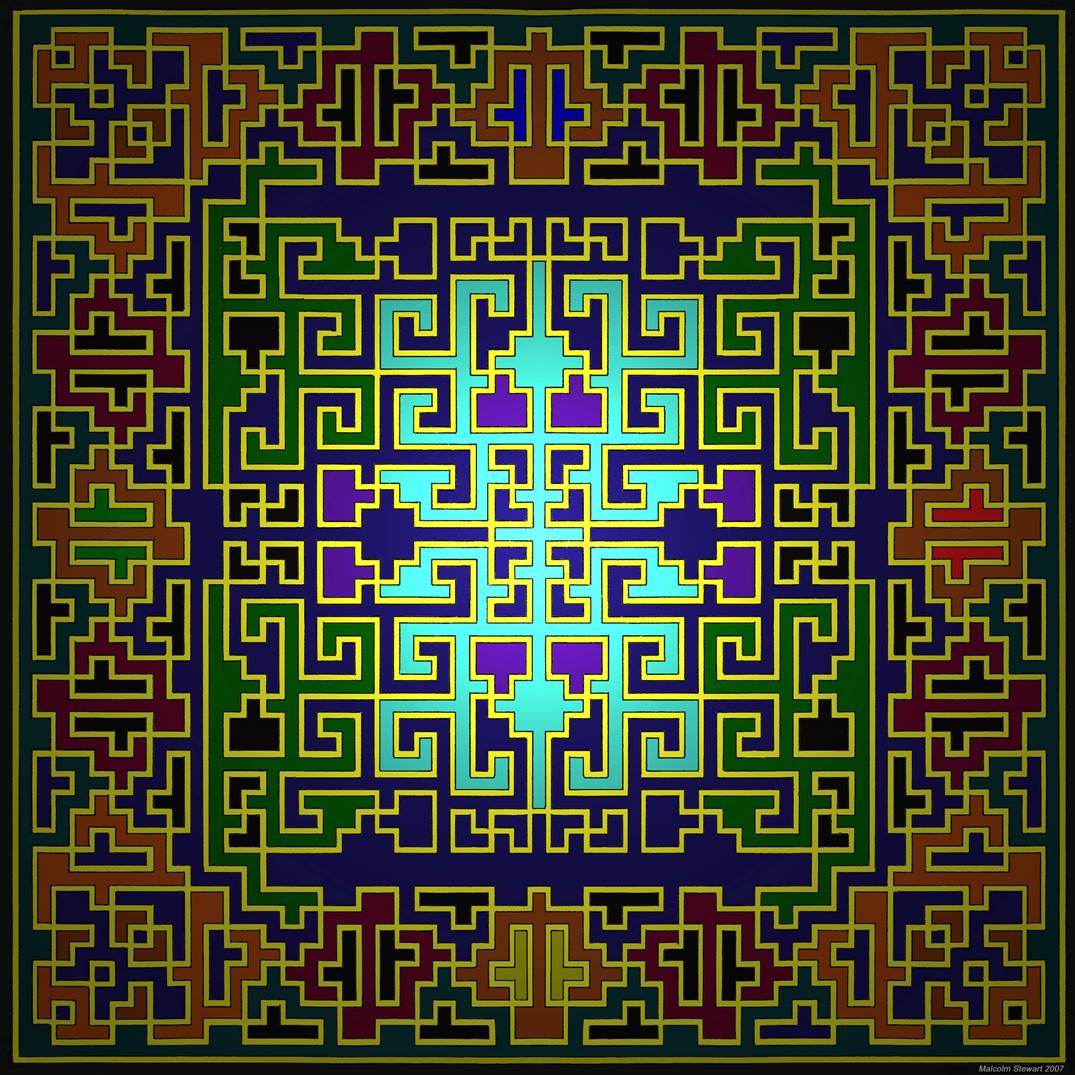
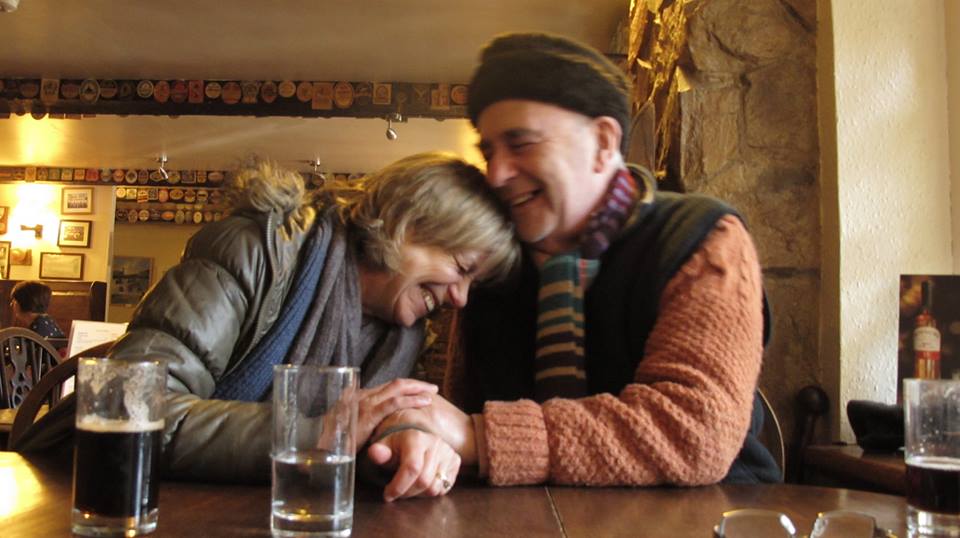
I want to tell you about a friend and writer – Malcolm Stewart – Initially a priest, Malcolm’s life sparkles with many roles – poet, singer-songwriter, editor, book jacket designer, cartoonist, BBC and ITV producer, UN project coordinator, NGO relief-aid and refugee organiser, artist, stained glass designer, lecturer and writer, friend, husband and father to 5 children … He is now in his 70s and lives with his wife, Nora, in Surrey. The Maze below is one of his many designs waiting to be collated and shared.

Maze design by Malcolm Stewart

Maze design by Malcolm Stewart

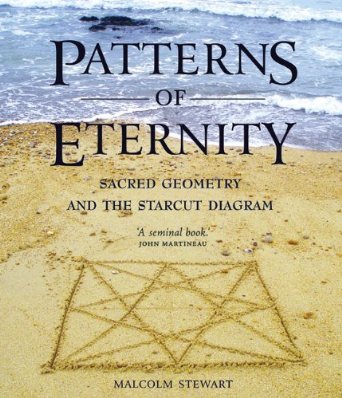
Having published Patterns of Eternity, of which more later, Malcolm wrote a second book, Symbols of Eternity. In the process of delivering the manuscript to his publisher, Floris Books, in March 2011, Malcolm suffered a stroke, which deeply shocked his family and friends.

He consequently lingered in a coma – drifting in and out of consciousness over a period of 5 weeks. Helped by the extraordinary determination of his wife, Nora, intense rehabilitation, the healing skills of friends, and the prayers of many, Malcolm gradually recovered speech and movement. During 2012/13 he improved in leaps and bounds. He now walks several miles a day, is his old delightful conversationalist, and has made friends with his computer again. He is working on another book, Light of Eternity (landmarks of a soul’s journey) and, in addition, is completing a novel he had kept hidden in drawers for years – Dictionary of Amazement.

Malcolm and Nora Stewart, photo by Peter Langford

Malcolm and Nora Stewart, photo by Peter Langford

We met up last week, and I asked him to sum up Dictionary of Amazement in a single sentence (a question I dread when it comes to my own novels.) His face lit up – A Tall Story – he said. It was one of those moments when you can hear the angels clapping. He read me the first chapter from the screen of his computer, and I can’t wait to read more.

Malcolm’s work inspires me. Even as a child I was in awe of music, forms and patterns in nature, proportions in art and architecture, the cosmos … and though I remained shy of mathematics, I recall my joy on discovering that all these manifestations could be based on mathematical principles of numbers made visible through geometric shapes, revealing a golden mean that pervades all systems. As I see it, evolution is the adventure of discovering the intersections from which new forms forever develop. Or, to re-appropriate the line of a poem by John Masefield I came across the other day (through Brain Pickings) … the mind re-members the beauty of fire from the beauty of embers

Patterns of Eternity - by Malcolm Stewart

At intervals to writing this, I was dashing into the kitchen to check on the setting point of my Damson jam, which requires a fine knack of proportions – fruit, sugar, lemon, a little water. We’re all born with a knack for proportions – though this tends to get obscured by an education that tips the scale of balance by valuing quantity over quality.

While much has been written on sacred geometry, Malcolm’s book is unusual. Not only does it welcome lay persons, like me, and entertain with rare, charming stories, and sumptuous illustrations, it also presents a simple device of great significance, the Starcut Diagram.

John Martineau writes in his review about Patterns of Eternity … the single most important addition to the body of sacred geometry to re-emerge in a decade …

Look up the book   Patters of Eternity (first time I try to do an ‘elegant’ link 🙂

An excerpt of my review: … The Star Cut Diagram introduced by Malcolm Stewart is an eye-opener in that it sheds light on one of the simplest and earliest geometric construction known, which he suspects pre-dates Euclid by thousands of years, a mnemonic device, and the template of many significant patterns throughout history and across the world … in architecture, art, rituals … a way of seeing and connecting things up.

Here a few themes from the book …

Chapter 8, The Hidden Geometry of The Divine Raphael. This chapter made me realise why Raphael’s paintings are so appealing. Malcolm first noticed the geometry in his painting The Transformation, which perfectly fitted the boundary rectangle of two circles interlocking as a Vesica Piscis, a ration that is also the perfect 5th harmony in music, like the notes C and G played together, or in sequence. The simple 2:3 ratio, root of all this, is as harmonious to the eye as to the ear or to the mind. What fascinates is how the directional gaze of the characters in the painting brings meaning to the theme.

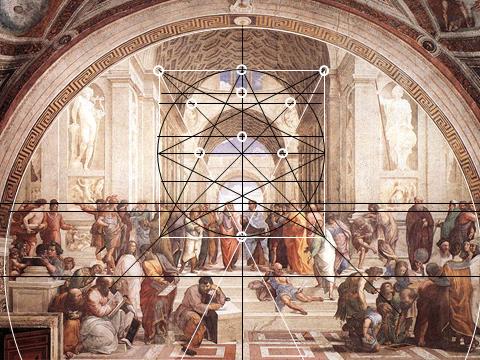
Raphael - The School of Athens

Raphael – The School of Athens

The chapter also explores Raphael’s fresco set in a semicircle, The School of Athens. In the ceiling medallion (not visible here) it says Causarum Cognito (Knowledge of Causes.) The female figure of philosophy in the medallion holds two books, one vertically, which is titled ‘Morals,’ the other horizontally, titled ‘Nature,’ resonating with the two central philosophers – where Plato points to heaven and Aristotle gestures to the earth. All the well-known philosophical figures in this stage-like painting also represent ideas, and Malcolm expands on their connections in detail, adding inspired meaning by overlaying the diagram of the Starcut.

Chapter 21, The Lyre of Apollo, applies the Starcut diagram to architectural spaces and relates to vibrations and resonances. Images show samples of standing waves created by sound within different elements. And the tonal vibrations of the human voice are discussed, like Psalm singing, the reciting of Indian puja, Sufi Zikhr, Buddhist sutra chanting or mantra. Practising this kind of tuning in groups (as I experienced) powerfully tunes mind and body. The chapter goes on to elaborate on the length, tension and ratio of musical strings, using once more the Starcut diagram to show the consistent harmony of numbers, and the hidden one that remains quiet.

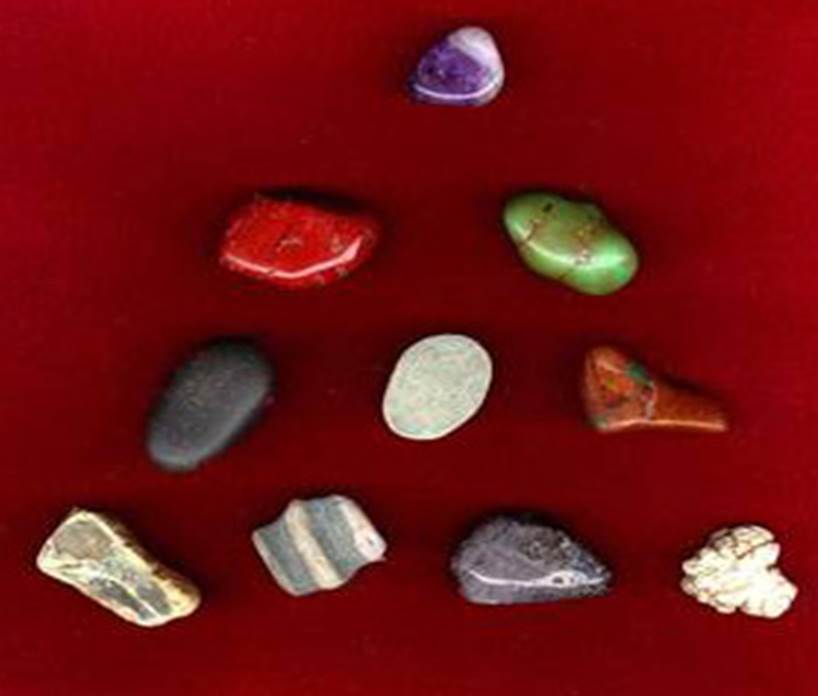
P. of Eternity, ten pebbles

By bringing light and clarity to simple forms, with beautiful illustrations, the materials presented throughout the 25 chapters convey a deep intuitive connectedness, which makes this book a joy to explore.

A surprise at the end of the book introduces 5 Starcut Glass Bead games, not featured here.

You can listen to Malcolm reading a little from Patterns of Eternity on yourtube http://www.youtube.com/watch?v=-N8QiyJU_SY

Dip into it at Amazon – PATTERNS OF ETERNITY  http://www.amazon.co.uk/Patterns-Eternity-Geometry-Starcut-Diagram/dp/0863157122/ref=cm_cr_pr_pb_i

And also look at SYMBOLS OF ETERNITY   http://www.amazon.co.uk/Symbols-Eternity-Landmarks-Soul-Journey/dp/0863158374/ref=pd_sim_b_2

19 Comments

Filed under Blog