Tag Archives: shadow

Autsch

Autsch

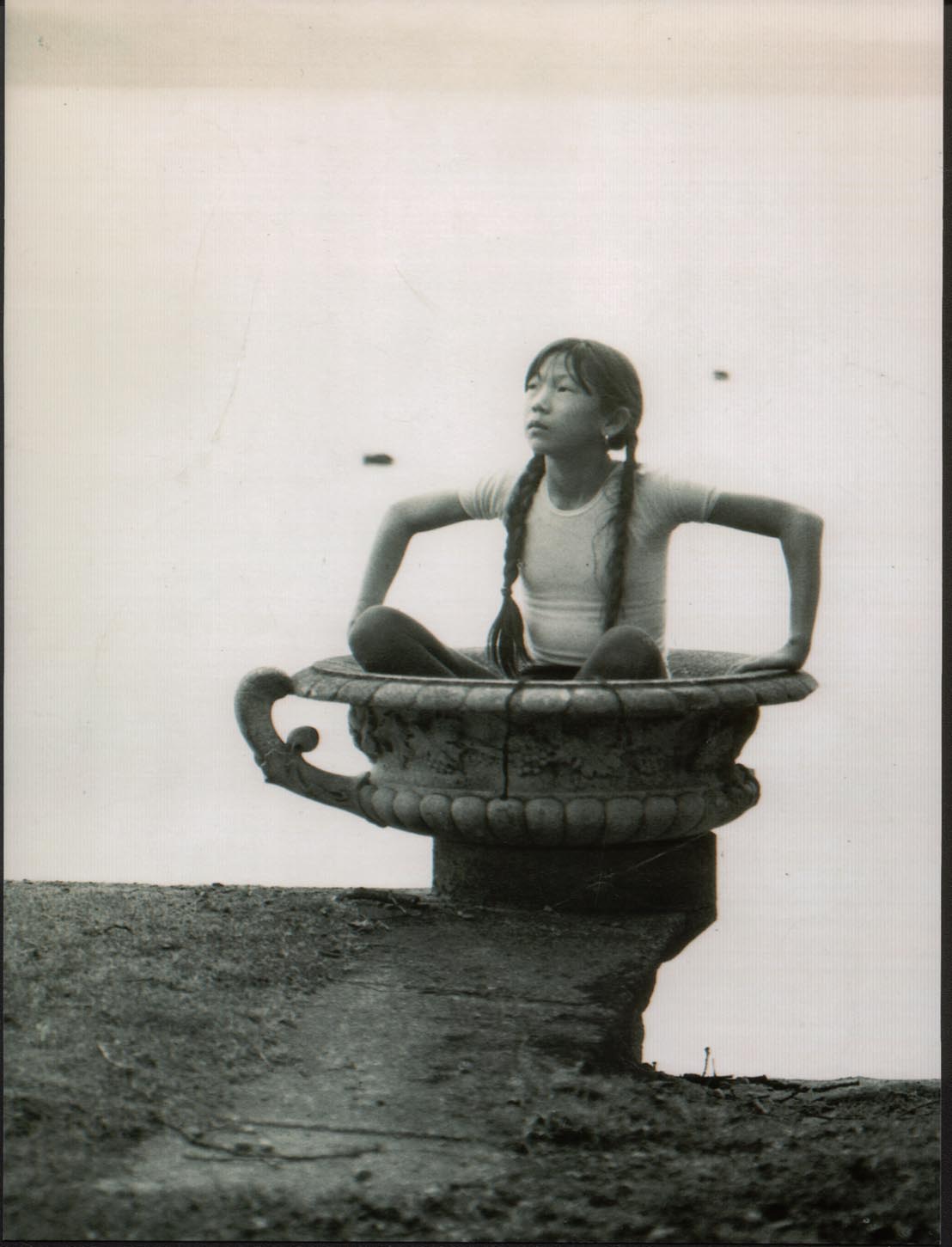
Finding this photo reminded me of how I kept bloodying my knees on the sharp stones of circumstances, and still do. My hope for a warmer communication with my father was dashed. He revived, and with it a fierce need for control. Lines by Dylan Thomas come to mind:

Do not go gentle into that good night,
Old age should burn and rave at close of day;
Rage, rage against the dying of the light …

Humans are mortal, but maybe humanity as a whole is immortal, and particularly its desire to find a meaningful answer to the circus of life.

‘Mein Freund, die Zeiten der Vergangenheit // Sind nur ein Buch mit sieben Siegeln. // Was ihr den Geist der Zeiten heißt, // Das ist im Grund der Herren eigner Geist, // In dem die Zeiten sich bespiegeln.’  –                                                                 Johann Wolfgang von Goethe, Faust (I)

Just like the human brain receives and conducts thoughts and ideas (like a radio,) so genes may receive and conduct what a psychic seedpod brings along at conception, that is – familiar patterns drawn to new constellations as through a mathematical time-grid (astrology may not be far off) – so that our realities are really mirrored from other spheres.

Via this psychic seedpod our story seem to arrive with template personality types, whose potentials and constraints determine our genes, not the other way around, at least not until the body’s biochemical traffic assumes a habitual force. With the psychic seedpod comes a pack of shadows – talents, passions, traumas, hurts or humiliation engendered by generations before us. With this pack also come tasks: to tie up loose ends, and to redeem faults not of our making.

From the start out endowment attracts projections, like a magnet, coercing us to oblige the projectors. Forget about being right, about justice. The secret of transforming energy and doing better than those before us lies in responding to situations, even when our habituated cell-traffic unconsciously demands a knee-jerk reaction. Awareness slips easily. Faith by itself does not help the evolution of human qualities. Insight, humility and patience are also needed, but often lost when buried emotions pop up.

My father’s constitutional short fuse with the world at large had over time found creative outlets, but his recent outburst hooked me into early experiences of feeling manipulated and made small by anger that belonged elsewhere. I became his nearest Blitzableiter (lightning conductor.) A personal scar opened. Autsch.

Recovering in Munich last week, the fragment of a poem prodded to be recalled. Back home, I reached for my Richard Wilhelm edition of the I Ging – Das Buch der Wandlungen. Opening a page at random, the fragment I was trying to recall showed up as a footnote. Romantic poets may have lacked irony, but they often touched on a pulse of wisdom … these lines from the last stanza of ‘Die Ideale’ by Friedrich Schiller:

… Beschäftigung, die nie ermattet,
Die langsam schafft, doch nie zerstört,
Die zu dem Bau der Ewigkeiten
Zwar Sandkorn nur für Sandkorn reicht,
Doch von der großen Schuld der Zeiten
Minuten, Tage, Jahre streicht.

The quirky translation is mine …

… Activity that never tires                                                                                                                                       Slowly creates but never wrecks                                                                                                                                      That to the houses of eternity                                                                                                                                  Only sand grain by sand grain gives                                                                                                                             Yet wipes from the great guilt of times                                                                                                                   Minutes, days, years –

P1080230 - smaller

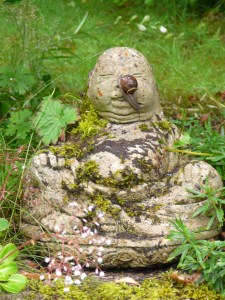
I wish I had the patience and good humour of my little Garden Buddha …

*    *    *

Even ‘Brexit’ and the realisation that the good old UK is really a Divided Kingdom leaves my Buddha smiling.

The deeper problem – a runaway capitalism all over the world, makes people angry. The solution is pretty clear to me – give every citizen a basic wage, so they won’t have to go begging from the state every time they experience hardship or are out of a job.

14 Comments

Filed under Blog

… love …

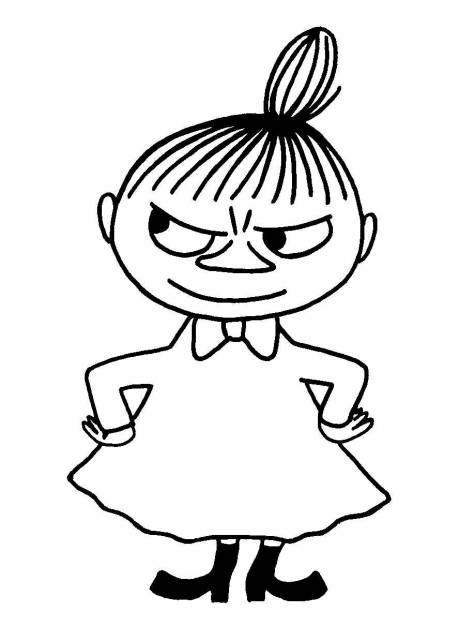
Little My - Tove JanssonLike me less or more, I’ve no qualms sharing that my persona hosts a little devil, an entity suspicious of principles, endless re-branding of what is obvious and free, including pearls of wisdom, and annoyed with much else in the world. This little sprite is my soul’s guard, my bullshit detector, and my Cara (friend.) She mocks hypocrisy, sanctimonious attitudes, power games and manipulation. Every now and then this sprite, like Tove Jansson’s Little My, when enraged, oversteps a mark and creates wanton conflict with my otherwise gentle nature and, at times, too trusting persona.

When a resolve is needed but not forthcoming, I resort to tools of remembrance – head-clearing techniques that calm the mind. Sometimes this works beautifully, but not today, when, of all subjects, I intended to write about ‘love.’

I’ll go ahead anyway, stating that the illuminating intelligence we call love is a core reality inside us. Words are kind of inept, but Rumi got it right.

‘The minute I heard my first love story, I started looking for you, not knowing how blind that was. Lovers don’t finally meet somewhere. They’re in each other all along.’

Rumi (translated by Moyne/Barks)

Irrespective of the despair and suffering experienced around the world, there are plenty of instances when people realise love moves in cracked hearts, and the sun dawns – things are the way they are because we observe them that way. This is our creation, our prison cell and our freedom. Fear may kick in when reliable walls suddenly dissolve, but equally, a realm of exquisite frequency can transcend the exacting laws of dense physicality, and stun us with the simplicity of an underlying truth. People wary about being laughed at keep silent, others start creeds, and there’s the occasional genius – the teacher, artist, writer or outsider, who convinces with plain yet startling expressions of the intelligence living inside us, the one being, pulsing through life’s revolution with wings of beauty.

What, I ask myself, would ensue in the unlikely event of every conscious being on this planet becoming enlightened to this deeper reality simultaneously?

I am interested to know what you think …

My thoughts go like this. In the temporal physical world, at least, friction yields energy we can use and direct. When it comes to the psyche, maybe we need to look at the yearning for love as a means to expand consciousness rather than a goal that promises the laurels of eternal life. Life is eternal without this nonsense of enlightenment as a goal, because, think about it, anything that has achieved wholeness stops becoming. A perfectly ripe apple that drops to the ground does not magic itself back to its branch, a new dream begins.

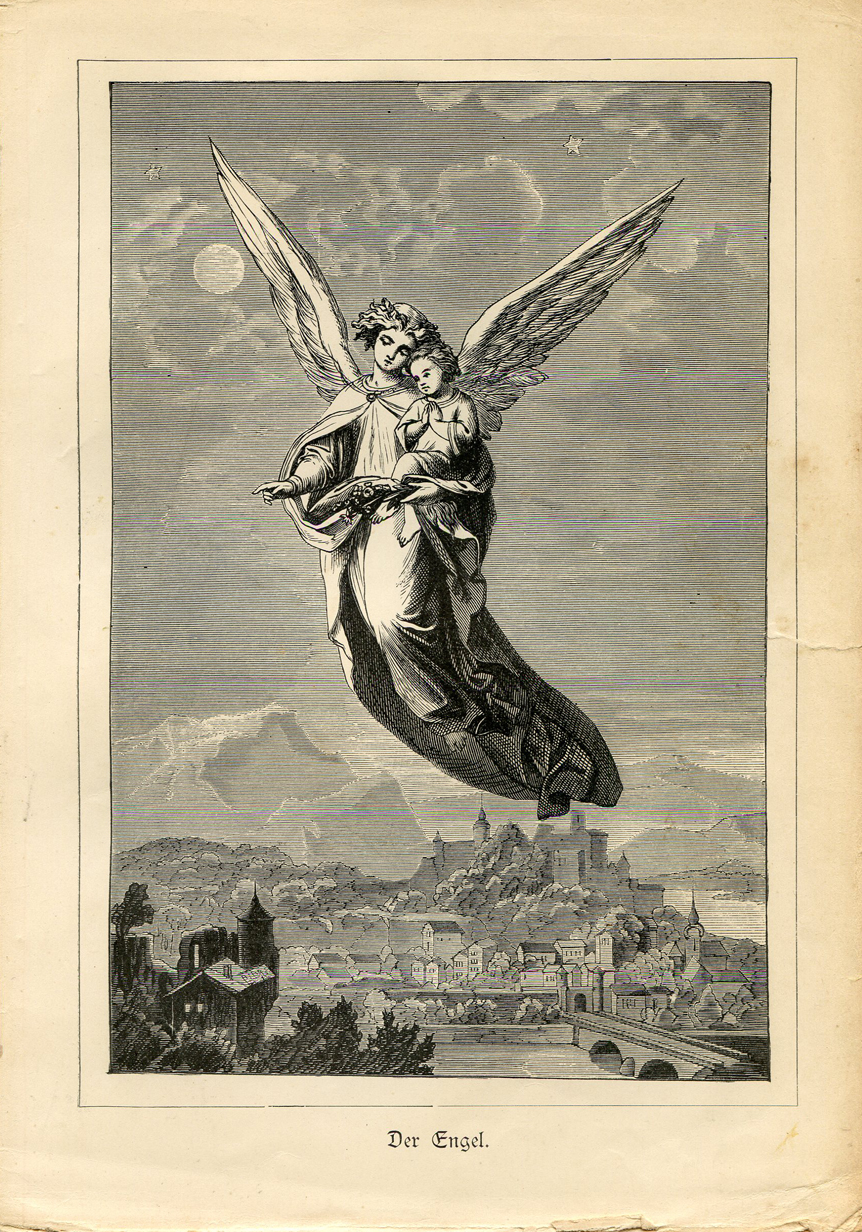
While appearances overwhelm and dazzle us with joy, pain, suffering and confusion in ongoing fluctuation, we can, at times, become aware of this soft rippling breath flowing through the visible and the invisible universe, sustaining the beauty and intelligence that life is ultimately animated by. When this love spins its hidden silver thread through us we are inspired. Angel - Der Engel - Woodcut for H C Andersen 1888 - smallerEven my little devil is charmed when our angel appears, serene or with a humorous smile – ah, you remembered, hello again, eternal child, welcome to warmth, elation, wonder and respect for all differences. For a while there is no judgement, no right or wrong. We’re moving in a vastly different dimension, of which the visible world is just one expression.

Various traditions propose or speculate on a purpose to life, but ultimately we create our own purpose by committing to a path and changing its meaning on the go, only the intelligence of love seems to be a constant.

The separation between past, present, and future is only an illusion, although a convincing one’ – Einstein

24 Comments

Filed under Blog

… dreams …

Photos by Ashen

Photos by Ashen

I used to host regular dream groups. We did not so much set out to analyse our dreams, but we played with them by engaging with their images, characters and objects. Sometimes we enacted scenes to widen associations and deepen our insights. While there is some excellent literature on working with dreams, a lot of it is boring, misleading and superficial. For me, the main purpose of valuing dreams lies in befriending the unconscious and the bringing to light what is timely and meaningful.

When we have no obvious explanation for events, dreams may bring subtle messages, offering glimpses of dynamics usually hidden from our awareness. A staggering 90 percent of personal and collective psychic dynamics trigger and compel our actions in life, and for good reason. The self-regulating psyche protects us from too much awareness. When encouraged, respected, and left to do its work, much like the immune system, the psyche can encapsulate runaway viruses of the mind by blanking out anxieties and obsessive thoughts, unless a trauma results in an ongoing inner storm. The processing of traumatic experiences is vital for the health of the individual, the family, the tribe, and our collective psyche. Something equally important to consider is that as adults our natural childlike curiosity about life may have become flattened by engrained habits and obsessive needs for security and control, both diminishing the meaning of our lives.

Note: Each embedded link here will not lead you away from this post but bring up a fresh page.

In an earlier blog post Joe Linker’s comment led me to an article by Oliver Sacks on altered states in The New Yorker  where Sacks pointed out a long tradition of ceremonial drug-use to stimulate the brain. Drugs certainly relax jaded attitudes by activating the senses and bringing insights and fresh perception. Sacks, and many like him, were admiringly fearless and creative, before there was a clamp down on drugs and they became illegal.Dreamseries 2

In dreams as in trance, induced or not, the mind can kick up imaginal representations of feelings, and metaphors. We shift to another realm, escape the logical structure of time and also tap into the collective psyche. We may hit a T junction, one path leading to an illuminating visionary state and the other to a schizophrenic state of confusion, which is why science sticks with rationality and is generally not keen on the imagination. The question as to what pulls us towards Heaven or Hell has no easy answer, yet all inner state, when approached with respect, patience, and most of all, wisdom, can have a healing and effect on our personality, and, in instances, as we know, result in significant works of art.

Dreamseries 3

Freud’s iceberg metaphor illustrates that our individual psyche swims like a mountain of ice in a vast sea, only to reverse into its fluid state once its coherence dissolves back into the sea. As a simple and more intelligent map of various unconscious states I prefer the egg diagram by Alberto Assagioli, the founder of Psychosynthesis.

Active imagination is a gentle way to befriend the unconscious and build bridges towards consciousness and daily life, and a way to explore dreams without messing with the dreamer’s unique meaning. I share here some practical tips:

Remembering dreams:

You can ask for a dream, especially when you feel stuck and ponder a question. You might even write the question on a slip of paper and put it under your pillow.

Try not to move your head after noticing a dream. Place holds memory.

Have a notepad and a soft pencil next to your bed, maybe a microlight, so you can scribble down a memory facet before fully crossing the threshold into waking. Even a single image, phrase, number, colour or feeling can act as a key for recalling a dream later on.

To catch a dream – try disrupting your sleeping pattern with an early alarm clock setting.

Experiment with your head position while sleeping – north, east, south or west.

Towards understanding dreams:

The psyche does not care about logic. The meaning of a dream may however unfold like a seed when we attend to its poetry and rhythm.

Ask yourself … how do I relate to the characters or objects of a dream? What feelings and sensations are evoked? In what context did the dream arise? How does it relate to my present situation?

Write a story or make sketches of the images. Tiny fragments can offer connections via free associations.

Give a voice to the characters and objects appearing in the dream. What do they want? Allow them to express their thoughts and feelings. Such dialogues can reveal surprising insights.

Change the script, create a different outcome, face down a fear or a shadow and follow through to what wants to happen. This approach can move a dream to a different level of understanding.

Ask yourself: Where does the energy want to go? What is emerging?

Dreamseries 4


Dreams express the voice of the soul; they are our contact with our deepest self, our inner substance. The mere act of recalling, experiencing and consciously honouring our dreams connects us with our real selves and awakens previously unavailable levels of creativity and vitality, even without interpretation.

Carl G Jung

A related post on altered states.

And if the subject of dreams interests you, here are some more links:

Edward C Whitmont was a Jungian psychoanalyst, who deepened my understanding of the psyche through his exceptionally clear writing. His books may be out of print, which would explain why they’re so expensive:  Dreams – a Portal to the Source and The Symbolic Quest

Other excellent authors to look out for, apart from Jung, are Anthony Stevens, Private Myths – Dreams and Dreaming, and Marie-Louise von Franz – The Interpretation of Fairy Tales.

12 Comments

Filed under Blog

… four years of blogging …

The host of my virtual island – wordpress – alerted me to the four-year anniversary of my blog.

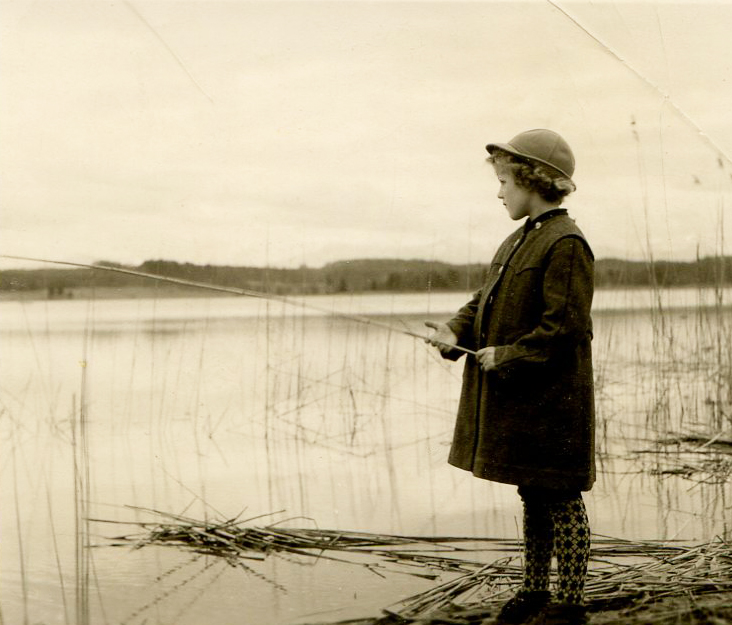
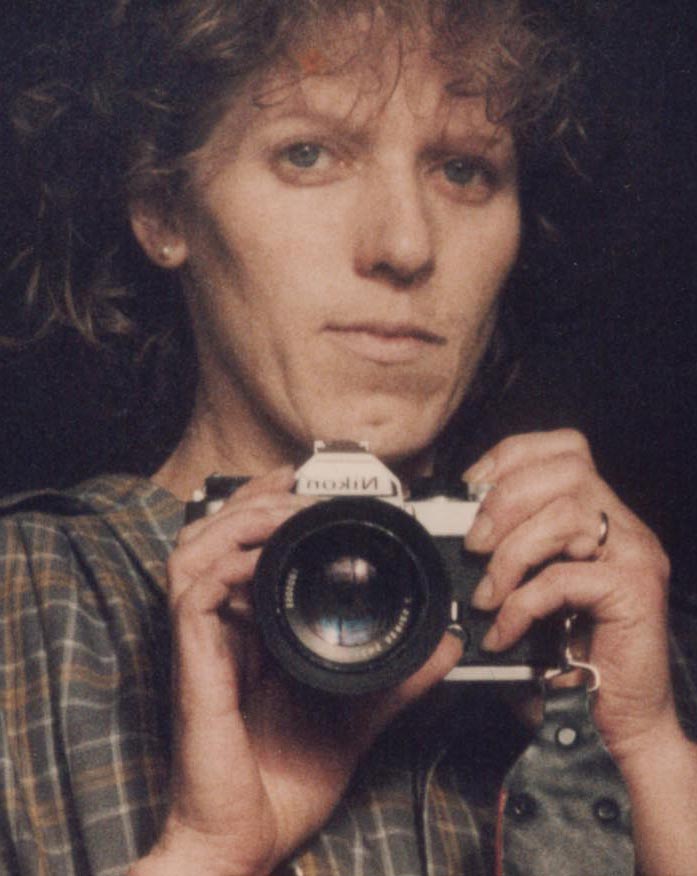
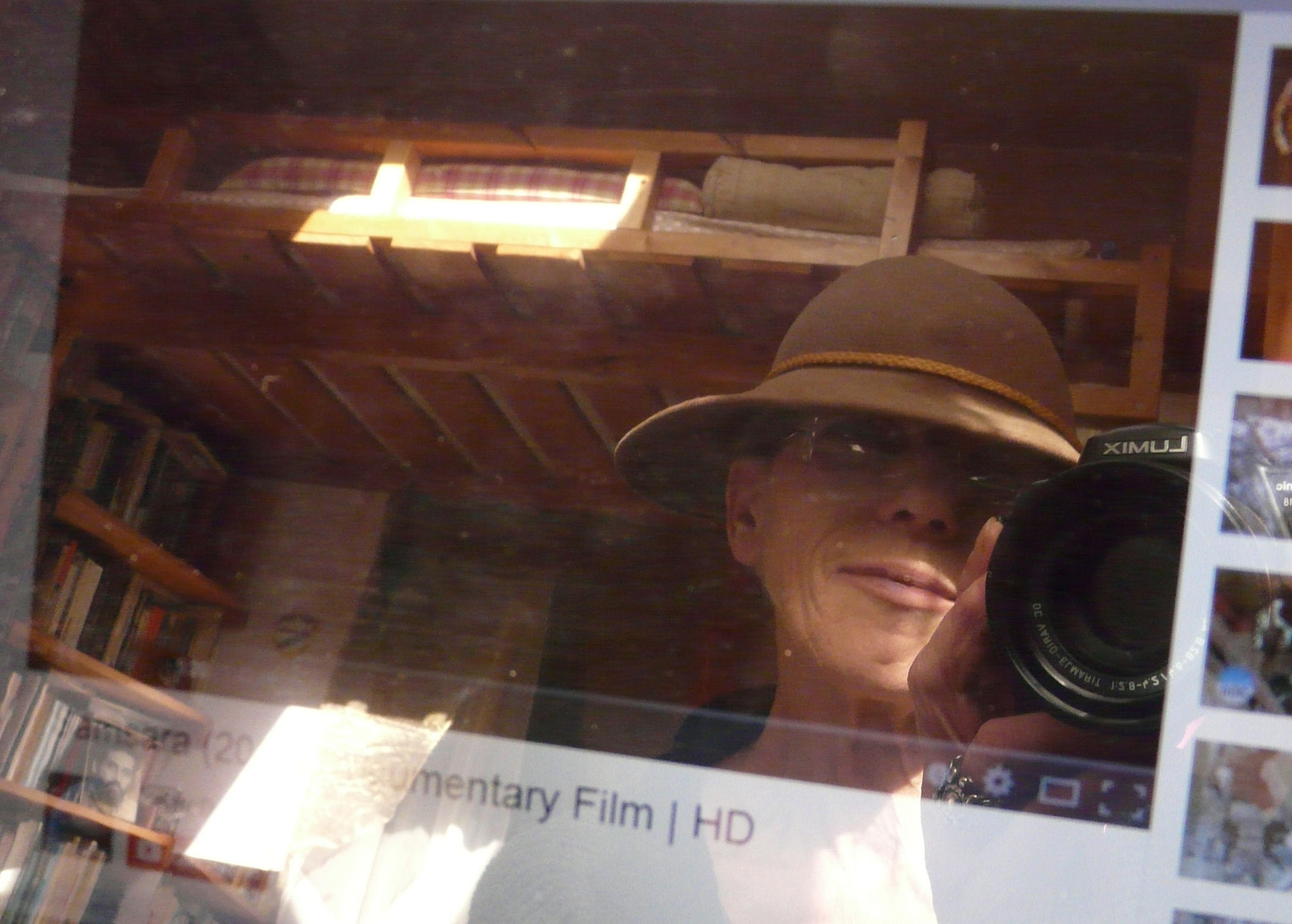
I thought I share with my followers some private photos. I’m not good at private sharing, but since my first book is going to be published this year, one way or another, some visuals of myself are in order.

pretending to fish

pretending to fish

about 30 years ago,  before selfies were vogue

about 30 years ago, before selfies were vogue

more recent, four or so years ago, a young sixty something

more recent, four or so years ago, a young sixty something

Lack of time limits my interactions, so I assume my over 300 readers are truly genuine. Thank you all for reaching out, for your friendships. It’s heartening to know my posts are enjoyed, and occasionally inspire. I sample your islands at random, and delight in how everything posted resonates. I appreciate your likes, and will respond to every comment left here.

Looking back, this was my first short post in March 2011 – just one sentence:

                                           We are each of us born a star in search of our world.

The second post was: A recent series of Haiku – for those who like Haiku

a town is gone

hawthorn flowers

white in the sun

*   *   *

among rubble

the snapshot of a child

splashing in a wave

*   *   *

spring morning

a ginger cat leaps home

across frosted lawns

*   *   *

the robin arrives

sampling dry grass for its nest

sky is cut by a plane

*   *   *

sunlight in a puddle

birds dowse their wings

no other sound

*   *   *

emerald shoots

on brittle cement

patter of feet

*   *   *

plastic bags rattle

in wire and branch

blobs of colour

*   *   *

a wave is rolling

over the grid of streets

hush among crumbled walls

*   *   *

lichen dried silver

in the hot spring

a rain of blossoms

*   *   *

a golden leaf

in the shade

white plumes rise

*   *   *

under smooth ice

a shimmering carp

visible silence

The concluding post in March 2011 was a letter to my shadow, ending …

         … Without you, I’d only be fluff on the coat of real human beings …

Time-permitting, please explore my posts, listed in the archive column to the right of my home page.

I hope you bear with me. Heartfelt thanks to all my readers.

21 Comments

Filed under Blog

… the ones who walk away …

Ursula Le Guin’s short metafiction, ‘The Ones who Walk Away from Omelas,’ first published in 1973, had its 40th anniversary last year. My first reading, when Google and book review sites were non-existent, left a deep impression. This week’s re-reading, once, twice, three times – the story deserves it – made me curious as to what other readers might have made of it. Obsessing in a web-crawl I came upon predominantly moral interpretations, which I distinctly remember resisting, though these associations are understandable. The way our systems deal with the unadjusted tends to appease the troubled conscience for the rest of us normal citizens.

For me, there were deeper complexities in this brilliant piece of writing. I decided to share my thoughts and tempt those of you who don’t know the story to read it and derive their own insights. I’ll use spoilers, so if you want to read the story first, here is a link: http://genius.com/Ursula-k-le-guin-the-ones-who-walk-away-from-omelas-annotated

… With a clamor of bells that set the swallows soaring, the Festival of Summer came to the city of Omelas, bright-towered by the sea …  

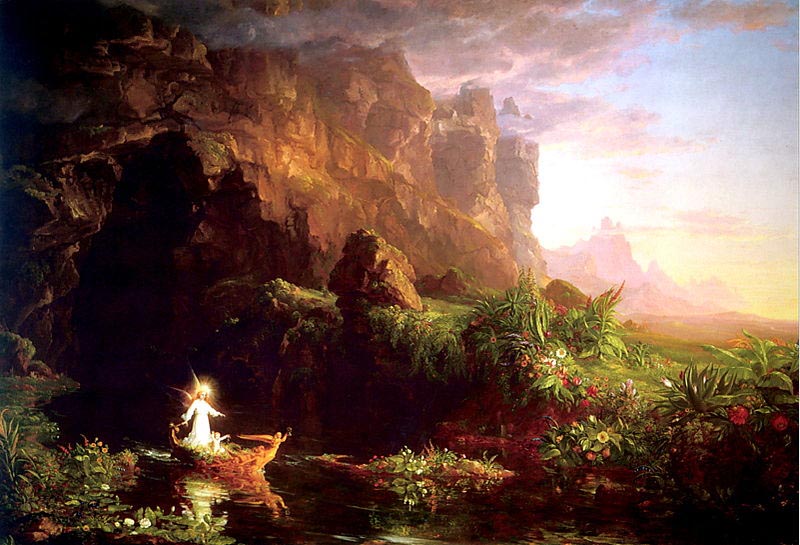
Childhood, Thomas Cole, 1842

Childhood, Thomas Cole, 1842

We are shown a charming city where order and harmony reign, a city well-protected in a bay, resembling a womb. Reality is suspended. There’s a sense of timelessness. It is a civilised place, decorous, joyful, without hierarchy. No king, no swords, no slaves … no power games. Utopia comes to mind, the idea of eternal life – the eternal innocent child.

No science has yet dispelled the vision of a haven without strive, where everyone is happy. In the wake of traumatising wars and unspeakable atrocities, there are always attempt to re-create places like Omelas, attempts to soften the reality of birth and death, the extremes of joy and pain, nature, the cosmos our life depends on and which we try to fathom. But since our spiritual lore cautions that life is an illusion – an ornament that covers ultimate truth we can’t perceive with our senses, we get anxious when life becomes too comfortable.

The narrating voice, anticipating our scepticism, invites us to fill in the sketches of this perfect democracy. We are told, ‘They were not simple folks, you see, though they were happy.’ After all, Omelas may strike some as goody-goody. Smiles, bells, parades, horses, bleh. ‘If so please add an orgy.’ More delightful pleasures are suggested – celebrating life, with one significant addition, ‘One thing I know there is none of in Omelas is guilt.’

In contrast, the voice notes the bad habit of a different place, where pedants and sophisticates consider happiness as something rather stupid. ‘Only pain is intellectual, only evil interesting … the treason of the artist: a refusal to admit the banality of evil and the terrible boredom of pain.’ The voice insists that the citizens of Omelas were mature, intelligent, passionate people whose lives were not wretched.

The Festival of Summer has begun. ‘Do you believe?’ the narrator asks. ‘Do you accept the festival, the city, the joy? NO? Then let me describe one more thing.’

And there it is, the secret lurking out of sight, a child, kept in the darkness of a tiny cellar room, with only a faint ray of hope based on a dull memory. The child is not driven out of the city, like the traditional scapegoat, but contained below ground; there to absorb everyone’s fear of reality and its cruel justice, embodying, maybe, submerged histories, rather like the depths of the iceberg below water keeps its peak afloat in the light.

… They all know it is there, all the people of Omelas. Some of them have come to see it; others are content merely to know it is there. They all know that it has to be there. Some of them understand why, and some do not, but they all understand that their happiness, the beauty of their city, the tenderness of their friendships, the health of their children, the wisdom of their scholars, the skill of their makers, even the abundance of their harvest and the kindly weathers of their skies, depend wholly on the child’s abominable misery …

Terms are clear, should this child be freed, the beauty would wither and be destroyed. The pragmatic solution seems such: One punished and suffering child is meant to redeem the rest from coming to terms with their inherited sins and traumas.

To leave this comfortable enclave of Omelas means leaving security and loved ones behind. It requires crossing mountains, stepping into the unknown, with no charm against collective guilt.

Omelas’ citizens are free to look at the unacceptable child. While reactions, those of young ones mainly, vary from disgust to outrage, most accept the necessity of this child’s sacrifice, though some fall quiet and leave Omelas in the middle of night, alone.

For me the child is there to serve cohesion, symbolizing a lid on the unconscious, primitive, wild aspects of the psyche. Isn’t dis-ease a loss of order and rhythm? If you judge this pragmatism harshly, consider the purpose of trip-switches in an electricity-wired house. Or, consider how people under social or dictatorial pressure may choose to safeguard the lives of their loved ones at the cost of betraying their knowing heart.

Le Guin does not condone staying or leaving Omelas, she provides no answers. I am one of those who walked away, many times, always at a cost, because I preferred guilt to shame. C G Jung developed the concept of individuation, hoping for it to expand collective consciousness from the inside out, through the individual, sometimes involving a precarious personal journey, going through a process of separating psychologically from parents, state, authority, to become whole. Like in the Zen story where the seeker eventually returns, better able to serve the community. While a single brain does not survive its limited life-span, the collective memory of matter, and each human experience lives on and is transmitted to every new-born life.

Each one of us carries the traumas of our histories, though not everyone has the opportunity to redeem such wounds, contribute new ideas, or explore different states of being. What drives one to walk away from the familiar – is it inner conflict, allegiance to one’s heart, fear to upset the order, the need for a wider perspective, or simply a calling? We bond to the systems we grow up in, in cases we adjust our behaviour in order to emotionally survive, along with the implicit bargain to keep quiet about the shit, our shit, others’ shit, and how we deal with all the shit.

There are those who leave a comfortable place and those who stay. Maybe a balance between conservative forces that protect structures and revolutionary forces that seek change is necessary. Not everyone, for example, can face existential pain and futility without succumbing to psychosis. There is a case for Festivals of Summer, sport, drugs, ecstasy, trance …

Was the power of the imagination born from fear of mortality? Is this why we envisage dystopias or utopias, and, ultimately, scenarios that make us feel in control of our destiny?

What we hide from ourselves and from each other often relates to our most prominent outcast, the neglected inner child, so embarrassing to the adult world. This child in Omelas seems to embody the ongoing ritual of shame for walking from Eden into the dawn of creation, a reality burdened with consciousness, and free will that frequently misses the mark, but, heck, is the very process of becoming human.

My naïve hope is that we can learn to embrace our all too human failures, show patience with our children, stop seeking blame and end scapegoating, yet also acknowledge our individual and collective need for comfortable realities … protecting us … from what?

Here a quote from a former friend and teacher, Fazal Inayat-Khan … taken from a lecture on Reality:

‘For the whole collective of the human mind – outside that self-created reality there is a storm. That storm – that wind – that pressure – that influence and space is for our existence and permanency completely annihilating and destructive … our assignment outward is because of a deep decay … Reality is a veil that is spun with the finest and thinnest and strongest silk. It weighs nothing – it covers a little darker area behind – and yet the moment when you reach out with your hand to draw the veil away it will skin your hand till blood is drawn.’ 

To fill this emptiness we assign our meaning outward. Call it the human project. Sorry to trouble you, my friends, but the function of reality is worth contemplating, and, in my view, Ursula Le Guin’s story does just that.

14 Comments

Filed under Blog

… Which is Witch? …

‘Which is Witch?’ is the title I coined for a documentary I helped produce for a colleague during our film degree course twenty years back. For my younger colleague the course was the start of a successful career as cameraman, for me it was a three year sabbatical creatively refreshing my existing work.

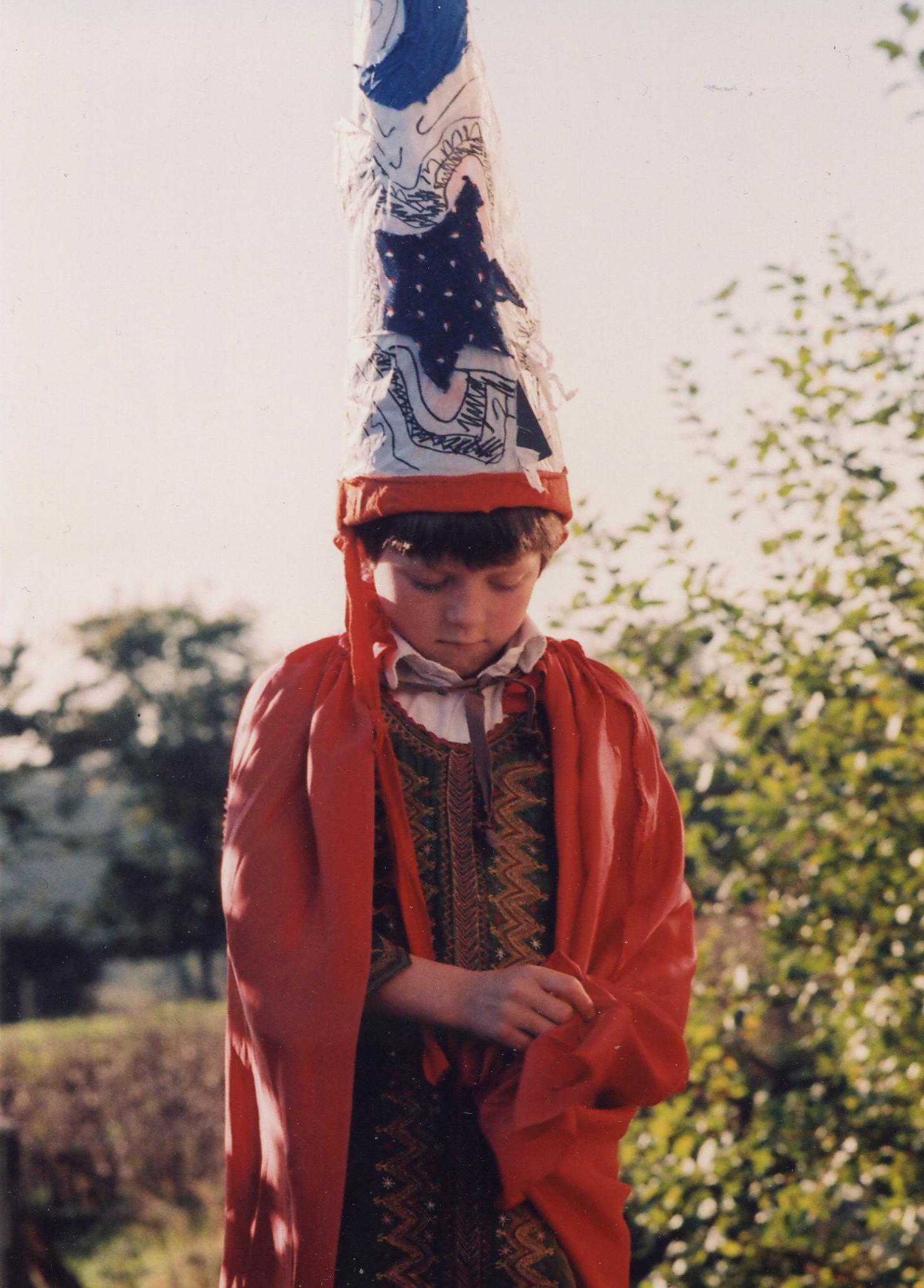
I’m all for make-believe, having grown up with Grimm Brothers’ tales taught me a few things. The other day I came upon this 80s photo of my son and recalled an incident when his favourite primary school teacher must have become a little too identified with the character of her Halloween Witch role.

Yesh img113His grandma dressing

As Santa Claus was cool fun

Yet his headmistress

Becoming a cackling witch

Stirred his first nightmare


Halloween offers a rare occasion when the dropping of one’s regular mask in exchange for another, like the archetypal witch, permits the normally hidden to push up from the shadow world, causing surprise, awe, delicious scares, and even nightmares.


There are good reasons to get acquainted with the hidden 90 or so percent of our psyche, the personal and the collective unconscious. This seems a good opportunity to re-share one of my first posts on this site, from March 2011 – well worth reading.


A Letter to my Shadow

https://courseofmirrors.wordpress.com/2011/03/25/139/

Without the Shadow I’d only be fluff on the coat of real human beings.

9 Comments

Filed under Blog

… one more taster of ‘Shapers’ …

Engrossed in polishing the text of ‘Shapers,’ the latest idea for a post is as yet unwritten. To maintain my blogging rhythm, I thought I share another excerpt, leading on from … A taster of ‘Shapers’ … 

*    *    *

The underground lake

Gart pondered the word he hadn’t come across – misgivings …

‘You see yourself in others as through a broken glass,’ said Rat, alert to his puzzlement.

‘Not in Mesa I don’t,’ Gart was quick to say. ‘And Leo, I despise him. I know how his mind works. I’m nothing to him. He used me to gain power in Rhonda.’

Rat shook its pelt and scuttled ahead into the tunnel. ‘Come along, you’ve got to cross the lake. There lies an answer.’

Gart struggled to his feet, limbs stiff from what seemed endless hours on damp rock. He recalled Oruba talking of a junction with a slab in the middle – and a password. ‘Not so fast!’ he shouted. Stumbling, he fell flat on his face. The glower shot from his hand and rolled yards ahead, a little spot of light before the blackness of the tunnel beyond. He touched his nose, wet – blood. There was no pain, only numbness.

‘Don’t fret. It’s useful to be visibly injured when you attempt to cross the lake.’ The silhouette of Rat loomed like a giant keyhole from where Gart was spread on the ground. ‘Not far now, hurry.’

Gart wiped at the trickling blood with his sleeve and then crawled towards his glower. Not far was an understatement. He followed the tail of his guide along three more junctions before a square slab signalled the gateway to the underground lake. Now where was the password? He sampled his pockets for the scrap of paper. ‘Lost it, must have happened when I fell.’

‘Didn’t you memorise the code?’ Rat sounded alarmed.

‘I only glanced at it.’

‘Try a few words, as they come.’

Gart shook his head. ‘It was short, that’s all I know.’

‘This place is dangerous to loiter in,’ Rat twittered. ‘I’ll race back to see if I can find the note. Your light may attract unsavoury entities. Turn it off! Whatever happens, don’t give in to fear!’

He did as told. In the blackness Rat’s last word echoed – fear – it came, consumed his reason, a snake. Kill it – kill it – he heard his own voice demanding. A blazing sword, not his, swished through the air and severed his right hand. Gart screamed and a thousand screams returned from the walls around him. Something shone in the darkness and slithered towards his lone hand. Voices murmured close to his ear, faces crowded in, concerned, until one face loomed over him, erasing all others. It was the menacing sneer again, the bane of his life. Gart coiled up and clutched his knees, whimpering, ‘Leave me. Go away.’

‘Got it, got it.’ Rat jumped onto the switch of the glower light and dropped a crumpled note at Gart’s feet. ‘You saw him, didn’t you?’

‘Saw who?’ Gart said, wide-eyed, looking for his hand, surprised it was still attached to his arm.

‘Say it, now. It’s the code for opening the gateway. Say it loud.’ Gart straightened the note. Letters jiggled, foiling his comprehension.

‘Must do, must do. Get on with it!’ Rat chased its own tail in frustration.

Gart pressed the password through his lips – Batin. A grating noise emitted from the slab as it slid apart.

Bits, temple door - smallRat disappeared down steps hewn into the rock. ‘Quick. Not much time.’ The cavity below brought a whiff of cool air. An overhanging rock barred the way and Gart had to crouch low. He choked and his chest cramped in panic of being crushed. His muscles tightened, ungiving, like tough leather, and a stabbing pain in his shoulder made him cry out in pain. Fragments of a blurred shape drifted by, leaving a bitter smell, and then it was done. He stood upright. Taking a deep, long breath, Gart gaped at a cave towering high into a vast crystal vault. In the middle lay a body of water, motionless, like a sheet of glass. Tied to a jetty was a blue boat, and in it sat a hunched figure, a pale, wizened old man in rags that showed bits of brittle brocade. Too weak to raise his head, he turned his neck sidewise towards the presences and uttered a lament. ‘Have you come to lift the curse?’

It seemed impossible that this face terrified him earlier. The cruel dark eyes had changed into maudlin pools of tears. The sight disgusted Gart. Every fibre of his body twitched with a desire to drown the pitiful apparition.

‘I must leave you here, friend. Be careful now,’ said Rat.

*    *    *

I won’t give away the story, especially since the first book in the series still awaits the light of day. But I welcome feedback. Recent comments were precious gifts, thank you. All helps in the polishing.

4 Comments

Filed under Blog

… A taster of ‘Shapers’ …

I’m in the process of editing ‘Shapers,’ the sequel to ‘Course of Mirrors,’  my first novel, awaiting release this year. By no means the final edit-round of Shapers, any feedback to this sequence from chapter eight is appreciated. Gart was called Rufus in  Course of Mirrors. He re-appears in a future society. This is the beginning of a kind of night-sea-journey, where Gart is tested for a role he may or may not fulfil.

The tunnel

Having shut down his craft, Gart looked up to the late light falling into the cave. He felt dwarfed by its lofty height. A sliver of pale moon shone through a crescent-shaped opening in the roof. A glimmer in the rock before him caught his attention. Stepping close, he distinguished the carving of a spiralling maze. Intrigued, he tried to determine its flowing pattern towards the centre, but soon felt dizzy. His head was not right. Odd – it had not occurred to him to ask Oruba why he was sent on this underground journey. Rats, he thought, rats had consumed his mind when the tunnel was mentioned. Here was his chance to meet real rats. He had never questioned why Leo kept providing him with banned books on these creatures, instilling this obsession. Governors were not known to forge relationships of interest, or confer weighty authority onto their staff. Gart smiled to himself. Leo lacked influence, not just politically. He relied on him to exercise command over the Guardian army.

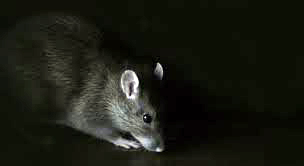
RAT - damballaproductions.deviantart.com

RAT – damballaproductions.deviantart.com

The entry to the tunnel was narrow but gradually opened out. He chose his steps with care. Not trusting the rough ground, he switched the glower’s setting from its sharp beam to diffused light. Deadly still and cool air enveloped him. Every now and then a section of steps lowered the path. There were bends where the tunnel narrowed only to expand again. After an endless straight stretch, a cairn rose like an apparition, its stones stacked up higher than his head, with a rock sticking out like a crooked finger pointing to the right. He strained his ears to identify a sound underlying the silence, a faint drone. And there was another sound, whisperings, behind his back. A shiver in his neck made him turn to cast the light of the glower along the walls – nothing. He loathed the dark. Was this really his choice, or had the black man lured him into this tunnel? Willing himself forward, he counted several cairns that looked alike until his map showed he had reached a halfway point. Dragging on, his linen sack with provisions got snagged by a jutting rock – food – the thought made his stomach growl.

He placed the glower on the ground, rested his back against the rock, and pulled a tin from the sack. It contained biscuits. Chewing relaxed him, and his taste buds declared: moreish. The water in the flask was fresh, with a hint of lemon. An acute sense of pleasure spread throughout his body. Every single cell was drunk with joy.

The sensation astounded him. He took his time over another biscuit, letting the crumbs melt slowly on his tongue, closing his eyes to savour each morsel. A bird – it could not be, not here – yet it was.  A bird sang sweet notes in the branches of a blossoming tree under which he sat and played with stones and shells. A round-faced woman appeared, with a warm smile, tousling his hair. She handed him … Gart’s eyes snapped open. Disorientated, he stared at the opposite wall. The rock glimmered as if alive with tiny creatures, shifting and heaving. Shapes emerged – a nose, a mouth, a beard – the features of a frightful man with a savage scowl. Gart flinched as piercing eyes fixed on him. He heard a voice pleading – his own – please don’t leave me here, don’t leave me in the dark, I’ll be good, please. He curled up and sobbed. He was alone, utterly alone, facing a black abyss. The only control left was to play dead.

He woke with a shudder and cold limbs. Dampness from the tunnel floor had seeped through his uniform. From the rim of his consciousness a sound returned, the drone under the silence, and, close to his ear, a squeak, and another squeak. Speckles of silver danced before him. Something moved in the dark, and then shot through the ring of light cast by the glower. The creature stopped in a shaded nook. Tiny eyes gleamed there. Gart had swift recognition. A rat! He carefully pushed his back up against the wall. Without losing sight of the rodent, his hand felt for another biscuit. ‘Curious? Are we?’ The rat had not moved an inch. Gart broke off a small crumb and tossed it to land just within the faint radius of light. The rat twitched its nose. ‘I might as well have some more myself. Manna from heaven, or hell, my friend, whatever, it’s not a taste one forgets.’

He grasped a truth. Oruba had laced the biscuits to animate his dull senses. His new friend liked the crumbs too, and demanded more. He never had a friend before. ‘I’ll call you friend.’ It was the best he could come up with, and it sounded sweet to his ears. In response, the rat seemed to grow in beauty and size. Such intelligent eyes, making him feel special. ‘You understand, don’t you? I’m offering you alliance. That’s a precious deal, for me anyway.’ Rat nodded. He was sure of it. ‘Tell me about the man buried in the walls here, who smells of death.’ A shot in the dark, but a pressing question on Gart’s mind.

‘He’s buried in you.’

‘Buried in me?’

‘You caught his hatred of the world. You must release him.’

Without warning, the drama of this man tore through Gart’s mind like a tree growing crooked in painful fast motion. A boy called Rufus was scarred by this twisting. He sensed that boy was him. No knowing when and where, the sensation was real, vivid. ‘He betrayed my birth right.’

‘He, too, was betrayed. He should have been king of Itaka. Then again, kingship is an inner state. Become king of yourself. Absolve your resentments, and become kin to a family of heart-species.’

This, Gart reasoned, was no rat talk. Whose voice was talking to him?

‘Look at me as a guardian to you, Guardian. Empty your heart of misgivings and what must be done will appear as clear as a diamond. You choose the shape of its setting.’

The image returned, of a garden, bird song in blossoming branches, a woman tousling his hair and handing him … it struck Gart that the Shapers knew more about him than he did.


16 Comments

Filed under Blog

… meeting the other …

None but nature could have written a better curriculum for becoming human …


Attend for a moment to you breathing. If you’re aware of heaviness in any part of your body, breathe the colour of water under a blue sky into that part and let the tension drift into the earth with the out-breath.

In your mind’s eye, find yourself in a meadow, abundant with scented wild flowers. Nearby is the outcrop of a mountain and a welcoming dry cave stirs your curiosity. Entering the cave, you find a spacious passage from which comes a luminous glow. All of a sudden you’re walking on air, and – like a feather on a breeze – you’re floating, floating gently downward into velvety twilight. In your heart you know you’re guided towards a special encounter.

A waft of fresh air brushes your skin. You find yourself standing in a soft beam of light from high above at the centre of a dome-shaped cavern. The circular wall of the dome has tunnels that lead in all directions. You must choose one. Be patient.

White Window, St Cathrine's Chapel - more lowresWithin your reach sits a small bronze bell. Lift the bell and give it a slight nudge. As the clear sound of the bell reverberates in your heart, you’re drawn to one particular tunnel and you know this is the one to follow.

Warm air greets you with otherworldly scents, the crystal walls of the passage glimmer. Soon brightness appears ahead, momentarily blinding. You step forward and slowly make out a landscape of rolling hills with the sun reflecting in a silver stream that meanders towards a distant sea. 

Close by, you notice a strong presence under a solitary tree and feel your heart chime in perfect harmony with the presence. A near transparent human form steps out and mirrors your innermost being. Eyes, radiating love and acceptance, completely affirm you. For an instant you are – you are natural mind, pure consciousness.

A soft voice says: Where is the other?

Pondering the question, a shrouded figure moves, from hiding behind your back, boldly into view. It is a repulsive creature and you want to shush it away.

Greetings to your other, the soft voice of your essence says. Then you realise what the apparition represents, everything you reject and prefer to keep hidden from your consciousness, all you find objectionable, embarrassing and unacceptable in others, and in yourself.

Understanding happens. By denying your inferior being you are also ruled by its whims. And realisation comes – of your body’s wisdom, and of knowledge gained from human frailty you were too proud to value. You see with fresh eyes  and extend the very love and acceptance you absorbed from your essence. The other straightens, lightens. There’s a new respect, an affirmation, a softening.

Turn and look again into the deep compassionate eyes of your essence, absorb this capacity for tolerance in your heart, allow the healing.

Then bow to your essence and return the way you came. Give a nod of acknowledgement to your other, so the shrouded figure won’t slink behind, become resentful and trip you up. Let it walk in view, accepted, even with gratitude for its imperfections and its treasures.

*    *    *

Continuing from my last two posts, this is further classic theme for an inner journey, usually adjusted to the context in which it is used. I kept the narrative short and succinct. Even if you don’t enter the journey experientially, alone, or read to by friend, and allow your own images to emerge, the scenario might spark reflections, and drawings or writings for your diary or chapbook.

It’s humbling to recognise our flaws and the blame we assign to others, and yet, no matter how many veils are falling from our eyes, there’ll always be more projections to be owned, more grudges to let go of, more misunderstandings to tolerate, more hurts to absolve, and more to be embodied of what feeds us from dark roots. Our struggles with conflict and contradiction polish the heart, feed our imagination and create our realities. None but nature could have written a better curriculum for becoming human.

http://www.youtube.com/watch?v=9NrAGJEMnHE          Marie Louise von Franz – The Way of the Dream 2.1 – Our Shadow Knows

One does not become enlightened by imagining figures of light, but by making the darkness conscious. – C G Jung, CW 13: Alchemical Studies. P.335

Everyone carries a shadow, and the less it is embodied in the individual’s conscious life, the blacker and denser it is. At all counts, it forms an unconscious snag, thwarting our most well-meant intentions. – C G Jung

If we could read the secret history of our enemies, we should find in each man’s life sorrow and suffering enough to disarm all hostility. – H W Longfellow

9 Comments

Filed under Blog

… a Sunday in July …

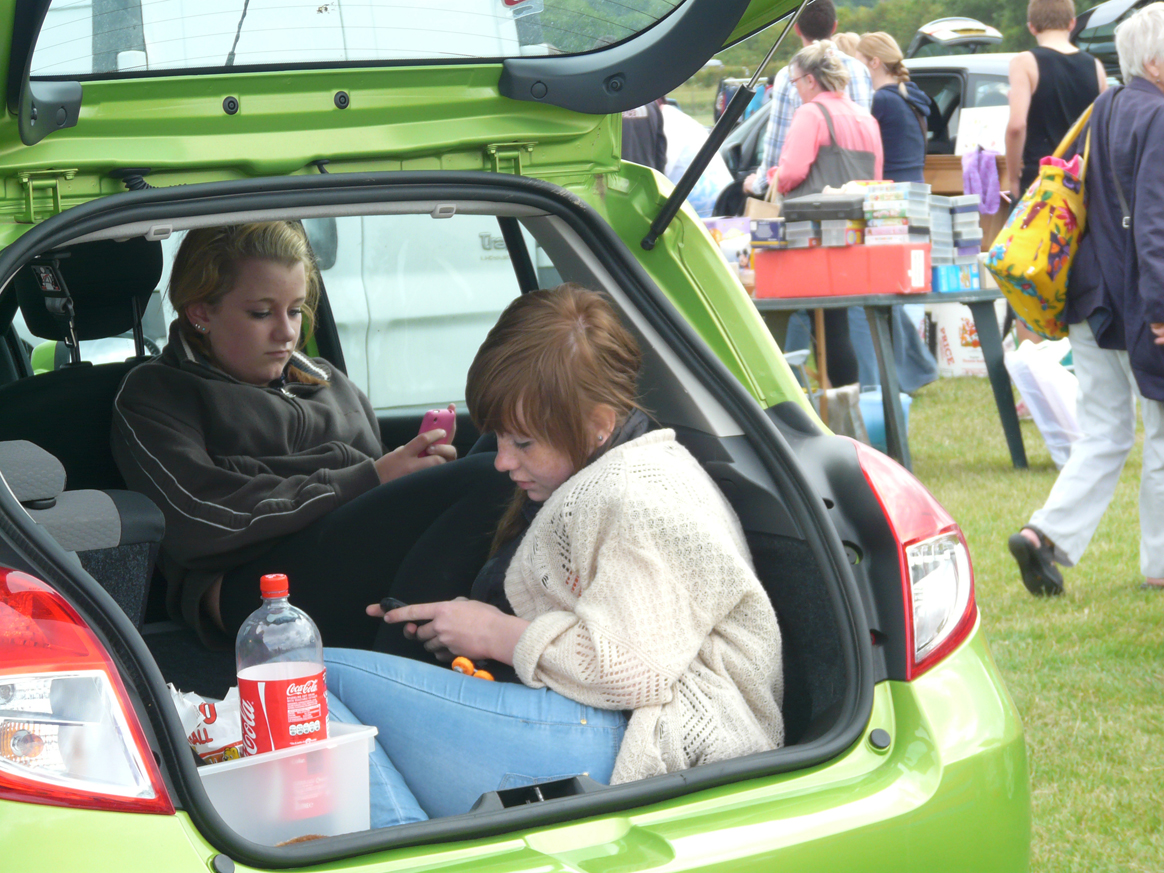
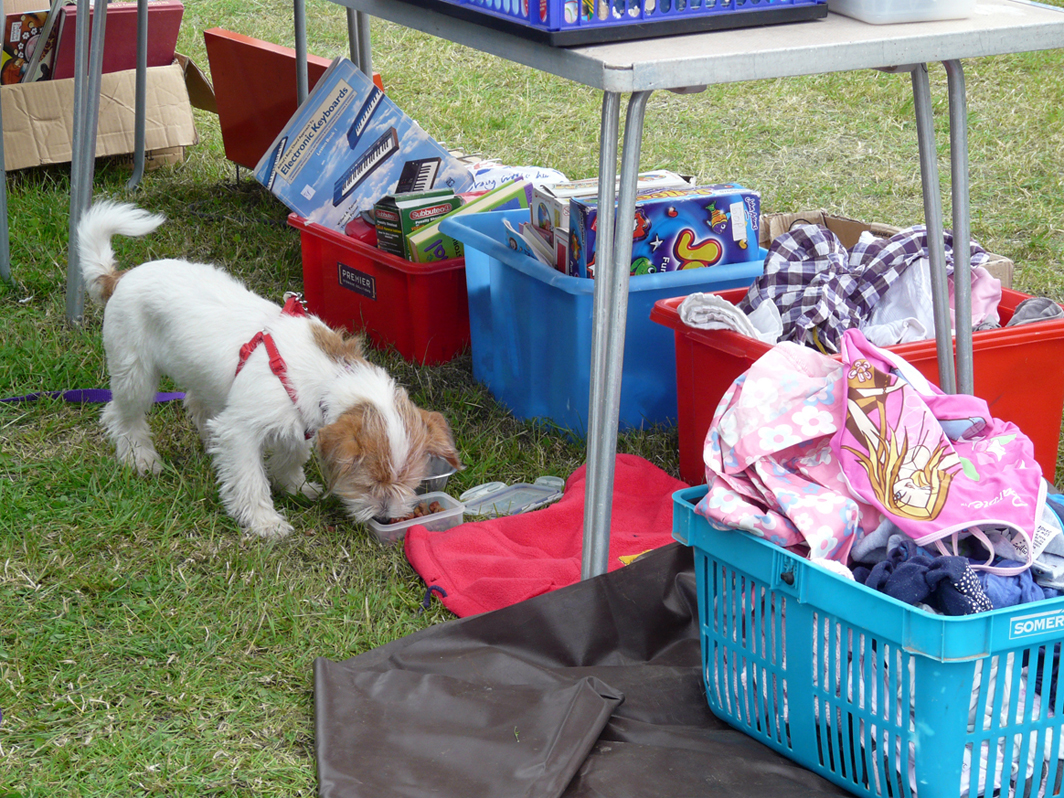
A Sunday car boot sale. Eyes swivel left, right, down, up, for value. People dream or stop to chat … how much for that? A fiver … three, two, one, or nearest offer … teddies, dolls and plastic swords, toys on wheels … she’ll love that … glasses, cables, plugs, unwanted gifts, mugs, pots, rags, shawls, jumpers, trousers, frocks, linen, shiny trinkets, books, mags, prints, discs, records, chairs, shelves, mirrors, bells, rugs, tools … objects of desire lure as metaphor … stuff … beautiful and ugly scraps, are carried off in plastic bags.

P1110274

Carboot 3


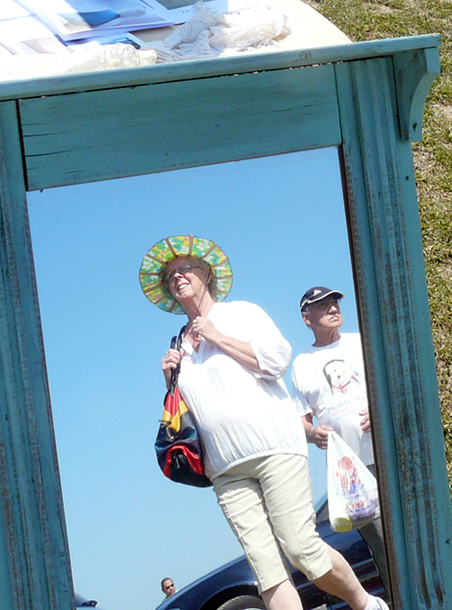
Carboot 1People, thin and fat observe each other, nod or shrug shoulders, roam … ladies walk stately in big hats, toddlers run off, sunburned babies sleep, bored kids tweet or text, dogs strain on a leash or are fed, men with tattoos strut, a batman rises from the neck, geometric arms, flowery legs, stars form a line down a spine …

Leaving the cross currents of the human aspirations, I retreat …

P1110278 - lowres

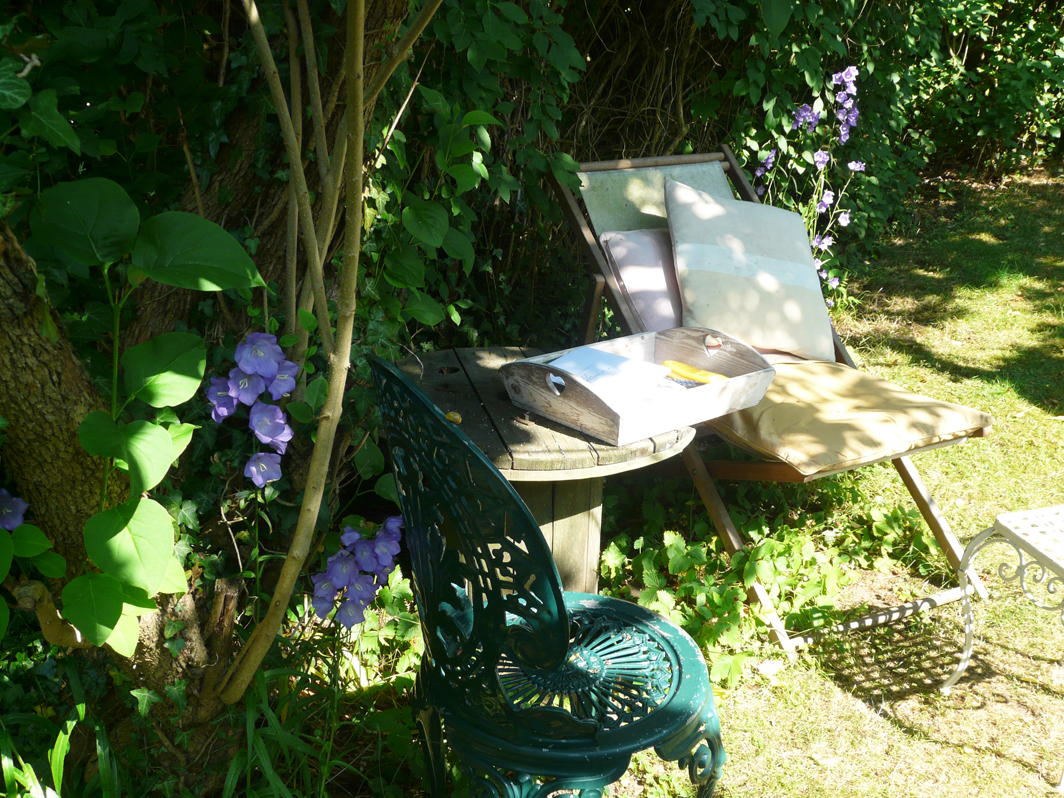
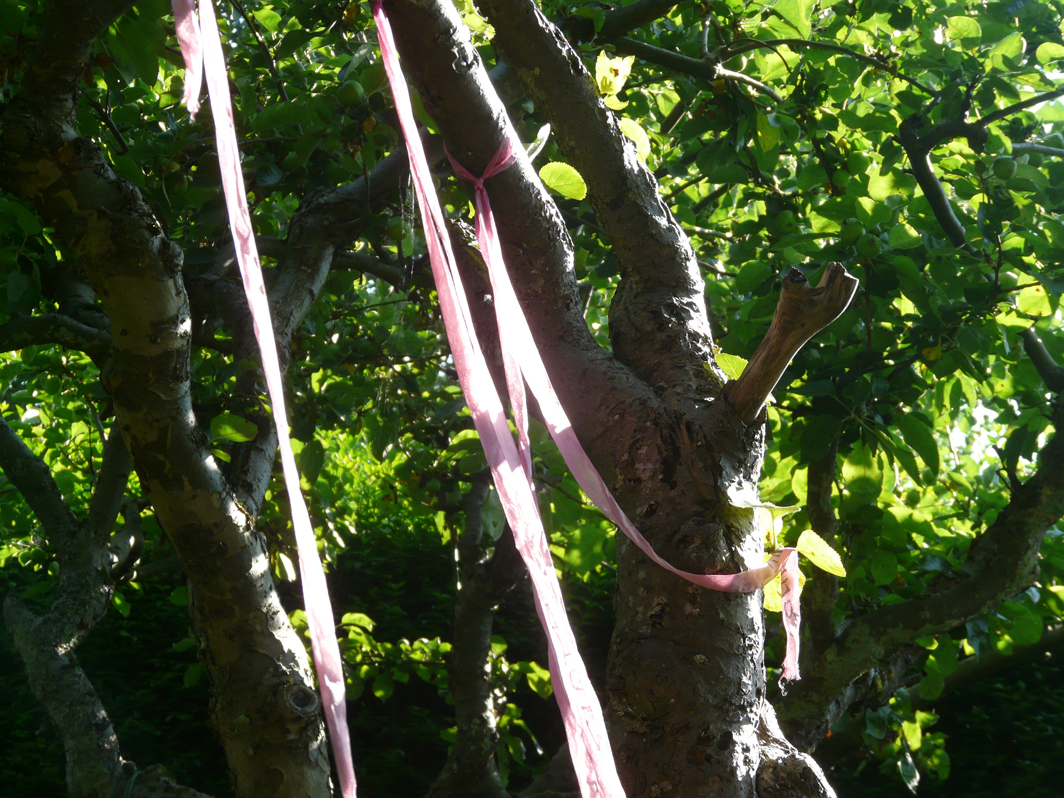
back to my peaceful patch, where ribbons flutter in the breeze, endowed with wishes. Colours glow with life, ever changing. And simplicity affords my gaze inside – through the gap of nature’s light and shade.

P1110284 lowres


P1110279 - lowres


P1110291 lowres


And later that night I watch the wide screen … tragic accidents, people fighting for what they presume right, trapped in beliefs, and, oh, Andy Murray wins a tennis match for the UK, and is glorified as UK’s knight.


20 Comments

Filed under Blog