Tag Archives: science

one raindrop – ten raindrops – what’s the difference?

Before I went to bed last night I asked for a dream, as I do when I want guidance from my unconscious. After all, the greater part of our psyche is out of sight, submerged, with only the top in view, which is why Freud used the image of an iceberg to depict the psyche, the submerged part having deeper connections with the sea of the collective unconscious in which we all swim.

Iceberg - Ri han - Shutterstock

Iceberg – Ri han – Shutterstock

My question was related to the global web, and what’s rising to the surface like long drowned skeletons bobbing along the electric rapids of information, memories re-shuffled, all with a kind of speed only fearless surfers can negotiate. And how every link you and I click is traced, analysed and fed back to the media, politicians, businesses, twitter-birds, face bookers, bloggers and so on. At times it seems like a kind of vivisection in a shiny mirror looking back at us, surreal.

I’m seasoned. There was no TV in my early childhood, it astounds me what I’ve adapted to over the years, but the present tech-apps-avant-garde makes me feel like I’m missing a boat, along with, let’s take a breath, at least sixty-one-percent of the world population (that’s the kind of people with no internet at all.) And because I tend to reflect on cultural trends, searching for wider purpose, meaning and metaphors, I put this to my unconscious: please give me some insight.

On waking, the first thing I gazed at was the raindrops netting my skylight. A phrase came:

                 … one raindrop – ten raindrops – what’s the difference? …

It stuck. I stopped myself diving into associations, about raindrops, the number one, about the history of zero – as symbol for something that doesn’t exist but has become a place-holder. I stopped myself from quoting Rumi, too.

The phrase I received is enigmatic and feels creative. Does it come down to postulation, the everything-and-nothing-matters kind of power we have to envision and re-assemble stories, the delicious freedom to speculate without limits …?

Maybe purpose and meaning are becoming old hats and I’m missing the point entirely. What do you make of the phrase … either with your knowledge of maths and physics, or with your imagination? Even with the phrase or image of a dream ☼


19 Comments

Filed under Blog

… inner time – writing – rant …

Beyond my window, robins, wrens, blue tits and blackbirds are nest-building, with bursts of passion. Dipping in and out of view, they settle shortly on a deck chair, branch or flowerpot, balancing lavish bouquets of fluff, moss, twigs and leaves, before darting off towards the next promising material. The birds winging through my garden make me happy.

Yesh

My thoughts wing in similar fashion dedicated to another passion, no less preparing for a new round of birth – in my case the writing of the next chapter of a novel. I anticipate with joy each few hours of unstructured time that allows me to visit my garden of recollections, a space where myths re-weave themselves from the fluff, moss, twigs and leaves of memories. Like the visions I brought into this world, ambivalent responses to my existence, altered states, affinity with elements, genetic markers, epigenetic quirks … my bundle of life that fell into a mould and was conditioned by socially convenient patterns of time.

Dividing reality into past, present and future time, measured by clocks and dated events, called facts, is a fairly modern idea that made Science the grail of knowledge. The best of science deepens our understanding of the cosmos and improves the quality of our lives, but its method is limited, not suited to go to court on another reality dimension, inner time, infinite, immeasurable, where our experiences assume meaning. We may walk through life like snapshots of ourselves, collecting capture after capture of evidence for our existence, while longing for a dimension within, the bridge to a spiritual presence hidden between each breath, a truth impossible to evaluate? Some religions banked divine capital in heaven. Science too, in its present phase, projects a kind of heavenly capital, hijacked by corporates selling us the future, a Promised Land of artificial intelligences catering to our every need, uncannily resembling the Matrix or Plato’s cave.

My rhythm of life changed when I dropped out – the second time in my life – taking the financial risk to work from home and make time to write, which I had failed to combine with careers, family and social obligations. The experiences were vital, up to a point. Now I relax about clocks and tend to my inner worlds. I crave unstructured time. Not everyone does.

Recently a friend reflected humorously on her frustration at finding herself with one hour to spare, having miscalculated her travel time. She would have been happy had she brought a book to read. Instead, she endured a dragging hour of unplanned, wasted time. Intrigued, we reflected on this sense of loss when there is unexpectedly nothing in particular to attend to.

Is there merit in unstructured time … what do you think? Is it only for children, is it a luxury, a waste, or an opportunity to shift perspectives, discover your passion, break the mould and loosen up your ideas of reality? I don’t see unstructured time being much encouraged, or its lovely randomness being valued. I was burdened by the message that my imagination is fanciful, a kind of debility. It took me decades to claim the time for my passion, writing …

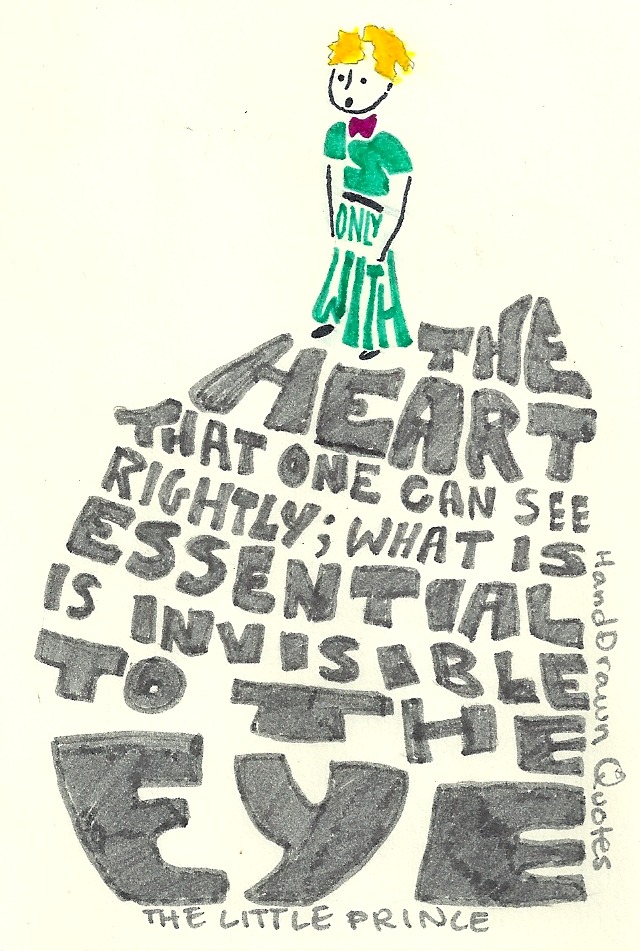
Little Prince

This seems the place to share a personal rant, blaming no one in particular, since, from where I look the rift between head and heart that is tearing apart the fabric of western societies may yet need to become wider before the peril is addressed. If the media is anything to go by, meaningful purpose, visions, let alone joie de vivre, are overshadowed by collective gloom. Feel free to disagree with my take on this. Straining under the pressure to change, I see our systems are attempting to cement a shaky launch pad towards a logarithmic future, with good intentions, though the consequences are dire. Every aspect of our lives is in danger of becoming: over-calculated, over-regulated, over-efficient, over-specialised, over-mechanised, over-prescriptive, over-secured, over-insured, over-compartmentalised, over-conglomerated, and over-economised.

On a more cheerful note, young people in their 30s, at least the ones I know, are asking sharp questions, and are finding ingenious ways to play with, while not getting sucked mindlessly into programmes that abuse data, spoon feed illusions, appeal to personal anxieties, invade privacy, and insult the intelligence of creative individuals.

Back to the birds winging through my garden …

*     *     *

To see a world in a grain of sand

And Heaven in a wild flower

Hold infinity in the palm of your hand

And eternity in an hour … W. Blake, from Auguries of Innocence


12 Comments

Filed under Blog

… surfing the virtual waves …

I first accessed the internet while doing a sabbatical film degree as a mature student in the 1990’s.

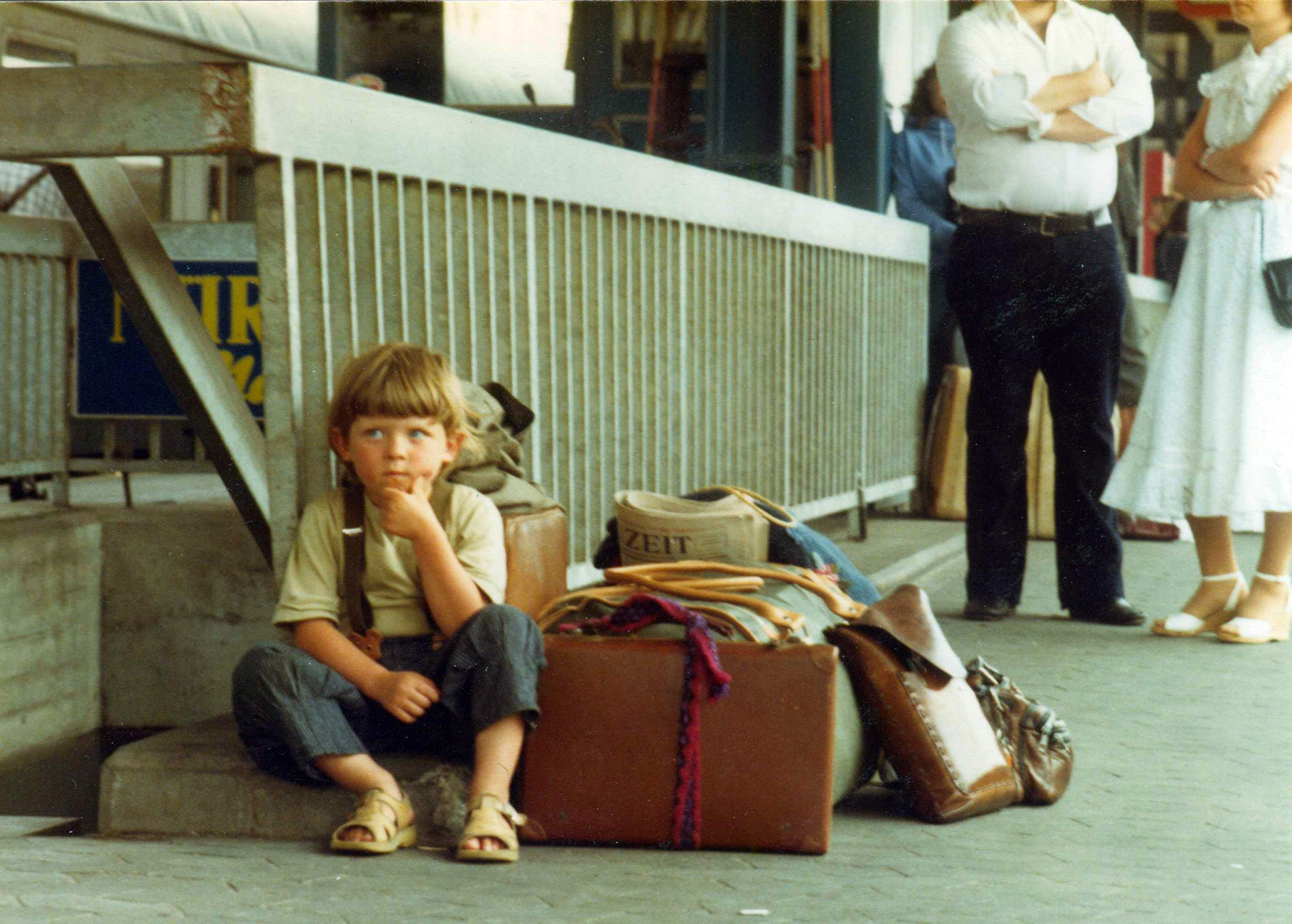
Struggling with basics, feeling the fool among bright young computer literates, I typed surrealism into the search engine, a subject that rhymed with my passion for transpersonal psychology and fascinated me. Take yourself out of your familiar environment, lose the original context into which your identity had been projected, then gaze and ponder. I had done precisely that. During my first year on the film course I felt displaced and, like my son at a stopover, did a trawling assessment of the oracular unknown.

Yesh, Nurnberg station -smaller

I was going to write an essay, on how Freud’s work influenced art and film during the 20th century, a glittering subject that led me into a dreamlike maze. Each follow-up link on the screen led to another site – another artist, philosopher, writer, page after page, world after world opened until I was afloat in a sea of rich associations. Gripped by Alice in Wonderland sensations, I thought – unless I stick to the context of my essay, the web will suck me into a whirlpool. Exploring the unconscious for its potentiality and its poetic combustion via dis-identification  was of course the surrealists’ impulse, to the ends of tricking the rational mind by using trance to break out of trance – which may well be the ultimate purpose of the internet.

One of the lies would make it out that nothing

ever presents itself before us twice.

Where would we be at last if that were so?

Our very life depends on everything’s

recurring till we answer from within.

The thousandth time may prove the charm.      – From ‘Snow,’ by Robert Frost

I had worked as photographer on film-sets in a former career, so I grabbed the opportunity to study the ultimate trance in its historical context, and play with it. Manipulated by high-angles, close-ups, masking, dissolves, and cross-cutting during editing, underscored by sound, images could be displaced, speeded, up, slowed down or distorted. The surrealists were among the first to love fluid images, using them to disrupt unconscious processes of identification at the same time scientists’ deconstructed particles, and time, and space in good measure. The search within, long pursued in the east, was taking hold in the west. P1090946 - Copy

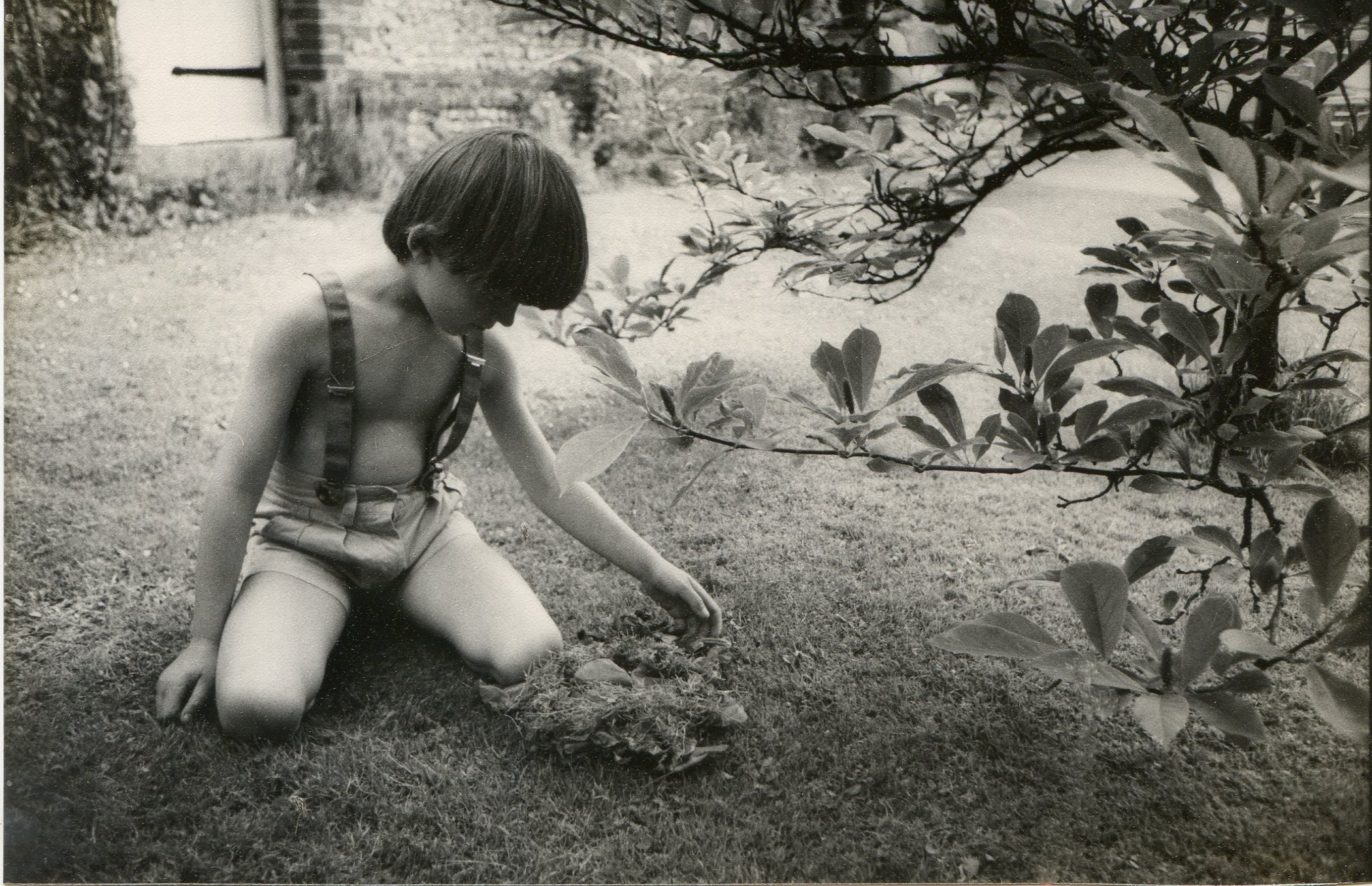
Deconstruction is the prelude to creation. Having learned that we are conscious of only a tiny island of our psyche, much like we can only see the tip of an iceberg, had affirmed my lifelong desire of seeking what is behind the mirror of appearances. In that vein, I recall feeling an awesome sense of responsibility when I first held my new-born son, imagining that my every gesture, my every tone of voice, and even my very thoughts might subliminally influence his pristine being. I was quickly grounded, adapting to the routine of being present to my little one’s basic needs, and soon realised that he had brought along his own world from another sphere, and that beyond my stimulating mirror, he would shape his own destiny.

So here was a kind of baby – an essay on surrealism. To deal with the mass of on-line leads, I took capacious notes, plundered the college library, and relied on intuition to guide me through the process of writing, allowing the essay its own agenda. It was when I first acknowledged that my sixth sense made writing a pleasure. Years later, starting my first novel, responding to subtle influences became the only way I could write, trusting that the unconscious – rather like a digital binary system – condenses and displaces material that can re-emerge with the right prompts.

Spending several months co-editing a beautiful book of reminiscence about a remarkable teacher, printed as a limited edition (also available in E-PUB soon), I started my second novel, and forayed into the on-line publishing world. Armed with the intention of finding a publisher my trust deserted me. I felt suffocated by the genre jungle, the flood of how-to-does and the racing schemes offering self-publishing. I scolded myself for procrastinating, being lazy, not believing in my work, but nevertheless stubbornly held back. Having ordered a few print-on-demand publications by friends I made on a writer’s site, who had got their act together, I was disappointed by the poor presentation of most books – cheap paper, cramped layout, narrow margins and too small fonts. Is this how small publishers and self-pub schemes treat writers who spent years on composing their epic? My heart sunk. I observed my frustration, took stock and decided to relax and wait for a beacon.

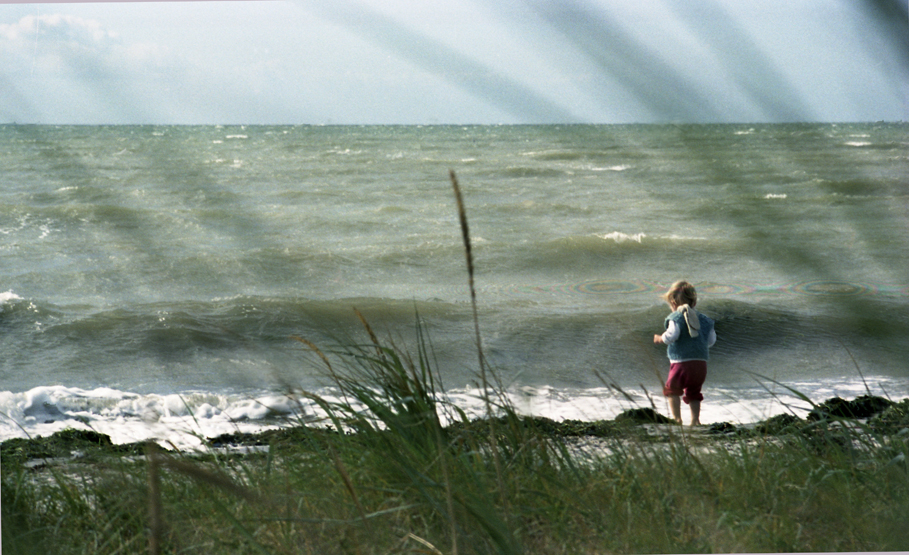
In any case, I had been fooling myself, betting on the wrong horse. Being a published author has its perks, but what truly matters to me is the actual process of writing, which is alchemy, a sculpting of feelings, a release, being other than what is familiar, uncovering myths and creating new ones, digging for treasure, a journey into the unknown that reveals horizon upon horizon.  Copy of Child at shore, colour, lowres A metaphor for my life, about the how, about the journey inside with my others, relationships woven from layers of experience into something new, each time, and time again … life writes its stories through us.

Apart from receiving vague out-of-the-blue proposals offering dubious contracts, I had two chance-encounters with publishers who welcomed a read of my MS, encounters resulting from surfing the web on the crest of my interests, often as unsubstantial as a keyword from a dream. It’s no different from how I live my live. Not exactly a structured approach, I sometimes scold myself. But for better or worse I don’t attach myself to goals, only to transitional containers, which could be an object, a character, a dream image or a place, and the rest follows. My stories emerge from kernels lying in wait, and they pursue their own agenda. I let them, and trust they will find a readership.

Like Stan Brakhage, one of the early experiential film-makers, I think of the deeply personal as universal and conceive of the real world as invisible ‘… thus in the physical or spiritual or light world all forms are beings – stones, trees, stars, streams, men, flames and turds are really facts of invisible presences. Mineral, wood, fire, water, flesh are terms of dense soulful sense.’

In this way, rather than going nuts, as I feared when first exploring the global mirror of the internet, I’ve made peace with it, relating to it as a spacious, time-freed being that interconnects all our stories and projections and offers its content according to the container I bring to it.

13 Comments

Filed under Blog

… global vision & synchronicity …

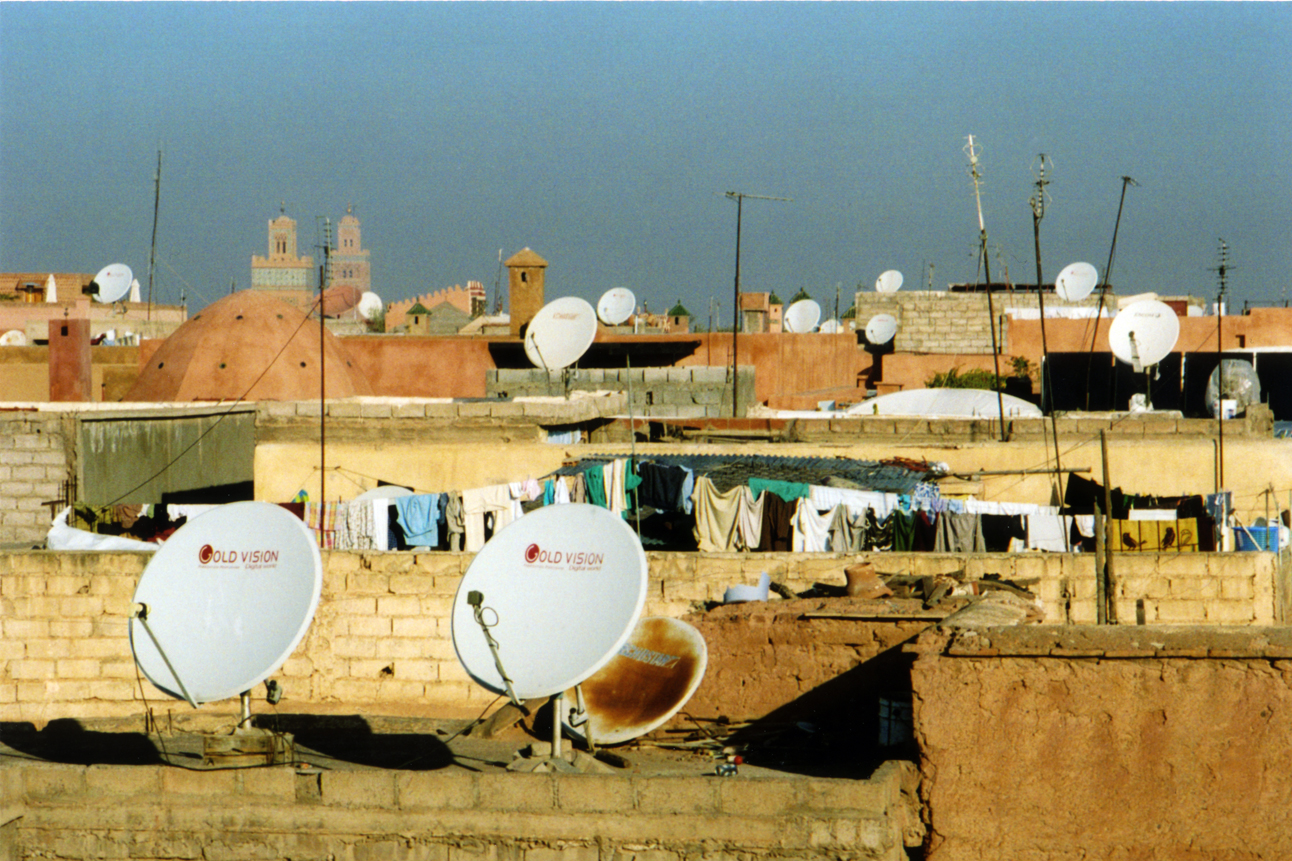
Moroc, Marrakech Riad roof, golden vision - low     Less than 80 years ago, across the world, only about 200 televisions sets were in use. Today, a simulated reality confronts us with our collective mind. A click away, we sample the zeitgeist and witness some disturbing trends, like the continuous robbery of world resources.

How do we filter the mass of information? Do we shout treason when we see the failure of economic systems that allow 1 % of the population to own 40 % of global wealth, or when we discover that certain corporations privatise water –  even rainwater  –  in underdeveloped countries? Traversing from one patch of light to another, do we make connections that apply to our scope of action? Or, lacking a meaningful context, are we hypnotised by this enlarged mega-screen, the global vision of a world that can mirror our inner fragmented states  –  a world where every viewpoint exists simultaneously, that over-exposes so-called reality and blinds us? Are we ourselves living inside the screen-myth, as extras, freed into bits, a reservoir of data?

As writers, what in-forms us, what material do we disseminate? And what is it that makes choices, switches from one networks of influence to another? What guides us through the data jungle? Are there perceptions beyond our wilful personalities that determine, agencies that operate through us from beyond time and space? I’m weary of the term God. For me this agency is a consciousness composed of past, present and future intelligences, a light-wave that echoes different signals according to the receptivity and needs of each animated vessel. Humans can be dense, but a calm mind recognises clear signals of this wave, since they chime with a joyous feeling of connectedness, a larger symphony, maybe even the sense of a destined purpose.

In my experience, this consciousness operates through synchronicity. There exist conceptual similarities between the behaviour of sub-atomic particles and archetypal images, (C G Jung and Wolfgang Pauli discussed such similarities in the context of synchronicity), a striking link between mind and matter that has been largely ignored. It implies that mind and matter connect, relate, mirror each other, and reciprocate. The process is given life in the realm of the psyche as imagination, not structured by time and space, but through layers of meaning illuminated by consciousness. Psyche is the changing room between cosmos and pneuma.

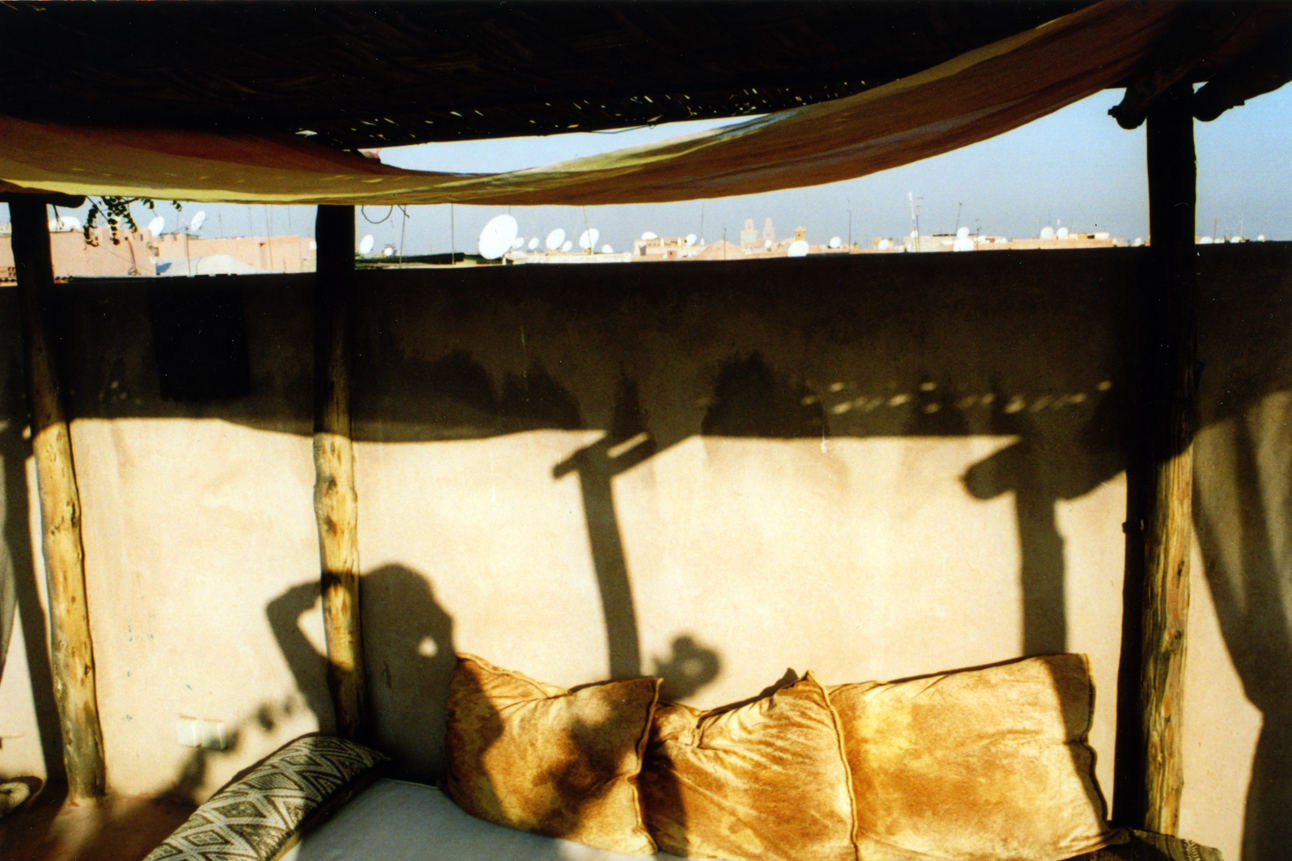
Moroc, Marrakech, Riad roof, shadow - lowJung thought of archetypes not as fixed, but as changing predispositions, universal patterns inherent in the human psyche, images that comprise our collective past and future unconscious. A pattern stirred into activity by an emotionally charged event in our lives, brings home related experiences, often through meaningful coincidences in a non-linear and a-causal way.

Such synchronicities draw on a deeper life-sap, as if an eternal intelligence were at work.

David Bohm proposed that subatomic particles remain in contact with one another regardless of the distance separating them, and that their separateness is an illusion. Here a facet of his thinking – a short first part of a 5 part series  http://www.youtube.com/watch?v=oGyDVF8GrLk                                                                                              A great and humble man I greatly admire. He has beautiful hands  🙂

A dream, for example, can attract an outer event, a meaningful coincidence, that powerfully substantiates a message from the unconscious, often accompanied by a numinous quality. In my own life, synchronistic events have challenged my narrow reasoning at certain crossroads towards seemingly irrational decisions. Exploring a hunch, while not attaching to the outcome, often clarifies a situation for me. Consequently, I respect the unconscious, and heed my intuitions.

‘The universe does not exist, out there, independent of all acts of observation. Instead, it is in some strange sense a participatory universe.’ – John Wheeler

Just as scientist are branching out from traditional imperatives that divide the world into subjects and objects, so we all, presented with a global vision, must modify some of the archetypal imperatives, images and ideas that have outlived their use, and look for symbols that carry a fresh mystery.

Moroc, Plage Blanche sunset - low

While sun and moon are forever formative and feed our imagination, they are no more our only lights.

With new associations from science come fresh symbols and exciting probabilities, in that we can question assumptions about time and progress, about the relationship between matter and mind, about our view of social units, and even the meaning we give to gender.

‘It’s a poor sort of memory that only works backwards’. The White Queen says to Alice.

*    *    *

Many of my posts here touch upon similar themes, but maybe pattern-which-connect in particular: https://courseofmirrors.wordpress.com/2012/05/25/pattern-which-connects/

6 Comments

Filed under Blog

… why spin tales? …

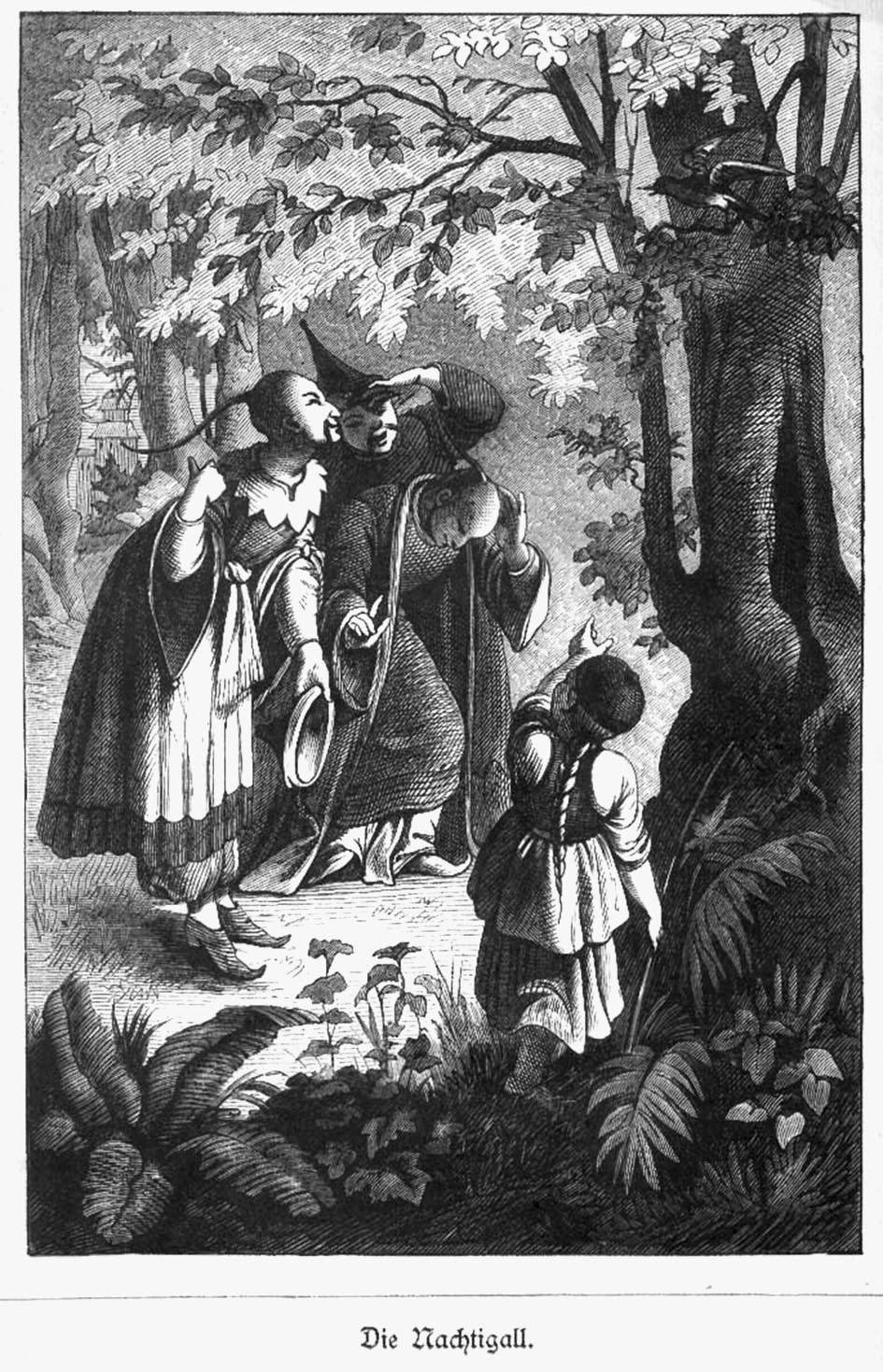
Die Nachtigall-02 Why spin tales, why listen to them, enact them on stage, dance them, ritualise them, read them, write them, re-write them?    We tell stories to ourselves and each other, to entertain, inspire, amplify events, or in search for meaning.

When it comes to stories, fact-finders tend to miss the point. Too many sequential facts can befuddle a truth that lingers in the higher or deeper layers of consciousness, from where vital symbolic insights shine through a narrative.

We owe much to Joseph Campbell, who with life-long passion explored the origins of myths and their functions throughout human history: http://en.wikipedia.org/wiki/Joseph_Campbell

And check out these fantastic documentaries: http://en.wikipedia.org/wiki/The_Power_of_Myth

A myth is a public dream – a dream is a private myth. – Joseph Campbell


In my psychotherapy practice, clients present their story in unique ways that occasionally include lucid dreams of past lives. I deeply respect the power of the imagination. In neutral mode, I listen. So it happens that a trauma set in thirteenth century Languedoc, when Cathars were branded as heretics and massacred by the Catholic Church, can deeply trouble a person’s psyche with visceral images. I travel along, and as the story is released, I may bridge the emotional resonance of a pattern to the present life of a client. In this process profound cognitions can soften a psychological complex.

Lasting examples of deeper truths are mirrored in Fairy-tales and myths, where basic patterns of our collective unconscious psyche are brought into relief. That is, if we can grasp the metaphors under the primary meaning of words. Fictional settings for heroic or anti-heroic characters are particularly suited to convey powerful emotional themes infused with archetypal elements.

… the spirit of an age is more essentially mirrored in its fairy-tales than in the most painstaking chronicle of a contemporary diarist … Raymond Chandler – Realism and Fairy-land

Some religions persist in the literal truths of their sacred texts. Scientists, too, get stuck in dogma, but I emphasize more with the frustration of the latter, since, with the courage of doubt, scientists have pushed the horizon of knowledge outwards by painstakingly reading the book of nature through the language of data, evidencing processes poets and mystics before them intuited, but physical eyes cannot perceive – like radiations other than light. I’m trying to overcome the conflict of the scientist and poet in me. They interpret the world in different but equally significant ways. There is a need to read nature in both languages, so greater understanding and tolerance can develop.

‘With faith one attains and realises peace and harmony. With doubt one destroys and gains freedom to move ontowards.’    – Fazal Inayat-Khan

Memory, objectively true, or false, affects our lives every day. Stories lodged in the heart endure in a timeless dimension of the imagination. We can however alter their interpretation by exploring our perspective, be it from a pit of fatalism, a sense of insecurity, a belief in magic, faith in divine guidance, or the certitude of natural laws. Even the simple acceptance of life’s continuous dynamic change can shift the meaning of our stories, and, of course, it helps to overcome literal mindedness and make an effort to decipher the metaphors.

‘The mystical warrior is trying to reduce the obstruction in the doorway, and the worshipper is attempting to reach the construction behind the doorway, almost out of sight. There is a gap between the two … the vague band between the known and the unknown. In that band rapture is possible.’   – Fazal Inayat-Khan

Stories are the sap of life nourishing the roots and branches of humanity. We spin stories because during the birth of this universe the symmetry between matter and antimatter was broken, kicked out of balance, which resulted in a slight predominance of matter, the stuff we bump into. It’s a poignant thought that this little quirk caused the dynamic asymmetry that evolved into the universe we live in. Without this asymmetry between matter and antimatter our world would be empty, there would be light only – sans elements, sans plants, sans animals, sans night, sans saints, fools, villains – sans consciousness – no story.

*     *     *

For those interested in nuclear physics:

http://www.slac.stanford.edu/pubs/beamline/26/1/26-1-sather.pdf


5 Comments

Filed under Blog

… unseen stuff – micro-organisms …

More contagious than micro-organisms are fear and hopelessness.

Long before our time, the existence of micro-organisms was presupposed, notably in Jainism, whose followers vow non-violence in thought and practice (Ahimsa) towards all living beings. The tradition is said to be older than Buddhism.  In the teachings of Mahavira (599 – 527 BEC),  micro-organisms are described as unseen creatures living in earth, water, air and fire, and existing as clusters pervading every plant and tissue, not just on earth but throughout the whole universe. Jain libraries are the oldest in India.

While home-bound with a young child in rural Somerset, I did an OU course on world religions, wanting to learn about the formative ideas underlying our variety of cultures. Reading on Jainism, I was struck by its beautiful philosophy, genuine tolerance of other faiths, and the surprisingly modern belief – that the universe is self-regulated by the laws of nature. Worth exploring: see wiki-link below.

With a different mind-set, the idea of unseen creatures informed a nasty biological war fare during the Middle Ages, when diseased corpses were catapulted into enemy strongholds.

Along came artificial eyes, the telescope and the microscope, evidencing these unseen worlds. The Jesuit priest, Athanasius Kircher, and Anton van Leeuwenhoek, were among the first to spot micro-organisms through lenses in the 17th century.  The journey took off, until Ferdinand Cohn founded the discipline of bacteriology in the 19th century, and Louis Pasteur and Robert Koch developed the study of microbiology, focussing on food preservation and vaccines. The gained knowledge helped to protect us from organisms known to spread disease, and improved the hygiene of our environment. During the late 19th century the study was expanded through the work of Martinus  Beijerinck and Sergei Winogradsky into the field of general microbiology.

Today the study of micro-organisms has developed to such extend that  hundreds of specialised branches of study exist serving a huge variety of applications. I’m fascinated by biology, and I greatly respect scientists who devote their days and nights to deepen our understanding of life.

What I question, as do many of my friends, which include scientists, is the unrestricted power of multinational companies. It is totally unethical that multinationals can push decisions as to how scientific evidence is used. To start with, they must be made accountable for damages caused, and next, it should be obligatory, like a tax, that a fraction of the profits these companies reap be used for interdisciplinary research, so that  evidence can be established for the many undeniably wholesome methods of balancing and strengthening self-organising systems.

The over-reliance on suppressive drugs (and in the case of agriculture pesticides) in the fight against every imbalance has devastating side effects. Apart from training super-bugs,  the relentless war undermines the ecosystem of our planet, and our birth right, the ingenious self-regulatory system that acquires immunity through exposure. Nature has taught us everything, nature is not the enemy. Excess use of medication could even undo the good work of vaccines, meant to help us acquire immunities. A weakened immune system may eventually fail to deal with any kind of exposure. So why do we sanction this paranoid warfare ?

What is known about micro-organisms includes the process of endosymbiosis – where symbiosis occurs between different organisms that benefit from living together. Lynn Margulis opposed the neo-Darwinian concept of competition, and proposed that evolution thrived through cooperation: ‘Symbiogenesis recognizes that every visible life-form is a combination or community of bacteria.’  (See link below) In other words, the fittest is what adapts and harmonises.

There is always more than one way to look at something. When it comes to the prevention of dis-ease, and the healing of body and mind, the soothing of stress, we have enough knowledge and wisdom to appreciate the effectiveness of: relaxation, telling one’s story and being listened to, a clear positive intention, the benefits of meditation, a calm mind, the balancing of subtle energies, the vibrations of harmonious sound, architecture, colours, symbolic  understanding, the use of active creative imagination, a gentle touch, a heartfelt smile, for example.

The authenticity of a friend, a doctor, a healer or therapist, can inspire a troubled person who is seeking support to take self-responsibility. Trust, or faith in one’s healing, is a phenomenon that also throws light on the powerful physiological effects of the placebo, which is a proposed ritual that promises nothing, but puts the patient in charge. Wow!

From another tradition that respects all faiths, here is a perspective on microbes expressed by Sufi Hazrat Inayat Khan, who brought his wisdom to the west in the early 20th century:

Every day a new invention brings a new microbe. And if a new microbe is discovered every day till the end of the world there will be numberless diseases; in the end it will be difficult to find one man healthy, for there must always be some microbe; if it is not of an old disease, then of a newly discovered one …  

The people of old thought that microbes were spirits, living beings, in the absence of science which today distinguishes these spirits in the form of microbes; and yet it seems that the ancient healers had a greater grip upon the illness, for the reason that they considered the microbe in its spirit. In destroying the microbe they did not only destroy the outer microbe, but the inner microbe in the form of the spirit, of the germ; and the most interesting thing is that in order to drive away that spirit which they thought had possessed the patient, they burned or they placed before him certain chemicals which are used even now, having been proved to be destructive to the germs of diseases.

With every measure that physicians may take to prevent the germs of diseases from coming, in spite of all the success that they will have there will be a greater failure; for even if the actual germ is destroyed, it exists, its family exists, somewhere. Besides, the body which has once become the abode of that particular germ has become a receptacle of the same germ. If the physician destroys the germ of disease from the body of an individual that does not mean that he destroys it from the universe. This problem, therefore, must be looked at from another point of view: that everything that exists in the objective world has its living and more important part existing in the subjective world; and that part which is in the subjective is held by the belief of the patient. As long as the patient believes that he is ill he is giving sustenance to that part of the disease which is in the subjective world. Even if the germs of the disease were destroyed, not once but a thousand times in his body, they would be created there again; because the source from which the germs spring is in his belief, not in his body, as the source of the whole creation is within, not without. 
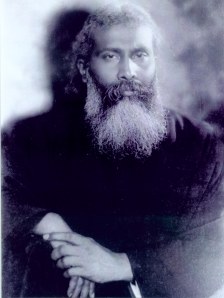
Hazrat Inayat Khan

The outer treatment of many such diseases is just like cutting the plant from its stem while the root remains in the ground. Since the root of the illness is in the subjective part of one’s being, in order to drive away that illness one must dig out the root by taking away the belief of illness even before the outer germ is destroyed. The germ of illness cannot exist without the force, the breath, which it receives from the subjective part of one’s being; and if the source of its sustenance is once destroyed, then the cure is certain.

Very few people can hold a thought, but many are held by a thought. If such a simple thing as holding a thought were mastered, the whole life would be mastered. When once a person gets into his head, ‘I am ill’, and when this is confirmed by a physician, then his belief becomes watered like a plant, then his continual reflection of it, falling upon his illness like the sun, makes the plant of illness grow; and therefore it would not be an exaggeration to say that, consciously or unconsciously, the patient is the gardener of his own illness … The root of illness is in the mind, and if that root is continuously watered by thought and feeling, illness is realized in the end.

*      *      *

More contagious than micro-organisms are fear and hopelessness.  (my conclusion)

*      *      *

We are the mirror and the face in it.

We are tasting the taste this minute

of eternity. We are pain

and what cures pain. We are

the sweet, cold water and the jar that pours.

Rumi – transl. by John Moyne and Coleman Barks

*     *     *

Jainism: http://en.wikipedia.org/wiki/Jainism

Lynn Margulis

http://discovermagazine.com/2011/apr/16-interview-lynn-margulis-not-controversial-right

Hazrat Inayat Khan – Volume 4 – Healing and the Mind World.
16 Comments

Filed under Blog

… memory and place …

I never thought I would live in one place for 23 years, and tend a garden. Its visiting creatures provide inspiration and amusement. I cast tendrils of attachment to secret corners, the changing patches of colours and textures. I observe the cherry and apple blossoms turning into carpets on the lawn, the tulips, blue bells and peonies bursting open in spring, wild strawberries, the abundance of clematis, roses and geraniums during summer, or phlox and fruits in autumn. The space is breathed through by the seasons’ moods and muses. On rare and perfect summer days, when the sun plays through the branches, I love spending time in my hammock, reading and editing, or share the space with friends – bliss.

Yet I can count such days on the fingers of my hands. And not just because of the UK weather.

This paradise is surrounded on four sides by hedgerows, has 5 mature fruit trees and a shed and studio smothered by ivy. Those of you who have gardens with sizable plants will understand the dedication it takes to merely keep annual growth under control.

Is the effort worth it?

Twice a year I need assistance. After the heavy rain and excessive growth we had during spring and summer, my neighbour recently helped transporting two transit vans stuffed full with cuttings to the recycling dump. The excess jungle weighs on my mind each year, but once trimmed and sculpted, the cleared shapes feel like newly decorated living rooms. 

What is it about places we care for? How come we spend so much time and energy looking after them? What we experience through our senses can be fleeting, but where repetition is involves, it becomes fixed and saturated in our imagination. There is nothing as deeply impressive as living in one place through cycles of seasons. We call it home.

In these tumultuous times, a great number of people around the world are forced to leave their homes. Either they have no say in the matter, or they must leave for sheer survival, escaping adverse weather conditions or politics that undermine human dignity. But wherever we land, we inherit the history of a room, a house, a plot, a community, and in turn we leave traces, an influence.

The place survives us. Do we bless it?

Do our personal experiences – including those associated with ambivalent feelings about places and people – survive beyond the brain’s switchboard activity that ties associations into a framework of meaning and memory? My intuition tells me yes, there are spaces in many dimension, floating as in a kind of hologram, which can live on through a strong memory laid down in our imagination, like the next chapter of a story.

In the way of habituation, these subtle forms must remain in some way in the collective psyche, accessible to minds and hearts who tune into their feeling pattern. This could happen via a kind of grid of finer matter (see Eccles: http://en.wikiquote.org/wiki/John_Carew_Eccles) that interact with the denser neural network of our brains.

There are these unanswered questions: is consciousness an emergent phenomenon of matter, or is matter an emergent phenomenon of some finer, spiritual substance?

Either way, if one were to assume that we create the world hereafter by the repetitive strength of our experience, be it with places, people or the passion for a sport, craft, art, music, science,  it bears us well to find something we can love, care for, and empower with our imagination.

12 Comments

Filed under Blog

… imagination …

From its fountain, the psyche pours compositions of light and darkness, images shaping the natural elements that engender our sensual experiences. Countless composite images trickle through our mind. Do we pause to ponder which to let pass, like dry leaves floating down the river, and which to absorb deeply into our heart – and give life to?  

The images we energise are re-envisioned and re-told through our perception. Nature spirits, archetypes, monsters and fairies, heroes and villains, deities, gods, devils and angels, the dark unknown – mankind’s entire mythical landscapes are encapsulated by the imagination and affect our everyday life.

Through this phenomenological process we discovered language, numbers and geometry, tools that potentially enable us to re-create nature. Some scientists maintain that matter constitutes the real and all phenomena derived from nature’s building blocks is not real. But deep inside we know … our search for the world we intimately desire attracts to us enlightened scripts. Through trial and error we learn to apply these scripts, and, for better or worse, we make our worlds real. Worlds within worlds are born from the imagination.

The young in heart have a natural curiosity to play and explore what lies beyond the horizon, literally and metaphorically, with a keen drive to discover facets of their soul reflected in all matter, experiencing matter not as dead, but as vibrantly alive and animated.

Consider the present demand for SF or its playful sister, fantasy, or magic realism. These genres overlap, they deal with the human condition, the desire for a home, in the widest sense – be it for another planet, an island, a heaven, a yesterday, a tomorrow, or the grail of now. To achieve the latent desire for the ineffable, a writer, any artist, becomes a deep-sea-diver of the psyche, and, on coming up for air, re-arranges the booty found there. Some of my favourite writers are R Heinlein, C S Lewis, R Bradbury, I Asimov, M Atwood, Garcia Marquez. Jorge Luis Borges, Doris Lessing and Ursula Le Guin …

It’s time to re-discover the bridge between the two hemispheres of our brains and balance the outlook of our material societies, value reverie, art and fresh perspectives, engage in play, song, dance and storytelling.

Time to embrace unstructured activities, which sidestep reason’s often pre-conceived observations, the epistemological obstacle, as Gaston Bachelard calls it, the grid of unconscious mental patterns that block seeing through our deeply personal and grounded experience, through the heart.

I’ll never forget the visit during the 70s, instigated through a Sufi friend, to a small Trappist community in the vicinity of Washington DC. The handful of monks rotated duties in house and gardens, interspersed with reading time in their fabulous library. Each one of them also enjoyed an annual 40-days-silent-retreat in one of the huts sprinkled over the many-hectare-estate. My then partner and I were privileged to listen to some of the monks sharing their vastly different cosmologies, psychologies and spiritualities. What struck me was that each monk had a vastly different idea about God, including one admitting that he thought God was man-made and no less real for that. What a stimulating place to be, where you are respected for the envisioning of your world.

 ‘The imagination is not a state; it is human existence itself.’ – William Blake

‘In our most private and most subjective lives we are not only the passive witnesses of our age, and its sufferers, but also its makers. We make our own epoch.’  – C G  Jung, 1934 

‘If children grew up according to early indications, we should have nothing but geniuses.’ – Johann Wolfgang von Goethe

Relevant links:

Re: CS Lewis  http://users.etown.edu/d/DOWNINDC/dungeon.htm

Gaston Bachelard  http://www.newworldencyclopedia.org/entry/Gaston_Bachelard

The World Within, C G Jung video  http://www.youtube.com/watch?v=Z6MHRHKd4Ps&feature=related

See also https://courseofmirrors.wordpress.com/2012/05/25/pattern-which-connects/

For those with a metaphysical interest in the imagination, here is an article of mine: https://courseofmirrors.com/wp-content/uploads/2011/03/science-of-the-heart.pdf

Excerpt … The mystic aims to raise sensory data to a higher level. This happens via the visionary imagination, the ‘presence of the heart’, and it happens precisely in that intermediate world where material beings take form and where material beings dissolve again to become subtle bodies. This intermediate world exists not at the other end of the universe, but right here with us, between each of our breaths. This is how the presence of the heart affects, how ideals, in whatever way we conceive of our Ideal, become realised. What we give being to in this intermediate sphere inevitably appears and becomes endowed with an outward reality. This is so, even when it is visible only to the inner eye, the eye of the heart, just beyond what can be perceived by the senses.

*     *     *

The rose image: detail of ‘The virgin of the unfading rose,’ eighteen century.

13 Comments

Filed under Blog

… pattern which connects …

For a recent book-sharing with a group of irreverent friends (archventures), I had the wish to share so many books that I instinctively reached more or less blindly into one of my shelves. Books in my home, I must add, are in a muddle. The only order to speak of is their relationship to each other through time. I picked Alice in Wonderland and Mind and Nature. During our afternoon of reading there was not enough time to do honour to the latter, Gregory Bateson’s work. So I said I’d write up something. Oh dear. After pages and pages, I finally recalled this was supposed to be a blog-post, not a novel .

I first came upon Gregory Bateson books, ‘Steps to an Ecology of Mind’ and ‘Mind and Nature,’ during the early 1980’s, after his death. The clarity of his notion that biological forms arrange themselves through relationships struck a deep chord. What totally resonated with me was his thought that the structure of nature and the structure of mind are reflections of each other.  He had a broad perspective for a Biologist, and wanted to build a bridge between the facts of life and behaviour, and what we know of the nature of pattern and order. He was active in, and connected up many different fields of study – anthropology, psychiatry, biological evolution and genetics and the new epistemology which comes out of system-theory and ecology. He challenged basic assumptions and methods of scientific investigations, pointing to the processes beneath structures. He quoted Goethe …

A stem is what bears leaves

A leaf is that which has a bud in its angle

A stem is what was once a bud in that position …

And he provoked new thinking: ‘What pattern connects the crab to the lobster and the orchid to the primrose and all four of them to me. And me to you?’ 

His interest in morphology, the study of structure and form of organisms, involved context, meaning and communication. He distrusted reductive models of cause and effect, the scientific approach that lines up parts and classifies them, focussing on quantity.

Comparing systems, one to another, he perceived the mind as an ecological system. And he used the analogy that ideas, like seeds, can only take root and flourish according to the nature of the system receiving them. This thought alone deserves deep contemplation.

He had a way with stories … ‘There was a man who had a powerful computer, and he wanted to know whether computers could ever think. So he asked it – Will you ever be able to think like a human being? – The computer clicked and rattled and blinked, and finally it printed out its answer on a piece of paper, as these machines do. The man ran to pick up the printout, and there, neatly typed, read the following words: ‘That reminds me of a story.’ 

Concerned about the decimation of aboriginal populations (he did field-work with Margaret Mead), the degradation of ecological systems, economic oppression, and senseless wars and arms races, he took these ominous signs of contemporary life to be manifestations of deeper disorders, which he defined in terms of cybernetic systems of communication and meaning that comprise life, mind, and society. In his view, consciousness dominated by purposeful thought has a linear structure that establishes goals and ways for attaining them without being necessarily sensitive to the circular network of cause and effect that orders the systems.

Looking at human consciousness as an adaptive system, he thought the cure for its inadequacies, evidenced by the negative side-effects of purposive rationality, was not to reject it in favour of a passionate non- rationality, as in the extreme romantic position, but to augment and complete it by engaging with non-discursive, pattern-comprehending and emotional processes. He advocated the befriending of the unconscious aspects of the mind through utilising images and metaphors.

In a civilization which separates mind from body, mythologies about the survival of a transcendent mind are often meant to soften the idea of death, or even deny death as part of life. For Bateson, who saw the mind as being immanent not only in pathways of information which are located inside the body but also in external pathways, death took on a different aspect. ‘The individual nexus of pathways which I call ‘me’ is no longer so precious because that nexus is only part of a larger mind. The ideas which seemed to be me can also become immanent in you. May they survive, if true.’  (Afterword to a collection of celebratory essays, 1972)

Yet there are scientists that can no more perceive the language of nature, and politicians who feel beleaguered by sections of society that seek balance and a fresh context towards ‘an ecology of mind.’  The extreme factions of believers, for what else are they, should look again at the bridge  Bateson prepared.


This lovely video gives a taste of what it is all about :

Update … I discovered recently, in 2019, that some the links in this post don’t seem to work anymore. Here , however, is his daughter’s great documentary on Vimeo, unfortunately not free, apart from the trailer.  https://vimeo.com/ondemand/bateson

Looking at the structure of nature and the structure of mind being reflections of each other, it becomes obvious that not only does nature mirror our habit of thinking, but our thinking also mirrors the state of nature. Ecology and psychology must therefore both engage in listening, and seeing, and working ceaselessly towards the integration of knowledge and the re-adjustment of a dynamic balance.

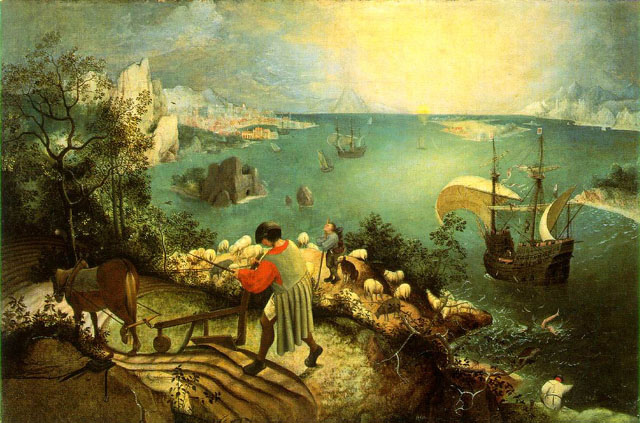
I could go on, but want to bring in a famous painting of Icarus by Brueghel.                                                             Anthony Stevens, a brilliant expositor of Jung’s thought, used the painting as cover for the first hard-cover edition (1995) of his book Private Myths.

http://www.anthonystevens.co.uk/index.html


Stevens quotes from a poem by Wystan Auden:

In Brueghel’s Icarus, for instance: how everything turns away

Quite leisurely from the disaster; the ploughman may

Have heard the splash, the forsaken cry,

But for him it was not an important failure; the sun shone

As it had to on the white legs disappearing into the green

Water; and the expensive delicate ship that must have seen

Something amazing, a boy falling out of the sky,

Had somewhere to get to and sailed calmly on.

What goes up must come down. Who knows how many Big Bangs there were before the one we so ardently explore? There is an organising intelligence behind life’s cycles, while consciousness forever expands. Thinking in metaphors we can perceive similar patterns, forms in nature and mind, cosmos and psyche, mirroring each other across scale and time. In other words, life teems with realities we can tune into, as long as we assign context and meaning.

Check out Gregory Bateson’s books ‘Steps to an Ecology of Mind’ and ‘Mind and Nature.

His family continue his work: His daughter Nora and his wife – Mary Catherine Bateson:   http://www.interculturalstudies.org/main.html

Peripheral Vision

 http://www.amazon.com/exec/obidos/tg/detail/-/0060926309/mead2001centenni

Free chapters of Angels Fear:  http://www.oikos.org/angelsfear.htm

Nora Bateson, recently created a film:

http://www.anecologyofmind.com/

Last not least, the themes:  pattern which connects, mirroring and bridging, are subjects of my novels.

25 Comments

Filed under Blog