Tag Archives: psyche

… maps of meaning …

Maps, the symbolic depictions of relationships between different elements, be they objects, regions in space, or ideas in conceptual domains, serve as orientation devices. Though it’s worth remembering Korzybski’s point, ‘The Map is not the territory.’

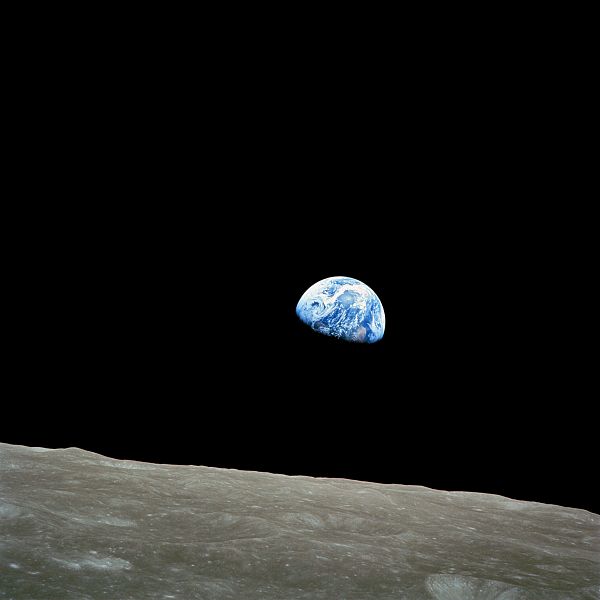
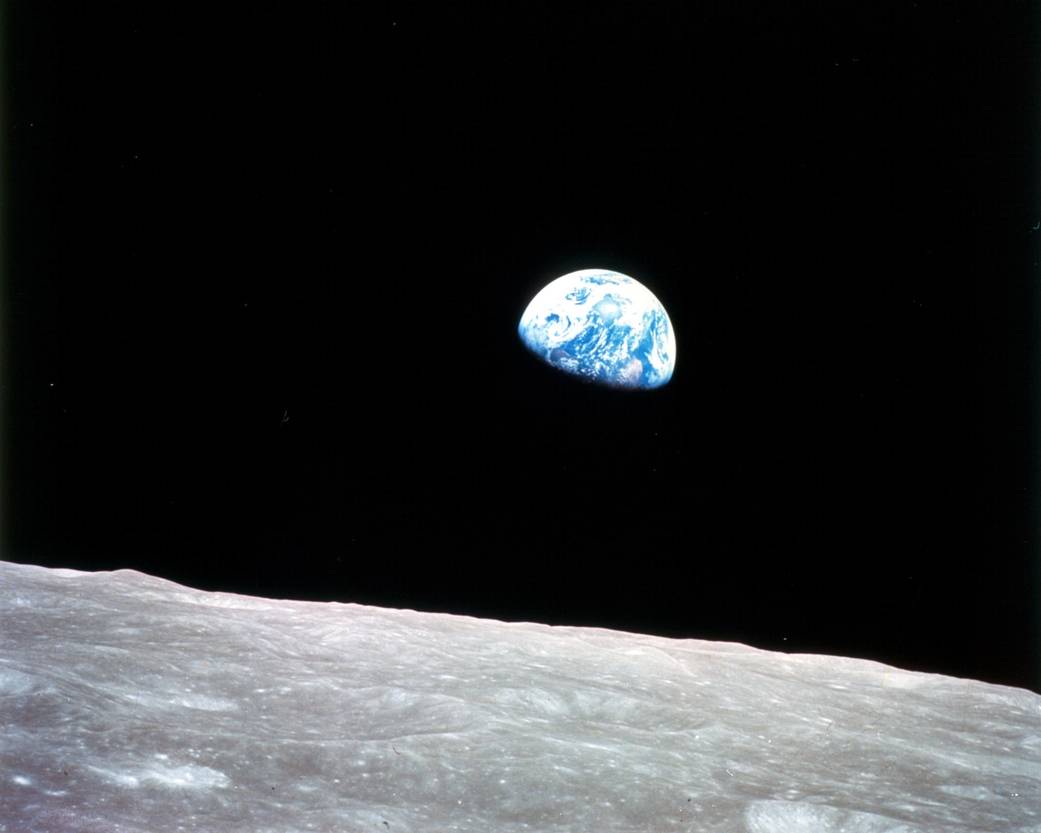
Earthrise, Dec 1968

Earthrise, Dec 1968

Given the complexity of global problems, there’s a dire need for charting the increasing expansion of specialised knowledge, diverse traditions and experiences, into a wider context. Since the poetic image of our planet rising in space did not grip the hearts of a critical mass, we need theoretical overviews to dispel confusions, and explore how all the seemingly disparate comprehensions of the world we live in can work together in a more intelligent and unified way.

Ken Wilber is a great proponent of an’ Integral Theory,’ bringing together many fields of knowledge and methodologies, scientific and spiritual, in an attempt to show how all these partial truths can be reconciled and be mutably enriching. This 1.5 hour talk  is brilliant, and eminently worth listening to.

In his AQAL  map  (You can press – 1MB free – and get a screen resolution)  Wilber integrates various developmental ideas, which may remind of Abraham Maslow and Carl Gustav Jung, to name but a few mapmakers before him.  In the above talk Wilber describes developmental tipping points in recent history, which apparently needed only a small percentage of the population, the 10 percent who could embrace the new value, to bring about a collective shift in consciousness.

He’s expecting another tipping point to emerge soon. Fresh conceptions can bring more truth and more love to our actions, more consciousness, more skill to deal with complexities, and more compassion to every dimension of human knowledge and activity.

I hope you’ll find the time to listen to Wilbers talk, and maybe further study his work.

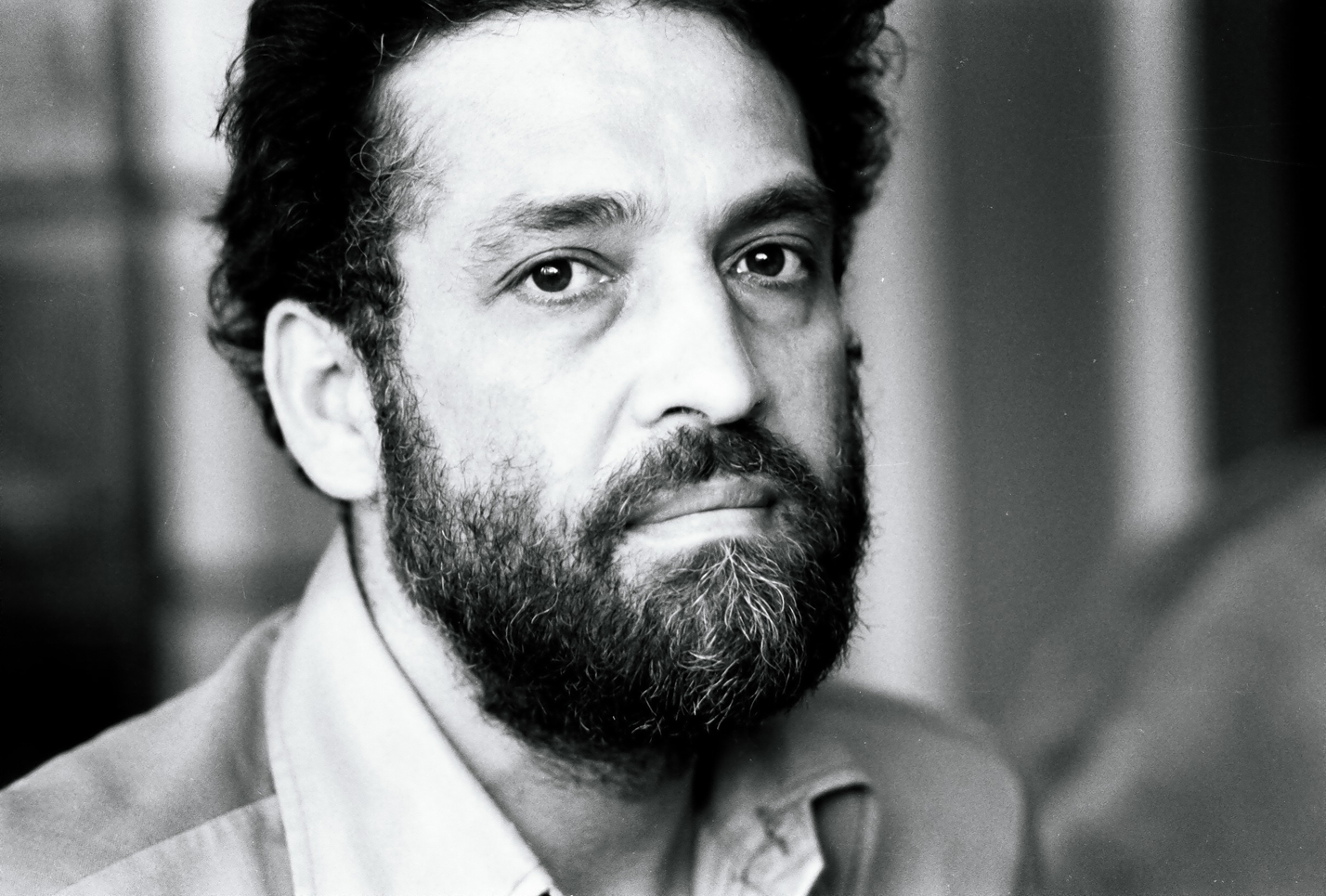
Fazal Inayat-Khan  Photograph by Ashen

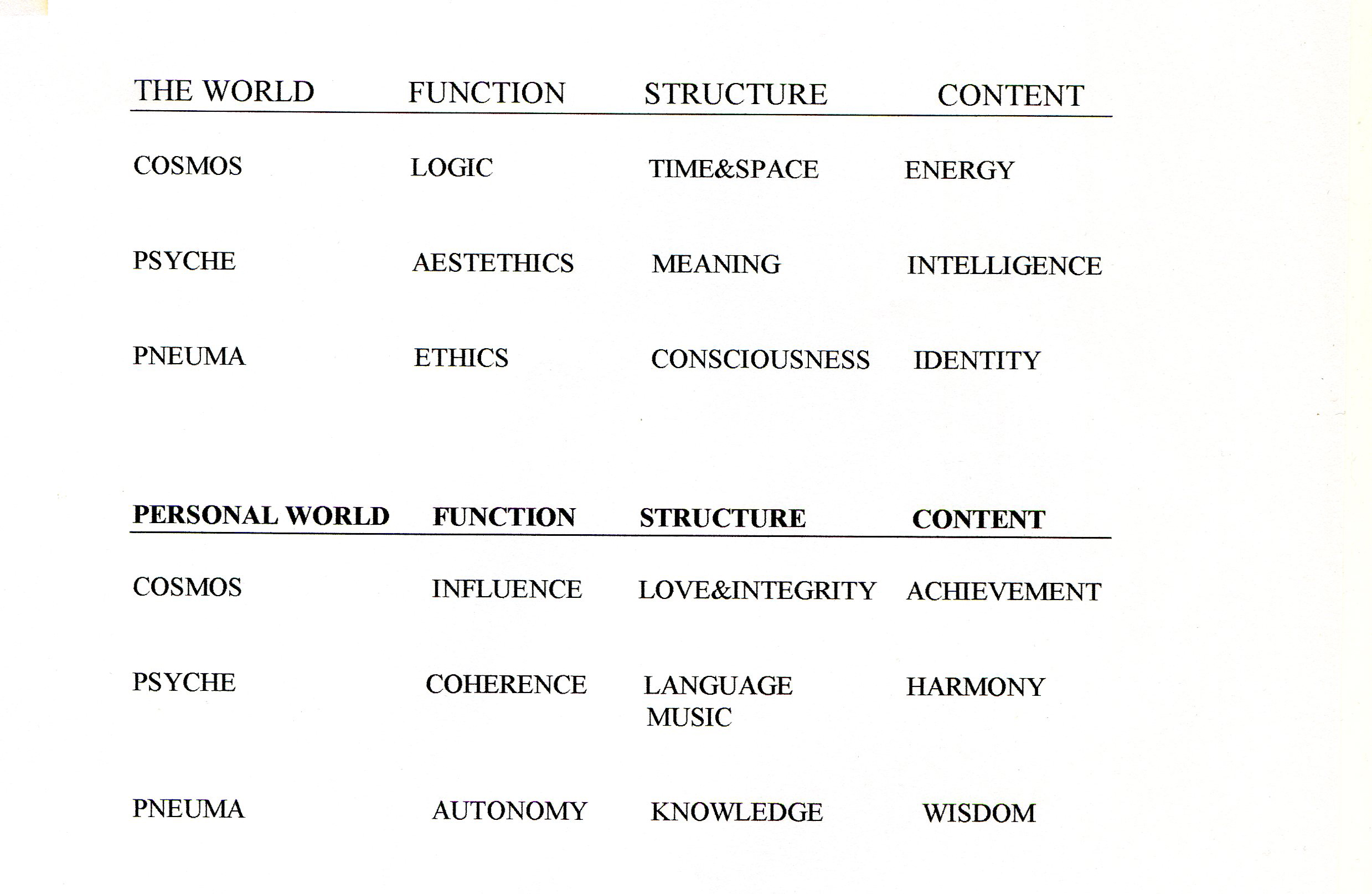
My former Sufi teacher, Fazal Inayat-Khan, (image by Ashen) also felt strongly that new conceptual maps were required. His aim was to integrate transpersonal aspect into the field of psychology. During a summer school in 1990, a few weeks before he died, he sketched the following cosmology on a flip chart and invited us to play with it.

Fazal's Cosmology

The graph depicts three worlds, the natural Cosmos, the finer Psyche, and the yet finer Pneuma (spirit,) differentiating the function, structure and content of each world.

How these three dimensions can relate to an individual is set into the same framework.

For me, this playful ordering made perfect sense, and, in a kind of epiphany, helped me to clarify the tremendous importance of the world of the imagination, and how it is held together by meaning. It also gave me new ideas about time. These days I like to call the Psyche the changing room.

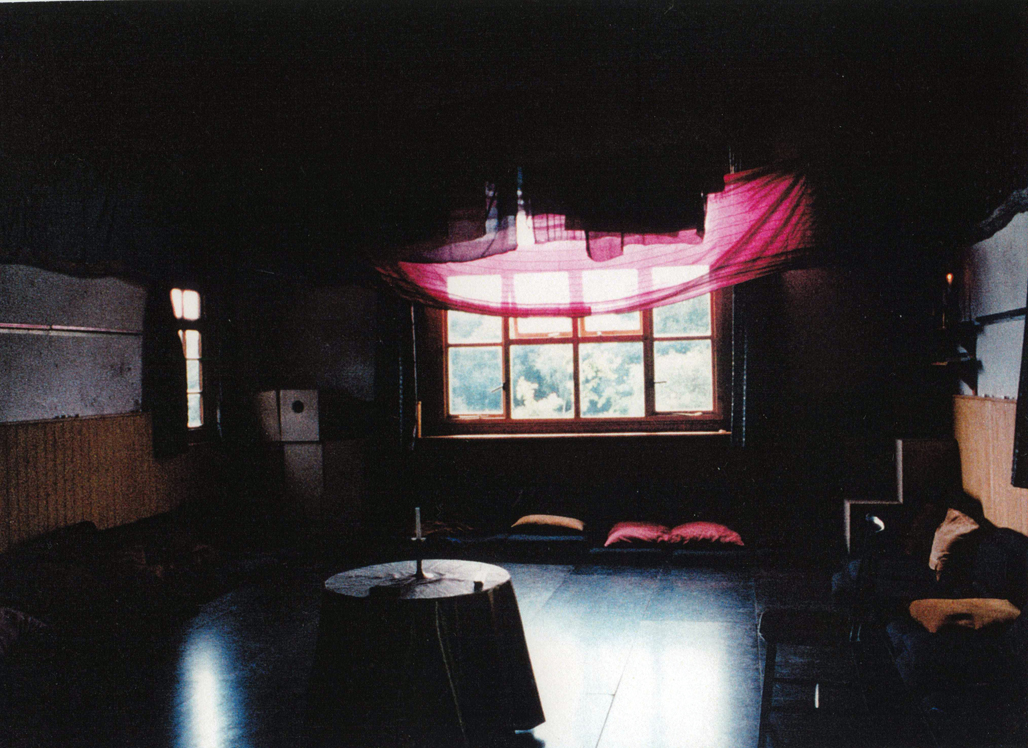
Barn, group room, smallerOur small group that day was encouraged by Fazal to replace terms and use our own words in this presentation, according to our own understanding. He was this kind of teacher. I dearly miss this wonderful friend, the community and the place.

Does this cosmology, this orientation device, corresponds in any way to your understanding and experience? And I’d be curious know if you feel inspired to change or move words around.

*       *        *

On the ‘OTHER’ page of this site (see top bar) you can find a PDF link to an article I wrote on the imaginative function based on ideas of the great Muhyi-d-Din Ibn ‘Arabi. The article is called ‘Science of the Heart.’

14 Comments

Filed under Blog

… imaginary time …

Image by Almos Jaschick

Image by Almos Jaschick

Today is one of those when I can only attend to bits of information, short sequences of writing, a paragraph maybe, while my eyes are drawn to ivy leaves moved by the breeze, a blackbird family feasting on apples left for them, a pair of woodpigeons landing and swaying in the branches of the huge beech at the top of my garden. Again and again I engage in pockets of attention beyond the window and shake off focus, ironically, in order to re-find the focus towards a coherent little blog post. A sudden rainfall is followed by the sun spinning through marbled clouds, while the heavenly voice of Kiri Te Kanawa streams through sound boxes linked to my computer. Eventually, my eyes return to the words I’m assembling here about the mystery of time, also relating to the emerging parallel worlds featuring in my two, coming to three, imaginative novels, where intentions create connections – from invisible realms beyond space and time.

Check out this and similar posts on YouTube, ha, ha, a few speculations. I haven’t been there for a long while. Don’t get lost.

‘The distinction between past, present and future is an illusion, although a convincing one …’ is what Einstein wrote in 2007 in a letter to friends. Time, he showed, has no universal constant and is relative. His famous equation E = mc – energy equals mass times the speed of light squared – had enormous implications, technologically, as well as socially.

This valued theory seems, at present, incompatible with the Quantum Physics that apply to tiny things. The chase for a unifying theory that includes quantum gravity is on. Moreover, physicists puzzle over the unseen pulling and pushing forces in our universe that elude detection.

We perceive time as proceeding steadily forward, although the laws of physics allow for time to equally run backwards. When it comes to our subjective inner experience we easily accept time as non-linear and relative. In therapy work, for example, a shift in attitude towards a person in one’s past can change a generational pattern.

We define time, create time, record it, hoard it, take it apart and re-frame it into fresh representations and stories. Stepping from one reality into another without losing coherence of mind is the province of individual adventurers of consciousness. Some artists like to dwell in liminal spaces where time shrinks and expands, like the twisting passage between one dream and another. Many devote their life to the re-framing of events in time. Imagine for a moment where we would be without people who create novel perspectives on entrenched realities. To call such expressions mere fantasy demeans the symbolic understanding found in the vast dimensions of the psyche.

Try and compare the creation of our cosmos with the conception, cell divisions and the birth of a human infant. The procreations and expanding consciousness of humans make for multitudes, while each of us inhabits our own self-constructed world. A psychic universe held together, it seems, by forces not unlike the unseen tides our visible galaxies swim in, the ocean of dark matter and energy that exists symbiotically within us.

Dark matter is assumed to collide with oxygen and hydrogen nuclei in our body, speculated to happen at the rate of up to 100 000 times a year. There, you may be hit right now. To my knowledge, no idea has been proposed as to what might be sparked or exchanged in these collisions.

In any case, at this, another year’s ending, quite a few of us spark flames and kindle candles in dark nights to celebrate the cosmic dance, the birth of light.


I’m wishing you, my readers, wherever you are, a time of peace and reflection.

*      *     *

From Little Gidding by T. S Elliot …

We shall not cease from exploration

And the end of all our exploring

Will be to arrive where we started

And know the place for the first time.

When the last of earth left to discover

Is that which was the beginning;

At the source of the longest river

The voice of the hidden waterfall

Not known, because not looked for

But heard, half-heard, in the stillness

Between two waves of the sea.

Quick now, here, now, always –

A condition of completed simplicity

(Costing not less than everything)

And all shall be well and

All manner of things shall be well

When the tongues of flame are in-folded

Into the crowned knot of fire

And the fire and the rose are one.


25 Comments

Filed under Blog

… love …

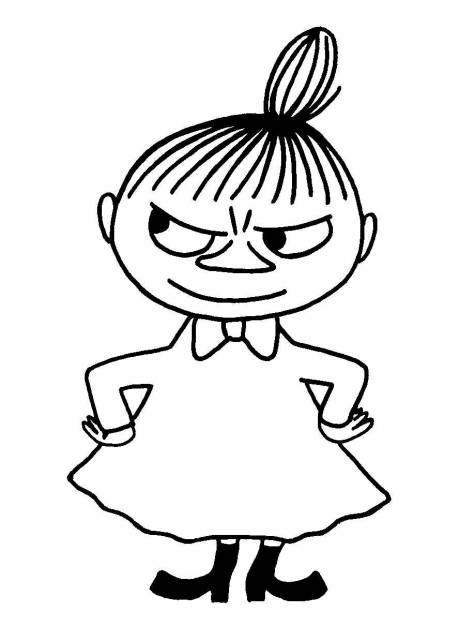
Little My - Tove JanssonLike me less or more, I’ve no qualms sharing that my persona hosts a little devil, an entity suspicious of principles, endless re-branding of what is obvious and free, including pearls of wisdom, and annoyed with much else in the world. This little sprite is my soul’s guard, my bullshit detector, and my Cara (friend.) She mocks hypocrisy, sanctimonious attitudes, power games and manipulation. Every now and then this sprite, like Tove Jansson’s Little My, when enraged, oversteps a mark and creates wanton conflict with my otherwise gentle nature and, at times, too trusting persona.

When a resolve is needed but not forthcoming, I resort to tools of remembrance – head-clearing techniques that calm the mind. Sometimes this works beautifully, but not today, when, of all subjects, I intended to write about ‘love.’

I’ll go ahead anyway, stating that the illuminating intelligence we call love is a core reality inside us. Words are kind of inept, but Rumi got it right.

‘The minute I heard my first love story, I started looking for you, not knowing how blind that was. Lovers don’t finally meet somewhere. They’re in each other all along.’

Rumi (translated by Moyne/Barks)

Irrespective of the despair and suffering experienced around the world, there are plenty of instances when people realise love moves in cracked hearts, and the sun dawns – things are the way they are because we observe them that way. This is our creation, our prison cell and our freedom. Fear may kick in when reliable walls suddenly dissolve, but equally, a realm of exquisite frequency can transcend the exacting laws of dense physicality, and stun us with the simplicity of an underlying truth. People wary about being laughed at keep silent, others start creeds, and there’s the occasional genius – the teacher, artist, writer or outsider, who convinces with plain yet startling expressions of the intelligence living inside us, the one being, pulsing through life’s revolution with wings of beauty.

What, I ask myself, would ensue in the unlikely event of every conscious being on this planet becoming enlightened to this deeper reality simultaneously?

I am interested to know what you think …

My thoughts go like this. In the temporal physical world, at least, friction yields energy we can use and direct. When it comes to the psyche, maybe we need to look at the yearning for love as a means to expand consciousness rather than a goal that promises the laurels of eternal life. Life is eternal without this nonsense of enlightenment as a goal, because, think about it, anything that has achieved wholeness stops becoming. A perfectly ripe apple that drops to the ground does not magic itself back to its branch, a new dream begins.

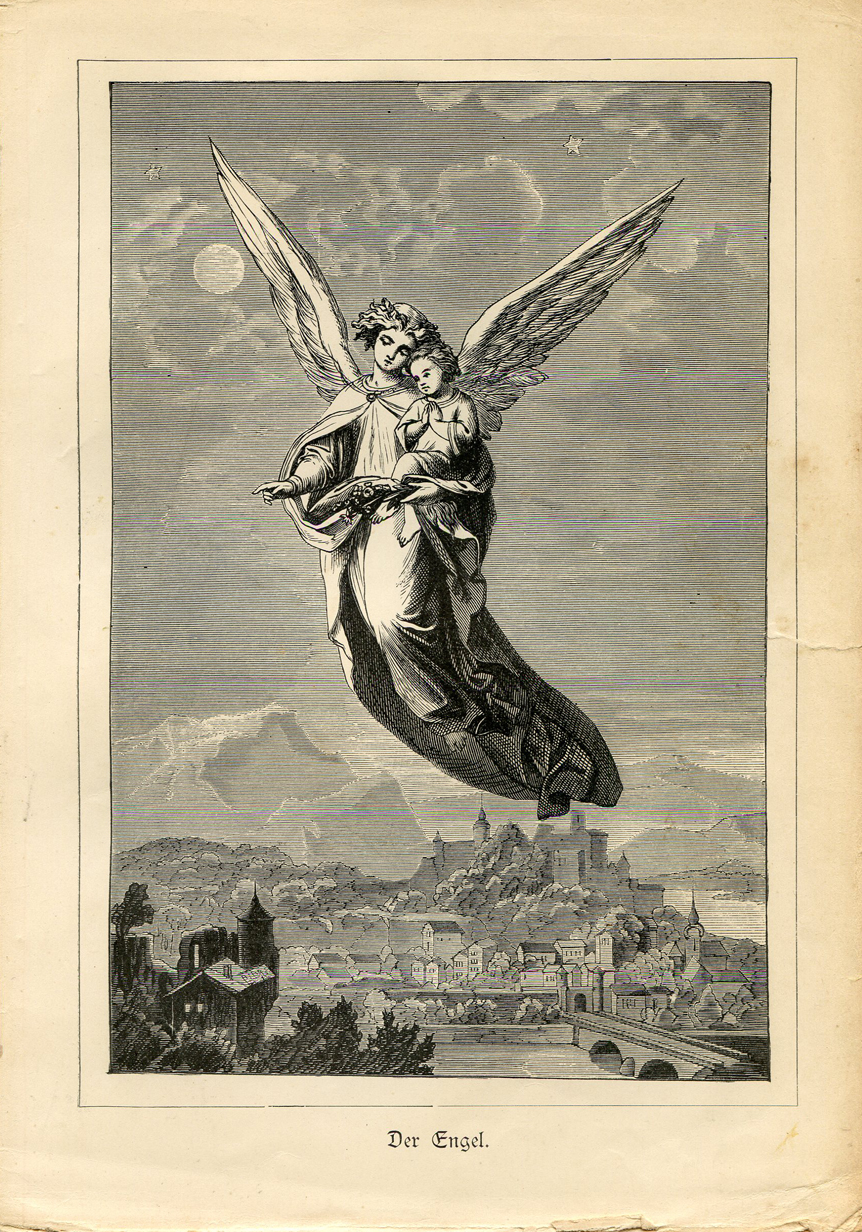
While appearances overwhelm and dazzle us with joy, pain, suffering and confusion in ongoing fluctuation, we can, at times, become aware of this soft rippling breath flowing through the visible and the invisible universe, sustaining the beauty and intelligence that life is ultimately animated by. When this love spins its hidden silver thread through us we are inspired. Angel - Der Engel - Woodcut for H C Andersen 1888 - smallerEven my little devil is charmed when our angel appears, serene or with a humorous smile – ah, you remembered, hello again, eternal child, welcome to warmth, elation, wonder and respect for all differences. For a while there is no judgement, no right or wrong. We’re moving in a vastly different dimension, of which the visible world is just one expression.

Various traditions propose or speculate on a purpose to life, but ultimately we create our own purpose by committing to a path and changing its meaning on the go, only the intelligence of love seems to be a constant.

The separation between past, present, and future is only an illusion, although a convincing one’ – Einstein

24 Comments

Filed under Blog

… dreams …

Photos by Ashen

Photos by Ashen

I used to host regular dream groups. We did not so much set out to analyse our dreams, but we played with them by engaging with their images, characters and objects. Sometimes we enacted scenes to widen associations and deepen our insights. While there is some excellent literature on working with dreams, a lot of it is boring, misleading and superficial. For me, the main purpose of valuing dreams lies in befriending the unconscious and the bringing to light what is timely and meaningful.

When we have no obvious explanation for events, dreams may bring subtle messages, offering glimpses of dynamics usually hidden from our awareness. A staggering 90 percent of personal and collective psychic dynamics trigger and compel our actions in life, and for good reason. The self-regulating psyche protects us from too much awareness. When encouraged, respected, and left to do its work, much like the immune system, the psyche can encapsulate runaway viruses of the mind by blanking out anxieties and obsessive thoughts, unless a trauma results in an ongoing inner storm. The processing of traumatic experiences is vital for the health of the individual, the family, the tribe, and our collective psyche. Something equally important to consider is that as adults our natural childlike curiosity about life may have become flattened by engrained habits and obsessive needs for security and control, both diminishing the meaning of our lives.

Note: Each embedded link here will not lead you away from this post but bring up a fresh page.

In an earlier blog post Joe Linker’s comment led me to an article by Oliver Sacks on altered states in The New Yorker  where Sacks pointed out a long tradition of ceremonial drug-use to stimulate the brain. Drugs certainly relax jaded attitudes by activating the senses and bringing insights and fresh perception. Sacks, and many like him, were admiringly fearless and creative, before there was a clamp down on drugs and they became illegal.Dreamseries 2
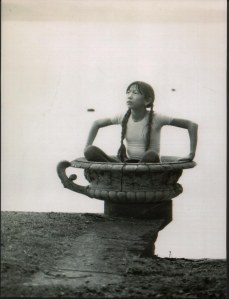
In dreams as in trance, induced or not, the mind can kick up imaginal representations of feelings, and metaphors. We shift to another realm, escape the logical structure of time and also tap into the collective psyche. We may hit a T junction, one path leading to an illuminating visionary state and the other to a schizophrenic state of confusion, which is why science sticks with rationality and is generally not keen on the imagination. The question as to what pulls us towards Heaven or Hell has no easy answer, yet all inner state, when approached with respect, patience, and most of all, wisdom, can have a healing and effect on our personality, and, in instances, as we know, result in significant works of art.
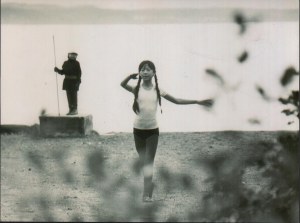
Dreamseries 3

Freud’s iceberg metaphor illustrates that our individual psyche swims like a mountain of ice in a vast sea, only to reverse into its fluid state once its coherence dissolves back into the sea. As a simple and more intelligent map of various unconscious states I prefer the egg diagram by Alberto Assagioli, the founder of Psychosynthesis.

Active imagination is a gentle way to befriend the unconscious and build bridges towards consciousness and daily life, and a way to explore dreams without messing with the dreamer’s unique meaning. I share here some practical tips:

Remembering dreams:

You can ask for a dream, especially when you feel stuck and ponder a question. You might even write the question on a slip of paper and put it under your pillow.

Try not to move your head after noticing a dream. Place holds memory.

Have a notepad and a soft pencil next to your bed, maybe a microlight, so you can scribble down a memory facet before fully crossing the threshold into waking. Even a single image, phrase, number, colour or feeling can act as a key for recalling a dream later on.

To catch a dream – try disrupting your sleeping pattern with an early alarm clock setting.

Experiment with your head position while sleeping – north, east, south or west.

Towards understanding dreams:

The psyche does not care about logic. The meaning of a dream may however unfold like a seed when we attend to its poetry and rhythm.

Ask yourself … how do I relate to the characters or objects of a dream? What feelings and sensations are evoked? In what context did the dream arise? How does it relate to my present situation?

Write a story or make sketches of the images. Tiny fragments can offer connections via free associations.

Give a voice to the characters and objects appearing in the dream. What do they want? Allow them to express their thoughts and feelings. Such dialogues can reveal surprising insights.

Change the script, create a different outcome, face down a fear or a shadow and follow through to what wants to happen. This approach can move a dream to a different level of understanding.

Ask yourself: Where does the energy want to go? What is emerging?
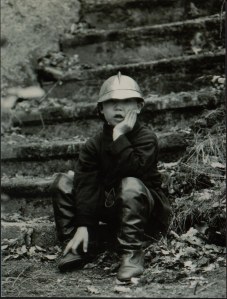
Dreamseries 4


Dreams express the voice of the soul; they are our contact with our deepest self, our inner substance. The mere act of recalling, experiencing and consciously honouring our dreams connects us with our real selves and awakens previously unavailable levels of creativity and vitality, even without interpretation.

Carl G Jung

A related post on altered states.

And if the subject of dreams interests you, here are some more links:

Edward C Whitmont was a Jungian psychoanalyst, who deepened my understanding of the psyche through his exceptionally clear writing. His books may be out of print, which would explain why they’re so expensive:  Dreams – a Portal to the Source and The Symbolic Quest

Other excellent authors to look out for, apart from Jung, are Anthony Stevens, Private Myths – Dreams and Dreaming, and Marie-Louise von Franz – The Interpretation of Fairy Tales.

12 Comments

Filed under Blog

… Sun-charging the Scarab …

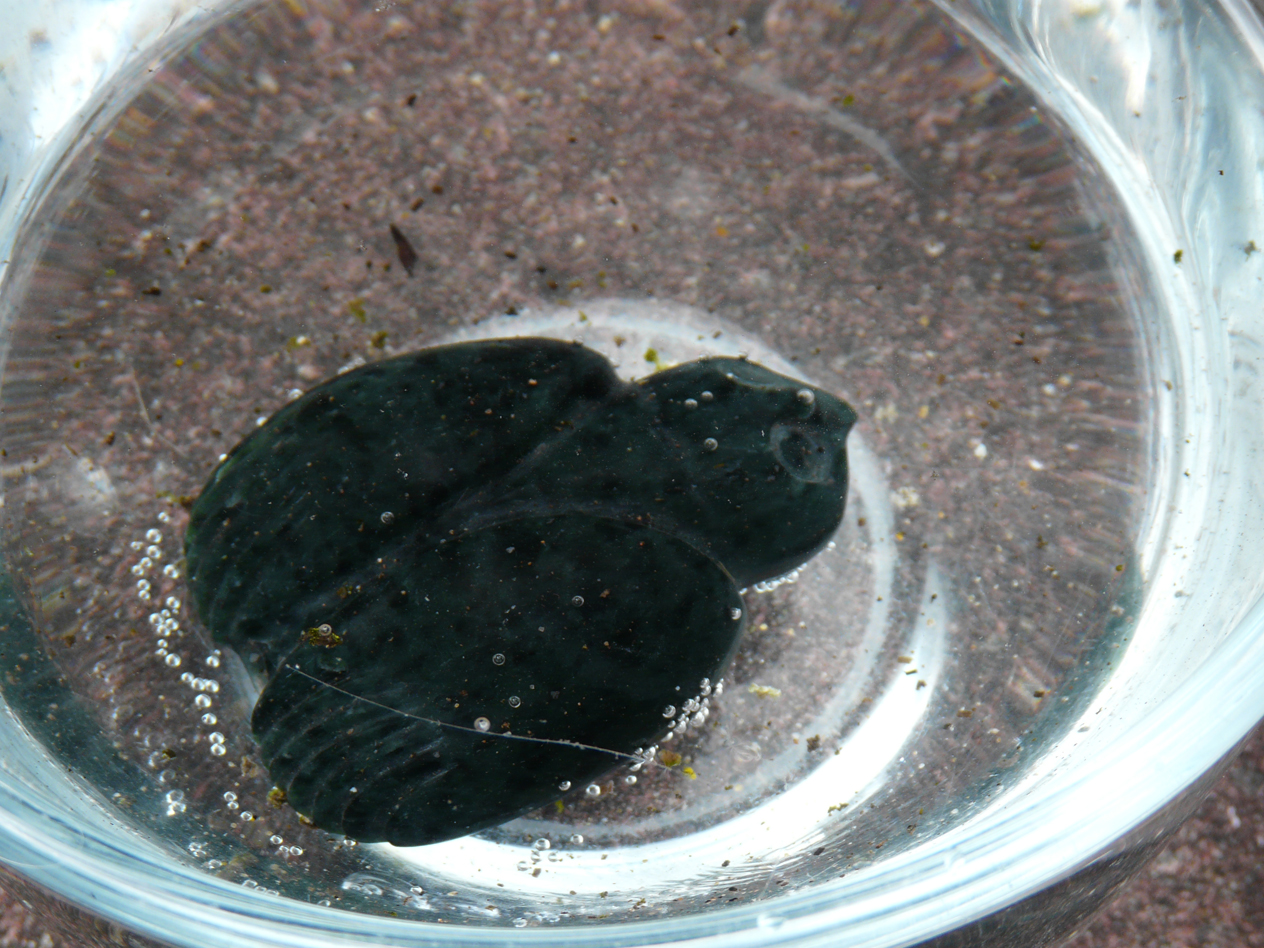
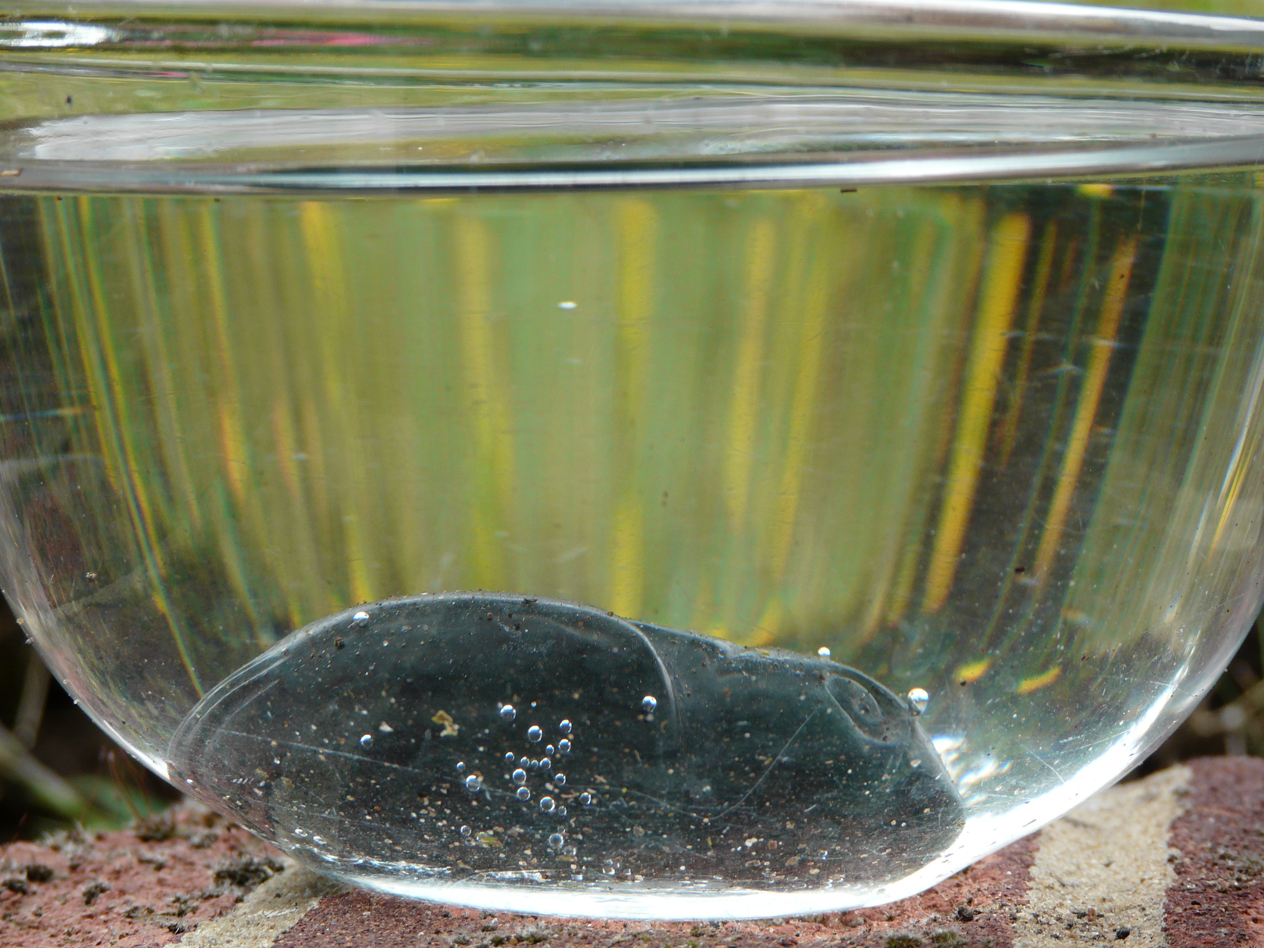
P1070817 smallerYears ago, a friend (thank you Shaz) gifted me a 6 cm long Scarab (Scarabaeus sacer) made of green-speckled black onyx. The object, as it sat on a windowsill among other tokens, curiously nudged my imagination the other day.

I intuitively put the Scarab in a glass bowl with water and placed it outside under the sun.

from livescience.com

from livescience.com


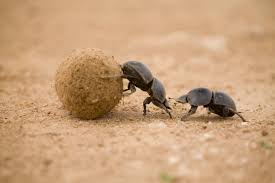
Dung beetles (Kafka’s Mistkäfer) fascinate me. They gather dung into orbs many times their own weight and drag them to a dug-out hollow as provision, but also as brood chambers into which the female deposits an egg. Once hatched, the larva feeds on the dung surrounding it. Here is a brilliant and cool TED Talk by Marcus Byrne about the amazing dance of the dung beetle: http://www.ted.com/talks/marcus_byrne_the_dance_of_the_dung_beetle

No wonder the ancient Egyptians made Khepri into a solar deity that rolls the sun each evening across the horizon, carries it through the other world, and returns with the star’s glory next day. Ra – the rising sun – was often depicted as a beetle-headed man.

P1070823 smallerThe onyx of my Scarab is Leo’s astrological gem stone, associated with grounding energy and a firm heart, another motive to charge the Scarab’s regenerative meaning for me. As the sun warmed the water in the glass bowl, tiny, oscillating air bubbles formed, which made the scarab seem alive and breathing.

Of course, none of this means anything whatsoever, apart from my wishful investment, a fancyful projection I won’t scrutinize and happily indulge in.

Turns out the environment agrees. In my garden, a highway for cats of all breeds and hues, sleek, bushy, black, white, grey, marmalade and surreally marked, one ginger tom seems in need of healing. On his daily round he has become totally addicted to drinking water from the bowl, greedily, in long slurps.

And today my blackbird friends re-appeared to partake of the holy beatle’s sun charged water. You may allow yourself a humoured smile, though what else is there but to cheer at the powerful symbol invested with the meaning of regeneration in the small universe of my garden?

20 Comments

Filed under Blog

… To Witness Daisies and Earth Rise …  

1968 Earth Rise, Apollo Mission 8

1968 Earth Rise, Apollo Mission 8

A change in collective attitudes often takes momentous events. While the moon-landing of 1969  was mildly underwhelming, the image captured in preparation for the American eagle’s landing, a year earlier, was immensely moving – revealing a vastly expanded mirror to our home that spoke then, and speaks now, directly to our physical and spiritual senses. Guiseppi Ungaretti had fitting words …

‘What are you doing earth in heaven? Tell me what are you doing silent earth?’

With hindsight we can see how major historic events are being incubated years in advance to their happenings. Artists have a knack for shocking us before a message becomes endorsed, which is why I connect the film  ‘To Witness Daisies’ (1966)   with the earth-rising image, both testing limited perceptions.  A click on the title should bring up the movie on your tube.

Věra Chytilová

Věra Chytilová

Not unlike the awesome view from outer space,  Věra Chytilová presented an equally powerful pointer to our poor stewardship of earth. Initially forbidden in the former Czechoslovakia, her tragic comedy was released two years before the Prague Spring, and two years before the earth-rise image promised a new respect for nature. I hoped for a greater understanding of cosmic interconnectedness, and an assessment of the fear-based need to subdue and control the wild, the primitive, the imagination, soul … all the ignorant projections on the feminine principle, which, I think, are responsible for spoiling our planet and wounding the psyche of men and women.  Film critics felt uncomfortable with Věra Chytilová’s controversial, iconoclastic statement on the demeaning role assigned to women in our cultures. Niels Bohr expressed, ‘As long as an atom is not seen it does not exist, it is a ghost.’ To me, this implies that seeing, individually and collectively, is an active process, influencing the reality of our existence.

The Daisies

The Daisies

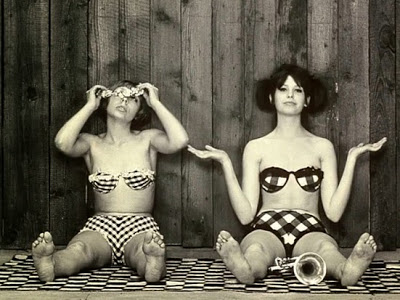
Watching ‘To Witness Daisies’ for the first time in 1994, I was struck by its theme of psychic starvation – sharply relevant today – and the insanity of societies where women are kept in an infantile state so as not to threaten male supremacy. The symbolic power of the film’s images, with their rhythmic and gradually peaking orchestration, creates a timeless sphere of magical reality, where meaning is expanded and revealed. The opening sequence of the film gives the context. A mechanical wheel turns relentlessly to the sound of regular drumming. The scene is interspaced with silent images of war, bombs exploding, mainly into the sea, symbolically representing the mother of all life on earth. Next, the frame shows a sun-deck by a pool. Filmed in black and white, the deck re-appears as a transitional stage. and one could add, a place at the edge of the personal unconscious. Here a question is voiced, ‘What next?’ The two teenage girls wear bikinis and their movements are mechanical, like the wheel. The sound indicates a lack of oil in the system, and the funfair trumpet played by one of the girls suggests a flat and mocking victory.

Posing for the Collector

Posing for the Collector

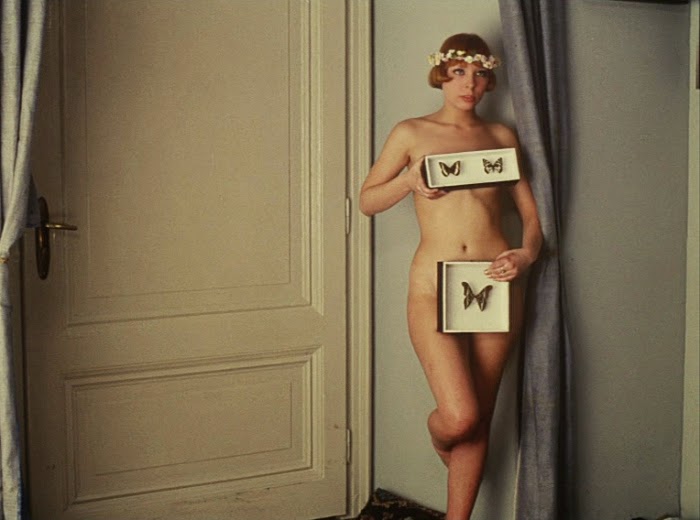
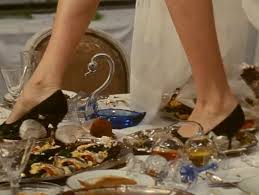
The outlook is set. ‘I’m a doll, everything is been spoiled in this world.’ And, as a way out of boredom, ‘If everything is being spoiled, we will be spoiled too.’ The decision to mirror a spoiled world is made, a death wish gains momentum. Daisy Blond wears a daisy chain and uses it at intervals as divination device. When the chain is thrown out of the frame, it lands on water and signals the next mise-en-scène, like a Garden of Eden where the girls dance, and where Daisy Blond picks the legendary fruit, affirming ‘their kind’ are products of a biblical myth with politically useful interpretation that prevail.

The end-feast

The end-feast

Film critics felt uncomfortable with Věra Chytilová’s controversial, iconoclastic statement about the role assigned to women in our cultures. Acted by Jitka Cerhová and Ivana Karbanová, the Daisies have various names throughout the film. I call them Daisy Black and Daisy Blond, though they are one and the same, since their communication resembles an internal dialogue trying to deal unsuccessfully with a moral conflict that offers no bridge between good and bad. To Daisy Black nothing matters, she has a timeless distance to things, everything is a game. For Daisy Blond, the extrovert, hunger makes food a central theme of the film – hunger in the sense of wanting to fill her sense of emptiness with substance. I won’t venture into psychology, but it’s easy to draw a connections to the Anorexic symptoms many young women suffer from.

During a film degree course in 1994, I wrote a long essay on ‘To Witness Daisies.’ Unable to transfer the old Mac files when switching to a PC with internet connection, many essays need re-typing, which I hope to achieve once other projects are out of the way. For now, I thought I inspire you to watch the film – and maybe share your thoughts about it.

11 Comments

Filed under Blog

… marginalia of bodies …

moon's swing door

moon’s swing door

the white rock sails adored –

silent swing door to sanctuaries

imagined beyond where

each being claims its mystery

un-evidenced


winged by unknown purpose

spirit seeks shelter

tumbling through cells

to the orb of a home –

embodied in you and me spirit mimics

nature’s mirrors moments after now

though once inner vision unfolds

our dreams are branded …

framed by the one eye

supreme to all eyes …

sun’s furnace illuming draperies

history sanctioned

seemingly evidenced

but for the singular breath

of insight needling between

obvious fabrics to thread

intense tales of beauty …

sample of my occasional art, 1998

sample of my occasional art, 1998


The poem was inspired by June’s full moon.

Places accumulate impressions, snippets of reality that draw us forever into experiences from different directions and points in time. The one place we carry with us – OUR BODY – remembers what reason does not. While the intellect sorts memories into virtual boxes and slaps on the tag ‘facts,’ the body, animated by each breath, deeply informs our singular perception, helps us to adjust the past, refine the relationship with ourselves and others in the present, and opens a new wavelength and vision towards the future.


The experience you have within yourself of your separate identity, to allow right and wrong to be re-defined by you, your singular contribution, is where evolution really happens. You, by becoming yourself, can open a new wavelength. What you reflect immediately influences your environment, people close and far away.’

Fazal Inayat-Khan, notes from an attended lecture, 1989

‘Spirit without soul has no vessel – soul without spirit has no direction.’ Roberto Assagioli

10 Comments

Filed under Blog

… leaving – returning …

the father tree

the father tree

to reshuffle thoughts

a short journey is enough

leaving – returning …

legends undulate

in glowing brittle wood – sighs

from swaying branches –


Jasmin blessings

Jasmin blessings


Jasmin on the breeze

laments of grief in the rain –

ancestors speak

first sounds glide on ice

circling the affirmative

leisurely routine


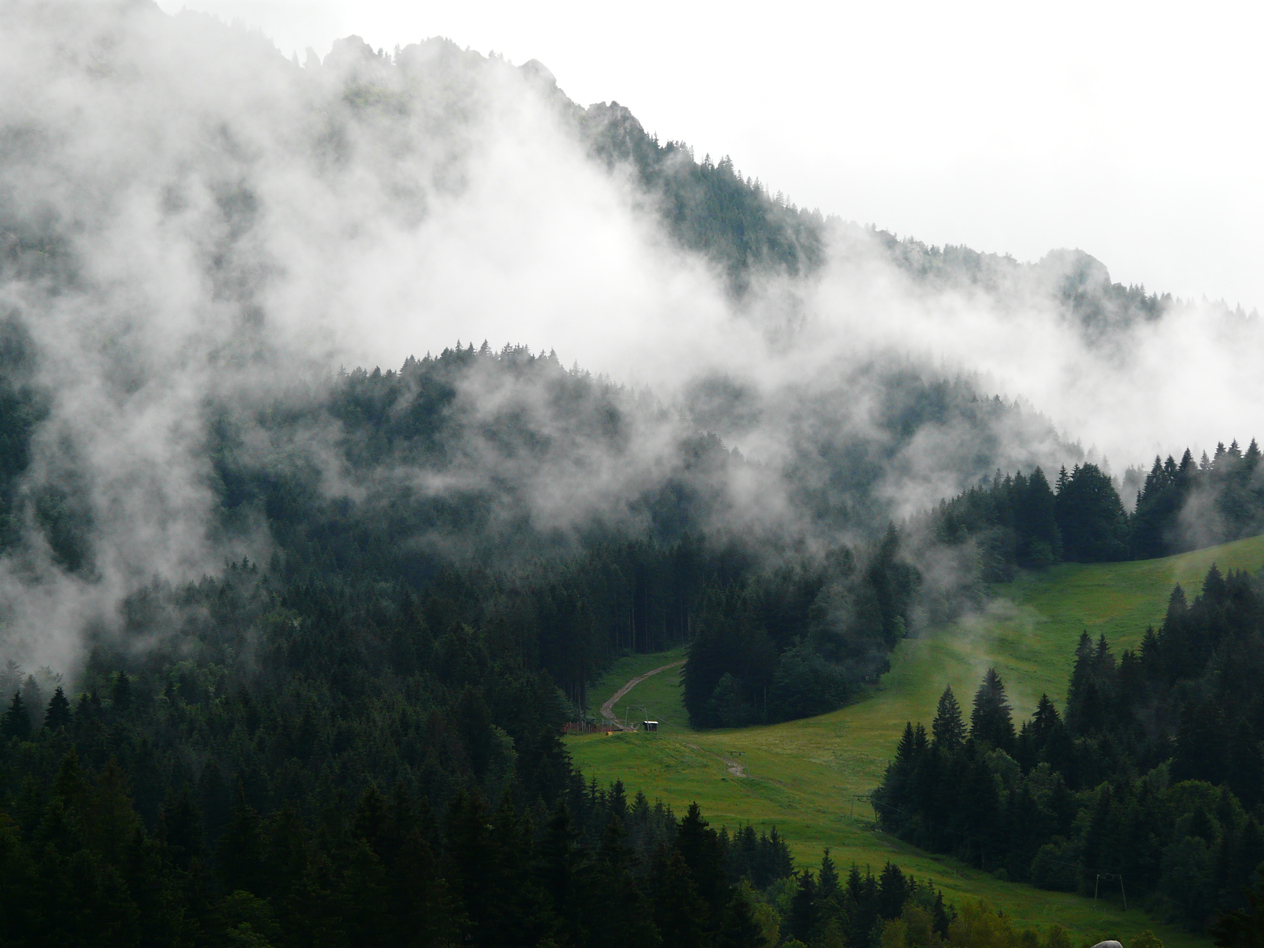
my beloved Alps

my beloved Alps


between dusk and dawn

all words sink to un-squared time

rounding in fish eyes

as poems probing

the deep meshes of oceans

for heart connections …


‘What else, when chaos draws all forces inward to shape a single leaf …’  C. Aiken

Visiting my early landscapes, friends in Munich, my father of 97, with my son, whose work in London means I rarely see him,  was a rich experience. I had to capture the essence in a poem, which started out in German:

In der Dämmerung glänzt Gold aus der Wurtzel

Gedanken gleiten auf Eis in Kreisen herum

doch manche sinken in die Tiefe um

im Wassergewebe nach Erinnerungen

zu fischen … Gesichter ziehen vorbei 

in sanften kalten und warmen Wogen …

I’ll work on this, inspired by a writer Herta Müller – (English translation on screen) introduced to me by friends whose guest I was in Munich. Anyone fascinated by language will be moved. Also this article in The Paris Review   I am presently reading ‘Mein Vaterland war ein Apfelkern,’ a remarkable dialogue.

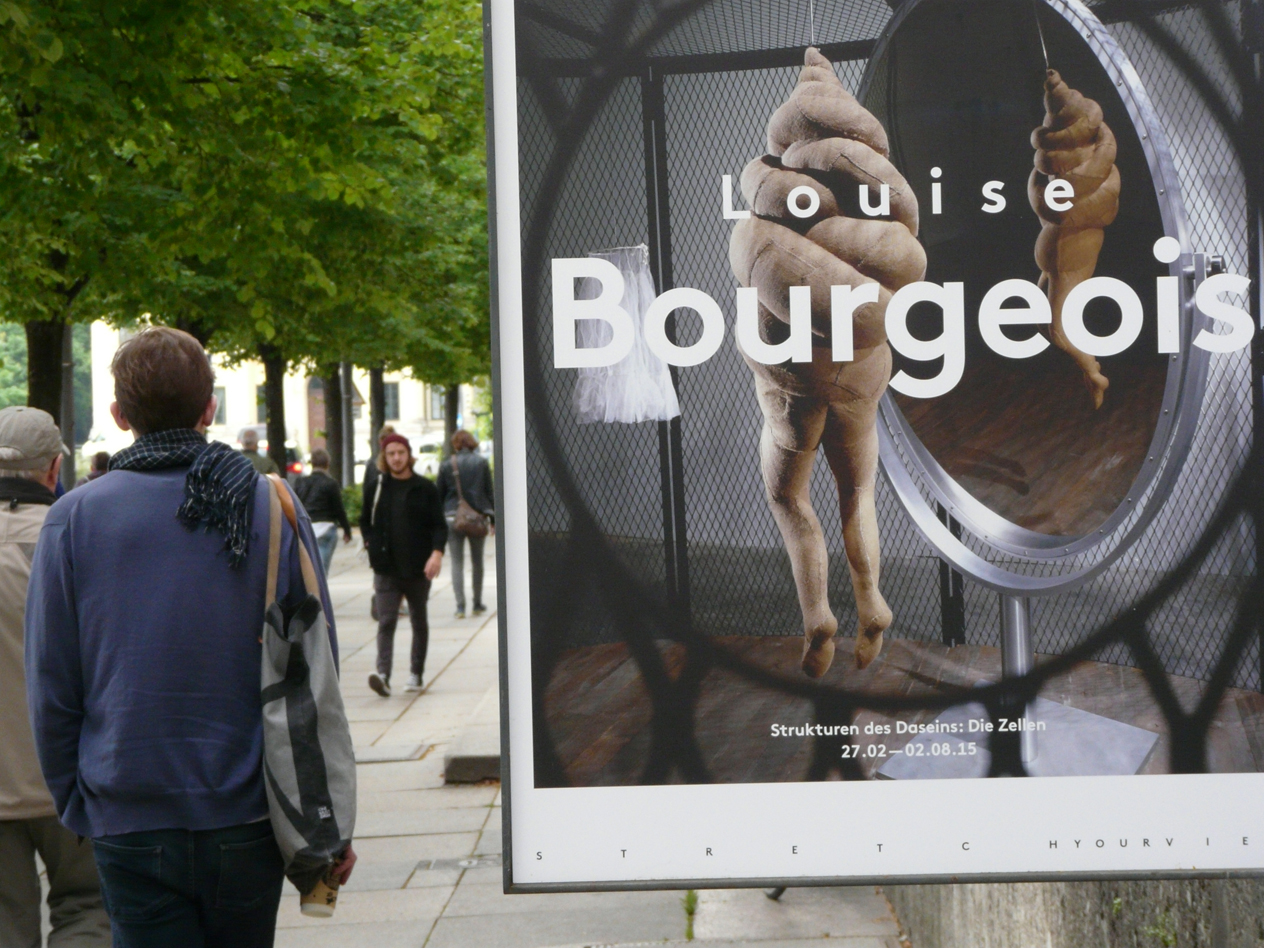
Louise Bourgeois at 'Hause der Kunst.'

Louise Bourgeois at ‘Hause der Kunst.’


In Munich’s ‘Haus der Kunst’ I visited a wonderful exhibition of Louise Bourgeois (1911 – 2010) an artist I much admire, whose installations about the Cells of Structures of Existence are deeply impressive.

Londoners my have seen her huge spider on display in the Turbine Hall of Tate Modern. I wish I had cheated and made photos of her beautifully arranged installations in the generous spaces in Haus Der Kunst.


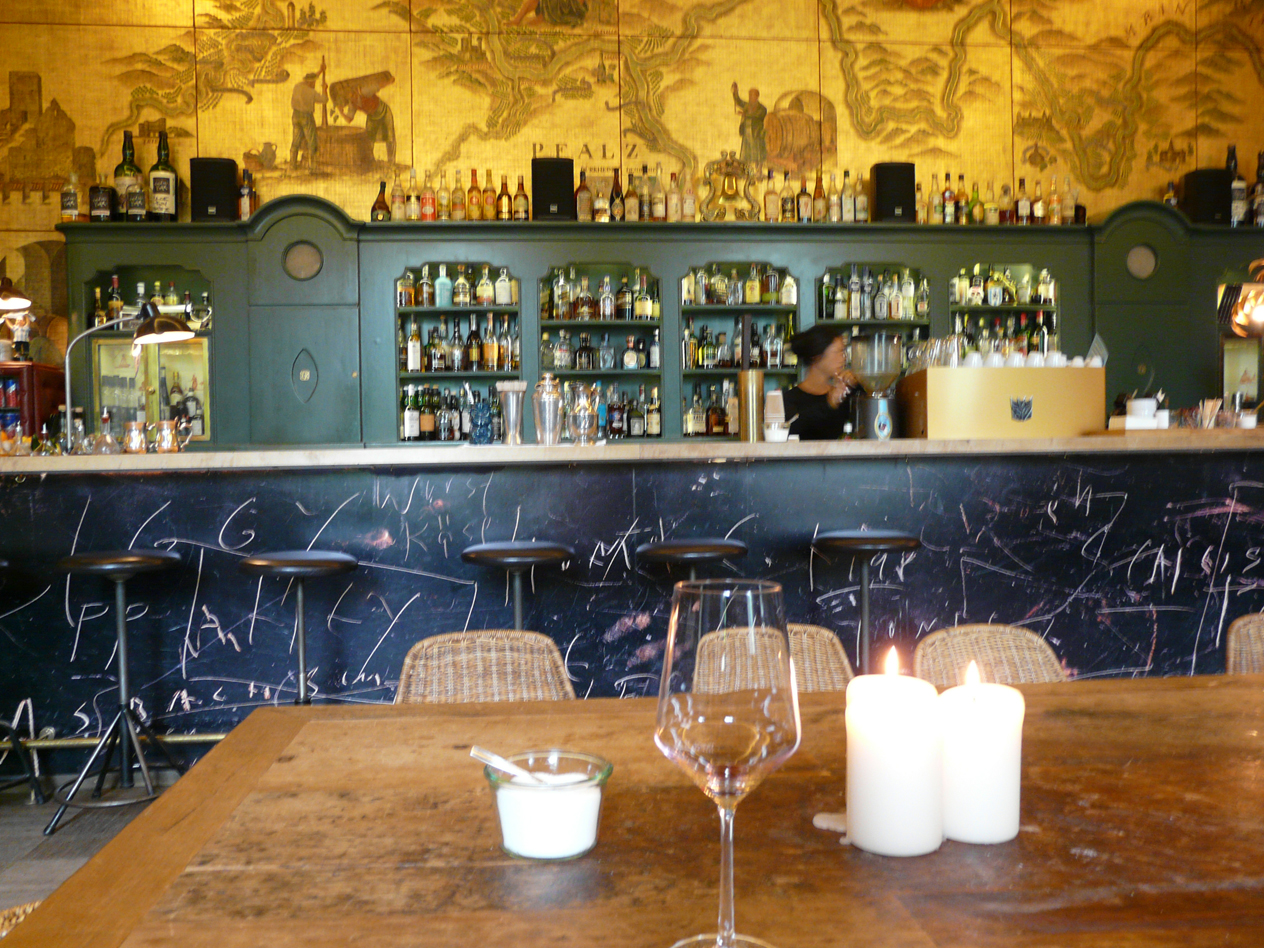
bar at 'House der Kunst.'

bar at ‘House der Kunst.’

To compensate, here is the wonderful golden bar at the ‘House der Kunst.’ And returning home – a blue invasion.

a blue invasion

a blue invasion

10 Comments

Filed under Blog

… what’s your age again? …

Copy Chair in Spider Hut 2 smallerThe question grates, especially when a round number announces yet another decade looming ahead. While the 40s suggests respectable maturity, the 50s have an aura of old gold best valued by insurance and investment companies. Once you enter the 60s, no matter how rich, poor, active, passive or just blissfully sober, public consensus puts you in line for the moot title ‘retired.’

Once you get over this pesky label, there’s a perk – time slows.

Perceiving life in slow motion has been called wisdom ever since people recognised that slow time reveals hidden dimensions, realities other than those experienced in the speed-lane. Within the present digital pulse of life, days, seasons and years skip ahead at a dizzying velocity. The phenomenon has shortened the shelf life of people, ideas, and objects. A few years ago the motherboard of my laptop crashed. The young man at the IT shop looked amazed. ‘They shouldn’t last that long.’ My laptop was 5 years old. I guess it’s supernatural that my 25 year old Bosch washing machine still works perfectly.

When young, I lifted off, ascended, sped across horizons, acted out and engaged intensely with life. Youth in itself brings of course no guarantee of ascending. Age holds similar uncertainties. Ideally, it allows one to slow down, descent inward, assimilate and integrate experiences, develop patience and insight, re-connect, and grasp the myth of one’s life, and the myth of one’s century.

My point is – descent has a vital function in society. If we can manage to work part-time, or independently during the second half of our lifespan, weRa hand, edit 2 may gain the freedom to reflect, attend to the body’s intelligence, and find our inner rhythm. A thought sculpture may develop, a mood may linger. Communicating may happen along deeper wavelengths. The experience and perception of slow time has a calming influence on the collective psyche, like the prayers and contemplations observed by nuns and monks in monasteries are said to keep the world in balance. I truly believe this.

For those who practice a vocation they love, or develop a passion that keeps them curious and focussed, aging is a side-issue. New technical procedures may not be instantly absorbed, but they provide food for thought. The movie occasionally rolls on silently. Memos reappear, which the younger self, swept along by the speed of progress, may have overlooked, but which in a wider context assume new significance.

The manner that informed wisdom in past cultures and classic times may have remained the same, but elders today have a more complex task in finding apt metaphors for what’s been happening during our single lifetime, poignant lessons that could guide us onwards. When young, our mind feels eternal, we make thing happen, are in sync with the pace of progress and create the future. But what if wisdoms assimilated during inner journeys and the deeper comprehension of present lifetimes are not sufficiently communicated?

The next round of ascent may be hampered by ladders with broken steps, leaving us stuck with unsurmountable problems and senseless social systems. All is not well. The ascending and descending energies working through our present decades are askew. Unless elders have acquired eminence, their voices, their stories, the harvest of their unique experiences, are easily considered useless. Wisdom is not equivalent to the IQ flatland that education systems bank on. Wisdom is more about questions than answers, more like a dance, a tracing of patterns and parallels. Wisdom employs the imagination, re-shuffles knowledge, re-interprets and re-connects ideas to create new meaning.

Image by Yeshen Venema

Image by Yeshen Venema

There’ll always be young ones born old and wise, and old ones who turn young and adventurous. Intangible experiences and the insights of all age groups seek expression and must be circulation, because we are animated by forces not accessible to us. Fate cannot be controlled, but nudges us from the dark. It’s therefor essential to bring our light not only to matter, but to the totality of the psyche, including the unconscious layers of our past and our future, our unknown human potential. We need spaces to make visible what inspires individuals. In this the arts must serve.

The arts need public support in providing free spaces, and funding for everyone, young and old, to engage with and share their imagination in any form that moves their heart. In a culture that prizes speed above all else, the inner journey, the long view, listening, trusting, gratitude, the appreciation of difference, small things, and the cultivation of inner silence from which conflict resolution, intuition and creativity can spring, has never been more important.

*    *    *

Re: Elders … there is a group brought together by Nelson Mandela in 2007 http://www.theelders.org/ Add your support to the eighty thousand follower on twitter –  @TheElders   – This is their mission:

Our vision is of a world where people live in peace, conscious of their common humanity and their shared responsibilities for each other, for the planet and for future generations. We see a world in which there is universal respect for human rights; in which poverty has been eliminated; in which people are free from fear and oppression and are able to fulfil their true potential.

Initially the concept emerged from a conversation between Richard Branson and Peter Gabriel. Together, they took their idea of a group of global elders to Nelson Mandela who agreed to support it.                                                     http://www.virgin.com/unite/leadership-and-advocacy/richard-branson-birth-elders

15 Comments

Filed under Blog

… the tulip – haiku moment …

A little Haiku arrived in a flash and together with its timely image struck a chord with many of my facebook and twitter friends. It’s the beautiful message of one tulip in my garden, whose eleven companion bulbs were eaten up by hungry rodents.

P1070196 - smaller

a lone tulip splays
its red mantle to the sun
there you have my heart

*    *    *

A Haiku can arrive in a flash or take its time to unfold. Here is  an article by Jane Reichhold to inspire. She shares a little history and a number of techniques.

http://www.ahapoetry.com/haiartjr.htm

9 Comments

Filed under Blog